GENETIC DIVERSITY OF ORYZA SPECIES IN NIGER; SCREENING AND BREEDING FOR RESISTANCE TO RICE YELLOW MOTTLE VIRUS (RYMV)
By
Mounirou El-Hassimi Sow (206526505)
BSc. Hons (Plant Biotechnology) USMBA- Fez MSc. (Biotechnology) Hassan II- Casablanca
A thesis submitted in partial fulfilment of the requirements for the degree of Doctor of Philosophy (PhD) in Plant Breeding
School of Agricultural, Earth and Environmental Sciences (SAEES) College of Agriculture, Engineering and Science
University of KwaZulu-Natal Republic of South Africa
March 2012
i
Trip during a rice germplasm collection (2008) and a Participatory Rural Appraisal (2009) in Niger
ii
Thesis Abstract
Rice is a staple food in many West African countries, including Niger. However, both regional and national rice production have failed to meet demand due to several constraints, among which is the Rice yellow mottle virus (RYMV). Moreover, attempted intensification of rice cultivation and the introduction of modern cultivars are encouraging farmers towards abandoning local landraces for high yielding, but often susceptible varieties. The study was primarily oriented towards rice pre-breeding, and identifying priorities for rice breeding in Niger in relation to farmers' preferences and their environment. A secondary aim was the development and evaluation (for release at the regional level) of new breeding lines with resistance to RYMV. This study aimed to:
1) Establish farmers' perception of rice varieties as well as the main constraints on rice production in Niger and particularly those posed by RYMV;
2) Create a collection of rice species from Niger for ex- situ conservation, and to determine the phenotypic variability within this collection;
3) Determine the genetic diversity and population structure of the collection;
4) Screen the collection for resistance to RYMV, so that new sources of resistance could be detected;
5) Improve five elite varieties from West Africa for resistance to RYMV using marker-assisted selection (MAS).
The germplasm collection and PRA of this study were conducted in 2008 and 2009 in Niger, while the field and the laboratory researches were conducted in 2008 and 2009 at the Africa Rice Center (AfricaRice) in Benin.
For the PRA, data was obtained from a semi-structured group discussion carried out in 14 villages, individual questioning of 153 farmers and visits to farmers' field and storage facilities.
The local farmers' union was the only formal seed dissemination system. Seed exchanges between farmers and the use of seeds from previous harvests were important. The RYMV and the bacterial leaf blight (BLB) were cited as the prevalent biotic stresses in the irrigated agrosystem,
iii
where the varieties IR1529-680-3 and Waihidjo were found to be the most popular. Flood, birds and hippopotamus were the most damaging agents in the lowland cropping system, and the landrace Degaulle/ D5237 was the preferred variety. Apart from the yield, farmers preferred varieties with good grain quality (milling quality and good taste), high market value, stress tolerance (drought, flood, disease, birds, rodents), and those recommended by the local farmers' association. These findings should be included in breeding goals, seed production and dissemination systems.
During collection, a total of 270 rice accessions were assembled, comprising the two cultivated rice species Oryza sativa L. and O. glaberrima Steud. and its two wild relatives Oryza barthii A.
Chev. and O. longistaminata Chev. et Roehr. The region of the Niger River and its tributary (the Dallol Maouri) provided the majority (80.7%) of the accessions. Apart from a few wild O. barthii accessions, the accessions found around Lake Chad and the Komadougou river (South-East) were also collected in the Niger River area. Farmers' naming and ecological classification of rice varieties was generally consistent. Three major phenotypic groups were found during the field trials, and the overall phenotypic variability of the collection (as measured by the Shannon- Weaver Diversity Index) was relatively high. There was no significant difference in diversity between the main eco-geographical zones of collection, as well as between the identified phenotypic groups, suggesting a high level of germplasm exchange between the regions in Niger.
From the collection, 264 accessions were genotyped from the collection using 18 well distributed SSR markers and two main genetic compartments were detected, comprising O. sativa subsp.
indica varieties and O. glaberrima and its wild relative O. barthii and O. longistaminata. The O. sativa group in Niger was divided into irrigated and floating rice, bound by lowland rice. The wild progenitor O. barthii was widespread but without any clear genetic differentiation from O. glaberrima, probably due to the presence of admixtures within the collected samples of O.
barthii. Allelic diversity was relatively high, despite the geographical distance from the centre of domestication of African rice, and the points of entry of Asian rice to Africa. The findings reflect the underuse of Niger's rice landraces genetic potential for rice breeding, given that all the
"improved" varieties released during the last 25 years in Niger were clustered together on the dendrogram.
iv
The response of a set of the rice collected from Niger and some accessions from Mali to inoculation by RYMV was evaluated using five different virus isolates from Niger (3), Benin (1) and Burkina Faso (1). All rice varieties were susceptible to the disease. However, depending on the virus strain, a few O. glaberrima accessions displayed partial resistance, similar to the highly resistant TOG5681. Allelic research based on primers derived from the RYMV1 gene revealed one accession with allele rymv1-3, and two accessions with allele rymv1-4, and one accession with a different resistance gene. The implications of the finding were discussed and a strategy proposed for breeding varieties with a comprehensive resistance to RYMV.
After three generations of backcrossing, the major resistance gene of the variety Gigante was successfully introgressed into five elite rice varieties of West Africa by Marker-Assisted Backcross (MABC). The newly developed BC3F3 progenies were screened for resistance to RYMV in farmers' fields in Guinea and Mali and also under controlled conditions in a screenhouse in Benin. As shown by low virus content and level of disease incidence, low tiller number and plant height reduction, the transferred gene was fully functional in the new genetic background. Moreover, some lines also displayed a high level of resistance to rice blast (Pyricularia oryzae) and stem borer infestation in Guinea. Four of those lines are in the second year of multi-location trial in seven West African countries. Therefore, effective deployment of the newly developed varieties, coupled with good cultural practices, should reduce the damaging effects of RYMV in lowland and irrigated rice cropping systems and thereby increase the income of small scale farmers from rice cultivation.
v Declaration
I, Mounirou El-Hassimi Sow declare that:
i. The research reported in this thesis, except where otherwise indicated, is my original work.
ii. This thesis has not been submitted for any degree or examination at any other university.
iii. This thesis does not contain any other persons' data, pictures, graphs or information unless specifically acknowledged as being sourced from other persons.
iv. This thesis does not contain any other persons' writing, unless specifically acknowledged as being sourced from other researchers. Where other written sources have been quoted, then:
a) their words have been rewritten but the general information attributed to them has been referenced;
b) where the exact words have been used, their writing has been placed inside quotation marks, and referenced.
v. Where I have reproduced a publication of which I am an author, co-author or editor, I have indicated in detail which part of the publication was actually written by myself alone and have fully referenced such publications.
vi. This thesis does not contain text, graphics or tables copied and pasted from the internet, unless specifically acknowledged and the sources detailed in the thesis and references section.
……… Date………
As the candidate's supervisors, we agree to the submission of this thesis.
……… Date………
Professor Mark Laing (Supervisor)
……… Date………
Dr Marie Noëlle Ndjiondjop (Co-supervisor)
vi
Acknowledgments
Praise to the Almighty Lord that give me the chance to achieve this exercise.
I am grateful for Dr Marie Noëlle Ndjiondjop for accepting my application to work on her team.
You trusted and accepted me even though Niger was not among the priority countries of the USAID marker-assisted selection project. I also appreciate your availability and efforts to secure funds during those years. Thank you so much!
My sincere gratitude to Prof. Laing for agreeing to supervise me, despite his countless duties; the time shared with you is certainly among the best in my learning experience.
I am grateful to the Africa Rice Center (AfricaRice) for hosting me, and getting funds for my research first from the USAID, and then from various anonymous sources.
My sincere gratitude to Dr Yocouba Sere and his staff Amos Onasanya and Sourou Georges Soton from the Unit of Pathology for sharing so much with me.
My sincere gratitude to Dr Sido Amir of the INRAN of Niger for hosting me as a “staff member”
while I was in Niger; Mr Ousmane Soumaila Mayaki; I still remember our freezing nights in the middle of nowhere during the Participatory Rural Appraisal (PRA) and the collection. A "thank you" will never be enough! My gratitude also goes to all the staff of INRAN, ONAHA of Tillabéry, Agricultural Office of Diffa, the chiefs of the villages I visited and all the involved community leaders for being so helpful. Thank you also to Dr Alain Ghesquière and his team at Montpellier for their support.
I am grateful to Dr Nourollah Ahmadi and Jean-Louis Noyer of CIRAD, Montpellier, France for adopting me so easily and above all, supporting me when I needed it the most. Your scientific and material support was greatly appreciated.
I would like to express my sincere appreciation for the contribution of Dr Gilles Bezançon, Cédric Mariac, Kader Alio Sanda, Dr Abdoul-Aziz Saidou and all the staff of the Laboratoire de Génétique of IRD, Niamey, Niger during the genotyping of the collection. The entire team of the
vii
Biotechnology Unit, as well as my fellow officemates (David, Yonnelle, Esperance, Issaka, Basso, Florent, Augustin, Carline and Nasser, Honoré and Gustave) and various anonymous staff of the AfricaRice, contributed towards providing me a great professional and social life during the year I spent at AfricaRice. Thank for being so cheerful!
My friends Ali Laouali and Boureima Adamou, I greatly appreciated your help with my family life while I was away from home. Thank you for being such good companions.
To the Sow Family and my parents-in-law Mr Hassane Amadou and Mme Amina Wangari, thank you for encouraging me in everyday life. Your support has raised me up.
Appolinaire Yovoga, Mamoudou Bello, Issaka and Ousmane Sow, Francelin Andokande, thank you for your help in data collection and recording.
My thanks go also to Ms Perpetue Kouamé, Mr Confidence Duku and Dr Dieng for their contribution in database creation, maps drawing and analysis.
Finally, I am grateful for the help of all those people, that will certainly be omitted in this list and, who have been involved, in any way, towards the completion of this project; Thank you!
viii Dedication
To my Mums Hajia Oumou Diallo, Aminatou Dahi, and Salamata Elhaji Arbonkana, whom we call affectionately "Inna", "Minnay" and "Salay", you have been infinite sources of Love in the shade of this exceptional Dad of mine! May God bestow you a special place in Al Djannatul Firdaous!
To my Lovely Devoted spouse, Rahila, and my kids Sarah and Ridwane, who gave me the strength to carry on, and made my life much better!
I am so Lucky to have all of you in my life!
ix Table of contents
Thesis Abstract ... ii
Declaration ... v
Acknowledgments ... vi
Dedication ... viii
List of Appendix ... xiii
Introduction to Thesis ... Error! Bookmark not defined. The importance of rice ... 1
Rice genetic resource conservation ... 2
Rice yellow mottle virus ... 2
Molecular breeding ... 3
Farmers' preferences ... 3
Synopsis and Research objectives ... 3
Thesis plan ... 4
References ... 4
Chapter 1: Literature review ... 7
1.1 Rice in the world and in Africa ... 7
1.2 Rice in West Africa ... 8
1.3 Geography of Niger ... 8
1.4 Production and evolution of rice in Niger ... 11
1.5 Constraints on production ... 13
1.5.1 The unexploited potential ... 13
1.5.2 Abiotic stresses ... 14
1.5.3. Biotic stresses ... 14
1.6 Viral disease: Rice yellow mottle virus (RYMV) ... 15
1.6.1. Occurrence and incidence of RYMV ... 16
1.6.2. Epidemiology, transmission and symptoms of RYMV ... 17
1.6.3. Variability and evolution of the virus ... 18
1.6.4. Screening for resistance to RYMV ... 20
1.6.5. Management of RYMV... 21
1.7 Rice taxonomy ... 27
1.8 Rice domestication ... 28
1.9 Diversity of cultivated rice ... 28
x
1.10 Diversity estimation methods ... 30
1.10.1. Phenotypic markers ... 30
1.10.2. Biochemical markers ... 30
1.10.3. Genomic Markers ... 31
1.11 Farmers' preferences for rice traits ... 33
1.12 References ... 33
Chapter 2: Farmers' perception of rice varieties, major constraints on production and Rice yellow mottle virus (RYMV) in the region of Tillabéry, West Niger ... 41
2.1 Abstract ... 41
2.2 Introduction ... 41
2.3 Material and Methods ... 44
2.3.1. Sampling and interview techniques ... 44
2.3.2. Data analysis ... 45
2.4 Results ... 45
2.4.1. Socio-economic characteristics ... 45
2.4.2. Cropping systems and post-harvest loss... 46
2.4.3. Farmers' seed source and variety preferences ... 49
2.4.4. Farmers' perception of RYMV and other major constraints on rice production ... 56
2.5 Discussion ... 61
2.5.1. Position of information and gender in the rice sector ... 61
2.5.2. Seed sector and varietal preferences ... 62
2.5.3. Perception of main constraints and RYMV ... 64
2.7 References ... 65
Chapter 3: Agro-morphological variability of rice species collected from Niger ... 71
3.1 Abstract ... 71
3.2 Introduction ... 71
3.3 Material and Methods ... 74
3.3.1. Germplasm collection ... 74
3.3.2. Field trials ... 76
3.3.3 Data collection and analysis ... 76
3.4 Results ... 78
3.4.1 Collection ... 78
3.4.2. Agro-morphological characterization ... 82
xi
3.4.3 Phenotypical diversity of the collection ... 92
3.5 Discussion ... 94
3.5.1 Collection ... 94
3.5.2 Phenotypic variation and diversity ... 96
3.7 References ... 101
Chapter 4: Simple sequence repeat (SSR) markers-based genetic diversity and population structure of Oryza species from Niger ... 115
4.1 Abstract ... 115
4.2 Introduction ... 115
4.3 Material and Methods ... 117
4.3.1. Plant material ... 117
4.3.2. DNA extraction and genotyping ... 118
4.3.3. Data analysis ... 119
4.4 Results ... 120
4.4.1. Overall Genetic Diversity ... 120
4.4.2 Structure of the diversity ... 121
4.3. Distribution of the Diversity ... 126
4.5 Discussion ... 129
4.7 References ... 134
Chapter 5: Resistance to Rice yellow mottle virus (RYMV) in a rice germplasm collection from Niger ... 144
5.1 Abstract ... 144
5.2 Introduction ... 144
5.3 Material and Methods ... 146
5.3.1. Plant materials and inoculations ... 146
5.3.2. Data collection and statistical analysis ... 147
5.3.5. Genotyping ... 149
5.4 Results ... 149
5.5 Discussion ... 163
5.7 References ... 166
Chapter 6: Efficiency of Marker-Assisted Backcross (MABC) in Improving the Resistance of Five West African Elite Rice Cultivars to Rice yellow mottle virus (RYMV) ... 169
6.1 Abstract ... 169
6.2 Introduction ... 169
xii
6.3 Material and methods ... 171
6.3.1. Plant material and populations development ... 171
6.3.2. Genotyping and marker-assisted selection ... 173
6.3.3. Virus isolates propagation and inoculation ... 174
6.3.4. Experimental designs of field trials ... 174
6.4 Results ... 177
6.4.1 Marker-Assisted Selection ... 177
6.4.2. Field evaluation in Guinea ... 177
6.4.3. Field evaluation in Mali ... 182
6.4.4. Screenhouse evaluation in Benin ... 186
6.5 Discussion ... 188
6.7 References ... 192
Thesis Overview ... 198
Introduction ... 198
Summary of the major findings and their implications ... 198
Conclusion and recommendations ... 200
References ... 202
xiii List of Appendix
Appendix 2.1: Summary of the Questionnaires used during the PRA………69
Appendix 3.1: Maps of villages where seeds samples were collected……….…………..105
Appendix 3.2: Measured traits, number of phenotypic classes and source………....106
Appendix 3.3: Grain features of some accessions from the rice collection from Niger………...108
Appendix 3.4: Phenotypic groups of 270 accessions from Niger………..……109
Appendix 4.1: Map of Niger, showing areas where rice accessions were collected in Niger…………....137
Appendix 4.2: Population structure of the collection from Niger derived from STRUCTURE…………138
Appendix 6.1: Pictures of some of the elites varieties and their progenies………..…..196
Appendix 6.2: Summary of 36 most resistant BC3F4 lines screened with virus isolate B27…………....197
1 Thesis Introduction
The importance of rice
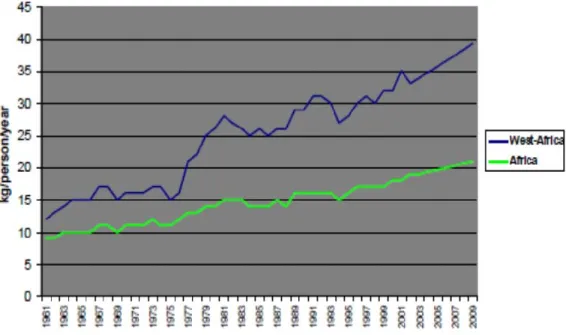
Rice is a staple food for more than half of the world's population. It is also the fastest growing food crop in developing countries in Sub-Saharan Africa (SSA) due to demographic, professional and social changes. The annual rice demand in Africa is growing at a rate of 6% and regional production fail to meet the demand. Therefore, Africa spent around four billion USD on rice importation in 2009 (Diagne et al., 2010). An increase of 2.5 to 3% per year is projected for global rice prices until 2017 (USDA, 2008). The rice sector in Africa employs nearly 70 million people including farmers, processors and traders. West Africa is the main rice producer and rice consumer of the continent (Fig. 1).
Figure I.1: Evolution of rice consumption in West Africa as compared to the rest of the continent.
Source: (Diagne et al., 2010)
In Niger, rice is the third important crop after pearl millet and sorghum, but constitutes the most rapidly increasing food crop, following the continental and global trend. Rice is grown on more than 30,000ha, using two main agrosystems (irrigated and lowland) and production systems (traditional versus modern) (Alfari et al., 2006; Faivre-Dupaigre et al., 2006). The national production was estimated at 132,000 tons in 2009. However, with a per capita consumption of over 20 kg/year; production failed to meet the growing demand, requiring imports of rice, at a
2
cost of over 35 million USD per year (Sido, 2010). The Niger's production has been stagnant over the last decade. This is due to several constraints including rice policies, and biotic and abiotic stresses, of which the Rice yellow mottle virus (RYMV) is the most damaging.
Rice genetic resource conservation
Plant genetic resources are the key component in the improvement of agricultural production.
The natural genetic variation of these genetic resources, acquired over centuries of adaptation to local conditions, confers on plants the ability to survive in difficult ecological conditions (Malik and Singh, 2006). Of the 23 rice species in the world, only two species, Oryza sativa L. and O. glaberrima STEUD., are cultivated (Vaughan, 1994). Several global efforts have been conducted to collect African rice genetic resources for ex- situ conservation in the genebanks of the Africa Rice Center (AfricaRice), the International Rice Research Institute (IRRI) and the Institut de la Recherche pour le Developpement (IRD) (Bezançon et al., 1977; Second et al., 1977; Chang, 1984). Nevertheless, several cases of genetic erosion of rice genetic resources have been reported mainly due to natural disasters (drought, flood, typhoons, etc) or agricultural intensification leading to the replacement of landraces by modern varieties (Akimoto et al., 1999;
Morin et al., 2002; Teklu and Hammer, 2006). Crucially, there is no record of a formal collection of rice genetic resources collection from Niger, nor is there any germplasm from Niger in the AfricaRice genebank, despite the fact that the species O. glaberrima was domesticated along the Niger River and is endemic to West Africa (Vaughan, 1994)
Rice yellow mottle virus
The virus was first reported in Kenya, but within the last 20 years, it has been reported in all rice growing regions of Africa and Madagascar (Bakker, 1970; Kouassi et al., 2005). The appearance of the disease in the Sahel coincides with the intensification of rice cultivation in the region and the introduction of high yielding Asian cultivars of which varieties IR1529 and BG90-2 are grown in Niger. Both are now commonly used as checks for susceptibility to RYMV in routine screening for resistance to the virus (WARDA, 2001; Basso et al., 2010). In Niger, yield losses up to 68% have been reported (Reckhaus and Adamou, 1989) and the Niger's rice production is increasing slowly despite major investments due to the convergence of several factors, of which RYMV is a major one (Faivre-Dupaigre et al., 2006).
3 Molecular breeding
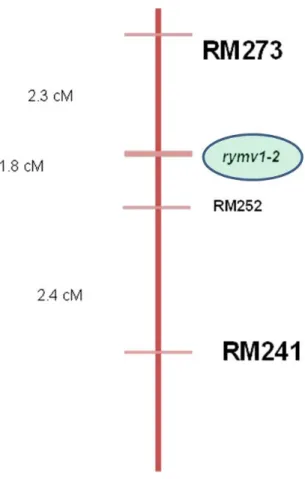
Unlike conventional breeding (which relies on phenotypic variation between plants for selection), molecular breeding relies on molecular markers (Semagn et al., 2006). This process, known as Marker-Assisted Selection (MAS), takes advantage of the absence of environmental effect on the natural variation observed in the DNA. Thus, selection can be conducted at early stages of the plants' development and conducted accurately on the gene of interest, using Polymerase Chain Reaction (PCR) and genome sequencing (Farooq and Azam, 2002). Several major genes' resistance to RYMV were discovered and mapped on the rice genome (Ndjiondjop, 1999; Albar et al., 2003; Thiémélé et al., 2010). Thus, closely linked molecular markers are available for MAS for RYMV resistance to improve local popular, but susceptible rice varieties.
Farmers' preferences
Although yield and resistance to the factors decreasing yield are the main concerns of most plant breeders, several high yielding crop varieties developed by researchers have failed to be adopted by farmers (Witcombe et al., 2003). Participatory Rural Appraisals (PRA) were used in several countries or regions to assess farmers' preferences prior to starting a breeding program.
Thereafter, a Participatory Varietal Selection (PVS) can be used to ensure that improved varieties actually meet the farmers' preferences (Sthapit et al., 1996).
Synopsis and Research objectives
Resistance to RYMV has become a priority for rice breeders at the AfricaRice due to its devastating effects on rice in Africa. USAID under its project "End Hunger in Africa" funded AfricaRice to introgress a high resistance gene against RYMV into elite rice varieties of four West African countries (Burkina Faso, Gambia, Guinea and Mali), using MAS. The overall strategy was to tackle the disease, firstly on a short and medium-term through the use of genetic and genomic tools developed on rice; and secondly in the long term through the use of genetic diversity and development of lines with comprehensive quantitative resistance. This study formed part of this project.
The overall goal of the research was to limit the disastrous effects of RYMV in Niger and West African lowland rice agrosystems, through the use of genetic diversity and breeding for RYMV resistance using MAS. A further purpose was to document the state of rice diversity in Niger, so that an appropriate conservation plan could be implemented.
4 The specific objectives of the research were to:
i. Generate formal data on farmers' perception of rice varieties, main constraints on rice production and the status of RYMV in the main rice growing areas of Niger;
ii. Make the first extensive collection of rice landraces in Niger, representing the genetic variability of rice species and landraces in the country;
iii. Study the extent, partitioning and genetic structure of the collection;
iv. Establish the phenotypic variability, and genetic value of the collection for future breeding programs;
v. Screen the collection for resistance to RYMV, looking for new sources of resistance;
vi. Convert some elite West African rice cultivars for resistance to RYMV using MAS.
Thesis plan
The following organization has been chosen for the thesis:
Thesis Introduction Chapter One: Literature review
Chapter Two: Farmers' perception of rice varieties, major constraints to rice production and RYMV in the region of Tillabéry, West Niger
Chapter Three: Collection and agro-morphological variability of rice species from Niger Chapter Four: Genetic diversity and population structure of Oryza species from Niger Chapter Five: Screening a rice collection from Niger for resistance to RYMV
Chapter Six: Efficiency of MABC to improve the resistance of five West African elite rice cultivars to RYMV
Thesis overview References
Abo, M.E; Sy.A.A; Alegbejo, M.D. 1998.Rice moffle virus (RYMV) in Africa: evolution, distribution, economic significance on sustainable rice production and management strategies.journal of Sustainable Agriculture, 11:85-111
5
Akimoto M., Shimamoto Y., Morishima H. (1999) The extinction of genetic resources of Asian wild rice, Oryzarufipogon Griff.: A case study in Thailand. Genetic Resources and Crop Evolution 46:419- 425. DOI: 10.1023/a:1008622405001.
Albar L., Ndjiondjop M.N., Esshak Z., Berger A., Pinel A., Jones M., Fargette D., Ghesquière A. (2003) Fine genetic mapping of a gene required for Rice yellow mottle virus cell-to-cell movement.
Theoretical and Applied Genetics 107:371-378. DOI: 10.1007/s00122-003-1258-4.
Alfari I., Garba I., Salifou I. (2006) Rapport d'étude: Détermination des surfaces et estimation de la production de riz hors aménagement hydro-agricole (RHA). Projet Pafriz, AGRHYMET, Niamey.
pp. 41
Bakker W. (1970) Rice yellow mottle, a mechanically transmissible virus disease of rice in Kenya.
Netherlands Journal of Plant Pathology 76:53-63. DOI: 10.1007/BF01974433.
Basso A., Souley I., Adamou H., Sere Y., Halidou A. (2010) Biologic characterization of the Rice yellow mottle virus isolates in Niger. Annales de l'Université Abdou Moumouni XI-A:112- 119.
Bezançon G., Bozza J., Koffi G., Second G. (1977) Diversité génétique d' O. glaberrima et O.
breviligulata en observation directe et par electrophorèse d'isozymes. In: Meeting on African rice species. IRAT-ORSTOM, Paris. p15-46.
Chang T.T. (1984) Conservation of rice genetic resources: luxury or necessity? Science 224:251-256.
DOI: 10.1126/science.224.4646.251.
Diagne A., Midingoyi S.-K.G., Wopereis M., Akintayo I. (2010) The NERICA success story:
development, achievements and lessons learned, Africa Rice Center (AfricaRice), Cotonou. pp.
Faivre-Dupaigre B., Allahoury A., Eychenne D., Gado B., Koure A., Moha A. (2006) Propositions pour 29.
une politique rizicole au Niger. Projet Pafriz, IRAM, Montpellier. pp. 121
Farooq S., Azam F. (2002) Molecular markers in plant breeding-I: Concepts and characterization. Pakistan Journal of Biological Sciences 5:1135-1140.
Kouassi N.K., N'Guessan P., Albar L., Fauquet C.M., Brugidou C. (2005) Distribution and characterization of Rice yellow mottle virus: A Threat to African farmers. Plant Disease 89:124- 133. DOI: 10.1094/PD-89-0124.
Malik S.S., Singh S.P. (2006) Role of plant genetic resources in sustainable agriculture. Indian Journal of Crop Science 1:21-28.
Morin S.R., Calibo M., Garcia-Belen M., Pham J.-L., Palis F. (2002) Natural hazards and genetic diversity in rice. Agriculture and Human Values 19:133-149. DOI: 10.1023/a:1016018711315.
Ndjiondjop N.M.N. (1999) La resistance du riz au virus de la panachure jaune: Heredité, mecanismes et cartographie genetique, PhD thesis, University of Montpellier II, Montpellier. pp. 137.
Reckhaus P.M., Adamou J. (1989) Field observations and field research on RYMV in the Republic of Niger. Paper presented at the IRTP-Africa Workshop at ICIPE Duduville, Kenya, 20-23 March, 1989:12p.
Second G., Bezançon G., Bozza J. (1977) Variabilité d'Oryza longistaminata et du complexe sativa des Oryza en Afrique: Aspects ecologiques et evolutifs. In: meeting on African rice species. IRAT- ORSTOM, Paris. p47-55.
Semagn K., and B.Å., Ndjiondjop M. N. (2006) An overview of molecular marker methods for plants.
African Journal of Biotechnology 5:2540-2568.
Sido A. (2010) Etat des lieux de la riziculture: Cas du Niger. Projet Espagnol sur la riziculture en Afrique de l'Ouest, INRAN, FAO, Niamey. pp. 57
Sthapit B.R., Joshi K.D., Witcombe J.R. (1996) Farmer participatory crop improvement. III. participatory plant breeding, a case study for rice in Nepal. Experimental Agriculture 32:479-496. DOI:
10.1017/S001447970000154X.
Teklu Y., Hammer K. (2006) Farmers' perception and genetic erosion of tetraploid wheats landraces in Ethiopia. Genetic Resources and Crop Evolution 53:1099-1113. DOI: 10.1007/s10722-005-1145- 8.
6
Thiémélé D., Boisnard A., Ndjiondjop M.-N., Chéron S., Séré Y., Aké S., Ghesquière A., Albar L. (2010) Identification of a second major resistance gene to Rice yellow mottle virus, RYMV2, in the African cultivated rice species O. glaberrima. Theoretical and Applied Genetics 121:169-179.
DOI: 10.1007/s00122-010-1300-2.
USDA. (2008) Rice: Market Outlook, U.S. Department of Agriculture, New York.
Vaughan D.A. (1994) The Wild Relatives of Rice: a Genetic Resources Handbook International Rice Research Institute (IRRI), Manila, Philippines.
WARDA. (2001) Rice yellow mottle virus. Annual Report 2000. West Africa Rice Development Association (WARDA), Bouaké. pp. 27-37
Witcombe J.R., Joshi A., Goyal S.N. (2003) Participatory plant breeding in maize: A case study from Gujarat, India. Euphytica 130:413-422. DOI: 10.1023/a:1023036730919.
7 Chapter 1: Literature review
1.1 Rice in the world and in Africa
Rice is the staple food of more than half of the world's population (Zeigler and Barclay, 2008).
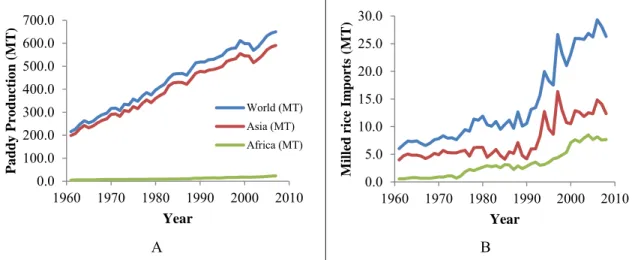
However, the world's rice production is largely unequally partitioned, with Asia producing more than 90% of the global production, of which China and India are leaders. Africa is far behind (Figure 1.1A). Indeed, rice supplies nearly 75% of the calorific uptake of Asians, 21% of global per capita energy and 15% of per capita protein (MacLean et al., 2002; Khush, 2005). Despite being far behind Asia, yearly rice production in Africa has increased to 3.81% from 1961 to 2006, while yearly rice consumption has increased by 4.25% during the same period (WARDA, 2008a). This situation, coupled with the rapid increase of Africa's population and food preferences changing from other coarse cereals to rice led to a 5.84% increase of rice consumption in the area. Thus, annually one third of global rice on the international market (40%
of Africa rice demand), is being imported into Africa (Figure 1.1B) at a cost of US$4 billion for a region where more than 40% of the population lives on less than $1 a day (AfricaRice, 2009;
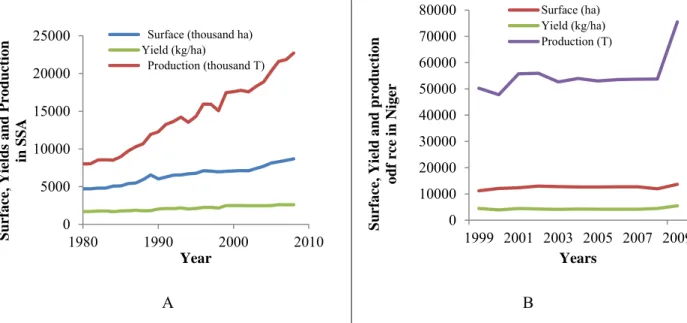
Mohapatra, 2010). The increase in rice production in Africa is mainly due to augmentation of rice cropping areas, rather than yield improvement, the progression of which is very low (Figure.
1.3A). The rate of increase fastest around 1985; corresponding to a period when most West African countries invested in the development of huge irrigated rice production schemes. In Africa, rice production and demand are also disproportional between countries and regions.
Egypt, Madagascar, Nigeria, and Cote d'Ivoire are African leaders in rice production, while West Africa is responsible for 65% of the continent's production and East Africa 30%. Southern and Western Africa are the biggest rice consumers, with annual demands growing, to 11.58% and 6.55%, respectively, between 2001-2005 (WARDA, 2008a).
8 1.2 Rice in West Africa
West African rice production areas have grown beyond the general expansion of rice production on the continent, but still fail to fill the gap between production and demand in the region. Thus, West Africa relies on importations for 42% of its rice demand. The major rice importers of West Africa are Nigeria, Senegal and Cote d'Ivoire. The rising demand for rice consumption in West Africa can be attributed to changes in people's food preferences due to increased urbanization, coupled with changes in the incomes of urban dwellers (MacLean et al., 2002). However, increased rice consumption in the area is not evenly shared. Rice consumption rate increased by 46.87% in Benin, 14.03% in Mali, 7.46% in Cote d'Ivoire between 2001 and 2005. However, rice consumption reduced in other countries such as the Gambia, Burkina Faso and Niger (WARDA, 2008a). But this decrease in rice consumption can be attributed more to lack of capacity to provide enough rice, rather than real desire to reduce the rice consumption.
1.3 Geography of Niger
Niger is a landlocked country of 1,267,000 km2. It is bordered to the north by Algeria and Libya, the east by Chad, the west by Mali and Burkina Faso, and south by Benin and Nigeria (Figure 1.2) Depending on the annual amount of rainfall, four main climatic zones, oriented from south to north, are found in Niger:
A B
0.0 100.0 200.0 300.0 400.0 500.0 600.0 700.0
1960 1970 1980 1990 2000 2010
Paddy Production (MT)
Year
World (MT) Asia (MT) Africa (MT)
0.0 5.0 10.0 15.0 20.0 25.0 30.0
1960 1970 1980 1990 2000 2010
Milled rice Imports (MT)
Year
Figure 1.1: Evolution of paddy rice production (A) and milled rice imports (B) in the world, in Asia and in Africa. Source: (IRRI, 2009)
9
- The Sahelian- sudanean zone, with rainfall ranging from 600 to more than 800 mm representing 1% of the territory. This zone covers part of the Niger River in the region of Dosso and the Dallol Maouri watercourse;
- The Sahelian zone with 350 to 600 mm rain per year, which covers 10% of the country's surface;
- The Sahelian-Saharan zone with 150 to 350 mm rain per year, which represents 12% of the country;
- The Saharan zone, with less than 150 mm of rain per year, which covers 77% of the country surface.
Thus, agriculture is practicable only on a maximum of 23% of the country's lands, depending on the yearly rainfall, of which only 11% is really suited to cropping.
The average day temperature ranges from 31°C to 41°C but, temperatures fall below 20°C at night.
The Sahelian-saharan zone is primarily dedicated to raising livestock. In 2008, the population of camels, cattle, goats, sheep and horses were estimated at 33,443,169 million heads in Niger (FAO, 2010). Agriculture accounts for 41% of the gross domestic product (GDP), 44% of the exports and employs 90% of the labour force, of which 83.8% live in rural area. The agricultural production is dominated by pearl millet, sorghum and rice. The country is the foremost producer of millet and sorghum in West Africa (Sido, 2010).
10
Figure 1.2: Administrative region, Main and seasonal watercourses of Niger (source: National Institute of Statistics of Niger, 2009).
The watercourses represented in the North of the country are fossils or underground due to desertification
11 1.4 Production and evolution of rice in Niger
In Niger, rice is mainly produced along the Niger River in the south-west part of the country in the region of Tillabéry, Dosso and Niamey, as well as along the Komadougou River (south-east) in the Diffa region. It is only rarely produced in the Maradi, Tahoua and Zinder regions (central- south). Three main rice agrosystems are found in Niger (Bonkoula and Miezan, 1982; Sido, 2010):
- Rainfed lowland rice with free or semi- controlled submersion, on the flooding basin of the Niger and Komadougou rivers, as well as on the seasonal watercourses and marshlands (Dallols, Goulbis, etc.) in central-south regions;
- Deepwater to floating agrosystems, in the rivers (Niger and Komadougou), with water levels higher than 1.5 m;
- Irrigated rice in huge irrigated schemes, with full water control and irrigation channels, under the control of local farmers' unions and the "Office National des Aménagements Hydro- Agricoles" (ONAHA), there are few small private irrigated areas using water-pumps.
Attempts are being made to introduce rainfed upland rice production into the region of Dosso and Maradi (Sido, 2010). The production, as well as the yield, depends on the system utilized by the farmer. The first two systems are cropped in the traditional way, while the last is modernized with mechanization of land preparation, improved seed utilisation, and the use of fertilizers, pesticides and herbicide applications. The traditional system, covering 29,013.6 ha, is cropped once a year during the rainy season with yields around 0.7 to 1.3 ton per ha, whereas the 41 irrigated schemes under the control of ONAHA cover 8,706.7 ha. Two croppings are conducted per year on 6,500 ha, with yields between 4 and 5 tons per ha. Private irrigated areas, currently representing 1,500 ha, yield up to 3 tons per ha (Alfari et al., 2006; Sido, 2010).
Since 1991, the national rice production figure has been estimated to range between 55,000 and 70,000 tons per year, but this has taken into account only production on irrigated lands. Thus, very little change in the cultivated area and the yield were reported the last decade (Figure 1.3B).
A dropping-off of rice production during 1999-2000 can be attributed to a major outbreak of RYMV, together with the lack of fertilizers and chemicals produced by an international embargo placed on Niger (due to a military coup) during this period. An increase of the national
12
production in 2009 can be attributed to a slight increase of the irrigated area and the distribution of fertilizers and pesticides under a project sponsored by the World Bank.
A B
Figure 1.3: Evolution of paddy rice production, rice growing surfaces and yield in Africa (A) (IRRI, 2009) and in Niger (B) (Sido, 2010)
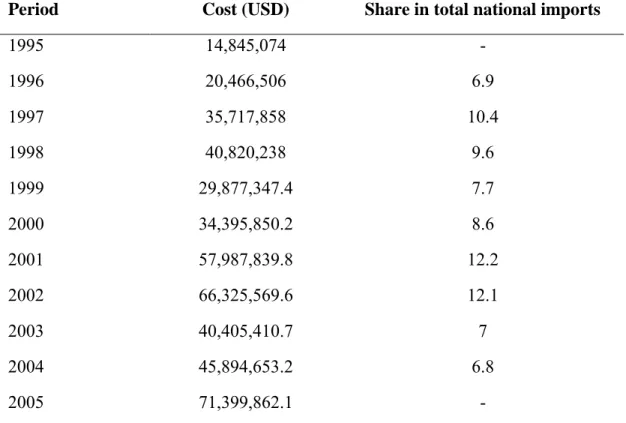
Recently, a study reported that the traditional rice growing system is producing around 62,030 tons per year along the Niger River (Alfari et al., 2006), thus the new figure of national rice production could be considered as 132,030 t in 2009. However, this production is far from filling the gap between the national production and demand, which has quadrupled between 1999 and 2005 reaching 71399862.1 USD, as shown in Table 1.1, (Faivre-Dupaigre et al., 2006). In addition, during the same period, rice constituted only 1.7% of the primary agricultural sector and 2.5% of the cereal production, and accounted for an amount between one third and half of the national balance of trade. Thus, demand for rice is growing rapidly in the Niger, both in towns and rural areas, where at times, millet and sorghum are not available (drought years) (Sido, 2010).The per capita consumption of rice in Niger ranged from 2.4 kg to 52.7 kg depending of the income of the households, with an average of more than 20 kg (Faivre-Dupaigre et al., 2006).
0 5000 10000 15000 20000 25000
1980 1990 2000 2010
Surface, Yields and Production in SSA
Year Surface (thousand ha) Yield (kg/ha)
Production (thousand T)
0 10000 20000 30000 40000 50000 60000 70000 80000
1999 2001 2003 2005 2007 2009 Surface, Yield and production odf rce in Niger
Years Surface (ha) Yield (kg/ha) Production (T)
13
Table 1.1: Changes in levels of rice importations in value (USD) and weight as national imports into Niger between 1995 and 2005
Period Cost (USD) Share in total national imports
1995 14,845,074 -
1996 20,466,506 6.9
1997 35,717,858 10.4
1998 40,820,238 9.6
1999 29,877,347.4 7.7
2000 34,395,850.2 8.6
2001 57,987,839.8 12.2
2002 66,325,569.6 12.1
2003 40,405,410.7 7
2004 45,894,653.2 6.8
2005 71,399,862.1 -
Source: Data adopted from Customs Service adapted (Sido, 2010)
1.5 Constraints on rice production 1.5.1 The unexploited potential
Several inconsistencies exist about information relating to the potentially irrigable land in Niger.
Three estimates have been provided: 219,000 ha, 270,000 ha and 400,000 (Faivre-Dupaigre et al., 2006), but 270,000 ha is the figure generally accepted, of which 150,000 ha lies along the Niger River, 38,000 ha along marshes and lakes in the south-central regions of the country, 20,000 ha around the lake Chad and the Komadougou, and the remaining in marginal zones of the northern region (Bonkoula and Miezan, 1982; Sido, 2010). However, only 13,500 ha are fully exploited, while the rest is either cultivated traditionally, or not exploited at all. Moreover, Niger is the only country among the countries crossed by the Niger River, which does not have a dam built across it. Thus, controlling water is also a challenge in improving the national rice production. In addition to the control of water, agricultural mechanization, poor management and maintenance of existing infrastructure, the absence of a strong formal seed system and fertilizer supply system,
14
and several inappropriate agricultural policies all provide restraints limiting rice production in Niger (Sido, 2010).
1.5.2 Abiotic stresses
Apart from some pockets of salinity, and iron toxicity in the area of the Dallol Maouri in the region of Dosso, along the Komadougou river in the region of Diffa, and (rarely) in some irrigated schemes of the Niger River, drought and flood constitute the main abiotic stress in the traditional lowland agrosystem in Niger. The soil conditions have been studied in Niger and à large variability has been found. Along the Niger River soils are pseudo-gley developed on river sediments (Bonkoula and Miezan, 1982). Due to the lack of an important permanent water courses in the area, the central- south zone is characterized by medium to low-fertility soils in the regions of Maradi and Tahoua, with water pH ranging from moderately acid to neutral, while soils are acid in the region of Zinder. On the other hand, soils in the region of Diffa (Lake Chad and Komadougou River areas) are basic on the irrigated scheme, but acidic or neutral in traditional farmers' fields (Masunaga, 1994).
1.5.3. Biotic stresses Pests
During the rainy season several insect pests of rice can be found. The African rice stem borer (Chilo zacconius B., Lepidoptera, Pyralidae) is the most frequent rice pest in Niger, while the whitefly Aleurocybotus indicus D. and S. (Homoptera, Aleyrodidae) and the beetle Trichispa sericea G. (Chrysomelidea, Hispiniae) are the most damaging. Finally, incidences of Nymphula sp (Leptoceridae Neoprla) have also been reported. There is no major pest occurrence in rice crops grown during the dry season cropping (Sido, 2010).
Fungal diseases
There is no major incidence of fungal disease on rice in Niger. Minor incidences of brown spots due to Gerlachia orysae (G. and M.) have been reported at levels ranging from 10 to 35% (Sido, 2010). Traces of leaf blast due to Magnaporthe grisea have been noticed in some irrigated schemes, but the incidence remains insignificant, possibly due to high temperatures and low relative humidity.
15 Bacterial diseases
Bacterial leaf blight (BLB) due to Xanthomonas oryzae pv. oryzae Ishiyama (Anonymous 1990) is the second most important disease inflicting irrigated rice in Niger. The disease has been reported on 21 irrigated rice schemes along the Niger (south-west) and the Komadougou (south- east) rivers, with its prevalence reaching 70% in farmers' fields (Séré et al., 2005b). The genetic diversity of a collection of 48 isolates of BLB from Niger was determined revealing that only 45.8% were pure Xanthomonas oryzae pv. oryzae. There was co-infection with Xanthomonas oryzae pv. oryzicola Fang et al., Pseudomonas fuscovaginae Miyajima et al. or Pseudomonas syringae pv. syringae Van Hal. At times, combinations of three pathogens have been detected (Onasanya et al., 2010). Yield losses range from 15 to 25% (Sido, 2010).
1.6 Viral disease: Rice yellow mottle virus (RYMV)
The RYMV is the only viral disease of rice reported in Niger, but it is the most important and damaging rice disease in the country (Basso et al., 2010). This Sobemovirus was first reported in Kenya (Bakker, 1970) and has progressively conquered the entire African continent and Madagascar. The virus is a T = 3 icosahedral particle of 25-28 nm in diameter, formed by 180 assembled subunits of 26-kDa coat protein. The particle, composed of approximately 20% RNA, 80% protein and containing no lipids or carbohydrates, is stabilized by divalent cations (Ca2+), pH, protein-protein interaction, salt bridges between proteins and RNA (Opalka et al., 2000). The genome of RYMV is composed of a single-stranded, positive-sense RNA, whose length varies around 4,452 nucleotides, depending of the strain, of contains only four open reading frames (ORF1, ORF2a, ORF2b, and ORF4) (Kouassi et al., 2005) coding for proteins involved in different part of the viral reproductive and infectious cycle (Figure 1.4).
Figure 1.4: Genome organization of RYMV. ORF1 code for a 17.8 kDa protein involved in the virus movement, ORF3: code a 13.7 kDa protein, ORF4: code for a protein of 26 kDa (Fargette et al., 2004)
16
Bonneau et al. (1998) found that the P1 protein coded by ORF1 is involved mainly in the infection process and also in the virus spread in the plant. The ORF2a and ORF2b polyproteins (Serine protease-like and viral protein, genome-linked (VPg), RNA dependent RNA polymerase) are involved in virus replication. The sequence of these components is well conserved within the genus, which has therefore been used for phylogenic studies (Abubakar et al., 2003; Fargette et al., 2004; Traoré et al., 2005). The CP gene implicated in the virus encapsidation is also essential to full infection. Additionally, it is involved in cell-to-cell, long distance movement and systemic infection (Brugidou et al., 1995).
1.6.1. Occurrence and incidence of RYMV
The RYMV was first reported in Niger by Reckhaus and Adamou (1986), and then appeared in all major irrigated rice schemes in Niger, with yield losses ranging from 56-68%. The high yielding Asian rice cultivar IR1529 released following the creation of large irrigated schemes in Niger, to promote a green revolution, has been reported to be highly susceptible (Reckhaus and Adamou, 1989). Along with the widespread cultivation of the susceptible variety BG90-2, these two varieties may be the major cause of RYMV epidemic outbreaks in the country, and also in several Sahelian countries (WARDA, 2001).
The disease has been reported in all African rice lowland agrosystems and is associated with major losses all over the continent. Between 1975 and the late 1990s, RYMV has been observed in all rice lowland agrosystems of West African countries (WARDA, 2001). As in Niger, irrigated rice schemes in Mali were cropped with BG90-2, losses ranging from 64-100% have been reported (Sy et al., 1993). In Sierra Leone, losses of 82% have been reported (Taylor et al., 1990). Losses of 0.4 to 1.6 tons per ha were reported in Burkina Faso (WARDA, 2001). The RYMV was first found to infect only lowland rice varieties, but later, the virus was also reported in upland agrosystems (Awoderu et al., 1987). In central Africa, the virus has been reported in Chad and Cameroon (Traoré et al., 2001); in Eastern Africa, its centre of origin, the disease has been detected in Kenya, Tanzania, Rwanda and Malawi (Thottappilly, 1992; Banwo, 2003;
Ndikumana et al., 2011). Madagascar has also been seriously affected, to a point where farmers have abandoned their fields (Reckhaus and Randrianangaly, 1990).
Lack of resistance in the Asian rice varieties and crop uniformity could explain the deep impact of RYMV during the 1990's. Indeed, 70 to 90% of the area in each infected West African country
17
was planted with the same high-yielding varieties (BG90-2, IR1529, Bouaké189, IR8, IR54 and IR65) that are highly susceptible to RYMV.
1.6.2. Epidemiology, transmission and symptoms of RYMV
Both cultivated rice species in Africa, Oryza glaberrima Steud. and O. sativa L. can be infected by RYMV. Additionally, the wild African rice species, O. longistaminata, and O. barthii, and several wild grasses such as Echinochloa colona L., Panicum repens L., Erasgrotis tenuifilia (Rich.) Hochst. ex Steud., and Dinebra retroflexa (Vahl) Panzer, are probable hosts of the virus (Bakker, 1971; Konate et al., 1997). From these sources, the virus can be introduced into a field by several vectors, including both insects and mammals. Beetles belonging to the Chrysomelidea family such as Sesselia pusilla G. (Chrysomelidae, Galerucinae), Chaetocnema pulla C.
(Chrysomelidea, Halticinia), Trichispa sericea G. (Chrysomelidea, Hispiniae), Dicladispa viridicyanea K. (Chrysomelidea, Hispinae), and the grasshopper, Conocephalus merumontanus S. (Orthoptera, Tettigonidae), can transmit the virus in a semi-persistent but not circular manner, 1 to 8 days after feeding on an infected plant (Bakker, 1971; Hibino, 1996; Abo and Sy, 1998).
Mammals such as grass rats Arvicanthis niloticus D., domestic cows (Bos spp.), and donkeys (Asinus spp.) are vectors of RYMV (Sarra and Peters, 2003). Moreover, in infected fields, the virus's dispersal can be facilitated by the wind through contact between plant leaves (Sarra et al., 2004). These authors found that contamination of healthy plants was almost ten times higher in plots with a density of 33 plants m-2 than in plots with 16 plants m-2. In addition, the virus can also be transmitted mechanically by farmers' contaminated hands during weeding, as well as through farming equipment such as sickles, and through injuries of young plants during transplanting (Abo and Sy, 1998; Abo et al., 2000). Although, RYMV has been detected in all seed parts of several rice genotypes at high rates (65 to 100%), there is no evidence of seed transmission (Konate et al., 2001). However, rice seedbeds were pointed out as primary sources of RYMV infections (Traoré et al., 2006).
The type of symptoms, as well as the delay of symptom development, depends on the mode of transmission, the occurrence of vectors, the period of infection and the rice variety involved.
Generally, one to two weeks after infection small, yellowish-green, oblong to linear spots appear on leaves. Later, the symptoms strengthen on infected leaves, with darker spots developing in the centre of the yellow mottles. Depending on the severity and the rice variety, old leaves turn into
18
yellow, or orange (Bakker, 1974). However, the symptoms are more severe on seedlings under 20 days old, which may stop growing and die. Even if plants survive from 20 to 50 days after transplanting, yield components such as tillering, plant height (stunting), and flowering are reduced. In addition, panicles are poorly exserted and may be sterile (Bakker, 1974; Awoderu, 1991). Later infection (more than 50 days after planting) displays only few symptoms on the leaves but flowers and seeds will be normal. On susceptible genotypes earlier infected plants usually die, whereas in more resistant varieties, the symptoms may not be distinctive (Ndjiondjop et al., 1999).
In susceptible varieties, the virus can multiply easily and spread all over the plant. Opalka et al.
(1998) studied RYMV multiplication and movement in susceptible O. sativa rice varieties using Western immuno-blotting, Northern blotting, and electron microscopy. After mechanical inoculation of a few leaves, RYMV RNA and coat protein monitoring established that six days are sufficient for the virus to colonise all the leaves. Virus particles are abundant in all tissue including epidermal, mesophyll, bundle sheath, and vascular parenchyma cells. The findings suggest that the virus migrates towards vessels after having weakened pit membranes by absorbing the Ca2+ necessary for its stability. Vacuoles have been found to be the preferable compartment for viral maturation, because of the acidic pH, that favoured Ca2+ binding to virus particles (Brugidou et al., 2002).
Since RYMV is transmitted by various insect vectors, their occurrence may influence epidemics onsets and development. Heinrichs et al. (1997) studied the seasonal occurrence of RYMV in lowland rice in Côte d'Ivoire and found that infected plants were severely affected in the July and August plantings, when insect pest occurrence was at its most populous. However, there was no correlation between the disease incidence and insect population. Following the symptoms described above and the dominant mode of virus dispersal in place, different patterns of disease distribution can be observed in the infected fields: entirely or almost entirely infected fields may be surrounded by partially or non- infected fields; variable numbers of distinct patches of infected zones spread throughout the infected field (Sarra and Peters, 2003).
1.6.3. Variability and evolution of the virus
Several serological, pathogenicity, and molecular studies have been conducted to assess RYMV diversity and distribution in Africa. Konate et al. (1997) have classified West African Sudano-
19
Sahelian area RYMV isolates, into three distinct serogroups (S1, S2 and S3), using two polyclonal antisera and seven monoclonal antibodies' reactivity in ELISA. The first serogroup is widely distributed in West Africa, while the second and the third serogroups are located in the Sudano-Savannah and the Savannah zones, respectively. Furthermore, the correlation of these serogroups using a set of differential rice varieties postulated that RYMV strains are closely related and can be defined by their agro-ecological zone. They display variability in coat protein and pathogenicity. Similar grouping has been found by using double immuno-diffusion gel assay based on twenty six polyclonal antisera to assess the serological diversity of 42 West African RYMV isolates (Séré et al., 2005a). The authors found that the first two groups- S1 and S2- were widely distributed across West Africa. However, isolates from forest zones were different from the savannah ones. In Côte d'Ivoire, for example S1 and S2 occurred alone in the Sahelo- Soudanian (North) and in the Forested (West) zones, respectively, while both coexisted in the northern Guinean savanna (N'Guessan et al., 2001). In cases of mixed infection, S2 always dominated over S1, both in viral capsid and replication.
Additionally, broad molecular and phylogeographical studies of RYMV on the continent were conducted. The molecular typing was based either on the sequences of the ORF4 coding for the coat protein (CP) and the ORF1 coding for the movement protein P1, or on the full genome sequences. Six major serotypes were revealed and were assigned into six clades which have differentiated, from East to West Africa (Table 1.2). The West African strains were found to be less divergent than Central African ones, which were themselves less divergent than East African strains (Pinel et al., 2000; Fargette et al., 2002; Abubakar et al., 2003; Fargette et al., 2004;
Traoré et al., 2005).
It has been suggested that RYMV appeared for the first time in East Africa around 200 years ago (Fargette et al., 2008a), and later in West Africa, following a progressive dissemination and differentiation toward the western side of the continent. Furthermore, with a mutation rate of 4 x 10⁴ and 8 x 10⁴ nucleotides (nt)/site/year, RYMV was found to evolve as rapidly as 50 animal viruses (Fargette et al., 2008b). This ability of the virus could explain the inconsistencies observed between the genetic differentiation and the spatial separation of isolates. For example, virus isolates S1 from Niger and Benin (West Africa) are closer to isolates S1 from Cameroon (Central Africa) than isolates found in the bordering country, Burkina Faso (Traoré et al., 2005).
20
Man-mediated dispersal of the virus in the continent could also explain the process (Traoré et al., 2009). However, evidence of recombination in RYMV was found in East Africa, indicating that genetic evolutionary factors under variable selection pressures, as well as lineages, contributed to RYMV evolution (Pinel-Galzi et al., 2009).
Table 1.2: Repartition of RYMV isolates on the African continent
Areas Serotypes Clades
West Africa S1, S2, S3 3, 4, 5 and 6
Central Africa S1 3
East Africa S4, S5, S6 1 and 2
Sources: (Abubakar et al., 2003; Traoré et al., 2005)
1.6.4. Screening for resistance to RYMV
Although breeding for comprehensive resistance does not necessarily require a good source of resistance, the time needed for a good response to selection depends on the initial frequencies of desirable traits in the target population. Therefore, screening for resistance aims to provide parents with a high level of genetic frequencies for desirable traits. The screening process requires (1) a good method for inoculum isolation and multiplication, (2) a good experimental design, (3) an efficient inoculation technique and (4) a valuable notation method to assess the different responses of the material to be screened.
Generally, RYMV can be easily isolated from any infected plant in an infected field on the basis of the symptoms of its leaves. Samples are stored in ice boxes during collection and later in freezers for long term conservation. The virus can be then extracted following the technique described by Fauquet and Thouvenel (1977). Leaves are ground in a phosphate buffer (0.1 M KH2PO4, 0.1 M Na2HPO4, adjusted to pH 7.2) using 1:10 (Ndjiondjop et al., 1999) or 1:15 ratio (w:v) (Séré et al., 2005a). The homogenate is then filtrated and added with 5 mg ml-1 carborundum powder (Konate et al., 1997), which functions as an abrasive to facilitate mechanical infection. The sap can be used for inoculation for 14 days (Ndjiondjop et al., 1999;
N'Guessan et al., 2001) to 21 days (Séré et al., 2005a) for old and susceptible rice seedlings such
21
as BG90-2, Bouake-189, IR64 or IR8 for inoculum propagation. From these susceptible plants, the final inoculum is prepared by extracting viruses two or four weeks after infection, depending on the intensity of the symptoms developed, following the same procedure described above. For experiments involving the virus, the inoculum concentration is determined and dilutions made when necessary. Plants to be tested are inoculated on the last expanded leaf two to three weeks after sowing. In the screenhouse, as well as in a field, the intensity of the infection could be recorded, using the Standard Evaluation Scale (SES) of IRRI (2002), where score 1 for no symptoms and plants considered to be highly resistant (HR), score 3 for sparse dots or streaks considered as partially resistant (PR), score 5 for visible mottling on green to light-green leaves considered as Intermediate (I), score 7 for yellowing considered as susceptible (S) and stunting, and score 9 for necrosis and sometimes plant death, for varieties considered to be highly susceptible (HS) (Konate et al., 1997; Rakotomalala et al., 2008).
In addition to the visual evaluation of symptom intensity, other phenotypic symptoms are usually being recorded. Ghesquière et al. (1997) recorded plant height and number of tillers used at two growing stages (40 days post-inoculation and plant maturity), heading date, number of grain per panicle, fertility, and grain weight. Similar data was also collected by Albar et al. (1998). In addition to the disease severity score and the yield, the chlorophyll content of leaves can also be evaluated using a SPAD chlorophyll meter (Onasanya et al., 2004).
Moreover, the virus content of infected plants can be evaluated to assess the resistance or tolerance of a rice variety. Double Antibody Sandwich ELISA (DAS- ELISA) tests using polyclonal antibodies, can be used (Albar et al., 1998) or monoclonal antibodies (MAbs) in triple antibody sandwich ELISA (TAS- ELISA) (N'Guessan et al., 2000). The utilization of ELISA can separate resistant accessions from tolerant ones, where the plant, can grow normally, despite a high virus titre.
1.6.5. Management of RYMV
Outbreaks of RYMV epidemics are due mainly to the increased use of intensive irrigation, fertilizer, and pesticide utilisation, changing cultural practices such as crop monoculture, and transplanting, that induces injuries, therefore increases mechanical contamination. Therefore, as is the case with most plant diseases, an integrated control programme is required, including good cultural practises, vector controls, genetic engineering and breeding for resistant varieties.