UNIVERSITY OF KWAZULU-NATAL
The Impact of Foreign Ownership on Firm Performance: Evidence from South Africa
By Delane Naidu
214549400
A dissertation submitted in fulfilment of the requirements for the degree of Master of Commerce by research
School of Accounting, Economics and Finance College of Law and Management Studies
Supervisor: Dr. Ailie Charteris
Co-Supervisor: Dr. Peter Brian Denton Moores-Pitt
2020
i
DECLARATION
I, Delane Naidu, declare that:
(i) The research reported in this dissertation/thesis, except where otherwise indicated, is my original research.
(ii) This dissertation/thesis has not been submitted for any degree or examination at any other university.
(iii) This dissertation/thesis does not contain other persons’ data, pictures, graphs or other information, unless specifically acknowledged as being sourced from other persons.
(iv) This dissertation/thesis does not contain other persons’ writing, unless specifically acknowledged as being sourced from other researchers.
Where other written sources have been quoted, then:
a) their words have been re-written but the general information attributed to them has been referenced;
b) where their exact words have been used, their writing has been placed inside quotation marks, and referenced.
(v) Where I have reproduced a publication of which I am author, co-author or editor, I have indicated in detail which part of the publication was written by myself alone and have fully referenced such publications.
(vi) This dissertation/thesis does not contain text, graphics or tables copied and pasted from the Internet, unless specifically acknowledged, and the source being detailed in the dissertation/thesis and in the References sections.
ii ACKNOWLEDGEMENTS
“If you have infinite patience and perseverance, success is bound to come. No mistake in that.”
~Swami Vivekananda
First and foremost, I would like to give praise to my Creator for blessing me with good health, knowledge, ability and resources to complete my thesis.
In my journey towards this degree, I have found a teacher, an inspiration, a role model, and a pillar of support in my supervisor, Dr. Ailie Charteris. Without her guidance, this thesis would not have been possible, and I shall eternally be grateful to her for her assistance, advice, and patience. Her impact on me extends far beyond this thesis.
My gratitude is extended to my co-supervisor Dr. Peter Moores-Pitt for his support and helping hand.
To my amazing mother, thank you for your support and the numerous sacrifices that you continue to make for me along this journey. Without your understanding, this accomplishment would not have been possible.
A special thank you goes to my friend and colleague, Mr. Damien Kunjal who has listened to my complaints and provided me with unwavering emotional support and continuous encouragement.
I am also grateful to the University of KwaZulu-Natal and the National Research Foundation (NRF) for providing me with the financial support to undertake my Master’s degree.
And finally, I would like to express gratitude to the Bindeseri family for their endless love and support. I will always be grateful to them for encouraging me in all my pursuits and inspiring me to follow my dreams.
iii ABSTRACT
The inflow of Foreign Direct Investment (FDI) is an important source of finance for South Africa.
The South African government continuously attempts to attract more FDI to improve economic growth. Several studies have examined the determinants and effects of FDI at a macroeconomic level in South Africa, but very little research has analysed the effects of FDI at a microeconomic level, where the focus is on firm performance. Foreign ownership sourced from FDI can have both direct and spillover (indirect) effects on firm performance. The absence of evidence regarding the effect of foreign ownership on firm performance raises questions about the impact of FDI at the firm-level in South Africa. Hence, this study seeks to determine the direct and horizontal spillover effects of foreign ownership on the financial performance of firms listed on the Johannesburg Stock Exchange (JSE).
This study uses panel data for non-financial firms listed on the JSE, covering the seven-year period from 2012 to 2018. The system Generalized Method of Moments (GMM) approach is employed to estimate the relationship as it accounts for endogeneity, simultaneity and unobserved heterogeneity, thus ensuring unbiased results. Firm performance is measured with Return on Assets (ROA), Return on Equity (ROE) and Tobin’s Q. The results for the direct effects vary across performance measures, with a non-linear effect of foreign ownership identified only when ROE is used. The findings show that foreign ownership has a positive effect on ROE at levels of foreign ownership below 40.1% but a negative effect at higher levels of foreign ownership. No evidence of horizontal spillovers are found for any performance measures. The implications of these findings are discussed along with recommendations for future research.
iv TABLE OF CONTENTS
ACKNOWLEDGEMENTS ... ii
ABSTRACT ... iii
LIST OF ACRONYMS ... xii
CHAPTER 1: INTRODUCTION ... 1
1.1 Background ... 1
1.2 Research Problem ... 2
1.3 Research Questions and Research Objectives ... 5
1.3.1 Research Questions ... 5
1.3.2 Research Objectives ... 6
1.4 Justification of the Study in a South African Environment ... 6
1.5 The Scope and Method of this Study ... 6
1.5.1 The Scope of Study ... 6
1.5.2 Research Methodology ... 7
1.6 Structure of the Study ... 7
CHAPTER 2: LITERATURE REVIEW ... 9
2.1 Introduction ... 9
2.2 Theoretical Framework ... 9
2.2.1 The Direct Effects of Foreign Ownership on Firm Performance ... 9
2.2.1.1 Agency Theory... 9
2.2.1.2 The Resource-based Theory ... 14
2.2.1.3 Institutional Theory ... 15
2.2.2 The Indirect Effects of Foreign Ownership on the Productivity of Domestic Firms ... 17
2.2.2.1 Horizontal Spillovers ... 17
v
2.2.2.2 Vertical Spillovers ... 19
2.2.2.3 Absorptive Capacity... 20
2.3 Empirical Evidence ... 22
2.3.1 Financial Performance ... 22
2.3.1.1 Linear Relationship ... 22
2.3.1.2 Non-Linear Relationship ... 26
2.3.1.3 No Relationship ... 29
2.3.2 Firm Productivity ... 30
2.3.3 FDI Spillovers ... 33
2.3.4 Firm Productivity and FDI Spillovers... 38
2.4 Conclusion ... 41
CHAPTER 3: DATA AND METHODOLOGY ... 42
3.1 Introduction ... 42
3.2 Data ... 42
3.3 Testing the Direct Effect of Foreign Ownership on Firm Performance ... 43
3.3.1 The Variables ... 44
3.3.1.1 The Dependent Variables ... 44
3.3.1.2 The Explanatory Variables ... 45
3.3.1.3 The Control Variables ... 45
3.3.2 Empirical Model ... 48
3.3.2.1 The Base Model ... 48
3.3.2.2 A Non-Linear Relationship ... 48
3.4 Testing the Indirect Effect of Foreign Ownership on Firm Performance (Horizontal Spillovers) ... 51
vi
3.4.1 Variables ... 51
3.4.1.1 The Dependent Variables ... 51
3.4.1.2 The Explanatory Variables ... 52
3.4.1.3 Control Variables ... 53
3.4.2 Empirical Model ... 53
3.5 Estimation Technique ... 53
3.5.1 Testing for Endogeneity ... 53
3.5.1.1 Test of Dynamic Completeness ... 55
3.5.1.2 Test of Reverse Causality ... 56
3.5.1.3 Test of Strict Exogeneity ... 56
3.5.1.4 The Durbin-Wu-Hausman (DWH) Test ... 57
3.5.2 Panel Estimation with an Exogenous Explanatory Variable ... 57
3.5.3 Panel Estimation with an Endogenous Explanatory Variable ... 58
3.5.3.1 Dynamic Model ... 58
3.5.3.2 First Difference GMM ... 59
3.5.3.3 System GMM ... 59
3.5.3.4 Arellano-Bond Autocorrelation Test ... 61
3.5.3.5 Hansen Test of Overidentifying Restrictions ... 61
3.5.3.6 Difference-in-Hansen Test of Exogeneity ... 62
3.5.3.7 Strength of Instruments ... 63
3.5.4 Summary of Estimation Procedure ... 64
3.6 Conclusion ... 64
CHAPTER 4: DATA ANALYSIS AND RESULTS ... 65
4.1 Introduction ... 65
vii
4.2 Descriptive Statistics ... 65
4.2.1 Summary Statistics and Correlation Analysis for all Variables... 65
4.2.2 Summary Statistics of Foreign Ownership ... 70
4.2.3 Summary statistics for Performance Measures ... 74
4.3 Regression Results for the Endogeneity Tests ... 76
4.3.1 Regression Results for Test of Dynamic Completeness ... 76
4.3.2 Regression Results for Reverse Causality ... 78
4.3.3 Regression Results for the Strict Exogeneity and DWH Tests ... 82
4.4 System GMM Regression Results for the Direct Effect of Foreign Ownership ... 86
4.4.1 The Base Model ... 86
4.4.2 The Non-Linearity (“U-shaped”) Test ... 89
4.5 System GMM Regression Results for Horizontal Spillovers ... 95
4.6 Strengths of Instruments Regression Results ... 97
4.7 Conclusion ... 98
CHAPTER 5: CONCLUSION ... 99
5.1 Review of Research Objectives ... 99
5.2 Summary of Study Findings ... 100
5.2.1 The Issue of Endogeneity ... 100
5.2.2 Linear Versus Non-Linear Relationship Between Foreign Ownership and Firm Performance ... 100
5.2.3 Horizontal Spillovers ... 101
5.3 Policy Implications ... 101
5.4 Opportunities for Further Research ... 102
5.5 Conclusion ... 104
viii REFERENCE LIST ... 105 APPENDIX ... 133 Appendix D: Ethical Clearance ... 141
ix LIST OF TABLES
Table 3-1: Explanation of Control Variables ... 45
Table 3-2: Industry Dummy Variables ... 47
Table 3-3: Year Dummy Variables ... 48
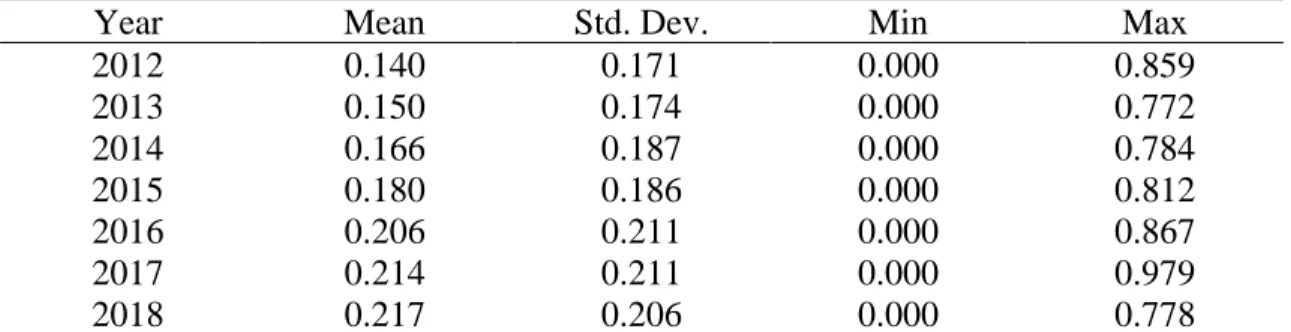
Table 4-1: Summary Statistics of all Variables from 2012-2018 ... 65
Table 4-2: Pearson Correlation Matrix ... 67
Table 4-3: Summary Statistics of Foreign Ownership from 2012-2018... 70
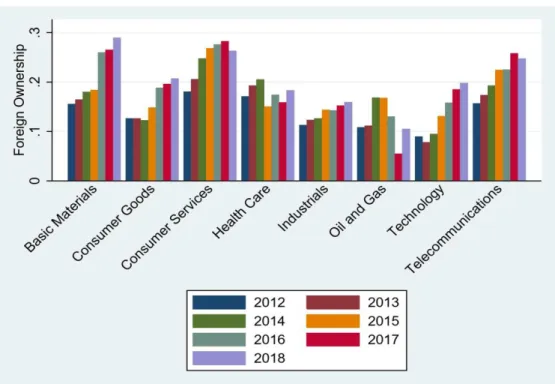
Table 4-4: Summary Statistics of Foreign Ownership across Industries from 2012-2018 ... 71
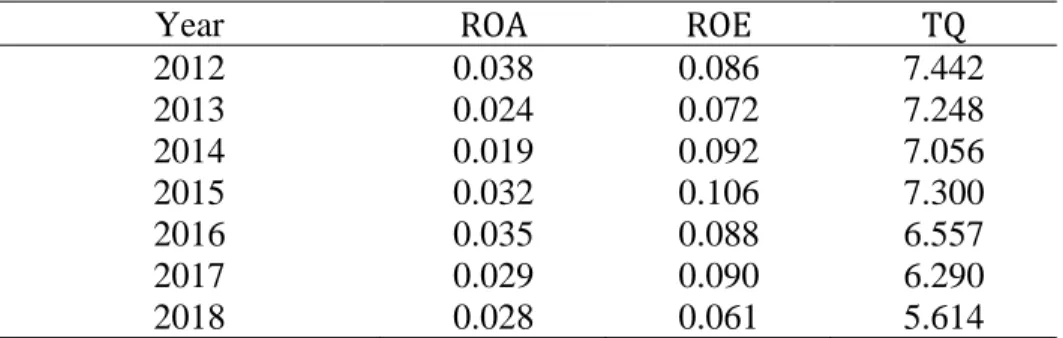
Table 4-5: Summary Statistics of the Performance Measures from 2012-2018 ... 74
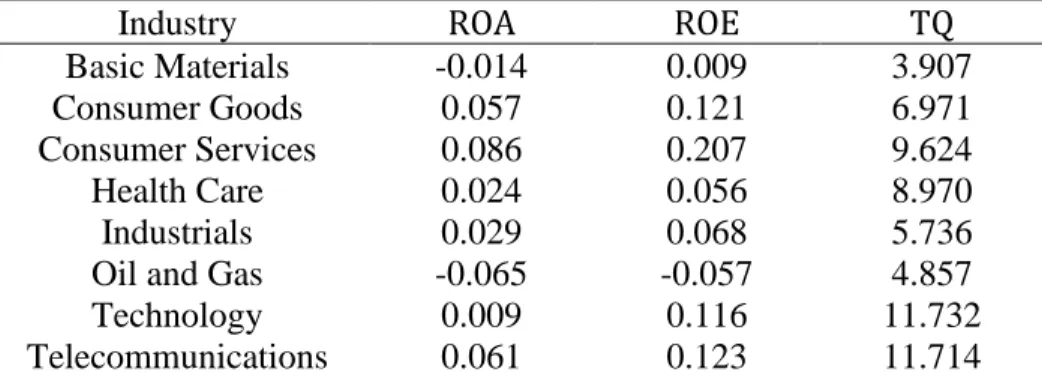
Table 4-6: Summary Statistics of the Performance Measures across Industries from 2012-2018 74 Table 4-7: OLS Regression Results for the Test of Dynamic Completeness ... 76
Table 4-8: OLS Regression Results for the Relationship between Foreign Ownership, Firm- specific Variables and Past ROA ... 78
Table 4-9: OLS Regression Results for Relationship between Foreign Ownership, Firm-specific Variables and Past ROE ... 79
Table 4-10: OLS Regression Results for Relationship between Foreign Ownership, Firm-specific Variables and Past Tobin’s Q ... 80
Table 4-11: FE Regression Results for Test of Strict Endogeneity for ROA ... 82
Table 4-12: FE Regression Results for Test of Strict Endogeneity for ROE ... 83
Table 4-13: FE Regression Results for Test of Strict Endogeneity for Tobin’s Q ... 84
Table 4-14: GMM Regression Results for Linear Relationship between Foreign Ownership and Firm Performance ... 86
Table 4-15: GMM Regression Results for the Test of Non-Linearity between Foreign Ownership and Firm Performance... 89
Table 4-16: U-Test Regression Results of the SLM Test ... 90
x Table 4-17: GMM Regression Results for the Relationship between Horizontal Spillovers and Firm Performance ... 95 Table 4-18: First-Stage Regression for System GMM Estimates ... 97
xi LIST OF FIGURES
Figure 1-1: Level of FDI in South Africa from 2010-2018 ... 1 Figure 4-1: Average Level of Foreign Ownership across Industries for the period 2012-2018 ... 73 Figure 4-2: U-shaped Relationship between ROE and Foreign Ownership ... 91
xii LIST OF ACRONYMS
2SLS: Two-Stage Least Squares
ASIF: Annual Survey of Industrial Firms BoD: Board of Directors
BSE: Bombay Stock Exchange CEO: Chief Executive Officer CIT: Corporate Income Tax DWH: Durbin-Wu-Hausman EU: European Union
EVA: Economic Value Added FDI: Foreign Direct Investment FEM: Fixed Effects Model
FPI: Foreign Portfolio Investment GLS: Generalized Least Squares GMM: Generalized Method of Moments ICB: Industrial Classification Benchmark IMF: International Monetary Fund
ISE: Istanbul Stock Exchange IV: Instrumental Variables
JSE: Johannesburg Stock Exchange MNCs: Multinational Corporations NSE: National Stock Exchange OLS: Ordinary Least Squares REM: Random Effects Model
xiii ROA: Return on Assets
ROE: Return on Equity ROS: Return on Sales
SARS: South African Revenue Services SE: South East
SLM: Sasabuchi-Lind-Mehlum TFP: Total Factor Productivity UK: United Kingdom
UNCTAD: United Nations Conference on Trade and Development US: United States
1 CHAPTER 1: INTRODUCTION
1.1 Background
The rise in Foreign Direct Investment (FDI) and Foreign Portfolio Investment (FPI) have revamped the world economic system. A substantial amount of attention has been directed towards FDI because developing countries consider these inflows as a vital source of finance to facilitate their country’s economic growth. According to the United Nations Conference on Trade and Development (UNCTAD) (2018), the largest source of external finance for these developing countries is still FDI, comprising 39% of total incoming finance. As of 2018, FDI inflows to developing economies amounted to $671 billion (UNCTAD, 2018).
For South Africa, a crucial structural limitation faced by the economy is low domestic savings that are inadequate to achieve the levels of productive investment needed to elevate economic growth.
Increased economic growth is needed to reduce poverty, increase employment and vastly improve living standards, amongst other factors. Due to the gap between domestic savings and the need for investment, the South African economy needs foreign capital to meet its objectives of job creation and inclusive growth (National Treasury, 2017).
Figure 1-1: Level of FDI in South Africa from 2010-2018
(Source: UNCTAD, 2019)
$0,00
$1,00
$2,00
$3,00
$4,00
$5,00
$6,00
$7,00
$8,00
$9,00
2010 2011 2012 2013 2014 2015 2016 2017 2018
FDI inBillions($)
Year
2 Figure 1 depicts the increase in FDI from 2010 to 2013, thereafter, a notable decline is witnessed towards the end of Jacob Zuma’s presidency. Following the election of Cyril Ramaphosa as president in 2018, attracting more FDI became a central focus of the South African government, as the president stated that his goal was to bring R1.4 trillion in investment to South Africa by 2023 (Villers, 2019). Since then, numerous attempts to attract more international investors have been undertaken. Figure 1 shows that the South African government has been successful with these efforts, as FDI into South Africa grew from $2 billion in 2017 to $5.2 billion in 2018 - an increase of 320%.
In recent years, the importance of Multinational Corporations (MNCs) has grown significantly and outpaced the growth of trade (Ebersberger and Loof, 2005). Dunning and Lundan (2008: 3) defined an MNC as a corporation that “engages in FDI and owns or, in some way, controls value-added holdings in more than one country”. By the end of 2015, foreign investors owned 38% of shares on the Johannesburg Stock Exchange (JSE) (see figure A-1 in appendix A). Foreign ownership includes both strategic investors (FDI) and portfolio investors (mainly foreign institutional funds).
Strategic investors have the ability to enforce a significant amount of influence over the firm's management in the host economy (National Treasury, 2017). FDI was the largest source of foreign ownership in JSE-listed companies, amounting to R1 970 billion, which was equivalent to 49% of GDP (National Treasury, 2017). The current policy on FDI in South Africa does not place any restrictions on foreign ownership in South African firms (National Treasury, 2011).
1.2 Research Problem
Given the importance of FDI as a source of capital, several studies have been undertaken on FDI to better understand what attracts FDI to a country and the effects on the country, in order to tailor FDI-promotion policies. These studies on the determinants and effects of FDI are typically conducted at a macroeconomic level. For example, a considerable amount of research has been dedicated to the impact of FDI on economic growth and poverty including in South Africa (for example, Kayiya, 2012; Makwembere, 2014; Wakyereza, 2017 among others). Very little research, however, has analysed the effects of FDI at a microeconomic level where the focus is on foreign ownership and firm performance in South Africa.
The existing theories that link foreign ownership and firm performance provide contending arguments as to whether foreign ownership has positive or negative direct and/or indirect effects
3 on firm performance. With regards to the direct effects of foreign ownership, a positive effect is proposed through decreased agency costs and resource transfer as foreign ownership provides assistance to domestic firms through the introduction of new technology, better managerial practices, production processes and monitoring (Görg and Greenaway, 2004; Douma, George and Kabir, 2006; Swart, 2013). However, a negative effect may arise through an increase in agency costs (Hong and Loan, 2017) and the liability of foreignness (Barbosa and Louri, 2005), among other sources.
In addition, FDI may have indirect, also known as “spillover” effects, on the performance of other domestic firms (Carkovic and Levine, 2002; Girma, Gong, Görg and Lancheros, 2015). These spillovers can occur horizontally (intra-industry) or vertically (inter-industry). Horizontal spillovers are externalities from foreign firms to domestic firms within the same industry (Javorcik, 2004), whereas vertical spillovers (backward and forward) emerge when domestic firms and MNCs connect across different stages of production (Li and Luo, 2019). FDI is argued to have positive horizontal spillovers on the performance of other domestic firms through labour mobility, imitation, increase in competition and export spillovers (Görg and Greenaway, 2004), but may also have negative effects via local workers migrating to MNCs and the crowding out of domestic firms due to decreased market power (Wang and Blomström, 1992). The effects of vertical spillovers may be positive via backward and forward linkages but negative effects could also arise from the crowding out of domestic suppliers (Sasidharan, 2006; Javorcik and Spatareanu, 2008).
Previous studies in individual countries do not provide substantial clarity as to which of the theoretical arguments concerning the direct effect of foreign ownership on firm performance are most accurate. Some studies have observed a positive linear relationship (Douma et al., 2006);
others a negative linear relationship (Kim and Lyn, 1990); a non-linear U-shaped relationship (Phung and Hoang, 2012); an inverse U-shaped relationship (Gurbuz and Aybars, 2010); and even no relationship (Swart, 2013) between foreign ownership and firm performance. Consequently, the results on the direct effects of foreign ownership appears to be country specific. Therefore, it is not possible to simply translate the findings of other studies to South Africa.
Further complexity is added to the study of the effect of foreign ownership on firm performance in that it is not clear whether the financial performance of firms also influences the amount of foreign ownership in the firm, i.e., whether firm performance shares a reverse relationship with
4 foreign ownership, as foreign investors often prefer investing in firms that are more productive.
This potential reverse relationship raises the issue of endogeneity (Stančík, 2007). Along with endogeneity, Himmelberg, Hubbard and Palia (1999) highlight the possibility of heterogeneity that often appears because the value of firms is usually affected by unobservable characteristics of the contracting environment. Certain studies acknowledge the issues of endogeneity and heterogeneity, but many do not. Roberts and Whited (2013: 6) state that “endogeneity leads to biased and inconsistent parameter estimates that make reliable inference virtually impossible”. The reliability of existing studies that failed to account for endogeneity and heterogeneity are therefore questionable.
The unpublished studies of Swart (2013) and Dube (2018) are the only known papers that have examined the relationship between foreign ownership and the financial performance of firms listed on the JSE. Swart (2013) reported no significant relationship between foreign ownership and firm performance, whereas Dube (2018) discovered a positive linear relationship. Nevertheless, both papers contain limitations. Firstly, the sample used by Swart (2013) comprised only of large firms and included financial firms, which most studies on this topic exclude due to their differing asset structures (Yilmaz and Buyuku, 2016). Secondly, Dube (2018) accounted only for the top one, two, three, five and 10 foreign shareholders in his analysis, thus, diminishing the accuracy of the effect of foreign ownership. Lastly, neither of these studies accounted for the issue of endogeneity.
These shortcomings call into question the reliability of the results obtained.
Previous evidence on FDI spillovers contains a combination of both vertical and horizontal spillover effects (such as Nicolini and Resmini, 2010; Xu and Sheng, 2012; Choo, 2012); only vertical spillovers (such as Kinda, 2012; Fatima, 2014); and only horizontal spillovers (such as Khalifah and Adam, 2009; Erdogan, 2011). There is a lack of clarity on the effects of FDI spillovers due to mixed findings. Mixed findings have been documented for horizontal spillovers as certain studies observed positive effects (such as Karpaty and Lundberg, 2004; Padibandla and Sanyal, 2005; Thangavelu and Pattnayak, 2006), whereas others observed negative effects (such as Aitken and Harrison, 1999; Mühlen, 2013). The same holds true for vertical spillovers;
therefore, there is a lack of clarity on the effects of FDI spillovers. Moreover, while there is abundant literature on the spillover effects of FDI on local enterprises in different countries, little is known in the South African context (exceptions are Mebratie and Bedi, 2011; Magwiro, Josue and Klingelhöfer, 2014).
5 The existing studies on the direct and indirect effects of FDI have been, for the most part, pursued separately. On the one hand, several authors (such as Griffith, 1999; Harris and Robinson, 2002;
Gunduz and Tatoglu, 2003) estimated the direct effects for MNCs that receive FDI and compared their performance to domestic firms, without considering indirect effects (i.e., spillover effects).
On the other hand, other authors (such as Padibandla and Sanyal, 2005; Nicolini and Resmini, 2010; Xu and Sheng, 2012) investigated FDI spillover effects, while mainly neglecting the direct effects of FDI.
The absence of definitive evidence on the effect of foreign ownership on firm performance raises questions about the impact of FDI at the firm-level. While South Africa continuously attempts to attract FDI to improve economic growth, it is unclear as to whether these foreign investors improve the performance of firms listed on the JSE or whether a positive effect can only arise if they own less than (or more than) a threshold proportion of the firm. Such knowledge is critical for tailoring FDI-specific policies. To the best of the author’s knowledge, there is no study, to date, that has examined the relationship between foreign ownership and the performance of firms listed on the JSE, while taking into consideration the possibility of a non-linear relationship, indirect effects from horizontal spillovers, potential endogeneity and unobserved heterogeneity across the firms in the sample. Thus, to address this research gap, this study intends to fully consider all factors in assessing the relationship between foreign ownership and firm performance in South Africa, thereby ensuring robust and reliable results.
1.3 Research Questions and Research Objectives 1.3.1 Research Questions
The primary research question, which is thus the focus of this study, is as follows:
• What are the direct and indirect horizontal effects of foreign ownership on the performance of firms listed on the JSE?
The primary research question will be answered through the following secondary research questions:
• Does endogeneity exist between foreign ownership and firm performance?
• Is the direct relationship between foreign ownership and firm performance linear or non- linear?
6
• If the direct relationship is non-linear, what is the optimal level of foreign ownership?
• Are there any horizontal spillover effects from foreign firms to domestic firms?
1.3.2 Research Objectives
To address the secondary research questions, the following objectives are specified:
• To explore if endogeneity exists between foreign ownership and firm performance.
• To establish if the relationship between foreign ownership and firm performance is either linear or non-linear (with the non-linear relationship being either U- or inverse U-shaped).
• If the direct relationship is non-linear, to determine the optimal level of foreign ownership.
• To ascertain if there are any horizontal spillover effects from foreign to domestic firms.
1.4 Justification of the Study in a South African Environment
South Africa is a compelling case to analyse the impact of foreign ownership on firm performance due to the South African government’s prioritisation in attracting FDI and that FDI is the largest source of foreign ownership in South African companies (in comparison to portfolio investment).
This study provides valuable insight to investors, firm owners and managers, on the one side, as they seek to identify an ownership structure that maximises shareholder value and firm performance. In addition, it will also aid the government and other policymakers in achieving their objectives of job creation and inclusive economic growth with the capital attained through FDI.
1.5 The Scope and Method of this Study 1.5.1 The Scope of Study
This study focuses only on the effect of FDI, with respect of foreign ownership, at a firm-level rather than a macroeconomic level, as a substantial amount of research has already been conducted on the impact of FDI on the South African economy. With respect to FDI spillovers, this study reviews literature on horizontal and vertical spillovers, but only horizontal spillovers are estimated due to the discrepancies surrounding the estimation of vertical spillovers. The study covers the seven-year period from 2012 to 2018. The sample excludes firms from the financials industry as their financial statements and asset structures differ substantially from non-financial firms.
7 Delisted firms are included to eliminate any effects of survivorship bias1. Annual data for all listed and delisted companies of financial performance indicators and firm-specific characteristics were obtained from Bloomberg, foreign ownership percentages, while the foreign ownership data was extracted from the shareholder’s section of IRESS, due to its unavailability on Bloomberg.
1.5.2 Research Methodology
The first step of the empirical analysis involves a series of tests used to assess the potential issue of endogeneity. These tests include: (i) the test of reverse causality; (ii) the test of strict exogeneity;
and (iii) the Durbin-Wu-Hausman (DWH) test, that is adopted as a robustness check. The second step of the empirical analysis uses linear models and a quadratic model estimated using System Generalized Method of Moments (system GMM) to satisfy the remaining three objectives. In order to ensure robustness, the Arellano-Bond autocorrelation test, Hansen test and difference-in-Hansen test are specified within all system GMM estimations. The test of non-linearity between foreign ownership and firm performance is conducted using a quadratic test and Sasabuchi-Lind-Mehlum (SLM) test. The SLM test determines whether the non-linear relationship is U-shaped or inverse U-shaped and estimates the optimal level of foreign ownership in JSE-listed firms. The final component of the empirical analysis extends the robustness tests by assessing the strength of instruments in the system GMM.
1.6 Structure of the Study
The remainder of this study is structured as follows:
Chapter 2 presents the theoretical foundations on the direct and spillover effects of foreign ownership on firm performance. This chapter also includes a comprehensive review of empirical studies on the topic, which is subdivided according to financial performance, firm productivity and spillovers. Chapter 3 explains the data selection, variables utilised in the study and the sample period. A detailed description of the approaches used, is also provided, in conjunction with an outline of the estimation techniques adopted for each model. In Chapter 4 the results from each of the models are presented, together with an analysis of the findings. Chapter 5 provides answers to the research questions and attempts to draw inferences from the findings. The final segment of this
1 Survivorship bias occurs when the sample being tested consists of only companies which were strong enough to survive the sample period of analysis and excludes the companies which did not survive. This phenomenon distorts the results produced (Pawley, 2006).
8 chapter details the potential weaknesses of this study, recommendations for future research on the topic and the conclusion of the study.
9 CHAPTER 2: LITERATURE REVIEW
2.1 Introduction
This literature review, comprising of the theoretical framework and review of empirical evidence, centres on two closely related themes: the direct and indirect effects of foreign ownership. In order to form the theoretical framework of this study, it is necessary to adopt a multi-theoretic approach by integrating components of financial and economic theories, as restricting the analysis to only financial theories proves too limiting in fully understanding the relationship between foreign ownership and firm performance. The empirical evidence consists of prior research on this subject and is reviewed through three avenues: financial performance, productivity and FDI spillovers.
2.2 Theoretical Framework
2.2.1 The Direct Effects of Foreign Ownership on Firm Performance
The theories presented in this section aim to provide a more holistic understanding of the direct relationship between foreign ownership and firm performance.
2.2.1.1 Agency Theory
According to Uwuigbe and Olusanmi (2012: 209), one of the most significant traits of contemporary business is “the separation of ownership and control”, where shareholders have little or no direct control over the operations of the company (Marks, 1999; Moez, 2018). This separation arises since the ownership of large companies is typically widely dispersed among domestic and foreign institutional, corporate, and retail investors meaning that the owners need to appoint managers to run the business on their behalf. Managers are thus tasked with the responsibility of maximising shareholder wealth. This separation of ownership and control gives rise to the agency theory (Fama and Jensen, 1983).
Agency theory, developed by Jensen and Meckling in 1976, refers to the principal-agent relationship when one person/entity (the principal) hires another (the agent) to act on their behalf.
While the principal-agent relationship can be seen in many different environments, it is most common in the case of shareholders (the principal) hiring managers (the agent) to run the firm and act in their best interest.
As a consequence of differing interests and information asymmetry (managers have more information compared to shareholders), managers do not always operate in the best interests of
10 shareholders (i.e., they do not maximise shareholder value) instead acting in their self-interests (He and Sommer, 2010). This is referred to as the agency problem. In order to reduce this problem, the objectives of managers need to be aligned with those of shareholders. Several mechanisms can be used to achieve this, for example, monitoring, incentives such as share ownership and threats of a takeover (Rediker and Seth, 1995).
The Board of Directors (BoD) has a legal duty to represent shareholders’ interests, which includes hiring and firing the Chief Executive Officer (CEO), setting their compensation and monitoring their performance (Adams, Hermalin and Weisbach, 2010). In addition to making decisions concerning the CEO, the BoD may also participate in the setting of strategies and the selection of projects. These duties make the BoD an important element for ensuring that managers’ and shareholders’ decisions are aligned (Davies, 2000). The monitoring role of the board usually increases once outside members are included as they have incentives to execute duties rather than to conspire with management to expropriate residual claimants as they are driven to obtain reputations as experts in decision control (Fama and Jensen, 1983). Monitoring can also be conducted in the form of auditing (Hall, 1998; Panda and Leepsa, 2017), with owners requiring the books of the company to be audited regularly. This may assist in decreasing the rate of embezzlement in the company (Petrascu and Tieanu, 2014).
Shleifer and Vishny (1997) claimed that shareholders with significant levels of ownership have strong incentives to monitor managers; thereby reducing agency costs. However, large shareholders can also negatively impact firm value as they can cultivate their private interests which contradict with the interests of minority shareholders or those of employees and managers.
This is supported by Viet (2013: 299), who states that “ownership by shareholders correlates with gains from monitoring or with losses from expropriations when their ownership exceeds a certain large level”.
In the absence of active monitoring of a firm’s management by its shareholders, the payment of dividends may provide indirect control benefits (Khan, 2006). The distribution of cash dividends depletes the free cashflows of a company, thus forcing managers to seek external finance.
According to Easterbrook (1984), external finance is more effective than internal finance with regard to monitoring and disciplining management. By paying dividends, companies also undergo a market audit which serves to encourage managers to disclose any new information and mitigate
11 agency problems in order to secure future funds. Hence, the payment of dividends can be viewed as a mechanism that reduces agency costs and information asymmetry between insiders and outsiders (Bhattacharya, 1979; Miller and Rock, 1985).
Another way to reduce the conflict of interest between managers and shareholders is with the aid of performance-based incentives such as share option schemes (Bebchuk and Fried, 2003;
Mawanza, 2014). The fundamental idea is that a manager has, as part of their remuneration, the option to buy a prespecified number of shares of the firm, at a fixed price. The manager thus benefits directly from an increase in the share price and, as such, will act and make decisions that are expected to increase the firm’s share price (Hall, 1998). Moreover, a significant level of managerial ownership will likely result in the manager committing to value-added activities and refraining from exploiting corporate resources as their main objective is the maximisation of shareholder value, due to their own interests (Jensen and Meckling, 1976).
According to Cohen and Uliana (1990), an active takeover market also aims to align the interests of managers and shareholders. If managerial actions lower the future earnings of shareholders, the price of the share often declines as well. In many cases, this can make the firm a target for takeover (Hall, 1998). If the management of such a firm is replaced, shareholders may benefit. The threat of takeovers can, therefore, act as an outside control mechanism, which guarantees that the actions of managers maximise the wealth of shareholders.
However, these mechanisms have cost consequences, with an associated effect on the wealth of shareholders and should thus only be incurred if the advantages to be gained are greater than the associated cost (Hall, 1998). There are three main types of agency costs: (i) monitoring costs that are induced when principals attempt to monitor the activities of agents, which was discussed above; (ii) bonding costs of restrictive covenants; and (iii) residual losses accumulated from the difference in manager behaviour from the ideal (Coriat and Weinstein, 2012; Zhou, 2014).
Bonding expenditures are a result of the agents assuring the principals that they will not take specific actions (Laiho, 2011; Hong and Loan, 2017). Furthermore, an agent is obligated to contractual obligations that limit the agents’ activity. These contractual obligations will also ensure the required performance of agents (Zhou, 2014). Despite monitoring and bonding, it is improbable that the interests of managers and shareholders fully align (McColgan, 2001). Therefore, there are still agency losses arising from conflicts of interest (Hong and Loan, 2017). This is known as
12 residual loss. In addition to losses induced, firms incur unnecessary management expenditure and residual losses from unrealized investment opportunities due to their management being risk- averse (Kaaro, 2014). These missed opportunities could have increased shareholder wealth.
Agency Theory and Foreign Ownership
Due to the distance between the MNC and the home country of the foreign shareholder, as well as the language barrier and reduced access to information, it is often argued that foreign ownership contributes to greater agency costs than domestic ownership (Swart, 2013; Hong and Loan, 2017).
According to Boubakri, Guedhami and Saffar (2016), foreign ownership is expected to be lower in more distant firms since longer distances between the MNC’s headquarters and the foreign shareholder potentially amplifies negative incentives and increases the degree of information asymmetry as remotely located companies tend to be neglected by foreign owners due to travel, transportation costs and the difference in time-zones (Malloy, 2005). The lack of available information for foreign shareholders offers managers less incentive to fulfil the interests of external shareholders and more power to seek private benefits (Luo and Chung, 2013). Foreign shareholders are often aware of this and thus implement greater monitoring and transparency of management actions (Guedhami, Pittman and Saffar, 2009), further increasing agency costs.
Differences in languages pose significant problems as numerous non-English-speaking companies are expected to adopt English as their corporate language, compelling them to conduct daily operations in their second language, which may warrant miscommunications (Feely and Harzing, 2008). Some firms introduce language training facilities; however, teaching employees to work effectively in a foreign language may be difficult. As such, companies intending to pursue this route need to do so to sustain the program over many years, which in turn will lead to more agency costs.
The effect of foreign ownership on firm performance in the agency theory, however, may be more complicated, depending upon the type of ownership by the foreigner. Douma et al. (2006) and Swart (2013) suggested that foreign shareholders should be separated into two categories, namely foreign financial institutions and foreign industrial corporations, as the governing dynamics of these shareholders are significantly different. Foreign financial institutional shareholders are mainly interested in the short-term returns that a company can provide (Wilkins, 1999). As such, these investors are more concerned in a profitable exit strategy rather than embroiling themselves
13 with management and, in many instances, do not participate in the transfer of any management or technological skills (Douma et al., 2006).
Moreover, foreign financial institutional shareholders hold extremely fragmented stakes as this form of ownership is usually legally constrained. According to Douma et al. (2006: 643), these shareholders represent the “dispersed-outside category of shareholders as viewed from an agency perspective”. Although equipped with monitoring capabilities, dispersed-outside shareholders only exhibit moderate influence on firm performance and the agency problem, as their capacity to actively monitor is restricted by their weak incentives to monitor and discipline management (Hackethal and Zdantchouk, 2006). Leech and Leahy (1991) argue that if foreign investors are dispersed, they will have only a moderate influence on the performance of the firm since the investor usually owns less than 5%.
Foreign corporate shareholders, in contrast, are potentially more likely to participate in a long- term commitment with MNCs, and thus fill a more operative role to assure the profitability and productivity. Douma et al. (2006: 643) characterised these foreign corporate shareholders as
“concentrated-outside and strategic-foreign from the agency and resource-based theories, respectively”, which is discussed below. Agency theory states that due to foreign corporate ownership stakes being larger and less disintegrated compared to those of foreign financial institutional shareholders, foreign corporate investors may exhibit a favourable influence on firm performance as they can mitigate the possibility of the majority owners taking control at the expense of the minority shareholders, while simultaneously maximising the benefits of monitoring, incentive alignment, and risk-bearing (Allen and Phillips, 2000; Douma et al., 2006). Contrarily, increased ownership and control can lead to an entrenchment effect where large foreign shareholders worsen financial performance because they pursue their own interests at the expense of other stakeholders (Morck, Shleifer, and Vishny, 1988; Phung 2015).
It is thus clear that the agency theory does not provide a definitive theoretical argument as to whether foreign ownership positively or negatively affects firm performance. On the one hand, a positive effect may materialise through monitoring and incentives, which will decrease agency costs, but, on the other hand, an adverse effect may also be experienced through an increase in agency costs, caused by distance, the difference in languages and information symmetry.
Dispersed foreign investors that usually own less than 5% will have a moderate influence on the
14 performance, while concentrated foreign investors that own more than 5% will induce a positive impact on firm performance. Nonetheless, Oliver (1997) claimed that the agency theory represents an incomplete outlook of the world. It is therefore suggested that agency theory should be integrated with the resource-based and institutional theories in order to attain a clearer understanding of the effect of foreign ownership on firm performance. As such, these theories are examined in the following two sub-sections.
2.2.1.2 The Resource-based Theory
Firms have a competitive advantage when they are in possession of tangible and intangible resources. In order to maintain their competitive advantage, the company resources need to be scarce, valuable, inimitable and irreplaceable (Barney, 1991). Thus, the performance of firms under the resource-based theory is determined by the resources of the firm.
The impact of foreign ownership on firm performance according to the resource-based theory, like that of the agency theory, depends on the type of ownership. That is, the performance of firms will differ substantially when owners are either foreign financial institutions or foreign industrial corporations (Douma et al., 2006). As indicated in the previous section, foreign financial institutional shareholders are equipped with efficient monitoring abilities, but their financial focus and interest in liquidity make them reluctant to commit to a long-term relationship with the company and to participate in the restructuring procedure, in case of inadequate performance (Mukhopadhyay and Chakraborty, 2017). These shareholders favour exit strategies instead of a role to monitor management (Coffee, 1991).
If foreign institutional shareholders are disappointed with the performance of a firm’s share price, they hold the easy option of selling their ownership stake rather than investing their time and effort to establish a corporate restructuring process (Douma et al., 2006). As mentioned in the agency theory, they do not participate in the transfer of any management or technological skills. Since foreign institutional shareholders are reluctant to enter in a long-term relationship with the company or take part in the restructuring process, they are expected to have only a moderate effect on firm performance (Aguilera and Jackson, 2003).
Contrarily, foreign corporate shareholders who have strategic interests, as a result of their ownership stakes, are driven by non-financial objectives, such as the attainment of control rights and cultivation of sustainable competitive advantages and capabilities (Aguilera and Jackson,
15 2003). Strategic-foreign shareholders utilise their stakes of ownership as a way to harvest their strategic interests, which include acquiring entry into new markets, location-specific resources and inexpensive production amenities (Douma et al., 2006). Their foreign affiliation also brings local companies in connection with a high-calibre of technical, managerial and financial resources (Chibber and Majumdar, 1999). These shareholders increase profitability through an increase in sales and cost reduction due to additional and/or superior resources such as technology from MNCs, combined with new market access made possible by the affiliated local firms (Anderson and Liao, 2019). Among these groups of shareholders, there exists significant heterogeneity in resources and organisational capabilities, and as such, this impacts on the performance of the firm (Douma et al., 2006).
In summary, the resource-based theory stipulates that resources that induce competitive advantage within firms will positively influence a firm’s performance and that such resources are most likely to be provided by strategic-foreign shareholders, suggesting a positive relationship between foreign ownership and firm performance.
2.2.1.3 Institutional Theory
Although the agency and resource-based theories provide significant insight in understanding the impact of different types of ownership on firm performance, they experience a limitation in that they fail to analyse the social context within which the company’s operations are integrated (Douma et al., 2006). Nevertheless, this is captured by the institutional theory. The institutional theory concentrates on the legitimacy required by MNCs in order to operate in a foreign country.
The theory emphasises the influence of factors such as socio-cultural norms, beliefs, values, and regulatory and judicial systems on organisational structure and behaviour (Oliver, 1997 and Douma et al., 2006). Such factors may constrain the achievement of superior performance by the foreign firm (Alquist, Berman, Mukherjee and Tesar, 2019). The principal rationale of this theory is that organisations must comply with these institutional factors to increase their legitimacy (Karakaş and Yıldız, 2012).
Maintaining legitimacy may prove to be difficult because MNCs try to conform to both internal and external legitimacy expectations and suffer from the liability of foreignness (Crilly, 2011;
Campbell, Eden, and Miller, 2012). Internal legitimacy deals with the approval of a subsidiary by the parent firm and stems from the adoption of practices that are institutionalised within the MNC
16 and embodied by the home country environment of the parent firm. External legitimacy is granted by the institutional environment in which the subsidiary is located and emanates from it following practices institutionalised in that environment (Murage, 2013). Zaahir (1995) defined the concept of the liability of foreignness as the cost incurred from engaging in business abroad because of the competitive advantages that local firms possess. In particular, local firms have superior access to market-relevant information, are more fixed in the national environment and do not face foreign exchange risks (Hymer, 1976). Therefore, the performance of foreign firms may be hindered as they must compensate for the liability of foreignness (Barbosa and Louri, 2005).
There are four major sources of the liability of foreignness. First is the spatial difference between the MNC and its operations. Second, firm-specific costs based on the unfamiliarity of MNCs with the local environment, including governance structures, procedures, business practices and the legal and regulatory frameworks that facilitate and enable business transactions. This may affect their legitimacy, performance and the costs of doing business overseas (Zaheer and Mosakowski, 1997; Cai, 1999; Kostova and Zaheer, 1999; Calhoun, 2002). Third, economic nationalism, where national governments undertake protective measures to reduce imports and investments from other countries or by limiting immigration, may prevent MNCs from having access to required resources and talent from their home countries (Bell, Filatotchev and Rasheed, 2012). Lastly, government policies and restrictions; for example, the restrictions imposed on MNCs from the United States (US) on high-technology sales to certain countries, or laws like the Foreign Corrupt Practices Act2 (Zaheer, 1995). Some governments also have the power to place restrictions and performance requirements for FDI in all sectors (Singh, 2003).
It is thus evident that major institutional issues that foreign-owned firms face, such as difficulties in maintaining legitimacy and liability of foreignness, may negatively impact firms, thereby indicating a negative relationship between foreign ownership and firm performance.
2 The Foreign Corrupt Practices Act of 1977, as amended, 15 U.S.C. §§ 78dd-1, et seq. ("FCPA"), was enacted to make it unlawful for certain classes of persons and entities to make payments to foreign government officials to assist in obtaining or retaining business.
17 2.2.2 The Indirect Effects of Foreign Ownership on the Productivity of Domestic Firms
This section reviews the theories relating to the spillover effects that arise when the presence of foreign firms causes productivity increases in local firms, taking the interactions between firms into consideration.
2.2.2.1 Horizontal Spillovers
Horizontal (intra-industry) spillovers arise when the entrance of foreign subsidiaries increases the productivity levels of other domestic companies within the same industry (Batool, Sadia and Ahmad, 2009; Yanran, 2015; Li and Luo, 2019). Nevertheless, negative spillovers, which decrease productivity levels, may also occur (Mühlen, 2013). There are four main channels through which horizontal spillovers may occur: (i) labour mobility; (ii) imitation; (iii) competition; and (iv) exports (Görg and Greenaway, 2004).
Foreign affiliates are usually more involved than local firms in training and educating their workers (Djankov and Hoekman, 2000), with this training occurring across most levels of employees from manufacturing workers to technologically advanced professionals and top-level managers (Tantratananuwat, 2015). The movement of the MNC-trained workers can conceivably increase productivity via two mechanisms. Firstly, the MNC-trained labourers can take with them the learning of new technology or management systems and therefore become direct agents of the transmission of innovative technology (Fosfuri, Motta and Ronde, 2001; Görg and Greenaway, 2004). Secondly, workers from local firms may enhance their productivity by merely associating themselves with MNC-trained workers. However, it has been widely argued that the most significant mechanism is the relocation of MNC-trained labour within the domestic sector - either by alternating positions of employment or establishing new companies (Fosfuri et al., 2001; Doan, Mare and Iyer, 2015). On the contrary, highly skilled domestic labourers may be lured to MNCs as they tend to offer higher wages. As a result, local firms may experience a loss in human capital, thus resulting in productivity losses (Glass and Saggi, 2002).
The sophisticated technologies and new products unveiled by the MNC in the local market pressure the domestic firms to innovate. Innovation usually takes the form of imitation, whereby the local companies imitate the final goods or the production methods of the MNC (Wang and Blomström, 1992; Doan et al., 2015). Domestic firms may approach workers who were integral in the production of the physical goods by the MNC, in order to decipher a way to replicate the
18 production technique of the MNC. This procedure is referred to as reverse engineering (Yanran, 2015). Besides imitating goods and procedures, the local enterprises may also imitate the management systems via reverse engineering (Görg and Greenaway, 2004; Yanran, 2015).
However, the success of the strategy of reverse engineering is dependent upon the complexity of the product and process; the more complicated they are, the harder it is to imitate them.
Notwithstanding this, any advancement of domestic technology acquired from imitation is a benefit for local firms (Doan et al., 2015).
The increase in competition as a result of foreign companies entering the domestic market may drive domestic firms to enhance their productivity, reduce costs and allocate resources more efficiently within the economy (Blomström, 1986; Doan et al., 2015; Tantratananuwat, 2015).
However, the existence of MNCs might be prominent enough to create a position of market power in the domestic economy, reducing the scale of some local companies that are already in service to the host country market. Eventually, certain domestic companies may even be forced to leave the market as they cannot compete at all (Wang and Blomström, 1992; Glass and Saggi, 2002), thus effectively decreasing local market competition (Davies, 2003). The net effect of the competition relies on the ability of domestic companies to contend with MNCs and the efficacy of foreign firms to strengthen their market share (Kosava, 2010; Tantratananuwat, 2015).
Görg and Greenway (2004: 174) state that “a further indirect source of productivity gain might be through exports”. Spillovers through exports occur when MNCs disperse their knowledge of international markets to local companies, thus helping them to grow into more lucrative exporters (Kneller and Pisu, 2007). There are three main channels that facilitate export spillovers. First, if MNCs possess superior access to information on foreign markets, this can “spill over” through their export activities (Görg and Greenway, 2004). Export-related information spillovers result in the decrease of export marketing costs and the increase in the export-to-sales ratios of local companies in the same industry (Chen, Sheng and Findlay, 2013). Second, there are imitation effects whereby local firms can learn the MNCs efficient production or management procedures, which, in turn, allow them to compete more successfully in export markets (Mühlen, 2013). Third, competition between local companies and MNCs in both home and foreign markets can induce domestic firms to improve their export performance (Görg and Greenway, 2004).
19 Foreign companies have strong incentives to prevent knowledge spillovers to the local firms who are their competitors. This can be accomplished by restricting local employees’ access to information; managing core parts/materials information as trade secrets; and exporting production equipment by sealing off know-how in the equipment (Matsubara, 2014). MNCs can also counteract the mobility of labour by paying higher wages or implementing restraints of trade (Batool, Sadia and Ahmad, 2009). The prevention of technology spillovers can occur through formal protection of intellectual property or operating in countries where local companies have restricted imitative abilities (Javorcik and Spatareanu, 2005). Thus, the effect of horizontal spillovers may be restricted by the actions of the MNCs (Li and Luo, 2019).
2.2.2.2 Vertical Spillovers
The spillover effects of foreign ownership on the performance of local firms described above arise for companies in the same industry. However, spillovers may also occur as a result of inter-industry linkages when there is an interaction between the MNC and their local suppliers or customers (Batool et al., 2009; Doan et al. 2015). These are known as vertical spillovers and may occur through backward/upstream linkages or forward/downstream linkages (Pack and Saggi, 2001).
Backward linkages occur when there is an association between the MNC and domestic suppliers, while forward linkages materialise from relationships between the MNC and their domestic customers (Blomström and Kokko, 1998; Talavera, 2001).
Foreign affiliates sign formal contractual agreements with domestic suppliers for the supply of intermediate inputs. In order to decrease the price and elevate the quality of inputs for their production process, the MNC may transfer new technologies or techniques to the suppliers (Görg and Greenaway, 2004; Javorcik and Spatareanu, 2008; Li and Luo, 2019). MNCs are known to contribute technical assistance to facilitate their local suppliers in absorbing and understanding the freshly transmitted knowledge (such as through training management) (Doan et al., 2015). In addition, MNCs offer domestic suppliers an opportunity to increase their economies of scale by extending and assuring a market for intermediate inputs (Lim and Fong, 1982). Overall, domestic suppliers benefit from the backward linkages of foreign ownership in the form of an enhancement of the quality of raw materials, increased output and jobs, more efficient production, technological and managerial capabilities (Talavera, 2001; Batool et al., 2009).
20 MNCs adhere to strict quality requirements concerning the inputs supplied by domestic firms (Javorick and Spatareanu, 2005). If MNCs are not satisfied with the quality of inputs from local suppliers, they will be uninterested in building vertical relationships (Reganati and Sica, 2007).
This may result in the crowding out of domestic suppliers, as MNCs may acquire their inputs from foreign suppliers; thereby forcing domestic suppliers to exit the market (Görg and Greenaway, 2004; Sasidharan, 2006). As a consequence, a negative vertical spillover can arise in such scenarios.
MNCs acting as suppliers of intermediate inputs to domestic firms may also result in forward linkage spillover effects (Sari, Khalifah and Suyanto, 2016). MNCs take an interest in their customer’s revenues and efficiency since that, in turn, translates to higher demand for their supplies. Therefore, the MNC has an incentive to convey knowledge on production procedures, techniques and global market access to the upstream domestic company (Doan et al., 2015).
Foreign suppliers provide their local customers with the necessary technical support and training when they buy these intermediate inputs. As a result, local firms may increase their productivity through the use of high-quality inputs from foreign suppliers (Liang, 2017).
2.2.2.3 Absorptive Capacity
For spillover benefits from foreign ownership to be realised, sufficient absorptive capacity is required in the host country (Nguyen, Duysters, Patterson and Sander, 2009). Absorptive capacity refers to a local firm’s ability to identify, assimilate and exploit the benefits spilled over by FDI (Cohen and Levinthal, 1990; Khordagui and Saleh, 2016). Three main factors increase the absorptive capacity of firms: (i) greater initial technological knowledge; (ii) greater human resource capacity from the labour force; and (iii) a more advanced financial system of the country.
As discussed in sections 2.2.2.1 and 2.2.2.2, the gains from FDI can be transmitted to domestic companies through horizontal or vertical channels. Regardless of the channel, Nguyen et al. (2009:
8) asserts that “domestic companies are required to have initial technological level to assimilate or image the advanced technology from FDI”. That is, companies require prior related knowledge in order to absorb and utilise new knowledge (Cohen and Levinthal, 1990). Typically, absorptive capacity has been measured by the technology gap between the domestic and foreign firms (Doan et al., 2015). Kokko (1996) claims that domestic firms can only reap the benefits of spillovers if the technology gap is not too wide so that they can absorb the knowledge available from the MNCs.
21 Khordagui and Saleh (2016: 144) notes that “the greater the gap, the lower the ability of the host country to absorb the incoming technology since it lacks the human capital, networks and general infrastructure to make use of such technologies”.
The second major element is the labour force, which is defined by human capital and education (Blomström and Kokko, 2003). This factor is deemed crucial as labour is the channel for transferring and receiving the FDI benefits through training, learning by doing and accumulating experience (Nguyen et al., 2009). Better educated and skilled labour gives rise to better know-how absorbed, and better performance achieved. Chen (1990) points out that countries with more investment in human capital have the ability to reap greater benefits from foreign ownership.
Therefore, to realize the benefits of FDI, the host country requires good quality human capital as only humans have the capacity to learn, assimilate and generate new information.
Finally, the development of the financial system impacts the absorptive capacity of a country (Mabena, 2013). Financial systems are a vital tool used to carry out FDI activities, such as the disbursement of investment capital; the transfer of money from the home country of the MNC to the recipient country; payments for building materials, raw materials and labour costs; collection of money after selling and the transfer of income out of the country, and the other businesses (Nguyen et al., 2009). All such activities require a developed financial system. For example, if the investment capital is not disbursed, the project process might be delayed, stagnant or even shut down and the host country will receive nothing from FDI. Hence, the development of financial systems is a crucial component required to accelerate absorptive capacities of recipient country’s and to facilitate the FDI operation in the host country (Durham, 2004).
22 2.3 Empirical Evidence
This section examines previous studies on the direct and indirect relationship between foreign ownership and firm performance through three avenues: financial performance, productivity and FDI spillovers.
2.3.1 Financial Performance
Numerous studies have been conducted on the relationship between foreign ownership and firm financial performance with mixed findings obtained. The results of these studies are analysed based on the findings of the form of the relationship (linear, non-linear and none).
2.3.1.1 Linear Relationship
Gunduz and Tatoglu (2003) compared the impact of various ownership structures on the financial performance of Turkish enterprises, including foreign versus domestic companies, using several stock and accounting performance measures. The dataset compromised of all private sector firms listed on the Istanbul Stock Exchange (ISE), excluding financial companies, with 34 foreign and 168 local companies, as of the end of 1999. The results showed that foreign-owned firms exhibited superior performance, but only in terms of Return on Assets (ROA) and no other performance indicators.
Aydin, Sayim and Yalama (2007) also sought to distinguish if the performance of foreign firms were superior to that of domestic firms in Turkey. To do this, they applied t-tests to determine if there were significant differences in the operating profit margin, ROA and Return on Equity (ROE) between foreign firms and domestic firms listed on the ISE. The dataset included 42 firms with foreign ownership and 259 domestic firms. Consistent with the findings of Gunduz and Tatoglu (2003), this study found that firms with foreign ownership performed more favourably based on ROA than domestic firms. These findings were attributed to enhanced monitoring and control capabilities and the transfer of new technology from foreign firms, resulting in lower operating expenses. This view is consistent with that of the agency theory and resourced-based theory outlined in sections 2.2.1.1 and 2.2.1.2, respectively.
Douma et al. (2006) explored the differential impact of foreign institutional and foreign corporate ownership on firm performance in India. The data sample of this study comprised of 1005 companies listed on the Bombay Stock Exchange (BSE) from 1999-2000. Following the work of
23 Thomsen and Pedersen (2000), Douma et al. (2006) assumed that the ownership structure was exogenous. The results showed that that the performance of foreign firms were superior to that of domestic firms, with firm performance measured by ROA and Tobin's Q. This superior performance was ascribed to foreign shareholders playing a significant monitoring role, which led to a reduction in agency costs. These results are consistent with those of the agency theory and a study by Boardman, Shapiro and Vining (1997), who also credited foreign ownership for the reduction of agency costs in Canadian companies.
A more recent paper on the impact of foreign ownership on the performance of Indian firms was conducted by Shrivastav and Kalsie (2017). The empirical analysis was conducted on 145 non- financial firms listed on the National Stock Exchange (NSE) from 2008 to 2012. The study utilised Tobin’s Q, ROA and ROE as performance indicators. As explained in section 2.2.1.1, the different forms of foreign ownership may exhibit different effects on the firm. Shrivastav and Kalsie (2017) incorporated this into their study by not only examining total foreign ownership but also disaggregating this measure into foreign corporate and foreign institutional ownership. Multiple regression analysis was performed using pooled Ordinary Least Squares (OLS) and the Random Effects Model (REM). Under the pooled OLS model, foreign ownership (as a holistic measure) displayed a positive effect on all measures of firm performance. However, regarding the REM, the effect was insignificant. When total foreign ownership was disaggregated, foreign corporate ownership exhibited a positive influence on firm performance, whereas foreign institutional ownership had an ambiguous effect on firm performance as results varied when different firm performance indicators were used.
Huang and Shiu (2009) studied the effect of foreign ownership on firm performance in Taiwan. In contrast to Douma et al. (2006), they treated foreign ownership as an endogenous variable and used Two-Stage Least Squares (2SLS) estimation to account for endogeneity. Despite the difference in assumptions, Huang and Shiu (2009) obtained similar results to Douma et al. (2006) as firms with high levels of foreign ownership performed better than firms with low levels. Huang and Shiu (2009) credited the superior performance to the ability of foreign investors to select more profitable investments as they have the resources that allow them to execute fundamental research.
The authors further argued that foreign investors also make contributions to technology, finance and expertise, thus increasing firm credibility and reputation compared to domestic investors.
24 Although most research on the foreign ownership-performance nexus focuses on large companies, Halkos and Tzeremes (2011) analysed 353 foreign-owned Small- and Medium-Sized Enterprises (SMEs) in the Greek manufacturing industry and concluded that foreign ownership had a positive effect on the performance of SMEs.
A Nigerian study by Uwuigbe and Olusanmi (2012) adopted a multivariate regression analysis to determine the relationship between ownership structure and enterprise performance. This study used a data sample consisting of 31 financial firms from 2006 until 2010. The empirical results revealed that foreign ownership had a favourable influence on firm performance. The authors stated that foreign ownership improved managerial efficiency, technical skills and the state of technology.
Marashdeh (2014) investigated the effect of corporate governance on the performance of 115 Jordanian firms during the period 2000 to 2010. Accounting-based measures such as ROA and ROE were used to measure firm performance and the Generalized Least Squares (GLS) and REM were used to estimate the empirical relatio