Other incentives from government encouraging the success of the tea industry include the current tariff refonn programme which aims at lowering input costs for the producers, with relaxed import controls in line with General Agreement on Tariffs and Trade (GATT) and World Trade Organisation (WTO) obligations (SA Info, No date, p.I). This business development strategy has been implemented at the provincial government tier, in which special business institutions have been developed with a mandate to encourage investors to establish or relocate industry and business to areas throughout the country (SA Info, No date, p.I).
4.6 SADe and EU Free Trade agreements
In tenns of the SADC free trade agreement the R4 per kg tariff was phased out in 5 equal tariff reductions from 2000 to I January 2004. Following the phasing out of the tariffs, tea is imported free of duty from SADC countries. Apart from Malawi and Zimbabwe, limited quantities of tea are also imported duty free from Mozambique.
Malawi and Zimbabwe imports are no longer limited to the quantities as set in tenns of the 1999 tariff review (Department of Trade and Industry, 2004, unpublished, p.4).
Although volume imports from SADC partners increased marginally, value imports seemed to have declined, indicating South Africa's SADC partners did not benefit from South Africa's tariff offer on tea in tenns of the agreement (Department of Trade and Industry, 2004, unpublished, p.4).
The tariff phase down for tea in tenns of the European Union (EU) agreement is asyrnmetrical in South Africa's favour, for example the EU tariffs for South African tea exports to the EU were liberalized at entry into force of agreement. On the other hand, the R4 per kg South African tea tariff will be phased down to zero from January 2005 to January 2012 in 8 equal tariff reductions (Department of Trade and Industry, 2004, unpublished, p.4). To date, however, agreement could not be reached on a rule of origin for tea. South Africa requested a "wholly obtained" rule whilst the EU insists on a "manufacture from materials of any heading" rule that will enable the EU to import tea and or packing materials and only complies with a certain 40 per cent value requirement (Department of Trade and Industry, 2004, unpublished, p.4).
50
It appears that 100% of industry is in support of this aspect of globalisation, while only 25% agreed from government. The majority of government respondents (75%) did not agree that there would be cross-border trade due to globalisation.
Table 5: (le) technology advancement resulting in shortened distances:
Strongly Strongly
Industry disagree Disagree Neutral Agree Agree Total
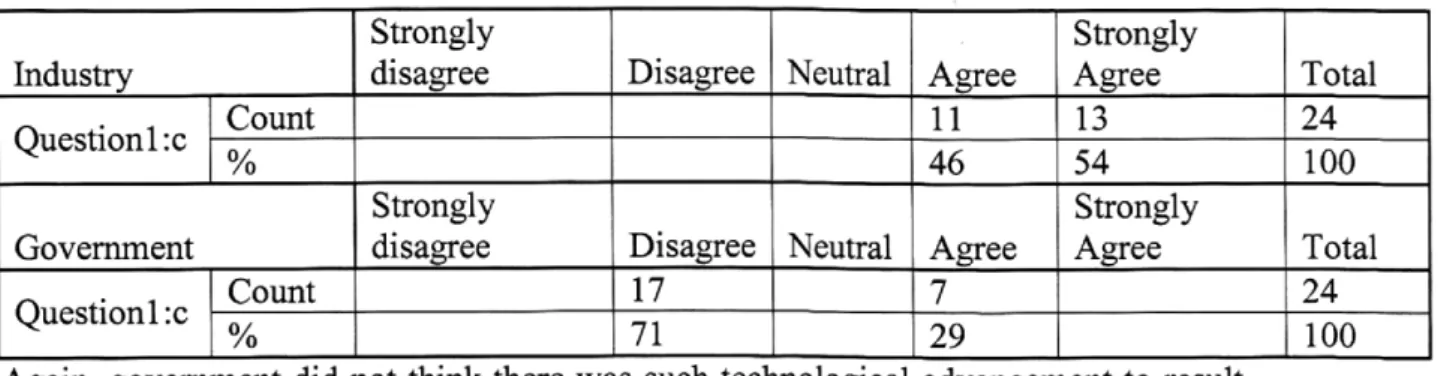
Question l:c Count 11 13 24
% 46 54 100
Strongly Strongly
Government disagree Disagree Neutral Agree Agree Total
Question1 :c Count 17 7 24
% 71 29 100
Agam, government did not thmk there was such technologIcal advancement to result in shortened distances, while industry wholly appreciated the importance of technology.
Table 6: (Id) advances in transportation enhancing quick transportation of materials and products:
Strongly Strongly
Industry disagree . Disagree Neutral Agree Agree Total
Question1:d Count 16 8 24
% 67 33 100
Strongly Strongly
Government disagree Disagree Neutral Agree Agree Total
Question1:d Count 16 8 24
% 67 33 100
All respondents (100%) agreed that there were advancesIntransportatlon ofmatenals and products.
Table 7: (le) changes in population dynamics:
Strongly Strongly
Industrv disagree Disagree Neutral Agree Agree Total
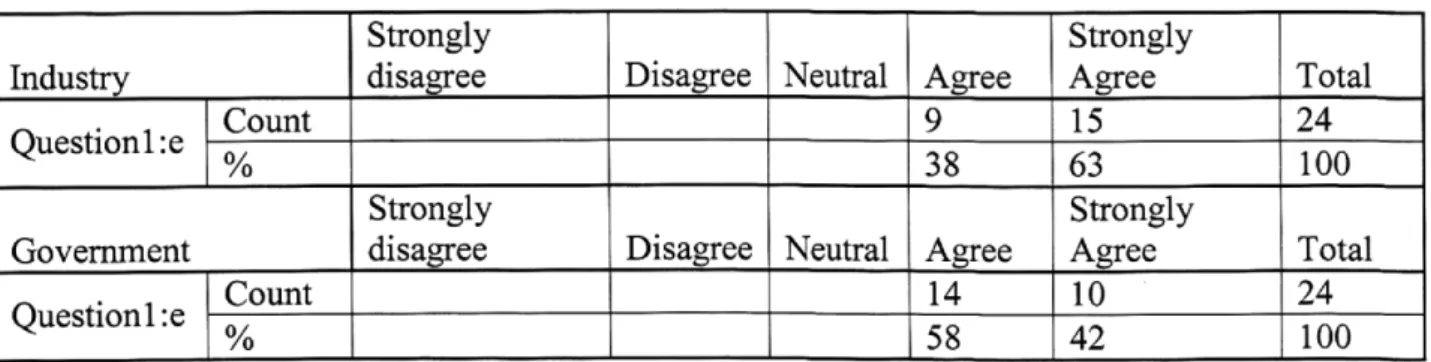
Question l:e Count 9 15 24
% 38 63 100
Strongly Strongly
Government disagree Disagree Neutral Agree Agree Total
Question 1:e Count 14 10 24
% 58 42 100
There was a strong acknowledgement of the changes m populatIOn dynamiCS.
73
Table 8: (11) changing legislation and impacts of societal values and lifestyles:
Strongly Strongly
Industry disagree Disagree Neutral Agree Agree Total
QuestionI:f Count 17 7 24
% 71 29 lOO
Strongly Strongly
Government disagree Disagree Neutral Agree Agree Total
QuestionI:f Count 6 18 24
% 25 75 lOO
Although up to three-quarters of government agreed with the changes on legislatIOn, 25% of this sector did not agree. Industry sees changing legislation and associated impacts as a threat.
Table9 - Question 2: The realization of opportunities in the turbulent, changing operating environment requires flexible and responsive strategies for maximizing market-share:
Strongly Strongly
Industry disagree Disagree Neutral Agree Agree Total
Question 2 Count 4 8 12 24
% 17 33 50 100
Strongly Strongly
Government disagree Disagree Neutral Agree Agree Total
Question 2 Count 4 8 12 24
% 17 33 50 100
88% of all the respondents were III strong agreement with the necessity of fleXible strategies, while 17% gave a neutral status. This response was supported by Leknes and Carr (2003, p.31) who reported that some organisations have changed their strategies from domestic to global strategies, as dictated by their resources and national comparative advantages, on recognising changes in the world economy Table 10 - Question 4: Privatization assists in making a company more competitive
Strongly Strongly
Industry disagree Disagree Neutral Agree Agree Total
Question 4 Count 2 9 9 4 24
% 8 38 38 17 100
Strongly Strongly
Government disagree Disagree Neutral Agree Agree Total
Question 4 Count 2 II 11 24
% 8 46 46 100
For rndustry, 55% agreed while 38% were neutral With 8% III disagreement wIth such possible benefits. Government response ranged from mainly neutral to agreeing, with 8% in disagreement. It can be inferred that the positive respondents believe in the current Theory of the Firm, which poses a challenge to companies to continuously improve their competitive performance to improve the return of investments of the shareholders (SubbaNarasimha, 2001, p.215). Prizzia further cautions that there is no sustainabilityand social responsibility in privatisation (2001, p.450).
74
the goods that it produces less efficiently from other countries, even
if
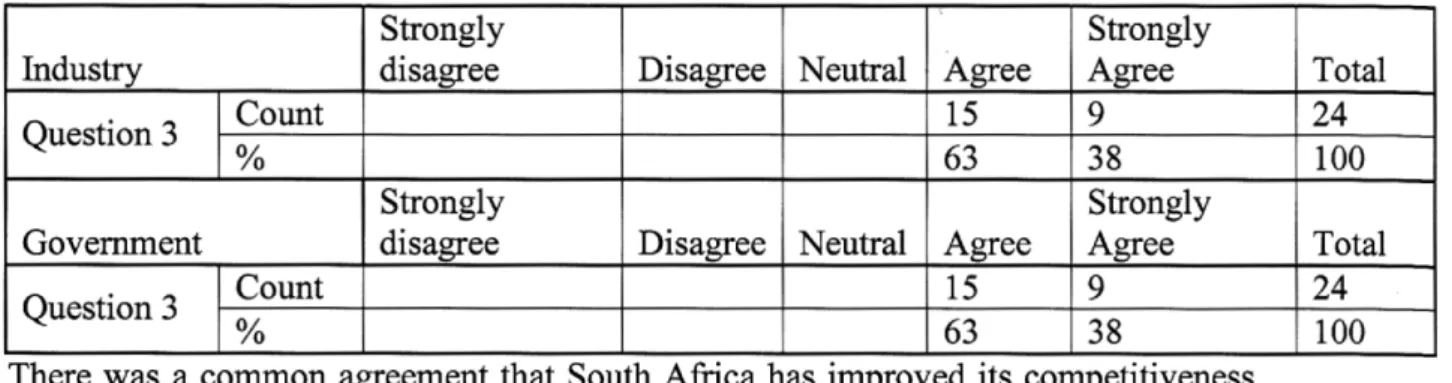
this means buying goods from other countries that it could produce more efficiently".Table 15 - Question 3: Globalization has improved SA's competitiveness
There was a common agreement that South Africa has Improved Its compellllveness due to the forces of globalisation. This statistics was supportive to reports that South Africa improved from a rating of seven out of seventy-seven (Schwab and Sachs,
1998, p.2) to a rating ofthird out often (Africa Economic Summit, 2004, p.I).
Strongly Strongly
Industry disagree Disagree Neutral Agree Agree Total
Question 3 Count 15 9 24
% 63 38 100
Strongly Strongly
Government disagree Disagree Neutral Agree Agree Total
Question 3 Count 15 9 24
% 63 38 100
..
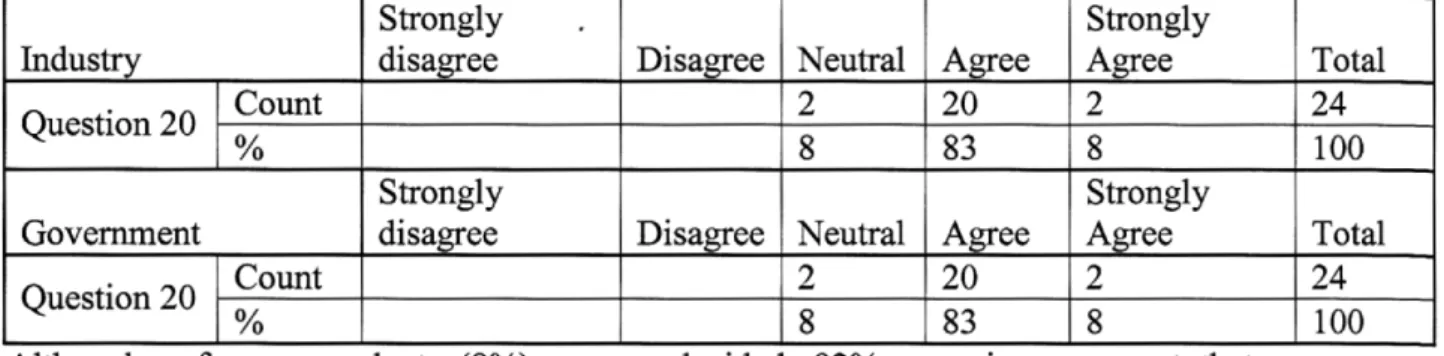
Table 16 - Question 20: Through globalisation, communities can become empowered. Do you agree with this statement?
Strongly Strongly
Industrv disagree Disagree Neutral Agree Agree Total
Question 20 Count 2 20 2 24
% 8 83 8 100
Strongly Strongly
Government disagree Disagree Neutral Agree Agree Total
Question 20 Count 2 20 2 24
% 8 83 8 100
Although a few respondents (8%) were undecided, 92% were m agreement that community empowerment can be expected to happen with globalisation.
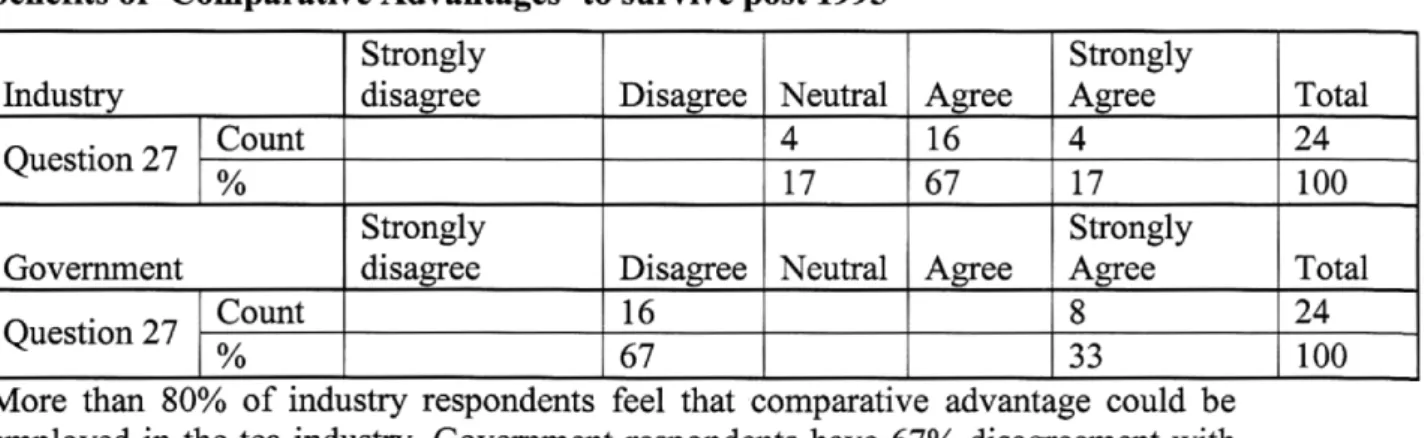
Table 17 - Question 27: The tea industry in South Africa could have employed benefits of 'Comparative Advantages' to survive post 1995
Strongly Strongly
Industry disagree Disagree Neutral Agree Agree Total
Question 27 Count 4 16 4 24
% 17 67 17 100
Strongly Strongly
Government disagree Disagree Neutral Agree Agree Total
Question 27 Count 16 8 24
% 67 33 100
More than 80% of 10dustry respondents feel that comparallve advantage could be employed in the tea industry. Government respondents have 67% disagreement with the application of comparative advantage, while 33% feels this could be used.
77
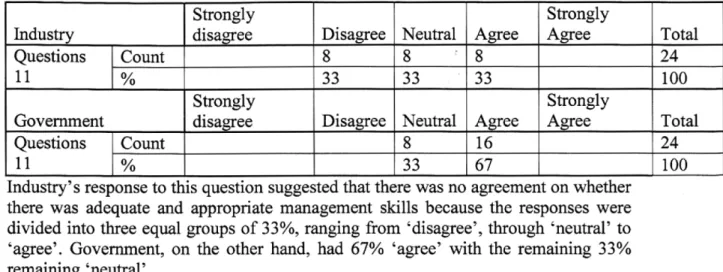
Table 22 • Questions 11: The South African tea industry holds appropriate management skills for managing the estates through the challenges of globalization
Strongly Strongly
Industry disagree Disagree Neutral Agree Agree Total
Questions Count 8 8 8 24
11 % 33 33 33 lOO
Strongly Strongly
Government disagree Disagree Neutral Agree Agree Total
Questions Count 8 16 24
11 % 33 67 lOO
Industry's response to thIS question suggested that there was no agreement on whether there was adequate and appropriate management skills because the responses were divided into three equal groups of33%,ranging from 'disagree', through 'neutral' to 'agree'. Government, on the other hand, had 67% 'agree' with the remaining 33%
remaining 'neutral'.
Table 23 - Question 12: There is adequate semi-skilled and unskilled labour to provide manual support to the industry
Strongly Strongly
Industry disagree Disagree Neutral Agree Agree Total
Question 12 Count 15 9 24
% 63 38 100
Strongly Strongly
Government disagree Disagree Neutral Agree Agree Total
Question12 Count 6 18 24
% 25 75 100
Both sectors agree that there IS adequate semI-skilled and unskIlled labour to use for the industry.
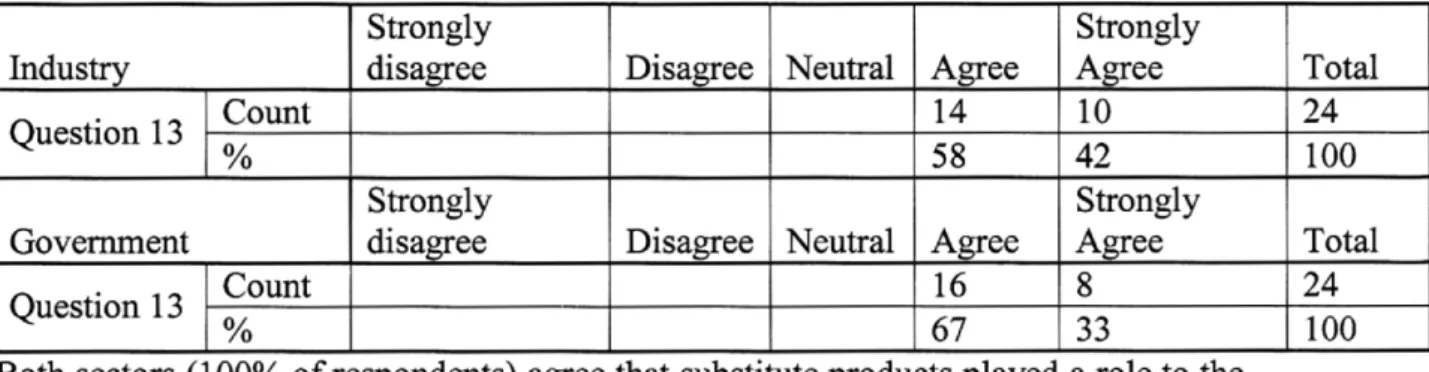
Table 24 - Question 13: Do you believe that through globalisation, substitute products have been introduced which have caused tea industry to decline
Strongly Strongly
Industry disagree Disagree Neutral Agree Agree Total
Question 13 Count 14 10 24
% 58 42 100
Strongly Strongly
Government disagree Disagree Neutral Agree Agree Total
Question 13 Count 16 8 24
% 67 33 100
Both sectors(100% of respondents) agree that substitute products played a role to the poor performance of the tea industry during the globalisation times
81
vulnerable groups, as it focuses on the economic gains that the company will make.
However, these gains are short-lived in most instances (prizzia, 2001, p.4SI). All respondents believed that it should not be assumed that a strategy applied some place is equally applicable some place else as well. All respondents agree on the need for flexible strategies. Prizzia (2001, p.460) recommended that privatisation should have a balancing of economic and social measures of success in order to determine its effectiveness and appropriateness.
There was a common agreement that South Africa has improved its competitiveness due to the forces of globalisation. Industry sees a positive change while govemment shows a negative change due to globalisation. Also industry has a concern with respect to loss of intellectual property and anti-globalisation movements from the country. Both sectors believe that the tea industry will be revived through the 'off-set' projects.
The respondents agreed that the tea industry, and Magwa Tea Estate, has not performed well under globalisation. This poor performance is attributed to strategic inertia as a possible problem that management were faced with in the face of globalisation. Furthermore, the respondents agree that there was no evidence of any flexibility on the strategy of the tea industry. While government believes there is adequacy and appropriateness of management skills, industry respondents feel that management was not sufficiently trained to compete for their market-share in the face of globalisation. However, both sectors agree that semi-skilled and unskilled labour is adequate for use in the industry.
Respondents also believe that the small size of the tea industry was also instrumental to its inability to adapt to global competition, and did not give the tea industry a competitive edge.
Both sectors agree that rural communities have some benefits to gain through the improvement of their socio-economic status. All respondents agreed that government should intervene by sourcing appropriate investments for improving the socio- economic status of the communities as government has a mandate to provide for the state of the local communities, together with the necessary amenities. There are expectations that communities may be empowered through associated spin-offs.
86