University of KwaZulu-Natal
The Impact of Leadership Development in the Acceleration of Black Talent in JSE-listed Companies
By
Mncane Mthunzi 217080217
A dissertation submitted in fulfilment of the requirements for the degree of Master of Commerce in Leadership
Studies
Graduate School of Business and Leadership College of Law and Management Studies
Supervisor: Prof Cecile Proches Co-Supervisor: Dr Bhasela Yalezo
2018
ii
DECLARATION
I, Mncane Mthunzi, declare that:
1) The research reported in this dissertation, except where otherwise indicated, and is my original research.
2) This dissertation has not been submitted for any degree or examination at any other university.
3) This dissertation does not contain other persons’ data, pictures, graphs or other information, unless specifically acknowledged as being sourced from other persons.
4) This dissertation does not contain other persons’ writing, unless specifically acknowledged as being sourced from other researchers. Where other written sources have been quoted, then:
a) their words have been re-written but the general information attributed to them has been referenced; and
b) where their exact words have been used, their writing has been placed inside quotation marks, and referenced.
5) This dissertation does not contain text, graphics or tables copied and pasted from the internet, unless specifically acknowledged and the source detailed in the dissertation and in the References section.
Signature:
________________________________
Mncane Mthunzi
iii
ACKNOWLEDGEMENTS
Much appreciation and thanks to my family for their support and encouragement; 2017 was the most difficult year for us, but was highly successful in terms of our professional aspirations. This great milestone in my academic achievement would not have been achieved without the support of my wife and daughters. My children have inspired me to set challenging yardsticks for them with the hope of making their lives more fascinating and fulfilling.
My humble and deepest appreciation to my supervisors, Professor Cecile Gerwel Proches and Dr Bhasela Yalezo. Sometimes I got frustrated about your harsh comments on my dissertation, but upon reflection, I realised that you wanted me to reach my full potential. Many thanks for your interest in my topic and going beyond the call of duty. I could not have asked for better a better supervision and mentorship.
The passion and enthusiasm of my research participants has been outstanding; their willingness and energy to assist was beyond measure, and I will forever remain indebted to them. Almost all of them were selfless in their contribution, and I cannot thank them enough for their participation.
iv
ABSTRACT
This research examined the impact of leadership development on the acceleration of black talent to executive levels within the JSE-listed companies. Leadership development initiatives of different companies were studied to understand their impact, if any, on the acceleration of black talent. This study further sought to reveal and analyse the challenges in the lack of advancement of black talent in JSE-listed companies, including how they can be overcome. The aim of this research was to examine the impact of leadership development on the acceleration of black talent to top management or executive level positions in JSE-listed companies. The study outcome provides practical guidance to companies on how they can accelerate black talent to executive levels in JSE-listed companies by using the recommended leadership development initiatives. The research looked only at JSE-listed companies, using their market capitalisation for segmentation which ranged from small-sized, mid- sized and top-sized companies. The research method used for this study was exploratory in nature, which is a form of qualitative research, the form of data collection techniques aligned with qualitative research. The study used purposive, non- probability sampling, and the findings cannot be generalised. The goal of purposive sampling is to sample cases or participants in a strategic way so that those sampled are relevant to the research questions. The data were attained from 16 semi-structured interviews, which were conducted with different business leaders who were employed by, or who served on the board of directors of a JSE-listed company. The respondents included board chairmen; chief executives; executives and HR practitioners of different companies. The study should also contribute to the understanding of the challenges and barriers faced by black professionals in their pursuit to break the glass ceiling in advancing their careers to executive levels in JSE-listed companies. The key findings of the study indicated that there are many challenges facing the acceleration of black talent and these include inadequate participation of black talent in leadership development initiatives; prevalent overlooking of black talent for opportunities and institutionalised biasness in companies. The leadership development initiatives that the study recommends include the conversion of non-executives to executives; career sponsorships; stretch assignments and rotations; executive assistant initiatives. The study further recommends the needs for incentives and penalties to be considered in realising the acceleration of black talent to executive levels in JSE-listed companies.
v
GLOSSARY OF TERMS
AA Affirmative Action
BBBEE Broad-Based Black Economic Empowerment BMF Black Management Forum
CCPs Central Counterparties
CCRED Centre for Competition Regulation Economic Development CEO Chief Executive Officer
CIPD Charted Institute of Personnel and Development DDI Development Dimensions International
EAP Economically Active Population EEA Employment Equity Act
EEC Employment Equity Commission ETF Exchange Trade Funds
EUPCA European Palliative Care Academy FTSE Financial Times Stock Exchange GFC Global Financial Crisis
GTM Global Talent Management HWI Historically White Institutions HRM Human Resources Management JSE Johannesburg Stock Exchange IFC International Coaching Federation IMD Institute of Management Development KSA Knowledge Skills Abilities
vi LDI Leadership Development Initiative
LDP Leadership Development Programme MNC Multinational Corporation
OD Organisational Development PER Price Earnings Ratio
ROI Return on Investment SIE Self-Initiated Expatriate TM Talent Management
WFE World Federation of Exchanges
vii
TABLE OF CONTENTS
DECLARATION... ii
ACKNOWLEDGEMENTS ... iii
ABSTRACT ... iv
GLOSSARY OF TERMS... v
LIST OF FIGURES ... x
CHAPTER 1: INTRODUCTION ... 1
1.1 Introduction ... 1
1.2 Background ... 2
1.3 Generic Stock Exchanges Business Model ... 5
1.3.1 Analytical Model ... 6
1.3.2 Competition for Listing ... 7
1.3.3 Listings ... 7
1.3.4 New Listing ... 7
1.3.5 Capital Raising ... 7
1.3.6 Visibility ... 8
1.3.7 Transparency ... 8
1.3.8 Legal regulation... 8
1.3.9 Competition for trading ... 9
1.3.10 Liquidity ... 9
1.3.11 Price discovery ... 9
1.3.12 Dividend ... 9
1.3.13 Product diversification ... 10
1.3.14 Easy access ... 10
1.3.15 Shareholders’ protection ... 10
1.4 Stock Exchanges Global Perspective ... 11
1.5 Overview of the study ... 12
1.6 Problem statement ... 14
1.7 Research aim ... 18
1.8 Research objectives ... 18
1.9 Research questions ... 19
1.10 Contribution of the study ... 19
1.11 Limitations of the study ... 19
1.12 Dissertation outline ... 20
1.13 Summary ... 21
CHAPTER 2: LITERATURE REVIEW ... 22
viii
2.1 Introduction ... 22
2.1.1 Leadership and transformational theory ... 22
2.1.1.1 Leadership theories ... 23
2.1.1.2 The Great Man Theory... 23
2.1.1.3 The Trait Theory ... 24
2.1.1.4 Transformational Leadership Theory ... 26
2.1.1.5 Situational Leadership Theory ... 29
2.1.1.6 Transactional Leadership Theory ... 31
2.1.1.7 The Behavioural Theory ... 33
2.1.2 Leadership Development ... 36
2.1.3 Development of black talent to executive positions in South Africa... 45
2.1.4 Talent management ... 47
2.1.5 Leadership development initiatives ... 60
2.1.6 Institutionalised bias in business ... 78
2.2 Summary ... 79
CHAPTER 3: RESEARCH METHODOLOGY ... 81
3.1 Introduction ... 81
3.2 Research design ... 81
3.3 Research methodology ... 83
3.4 Qualitative research ... 84
3.5 Research objectives ... 85
3.6 Sampling ... 85
3.7 Data collection ... 86
3.8 Interviews ... 88
3.9 Data analysis ... 91
3.10 Limitations ... 93
3.11 Credibility and trustworthiness ... 93
3.12 Ethical clearance ... 94
3.13 Summary ... 95
CHAPTER 4: RESULTS ... 96
4.1 Introduction ... 96
4.2 Demographics of the research participants ... 97
4.3 Analysis of the research data ... 98
4.3.1 Coaching and mentoring ... 99
4.3.2 Succession planning and retention ... 100
4.3.3 Career sponsorship ... 101
4.3.4 Institutionalised bias ... 102
ix
4.3.5 Stretch assignments and rotations ... 104
4.3.6 Non-executives to executive conversion ... 105
4.3.7 Transformation targets and incentives ... 106
4.3.8 The power of networking ... 107
4.3.9 Credibility and professionalism ... 108
4.3.10 Lifting as rising ... 109
4.4 Summary ... 110
CHAPTER 5: DISCUSSION ... 111
5.1 Introduction ... 111
5.2 Coaching and mentoring ... 112
5.3 Succession planning and retention ... 113
5.4 Career sponsorship ... 115
5.5 Institutionalised bias ... 115
5.6 Stretch assignments and rotations ... 117
5.7 Non-executive to executive conversion ... 118
5.8 Transformation targets and incentives ... 119
5.9 The power of networking ... 120
5.10 Credibility and professionalism ... 121
5.11 Lifting as rising ... 122
5.12 Summary ... 123
CHAPTER 6: CONCLUSION AND RECOMMENDATIONS ... 124
6.1 Introduction ... 124
6.2 Conclusion ... 125
6.3 Key findings ... 126
6.4 Recommendations ... 129
6.4.1 Conversion of non-executives to executive directors ... 129
6.4.2 Incentives and penalties for transformation ... 130
6.4.3 Stretch assignments and rotations ... 131
6.4.4 Executive Assistant Initiative ... 132
6.4.5 Career Sponsorship ... 132
6.4.6 Coaching and mentoring ... 133
6.4.7 Succession planning and retention ... 133
6.5 Recommendations for further studies ... 134
6.6 Implications of the study ... 135
6.7 Summary ... 135
REFERENCES ... 136
APPENDIX 1: INFORMED CONSENT ... 144
x
APPENDIX 2: INTERVIEW QUESTIONS ... 146
APPENDIX 3: ETHICAL CLEARANCE ... 148
APPENDIX 4: TURN-IT IN REPORT ... 149
APPENDIX 6: EDITOR’S REPORT ... 150
LIST OF TABLES Table 1.1: Workforce profile at the top management level by business type…... 16
Table 1.2: Workforce movement and skills development at the top management level 17 Table 2.1: Transactional Leadership and Transformational Leadership ………. 32
Table 2.2: Leadership theories ……… 35
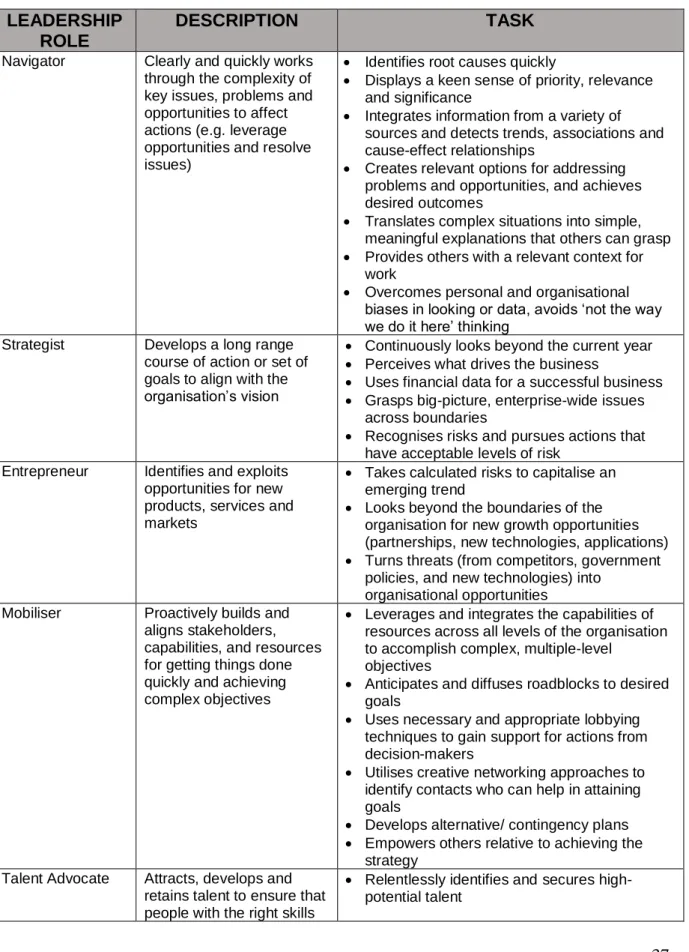
Table 2.3: Leadership roles for leaders in complex organisations……… 37
Table 3.1: Research Participants ………..… 87
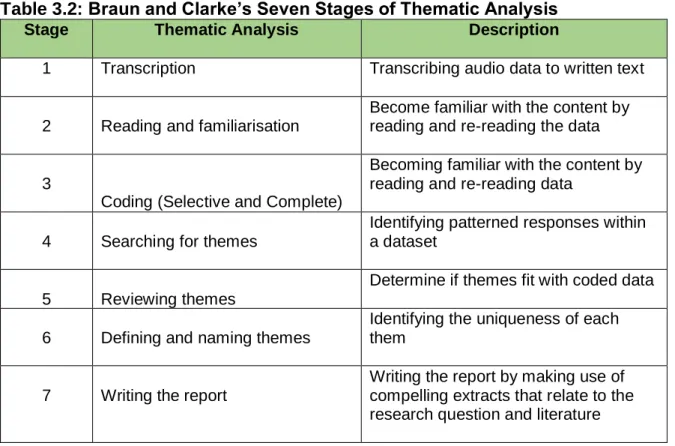
Table 3.2: Braun and Clarke’s Seven Stages of Thematic Analysis ……… 92
Table 4.1: Details of participants ……… 98
Table 4.2: Themes ……… 99
LIST OF FIGURES Figure 1.1: Listing and trading competition models for stock exchanges ………. 6
Figure 1.2: Workforce profile at the top management level by race………15
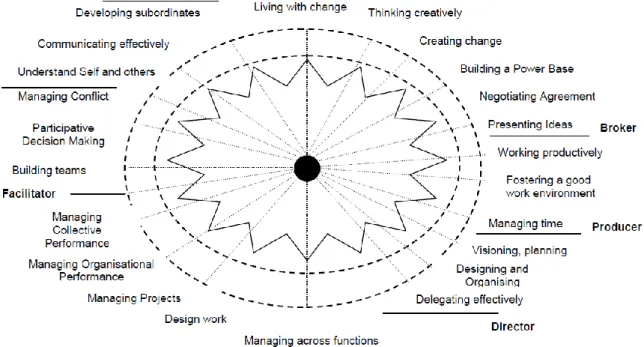
Figure 2.1: Generic leadership roles in organisations ………. 36
1
CHAPTER 1: INTRODUCTION
–––––––––––––––––––––––––––––––––––––––––––––––––––––––––––––––––––––––––––
1.1 Introduction
According to the Commission for Employment Equity Report (2017), as far as top management representation is concerned, whites are only 10% of the economically active population (EAP) but occupy 68.5% of the top management positions. Of the remainder, 14.4% of senior positions are held by black Africans, while coloured and Indian people hold 4.9% and 8.8% of top management level positions respectively.
The large-companies will also include the Top 40 Johannesburg Stock Exchange (JSE) listed companies and the index is the 40 biggest companies on the JSE, ranked by market capitalisation (market cap). The market cap of a company is the number of shares outstanding multiplied by the current share price (Courtney Capital, 2017). The Top 40 index is a fair reflection of what happens to the South African stock market as a whole, because even though it contains only 40 out of the roughly 400 shares listed on the JSE, it represents over 80% of the total market cap of all JSE-listed companies.
The Jack Hammer Executive Report (2015) revealed that the proportion of black South African executives fell from 15% in 2012 to 9.8% in 2015. While the executive teams of South Africa’s top 40 companies are slowly becoming more representative, very few of these top black leaders are destined to make it to the pinnacle position in their companies. Of the 334 people who constitute the executive teams in South Africa’s top 40 companies, 21% are black South Africans, but only half of them are currently in business strategy, operations or finance positions, and thus destined for company leadership.
Talent management and leadership development initiatives are at the core of the acceleration of black talent to the top management or executive levels of companies.
The challenges need to be fully understood and the appropriate solutions and practical responses identified to assist in ensuring that JSE-listed companies reflect the demographics of our society at the executive level. The JSE is the oldest and largest existing stock exchange in Africa. It was previously known as the JSE Securities Exchange and the Johannesburg Stock Exchange (Black Management Forum, 2017).
2 Leadership development includes activities that improve the skills, abilities and confidence of leaders. Leadership programmes vary massively in complexity, cost and style of teaching, with mentoring and coaching being the two forms most often used to guide and develop leaders (Daft, 2014). Leadership development is a common process in succession planning, which aims to produce high-calibre leaders to take over senior positions when they become vacant. High performers are typically identified for these leadership development programmes, which may be longer-term and broader than programmes focusing on tighter end-goals (HR Zone, 2017).
Talent is a set of certain knowledge and valuable skills that are necessary for a company to run optimally, and includes abilities and aptitudes that can be developed by gaining experiences and skills. Exposure and approaches contributes to talent, i.e.
talent is a total of human abilities, gifts, knowledge, intellect, views and character, as well as assertiveness, aptitude for learning and growth (Borisova, 2017).
Research shows that firms have some convergent, but also divergent, talent management practices (Stahl, 2012). A performance-driven vision of talent management is very common in talent management processes. Early studies on managing people indicate that organisations need to pay greater attention to internal talent, since managerial talent is just as likely to be present in those employees working their way up through the ranks as in managers hired from outside the organisation (Miner, 1973).
1.2 Background
This research examined how South Africa can achieve a sizeable number of black talent at the executive level within the JSE-listed companies. Leadership development initiatives of different companies were studied to understand their impact, if any, on the acceleration of black talent. Small-sized, mid-sized and top-sized companies in terms of market share were analysed.
3 The total market capitalisation of the JSE is approximately R13 trillion, while the nominal gross domestic product of South Africa is approximately R4,5 trillion. JSE- listed companies have a massive impact on the economy, including contributing employment, taxes and dividends, therefore it is imperative that they reflect the demographics of the broader society as far as its top management and executive leadership is concerned (Odhiambo, 2014). This will be good for the companies to reflect the demographics of its society throughout top management leadership in JSE listed companies. Following its research, the Centre for Competition Regulation Economic Development (CCRED) found that firms listed on the JSE have an important role to play in economic growth and industrialisation in South Africa (CCRED, 2017).
Black managers in higher positions job-hop from one company to another or start their own businesses when companies fail to provide for their career development (Nzukuma and Bussin, 2011). Also, entrepreneurism is stimulated by other pillars of the Broad-based Black Economic Empowerment (BBBEE) Act, namely preferential procurement and enterprise development (Nzukuma and Bussin, 2011; Valodia et al., 2018).
Andreeva (as cited in Ivanova, 2005: 72) defined the crisis of social identity “as a state of consciousness in which most of the social categories by means of which an individual defines himself and his place in society, seem to have lost their boundaries and their value”. Post-apartheid, the re-evaluation of identity caused the South African society to accept new values. This crisis of identity does not only occur when individuals face loss of status and opportunity in their newly assigned space in society (Ivanova, 2005; Korostelina, 2003; Malanchuk, 2005), but also in cases where they gain status and opportunity (Herriot and Scott-Jackson, 2002). Thus, in accordance with such cultural environment, black executives taking up senior roles are expected to fit into a culture that will never fully accept them (Fernandez and Alsaeed, 2014).
This is due to the legacy of apartheid and racial profiling which reserved jobs for whites and expected the discriminated to foster new values rather than gain respect for their own.
According to Vass (2010), South African companies focus mainly on meeting legislative compliance by chasing targets instead of embracing transformation as a
4 strategic imperative. Companies, therefore, seek quick fixes like head hunting, poaching and salary incentives to achieve their targets. When blacks are appointed in top management positions, it is often in soft jobs with limited authority and minimal career prospects. Equity legislation and the emigration of skilled labour also force companies to chase targets, resulting in the mobility of black talent and a war for a limited pool of black professionals (Nzukuma and Bussin, 2011). According to Booysen (2006), whites generally perceive blacks as incapable, despite the experiences, skills, and degrees they may attain (Valodia et al., 2018).
Whites, even as a minority which held absolute power previously, still hold the most economic and management power. Despite the presence of blacks in the political dynamics, they are yet to achieve some power in the context of management or organisations. Although, there are formal legalities that aim to focus on equality in the South African workplace, it is long road to substantially achieve equality due to the prevalence of societal discrimination and the past ideology of racial discrimination in existence. The argument stated certifies that despite the progress, there exists an apparent race gap at the decision-making level of management in South African organisations (Booysen, 2007; Valodia et al., 2018).
Black incumbents are taking up senior roles in a corporate culture different from their own (Fernandez and Alsaeed, 2014; Khanyile and Maponga, 2006). Similarly, companies are not prepared to embrace black leadership as a result of their unfamiliarity with ethnically different leadership cultures (Jack et al., 2004; Vass, 2010). The research conducted by Dzivhani (2016) asserted a relationship between leadership and ethnicity. There is a large body of research that concludes the challenges faced by ethnic minorities to gain access to leadership positions (Ospina and Foldy, 2009). According to Elliott and Smith (2004), there has been a considerable slower rate of promotion for African-American managers as compared to white managers (Valodia et al., 2018).
Staff retention and commitment are mainly driven by organisational culture. Research on South African companies shows that those companies that focus on meeting legislative compliance by developing diversity, training and development policies will drive cultural change and embrace transformation as a strategic imperative (Vass,
5 2010). Though the executive teams of South Africa’s top 40 companies are eventually gaining representation, it is very rare that black leaders make it to the top in their companies. It is imperative for the organisations to be more strategic about transformation, if their goal is to develop a cohesive pool of different leaders (Hammer, 2015), wherein they will be placed for influential roles rather than fulfilling the obligatory mandate of BBBEE Act. Frustration with corporate culture has forced many black individuals to seek alternate employment or start their own businesses (Nzukuma and Bussin, 2011).
The scarcity of black talent within the JSE-listed companies, equity legislation and the emigration of skilled labour have resulted in companies chasing numbers, which force black talent to be mobile (Nzukuma and Bussin, 2011). Human resource practitioners say the war for black professionals is fuelled by democracy, affirmative action and a skills crisis. Succession planning and internal career advancement should be part of the development plan to drive internal upward mobility (Vass, 2010). The lack of career path development contributes to the outward mobility or job-hopping of black managers (Nzukuma and Bussin, 2011; Valodia et al., 2018).
Change management and leadership development programmes have a poor record in most organisations, largely because they come up against a common challenge – incorporating different backgrounds into the existing one. Tasking managers with driving bottom-up cultural change provides leadership training in itself, but they require top-down support to succeed (Quinn and Quinn, 2016).
1.3 Generic Stock Exchanges Business Model
The stock exchange has played an important role in the modern economy across the globe by providing a channel for raising capital, price discovery, and information dissemination. The globalisation of the capital market has opened new era of stock market evolution in recent years. From an investor's point of view, investing domestically is no longer the only choice available, and money can be transferred to markets characterised by higher liquidity, lower transaction costs, higher profits and fewer barriers. As the heart of modern capital markets, stock exchanges still need to rethink their profit production process by providing better financial services to meet the
6 needs of firms as well as investors in adjusting to the changing environment.
Therefore, the traditional role of the stock exchanges should rapidly change through the enforcement of competitive advantage and innovative development in order to secure their competitive position worldwide (Lo, 2013).
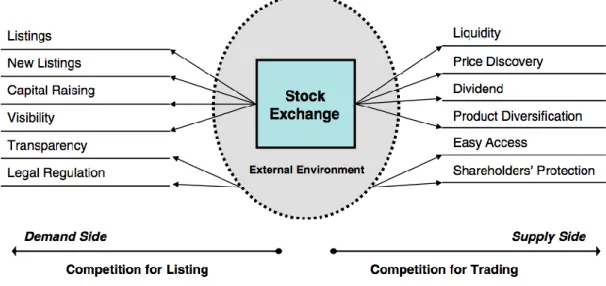
Figure 1.1: Listing and trading competition models for stock exchanges
Source: Lo (2013:502)
1.3.1 Analytical Model
From a worldwide capital market perspective, the tensions in terms of regional stock exchanges relate to the attraction of more listings as well as to a higher corresponding trading volume relative to rival peers (Pagano et al., 2001). From the viewpoint of the capital demand side, exchanges compete to attract new listings. From the viewpoint of the capital supply side, exchanges compete to provide superior trading services.
Moreover, the listing decisions of firms, as well as the trading decisions of investors, are likely to depend not only on the characteristics of a specific stock exchange, but also on the institutional features of the country in which the exchange is located (Lo, 2013).
7 1.3.2 Competition for Listing
The attraction of stock market listings may depend on various characteristics of the exchange itself. In other words, exchanges may vary significantly in terms of size, international orientation, and market segmentation, and attract different types of firms (Karreman and van der Knaap, 2009). In practice, when exchanges provide a listing, they also provide other services at the same time: liquidity, the monitoring of trades, publicity, and a signal to inform investors that the issuing companies' stocks are of high quality (Lo, 2013).
1.3.3 Listings
The number of cumulative listed companies is commonly regarded as the basic knowledge of the exchange, implying an exchange's size and attractiveness to firms.
Companies tend to be attracted by larger stock markets, because it is easier to access a larger pool of potential investors. Moreover, being listed on a larger stock market may give rise to greater visibility and reputation. The listing variable is used as a performance indicator in (Pagano et al., 2001; Serifsoy, 2008; Lo, 2013).
1.3.4 New Listing
Other than listings, the ‘Number of newly-listed companies’ for the current year is another frequently used indicator, implying an exchange's attractiveness to new firms.
The yearbook of the World Federation of Exchanges (WFE) discloses this number as a key factor of a stock exchange's performance (Lo, 2013).
1.3.5 Capital Raising
Firms attach importance to trading costs, which is certainly linked to the fact that firms can raise capital cheaply from investors or intermediaries, especially those firms with new acquisition strategies. The price-earning ratio (PER) is usually used as the proxy.
Since investors should translate their valuation into the PER, firms will be able to raise lower stock volumes or benefit from higher stock prices while the funding amounts remain constant (Wang, 2008 and Lo, 2013).
8 1.3.6 Visibility
In a firm's listing decision, how to gain more visibility, such as a better reputation and analyst coverage, is also important. Therefore, firms tend to look to list on larger markets. Bancel and Mittoo (2000) reported that the most important perceived benefit of a foreign listing in a larger market is the increased visibility and prestige, based on a survey of 305 European companies. One possible benefit of listing in a larger market is exposing the company to the attention of additional financial analysts, and thereby to a wider investor base (Baker et al., 2002; Lo, 2013).
Other than exchange-specific performance, some country-specific performance may affect an exchange's operation externally. Two aspects are frequently discussed:
transparency and the legal regulation of a country's financial market (Lo, 2013).
1.3.7 Transparency
If a listing is seen as a preliminary step in a strategy of expansion and acquisition either domestically or abroad, a firm will naturally prefer a country where a financial institution's transparency is sufficient in evidence, and thus contracts are easily enforced and the bureaucracy is efficient (Klein, 2005). Financial institutional transparency is a key means of ranking the evaluation of stock market efficiency in the annual Institute of Management Development (IMD) World Competitiveness report (Lo, 2013).
1.3.8 Legal regulation
Firms also have to consider regulation and accounting standards. Coffee (2001) points out that strong legal standards tend to attract, rather than drive back, listings. As far as regulation is concerned, exchanges with strong protection for minority shareholders have received comparative higher listings (Klein, 2005). In the case of accounting standards regarding disclosure, countries compete to attract listings by designing a regulatory environment built around disclosure requirements that is expected to lower the cost of capital (Cantale, 1996; Fuerst, 1998; Huddart et al., 1999; Stulz, 1999).
9 Auditing and accounting practices is a key ranking indicator for the evaluation of business efficiency in the annual IMD World Competitiveness report (Lo, 2013).
1.3.9 Competition for trading
Competition for trading among the world's stock exchanges, and these are the factors considered by investors in their investing decisions. The attraction of stock market order flows may depend on various characteristics of the exchange itself. Investors obviously look for markets with smaller transaction costs, high liquidity, and better shareholder protection (Klein, 2005). For exchange-specific performance indicators, four aspects are frequently discussed: liquidity, price discovery, stock dividends, and product diversification (Lo, 2013).
1.3.10 Liquidity
Investors prefer lower transaction costs, which are met in brokerage commissions and taxes. However, transaction costs are in practice hard to estimate since trades occur in various ways, and they can therefore associate them with higher liquidity (Klein, 2005). In other words, higher liquidity increases investors' satisfaction if the stock market supplies immediate execution for an incoming order. The liquidity services, such as electronic trading venues, are often regarded as the key function of a stock exchange, and are valued by investors while they decide their selling/buying prices (Amihud and Mendelson, 1986; Brennan and Subrahmaniam, 1996; Lo, 2013).
1.3.11 Price discovery
Price discovery is literally defined as a market's attempts to find transaction prices that are close to the theoretical equilibrium. The contributions of a stock market's price discovery are widely discussed in the previous classical literature, for example, (Hasbrouck, 1995; Andersen et al., 2003). Investors prefer markets with greater flows of information, which results in higher volumes of trades (Klein, 2005; Lo, 2013).
1.3.12 Dividend
Investors tend to favour cash dividends more when they predict future uncertainty (Kahneman and Tversky, 1979; Thaler and Shefrin, 1981). The yearbook of the World
10 Federation of Exchanges (WFE) discloses the dividend percentage as being a key factor of a stock exchange's performance (Lo, 2013).
1.3.13 Product diversification
Both institutional and individual customers seek financial service institutions that can leverage their capabilities to provide a comprehensive range of financial products (Sheu et al., 2006). A firm's diversification strategy is one of the most frequently discussed topics and it is suggested that successful firms will finally expand their operations by diversifying their product offerings (Lang and Stulz, 1994; Palepu, 1985;
Prahalad and Bettis, 1986). In addition to traditional stock share trading, more and more stock exchanges have provided an integrated market offering comprehensive service across securitised derivative products, exchange trade funds (ETFs), and investment funds, etc (Lo, 2013).
1.3.14 Easy access
Easy access that is typically defined as the accessibility of markets has improved with the deregulation of markets as well as the progress in technology. Easy access is a country level indicator rather than a stock exchange's technological progress. Capital markets accessibility is one of the key ranking indicators for the evaluation of market openness in the annual IMD World Competitiveness report (Lo, 2013).
1.3.15 Shareholders’ protection
Fair access means that all market traders operate under similar conditions, where no one has a persistent advantage over another (Klein, 2005). Jain (2003) found that better shareholder protection rights and the enforcement of insider trading laws are related to lower spreads. In considering agency problems, the degree of shareholder protection against the misbehaviour of company directors is largely determined by the law of the country and by the way in which the courts interpret and enforce it. Financing activities are significantly reduced in countries with poor investor protection systems (Doidge, 2004; Doidge et al., 2004; La Porta et al., 1998). ‘Shareholders' rights’ is one of the key ranking indicators used in the evaluation of stock market efficiency in the annual IMD World Competitiveness report (Lo, 2013).
11 1.4 Stock Exchanges Global Perspective
Overall, the international exchange sector itself has performed well, according to the Financial Times Stock Exchange (FTSE) Mondo Visione Exchanges Index. The index hit a new record high in January 2018. Revenue gains in exchange market data businesses have driven industry growth. As exchanges continue to amend their operating models to diversify away from a dependency on transaction-based revenue, the global exchange industry continues to undergo a steady transformation (JSE, 2018).
Incumbent exchanges have been forced to dramatically expand their focus on new business segments because of weak trading volumes and emerging competition.
However, attractive revenues from these services have invited some scrutiny and criticism. For example, potential conflicts of interest generated by exchange access fees and rebates, as well as the potentially market activity stifling effect of the monopolistic dominance of exchanges in the market data sphere, have been highlighted as potential problem areas (JSE, 2018).
Developments in post-trade services in the US and Europe have been driven by regulatory needs and competition for the provision of these services from a variety of non-exchange players. Examples are Cinnober’s launch of a risk management offering for central counterparties (CCPs), the 2018 implementation of the Japan Exchange Group’s TRADExpress CCP Risk system and the MiFID II regulatory reporting service launched by post-trade technology vendor Misys in partnership with Broadridge Financial Services (JSE, 2018).
In the information services space, analytics and indices continue to be sources of innovation, revenue growth and key areas for development for exchanges through organic and inorganic activities. Examples supporting this trend are Nasdaq’s unique new platform, the Nasdaq Analytics Hub; the London Stock Exchange’s plan to buy Citigroup’s Yield Book fixed income analytics service; Thomson Reuters’ incubator, Thomson Reuters LabsTM; and Moscow Exchange’s announcement of its plans to work with fintech start-ups through MOES Innovations, a new subsidiary company (JSE, 2018).
Exchange traded funds (ETFs) continue their stellar growth and show a clear trend
12 towards more passive investment globally, led by the US. JSE statistics show a similar trend in South Africa, albeit off a low base. ETFGI, a leading independent research and consultancy firm on trends in the global ETF industry, reported that assets under management invested in ETFs listed globally breached the US$4 trillion mark as at the end of April 2017. Also, retail investors flocking to passive products have prompted BlackRock to cut fees on 15 ETFs and market trends show a flat-lining or reduction in funds held by hedge funds, indicating that there may be a migration from hedge funds into ETFs. With 15 ETFs registered by December 2017, South Africa may be beginning to witness the same trend (JSE, 2018).
Bitcoin futures were launched for trading on the Cboe Futures Exchange in December 2017. This brings many benefits to market players, including transparency, efficient price discovery, deep liquidity and centralised clearing. However, the regulation around Bitcoin is still not bedded down. The continued acceleration of technological innovations will make competing with the JSE easier and put the JSE under pressure to adapt to new technology faster than it has historically done (JSE, 2018).
1.5 Overview of the study
The purpose of the Employment Equity Act, No. 55 of 1998 is to achieve equity in the workplace by promoting equal opportunities and fair treatment in employment, through the elimination of unfair discrimination and by implementing affirmative action measures to redress the disadvantages in employment experienced by designated groups. This is done in order to ensure equitable representation across all occupational categories and levels in the workforce (Employment Equity Commission Report, 2017).
Booysen and Nkomo (2014) state that the Employment Equity Act emanates from the Constitution adopted in 1996. Section 9(2) of the Constitution is specifically concerned with the achievement of substantive equality as opposed to formal equality (Dupper and Garbers, 2009). Substantive equality takes cognisance of structural inequality in society with a focus on remedy of this inequality (Coetzer, 2009: 93). The Constitution also states South Africa’s vision for the kind of nation it aspires to be: “We, the people of South Africa, recognise the injustices of the past; honour those who have worked
13 for justice and freedom in our land; respect those who have worked to build and develop our country, and believe that South Africa belongs to all who live in it, united in our diversity ....” (Constitution of South Africa 1996: Preamble). This suggests an aspiration of creating an inclusive country that values its diversity.
Regarding inhibiting factors in the progression of black executives in their careers, Myres (2014) indicated that black executives experience high levels of racism.
Achieving a critical mass of black executives would create an opportunity to adopt a blend between the current common Eurocentric management style and an Afrocentric one. Aspects of black culture can be detrimental to executives’ effectiveness, particularly the ability to confront other executives as superiors or colleagues. Creating a positive support environment for the black executive is important for the creation of a pipeline of executives. Having a supportive family background, and maintaining a positive attitude is key. Educational background no longer appears to be an inhibiting factor, as most executives have attended Historically White Institutions (HWIs). Most respondents had co-opted unofficial mentors at work during their careers. A distinct lack of visibility through substitute networks for the historical Anglo American model from schools and universities makes sourcing black male recruits difficult (Myres, 2014).
The goal of the Employment Equity Act is to achieve employment equity by (a) promoting equal opportunity and fair treatment in employment through the elimination of unfair discrimination; and (b) implementing affirmative action to redress the disadvantages in employment experienced by designated groups (Africans, Coloureds, Indians, persons with disabilities and women), in order to ensure their equitable representation in all occupational categories and levels in the workplace (Employment Equity Act, 1998). The intention of the Act is specified in Section 42 which reads, the demographic profiles of the national and regional economically active population should be reflected in the employment areas of designated employers. This reflection will show that the workplace is redressed and equality together with a diverse and representative workforce is achieved (Employment Equity Act 1998).
14 1.6 Problem statement
This research seeks to examine the impact of leadership development initiatives in the acceleration of black talent on the JSE-listed companies. The research problem is to explain the challenges in the process of development and advancement of talent that will produce a critical mass of black executives. It will scrutinise both the individual and organisational factors that influence black talent advancement or lack thereof.
The Top 40 index is a fair reflection of what happens to the South African stock market as a whole, because even though it contains only 40 out of the roughly 400 shares listed on the JSE, it represents over 80% of the total market cap of all JSE listed companies (Courtney Capital, 2017).
The Jack Hammer Executive Report which was released in late 2015, reveals that the proportion of black South African Executives has fallen from 15% in 2012 to 9.8% in 2015. While the executive teams of SA’s Top 40 companies are slowly becoming more representative, very few of these top black leaders are destined to make it to the pinnacle position in their companies. Of a total of 334 people constituting the executive teams in SA’s Top 40 companies, 21% are black South Africans. But, only half of them are currently in business strategy, operations or finance positions, destined for company leadership (Jack Hammer Report, 2015; Rhode and Packel, 2014).
Essentially, there are about 70 black South Africans who are executives in the Top 40 JSE Listed companies. About only 35 of them have relevant experience and exposure to make them eligible for CEO positions, this is after 23 years of freedom and democracy in South Africa today (Black Management Forum, 2017).
15 Recent employment data from the Employment Equity Commission suggest slow transformation of the workplace (Department of Labour, 2017).
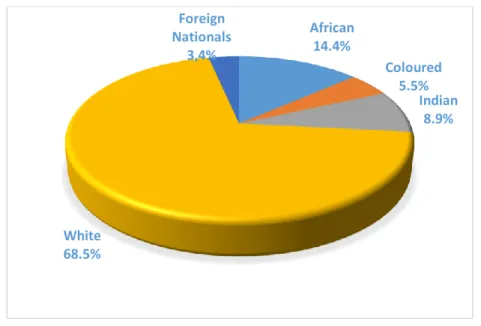
Figure 1.2: Workforce profile at the top management level by race in South Africa
Source: 17th Employment Equity Commission (2017)
As shown in Figure 1.2, the representation of the white group at the Top Management Level (68.5%) is more than six times their EAP. The Indian group at 8.9% is also over- represented at three times their EAP. On the contrary, the African group at 14.4% and the Coloured group at 5.5% are under-represented in relation to their EAP. African representation is more than five times below their EAP, while the Coloured representation is half their EAP (Employment Equity Commission Report, 2017).
African 14.4%
Coloured 5.5%Indian
8.9%
White 68.5%
Foreign Nationals
3,4%
16 Table 1.1: Workforce profile at the top management level by business type
Business Type MALES FEMALES
African Coloured Indian White African Coloured Indian White
National Government 39.3% 6.6% 6.2% 10.5% 26.0% 3.0% 3.0% 4.8%
Provincial Government 47.4% 5.6% 2.4% 6.8% 28.4% 3.4% 1.5% 4.2%
Local Government 54.1% 6.0% 5.0% 8.2% 21.0% 1.3% 1.5% 2.6%
Private Sector 7.5% 3.0% 6.7% 59.1% 3.3% 1.7% 2.3% 13.0%
Non-Profit Organisations 22.5% 4.5% 3.5% 26.8% 13.0% 2.9% 3.4% 18.6%
State-Owned Enterprises 35.0% 4.3% 7.4% 16.2% 22.0% 2.8% 3.3% 7.7%
Educational Institutions 15.1% 4.6% 2.7% 35.8% 7.5% 1.8% 2.3% 26.2%
Source: 17th Employment Equity Commission (2017)
The private sector and educational institutions have an overwhelmingly White representation at the top management level (72.1% and 62.0% respectively), with White males featuring strongly in these sectors, as depicted in Table 1.1. Black people, the majority being African males, are most represented across all tiers of government, i.e. 65.3% in national, 75.8% in provincial and 75.1% in local government, as well as state-owned companies (57%). The foreign national population group statistics have been deliberately omitted (Employment Equity Commission Report, 2017).
Government (especially the provincial sphere) and state-owned companies are leading the way with regard to the representation of females, with special emphasis on African women, while the same cannot be said for the private sector and educational institutions. White women are more commonly found in the private sector, educational institutions and non-profit organisations (Employment Equity Commission Report, 2017).
The private sector shows a significant representation of male foreign nationals at the top management level, which is even higher than Black females.
17 Table 1.2: Workforce movement and skills development at the top management level
Workforce Movement MALES FEMALES
African Coloured Indian White African Coloured Indian White
Workforce profile – all employees 9.8% 3.2% 6.5% 55.6% 4.5% 1.7% 2.3% 12.9%
Recruitment 19.4% 3.4% 5.6% 40.1% 9.6% 1.8% 3.5% 10.6%
Promotion 13.0% 5.0% 7.9% 37.7% 7.8% 3.4% 4.6% 17.4%
Terminations 14.5% 3.6% 4.9% 49.1% 7.2% 1.7% 1.8% 11.6%
Skills development 65.8% 1.8% 2.9% 17.0% 3.6% 1.2% 1.6% 6.1%
Source: 17th Employment Equity Commission (2017)
According to Table 1.2, white males continue to receive preference when it comes to job and promotion opportunities at the top management level. With regards to recruitment, African males are the next group to receive consideration, followed by White females, who are preferred over any other group for promotion after White males (Employment Equity Commission Report, 2017).
Masadeh et al. (2014) stated that many of us express concern for cultivating a positive organisational culture one that promotes high employee engagement. When it comes to culture we implicitly understand and accept that much of our experience in organisations is socially constructed. This means we hear similar messages, and assign shared meaning to our interactions because we have a common frame of reference that tells us what is valued and not valued. However, when it comes to framing leadership, we don’t interpret it the same way. The lexicon of leadership places more weight on the individual, and less on the influence that the social system has in shaping managerial behaviour. In part, this jaded view of leadership is ironically very much a function of Western culture that places a premium on rugged individualism. The point, here, is not to dismiss individual behaviour, but to show how important social context is to the leadership and performance agenda. If you want to develop an effective leadership program, the social context of an organisation must inform the development process not cloud it. There are two basic strategies for using social context to inform leadership development: (1) focus at the level of the whole;
18 and (2) connect the dots between what is happening in the organisation and its social practices.
Cohen (2017) states that leadership development is an organisational process no different than other types of processes. The only difference is the purpose it is designed to achieve, and whether it is formal or informal. Informal processes are harder to observe, and to gauge whether they are working. Although the purpose of leadership development is relatively easy to explain, the presence of an informal social context makes the task more difficult. Therefore, before installing a formal leadership development programme, it is worth clarifying the social context so that senior management can decide if such patterns are supportive, or are constraints that need to be changed.
1.7 Research aim
The aim of this research was to examine the impact of leadership development initiatives on the acceleration of black talent to the top management or executive levels in JSE-listed companies. This study further sought to reveal and analyse the challenges in the lack of advancement of black talent in JSE-listed companies, including how they can be overcome. The study also provided practical guidance to companies and organisations on how they can accelerate black talent to executive levels in JSE-listed companies.
1.8 Research objectives
• To explore the challenges to advancing black talent in JSE-listed companies.
• To analyse the impact of leadership development initiatives on accelerating black talent in JSE-listed companies.
• To investigate to what extent there is institutionalised bias in the acceleration of black talent in JSE-listed companies.
• To provide recommendations on how black executives can be accelerated to leadership positions in JSE-listed companies.
19 1.9 Research questions
• What are the challenges to advancing black talent in JSE-listed companies?
• How impactful is leadership development to the acceleration of black talent in JSE- listed companies?
• How prevalent is institutionalised bias in the acceleration of black talent in JSE- listed companies?
• What are the practical recommendations for how black talent can be accelerated to leadership positions in JSE-listed companies?
1.10 Contribution of the study
This study will provide practical suggestions and recommendations to the top management JSE-listed companies and organisations in general that are being examined to assist in the acceleration of black talent to achieve transformation that reflects the demographics of our society. Different leadership development initiatives will be explained and how they could be successfully implemented. Current challenges, experiences and recommendations will be made for future research exploration on this subject matter. This study may contribute to providing solutions that could improve race relations and workplace transformation towards normalising and achieving sustainable business performance of JSE-listed companies.
1.11 Limitations of the study
The availability of participants was a limitation for this study as it only focused on executives or HR practitioners in JSE-listed companies. Time constraints served as another limitation to this study as some participants could not be kept out of their busy schedule for a lengthy period. This impacted on the time taken for each interview to be conducted and resulted in minimal time being available for the researcher to conduct each interview. The researcher mitigated these limitations by scheduling each interview according to the availability and comfort of each participant.
Lastly, owing to possible bias and subjectivity of the researcher, certain preconceived ideas on the topic and personal experiences might also have contributed to the
20 limitations. However, all efforts were applied in conducting a fair, objective, and unbiased study.
1.12 Dissertation outline
This study was undertaken with an approach of understanding the impact of leadership development on the acceleration of black talent in JSE-listed companies. Leadership development initiatives of different companies were probed, as were their impacts on the acceleration of talent, particularly that of black professionals. The following was explored in this study:
Chapter One: This chapter presents the research problem, explains the background of the study, outlines the research methodology used and provides the research questions to be answered.
Chapter Two: In this chapter, the literature review will be discussed in detail. An overview of the impact of leadership development initiatives and how black talent can be accelerated are outlined. The relationship between talent development and broader company performance will also be highlighted.
Chapter Three: This chapter describes the research methodology, data collection techniques as well as data analysis used on the study. The chapter also summarises sampling techniques and the usage of research instrument for data collection from the respondents, as well as the methods of data analysis.
Chapter Four: This chapter presents the findings and results from the interviews conducted with the respondents from small, medium and large JSE-listed companies.
Chapter Five: In this chapter, discussions and interpretation of study results from the research will be outlined. The findings of this study are compared and contrasted with the results of previous research, and a summary is provided which will determine if the study has indeed answered the research questions.
21 Chapter Six: In this chapter, the study objectives and the findings will be connected, a summary is provided which will determine if the study has indeed answered the research questions, and evidence will be provided which validate how the research questions have been answered. It also discusses what leadership development initiatives are more impactful than others, recommendations will be provided on how to address the research problem, limitations identified in the study will also be outlined, and solutions on how to overcome these limitations will be provided.
1.13 Summary
Chapter One was about the introduction of the study, which included the problem statement and the scope and the importance of the study, and defined leadership development and its significance in the acceleration of black talent to top management or executive levels in JSE-listed companies. The research focus and problem were clarified, as were the research questions and objectives.
The next chapter contains the literature review, which examines the literature pertaining to the objectives and questions that will be answered by this study.
22
CHAPTER 2: LITERATURE REVIEW
–––––––––––––––––––––––––––––––––––––––––––––––––––––––––––––––––––––––––––
2.1 Introduction
The research was aimed at examining the impact of leadership development initiatives on the acceleration of black talent to executive levels in JSE-listed companies. This study sought to reveal and analyse the challenges related to the lack of advancement of black talent in JSE-listed companies, as well as how they can be overcome.
There is substantial literature on leadership development, talent management and leadership theories. However, literature is limited on the other aspects of this study such as black talent in executive positions, institutionalised biasness from race perspective and on the JSE itself or South African based companies. This study was anchored on transformational leadership theory since it intently matches the research objectives and outcomes of this study. This chapter looks at different sources that are related to the research topic.
The following themes will be discussed in this chapter:
• Leadership theory and leadership development
• Development of black talent to executive positions
• Talent management
• Leadership development initiatives
• Institutionalised bias in business
2.1.1 Leadership and transformational theory
Leadership theory over the past 80 years has undergone a multitude of changes by employing various models of creation, consciousness and evolution (Smart, 1992).
Mortimer (2009) provided an overview of the changes in the focus of leadership theory over time, stating that the emphasis has changed from developing leaders to developing learning organisations with a collective responsibility for leadership.
Lichtenstein and Plowman (2009) highlighted that the majority of leadership theories focused on dyadic influence, primarily in the supervisor-subordinate relationship, and was developed and served as a basis for leadership discourse before the realisation
23 that a meso-model of leadership connects individual behaviours with organisational contexts, thus revealing far richer dynamics of interdependence and influence.
2.1.1.1 Leadership theories
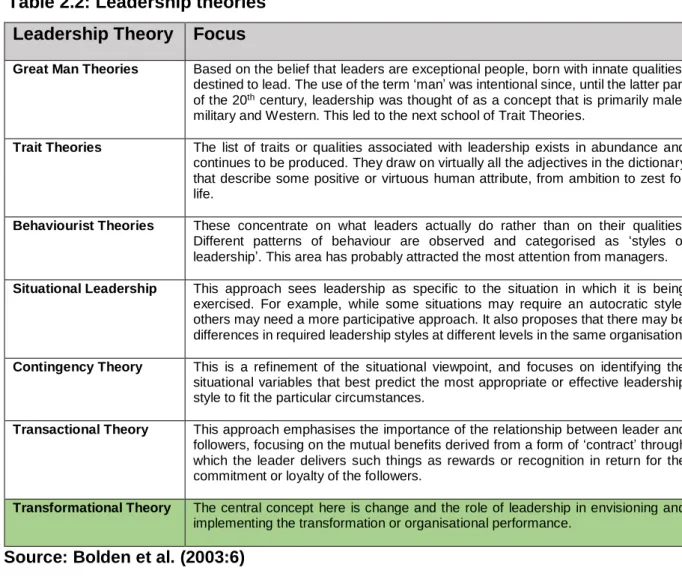
Leadership literature reviews reveal that there is an evolving series of schools of thought with regard to leadership theories. Research brought about the great man and trait theories, resulting in many other theories including the transactional and transformational leadership theories. Whilst it is evident that theories developed during the early years were inclined to focus on the behaviour and characteristics of leaders who were successful, it is also evident that later theories began to consider an inclusive approach, viewing the followers’ roles and the context of the calibre of leadership being practiced (Bolden et al., 2003).
As mentioned earlier, during the evolution phase, researchers developed and produced a wide range of leadership approaches, theories and models. The following leadership theories were analysed:
• The Great Man Leadership Theory
• The Trait Leadership Theory
• The Situational Leadership Theory
• The Transactional Leadership Theory
• The Transformational Leadership Theory
2.1.1.2 The Great Man Theory
Allio (2012) stated that, during the beginning of the revolution of industry, the Great Man Theory ruled the explanations of the leadership that existed during the time. Kutz (2012) added that the Great Man Theory encouraged the notion that genetics influence the superior leader status, suggesting that a leader was born with certain innate qualities and capabilities for leadership.
Avolio et al. (2009) pointed out that during the early days of the Great Man era of leadership, the main objective was to analyse an individual, who was most likely a male, and who was perceived to have great authority and power. The term ‘Great Man’
24 dominated at the time, because people perceived leadership to be a quality that was predominantly male. Kutz (2012) supported this notion by saying that during these times the influence and powers of the leader came naturally, and being a visionary was not viewed as a necessity for secure backing from followers. It emerged that, in most cases, fear or respect was the basis for a leader’s influence; under this model, it was very rare to have a leader’s position challenged.
According to McCleskey (2014), the ideology was that only exceptional individuals possessed leadership characteristics. The study of leadership traits then came about as a result of the evolution of the Great Man Theory. McCleskeycontinued by saying that it was not surprising to note that the Great Man ideology still has supporters in this day and age. Typically, this support is evident in workplaces (Hofmeyr and Mzobe, 2012), where the promotion of females into senior positions in all sectors of the economy – including the South African government − remains a huge problem. This is particularly true in JSE-listed companies.
Rarieya (2013) also argued that people still believe that leadership positions in society and organisations belong to the male species, adding that these traditional societal gender stereotypes pose a fundamental challenge to women in leadership. According to Van Zyl (2003), leadership development programmes are an appropriate intervention for ensuring the acceleration of black talent to top management, as well as for ensuring gender representation. This will make an impact in assisting the JSE- listed companies to reflect the demographics of broader society.
According to Mkhize and Msweli (2011), the terms of employment equity policies and guidelines state that employment preferences in the workplace should be given to female applicants. This will ensure that the imbalance in the workplace that exists between males and females is dealt with effectively, most importantly at the senior levels of management.
2.1.1.3 The Trait Theory
According to Bolden et al. (2003), the Trait Theory evolved from the Great Man Theory, as researchers were seeking a method of identifying the key characteristics of
25 successful leaders. Some researchers were of the opinion that the key leadership traits of these leaders could be singled out through this approach. Anyone who demonstrated traits of this nature could then be engaged, hand-picked, and appointed as a leader. The military predominantly used this approach, and it is still practiced in some places as a selection criterion for candidates.
Kutz (2012) noted that the Trait Theory assumes that leadership traits are either naturally inherent to an individual or a godly quality that has been bestowed upon them. He added that since the traits are part and parcel of the natural identity of the individual, the person can at any stage be called up to lead effectively, regardless of how much time he may have been lying idle and not been involved in any leadership role. These have to do with being confident, assertive and bold in approach to management and leadership.
The Trait Theory of leadership also postulates that leader emergence and effectiveness is influenced by personality traits, and places strong emphasis on the belief that certain traits differentiate leaders from other individuals. If someone does not display those particular traits, they are deemed unsuitable as a leader (Colbert et al., 2012). It is imperative for black professionals to have these traits which will assist in propelling their careers to executive levels in JSE-listed companies.
Bolden et al. (2003) argued, however, that with traits being as numerous as they are, there is no reason to believe that an individual who does not possess some of the key traits would fail as a leader. They added that although consistency in the results was limited, some traits appeared more than others, including technical skills, kindliness, task motivation, charisma, and emotional intelligence.
Some scholars have criticised this theory by saying that it focuses on a small set of individual attributes such as the Big Five personality traits, to the neglect of cognitive abilities, motives, values, social skills, expertise, and problem solving skills (Hoque, 2013). According to Hoque, the scholars further argued that the Trait Theory fails to consider patterns or integrations of multiple attributes; does not distinguish between those leader attributes that are generally not malleable over time and those that are
26 shaped by, and bound to, situational influences; and does not consider how stable leader attributes account for the behavioural diversity necessary for effective leadership.
Colbert et al. (2012) mentioned that the first half of the 20th century was dominated by leadership studies conducting tests that were influenced by the Trait Theory, which tried to identify common traits for effective leaders. However, after several years of such tests, it became evident that there was no consistency in the results of the traits identified. Such inconsistency created much doubt in the minds of the researchers, and this theory eventually lost its popularity.
2.1.1.4 Transformational Leadership Theory
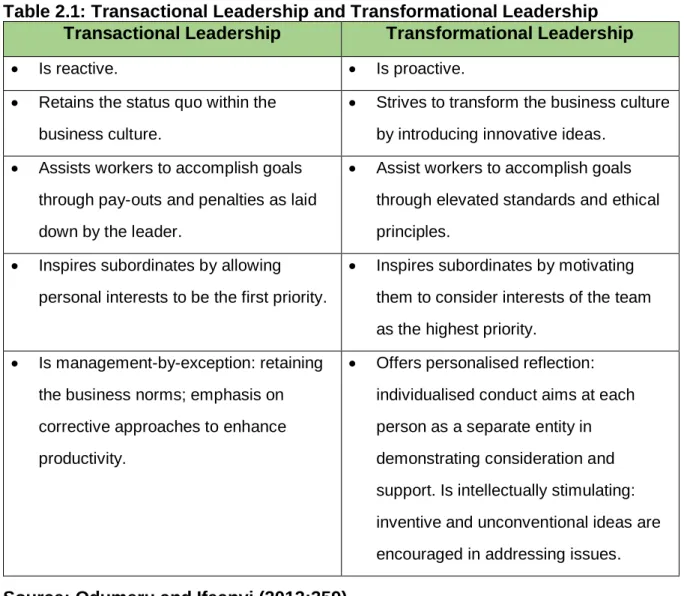
The notion of transformational leadership was introduced by James MacGregor Burns in 1978, during his descriptive study on leaders involved in politics. Over the years this notion has found itself widely used in all fields of management and leadership studies, becoming the theory most subscribed to today (Odumeru and Ifeanyi, 2013). In examining the concept of transformational leadership, one has to begin by defining a transformational leader.
Odumeru and Ifeanyi (2013) defined a transformational leader as an individual who invigorates others, inspiring them to accomplish exceptional results, adding that a transformational leader is one who is very attentive to the concerns and developmental requirements of every one of his followers. Furthermore, a transformational leader transforms their followers’ mental consciousness of issues by channelling them to view and deal with old problems in a completely different dimension, whilst stimulating, inspiring, and exciting them to go the extra mile in achieving organisational objectives.
McCleskey (2014) gave a similar definition, saying that a transformational leader is one who raises their followers’ awareness levels regarding the importance and value of the desired results, and the ways and means of achieving these outcomes. Such a leader influences subordinates to lay aside their personal interests in pursuit of the organisation’s success, while the level of their needs on Maslow's hierarchy of needs