This audit showed that at least one third of the teachers in the National Department of Education were unqualified and underqualified. The purpose of the study is to explore the impact of the National Professional Diploma in Education (NPDO) on the lives of NPDO graduates.
The critical questions
The NPDE has been offered since 2002 and a large number of graduates have been produced through this modernization initiative. This study therefore seeks to understand what benefits teachers gained after qualifying for the NPDE.
The Rationale for the study
These evaluative studies focused on the mode of delivery, study materials, contact time and mentoring, but not on the impact of the NPDE program on educators' personal and professional lives. This study hopes to contribute to the knowledge domain of teacher in-service training by exploring the impact of in-service training programs on the personal and professional lives of the graduates of the NPDE program.
Features of the NPDE
Educators had to meet the minimum requirement of M+3 as set by the South African Council of Educators, but the new education system was also a challenge.
The methodology used in the study
I felt that I should clearly explain the purpose of my research to the participants and carefully address the issue of power relations in the field. I then had to clearly explain the purpose of my visit to the staff and especially to the participants.
The context of Singane
The girls were in charge of the farms, while the boys had to take care of the cows and goats in the open fields. The study focused on UKZN graduates, due to access to information about NPDE graduates which was readily available to me.
Conclusion
The graduates of the NPDE program are largely from this university, while some graduates may have graduated from other higher education institutions. This is perhaps a limitation of the study as it ignores what personal and professional gains of NPDO graduates may have been influenced by programmatic differences across the various institutions offering the NPDO programme.
LITERATURE REVIEW
Introduction
A brief historical account of educational provisioning in South Africa
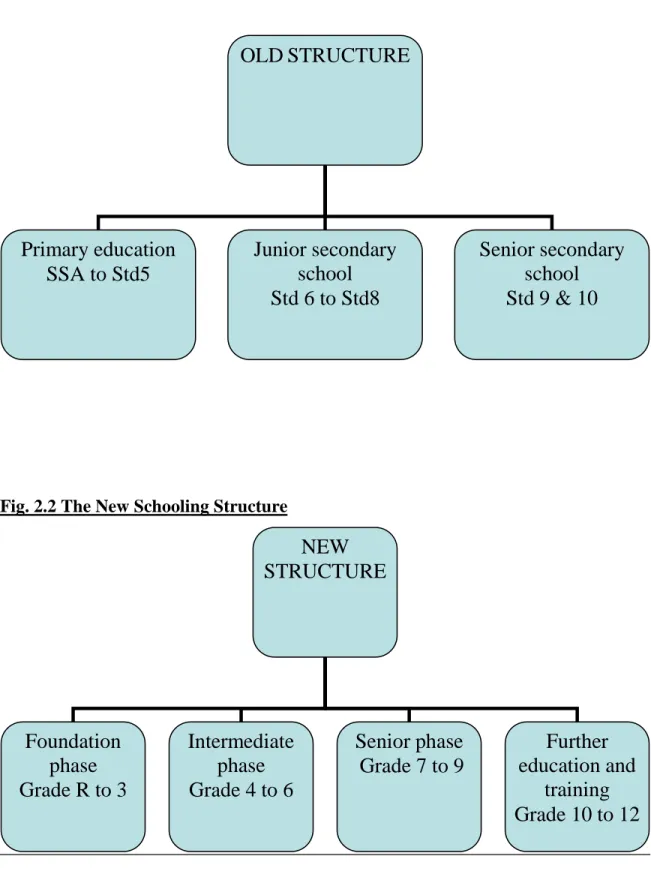
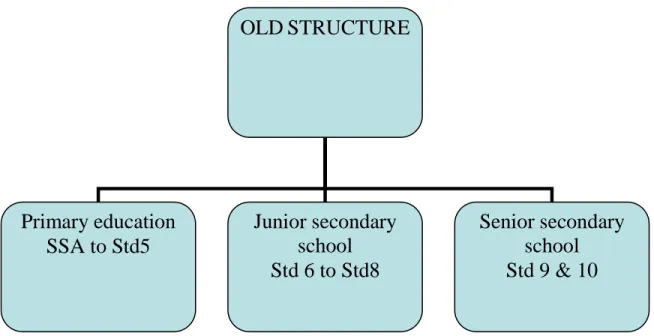
There had to be procedures to legalize the values in the constitution and 2.2.2 South African education after 1994. Democracy brought about the necessity of changes in the education system to address, among other things, the inequalities of the past.
NEW STRUCTURE
South African Council of Educators (SACE)
As a registered member of the Council, educators must comply with all Council rules. The Council is concerned about teachers as members of the Council and should not forget students as their primary clients (SACE, 2002).
Concluding comments of the historical account of education within South Africa
From the above review of educational changes after 1994, it is clear that black teachers were more disadvantaged than other racial groups. Therefore, exploring their benefits through the specific NPDE intervention would provide a glimpse of their resilience to the symbolic violence perpetrated against them.
Literature review
- Learning through distance education
- Learning as a continuing practice
The introduction of the new education system was a very pressing factor for the teachers to change. Therefore, the NPDE program required a few years of teaching experience as one of the requirements of the program.
Theoretical framework
- Concluding comments of the theoretical framework
In the case of the South African context, the external forces forcing the school to change would be the introduction of a new national curriculum. I then connect this phase with the introduction of the new curriculum in our education system. At the beginning of the new curriculum, the Department of Education had to intervene as the teachers did not understand the new curriculum.
These were some of the external forces that required teachers to retrain themselves to master the new curriculum. The workshops attended were not enough based on the knowledge base of the new curriculum. Educators had to learn a lot from new teaching strategies, assessment to content of learning areas.
Introduction
The purpose of the study
The critical questions
They hand in assignments, do school tasks and write exams at the end of the semester. With the help of Singane Circuit Management Center (CMC), I was able to find out the school addresses, contact numbers and physical locations of the graduates. This study traced graduates of the University of KwaZulu-Natal's NPDE program to determine the impact this program had on their personal and professional lives.
The choice of Singane as the geographical region was motivated by the fact that I am a resident and head of school in one of the schools in Singane. Further, an information survey was conducted in the Msinga area to locate NPDE graduates. From the survey, a list was made with the names of the schools where the graduates worked.
Approaches to the study
This study is situated within an interpretive paradigm as it seeks to explore the impact of the NPDE program on the personal and professional lives of the graduates. In one case, my participant was the principal, so I interviewed her deputy instead of the senior because I wanted to focus more on the day-to-day activities that took place in the school. Second, for reasons of convenience, I chose schools in my ward when sampling participants, so I had to ask for permission to visit the schools in that ward.
I went to the schools to seek access and permission from the principals and school governing bodies (Appendix B and C) of the three schools. According to Sikes (2000), ethical issues are very important when conducting research and it is the duty of the researcher to discuss ethical issues with the participants. I arranged a meeting with all of them to explain the purpose of the study, ethical issues such as their role, rights and the need for confidentiality in the study.
The instruments
From the 33 questionnaires, I then selected three participants based on distance, availability and willingness to participate. According to Ezzy (2002) qualitative observation is best done when the observer becomes part of the dance. Documents such as vacation registers and minutes of meetings helped to reflect the personal and professional lives of educators.
According to Marshall and Rossman (1989), an in-depth interview is one of the best data collection techniques in qualitative research. Here too, as with observation, I had to interview participants about their experiences, personal and professional growth. Arriving 30 minutes early and leaving 30 minutes after school gave me the space to conduct my interviews without impacting the teachers' teaching time.
Sampling technique
From the 33 respondents who completed the questionnaires, I selected one male primary school principal; one female HOD at primary level and one male teacher at post level one in the combined school.
Data collection
Methodological limitations
Conclusion to the methodology chapter
Introduction
Therefore, the a priori categories suggested by the questionnaire items were used as the basis for data analysis. The relevance of these a priori categories was also guided by the study's conceptual framework in relation to the policy framework that guided the introduction of the NPDE program in South Africa.
Presentation of the findings of this study
This is telling us that most of the participants are in this profession for a long time. Type of school; 12 of the schools from which the participants came were from combined schools, five from secondary schools and 16 from primary schools. Even those combined, the majority of respondents are teachers at the foundation and intermediate stages.
The schools believed that unqualified teachers would be better able to manage the teaching of students in the lower grades than in the higher grades of schooling.
A significant number of schools are managed by persons that are under-qualified
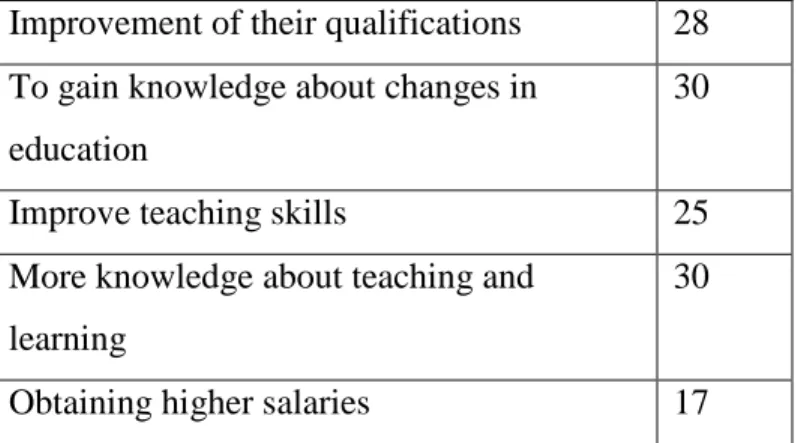
Students had high and wide ranging expectations from the NPDE programme
Many participants mentioned that they also expected to develop personally as they wanted to gain respect and. New subjects/learning areas such as technology, life orientation and others were introduced. Educators in the new education system were challenged to be evaluators, designers, facilitators and many other skills that educators needed to have, including the skills to handle large classes while teaching, grouping students, engaging them in activities and more .
One of them even mentioned "the salary I earned as an unqualified educator did not allow me to think about registration and travel to higher institutions." Singane Learning Center was also opened at one of the schools in Tugela Ferry District to provide educators with a closer center for them to attend contact sessions on Saturdays. Qualification also opens up chances for promotions" said one participant during the interview as one of his expectations.
NPDE had an impact in the personal lives of educators
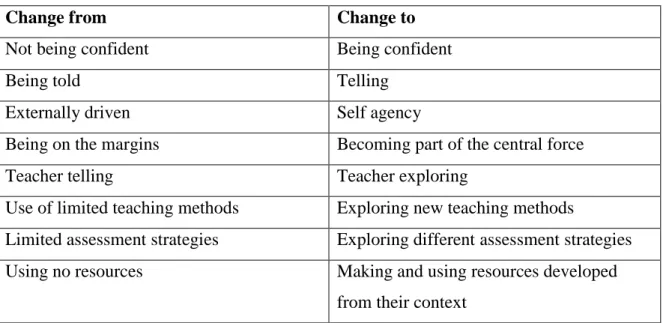
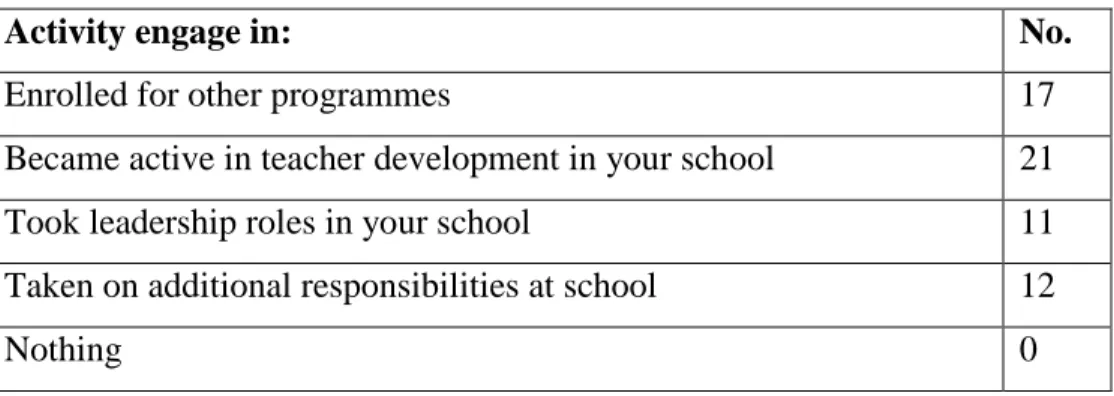
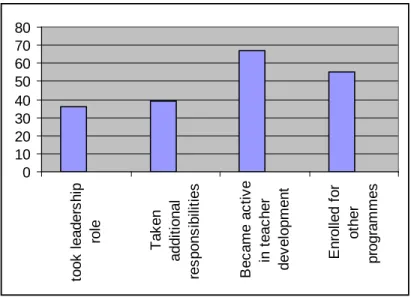
Several of the teachers interviewed indicated that they had doubts about their teaching, as well as fear of being assessed by their senior teachers in their schools before taking the NPDE. This is further supported by graduates' claims about the activities they pursued after completing the NPDE. One of the purposes of the NPDE upgrade program was to give unqualified teachers access to higher education.
If they participate in further studies, they can expect to gain more of what they have experienced through the NPDE. The NPDO program provided them with the knowledge and confidence to become active in school activities. No participants indicated that they were involved in anything after graduating from the NPDO.
NPDE had an impact in the professional lives of educators
- Summary of analysis and findings
- Conclusion
- Introduction
- Illuminations through this tracer study
- Recommendations arising out of the NPDE tracer study
A summary of the analysis of the data provided by the methodology used and the findings obtained from it indicate that the NPDO program was a successful intervention in the lives of the NPDO graduates. The maturity of the teachers unfolded more deeply in their reactions to the gains they expected from the NPDO and in their target for their professional growth. They were attracted to the centrality of the roles they can and have played since the NPDO.
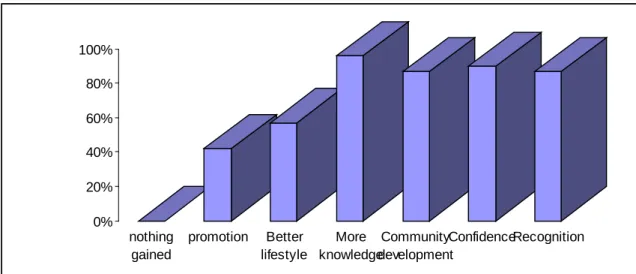
In this case, the majority of respondents aspired to higher wages, promotions, and a better lifestyle, and saw these aspirations fulfilled in the NPDE program. This chapter concludes this study with a brief summary of the findings and implications for the study. The introduction of the new system was a challenge for all educators, not only for the untrained and only for the trained.
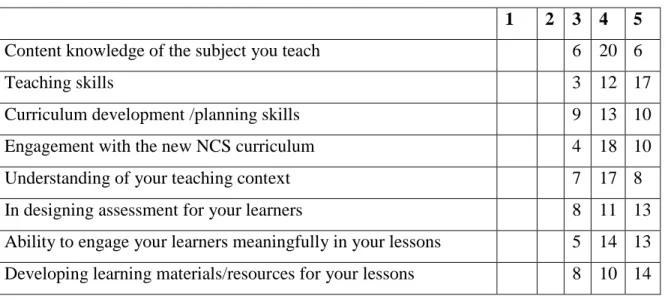
The purpose of this questionnaire is to obtain information on the impact of the NPDE program on the personal and professional lives of graduates. Take any of your learning activities where you scored 3 or above in question (14) above and describe fully how the NPDE program helped you develop professionally (you can describe this using an example).