The future development of South Africa is at stake and it is the children of this nation who will feel the consequences of the government's current failure to provide for the people if they continue to ignore the severity of the epidemic. These statistics clearly show that there are far more adults dying from AIDS-related illnesses than children, however, it is important to consider that the impact of the epidemic on the lives of adults will inevitably have a influence on their children. It is not only the adult population that is being severely affected by this epidemic, but also the future generations of the world.
This group of people consists of the most productive members of society who should essentially make up the majority of the workforce. This is likely to have serious adverse effects on the already struggling economies of the majority of countries in the region and further exacerbate poverty levels.
HIV POSITIVE CHILDREN
ORPHANED CHILDREN
POVERTY
Behaviour Stigma and Discrimination
Increased Vulnerability
Child Labour
Childhood
Abandonment and Neglect
ORE MEMBERS IRE HIV+
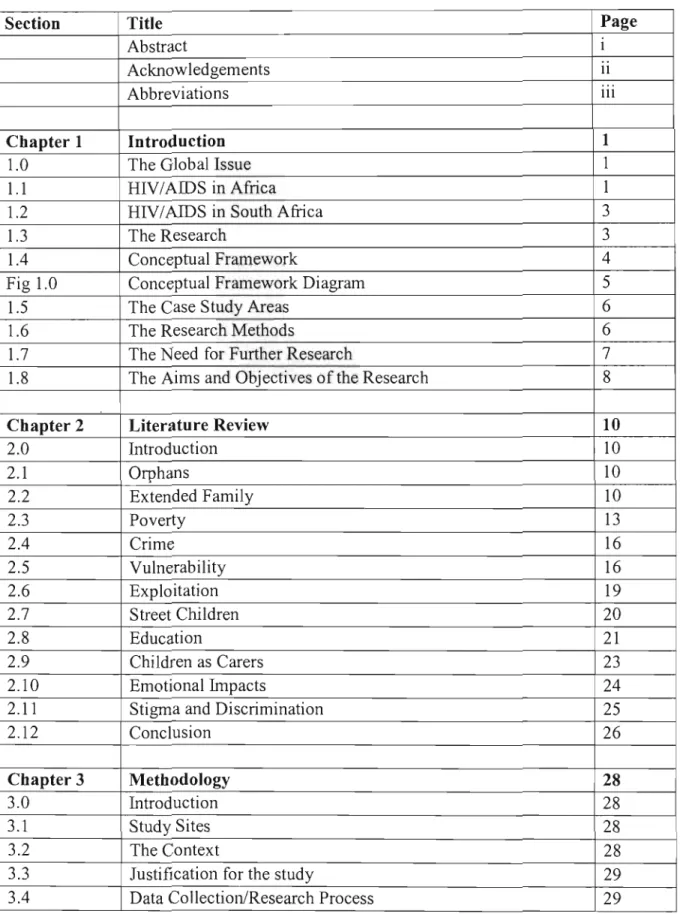
The Need for Further Research
HIV/AIDS will continue to have a major impact on African people for decades to come. It is clear that HIV I AIDS is here for the long term and it is imperative that government policy takes note of the research undertaken to prepare for the future consequences of this epidemic. The purpose of this research is to contribute to the research previously undertaken in the field of HIV I AIDS with a specific focus on the impact it has on children.
Although much research has been done in this area, this study aims to use qualitative research to take a closer look at the impact of HIV/AIDS on children from the perspective of people at the grassroots. It is clear that the government has tried to provide some social support and safety nets to children affected and infected with HIV/AIDS. However, this study will provide evidence that there are serious problems in the delivery of support.
The Aims and Objectives of the Research
Family and wider communities have provided support for children in the past and continue to do so now (Ewing, 2003:50; Guest 2003:10). In the case of South Africa, although the extended family is providing a vital service through the absorption of orphaned children, most orphans reside in poor communities (Desmond, 2003(A):5). Bernes-Lasserre (2002:1) found that in 15 years, AIDS has increased the pressure on the extended family support system in southern Africa and many people are struggling to cope with the number of orphaned children.
Evidence that the extended family network is already failing can be seen in the rise of child-led households. The number of head-headed households is likely to increase as AIDS deaths continue due to the increasing number of orphans and pressure on the extended family. 2003:50) supports this, claiming that although previous predictions about child-headed households were exaggerated, they are still increasing.
Poverty
Using children as caregivers, parents, and heads of households when a parent is suffering from AIDS is a coping strategy that can have serious long-term consequences for the child. Quinlan (2003(B):21) supports this in his statement that due to the perception of women's roles in African culture, women are often unable to negotiate safe sex practices. In developing countries, HIV/AIDS has disastrous consequences for the majority of people; The diagnosis of HIV-positive is seen as a death sentence (Ewing.
Hutchinson (2003: 1) argues that, once a family member dies, children often lose access to education, medical care and adequate nutrition. These impacts result in compromising a child's health and future as a result of increasing their vulnerability.
Crime
Vulnerability
Children are particularly vulnerable to HIV I AIDS because they are physically and emotionally immature, and witnessing the death of a relative can have major consequences for a child's social and emotional development. Females are perceived as less skilled than males in African society, and therefore they are more vulnerable and _more exposed to HIV/AIDS. This is in line with a study by George (2004: 1) who argues that the status of women in sub-Saharan Africa is low and therefore it is often difficult if not impossible for them to have the opportunity to negotiate safe sex -practice due to female dependence on men.
I 'George (2004:2) claims that women in sub-Saharan Africa are 1.2 times more likely to be HIV positive than men. This argument is supported by Lyons (2000:3) who argues that most children in KwaZulu-Natal are vulnerable to HIV infection because they are poor, hungry and often exploited.
Exploitation
There is an increase in the number of street children in African urban areas, partly due to HIV/AIDS. Poverty levels can increase so much that children are considered more productive if they earn money or work at home or on farmland. Several studies show that there has been a decline in school enrollment in KwaZulu-Natal (Desmond and Gow, 2002:15, Hunter and May 2002:8).
Hunter and May (2002:8) found that if children neglect their education it will have a negative effect on household welfare in the long term. It is financially beneficial to educate boys as they are more likely to find work and provide an income for the household in the future and girls are traditionally considered more suitable to take on the role of carer.
Emotional Impacts
It is almost certain that the death of a parent will have a negative emotional impact on a child due to the traumatic nature of the experience (Madorin, 2004:1). Stein (2003:12) argues that children who lose their parents to AIDS suffer a qualitatively different set of traumas than children who lose their parents to other diseases, simply because of stigma.
Stigma and discrimination
Conclusion
- Sampling
- Quantitative Data
The next chapter will examine the methodology used for this study in order to present an accurate description of the manner in which the data collection took place. The aim of this study is to improve the understanding of how great the impact of the epidemic is on children who are both affected by and infected with HIV I AIDS. The intention is to contribute to existing research and to examine the impact of the epidemic from different perspectives.
The initial purpose of this research was to conduct interviews with children to create an accurate understanding of the impact of HI VIA IDS through the eyes of a. The community workers had developed a relationship of trust with the children and have first-hand knowledge of the impacts children are experiencing due to HIV and AIDS. Generalized secondary data are included to avoid inclusion in case study areas and to present an accurate description of the situation on a global scale.
Quantitative data statistics are useful in that they can be used to emphasize or contrast the findings of qualitative primary data. Statistics provide empirical evidence to illustrate the range of questions examined in the research. Interviews were used mainly because of the research nature of 'I.JJ1. . study and in an attempt to obtain informational data nlin et al 2002:84).
The purpose of this study is to analyze the perception of the impact of HIV/AIDS on children, and open interviews allow for a comprehensive response from. The literature review and review studies and HIV/AIDS influenced the content and structure of the interviews. To ensure that the research was ethical, it is important to ensure the welfare and rights of the research participants (in this case the children) (Durrheim and Wassenaar, 1999:65).
Introduction
Data Analysis
- Introduction
- Orphans
- The Extended Family
- Child-Headed Households
- Summary
- Introduction
- Child Labour
- Criminal Behaviour
- Summary
- Stigma and Discrimination
- Stigma in Schools
- Physical Abuse
- Summary
- Introduction
- Household Impacts
- Extended Family
- Child-Headed Households
- Children as Carers
- Economic Impacts
- Poverty and Health
- Poverty and Education
- Crime
- Social Impacts
- Stigma and Discrimination
- Deprivation of Education
- Risk Taking Behaviour
- Emotional Impacts
- Recommendations to Reduce the Impact
- Government intervention
- Poverty Reduction
- Employment Opportunities
- Increased and Improved Education
It will also examine the role of the extended family as a support network for orphaned children. This data analysis section will examine the impact of HI VIA IDS on children within the family. The pressure on the extended family is clear evidence of the inadequacy of government grants.
Many children do not receive the benefits of the grants simply because they are unaware of what is available. One of the coping mechanisms implemented by children living in child-headed households is to go to the city to find work. The interviews implied that the role of the parent is compromised due to poverty and this is increased with HIV/AIDS.
The lack of access to grants adds to the severity of the impact of HIV/AIDS on children. Although financial support is available, it is insufficient to cope with the scale of the problem. The poverty levels of the majority aid in the perpetuation of HI VIA IDS through unsafe sex behavior patterns.
Interviews revealed that one of the impacts of HIV/AIDS on children is increased criminal behavior by both children and adults in their community. Poverty and HIV/AIDS are clearly linked and the combination of the two has a negative impact on children. One of the fundamental issues surrounding HIV/AIDS is the stigma associated with it because of its association with promiscuous sexual behavior.
The constant denial of HIV has a detrimental effect on the spread of the disease. In addition to the increase in poverty and child labor, many children are losing their parents as a result of the epidemic. There are huge long-term implications for the future of the country if education is on the decline.
The decentralization of the office of internal affairs in the city to the local areas would.