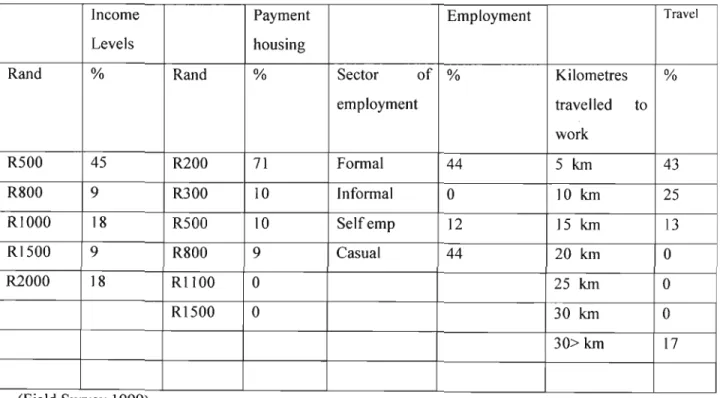
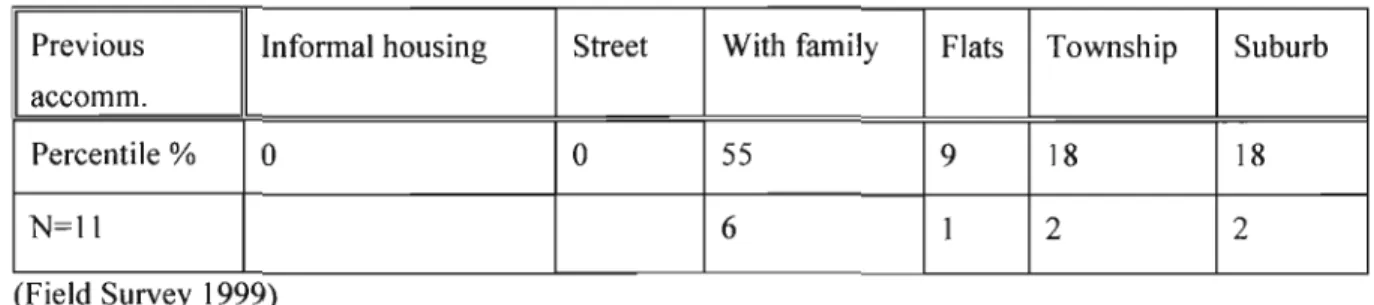
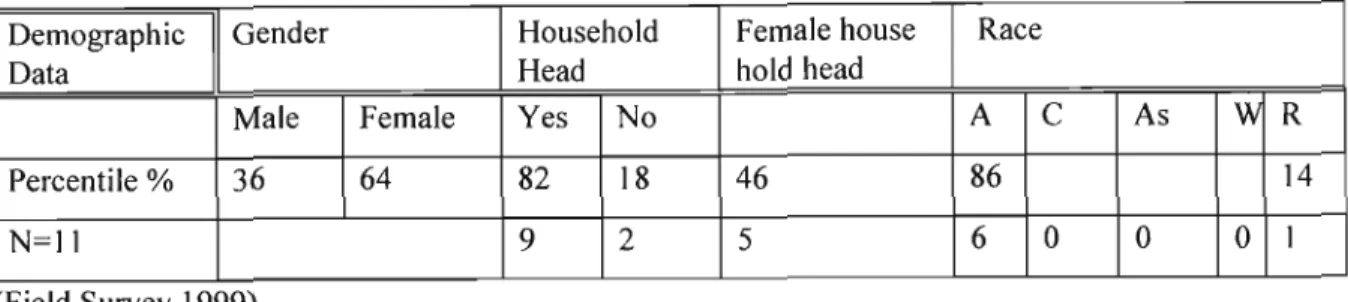
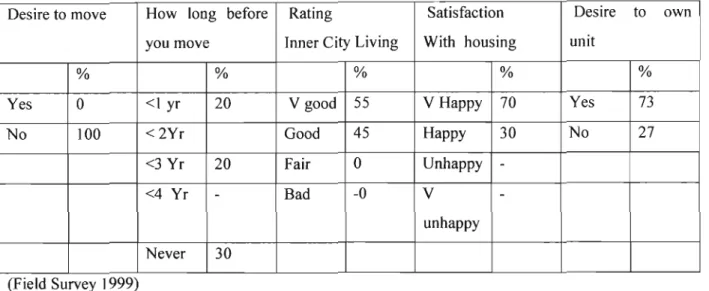
In the city center there are many stakeholders who care about the well-being of the city and all its residents. This is likely to lead to a typical post-colonial decline of the city centre. Perhaps the South African inner cities can take shorter routes to the rediscovery of the unrecognized power in the inner city.
What aspects of current policy enable or limit the church's response to inner-city housing needs? Authors such as Bakke argue that a theology of place is fundamental to the identity of the inner-city church.
CASE STUDIES
UBUNYE CO-OP HOUSING
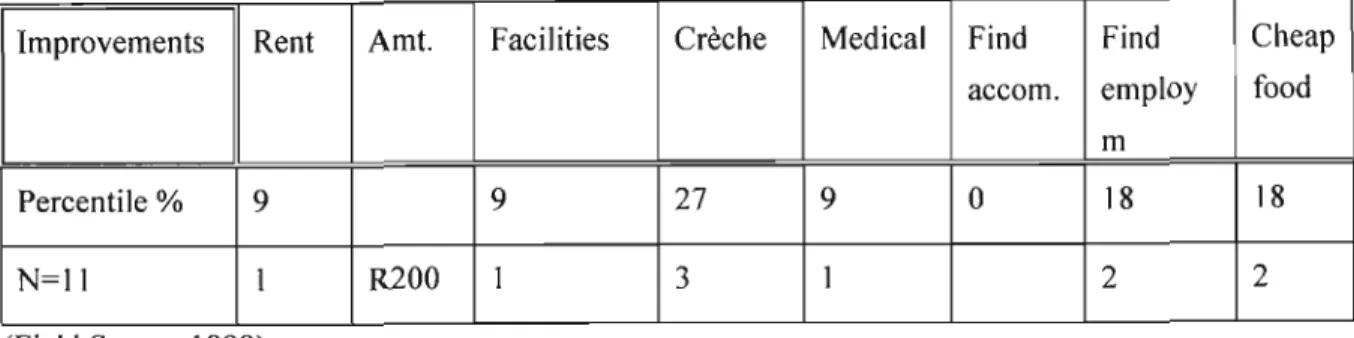
Ubunye Co-oporative housing (UCH) was developed as a social ministry of the Ubunye Free Methodist Church - it acts as the community development partner of the latter.' The Ubunye Trust was established as a separate body in the town to distinguish it from the church. The following is a description of the project design to achieve the goals, philosophy, mission and purpose. In light of the individuals and family groups that make use of the Ubunye Centre, there is a need for a crèche/educational facility within the complex.
From the beginning, a holistic understanding of the housing process is recognized as Ubunye seeks to build and restore the community. In its establishment of Section 21 Ubunye Co-op Housing Articles of Establishment, one recognizes the ability to understand the dynamics prevailing in the housing process. It is a stated goal which shows an understanding of the importance of the housing company's social structure.
Throughout Ubunye Co-op's work there has been a focus on long-term financial sustainability. This is also ensured through the Trust's independence from the Church, although there is a definite link in modus operandi. The link is formed in the composition and accountability of the Trust to the church and the Free Methodist denomination.
It is well understood that the housing is 100% for the wider community, even though only 40% belonged to the community of the Ubunye.
YEAST CITY HOUSING
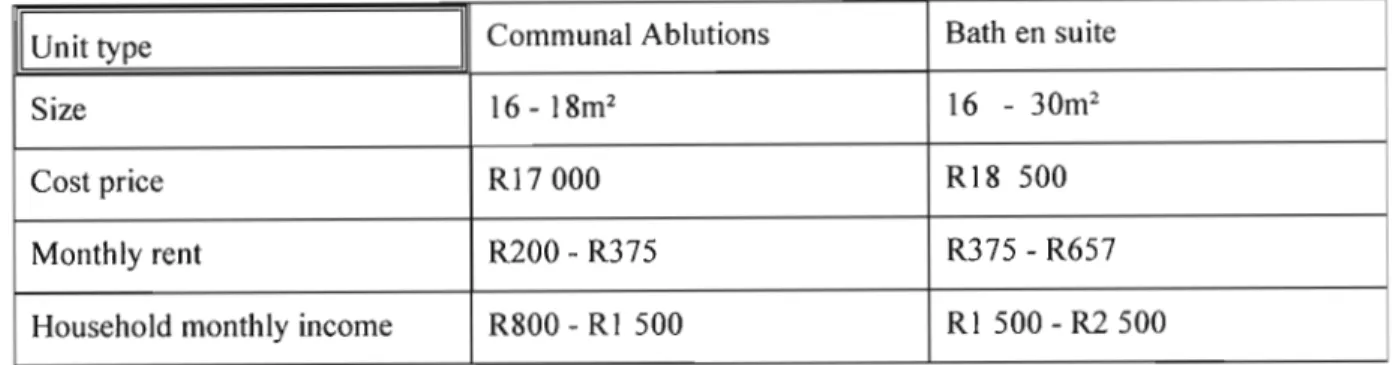
Yeast City Housing is a grassroots community organization and the driving force behind it is represented by downtown residents. The facilities operated by YCH and PCM are examples of the very few temporary shelters (for the homeless) and low-cost rental facilities (for low-income and temporary groups) in the inner city. There are only a limited number of cheap homes available in the city center.
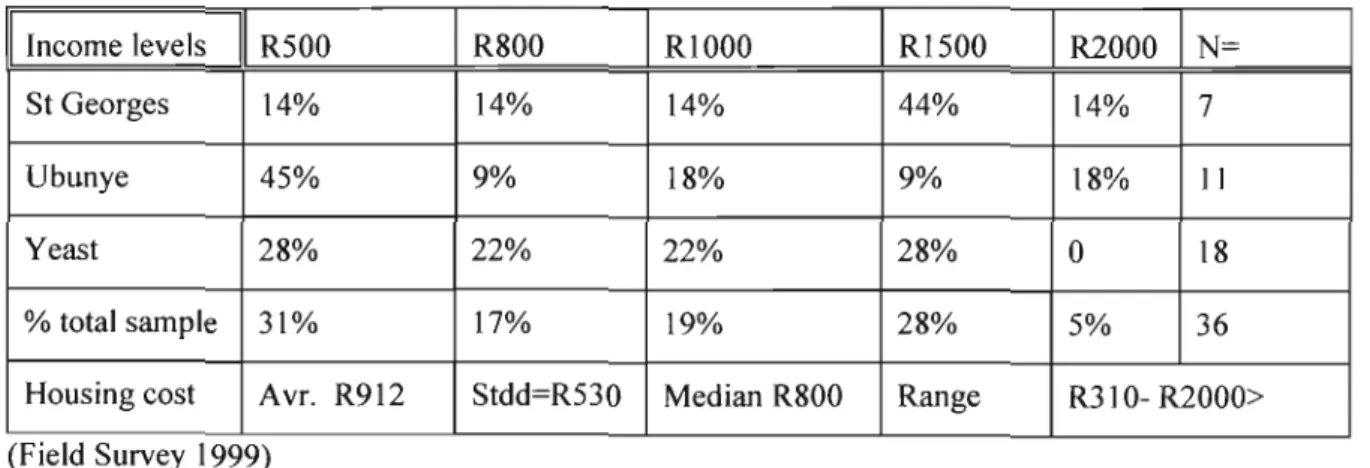
Yeast City Housing seeks to be part of a pro-active integrated planning that will provide a realistic sustainable housing option for all inner city people, including its poor. Table, Table 15, shows that Yeast City Housing understands housing the inner city poor as a process, more complex than simply providing housing units. The project is focused on the inner city of Pretoria including the CBD, Marabastad, BerealBurgerspark and Salvokop.
The mixed-income nature of the inner-city population contributes to the economic viability of YCH's projects. This role is one of significance in the city center partnership in Pretoria and Yeast City Housing and P.C.M. Through the PEWS Trust and PCM, the inner city churches supported YCH.
In these processes they see that there is a role of reconciliation that is found in the process of housing, especially the poor and marginalized of the city.

CHAPTER 4
- COMPARATIVE ANALYSIS
The above table 24 indicates a better understanding of the whole process of housing by both Ubunye Co op Housing and Yeast City Housing - who have contact with SHF and they are both similar in the roles they play. The Ark sees itself as providing a residence that indicates a limited understanding of the housing process - limited to providing shelter with very little knowledge of the broader issues related to the entire housing enterprise. All three focus on the marginalized of the inner city with a specific focus on low-income people.
In the case of Arka, this was one of the reasons for the breakdown of the process and the antagonism of the community. In all of the above cases, much can be done to increase the housing and management capacity of the Churches involved. Both of these placed high value on intentional networks and partnerships that drew other parts of the wider Church into the housing process.
The humanization of the homeless, marginalized and vulnerable should also be seen to affect all case studies. YCH sees itself as the Company with a Human Face - a value placed on a high level of human interaction in dealing with all aspects of the housing process. George's and Ubunye Co-op Housing and even Arka seek to be the advocate and voice of the vulnerable lower income people of the city and society.
Without going into details, the following table 34 can be understood as a summary of the issues raised in Chapter 2 as theoretical issues affecting the Church and its role in urban housing.
CHAPTER 5 1. CONCLUSION
The Inner City Church has many opportunities to develop partnerships with many agencies and among themselves to meet some of the housing needs of the rapidly urbanizing South African population. Both Yeast City Housing and Ubunye Co-op Housing showcased the role the city church could play in the larger downtown development plan. Church leadership must also develop the capacity in the community to be involved in community development and housing activities.
Starting small, the church must develop housing models that enable co-housing, but also engage with inner-city issues as seen in the YCH and U Co H models in this thesis. Partnerships should be explored with the inner-city Church to help redevelop and continue the work of social integration of cities in South Africa. Providing training and capacity building of the Church as a housing provider that would enable the Church to develop its ability and capacity to provide housing at scale in the inner city.
With the right ingredients, the church can become an important partner in the implementation of the recently issued rental housing law. Property managers and owners can look to the Church to both develop and manage housing stock available in the inner city. In light of the response to some of the recommendation, it is believed that the church has a specific and important role to play in the provision of housing in the inner city.
Whether the Church in the city will accept the challenge remains to be seen.
LIST OF ABBREVIATION
BIBLIOGRAPHY
TRANSIENTS- AN APPROACH TO THE DEVELOPMENT OF PUBLIC REALMS IN JOHANNESBERG UNIV. THE SOUTH AFRICAN EXPERIENCE OF LOCAL LEVEL GOVERNANCE ANALYSIS IN JOHANNESBERG INDERBY ICDA/CASE JOHANNESBERG. WHAT CAN BE DONE TO MAINTAIN THE CAPACITY MOBILIZED IN THE HOUSING SECTOR METRO CONFERENCE DURBAN.
SOCIAL HOUSING FOUNDATION (1998) CURRENT STATUS OF SOCIAL HOUSING IN SA (1998) REPORT TO MIN.OF HOUSING MARCH JOHANNESBURG.
LIST OF INTERVIEWS CONDUCTED
OPENSHA W JOUBERT PARK PROJECT JULY 1999 2000 2001
APPENDICES
STRUCTURED INTERVIEW OUTLINE
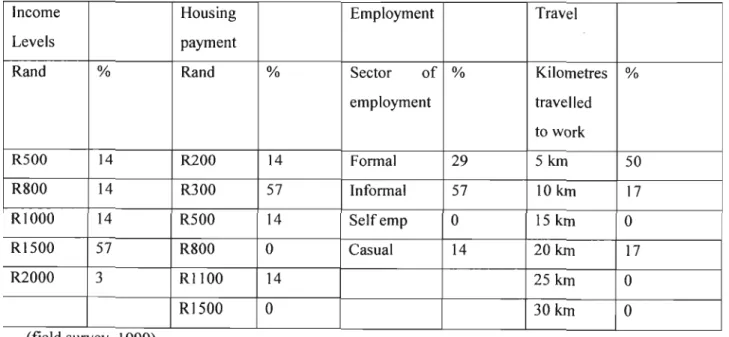
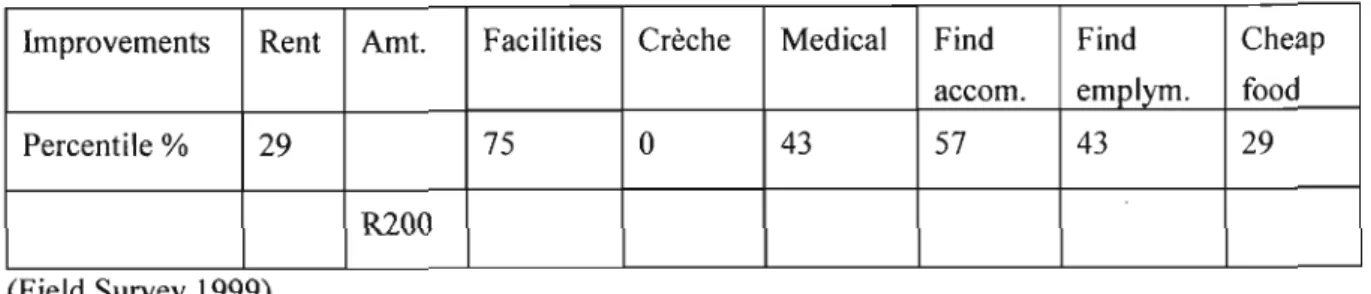
IHow long have you lived in your current home Less than 1 year 2 years 3 years more thanJ. What is agoodand fair rent 62 more facilities What kind of facilities 63 crèche .. 64 medical facilities/clinic What medical facilities. 7 Do you know where else you could live if this was not available Give a name.
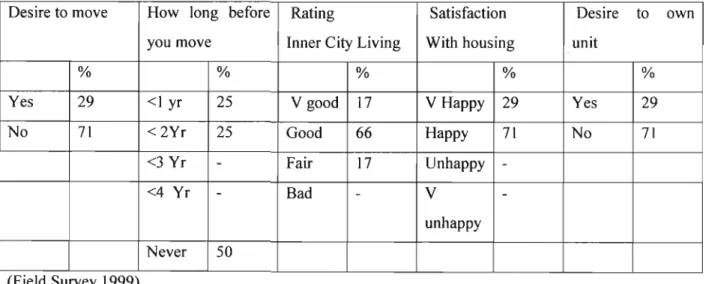
72 If it were possible would you move away from the city centre? yes no Why?. 8 Where did you live before you lived here? informal housing / the street / with family / other apartments township Isuburbs. 81How long before you hope to move from this accommodation
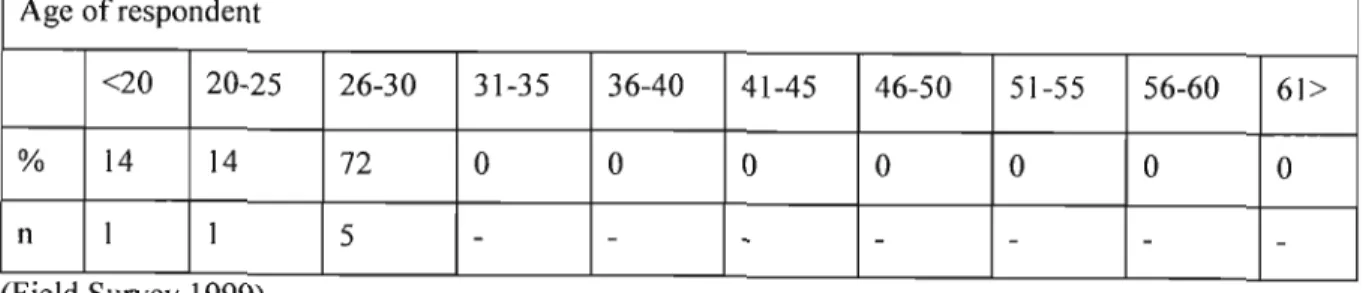
83Do you want to own your own apartment room house no .. 93Are you the head of the household? Yes No. 96 Do you look after other family members in this home yes no 961Who? parents other family children Other family members. Our Lady of the Presentation Cedars of Lebanon Baptist Church Brownsville Community Baptist Tabernacle Baptist Church.
Ararat Baptist Church Our Lady of Loreto. Flatbush Church.of the Redeemer Holy Cross Catholic Church.
What is EAST BROOKLYN CHURCHES?
Vho makes up eSC?
THE PROBLEM Housing
THE STRATEGY Housing
Habitat for Humanity is an ecumenical, Christian housing ministry whose mission is to eradicate poverty housing and make decent shelter a matter of conscience and action. Habitat for Humanity builds and rehabilitates homes in partnership with families who otherwise could not afford adequate shelter. Habitat for Humanity issues an inflation-linked, interest-free bond on the homes that homeowners pay back over a period of up to ten years.
Homeowners pay affordable monthly payments into a 'Renewable Project Fund for · Humanity' and this supports the construction of additional houses in their community. Habitat for Humanity is not a charity, but a joint venture in which those who benefit from the Ministry of Housing are involved and accountable for the work at all levels.
The project's "Family Selection Committee" identifies homeowners based on their needs, their participation in the project and their ability to repay the bond. Race, gender, political affiliation or religious beliefs are never a factor in the selection of families to receive Habitat houses. The houses differ from project to project based on the socio-economic context of the area.
After approval from the "Family Selection Committee", potential home owners are requested to open a savings account in their own name.