Potassium silicate as a postharvest treatment for pathogen control caused reduced lesion diameters when applied prophylactically or curatively to naturally infected mushrooms. The use of potassium silicate for the control of Penicillium spp. 1989) Postharvest disorders and diseases of citrus fruits, in The Citrus Industry, Vol.
INTEGRATED CONTROL OF POSTHARVEST GREEN AND
INTRODUCTION
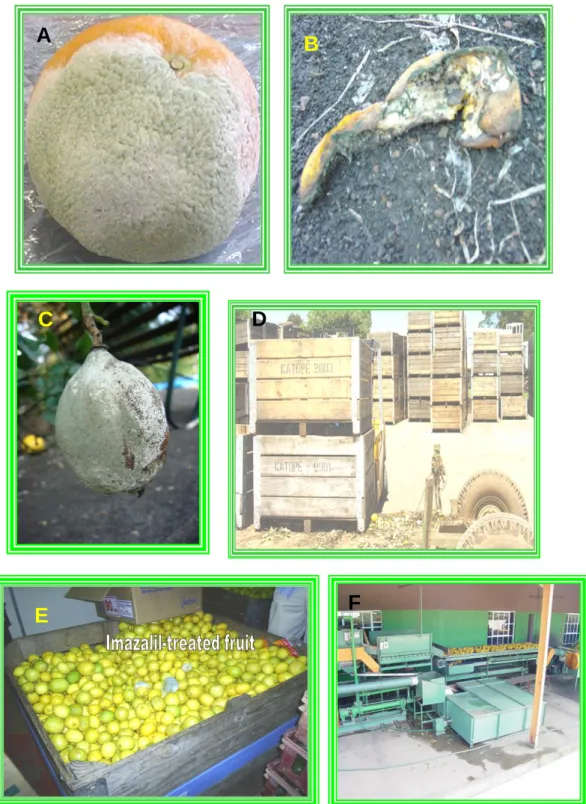
Green mold (caused by Penicillium digitatum Pers: Fr. Sacc) and blue mold (caused by Penicillium italicum Wehmer.) are major sources of citrus fruit rot (Brown and Miller, 1999). Other most common postharvest fungal diseases of citrus fruit include stem rot (caused by Physalospora rhodina Berk.. and Curt.) or Diaporthe citri H.S. Fawc.), sour rot (caused by Endomyces geotrichum E.E. Butler and L.J. Petersen) and brown rot (caused by Phytophthora citrophthora R.E. Sm. and E.H. Sm. Leonian), (Brown and Miller, 1999).
PENICILLIUM MOULDS
- Green mould (caused by Penicillium digitatum)
- Blue mould (Penicillium italicum)
- Penicillium spp. of litchi
- Penicillium disease epidemiology
Understanding the epidemiology of the disease organisms is essential to control postharvest disease (Anonymous, 2005). Wind currents spread conidia to fruit in the tree canopy and exposed surfaces of the fruit (Brown, 2006).
CONTROL OF PENICILLIUM MOULD OF CITRUS FRUIT
- Past and current chemical control
- Future regulations and issues related to chemical control
The existence of Penicillium biotypes resistant to imazalil has also been documented in all major citrus production areas (Eckert et al., 1994; Wild, 1994) and in terminal markets (Bus et al., 1991). Resistance to imazalil by Penicillium expansum in apple developed both in the field and in packaging (Kinay et al., 2007).
SANITATION PRACTICES FOR THE CONTROL OF PENICILLIUM
- Soil and field conditions
- Contaminated water
- The harvesting and packing pathway
- Airborne Conidia
Therefore, the use of water from these sources for irrigation may contaminate field production (Anonymous, 2005). However, careful management of fruit harvesting and packaging can significantly reduce losses (Anonymous, 2004; Smilanick et al., 2006) [For more detailed information, refer to Smilanick et al.
CONTROL OF POSTHARVEST PENICILLIUM MOULDS OF CITRUS BY
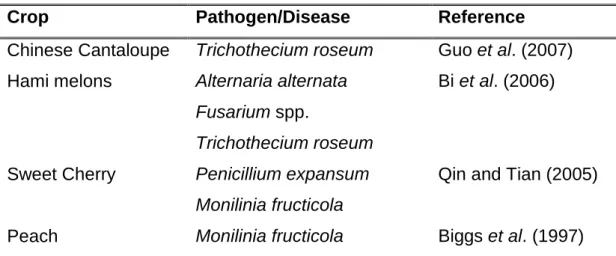
Carbonic acid salts, such as sodium carbonate (soda ash) and sodium bicarbonate (baking soda) have been shown to control plant diseases (Palou et al., 2001). Sodium silicate and calcium chloride have been shown to control green and blue mold of Clementine mandarins (Ligorio et al., 2007).
CONTROL OF PENICILLIUM MOULDS OF CITRUS USING
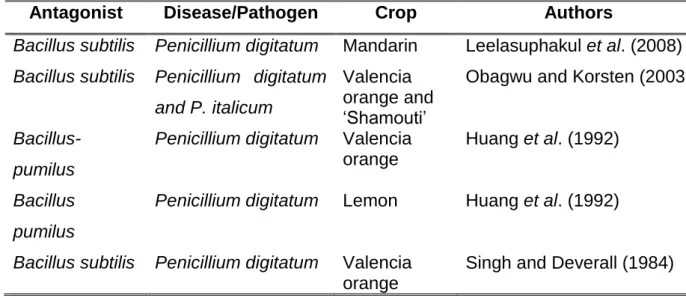
- Use of Bacillus spp. for the biological control of Penicillium moulds of
- Biocontrol of citrus green or blue moulds by bacteria other than
- Use of yeasts for the biological control of green and blue moulds of
Their ability to produce a multitude of broad-spectrum antibiotic compounds (Rytter et al., 1989; Mavingui and Heulin, 1994). Botrytis cinerea Tian et al. 2002) Candida saitoana Apple Botrytis cinerea/. 2000) Candida sake Pear Botrytis cinerea/.
INTEGRATION OF BIOCONTROL AGENTS WITH OTHER CONTROL
Research by Tian et al. 2007) showed that the combination of sodium silicate with postharvest yeast antagonists (Cryptococcus laurentii Kufferath C.E. Skinner.. and Rhodotorula glutinisHarrison.) provided synergistic effects in controlling postharvest diseases caused by P. This could involve combining biocontrol agents by more than one of the common field and/or post-harvest methods (Lima et al., 2007).
Fruit surface colonization and biological control of postharvest disease of pear by preharvest yeast application. 1999) Influence of antagonist, host fruit and pathogen on the biological control of postharvest fungal diseases by yeasts.
THE PATHOGENICITY OF PENICILLIUM DIGITATUM AND ITS
- INTRODUCTION
- MATERIALS AND METHODS
- Isolation of P. digitatum from navel oranges
- Pathogenicity of an isolate of P. digitatum on navel oranges
- Sensitivity of an isolate of P. digitatum to imazalil on lemons
- Statistical analysis
- RESULTS
- Pathogenicity of an isolate of P. digitatum on navel oranges
- Sensitivity of P. digitatum isolate to imazalil on lemons
- DISCUSSION
- CONCLUSION
- REFERENCES
Regular transfers to fresh citrus fruit were performed to maintain the aggressiveness of the pathogen. These results suggest that alternative methods are needed to control P. digitatum in the citrus industry in South Africa and globally.
INTRODUCTION
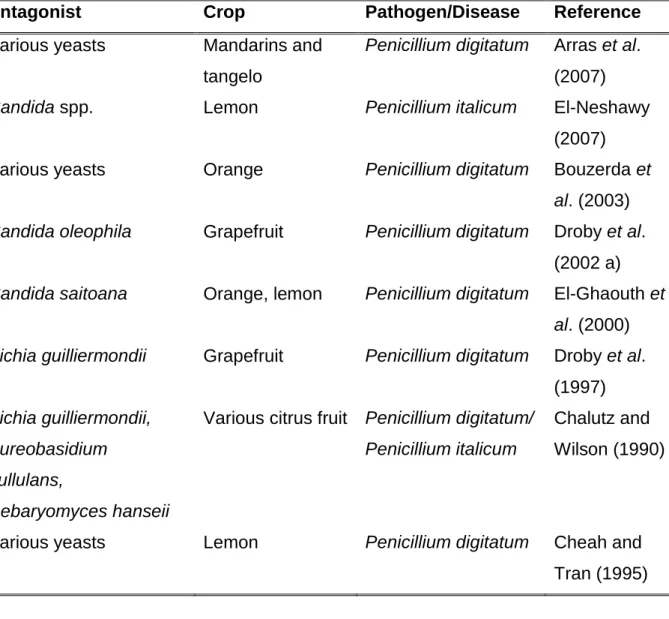
Numerous yeast antagonists have been reported to successfully control postharvest infection on a variety of fruits (Chalutz and Wilson, 1990; Leelasuphakul et al., 2008; Gholamnejad et al. Two yeast products, Aspire® (Candida oleophila Montrocher) and Yield -Plus® (Cryptococcus albidus (Saito) Skinner) is commercially available (Vero et al., 2002).
MATERIALS AND METHODS
- Fruit used for isolation of potential antagonists
- Preliminary investigation of microorganisms on the fruit surface
- Isolation of antagonistic yeasts and Bacillus
- Screening of yeasts and Bacillus isolates against P. digitatum
- A selected yeast and Bacillus isolates antagonistic against P
- Dose effect of two yeast isolates, B13 and Grape, applied
- Statistical analysis
The wound was treated with 100 µl cell suspension of the test organism (yeast or Bacillus at 1 × 10⁸ cells mℓ-1). After the wound site had dried for 48 h, each wound was inoculated with 100 μl of the suspension of conidia of P.
RESULTS
- Preliminary investigation of microorganisms on the fruit surface
- Preliminary screening of antagonistic yeast and Bacillus isolates
- Screening of selected yeast and Bacillus isolates antagonistic to P
- Preventative action of selected yeasts and Bacillus isolates
- Curative action of selected yeast and Bacillus isolates antagonistic to
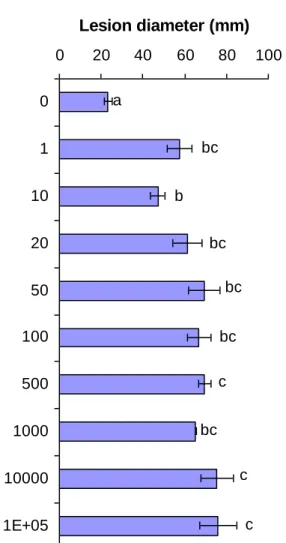
- Dose effect of two yeast isolates, B13 and Grape, on the control of P
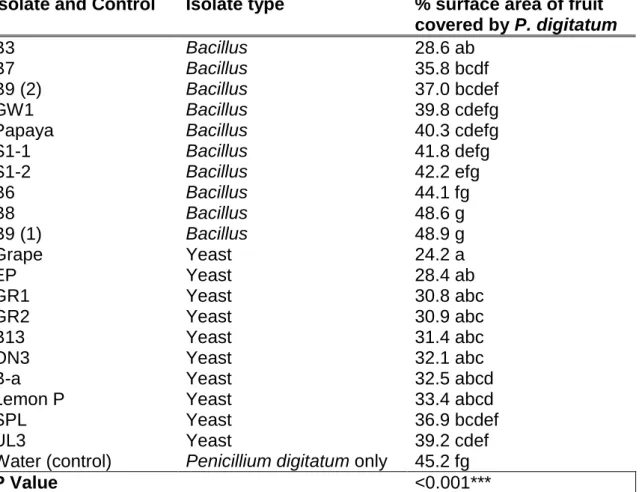
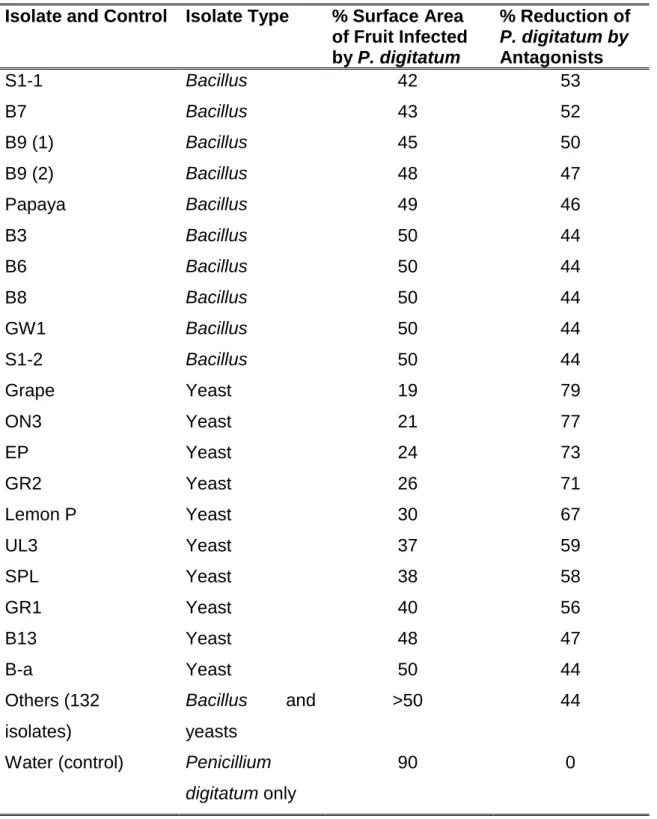
The other yeast and Bacillus isolates tested developed significantly less green mold than the untreated control (a detailed statistical analysis of the data in Table 3.3 is shown in Appendix 3C). Yeast isolate UL3 and Bacillus isolates B3, B9 (2), B6, B8 and S1.1 did not effectively control green mold (a detailed statistical analysis of the data in Table 3.3 can be found in Appendix 3E).
DISCUSSION
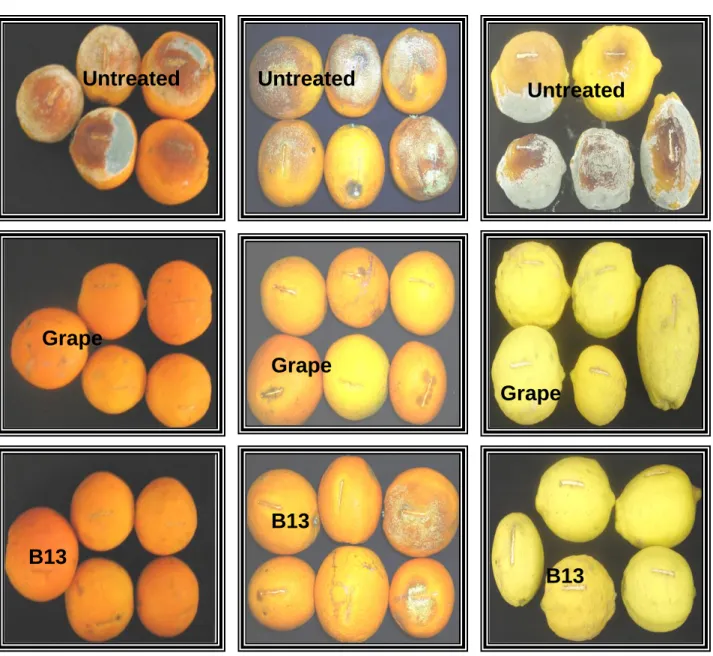
The study of the biocontrol activities of different concentrations of the two yeast isolates B13 and Grape against P. digitatum showed that both yeasts reduced the lesion diameters of P. digitatum on lemon, regardless of the yeast concentrations. However, low DNA base sequence relatedness, different electrophoretic karyotypes and nucleotide divergence of the D1/D2 region all led to the reinstatement of Candida fermentati as a separate species (Vaughan-Martini et al., 2005).
African Journal of Food Science Biological control of apples, blue mold by isolates of Saccharomyces Cervisiae. Strategies for Biological Control of Necrotrophic Fungal Foliar Pathogens, in Plant-Microbe Interactions and Biological Control (Boland, G.J. and Kuykendall, L.D., Eds.), Marcel Dekker, New York, USA, pp. 2000).
INTRODUCTION
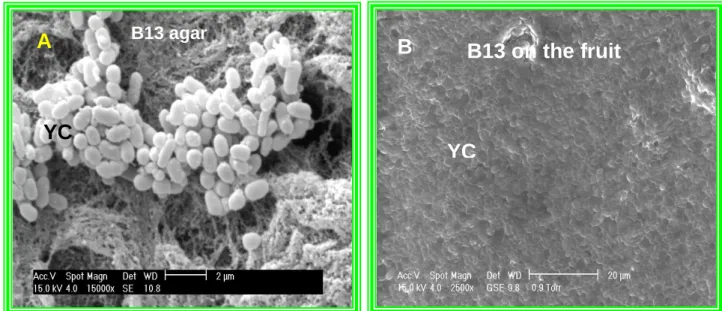
Environmental scanning electron microscopy (ESEM) studies demonstrated effective colonization of lemon wounds by yeast isolate B13. Based on ESEM observations, yeast isolate B13 (Candida fermentati (Saito) Bai.) when applied preventively to control Penicillium digitalatum, inhibited or limited the conidial germination of P.
MATERIALS AND METHODS
- In vitro reaction of yeast Isolate B13 against Penicillium digitatum
- Preparation of the yeast Isolate B13 on agar, and investigation of its
- Preparation of the yeast Isolate B13 and P. digitatum to examine their
- Scanning electron microscopy studies of the interactions of yeast
Samples from five fruits from each treatment and one sample of yeast isolate B13 on the surface of nutrient agar were seen. Similarly, tissue samples were obtained from wounded lemon fruit that was treated with yeast isolate B13 and subsequently inoculated with P.
RESULTS
- In vitro reaction of yeast isolate B13 against Penicillium digitatum
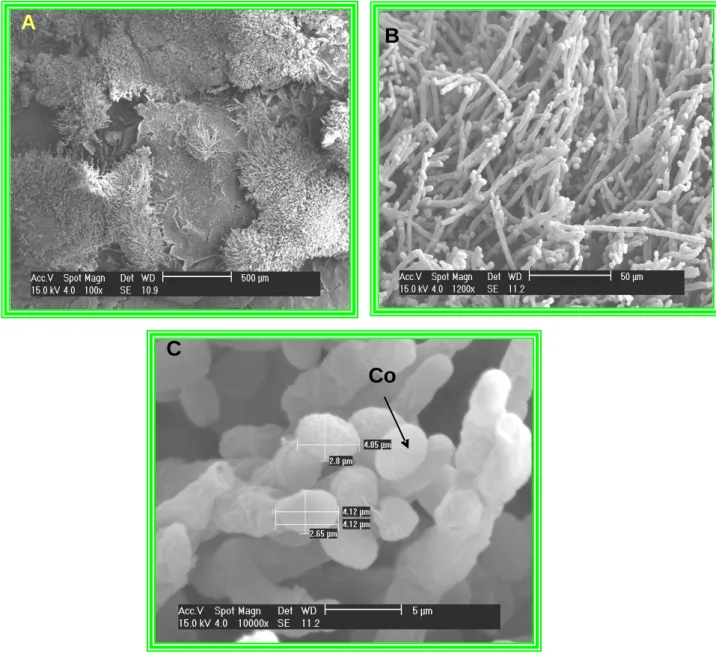
- Scanning electron microscopy observations of the yeast Isolate B13
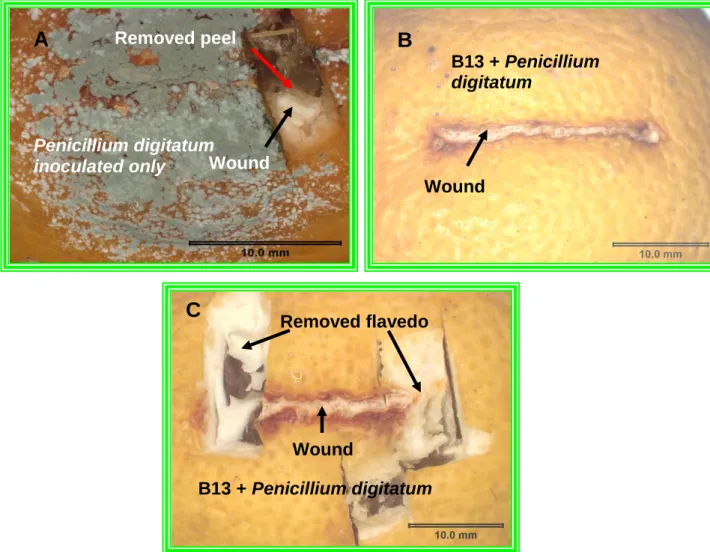
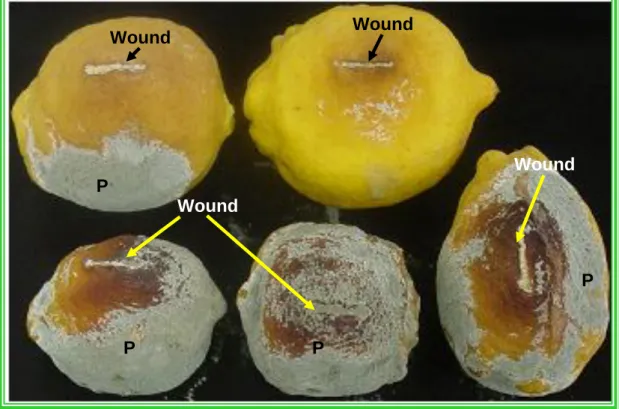
- Visual observation of wounds of lemons inoculated with P. digitatum
- Scanning electron microscopy observations of wounds of lemon
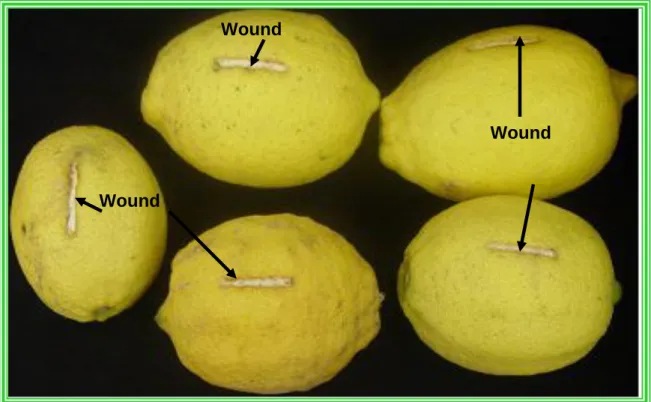
- Visual observation of wounds of lemons treated with the yeast Isolate
- Scanning electron microscopy observations of interaction of the yeast
Environmental scanning electron microscopy observations showed good colonization of lemon wounds by the yeast Isolate B13, where it densely colonized the fruit surface after 3 days of treatment as in Figure 4.2B making the wound invisible. In vivo interactions in wounded lemons treated with yeast Isolate B13, then 48 h later inoculated with P.
DISCUSSION
Although no population counts of isolate B13 were made in these studies, research on other yeast species has shown good adaptation, colonization and multiplication in citrus fruit wounds (Tian et al., 2002; Bouzerda et al., 2003). Rapid and extensive colonization of the wound environment with yeast isolate B13 was observed (Figures 4.2B and 4.6A and B).
1997) Postharvest pathogen control and surface colonization of apple fruit by antagonistic microorganisms in the field. Application of yeast isolate B13 (Candida fermentati (Saito) Bai.) before harvest as a spray to control Penicillium digitatum was investigated for two seasons.
INTRODUCTION
The main objectives of this study were to evaluate the fruit surface colonization ability of yeast isolate B13 (Candida fermentati (Saito) Bai.) when applied before harvest and to investigate the efficacy of yeast isolate B13 in controlling postharvest infection by P ..
MATERIALS AND METHODS
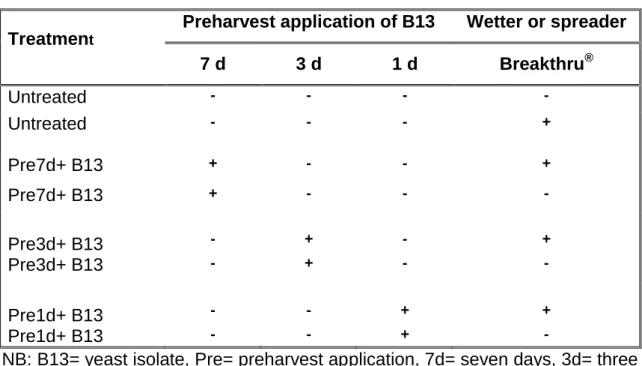
- In vitro compatibility of yeast Isolate B13 with the adjuvant Breakthru ®
- Culture preparation of the yeast Isolate B13 for the preharvest
- Determination of preharvest application of the yeast Isolate B13 for
- Assessment of preharvest application of the yeast Isolate B13 for the
- Evaluation of colonizing capability of the yeast Isolate B13 on
- Statistical analysis
Yeast isolate B13 was applied in the same way to a separate set of trees one day before harvest for both sites. A pure culture of yeast isolate B13 was simultaneously grown to help identify specific colonies.
RESULTS
- Compatibility of the yeast Isolate B13 with Breakthru ®
- Control of P. digitatum infection by the yeast Isolate B13 applied 1, 3
- Control of P. digitatum infection by the yeast Isolate B13, applied prior
- Colonization of Valencia oranges by the yeast Isolate B13 when
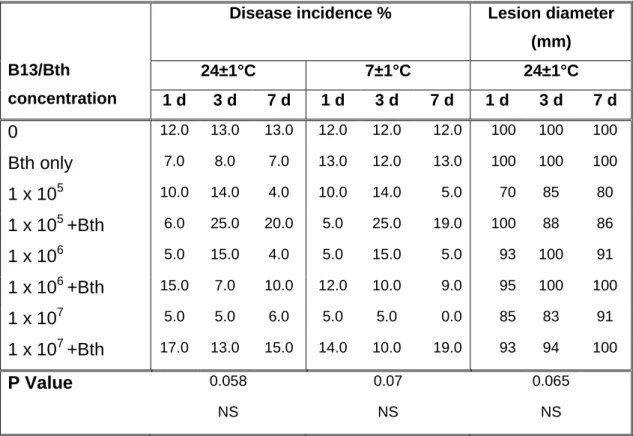
There were no significant differences between any treatments of yeast isolate B13 applied 1, 3 and 7 days before harvest for the control of P. There was no statistical difference between treatments at 1 × 10⁶ and 1 × 10⁷ cells m-1 of yeast isolate. B13 with Breakthru®, compared to Breakthru® alone (Table 5.4).
DISCUSSIONS
This is in agreement with Korsten et al. 1997) who suggested that satisfactory control of plant disease through biological control is not always evident in the first season and therefore requires persistence on the part of the grower. Some strategies such as heat treatment (Kim et al., 1991) or silicon application have shown synergistic effects for controlling apple fruit decay (Qin and Tian, 2005).
CONCLUSIONS
Variation in the degree of control provided by biocontrol agents may be due to initially high levels of disease pressure (Tronsmo and Ystaas, 1980; Lonsdale, 1991), built up over time in the field. Many researchers emphasize that biological control agents alone have often not provided acceptable levels of plant disease control, but are more effective when used in combination with other strategies (Janisiewicz and Korsten, 2002; . Tian et al., 2002).
1997) Biological control of postharvest diseases of apple and pear under semi-commercial and commercial conditions using three saprophytic yeasts. The Journal of Pomology and Horticultural Science Plate dilution frequency technique for analysis of microbial ecology. 2002) Biological control of postharvest diseases in fruits.
INTRODUCTION
Pre-harvest applications of potassium silicate (K2SiO3), with a concentration of 20.5%, were used as a silicon source in the pre-harvest trial for the control of Penicillium digitatum (Pers: Fr. Sacc), on eight-year-old navel and Valencia orange trees were investigated in two consecutive seasons. In recent years, research into the role of Si in controlling plant fungal disease has shown promising results (Belanger et al., 1995; Menzies and Belanger, 1996).
MATERIALS AND METHODS
- Use of potassium silicate for the control of P. digitatum on navel and
- Further determination of the efficacy of potassium silicate for the
- Silicon and potassium extraction from navel and Valencia orange
- Evaluation of the effect of potassium silicate on total soluble solids of
- Statistical analysis
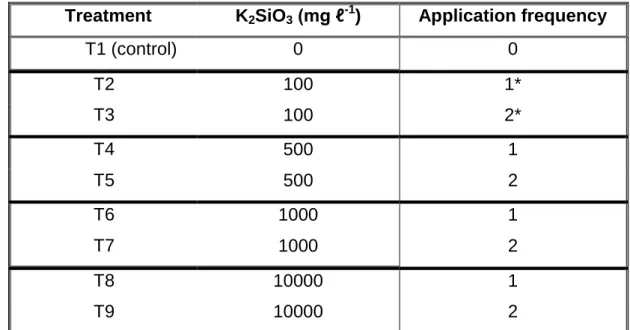
At harvest, the fruits of navel and Valencia orange trees were divided into two groups, with each group having 36 fruits per tree. Similarly, for the determination of potassium (K) concentration from plant material, the same extract prepared for Si extraction was used.
RESULTS
- Effect of field drench applications of potassium silicate four months
- Effects of potassium silicate field applications for 11 months
- Effect of Potassium silicate field application for eleven months before
- Effect of preharvest application of potassium silicate on total soluble
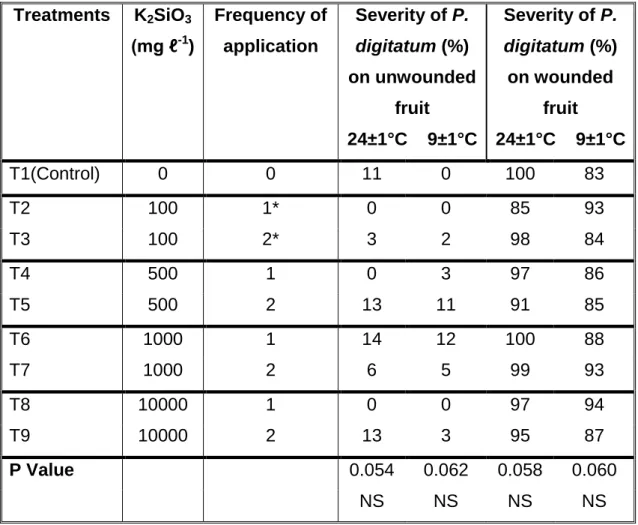
There was no significant difference in extractable Si levels at all irrigation concentrations and application frequencies compared to the untreated control for leaves, fruit flavedo or navel albedo or Valencia oranges (Figure 6.5). Total soluble solids extracted from buds and valence oranges after 11 months of treating trees with different levels of K2SiO3 application were not statistically different between treatments with and without K2SiO3 (Table 6.6).
DISCUSSION
Plant responses to Si applications may differ depending on the crop genotype, as suggested by Rodrigues et al. This theory is supported by Liang et al. 2005) who reported that continuous root-applied Si increased resistance to infection by powdery mildew.
There is considerable evidence for a physical role of silicon in relation to disease (Epstein, 1999; Matichenkov et al., 1999), as well as evidence for increased development (rate and level) of systemic acquired resistance (SAR) and induced systemic resistance. (ISR) and accelerated accumulation of phytoalexins (Carver et al., 1987; Menzies et al., 1991b; Cherif et al., 1992; Fawe et al., 1998; Liang et al., 2003). The application of soluble silicon has the potential to reduce the level of disease species (Belanger et al., 1995; Menzies and Belanger, 1996; Liang et al., 2005) and to provide relief from abiotic stress (Liang et al., 2003).
INTRODUCTION
Fruit treated with potassium silicate at a concentration of 100,000 mg ℓ-1 developed the smallest lesion diameter when the potassium silicate was applied as a preventive treatment (3 h before inoculation with P. digitatum) or curative (inoculated with P. digitatum 3 h before treatment). However, potassium silicate can also be effective in catalyzing or accelerating the rapid release of biochemical defense products such as phenolic compounds and pathogenesis-related proteins in infected plants (Cherif et al. 1992; Epstein, 1999).
MATERIALS AND METHODS
- Dissolved potassium silicate
- Evaluation of the preventative activity of potassium silicate against P
- Determination of the curative activity of potassium silicate against P
- Observations of in vivo interaction of potassium silicate and P
- Preventative activity of potassium silicate against P. digitatum, when
- Curative activity of potassium silicate against P. digitatum, applied as
- Visual observation of wounds of lemons inoculated with P. digitatum
- Scanning electron microscope observations of wounds of lemon
- Visual observation of wounds of lemons treated with potassium
- Scanning electron microscope observations of the interaction
However, the lesion diameter that developed after treating the fruit with K2SiO3 at 1,000 was not significantly different from the treatment with 10,000 mg ℓ-1 (a detailed statistical analysis of the data in Figure 7.2 is provided in Appendix 7A) . Curiously, when potassium silicate was applied curatively at 100, 1000 and 10,000 mg ℓ-1, the control provided was not significant (a detailed statistical analysis of the data in Figure 7.3 is provided in Appendix 7B).
DISCUSSION
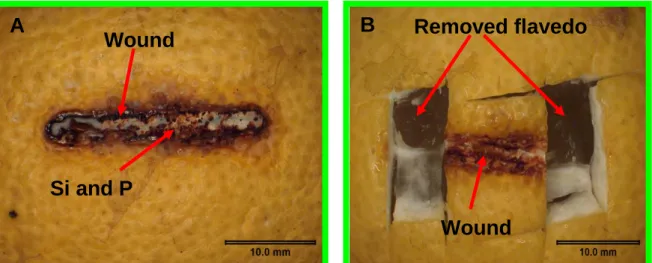
This inhibition may be due to a direct effect of K2SiO3 on the conidia and then affect conidia germination as a result of the fungicidal effect as reported by Bekker et al. 2006) on some phytopathogenic fungi from avocado. This may have been related to the fungistatic properties of K2SiO3, which inhibit conidial germination or delayed germination, as seen in the ESEM study.
CONCLUSION
Discoloration of lemon wound tissue was observed after K2SiO3 treatment and may be consistent with the alkaline condition created by K2SiO3 around the treatment site. This potential of K2SiO3 as a postharvest treatment of fruits can be extended to the treatment of other fruits for the control of other postharvest fungal diseases.
2007) Control of blue apple mold by combining controlled atmosphere, an antagonist mixture and sodium bicarbonate. 1999) Control of citrus green mold by sodium carbonate and sodium bicarbonate salts and the influence of postharvest commercial practices on their efficacy.
INTRODUCTION
Acceptance of antagonistic biocontrol agents as an alternative to synthetic fungicides will depend on their commercial performance (El-Ghaouth et al., 2000). Semi-commercial trials are important because commercialization of antagonistic biocontrol agents always depends on their performance under commercial conditions (El-Ghaouth et al., 2000).
MATERIALS AND METHODS
- Fruit
- Observational Trial 1: hot water treatments to determine a safe
- Observational Trial 2: hot water treatments followed by cold water dip
- Replicated Trial 1: efficacy of hot water treatments for the control of
- In vitro compatibility of yeast Isolate B13 with commercial wax
- In vitro compatibility of the yeast Isolate B13 with potassium silicate
- Preliminary investigation of the ability of yeast Isolate B13 to control
- Assessment of a hot water dip, yeast Isolate B13 and potassium
- Assessment of a hot water dip, yeast Isolate B13 and potassium
- Assessment of a hot water dip, yeast Isolate B13 and potassium
- Statistical analysis
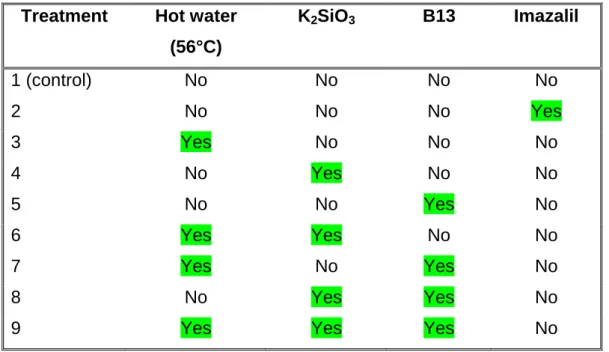
Valencia oranges used for the combination of all three treatments were first immersed in hot water at 560C for one minute, followed by immersion in a combination of yeast isolate B13 at 1 × 10⁶ cells mℓ-1 and K2SiO3 at 1000 mg ℓ-1. Valencia oranges were treated with imazalilin in a separate container at the recommended rate (670 g of chemical in 1000 l of water).
RESULTS
- Replicated Trial 1: effectiveness of hot water dip treatments of
- In vitro compatibility of the yeast Isolate B13 with commercial wax 139
- Preliminary evaluation of the yeast Isolate B13 for the control of
- Effects of hot water dip, yeast Isolate B13 and potassium silicate
- Effects of a hot water dip, yeast Isolate B13 and potassium silicate
- Effects of a hot water dip, yeast Isolate B13 and potassium silicate
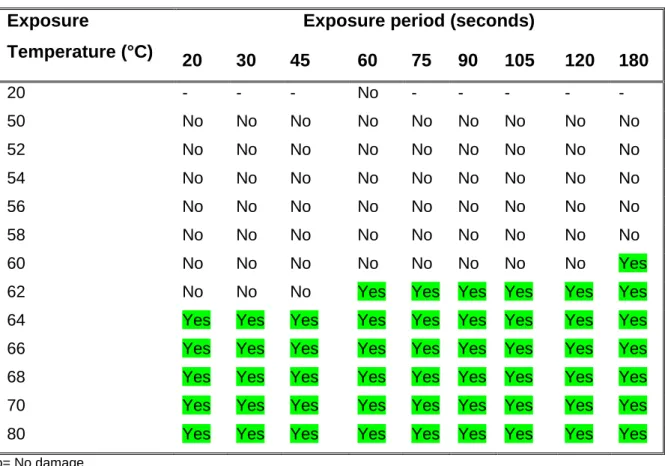
The cold water treatment did not reduce physiological damage caused by the hot water treatment on Valencia oranges. None of the treatments were significantly different from the untreated control (a detailed statistical analysis of the data in Figure 8.6 is provided in Appendix 8B).
DISCUSSION
In contrast, these results showed that the hot water treatment provided control for up to four weeks. 2001) showed that after hot water treatment of lemons, lignin-like materials were produced at the site of pathogen inoculation, followed later by an accumulation of phytoalexins.
CONCLUSIONS
1994) Improvement of blue mold biocontrol with nutrient analogue 2-deoxy-D-glucose on apple and pears. 2002) Control of brown rot and blue mold of peach and nectarine by short hot water brushing and yeast antagonists. Hot water immersion unit for disinfecting tropical floral products. 1996) Commercialization of antagonistic yeasts for biological control of postharvest diseases in fruits and vegetables.
INTRODUCTION
To date, there are no registered chemicals for postharvest disease control of lychee fruit. Korsten (2004) has reported some success in developing biological control agents for postharvest disease control of litchi fruit.

MATERIALS AND METHODS
- Fruit used for isolation of potential antagonists
- Isolation of a Penicillium sp. from litchi fruit
- Isolation of antagonistic yeasts and Bacillus
- Preliminary screening of antagonistic yeast and Bacillus isolates
- Determination of the curative action of the six best yeasts and
- Determination of the curative activity of potassium silicate against
- Statistical analysis
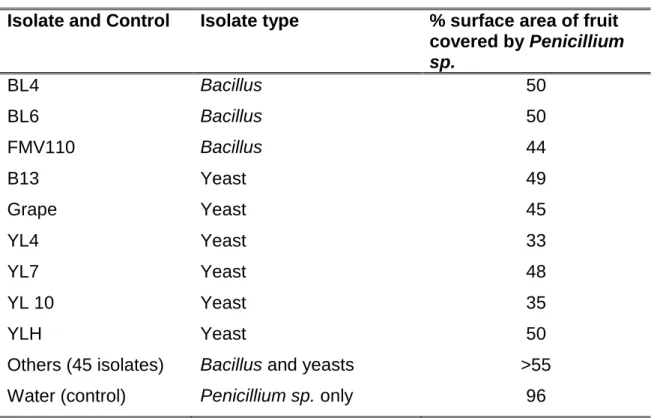
Fruits were examined for the percentage of fruit surface covered by mycelia and/or conidia of Penicillium sp. Fruits were evaluated for the percentage of fruit surface covered by mycelia and/or conidia of Penicillium sp.
RESULTS
- Preliminary screening of antagonistic yeasts and Bacillus isolates
- Further screening of the six best antagonistic yeasts and three best
- Screening of antagonistic yeasts and Bacillus isolates against
- Effect of potassium silicate as a postharvest curative treatment for the
Yeast isolates, YL7, Grape, and the Bacillus isolates, BL4, BL6 and FMV110 reduce the severity of Penicillium sp. The yeast isolate YLH, YL7 and Bacillus isolates BL4 and FMV110 did not provide curative control of Penicillium sp.
DISCUSSION
The reduction in disease severity was concentration dependent and the best suppression was achieved at higher concentrations of K2SiO3. This was a preliminary study and therefore there is a need for further research on integrated control of Penicillium sp.
CONCLUSIONS
To investigate the modes of action of antagonistic yeasts by observing surface colonization of yeast isolates using scanning electron microscopy.
Journal of Toxicology and Environmental Health Biological control in Africa: can it provide a sustainable solution for fruit disease control. Association Biological control of postharvest diseases of grapes, peaches and apples with yeasts Kloeckera apiculata and Candida guilliermondii.
THESIS OVERVIEW
The individual use of the yeast isolate B13, a hot water dip and the application of potassium silicate as a postharvest treatment provided excellent control of P. Investigate the use of potassium silicate added to the hot water dips at lower concentrations.