An Investigation into the Management of Induction of Teachers at Zenon High School, in Berea, Lesotho
By
GERARD MANGANA TSILO
Submitted in partial fulfillment of the requirements for the degree of Master of Education (Educational Management), School of
Education, University of Natal, Durban December 2002
I hereby declare that the study 'An Investigation into Management of Induction of Teachers at Zenon High School, in Berea, Lesotho' is my own work and that all sources consulted and quoted have been indicated and acknowledged by means of complete references.
Signed G.M.TSILO
Statement by Supervisor
This mini-dissertation is submitted with/without my approval
PROFESSOR MICHAEL THURLOW
Table of Contents
Title Page Abstract iv List of Abbreviations v
List of Figures vi List of Tables vii List of Appendices viii Acknowledgements ix C H A P T E R 1
Introduction 1 1.0 Background to the study 1
1.1 The Purpose of Study 2 1.2 The Method of Study 2 1.3 Theoretical Framework 3 1.4 Significance of the Study 3 1.5 Definition of Terms 5 1.6 Structure of the Report 5
1.7 Conclusion 5
C H A P T E R 2
A Review of Literature 7
2.0 Introduction 7 2.1 The Meaning of Induction 7
2.2 Types of Induction 8 2.3 The Purpose of Induction 9
2.3.1 Socialisation 9 2.3.2 Achieving Competence 10
2.3.3 Exposure to the Organisational Culture 10
2.4 The Importance of Induction 11 2.5 The Management of Induction 14
2.5.1 Planning Induction 15
2.5.2 Implementing Induction 18 2.5.3 Evaluating Induction 23 2.6 Factors Affecting Management of Induction 23
2.7 Conclusion 24
C H A P T E R 3
Methodology 25 3.0 Introduction 25 3.1 Research Design 25 3.2 Research Site 25 3.3 Participants 26 3.4 Data Collection 26 3.5 Data Analysis 27 3.6 Research Instrument 27
3.7 Conclusion 28 C H A P T E R 4
Results and Discussion 29
4.0 Introduction 29 4.1 Results 29
4.1.1 The purposes of induction 31 4.1.2 The best practice in the management of induction 31
4.1.3 Provision made in the school for induction 32 4.1.4 Experiences of the teachers in relation to induction quality 34
4.1.5 Needs teachers believe could be addressed through induction 38
4.2 Discussion 40 4.2.1 What is the purpose of induction? 40
4.2.2 What is argued to be the best practice in the management of induction? 41
4.2.3 What provision is made in the school for induction? 41 4.2.4 What have been the experiences of the teachers in relation to the extent
and quality of induction? 42 4.2.5 What needs do teachers believe could be addressed through induction? 45
4.3 Conclusion 46
i l l
CHAPTER 5
Summary and Recommendations 47
5.0 Introduction 47 5.1 Summary 47 5.2 Recommendations 50
5.3 Conclusion 51
References 63
The purpose of this study was to investigate how the process of induction was managed at Zenon High School, in Berea, Lesotho. To this end, a case study approach was employed and an attempt was made to identify what passed for induction, in this school, as this has a bearing on the management approach that may be adopted. The next step was to address three important questions: the nature of provision for induction made in the school; what experiences teachers had of induction; and the needs teachers believed could be addressed through induction, as well as how better these might be addressed, all of which reflect the question of what passes for induction in the school. Lastly, the issue of what is generally or commonly regarded as the purpose of induction, and the 'best' practice in the management of this process, was considered. Analysis of data, in this connection, indicated that there were considerable differences between the management of induction in the school, as reflected by the nature of provision for induction made in the school and the experiences of teachers with regard to the process of induction in the school, and what is commonly argued to be the 'best' practice in the management of this process. The findings further indicated that the induction programme in the school was organised by the local university for recent graduates with a teaching qualification; that participation of the school in decision making was limited only to implementation aspect of induction management, with the planning and evaluation aspects remaining the sole responsibility of the university; that, based on their experiences of the process of induction and their believes of what needs should be addressed through induction, teachers felt that their induction in the school was inadequate.
List of Abbreviations
B.A B.A.Ed.
B.A.
B.Sc.Ed.
B.Sc.Agric.
BTs C.O.S.C.
DfES
Dip.Agric.Ed.
HOD J.C.
NQTs NUL IPC P.G.C.E S.T.C.
T.S.C.
Bachelor of Arts
Bachelor of Arts with Education Bachelor of Arts
Bachelor of Science with Education Bachelor of Science in Agriculture Beginning Teachers
Cambridge Overseas Senior Certificate Department for Education and Skills Diploma in Agriculture Education Head of Department
Junior Certificate
Newly Qualified Teachers
The National University of Lesotho Induction Programme Coordinator Postgraduate Certificate of Education Secondary Teachers' Certificate
Teaching Service Commission (Lesotho)
List of Figures
Figure Page
4.2 The Management Cycle 31 4.3 Distribution of Induction Participants in the School 33
Vll
List of Tables
Table Page 4.1 Population characteristics 30
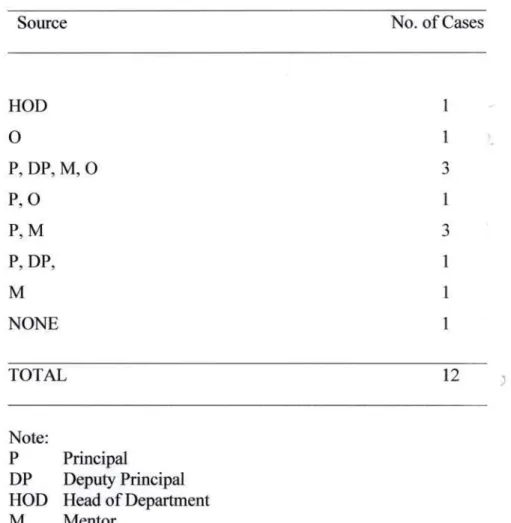
4.4 Experiences of teachers regarding the timing, duration and content of induction 35
4.5 Models of support rendered during induction period 36 4.6 Opportunities for inductees to observe other people's lessons 37
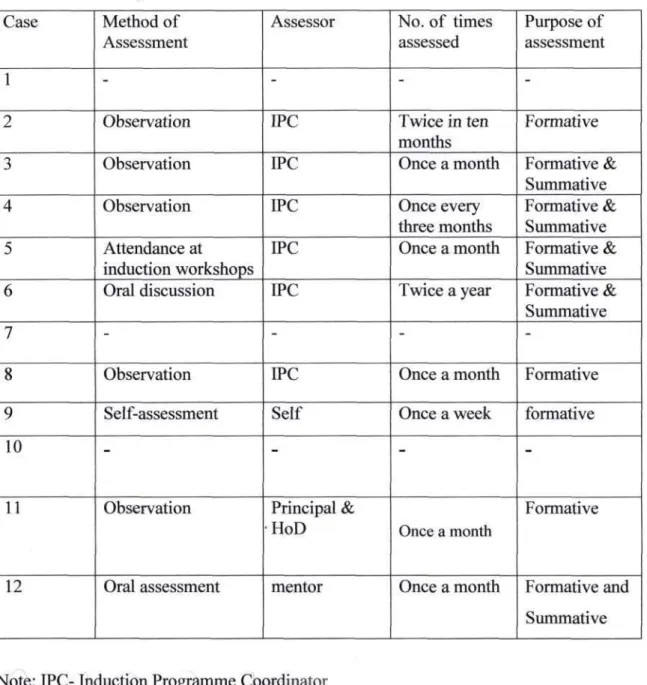
4.7 Assessing Inductees 38 4.8 Needs teachers believe could be addressed through induction 39
4.9 Teachers' believes regarding how their induction needs might better be addressed...40
List of Appendices
Appendix Page A A Questionnaire on the induction of teachers 52
B Interview with the principal 59
IX
Acknowledgements
I would like to express my sincere gratitude to people who have contributed to the success of this research project. In particular, I am grateful to my tutor and supervisor, Professor Michael Thurlow, who offered me considerable support and guidance throughout this research project, tirelessly commenting on the successive draft chapters of this research report. Also, I would like to express my gratitude to my wife, Malerato Tsilo, for her unfailing support in the course of this study. Finally, I am grateful to the management of Zenon High School, for granting permission for this study to be conducted in their school, and to all those teachers who sacrificed their time in order to participate in it.
CHAPTER 1 INTRODUCTION
1.0 Background
For a long time now, most secondary and high schools in Lesotho have been implementing teacher induction programmes. It is important that it is known how these schools manage the process of induction, given the fact that the extent to which this process may be effective depends on how well it is managed; that is, how well it is planned; how well it is implemented; how well it is evaluated (Rebore, 1987; Turner, 1994; Grobler et al., 2002).
While it would have been desirable to seek information pertaining to how all these schools manage their induction programmes, it would not have been possible to do so, given the scope of the present study and the amount of time available for conducting it. The present study, therefore, focuses on the management of induction in only one school, namely Zenon High School, as one of those schools which have been engaged in the induction of teachers.
Established in 1979, Zenon High School is one of the grant-aided1 church schools in Lesotho.
It is a mixed sex school situated in a place called Sefikeng, in the Berea District. Until 1982, when it became a high school, the school had been operating as a secondary school, offering only a few subjects at Junior Certificate (J.C.) level. The school is now offering several subjects at both J.C. and Cambridge Overseas Senior Certificate (C.O.S.C.) levels. With a student population of 680, and twenty-eight teachers employed, it has a student-teacher ratio of 25:1. Since 1990, the school has been practising induction of teachers, though information pertaining to how this is managed is not available, which led to the purpose of the present study.
' Grant-aided schools are church or community-owned schools, in Lesotho, which have teachers who are paid by the government
2
1.1 The Purpose of Study
Ideally, the encouragement of induction implies the existence, or development, of a whole- school policy related to the management of staff, and, in this connection, a consideration of the planning and management of this process should be carried out in relation to the other human resource management applications-recruitment, selection, mentoring, appraisal- especially the degree of school's commitment to staff development.
However, in the present case, the student could not assume the existence of such a whole- school policy and, even if such a policy existed, researching an holistic policy would lie outside the scope of a mini-dissertation.
With these things in mind, the present study was restricted to an investigation of the management of induction. More specifically, the research attempted to identify what passes for induction in this school; what were the reported experiences of this process on the part of the inductees; and what might be done to improve the process and its management. The study sought answers to the following questions:
l.What are the purposes of induction?
2. What is argued to be the 'best practice' in the management of this process?
3. What provision is made in the school, either formally or informally, for induction?
4. What have been the experiences of the teachers in relation to the extent and quality of induction?
5. What needs do teachers believe could be addressed through induction and how might these be better addressed?
6. What might be recommended practically for improved management of induction?
The section that follows looks at the question how the above-mentioned questions were addressed. This includes the research design deemed most appropriate for purposes of finding answers to the said questions.
1.2 Method of Study
The research design deemed most appropriate, for purposes of arriving at the answers to the questions posed above, is a case study. Some of the answers to the questions listed above
were found entirely through the study of literature, while some of them were found through the analysis of data collected by means of a semi-structured interview with the principal and a self-administered questionnaire distributed among teachers. For example, the first question was addressed entirely through a study of the literature. The second question, similarly, was addressed through the literature study. The data in connection with Question 3 were obtained from the principal through the semi-structured interview as has already been indicated above.
As for the fourth question, the data which could help address it were obtained via a self- completion questionnaire. Question 5 was addressed by the same means as in Question 4.
1.3 Theoretical Framework
The literature on managing people in educational organisations is characterised currently in a broad 'debate' between 'personnel management' and 'human resources management' paradigms. The present study reflects a human resources management approach which contains the following features:
• Actions are measured against the strategic objectives of the organisation as a whole;
• The importance of the line manager is emphasised;
• Customised, individual responses to intervention are advocated;
• The focus is on positive motivation rather than negative control;
• Process is more important than standardised procedure.
The literature more specifically related to induction, though grounded in one or other of the above paradigms, is more practically oriented and deals broadly with three underlying purposes: socialisation; the achievement of competence; and exposure to institutional culture.
The following section considers the significance of the study.
1.4 Significance of the Study
Educational organisations depend, for their success, on the quality, commitment and performance of the people working there (O'Neill at al., 1994, p. 4).
The promotion of quality, securing of commitment and enhancement of performance are the processes that do not just happen. Rather, they are processes that require careful and considered management.
4
The literature on managing people in schools exhibits considerable theoretical diversity, broadly characterised as a debate between 'personnel management' paradigm and 'human resources management' paradigm. However, in spite of the differences in the underlying theoretical underpinnings, there appears to be a broad agreement on the practical applications of managing people. These applications, which may be considered chronologically, are:
•
•
•
Recruitment : managing to get the best people to apply.
Selection : managing to get the best people for the jobs.
Induction : managing to give people the best possible start
• Mentoring : giving the best kind of support.
• Appraisal : managing to get the best out of the people.
Some of these applications, which require the applications of management principles, are affected by statutory legislation or local authority regulation (e.g. recruitment and selection).
However, management principles need to be applied to every aspect of people performance.
For example, it can be argued that everyone requires induction and mentoring, even if there is no formal scheme.
In an ideal sense, any entrant to a new job goes through an induction process of learning about the job and about the 'culture' of the place of work. Again, ideally, this process of induction should be assisted by a degree of formal or informal mentoring by one or more of people who are given, or take, the responsibility for such initiation (Coleman, 1997, p. 155).
The literature suggests that some form of induction and mentoring is likely to take place in most schools, but that often these processes are not carefully planned and managed (Coleman, ibid.). In contrast, the argument is that induction and mentoring are the significant aspects of the development of people in schools, related ultimately to quality, commitment and performance, and that the 'best practice' would require them to be planned and managed.
It is within this context that the student proposed to conduct an investigation into the induction process in a selected high school, with a view to assessing what passes for induction and, if necessary, to make recommendations for managing the process more effectively.
1.5 Definition of T e r m s
a) Induction: Induction is a process whereby a new person is introduced into a new post through mentoring, in "learning about the job, about his new colleagues and the 'culture' of the place of work" (Coleman, 1997, p. 155).
b) Inductees: people undergoing induction
c) Mentoring: a process through which inductees are offered training and support (material and psychological), by an experienced member of staff called a mentor, as they undergo induction.
d) Teachers: teachers, as used in this study, means people whose qualifications have been approved, for purposes of teaching, and are registered with the Lesotho Teaching Service Commission (L.T.S.C.)
1.6 Structure of the Report
The report is organised into five chapters. The first chapter is an introduction; it deals with a background to the research problem; the purpose of study; theoretical framework and the significance of the study, as well as the definition of the key terms used in the study. The second chapter is a review of the literature on the induction of teachers. The chapter is organised into sections dealing with the meaning of induction; the types of induction; the purpose of induction; the importance of induction; the management of induction; and the factors affecting management of induction. The third chapter is a methodology chapter, which deals with issues pertaining to the research design employed in the present study; the research site and how access to the research site was gained; who the participants in the study were;
and how data were analysed to arrive at the answers to the research questions asked, as well as a research instrument employed to collect data.
1.7 Conclusion
In this chapter, the background and purpose of study were looked at. The other sections dealt with include the method of study, which briefly looked at the issue of how the answers to the questions asked were arrived at; the theoretical framework; the significance of the study; the definitions of the terms used in the study; the structure of the report, which briefly looked at
6
how the report is organised. The next chapter deals with the question of literature review, where the available literature on the induction of the newly appointed employees in general, and that of teachers in particular, is examined.
CHAPTER 2
A REVIEW OF LITERATURE 2.0 Introduction
Examination of the existing literature on induction has indicated that induction of teachers, as a form of staff development (Wideen and Andrews, 1987), has, over the years, been one of the subjects to which different authors and /or researchers have paid much attention. In this chapter, as the title suggests, a review of literature is presented. The chapter is organised into the following sections, which represent the areas addressed by previous research or literature on induction, including the induction of teachers:
• The meaning of induction
• The types of induction
• The purpose of induction
• The importance of induction
• The management of induction
• Factors affecting management of induction
While the focus of the present study is on the management of induction, some of the literature on mentoring has also been found relevant and necessary for purposes of understanding this study, given the fact that mentoring is an important part of the induction process (Bush and Coleman, 1995; Coleman, 1994), especially formal induction. As has already been indicated, one of the sections into which this chapter is divided deals with the question of the meaning of induction. This is examined in the subsequent paragraph.
2.1 The M e a n i n g of Induction
Induction is a process whereby a new employee is introduced to the organisation which has employed him/her (Flippo, 1971). This definition is certainly useful in that it helps to explain the meaning of the concept 'induction', giving one an idea of who needs induction. However, it tends to focus only on those employees who are new to the organisation, notwithstanding the fact that even those who are already in the employ of the organisation also are entitled to induction, that is, once they occupy new posts as a result of promotions or departmental transfers (The College of Professional Management, 1995), since any new job involves a
8 period of learning (Kemp and Nathan, 1989). Given the purpose of the present study, the definition of induction given below seems more appropriate. The definition is comprehensive enough to include all categories of teachers who should undergo induction, including those who assume new posts as principals, as they also have been found to be in need of induction/
mentoring (see Bolan et al., 1995; Daresh, 1995; Kirkham, 1995; Playco, 1995):
Induction is the introduction of someone into a new post; it is the process whereby someone new to a job is helped in getting to know the ropes and acclimatising to the school ethos- who's who in the school, how things operate, what is expected and so on (Kemp and Nathan, 1989, p. 188).
The central idea expressed in this definition is that induction is a process, rather than a single event; that every employee who is new to a job is introduced not only to the organisation, but also to his/her new post and the work-group he/she will be working with. This idea of the meaning of induction is shared by several authors (e.g. Rebore, 1987; Graham and Bennett, 1998; College of Professional Management, 1995; Middlewood, 2002), as they have defined the concept along similar lines. An inclusive term which will be used in this study, therefore, is newly appointed employees. With the concept defined, the next important task, perhaps, is to look at its types.
2.2 Types of Induction
Induction may be either formal or informal. In this paragraph, informal induction is considered, with formal induction dealt with in the following paragraph. Informal induction occurs where the newly appointed employee is not formally allocated any one to guide/ train and/or support him or her during the first weeks or months of appointment. In the circumstances, he/she, whenever a problem arises, can approach any member of staff, who happens to be available at the time, for guidance or support in order for him/her to carry out his/her duties effectively. This approach to induction and mentoring is discouraged, as there is no consistency in the treatment of the newly appointed members of staff. It is also considered reactive rather than proactive (City University Guidelines for a Mentoring Scheme, 2002;
Grobler et al., 2002). In view of the problems inherent in this type of induction, formal induction programmes seem preferable. For example, a study by Nsele (1994) has indicated that the majority of the newly employed teachers (88%), when asked whether they felt that formal induction was necessary, pointed out that formal induction was very important.
Formal induction, in contrast, is planned and conducted by the organisation through its selected staff member or members qualified to conduct it (Grobler et al., 2002). This approach to induction/mentoring is characterised by consistency (Middlewood, 2002). There is consistency, for example, in terms of what the newly appointed members of the staff are expected to learn. Another advantage of this type of induction is that, because it is planned, its effectiveness can be determined through evaluation (Grobler et al., 2002). The purpose of induction is considered in the next section.
2.3 The Purpose of Induction
As has already been indicated, this section looks at the question of the purpose of induction.
According to O'Neill et al. (1994), induction is intended to serve three major purposes, which are:
• Socialisation of the inductee;
• Enabling the inductee to achieve competence; and
• Exposing the inductee to the culture of the organisation
These purposes are considered, in turn, below, with emphasis on what each one of them is and/or involves.
2.3.1 Socialisation
Socialisation, as one of the purposes of induction, refers to the "activities undertaken by an organisation to integrate organisational and individual purposes" (Gibson et al., 1991, p.612).
It comprises three stages: the anticipatory stage, the accommodation stage, and the role management stage, with the first stage, the anticipatory stage, involving activities occurring before an individual becomes an organisational member. The accommodation stage involves activities occurring once an individual becomes a member of the organisation, while the role management stage involves activities which occur once an individual has reached the stage of stability in an organisation (ibid.). To facilitate this socialisation process, there are certain tasks to be performed, at some or all of these stages. These include enabling the inductee to:
• Accept the reality of the human organisation;
• Deal with resistance to change;
10
• Learn how to work: coping with too much or too little organisation and too much or too little job definition;
• Deal with the boss and deciphering the reward system-learning how to get ahead;
• Locate [his/her] place in the organisation and develop an identity (Schein, 1978, pp. 94- 102).
These tasks are necessary, given the fact that there is considerable disparity between an individual's expectations on the one hand and what he/she discovers in the world of work on the other hand (ibid.). The next purpose of induction to be considered, as has already been indicated, is achieving competence.
2.3.2 Achieving Competence
Achieving competence, it would appear, is the result of learning the skills and tasks required to perform effectively in a specific job (Gibson et al. 1991). This learning occurs in three stages:
• Getting used to the place, i.e. overcoming the initial shock and immobilization of the new organization and job demands.
• Re-learning, i.e. recognizing that new skills have to be learned or how learned skills have to be re-applied.
• Becoming effective, i.e. consolidating one's position in the organization by applying new behaviours and skills or integrating newly formed attitudes with ones held from the past (Kakabadse, cited in O'Neill et al., 1994, p.64)
At the initial stage of learning, one is "operating at less than full effectiveness" (Kemp and Nathan 1989,p.l88), with effectiveness increasing more and more as the third stage is approached. The third purpose of induction, as has already been indicated, is exposing the newly appointed employee to the organisational culture. This is considered next.
2.3.3 Exposure to the Organisational Culture
Exposure to the organisational or institutional culture means that one is familiarised with the values, norms, and beliefs, as culture focuses:
..."on the values, beliefs and norms of people in the organisation and how these individual perceptions coalesce into shared organisational meanings (Bush, 1998, p.32)
Culture helps explain what people do, how and/or why they do it, in an organisation; hence
"in everyday usage [, the concept] is typically described as 'the way we do things around here'" (Deal, cited in Bush, 1998, p.32). While O'Neill et al. (op.cit.) see induction as a process having three purposes (i.e. socialisation, achieving competence, and exposure to institutional culture) to serve, others would see it as having only one purpose to fulfil, namely socialisation. For example, Gibson et al. (1991, p. 18) regard socialisation as a process, during which individuals in new positions are helped to "learn the cultural values, norms, beliefs and required behaviour..." It involves training programmes...[intended] to instruct new employees in proper techniques and [to enable them] to develop required skills" (ibid, p.
620). Thus, in some quarters, exposure to organisational or institutional culture and achieving competence may be regarded as the components of effective socialisation, as a purpose of induction. Despite these possible differences of opinion among different authors, regarding the number of the purposes served by induction, there is, as will be seen in the subsequent section, a general agreement that induction is important.
2.4 The Importance of Induction
From the nature of the purpose(s) of induction discussed above, it can be seen that induction is really important in that, in fulfilling these purposes, it does-directly and/or indirectly- contribute to the attainment of organisational efficiency and effectiveness. Through socialisation of the newly appointed employees, for example, induction makes it possible for good working relationships among colleagues to be established, which relationships, in turn, make it possible for enhanced performance of organisational members to be attained, as collaboration among colleagues is possible where good interpersonal working relationships exist among employees (Gibson et al., 1991; Rebore, 1987). Forming good relationships with other organisational members makes it possible for employees to attain satisfaction in their work (Rebore, 1987). Thus, induction serves an important function of need satisfaction (Mclennan et al., 2001). This is clear from the following observation:
Usually, 'orientation,' 'socialisation' or ' induction' are terms used in the school context to mean the process whereby newly appointed teachers are helped in meeting their needs for security, belonging, status, information, and direction in both their job and the school community (Musaazi, 1982, p. 195).
\l
As a result of induction, therefore, a need for relatedness, discussed above, is met and the level of motivation (on the part of the employees) is enhanced (Gibson et al., 1991). Another need which induction helps satisfy is a need for security (McLennan et al., 2001).
Induction is an important means whereby individuals' need for security, especially at the entry stage of their careers (i.e. establishment stage), may be met. A study by Hall and Nougaim (cited in Gibson et al., 1991), "An Examination of Maslow's Need Hierarchy in an Organisational Setting", indicated that individuals, during the establishment stage of their careers, showed more concern for security needs. At this stage, the need for security is satisfied by means of support provided through mentoring, which, in some cases, is used as part of induction to facilitate it (Hunt and Michael, cited in Gibson et al., 1991). People in new positions in organisations need job security; hence they need the support of a kind of mentor who can act as a protector, giving them an opportunity to learn from their mistakes, how best to perform their tasks, without risking their jobs (Schein, 1978). Effective induction can also help in addressing the problem of reality shock, which is looked at below.
One of the effects of reality shock is the inability, on the part of the newly employed members of staff, to contribute meaningfully to the organisational effectiveness, as they spend most of their time and energy in denial and complaint rather than in performing their duties as well as they are expected to (Schein, 1978). Effective induction, however, helps in precluding the possibility of reality shock occurring. For example, as induction involves information giving, the possibility of reality shock is minimized, as accurate information about the nature of the organisation and the members thereof is given, especially at the anticipatory stage of socialisation (Gibson et al., 1991; Grobler et al., 2002). Another reason why induction is regarded as an important process is to do with enabling employees holding new posts to achieve competence. In the next paragraph, it is shown how induction helps them achieve competence in their jobs.
Induction is important in that it is regarded as a form of staff development, as well as a foundation for beginning teachers' continuous professional development (Andrews, 1987). As a form of staff development, induction involves equipping newly qualified teachers with knowledge, skills and attitudes which they currently need to enhance the quality of student learning (Guskee, 2000). As a foundation for continuous development of the newly appointed teachers, induction serves an important function of facilitating the said teachers' subsequent
learning, which is necessary for their career adaptability. Career adaptability implies that the employees are able to apply the latest knowledge and skills in response to the changing demands of their work for purposes of maintaining high levels of performance (Gibson et al.,
1991). Another important point to note, which is dealt with next, about induction is to do with its effect on the length of the time required, for the newly appointed employees, to acquire the necessary skills and knowledge.
An effective induction programme has the effect of substantially reducing the time required for the newly appointed employees to learn the tasks required to perform their duties effectively without compromising the quality of learning on their part. For example, it is argued that induction enables organisations to have the newly employed members of staff performing their duties effectively after a short period of time, following their appointment (Middlewood, 2002; Gerber et al., 1987). The advantage of this is that when the learning period is reduced, the extent of the loss or costs incurred by the organisation is minimised, given the fact that the newly appointed employee operates at less than full effectiveness during this period of learning (Kemp and Nathan, 1989). While it may be natural for the newly appointed employees to make mistakes in the course of learning how to perform their duties (see Middlewood and Lumby, cited in Middlewood, 2002), these mistakes could be costly to the organisations, in the long run, especially educational institutions, since the mistakes made in teaching are said to be impossible to reverse (Middlewood, 2002). The sooner the newly appointed employee is helped to become effective, therefore, the better.
Induction also relieves other organisational members of unnecessary tasks, allowing them to concentrate on the most important tasks, in the interest of organisational effectiveness. The subsequent paragraph examines this point further.
Unless the newly appointed members of staff are given an opportunity to undergo induction, they will be ever dependant on the management and fellow workers. They will need to be constantly supervised in order for them to perform their duties as required, as they may not know what is expected of them. By organising induction for these people, the management may enable them to perform effectively on their own, thereby dispensing with a need for constant supervision. This enables the management and the fellow workers to devote their time and energy to more important tasks (Gerber, 1987). Thus, efficiency and effectiveness, in this case, are achieved without putting undue strain on the available organisational human
14 resources. Another advantage of induction, which is considered below, is that it helps in the retention of the human resources of an organisation.
The initial days of employment are a difficult period for the newly appointed employees. It is during this period that the majority of them decide to leave the employ of their organisations (Flippo, 1971; McLennan et al., 2001; Scott et al., 1961; Ream, 1984). However, with effective implementation of induction activities, these employees are encouraged to remain with their respective organisations. It is argued that the decision, on the part of the newly appointed employees, to leave the employ of the organisation is motivated by, among others things, a feeling of insecurity and frustration emanating from their inability to perform as effectively as they may be expected (see, for example, Gerber et al., 1987). With resignations of the qualified newly appointed members of staff, due to an induction crisis (Ream, 1984), kept to a minimum, an organisation's potential for survival and effectiveness in the long term is enhanced. The list below summarises the importance of induction, indicating that it leads to:
• Higher job satisfaction;
• Lower labour turn over;
• Greater commitment to values and goals;
• Higher performance as a result of faster learning times;
• Fewer costly and time consuming mistakes;
• Reduction in absenteeism;
• Better consumer service through heightened productivity;
• Improved manager/subordinate relationships;
• Better understanding of [school] policies, goals and procedures (Grobler et al., 2002, p.210).
2.5 The M a n a g e m e n t of Induction
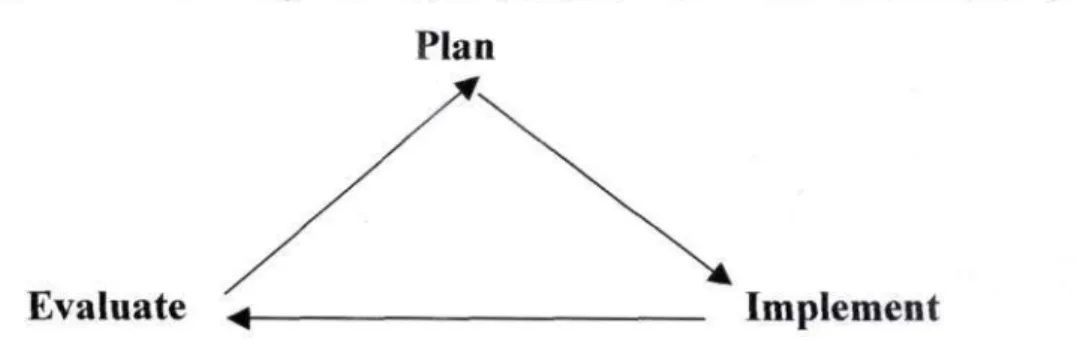
As has been stated, this section deals with the issue of how induction is managed; that is, the models of managing induction. According to West-Burnham (1994, p. 157), "[m]ost models of effective management can be reduced to a three-part process: plan, act, review." This section, therefore, is divided into three sub-sections: planning induction, implementing induction, and evaluating induction.
2.5.1 Planning Induction
More effective induction programmes are those which are properly planned (Ream, 1984;
College of Professional Management, 1995). Research has " revealed a relationship between NQT success in the induction year and well planned and consistently carried out induction policies" (Turner, 1994, p. 325). It has been argued that those induction programmes which allow experienced teachers and beginning teachers an opportunity to participate in the planning process are even more effective (Andrews, 1987). It is only when the newly appointed employees are given an opportunity to participate in the planning process that it becomes easier for the management to identify their induction needs. Effective induction programmes are supposed to meet the needs of the inductees or newly appointed employees (O'Neill et al., 1994). A study conducted by Spindler and Biott (2000), for example, indicated that teachers said they had benefited from participating in the planning process, as they had an opportunity to discuss their needs. There are several points to be considered when the induction process is planned, and these are examined below.
Planning involves determining the objectives to be attained (Robbins and Decenzo, 2001).
Planning an induction programme, therefore, should involve establishing the objectives to be achieved through induction. These objectives, it is argued, should reflect the needs of the inductees, those of the school system and its philosophy (Rebore, 1987); hence Schein (1978) emphasises a need for matching individual and organisational needs in the interest of the organisational effectiveness. Below is a list of, according to Rebore (1987), universal objectives, which should be common to all induction programmes in schools:
• To make the employee feel welcome and secure;
• To help the employee become a member of the team;
• To inspire the employee towards excellence in performance;
• To help the employee adjust to the work environment;
• To provide information about the community, school systems, building, ...[department], and students;
• To acquaint the individual with other employees with whom he (sic) will be associated;
• To facilitate the opening of the school year each year (ibid., p. 132).
16 The objectives of the induction process should reflect the overall purpose(s) of induction. In other words, the attainment of these objectives should lead to the attainment of the overall purpose(s) of the process of induction (ibid.). After the objectives have been determined, the next step is to decide on the content of the induction programme, that is, the subjects or the activities that should be covered by the induction programme in order for it to attain the intended objectives (Ream, 1984; McLennan et al., 2001). The content to be covered cannot be the same for all induction programmes. A given programme will cover more or less content, depending on the category of the inductees it is intended for. This point is explained below.
Because any new job involves a period of learning how to do it (Kemp and Nathan, 1989) properly, there are several categories of the employees entitled to induction. Those categories include those who are new to the organisation (e.g. those who are newly qualified and those who are experienced but have just joined the organisation) and those who are holding new posts within their organisations as a result of internal transfers and/or promotions (O'Neill et al, 1994; Grobler et al., 2002; Oldroyd et al., 1984; Rebore, 1987; Ream, 1984; Kemp and Nathan, 1989). Given the fact that induction should be tailored to meet the needs of the inductees, it follows that the content of induction cannot be the same for all categories of inductees, which must be taken into account when planning what activities or areas must be covered by an induction programme. For example, the induction programme for school- leavers and others with no working experience will include more induction activities, as they have more to learn about their new jobs than those who have some work experience (Ream, 1984; Coleman, 1997). Similarly, the programme for senior staff, including principals, will be different (Coleman, 1997). Kemp and Nathan (1989) also have drawn a distinction between the induction programme for probationers or newly qualified teachers and that for experienced teachers, showing that the former involves more activities than the latter. Table 1 in Sehlare et al.'s (1994) study depicts the areas which could be regarded as constituting the content of an induction programme for a newly qualified teacher. From this table, it can be seen that newly qualified teachers have more areas to cover in their induction, while others may have, by virtue of their experience, only a few of those areas to cover. Another important point to be considered at the planning stage is the question of the timing of induction.
Timing of induction activities is, as has been indicated, an important factor to consider when planning an induction process, as it can affect the effectiveness thereof. A detailed induction plan is necessary to show not only the activities to be implemented, but also the specific dates at which each of these induction activities will take place (see Oldroyd et al., 1984; Rebore, 1987). Induction should start before, or as soon as, a newly appointed employee assumes duties, since induction, as Thurlow (2002) has argued, is about enabling the newly appointed employee to have the best possible start. Where possible, the newly appointed employee or teacher should be given an opportunity to visit the school before reporting for work, when orientation may be carried out (Kemp and Nathan, 1989; Waterhouse, 1995). Another aspect of timing concerns the duration of induction.
Duration of induction is determined by the content to be covered, which, in turn, is determined by the category of the inductees the programme is intended for. The induction programme may be planned to last several weeks/months or a year, depending on the content it is intended to cover. It is common for induction programmes, especially for beginning teachers, to last one academic year [see Wubbles and Hooymayers, 1987; Department for Education and Skills (DfES), 2001]. While the duration of induction may vary for different categories of inductees mentioned above, a one-day induction is said to be inadequate in every way. The same is true of a two-day induction programme. In a study conducted by Martinez (1994), for example, one teacher indicated that the one-day induction programme, which had been organised for him, had not been adequate to prepare him for community school life. Similarly, Hewtson's study (1995) showed that a two-day induction organised for principals was not successful, as it seemed to have too much material to cover within a short period of time. He, therefore, came to a conclusion that the induction needs of newly appointed employees can only be met systematically over a longer time period, which view is shared by McLennan et al. (2001). When issues pertaining to the content, timing and the length of induction period have been attended to, the next important consideration is how the induction process will be implemented and evaluated. An induction plan also should indicate what resources are available for implementing the stated activities and for evaluating the induction process; hence Grobler et al. (2002) talk of a need for budget as part of the induction plan, to be carefully considered, if induction has to be effective.
Resources, including financial and human resources, needed for implementing induction activities should be considered in the planning of an induction programme. In most cases, a
18 number of people may share the responsibility for implementing various induction activities (Ream, 1984; Oldroyd et al., 1984). In schools, these people include the principals, the deputy principals, the heads of department, and the mentors (Frith, 1985), with principals playing a vital role. Research has shown that induction programmes implemented in schools where principals showed more commitment were the most successful (Turner, 1995; Andrews,
1987). The next section looks at the question of the implementation of an induction process.
2.5.2 Implementing Induction
When the objectives of induction have been stated, as well as the activities necessary to achieve those objectives, the next important step is to decide on the most effective method of implementing the activities to achieve the objectives (Rebore, 1987). There are several approaches followed when implementing an induction programme. One approach is to implement the induction activities in phases (McLennan et al., 2001; Wubbles and Hooymayers, 1987). According to Wubbles and Hooymayers (1987), induction period can be divided into three phases, with specific induction activities carried out during each of these three phases. The first phase is the logbook phase; the second phase is the lesson observation phase; and the last phase is the individual guidance phase. During the logbook phase, there are no classroom observations made. The beginning teacher is given a logbook, in which to write all matters of importance to him/her. Then he/she gets help, in areas he/she has indicated in the said book, during discussions with, and training sessions arranged by, the mentor. Lesson observations are made during the lesson observation phase.
During this phase, as has already been pointed out, the beginning teachers observe each other's lessons and they, in turn, are observed by the mentor every two weeks. Post- observation discussions are held for all lessons observed. Training sessions are also organised during this phase. In the individual guidance phase, the mentor pays more attention to the weak points in the teacher's teaching. Then the mentor and the teacher conclude an agreement with regard to how supervision will be conducted. Teachers, as a follow-up to keeping a logbook, have to make written reports, in the second and third phases, about their lessons (Wubbles and Hooymayers, 1987). From what has been stated, it can be seen that a mentor is indispensable for the success of an induction programme. An important point to bear in mind, with regard to the issue of mentors, however, is that there should be a match between the mentors and the inductees (Coleman and Bush, 1995). This explains why, in a study
conducted by Kanan and Baker (2002), Palestinian novice teachers were reported as having indicated that they preferred to be mentored by people who specialised in the subject areas they were teaching, as they would be in a better position to help them with specific areas of their subjects. Several models of providing support, training and guidance during the implementation of the induction programmes have been identified in schools. For example, Kinder and Early (1995) identified the following models of support for new teachers:
• Mono Support Systems
In this system, the school system offered support from a mentor (usually of a middle management status) in addition to a central induction programme involving the provision of school procedures and/or opportunities for school discourse in teaching and learning.
• Bi-Support Systems
In this system, the school offered support from a mentor (usually middle management status) in addition to a central induction programme involving the provision of information on school procedures and/or opportunities for discourse in teaching and learning.
• Tri-Support Systems
Tri-support systems usually offered a combination of central meetings and/or supervision (involving senior staff), middle management mentor support... and another official (sic) designated personnel of similar status.
• Multi-Support Systems
Multi-support systems referred to those school induction programmes which offered support at a number of levels, but in addition had evidence of coordination between the levels (Kinder and Early, 1995, pp. 167-168).
Rebore (1987) discusses an induction model, which is commonly used in schools, based on induction models which are used in business and industry. The model emphasises a team management approach to implementing the process of induction, where a number of people are involved in the induction of the newly appointed teachers. These people are members of both teaching and non-teaching staff, including the principal, the deputy principal, the head of
20
department, librarian, a guidance counsellor, senior faculty member, and an audio-visual coordinator. The principal, the deputy principal, and the head of department observe classes taught by the newly appointed teachers and provide feedback on the teachers' performance during a post-observation meeting (Rebore, 1987). In addition to observing the newly appointed teachers, the principal helps the newly appointed teachers with matters relating to the ethos and philosophy of the school, while the deputy helps with issues pertaining to time tables and the curriculum. The head of department helps them with the subject material (Oldroyd et al., 1984). This model is not different from what Waterhouse (1995) has called an ideal model, which is presented below, of providing induction:
• The school should operate on the basis of collaborative decision-making with all staff contributing to policy decisions and planning and record-keeping strategies.
• The school should have clear induction strategies for all teachers moving into a new role or taking up new responsibilities.
• There should be opportunities for her (sic) to visit the school both before her (sic) interview and following her appointment, on a permanent contract, to a post which matches the subject and the age group to which she has been trained to teach.
• A senior member of staff, with appropriate training, should be introduced to her (sic) as mentor and would be available whenever the new teacher needed help and guidance.
• The new teacher should have reduced daily timetable giving her (sic) time to observe and work alongside her colleagues, visit other schools and attend regular induction meetings and courses.
• There should be regular observation and support of her work in the classroom, by her mentor, head of department and headteacher(Waterhouse, 1995, pp. 158-159).
While it may not always be possible for schools to adopt the above-mentioned model in toto, those schools which strive to provide the kind of induction programmes which are as close to this ideal model as possible are likely to have effective induction of teachers. Some schools,
as will be seen, use different approaches to implementing induction, some of which are close to the model presented above, while others are different from it.
A study by Andrews (1986), cited in Dreyer (1998), indicated that schools follow different approaches to implementing induction; that each of the schools where the study was conducted (i.e. in Britain, Australia, New Zealand, United States and Canada) followed one of the five models of induction: laissez-faire model, collegial model, formalized mentor-protege model, the mandated competency-based model and the self-directing professional model.
Each of these models is described below.
Laissez-faire Model
• No coordinated supervisory, consultative or peer support
• Minimal (if any) development of mentor-protege relationships
• Teaching becomes an exploratory and a survivalist experience Collegial Model
• Informal supervisory relationship with assigned experienced colleague
• In-service training provided for both participants
• No assessment by senior colleague Formalized Mentor-Protege Model
• Formalized contractual relationship of beginner teacher with experienced teacher according to mandated syllabus
• Comprehensive in-service training for both participants
• Protege evolves through a continuum from dependency on the mentor to professional independence
• Assessment component is part of the mentor's role Mandatory Competency-Based Model
• Mandated performance-based competency programme
• Probationary status (internship) of beginner teacher emphasised
• Major financial and legislative support afforded
• Well monitored and evaluated before certification of intern
2.1
• Primarily supervisory role of mentor Self-directing Professional Model
• Self-directing (beginner teacher designs own professional development plan)
• May combine elements of other [models] paradigms
• Mentor provides collaborative support
• Beginning of an ongoing professional development plan
(Andrews, 1986 cited in Dreyer, 1998, pp. 109-110).
Most of the models, indicated above, emphasise a need for support/training/guidance and assessment of the inductees if implementation of the induction activities is to be facilitated.
Common support strategies include giving the inductees an opportunity to observe other people's lessons; creating opportunities for informal discussion sessions; planning the work given jointly; using role play; and reviewing progress (Kemp and Nathan, 1989). One important point to note, with regard to support rendered, however, is that it could lead to dependency, on the part of the inductees, thereby defeating the very purpose of induction; this situation should be avoided (Southworth, 1995). One way to avoid this is to gradually reduce the frequency or amount of support rendered to the inductees as they gradually gain competency (1995). As has been stated above, implementation is also facilitated by assessment of the inductees; this point is considered below.
Assessment is necessary during the implementation part of the induction process, as it guides the efforts of those involved in the implementation of induction towards the attainment of the stated objectives. It serves both formative and summative purposes (Gibson, 1995). When used formatively, it serves to guide implementation towards the attainment of goals, because formative assessment is basically a control function of management, which is intended to ensure that the performance conforms to the set standards. Where performance falls short of what is expected, a corrective action is taken; hence (Cascio, 1991) felt that control consists of monitoring performance and taking corrective action. Performance of the inductees is, therefore, monitored, with corrective action taken if necessary. Summative assessment is used to judge whether or not the inductees may be regarded as having successfully completed their induction period (Gibson, 1995). The common method of assessment employed in schools seems to be observation of classes taught by newly appointed teachers. "Control and
evaluation are the necessary features of any planning system" (Cascio, 1991, p. 244).
Effective management of induction, therefore, includes evaluation. Programmes of induction should be evaluated. This is the subject of the subsequent paragraph.
2.5.3 Evaluating Induction
According to Rebore (1987, p. 135), "Evaluating the effectiveness of induction programmes is an extremely important part of the induction process." This same view is shared by Grobler, et al. (2002) and Wubbles and Hooymayers (1987). Wubbles and Hooymayers (1987), for example, have shown that evaluation results, in the course of their induction programmes, helped them to continually improve those programmes and to judge whether they were really achieving the objectives they were intended to achieve. Rebore (op.cit.) has argued further that this evaluation can better be achieved by establishing a committee comprising teachers, principals, and heads of department. This committee should gather input from the inductees and use it to make such changes as may be deemed necessary for the success of the programme. There are factors which, unless due attention is paid thereto, could seriously undermine the prospect of successful implementation of induction programmes.
These are considered below.
2.6 Factors Affecting the M a n a g e m e n t of Induction P r o g r a m m e s
One of the factors affecting the successful implementation of induction programmes in schools concerns time. Schools should facilitate the implementation of induction programmes by making time available for both the inductees and their mentors to be able to meet as often as may be necessary. One way to do this is to give both the inductees and their mentors reduced teaching loads (Waterhouse, 1995). Stephenson and Sampson (1994), cited in Dreyer (1998), provide an additional list of factors which affect the management of induction:
• Willingness of the mentor to participate
• Credibility of the mentor
• Status of the mentor
• Self development, abilities, preparation and training of the mentor
• Attitude of the school management
• Attitude of the rest of staff
24
• Organisational and structural factors (such as the size of the school and the amount (sic) of the students or beginner teachers to be mentored) (Stephenson and Sampson,
1994,cited in Dreyer, 1998, p. 111).
2.7 Conclusion
In summary, the chapter has looked at what the available literature on induction in general, and that of teachers in particular, indicates as the generally accepted meaning of induction.
The chapter also considered the types of induction, as well as the purpose and importance thereof. It presented several models of induction, which were found in most schools, indicated by previous research, highlighting what is commonly regarded as the 'best' practice, that is, when it comes to the management of induction. The factors which could affect the management of induction were considered also. Previous research tended to focus on the management of induction in specific cases, with the result that the issue of how other schools manage it is, hitherto, not known. Since it cannot be assumed that all schools follow what is commonly regarded as the best practice in the management of induction, the present study attempts to establish how the said process is managed at Zenon High School.
CHAPTER 3 METHODOLOGY
3.0 Introduction
This chapter discusses methods which were employed to achieve the purpose of the present study. More specifically, it looks at the research design which was deemed most appropriate, given the purpose of the present study. It also discusses the procedure which was followed in:
(a) gaining access to the research site; (b) deciding on who were eligible to participate in the study; (c) how data were collected and analysed; (d) a description of the research instrument employed. The following section looks at the question of what research design was deemed most appropriate for purposes of the present study.
3.1 Research Design
Since the present study aimed at establishing how the induction of teachers was managed in a specific context (i.e. at Zenon High School), the research design which was deemed most appropriate was a case study. A case study focuses on one phenomenon for an in-depth study thereof; this phenomenon could be one process (e.g. management of induction of teachers), which the researcher may want to study in depth (McMillan and Schumacher, 2001). The issue of how access to the research site was gained is the subject of the next section, to which one now turns.
3.2 Research Site
The study was conducted in September 2002, at Zenon High School, in Lesotho. Since "the first stage" in arranging access to the research site "involves the gaining of official permission to undertake one's research in the target community" (Cohen et al., 2000, p. 53), permission to conduct the study at the above-mentioned school was duly sought from the principal of the school, who willingly granted such permission. This was done by telephone. The purpose of the study and how the school could benefit from the proposed study were made clear to him.
Also the issue of who, in the school, would be expected to participate in the study was explained to him; this issue is dealt with next.
26
3.3 Participants
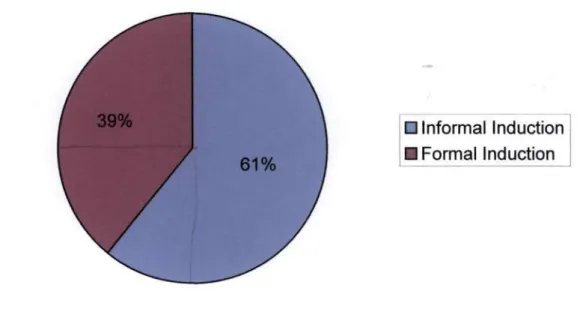
The participants, in the study, comprised all those teachers who had undergone induction and those who were, at the time of collecting data, still undergoing induction in the school. Only two teachers in the school were undergoing induction at the time of collecting data. The other one was not available to complete the questionnaire, as she was reported to be on maternity leave at the time. As regards the question of sampling, it should be pointed out that no sampling decisions were made, as all teachers who had undergone induction, and those who were still undergoing induction at the time of data collection, were expected to participate in the study. However, data were collected only from twelve teachers (ten formal induction programme participants and two teachers who had experienced informal induction), as the rest of the teachers would not complete the questionnaire on the grounds that they did not undergo any induction, since, in their opinion, induction is only the formal induction programme run by the local university in their school. Therefore, their account of what experiences they had of the informal induction they experienced could not be known. After all matters pertaining to gaining access to the research site and participants in the study had been attended to, the next step was data collection. Data were collected by means of a questionnaire and through interviewing. The procedure which was followed when collecting data, using the said data gathering tools, is outlined below.
3.4 Data Collection
As has been stated, a questionnaire was used to collect data from teachers. This was a self- administered questionnaire, distributed among teachers during lunchtime, on a Friday, in the staff room. The idea was that this would give the respondents ample time to respond to the questionnaire items in the privacy of their homes, as they were expected to return the questionnaire the following Monday morning. This, it was hoped, would have the effect of enhancing the prospect of anonymity, which, in turn would enhance the prospect of validity of data. Mindful of a need to secure informed consent, on the part of the respondents, to participate in the study, one had to explain, to the respondents, the purpose of the study, as well as how it could benefit the school and the teachers alike. The respondents were also informed that they were free to participate or not to participate in the study, although they were urged to participate in the interest of the school and in their own interest. Another tool which was used to gather data was a semi-structured interview with the principal of the school.
Notwithstanding the fact that the principal had already been informed of the purpose of the proposed study, in his school, when access to the school was negotiated, he was, before the interview started, informed of the purpose of the study and how it could benefit the school.
He was also assured of confidentiality and anonymity of data, and that the data would be used for the purpose stated. The principal willingly gave up his right to anonymity by granting permission for the real, rather than the disguised, name of the school to be used in the study.
The interview, which was conducted in the principal's office, lasted forty-five minutes. This interview was carried out for the purpose of complementing and checking on the data collected by means of a questionnaire, which had been distributed among teachers. This technique of using more than one research tool to collect data has been referred to as triangulation, and it is often encouraged, as it helps enhance the validity of data collected (Cohen et al., 2000; McMillan and Schumacher, 2001; Johnson, 1994; Neuman, 1997). The section that follows deals with the question of how data were analysed.
3.5 Data Analysis
Since the first two research questions were addressed entirely through the study of the literature, analysis of the data collected by means of this semi-structured interview and the questionnaire mainly sought answers to the remaining research questions. These data were largely narrative in nature and required some ordering according to frequency of citation, as well as illustration by direct quotation. Some data on the three aspects of induction management-planning, implementation, and evaluation-were presented in a tabular form. In the next section, a brief description of research instruments used to collect data is given.
3.6 Research Instrument
The research instruments employed in this study were a questionnaire and an interview schedule. These instruments are briefly described, in this section, with emphasis on their structure and the purpose of the questions (in each section) in each case. The first instrument- the questionnaire-is described in this paragraph, with the interview schedule dealt with in the next paragraph. The questionnaire employed, in this study, was divided into three parts or sections: the first section dealt with background information or population characteristics; the second part, experiences of teachers in relation to the extent and quality of induction; the third part, induction needs of teachers and how better teachers think they may be met or addressed through induction. The purpose of the questionnaire items in the first section was to seek data
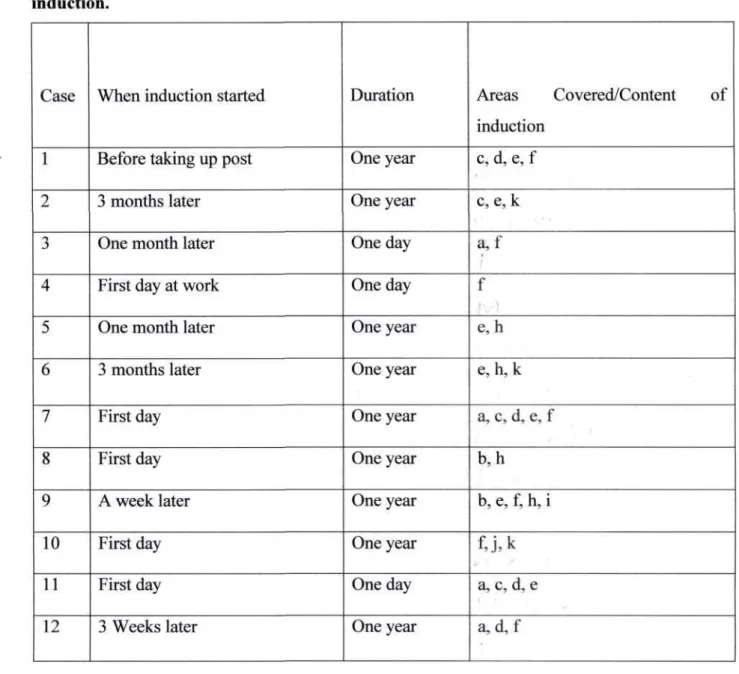
28 on population characteristics (e.g. qualifications of the inductees, their experience before employed at the present school, whether the subjects trained to teach were the subjects assigned to teach at the school, and their teaching loads), as these factors do determine the content and duration of the induction programme which may be intended. The questions in the second sections of the questionnaire sought data on the management of the process of induction in the school. To this end, the questionnaire items focused on the question of how the planning and implementation aspects of the process were handled, as reflected by the experiences of teachers, reported by them, in relation to the timing, duration, and content of induction, as well as support and assessment in the course of the implementation aspect of induction management. As for the questions in the third section, these sought data on what passed for induction in the school, as reflected by what teachers believed were the teachers' needs which had to be addressed through induction. The next section looks at the research instrument- an interview with the principal of the school.
An interview with the principal was organised into four sections: issues in the management of induction; provision for induction made in the school; eligibility for induction in the school;
and the management of the process of induction. The questions in the first section sought data on what factors were considered by the school in preparing for induction, while the questions in the second section sought data on what arrangement was made in the school to facilitate the induction process. The purpose of the questions in the third section was to establish who, in the school, were eligible for induction. The questions in the last section sought data on how the process was managed, focusing on how the planning, implementation and evaluation aspects of the induction management were handled.
3.7 Conclusion
In this chapter, issues pertaining to what research design was deemed appropriate and how access to the research site was gained have been looked at. Also the issue of who the participants, in the study, were, and how they were selected, has been considered. The procedure that was followed when data were collected has also been outlined, as well as how the data were analysed. A brief description of the research instruments used in the present study, with emphasis on the structure and the purpose of the questions in each section, was given as well.
CHAPTER 4
RESULTS AND DISCUSSION 4.0 Introduction
In this chapter, the results/findings of the study are presented and discussed. In line with Neuman's (1997) approach, the results and discussion sections are dealt with separately. The chapter, therefore, is divided into two sections, with sub-sections under each one of them. The discussion section focuses on the question of the extent to which the data, as presented in the results section, provide answers to the questions posed earlier. The first five of these research questions are dealt with, in turn, while the last question (i.e. What might be recommended for improved management of induction) is dealt with in the next chapter.
4.1 Results
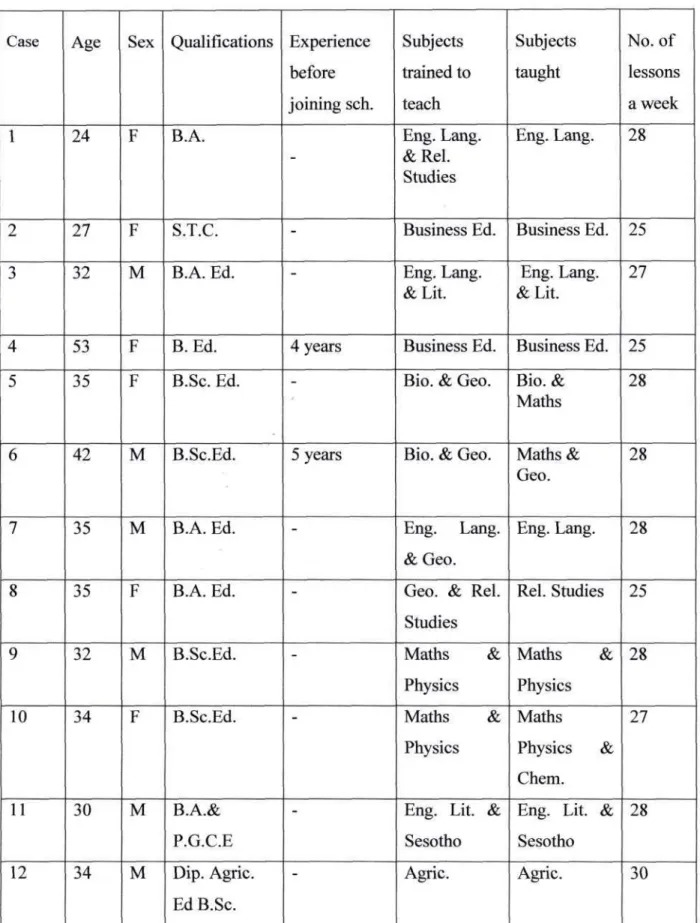
This section deals with the following issues: population characteristics, the purposes of induction, the 'best' practice in the management of induction, provision made in the school (either formally or informally) for induction, the experiences of the teachers in relation to the extent and quality of induction; the needs teachers believe could be addressed through induction. Some information on the characteristics of the target population has been deemed useful for purposes of understanding the present study; this is given in Table 4.1 below.
Table 4.1 Population Characteristics
30
Case
1
2 3
4 5
6
7 8 9 10
11 12
Age
24
27 32
53 35
42
35 35 32 34
30 34
Sex
F
F M
F F
M
M F
M F
M
M
Qualifications
B.A.
S.T.C.
B.A. Ed.
B.Ed.
B.Sc. Ed.
B.Sc.Ed.
B.A. Ed.
B.A. Ed.
B.Sc.Ed.
B.Sc.Ed.
B.A.&
P.G.C.E Dip. Agric.
Ed B.Sc.
(Agric)
Experience before joining sch.
-
-
4 years
5 years
Subjects trained to teach Eng. Lang.
&Rel.
Studies Business Ed.
Eng. Lang.
&Lit.
Business Ed.
Bio. & Geo.
Bio. & Geo.
Eng. Lang.
&Geo.
Geo. & Rel.
Studies
Maths &
Physics
Maths &
Physics Eng. Lit. &
Sesotho Agric.
Subjects taught Eng. Lang.
Business Ed.
Eng. Lang.
&Lit.
Business Ed.
Bio. &
Maths Maths &
Geo.
Eng. Lang.
Rel. Studies
Maths &
Physics Maths
Physics &
Chem.
Eng. Lit. &
Sesotho Agric.
No. of lessons a week 28
25 27
25 28
28
28
25 28 27
28 30
M-J
4.1.1 The Purposes of Induction
The first question concerns the purposes of induction. As has already been indicated, this question was addressed entirely through the study of the literature. For example, the answer to this question is provided in chapter one, section 2.3 thereof, where it is stated that the purpose of induction is three-fold: soc