South Africa's involvement in conflict resolution in the Southern African region has been accompanied by successes and failures. South Africa's hegemonic status has been affirmed by some and challenged by others.
INTRODUCTION
BACKGROUND AND OUTLINE OF THE RESEARCH PROBLEM
The South African intervention in the Central African Republic played an important role in managing the conflict, even though it raised many questions (Obasanjo, 2014). Conflict resolution is the area of development where South Africa has over time maintained its participation and prominence and has actually achieved achievements on the African continent.
STATEMENT OF THE PROBLEM
SCOPE OF THE STUDY
AIMS AND OBJECTIVES
RESEARCH QUESTIONS
RESEACRH HYPOTHESIS
RESEARCH METHODOLODY
STRUCTURE OF DISSERTATION
- CHAPTER 1: INTRODUCTION AND OVERVIEW
- CHAPTER 2: LITERATURE REVIEW AND THEORETICAL FRAMEWORK
- CHAPTER 3: RESEARCH METHODOLOGY
- CHAPTER 4: THE CASE STUDY OF CENTRAL AFRICAN REPUBLIC: A HISTORICAL
- CHAPTER 5: SOUTH AFRICA’S ROLE IN THE CAR: SUCCESSES AND CHALLENGES
- CHAPTER 6: CONCLUSIONS AND RECOMMENDATIONS
Research tools, data sources and data analysis are part of the methodology and they will be introduced in this chapter. This is the main chapter of the study where the findings will be presented and analyzed.
INTRODUCTION
South Africa has played its part in this and continues to play it in the Central African Republic. This chapter provides a literature review on South Africa's role in the Central African Republic in terms of peacekeeping and conflict resolution.
PEACEKEEPING AND CONFLICT RESOLUTION IN AFRICA
PEACEKEEPING
According to Murray (2008), the UN has also played an important role in the Central African countries in the areas of peacekeeping and conflict resolution. South Africa in the Central African Republic came to an agreement that they should intervene in making peace with the CAR government.
SOUTH AFRICA’S FOREIGN POLICY
South Africa's foreign policy remains essentially an outward projection of its domestic and international imperatives. Since 1994, South Africa's foreign policy has critically addressed political issues, some of which have been human rights, peace and security.
THE RELATIONSHIP BETWEEN SOUTH AFRICA AND THE CAR
South Africa was involved in peacekeeping missions in Burundi (www.cips.up.ac.za). The success of the peace agreement and its implementation became the responsibility of South Africa (Kumalo, 2014).
CONFLICT RESOLUTION
According to Anderson (2003), the diverse interests involved in the conflicts will always play an important role in determining the actors who will be involved in these interventions. The conflict crisis in the SAR is not an accidental disaster that needs a humanitarian intervention to solve the problem.
HUMANITARIAN INTERVENTION
MINERAL RESOURCES
If one looks at South Africa's intervention regarding peacekeeping and conflict resolution in the SAR, one can conclude that it intervened because it wanted to be part of the shareholders of oil and diamonds. Furthermore, conflicts are driven by a drive to deny the proceeds of the sale of resources by the group that controls them.
LAND
Despite efforts to develop African instruments to deal with conflicts on the continent, the evidence regarding the frequency of intra- and inter-state conflicts in Africa in recent decades does not show a sustained trend. Moreover, the understanding of the physical phenomena involved in land and environmental changes in the CAR is still limited (Karbo, 2008).
POVERTY
In the rural areas of many countries, there are many ethnically based conflicts, mainly over pasture and over cattle among pastoral people. Bujra (2002:13) states that the "inter-ethnic conflicts over land and cattle develop into rebellions and armed battles between the ethnic groups and the state when the latter sends in the army to stop the fighting or even to take sides".
CHALLENGES OF SUSTAINING PEACE IN AFRICA
According to Mpanga (2004) the AU and ECOWAS faced fundamental gaps in their planning and management capacity to lead peace operations, with staff taxed by the demands of their often multiple responsibilities. The AU and ECOWAS have successfully deployed troops in peacekeeping operations, but they are not yet self-sustaining and require external logistical support (www.timelive.co.za). Bowd (2010) states that violent conflict in sub-Saharan Africa has been responsible for the direct and indirect deaths of millions of civilians; has contributed significantly to the low levels of human security in the region.
STRATEGIES USED BY SOUTH AFRICA IN TERMS OF PEACEKEEPING AND CONFLICT
According to Niklas (2005), the broad political commitment to conflict prevention sees national interests pushing governments to adopt policies designed to help one side gain the upper hand in a conflict, rather than helping to prevent or resolve conflicts. Yet several political challenges remain, even if there are no major interests to weigh against conflict prevention.
THE AFRICAN UNION: PEACEKEEPING MISSION IN AFRICA
Most of these predictable aspects of the way political leaders make decisions influence against powerful preventive efforts. Likewise, the AU has interfered in the war in CAR, sending troops to CAR. The AU should consider aggressively promoting the role of leaders in its sub-regions.
THE ROLE OF SOUTH AFICA IN THE SADC REGION
Many regional organizations, especially those involved in security, have contributed more to the security of the regime than to the security of the people of the region. In the last decade in particular, many AU members have been offered an alternative to Western penetration in the form of China's and to a lesser extent India's rapidly expanding aid and assistance programs. In some cases, African governments have greeted these initiatives with high levels of support, not least because of the Chinese government's stated desire to adopt a policy of non-intervention.
THEORETICAL FRAMEWORK
Consequently, it can be argued that the South African state acted as a major foreign player in the Central African Republic, even as it faced some of the challenges of conflict resolution in Africa. This section analyzes peacekeeping and conflict resolution, examining South Africa's role in the Central African Republic by explaining how peacekeeping has become necessary, desirable and possible despite its growing complexity. It could be said that South Africa's role in the Central African Republic faced some challenges.
CONCLUSION
They also argue for a broad understanding of conflict resolution that involves not only mediation between the parties, but also the efforts used to address the broader context in which international actors, domestic constituencies, and internal conditions support violent conflict. By examining South Africa's role in peacekeeping and conflict resolution in Africa, economic thought argues that such a role can contribute meaningfully to ending the plethora of intra-state and inter-state crises that have become the defining characteristics of the most state in the region or sub-region . on the continent. This is critical, not only because it is conventional practice, but also because knowing how data was collected for the study will enable the reader to appreciate and understand the results that will be presented later, as well as the conclusions in the final chapter .
INTRODUCTION
STUDY AREA
South African political leaders used the conflict in the CAR to market South Africa and create a fertile ground for business interests. South Africa's role in peacekeeping in the CAR must be seen in this broader context. The study therefore aimed to look at the analyzes of peacekeeping and conflict resolution through South Africa's intervention in the CAR.
DATA COLLECTION AND ANALYSIS
DATA COLLECTION
More specifically, the literature studies were in the area of peacekeeping and conflict resolution in Africa (Accord, 2007). South Africa's interventions and perceptions and justifications for why South Africa became involved in peacekeeping and conflict resolution in the Central African Republic were the motivating factors behind data collection. Data collected therefore had to focus on South Africa's involvement in Africa in general (for comparative purposes) and on the country's involvement in the SAR specifically.
CONCLUSION
INTRODUCTION
BACKGROUND ABOUT THE CAR
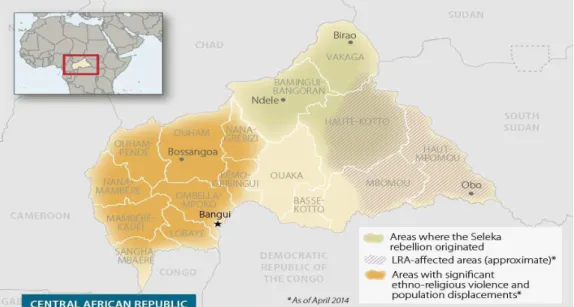
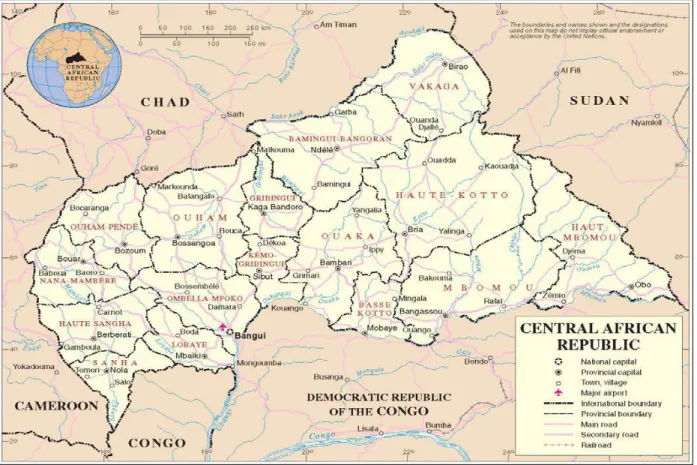
The worst affected regions are located in the north-east and north-west of the country, where rebel forces and government troops continue to clash. Scholars have noted that regional and other neighboring countries such as South Africa have intervened in the CAR with a view to managing or containing the conflict and working towards its final resolution. The African Union did its best in trying to resolve conflicts in many of the African countries in the content.
THE POLITICAL PATH OF THE CAR
Oluwadare (2014:5) argues that "the critical meanings of the struggle were prevented through the intervention of the French government, which supported the organization of a multi-party election. For example, in 1972, Bokassa proclaimed the country an empire and confirmed himself as president of life, and in 1976 he renamed himself and the country Emperor Bokassa I of the Central African Empire.According to Accord (2008:29), inequalities in access to resources exacerbate the risk of conflicts developing.
SPATIAL CONTEXT
AN OVERVIEW OF THE CAR CRISIS
- HUMANITARIAN CRISIS
- THE NATURAL ENVIRONMNET OF THE CRISIS IN THE CAR
- ECONOMIC CRISIS
- THE SOCIO ECONOMIC ENVIRONMENT
- INFRASTRUCTURE
- WATER CRISIS
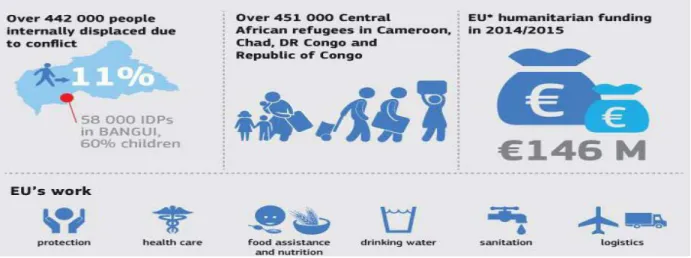
Despite the efforts of the international community such as the UN, many international organizations attempted to settle the conflict in the CAR. This puts the religious factor at the center of the political crisis in CAR. It is stated that these people have fled to neighboring countries due to the civil wars in the CAR.

POLITICAL INSTABILITY
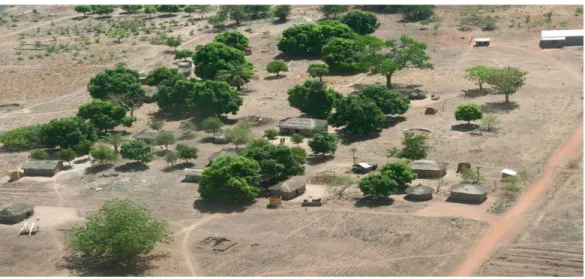
South Africa played a major role in trying to bring peace to the Central African Republic. It can be remembered that a large part of the population of the Central African Republic is located in remote areas. However, this does not mean that the current situation in the Central African Republic should be rejected.
PARTIES INVOLVED IN THE SOLUTION OF THE CAR CONFLICT
As mentioned above, South Africa's involvement in the CAR could be seen as a failure because many 27 South African troops died there and the survivors had to return home. There were many claims that South Africa's intervention in the CAR was to protect South African business interests (Saunders, 2014). However, some states involved in conflict resolution in CAR are also part of the problem (Weber and Kaim, 2014).
CONCLUSION
Some rebel organizations have been restructured into political parties or have a civilian wing (www.bti-project.org). For these reasons, the CAR conflict is more complex than it appears at first glance. The next chapter – which is the second empirical chapter – will discuss the successes and challenges South Africa has faced in Africa in general and in the Central African Republic in particular, which is the focus of this study.
- INTRODUCTION
- SOUTH AFRICA’S PEACE AND SECURITY AGENDA
- SOUTH AFRICA’S CHALLENGES IN PEACEKEEPING INITIATIVES IN AFRICA
- SOUTH AFRICA’S CHALLENGES IN THE CAR
- SUCCESSES OF SOUTH AFRICA IN PEACEKEEPING INITIATIVES
- CONCLUSION
South Africa is considered to have one of the most ambitious constitutions in the world (Ogunnubi, 2013). Second, this chapter will specifically outline the success of South Africa's intervention in the CAR. On the other hand, South Africa had to ensure that the country's mission in the CAR was accomplished.
GENERAL CONCLUSIONS
In light of the findings, recommendations are made that may be useful in the debates surrounding South Africa's intervention in the civil wars in Africa, particularly in the Central African Republic. The second chapter provided an overview of the South African intervention in the CAR and its foreign policy. The chapter concluded by assessing South Africa's intervention and contribution to peacekeeping and conflict resolution in Africa, mainly in the Central African Republic.
RECOMMENDATIONS
This has resulted in South Africa being more fully involved in the African countries' affairs or issues because it is economic status. South Africa places emphasis on the variety of actors in the field who have to do with peacebuilding efforts outside of the peacebuilding architecture. If done effectively and efficiently, it will translate South Africa's foreign policy objectives into a more specific national and international interest.
CONCLUSION
The Life and Death of South Africa's National Peacekeeping Force”: The Journal of Modern African Studies, Vol. South Africa in Africa: A Case of High Expectations for Peace”, South African Journal of International Affairs, Vol. South African Politics of Peace and Security in Africa, South Africa”, Journal of International Affairs, Vol.