LIFE ACROSS BORDERS
:A CASE STUDY OF NIGERIAN IMMIGRANT WOMEN IN DURBAN, SOUTH AFRICA.
BY
OYEBAMIJI, ISRAEL SUNDAY
STUDENT NO: 214585437
A DISSERTATION SUBMITTED IN FULFILLMENT OF THE REQUIREMENTS FOR THE DEGREE OF DOCTOR OF PHILOSOPHY
(PHD) IN INTERNATIONAL RELATIONS
COLLEGE OF HUMANITIES SCHOOL OF SOCIAL SCIENCES
June 2021
SUPERVISOR:
Professor Kalpana Hiralal
DEDICATION
To my mother Mrs Abigeil Olajumoke Oyebamiji;
Today your dream of over forty years has become a reality.
iv
ACKNOWLEDGEMENTS
I recognize the fact that this thesis became a reality; not only by my own efforts but by the assistance of several other people who have been of immense support in various capacities be it morally, financially, and academically from the beginning to completion of my doctoral program.
My sincere gratitude goes to my dear supervisor, Professor Kalpana Hiralal for her advice, support, encouragement, guidance, suggestions and understanding throughout the various stages of this work amidst her tight schedules. Her careful and thorough supervision of this study has considerably improved the outcome.
Again, my profound gratitude goes to Professor (Apostle) Vivan Ojong for her motherly love and affection toward me. I have profited greatly from the support and her priceless advice and invaluable contributions towards the successful completion of this study.
I owe a special thank you to the Association of African Universities (AAU) for awarding unto me Small Grants for Theses and Dissertations: 2017/2018 Academic Year for the successful completion of this study.
Without mentioning the following people, my appreciation would be incomplete; thus my regard goes to colleagues and friends who had contributed in diverse ways to the success of this study.
This includes Kabir Abdulkareem (Kaybee), Mzolo Goodman, Temitope Ige, Michael Omoge, Samuel Umoh, Ola-Oluwa Folami, Alhaji Daribri and many others that I could not mention names here. I thank you all.
To the tireless staff and senior colleagues from the School of Social Sciences, I would like to express my sincere appreciation to Professor Suzanne Francis, Drs. Bheki Mngomezulu, Gabisile Mkhize and Biniam Misgun, Mr Godon Fakude and David Nzimande, amongst others. I must confess that your diverse intellectual output and input enhance my academic achievement to this level.
I must not fail to express my amiable and assiduous administrative officers at the School of Social Sciences: Mr Memela Nqobizizwe, Nonhlanla Radebe, Akona Mbeje and Paula Christison. I am saying here that I cannot thank you all enough for your numerous supports.
My sincere thanks and appreciation also go to my spiritual father, Pastor Emmanuel Moses for his constant prayers and spiritual guidance during this study. Also, I am incredibly grateful to all my research participants, whom, without them, this study would have had no base; your responses have contributed in no small measure to the success of this endeavour.
I cannot end this page without mentioning the main man behind the scenes, my benefactor. The man whom God used for me to actualize my dream, the Nigerian Controller of Custom, Seme Border division, Mr Victor Dimka, I cannot thank you enough for all your financial support rendered to my family and me. May God be with you, sir and uphold you in all areas of your life.
To my beloved wife, Ayomi; my son Samuel; and my daughters Princess and Praise Oyebamiji, you occupy a special place in my heart. You have always been there, supporting and praying for me. You are very special to me. Thank you very much.
Above all, my ultimate gratitude goes to Almighty God, the unquestionable, who has been helping me over the years and who will continue to help me in the days ahead and in my post- doctoral career.
Sunday Israel Oyebamiji
vi ABSTRACT
Using Nigerian Immigrant Women in Durban as a case study, the work contributes to the existing literature on emigration, with appropriate consideration for contemporary complexities in Africa, including split families due to migration. By concentrating on this relatively micro- community, the study acts as a probing ground for the verification of already established propositions and theories of migration at the macro-level. For instance, it re-examines the traditional theories, the push-and-pull within the Nigerian-South African context. The study is problematised from this perspective and the intricacies and complexities surrounding the current increasing rate of women emigration into South Africa from other African states. The theories of intersectionality and gendered geographies of power are employed to examine and the challenges of these women immigrants in the context of gender and migration. This study utilises, in addition to secondary sources, carefully conducted oral interviews of selected Nigerian women immigrants in Durban. Among others, the study reveals that the essential and underlying element in the migration of these women is a new development in grassroots communities resulting in a change of lifestyle and transformation, which the “push-and-pull” theory alone cannot totally explain. It reveals an immigrant lifestyle is sustained by coping mechanisms, which include entrepreneurship, resilience, reception of financial and psychological support from immigrants’
homeland, and a dedicated culture of remittance. These are primarily in response to challenges emanating from limitations posed by habitat, ethnicity, language and race. It recommends that the Nigerian-South Africa emigration scene can be improved upon and challenges of immigrants minimised through the adoption of the approaches identified and discussed under conclusion.
Keywords: Immigrants, Migration, International, Women, Durban
TABLE OF CONTENTS
Pages
Title Page i
Declaration ii
Dedication iii
Acknowledgements iv
Abstract vi
Contents vii
Lists of Figures x
CHAPTER ONE:
INTRODUCTION 1
Background to the study 1
Statement of problem 9
Research questions 11
Objective of the study 12
Motivation for the study 13
Limitation 13
Operational Definition of Terms 14
Theoretical Framework 15
Research methodology 18
Data Collection 20
Chapters’ Synopsis 23
CHAPTER TWO:
LITERATURE REVIEW 25
Background to Review 25
Gender in International Migration 25
Women in Intercontinental Migration: The African Context 30
Intra-continental Female Migration in Africa 35
Women Migration to South Africa from Other African Countries 41
viii
Women and Cross-Border Migration in Nigeria 44 Migration of Nigerian Women to South Africa 51 Significance of the study 52
CHAPTER THREE:
FACTORS IN THE MIGRATION OF NIGERIAN WOMEN TO DURBAN 56
Socio-Economic Conditions in Nigeria 59
Political instability 63
Poverty 66
Violence and Insecurity 69
Bilateral relations between Nigeria and South Africa 71
The Attractions and Illusions about South Africa 74
CHAPTER FOUR:
CHALLENGES AND CONSTRAINTS OF NIGERIAN IMMIGRANT
WOMEN IN DURBAN 81 Unemployment and Underemployment: Nigerian Woman and Informal Economy 82
Challenges Facing Women Working in the Informal Economy 84
A lack of appropriate legal and policy frameworks and Exclusion from policy processes 85
Lack of Finances 88
Poor infrastructure 90
Reasons for entering the Informal Economy 91 Strategic Policy Measures to Enhance Development of the Sector 95 Accommodating African Cultural Conventions in Urban Setting 96
Fosterage 96
Cultural Barriers 98
Xenophobia and the Response of Nigerian Immigrant Women in Durban 103
The Origin of Xenophobia 104
Conclusion 114
CHAPTER FIVE:
COPING MECHANISMS OF NIGERIAN IMMIGRANT WOMEN 116
Family and Social Networks 120
Networks with Cultural and Ethnic Groups 126
General Social Support Structures 129
Spirituality and Religion 131
Retention of cultural Identity 132
Skills development 136
Urbanization as a strategy for Household survival 143
Negative Coping 144
Conclusion 146
CHAPTER SIX:
CONCLUSION 147
Summary and Findings 147
Contributions to Knowledge 153
Recommendations 154
BIBLIOGRAPHY 157
APPENDICES 178
x
LIST OF TABLES
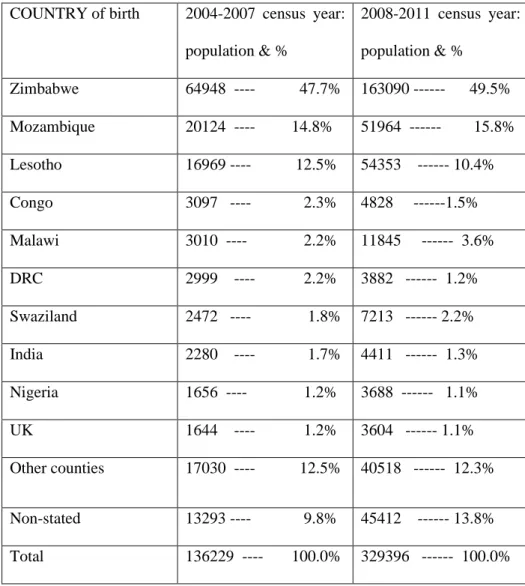
Table 1: Ten leading countries of birth for female immigrants in South Africa: 2004-2007
& 2008-2011
Table 2: Selected Countries from Global Human Development Index, 2011 Table 3: The Percentage of People Below the Poverty Line in Nigeria
Table 4: African immigrants in South Africa documented by source countries. Value of HDI computed from the life expectancy and education indicators only
Map 1: Map of Nigeria: Nigeria’s population strength has once made foreign states describe her as the giant of Africa, but her available resources are probably insufficient for the growing population as its borders are now known for regular outflow of migrants.
Source: Olanrewaju, Sulaiman, (2018), ‘Nigeria-map-people (1)’ Nigeria Press Review http://www.nigerianpressreview.com/13-2-million-nigerian-kids-out-of-school-by-sulaiman-
olanrewaju/nigeria-map-people-1/
CHAPTER ONE INTRODUCTION
Background to the study
Migration is currently a dominant issue in global politics, and this is also making it attract significant attention in the formulation of economic policies at global, regional, and national levels. The history of migration in Africa, even before colonisation embraces the movement of people both locally and across borders. Elements of this, therefore, abound in the contemporary and colonial history of the continent. For instance, among the early migration patterns in the Southern Africa Development Community (SADC) region is the movement of men to the mining industry and farmland of South Africa, particularly from Botswana, Lesotho and Swaziland (de Vletter, 1985; Makinwa-Adebusoye, 1990; Adepoju, 1990). It must be noted that since most of these ventures were controlled by colonial agents, they became platforms for exploiting the migrants. The long-term impact of this on their wives and the family was challenging and, in the long run, has introduced a new character into the pattern of gender relation, all of which have become focal issues in policy formulation and contemporary scholarship. At the same time, the difficult task of living up to expectations in the contract jobs of the mining industries and farmlands in South Africa prevented the affected men from being flexible. However, this was not restricted to the SADC region as men in the other areas of the continent also had different reasons for embarking on similar forms of migration (Adepoju, 1990). As explained under ‘Gender in International Migration’ in Chapter Two, the growing number of women who became rapidly involved in independent movement demonstrates their response to this socio- economic condition predominantly from the second half of the 1980s. Yet this gathers more momentum in later years and becomes a factor in the analysis of issues in gender relations as women found that migration could answer some of their challenges as a gender group.
This study focuses on women migration within the platform of bilateral relations between Nigeria and South Africa. It is, therefore, an attempt to contribute to the contemporary theme of migration in the context of international relations. To some extent, migration has become a factor in unravelling the complexities surrounding the various patterns and affiliations in intra and inter-African foreign relations (Holmes, 2012) just as the intricacies
of international relations now affect some patterns of migration (Boswell, 2002). Key studies on the way forward in Africa’s effort to define its position in contemporary international relations (IR) about the prevailing trends of the 21st century have revealed that there could hardly be any significant headway on the issue in policy formulation and otherwise until the intricacies introduced by migration into the entire scene is given the attention it deserves (Cornelissen, et al, 2012). The significance of migration in modern African IR has been underscored by the need to look at the link between migration and developments at the grassroots level. It is believed that this will enhance our understanding of changing world politics. This is the key argument of Sabelo J. Ndlovu-Gatsheni in his analysis of Zimbabwean migration to South Africa (cited in Cornelissen, et al, 2012). In the same volume, Darshan Vigneswaran and Loren B. Landau’s re-assessment of the experience of immigrants in South Africa amidst the challenges of xenophobia and other limitations outlines a similar trajectory. In addition, Alfred Zack-Williams reveals that the nature of the interaction of immigrants with interests outside their host countries is a factor in migration that contributes to the complexities of new dynamics in the pursuit of IR (Cornelissen, et al, 2012).
The structural pattern of international relations among the countries in a region can also be a critical determining factor of the rate of migration across borders (Johnson, 2017). Even in pre-colonial societies, the pattern of inter-state relations was among the determinants of the scale of cross-border movement. But contemporary international relations is mainly based on the tenets of neoliberal theories and with more emphasis on reality (Johnson, 2017). This has contributed to the development of new structural intricacies such that migration could also be among the factors at play in the pattern of bilateral relations between two states (Hollifield, 1992). In the case of Africa, there exist several bilateral and multilateral agreements promoting cordial relationships among the existing regions and countries. This is partly because the African Union (AU) and the supporting regional organisations strongly believe that such a structure is necessary to address the challenges of poverty and underdevelopment facing most countries of the continent (Landsberg, 2007).
Historically, Nigeria has always been interested in the affairs of South Africa, even before the commencement of democratic government in 1994. For this reason, it played a crucial role in the fight against apartheid, and since the regime of Nelson Mandela, South Africa
has also tried to reciprocate this (Bello & Hengari, 2013). Even when Mandela decided to sever diplomatic relations with Nigeria during the Sani Abacha regime, he was only against the tyrannical rule of Abacha and not Nigeria as a state.
It is not surprising that President Buhari paid a visit to South Africa in the second half of 2019, following the explosion of the xenophobic crisis. He appealed to the citizens of both nations on the need to rekindle and sustain this long-established cordial relation. Such peaceful bilateral relations have encouraged Nigerian businessmen and women, professionals, scholars, students, and even skilled artisans to see South Africa as a country to explore for the advancement and utilisation of their skills and career (African News Agency, 2019). As we shall see in the course of this study, while it is true that a host of factors give rise to migration, this issue plays a prominent role in the Nigerian-South Africa cross-border trip. It is, therefore, a theme that should receive due attention in an empirical study of factors at play in the cross-border life between both countries.
Yet other themes deserve equal attention to the Nigerian-South Africa migration scene. In the first place, most African countries, including South Africa and Nigeria, are now victims of one form of violence and crisis or the other. Therefore, if there are Nigerian migrants in South Africa who regard crisis as one reason for migration when the host country is also engulfed in crisis in another dimension, then there is a gap somewhere that needs to be addressed, even if migrants cannot have access to first-hand information at the time of migration. Moreover, generally, the study of Nigerian women immigrant in Durban would also constitute an investigation into the intrinsic nature of the perception of movement and its benefits and pitfalls by the nationals of these two African countries. For instance, an inquiry into the impact of women migration on the family back home is significant considering the challenges of separation in many families in modern African societies due to migration (Lefko-Everett, 2010). An objective analysis of these and related issues should consider the socio-political and economic background of the country, Nigeria, vis-à-vis the characteristics and culture of her people from historical and contemporary perspectives.
In the Nigerian context, the structure and pattern of international migration up to the 1980s, from official records, tend to portray it as more of a liability to national development
(Nigerian National Planning Commission. NNPC, 2004). This is largely because it was a venture dominated solely by the political elite involved in money laundering, which they transfer abroad in the name of international migration for investment purposes that end up enriching the economies of foreign countries at the expense of their homeland. It is observed that the country has been a victim of large-scale capital flight, in which much of its oil windfall is transferred to foreign bank accounts and invested abroad (Nigerian National Planning Commission NNPC, 2004:4). On the contrary, the emigration of people from the lower cadre of the society since the 1990s is considerably rated higher in terms of an asset to national development, mainly through remittance at the micro-level and a corresponding reduction of poverty (Nigerian National Planning Commission, 2004). In particular, large scale female emigration from some states in the southern part of the country, with Edo State recording the highest figure, is said to have established the veracity of this claim (Akinrinade and Ogen, 2011).
Therefore, until recently, rural migration remains the primary focus in policy formulation for socio-economic development in Nigeria. The existing facts and figures on the developmental impact of migration in Nigeria are still scanty. But based on the government official sources, the contribution of internal migration perhaps has been more positive than that of international migration. However, internal migration is believed to have contributed to social vices like urban prostitution and the problem of “waste management in the major towns and cities” (NPC. 2004:37). This is because international migration was conceived as a channel for transferring hard-earned currencies into foreign accounts and, therefore, directly or indirectly slowing down the rate of national development at home (De Haas, 2006:13-14). In different circumstances, no critical effort was made to incorporate international migration into the reasonable subject of national development. This was because it has been generally perceived as a wrong impression, especially up to the 1980s, as an instrument of perpetrating illegal trafficking of youth for the acquisition of illicit wealth, forced child labour, and child prostitution (De Haas, 2007). In this context, emigration was seen, at least officially, as counter-productive in many respects, with its positive contribution to development mainly been measured only in connection with return migration (De Haas, 2006:14). This study is therefore of key importance because it falls within the horizon of the impact of international migration on development. It, thus,
provides the opportunity for a critical assessment of pre-existing assumptions and hypotheses on the issue in Nigeria. Moreover, the general official preconceived notion about international migration in Nigeria is that it impacts negatively on development (Nigerian National Planning Commission, 2004). This study fills a gap as it is set to make available some facts and figures on the developmental effect of international migration from the perspective of Nigerian women immigrants in South Africa with an analysis of how this trend has impacted the family back home.
However, the established belief in the developmental potency of internal migration explained above may be linked to the general trend in West Africa concerning its positive impact on the sub-region in terms of development. This is particularly true about female migration. The contribution of female migrants to the 20th century socio-economic changes in the sub-region is indisputable even if there is controversy surrounding the concept of
‘development’ concerning its application to the socio-economic scene of 20th century West Africa (Sudarkasa, 1977). It has been observed that female migrants were among the groups that consistently served to diffuse innovations throughout the West African region through their occupational activities and their interpersonal relationships (Sudarkasa, 1977).
Female migrants have been significantly involved in the small-scale distribution of foodstuff, imported household items, including their paraphernalia, clothes, footwear, and similar items in West Africa Akin (1972:189). In the process, they featured prominently in facilitating the flow of information concerning the marketing of commodities and the network system created to extend the benefit thereof to numerous communities within a sub-region. As the West African woman penetrated the migration scene in the 1970s, she became instrumental in creating a platform for risk-sharing as she handles some segments of the trading venture while the husbands manage others. This enables the family to invest in different categories of goods such that it could be sustained by-products that were in high demand even if some could not yield any profit at certain seasons of the year (Oppong, 1974).
In this region, the adoption of new machinery and some categories of food processing technologies have been attributed to female migrants, some of whom are migrants across
borders (Sudarkasa, 1977). In this regard, they were instrumental in introducing “new types of machinery, for example, pepper-grinding machines and flour mills, and to promote new techniques for getting tasks accomplished” (Sudarkasa, 1977). Some assist their sisters at home as they became objects of inspiration when they pay a visit to their rural communities for social engagement, communal development, and related issues. Thus, such help range from contributing to the cost of floating a small-scale business for some relations at home to assisting others to join the emigrant groups. Their portrait of foreign lands and city life captures both the thrills and chills and thus enables their counterparts at home to weigh the pros and cons and entire risk involved if they must abandon their business at home searching for greener pasture in another region (Sudarkasa, 1977).
From the South African scene, the central theme of this study has several issues to address.
For instance, the present migration trend resulting from new development in the global economy, political insecurity, starvation, and poverty, has permeated all world regions.
South Africa is no exception, and the state is confronting expanding difficulties in its effort to identify the right or ideal approach to the management of migrants. South Africa has experienced a considerable inflow of migrants, mainly from other states of the African continent, including Nigeria, contributing to a rapid increase in the existing pressures from long-established patterns of circular labour migration between rural and urban households (Ojong & Ashe, 2018). Tafur and Maharaj (2003) affirm that this has been the trend since the early 1990s. Figures compiled by Statistics South Africa (2008) indicate that among the most dominant groups of immigrants in that country are migrants from Zimbabwe, the Democratic Republic of Congo (DRC), Mozambique, Somalia, Nigeria, Burundi, and Cameroon. The other predominant groups are non-African, from Europe, Pakistan, India, China, and Bangladesh. Usually, the mass emigration of people for economic reason is often perceived from the traditional conception of migration as male affairs with the men in search of new career prospects or commercial opportunities. Traditional African societies primarily known for their patriarchal culture provide the best example of this trend or perception.
Essentially, the contemporary trend is rapidly eroding this traditional conception of migration and rendering its associated theories obsolete even in the South African context.
The urban settlements in South Africa are among the areas that have attracted African migrant groups following the inflow of women into the migration terrain (Kihato, 2009;
McDonald, 2002). Therefore, an empirical study of the experience of each of the migrant groups in the area, both African and non-African, will positively impact policy formulation at the national level. This inquiry into the experience of Nigerian immigrant women in the country is a contribution along this line and is expected to come out with new models and some strategies for projection into the future concerning the management of migration policies involving both countries.
At the same time, with declining economic opportunities, gradual or rapid fall in income in many countries coupled with the apparent change in the dynamics of gender roles, independent women emigration is now conspicuous in the migration trend. From the increasing global figure of female migrants, it is no more controversial to say that the traditional concept of women as lacking the stamina to withstand the rigour of migration has been overtaken by time. This global picture is also evident in the South African case.
This is demonstrated by the increasing rate of female migration, an extension of developmental objectives, structural evolution of new business outfits based on the pattern of movement, and the movement of professionals in the health sector from Africa combined with trafficking in individuals and the changing trend of refugee flows. These are the key transitory arrangements that require creative examination and further inquiry since their current implication is that most countries need to synchronise their development methodologies and plans, in addition to the suitable databases, to adopt such procedures.
Furthermore, the study acknowledges the fact that there are several studies on female migration primarily due to new trends and dimensions in women’s response to local and international migration (eg. Lefko-Everett 2007; Banjo 2012; Lourdes, Benería, Deere, &
Kabeer 2012; Fouskas, 2014; Meier, 2014). But apart from new challenges emanating from the complexities surrounding recent trends in global migration, which justifies the need for further research, the case of Nigerian women in Durban remains a virgin area. This is more so as it would also give us some insight into the general trend in the migration of Nigerians to South Africa. As alluded to above, traditional migration studies are based on the premise that African men are the determinant of any involvement of the female folk in migration.
Therefore, even where women ever featured, they were conceived as playing a passive and dependent role and consequently, the effects of migration are explored through the world view of the male gender (Arthur, 2009). It is for this reason that Adepoju (2004) noted that generally, cross-border emigration within the African continent until the contemporary era was conceived as male-dominated.
However, since the last two decades, this pattern of migration in the continent is progressively feminised (Mordi, et al, 2004; Lefko-Everett, 2010). This is one of the issues discoursed in the study of Zimbabwe female migrants to South Africa by Lefko-Everett (2010). The idea of feminisation implies the improvement in the degree and relative centrality of women's migration in a few sections of the world (Lefko-Everett 2007). The development in women's migration is believed to be a reflection of two fundamental issues.
Firstly, it has some connection with the marginalisation of several women in developing countries and the increasing rate of acute poverty among some group. The second is the need for female labour in the industrial and commercial sector of modern industrialising countries (Lefko-Everett 2007). While various women often visit their husbands around the neighbourhood or stay with them for a while, several women embark on independent migration as they dynamically move to urban areas to restructure their lifestyle. As Gugler Ludwar-Ene pointed out, “women are more than men in the urban populace of various countries” and identified three categories of female migrants in both cross-border and other forms of migration in the social configuration. In other words, they consist of agile unmarried women with little or no formal education and educated single women. All of them are prepared to earn a living through menial jobs in the host countries until they can get a better offer. Also included are divorced and separated women and poor widows in distressed conditions.
As mentioned earlier, since 1990, the number of women immigrant in South Africa has increased considerably. However, the Southern African Migration Project (SAMP) review shows that except for Zimbabwe, temporary migration in the SADC is still male-dominated.
Women immigrants, however, may not necessarily belong to the category of migrants who are searching for work solely for monetary reasons. Some sex workers among migrants may be thinking of different means of survival, including payment in kind arising from the
creation of some element of trust between them and those who patronise their services.
According to Lefko-Everett (2007), generally, female immigrants are more prepared in terms of vision and focus. Also, they are often married and sometimes likely to have received more education than their male counterparts. Women immigrants are motivated by various social factors, including the search for a source of income and general self- development for career acquisition. However, they are more hesitant to search for formal businesses than males (Lefko-Everett 2007). Like other countries, there has been a considerable rise in the figure of migrants from Nigeria who reside in Durban as their new home and appear to constitute the dominant migrant group from sub-Saharan Africa in the area. The impact of this new structure on the migration trend and its likely impact on the policies of both Nigeria and South Africa are among the issues that need proper empirical analysis and therefore, among the focus of this work. This is more so as a micro-study of this nature has a role to play in unravelling the peculiarity of a particular group apart from acting as a probing ground for assessing the veracity of generalised data.
Statement of the problem
The current inflow of women across the borders into South Africa from other African countries is introducing new developments regarding the management of migrants and appropriate policy formulation. These complex issues are now of interest in the existing literature on migration studies and related fields. But a scholarly study of these issues at the grassroots level would help us to understand the peculiar situation and challenges of each micro-group. This would give us a clearer insight into policy formulation and developmental programmes. But concentrating on such issues only at the national level is bound to create a problem of over-generalisation and the neglect of useful initiatives from various interests and micro-groups at the grassroots level. The Nigerian immigrant women in Durban is among such micro-groups whose study can help to fine-tune some scholarly insights in the existing literature in addition to sharpening migration policy initiatives for national development.
In the first place, the perception of migration by the average South African citizen about citizens from other African states as competitors in the utilisation of scarce resources has
led to the adoption of strategies that can minimise the inflow of migrants (Ojong, 2018).
However, despite population growth, the influx of migrants has become an important asset in contributing to the socio-economic development of the Republic of South Africa (Ellis, 2011). Considering the motivating factors behind the migration and African perspectives on the entire scene, there is a need for more concrete facts and figures on the mass movement of refugees and other migrants. New paradigms, dimensions and empirical approaches are required for the emergence of proactive but result-oriented policy response to new trends in migration. This is particularly important for South Africa, and given the government release of the Green Paper on Migration 2016 (DHA, 2016), new perspectives of this nature are particularly significant in the search for new models in addressing the challenges of migration. The theoretical and practical relevance of this study to South Africa concerning the challenges of gender issues and migration can hardly be overemphasised. This is justified by the search for modalities that can facilitate the integration of female immigrants into the social life and economic activities of the nation.
The 2011 report by the South African Board for People Practices (SABPP) identified several national challenges concerning the effective utilisation of the initiatives and potentials of women. According to this agency, the emerging social norms imply that women's pioneering prospects and “abilities to be executives are being undermined and this is even more prevalent among the ever-increasing migrant community in South Africa”.
This study explores migration policy in the context of the experience of Nigerian women immigrant, including an often-neglected aspect of the life of immigrant women – the obstacles to the realisation of their dreams as they are confronted with the quest for survival in a foreign land. The study evaluates the limitations faced by Nigerian immigrant women;
also examine the impact of xenophobia vis-à-vis the issue of exclusion and identity among them. Based partly on interviews with immigrant women, the work will bring to our knowledge the findings of cutting-edge research across the area of study.
Moreover, the impact of cross-border migration on global politics and inter-state relations is gradually attracting the attention of scholars. This arises from complex bilateral and multilateral agreements and their resultant effects on migration (Njiwa, 2013; Adepoju, et al, 2007). For example, as explained earlier, the cordial relations between South Africa and
Nigeria since the inception of democracy in 1994 has a significant positive effect on the pattern of cross-border migration between both states. When the President of Nigeria called for the sustenance of peaceful relations between both countries after the last xenophobic crisis in Johannesburg, he was considering the nature of migration between the two countries in particular and between the ECOWAS and SADC regions in general (African News Agency, 2019). The present study is therefore also problematized to embrace this inter-regional framework and how it can be utilised to generate policies for management of the entire migration system and projection into the future.
Research questions
In the light of the statement of the problem and the gap the study intends to fill, the following fundamental questions are crucial to a precise analysis of the primary issues at stake.
1. What were the factors responsible for the migration of Nigerian women to South Africa in the context of prevailing gender issues amidst prevailing socio-economic trends?
2. How did race, gender, class, ethnicity, language and regional location impact the heterogeneity of the women’s experiences?
3. To what extent do their coping strategies reflect the dynamics of contemporary intricacies in gender relations vis-à-vis the pattern of relations among the different South African identity groups?
4. What lessons can be learnt from the study of the Nigerian women concerning gender, identity and migration within the African context vis-à-vis the search for new paradigms, models, and theoretical perspectives?
The objectives of the study
The study explores the activities of Nigerian women in Durban, South Africa, with a particular focus on their search for self-actualisation and their impact on the growth of the
South African economy. The concepts of “assimilation, language barriers, xenophobia, unemployment, domestic violence, cultural barriers/differences, family isolation, and deportation” have been explosively discussed regarding some other migrants to South Africa (Tevera, 2013). There is a need to attempt a precise but critical analysis of these challenges as they apply to the Nigerian immigrant women in Durban based on their collective and individual experience. The existing works on the theme have not given any specific attention to Durban. Again, there are still several issues surrounding the trends and coping mechanisms of women migrants who need further inquiry. This study seeks to fill these gaps. Therefore, its primary objectives are to:
1. To conceptualise, analyse and critically discuss factors that shaped and defined Nigerian women migration to Durban. This includes shifting narratives from the
`push and pull’ theory to examine more complex factors that explore gender intricacies.
2. To examine and explain the complex and dynamic migration-related challenges in the context of livelihoods, xenophobia, assimilation, domestic violence, language barriers, immigration laws, familiar isolation, deportation and cultural barriers.
3 Identify and explain how race, gender, class, ethnicity, language and regional location impact their immigration experiences. These factors played a significant role in how women assimilated and accommodated their identity in their new environment.
4 To examine the coping strategies of Nigerian women in the context of gender and gender relations among the different South African identity groups.
5. Identify and examine the lessons that can be learnt from the narratives of the Nigerian women about gender, identity, and migration in the African context vis-à- vis the search for new paradigms, models, and theoretical perspectives.
The motivation for the study
As a research student of Nigerian origin at a South African University, I am deeply convinced about the need to give the Nigerian immigrant women in Durban a focus in
empirical studies. This is partly because amidst a negatively tainted perception of Nigerian immigrants, especially in the media, mainly in connection with drugs dealings and internet fraud, there exists a dynamic group of Nigerian immigrant women who live a simple, peaceful life without involvement in any unscrupulous activities. Also, the media portrait of Nigerian immigrants has played a significant role in the formation of public opinion among South Africans and foreigners alike. Yet, a number of the impressions created by the media require empirical verification. Therefore, for objectivity and empirical focus, there is a need to corroborate and complement the media's effort by looking at the other side of the coin through questions like what are the potentials and virtue of the Nigerian immigrants in South Africa? How reliable is their portrait in the media?
I have therefore developed a strong passion for the study because women involvement in the economic sector of African societies and their indispensable role in the emotional and cultural upbringing of youths are issues that deserve intellectual focus at both micro and macro levels. In the light of contemporary development in gender relations, the search for new approaches and intricacies surrounding the study of recent trends in the field constitutes new motivating factors. It is significant to note that women migration is among the key issues that must be given due attention in the ongoing effort to unravel new complexities in gender as a new field of study and analyse the dynamics surrounding migration in the context of international relations.
Limitation
This study was initially structured to embrace all female immigrants in the province of KwaZulu-Natal. But finance was among the first limitation as it compelled the author to restrict the collection of data, documentary and oral information, as well as other source materials and, overall, the entire work to Nigerian immigrant women in Durban alone. Most of these women were drawn from the Hausa, Igbo, and Yoruba, the three dominant ethnic groups in Nigeria, and they reside in South Beach, otherwise called 'The Point'. This area is recognised for its high concentration of migrants from Nigeria and other African nations.
Moreover, the authenticity of some source materials is questionable partly because some data were fragmentary and needed thorough scrutiny, as they could still be helpful in the assessment of the veracity of other source materials. Therefore, there was a need for the author to scrutinise them by devising different approaches. In the process, there was a need to go back to the field and even have a second look at the drawing board to make up for the lapses because some had to be left entirely out. This constituted a limitation to the writing of the thesis at the initial stage, especially since going back to the field has its challenges in terms of extra time and even fund. However, by redrawing of timetable and modification of related schedules, this turned out to be tentative.
Operational Definition of Terms
The following terms in the migration study are defined according to their usage in this work:
Assisted Voluntary Return (AVR): It is a programme to support and encourage naturalised migrants to return to their home countries despite their legal immigrant status.
Internal apprehensions: It is a synonym for the term “illegal aliens” among member states of the European Union.
Irregular Migrant: An individual who migrates to another country without legal and official procedures, especially one without the relevant documents.
Outbound mobility ratio: This refers to the ratio of immigrant students from one foreign state in the tertiary institutions of a host country to that of all students in similar institutions of learning in the same country.
Removed aliens: These are illegal immigrants or some category of foreigners, particularly in the European Union, sent to another country by the host country, rather than being repatriated (also see CIREFI, 2009).
Soft power diplomacy: peaceful means of convincing other nations to accept the principles, ideologies, and preferences of another state as opposed to the use of coercion through military threat and economic sanctions.
Theoretical Framework
The study attempts an empirical portrait of female migration in the context of bilateral relations between Nigeria and South Africa based on the general framework of inter-state relations and intra-continental cross-border movement within the African continent. This itself is linked to complexities surrounding current issues in gender relations polarised by new trends in the social configuration of grassroots institutions at the micro-level, which are among the primary focus of a micro-study of this nature. Since other overlapping dynamics are now influencing the intricacies surrounding gender relations in terms of race and new ideologies from different social classes based on the modality for sustaining their existence and well-being, the intersectionality theory is employed to analyse Nigerian immigrant women in Durban. Until recently, migration has largely been explained within the structural framework of the “push and pull” theories, whose replication had admittedly stood the test of time in all regions of the world. But there is now the development of new trends and perspectives in the migration terrain beyond the horizon of this traditional theory.
Moreover, the present study addresses issues at the micro-level, and there is a need to embrace a horizon that transcends the “push and pull” theories because at this level, many issues creep in when reflecting on the gender perspective. These are interlocking with a host of identity makers like class, religion, domestic violence and even sexual orientation, issues that are best captured by the intersectionality theory. However, the study shares the view of Bakewell, (2010) that no single theory can sufficiently explain a trend or theme in migration. In particular, this view holds more significant weight in the study of migration at the micro-level. This involves a host of issues embracing social institutions and their dynamics as well as their impact on contemporary gender relations. The fact that the “push and pull” factors have often been there and did not trigger off the cross-border movement of some category of people implies that what happens in the grassroots communities of some African states transcends this horizon and best reflected upon through new trends and perspectives in transnational emigration paradigm, part of which is captioned by Selvin (2016:12) as “disjunction, dislocation, displacement, disengagement, disconnection and the dismantling of the old stabilities, knowledge, conventions and identities” in his analysis of contemporary paradigms in transnational migration. This is partly a product of new waves of liberalism through an evolving global village penetrating the grassroots with a new
radical approach to human rights perspectives and an aura tending towards creating semi- transnational grassroots communities (Selvin, 2016). Thus, these are the core issues that can help us understand the nature of contemporary changes in grassroots institutions and their attendant social dynamics. These are issues that are directly or indirectly linked to the larger society vis-a-vis new trends and perspectives in migration, to which this study belongs, issues that the “push and pull” theory cannot provide an adequate explanation.
This is therefore polarised by the nature of bilateral relations between both countries because, in some regions of the world, this has influenced the pattern of migration politics in international relations, and the Nigeria-South Africa axis is not quite an exception (Seteolu, 2016). This in itself is an issue whose intricacies are hardly amenable to the operative realm and intellectual analytic horizon of the “push and pull” theory. It is for this reason that the gender dimension of this new trend of migration in the context of the area selected for this case study is explored through the lens of Patricia Pessar and Sarah Mahler’s theoretical model termed “gendered geographies of power”, for capturing “our understanding that gender operates simultaneously on multiple spatial and social scales (e.g., the body, the family, the state) across transnational terrains” (Pessar & Mahler, 2001:445). Pessar & Mahler (2001:445) refers to this model as "geographic scales." It has its implications in the migration terrain, and according to the exponents, “it is within these social settings or transnational spaces that gender identities and gender relations can be reconfigured or re-affirmed” (Pessar and Mahler 2001:445; Dahinden 2005). This theory, therefore, intersects with the intersectionality theory in the conceptualisation of critical issues in this study encountered in unravelling the complexities surrounding gender in the context of female migration.
Both theories are easily replicable and capture a broad intellectual horizon in the analysis of micro-units in the type of social settings explored in micro-studies to which the present work belongs. They, therefore, constitute one intellectual platform for a critical assessment of the major issues at stake in the exploration of the complexities and intricacies of the South Africa situation concerning Nigerian female immigrants in Durban. By its conception of women as breadwinners for sustaining the family units in the immigration process, the theory provides a tool for exploring the coping mechanisms employed by the Nigerian
immigrant women in the host country, South Africa. Both approaches capture critical gender complexities of the migration-trafficking nexus as it affects women. This also includes characteristics that have been widely acknowledged as global phenomena in the migration trend, namely, the ‘feminisation’ and ‘legalisation’ of labour migration in the context of gender relations (Lefko-Everett 2007).
Intersectionality, also called intersectional feminism, asserts how different aspects of social and political identity discrimination overlap with gender. There is no doubt that the complexities surrounding gender issues in any society are in one way or the other influenced by nationality, race, ethnicity, class, religion, age and other sectional interests.
Intersectionality demonstrates that this can be replicated both historically and geographically and thus defines it with a theoretical focus. This theory is central to the scholarly and practical understanding of the experience of the Nigerian women immigrant in Durban because their migration trends ranging from propelling factors at home to the constraints and coping mechanisms in the host country have a strong gender undertone, beclouded at one stage or the other with the sectional interests listed above, e.g. xenophobia and different brands of ‘Africanity’ in the host country (Ojong, 2018). Kimberle Crenshaw’s (1991) anti-racist world view informed her liberal orientation to the complexities surrounding new trends in gender dynamics vis-à-vis its intersection with other social issues like race, migration, race, religion, crisis and domestic violence (Crenshaw, 1991). But more importantly is the ability of the theory to avoid semantic and institutional norms that tend to underestimate intrinsic aspects of women’s experiences (McCall 2005; Ludwig, 2006:246).
Considering its broad perspective that helps to bridge the gap between two central themes, gender and migration, the theory is therefore relevant to a study of this nature with a focus on the experience of Nigerian women immigrant in another African nation. In a nutshell, its rhyming approach with Pessar & Mahler (2001) "geographic scales" in addressing specific social issues of this category makes both relevant to a theme of cross-border migration in the context of immigrant women response at the micro-level. Overall, the work adopts these two theories for their intersecting relevance to the understanding of some intricacies surrounding gender issues in the context of migration, drawing on different disciplinary
perspectives and underlying models affecting women migrants concerning the subject of this thesis.
They are also adopted to align with the neoliberal and realist theories and concepts in the realm of international relations from which this study derives its focus and methodological drive. For instance, these realist and neoliberal theories explain the changing relationship pattern between Nigeria and South Africa with its direct or indirect effects on cross border migration (Agbu, 2010; Seteolu, 2016). Moreover, since the second decade of this century, such effects could be rightly said to be vice-versa, such that the complexities surrounding emigration compels the President of Nigeria to visit South Africa in September 2019 for dialogue and sustenance of peace, protection, and security of his county’s immigrants. But with the nature of contemporary migration configuration and the increasing involvement of women in the phenomenon, the gender intricacies emanating from the terrain thereof and its structural implications for socio-economic development are issues within the intellectual horizon of the theories of intersectionality and “gendered geographies of power” (African News Agency, 2019). It is, therefore, not surprising that this runs through the analytic framework and concluding sections of all the chapters in this work.
Research methodology
Mixed research methods are adopted for this study. This is in line with the approach of Cresswell (2008), who have been able to provide some empirical evidence in support of the dual or multiple methods approaches. According to them, the researcher tries to offer practical solutions to humanity's problems by analysing complex issues; and a single- method approach faces a lot of limitations in investigating tightly enmeshed phenomena of this nature. History and system analytic approach to addressing the challenges of human society has demonstrated that the fundamental problems of humanity are not mathematically tractable and therefore not amenable to the operative laws of the natural sciences, which rely solely on data and computerisation of figures. This is because they emanate primarily from the social activities of man, most of which are conceptualised in abstract form and any effort made to capture the totality of this abstract social nature of man solely in data faces enormous limitations in practical life. Therefore, human nature and reality are best understood by adopting different approaches (Cresswell, 2008).
Quantitative data have, therefore, been combined with a qualitative methodology to arrive at practical and objective conclusions. Thus, some quantitative data are analysed under the literature review. In contrast, the use of the quantitative system has enabled the author in some places to attempt a scholarly portrait of issues reflected in the experience of all members of the group in chapters Three to Six, occasionally through comparison of significant themes with the aid of data. A host of these data are compiled by specialists in statistics and are employed in different sections of the thesis. In the light of the nature of the structure and intricacies of social network in terms of the link in the relationship among the different socially organised units by the Nigerian immigrant women, a qualitative approach was also employed to explore the activities of the migrants at both the individual and family level. The qualitative fieldwork has contributed to the intellectual focus of the work concerning the collection of oral information for analysis and understanding of social events and their affiliations in different contexts. The quantitative technique may be more beneficial in capturing the accurate picture of issues that involve the large society as well as their application to theory testing (Welman, Kauger, &Mitchell 2005).
As indicated by Van Maanen, the qualitative method is an "umbrella" expression “covering an array of interpretative techniques which seek to describe, decode, translate and otherwise come to terms with the meaning of naturally occurring phenomenon in the social world”
(Maanen, 1979: 520). The qualitative method supports the narrative approach and helps us accommodate details that may appear insignificant in theory but relevant in practice (Maynes, Pierce and Laslett, 2019). It is also easier to capture the experience of individuals in a social system through this method when knowledge of such experience is required to cross-check the veracity of some other sources (Temple, 2001; Somers and Gibson, 1994).
Therefore, the qualitative approach is combined with the quantitative method for a detailed discussion of each sub-theme in the context of the gap the study intends to fill. This is done in line with the adopted theoretical framework to arrive at scholarly but practical and realistic conclusions in exploring every segment of the immigrant life experience of the Nigerian women in Durban.
Collection of Data: The gathering of data and relevant information was through oral interviews and visited to appropriate government agencies and international bodies. In the case of oral interviews, the informants were informed some days before the actual date of the interview. The interviews were conducted with audio-recording as all the informants allowed this. However, to some extent, the exercise transcends mere audio-recording as the researcher observes other issues about the participants’ response, eg, general behaviour or body language of the informant during the interaction. The questions were carefully framed and well-structured to enable the author to obtain relevant detail on the migration experience of each informant. This includes the general prevailing issues noticeable among all members of the group and the personal knowledge of the individual.
Procedure: The participants were provided with a letter or official document briefly illustrating the overall essence and relevance of the study, with due consideration for ethical values. This makes provision for space the informant can append her signature to indicate her interest. A convenient date and venue were decided by the researcher in agreement with the participant. These were carefully selected with appropriate consideration for safety and the absence of distractive elements that can make the interaction counterproductive.
Sample size: The narrative interviews analysed in the study captures the biographical detail of the individual with particular emphasis on her migration experience in South Africa. The participants consist of 25 Nigerian immigrant women – 10 Igbo women, 10 Yoruba women, and 5 Hausa women. They fall within the age group of 20 to 50 years, all resident in the Durban area. Some are married, while others are single. The English language was the medium of communication in the conduct of the interview, partly because it is Nigeria’s lingua franca. However, other languages such as Hausa, Igbo, and Yoruba were employed in a few cases where this is expected to enhance effective interaction with informants. This is partly because they are the most dominant of the over 256 languages in Nigeria (Falola, 2001). In such cases, the transcription of the oral interview was done by the researcher, sometimes assisted by other researchers on similar fieldwork that are fluent in the respective indigenous language. The duration of each interview was sixty to ninety minutes.
Sampling Technique: In sampling, the work employs what is known as the “Purposive Sampling Technique” and its empirical devices. It is considered relevant to capturing the true picture of the social and geographical setting representing the lifestyle of the Nigerian immigrant women in question partly because it makes room for a non-random approach if this appears to be more appropriate in generating authentic facts and figures. In other words, its operative mechanism enables one to avoid over-engagement with pedantic formalities at the expense of reality and productive facts. A purposive investigating system, also known as judgment inspecting, is the intentional choice of the researcher and his research assistants to explore the content of a source as a result of its anticipated qualities.
That is why it is regarded as a non-random framework that does not necessarily have to be engaged with “concealed theories or a set number of sources” (Bernard 2002, Lewis and Sheppard 2006). At some stages of the work, a deliberate effort was made to identify gaps in data and information. This was addressed by follow-up fieldwork. However, at a general level, some element of random approach was employed to supplement the purposive investigating system.
The setting of the Study: Briefly, the work captures a scene of the general social structure and lifestyle of a set of people in Durban as well as their interaction with the socio-political and economic activities of the city and, to some extent, that of South Africa at large.
Durban is situated in the province of KwaZulu-Natal, mainly occupied by the Zulu ethnic group (Myeza, 2010). It is globally known for its ingenuity in history concerning socio- economic innovations and political dynamism dated back to King Shaka the Zulu (Myeza, 2010). The modern city of Durban is a creation of the colonial system. It houses the largest and busiest harbour in South Africa, known for its commerce and industry that has, over time, attracts migrants from diverse society and a blend of different tests in the creation and relationship of different social systems for socio-economic livelihood (Myeza, 2010). The Nigerian immigrant women could, therefore, conceive their arrival as the continuation of a trend in history and hence their determination to be part of the structural-developmental pattern that has become parts and parcel of this ongoing historical trend.
In terms of the environmental or geographical portrait, the choice of their settlements reflects the nature of their jobs and the services rendered. Therefore, concerning settlement,
though Nigerian immigrant women could be found in different parts of Durban, their highest concentration in population is at South Beach, otherwise called 'The Point.’ The nature of the environment and settlement pattern makes engagement in small-scale business relatively easier. For instance, it is apparently among the earliest settlements in Durban, with several old and dilapidated buildings that sometimes provide an avenue for informal businesses engaged by some immigrant women to support their family. A number of them also have business outfits or residence in the Workshop area. These areas are close to the Durban Harbour and have a relatively dense population of Nigerian and migrants from other African countries. Accommodation is somewhat less expensive in these areas, and it is, therefore, easier for low-income earners, the category to which most immigrants belong, to make ends meet in such places. Nigerian immigrant women in small-scale business, wage income, employment and key professions are also found in the Central Business District (CBD). This area consists of George Street, Park Street and Russell Street. In the early arrival of most immigrants, their focus centres on places where the cost of living is relatively low and where it is possible to render some skills for services to earn a livelihood.
For this reason, they spread to areas like Warwick Junction and West Street in Durban. The Berea and Umbilo areas have also offered some commercial attractions to immigrants, and a reasonable proportion of Nigerian immigrant women in self-employment reside there.
This structure of immigrant settlement across Durban gives the researcher a grasp of strategy to source information during the fieldwork.
Ethical Considerations: Interviews were conducted, and the participants were assured of confidentiality. The data gathered was only used for this research, and the participant was informed accordingly. All the completed questionnaires have been safely handled exclusively by the researcher to ensure confidentiality. The current study was subject to certain ethical issues. As it was mentioned earlier, all participants reported their written acceptance regarding their participation in the research through a signed Consent and Briefing Letter. At the same time, sample members were asked to sign a Debriefing and Withdrawal Letter. Both letters aimed to reassure participants that their participation in the research is voluntary and that they were free to withdraw from it at any point and for any reason.
Next to this, participants were fully informed regarding the objectives of the study, while they were reassured that their answers were treated as confidential and used only for academic purposes and only for the particular research. Except for the above, participants were not harmed or abused, both physically and psychologically, during the conduction of the study. In contrast, the researcher attempted to create and maintain a climate of comfort.
Chapter Synopsis
Each of the six chapters of the study has been structured to define and explore a theme while complementing the analysis of other chapters to actualise the overall epistemological aim of the thesis. The introductory section of the work, which is the first chapter, examines the statement of the problem and therefore defines the relevance of the work within the context of existing knowledge in the field. It states the research question, linking them with the overall aim of the study and explains the significance and justification of the study. The research methodology is crucial to the handling of complex issues in research and is therefore given due attention here and also within the context of the setting of the work. A careful review of the existing literature relevant to the work is done in chapter two. This is to enable us to identify the gap this research seeks to accomplish. Analysis of the theoretical framework helps us to understand how this study intends to transcend theoretical perspectives in the contemporary search for reality. The following chapter discusses fundamental issues and factors in the emigration of people in the context of the Nigerian experience with an emphasis on the involvement of women. The experience of the Nigerian immigrant woman in Durban with a key focus on what constitutes her challenges and constraints is the primary focus of chapter four. The fifth chapter explores the prospects and coping mechanisms of the Nigerian women immigrants in Durban partly by locating their voices in the general theme and analysis of events, considering a reflection of their lifestyle.
Apart from attempting a summary of the major issues discussed, chapter six makes recommendations for the way forward. It does this partly by assessing how the life of the Nigerian female immigrant has impacted the Durban society and vice-versa in terms of culture and socio-economic activities.