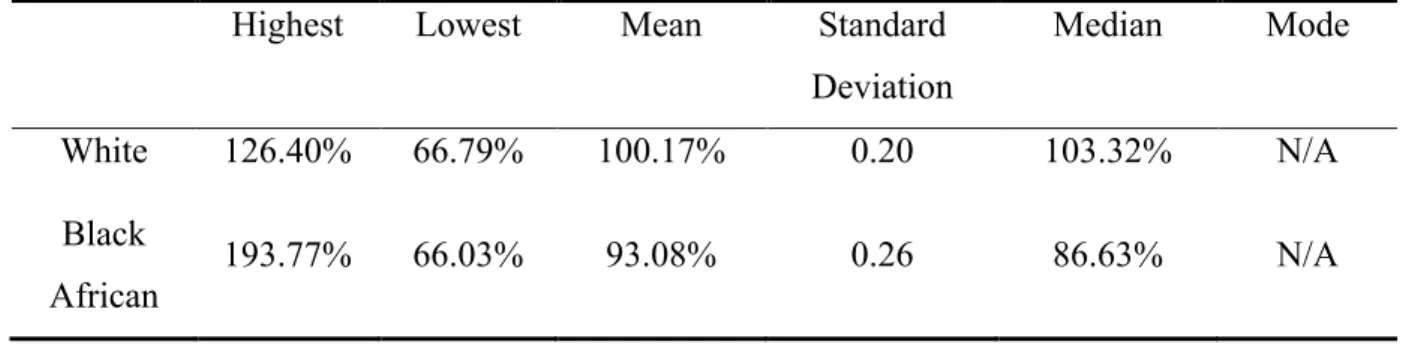
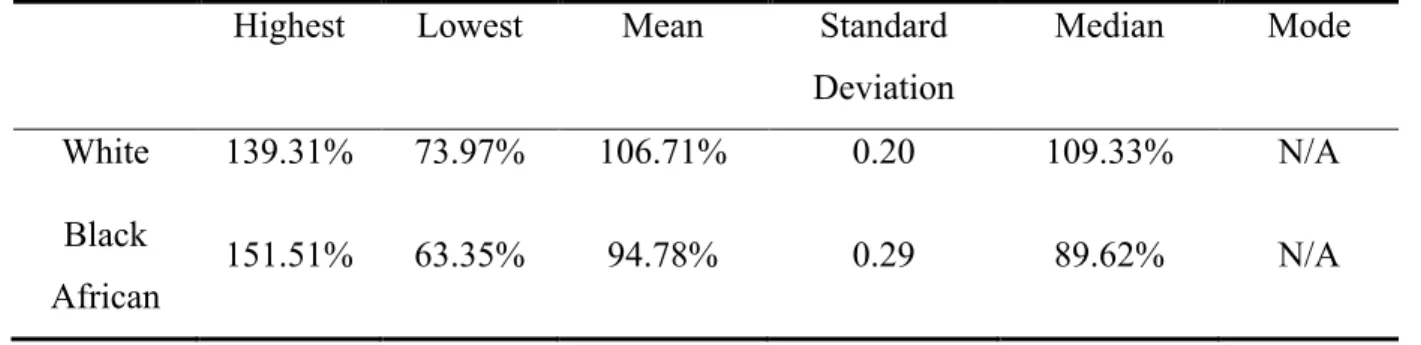
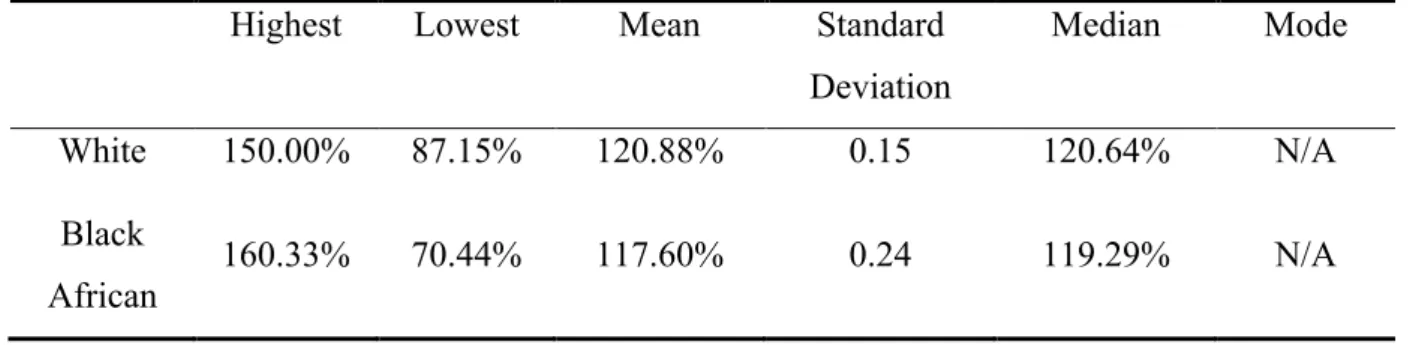
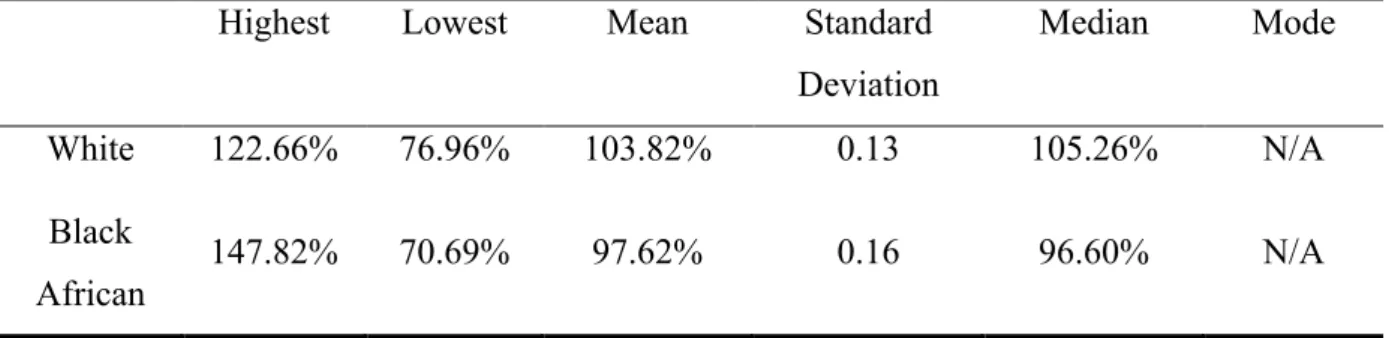
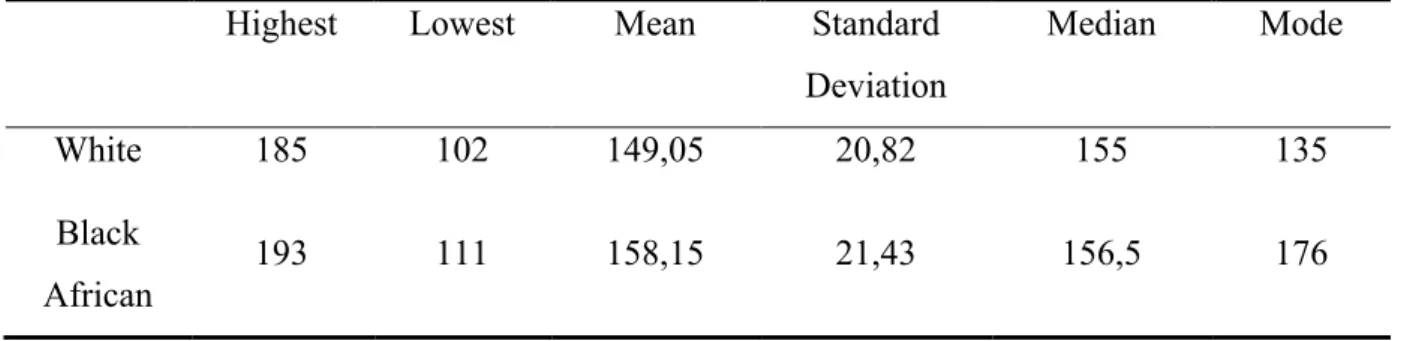
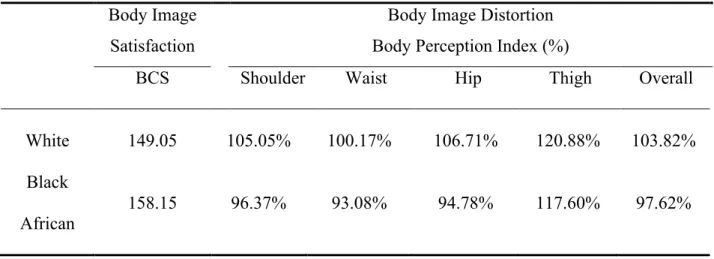
No statistically significant difference was found regarding overall body image distortion between race groups. No statistically significant differences were also found regarding body image dissatisfaction between the two race groups.
Prevalence of eating disorders across cultures
Eating disorders were first reported in a Black African1 group in South Africa in 1995 (Delport & Szabo, 2008; Szabo & Allwood, 2006). Some studies have sought to determine the prevalence of eating disorders across cultures or racial groups in South Africa.
The problem statement
In one of these types of studies, Wassenaar, le Grange, Winship, and Lachenicht (2000) observed that there was an indication of high levels of body shape concern among black South African female participants. Although the prevalence of eating disorders in racial groups appears to remain unknown, such studies suggest that black South Africans have traits often associated with eating disorder pathology and eating disorders.
Importance/ Rationale of study
This study aimed to determine whether there is a difference between Black African and White female college students regarding body distortion and body image dissatisfaction. The study also aimed to explore the statistical relationship between both body image distortion and body image satisfaction between black African and white women.
Outline of dissertation
The data of this study may also serve to indicate whether body image distortion and body image dissatisfaction are culturally (or racially) bound or whether they are simply Western cultural phenomena as they are often labeled (Coetzee and Perrett, 2011 ). The Image Marking Procedure (Askevold, 1975) and the Moving Caliper Technique (Slade & Russell, 1973) were used to assess the distortion component while the body cathexis scale (Secord & Jourard, 1953) was used to assess the of study dissatisfaction. .
Summary
Introduction
A brief history of body image
The prevalence of eating disorders has been observed to vary among racial or ethnic groups and may also change over time as cultures migrate and evolve (Miller & Pumariega, 2001). Within Western societies, the ideal thin body type has been blamed as a reason for the possible development of eating disorders (Miller and Pumariega, 2001).
Body image and disturbances
Body image distortion
Body image distortion is defined by Kimber et al. 2015), as the difference between a person's perceived weight and their actual weight. Their results suggest that social constructions of body image are based on the bodies of other individuals they have observed.
Body image dissatisfaction
2015) argue that body image distortion and dissatisfaction have both been linked to negative psychological and physical outcomes. Therefore, body dissatisfaction is explained as an “individual-level” characteristic (p. 2155) that is significantly and positively associated with body image distortion (Kimber et al., 2015).
Disordered Eating
Sociocultural risk factors in disordered eating
- Objectification of female bodies
- Mass media
- Friend and family influences
- Tripartite-influence and dual pathway models
- Other possible important risk factors
However, they have found that the amount of media exposure is associated with an increase in negative body image and eating disorders among youth and adults. Another important social situation for body image development includes experiences with peers (Levine & Chapman, 2011).
Is body dissatisfaction and disordered eating culturally bound?
According to Marais et al. 2003) Since there has been an increase in the recorded number of eating disorders in both developing countries and traditional cultures, eating disorders cannot be assumed to be culturally bound. The above literature shows that it used to be assumed that body image dissatisfaction and eating disorders were Western phenomena.
Cultural differences in body satisfaction and perceptions
However, white girls still indicated more body dissatisfaction than black and brown girls in the study According to Swami et al. 2010) there are cross-cultural differences in what is said to be the ideal body weight. According to Gitau, et al. 2013), this pursuit of thinness, across cultures, is becoming a public health concern, as poor body satisfaction is associated with eating disorders and disordered eating.
The increase of eating disorders among racial groups
There is increasing evidence that eating disorders are becoming a problem in South African racial groups other than the white population (Gitau et al., 2013). These findings support previous South African research that black African women are at higher risk of certain eating disorders than white women.
Assessing body image dissatisfaction and distortion
Assessing the perceptual (distortion) component of body image There are two main categories of measures used for the assessment of size estimation
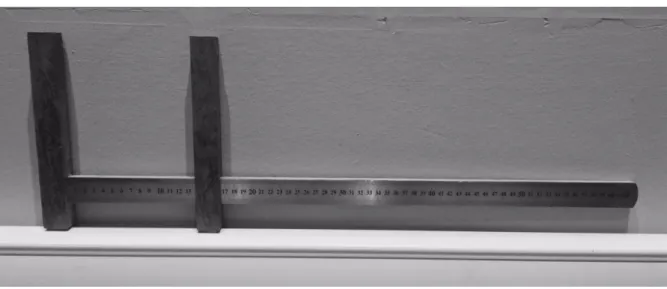
Body place estimation measures require participants to match the width distance of two dots to their width of a given body site or part by estimating the distance (Gardner, 2011; Thompson, 1990). The participant must adjust the width between the two lights to match his or her estimate of the width of a particular body part or part.
Assessing the subjective (dissatisfaction) component of body image According to Thompson (1990) and Grogan (1999), the most widely used measures for the
For example, the Body Part Satisfaction Scale (BPSS) and the Eating Disorder Inventory (EDI) are used by participants to rate their satisfaction with several body parts, yielding a summary score of overall body dissatisfaction (Thompson , 1990). One of the first, most widely used questionnaires is the body cathexis scale (BCS) developed by Secord and Jourard (1953).
Previous evidence-based research studies
Their findings support previous research in South Africa, that black females have a higher risk of eating disorders than white females. Although both white and black women had body dissatisfaction, black females had higher body dissatisfaction than white women.
Need for more information on the topic of cross-cultural body dissatisfaction It is clear that there is a need for more information regarding eating disorder
Future South African studies can improve the understanding of eating disorder pathology in developing countries (Szabo & Clifford, 2006; Wassenaar et al., 2000), and therefore it would be worthwhile for future studies to focus on body dissatisfaction and distortion from a cross-cultural perspective. This study therefore aims to investigate whether black African and white university students experience body dissatisfaction and whether there are differences in body dissatisfaction.
Aims of the study
Research questions
Research Design
Participants and sampling
It is often less expensive and time consuming, typically has a high rate of participation, is easy to administer, and can be generalized to other similar samples (McMillian & Schmacher, 2014). Its weaknesses include that it is often difficult to generalize to other topics, it is not as representative of a defined population.
Procedure
Once consent was given, participants were asked to participate in a picture-labeling procedure (Askevold, 1975) by first rating their shoulder, waist, and hip widths. Afterwards, participants were given time to complete the Body Cathexis Scale (Secord & Jourard, 1953) in the privacy of a room.
Data collection and measures
The Image-Marking Procedure
In Rodgers, Paxton and McLean's (2009) study, the Image Marking procedure was used for recording segmental body size perceptions in schizophrenic patients. The Image Marking Procedure is most often used in research studies to obtain body image estimates of shoulders, hips and waist (Gleghorn & Penner, 1989).
The Movable Caliper Technique
They stated that the Moving Caliper Technique discriminates well between anorexic subjects and normal (non-clinical) subjects. Both the movable caliper technique and the image marking procedure are considered body part measurement methods, which often show more variance than if a whole body measure were used (Farrell et al., 2005).
The Body Cathexis Scale
The BCS has been used successfully in numerous studies incorporating body image (e.g., McLester et al., 2014; Sertoz et al., 2009; Uys & Wassenaar, 1996).
Data analysis
A mean BPI score was calculated for each body part as well as a total body score for both the Black African and White female samples. After the mean BPI of each body part and the total was recorded for each sample group, one-way ANOVA was used to determine whether there was a statistically significant difference in BPI between the sample groups.
Ethical considerations
- Collaborative partnership
- Social value
- Scientific validity
- Fair selection of participants
- Favourable risk/benefit ratio
- Independent ethics review
- Informed consent
- On-going respect for participants
Feedback will be sent via email to requesting participants (n=25) upon completion of the survey. As previously mentioned, participants were allowed to withdraw from the study at any time.
Introduction
Sample
Differences in body image distortion
- Shoulders
- Mean shoulder BPI score
- Statistical significance between white and black African sample groups’
- Waist
- Mean waist BPI score
- Statistical significance between white and black African sample groups’
- Hips
- Mean hips BPI score
- Statistical significance between white and black African sample groups’
- Thighs
- Mean thigh BPI score
- Statistical significance between white and black African sample groups’
- Overall body distortion
- Mean overall BPI score
- Statistical significance between white and black African sample groups’
Although not significant, the black African sample had lower mean scores than the white sample. This means that although the black African sample tended to underestimate the width of their bodies, while the white sample tended to.
Body satisfaction
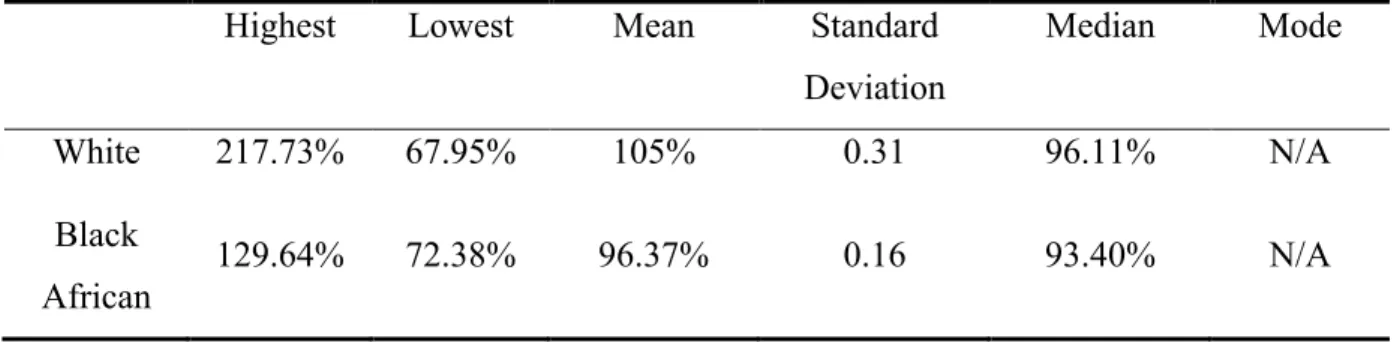
Mean Body Cathexis Scale scores
Statistical significance between white and black African sample groups A one-way ANOVA was again used to determine if there was any statistically significant
While examining statistical relationships within the data, the highest and lowest scores achieved on the BCS were considered. Both black African and white female university students showed no statistically significant differences in body dissatisfaction.
Over- and underestimation of width of body parts
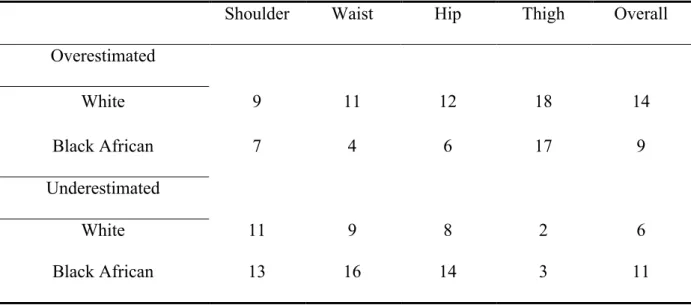
The female from the black African sample had the highest satisfaction score and the female from the white sample had the lowest satisfaction score. The only body part that was mostly overrated in the black African sample was their thighs.
Additional findings: correlations
Correlations within white sample group
As can be seen from the chart above, most white women tend to overestimate the size of most of their body. The one body part that was most underestimated by the white champion was their shoulders.
Correlations within black African sample group
Summary of results
Overall, the results concluded that there was no statistically significant difference in body image distortion and dissatisfaction between Black African and White female students. The discussion will also conclude whether black African and white female students have similar levels of satisfaction with their current body size.
Comparison of body image distortion among race groups
Body distortion summary and previous research findings
There were also few differences (if any) between the distortion of the two racial groups. The black African sample was found to have the greatest distortion of the waist measurement.
Comparison of body image dissatisfaction between race groups
Body image dissatisfaction summary and previous research findings As previously stated, the black African sample was found to have a higher degree of body
A study involving black and white South African adolescent participants showed that white and black South African females living in urban or western areas had higher levels of body dissatisfaction than black South African females from rural areas (Szabo & Allwood, 2006). Coetzee and Perrett (2011) found that disordered eating behavior was equally prevalent among South African schoolgirls regardless of race group.
Discussion of additional findings
Correlations within white sample group
Correlations within black African sample group
Although the current study did not investigate disordered eating behavior per se, both studies suggest that black African women and white women have more similar body image dissatisfaction than previously thought. Finally, the more a black African woman distorted her hips, the more we would find that she was distorting her overall body dimensions.
Are the findings racially (or culturally) bound?
Possible explanations of the results
From this theory, participants may have felt social demands to do this in the presence of the researcher, a white woman. This study did not take this into account, so there is no way to determine if any of these constructs had any effect on the results.
Summary
It is possible that the black African sample underestimated the width of most of their body dimensions due to Western cultural beliefs about a slim beauty ideal (Caradas et al., 2001). Examining the dissatisfaction component in this study, the white female sample scored lower on the BCS and therefore had lower, but not significant, body satisfaction than the black African sample.
Future research
However, a change in perception can be linked to the presence of and exposure to Western values and body image ideals (Marais et al., 2003). There is a great deal of variation in the assessments used in body image studies (Farrell et al., 2005).
Introduction
Main conclusions of the study
Overall, this study concludes that there was no statistically significant difference in body image distortion and body image dissatisfaction between Black African and White female college students.
Relevance of the study and its findings
African studies that the researcher is aware of indicate that black African females from urban areas are not that different overall from white women in terms of how much they distort their bodies and how dissatisfied they are with their body image. This study may also serve to contribute to future research on the topic and to further understand eating disorders.
Limitations
- The Fees Must Fall Movement
- Limited time period
- Limited sample size
- Assessment measures used
- Cross-sectional study
This means that the techniques used to assess the body image distortion component in this study may have been sensitive to many different external factors, which could have provided the researcher with an inaccurate result. However, it should be noted that some of the instruments used in this study may have test-retest bias, which could make a longitudinal study infeasible.
Recommendations
The current study focused only on the implications of body image and satisfaction issues for anorexia nervosa and bulimia nervosa. The assessment of body cathexis: Body cathexis and the self. 2009) Body image and self-esteem in somatizing patients.
Have no particular feelings one-way or the other 4. Am satisfied
Please indicate which things you are happy with exactly as they are, which things worry you and what you would like to change if possible, and which things you have no feelings about one way or another.
Consider myself fortunate