NUTRITIONAL STATUS OF CHILDREN WITH WILMS’ TUMOUR ON ADMISSION TO INKOSI ALBERT LUTHULI CENTRAL HOSPITAL IN DURBAN, SOUTH AFRICA AND
ITS INFLUENCE ON OUTCOME
by
LAUREN FRANCES LIFSON
Bachelor of Science (Physiology and Biochemistry) (UCT)
Bachelor of Science in Medicine (Honours) (Nutrition and Dietetics) (UCT)
Dissertation submitted in fulfilment of the academic requirements for the degree of MASTER OF SCIENCE IN DIETETICS
Dietetics and Human Nutrition
School of Agricultural, Earth and Environmental Sciences College of Agriculture, Engineering and Science
University of KwaZulu-Natal Pietermaritzburg
March 2016
ABSTRACT
Introduction: In developing countries the prevalence of malnutrition on admission amongst children with cancer can be as high as 69%. High rates of malnutrition occur due to factors such as poverty, co-morbidities, late presentation and advanced disease process. Weight has been shown to be an inaccurate parameter for nutritional assessment of patients with solid tumours as it is influenced by tumour mass. The importance of nutritional resuscitation and support of children with cancer has been emphasised in the literature, however, nutritional assessment and management of children with cancer is not consistently implemented throughout the centres treating these patients. Malnutrition on admission has been shown to increase the risk of toxicity and infection amongst children with cancer. The influence of malnutrition at the time of admission on outcome has not, however, been conclusively established.
Aim: The aims of this study were to determine the prevalence of malnutrition amongst children with Wilms‟ Tumour on admission to hospital, as well as the influence thereof on outcome after two years. Furthermore, it aimed to determine the level of nutritional support that the children received on admission to hospital.
Objectives:
a) To determine the prevalence of malnutrition using a combination of anthropometric and biochemical markers, defined by the AHOPCA algorithm.
b) To determine the influence of nutritional status on admission on the outcome, in terms of overall survival and death, amongst children with Wilms' Tumour admitted to IALCH between 2004 and 2012.
c) To determine the level of nutritional support prescribed to children with Wilms‟ Tumour within the first two weeks of admission to IALCH between 2004 and 2012.
Methods: Seventy six children diagnosed with Wilms' Tumour and admitted to IALCH between 2004 and 2012 were studied prospectively. Nutritional assessment took place before starting treatment and included weight, height, mid upper arm circumference (MUAC), triceps skinfold thickness (TSFT) and serum albumin. Overall nutritional status was classified using a combination of MUAC, TSFT and albumin. Outcome was determined at two years after the date of admission.
Time until commencement of nutritional intervention after admission, and nature thereof, were recorded.
Results: Stunting and wasting was evident in 12 and 15% of patients, respectively. By classifying nutritional status using a combination of MUAC, TSFT and albumin, the prevalence of malnutrition was shown to be 67%. Malnourished children did not have significantly larger tumours than those who were well-nourished on admission. Malnutrition was not a predictor of poor outcome at two years after admission. Eighty four percent of patients received nutritional resuscitation within two weeks of admission, in the form of oral supplements, nasogastric feeds, or a combination thereof.
Conclusion: When classifying nutritional status, utilisation of weight and height in isolation can lead to underestimation of the prevalence of malnutrition amongst children with Wilms' Tumour.
Nutritional assessment and classification of children with solid tumours should include MUAC and TSFT. Malnutrition at the time of admission was not shown to be related to poorer outcome after two years. This may be due to the effects of early aggressive nutritional resuscitation as part of management by a multidisciplinary team.
PREFACE
This dissertation was written between January 2013 and December 2015, under the supervision of Dr Nicola Wiles and Dr Kirthee Pillay using data collected from children with Wilms‟ Tumour on admission to Inkosi Albert Luthuli Central Hospital (IALCH) between 2004 and 2012.
Signed: _____________________ Date: ________________
Lauren Frances Lifson (candidate)
As supervisors of the candidate we agree to the submission of this dissertation.
Signed: _____________________ Date: ________________
Dr Nicola Wiles (Supervisor)
Signed: _____________________ Date: ________________
Dr Kirthee Pillay (Supervisor)
DECLARATION OF ORIGINALITY
I, Lauren Frances Lifson, hereby declare that:
i. The research reported in this thesis, except where otherwise indicated, is my original research.
ii. This dissertation has not been submitted for any degree or examination at any other university.
iii. This dissertation does not contain other person‟s data, pictures, graphs or other information unless specifically acknowledged as being sourced from those persons.
iv. This dissertation does not contain other author‟s writing unless specifically acknowledged as being sourced from other authors. Where other written sources have been quoted, then:
a. Their words have been re-written but the general information attributed to has been referenced.
b. Where their exact words have been used, their writing has been placed inside quotation marks, and referenced.
c. This dissertation does not contain text, graphics or tables copied and pasted from the Internet, unless specifically acknowledged, and the source being detailed in the dissertation and in the References section.
Signed:___________________________ Dated:____________________
Lauren Frances Lifson (candidate)
ACKNOWLEDGEMENTS
Many thanks to the following people for all their input and support during the completion of this research project:
My supervisors, Dr Nicola Wiles and Dr Kirthee Pillay. Nicky, your boundless enthusiasm, never- ending patience and amazing ability to easily explain things that seemed so daunting and complicated in my head made my journey while writing this dissertation so much easier. Thank you for the continued encouragement and patience during my periods of procrastination, and your unwavering faith that I would get the job done. I have enjoyed working with someone who appreciates the joys of colour coding and fun stationery as much as I do. Kirthee, thank you for your calm confidence and your meticulous attention to detail. You both have an inspiring passion for teaching and nutrition, and your ability to push me to get the most out of my work was very appreciated.
To Professor Larry Hadley, without whom this dissertation would not have come into being. Thank you for your relentless and unwavering encouragement right from the beginning, and for your technical advice and assistance throughout the course of this study.
To my statistician, Gill Hendry. Your assistance with my statistics was invaluable.
Thank you to the University of Kwa-Zulu Natal for providing funding to allow me to present this research at the 47th Congress of the International Society of Paediatric Oncology in October 2015.
To my husband Luke, who never doubted my abilities for one moment and always had words of encouragement that lifted me up even at my lowest points. Thank you for your unwavering support, for tolerating my grumpy moments, for never failing to make me laugh and for becoming the house- husband while I worked late nights and over weekends. Thank you to my friends, colleagues and family for your continued encouragement and interest in my research. Finally, thank you to my cats for providing comic relief during the most stressful times, even when this involved sleeping on my laptop during my most productive periods of work.
TABLE OF CONTENTS
ABSTRACT ... ii
PREFACE ... iv
DECLARATION OF ORIGINALITY ... v
ACKNOWLEDGEMENTS... vi
TABLE OF CONTENTS... vii
LIST OF TABLES ... x
LIST OF FIGURES ... xi
LIST OF APPENDICES ... xii
CHAPTER 1: INTRODUCTION TO THE PROBLEM AND ITS SETTING ... 1-10 1.1. Importance of the study... 1
1.2. Statement of the problem ... 5
1.3. Research objectives ... 6
1.4. Hypotheses ... 6
1.5. Inclusion and exclusion criteria ... 6
1.6. Definition of terms ... 7
1.7. Abbreviations ... 8
1.8. Assumptions ... 9
1.9. Summary ... 9
1.10. Dissertation overview ... 10
1.11. Referencing style ... 10
CHAPTER 2: REVIEW OF THE RELATED LITERATURE ... 11-35 2.1. Childhood cancer ... 11
2.1.1. Diagnosis of Wilms' Tumour ... 12
2.1.2. Factors affecting prognosis in developing countries ... 13
2.1.3. Treatment guidelines for patients in resource limited settings ... 15
2.1.4. Survival in developed versus developing countries ... 16
2.1.5. Malnutrition at diagnosis in developing countries ... 16
2.2. Nutritional assessment of children with cancer ... 17
2.2.1. Methods used to assess nutritional status ... 18
2.2.2. Arm anthropometry ... 18
2.2.3. Biochemistry ... 22
2.2.4. Current practices and the lack of a gold standard ... 22
2.3. Pathogenesis of malnutrition and the role of nutritional intervention ... 24
2.3.2. Increased Basal Metabolic Rate ... 25
2.3.3. Cancer cachexia ... 25
2.3.4. Relationship between nutritional status on admission and survival ... 27
2.3.5. Weight loss during cancer treatment ... 32
2.3.6. The role of nutritional intervention ... 33
2.4. Conclusion ... 34
CHAPTER 3: METHODOLOGY ... 36-49 3.1. Type of study ... 36
3.2. Background information on study site ... 36
3.3. Study design ... 40
3.3.1. Prospective observational studies ... 40
3.3.2. Cohort studies ... 41
3.4. Study population and sample ... 42
3.5. Study methods and materials ... 42
3.5.1. Anthropometry ... 42
3.5.2. Biochemistry ... 43
3.5.3. Classification of nutritional status ... 44
3.5.4. Level of nutritional support ... 45
3.6. Data analysis ... 45
3.6.1. Reliability and validity ... 46
3.7. Reduction of bias ... 47
3.7.1. Inter-observer bias ... 47
3.7.2. Transfer bias ... 47
3.7.3. Confounding variables ... 48
3.7.4. Selection bias ... 48
3.8. Ethical considerations ... 48
3.9. Summary ... 48
CHAPTER 4: RESULTS ... 50-57 4.1. Sample characteristics ... 50
4.1.1. Prevalence of malnutrition on admission ... 51
4.2. Influence of stage of disease and tumour burden on nutritional status ... 53
4.2.1. Stage of disease and nutritional status ... 53
4.2.2. Tumour burden and nutritional status ... 54
4.3. Nutritional status and outcome ... 55
4.4. Level of nutritional support received ... 56
CHAPTER 5: DISCUSSION ... 58-68
5.1. Sample characteristics ... 58
5.2. Assessment of nutritional status ... 58
5.2.1. Anthropometry ... 58
5.2.2. Biochemistry ... 61
5.3. Influence of disease stage and tumour burden on nutritional status ... 62
5.4. Factors affecting the outcome of children with cancer ... 62
5.5. Influence of poor nutritional status on admission and outcome ... 64
5.6. Level of nutrition support provided ... 65
5.7. Multidisciplinary team management ... 66
5.8. Summary ... 67
CHAPTER 6: CONCLUSION ... 69-72 6.1. Conclusion of the study findings ... 69
6.1.1. Prevalence of malnutrition according to anthropometry ... 69
6.1.2. Prevalence of malnutrition according to biochemistry ... 69
6.1.3. Nutritional status and outcome ... 70
6.1.4. Level of nutritional intervention ... 70
6.2. Study limitations ... 70
6.3. Recommendations ... 71
6.3.1. Recommendations for dietetic practice ... 71
6.3.2. Recommendations for future research ... 71
REFERENCES ... 73
LIST OF TABLES
Table 2.1: Studies assessing the most accurate methods of classifying nutritional status amongst
children with cancer ... 20
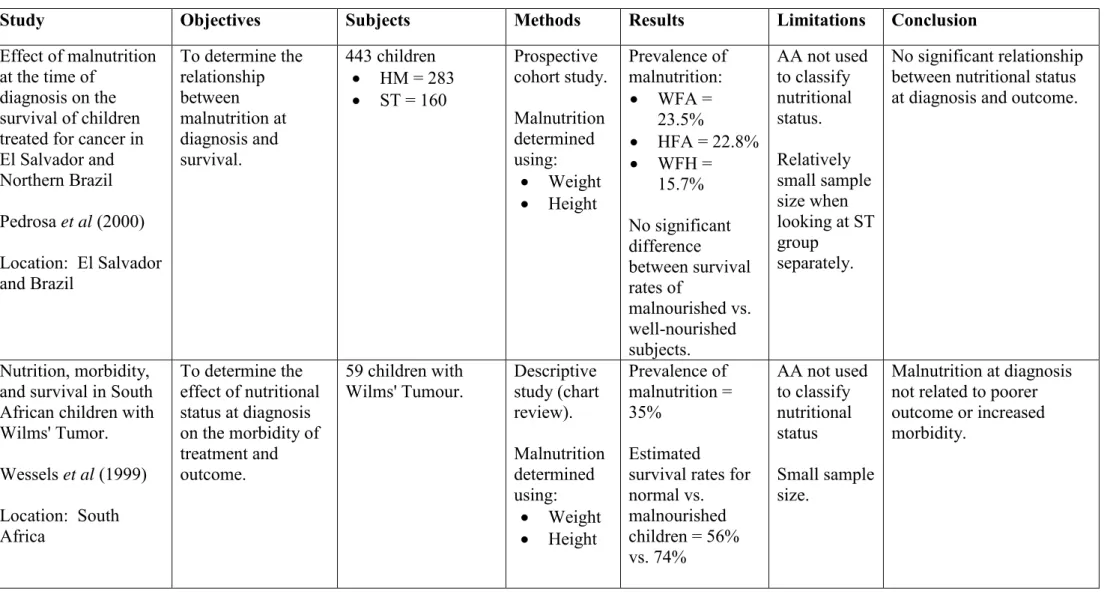
Table 2.2: Studies assessing the relationship between nutritional status at diagnosis and outcome amongst children with solid tumours ... 28
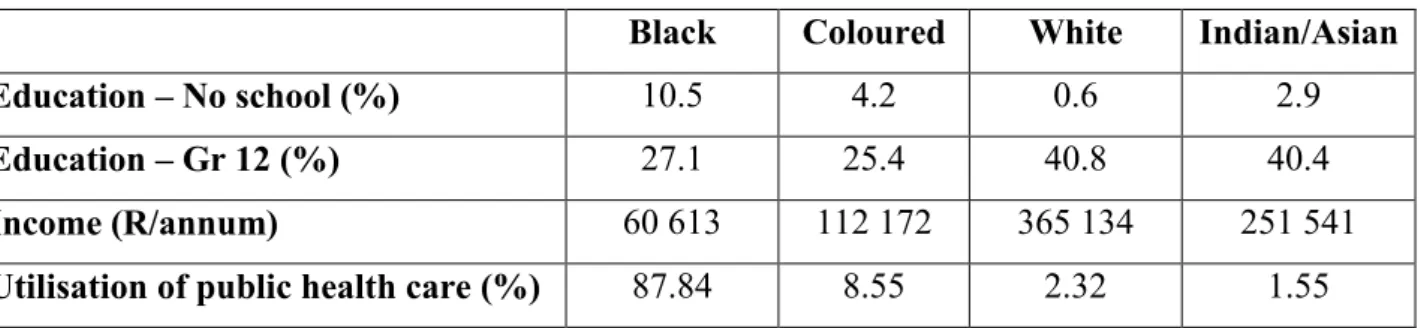
Table 3.1: Demographic information for different ethnic groups in SA……….... 37
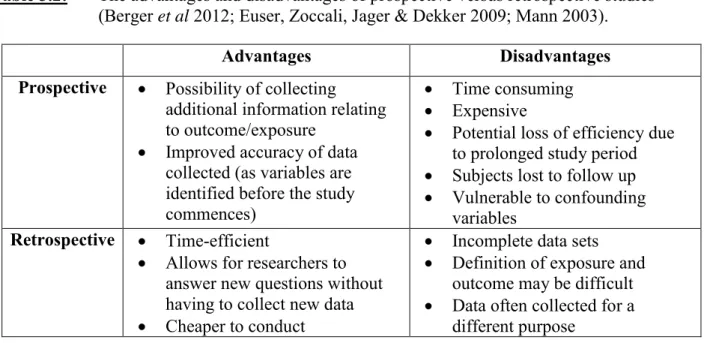
Table 3.2: The advantages and disadvantages of prospective versus retrospective studies. ... 41
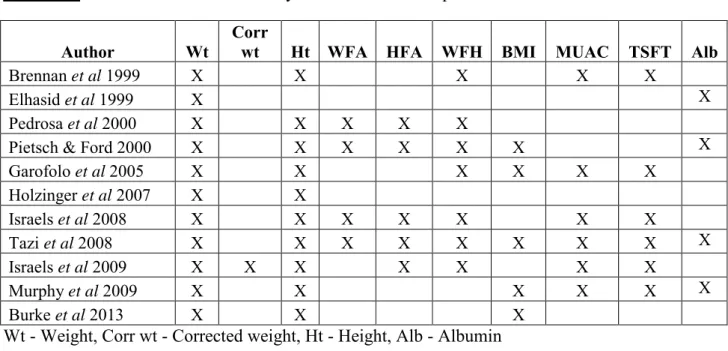
Table 3.3: Variables used to classify nutritional status in previous studies ... 44
Table 3.4: Data analysis of objectives ... 46
Table 4.1: Anthropometric and demographic characteristics of the study population ... 50
Table 4.2: Distribution of disease stage by gender ... 51
Table 4.3: Distribution of disease stage by age……… 51
Table 4.4: Anthropometric classification of study population ... 52
Table 4.5: The association between stage of disease and nutritional status ... 54
Table 4.6: The association between malnutrition on admission and outcome; 2 years ... 55
Table 4.7: The association between severity of malnutrition and outcome ... 56
LIST OF FIGURES
Figure 2.1: Estimated prevalence of childhood cancers among American children between 0 and 14 years of age ... 12 Figure 2.2: Factors affecting prognosis of children with cancer in developing countries ... 13 Figure 3.1: Framework for KZN hospitals referring to IALCH (Department of Health 2014) .. 38 Figure 3.2: Map of health districts in the KZN Province ... 39 Figure 4.1: Prevalence of malnutrition using biochemical and anthropometric measurements . 53 Figure 4.2: Distribution of tumour weight as a percentage of total body weight ... 54
LIST OF APPENDICES
APPENDIX A: ETHICAL CLEARANCE FROM UKZN ... 82 APPENDIX B: APPROVAL FROM IALCH MEDICAL MANAGER ... 83 APPENDIX C: APPROVAL FROM DEPARTMENT OF HEALTH ... 84
CHAPTER 1: INTRODUCTION TO THE PROBLEM AND ITS SETTING
1.1. Importance of the study
Different types of childhood cancers and the prevalence thereof, vary by age (Ward, DeSantis, Robbins, Kohler & Jemal 2014; Stack, Walsh, Comber, Ryan & O'Lorcain 2007).
Wilms' Tumour is a renal tumour that is usually unilateral in nature, but can occur bilaterally on rare occasions (Kaste, Dome, Babyn, Graf, Grundy, Godzinski, Levitt & Jenkinson 2008).
It is a type of cancer found predominantly amongst young children and accounts for approximately 5% of all childhood cancers in developed countries (Ward et al 2014; Stack et al 2007). In African countries it is the most commonly occurring solid tumour (Stefan 2015) and accounts for 12% of all childhood cancer cases recorded in South Africa (Stefan &
Stones 2012). Furthermore, Wilms' Tumour is one of the most common types of childhood cancer occurring in rural areas of South Africa‟s Eastern Cape Province (Somdyala, Bradshaw, Gelderblom & Parkin 2010).
There is a paucity of information regarding the prevalence of cancer in children in developing countries as well as the prevalence of malnutrition in this population. This is due to the under-diagnosis of paediatric cancers in these countries, as well as a lack of simple measures for recording and capturing patient related data, such as cancer registries (Stefan, Baadjes &
Kruger 2014). As is the case in most developing countries, children with Wilms' Tumour in South Africa face many challenges that can affect their prognosis. These challenges include delayed presentation, high rates of treatment abandonment, poverty, as well as ignorance and lack of education amongst some communities (Paintsil, David, Kambugu, Renner, Kouya, Eden, Hesseling, Molyneux & Israels 2015; Wilde, Lameris, van Hasselt, Molyneux, Heij &
Borgstein 2010; Abuidris, Elimam, Nugud, Elgaili, Ahmed & Arora 2008). Disease stage and histology are considered to be the most important prognostic indicators amongst children with Wilms' Tumour. Staging of the tumour occurs post-operatively, and stage of disease is determined by factors such as tumour extension beyond the kidney, presence of lymph nodes or metastases, tumour rupture or the presence of bilateral tumours. The histological classification of a tumour is dependent on the types of cells that are predominant in the tumour. The cell distribution determines whether or not a tumour is classified as being
„favourable‟ or „unfavourable‟ (Kaste et al 2008), depending on the type of cells, and predominance thereof, within the tumour (Poole 2010).
Paediatric malnutrition is a widespread problem in both developing and developed countries.
Worldwide, 15% of children are underweight and 25% are stunted [United Nations Children's Fund (UNICEF) 2015]. In sub-Saharan Africa, more than one fifth of all children are underweight, more than one third are chronically malnourished (stunted) and just under one tenth are acutely malnourished (wasted) (UNICEF 2015). Three large studies have been conducted in South Africa in order to determine the prevalence of malnutrition amongst South African children. The National Food Consumption Survey (NFCS), conducted in 1999, showed the national prevalence of stunting, wasting and underweight to be 21.6%, 3.7% and 10% respectively (Labadarios, Steyn, Maunder, MacIntyre, Swart, Gericke, Huskisson, Dannhauser, Voster & Nesamvuni 2000). The National Food Consumption Survey-Fortification Baseline (NFCS-FB) of 2005, showed a slight improvement in the prevalence of stunting and underweight (18% and 9.3%) and a slight deterioration in the prevalence of wasting (4.5%) (Labadarios, Swart, Maunder, Kruger, Gericke, Kuzwayo, Ntsie, Steyn, Schloss, Dhansay, Jooste, Dannhauser, Nel, Molefe & Kotze 2008). The third survey, the South African National Health and Nutrition Examination Survey (SANHANES- 1), released in 2013, showed the lowest prevalence of stunting, wasting and underweight, at 15.4%, 2.9% and 5.8% respectively (Shisana, Labadarios, Rehle, Simbayi, Zuma, Dhansay, Reddy, Parker, Hoosain, Naidoo, Hongoro, Mchiza, Steyn, Dwane, Makoae, Maluleke, Ramlagan, Zungu, Evans, Jacobs, Faber & SANHANES-1 Team 2013).
Available studies have shown that 45-69% of children with cancer in developing countries are malnourished on admission to hospital (Sala, Rossi, Antillon, Molina, de Maselli, Bonilla, Hernandez, Ortiz, Pacheco, Nieves, Navarrete, Barrantes, Pencharz, Valsecchi & Barr 2012;
Israels, Borgstein, Jamali, de Kraker, Caron & Molyneux 2009; Israels, Chirambo, Caron &
Molyneux 2008). Malnutrition amongst this population can lead to increased mortality and treatment abandonment rates (Sala et al 2012), as well as increased risk of complications (Murry, Riva & Poplack 1998). Many risk factors for a poor outcome amongst children with cancer, such as age, are not modifiable. Malnutrition, on the other hand, is a risk factor that can be modified if the correct steps are taken (Orgel, Sposto, Malvar, Seibel, Ladas, Gaynon
& Freyer 2014).
Assessment of nutritional status of children with cancer needs to be standardised amongst centres treating these patients (Rogers, Melnick, Ladas, Halton, Baillargeon & Sacks 2008).
Weight has commonly been used in isolation in order to classify nutritional status; however a growing body of research has emphasised the importance of including arm anthropometry measurements as part of the classification criteria for these patients (Israels et al 2008; Tazi, Hidane, Zafad, Harif, Benchekroun & Ribeiro 2008; Garofolo, Lopez & Petrilli 2005). In order for nutritional intervention to be implemented, classification of nutritional status of children with cancer needs to be conducted as soon as possible after admission. This will allow for malnourished children, or those at risk of becoming malnourished, to be identified.
By reducing the time period that children are classified as being malnourished during their treatment period (for example, by implementing nutritional interventions as soon as possible after admission), the negative effects of poor nutritional status on admission can be significantly reduced (Orgel et al 2014).
There is a paucity of data relating to children with cancer, and Wilms' Tumour in particular.
Although some studies have found a significant correlation between malnutrition on admission and poorer outcome (Sala et al 2012; Mejia-Arangure, Fajardo-Gutierrez, Reyes- Ruiz, Bernaldez-Rios, Mejia-Dominguez, Navarrete-Navarro & Martinez-Garcia 1999;
Viana, Murao, Ramos, Oliveira, de Carvalho, de Bastos, Colosimo & Silvestrini 1994), others have failed to show any significant link between these two variables (Pedrosa, Bonilla, Liu, Smith, Davis, Ribeiro & Wilimas 2000; Wessels, Hesseling, Van Ommeren & Boonstra 1999; Weir, Reilly, McColl & Gibson 1998). Of further concern is the fact that many children in previous studies may have been incorrectly classified as being well-nourished when in fact they were malnourished (Lemos, de Oliveira & Caran 2014; Israels et al 2008;
Tazi et al 2008).
When weight and height are used in isolation in order to classify nutritional status, malnutrition in children with Wilms' Tumour can be masked (Lemos et al 2014; Israels et al 2008; Tazi et al 2008) due to factors such as tumour mass and fluid shifts (Rogers 2014). In addition to these, utilisation of serum albumin as an indicator of nutritional status can also lead to underestimation of the prevalence of malnutrition when used in isolation. This is because albumin levels can be affected by several disease-related factors, thereby limiting its efficacy as a marker of nutritional status (Tazi et al 2008). Given the fact that many studies
in the past used weight, height and Body Mass Index (BMI), or serum albumin levels, in isolation in order to classify nutritional status (Burke, Lyden, Meza, Ladas, Dasgupta, Wiegner & Arndt 2013), it can be posited that the rates of malnutrition amongst Wilms' Tumour patients could have been under-reported, leading to a significant underestimation of the actual prevalence of malnutrition amongst this population to date. Arm anthropometry, specifically MUAC and TSFT, should be incorporated in order to accurately classify their nutritional status (Sala et al 2012) as these measures are independent of tumour size (Tah, Nik Shanita & Poh 2012; Brennan, Gill, Pennells, Eden, Thomas & Clayton 1999).
Utilisation of biochemistry (namely serum albumin) and anthropometry measurements in combination has been shown to improve the sensitivity of classification of nutritional status (Sala et al 2012).
Nutritional intervention amongst children with cancer has been shown to be effective in improving nutritional status (Holzinger, Shaik & Hadley 2007). However, implementation of nutritional assessments and interventions in centres treating children with cancer, both internationally and in South Africa, is erratic and lacks standardisation (Schoeman 2011;
Ladas, Sacks, Brophy & Rogers 2006). Inkosi Albert Luthuli Central Hospital (IALCH) is a Durban-based hospital and is classified as a National Central Hospital which services all of South Africa as well as patients from neighbouring countries on occasion. On a tertiary level, IALCH serves as a referral hospital for patients residing throughout KwaZulu-Natal (KZN) and the seaboard areas of the Eastern Cape (Department of Health 2014). This study took place between 2004 and 2012. During this time, IALCH was the only state-run hospital treating children with Wilms‟ Tumour in the KZN province. Each subject admitted between 2004 and 2012 was followed up for a period of two years from the date of admission to IALCH. A local study, which assessed prevalence of malnutrition but not the effect thereof on outcome, showed that 45% of patients admitted to IALCH with Wilms' Tumour were malnourished on admission. Furthermore, these authors showed that nutritional intervention, in the form of oral and enteral supplementation, leads to significant improvement in nutritional status amongst these subjects (Holzinger et al 2007).
There is a dearth of data analysing the influence of nutritional status on outcome amongst children with Wilms' Tumour internationally and in South Africa. This study was important in order to accurately determine the nutritional status of children with Wilms' Tumour on
admission to hospital. Furthermore, it was important in order to determine the influence of nutritional status at the time of admission on disease outcome amongst a sample whose nutritional status had been accurately classified.
The following questions therefore arise:
What is the prevalence of malnutrition amongst children with Wilms‟ Tumour on admission to a South African hospital?
Does nutritional status on admission influence the outcome after two years amongst children with Wilms‟ Tumour?
What level of nutritional support was prescribed to children with Wilms‟ Tumour within the first two weeks of admission to IALCH during the study period?
This study was necessary as it would serve to provide important baseline data in an area that has not been widely researched. It was anticipated that the results of this study would help to establish the prevalence of malnutrition amongst this population when admitted to hospital and the influence thereof on outcome. Due to the fact that IALCH serves patients spanning two provinces, it was thought that the results of this study could be applied to a wide variety of South Africans with potentially diverse socioeconomic backgrounds and environments.
By understanding the influence of nutritional status on disease outcome, it was anticipated that this would help to better define the role of nutritional intervention and support amongst this population, as well as to improve the efficacy thereof. Furthermore, this study would help to emphasise the importance of standardisation, with regards to classification methods, when assessing nutritional status amongst this population.
1.2. Statement of the problem
The purpose of this study was to determine the prevalence of malnutrition amongst children with Wilms‟ Tumour on admission to IALCH. Furthermore, it aimed to determine the correlation between nutritional status on admission and outcome, as well as to determine the level of nutritional intervention that the subjects received within the first two weeks of admission.
1.3. Research objectives The objectives of this study were:
1.3.1 To determine the prevalence of malnutrition using a combination of anthropometric and biochemical markers, defined by the Asociación de Hemato-Oncología Pediátrica de Centro América (AHOPCA) algorithm.
1.3.2 To determine the influence of nutritional status on admission on the outcome, in terms of overall survival and death, amongst children with Wilms' Tumour admitted to IALCH between 2004 and 2012.
1.3.3 To determine the level of nutritional support prescribed to children with Wilms‟
Tumour within the first two weeks of admission to IALCH between 2004 and 2012.
1.4. Hypotheses
1.4.1 The utilisation of weight, height and albumin in isolation would underestimate the prevalence of malnutrition.
1.4.2 The use of arm anthropometry in combination with albumin would give a more accurate result regarding the prevalence of malnutrition.
1.4.3 The overall outcome, in terms of survival, of subjects who were malnourished on admission would be lower compared to those who were well nourished on admission.
1.5. Inclusion and exclusion criteria This study was limited to:
Children up to the age of 13 years old who were admitted to the paediatric surgery ward at IALCH hospital and diagnosed with Wilms' Tumour between 2004 and 2012.
Children whose anthropometric measurements were taken by registered dietitians.
Children whose nutritional status was classified based on weight, height, MUAC, TSFT and biochemical measurements taken on admission to hospital, before the initiation of the treatment course (chemotherapy, radiotherapy and/or surgery).
This study excluded:
Children whose anthropometric and biochemical measurements were taken after treatment was initiated.
Children whose initial anthropometric and biochemical measurements were taken at a follow up admission (in other words, not on the admission when they were initially diagnosed with Wilms' Tumour).
1.6. Definition of terms
Basal Metabolic Rate: The minimal energy expended for the maintenance of respiration, circulation, peristalsis, muscle tonus, body temperature, glandular activity, and other vegetative functions of the body‟ (Block, John, Borer, Pucci, Bruce, Silver, Christopher, Drake, Vogl, Jangid &
Whitman 2007, p1159).
Body Mass Index: The BMI gives a representation of a person's weight in relation to their height in order to classify their nutritional status. It is calculated using weight, in kilograms, divided by the square of a person‟s height, in metres (Stedman 2005, p193).
Children with Wilms' Tumour:
For the purpose of this study, this was defined as patients up to the age of 13 years, who had been diagnosed with Wilms‟ Tumour after undergoing a biopsy.
Malnutrition: For the purpose of this study, children were classified as malnourished if at least one of these criteria were fulfilled:
MUAC and TSFT between the fifth and tenth percentiles
MUAC less than the fifth percentile and TSFT more than the tenth percentile
MUAC more than the tenth percentile and TSFT less than the fifth percentile
Albumin less than 35g/L
Those who met at least one of the following criteria were classified as severely malnourished:
MUAC and/or TSFT below the 10th centile
Albumin below 32g/L
Mid Upper Arm Circumference:
An anthropometric measurement used for classification of nutritional status and 'the best anthropometric predictor of mortality currently available' (Walters, Sibson & McGrath 2012).
Outcome: For the purposes of this study, outcomes were described in terms of overall survival and death at two years after the initial admission to hospital.
Triceps Skinfold Thickness:
An anthropometric measurement which is taken at the mid-point of the child's upper arm. 'A skinfold is held between the investigator's thumb and index finger (subcutaneous fold without muscle). The caliper is placed about 1 mm below the left hand, perpendicular to the skinfold. The right hand holds the caliper and the measurement is read within 3 seconds (so that pressure does not compress the subcutaneous tissue)' (Hall, Allanson, Gripp & Slavotinek 2007, p67).
Tumour burden The amount of a subject‟s weight that is attributed to the mass of their tumour. The mass of the tumour can be determined by weighing the tumour after it has been surgically removed.
Wilms' Tumour: Also known as Nephroblastoma. 'A malignant tumour of the kidney; occurs almost exclusively in children. Thought to develop from embryonic structures' (Freshwater & Maslin-Prothero 2005, p384).
1.7. Abbreviations
AHOPCA: Asociación de Hemato-Oncología Pediátrica de Centro América
BMI: Body Mass Index
COG: Children's Oncology Group
HFA: Height for Age
IALCH: Inkosi Albert Luthuli Central Hospital
KZN: KwaZulu-Natal
MUAC: Mid Upper Arm Circumference TSFT: Triceps Skinfold Thickness
WFA: Weight for Age
WFH: Weight for Height
WHO: World Health Organization UNICEF: United Nations Children's Fund
1.8. Assumptions
The following assumptions were made:
All dietitians who took the anthropometric measurements (weight, height, MUAC and TSFT) did so accurately and as per the standard practices at IALCH.
Biochemical measurements were taken and analysed accurately.
Patient records accurately reflected nutritional interventions undertaken for each patient.
Progression of cancer stages amongst individuals with Wilms‟ Tumour was not generalizable, and may have been influenced by factors such as histology, genetics and environmental influences.
1.9. Summary
Studies have shown that childhood cancer is a serious and relevant problem affecting children both internationally and in South Africa. Studies have found that 45-69% of children with cancer in developing countries are malnourished, and the prevalence of malnutrition amongst children with Wilms' Tumour in KZN has been shown to be similarly high. However, many previous studies potentially underestimated the prevalence of malnourished children in their samples due to inaccurate classification of nutritional status. Some studies analysing children with cancer have found malnutrition on admission to hospital to be a poor prognostic indicator, while others have not been in agreement. In general, there is a serious dearth of studies conducted on children with Wilms' Tumour, with only a few having taken place in a South African setting.
It was anticipated that this study would provide an accurate indication of the prevalence of malnutrition amongst children with Wilms' Tumour presenting to IALCH between 2004 and 2012, as well as to describe the influence of nutritional status at the time of admission on outcome. Furthermore, it was anticipated that this study would shed light on the dietary interventions received amongst this sample in a South African setting, consequently helping to improve medical and nutritional management of this population group in the future. This study did not address the influence of type and duration of treatment on nutritional status or outcome of the subjects.
1.10. Dissertation overview
This dissertation consists of six chapters. The first chapter addresses the reasons why such an investigation is relevant and necessary, and presents the study objectives. The second chapter discusses the current literature regarding paediatric nutritional status, paediatric cancer and the role of dietary intervention amongst this population. The third chapter discusses the methodology utilised in the study, while the fourth chapter presents the results after the statistical analyses were conducted. Chapter five discusses the results of this study in relation to the literature discussed in chapter two. Finally, chapter six concludes the dissertation and provides recommendations for future research based on the results obtained.
1.11. Referencing style
This dissertation has been written using the referencing style of the Discipline of Dietetics and Human Nutrition, University of KwaZulu-Natal.
CHAPTER 2: REVIEW OF THE RELATED LITERATURE
In order to facilitate a better understanding of the problem at hand, this chapter will review the literature relating to children with cancer as well as paediatric malnutrition. The first section will delve into the background relating to paediatric cancer and paediatric malnutrition. It will discuss the prevalence, treatment, survival, prognostic indicators and challenges associated with paediatric cancer patients, focusing specifically on developing countries. The second section will focus on nutritional assessment utilising both anthropometric and biochemical measurements, methods of classifying nutritional status and problems associated therewith. The third section will focus on the pathogenesis of malnutrition amongst children with cancer, including cancer cachexia, as well as examine the relationship between nutritional status and outcome. In addition, it will assess the role of nutritional intervention in the treatment and management of this population.
2.1. Childhood cancer
The incidence of types of cancer amongst adolescents and children varies by age. Wilms' Tumour, also known as Nephroblastoma, is a type of cancer that contributes to approximately five percent of all childhood cancer cases in developed countries (Ward et al 2014; Stack et al 2007). It is not commonly seen in children older than ten years of age (Steliarova-Foucher, Stiller, Kaatsch, Berrino, Coebergh, Lacour & Parkin 2004). In Europe, Wilms' Tumour is the eighth most commonly occurring cancer amongst children from birth to 14 years of age, constituting 5.7% of all paediatric cancers between 1978 and 1997 (Magnani, Pastore, Coebergh, Viscomi, Spix, Steliarova-Foucher 2006). Figure 2.1 shows the prevalence of the ten most commonly occurring paediatric cancers in America.
Figure 2.1: Estimated prevalence of childhood cancers among American children between 0 and 14 years of age (Ward et al 2014)
Data on the prevalence of paediatric cancers in developing countries is lacking. This is due to factors such as the under-diagnosis of paediatric cancers, as well as a lack of simple measures for recording and capturing patient related data, such as cancer registries (Stefan et al 2014). The only known tumour registry in Africa dedicated solely to the documentation of paediatric cancer was developed by the South African Children's Cancer Study Group and has been in place for more than 25 years (Stefan & Stones 2012). A recent survey has shown that Wilms' Tumour accounts for more than 10% of childhood cancers in many African countries. In certain African countries the prevalence was found to be more than four times higher than that of developed countries (Stefan 2015). In South Africa, Wilms' Tumour patients account for 12% of paediatric cancer cases, making it the fourth most common cancer amongst this population (Stefan & Stones 2012). In rural areas of the Eastern Cape, the prevalence of paediatric cancer has been shown to be 2.8% of all cancers, with Wilms' Tumour and brain tumour being the most common types (Somdyala et al 2010). Wilms' Tumour remains the most predominant solid tumour in African countries (Stefan 2015).
2.1.1. Diagnosis of Wilms' Tumour
If a child is suspected to have Wilms' Tumour, a series of tests and investigations are carried out on admission to hospital. Clinical signs and symptoms include an abdominal mass or
31%
8% 26%
7%
6%
6% 5% 4% 4% 3%
Acute lymphocytic leukemia Brain and CNS
Neuroblastoma
Non-Hodgkin lymphoma Wilms tumour
Acute myeloid leukemia Bone tumours
Hodgkin lymphoma Rhabdomyosarcoma Retinoblastoma
distended abdominal veins. Immediate investigations include blood and urine tests, as well as a chest X-ray. An ultrasound is considered to be compulsory as part of the investigations of these patients, and doctors may deem it necessary to perform a Computed Tomography (CT) scan of the abdomen. Finally, a biopsy is performed in order to confirm diagnosis of Wilms' Tumour (Poole 2010).
2.1.2. Factors affecting prognosis in developing countries
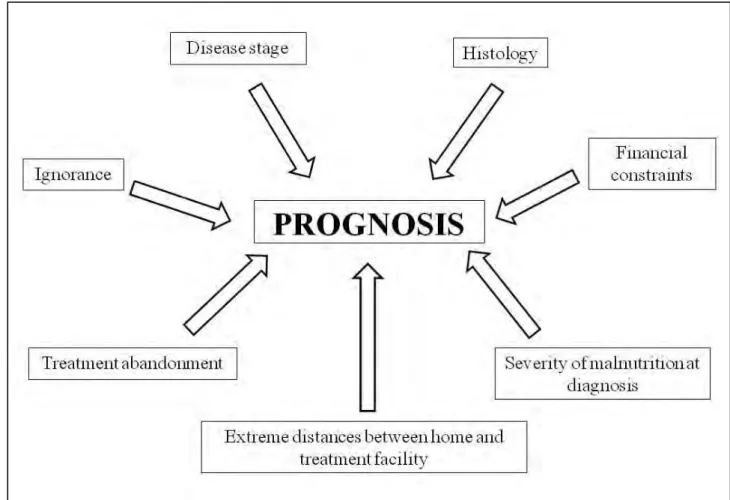
In general, stage and histology are considered to be the most important factors influencing the prognosis of children with Wilms' Tumour (Kaste et al 2008). However, when compared to developed countries, poorer outcomes have been observed amongst paediatric oncology patients in developing countries due to a variety of factors (Figure 2.2) (Paintsil et al 2015;
Wilde et al 2010; Abuidris et al 2008).
Figure 2.2: Factors affecting prognosis of children with cancer in developing countries
Late presentation, in particular, is a common problem in this setting (Paintsil et al 2015; Yao, Li, Xiao, Gao, Dong, Xiao & Lv 2012; Wilde et al 2010; Abuidris et al 2008; Ekenze, Agugua-Obianyo & Odetunde 2006), and can often be exacerbated by poverty and ignorance (in the form of lack of education) amongst some communities (Stones, de Bruin, Esterhuizen
& Stefan 2014; Yao et al 2012). In a Nigerian hospital, Ekenze et al (2006) found that, on average, their patients presented after almost five months of displaying symptoms of Wilms' Tumour. Consequently, the majority of their sample presented in the later stages of disease (stage three and four), while no patients presented in the initial stage of disease (stage one).
In a study conducted by Abuidris et al (2008) in Sudan, 78.4% of their Wilms' Tumour patients presented in stage three or four. A local study conducted in KZN showed that children from rural areas presented to hospital with Wilms' Tumour later than children from urban areas. Furthermore, the children from rural areas were more likely to present with larger tumour masses and a more advanced stage of disease (Hadley & Jacobs 1990). Israels et al (2009), who conducted a similar study in a hospital in Malawi, found that children with larger tumours were more likely to be malnourished.
Treatment-related problems provide further challenges which can contribute to poor outcome amongst this population (Paintsil et al 2015; Ekenze et al 2006). Treatment abandonment poses a particular problem (Madani et al 2006), with as many as 48% of patients in countries in the sub-Saharan Africa region failing to complete their treatment programmes (Paintsil et al 2015). Figures for abandonment have been shown to be as high as 62% amongst children with Wilms' Tumour (Abuidris et al 2008). In developing countries, many patients abandon treatment due to financial constraints, as some of the treatments and drugs are not subsidised (Abuidris et al 2008; Ekenze et al 2006). Severe poverty, which is present in many developing countries, means that caregivers are often unable to afford the costs of travelling to and from the hospital for treatment, as well as the cost of lodging and food during the hospital stay, further contributing to high rates of treatment abandonment. A study conducted by Abuidris et al (2008) showed that for various reasons, including financial constraints, only 11% of their sample of Wilms' Tumour patients completed the treatment programme, while 27% received no treatment whatsoever. The average cost of treating a Wilms' Tumour patient in Sudan, for example, can be as high as US$8901 (R12 255) (Abuidris et al 2008). In South Africa, the cost of treating Wilms' Tumour patients in public hospitals according to the
1 Exchange rate as of 03 November 2015 $:R = 1:13.77
Societe Internationale d'Oncologie Pediatrique (SIOP) treatment protocols can exceed US$5000 (R68 850) depending on the stage of disease (Stefan, Stones, van Zyl & Uys 2014).
The majority, if not all, treatment at IALCH is subsidised by the government, depending on parental income (Department of Health, Western Cape Government 2015).
Factors shown to significantly increase the rate of treatment abandonment include living far from the treatment facility (Slone, Chunda-Liyoka, Perez, Mutalima, Newton, Chintu, Kankasa, Chipeta, Heimburger, Vermund & Friedman 2014), severity of malnutrition at diagnosis (Antillon, Rossi, Molina, Sala, Pencharz, Valsecchi & Barr 2013; Sala et al 2012) and poor maternal education (Slone et al 2014; Abuidris et al 2008; Ekenze et al 2006).
After chemotherapy and surgery, many parents may assume that their child is cured in light of the fact that symptoms such as abdominal distension have resolved, and do not understand the need for returning to the hospital in order for treatment to be completed (Abuidris et al 2008). In addition to this, many drugs are simply unavailable in resource-limited countries (Wilde et al 2010; Ekenze et al 2006).
2.1.3. Treatment guidelines for patients in resource limited settings
A group of experts have developed guidelines specifically for the treatment of children with Wilms' Tumour in resource limited settings, based on guidelines developed by the SIOP in 2001. Wilms' Tumour can be diagnosed using ultrasonography, while minimum treatment for curative intent in these settings involves pre- and post-operative chemotherapy as well as surgical resection of the tumour. When available and when necessary, radiotherapy can be used as an adjunct to the above therapies. However, it is not considered to be absolutely vital for the curative treatment of these patients. Both social and financial support, including extensive counselling, should be provided to the families of patients in order to ensure treatment compliance and prevent treatment abandonment (Israels, Moreira, Scanlan, Molyneux, Kampondeni, Hesseling, Heij, Borgstein, Vujanic, Pritchard-Jones & Hadley 2013).
2.1.4. Survival in developed versus developing countries
Paediatric cancers have been prevalent for decades and, in both developed and developing countries, the overall incidence has continued to increase (Ward et al 2014; Steliarova- Foucher et al 2004; Chintu, Athale & Patil 1995). Survival, on the other hand, has shown significant improvement over the years, due to factors such as increasingly advanced treatment and improved management of patients (Ward et al 2014; Kaste et al 2008;
Steliarova-Foucher et al 2004). Furthermore, the establishment of multi-disciplinary co- operative groups, such as the Children's Oncology Group (COG) and SIOP, involving collaboration amongst experts on a national and international level has also contributed to the improved survival rates (Kaste et al 2008).
Death rates amongst this population have declined by more than 50% in America.
Furthermore, in the case of several types of cancer, including Wilms' Tumour, those who survive more than five years have been shown to have a favourable chance of long-term survival (Ward et al 2014). Wilms' Tumour patients in America have seen five year survival rates improve from 73% in the 1970s to 93% between 2005 and 2011 (SEER Cancer Statistics Review 1975-2011). Similarly, since 1978 steady improvements in the five year survival rates of European children with renal tumours have also been observed (Magnani et al 2006). However, survival rates in developing countries are significantly worse, especially in the region of sub-Saharan Africa. In South Africa, five year survival rates of children with Wilms' Tumour have been shown to be just over 60%, while the overall survival rate of children with cancer is 52% (Stones et al 2014). In other developing countries, however, survival rates can fall as low as 11% (Paintsil et al 2015; Abuidris et al 2008) while the average short-term survival rate in sub-Saharan Africa (SSA) is 39% (Paintsil et al 2015).
Children of Black ethnic origin have been shown to have significantly poorer survival rates than those of other ethnic origins (Stones et al 2014).
2.1.5. Malnutrition at diagnosis in developing countries
The prevalence of malnutrition amongst paediatric cancer patients in developing countries has been shown to range from 45-77% (Sala et al 2012; Israels et al 2009; Israels et al 2008;
Garofolo et al 2005). Given the high prevalence of paediatric malnutrition in South Africa, as shown by the SANHANES-1 (2013) and NFCS (1999 and 2005) studies mentioned
previously, a similar prevalence would be expected amongst South African children with Wilms' Tumour. In KZN in particular, more than twice as many children from rural areas were shown to present to hospital in a malnourished state in comparison to their urban counterparts (Hadley & Jacobs 1990). Furthermore, in this province malnutrition has been shown to occur in almost half of Wilms' Tumour patients on admission to hospital (Holzinger et al 2007).
Other issues that are cause for concern amongst children with Wilms‟ Tumour in developing countries include the fact that children with larger tumours on admission have been shown to be more severely malnourished than those with smaller tumours (Israels et al 2009).
Furthermore, according to several studies children with solid tumours are more likely to be malnourished (Murphy, White & Davies 2009; Tazi et al 2008; Brennan et al 1999), and present with increased severity of malnutrition compared to those with haematological tumours (Garofolo et al 2005). Additionally, the intake of the majority of nutrients can be significantly lower in children with solid tumours compared to haematological malignancies (Tah et al 2012). Factors that could contribute to the development of malnutrition amongst these children include insufficient dietary intake as well as the effect of the prolonged presence of malignant disease due to delayed presentation to hospital (Israels et al 2009).
Therefore it is important to emphasise the importance of nutritional assessment amongst this population in order to detect patients who are malnourished, or at risk of becoming malnourished, on admission. This will allow for the necessary nutritional rehabilitation to take place as soon as possible after admission to hospital. The assessment of nutritional status amongst children with cancer will be discussed in the following section.
2.2. Nutritional assessment of children with cancer
Poor nutritional status can contribute to increased mortality rates as well as an increased rate of treatment abandonment (Sala et al 2012). Furthermore, it can lead to an increased risk of complications and can impact the absorption, excretion and metabolism of anti-neoplastic drugs that the majority of children with cancer receive (Murry et al 1998). The classification of nutritional status should therefore be considered as an integral part of every child's initial assessment on admission to hospital for cancer treatment and management (Lemos et al 2014; Linga, Shreedhara, Rau & Rau 2012; Murphy et al 2009).
2.2.1. Methods used to assess nutritional status
There are several methods available to classify nutritional status amongst the paediatric population. Weight, height and BMI are commonly used to classify nutritional status (Murphy et al 2009; Ladas et al 2006) as they are affordable, easy and quick anthropometric measurements that can be performed by most staff at a health facility (Orgel et al 2014).
However, studies have shown that when weight and height are used in isolation in order to classify nutritional status, malnutrition in children with Wilms' Tumour can be masked (Lemos et al 2014; Israels et al 2008; Tazi et al 2008) because of factors such as tumour mass and fluid shifts (Rogers 2014). This can lead to many malnourished patients being incorrectly classified as well-nourished (Lemos et al 2014; Israels et al 2008; Tazi et al 2008). Due to the fact that many studies in the past used only weight, height and BMI to classify nutritional status (Burke et al 2013), it is possible that the rates of malnutrition amongst Wilms' Tumour patients could have been under-reported, leading to a significant underestimation of the actual prevalence of malnutrition amongst this population to date.
The term corrected weight refers to the weight of a subject when tumour weight (obtained post-operatively) is subtracted from admission weight. This has been used previously (Israels et al 2009) and may provide a more accurate indication of nutritional status when weight and height measurements are used. However, corrected weight should not be considered to be an accurate reflection of nutritional status in isolation, as the tumour weight at the time of surgery is usually smaller than on admission due to the provision of pre-operative chemotherapy (Israels et al 2009). Murphy et al (2009) emphasised that height, weight and BMI should only be used in order to screen patients initially and should not be considered a comprehensive or accurate method of classifying nutritional status amongst this population.
The authors emphasised that the incorrect classification of malnourished children as "well- nourished" can lead to a worsened prognosis (Murphy et al 2009).
2.2.2. Arm anthropometry
Arm anthropometry, specifically MUAC and TSFT, should be incorporated in the nutritional assessment of children with Wilms' Tumour in order to accurately classify their nutritional status (Sala et al 2012). These measures are independent of tumour size (Tah et al 2012;
Brennan et al 1999), and are affordable and relatively easy for a trained professional to
conduct (Hoffmeister, Storer, Macris, Carpenter & Baker 2013). Both MUAC and TSFT have been shown to be feasible tools for classification of nutritional status in developing countries in particular (Sala et al 2012; Garofolo et al 2005). MUAC provides a measure of body fatness, while TSFT measures muscle mass (Ramsey, Farrell & Pencharz 1992).
MUAC measurements have the added advantage of being less severely affected by fluid shifts compared to TSFT measurements (Tah et al 2012).
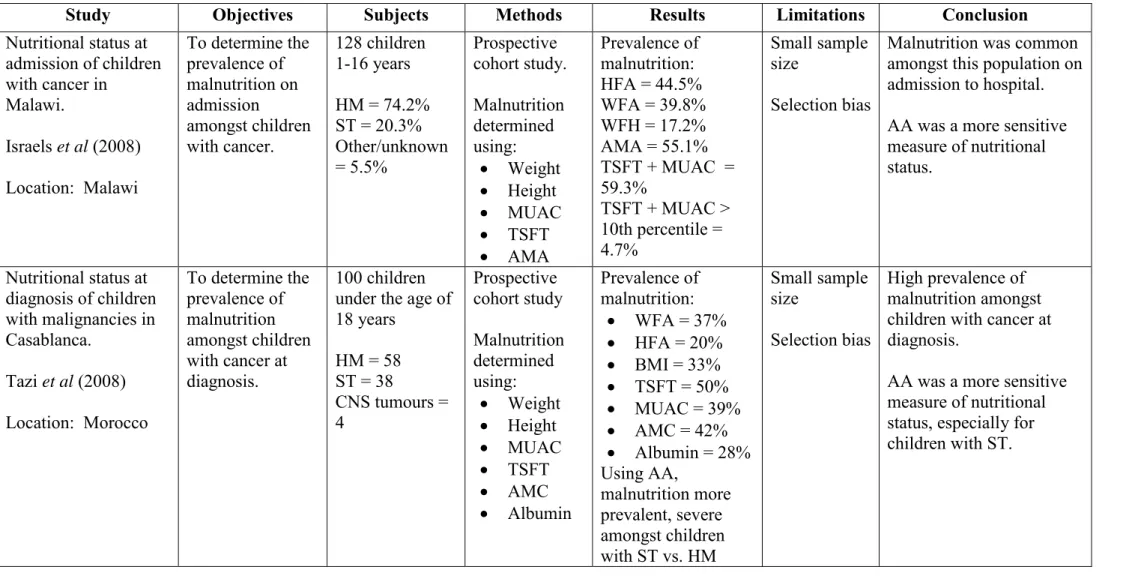
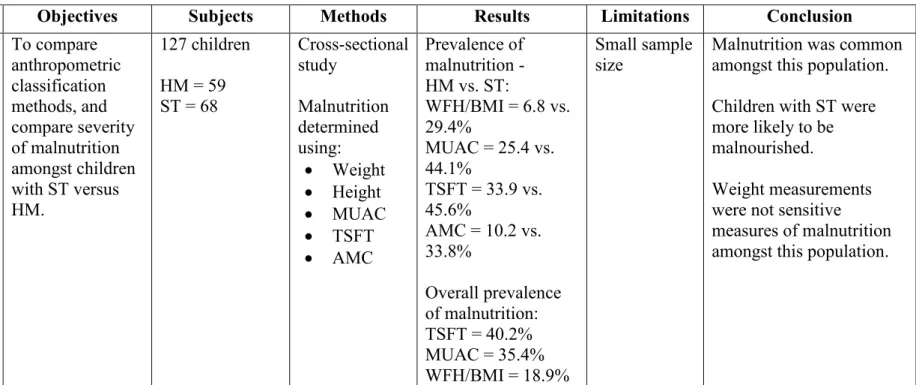
Tazi et al (2008) demonstrated the discrepancies that can transpire when using weight and height alone in order to assess nutritional status. In a sample of 100 children with cancer, 37% and 20% of children were classified as being malnourished when utilising weight- and height-for-age measurements respectively. However, when arm anthropometry was included as part of the anthropometric assessment, the prevalence of malnutrition was noted to be as high as 50%. The same trend was observed in a much larger study involving 1787 children with cancer conducted by Sala et al (2012). In this study, the prevalence of malnutrition increased from 28% when BMI was used, to 63% when arm anthropometry was included in the anthropometric assessment. Similar evidence for the superior accuracy of arm anthropometry compared to weight, height and BMI amongst this population has been demonstrated in several other studies discussed in Table 2.1 (Israels et al 2008; Tazi et al 2008; Garofolo et al 2005).
Table 2.21: Studies assessing the most accurate methods of classifying nutritional status amongst children with cancer
Study Objectives Subjects Methods Results Limitations Conclusion
Nutritional status at admission of children with cancer in
Malawi.
Israels et al (2008) Location: Malawi
To determine the prevalence of malnutrition on admission
amongst children with cancer.
128 children 1-16 years HM = 74.2%
ST = 20.3%
Other/unknown
= 5.5%
Prospective cohort study.
Malnutrition determined using:
Weight
Height
MUAC
TSFT
AMA
Prevalence of malnutrition:
HFA = 44.5%
WFA = 39.8%
WFH = 17.2%
AMA = 55.1%
TSFT + MUAC = 59.3%
TSFT + MUAC >
10th percentile = 4.7%
Small sample size
Selection bias
Malnutrition was common amongst this population on admission to hospital.
AA was a more sensitive measure of nutritional status.
Nutritional status at diagnosis of children with malignancies in Casablanca.
Tazi et al (2008) Location: Morocco
To determine the prevalence of malnutrition amongst children with cancer at diagnosis.
100 children under the age of 18 years
HM = 58 ST = 38
CNS tumours = 4
Prospective cohort study Malnutrition determined using:
Weight
Height
MUAC
TSFT
AMC
Albumin
Prevalence of malnutrition:
WFA = 37%
HFA = 20%
BMI = 33%
TSFT = 50%
MUAC = 39%
AMC = 42%
Albumin = 28%
Using AA,
malnutrition more prevalent, severe amongst children with ST vs. HM
Small sample size
Selection bias
High prevalence of malnutrition amongst children with cancer at diagnosis.
AA was a more sensitive measure of nutritional status, especially for children with ST.
Table 2.1 Continued
Study Objectives Subjects Methods Results Limitations Conclusion
High prevalence of malnutrition among patients with solid non-haematological tumors as found by using skinfold and circumference measurements Garofolo et al (2005) Location: Brazil
To compare anthropometric classification methods, and compare severity of malnutrition amongst children with ST versus HM.
127 children HM = 59 ST = 68
Cross-sectional study
Malnutrition determined using:
Weight
Height
MUAC
TSFT
AMC
Prevalence of malnutrition - HM vs. ST:
WFH/BMI = 6.8 vs.
29.4%
MUAC = 25.4 vs.
44.1%
TSFT = 33.9 vs.
45.6%
AMC = 10.2 vs.
33.8%
Overall prevalence of malnutrition:
TSFT = 40.2%
MUAC = 35.4%
WFH/BMI = 18.9%
Small sample
size Malnutrition was common amongst this population.
Children with ST were more likely to be malnourished.
Weight measurements were not sensitive measures of malnutrition amongst this population.
Abbreviations:
AA Arm Anthropometry HM Haematological Tumours
ALL Acute Lymphoblastic Leukaemia MUAC Mid Upper Arm Circumference
AMA Arm Muscle Area ST Solid Tumours
AMC Arm Muscle Circumference TSFT Triceps Skinfold Thickness
BMI Body Mass Index WFA Weight for Age
EFS Event Free Survival WFH Weight for Height
HFA Height for Age WT Wilms' Tumour
2.2.3. Biochemistry
One of the criteria often used as part of the nutritional assessment of children with cancer is serum albumin levels (Sala et al 2012; Tah et al 2012; Israels et al 2009; Murphy et al 2009; Elhasid, Laor, Lischinsky, Postovsky & Weyl Ben Arush 1999). Albumin is a protein that is synthesised in the liver, and measurement thereof can give an indication of visceral protein status (Brennan 1998).
When used in isolation, measurement of serum albumin is considered by many to be an unreliable indicator of nutritional status due to the wide spectrum of factors that can influence albumin status (Tazi et al 2008). Albumin levels can appear elevated due to factors such as dehydration or corticosteroid treatment, whereas levels can decrease in response to inflammation, malabsorption and liver disease (Fuhrman 2002). Furthermore, the fact that it is a negative acute phase protein means disease-related factors such as temperature can affect albumin levels (Brennan 1998). It also has a long half-life of approximately 20 days (Fuhrman 2002).
Nonetheless, albumin does have a place in the nutritional assessment of patients (Ladas et al 2006).
Albumin has been shown to be a very useful measure in combination with anthropometric measurements, as it improves the sensitivity of nutritional classifications (Sala et al 2012).
Albumin is considered to be low when levels fall below 35g/l (Heber, Greenway, Kaplan, Livingston, Salvador & Still 2010). In a study of 1513 children with cancer in developing countries, Sala et al (2012) showed that the inclusion of albumin as a criterion for the classification of nutritional status added considerable value. When comparing classifications using measurements of arm anthropometry alone (MUAC and TSFT) to measurements including both arm anthropometry and albumin, those classified as severely malnourished increased from 45% to 59%.
2.2.4. Current practices and the lack of a gold standard
A significant problem associated with determining the prevalence of malnutrition is that there is no gold standard to accurately assess nutritional status amongst children with cancer (Burke et al 2013;
Rogers & Ladas 2011; Israels et al 2008; Elhasid et al 1999), which route of feeding to choose and when to initiate nutritional interventions (Ladas et al 2006).
The COG conducted an international survey amongst 125 institutions treating paediatric oncology patients in order to determine common practice in relation to nutritional management of this
population. Of concern was the fact that this survey showed there was no uniform protocol being exercised amongst the institutions surveyed. Just over half of the institutions had specific criteria for conducting nutrition interventions, while only 46% of children underwent a nutritional assessment on admission. The majority of institutions utilised weight and height as their primary tools for classification of nutritional assessment, while only five percent included MUAC and TSFT measurements (Ladas et al 2006).
An unpublished survey of eight South African paediatric oncology units conducted by Schoeman (2011) showed a similar lack of uniformity with regards to management of these children.
Nutritional assessment on admission was not routinely conducted at all units and different assessment tools were used. Furthermore, only 62% of units utilised MUAC as part of their nutritional assessments, while only 37% included measurements of TSFT. According to the COG, current nutrition related practices amongst this population are based on opinions instead of evidence-based protocols (Rogers et al 2008).
In order to try to standardise assessment and classification of nutritional status amongst children with cancer, an algorithm for nutritional classification and support was developed at a meeting held by the AHOPCA consortium. The algorithm is based on data gathered from seven developing countries and incorporates arm anthropometry, albumin, weight loss and percentage of ideal body weight measurements as classification criteria (Sala et al 2005).
According to the algorithm, adequately nourished subjects are those whose weight is more than 90% of their ideal body weight (IBW), with albumin above 35g/L, MUAC and TSFT more than the 10th centile and having experienced weight loss of less than 5% of their body weight. They need to meet all of these criteria in order to be classified as adequately nourished. According to this classification, those who are considered to be mildly malnourished based on MUAC and TSFT, are classified as adequately nourished if they meet all of the other criteria mentioned above. Subjects are classified as being depleted (malnourished) if at least one of the following criteria are met: they are 60-89% of their IBW, their TSFT and/or MUAC is between the 5th and 10th centile, they have experienced weight loss of 5-10%, or their albumin is between 32 and 35g/L. Severely malnourished subjects are those who are either less than 60% of their IBW, have a MUAC and/or TSFT below the 10th centile, have experienced more than 10% weight loss or have an albumin level of below 32g/L (Sala et al 2005).
Initially, the algorithm stated that both MUAC and TSFT had to be below a certain value in order for a subject to be classified as malnourished. These criteria have since changed, stipulating that all subjects with either MUAC or TSFT below a certain level be classified as malnourished. This was done in order to increase the sensitivity of the algorithm and to encourage interventions amongst a larger proportion of subjects (Sala et al 2005).
2.3. Pathogenesis of malnutrition and the role of nutritional intervention
In order to formulate effective and appropriate nutritional protocols and interventions amongst children with cancer, it is imperative to understand the causes and mechanisms underlying the development of their malnutrition. Malnutrition is defined as a state of disequilibrium caused by an imbalance between the intake and loss of substrates (Mora 1999). When the body experiences a prolonged period of starvation, an adaptive response occurs. This leads to changes in hormone levels and, consequently, a reduction in the metabolic rate. Furthermore, fat is utilised for fuel in order to preserve lean body mass, thereby prolonging survival (Bines & Heine 2005, p180).
Unfortunately, the development of malnutrition amongst cancer patients is often more complicated than this. A culmination of several underlying mechanisms can sometimes lead to a phenomenon involving anorexia, severe weight loss and muscle wasting, known as cancer cachexia (Fearon, Strasser, Anker, Bosaeus, Bruera, Fainsinger, Jatoi, Loprinzi, MacDonald, Mantovani, Davis, Muscaritoli, Ottery, Radbruch, Rovasco, Walsh, Wilcock, Kaasa & Baracos 2011). This section will look at factors that can contribute to the development of malnutrition amongst children with cancer, with specific focus on cancer cachexia. The relationship between nutritional status on admission and outcome, as well as the role of nutritional intervention amongst this population will also be discussed.
2.3.1. Anorexia and reduced oral intake
Studies have shown that children undergoing chemotherapy often fail to meet their nutritional requirements for all macronutrients (Skolin, Axelsson, Ghannad, Hernell & Wahlin 1997) due to insufficient dietary intake, leading to the development of malnutrition (Skolin, Wahlin, Broman, Koivisto Hursti, Vikstrom Larsson & Hernell 2006; Skolin et al 1997). Skolin et al (2006)
conducted a study on 22 children undergoing chemotherapy to assess which factors negatively influenced dietary intake. Although the sample size was small, the authors found that altered taste and learned food aversions were the two most common side-effects that led to reduced oral intake.
Children also experienced vomiting, nausea and mouth sores. Furthermore, these children showed signs of physiological taste alterations with significantly higher sensitivity to bitter tastes and an impaired ability to correctly identify tastes (Skolin et al 2006). Other factors that can contribute to reduced oral intake include mucositis, tension between children and their caregivers regarding eating, tumour burden and cancer cachexia (Burke et al 2013). The tumour burden is the amount of the subject‟s weight that is attributed to tumour mass, and can be determined after surgery once the tumour has been removed. Lastly, impaired gastrointestinal motility can cause early satiety, thereby limiting oral intake (Fearon et al 2011).
2.3.2. Increased Basal Metabolic Rate
It is thought that the disease process itself plays a role in the progressive development of malnutrition amongst children with cancer (Israels et al 2009) over and above factors contributing to reduced dietary intake as discussed earlier (Skolin et al 2006). This could be attributed to the fact that metabolic alterations occur in many patients with cancer (Den Broeder, Oeseburg, Lippens, van Staveren, Sengers, van‟t Hof & Tolboom 2001). Holroyde, Gabuzda, Putnam, Paul & Reichard (1975) showed that patients with metastatic disease exhibited increased energy expenditure due to altered glucose metabolism and subsequent increases in Cori cycle ac