A Postcolonial Critique of Religion and Ethnicity in Southern Kaduna with Specific Reference to an Online Forum
By
Sokfa Francis John 213568791
Submitted to partial fulfilment of the academic requirements for the degree of Doctor of Philosophy in Religion and Social Transformation (Sociology of Religion)
in the School of Religion, Philosophy and Classics, University of KwaZulu-Natal
Supervisor: Dr. F. G. Settler
December 2016
ii
Declaration
I, Sokfa Francis John, declare that this thesis is my own original work. All citations, references and borrowed ideas have been acknowledged. No parts of this work have been submitted to another institution for degree or examination purposes. Unless stated otherwise, this work is entirely mine.
_____________________
Sokfa Francis John Candidate
As the supervisor of the candidate, I hereby approve this dissertation for submission.
_____________________
Dr. Federico Settler Supervisor
iii
Dedication
To my family: John and Elisabeth, Habila, Agnes, Esther, Amako, Achi, Boman, Zychat and Akut.
iv
Acknowledgments
My heartfelt gratitude to my supervisor, Dr. Federico Settler, for his support and assistance during this study. For all the opportunities he exposed me to and for ensuring that I pursued excellence in my research. I am also thankful to Dr. M. Engh for her support during the years of PhD and her editing of my thesis.
I am immensely grateful to my mother, Alisabatu (Elizabeth), my late father, John, and all my siblings, Habila, Esther, Amako, Achi, Boman, Zychat, Akut and my late sister Agnes for their consistent support, encouragement and prayers for me throughout my many years of higher education. I am very thankful to my partner, Nthatuwa Leeke, for her love, affection and care during this period of Doctoral studies, and for always being by me. Several other friends have supported me in different ways –Timothy Obaje, Tony Oyowe, Chris Ifeacho, Dumisa Mbano, Andrew Okem, Lilly Phiri, Chammah and Mutale Kaunda – and I am grateful to them all.
I am also very thankful to the several scholars I met, whose seminars or classes I attended and with whom I discussed aspects of my work, and whose suggestions were very useful – Dr. Jehu J. Hanciles, Dr Deanna Womack and Dr John Snarey of Emory University, Atlanta, G.A.; and Professors Mahmood Mamdami, Brian Larkin, J. Martins, Mamadou Diouf and Bachir Diagne who were happy to meet with me and welcomed me to some of their seminars at Columbia University, New York. I am thankful to Professor Sean Jacobs of the New School University, New York, for introducing me to them and their works. This thesis has also benefited from conferences and workshops and I am grateful to all those who challenged my thoughts and made valuable suggestions.
Finally, I am very grateful to the Council for the Development of Social Science Research in Africa (CODESSRIA) and the National Institute for the Humanities and Social Sciences (NIHSS) for granting me the African Pathways Doctoral fellowship, for their mentoring programs and conferences, which made it possible to complete this study. I am particularly grateful to Dr. Nthanbiseng Motsemme of the NIHSS and Professor Pumla Gqola, Wits University, for the quality time they spent with me reading and discussing my research in ways that deepened my analysis of data and for their general support.
v
Abstract
Against the background of ethnic and religious relations and conflicts in Kaduna, northern Nigeria, this study examined the emerging social and cultural spaces on which religious and ethnic identities are contested, such as the internet; and the religious forms and ideological practices that are (re)produced and invoked on such spaces to create imaginations of identity and for othering. I employ postcolonial theory and research in digital religion to specifically examine a Southern Kaduna Online Forum and the prevailing representation on the forum. I analyze a two-year worth of Online Forum’s content (2013-2014), which I complemented with a self- administered online survey. The online survey results indicate that majority of respondents were relatively young (ages 20-40), male and Christians belonging to the several ethnicities of Southern Kaduna. Most respondents have been members of the Online Forum for over 2 years, and identified more universal goals as their motivations for joining, such as, to pursue Southern Kaduna interest, support state creation and to promote peace, although their visions of peace differ. In addition, respondents viewed strategies such as interfaith dialogue and prayer as less likely to bring about peace in Kaduna; while political solutions such as state creation and equal political representation were viewed as more likely to bring about peace. In my analysis of the Forum’s 2-year content, I identified key narratives through which Southern Kaduna Christian Self, Hausa-Fulani Muslim Other, and Religion are constructed and depicted by Online Forum users. Generally, Southern Kaduna Christians are imagined as marginalized, loyal, non-violent, and morally superior, while Hausa-Fulani Muslims are imagined as suspicious, inferior, aggressive and rigidly religious. Online Forum members further critically engage in conflicting representation of religion both as a problem to society which causes retrogression, and as an intrinsic part of society which cannot be particularly separated from politics. Among other things, I argue that Online representation emerges out of offline conflicts, and reflect varying degrees and intensity of offline conflicts. I further argue that Online Forum members are knowingly or unknowingly engaged in religious work through their participation in the online forum; producing rhetoric and epistemology through their active participation, and creating a digital archive of religion in Africa.
vi
Contents
Declaration... ii
Dedication ... iii
Acknowledgments ... iv
Abstract ... v
List of Figures, Tables and Screenshots ... ix
Figures ... ix
Tables... ix
Screenshots ... ix
Chapter One: ... 1
General Introduction ... 1
1.1 Introduction ... 1
1.2 Background to the Study ... 2
1.2.1 Emergence of Online “emancipation” Groups ... 3
1.3 Research Problem and Objectives ... 5
1.3.1 Research Questions... 5
1.3.2. Research Aim and Objectives... 6
1.4 Theoretical and Methodological Framework ... 6
1.4.1 Theoretical Imperfections ... 9
1.4.2 Digital Media and Religion ... 14
1.5 Mapping the Context of the Study ... 15
1.6 Significance of the Study ... 20
1.7 Conclusion and Structure of the Thesis ... 20
Chapter Two: ... 22
Socio-Historical Survey of Ethnic and Religious Relations in Kaduna, Nigeria... 22
2.1 Introduction ... 22
2.2 Christian-Muslim Relations in Nigeria ... 22
2.3 Religious Reform and Complex Encounters in Northern Nigeria ... 27
2.4 British Interruption and Aggravation of Already Tense Relations ... 30
2.5 Postcolonial Dramas ... 34
2.6 The Emergence of “Ethno-Religious” Conflicts in Kaduna State ... 37
2.6.1 Kafanchan Crises of 1987 ... 39
2.6.2 Zango-Kataf 1992 ... 39
2.6.3 Sharia Conflicts of 2000 ... 40
2.6.4 2011 Post-Election Violence and After ... 43
2.7 Media, Horizontal Inequality and Interreligious Relations in Nigeria ... 44
2.8 Conclusion ... 47
vii
Chapter Three: ... 50
Identity, Digital Media and Representation in Postcolonial Africa ... 50
3.1 Introduction ... 50
3.2 Multiple, Crisscrossing and Hybrid: Postcolonial Discourse on Identity ... 51
3.3 Identity Politics, Representation and Conflict ... 58
3.4 Religion and Ethnicity in Africa ... 61
3.5 Language, Representation and Identity ... 68
3.6 New Media, Religion and Identity ... 72
3.7 Conclusion ... 84
Chapter Four:... 86
Research Methodology ... 86
4.1 Introduction ... 86
4.2 Research Paradigm ... 86
4.3 Research Procedure and Method ... 88
4.3.1 Data Collection ... 89
4.3.2 Method of Data Analysis ... 93
4.4 Validity, Reliability and Rigour ... 96
4.5 Ethical Considerations ... 98
4.6 Reflexivity and Positionality ... 99
4.7 Conclusion ... 103
Chapter Five: ... 104
Online [Re]Production and Mediation of Religion and Identity ... 104
5.1 Introduction ... 104
5.2 Survey Data: Membership, Religious Literacy and Social Conflicts ... 105
5.3 Online Representations of the Self, Other, and Religion ... 119
5.3.1 Representations of the Self ... 121
Narratives of Oppression and Genocide ... 122
Narratives of Agency and Resistance ... 130
5.3.2. Representations of the Other ... 141
Narratives of Revulsion and Attraction ... 141
Narratives of Expulsion ... 152
5.3.3 Representations of Religion ... 156
5.4 Conclusion ... 160
Chapter Six: ... 161
Online Representation and Digital Religion in Africa... 161
6.1 Introduction ... 161
6.2 Mechanism of Online Representation ... 162
6.2 Understanding Digital Religion in Africa ... 170
6.3 Conclusion ... 179
Chapter Seven: ... 181
viii
Conclusion ... 181
7.1 Summary of Study ... 181
7.2 Implications of the Study for Peacebuilding in Nigeria ... 184
Bibliography ... 186
Appendix 1: ... 204
Online Survey Questionnaire with Informed Consent ... 204
Appendix 2: Ethical Clearance Letter ... 208
ix
List of Figures, Tables and Screenshots
Figures
Figure 1.1 Senatorial Districts of Kaduna State, Nigeria 17
Figure 1.2 Map of Kaduna State, Nigeria 18
Tables
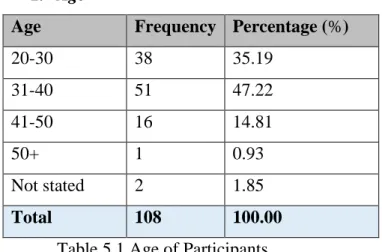
Table 5.1 Age of Participants 108
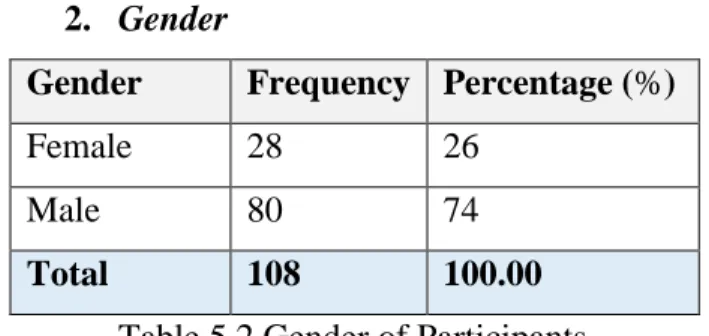
Table 5.2 Gender of Participants 108
Table 5.3 Religion of Participants 109
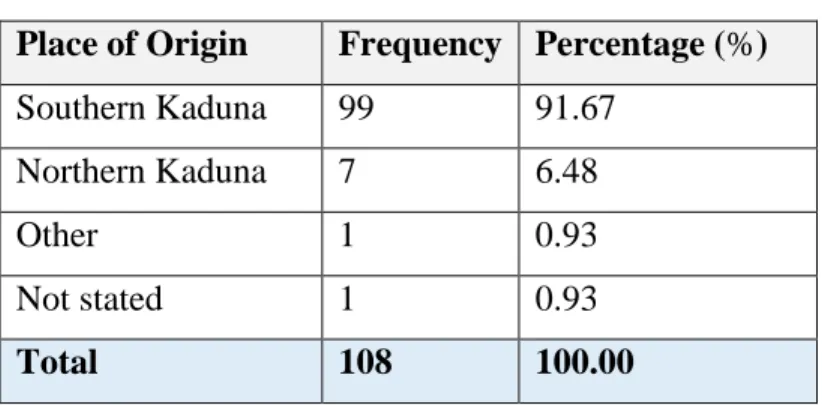
Table 5.4 Participants’ Place of Origin 109
Table 5.5 Length of Membership 110
Table 5.6 Motivations for Joining the Online Forum 111
Table 5.7 Knowledge about other Religions 113
Table 5.8 Contact with Members of other Religions 114
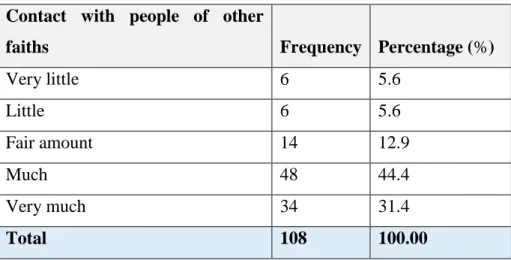
Table 5.9 Difference/Similarity to Persons of other Faiths 114
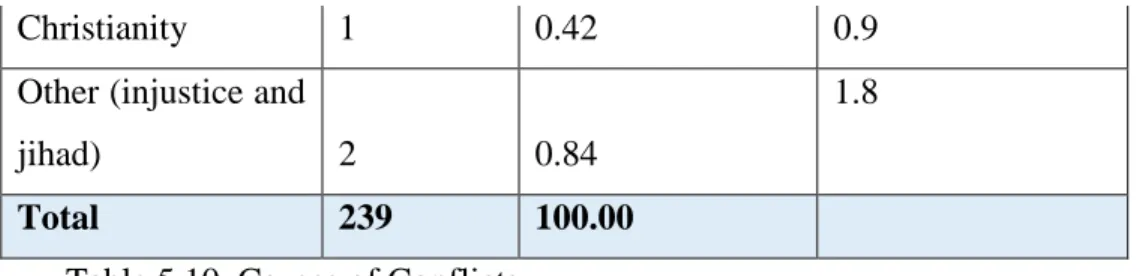
Table 5.10 Causes of Conflicts 115
Table 5.11 Factors that Worsen Conflicts 116
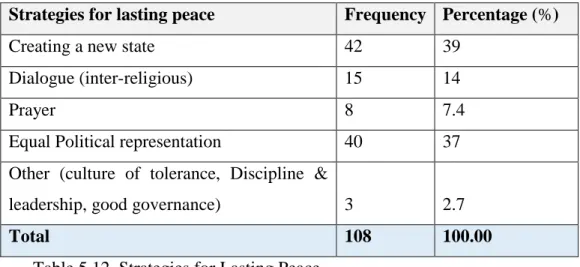
Table 5.12 Strategies for Lasting Peace 118
Screenshots
Screenshot 5.1 Opposition to Signing of Treaty 123
Screenshot 5.2 Muslims arriving at Kachia 125
x
Screenshot 5.3 Reactions over Al-Mustapha’s Visit 133
Screenshot 5.4 Reactions to Disruption of a Sunday Service 147
1
Chapter One:
General Introduction
1.1 Introduction
In his book, Media and Society in the Digital Age, Kevin Kawamoto describes digital media in the 21st Century as involving “a complex web of technologies, practices, policies, controversies, relationships, and economic considerations” (2003:2). He notes further that all aspects of society are affected by the continuously emerging and changing nature of digital media, including news and information, government, politics, religion and civil society (Kawamoto, 2003). At the heart of this dynamic nature of digital media and its effect on society is the several relationships that are formed, modified and unformed on the online digital environment – whether exclusively on the digital environment, as complementary or as a continuation of offline relationships and practices. This makes the digital media environment an important tool and site for contestations of different kinds including the several identity and representation politics that are played out on many localities around the world, and frequently expressed in the conflictual relationships between Christians and Muslims.
The Islam and Christian-Muslim dialogue scholar, Mahmoud Ayoub, rightly observes that the relationship between Christians and Muslims globally has been one of “mistrust, misgivings, and misunderstanding” (2007:43). Several other scholars, like Ayoub, are concerned largely with relations between the “Christian” West and the “Muslim” Arab world – a relationship that has enjoyed even more scrutiny since Edward Said’s seminal work, Orientalism, as well as growing
“Islamofascism”, wars and conflicts since the events of the September 11, 2001 attacks on the World Trade Center in New York. Alongside this broader context are several more local contexts, which, on the one hand, reflect and feed into the broader global context and patterns of Christian-Muslim relations; and on the other hand, have been shaped by specific local encounters, histories, forces and life situations, some of which long predate the 9/11 attacks. For example, the social tensions in Nigeria over the past three decades in which religious and ethnic identities are prominent.
2
Against the background of conflictual ethnic and religious relations in Kaduna, northern Nigeria, this research examines the emerging social and cultural spaces in which religious and ethnic identities are contested, such as the internet; and the religious forms and ideological practices that are (re)produced and invoked in such spaces to create imaginations of identity and othering.
The work employs postcolonial theory to examine the narratives and rhetorical practices of an online forum and to investigate how representations of the Self and Other are produced online by users of the forum and their significance for offline ethnic and religious relations. This chapter offers a general introduction to the research and discusses the theoretical and methodological framework as well as other important introductory issues.
1.2 Background to the Study
In the past three to four decades northern Nigeria has experienced several violent social conflicts involving the contestations and invocation of religious and ethnic identities. Kaduna state emerged as a site for some of the most intense of such conflicts. While conflicts existed prior to colonialism, they have escalated and taken different forms during the colonial and postcolonial state-making processes in Nigeria. Tense inter-ethnic and inter-religious relations are often attributed to historical political configurations as well as the conflation of political, cultural and religious identities (Fwatshak, 2007; Oguntola-Laguda, 2008; Adebayo, 2010). In their study of these conflicts and the general mood of interfaith and interethnic relations in Nigeria, scholars tend to construct the role of religion, religious agitations and ethic/religious identities as
“politicized” tools in the pursuit of other interests (Ayantayo, 2009:103). Some also refer to emerging forms of religious extremism and nationwide mutual suspicion between Christians and Muslims, with each group claiming to be marginalized and feeling that their religion is under threat due to the religious and political activities of the other (Best, 2011; Salawu, 2010; Jega 2000). This is worsened by the mixture of these factors with the looming, persistent and never fully addressed fears and feelings of marginalization and socio-political exclusion by the hundreds of minorities in the country (Suberu, 1996).
The frequency and intensity of these conflicts in Kaduna state in recent years has earned the state a reputation as one of Nigeria’s most volatile states and contributed to the problematizing of religion, ethnicity and their contestations as important political, religious and academic concerns,
3
producing a wide range of efforts to understand their impact on life in the country. These conflicts often involve several minority ethnic groups with a largely shared Christian identity, and the Hausa-Fulani, which is one of Nigeria’s three largest ethnic and politically dominant groups. The Nigerian historian, Toure Kazah-Toure (1999:134) argues that, in fact, the
“Christian versus Muslim dichotomy” in Nigeria’s conflicts was introduced by the 1987 conflicts in Kaduna state. There have been several other conflicts since 1987 that have significantly shaped inter-group relations along religious and ethnic lines in Kaduna, with telling implications for Christian-Muslim relations across the country. Some of the most significant ones include the Zango-Kataf riots of 1992, the Sharia conflicts of 2000, the Miss World Pageant conflict of 2003, and the Post-election violence of 2011.
1.2.1 Emergence of Online “emancipation” Groups
The post-election violence of 2011 saw a huge loss of lives and property across religious and ethnic identification in Kaduna and beyond. However, this was soon followed by several episodes of attacks and mass killings of villagers in the southern parts of Kaduna state, inhabited mostly by Christian minorities. While these attacks where initially reported as perpetrated by
“unknown gunmen”1, they were later identified and subsequently reported2 to be carried out by Fulani herdsmen (Human Rights Watch, 2013). This happened over the years alongside the rise of the activities of the extremist group, Boko Haram in Kaduna and Abuja, especially the bombing of public places and churches.3
The events that followed the post-2011 conflicts saw a rapid rise of activism-oriented civil society groups in Kaduna claiming to fight for the several minorities of Kaduna, commonly referred to as the “Southern Kaduna” people due to the geographical locations of their places of origin and their dominant presence in the southern part of Kaduna state. The general mood was that minorities were being targeted and the attacks on rural areas were interpreted as systematically planned and executed pogrom, which are linked to several historical and contemporary grievances of predominantly Christian ethnic minorities in a predominantly
1 Here are some links to media reports on some of such incidences:
http://allafrica.com/view/group/main/main/id/00021005.html; http://saharareporters.com/2013/05/12/gunmen- attack-southern-kaduna-village;
2 .g. http://www.thisdaylive.com/index.php/2016/10/17/herdsmen-attack-military-outpost-kill-20-in-kaduna/;
https://www.naij.com/61887.html
3 http://edition.cnn.com/2011/12/25/world/africa/nigeria-church-bombing/
4
Muslim majority Hausa-Fulani northern Nigeria. Some Christians, however, have exploited social media and other online platforms to further mobilize and engage their agenda often phrased in emancipatory terms. Some of these groups exist entirely online, or begin online and mobilize for offline practice, while some establish online forums to circumvent offline restrictions and policing, and to explore relations across boundaries, including diaspora relations.
A quick count of such groups revealed over 30 of them on Facebook alone, some of which have over 10, 000 online users. Examples include: Southern Kaduna Youth Liberation Movement, Southern Kaduna Youth and Students Forum, Southern Kaduna Indigenes Progressive Forum, Netzit People’s Movement and Gurara Forum. A report by Judith B. Asuni and Jacqueline Farris (2011) of the Media Tracking Center in Nigeria shows that Nigeria witnessed a dramatic upsurge in social and new media use during the 2011 elections and after, and that these media contributed to both the escalation of violence after the election and access to help for [potential] victims. The populating, around this time, of social media by Southern Kaduna groups may have been part of this general sudden rise in social media use. My study examined one of these online Forums on which members invoke religion and ethnicity in their pursuit of emancipation. My focus was on how members of this group engage in the (re)production of representations of the Self and Other, and the rhetorical practices they employed.
The online group I investigated is a closed Facebook group belonging to a Kaduna-based Non- Governmental Organization that describes itself as a socio-political pressure group. Its profile document and online description shows that it was founded in 2011 by a group of Southern Kaduna professionals with the intention to unite the diverse ethnic groups in Kaduna in pursuit of a common agenda. This agenda is framed as the “emancipation” of the Southern Kaduna people from their oppressive socio-political situation and lack of self-worth, and to enlighten and empower them to more easily deal with the challenges of their daily lives. The forum’s online membership is one of the largest among groups with a similar agenda, comprising over 11,000 online members (residing in Nigeria or in the Diaspora) from across the over 50 Southern Kaduna ethnic groups. The group has recently enjoyed increased visibility in Kaduna and Nigeria through its press releases and press conference, and has presented itself as a non- religious group. The membership criteria include being indigenous to Southern Kaduna by birth or through one or both of one’s parents. In order to maintain the anonymity of the group and its
5
membership, the online forum investigated will be referred to in this thesis simply as Online Forum, or Forum.
1.3 Research Problem and Objectives
In their pursuit of Southern Kaduna interests and emancipation on the online platform, the Forum members invoke religion and ethnicity to construct ideas about themselves and the Hausa-Fulani
‘Other’ in light of historical and contemporary events in postcolonial Nigeria. Most of the conversations in the period reviewed (2013-2014) revolve around issues related to conflicts, violence, attacks on villages, politics and elections. Most of the literature on ethnic and religious relations in Nigeria make use of historical and political theory, and sometimes sociological approaches, that focus on understanding the causes of conflicts as well as making suggestions on the ways to address these conflicts. There is very limited work on the role of media in such relations and how the rhetorical construction and representation of identity inform such relations.
Furthermore, very little exists that critically investigate the changing dynamics and innovative social spaces on which the intertwining causal factors of conflicts are articulated and contested.
Yet, the growing use and relevance of social media for identity politics and pursuit of sectarian agendas increasingly shows this to be a relevant problem, particularly since studies are consistently showing an overlap between social media presence and everyday life (Slater, 2002;
Hongladarom, 2011) 1.3.1 Research Questions
The key question for this research project is:
In what ways are the Self and Other imagined and represented on the Online Forum in light of ethnic and religious tensions in Kaduna?
Sub-questions
- What are the contemporary contestations around religion and ethnicity in Kaduna, Nigeria?
- How has the Online Forum under investigation emerged as a site for such contestations?
- In what ways are religion and ethnicity articulated and contested on the Online Forum?
- How are representations [re]produced on the online platform?
6 1.3.2. Research Aim and Objectives
The primary aim of this study is to understand the nature and mechanisms of identity and representation in new media spaces against the background of tense inter-ethnic and inter- religious relations, through the examination of the narratives and rhetorical practices of a Nigerian online group. My research objectives include:
• To investigate the contemporary contestations of religion and ethnicity in Kaduna state
• To examine the emergence of the online Forum as a site of ethno-religious tension
• To explore the ways in which religion and ethnicity are contested and articulated on the Online Forum.
• To determine how online representations of the Self and Other are produced.
1.4 Theoretical and Methodological Framework
This study is approached as a postcolonial critique, whereby postcolonial theory is employed as both a way of reading, and a theoretical lens for examining two years of content from the Online Forum, as well as data collected through an online survey administered to Forum members. I found postcolonial theory to be appealing as an overarching theoretical framework and critical approach to my study because its core concerns helped me interrogate identity, colonial and postcolonial African contexts and the experiences of Southern Kaduna. It also assisted in analyzing their cultural and religious practices, and the long history of ethnicity- and religion- implicated conflicts that form the background of my study and appear to inform the emerging online practices that I studied. Although it is a highly criticized theory, postcolonial theory offers one of the most nuanced ways of investigating questions concerning identity, difference and the politics of representation, especially among previously colonized subjectivities. Thus, I engage the theory not as a fixed set of assumptions or practices but as a process, a problem that itself, like identity, is shifting, changing and growing as it is brought to bear on several postcolonial issues.
Postcolonial theory encompasses a broad range of approaches, interests, epistemological and critical practices that make it impossible to provide a singular definition. However, some of the common elements in this diversity allow a certain delineation of the field. Postcolonial theory involves the critical response to the historical colonization of different peoples, and the
7
continuous effect of these cultural encounters on the colonized and the empire, as well as contemporary forms of colonialisms. As Graham Huggan argues, postcolonial theory is a
“performative mode of critical revisionism, consistently directed at the colonial past and assessing its legacies for the present, but also intermittently focusing on those colonialisms that have surfaced more recently in the context of an increasingly globalized but incompletely decolonized world” (2013: 10).
Thus, at the center of postcolonial theory is the historical experience of colonialism. Jenni Ramone thinks of both postcolonial literature and theory as a “reaction” to colonial encounters;
and that critiquing the representations and assumptions that fueled colonialism is a core objective of the theory (2011:1). Gautam Thakur (2016) explains that the common elements visible among postcolonial theorists are a suspicion of ontological questions, as well as a distrust of grand narratives and universalization. It is a “political and philosophical countermanding of the need for a transcendental signifier universally establishing meaning across societies, cultures and history” (Thakur, 2016:18). It is precisely this attention to nuance and complexity that makes postcolonial theory useful in my study.
At the heart of ethnic and religious relations in Nigeria is the experience of colonialism in its different expressions. Particular to northern Nigeria is the experience of indirect rule, and for northern minorities, what is referred to as colonialism within colonialism, or colonialism by proxy (Ochonu, 2013). This involves the annexing of largely non-Muslim northern minorities into northern Muslim political structures – the Sokoto Caliphate and its various emirates, and the complex relationships of dominance and resistance that emerged, which minorities still employ to interpret their current realities (Kazzah-Toure, 1999). Mahmood Mamdani (1996) and Peter Ekeh (1975) interrogate the indirect rule system and its enduring effects on postcolonial state and civic relations – religious, ethnic or racial. They maintain that colonialism created two-tiered states in Africa, which Eke (1975) termed the Two Publics in the Nigerian context, and ethnicity and religion were utilized to organize colonial state and to fragment resistance.
Postcolonial theory offers a way to critically engage this phenomenon and its continuing relevance. As Ramone observes, postcolonial thinking questions the understanding of history that represents places or events from a single perspective and fixes them within specific dates. It encourages multiple perspectives and understands history as having an ongoing impact that
8
needs to be interrogated (Ramone, 2011:4). In doing so, postcolonial theory helps me move beyond essentialized ideas about identity and generalized narratives about inter-ethnic and inter- religious relations, towards questioning what appears to be known with certainty, and to better draw on the specific context and particularities of Kaduna and Nigeria, while still critically engaging grand narratives about Christian-Muslim relations and social conflicts. Thus, the theory serves as an outlook, a specific critical gaze on ‘reality’; a methodology for engaging historical and contemporary knowledge forms and issues, as well as a political practice that privileges previously silenced voices and alternative knowledge.
Identity is a central problem within postcolonial theory. And key figures in the postcolonial tradition – Edward Said, Homi Bhabha and Gayatri Spivak – all wrestled significantly with this question, theorising identities as largely discursively constructed. Said’s Orientalism (1978) raises important questions about the mechanisms of such constructions over time, as well as the relationship between knowledge and power in the process of defining and dominating groups. In Said’s work othering and representation appears to be a straightforward binary of an ”us” vs
”them” relationship. Thus, he seems to draw a clear line between the Orient and the Occident while he is actually concerned with the discursive production of the Arab and Muslim Other as oversexed, primitive, cunning and barbaric, through media and knowledge regimes that imagine the West in opposition to the imagined Other. Bhabha (1991), however, theorizes the Other in a way that avoids any binary conception of identities. He does not entirely free the Self from the Other. In his engagement with marginal identities and the idea of hybridity he creates a space where neither the Self nor the Other is entirely exclusive. In other words, identities do not have clear exclusive borders. Spivak (1988) focuses on the subaltern subject, particularly the subaltern woman subject, and questions the role of intellectuals in the representation of that subject. She argues that there is no satisfactory position from which the subaltern, who is forever voiceless, can be represented. She further holds that even discourses that are politically very radical consolidate the West’s position in discourse (Spivak, 1988).
These approaches inform most postcolonial writing and activism and and the various ways other scholars have further developed them, offer a suitable optic for investigating identity problematics in Africa, and specifically in Kaduna, irrespective of the space in which such identities are negotiated. They make visible the workings of representation and the discursive
9
creation of the Self and Other in daily lives, and in the language and practices of the Online Forum I investigated. Abdullahi An-Na’im (1999) and Mahmood Mamdani (1996) both emphasize the relevance of such investigations in their exploration of the relationship between indigenous identities in the polity and postcolonial state-making. They highlight the unresolved as well as re-emerging tensions in this context. An-Na’im, in “Competing Claims to Religious Freedom and Communal Self-determination” (1999), wrestles with the question of indigenous legal systems such as African customary laws and Muslim personal law, and the meanings and tensions they hold for postcolonial state-making. An-Na’im argues that mediating issues of self- determination and claims to religious freedom in this context must be understood against colonialism and the global forces that determine the nature of, and changes in, postcolonial African states. This is what postcolonial theory equips me to do as the offline or online struggles of minorities in northern Nigeria appear to be for self-determination against state-making and legislative processes that (allegedly) exclude and oppress them.
1.4.1 Theoretical Imperfections
Despite the usefulness of postcolonial theory for my study, certain criticisms have been expressed against it that could have some implications for my study and, thus, require attention.
Obsession with Colonialism: Moore-Gibert cites the captivating expression of one critic about the implication of the fixation on colonialism and colonial discourse in postcolonial theory:
“Deconstructing imperialism keeps us within imperialism’s orbit” (1997:20). He further highlights the criticism that the focus on imperialism blinds theorists from new “cultural productions of the postcolonial world” in a process that only replicates the imperial discourse rather than engage local ones (1997:20). Said’s Orientalism (1978), for instance, focuses almost exclusively on the colonizer and their discourse. Said (1978), arguably, almost ends up in a self- contradictory practice: he homogenized the empire, representing it as possessing an essential unity, with very little variation. Yet, his criticism rests on the idea that the West essentialized and constructed the identity of the rest in a homogenous way.
The obsession with colonialism/imperialism in postcolonial theory is potentially misleading in that it could give the impression that identities and differences among previously colonized groups can only be understood in light of historical colonialism. It could also undermine the long existing and varied forms of relationships, interactions and meanings that informed the realities
10
of groups prior to colonialism, or which may have existed concurrently and yet independent of colonialism. While the experience of minorities under British indirect rule is historically significant in my study, other factors such as precolonial slave raiding narratives, trade, intermarriage, and spatial segregation prior to, and during colonialism, contribute immensely to how identities are represented and negotiated offline and online in contemporary Nigeria. While they also enhance the understanding of colonialism, these factors, without being tied to colonialism, still offer very important insights into relations in the region.
But can there be a postcolonial theory without an explicit focus on historical colonialism?
Ashcroft, Griffiths and Tiffin (2006) would respond in the negative. In their introduction to the second edition of the Postcolonial Studies Reader, the authors remind readers that postcolonial studies, whatever form it may take, rests on the “historical fact of European colonialism and the diverse material effects to which this phenomenon gave rise”, and they add, that “we need to keep this fact of colonization firmly in mind” (Ashcroft, Griffiths and Tiffin, 2006:1). Ashcroft, Griffiths and Tiffin further argue that the “increasingly unfocused” application of the term “post- colonial” to several subjects and practices threaten the survival of the effective meaning of the term (2006:1-2). Thus, for the authors, Rukundwa’s and van Aarde’s (2007:1171) optimistic definition of postcolonial theory as “defiance by which any exploitative and discriminative practices, regardless of time and space, can be challenged” would constitute an extreme diffusion of the theory. The fact of colonialism is important for the maintenance of the distinguishing feature of postcolonial theory. Indeed, as long as the impact of colonialism is still very strongly felt and neo-colonialism remains an everyday question, postcolonial theory will continue to be a valuable tool for interrogating important elements of the postcolonial condition, such as identity.
However, any rigid fixation on imperialism that blinds the theorist from the other diverse cultural productions and realities, historical or otherwise, must be avoided, as I attempt to do in this study. Postcolonial theory holds value for other kinds of practices that do not necessarily revolve around [neo]colonialism but acknowledge it. The online subject-production I examine, for example, does not necessarily revolve around the experience of [internal] colonialism, although the experience significantly contributes to how identities are engaged on the online platform.
Sneaking in of French High Theory: Moore-Gilbert sees postcolonial theory as “work shaped primarily, or to a significant degree, by methodological affiliates of French ‘high’ theory –
11
notably Jacques Derrida, Jacques Lacan and Michel Foucault” (1997:1). Moore-Gilbert (1997) argues that this “intrusion” of high theory has bought postcolonial theory its greatest criticism.
The influence and presence of French and other Euro-American ideas in the social sciences and humanities today is almost ubiquitous and could lend credit to the views that postcolonial theory makes theory complicit in neocolonialism and universalization of Eurocentric ideas that misrepresent the non-western experience. I do not think that the value and usefulness of postcolonial theory should be simply dismissed because of the origins of the ideas on which some of its key arguments were built. The value and relevance of various European/American contributions cannot be downplayed, but like any uncritical obsession with colonialism, their usage can be modish and could blind scholars from possibly better and more contemporary alternatives. The challenge is to critically apply theory, not to simply adopt them as fully developed explanations. Despite their use of high theory, postcolonial theorists have developed ideas that best enable me to understand my subject of investigation critically. I think the value and usefulness of theory should be prioritized over origins and location, and in the spirit of Homi Bhabha, I do not think there can be exclusively “Western” or “French” theories in the increasingly hybrid realities of our time. Nonetheless, I also believe that Africans need to theorize their own realities and not allow subscription to Euro-American theories stifle this effort.
Mystification of the Colonized’s Realities and Praxis: Neil Lazarus, in the Postcolonial Unconscious (2011), holds that postcolonial scholarship through strongly held but inadequately formed ideas, rely on a set of concepts, assumptions, theories, and methods that have proven to be inadequate for engagement with the supposed object of study – the postcolonial world. He argues further that these set of assumptions and theories have only enabled postcolonial theorists to further “mystify” the postcolonial world, making it even more unintelligible (2011: 16-17).
Benita Parry, and other critics agree that such mystification of, especially, the material realities and the operations of capitalism in the postcolonial world, constitute a major failure of postcolonial theory. Moreover, they argue, there is no interaction between theory and practice in the field despite its claims about bringing forth alternative knowledge systems and giving voice to those on the margin (Bernard, Elmarsafy and Murray, 2016:3). Parry (2004) sees the disciplinary location of postcolonial studies largely within English and cultural studies as part of the problem. She argues that it informs an orientation towards “distanced interpretation of texts,
12
images and discourses” which deny the discipline any substantial involvement with the actually lived situations and experiences of imperialism” (Parry, 2004:74).
As a student of postcolonial theory, despite its appeal, accessing its discourse has felt like assuming an entirely new social identity. In order to belong, I needed to learn and develop the specific language of postcolonial theory. A set of highly ambiguous concepts needed to be understood, and still, some of its important content such as Spivak’s and Bhahha’s works initially only became accessible through the interpretation and simplification of other writers.
The intellectual demands of the field do limit its thoughts to well-educated persons, and the
“subaltern”, whose reality many theorists purport to examine, may barely recognize themselves in the discourse. The conversations and writings of postcolonial theorists, thus, barely become intelligible to a wider audience, academic or otherwise, and its captivity to western theoretical traditions, assumptions and methodological approaches makes it inaccessible, to an extent, to its putative subject - the postcolonial world - beyond the metropolis. The aim of my usage is to lay bare rather than mystify online identity construction. Thus, I use postcolonial theory with this awareness in mind and with the conviction that it can make this possible. However, I do believe that a certain level of bridging is required between theorizing and practice, and I conceptualize my use of the theory as an active engagement with real experiences of people – to the extent to which the online space (in relation to the offline) can be conceived as real.
The Death of Postcolonial Theory: Gautam Basum Thakur (2016), in his work which aimed to reimagine postcolonial theory to better serve the needs of the 21st century, argues that postcolonial theory as it is most commonly used and understood is dead. He argues that the West is no longer interested in erasing or marginalizing the Other on account of difference, but actually upholds the unique worldviews and difference in the face of globalization. It is precisely the “manifest content” of globalization and its underlying longstanding position as the producer of knowledge and universal that Postcolonial theory should engage (Thakur, 2016:5-7). Thakur contends that postcolonial theory needs to be revised to address the cultural production of knowledge globally. Highlighting the often-drawn distinction between postcolonial theorists and critics based on their respective focus on text and material conditions of the colonized worlds, he argues that both need to move beyond exploration and criticism of representations of the Other, and recovery of marginal voices. This is because such use of the theory, in his view, do not
13
change the West’s perception of the Other, and empower the West to further access and exploit non-Western voices, which in Academic institutions have already been domesticated (Thakur, 2016:31).
Thakur’s work offers a valuable and current review of postcolonial theory, and his application of the theory to interrogate western film has value for my study. However, I think he overstates the loss of significance of postcolonial theory and the fizzling out of its concerns. He also divides the world into ‘the West’ and ‘the rest’ very neatly, and thereby fails to see the several other forms of global relationships and representational politics that make postcolonial theory relevant today.
I agree that postcolonial theory requires reimagination to suit today’s forms of subject production, but, as Thakur’s own work demonstrates, this is not because the problems postcolonial theory initially sought to address have ceased to exist but that they have taken on new forms. Thus, in my study, postcolonial theory remains a useful tool and method to examine new forms of subject production and the new media platforms on which this takes place.
Moore-Gilbert’s argument nearly two decades ago is still very relevant. He notes that despite limitations, postcolonial theorist such as Edward Said raise important questions that require serious attention:
whether it is possible to represent cultural difference without, on the one hand, resorting to essentialist models of identity or, on the other, reducing different cultures to the status of exchangeable terms in a system of more or less arbitrary equivalences. More pressingly still, Said’s work asks whether ‘true’ knowledge – or even non-coercive and non-reductive representation of the Other – is indeed possible. Behind these inquiries lies another, deep preoccupation, which Said expresses as follows: ‘Can one divide human reality, as indeed human reality seems to be genuinely divided, into clearly different cultures, histories, traditions, societies, even races, and survive the consequences humanly? (Moore-Gilbert, 1997: 73).
These questions remain in the background as I wrestle with the question of identity and representation. My study of an Online Forum raises further critical questions regarding the significance of the online space and what difference this makes to the nature and mechanisms of representation. For the reasons already discussed, postcolonial theory, in my view, is a sufficient optic for examining representations and identity politics on any space. However, I imagine the online platform not merely as a passive stage or board on which identities are reworked/worked out and re/produced, but as a space actively shaping the forms of representations that eventually emerge. Thus, the platform itself becomes an important problem. This is reflected in Marshal
14
McLuhan’s communication maxim that “the medium is the message” (1964). Postcolonial theory is not sufficient for examining this dimension of my study. Thus, I employ research in new digital media and digital religion to better understand the online platform and the ways it shapes and is being shaped by online rhetorical and religious practices.
1.4.2 Digital Media and Religion
Social science researchers increasingly explore the internet and internet-based phenomena for relevant and valid research and methods (Toepoel, Vis, Das and van Soest, 2008; Schrooten, 2012). Janice Waldron (2011) asserts that there is general agreement among researchers in the social and media sciences that online communities represent offline communities in the traditional sense of the term, although with significant epistemological differences. Reiterating Hines’ (2005) observation about the cogency of online phenomena, Waldron notes that in its own right, the internet should be regarded as a cultural context. Therefore, if online communities are considered as genuine, functioning and situated in a legitimate cultural context, then valid entities exist online that can be studied (Waldron, 2011).
Extending Waldron’s argument, Vince Marrota (2011) examines literature about online cultural and religious identities to understand the extent to which ethnicities constructed online negotiate or reflect those constructed offline. Morrota (2011) argues that online subjectivities provide alternative representations that utilize dominant discourses within the societies hosting them.
This provides an epistemological and methodological foundation for my examination of the Online Forum as a valid entity in a legitimate social context. This perspective, as articulated by Marrota, could assist in making visible how the construction of the Self and Other occur online, as well as the ways in which it reflects, and contributes to prevailing social conflicts in Kaduna, Nigeria.
Heidi Campbell in Digital Religion: Understanding Religious Practices in New Media Worlds (2013) proposes and argues for a frame that captures the changes in, and the conception of, religion within digital culture. For Campbell, digital religion refers to religion as articulated and performed online and also denotes how religious practice is being shaped by digital media and spaces. Campbell (2013) argues that the study of religion in digital culture will shed more light on the impact of the internet on society more broadly. Mia Lovheim (2013) argues that an online religious identity is not really different from an offline one. She holds that in contemporary
15
society religious identities are mediated, performed, and requires continuous revision and performance in social settings that are known and unknown and some of these settings are physical while others are digital.
From the same perspective, Kerstin Radde-Antweiler (2008) explores the performance of religion and ritual in online environments free of real-life body conditions. She examines Active Worlds, There and Second Life as virtual worlds that present three-dimensional spaces for individuals, represented as avatars, to live and interact with each other. Radde-Antweiler (2008) focuses on Second Life as an enhancement of real life possibilities at the religious level where thousands of users transfer real life religious activities, symbols and performance into the online virtual world. Louise Connelly (2013) notes that for some people, online ritual is not only contained within the Second Life but that there is a negotiation between the online practice such as meditation and the offline “realities”i which the online serves to initiate and to simultaneously frame. This is in line with Campbell’s (2013) assertion that the online community is usually a supplement and extension of the offline experience. These studies and other writings on new media provide me with the conceptual tools to engage the online forum to understand its nature, how it works and how (if) offline experiences and media are transformed when engaged on online platforms.
1.5 Mapping the Context of the Study
Kaduna state, created in 1975, is one of the largest states in Nigeria, with a population of over six million (National Population Commission, 2006). It is situated astride northern Nigeria with one part (Southern Kaduna) in the Middle-Belt region, and the other part in the area with a large Hausa-Fulani and Muslim population. The northern part of the state is predominantly populated by Hausa-Fulani and Muslims. Central Kaduna has a large Hausa-Fulani and Muslim population, but also has several other ethnicities and religions, and a large population of migrants from other parts of Nigeria and beyond. This makes Kaduna one of the most ethnically and religiously diverse cities in Nigeria (Aruwan, 2014). The southern area of the state is populated by over 50 largely Christian minority ethnicities with distinct languages. Some of these include: Adara (Kadara), Anghan (Kamanton), Ayu, Atyab (Kataf), Ham (Jaba), Gwong (Kagoma), Gure, Fantswam, Gbagyi, Takad, Sholio (Marwa), Tsam (Chawai) Bur (Sanga), Bajju (Kaje), Atachaat
16
(Kachechere), Bhazar (Koro), Ninzo, Oegworok (Kagoro).4 Collectively, these groups and their locations were known in colonial times and until late 1990s, as Southern Zaria because of their geographical location to the south of Zaria (Zazzau emirate) (Suleiman, 2011; Goifa, 2011).
However, “Southern Kaduna”5 has become the most commonly used designation to refer to these people both in popular usage and academic writings. I have used “Southern Kaduna” throughout this work for this reason, and because that is the designation that is used by the members of the Online Forum I have examined.
The metropolitan city of Kaduna was created by the British around 1912, as the administrative capital of the old Northern protectorate. It became the capital city of the old Northern Region at independence in 1960, and subsequently the capital of the North central state (1967) and old Kaduna states respectively. Kaduna was also the major military center of northern Nigeria and focal point of northern politics and economy. Although the importance of Kaduna in this regard somewhat declined with the emergence of Abuja, near Kaduna, as the new Federal Capital Territory of Nigeria in 1991, Kaduna is still a “nerve centre” and holds symbolic significance in northern Nigeria, making it a highly contested place (MEP, 2010:9).
4 The names in parenthesis are the Hausa-Fulani ways of referring to these groups, some of which are also the most known names of these groups in northern Nigeria. Philip Hayab, who at the time of writing is researching Language and Identity at Stellembosch University is revising earlier writings on these ethnicities such as Meek (1925) and Gun (1956), and has suggested that there are over 63 ethnic groups in Kaduna, at least 58 of which are from Southern Kaduna, he provides a list here: https://philiphayab.blogspot.co.za/2015/08/kaduna-state-north-central-nigeria.html
5 Based on my familiarity with the area and informal conversations I have had with several people about the preference for Southern Kaduna instead of Southern Zaria, the most common reason is a desire to dissociate themselves with Zaria emirate and the history attached to it especially following the establishment of Chiefdoms for Southern Kaduna that were finally independent from the emirate in the late 1990s and early 2000s.
17 Figure 1.1 Senatorial Districts of Kaduna State Nigeria
. Source: www.kadunastate.org.ng
18 Figure 1.2 Map of Kaduna State, Nigeria
Source Suleiman, 2011:3.
19
Christianity and Islam are considered the two main religions in Kaduna (as in Nigeria at large), and both Muslims and Christians claim to constitute the majority population. The most recent census in 2006 did not include religion and ethnicity as variables, hence it is impossible to verify these claims. The last census to include religion was conducted in 1963 (Ostien, 2012:2), which, though considered more reliable than subsequent ones (Angerbrandt, 2011:29), is surrounded by controversy (Okafor, Adeleke and Oparac, 2007). Thus, it is difficult to tell the current Christian–Muslim composition of the state. Since the violent conflicts of 2000 and 2002 there has been a huge migration of people towards areas of the state inhabited by members of their own religion and ethnicity– Muslims to the north of Kaduna, and Christians to the south) (Harris, 2011:293). Christians and Muslims still interact in daily life, they work together in offices and do business together during the day, but nevertheless move back to their respective areas at the end of working ours.
Kaduna is also a hub of religious life and activities. It houses the headquarters of the northern branch of the Christian Association of Nigeria (CAN) and the national headquarters of one of the prominent Islamic umbrella organizations in Nigeria, the Jamaatu Nasri Islam (JNI). . Both organizations have emerged as key role players in the Nigerian public sphere, often positioning themselves as the voices and representatives of members of their respective religions (Odumosu, Olaniyi and Alonge, 2009: 38-68). Numerous other Christian and Muslim religious organizations are also present, and religious activities are among the most visible public activities in the state.
It is very common to find religious books and paraphernalia being sold in markets and street corners, and to hear very loud Christian and Muslim music and sermons on the streets coming from preachers or tapes played by vendors. As in other parts of Nigeria, religion permeates every sphere of life. Political power, the concept of nation, authority and control, everyday conversations and interactions are coated with religion, spiritualized and expressed in religious or “God-talk” and performances (Ayantayo, 2009). Thus, Christianity and Islam are the most public religions in Kaduna despite the existence of several other religions, such as African indigenous religions, the Hare Krishna movement, Eckankar, the Ancient Mystical Order Rosae Crucis (ARMOC). Currently, there is ongoing controversy over a proposed religious bill by the new governor of Kaduna state, part of which intends to restrict public religious activities such as
20
preaching and playing of religious cassettes and CDs to private homes or inside church buildings as well as other strategies to address the problem of religion-related conflicts in the State.6
1.6 Significance of the Study
By applying postcolonial theory this study offers a fresh and critical understanding of inter- ethnic and inter-religious relations and social conflicts in Africa, as well as burning questions concerning identity. This is a major shift from the dominant historical and political theory approaches to the subject. The study offers new insights that could greatly inform both theory and practice in terms of revising how issues related to communal self-assertion, minority struggles, identity politics, material and epistemic violence, and other critical issues are understood, and what are the most effective and innovative ways of addressing them.
The study’s investigation of online platforms and related practices offer new understandings of the significance of new media to every day lived experiences, and how social actors transcend and negotiate boundaries, deal with grievances and conflicts, and explore dynamic avenues for pursuing their goals. The study also indicates that policy and political practices need to view online environments and social/cultural spaces as equally influential in all aspects of life.
Considering Nigeria’s social conflicts, the study’s focus on representation offers insight about destructive reproductions of identity thereby enabling a better understanding of these conflicts and creating another avenue for exploring potentials for more lasting coexistence.
1.7 Conclusion and Structure of the Thesis
I have offered, in this chapter, a general introduction and background to the central questions of this research. Areas covered include social conflicts in northern Nigeria, the emergence of social media activists and emancipation groups in Kaduna, the research question and problems, postcolonial theory and religion on digital media, and a description of the context of study. This research report is organized into seven chapter as follows:
6 http://www.thisdaylive.com/index.php/2016/04/03/kaduna-el-rufais-controversial-religious-bill/
21
Chapter one offers a general introduction to the study paying close attention to the background, research problem and objects, as well as a critical review of the theoretical framework and approach to the study. The chapter also offers a background to the geographical context of study.
Chapter two reviews relevant literature, and surveys relations between ethnicities and religions in Kaduna, Nigeria. It focuses on key historical moments, events and conflicts that have shaped ethnoreligious relations.
Chapter three discusses theories and previous studies on identity and representation, paying particular attention to ethnicity, religion, language and media in postcolonial Africa and Nigeria.
Chapter four outlines the research methodology, methods and design of the study.
Chapter five presents, analyses and discusses the online content as well as survey data utilized in this study. This is organized under broad categories of representations of the Self, Other and Religion.
Chapter six applies the empirical material of the study to theorize about the nature and mechanism of online representation and online religion in postcolonial Africa.
Chapter seven concludes the study with a summary, general conclusions and a section in which the implications of the study for peacebuilding in Africa is discussed.
22
Chapter Two:
Socio-Historical Survey of Ethnic and Religious Relations in Kaduna, Nigeria
2.1 Introduction
In this chapter I examine, and review literature on the factors and historical moments that shaped and produced the tense ethno-religious relations in Kaduna within the broader context of northern Nigeria, and inform emergent definitions of the Southern Kaduna Christian Self and Hausa-Fulani Muslim Other. The Sokoto jihad of the 19th century serves as an important historical starting point for my investigation of precolonial relations in northern Nigeria, due to its significance in the constructions of religious and ethnic identities. The chapter also explores the role of media in cultural interactions, dominance and interfaith conflicts in Nigeria, as well as the emergence and impact of new media on these relations. The literature reveals that some of the key factors that cause and sustain interreligious and interethnic tensions are historical grievances that can be traced back to pre-colonial and colonial times, tensions that were never adequately addressed by the Nigerian Federal state. I argue that while this is important, the changing nature and platforms for expressing and engaging these factors need to be critically explored using new approaches to better understand the dynamics of present day relations. The chapter begins with a review of key literature that represent the diversity of academic discourses on Christian-Muslim relations in Nigeria more broadly.
2.2 Christian-Muslim Relations in Nigeria
Christian-Muslim relations in Nigeria is a widely explored subject, particularly from political and historical perspectives. Scholars of religious studies and theology have also engaged the problem, but mostly adopting the same historical and social/political approaches. The theologian, Akintunde E. Akintunde (2014), in his book on the responses of Christians to Islam in Nigeria, situates Christian-Muslim relations in Nigeria within a global context, while at the same time making a strong case for more localized and contextualized approaches to the issue if thorough understanding is to be achieved. He argues that Nigeria offers models for both cooperation and
23
competition that helps to understand interreligious relations on a more global level. To correct the imbalances in literature on the subject, Akinade (2014) contends that most studies adopt approaches and focus on content that best serve a western context and vision of dialogue. He further argues that much of the global perception of interfaith relations in Nigeria are a misrepresentation facilitated by the media, which spread a singular narrative that imagines Nigeria to be a space for radicalism and intractable ethnic and religious violence. This, for him, undermines the realities of peaceful relations that also exist in the country. Akinade (2014) offers crucial insights on the tense relations in the country. He notes that interfaith relations have been shaped by prevailing theological, cultural, political and historical conditions and circumstances that inform the way Christians and Muslims imagine and perceive each other.
Adherents of both religions also apply their own religious standards to interpret and distill each other’s religion. In addition, that national politics is marred with religious sensibilities and that the appropriation of religion for securing and distributing political/administrative offices has become a deeply rooted practice and a well-established convention in the country. This has created a combative aspect to worsen interfaith relations.
My study affirms Akinade’s (2014) suggestion that any thorough analysis of interreligious relations in Nigeria must take into account the several interrelated factors that are at play in the Nigerian public space. But more important for my work, is Akinade’s (2014) presentation of interfaith encounter in Nigeria as an ambivalent one, which evoked both affirmation and condemnation. My study highlights how this ambivalent encounter and its causal factors are also at play in the digital public space, thus showing how crucial it is for studies of interfaith relations to also take seriously the online social sphere, which in contemporary times, is reshaping encounters in terms of meaning and experience, and challenging previous strategies for good interreligious relations.
The political scientist, John Boye Ejobowah, in his work, Competing Claims to Recognition in the Nigerian Public Sphere (2001), reviews the political and constitutional strategies that Nigeria has adopted from the colonial period to the present to better accommodate its multiple ethnicities. He argues that while British colonialists tried to unite the northern and southern regions of the country, they created more divisions within each region. This resulted in a problem for the postcolonial Nigerian state which explored several strategies to manage divisions
24
among ethnic groups competing for resources and recognition (Ejobowah, 2001). One of the key strategies has been state creation through which the society is divided into smaller states, and the construction of units tied mostly to ethnic identities. Yet, contestation remains as there are always groups clamoring for recognition. Ejobowah (2001) argues that sometimes such claims for recognition are only a smokescreen for more deeply rooted political and/or economic problems. For instance, the struggle for constitutional recognition of the Sharia legal system in northern Nigeria is, for some proponents, a strategy for re-establishing the North that was lost through colonialism, or a way of gaining and asserting power. Ejobowah (2001) argues that in differentiation-prone societies like Nigeria, group constitutional recognition can cause instability, and at the same time recognition-denying institutions can cause intense conflicts. Thus, recognition must seek to balance the need for differentiation among groups with the need for social stability. Ejobowah highlights the fact that the question of diversity has been an on-going constitutional debate, with continuous and frequent modification and adjustment to better address the problem. However, through these assertions, Ejobowah (2001) ignores the dynamics of ethnicity, especially its strong ties to religion in northern Nigeria. In so doing and by treating the problem as largely a tension between theoretical approaches to diversity and local realities, Ejobowah (2001) downplays the importance of religion as one of the major problems that the same constitutional changes attempt to deal with.
The religious aspect receives more attention from Rotimi Suberu, a prominent Nigerian political scientist. In his book, Federalism and Ethnic Conflicts in Nigeria (2001), he faults the Nigerian brand of federalism for the conflicts in the country. He argues that while the primary goal of federalism was to accommodate the diverse ethnic and religious communities in the country, it has become an institutionalized conflictive system that exists mainly to process access to the highly centralized power, opportunities and resources (Suberu, 2001). Thus, the federation has undermined diversity rather than adequately addressing problems related to it. Suberu (2001) argues that the competition for power, resources and opportunities at the center has led to the politicization of religious agitations to enhance the chances of access. Thus, Nigeria’s federal character, which aims to increase equal representation and access, has become more about the representation of Muslims and Christians at all levels of the Nigerian public sphere. This has in turn increased the mobilization of religion in pursuit of sectarian agendas. Suberu (2001) suggests that unless the Nigerian federal system begins to promote (and limit) political and
25
economic self-rule, divisions along ethnic and religious lines will remain a problem. While the politicization of religion theory is the most widely appraised explanation for poor Christian- Muslim conflicts in Nigeria, Suberu (2001) provides deeper insights into a very important question, namely, at what point do religious affiliations begin to matter in political competitions, and why. Although he acknowledges the diverse interconnected factors contributing to poor interreligious relations, Suberu (2001) treats the problem as primarily a political one. My study gives significant attention to religion as an equally important factor in these conflicts to show that while it may be true that religion is politicized, it is important to understand why it is easily susceptible to such politicization. My study suggests that we should perhaps look beyond politicization.
While essentially offering different perspectives to support the politicization of religious theory, contributors to the volume, Religion in Politics: Secularism and National Integration in Modern