PLAGIARISM
PUBLICATIONS
Some of the processes mentioned in Figure 1 can be used to produce algae-based jet fuel.
![Table 1: Summary of important jet fuel properties (derived from [11])](https://thumb-ap.123doks.com/thumbv2/pubpdfnet/10642134.0/37.892.108.779.656.1033/table-summary-important-jet-fuel-properties-derived-11.webp)
PREFACE
INTRODUCTION
- BACKGROUND AND SIGNIFICANCE
- AIM & OBJECTIVES
- HYPOTHESES AND EXPECTED OUTPUTS
- Hypothesis 2
- Expected output
- RESEARCH PROBLEM AND QUESTION
- METHODOLOGICAL APPROACH
- Cultivation
- Biomass harvesting
- Physiological modification
- Extraction of crude bio-oil
- Conversion of bio-crude oil into jet fuel
- Jet fuel characterisation
- Blending of algae-based jet fuel with the conventional jet fuel
- CONTIBUTION TO KNOWLEDGE
- THESIS OUTLINE
This constitutes one of the main problems encountered in this field of algae-based fuel, especially for algae-based jet fuel. This was done to verify that the produced algae-based jet fuel meets the required aviation standards.
PREFACE
LITERATURE REVIEW
INTRODUCTION
These types are mainly used in the production of biofuels such as biodiesel, biohydrogen and bioreactive fuel. Bioreactive fuel from algae is becoming increasingly interesting and could become a very important business with global implications in the near future.
COMPLIANCE AND CURRENT DRIVERS FOR ALTERNATIVE JET FUELS
Adequate lubricity Affects the jet fuel's ability to lubricate the fuel system and engine controls. Safety Avoid explosions when handling the jet fuel and when storing in containers.
ALGAE- BASED AVIATION FUEL: CHALLENGES
POTENTIAL FOR MICROALGAE OIL TO BE USED FOR JET FUEL
OIL YIELDS FOR SPECIES TO BE USED FOR ALGAE -BASED JET FUEL
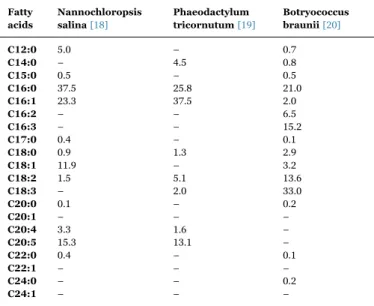
Botryococcus braunii has a molecular structure roughly similar to the gas oil fraction of crude oil; it is potentially suitable for use in blending with other fuels to produce jet fuel.[21] However, one of the problems with Botryococcus is that its growth is very slow. In addition to the challenge of creating a high lipid content for many species, there is another challenge: to achieve a sustainable growth of algal biomass with a high level of productivity in a short time.
![Table 3: Output in terms of oil content for some algae species (adapted from [23-26])](https://thumb-ap.123doks.com/thumbv2/pubpdfnet/10642134.0/41.892.90.807.665.1143/table-output-terms-oil-content-algae-species-adapted.webp)
BIOMASS DRYING AND BIO-OIL EXTRACTION
In general, in the extraction of bio-oil from various species, solvent extraction is used in most cases due to the simplicity of the process, low cost and low energy consumption.
CONVERSION OF ALGAE INTO BIO-JET FUEL: EXISTING AND NOVEL
BIOMASS TO LIQUIDS PROCESS: GASIFICATION TECHNOLOGY
- Technological development, commercial activity and fuel readiness
- Opportunities, challenges for use in aviation and compatibility with existing systems
The readiness of the algae-based jet fuel using this technology is not yet determined because the technology requires optimization and important improvements. For example, its energy density (per unit volume) is 3% lower compared to that of conventional jet fuel.
PYROLYSIS
HYDROTHERMAL LIQUEFACTION
- Opportunities and challenges for use in aviation regarding pyrolysis and hydrothermal
FERMENTATION TO JET (FTJ)
- Opportunities and challenges for use in aviation
This sequence involves the conversion of alcohols into leaving groups such as halides and sulfonate esters followed by reduction with metal hydrides.[51] The conversion of alcohol to alkanes can also be achieved by deoxygenation using enzymes. The hydrocarbons are then hydroprocessed to create inventory for blending purposes.[47,52] The fuel produced from this process is ASTM certified only for blending with conventional jet fuel in proportions lower or equal to 10%.[51] The certified version is called synthesized iso-paraffin fuel from fermented hydroprocessed sugar.[51]
TRANSESTERIFICATION TO BIO-JET FUEL
- Opportunities and challenge in fuel aviation
SUGGESTED APPROACHES: NEW TRENDS AND CONCEPTUAL APPROACHES
- Centia TM Process
- Enzymatic approach (biochemical conversion)
- Plasma technology
Fischer Tropsch / Gasification - Used for a wide range of raw materials (e.g. biomass and coal) for syngas production. Can be expensive and energy intensive depending on the type of gasification (fluidized bed, hydrothermal, mixed flow, etc.).
![Figure 3: Conversion processes to get algae bio-jet fuel (compiled from [32–36,51–53])](https://thumb-ap.123doks.com/thumbv2/pubpdfnet/10642134.0/52.892.86.787.113.636/figure-conversion-processes-algae-bio-jet-fuel-compiled.webp)
UNSOLVED ISSUES AND FUTURE PERSPECTIVES FOR ALGAE BASED
In short, to reduce the costs associated with producing algae-based jet fuel without compromising the quality required for compliance. It aims to improve fuel molecules and meaningfully reduce costs and environmental impacts in order to ensure a market-ready algae-based jet fuel.
ALGAE CULTIVATION: IMPORTANCE AND TECHNOLOGIES
Therefore, the cost and quality issues required for compliance are the key hurdles that must be overcome if algae-based jet fuel is to compete with petroleum jet fuel. Therefore, economic sustainability and environmental sustainability are the driving forces that must be met in order to have algae-based jet fuel in commercial phase.
PREFACE
59] Cheng-Wu, Z., Zmora, O., Kopel, R., Richmond, A., An industrial size flat plate glass reactor for mass production of Nannochloropsis sp. 62] Sierra, E., Acién, F.G., Fernández, J.M., García, J.L., González, C., Molina, E., Characterization of flat plate photobioreactors for the production of microalgae.
MICROALGAE PROCESSING FOR JET FUEL PRODUCTION
INTRODUCTION
- Background
- Overview of the species and bio-oil type used for the experiment
The type and nature of the strain or species, growth conditions and nutrients supplied to the culture directly affect biomass productivity and lipid content. The efficiency of photosynthesis is one of the essential aspects required for effective biomass productivity; it depends on the amount of light given to the culture, but also on the nature of the species [20,21]. However, in this study, physiological modification was achieved under total nutrient starvation of the species after cultivation.
MATERIAL AND METHODS
- Sampling and culture maintenance
- Media preparation for species cultivation
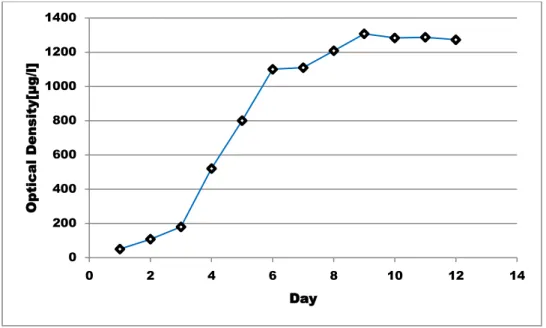
After a period of 7 days, pure cells of Nannochloropsis sp appeared on the surface of the thick mixture. Determined amounts of NaNO3, NaH2PO4.H2O, Na2SiO3.9H2O, trace elements and vitamins were added to the salt water according to the method of Guillard and Ryther.[42] The final volume is brought to 1 l by adding salt water or naturally filtered seawater to the photobioreactor. CO2 was added daily to these groups and its volume was equal to 15% of the photobioreactor.[43] The addition of CO2 was intended to increase the lipid content of the growing biomass.
RESULTS AND DISCUSSIONS
- Unit operations
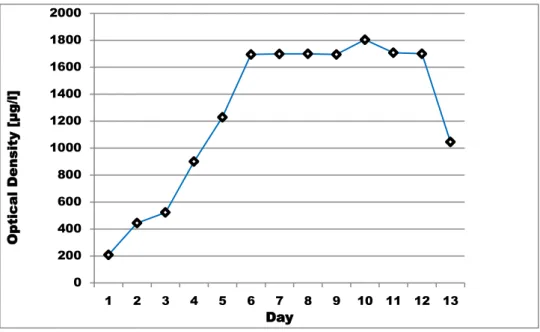
- Microalgae cultivation and growth curves
- Biomass harvesting
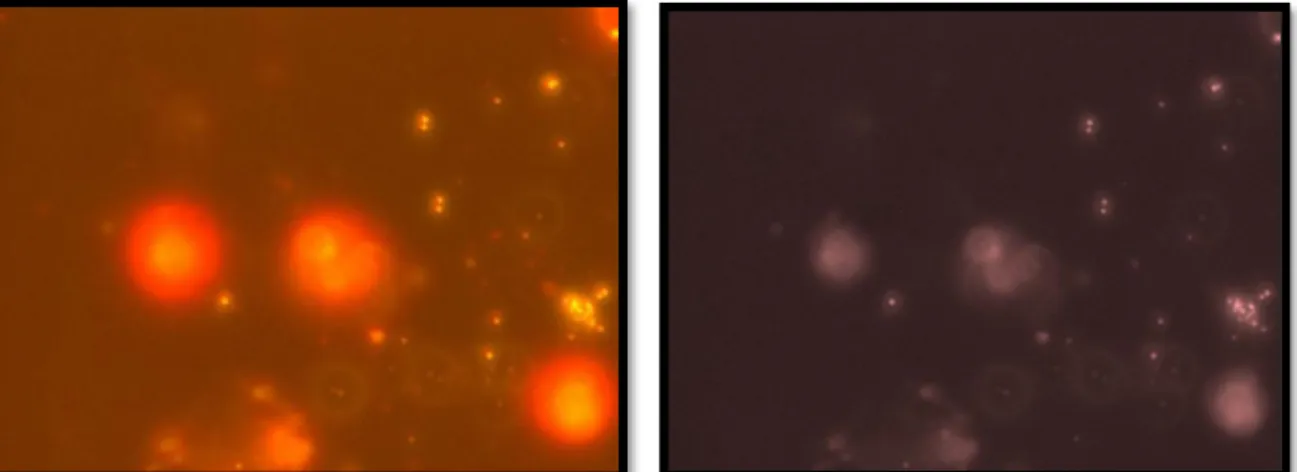
- Physiological modification: hyper lipid synthesis
- Bio-oil extraction
- Thermal cracking: Thermolysis
- Fractionation
- Overall Flowchart
- Characterisation of the algae-based jet fuel from Nannochloropsis
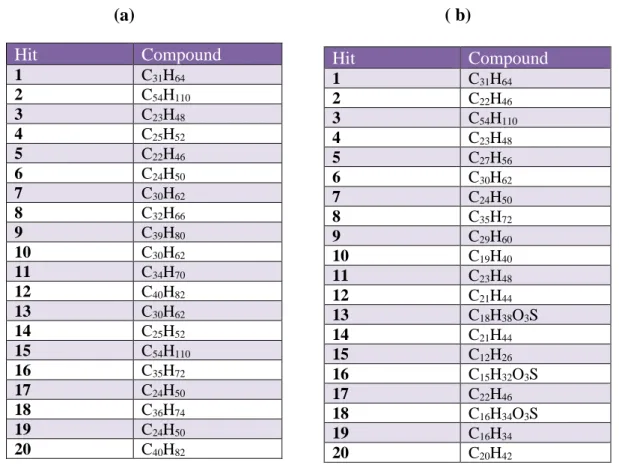
This was followed by transesterification of the bio-oil, after which it was injected into the GC/MS for characterization. The purpose of the trials with vegetable oils was based on the fact that microalgae bio-oil is also a vegetable oil. The importance of each parameter is explained in terms of the energy required for the aircraft.
PREFACE
CONCEPTUAL PROCESS DESIGN AND SIMULATION OF MICROALGAE OIL
INTRODUCTION
- Background, jet fuel and biodiesel
- Market expectations, current state of technology and requirements to produce algae bio-oil
- Cultivation, lipid production and lipid content
- the need for effective conversion processes and Overview of conversion processes
- Process design and the aim of the study
However, the energy density per volume unit in biodiesel almost 80% of that contained in jet fuel.[8]. There is currently no jet fuel on the market produced on a large scale from algae bio-oil. Algae-based jet fuel is only mixed with conventional jet fuel in a 50/50 ratio as allowed by ASTM certification.
OVERVIEW ABOUT NANNOCHLOROPSIS OIL
The design can be used as a tool for a larger scale plant in the future once cost and economics studies are completed. This is possible to some extent due to the similarity between algal rubio oil and crude petroleum oil as previously mentioned.[10] Cost analysis is not the focus of this study; this can be addressed on its own in another study. Future studies can be undertaken on a very detailed design involving equipment modeling and sensitivity analysis required for all variables before cost studies are undertaken.
RESULTS AND DISCUSSION
- Discussion of the data recorded in table 11 for the algae-based jet fuel
- Net Heat of Combustion
- Freezing point
- Flash point
- Final Boiling point for distillation
- Kinematic viscosity
- Density
- Total acidity
- Total Sulfur
- Conductivity
- Approaches to design and simulation
- Summary data for simulation
The beauty of the algae-based jet fuel may be the cause of this situation. This is probably due to the presence of acidic solutes in the algae-based jet fuel.
![Figure 19: Detailed Approach used to produce jet fuel from nannochloropsis sp in the laboratory (adapted from Bwapwa et al., 2018) [42]](https://thumb-ap.123doks.com/thumbv2/pubpdfnet/10642134.0/99.892.108.766.417.817/figure-detailed-approach-produce-nannochloropsis-laboratory-adapted-bwapwa.webp)
PROCESS FLOW DESIGN
PROCESS DETAILS
The biomass generated in the cultivation step should be pumped to the settling tank via stream 8. From the harvesting process, the wet biomass is pumped to the extraction unit via stream 12. The liquid phase from the flash tank will also be sent to the reforming unit.
OPTIMIZATION ATTEMPT FOR SOME PARAMETERS
OVERALL MATERIAL BALANCE
19] Bond J.Q., Upadhye AA., Olcay H., Tompsett G.A., Jae J., Xing R., Alonso D.M., Wang D., Zhang T., Kumar R., Foster A., Production of renewable jet fuel alkanes and feedstock chemicals from integrated catalytic treatment of biomass. 21] Zhang Q., Cheng K., Kang J., Deng W., Wang Y., Fischer-Tropsch catalysts for the production of hydrocarbon fuels with high selectivity. 36] Hulatt C.J., Wijffels R.H., Bolla S., Kiron V., Production of Fatty Acids and Protein by Nannochloropsis in Flat-Plate Photobioreactors.
PREFACE
The composition of the jet fuel mainly depends on the quality of the crude oil.
NEW JET FUEL FROM BLENDING ALGAL JET FUEL AND JET A1 IN 50/50
INTRODUCTION
- Background
The current study focuses on compliance from blending algae-based jet fuel and Jet A1. The ASTM certification is only valid for blending with conventional jet fuel in a 50/50 volume ratio (B50). The issue related to the species oil content, sustainability and production cost of algae-based jet fuel is still a challenge.
CHALLENGES ASSOCIATED WITH JET FUEL BLENDING
The aim of this study is to prepare and produce a new mixture by mixing algae-based Jet fuel with Jet A1 in 50/50 volume ratio. The contribution will be reflected by the data indicating whether the compliance is possible or not of the 50/50 mixed jet fuel. Furthermore, the 50/50 blended jet fuel is expected to have a low carbon footprint and low oxygen content, including flow characteristics that meet required standards.
JET FUEL BLENDING AND ASTM CERTIFICATION
In-line mixing of jet fuel is achieved by injecting proportional amounts of each component into the mainstream where turbulence promotes thorough homogenization [24,25]. Blending jet fuel is a very complex process because the blend is expected to be renewable with a low carbon footprint compared to the fossil-based fuel.
MATERIAL AND METHODS
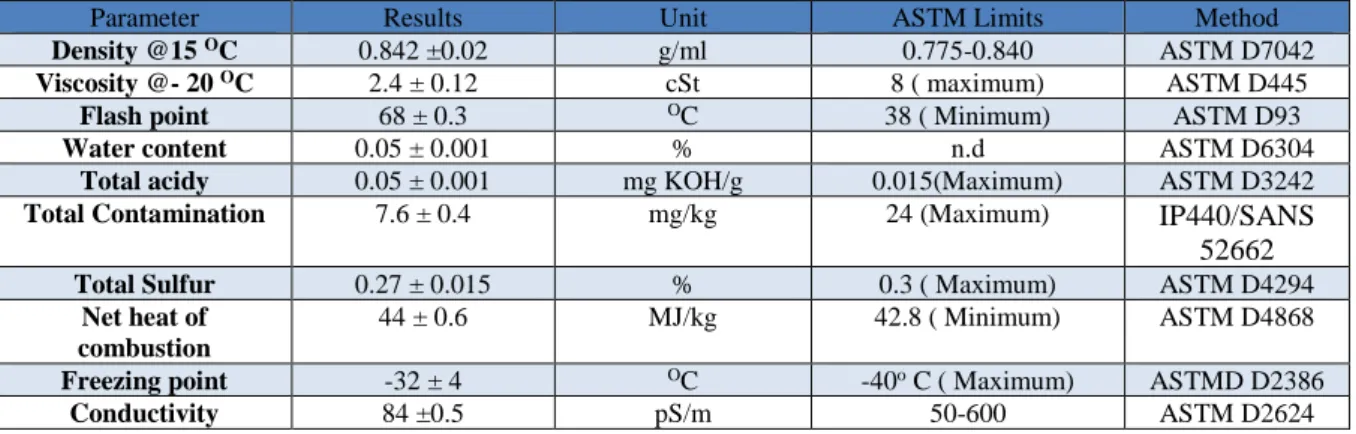
It was followed by fractionation from 70 to 300oC to collect the fractions needed for jet fuel. The microalgae-based jet fuel was characterized according to ASTM standards and the results are shown in Table 1. The mixing procedure used 500 ml of Jet A1 in a beaker and mixed it with 500 ml of microalgae-derived jet fuel.
RESULTS AND DISCUSSION
- Storage stability test
- Density
- Kinematic Viscosity
- Flash point
- Water content
- Total acidity
- Total contamination
- Total Sulfur
- Net Heat of Combustion
- Freezing point
- Conductivity
However, it increased in the 50/50 blended jet fuel as shown in Table 16 for different measurements. The recorded data for algae-based jet fuel in Table 14, as well as that for the 50/50 blended jet fuel in the tables. Nevertheless, it was determined that most of the selected parameters met the ASTM standards for the 50/50 blended jet fuel.

PREFACE
NEW JET FUEL FROM BLENDING MICROALGAE BASED JET FUEL AND JET
- INTRODUCTION
- PERFORMANCE REQUIREMENTS AND INTERNATIONAL STANDARDS AND
- MATERIAL AND METHODS
- Methodological approach
- Experimental procedure
- RESULTS AND DISCUSSIONS
- Storage stability test
- Density
- Kinematic Viscosity
- Flash point
- Water content
- Total acidity
- Total contamination
- Total Sulfur
- Net Heat of Combustion
- Freezing point
- Conductivity
- Organic compounds
Despite the compliance, 20/80 blended jet fuel has higher conductivity compared to 80/20 blended jet fuel. The 80/20 blended jet fuel was fully compliant with ASTM D1655 standards and may be a viable option for certification. 20/80 blended jet fuel is also an acceptable option for certification based on data generated in this study.
PREFACE
CONCLUSIONS AND RECOMMENDATIONS
BACKGROUND AND RATIONALE
Blending algae-based fuel with Jet A1 was also part of this study (Chapters 5 and 6), the blend improves sustainability and carbon footprint. The discrepancy in properties may be due to the fact that the algae-based jet fuel needed more polishing steps. This may help in the future to obtain algae-based jet fuel similar to conventional jet fuel.
RECOMMENDATION AND FURTHER STUDIES
In this study, a conceptual design for the conversion of microalgae oil to jet fuel is developed. Data on the characterization of an algae-based jet fuel produced by the laboratory process shown in the figure. This is likely due to the presence of acidic solutes in the algae-derived jet fuel.
The origin of sulfur in jet fuel is related to the type of marine species used to produce the fuel. This may be due to the presence of dissolved particles in the algae-derived jet fuel.
Energy demand and Biofuels
Necessity of using biofuels in the current context
Different generations of biofuels
Algae biotechnology and biofuels
Rationale of this review
APPROACH TO PRODUCE MICROALGAE JET FUEL AND PROBLEMATIC
CURRENT CONTEXT FOR JET FUEL PRODUCTION AND CONSUMPTION
PREVIOUS ATTEMPTS ON THE USE OF ALGAE BASED JET FUEL
REQUIEREMENTS TO PRODUCE MICROALGAL BIOMASS FOR
- Microalgae selection
- Lipid content
- Site selection
- Microalgae nutrients
CULTIVATION AND GROWTH MEDIUM
- Combination of domestic sewage treatment and biofuel production: the
- Incorporation of algae-based wastewater treatment in the conventional
- The effectiveness of algal growth in wastewater to produce biomass
- Algal growth in municipal sewage wastewater
- Challenges related to the cultivation of algae in domestic wastewater
HARVESTING METHODS
ALGAE BIO-OIL EXTRACTION
ORIGIN OF PETROLEUM CRUDE OIL AND COMPARISON WITH ALGAE
SPECIES WITH POTENTIAL TO BE USED FOR ALGAE -BASED JET FUEL . 27
CURRENT AND FUTURE CHALLENGES
VARIOUS CONVERSION PROCESSES TO BE USED FOR ALGAE BIOMASS
- Pyrolysis
- Cracking , reforming and upgrading
- Deoxygenation and decarboxylation
- Transesterification
- Fractional distillation
![Table 2: Carbon chains content in algae oil [% w] for some species (adapted from [18];](https://thumb-ap.123doks.com/thumbv2/pubpdfnet/10642134.0/40.892.116.805.322.806/table-carbon-chains-content-algae-oil-species-adapted.webp)
![Table 4: Comparison of selected properties between transesterified algal bio-oil and conventional Jet A and A1 (adapted from [53])](https://thumb-ap.123doks.com/thumbv2/pubpdfnet/10642134.0/49.892.102.807.563.836/table-comparison-selected-properties-transesterified-algal-conventional-adapted.webp)