
The results of the study highlight several factors that facilitate and hinder the use of the female condom. Despite the widespread availability of the female condom in South Africa, there are a number of factors that create barriers to using the device.
INTRODUCTION
- Background
- Female condoms
- Female condoms in South Africa
- Problem statement
- Aims and Objectives
- Significance of the study
- Organization of Dissertation
However, female condom use remains low despite the increasing availability of the device. What are the barriers to consistent use of the female condom among college students.
LITERATURE REVIEW
- Introduction
- Theoretical framework
- Types of female condom available
- Acceptability of female condoms
- Factors hindering acceptability of female condoms
- Lack of support from donors
- Provider perceptions
- Social norms
- Protection against STIs and pregnancy
- Increased number of protected sex acts
- Empowerment
- Barriers to female condom use
- Cost
- Male partner objection
- Availability
- Promotion of the female condom
- Cumbersome Design
- Gender power dynamics
- Social stigma
- Religion
- Summary
17 The use of the device is associated with the desire to prevent pregnancy (Spizzichino et al., 2007). Gender inequality in sexual relationships plays a major influence on the acceptability and consistent use of the female condom.
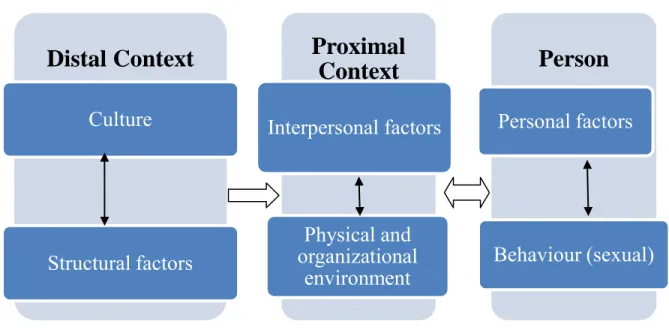
METHODOLOGY
- Introduction
- Study context
- Research Design
- Population and Sampling
- Sampling procedure
- Sample size
- Selection criteria
- Data collection procedures
- Data management storage and process
- Data analysis
- Reliability, Validity and Rigour
- Ethics
- Limitations
- Summary
The target population of this study included full-time female university students aged 18 and over who use the female condom. The main aim of this research was to understand factors that facilitate and inhibit the use of the female condom. The researcher felt that it would be necessary to use female students who are users of the female condom because they would provide meaningful data on factors that facilitate and inhibit the use of this device.
The criteria for the selection of the study participants was that they were ever users (current and past) of the female condom when the study was conducted. The main purpose of this research was to collect exploratory information on female condom use among users of the device in an academic setting. Furthermore, the small sample size of this research also suggests that it is not possible to generalize the study's findings to the entire population.
RESULTS
Introduction
Source of information
41 More than half of the participants articulated that they learned about the female condom on campus. I learned about the female condom at the student HIV center on campus during testing” (P1). I first heard about the female condom at the mentoring program training I had to go to at the UKZN PMB campus” (P4).
42 Another participant mentioned that she learned about the female condom in class when she was taking an honors course. I used to do a course called HIV/AIDS service learning and there I learned about the female condom." Furthermore, two of the participants reported that they found out about the female condom through mass media.
Reason for using female condom
- Perceived risk
- Sexual Experimentation
- Power and Autonomy
They reported that they first saw the female condom on television shows such as Soul Buddies and Soul City and also heard about the device on the local radio station. Respondents in the study mentioned that they first experimented with the female condom to see how this new device would work. To be honest, the main reason I used the female condom was just to try it out and see what this thing was all about.
As the lady has described the female condom to me, I felt the need to use the female condom because I wanted to try it out, so that was the reason” (P1). For me personally, I also believe that the female condom empowers young women like me in terms of my sexual health. Also having that sense of control that since he doesn't want to use the condom, I can do something about it, so I can use the female condom, and that was the main reason for using it” (P3).
Female condom versus other methods
- Best option
- Change in Body image
For example, she uses the injection to prevent pregnancy and also uses the device for double protection against infections and pregnancy. More than half of the participants reported that they would not stand for the negative side effects of hormonal preventive measures and this became an important facilitator of female condom use because the device does not contain any known negative side effects. In all the interviews, participants articulated that the female condom was made of polyurethane and latex, and thus they had never experienced any major side effects related to its use.
Nevertheless, the respondents mentioned that the device can only cause allergic reactions such as irritation, but the risk is not so great. They added that they used the device because it provides them with a barrier method of protection against infections. But I also think that the female condom is safer and more protected, because it also helps prevent HIV infection, unlike other contraceptives" (P10).
Frequency of female condom use
To be honest, not always because my boyfriend always insists on using a male condom and I actually use a female condom with my boyfriend” (P3). Not always because it is very difficult to get a female condom and even inserting it is so difficult. Luckily for me, my partner is very understanding, so we use a male condom most of the time.
Despite the fact that the majority of participants reported less frequent use of female condoms, four participants stated that they consistently use the device almost every time they have sex with their partners. Three participants emphasized that they have sex whenever they see their partner because of the nature of their relationships. They reported using the female condom two to three times a week, depending on how often they saw their partner.
Reason for using FC with partners
Although you may be in a relationship or a committed relationship but you can never be safe especially in this country so it is important to protect yourself. If you are in a relationship where the partners say they love you, they must love you enough to protect you” (P7). She further emphasized that her partner is always out with other women and this has forced her to have many female condoms in her room to protect herself.
They articulated that they used the device with their partners so that they could have power over their bodies and their sex lives. Participants further reported that it empowered them to know that they too could use protection on their own rather than depending on their male partners. They also felt empowered to protect themselves because women could use the device on their own.
Peer influence to FC use
They also reported that after hearing about the female condom, they became interested in using the device and eventually got their friends to use it. Not really, because I only heard about the female condom at school and decided to use it. They also mentioned that they had done research on the device, which made them quite interested in using it, further suggesting that it was their personal decision to use the device.
So basically it was a personal decision to use and research the female condom and that made me interested in using it” (P6). Participants mentioned that they only talked about the device to their friends after using it, and they believed that they were the first to use the tool. Yes, my friend actually influenced me to use the female condom, as she was the one who suggested it to me” (P14).
Experiences of using female condoms
However, two of the participants indicated that their decision to use the device was the result of discussions with friends. 53 point out that even though instructions are supplied with the female condom, they are not easy to follow, and the fact that the device is not properly advertised also poses problems. One of the challenges of using the device is that the tool must be inserted properly and firmly and if it is not inserted properly it can fall off.
The female condom must be placed correctly and ensure that the inner ring of the device is attached tightly to the cervix. Two of the participants mentioned instances where the female condom actually slipped out of their bodies. They also mentioned that the insertion of the device was very uncomfortable due to the tight fitting of the device.
Barriers against Female condom use
- Availability of the FC
- Lack of awareness
- Stigma
- Long insertion time
- Pressure from partners
- Partner objection
Well first of all, I don't think the female condom is much like the male condom these days. In shops they only have the male condom and they don't have the female condom”. Yes even here in the University you can only get the male condom but not the female condom.
I don't think there is much communication about the female condom from the media to the people” (P5). Partner objections are one of the significant barriers inhibiting the use of the female condom. Most men do not like to use condoms and they will never approve of using the female condom.
Recommend use
This also interferes with women's autonomy, limiting their decision-making power to initiate female condom use. As much as you want to protect yourself, you can't use the female condom without your partner. They claimed that they would not recommend it unless the female condom is the only available option for protection during.
I would recommend it to all ladies, but actually no I wouldn't recommend the female condom. I would only recommend it if there is no other form of protection at the time and the female condom is the only option available” (P1). I would recommend it to women who know when to have sex with their partners.
Summary
In addition, participants mentioned that they would recommend the device to women who planned to have sex with their partners; these would be women who know when they will have sex with their partners.
DISCUSSION AND CONCLUSION
- Introduction
- Discussion of findings
- Implications and Recommendations
- Conclusion
Study respondents reported inadequate distribution of the female condom compared to the male condom. The stigma associated with using the female condom was also highlighted as a barrier to using the device. However, in this study participants reported negotiating the use of the female condom with their male partners.
The inaccessibility of the device to the general public remains a significant barrier to the use of female condoms. Insertion problems associated with initial use of the female condom were commonly reported among study participants. For example, study participants reported discomfort with the female condom as a reason for discontinuing use of the device.
Interview Schedule
Participant consent form (English)
Participant informed consent (IsiZulu)
Participants declaration form
Effectiveness of an intervention promoting the female condom among patients at STD clinics. Acceptability of female condoms in diverse groups of women in South Africa - a multi-centre study to inform a national female condom introduction strategy. Patterns and predictors of female condom use among ethnically diverse women attending family planning clinics.
Cost-effectiveness of the female condom in preventing HIV and STDs among commercial sex workers in rural South Africa. Long-term use of the female condom among couples at high risk of human immunodeficiency virus infection in Zambia. Multilevel Social Influences on Female Condom Use and Adoption among Women in the Urban United States.”AIDS Patient Care and STDs.
