Introduction
The role of mega-projects
Examples of such megaprojects include major seaport and airport developments, waterfronts and exhibition halls. However, the definition of megaprojects is controversial, and some may disagree with its categorization.
Sustainable development and sustainability
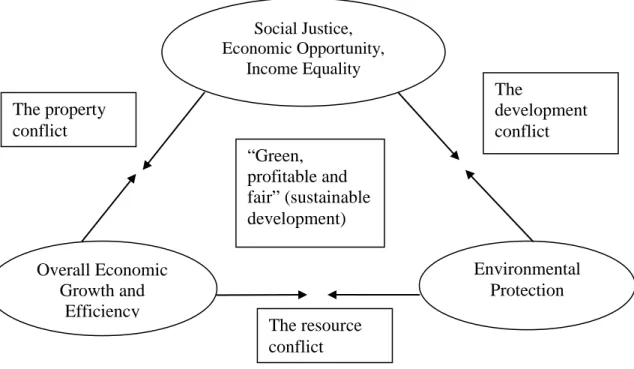
There is therefore a consequent need for the integration of sustainability into planning and policy within cities, to ensure that urban regeneration and development takes place in a way that can be sustained in the long term. Achieving sustainability is thus integral to the long-term success of any city or region (Goodland, 1995), and its integration into development within Durban is therefore considered crucial.
Sustainable cities
This new concept has become a global buzzword in association with many forms of development, and critical as an alternative to the dominant socio-economic paradigm, due to the recognition that the current situation and trends in the ecological, social and economic environment appear not to be viable in the long term (Black et al, 2004; Gibson, 2006; Ugwu and Haupt, 2007; Scipioni et al, 2009). However, achieving sustainability is a particularly difficult task in developing countries, due to the wide range of priorities that must be considered.
Planning within the city of Durban
- Durban
- The planning context
Each of these three projects is expected to play an important role in remaking Durban as a competitive global city with the potential for future growth and improvement. Therefore, it remains an open question whether these megaprojects largely involve sustainability or whether they are merely neoliberal carriers of economic growth and financial profit that provide benefits to the chosen in the context of urban regeneration.
Rationale for the study
However, this project was postponed and subsequently set aside in 2011 due to significant opposition from various groups, resulting in legal disputes (Mbonambi, 2011). However, they have stirred waves of controversy, and many questions have been raised about whether these projects will be able to deliver the long-lasting benefits they promise, and whether the city is in the best interests of all in the long run its citizens act. term.
Aim and objectives
Chapters of the study
The creation of an iconic identity for the city, especially in the case of the stadium and Point;. The relationship between urban renewal and sustainability in the city is discussed, and the consequences for the development of the city are examined.
Urban regeneration and sustainability in contemporary cities
Globalization and urban restructuring
- Globalization
- Neo-liberalism and urban restructuring
Globalization can therefore be understood as a process of change from a national to a global economy of scale, which has a significant effect on the restructuring of the localities involved in the process, including regions and cities (Sykora, 1994). This study will examine the extent to which the concept of sustainability is incorporated into the neoliberal planning agenda in the city of Durban.
Cities and urban competitiveness
- Urban regeneration: reshaping and re-imaging of cities
As discussed in the previous section, the world's cities become part of one global entity, resulting in the interdependence of cities. These strategies play a role in increasing a city's urban competitiveness (Webster and Muller, 2000), and “competitive advantage has become the slogan of the modern age” (Marshall, 2001b: . 51).
Urban regeneration: what are cities doing?
This repositioning and redevelopment of cities has become an important strategy in the field of urban competitiveness and South African policy recognizes the need to increase its competitive advantage and become more competitive in the global economy through the transformation and image of cities, through strategies such as those reflected in Durban. including the implementation of large-scale projects. Construction of strategic urban transport capacities and communications, infrastructure and facilities; promotion of cultural industries; and the implementation of urban mega-projects such as seaports, airports and high-rise office areas (Hutton, 2004).
Urban policy
- Pro-growth development
- Pro-poor development
This is particularly evident in justifying the implementation of urban regeneration strategies, including mega-projects (Houghton, 2010), such as those on which this study focuses. This study will explore the dominance of the pro-growth development agenda in the city of Durban by examining the proliferation of mega-projects.
Sustainable development and sustainability
- The four dimensions of sustainability
- The complex nature of sustainability
- Weak and strong sustainability
The economic dimension of sustainability is related to aspects such as the role of man-made capital, the maintenance of capital, the efficient use of resources, the promotion of competitiveness and the viability of various sectors. It also includes the promotion of economic growth and development, and the diversification of income sources within the carrying capacity of the environment (Goodland, 1995; European Commission, 2001; Jepson, 2004; Conroy, 2006).
Sustainable cities
- Cities and sustainable development
- What are sustainable cities?
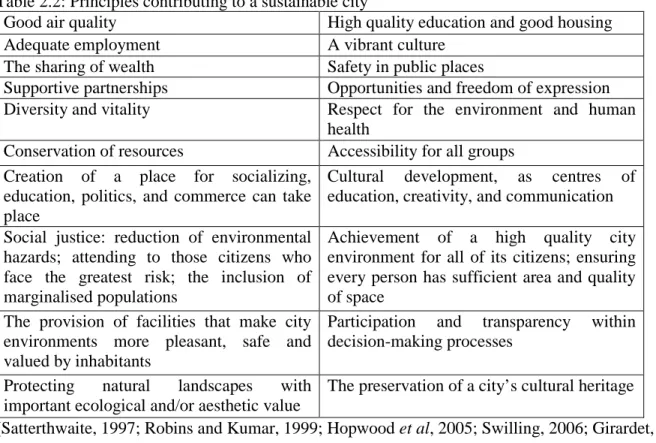
- Sustainable city principles
Agyeman and Evans (2003) and Roberts et al (2009) identify a number of components of sustainable cities and sustainable communities. Carmona (2001) formulated critical principles of sustainable urban design, which will contribute to the creation of sustainable cities.
Summary
These steps then enabled an investigation into the relationship between sustainability and urban renewal in the city of Durban. However, the proposed shopping center would have resulted in the destruction of part of the city's unique cultural and architectural heritage.
Conceptualising mega-projects in contemporary cities: Mega-projects as a
Mega-events
It has become widely accepted that the organization of these mega-events can contribute to the creation of new identities and images of the city, changing their place in global society. These events are usually organized in the advanced industrial world due to the large costs involved, infrastructure requirements and the need for political stability.
Theming of cities
Such events therefore have major implications for the socio-spatial restructuring of the built environment in host cities, as they have the capacity to transform urban space. This study explores the ways in which Durban can incorporate the idea of a 'sports city', or use the Moses Mabhida Stadium as a dominant feature of a sports and entertainment precinct.
Mega-projects: an influential tool of urban regeneration
- Mega-project definition
- Mega-project development
- Mega-projects as “elite playing fields”
- Exceptionality in mega-project planning
- Public-private partnerships
- Political and social response to mega-projects
This study will examine some of the justifications used in the development of the three mega-projects that form the case study for the research. Despite this recognition, megaprojects play an important role in the planning and development of cities.

Criticisms of mega-projects
- Highly risky
- Time scale and time delays
- Poor integration into the wider urban process and planning system
- Lack of accountability, transparency and participation
- Inaccurate forecasts
- Lack of alternatives
- Environmental and social effects of projects
- Fragmentation
- Local benefits not guaranteed
- Deliberative approaches often fail
- Government in conflict
- Diversion of money from other uses
This study examines whether the three identified megaprojects are connected to the rest of the city, or contribute to its fragmentation. This study will highlight the role of such power play in the development of mega projects in the city of Durban.
Development principles
Point Development is located in the Durban Point area, which is one of the city's most historic and significant urban neighbourhoods. And what do you think is the role of projects within the city of Durban.
Mega-projects: sport stadia, waterfront zones and shopping malls
- Sport stadia
- Waterfronts
- Shopping malls
Summary
- Competing agendas: the challenge of the post-apartheid city
- Local Economic Development
These seemingly opposing priorities of growth and redistribution result in particularly acute tensions between pro-growth and pro-poor agendas in the regeneration of South African cities seeking to achieve meaningful sustainable development, and therefore require the integration of both agendas (Pillay and Bass). , 2009; Sutherland et al, 2011). South African local governments are therefore trying to achieve both pro-growth and pro-poor development in their quest for a more sustainable city in the long term.
The city of Durban
- Competing goals within the city
This is evident in the 1996 Green Paper on Economic Development, which suggests that the main challenge facing Durban was to become globally competitive in order to attract investment, address the uneven spatial distribution of economic activity, create substantial sustainable jobs and grew. in an environmentally sustainable manner (Hall and Robbins, 2002). The following section explores these different agendas in the policy and planning elements that guide development in the city.
Policy and planning in Durban
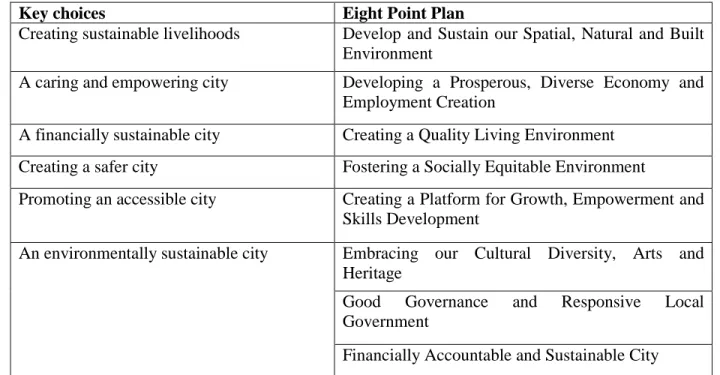
- Long Term Development Framework- Imagine Durban
- Integrated Development Plan
- Spatial Development Framework: Central Spatial Development Plan
General policy guidance for the future development of the city is provided by the City's Long Term Development Framework (LTDF), which was developed in 2001 in consultation with key local partners (Nel and John, 2006). Thus, specific choices have been made in the context of the CSDP, which fit within the framework of the EDP, including elements of the city's competing agendas.
Mega-projects in South Africa
- Durban and mega-project development
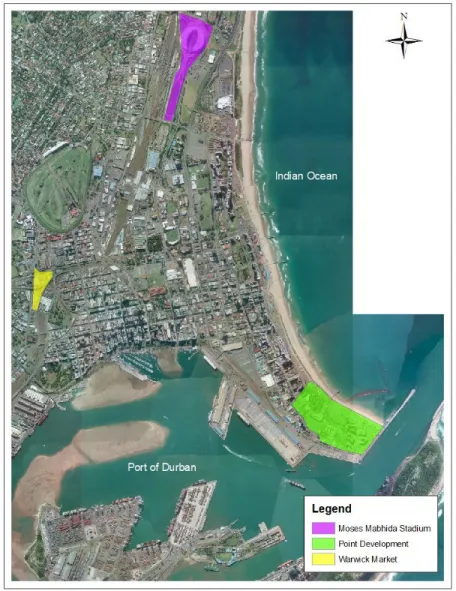
- Moses Mabhida Stadium
- Warwick Mall
- Point Development
The implementation of mega-projects has therefore become one of the dominant development strategies in the city (Nel et al, 2003; eThekwini Municipality, 2008; Marx, 2011; Kennedy et al, 2011; Sutherland et al, 2011), and city budgets reflect significant portions of capital expenditure being allocated to these projects (Robbins, 2005; Kennedy et al, 2011). Only time will tell if Punktudviklingen will be able to play a significant role in the development of the city.
Debate around mega-projects
There have also been a number of financial problems with uShaka Marine World to date, and progress on other aspects of the project has been slow. This is the purpose of the study, and will be achieved by using megaprojects as a lens.
Summary
Elements of urban regeneration and sustainability evident within city planning and policy documents are then explored. Therefore, each of the three identified mega-projects was specifically designated within Durban's urban development and regeneration strategies, emphasizing their important role in the city.
Methodology
Sampling
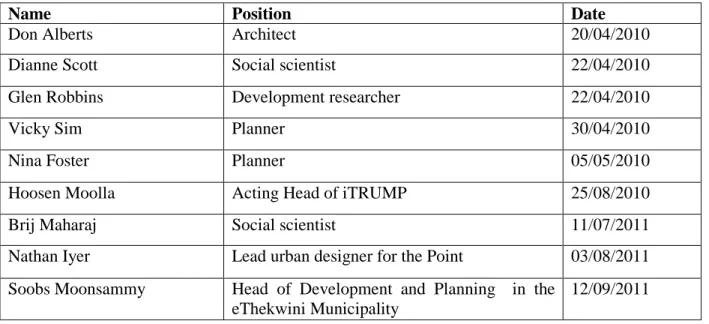
Development researchers, social scientists and a city official were interviewed to gain their insights into urban planning and regeneration within the city from a social and development perspective, as well as to obtain their views on the inclusion of these mega-projects in planning . strategies of a city. It was also important to elicit their understanding of sustainability in the context of the mega-project and within the context of Durban.
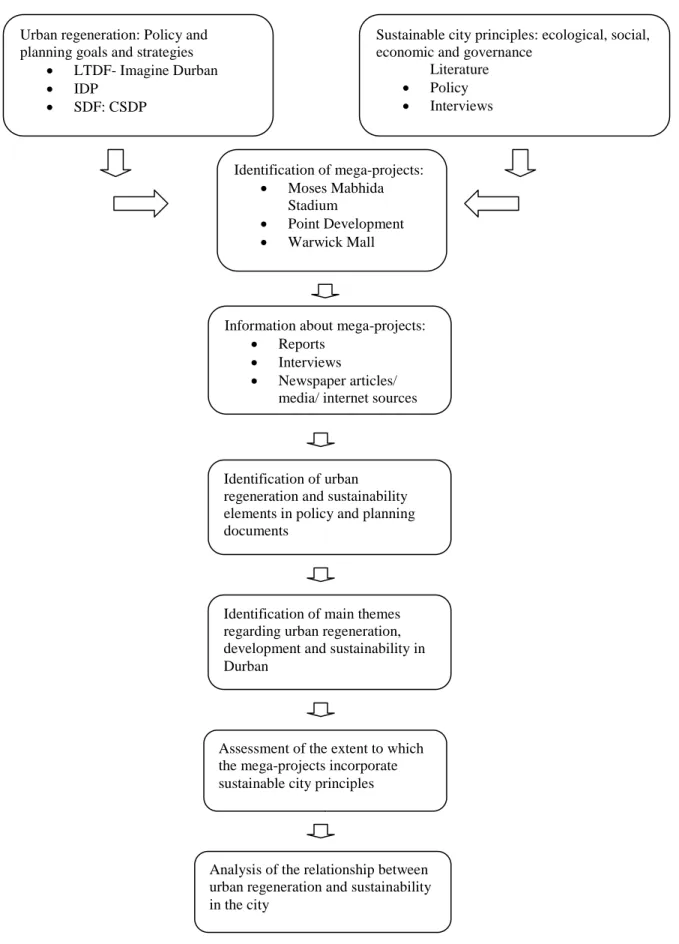
Analysis
The context of the city's policy and planning was then explored through the identification of key discourses and planning goals that are evident in the city. Subsequently, the city planning landscape was reflected in the sense of incorporating elements of urban regeneration and sustainability within the city's planning documents and policies.
Limitations
- Contacting respondents
- Availability of respondents
- Interviews
- Sampling
- Definition of mega-projects
Summary
In both of these documents, urban regeneration is also emphasized as an important aspect that is required in the development of the city. However, the Point presents a different scenario, especially in the case of the proposed SCH.
Urban regeneration and mega-projects in Durban
Dominant discourses and planning goals in the city
This section will provide an overview of some of the discourses and planning goals that are evident in the city. These discourses are evident through a focus on planning objectives, which include maintaining and growing the city's rate base; dealing with a slow or negative uptake of growth rates; one.
Policy aspects of the city’s development
These are important because they cover aspects of the three megaprojects examined in this study. This chapter will now focus on themes identified regarding the role of urban regeneration in the development of the city, particularly through the strategy of mega-project implementation; and the shift towards the integration of sustainability.
Development, growth and urban regeneration in Durban
- Drivers of development and urban regeneration in the city
- Changes in the Durban landscape: evidence of urban regeneration
- The future focus of development
At the same time, in the last ten years the city has reached a "tipping point" in terms of development (Moonsammy. The development in the city center cannot be seen in abstraction from what is happening in other areas of the city.
Mega-projects and their role in urban regeneration
- Mega-projects on the Durban landscape
- Criticisms of Durban’s “mega-project focus”
She also stated that in terms of city spending, a large amount of capital is channeled into these large-scale projects (Foster. There has been some criticism of the city's development agenda and focus on mega projects from a variety of people.
Mega-projects as locally strategic
- Catalyst for further development in the city
- Upgrading and regeneration of an area within the city
The shopping center would thus have had the potential to transform an area of the city which is considered unsafe and affected by urban blight, through the conversion of the existing market area into commercial and retail space. The Point's regeneration is an important element of the city's 2020 vision to establish Durban as Africa's most caring and accessible city; and is seen as one.
Mega-projects as tools of entrepreneurialism
- Enhancing the competitiveness of the city for tourism and investment
- Becoming more attractive
This led to the idea of building the brand of the city after 2010 as a sports, event city. They also provide an idea of the strategies that the city has implemented in planning in the last decade.
Sustainability in Durban
- Difficulties in achieving sustainability
- Evidence of the incorporation of sustainability, yet to what extent?
The context of the city's social history presents further challenges to its achievement (Moonsammy as there are a range of competing priorities that need to be addressed, as discussed in Chapter Four. The incorporation of sustainability is evident in some of the city's planning and policy, as illustrated in 6.1.2, as well as in specific projects.
Summary
A number of issues have been identified in terms of the economic viability of the Point Development. The incorporation of sustainability is essential to ensure the long-term development and success of the city of Durban.
Mega-projects and sustainability in the city
Sustainable city principles in mega-project development
- Creation of a place with a vibrant culture, where socialising, education,
- Ensure a city/place is active, inclusive, safe and accessible
- Maintain a sense of place and neighbourhood
- Ensure social justice
- Ensure stewardship: long term regeneration vision
- Ensure adequate community participation and democratic governance
- Preservation of cultural and architectural heritage, and distinctiveness
- Promote diversity, vitality and choice
- Ensure integration
- Promote economic growth and employment creation
- Ensure economic viability
- Promote more sustainable and efficient forms of transport
- Minimise pollution and waste; and maximise energy efficiency
- Maintain ecological integrity
- The reflection of principles for “good built environments”
Incorporation of the sustainable city principles into mega-projects and urban
Sustainability has therefore not been incorporated into these mega-projects to a meaningful or significant extent, and urban renewal in the city therefore does not incorporate sustainability effectively. However, the preceding analysis highlights that its practical interpretation and implementation remains problematic in urban renewal strategies, such as these mega-projects, in the city.
Summary
The data collected mainly from the interviews and some other sources made it possible to identify the dominant themes of urban renewal and development within the city, and the role played by mega-projects. Urban regeneration and sustainable development in Britain: the example of the Liverpool Ropewalks Partnership, Cities.
Conclusion
The relationship between urban regeneration and sustainability in Durban
These mega-projects that have been implemented in the city, and especially the inner city, have demonstrated locally strategic and entrepreneurial approaches aimed at strengthening the city's economic competitiveness in a globalized economy and to further develop at the local level. However, it has become clear that the focus on mega-projects in the city is one that is not supported by all citizens.
Relevance of the study
Provincial Task Force Report on: The eThekwini Early Morning Market and; Warwick Avenue Mall Development. Rethinking the sustainability of the South African city, unpublished paper, Sustainability Institute, University of Stellenbosch.
The stadium
The proposed mall
Markets in Warwick Junction
The EMM in Warwick Junction
The Point Development
The sky car at the Moses Mabhida Stadium
An artist’s impression
An artist’s impression of the mall
The Point
The Point area, and some of the activities which occur there
Hundreds of traders protested against the plan for a mall
Traders protesting against the mall
The new Moses Mabhida Stadium and the Mr Price Kings Park Stadium…. 123
Part of uShaka Marine World
Metro Police guard the entrance to the EMM as traders demand it be
A trader expressing the significant heritage of the market
The centenary celebration of the EMM
Part of the Point Development
Canals in the Point
Part of the Point Development
A trader with his goods
Part of the EMM
Part of the EMM
Moses Mabhida
The stadium