UNIVERSITY OF KWAZULU-NATAL
MED
THE RELATIONSHIP BETWEEN EDUCATORS' PERCEPTIONS ON CHANGE MANAGEMENT AND THE EDUCATORS' ATTITUDES TOWARDS CHANGE: A CASE
STUDY OF IQMS IMPLEMENTATION AT A PRIMARY SCHOOL.
2005
Mrs. Sarasvathie. Pillay
THE RELATIONSHIP BETWEEN EDUCATORS' PERCEPTIONS OF CHANGE MANAGEMENT AND THE
EDUCATORS' ATTITUDES TOWARDS CHANGE: A CASE STUDY OF IQMS IMPLEMENTATION AT A
PRIMARY SCHOOL.
A DISSERTATION PRESENTED TO: UNIVERSITY OF KWAZULU - NATAL
IN PARTIAL FULFILLMENT OF THE REQUIREMENTS FOR THE DEGREE OF
MASTER OF EDUCATION
UNIVERSITY OF KWAZULU - NATAL
BY
SARASVATHIE PILLAY
2005
DEDICATION
This dissertation is dedicated to my husband, Dixon Pillay And to my children, Krenashia and Tharusha,
may this dissertation inspire you to continue with your studies.
This study was an exploration of the educators' perceptions of the management approach to change in a particular primary school and this was related to the educator attitudes towards change. Information was gathered by means of a literature and empirical study. A qualitative method was used by conducting a case study in a primary school in Kwa-Zulu Natal, to investigate the management of change, with reference to the implementation of the new IQMS (Integrated Quality Management System For School Based - Educators) and how this change management was
perceived by educators to be impacting on their attitudes towards change The various management theories provided a sound understanding of the different management approaches to change
Four factors that had an impact on the research were considered namely: change;
educator attitudes; managing change and change implementation. The data for the case study was obtained by means of questionnaires and interviews. Questionnaires were administered to thiliy educators and interviews were conducted with nine members at the school. Descriptive statistics were carried out to analyse the information received from the questionnaires and interviews.
The findings of the study were that, there are forces (and needs) for change in the organisation, for example IQMS was externally mandated to be implemented in all schools. The literature review illustrated that there are personal factors that affect educator attitudes to implementation, however this dissertation focussed on the
management of change and how the management approach affected educator attitudes towards change.
In conclusion, a summary of the findings from the literature study and the findings of the case study were presented. It was found that generally change management impacted positively on educator attitudes towards change at this school Statistical analysis showed positive relationships between management and the staff However
certain areas as suggested inthe literature needs to be improved by the management of the organisation.
TABLE OF CONTENTS
Page Number
CHAPTER 1: INTRODUCTION 1
1.1 Introduction 1
1.2 Background and purpose of the study 2 1.3 Theoretical location of the study 4
1.4 Key questions 5
1.5 Research methodology 5
1.6 Limitations of the study 5
1.7 Structure of the study 6
CHAPTER 2: LITERATURE REVIEW 7
2.1 Introduction 7
2.2 Change 7
2.2.1
The need for change 72.2.2
Types of Change 82.3 Attitudes 10
2.3.1 Different attitudes towards change 10
2.3.2 Components of Attitudes 11
2.3.2.1
Affective attitudes 112.3.2.2
Behavioural attitudes 112.3.2.3
Cognitive attitudes 122.4 Management 14
2.4.1 Management theories 15
2.4.1.1 Bureaucratic theories 15
2.4.1.2 Collegial theories 16
2.4.1.3 Political theories 17
2.4.1.4 Subjective theories 18
2.4.1.5 Ambiguity theories 18
2.4.1.6 Overarching Theories 18
2.5 Managing Change implementation 19
2.6 Negative attitudes to change implementation 20
2.7 Conclusion 21
CHAPTER 3: RESEARCH METHODOLOGY 22
3.1 Introduction 22
3.2 Methods of research 22
3.3 Research instruments 23
3.3.1 Questionnaire 24
3.3.2 Interviews 25
3.4 Design of the research instruments 26
3.4.1 The questionnaire 26
3.4.2 The interviews 30
3.5 Process for data collection 30
3.5.1 Pilot study 30
3.5.2 Administration of the questionnaire 31
3.5.3 Administration of the interview 31
3.5.4 Processing of data 32
3.6 Limitations of the study 32
3.7 Conclusion 34
CHAPTER 4: RESEARCH FINDINGS 35
4.1 Introduction 35
4.2 Personal Details 35
4.2.1 Analysis of findings 35
4.2.2 Discussion of findings 36
4.3 Educators'attitudes towards change in general 38
4.3.1 Analysis of findings 38
4.4 Educator perceptions on their attitude
towards IQMS 41
4.4.1 Analysis of findings 41
4.4.2 Discussion of findings 41
4.5 Perceptions on management of IQMS 45
4.5.1 Analysis of findings 45
4.6 Educator perceptions on how the management
of change is affecting them 48
4.6.1 Analysis of findings 48
4.7 Conclusion 54
CHAPTER 5: CONCLUSION & RECOMMENDATIONS 5.1 Introduction
56 56
5.2
5.3
5.4Conclusion
Recommendations
Future research directions
x
56 57
59
REFERENCES
INTERNET REFERENCES APPENDICES
Appendix 1 Questionnaire Appendix 2 Interview
60 67 68 69 79
LIST OF TABLES PAGE NO.
Table 1 The different reactions towards change
and the related management approach 13
Table 2 Distribution of the respondents'
demographic characteristics 36
Table 3 Perceptions on whether educators have been
subjected to change 38
Table 4 Perceptions on frequency of change
innovation 39
Table 5 Perceptions on when change was last
implemented 39
Table 6 Perceptions on feelings about change 40
Table 7 Perceptions on whether change is
necessary 40
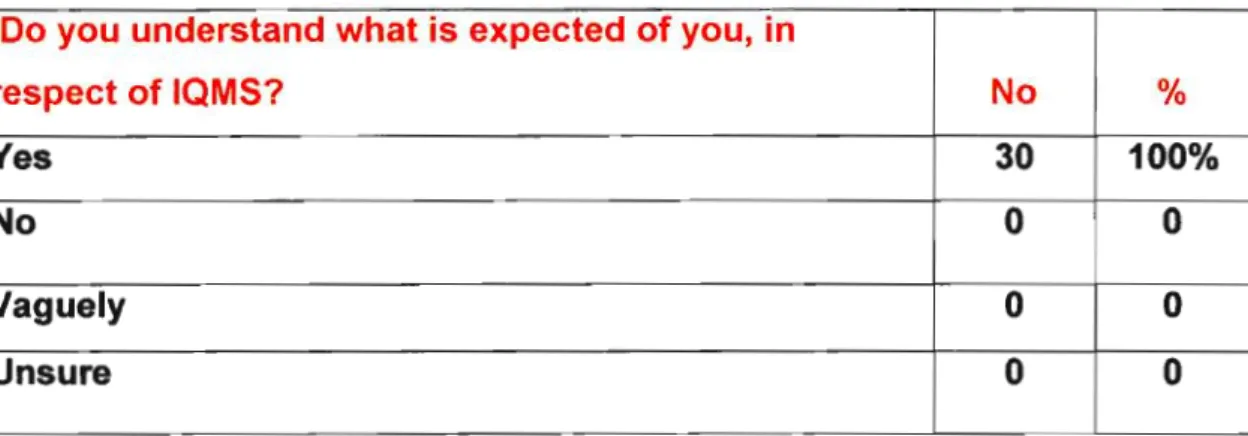
Table 8 Understanding the purpose of IQMS 41
Table 9 Understanding role function of IQMS 42
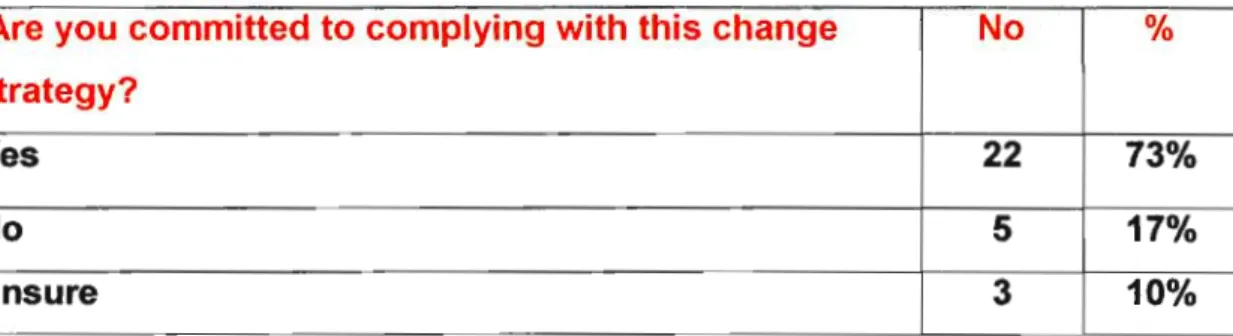
Table 10 Commitment to complying with IQMS 42
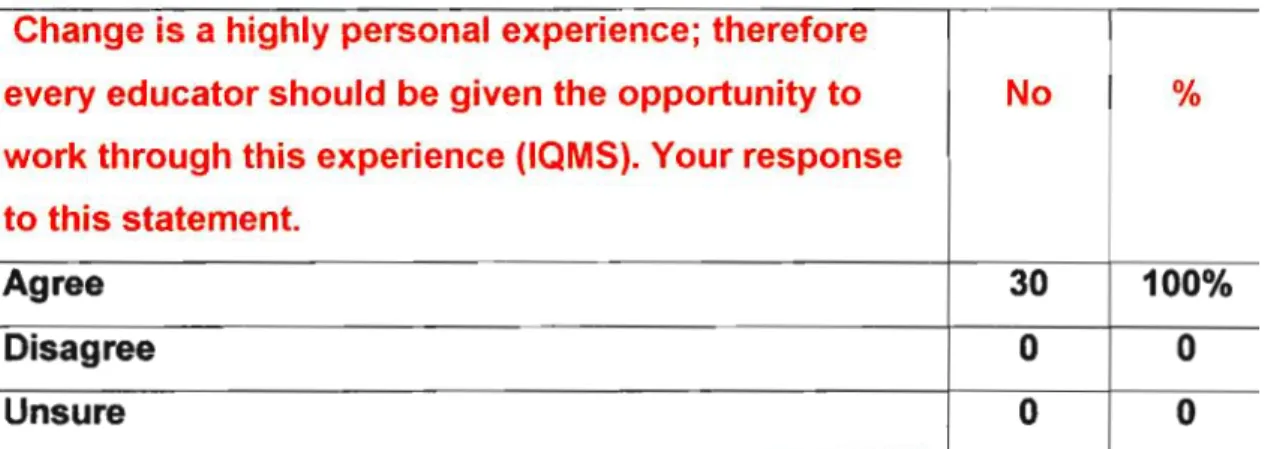
Table 11 Change is a personal experience 44
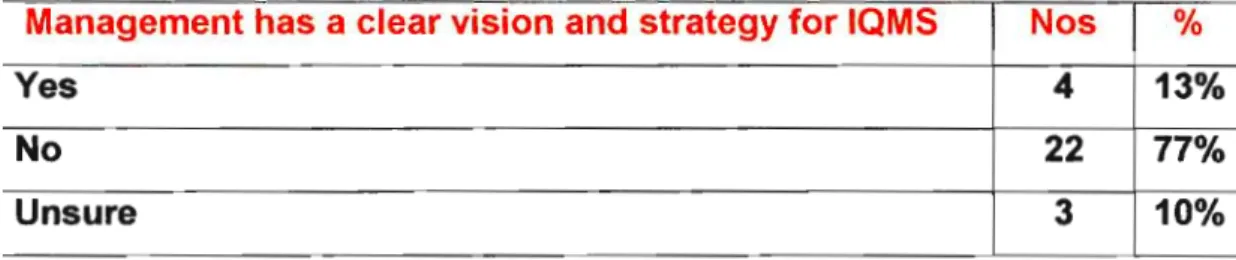
Table 12 Vision and strategy for IQMS 45
Table 13 Regular briefing sessions 46
Table 14 Training before implementation 46
Table 15 Time spent on implementation 47
Table 16 Management supportive of IQMS 48
Table 17 Management leading the process 49
Table 18 Management consultation with staff 49
Table 19 Management approach at the school 50
Table 20 Perceptions on teamwork 51
Table 21 Managing work related problems 51
Table 22 Perception on relationship with staff members 52
Table 23 Perceptions on collegiality 53
1
CBAPTERONE
INTRODUCTION
1.1
INTRODUCTIONThe momentum of change continues to build. Some schools adapt to ongoing change, whilst others are playing the difficult role of catch-up. The
management of change is a challenge for school leaders, which requires an approach that will impact positively on educator attitudes, so that change is implemented successfully. The key to organisational change management includes promoting effective change, by gaining the educators' support and commitment for implementation.
Therefore it has become clear that management has a responsibility to manage change so that everyone in the organisation will be involved (Task Team Report On Education Management Development, 1996). McHugh (1997) states that if management is incompetent to manage change, it is likely that it might negatively affect the educator's attitudes to change and the entire process will be extremely stressful for individuals implementing the change.
The adverse effects of this will manifest themselves in a variety of ways, which will be detrimental to the organisation.
It is against this challenge that this study set out to elicit the relationship between educators' perceptions on change management and the educators' attitudes towards change. IOMS was used in the case study as a change program to illustrate the relationship between the management of change at the school and how it affected the educators' attitudes to implementing the policy.
IQMS was selected because it was a new policy that many schools were grappling with. IOMS is an integrated quality management system, which is aimed at enhancing and monitoring performance of the education system. It is integrated with Developmental Appraisal; Performance Measurement and Whole School Evaluation.
This chapter provides a general overview of the research dissertation. It begins by discussing the background and purpose of the study. The key questions for the research and the research methodology used in conducting the research are then outlined. The final section outlines the structure of the dissertation.
1.2
BACKGROUND AND PURPOSE OF THE STUDYThe dawn of a democratic South Africa heralded major transformation in education policies, legislations, systems and practices for all schools. There are numerous changes that are prescribed by the National Department of Education and the SMTs (school management teams) are obliged to implement these changes in the school. Some of the changes include:
~ Education Act 108 of 1996
~ The South African Schools Act 84 of 1996
~ The South African Council for Educators Act 31 of 2000
~ Education Labour Relations Council (ELRC) Resolution 8 of 2002 - IQMS (Integrated Quality Management System).
This study involved the implementation of IOMS. Therefore attention was given to the purpose of IOMS. The Department of Education and Culture (2002, p1) lists the purpose of IQMS as follows:
~ To monitor the performance of educators with a view to determining areas of strength and weaknesses.
~ To provide support for continued growth.
~ To promote accountability.
~ To evaluate individuals for salary progression and rewards.
~ To evaluate the overall effectiveness of the school, as well as the quality of teaching and learning.
The Task Team on Educational Management report, "Changing Management to Manage Change in Education (1996) states that the move to implement change (for example IOMS) in schools, in itself offers no guarantee of positive
change. In this connection some schools have done well under the new IOMS, whilst other schools are stumbling along.
As head of department at a primary school, I had noticed that educators have different perceptions and views of IOMS. In consultation with educators from other schools in the area it appeared that schools were experiencing some problems with the implementation of IOMS. For example, some educators feared and were sceptical towards the process while others experienced low morale. Reasons given for these attitudes were that implementation occurred without consultation with educators.
The aim of the study was to investigate how informed and receptive the educators at the sample school were to change initiatives and whether they understood the end - result of laMS. It examined the experiences and views of the educators on how IOMS was managed at the school and the extent to which management played, in maintaining success or failure of IOMS
implementation. Carnell's view (1990) cannot be ignored, namely that if the change process is not managed effectively it will lead to negative attitudes (depending on educator perceptions of how change is being processed).
The study also investigated whether change was well communicated to all organisational members. This would be seen as an effort from management to solicit ideas and suggestions from the educators with regard to what should be done and how. The other concern was to explore the extent to which educators participated in effecting change and ensuring success. This is essential, as any type of change affects them as shareholders in the organisation (Task Team on Education Management Development, 1996).
By understanding the deficiencies in the current organisational management approach to change, future change initiatives would be carried out with a much clearer understanding of the needs of the educators. The organisation could therefore reduce negative educator attitudes to implementation earlier on in the rollout of the change strategy.
1.3 THEORETICAL LOCATION OF THE STUDY
The Collegial Theory formed the basis for this study. The theory advocates a participative approach, which builds capacity, ownership and commitment. As Robbins (1983) states it allows for various viewpoints regarding decision - making for implementation. The theory also takes into account individuals in the organisation and policy implementation. This is based on the educators' personal values, attitudes and beliefs they might have (Cohen et ai, 2000).
, Collegial approaches as a theoretical framework, as explained by Bush &
West-Burnham (1994), rests on the following assumptions:
~ Professional authority occurs when individuals make decisions.
~ A common set of values is stressed.
~ Decisions are reached by a process of discussion leading to consensus.
In consideration of Bush and West-Burnham's assumptions (1994) it is important that the SMT acknowledges the participation of all educators in the organisation. It is not sufficient for managers to simply develop and implement policies. They must ensure the educators' acceptance and commitment to that policy. Managers must take into account the educators who would be affected by the change. According to this theory all educators and management need to work together to make the policy work efficiently (Bush and West-Burnham, 1994). This means that the SMT does not simply allow its set of values and personal views to dominate change implementation processes.
The study also examined whether educators in the sample school co-
operated with one another and established whether the policy implementation had the commitment from all parts of the organisation. An attempt was made in the study to focus on the following issues, namely, was decision-making done unilaterally or co-determined by all members? What approach had management adopted to the change policy? Did the educators simply do what
the organisation required of them or did they participate actively in the decision -making process?
1.4 KEY QUESTIONS
The purpose of the study was to develop an understanding of the relationship between change management and educator attitudes towards change, at a particular primary school. The key questions formulated to help in this regard were:
1. What are the educators' attitudes towards change in general?
2. What are the educators' attitudes towards laMS in particular?
3. What was the management approach to laMS at their school?
4. What was the relationship between the management of change and the corresponding attitudes towards change implementation?
1.5 RESEARCH METHODOLOGY
The research is a qualitative study. In essence it is a case study involving one school in the Durban South Region.
Thirty people were surveyed in this case study. The data was obtained:
)0> By means of a questionnaire.
)0> By structured interviews.
The goals of ethics in research were adhered to. For example it was ensured that no one was harmed or suffered adverse consequences from the research activities. Respondents' confidentiality was maintained and full assurance was given to all respondents in this regard (Nisbet and Entwistle, 1970).
1.6 LIMITATIONS OF THE STUDY
The limitations of the study were as follows:
~ This case study is qualitative in nature, involving one primary school.
The findings of the study cannot be generalized, as it is limited to this particular school.
~ There was resistance from a few educators to divulge some of the information because they feared that they might be exposing sensitive information. Therefore the validity and reliability of the research
instruments might have limited the study.
The limitations of the study are discussed in greater detail in chapter three.
1.7 STRUCTURE OF THE STUDY
The study is presented in five chapters organised as follows:
Chapter 1 provides an overview of the research dissertation.
Chapter 2 presents a review of literature that provided a conceptual and theoretical framework for the study.
Chapter 3 presents the methodology adopted to collect and analyse data that helped to answer the research questions.
Chapter 4 presents the analysis and discussion of the research findings.
Chapter 5 concludes the presentation with a summary of the conclusions and recommendations from the findings.
CHAPTER TWO
LITERATURE REVIEW 2.1
INTRODUCTIONSaunders et al (2003) are of the view that there are two main reasons for conducting a review of relevant literature. The first reason is to generate and refine the research ideas. The second is to demonstrate the researcher's awareness of the current state of knowledge of the subject and its limitations.
In view of the above the study aims to explore how the literature review relates to issues in this study. The study focused on four key issues, namely:
~ Change
~ Attitudes to change
~ Managing change
~ Implementation of change
2.2.
CHANGEHellriegel et al. (2001) state that organisational change presents complex challenges. To manage change effectively managers should have the
knowledge and understanding of the "change" and the needs of the educator.
Therefore this dissertation deems it necessary to discuss the need for change and the different types of changes. This is important because strategic
change is managed in a deliberate as opposed to an emergent or
opportunistic way (Grundy, 1993). A dilemma for the SMT is to balance the need for change and to consider the impact it has on its educators so that the process becomes a smooth transition.
2.2.1
THE NEED FOR CHANGEThere are a wide range of forces acting upon the organisation, which makes change inevitable. Reddin (1987) states that organisations embark on change programmes if they are faced with the following:
• Old ways of thinking and doing things become obsolete.
• The SMT (school management team) has a clear idea of making the organisation better and change is made to move towards a new state.
• External forces, for example, new government legislation and
technological innovation, which requires that schools keep abreast of the change and developments. In this study the change program being researched is IQMS.
As changes occur they have an impact on the managers and educators within the organisation. They have to change in order to adapt to new ways of doing things (Task Team on Education Management Development, 1996).
According to Daft (1990) this includes changing how people think, their attitudes about work and generally to renew commitment and empowerment of educators and to create a stronger bond among educators. Therefore it becomes necessary for the SMT to have a clear idea of the different types of changes for them to apply the necessary management approach to change.
2.2.2 TYPES OF CHANGE
One of the issues that determine the degree to which change management is appropriate, relates to types of change facing managers. Torrington and Hall (1998) provides the following as types of organisational change:
• On-going organisational change is characterised by minor
adjustments to configuration and external relationships in an attempt to optimise efficiencies.
• Strategic change refers to any major, long -term change, which requires the reshaping of strategy, structure and culture and management processes of the organisation.
• Revolutionary change is where the organisational change is
characterised by radical shifts and revolutionary changes throughout the whole organisation.
Therefore, according to Torrington and Hall's (1998) contribution, laMS is characterised as a strategic change. The SMT would have to manage laMS strategically to bring about effective implementation.
In addition to the above classification, French et al (1999) describe two types of change viz. first-order and second order change, as developed by Warner Burke and George Litwin. These are as follows:
.:. First - order change is also described as "transactional change". The transactional change management approach is found in a more stable system. In transactional change maintenance has a higher priority than development. Management is seen as playing a major role in
protecting and promoting the interests of the system. Emphasis tends to be on the management of the school's system and structure, on creating efficiency and on achieving prescribed outcomes. The role of the transactional manager is to focus upon the key purposes of the organisation and to assist people to recognise what needs to be done in order to reach the desired outcomes. Transactional management seems best suited to static school systems and communities.
•:. Second - order change is described as "transformational change".
The organisation is transformed, where the nature of the organisation is fundamentally and substantially altered. Transformational managers inspire followers to transcend their own self - interest for the good of the organisation. They are capable of having a profound and
extraordinary effect on their followers. Transformational management is required to make a fundamental change in an organisation's culture rather than in the organisational climate.
In view of the above it was deemed important to explore whether transactional or transformational change was adopted in the sample school and how this approach affected educator attitudes to change.
2.3
ATTITUDESThe purpose of the study is to explore the co- relation between managing change and educator attitudes towards change. Therefore it was necessary to understand the concept "attitudes", before exploring the possible link of educator attitudes to change management.
Ajzen (1988, p.4) states that an attitude is "a disposition to respond favourably or unfavourably to an object, subject, person, institution or event. For example IQMS could be seen as either a favourable or unfavourable response to a change program. This is usually expressed in terms of the person's beliefs, feelings, and their intentions of the implementation process.
Rajeckitt (1990) points out that people's attitudes are unavoidable and are devolved on personal factors, such as anxiety and alienation. What emerges as fundamental to the management of change are the cultural and
organisational factors in the organisation that contribute to peoples' attitude to change. The general view is that," when attitudes are hostile or negative, problems are created out of opportunities, which alienate and irritate other people. Alternately it is argued that with positive attitudes a sense of
perspective is maintained, which allows members to draw positive elements out of each situation" (http:lwww.stresseducationcentre.com).
With reference to the above, the study wanted to investigate the relationship between educator attitudes to IQMS and the management of IQMS at the sample school.
2.3.1
DIFFERENT ATTITUDES TOWARDS CHANGEIndividuals implementing change have different attitudes towards change.
This leads to different reactions to change. Individuals subjected to the change go through various attitudes in dealing with change
(http:lwww.stresseducationcentre.com).People·sviews are coloured by their perceptions and attitudes, and their attitudes are reflected in their reactions to
11 the object or the implementation process. These attitudes take on the
character of frames of reference (or theories), which could influence future reactions to the change process (Bush et ai, 2002). For example if an
educator had a bad experience with one aspect of the IQMS implementation process, it could affect the educator's attitude to future experiences with IQMS.
Beynon (1992, p.24) states that, "to ignore the impact of people's attitudes and reactions to change is to build a mistake into the process, thus reducing the chances that an initiative will succeed". Strebel (1996) claims that leading practitioners of major change projects reported that success in organisations is less than 50 %. The failure is attributed to insufficient management
attention towards human resource dimensions. This illustrates the benefit of the SMT's awareness of the different ways in which educator attitudes towards change are affected. An understanding of factors that affect educators' attitudes to change would enhance the managerial approach to change.
2.3.2
COMPONENTS OF ATTITUDESIt is important for managers to be informed of the different levels at which peoples' attitudes are affected. When a problem is detected early, the SMT could intervene and guide the educator to renew their confidence and security. Attitudes are discussed under three components, viz, affective, behavioural and cognitive.
2.3.2.1
AFFECTIVE ATTITUDESAccording to Rajeckitt (1990) attitudes are accompanied by positive or negative feelings; conversely positive or negative feelings have a certain attitude behind them. This is basically the evaluative element in an attitude (namely feelings and emotions), in which an educator may, for example, judge IQMS to be good or bad. What this suggests is that attitudes are often subconscious and are not based on rational explanation. The affective component of attitudes influences feelings and emotions irrationally. It is
possible that even though the rational expectation is that a certain
management theory is effective for the management of change, this may not necessarily be the case in particular circumstances. This study was therefore open to either one of the possibilities being applicable in this study.
2.3.2.2
BEHAVIOURAL ATTITUDESWetherell (1996) explains that the behavioural aspect of attitudes involves a person's intentions to act in a certain way towards an event and these
intentions are related to the affective component. This suggests that one who has some emotional reaction to IQMS or the management of the process might be assumed to act on this basis. However, there could be inconsistency between attitude and behaviour. For example, educators who express
negative attitudes towards IQMS could be working hard to be rated with a high score. For these educators their motivation for working hard is not their attitude towards the instrument, but for the monetary gain. This suggests that a range of factors affect attitudes and influence the behaviour of individuals.
As Ajzen (1988, pAS) argues,
"Every particular instance of human action is, in this way, determined by
a
unique set of factors. Any change in circumstances, be it ever so light, might producea
different reaction".2.3.2.3
COGNITIVE ATTITUDESThirdly, attitudes may have a cognitive component. This incorporates knowledge and beliefs about the process. According to Gagne (1985) an individual will have a positive attitude towards an aspect he fully understands and knows. For example, if educators were provided with free-flowing
information about IQMS, they would be able to quickly grasp the new issues.
Thus they will feel more confident because they have a better chance of understanding what is expected of them.
It was of interest to explore whether the management of change in the sample school considered these components of attitudes.
Table 1 summarizes both the favourable and unfavourable attitudes to change. The first column refers to the educators' attitudes towards change.
The second column refers to suggested ways in which managers need to respond to the educator attitudes to change. (Kanter et el., 1992):
TABLE 1: EDUCATOR ATTITUDES TO CHANGE AND THE RELATED MANAGEMENT APPROACH (Kanter et at, 1992)
ATTITUDES TO CHANGE MANAGEMENT APPROACH
SatisfactionI complacency
•
Convey urgency•
Give facts•
Provide evidence Rejection I Denial - pretending that•
Listenthings will go on as in the past.
•
Show concern•
Unless they are addressed in a proactive way, the process can take too long.•
SMT should continue tocommunicate about the change and what will happen.
AngerI Resistance- increased anger
•
Listen IDemonstrate concern or disagreements, or withdrawal from•
Restate factsthe team can occur. Educators may
•
Convey commitment feel that they are treated unfairly,having given off their best.
Acceptance ICurious - it is positive,
•
Restate big picture as energy begins to flow again.•
Communicate vision•
Ask for help Enthusiasml Exploration or•
Involveemerging
•
Celebrate wins•
InspireI
Commitment • Give feedback• Inspire
It would be of interest to establish the relevance of the above table to the study; to establish the relationship between the educators' different attitudes towards change and the ways in which the managers responded to the educator attitudes.
2.4 MANAGEMENT
The concept of management is complex. Therefore there is no single,
simplistic sequential classification of education management. West-Burnham (1994, P.13) says:
'The danger of an attempt at classifyingacomplex evolutionary process is that artificial boundaries are created to facilitate understanding".
To clarify the use of the term "management," Task Team on Education Management Development (1996, p.28) reports it to mean the process for creating and supporting effective educational organisations. West - Burnham (1992) states that management is concerned with planning, organising,
controlling and leading the institution. According to Bush (1994) management monitors and controls the organisational activities, makes decisions and allocates resources. Bush goes on to say that generally managers are expected to lead. Van Maurik (2001) adds that without good management schools cannot perform their functional tasks effectively. Education managers play an active role in changing the system so that it performs better. The Task Team on Education Management Development (1996, p.30) contributes to the above that, "management creates the opportunity for negotiating targets for action and provides guidelines for optimal effective working of individuals".
Essentially, the definition of education management that frames this study is that education management is concerned with the transformation of the school so that ultimately effective changes could take place. South Africa's new education policy and legislation requires that all schools should accept
responsibility for developing the capacity to manage the change. Management therefore refers to the process, which includes the capacity to diagnose the educators' needs, provide training; information; supervision and conduct evaluations.
As there is no single all embracing approach to education management, several perspectives may be valid simultaneously. Each approach has
something to offer in explaining attitudes, behaviour and events in educational situations. These approaches form a frame within which management base their practices and decide on what action to take. The following discussion presents some of these approaches.
2.4.1
MANAGEMENT THEORIESThere are different perspectives presented on management by the different management theories. According to Owen (1998) theories are useful for influencing practice, predicting future events under given circumstances and essentially to think about ways to exercise control over new changes. Bush (1995) states that without a frame of reference decisions could become purely arbitrary. Therefore theories are relevant for the study.
In view of the above, the management theories that inform this study are:
Bureaucratic Theory, Collegial Theory, Political Theory, Subjective Theory, Ambiguity Theory and Over-arching Theory.
2.4.1.1
BUREACRATIC APPROACHBush (1995) indicates that the main features of bureaucratic structures are hierarchical authority structures with formal chains of command between the different positions in the hierarchy. This pyramidal structure is based on the legal authority vested in the officer-bearers who hold positions in the chain of command. They are responsible for the satisfactory conduct of the duties of the school. Top-down authority epitomizes bureaucratic management.
Decisions and the behaviour of individuals are governed by rules and regulations.
Livingstone cited in (Bush et ai, 2002) suggest that this approach is more suitable when making changes in the organization because bureaucratic structures provide a degree of clarity which may be necessary in times of change. For example the leadership team drives the changes from the top with very little, if any, involvement from staff on the ground. Change programs could be more successful when led from the top as opposed to bottom - up.
The thrust of this argument revolves around the position of the principal as leader of the organisation and it is thought that this gives him/her a vantage point that no other person in the organisation can have (Livingstone cited in Bush et ai, 2002). Weber cited in (Bush et ai, 2002, p.47) argues that
bureaucracy is the most efficient form of management, "capable of attaining the highest degree of efficiency and ... the most rational means of carrying out imperative control over human beings".
Bush's (1995) challenge to this view is that the organisation should not ignore or underestimate the contributions of individuals within the organisation. The collegial theory discusses this aspect in greater detail.
2.4.1.2
COLLEGIAL APPROACHThe collegial approach is increasingly advocated as the most appropriate way to manage change; as most people desire increased involvement and
participation (Bush, 1995). This management style is an integrative and collaborative one, involving all people working together towards a common goal. The concept involves mutual sharing and commitment through joint diagnosis of problems. Structures are lateral or horizontal, reflecting the view that all educators should be involved in decision -making (Bush, 1995). Thus there is maximum sharing of information. This open decision - making
process will lead to equity and fairness among educators (Task Team on Education Management Development, 1996). Stacey cited in ( Morrison, 1998) comments that good communication and collaboration in the
organization replaces organizational silos because people are connected to the issues and to each other. Creativity is sparked when people from all levels contribute their best ideas. This approach is underpinned by a great deal of team building, diverse groups working together and intense communication and information sharing (Little, cited in Denzin, 1992).
Thus, authority in collegial structures is based on professional expertise rather than position. The management team develops a shared vision of how to organize and spread revitalization to all departments without pushing it from the top. Bush (1995) points out, that the approach invites involvement and participation of members to produce better solutions to problems and greatly enhances acceptance of decisions. A collegial approach increases the ownership of the change by all those involved, by giving educators the authority to make decisions, to contribute their ideas, to exert influences and to be responsible. Thus people in the organization feel valued (8toll
&
Finks, 1996).The collegial model fails to deal adequately with the problems of conflicts that precede consensus. Its effectiveness depends primarily on the attitudes of the principals who have to cede power to empower their colleagues. The political theories, however, give attention to conflicts in the organization, as discussed below.
2.4.1.3
POLITICAL THEORIESPolitical theories are immersed strongly in "power and conflict between individuals and groups" (Daft, 1999). They are based on the assumption that the goals of the organisation are ambiguous and should be contested.
Decisions emerge after a process of bargaining and negotiations (Bush, 1995).
Although political approaches are valid and plausible during change process, the application thereof has limitations. Dalin (1998) emphasises that political theories are immersed strongly in "power", which could allow principals to
exert pressure on the educators, by making promises or threats to seek
acceptance of the change policies. He adds that a more appropriate approach would be for educators to engage in genuine debates about the change policy
for the school, rather than considering personal or group advantages, because change affects everyone in the organisation.
2.4.1.4
SUBJECTIVE THEORIESSubjective theories serve to illustrate that schools do not function with a single set of objectives pursued enthusiastically by all members of the institution.
Bush (1995) states that events and situations have different meanings for each person in the organisation. Therefore each educator brings a
perspective to the school, which is to some extent unique. According to Bush and West-Burnham (1994) subjective theories emphasise the perceptions, attitudes and interpretations of individuals but neglect the institution within which individuals behave and interact. They provide no guidelines for managerial action beyond the need to acknowledge the legitimacy of individual meanings.
2.4.1.5
AMBIGUITY THEORIESCarnall (1990) stresses that the rapid pace of change in schools leads to multiple conflict and uncertainty. This can be explained adequately only within the ambiguity framework. Ambiguity theories stress uncertainty and
complexity in the organisation. This theory can be used to describe the instability and unpredictability of the organisation, which is consistently changing ideas. The application of the ambiguity theory depends crucially on the degree of turbulence in the organisation. It uncouples problems and choices rather than assuming a rational decision process (Bush et ai, 2002).
2.4.1.6
OVERARCHING THEORIESAccording to these theories managers of change in schools cannot afford to adopt only one theory to manage change. This would be a very narrow
approach. With the rapid changes that dominate our schools the challenge is to adopt alternative approaches and theories to effectively manage the reforms. Van Maurik's (2001) views are that,
"each theory is one-dimensional. Individually theories give only partial and selective understanding of the organisation's reality, but together they represent
a
powerful means of analyzing and understanding events and situations".Therefore managers can increase their effectiveness through the mutual interdependency of all 5 theories: Bureaucratic Theory, Collegial Theory, Political Theory, Subjective Theory, Ambiguity Theory; than adopting any single approach (Bush, 1995). Each theory indiVidually provides important insights into the school and management. But overarching theories together represent a powerful means of analysing and understanding events and situations in education.
An attempt will be made to explore which management theories were
incorporated in managing change at the sample school. The focus will be on the effects that the theories had on the educators' attitudes towards the implementation of IQMS at the school.
2.5
MANAGING CHANGE IMPLEMENTATIONManaging the implementation of change is not an easy task. Whilst some organisations seem to implement change successfully, other organisations' initiatives fail. There are many reasons for this, one of which is the approach to managing change. Another reason is the commitment and capability of the educators to the change program (Kotter, 1994). Carne" (1990) adds, that change often creates conflict and uncertainty amongst people implementing the change program. Individual resistance to change can produce substantial time lag. This study seeks to explore the relationship between the
management approach and the educators' attitudes towards change.
Performance can suffer when educators have a negative attitude to change. If
20 the educators feel exploited by the organisation, they may start to distance themselves from the change. If this attitude continues without relief the educator may ultimately experience depression or burnout. However if management detects these symptoms early, the situation could be remedied before it becomes a bigger problem.
The study attempts to establish the educators' attitudes towards change in the sample school. It would be interesting to explore whether the SMT was able to identify negative attitudes amongst educators and how they remedied the situation.
2.6
NEGATIVE ATTITUDES TOWARDS CHANGEIt is important for managers to be informed of some of the reasons for educator's negative attitudes towards change. (Fullan, 1993) argues that change is sometimes inflicted on educators and they are expected to implement change without complaint. This may lead to negative attitudes towards the change program. The following are some symptoms of negative attitudes towards change:
.:. Withdrawing from the change issues .:. Frequent late coming
.:. Frequent early leaving .:. Reduced enjoyment of work .:. AnxietyI frustrationI temper
.:. Emotional upsets e.g. depression, hostility .:. Increased absenteeism
.:. Difficulty in making decisions and solving problems (http:/www.stresseducationcentre.com).
It was interesting to explore which of these factors, if any, were revealed in the participant's responses in the questionnaire and the interviews. This formed part of the discussion in chapter four.
2.7 CONCLUSION
The literature review played a very important role in this study because it provided knowledge and guidelines on the theoretical background of the study. It shows that there are various factors that cause negative attitudes to change. However the study focussed on how the management of change affects educator attitudes to change. Neff (1985) states that the management approach to change may cause difficUlty for some educators to adapt.
McGuire (cited in Wetherell, 1996) adds that before change is implemented educators and managers must be fully prepared for the change process.
22 CHAPTER THREE
THE RESEARCH METHODOLOGY
3.1
INTRODUCTIONIn this chapter the methodology used to conduct the research is presented.
The chapter focuses upon the method of research, research instruments, design of the research instruments and the process of data collection. The reasons for each choice are given in relation to the objectives of the study.
The main objective of this study was to establish educator perceptions on change management and to determine the effect this had on the educator attitudes towards change. To help achieve this objective, the study examined how IOMS was managed to facilitate its implementation at the school and how this related to the educator attitudes towards this change process.
The chapter is divided as follows:
Section 3.2 outlines the method of research that informed this study.
Section 3.3 focuses on the two instruments used to collect data, namely:
questionnaires and interviews.
Section 3.4. discusses the design of these two instruments, based on the information the researcher intended to elicit.
Section 3.5. outlines the procedure followed to collect data for this study.
Section 3.6 discusses the processing of data.
Lastly section 3.7 provides a conclusion of this chapter.
3.2
METHODS OF RESEARCHThe methodology followed for the research is qualitative in nature. Creswell (1994, p.1-2) defines a qualitative study as"an inquiry process of
understanding
a
socialor
human problem based on buildinga
holistic picture, reporting detailed views of informants, and conducted in anatural setting". A case study method was used to conduct the research on the educatorperceptions on change (laMS) management and to determine the effect this had on the educator attitudes towards change. Bell (1993, p.93) claims that a case study is " an enquiry that uses multiple sources of evidence. It
investigates
a
contemporary phenomenon within its real life context".The case study took place in a natural setting within an actual organisation.
Through the process of questionnaires and interviews, the perceptions of the individuals were sought on the management approach to change and
educator attitudes to change.
The next section outlines the instruments, which were used for the collection of data for the study.
3.3
RESEARCH INSTRUMENTSTwo methods for data collection used in the study were:
»
The survey questionnaire. According to Churchill & Peter (cited in Schnetler, 1993) a questionnaire is a formalised set of written questions for eliciting information from respondents.»
The semi-structured interview. Cohen and Manion (1994, p.271) describe an interview" as a two-person conversation initiated by the interviewer, for the specific purpose of obtaining research-relevant information".The use of the questionnaire in conjunction with the interview was decided on the basis of Cohen and Manion's (1994), advice that it is generally a good practice to use questionnaires in conjunction with at least one other collection instrument. This method of combining the two instruments is referred to as the triangular method. The triangular method is, "the study of two or more
methods of data collection of some aspect of human behaviour" (Cohen and Manion, 1994, p.208).
Combining the two methods maximized the advantages and offset the limitations of each. Namely, using the triangular method helped to approach
the phenomenon from different angles, thus getting a better understanding of it. The triangular process was not so rigid that it prevented implicit issues relevant to the study from surfacing. For example, by probing during the interviews it allowed for different views or patterns to arise that may not have been obvious in the response obtained in the questionnaire. The triangular method generated a lot of information. Cohen and Manion (1994) claim that a researcher should also be perceptive of those unexpected issues that are relevant to the study, but may only surface through the process of research.
One other reason the triangular method was used because an "exclusive reliance on one method ....may bias or distort the researcher's pictureof the particular case which is investigated' (opcit, p.209).
The advantages and disadvantages of each of the instruments and how each was utilized to optimum benefit are discussed below.
3.3.1
QUESTIONNAIREReasons for selecting the questionnaire were as follows: sometimes the way the question was asked in the interview might have influenced the
respondent's answers. The questionnaire permitted anonymity and this would have increased the chances of responses, which genuinely represented a respondent's attitudes, feelings, opinions or perceptions. Respondents were permitted sufficient time to consider answers before responding.
Questionnaires were given to many people simultaneously. TerreBlanche and Durrheim ( 1999, p.295) states that with the use of the questionnaire a "large sample of the population can be reached" (TerreBlanche and Durrheim, 1999, p.295). Another advantage offered by the questionnaire was that it provided greater uniformity across measurement situations than the interviews. Each person responded to the same questions because standard instructions were given to all the respondents. This in turn made it easy to analyse and interpret the data as compared to verbal responses (opcit, 1999).
Although questionnaires offered a number of advantages, there were some weaknesses as well. The questionnaires did not provide the flexibility of interviews, a view supported by Marshall and Rossman (1995). In the
interview an idea or comment could be explored. This made it possible to establish how people were interpreting the question. Some educators were able to express their views better verbally than in writing. Furthermore, answers to the questionnaires were final, as rechecking of responses could not be done. Therefore interviews were conducted for the study. Interviews made it possible to investigate beyond the given answer for clarification of ambiguous answers.
Herbert and Herbert (1990) cited another weakness namely, that if the respondents interpreted questions differently, the validity of the information obtained could be jeopardised. In anticipation of such a shortcoming on this study, a pilot study was conducted. This enabled the researcher to revise the questions to minimise any confusion or ambiguities (see 3.5). Fraenkel and Wallen (1990) indicate that, even though the questionnaires provide important information, the responses are subjective in nature, making their validity and reliability difficult to determine. This view is also shared by Nisbet and
Entwistle (1970, p.53), citing Flexner, who points out that the questionnaires show what people say, not what they do or are. In order to overcome the problem as cited in Flexner, interviews were conducted to probe the
responses of the respondents, in order to get a deeper understanding of their views.
3.3.2
INTERVIEWSAn interview involves the collection of data through direct verbal interaction (face to face). Kitwood (1977, cited in Cohen and Manion, 1994, p.252-253) defines interviews as:
.. " an interpersonal encounter people are more likely to disclose aspects of themselves, their thoughts, their feelings and values, than they would in a less human situation. At least for some purposes, it is necessary to
generate
a
kind of conversation in which the lfrespondent" feels at ease. In other words, the distinctively human element in the interview is necessary to its "validity".The interview situations enable exploratory discussions, thus greater in-depth information was acquired as compared to the questionnaires. The topics and questions from the questionnaire determine the course of the interview, as informed by Behr (1983). The interviews ensure that the respondents understand the structured questions. Interviews are conducted to gain a deeper understanding for the reasons for some of the responses, which the respondents may not have otherwise revealed in the questionnaire. For example questions in the study questionnaire included "closed" questions, encouraging respondents to put a cross in the relevant block. Thus interviews were helpful as they provided ideas, approaches and clues not revealed in the questionnaire. Interviews allow for probing of the interviewees for responses.
3.4
DESIGN OF THE RESEARCH INSTRUMENTSThe construction and design of the questionnaire and the interview schedule went through several drafts. This entailed a fair amount of time for refinement until the final research instruments were formulated. The research instruments were designed so that they would achieve the intended goal. This included the steps taken to minimise biasness. In this section the design of the
questionnaire is described and subsequently the design of the interview is discussed.
3.4.1
THE QUESTIONNAIREThe questionnaire comprised of 5 main sections with a varying number of sub-questions in each section. Most questions were "closed" in format. These questions did not allow the respondents to provide answers in their own words, but encouraged the respondents to select one answer from a list of given answers. The advantage of this type of questioning is that it elicited a standardised set of responses from all respondents. This allowed for easy comparative analysis (TerreBlanche and Durrheim, 1999). Another reason was to ensure that respondents were not burdened with a time-consuming task or caused undue stress while trying to think of a possible answer.
The survey also made use of open-ended questions. This encouraged
participants to explain their responses or views in their own words without any restriction.
SECTION A. THE DEMOGRAPHICAL DETAILS
The first set of questions (1 - 4) gathered some personal information about the educator who answered the questionnaire and elicited the context in which they work. This was in line with the view expressed by Cohen and Manion (2000), that it is necessary to have biographical information at the beginning of the questionnaire as most people enjoy introducing themselves.
Moreover, I needed such information for analysing responses across various variables since attitudes are usually evaluated within the context of many interrelated factors such as age, sex and rank of the educator. I also wanted to find out which of these variables affected attitudes in major or minor ways. I considered it preferable not to require participants to include their names to allow for sincerity and openness.
The most important aim of this survey was to investigate the relationship between the management of change and the educators' attitudes towards change. The rest of the questions were for this reason directed at addressing this important aim.
SECTION B. EDUCATORS' ATTITUDES TOWARDS CHANGE IN GENERAL
With this first variable the questions posed investigated at the onset how the educators felt about change in general. It defined whether educators saw the need and the driving force for change. The items that measured attitudes were contained in closed questions, however question 5 required that participants support their choice. Questions 2 & 3 were to determine the
28
frequency of change that the educators were subjected to. Question 4 was to establish how change made the educator feel. The latter part of thequestionnaire was related to the educators' perceptions on the management of change at the school.
SECTION C. EDUCATORS' ATTITUDES TOWARDS IQMS
Section C, titled "educator attitudes towards IQMS", was measured by 6 question items. The researcher wanted to establish how educators felt about one change in particular. IQMS was selected because it was the most recent change policy, which all schools had to implement. Question 6 was to
establish whether educators understood the purpose of IQMS and question 7 was to determine whether educators knew what their role function in terms of this policy was. These questions were linked to the management function, as it was necessary to establish the intensity with which the need for this change and vision were communicated to the educators. Question 9 was set to
establish the educator's attitudes towards IQMS and Question 10 was to determine whether the educators' attitudes had any relevance to the management of the change policy at the school.
SECTION D. HOW IS IQMS MANAGED AT YOUR SCHOOL?
Section D focussed on the management of the change process. It was designed to explore how the educators perceived the capabilities and the leadership approach of their change management. This section focused on vision and strategy for change; regular briefing sessions; training before implementation and time spent on implementation. These responses were elicited by 4 closed questions and one open-ended question. These questions captured data on the educators' attitudes towards the management of IQMS.
29
The above questions gave the researcher some indication of how other change processes are managed at the school. This was to explore whether the organisation adopted a management approach that allowed them to embrace change. Conversely, as pointed out by Fullan (2001), organisations that fail with one innovation would most likely fail with others, simply because ./they do not effectively embrace the change.
SECTION E. EDUCATORS' PERCEPTIONS ON HOW THE MANAGEMENT OF CHANGE IS AFFECTING THEM
Section E formed the major part of the questionnaire. Respondents had to select options from a choice of answers.
• Question 21, is SMT supportive of IQMS, was motivated by the fact that if the SMT was not supportive of the change aspect at the school, it was very unlikely that the program would be well planned or much would be time spent on the implementation.
• The next question concerned work-related decisions, which required educators to indicate how it affected them when they were either consulted or not consulted on decisions that affected them.
• To establish what the respondents thought about the authority at their school they were asked to indicate which of the management style most described their school. The reason is that the study intended to gauge the management approach to change and how this affected the attitudes of educators towards change.
• It was also essential to investigate the relationships: namely SMT's relationship with the educators and the relationships amongst educators who had to work as teams. It was to determine whether educators or SMT members took their relationship for granted. It was felt that relationships are necessary for change to take place
successfully. It could also affect educators' attitude to implementation to change (Behr, 1998). ,/
3.4.2
THE INTERVIEWSThis instrument was designed only after the analysis of data gathered by means of the questionnaire. The reason for this was to establish the questions that needed further probing, (see appendix 2). Discussions of the interview findings are presented with the findings from the questionnaire, in the next chapter.
3.5
PROCESS FOR DATA COLLECTIONThis section outlines the process followed in data collection. Section 3.5.1 deals with the pilot-test. Section 3.5.2 deals with the administration of the questionnaire. The administration of the second instrument, which is the interviews, is considered in 3.5.3. Section 3.5.4 outlines the processing of the data collected. Finally section 3.6 ends with an examination of some of the limitations of the study.
3.5.1
PILOT STUDYA pilot study was conducted prior to the actual data collection. Dane (1990, p.42) provides a definition of a pilot study as "an abbreviated version of the research project in which the researcher practises or tests the procedures to be used in the subsequent project". The number of participants in the pilot study was smaller than the number of participants in the actual study. For the purpose of the pilot study, 10 colleagues from the researcher's school were participants.
The pre-test was necessary to correct and modify the research instruments because what seems perfectly clear to the researcher could have been confusing to the respondent. The basic purpose of the pilot study was that it determined how the design of the study could be improved and it identified
flaws in the measuring instruments (Cohen et ai, 2000). It helped to eliminate ambiguities in the phrasing or choice of words in questions and improvements were made from comments, queries and suggestions made by the
respondents. Piloting of a questionnaire was also crucial in determining whether respondents understood the directions provided and it determined the amount of time it took to fill in a questionnaire (Bell, 1993).
After the responses from the questionnaire were analysed there were a few problems that needed to be addressed. For example, respondents indicated that in section B, the questions were initially phrased in a manner that took long to respond. The standardised set of responses included: strongly agree, agree, strongly disagree, disagree, unsure. This section was revised by requiring participants to select either yes, no or unsure. The respondents indicated that they took about 10- 15 minutes to complete the final draft of the questionnaire.
3.5.2
ADMINISTRATION OF THE QUESTIONNAIREThe questionnaire was handed to all the educators in the sample school.
Cohen and Manion state that this method of selection is referred to as "100 % sampling", in which each element in the school has a known and equal
chance of participating. None of the educators objected to participating in the study. In the course of one week, responses to 30 questionnaires were
collected. This enabled the researcher to analyse the data with the intention of identifying issues that needed further probing through interviews.
3.5.3
ADMINISTRATION OF THE INTERVIEWSThe individual interviews were conducted with 23% of the staff, which included the principal, deputy principal, two Heads of Department members, and three level one educators. The sampling units represented people from various positions because they would be able to provide different perspectives on the field of study. Non-probability sampling was chosen for the selection of
interviewees. Selection of educators for the interview was every tenth educator on the staff attendance register.
The interviews ranged in time from 15 to 30 minutes. Every attempt was made to make the interviewees feel comfortable and at ease. All interviewees were assured of anonymity and the confidentiality of the information they provided. Data was collected by recording the information with pen and paper rather than with a tape recorder. This was guided by TerreBlanche and
Durrheim (1999) who stated that recording the interview could have caused tension to the interviewees.
3.5.4
PROCESSING OF THE DATAOnce the data was collected it was captured in frequency tables. This permitted analysis and interpretation of the data. According to Van den Aardweg & Van den Aardweg (1988) frequency tables are useful in forming impressions about the distribution of data. Frequency distribution was used in the study to organise data obtained from the questionnaires to simplify
statistical analysis. The frequency tables provided the following information for the study:
~ They indicated how many times a particular response appeared on the completed questionnaire.
~ They provided percentages that reflected the number of responses to certain questions in relation to the total number of responses.
~ The average was calculated by adding all the scores and dividing the total by the number of respondents.
3.6
LIMITATIONS OF THE STUDYThis investigation was constrained by the following factors:
This study involved a case study of one primary school. Although the study
33
provided qualitative findings, the limited number of samples in this study makes it difficult to generalize the findings. The results of the study are specific to the school constituting the subject of the study. It would be of interest to compare the findings of the sample school against other schools in the areaI region.As this was a people management subject, some information from the respondents may be overloaded with bias and emotion. This affected the validity and reliability of the study, which are of crucial importance
(Huysamen, 1989). Validity refers to the degree to which the research conclusions are sound and reliability refers to consistency (Dane, 1990). In this study there was resistance from a few educators to divulge some of the information because they feared that they might be exposing sensitive information. Once anonymity and confidentiality was guaranteed to the said educators, they completed the questionnaire. However the possibility of bias and emotion still existed. Due to the respondents being cautious they might not have been frank and truthful in their responses. Also, it is possible that the SMT could have provided untrue responses for fear that the project would expose its weaknesses.
Despite the possible limitations the necessary measures were taken to improve both validity and reliability of the research instruments. Basic to the validity of the research instruments was asking the right questions phrased in the least ambiguous manner. The measuring instruments satisfied the purpose for which they were constructed (Huysamen, 1989). Various methods (such as the pilot stUdy; expert review of the draft reports and using the triangular method of data collection) were used for validity checks.
These gave an indication of the validity of the findings. However the reliability of the questions is no proof that the answers given reflected the respondents' true feelings (Dane, 1990). Researchers can never guarantee that, "an educational measuring instrument produces precisely what it was intended to measure" (Van den Aardweg
&
Van den Aardweg, 1988, p.198).3.7 CONCLUSION
The research design served as the platform for the study. This chapter has tried to outline the methods employed in the collection and analysis of data.
The reasons for choosing them were discussed. The findings of the research are discussed in the following chapter.
35 CHAPTER fOUR
DATA ANALYSIS AND DISCUSSION OF fiNDINGS
4.1 INTRODUCTION
The findings of the research conducted are presented in this chapter. These findings are based on the data collected from the questionnaires and the interviews. To facilitate the analysis and discussion of the findings a voluminous amount of information was taken and reduced to certain
categories or themes and then the information were interpreted, as advised by Nisbet and Entwistle (1970). For the study the data was reduced to the
following categories:
~ Personal details of respondents.
~ Educator attitudes towards change in general.
~ Educator attitudes towards laMS.
~ Educator attitudes towards the management of laMS.
The findings were analysed qualitatively, which is in accordance with Nisbet and Entwistle (1970, p.154) who claim that, "the process of qualitative analysis and discussion is based on data reduction and interpretation". The information obtained from the interview and the self-administered
questionnaire was interrelated as the interview and questionnaire complement each other, therefore the findings are combined in the discussions.
4.2
PERSONAL DETAILS
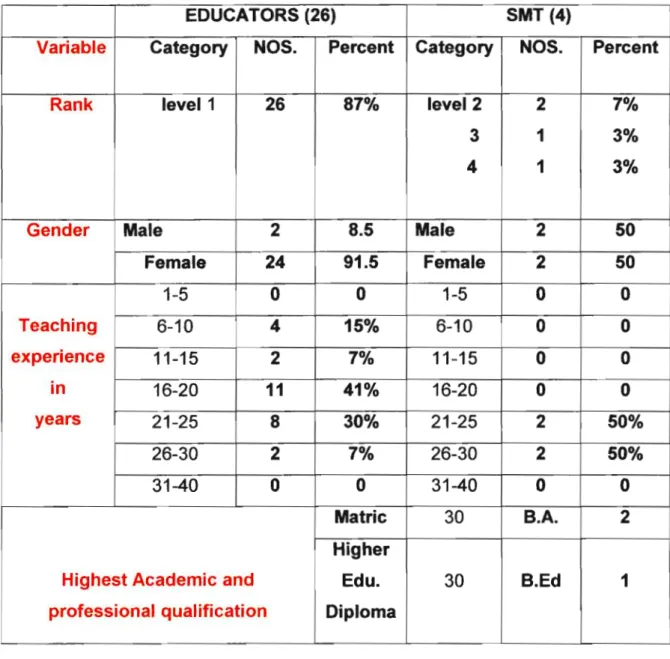
4.2.1 ANALYSIS OF FINDINGS
An overview of the biographical profile of the sample group accessed in this study is presented in the form of a frequency table.
Table 2 DISTRIBUTION OF THE RESPONDENTS' DEMOGRAPHIC CHARACTERISTICS
EDUCATORS (26) SMT (4)
Variable Category NOS. Percent Category NOS. Percent
Rank level 1 26 87% level 2 2 7%
3 1 3%
4 1 3%
Gender Male 2 8.5 Male 2 50
Female 24 91.5 Female 2 50
1-5 0 0 1-5 0 0
Teaching 6-10 4 15% 6-10 0 0
experience 11-15 2 7% 11-15 0 0
in 16-20 11 41% 16-20 0 0
years 21-25 8 30% 21-25 2 50%
26-30 2 7% 26-30 2 50%
31-40 0 0 31-40 0 0
Matric 30 B.A. 2
Higher
Highest Academic and Edu. 30 B.Ed 1
professional qualification Diploma
4.2.2 DISCUSSION OF FINDINGS
From the above table, it was apparent that the management team was fairly well balanced in terms of gender. However there were more female educators than male educators on the staff. A possible reason may be that most females are satisfied with their hours of duty and therefore do not seek alternative employment. According to Verma (1993)the salaries offered in the private sector is more lucrative than teaching and therefore many males opt to find employment in the private sector than in the teaching profession. However,
this imbalance of gender does not affect the analysis of the findings on how change management relates to educator attitudes to change at this school.
From the analysis of the demographics it appeared that the principal's experience puts him in a position where he was able to meet the challenges of his position. At the interview the principal indicated that he was holding the portfolio as principal for 5 years. Thus one would expect that he would impact significantly on the management of changes at the school and become more receptive to new management strategies (Owens, 1998). He has overcome some of the problems that one experiences in a new position and he is familiar with the contextual factors of the school.
It is also interesting to note from the analysis that most of the respondents hold the necessary academic and professional qualifications. However most management members did not have higher education qualifications in
management. Respondents indicated that they were disinclined to better their qualifications since no salary increment was given for improved qualification.
The South African education sector seems to be in a unique situation in that it demands little or no managerial qualification for entry to management
positions. It is the researcher's view that continuous education or in-service study is necessary to keep one abreast of changes and the theory prepares one better for the challenges of the real situation.
The study also focussed on the educators' number of years of service in the Education Department. This was to investigate whether the educators'
number of years of service in the Education Department impacted on change implementation. It was apparent that fewer educators at this school were in the "teaching experience" categories of 1-10 years because the teaching profession is not attracting as many people as it used to. However it is
advantageous to the study to also obtain the young educators' perceptions to the management of change at their school and to investigate how these educators attitudes are affected by the management approach to change.