He consequently proposed a developmental sequence in which children's understanding and perceptions of social class change according to cognitive-developmental trends (Short, 1991). The importance of the social and cultural context in children's understanding of rich and poor.
AIMS
METHODOLOGY
RESEARCH DESIGN
The specific questions used to facilitate the children's discussions of socio-economic status and income inequality in the focus groups were based on the two previous studies by Leahy (1981) and Bonn et al. 1999) (see Appendix 3: Scheme data collection). In applying the sociocultural approach to the data analysis, this essentially meant broadening the focus to explore how the children's stories reflect the personal; interpersonal; and contextual factors in which children's beliefs and thinking are embedded (Robbins.
SAMPLING
Furthermore, the unique history of the demographic population of the area where the school is based means that the children from that school are also likely to reflect some specific factors that are consistent with the context of their local community. The school chose to select children from two classes (respectively class 3 and class 6).
DATA COLLECTION
As in session one, the children and researcher sat in the focus group circle. The children were also reminded of the importance of confidentiality and sensitivity to what was discussed in the focus groups.
TRANSFERABILITY)
ETHICAL CONSIDERATIONS
In order to protect the autonomy of the children in this study, a number of precautions and procedures were implemented. Verbal consent to participate in this study was obtained from the children on the day of data collection.
DATA ANALYSIS
How is participation in particular contexts (with their histories, values, beliefs, artefacts and modes of behavior) integrated into the children's responses? It is important that the focus was both on the children's everyday social contexts and the cultural and social factors in the South African context.
RESULTS
- THE PERSONAL FOCUS
- THE INTERPERSONAL FOCUS
- THE CONTEXTUAL FOCUS
Within the younger age group (8-9 years), children used 'peripheral' repertoires much of the time, often referring to the possessions, appearance and behavior of rich and poor people in their answers to the questions of the focus group. But if you are rich, they shoot you in the eye” and “the poor people. The children used a lot of 'other' language (e.g. 'they', 'them', 'the rich' and 'the poor') much of the time when discussing both rich and poor.
For example, the children's discussions moved in their "inter-thinking" from peripheral characteristics of possessions to the behavior and lifestyle of rich and poor people. In discussing rich people, the children's repertoires reflected factors surrounding the nature of income inequality in South Africa. At the individual level, the focus on the children's responses revealed age-related trends in the children's repertoires.
Each level of analysis therefore highlighted a different aspect of the children's repertoires and responses in their understanding and perceptions of rich and poor.
DISCUSSION
At the first level of analysis, this study was interested in the question of children's views and perceptions of socio-economic status and income inequality. This suggests that the children's repertoire reflects the interpersonal context (in particular the school context and the group interpersonal context) between the children and their social environment. Furthermore, the children's repertoires and discourses about rich and poor served an important function in the interpersonal space of the focus groups.
As children spoke, they positioned themselves (and each other) in particular ways, with some positions holding more power than others (Alldred & Burman, 2005). This suggests that the particular ideas expressed in children's responses to rich and poor are significantly influenced by their social and cultural contexts. However, the way children use repertoires reflects important aspects of children's thinking.
Children's ideas and understandings of rich and poor are inherently contextual (Robbins, 2005).
LIMITATIONS
CONCLUSION
A sociocultural approach was used as a theoretical framework to interpret and interpret these reports to illustrate how understandings and perceptions of relative wealth and poverty reflect the contextual, social and interpersonal contexts in which children's thinking takes place. The specific questions used to facilitate children's discussions of socioeconomic status and income inequality in the focus groups were based on studies by Leahy (1981) and Bonn et al. In accordance with the first hypothesis of this study, the analyzes showed that at the individual level, the child's understanding and perception of socioeconomic status shows cognitive.
This suggests that the children's understanding and perceptions of wealth, poverty and inequality reflect the social reality in which the children live and in which the discussions took place. However, this study also demonstrated how limiting the focus to a purely cognitive developmental approach ignores the complexity of children's expressed ideas, and the social and cultural influences on children's ideas of socioeconomic inequality. In this way, this study contributed to a more comprehensive picture of children's understanding and perceptions of wealth and poverty, and highlighted the need for a shift towards contextually-based understanding of children's thinking.
It is therefore recommended that further research be conducted in this area, especially in South Africa, using the socio-cultural framework to determine the socio-cultural nature of children's understanding of socio-economic conditions.
In Proceedings International Education Research Conference of the Australian Association for Research in Education, 2002, Brisbane. Unpublished paper presented at the annual meeting of the American Educational Research Association, New Orleans, LA, 5-9. April 1988. They'll Only Call You a Scam if You're Poor': The Impact of Socio-Economic Status on Children's Identities.
Listening to children: Gaining a perspective on the experiences of poverty and social exclusion of children and young people from single-parent families. Struggling with poverty: Implications for theory and policy on expanding research on social class-based stigma.
APPENDICES
Letter of permission to school
There is no possible harm or risk to your school or your pupils and there is absolutely no deception in this study. The children's participation is completely voluntary and your pupils are not forced to take part in this study. The children or their parents can withdraw consent at any time, and there will be no repercussions.
Although the researcher and the children's peers will know who participated in the study, neither the name of your school nor the names or any identifiable characteristics of the students will be used in any records or reports. The results of this study will be written in a dissertation report which will be part of my Master's degree and can be presented at conferences. But since it doesn't ask for personal information and the informed consent forms will be destroyed, no information will be traced back to your children or school.
If you wish to be made aware of the results of this study when it is completed, a summarized copy of my dissertation will be sent to the school for your interest.
Parental Consent letters
- Parental Consent Letter: English
- Parental Consent Form (isi Zulu)
Ngicela ukuthi uvumele ingane yakho ukuthi ibe yingxenye yalolu hlelo, esethemba ukuthi luzosiza ukuqonda lokho izingane ezikwaziyo mayelana nezinkulumo ezilula ezifana nokuthi ``cheba'' kanye ``ly''. Uma ukhetha ukuvumela ingane yakho ukuthi ibe yingxenye yalesi sifundo, ingane yakho izobamba iqhaza ohlelweni lwezingxoxo ezimbili ezincane nezinye izingane ezingu-8-10, ngehora elilodwa, esikoleni sengane yakho, ngesikhathi okwavunyelwana ngaso nesikole. (23 Juni 2011 kanye 22 July 2011). Ingane yakho NGEKE ibuzwe ngempilo yayo nezinto ezidlule kuyo, futhi ngeke ibuzwe ukuthi ikhulume ngezindaba zomndeni wakho.
Ngikukhuthaza ukuthi uxoxe ngalesi sifundo nengane yakho futhi nixoxe ngokuthi ingane yakho ingathanda yini ukubamba iqhaza ngaphambi kokusayina le dokhumenti. Sicela uqaphele ukuthi ingane yakho ngeke iphoqelelwe ukuba ibambe iqhaza kulezi zifundo. Uma engazizwa ekhululekile angalishiya noma nini iqembu. Uma ukhetha ukuba ingane yakho ibambe iqhaza kulolu cwaningo, kungabongwa kakhulu. Ngeshwa, ngeke ngithembise ingane lutho.
Sicela usayine bese ubuyisela leli phepha ebhokisini elisehhovisi lesikole uma uvuma ukuthi ingane yakho kufanele ibe yingxenye yalesi sifundo.
Data Collection Schedule Data Collection Schedule
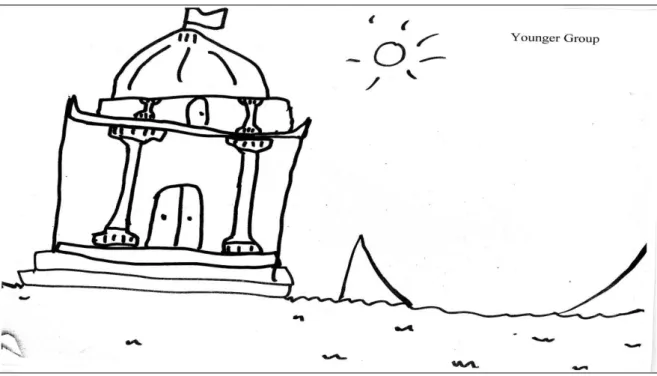
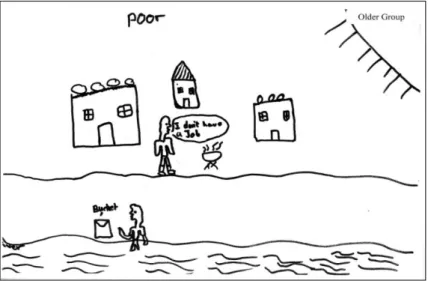
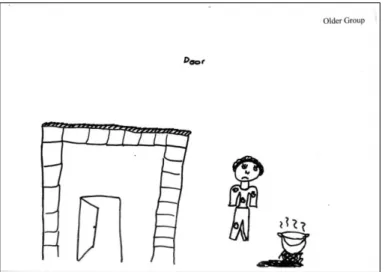
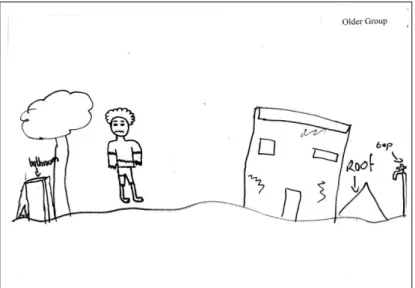
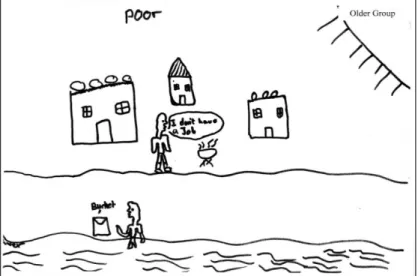
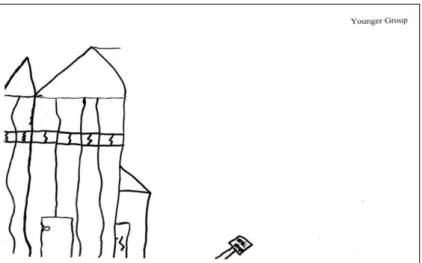
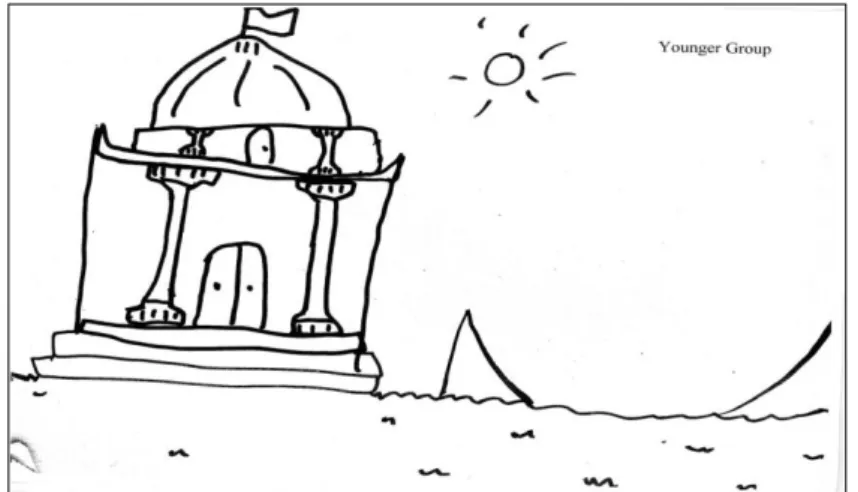
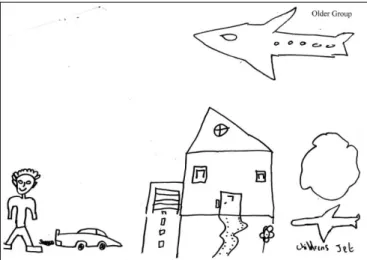
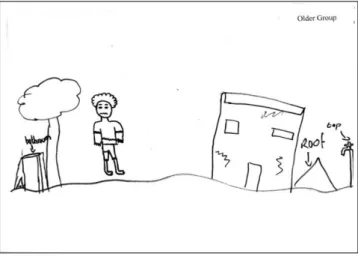
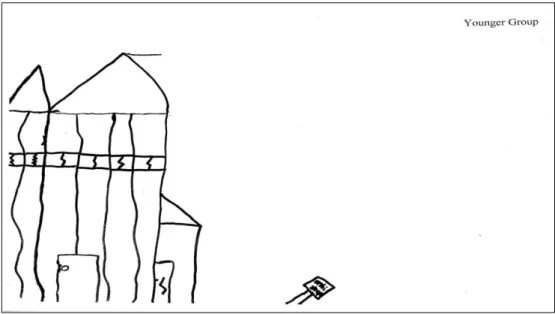
With the children's permission, audio recorders were also placed in the center of the table area. In addition, the children were encouraged to use their pictures in the discussions, and each pair was given the opportunity to share some ideas for their drawings near the end of the focus group session. Finally, the children were then debriefed about the study and given the opportunity to share some ideas about how they felt about how the session had gone.
Reminding the children what the study was about (as in the first Data Collection Session, see above). The same questions (adapted from Bonn et al., 1999, and Leahy, 1981) used in the first data collection session were then used to facilitate the children's discussions in a focus group format, with the researcher following the question with non-directive probes. A large sheet of newsprint was taped to a board in the focus group circle and the children were asked who would like to volunteer as a writer.
The children were also reminded of the importance of confidentiality and sensitivity to what had been discussed in the focus groups and thanked for their participation in the study.
Children’s Drawings
Data Transcriptions
Poor people are different from rich people because the rich have money and the poor don't. and sometimes when rich people have a lot of money, they throw it in the air like it's raining money. R: ..mmm and they have a very big house there..and you can tell me about the poor people. Oh, just write your names, grade, and how old you are in the corner of the paper, please, k. Child 2: Do we have to give both names.
I know that boy, he is the one who came to beg at my house, and then the poor man said, "I never knew you." Rich people are thieves, and poor people.. some of them are not.