
In plots not treated with fungicides, grain yield did not increase with increased K applications in all three years of the experiment. The illiteracy level of the smallholder farmer can also inhibit the use of agrochemicals.
ACKNOWLEDGEMENTS
To my husband, Robert, and our three children, Andrew, Gillian and Ian for their support, encouragement.
CONTENTS
ABSTRACT i DECLARATION vii
LITERATURE REVIEW 25
Introduction 25 1.2 Elements required in plant nutrition 27
The role of nutrients in the control of fungal plant
Management of fungal diseases with macro- and
Influence of nutrients on high and low sugar diseases 65 1.6 Discussion 67
Development and severity of grey leaf spot on maize grown under different nitrogen and potassium fertilizer regimes 78
Introduction 79 2.2 Materials and methods 81
Results 90
Discussion 138 2.5 Literature cited 143
Effect of fertilizers and grey leaf spot on the financial returns of
Abstract 148
Introduction 149 3.2 Materials and methods 150
Yield increases of wheat grown on residual fertilizers after grey
Abstract 192
Introduction 193 4.2 Materials and methods 194
Results 198 4.4 Discussion 203
Introduction 208 5.2 Materials and methods 210
Relationship of environmental factors to incidence of airborne
Abstract 239
Introduction 240 6.2 Materials and methods 242
Light, scanning and transmission electron microscopy studies on the conidiogenesis of Cercospora zeae-maydis on maize 262
Abstract 262
Introduction 263 7.2 Materials and methods 266
THESIS OVERVIEW 282
Introduction 282 8.2 Crop losses from diseases, pests and weeds 283
GENERAL INTRODUCTION
Grey leaf spot in the United States
Grey leaf spot of maize in Africa
Worldwide distribution of grey leaf spot of maize
The pathogen
In the presence of free water on the leaf surface, stomatal tropism is reduced, appressorial formation is rare, and there is no penetration of the host tissue (Beckman and Payne, 1982; Thorson and Martinson, 1993). Primary infections usually develop on the lower corn leaves, and as the lesions mature, conidia are produced that serve as inoculum to infect the upper leaves.
Management of grey leaf spot
In contrast to the USA, a high frequency of quantitative resistance to GLS has been found in commercial hybrids in RSA (Ward et al., 1993; Nowell, 1997; Ward and Nowell, 1997). Quantitative resistance to GLS has been shown to affect lesion size, latent period and sporulation (Freppon et al., 1996).
Large-scale commercial farmers compared with small-scale farmers inRSA
These production methods and problems are common to smallholder farmers across the African continent, making fungicide control of GLS a non-viable option. Since low soil fertility is common among smallholder maize growers in Africa, GLS may not be a major yield-reducing factor.
Literature cited
Chlorotic lesion response of maize to Cercospora zeae-maydis and its effect of gray leaf spot disease. Influence of environment and plant maturity on gray leaf spot of maize caused by Cercospora zeae-maydis.
EFFECT OF SOIL NUTRITION
ON FUNGAL DISEASES OF SELECTED CROPS
LITERATURE REVIEW
Introduction
However, tremendous progress in recent years, particularly in the field of macronutrients, has led to a better understanding of the uptake and action of these nutrients and the effects of fertilizers in reducing disease severity. Many nutrients, e.g. N, sulfur (S) and P become available to the plant from the soil through microbial activity that changes their form, solubility or root absorption capacity.
Elements required in plant nutrition
- Macronutrients
- Micronutrients
Where possible, the most commonly used application forms of each element used in the RSA are included. Present in the soil in organic and inorganic forms syrite (FeS,O) and Co (CoAsS) Typical concentrations of S in plants vary between 0.1-0 4%.
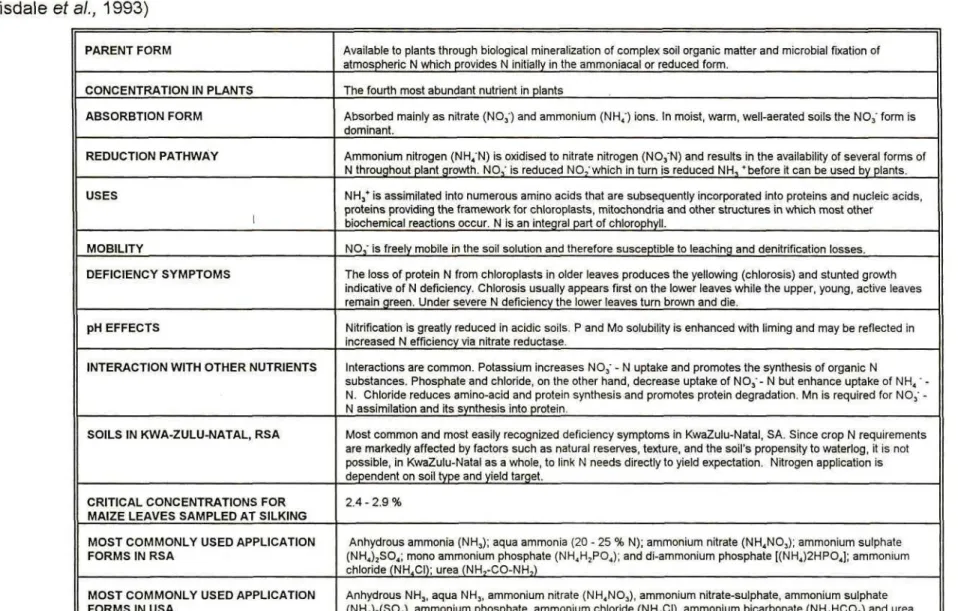
The role of nutrients in the control of fungal plant pathogens
- Nitrogen (N)
- Phosphorus (P)
- Potassium (K)
- Calcium (Ca)
- Manganese (Mn)
- Other micronutrients
- Nutrient interactions
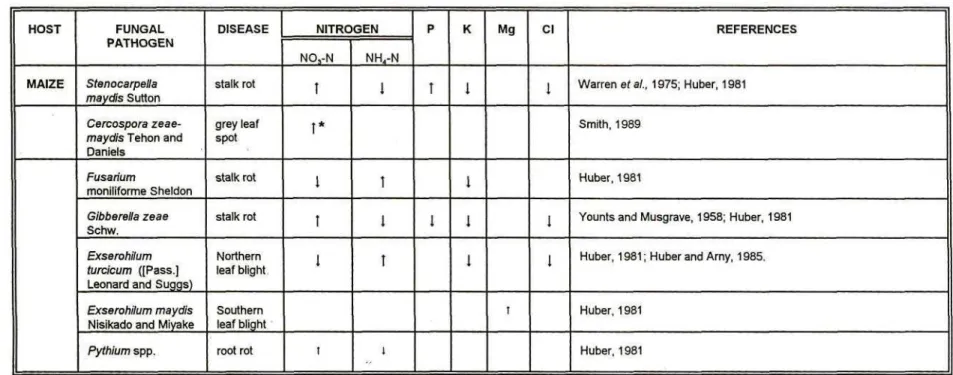
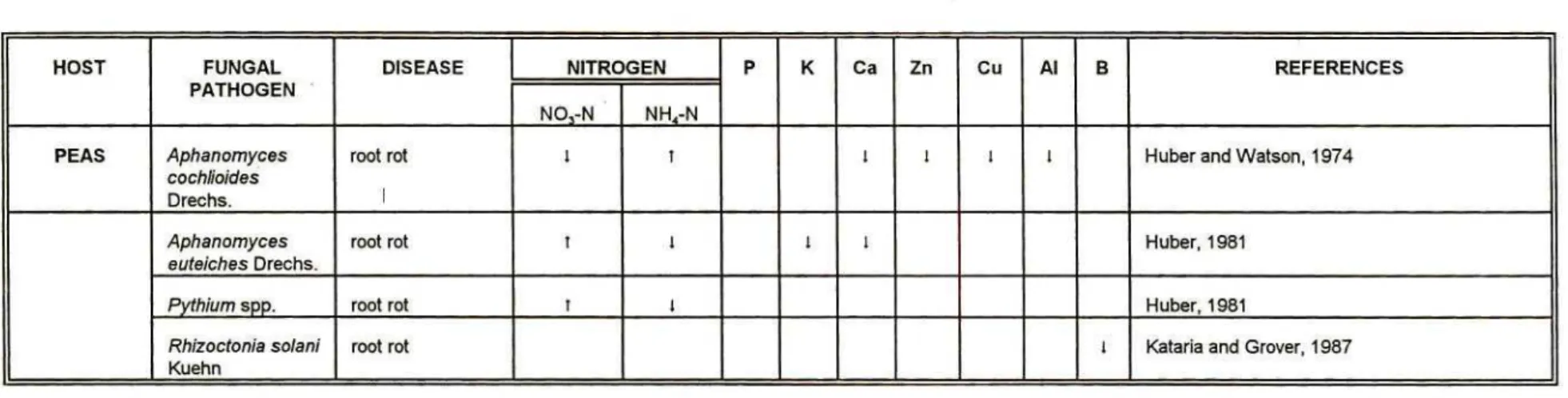
T represents an increase in disease with the addition of the nutrient; 1 represents a decrease in disease with the addition of the nutrient. I represents an increase in disease with the addition of the nutrient; 1 represents a decrease in disease with the addition of the nutrient. Huber, 1981 Huber, 1981. t represents an increase in disease with addition of the nutrient; 1 represents a decrease in disease with the addition of the nutrient.
1 represents an increase in disease with the addition of the nutrient; 1 represents a decrease in disease with the addition of the nutrient.
Management of fungal diseases with macro- and micronutrients
- Management of Fusarium wilts of vegetables and ornamentals
- Management of Verticillium wilt
- Management of Aspergillus flavus in maize and peanuts
In soils deficient in P, organic matter or the NH4 form of N and lime to increase pH from 6.0 to 7.5, this typically results in increased resistance of many crops to Fusarium wilt (Jones et al., 1989). The effect of fertility on resistance to Verticillium wilt is determined by the interaction between host, pathogen and environment and is infinitely variable, making it impossible to make specific recommendations. In general, resistance to Verticillium wilt is increased if the added nutrient is within the deficiency range and if N levels are used that promote good, but not luxurious, growth.
NO3-N appears to increase susceptibility to Verticillium, but the effect of NH4 -N on host response varies with host species (Pennypacker, 1989).
Influence of nutrients on high and low sugar diseases
These observations on the increased incidence of stem rot in high yielding hybrids are consistent with the work of Koehler (1960) who showed that maize hybrids known to be most susceptible to stem rot were the highest yielders. On the other hand, if the total demand for carbohydrates is reduced due to a smaller sink, carbohydrates accumulate in the stalk, leading to more resistance to stalk rot diseases. Several investigators (Holbert et al., 1935; DeTurk, 1937; Dodd 1980a) have reported that resistance to stalk rot of corn is caused by S.
This may indicate that ultimate stem rot resistance may be incompatible with ultimate grain yield if stem rot resistance is achieved by living cells alone (Dodd, 1980a).
Discussion
Carbohydrate levels must be maintained above a critical point in the plant to prevent infection from occurring (Dodd, 1980a). Starving the plant into an unproductive state to escape disease is equally counterproductive. In the vast majority of studies reported here, the addition of micronutrients reduced disease incidence in crop plants.
The financial analysis of fertilizer treatment may indicate that the treatments that result in the highest yields and lowest disease levels are not always the most economical treatments.
Literature cited
The role of nutrition in the pervasive disease of wheat and other small grains. Suppression of general root rot (Gaeumannomyces graminis f. sp. tritici) of wheat with chloride fertilizers applied in autumn. Manganese nutrition and accumulation of phenolics and lignin in relation to the differential resistance of wheat genotypes to the pervasive fungus.
The relationship between whole grain uptake and rhizosphere pH in soils fertilized with ammonium vs.
Development and severity of grey leaf spot of maize grown under different nitrogen and potassium fertilizer regimes
Abstract
Introduction
Cercospora zeae-maydis does not survive more than two seasons in contaminated debris (de Nazereno et al., 1992). Tillage operations aimed at complete burial of debris have been demonstrated as a means of managing the disease (Payne and Waldron, 1983; Huff et al., 1988; White et al., 1996). Fertilizer use is a major determinant of maize grain yield and profitability, and is an aspect of production that can be manipulated by the farmer (Farina et al., 1980).
Effective fungicide control programs have been developed to control GLS in RSA, making it possible to study wheat yield losses (Ward et al., 1997).
Materials and methods
- Cedara trial
- Ahrens trial 3
Carbofuran granules (2.7 kg a.i. ha '1) were applied in the planting furrow to control soil-damaging insects. Assessments of disease severity were made regularly at 10-14 day intervals on eight plants in the center of the two middle rows of each plot, from the first signs of disease, and continued until physiological maturity of the crop. The leaf opposite and below the ear of each plant was collected in the center two rows of each fungicide and non-fungicide treated plot at 50% anthesis.
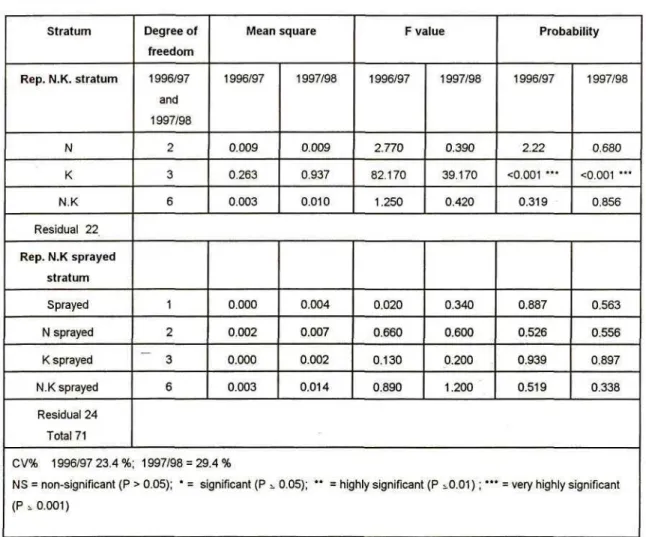
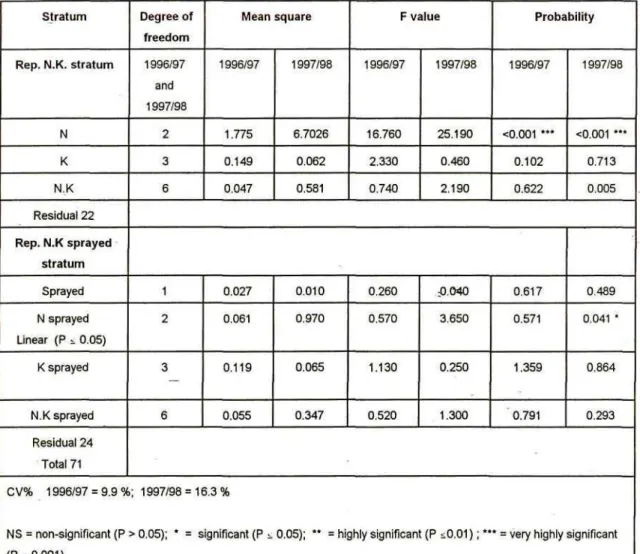
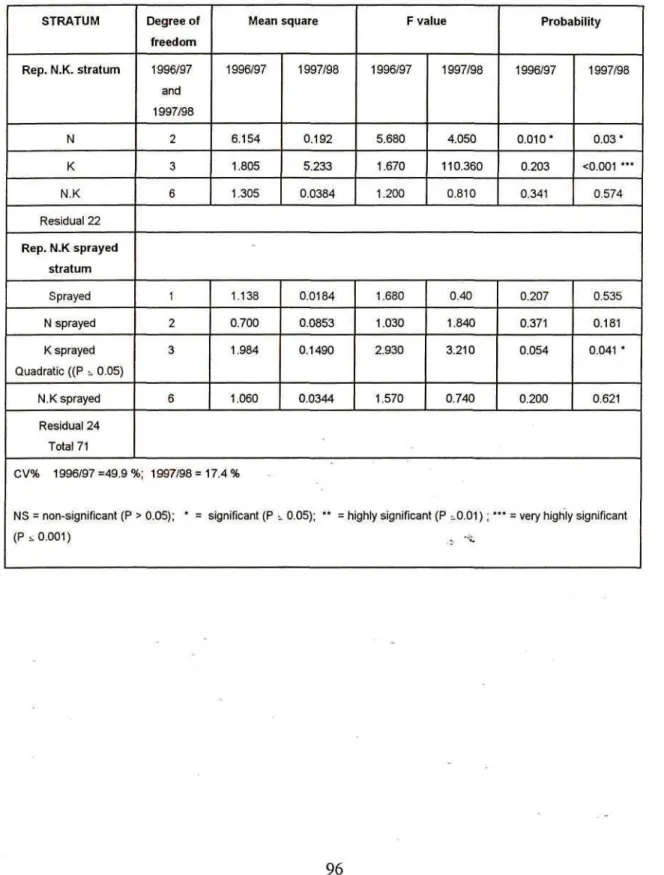
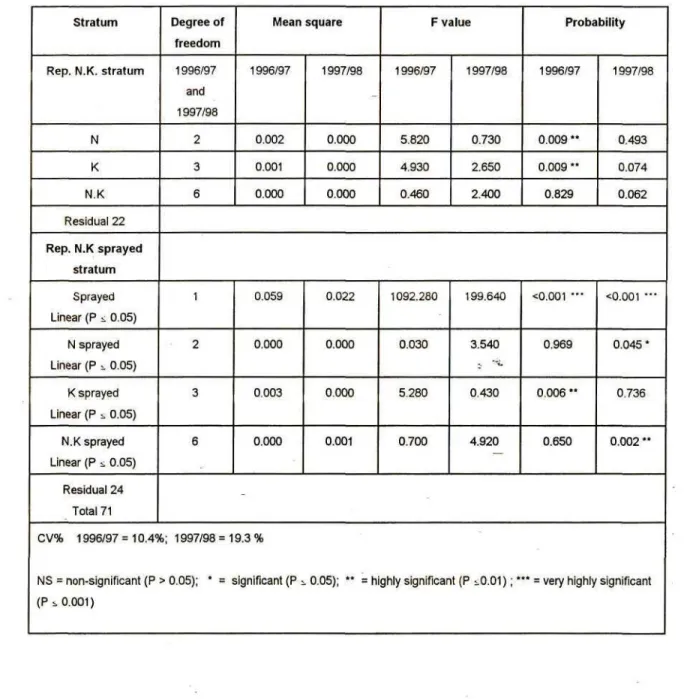
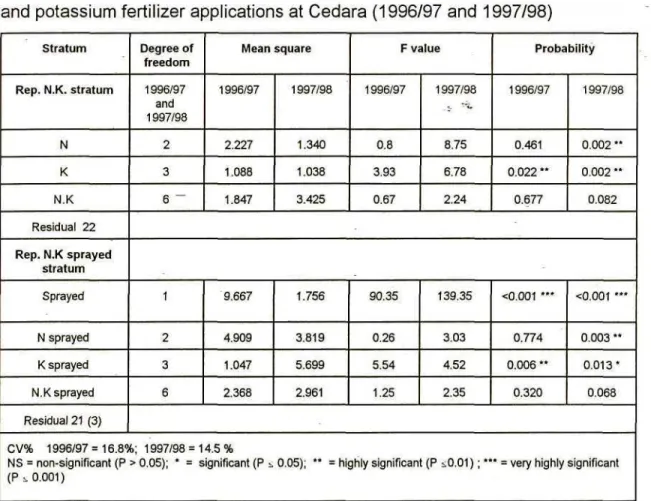
Linear and quadratic effects of N and K and their interaction with spray treatments were examined in the ANOVA.
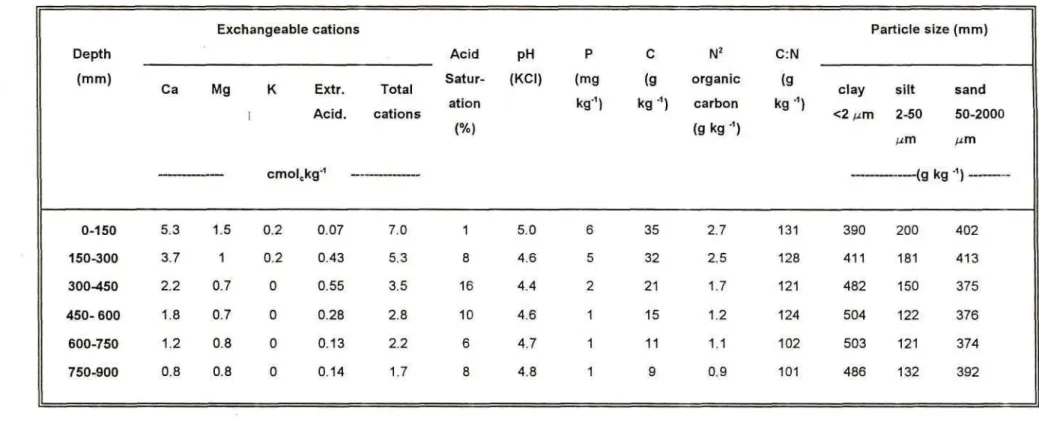
Results
- Cedara trial
- Ahrens trial
MAIN EFFECT - NITROGEN Nitrogen (N) applied (kg ha "') Fungicide treated maize Non-fungicide treated maize LSDm n 5 1. MAIN EFFECT - NITROGEN Nitrogen (N) applied (kg ha "1) Fungicide treated maize Non-fungicide treated maize LSD mwn. MAIN EFFECT - POTASSIUM Potassium (K) applied (kg ha"1) Fungicide treated maize Non-fungicide treated maize L S Dm M.
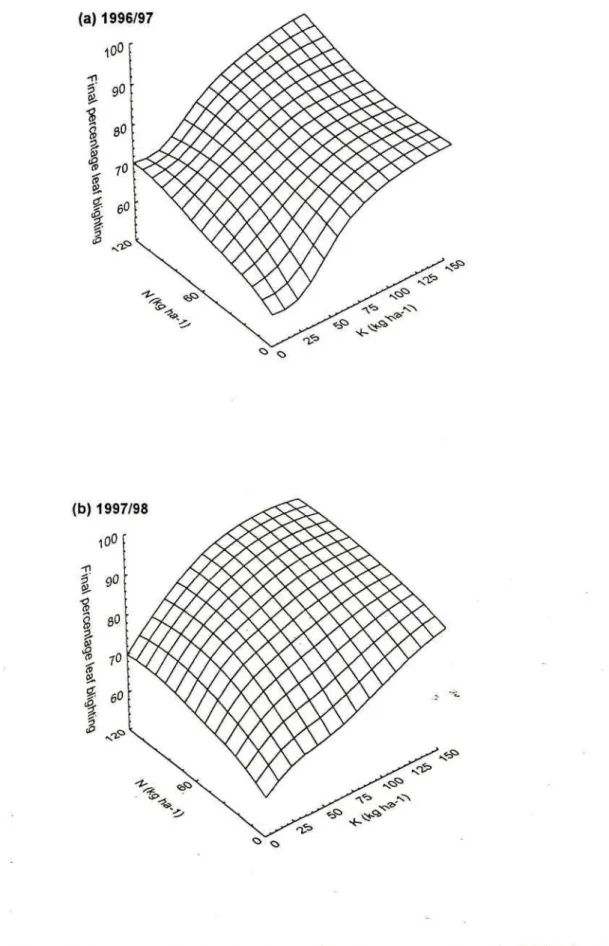
MAIN EFFECT - POTASSIUM Potassium (K) applied (kg ha"1) Fungicide treated maize Non-fungicide treated maize L S Dm i m. MAIN EFFECT - NITROGEN Nitrogen (N) applied (kg ha "') Fungicide treated maize Non-fungicide treated corn LSD™,. Effect of nitrogen and potassium (kg ha'1) on standardized area under disease progression curve (SAUDPC) on non-fungicide treated maize at Cedara (b. 1996/97; b. 1997/98).
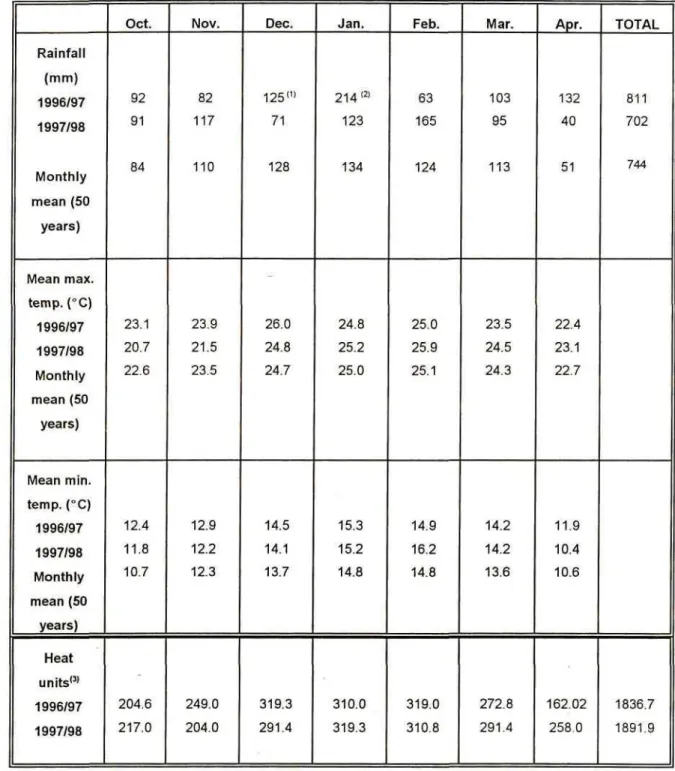
Discussion
In non-fungicide treated maize, there were significant increases in grain yield with increased N applications, despite increased leaf scorch. However, in the non-fungicide treated K maize, potential grain yields are not achieved, as can be seen from the increased losses in grain yield between fungicide and non-fungicide treatments with increasing K rates. This loss in grain yield between fungicide-treated and non-fungicide-treated maize was not reflected with increasing N levels, possibly due to the recycling and accumulation of N on the clay soil of the trial site.
Grain yield alone should not be used to justify the use of fertilizers to increase grain yield.
Literature cited
Response of corn hybrids and inbred lines to gray leaf spot disease and the effect on yield in Tennessee. Epidemiology of gray leaf spot of field maize (Zea mays L.) caused by Cercospora zeae-maydis Tehon and Daniels. Epidemiology and management of gray leaf spot disease, a new disease of maize in South Africa.
Effect of fertilizer and gray leaf spot on the financial returns of maize in South Africa.
Effect of fertilizers and grey leaf spot on the financial returns of maize in South Africa
Introduction
Many maize pathogens, including fungi, bacteria and viruses, are present in the Republic of South Africa (RSA) (Gorter, 1977). In recent years, there have been economically important epidemics of GLS in the RSA, which have negatively affected grain yields of harvested maize (Zea mays L.). The disease first appeared in the Midlands of KwaZulu-Natal (KZN) in the 1988/89 growing season.
However, farmers still prefer to plant higher yielding cultivars and use fungicides instead of using hybrids with effective quantitative resistance as they result in the highest economic yield (Ward et al., 1999).
Materials and methods
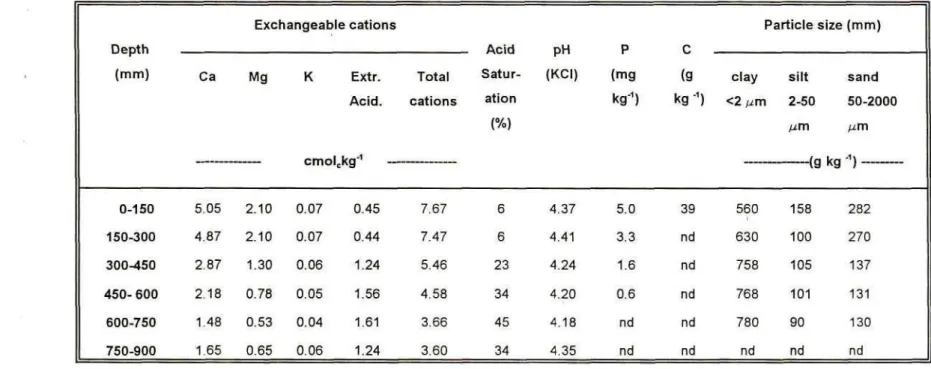
It was therefore assumed that this experiment evaluated the effect of the nitrate form of N on GLS development. Whole plant standard area plots described by Ward et al., (1997c) were used to estimate percent disease severity of the central plants in the two middle rows of each plot and 146 DAP. The economic benefits of N and K land applications to control GLS are based on a modification of the equation used by Ward eial.
If the initial cost of the spray equipment is shared between 4 small-scale farmers, then the cost is reduced to R200 per year.
Results
MAIN EFFECT - POTASSIUM Potassium (K) applied (kg ha'1) Fungicide treated maize Non-fungicide treated maize LSDm n i n. MAIN EFFECT - NITROGEN Nitrogen (N) applied (kg ha') Fungicide treated maize Non-fungicide treated maize LSD,nnsl . MAIN EFFECT - POTASSIUM Potassium (K) applied (kg ha'1) Fungicide treated maize Non-fungicide treated maize L S Dr a M.
MAIN EFFECT - POTASSIUM Potassium (K) applied (kg ha'1) Corn treated with fungicide Non-fungicide treated corn LSDm n s,.

Discussion
- Comparison of spraying costs for commercial and small-scale farmers
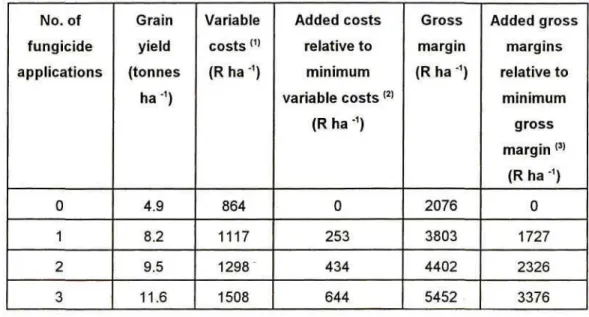
However, in the 1993/94 wet season, three applications of fungicides resulted in relatively high grain yields and the highest added gross margin compared to single and double applications. Gross margin and added gross margins from corn grain yields related to the frequency of fungicide applications (Ward, personal communication). Variable costs = H + F + A + S where H = harvest costs; F = fertilizer and application costs; A = cost of N top dressing; S = cost of one, two or three fungicide applications (if applicable).
Annual cost per hectare of three fungicide applications to control gray leaf spot on corn using aerial fungicides.

![<V( Y/ Z Z % S ? S;? 8[V . ? ; C )0 V<; W % V] K ^T "TQ_ ? ` T ?K `)] )S <V( 8[V Z](data:image/gif;base64,R0lGODlhAQABAIAAAP///wAAACH5BAEAAAAALAAAAAABAAEAAAICRAEAOw==)