
Synthesis of novel heterocyclic systems as potential inhibitors of HIV-1 enzymes
THESIS
Submitted in fulfillment of the requirements for the degree of
DOCTOR OF PHILOSOPHY of
Rhodes University
by
Khethobole Cassius Sekgota
APRIL 2019
Department of Chemistry Rhodes University
Makhanda
i
Abstract
This study has focussed on the application of Baylis-Hillman methodology in the development of efficient synthetic pathways to libraries of novel 3-[(N-cycloalkylbenzamido)methyl]-2- quinolones and indolizine-2-carboxamides and on an exploration of their medicinal potential.
The approach to 3-[(N-cycloalkylbenzamido)methyl]-2(1H)-quinolones involved a six-step pathway comprising: Baylis-Hillman reaction of 2-nitrobenzaldehyde derivatives and methyl acrylate to afford nitro-Baylis-Hillman adducts; thermal cyclisation of the adducts to give a range of 3-(acetoxymethyl)-2(1H)-quinolones in good to excellent yields; hydrolysis of the acetates; conversion of the resulting alcohols to the 3-chloromethyl analogues; amination; and, finally, acylation to afford the target amides. Variable temperature NMR methods were used to facilitate analysis of the 1H and 13C NMR spectra which were complicated by internal rotation and cycloalkyl ring-flipping effects.
On the other hand, the indolizine-2-carboxamides were obtained in several steps commencing with the Baylis-Hillman reaction of pyridine-2-carboxaldehyde and methyl acrylate. Thermal cyclisation of the Baylis-Hillman adduct afforded indolizine esters, hydrolysis of which gave the corresponding acids which served as precursors to the target indolizine-2-carboxamides.
The final amidation step, however, proved to be particularly challenging. Various coupling strategies were explored to access indolizine-2-carboxamides. These included the use of 2,2,2- trifluoroethyl borate which showed limited promise, but propylphosphonic acid anhydride (T3P) proved to be the most effective coupling agent, permitting the formation of 24 novel indolizine-2-carboxamides from hydrazines, aliphatic amines and a range of heterocyclic amines.
A high-field NMR-based kinetic study of the mechanism of the Baylis-Hillman reaction of pyridine-4-carboxaldehyde and methyl acrylate in the presence of 3-hydroxyquinuclidine in deuterated chloroform was initiated, reaction progress being followed by the automated collection of 1H and DEPT 135 NMR spectra over ca. 24 hours using a high-field (600 MHz) NMR instrument. The results have provided critical new insights into the mechanism. NMR analysis has also been used to elucidate the multiplicity of signals associated with rotameric equilibria observed at ambient probe temperature. Variable temperature 1D- and 2D-NMR spectra were used to facilitate the unambiguous characterisation of the 2-quinolone benzamides and some of the indolizine-2-carboxamides.
The 3-[(N-cycloalkylbenzamido)methyl]-2(1H)-quinolones, together with selected precursors, and a number of the indolizine-2-carboxamides have been screened in vitro as potential HIV-
ii 1 enzyme inhibitors. A survey of the activity of the 2-quinolones against HIV-1 integrase, protease and reverse transcriptase revealed selective inhibition of HIV-1 integrase with the most active IN inhibitor, 3-[(cyclopentylamino)methyl-6-methoxy-2(1H)-quinolone 115e, producing residual enzyme activity of 40% at a concentration of 20 µM. Many of the 2- quinolones exhibited no significant cytotoxicity against HEK 293 cells at 20 µM concentrations. 3-[(N-Cyclohexylamino)methyl]-6-methoxy-2(1H)-quinolone 114e was the only compound to exhibit ant-plasmodial activity (55% pfLDH activity). The survey of indolizine-2-carboxamides also revealed encouraging inhibition against HIV-1 integrase. None of these compounds exhibited cytotoxicity at 20 µM against HEK 293 cells, while a number of them exhibited some activity against Plasmodium falciparum (3D7 strain) and Trypanosoma brucei. Selected indolizine-2-carboxamides exhibited significant anti-tubercular activity in the 7H9 CAS GLU Tx and 7H9 ADC GLU Tw media.
In view of the inherent fluorescent character and biological potential of the synthesised indolizine-2-carboxamides, their photophysical properties were explored to establish their possible dual use as bio-imaging and therapeutic agents. The major absorption and corresponding emission bands, and the associated molar absorption coefficients (Ɛ) expressed in the form of log Ɛ were determined. Their high extinction coefficients, large Stokes shift and red-shifted emissions in the visible region indicate their potential for use as fluorophores.
iii
Acknowledgements
Firstly, I would like to express my sincere gratitude to my supervisor, Dr. Setshaba David Khanye, for his support, encouragement and availing of resources without which the project would not have been a success.
To my co-supervisor, Prof. Emeritus Perry T. Kaye, I am eternally grateful for his advises and deliberations which proved most helpful, informative and gifted this project moments of considerable success. The splendour of his effortless-patience, care, enthusiasm and commitment has been a source of inspiration. I would also like to extend my heartfelt appreciation to Prof. Kevin Lobb for his invaluable assistance with variable temperature NMR, kinetic and mechanistic studies.
I am grateful to all the current and former students in our lab for their constructive inputs and collegiality. It was a great pleasure and privilege mentoring am impeccable student as Kamogelo Mafokwana (MSc to PhD upgrade) whose ethics and commitment made this experience a memorable one.
I would also like to thank my friends for their support. To each one of you, either in Makhanda or elsewhere, your support can never go unnoticed. May I take the liberty to give special thanks to all members of staff, not to mention the technicians, in the Department of Chemistry and post-graduate students in our lab for support and encouragement.
To my relatives, your support is always a pillar of strength. I am especially thankful for selfless support I benefited from my sister, Mabatho Marutha. No amount of words can express my appreciation for the endless support and guidance from my brother, Maropeng Ngobeni. To my in-laws, the Kubheka family, thank you for being so thoughtful and supportive in this endeavour.
I thank my siblings: my brothers, Mantshitla and Masilo and, my sister, Matate for their moral support and love throughout the journey.
To my little lad, Kheropole Tlhankga Mvuyelwa Sekgota, at your infancy I invested in a dream, a dream I would spread for you to walk on. To my niece, Mosibudi Poelano Sekgota, had I been there you too would have enjoyed my presence, tread on this dream.
I am grateful to NRF and MRC for financial support without which this project would not have been possible.
iv This research project has been a knowledge-generation endeavour which in order grasp and understand underlying abstract principles, many times, my mind hurled into an intellectual and creative realm from which it was at dissonance with my body and the local environment. Ideas that nourished and refreshed the mind were established, praxes of which continuously required the ability to transform despair into hope; failure into challenge; and sustained optimism. When fatigue had set in, almost convinced that the course was beyond my capacity and the reward of doubtful value, there was always a team that cherished and encouraged me throughout the course and, believed in me more than myself. Whenever they casually recited a family praise which ushered in morale, “Ke Sekgota sa mmabodingwana a tau, Sekgota sa mafolosa nkwe thabeng mabala a kganya le tlase. A kganya le mmadithaga modubatse. Ke motho yo a tšwago bolepse, tlhaku di a lewa, tša sita ra ribega ka morifi.”; I knew for truth that I represent their aspirations and upon completion, the reward is momentous and of invaluable value. There exists no token of thanks to appreciate your support nor vocabulary to express my gratitude.
I would like to dedicate this thesis to my parents, Modjadji Nancy and Mohlatlego Paulus Sekgota and my beautiful wife, Gugu Kubheka.
“Morena boloka setshaba sa heso”
v
Table of Contents
Abstract ... i
Acknowledgements ... iii
1. Introduction ... 1
1.3.1. Pharmacokinetics of anti-HIV drugs ... 13
1.3.2. Potential HIV-1 vaccination ... 15
1.3.3. Anti-retroviral therapy ... 16
1.3.3.1. New generation anti-retroviral regimens ... 18
1.4.1. Properties of 3-substituted 2-quinolones ... 23
1.4.1.1. Fluorescence properties of 2-quinolones ... 24
1.4.2. Synthesis and reactivity of 3-substituted 2-quinolones. ... 26
1.4.3. Syntheisis of benzannulated beterocyclic compounds using Baylis- ... Hillman methodology. ... 28
1.4.3.1. The Baylis-Hillman approach to 2-quinolone derivatives. ... 29
1.5.1. Biological activity and synthesis of indolizines... 33
1.5.2. Baylis-Hillman approach to indolizines... 38
1.5.3. Physical properties of indolizines ... 38
1.5.3.1. Modulation of indolizine optical properties ... 40
1.5.3.2. Molar absorptivity of indolizines. ... 42
2. Results and Discussion ... 46
2.1.1. Amination of the 3-(chloromethyl)-2(1H)-quinolone derivatives (113) ... 49
2.1.2. Approaches to amide bond formation. ... 53
2.1.3. Synthesis of 3-[(cycloalkylbenzamido)methyl]-2(1H)-quinolones 117-119. .... 57
2.1.3.1. Structural elucidation of the benzamides (117-119). ... 60
2.2.1. Thermal cyclisation of 2-pyridinyl derivatives. ... 74
vi
2.2.2. Saponification of methyl indolizine-2-carboxylate. ... 79
2.2.3. Saponification of methyl 3-acetylindolizine-2-carboxylate 132 ... 82
2.2.4. Exploratory studies of the synthesis of indolizine-2-carboxamides ... 85
2.2.4.1. Boron-catalysed amide bond formation ... 86
2.2.4.2. Direct catalytic amidation of indolizine-2-carboxylic ... acid with diisocyanates. ... 87
2.2.4.3. Thermal cyclisation of amido-Baylis-Hillman adducts. ... 89
2.2.4.4. Approaches to Baylis-Hillman-derived carboxamides from ... Baylis-Hillman-derived carboxylic acids. ... 93
2.2.5. T3P-catalysed synthesis of amides. ... 95
2.2.6. Preparation of secondary amides. ... 95
2.2.6.1. Synthesis of N-(pyrazinecarboxanoyl)indolizine-2-carboxamide 179 ... 99
2.2.6.2. N-[N-(Indolizin-2-ylcarbonyl)isoxazolin-3-on-4-yl]indolizine-2- carboxamide 180 ... 102
2.2.7. Extension of T3P-mediated indolizine-2-carboxamide syntheses. ... 107
2.2.7.1. T3P-mediated reactions of acid (138 and 139) with ... 4-imidazolidinedione 146 and -methylimidazolidine-2,4-dione 147. ... 107
2.2.7.2. T3P-mediated Coupling of indolizine-2-carboxylic acids ... with further heteroaromatic amine. ... 114
2.2.7.3. Synthesis of isoniazid analogues. ... 125
2.2.7.4. Coupling of indolizine-2-carboxylic acid 134 with heteroaryl ... alkylamines ... 131
2.4.1. HIV-1 IN and PR assays ... 144
2.4.2. TB assays ... 145
2.4.3. Preliminary Malaria, trypanosome and cytotoxicity assays. ... 148
3. Experimental ... 173
3.2.1. Synthesis of Baylis-Hillman adducts ... 174
3.2.2. Cyclisation of Baylis-Hillman adducts. ... 178
3.2.3. Hydrolysis of 3-(Acetoxymethyl)-2(1H)-quinolone derivatives. ... 181
vii
3.2.4. Chlorination of 3-(hydroxymethyl)-2(1H)-quinolones. ... 184
3.2.5. Synthesis of 3-[(cycloalkylamino)methyl]-2(1H)-quinolone. ... 187
3.2.6. Synthesis of 3-(benzamidomethyl)-(1H)-2-quinolones ... 193
3.3.1. Synthesis of aza-Baylis-Hillman adducts ... 199
3.3.2. Preparation of indolizine esters and acids ... 205
3.3.3. Synthesis of N-(heteroarylalkyl)indolizine-2-carboxamides ... 208
3.3.4. Synthesis of tertiary indolizine-2-carboxamides ... 211
3.3.5. Further synthesis of acetylated and non-acetylated ... N-heteroarylindolizine-2-carboxamides ... 214
3.3.6. Synthesis of indolizine-2-carbohydrazides 197-199 ... 221
3.4.1. HIV-1 Integrase Assay ... 223
3.4.2. HIV-1 Protease assay ... 223
3.4.3. HIV-1 RT assay ... 224
3.4.4. Plasmodium falciparum (pLDH) assay ... 224
3.4.5. Trypanosome assay ... 225
3.4.6. Cytotoxicity assay ... 225
4. References ... 230
1
1. Introduction
Fundamentals and evolution of drug discovery
Drug discovery is an interdisciplinary endeavour that primarily involves a combination of appropriate expertise from chemistry, pharmacology and biochemistry to effect product transfer from fundamental research to the pharmaceutical industry. The advent of genomics and bioinformatics has greatly enhanced the drug discovery process and diversified treatment options by exposing the genetic basis of multifactorial diseases and identifying targets for therapeutic intervention.1 Since 1865, when August Kekulé’s pioneering theory on the structure of aromatic organic molecules led to successful research on dyes and the realisation that dyes have selective affinity for biological tissues, chemistry has had a driving influence in drug research.2 This led to scientists postulating the existence of chemoreceptors in parasites and microorganisms and that cancer cells could be differentiated from analogous structures in host tissues.3
Natural products from terrestrial and marine plants, microorganisms, vertebrates and invertebrates have been used for treating and preventing human diseases since the dawn of medicine. They continue to play an inspirational role in the discovery of new compounds thereby increasing structural diversity and providing novel lead compounds. In fact, the majority of the world’s population (up to 80%) relies on natural product-based medicines for primary health care which also inspire drug development in developed countries.4,5, 6 In the period of thirty-four years, from 1981 to 2006, Newman and Cragg published four major reviews covering sources of new and approved drugs for the treatment of human diseases.5, 7-9 The development of high-throughput screening based on molecular targets has led to a constant demand for the generation of large libraries of compounds. High-throughput screening typically focuses on a limited collection of compounds that contain structural features of natural products. Up to the present time, combinatorial chemistry has led to the de novo development of two new compounds approved for medicinal use, viz, sorafenib (Nexavar) 1 and atalurin (Translarna) 2. Sorafenib was developed as an antitumor agent by Bayer, and the United States Food and Drug Administration (U.S. FDA) approved its use in the treatment of renal cell carcinoma and hepatocellular carcinoma in 2005 and 2007, respectively. By mid-2014 sorafenib had been approved in more than 100 countries for the treatment of these conditions and, following further approval, for the treatment of thyroid cancer. Atalurin was approved by the EU in 2014 for the treatment of patients with genetic disorders resulting from mutations.7
2 Chemists have long been involved in the isolation of the active principles in medicinal plants.10 For example, Sertürner isolated morphine 3 from opium extract in 1815; papaverine 4 was isolated in 1845 and discovered to be an antispasmodic in 1917.11 As more active principles were isolated, the pharmaceutical industries addressed the problem of providing standardised preparations of isolated active ingredients.12 Nine years after Alexander Fleming’s discovery of penicillin 5 in 1929, a metabolite from a penicillium mould, Howard Florey, Ernest Chain and co-workers successfully isolated penicillin from penicillium mould thereby opening a new era of antibiotics.13, 14 Before the discovery of penicillin, infections such as pneumonia, rheumatic fever or gonorrhoea were life-threatening. The serendipitous discovery and subsequent development of penicillin represents one of the most important developments in medicinal chemistry.15, 16 Interestingly, however, the Egyptians had already used mould as an antibiotic by applying poultices of mouldy bread to infected wounds. Such antibiotics are produced by bacteria and fungi and are capable of inhibiting the growth of or destroying microbial species.15
Inspired by the high potency and apparent lack of toxicity of penicillin, a search for more antibiotics ensued requiring the establishment of well-equipped departments of microbiology and biochemistry to augment chemistry in the search for agents that exert other biological activities.17 Over the years, numerous new drugs have been discovered including: Ivermectin 6 as an anti-parasitic;18 Iovastatin 7 as a HMGA-CoA (3-hydroxy-ω-methylglutaryl-CoA) reductase inhibitor to lower the level of cholesterol in the blood;19 and Cyclosporin 8 and Tacrolimus 9 (FK 506) as immunosuppressants.1
The emergence of new, complex, and hard-to-treat diseases has rendered traditional drug discovery methodologies inadequate, and new technologies, such as large-scale genomics and proteomics, automated organic synthesis, and advanced biological screening have been developed to identify and target eccentric and difficult drug targets.20, 21 Information derived from the identification of drug targets informs the design of the molecular structure of potential drugs – a key technique in enhancing drug discovery by enabling the rational design of small molecules to bind at such targets.22 Despite these advances, average research and development costs per new molecular entity have increased dramatically in recent years. In addition, regulatory agencies are less tolerant to risk in new drugs for diseases for which safe drugs already exist. This has the effect of channelling research and development towards complex and hard-to-treat diseases. This translates to more costly and lengthier clinical trials and the need to deliver high-quality, safe and efficient treatments for complex diseases.23
3 Figure 1. Examples of compounds established for the treatment of human disease.
While the quality of drug target selection remains to be improved, compound attrition due to poor bioavailability and pharmacokinetics in phase II and III clinical evaluations has decreased significantly. This improvement is attributed to the critical attention being given to oral bioavailability, the re-purposing of known drugs and clinical candidates as well as the introduction of in vitro permeability assays using human colorectal carcinoma cells (caco-2), Mardin-Darby canine kidney (MCDK) cells and parallel artificial membrane permeability assays (PAMPA). These developments led to use of the Lipinski rule of five (Ro5) which
4 reduced the halting rate of drugs in clinical studies from 39% in the year 1991 to 8% in 2000.
However, attrition due to toxicity increased and the lack of efficacy remained constant.21-23
Lipinski’s rule of five (Ro5) which was proposed in 1997 stated that 90% of drugs that fulfil three out of four of the following properties are more likely to be orally absorbed: molecular weight ≤ 500 Da, calculated logP (cLogP) ≤ 5 and ≥ 0, hydrogen-bond donors (HBD) ≤ 5 and hydrogen-bond acceptors (HBA) ≤ 10 (Table 1).24
Table 1. Fundamental amenable factors of the Ro5 compliant drugs.20, 22, 23
Ro5 properties Property Change Impact
Molecular weight Increase • Decrease solubility
• Decrease permeability
• Increase transporter-mediated efflux toxicity
• Increase toxicity linked with human ether-a-go-go-related gene (hERG)
cLogP Increase • Increase lipophilicity
• Improve permeability
• Decrease solubility
• Increase drug promiscuity and toxicity
• Increase accumulation in membranes and adipose tissues
HBD and HBA Increase • Poor permeability
Additional guidelines such as polar surface area (PSA ≤ 140 Å2), number of rotatable bonds (NRotB ≤ 10), and different ligand efficiency metrics, in terms of which a compound’s affinity is compared to its size and/or lipophilicity, have since been introduced, thereby expanding the correlations with absorption, distribution, metabolism, excretion and toxicity (ADMET) parameters. The simplicity of the Lipinski’s Ro5 has facilitated the rapid development of drugs, but its direct implementation (including additional guidelines) has often led to misuse and misinterpretation. Consequently, weighted or combination methods, 3D properties, quantitative estimates of drug likeliness (QED), Egan’s egg, the golden triangle, radius of
5 gyration, dissolution of energies, etc., have been introduced to mitigate the shortcomings of the Ro5. 21, 23
In comparison to intravenous drug delivery methods, such as buccal, nasal and transdermal, oral delivery has many advantages when systemic exposure of a drug is desired. Advantages associated with solid oral drugs include increased reliability of exposure, ability to deliver large variations in dosage and relatively greater stability under storage compared with liquids and suspensions.25 Intravenous drug delivery, an invasive drug delivery method, also requires cell permeability. It is, however, prone to infections and local side reactions and is undesirable for many patients, especially children. Oral drug delivery is preferred by far over other methods.
For instance, research shows that 54-89% of oncology patients preferred oral delivery, and that quality of life for chronic patients improved compared to intravenous therapy. Because of its convenience, oral delivery remains the preferred method of drug delivery for the vast majority of drug therapies and, consequently, oral bioavailability represents a major challenge in drug development.21, 22
Despite the advances in target identification through proteomics,26 less than a quarter of recently approved drugs are active against novel targets which are usually G protein-coupled receptors (GPCRs), transporters or enzymes. Adversely, approximately 3000 of the genes in the human genome are related to disease with 600-1500 considered to be susceptible to manipulation using drugs that comply with the rule of five guidelines. Although a significant number of established classes of drug targets, such as ligand-gated ion channels, G-protein- coupled receptors (GPCRs) and nuclear receptors remain unexplored, exploration of the large number of targets which have poor or no response towards Ro5 compliant drugs could provide innovative drug discovery opportunities.21, 24, 27 The latter targets generally have binding sites that are large, highly lipophilic or polar, flexible, flat or featureless. Ongoing advances in genomics and proteomics facilitate the discovery of small molecules that reside outside Ro5 guidelines and such molecules are termed “beyond Ro5” (bR05). Recent analyses of bRo5 drugs and clinical candidates have revealed significant possibilities for the discovery of orally bioavailable and cell-permeable compounds, supporting a view that strict implementation of Lipinski’s Ro5 may have derailed drug research and development from seizing opportunities involving novel but more difficult targets.21
6
Ro5 and bRo5 drugs
The Ro5, in addition to considerations of drug toxicity and promiscuity, primarily focuses on two factors, viz.; the permeability and absorption of orally dosed drugs. Intestinal and plasma dissolution, permeability across the intestinal wall, and hepatic first-pass metabolism are vital aspects addressed in Ro5 compliant drugs. These aspects may be affected by a number of physiological and physiochemical factors that include varying intestinal pH, chemical and metabolic stability of the drug in the gastrointestinal system and the plasma, transporter- mediated efflux and the digestive and metabolic status of the patient.22
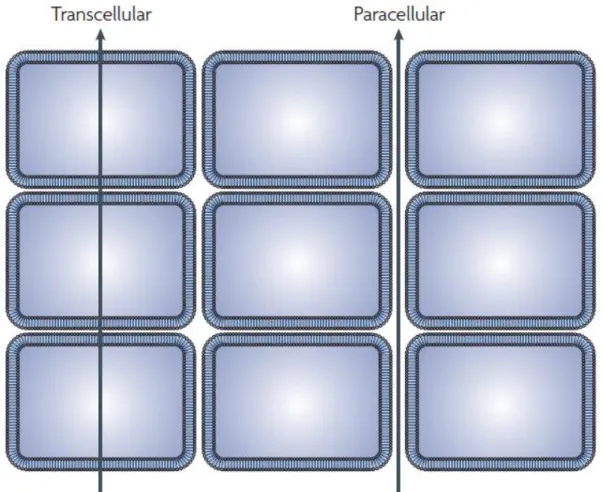
Absorption of orally dosed drugs can be categorised into paracellular, transcellular and active transport.28 Paracellular absorption involves transfer of a substance across an enterocyte by passing through the intracellular space between cells and is limited to small hydrophilic compounds with molecular weight (MW) ≤ 350 Da and low lipophilicity.28, 29 Transcellular transport is the most common drug absorption process that requires passive diffusion through the apical membrane, facing the gastrointestinal tract, into the enterocyte, followed by diffusion across the cell and through the basolateral membrane into the blood.30, 31 In passive diffusion, compounds partition into the cell membrane following desolvation from the polar aqueous gastrointestinal tract. The compound is then resolvated upon entry into the aqueous plasma (blood). Efflux transporters, such as P-glycoprotein (Pgp), actively transport compounds from the blood into the enterocyte and/or from the enterocyte into the gastrointestinal tract.23, 32 Lastly, active transport (uptake) requires recognition by native, efflux transporter proteins and is limited to small analogues of peptides, amino acids, lipids and sugars.23 Figure 2 shows schematic representation of transcellular and paracellular absorption.
Enzymes in the gastrointestinal tract, blood, enterocytes and lymph may metabolise the drug to a less active and highly soluble species. For a drug to reach the systemic circulatory system it must first be absorbed, amid potentially adverse metabolism, into the blood where it may travel via the portal vein to the liver and undergo hepatic metabolism. Systemic circulation ensues after hepatic metabolism, and oral bioavailability refers to the fraction of the oral dose that achieves systemic circulation after absorption and first-pass metabolism (overall metabolism during absorption and hepatic metabolism).23
7 Figure 2. A schematic diagram illustrating two modalities of the transfer of molecules across the tissue: paracellular (diffusion) and transcellular (crossing of phospholipid layers.33 (Reproduced with permission.)
Secondary metabolites of microbes and plants have provided reliable leads for the discovery of drugs the majority of which fall in the class “beyond rule of 5” (bRo5) molecules. The first four rules of the Lipinski’s Ro5 are effectively not applicable to natural products or any molecule that is recognised by the active transport system.7 Natural products are unique, highly diverse systems that are biased to bind in protein folds. Their binding selectivity may be improvable through structural modification, and their larger structures may be suited for targeting “undruggable” target spaces while maintaining bioavailability. Natural product drugs, through their capability to target unexplored potential drug targets, cover a wide range of diseases – parasitic, bacterial and fungal infections, allergies, cardiovascular and metabolic diseases, cancer, organ transplantation and multiple sclerosis.34
Figure 3 shows an inclusive classification by Newman7 of drugs discovered from 1981 to 2014.
A total of 1562 new molecular entities of natural products or related structures that include
8 biological macromolecules, unaltered natural products, botanical drugs (or defined mixtures thereof) and natural product derivatives account for 50.1% of the drugs in Newman’s analysis;
these exclude synthetic natural product mimics which account for a further 10%.7
Figure 3. Newman’s analysis of all new approved drugs from 1981 to 2014. Notations: B – Biological macromolecule, N – Unaltered natural product, NB – Botanical drug (defined mixture), ND – Natural product derivative, S – Synthetic drug, S* – Synthetic drug (NP pharmacophore), V –Vaccine, NM – Mimic of natural product.7, 8 (Reproduced with permission.)
The development costs inevitably affect willingness to invest in innovative research that can generate new drugs. Table 2 summarises inflation-adjusted changes in drug development costs.
The average cost of developing a prescription drug was reported to be $2.6 billion in 2017, representing a sharp increase of 145% from $1.2 billion in 2005. The drug development costs include an initial budget of $1.4 billion, an estimate of $1.2 billion provided by the investors during the ten or more years of research and development, and a further $312 million spent on post-approval development.6, 35
9 Table 2. Inflation-adjusted analyses of drug development costs in the period 2003-2012.36
Study period Clinical success rate (%) Cost estimate ($)
First-in-humans, 1983-1994 21.5 802 million
First-in-humans, 1989-2002 24.0 868 million
Company R&D expenditures, 1985-2001
24.0 1.2 billion
First-in-humans, 1990-2003 (large molecule)
30.2 1.2 billion
2000-2002 (launch) 8.0 1.7 billion
2009 (launch) N/A 2.2 billion
2007 11.7 1.8 billion
In clinical development, 1997-1999
10.7 1.5 billion
The steady rise in costs comes despite efforts in recent years to improve efficiency in pharmaceutical research and development. This increase is attributed to scrutiny in clinical trials, a greater focus on chronic and complex diseases as well as tests for insurers seeking comparative drug effectiveness data.35 A study conducted by DiMasi et al.,36 which involved the observation of 1442 self-originated compounds of top 50 pharmaceutical firms revealed the average clinical success rate to be 11.83%.
However, despite rising costs and improved drug development procedures and associated assays, clinical success rates have been declining in recent years.37 Moreover, declining innovation has become dominant issue in the pharmaceutical industry due to the poor oral bioavailability of new lead compounds and the lengthy duration, usually ten years or more, between the initial discovery of a potential therapeutic agent and its subsequent launch as a new molecular entity on the market. Drugs reaching the market today are typically products of research programmes initiated at least ten years ago.27, 38 Normalised drug output has remained constant. Consequently, the industry has placed each aspect of the drug discovery process under scrutiny and has begun to apply ADMET analysis to lead compounds.39
Clinical phase transition rates reflect where drug development fails most and thus informs the need for appropriate interventions to effectively control drug development costs. Of the 1738 new chemical entries that were developed during the sub-periods 1993-1998 and 1999-2004,
10 the phase transition rates were ca. 65% for phase I to phase II clinical studies, ca. 40% for phase II to phase III, and ca. 65% for phase III to regulatory review (Figure 3). Success rates of 90 - 100% for regulatory review to final approval were obtained. The overall clinical succession rate was 16% for both sub-periods 1993-1998 and 1999-2000, but the ca. 65% entry into phase II clinical testing and the subsequent ca. 40% phase II to III transition demonstrate that attrition occurs mainly in the early stages of discovery (Phase I and II) for drugs initiated into clinical trials.36, 40
Figure 4. Phase transition and overall clinical succession rates for new molecular entities during the sub-periods 1993-1998 and 1999-2004.40 BLA, biologics license application; NDA, new drug application. (Reproduced with permission.)
Various factors have collectively contributed to a decline in the discovery of new drugs from natural products. These include: the introduction of high-throughput screening (HTS) against defined molecular targets; the development of combinatorial chemistry; advances in molecular biology, cellular biology and genomics; a focus on therapy development for complex and chronic diseases and the preservation of biological species as per the Rio Convention on Biological Diversity. Consequently, rather than following traditional resource intensive natural product programmes that are premised on extract-library screening, bioassay-guided isolation,
11 structure elucidation and follow-on upscaling, modern drug discovery now involves rapid screening, hit identification and hit-to-lead development. 34
Although ongoing research has elicited renewed interest in natural products as a source of chemical diversity and lead generation, modern drug discovery protocols tend to utilize defined synthetic chemical libraries.34 However, characteristics, such as chemical diversity, significant numbers of chiral centres, high steric complexity, significantly low ratios of aromatic rings to heavy atoms, higher numbers of hydrogen-bond donors and acceptors, diversity of ring systems, greater molecular rigidity and biochemical specificity, often make natural product molecules ideal lead structures for drug discovery despite their exceptions to the Ro5 guidelines.34, 41 Modern drug discovery programmes have occasionally developed beyond Ro5 drugs to afford drugs, that are not natural products, with important medicinal activities. For example, the orally active anti-cancer drug, Navitoclax 9, opens the scope for drug discovery potential beyond the limitations of the Ro5. 24 Cyclosporin 8 is another “beyond Ro5”, natural product prototype with multiple intramolecular hydrogen bonding possibilities and solvent- dependent conformational mobility.42 With appropriate formulation, cyclosporin is orally bioavailable and adopts various intramolecular hydrogen-bonding patterns depending on whether the solvent medium is aqueous polar or non-aqueous polar.43 Navitoclax is a “beyond Ro5”, oncology drug currently in Phase III clinical studies; its therapeutic target is a protein- protein-interaction that was discovered using fragment screening. The discovery of Navitoclax illustrates that oral activity for “beyond Ro5” synthetic compounds is possible and also that elegance and resources, and serendipity are crucial for the discovery of “bRo5” drugs.24
Figure 5. Representatives of “beyond Ro5” drugs: the natural product cyclosporin 8 and the synthetic molecule Navitoclax 9.24
12 Because the interfaces involved in protein-protein-interactions (PPIs) are usually flat and large (1000 – 2000 A2) compared to the deep clefts and cavities (300 – 500 A2) required to bind smaller Ro5 compliant drugs, PPIs pose a special challenge for drugs that conform to the Ro5 limits. Inhibitors of PPIs therefore require physiochemical properties outside the Ro5 guidelines. It is the exclusion of Ro5 non-compliant drugs in most HTS screening libraries that has led to their failure in the discovery of PPI inhibitor leads. Furthermore, the PPIs depend on multiple, small energetic interactions across a broad area rather than the smaller, 3-dimensional cavities characteristic of monomeric protein drug targets. Albeit with considerable effort, the PPIs have in recent times, moved from “undruggable” to “druggable” targets largely due to advances in screening and genomics. 24
Receptors of Ro5 and bRo5 drugs
The oral administration of a drug is usually feasible when it has been established to be orally bioavailable and thus able to diffuse through the lipid bilayer membrane of the gastrointestinal tract. While the Lipinski Ro5 guidelines have been crucial in the development of orally bioavailable drugs, it has become apparent that there are orally bioavailable drugs that violate the Ro5 guidelines – especially metabolites of natural products. The latter class of drugs generally have structural features that allow them to act as substrates for naturally occurring transporters. Biophysical forces, such as hydrophobic and hydrogen-bonding interactions, which are involved in oral absorption, are similar to those involved in carrier-mediated drug absorption through interaction of the drug with proteins. 33, 44
Carrier-mediated cellular uptake is likely to be far more widespread than is currently understood. This view is supported by:33
i) many discoveries of specific cases in which drugs are known to be transported into cells through defined carriers,
ii) the postulation that carriers exist to enable certain lipophilic cations to cross membranes through diffusion,
iii) the fact that drugs accumulate greatly in certain tissues and
iv) cellular uptake can be enhanced by a prodrug approach using moieties that are known to be substrates for carriers
The diffusion of drugs into membranes from the aqueous media involves the making and breaking of hydrogen-bonds and, depends on the lipophilicity or hydrophobicity which tend to increase with molecular mass. The diffusion therefore relies on the number of hydrogen-
13 bond acceptor and donor atoms, polarity and, to some extent, the mass of the molecule. These factors are crucial in estimating the absorption, distribution, metabolism and excretion (ADME) of a drug regardless of its bioavailability being via diffusion- or carrier-mediated processes.33
Because poor bioavailability can result in variable exposure to an active drug, which may lead to side-effects, sufficient understanding of the molecular properties in relation to oral bioavailability is an essential consideration in the development of bioactive molecules as therapeutic agents. Molecular flexibility has also been identified as a requirement for membrane permeation whereas water complexation by the conformational constraints associated with amides and high polar surface areas negatively affect bioavailability. Transcellular diffusion can also be limited by enzymatic clearance factors that include energy-driven export from the blood to the gut by transporter enzymes of intestinal or liver cells (e.g. P-glycoroteins), or by first-pass metabolism involving oxidation by cytochrome p-450, sulfonation, glucuronidation, glycosylation, etc. 44 A drug may be chemically modified by attaching soluble macromolecules, such as proteins, polysaccharides, monoclonal antibodies or synthetic polymers, through degradable linkages, thus selectively altering its biodistribution, pharmacokinetics, solubility or antigenicity. For example, considerable efforts have been made to design active transport mechanisms involving proteins of the ATP-binding cassettes to enable permeability into the normally impermeable blood brain barrier, which contains tight endothelial cell junctions which prevent molecules from entering the central nervous system.45, 46
1.3.1. Pharmacokinetics of anti-HIV drugs
The human immunodeficiency virus is a retrovirus that can be transmitted via sexual contact, sharing needles, blood transfusions, and from mother to child in infected individuals during pregnancy and breast feeding. It is the causative agent of the human immunodeficiency virus/acquired immunodeficiency syndrome (HIV/AIDS), a disease that continues to instill fear, revulsion, despair and utter helplessness among many communities, especially in under- developed societies. Researchers in various fields of study, government departments, non- governmental organisations and many other societal fraternities each have grievous tales about HIV/AIDS, with statisticians forecasting 40 million deaths from the disease in the twenty-first century.47
Since the discovery of the human immunodeficiency virus (HIV) in 1981, a cascade of anti- HIV drugs targeting the virus enzymes has been developed. Human immunodeficiency virus
14 is a member of the lentivirus genus retroviridae and exists in two, closely related strains, HIV- 1 and HIV-2. HIV-2 has 40% genetic identity with HIV-1 and is less virulent than HIV-1.48, 49 HIV is an RNA virus that contains the enzyme, reverse transcriptase (RT), which transcribes the viral genomic RNA into a DNA copy that is eventually integrated into the host cell genome by the enzyme integrase (IN). Entry of the RNA virion is mediated by interaction of the extracellular domain of HIV-1 gp120 and cellular chemokine co-receptors, CCR5 and CXCR4, as well as CD4 cells. Following binding to the co-receptors the virion enters the host cell, and retro-transcription of the viral RNA to a double-stranded DNA is effected by the viral reverse transcriptase.47 Virion maturation is effected by the enzyme, protease (PR). The life-cycle of the virus is illustrated in Figure 6 and explicitly covered elsewhere.50,51, 52
Figure 6. HIV life cycle: A. HIV virion; B. fusion and entry into the host cell; C. reverse transcription; D. integration involving integrase; F and G. virion maturation involving protease and release.47 (Reproduced with permission.)
Complete eradication of the HIV infection by anti-retroviral therapy is impeded by the existence of intracellular and anatomical reservoirs. Cellular reservoirs include: (i) quiescent CD4+ lymphocytes; (ii) follicular dendritic cells; and (iii) macrophage and dendritic cells, while anatomical reservoirs include the central nervous system (CNS) and the male genital tract. In addition, the intestinal tract can act as an infection reservoir.46, 53
15 1.3.2. Potential HIV-1 vaccination
According to the World Health Organisation (WHO), a vaccine is a biological preparation that imparts immunity against a particular disease. Vaccines generally contain a harmonised agent, usually microbial, that resembles a disease-causing microorganism.54 They provide long-term protection against infection in the recipients. Despite the enormous genetic complexity of the HIV-1 virus and the inherent differences in its envelope proteins, there has been significant progress in the quest for an HIV-1 vaccine. A vaccine that induces strong T-cell-mediated immune response in the absence of broadly neutralising antibodies may prove beneficial. Such vaccination may prevent the early and massive destruction of CD4 T cells and thus reduce secondary transmission through viral replication. 55
Since HIV-1 infection can occur through the intact mucosal surfaces, vaccination targeted at mucosal sites will be crucial for the initial control of infection in individuals exposed to the virus. Candidate HIV vaccines that are designed to induce a mucosal immune response have thus far focused on HIV-induced B (IgA) and helper T cells or on cytotoxic T lymphocytes (CTL) in the spleen.56
The HIV-1 virus has a multiplicity of highly effective defence mechanisms to protect it from antibodies binding with its glycoproteins gp120 and gp41 that are used for fusion. Its antibody recognition mechanism has evolved over time, and has few vulnerabilities.57 It has been discovered, however, that some broadly reactive human monoclonal antibodies (mAbs), such as b12, 2G12, 2F5 and 4E10, can neutralise various isolated genetic HIV-1 subtypes and a few rare sera from HIV-1 infected individuals exhibit broad neutralising activity. By identifying critical vulnerabilities, broadly neutralising mAbs present promising possibilities for vaccine development.57 Various sites for such interaction with the viral envelope have been established (Figure 7).
Although anti-retroviral drugs and prophylaxis have significantly reduced the AIDS epidemic, vaccine development is imperative to address HIV infection.58, 59 The HVTN 702 vaccine trials currently under clinical evaluation in South Africa are estimated to cost $130 million, excluding the cost of the combination vaccine. However, this vaccination does not involve broadly neutralising antibodies, an aspect that many researchers criticize.59 On the other hand, in 2017, Johnson & Johnson announced a successful development of a well-tolerated vaccine that elicits HIV-1 antibody response in 100% of healthy volunteers in phase 1/2a.60
16 Figure 7. An in silico homology model depicting locations of the HIV-1 envelope (gp’s 41 and 120) spike where broadly neutralising mAbs interact.57 (Reproduced with permission.)
1.3.3. Anti-retroviral therapy
Approved anti-HIV drugs can be divided into seven groups depending on the target within the replicative cycle of the HIV: (i) nucleoside reverse transcriptase inhibitors (NRTIs); (ii) nucleotide reverse transcriptase inhibitors (NtRTIs); (iii) non-nucleoside reverse transcriptase inhibitors (NNRTIs); (iv) protease inhibitors (PIs); (v) fusion inhibitors (FIs); (vi) co-receptor inhibitors (CRIs) and (vii) integrase (IN) inhibitors.61
More than 78 million people around the world have become infected with HIV and 39 million people had died of AIDS related illnesses by the end of 2016.62 However, the average rate of new infections has dramatically declined from 2.6 million in 2015 to 1.8 million in 2016. New infections among young children have declined by 58% from an average of 580 000 in 1997 to
17 240 00 in 2001.63 Out of the global 35 million people infected with HIV, Sub-Saharan Africa had 24.7 million people living with the virus, 1.5 million new annual infections accounting for 70% new global infections and over 1 million annual deaths. In the sub-period 2005 to 2013, Sub-Saharan Africa had a 39% decline in mortality rate, a decline in new infections by 33%, a dramatic 47% decline in new HIV infections among children, and increased treatment coverage to 37% of people living with HIV.60, 64, 65
In view of the urgent need to preserve the health and well-being of HIV infected individuals, various therapeutic strategies have been devised. These include the rational design of drugs that target specific viral enzymes. Enzyme targets that have been identified as crucial for sustaining the life-cycle of HIV are: reverse transcriptase (RT) which is responsible for transcription of the viral single-stranded RNA genome to double-stranded proviral DNA;
integrase (IN) which facilitates integration of viral DNA into host DNA; and protease (PR) which cleaves the precursor viral polyproteins into smaller mature viral proteins.
The need for continuous development of anti-retroviral (ARV) drugs is largely influenced by the development of resistance to current drugs due to mutations during viral replication and patient non-compliance, which lead to treatment failure.66 The introduction of highly active anti-retroviral therapy (HAART) has improved disease prognosis and contained opportunistic diseases. HAART typically involves the use of two nucleoside reverse transcriptase inhibitors (NRTIs) plus either a protease inhibitor (PI) or a non-nucleoside reverse transcriptase inhibitor (NNRTI). HAART thus targets intracellular steps in the viral life-cycle orchestrated by viral RT and PR. Health complications associated with HAART have prompted the development of novel and potent anti-retroviral agents that inhibit entry of HIV into the host cell by preventing binding of the HIV envelope gp120 to the host cell CD4 receptor, by blocking the chemokine receptors, and/or by inhibiting fusion into the cell, which is facilitated by gp41.
However, the benefits of anti-retroviral therapy like HAART can still be compromised by the development of drug resistance associated with mutations of proteins targeted by the anti- retroviral agents. Transmission of drug resistant HIV-1 strains is also a growing concern as such strains generally express resistance to at least one class of the available anti-retroviral agents. Resistance complicates ongoing efforts to control the viral replication.66 There are now more anti-retroviral drugs approved for HIV than for all other viral infections combined.67 In fact, by 2008 there were twenty-five anti-retroviral drugs approved for the treatment of HIV.48,
61, 67 These drugs have transformed the prognosis of HIV patients from high morbidity and mortality to a chronic, manageable but still complex disease. The advent of anti-retroviral
18 therapy on the prevention of mother to child transmission as well as the development of anti- retroviral prophylaxis - Pre-exposure prophylaxis (PrEP) and Post-exposure prophylaxis (PEP), are remarkable achievements.
According to Auerbach and Hoppe,68 PrEP and PEP flag important socio-psychological aspects that must be addressed in order to effect behavioural change among people at risk of HIV infection. Thus, taking into account the reality of one’s circumstances, the nature of one’s sexual and drug practice, prophylaxis provides a wide range of choices one can take about how best to prevent HIV infection. PrEP in particular, may change the common notion of protected and/or unprotected sex and (un)safe drug use. In spite of the availability of these therapies, people are responsible for taking care of their own lives. PrEP and PEP confers agency on sexual partners who depend on the willingness of partners to use condoms because they are as available as a once-daily pill. 68, 69
There is a rising demand for anti-retroviral drugs for people for whom first-line therapy has failed. These include: people with tuberculosis (TB) and other opportunistic diseases; children;
and pregnant and lactating women. Global funding for HIV in 2013 was ca. $10 billion with a greater portion of the funds going toward service provision than to research on ARVs. The provision of service for established patients averaged $177 per patient per year (ppy) for first- line ARV combination therapy whilst generic versions averaged $122 ppy. There is therefore a need to develop easy to administer, patient-friendly and potent ARVs that are less expensive.
Affordable anti-retroviral therapy (ART) would bring much needed relief in global health funding, especially in resource-constrained countries where funds are desperately needed to address other pressing needs.64
1.3.3.1. New generation anti-retroviral regimens
The efficiency of HAART has been hindered by drug resistance, toxicity, tolerability problems and monitoring requirements. In HAART, at least three ARVs are required to promote efficiency and to forestall the development of drug resistance. Its principles inspired the advent of optimal combinations of ARVs of varying classes in a single daily tablet with improved patient compliance and normalised life expectancy.70 While the new regimen offers great advantages over previous regimens, it remains sub-optimal in regard to the development of resistance, the potential for renal toxicity, neuropsychiatric side-effects, possible interaction with contraceptive implants and cost. The World Health Organisation (WHO) preferred first- line ART regimen is comprised of efavirenz 10, tenofovir disoproxil 11, used as the fumarate
19 (TDF), and either lamivudine 12 or emtiricitabine 13. The second-line regimens cost more because they involve use of compounds, which are difficult to manufacture, and complex protease inhibitors. Their generic regimens cost over $300 ppy.64
Figure 8. Anti-retrovirals in WHO’s approved first-line one-tablet regimen. 64
The development of resistance to the first-line regimens is associated with viral mutations due, mainly, to the absence of routine virological monitoring, and is often encountered in resource- limited settings. On one hand, decentralisation of service delivery, standardised treatment regimens and simplified treatment monitoring in resource-limited settings saves costs in the much needed expansion of ARV therapy, but exacerbates the rate of resistance development on the other.71 Options for second-line treatments are very limited and require a delay in changing from the first-line to the second-line treatment.72, 73 The South African national treatment guidelines recommend a routine two months delay in the initiation of second-line treatment for patients encountering resistance. Although the delay period is long, it is required for laboratory confirmation of virologic failure – a period which is lengthier for patients living in under-resourced areas.73 The determination of second-line and subsequent regimens is influenced by their affordability.
An underlying principle in synthetic medicinal research is, where possible, to develop simple and efficient methods to access structurally complex and diverse molecules from readily available and inexpensive starting materials. In the present study, we employ Baylis-Hillman
20 methodology to generate highly functionalized adducts which serve as convenient scaffolds to access 2-quinolones or indolizines with the potential for further synthetic elaboration.
Quinolones in Medicinal Chemistry
The advent of synthetic quinolones as competitive medicinal agents dates back to the discovery of the 4-quinolone antibiotic, Nalidixic acid 14, in the early 1960s.74 Subsequently, a succession of quinolone derivatives containing a fluorine substituent were introduced, adding to the arsenal of quinolone-based antibiotics. The fluoroquinolones were employed in the treatment of sexually transmitted diseases and infections of the urinary tract, respiratory tract, gastrointestinal tract, bones and joints.75 Apart from the well-known, medicinally active quinolines,75 2- and 4-quinolones and the isosteric coumarins and chromones exhibit a wide range of biological activities, including antimicrobial, antimalarial, anti-inflamatory, antitumor, anti-parasitic and anti-HIV. Ciproflaxin 15 represents a class of established, synthetic 4-quinolones that possess significant biological activities. Among the twenty-five anti-HIV compounds approved by 2009 were the quinoline and 4-quinolone based drugs saquinavir 16 and elvitegravir 17, respectively.61, 76
Figure 9. Representatives of quinoline and 4-quinolone derivatives with important medicinal activities.
21 Many compounds containing the 2-quinolone core are present in various alkaloids, especially in the Rutacae family, and have been found to possess interesting biological activities. There has been considerable interest in developing facile synthetic methods to access 2-quinolones (also called carbostyrils or 1-aza coumarins) as anticancer, antibacterial, antihypersensive, cardiotonic, anti-inflamatory and antiviral agents and, in our case, as potential anti-HIV agents.
It has been established that 4-substituted 3-phenyl-2-quinolones exhibit high binding affinity to the glycine site of the N-methyl-D-aspartate (NMDA) receptor, an important target for candidates developed for the treatment of several neurological and neurodegenerative disorders.74 In addition, amides of 3-hydroxy-2-quinolone-4-carboxylic acid exhibit affinity for the 5-HT3 serotonin receptor.77, 78
Using an in silico screening approach, the hydrophobic cavity of the C-terminal domain of the HIV-1 capsid protein has been targeted to explore its ability to accommodate small synthetic molecules and the 2-(1H)-quinolone-based compound 18 has shown promising activity, with an IC50 value of 1.06 µM, while the heterocyclic compound 19, which contains the pyridine-2- one moiety, exhibited an IC50 value of 1.78 µM. The 2-quinolone derivatives were therefore recognised as lead anti-HIV compounds. In addition, the 2-(1H)-quinolone ring was found to form a hydrogen bond with an NH moeiety in the hydrophobic cavity.79 The 2-quinolone isosteres, coumarins, isolated from the roots of Clausena harmandiana, a plant that has shown therapeutic activities against stomach-ache, headache and as a health promoting herb, showed cytotoxicity against human small lung cancer, oral human epidermal carcinoma and Vero cell lines thereby reflecting their anticancer activities.80
Figure 10. Chemical structures of active anti-HIV molecules: 3-[(N-benzamido-N- furfuryl)methyl]-2-quinolone 18 and the azacarbazole derivative 19, identified through molecular docking studies.79
22 Although less prevalent than 4-quinolones, a myriad 2-quinolones, that exhibit profound medicinal properties and serve as lead structures for the synthesis of useful drugs, have been isolated from animal and bacterial species.75, 81 The diverse biological significance of the 2- (1H)-quinolone derivatives is remarkably demonstrated in their complementarity to the established antimicrobial quinolines such as quinine, chloroquine and amodiaquine.
O’Donnnell et al.75 reported twenty-six 2-quinolone derivatives that exhibit antimicrobial activities against Methicillin-resistant Staphylococcus aureus, Staphylococcus aureus, Micrococcus luteus, Bacillus subtillis, Escherichia coli and Salmonella typhimurium. The 2- (1H)-quinolones, namely, rebamipide 20, repirinast 21 and casimoroine 22 exhibit anticancer, antihistamine and antimutagenic properties, respectively. Various N-alkylated 4-quinolones are also known to exhibit antimicrobial properties.81 Al Amiery et al.82 reported the direct synthesis of N-amino-2-quinolone 23, by refluxing the isosteric coumarin and excess hydrazine in absolute ethanol, and found that the corresponding imine derivatives 24 and 25 exhibited anticancer, antioxidant and antimicrobial activities.
Traditional anti-cancer chemotherapeutic agents act by controlling DNA replication and, consequently, cell proliferation.83 Most anti-cancer drugs, including doxorubicin and etoposide, for example, effect cell death of tumour cells by targeting topoisomerase which plays a crucial role in DNA duplication.84 Anti-cancer drugs used in standard treatment are, however, inherently toxic thereby limiting their dosage to patients. Nonetheless, flavonols, such as quercetin 26, which are also toxic, exhibit anti-cancer activity by scavenging free radicals and inhibiting proliferation of the human breast cancer cell line. Their structural similarity to 3-aryl-2-quinolone has inspired consideration of compounds containing the non- toxic 2-quinolone moiety to extend the arsenal of anticancer drugs.85
23 Figure 11. Examples of 2-(1H)-quinolone and chromone derivatives with significant medicinal activities. 81,75
1.4.1. Properties of 3-substituted 2-quinolones
The ubiquitous, naturally occurring, 3-substituted 2-quinolones exhibit a broad range of pharmacological activities and physiochemical properties.86 Their strong fluorescent properties and high stability enables them to be employed in laser dyes and optical probes and as donor chromophores in fluorescence resonance energy transfer (FRET) systems.87 A series of synthetic protocols that include conventional methods, such as Vilsmeier-Haack, Knorr, Friedlander, Larock and various metal-catalysed transformations, have been developed to access 3-substituted 2-quinolones. These methods often involve the use of costly substrates, and 4-substituted 2-quinolones are usually obtained.88 The 2-quinolones are valuable synthetic intermediates for accessing 2,3-disubstituted quinolines since they can undergo chlorination under Vilsmeier-Haack conditions to afford 2-chloroquinolines which are susceptible to nucleophilic substitution.77
24 1.4.1.1.Fluorescence properties of 2-quinolones
Since protein kinases play a central role in virtually all cell physiology and are therefore involved in the life cycles of antigens, they are ideal targets for therapeutic agents.89 Several costly methods to screen kinase inhibitors have been reported and include scintillation proximity assay (SPA), which requires radioisotope (RI)-labelled adenosine triphosphate (ATP), and time-resolved fluorescence resonance energy transfer (TR-FRET) demanding luminescent lanthanide complex-labelled antibodies.90, 91 A non-RI, low cost, convenient and homogeneous method that involves use of fluorescence correlation spectroscopy (FCS) for high-throughput screening of kinase inhibitors has also been developed.92 Fluorescence correlation spectrometry (Figure 12) is an important and powerful sensing method owing to its high selectivity and ease of operation.93 It is a single molecule detection technique using a fluorescent probe that sensitively measures fluctuation of the fluorescence intensity emitted from only a few fluorescent molecules that diffuse in and out of a small molecule receptor at the sub-femtolitre level in solution.92 In addition to screening of kinase inhibitors, FCS has been extensively used in a wide range of applications that include the detection of fluoride ions and mercury and for medical diagnosis.93, 94
The fluorescence correlation spectroscopy (FCS) assay is based on competitive binding between a standard fluorescent probe and an inhibitor candidate; if the candidate has low affinity for the kinase or is absent, the probe binds with the target enzyme resulting in fluorescence change.92, 95 However, if the probe is released from the enzyme to make way for the candidate, and initial fluorescence is restored. FCS is applicable to both active and inactive kinases.92
25 Figure 12. A schematic representation of the fundamentals of the fluorescence spectrometry assay.92 (Reproduced with permission.)
In 1980, Knierzinger and Wolfbeis96 demonstrated the fluorescence of a series of 3-substituted 2-quinolone derivatives. Electron-withdrawing groups in the 3-position enhance fluorescence;
compound 27, for example, showed strong fluorescence whereas the unsubstituted 2-quinolone showed suppressed fluorescence. In 2008, Wall et al.,97 using the FCS screening technique, revealed the inhibitory activity of ethyl 4-phenyl-2-(1H)-quinolone-3-carboxylate 28 against the macrophage colony-stimulating factor-1 (CSF-1) receptor responsible for controlling growth and differentiation of macrophage lineage. Boron difluoride complexes of 3- cinnamoyl-4-hydroxy-1-methyl-2-quinolone derivatives, such as compound 29, were recently evaluated as probes for the detection of native proteins using bovine serum albumin (BSA).98
Figure 13. Examples of 2-quinolone-based fluorophores.96-9896,97,98
26 1.4.2. Synthesis and reactivity of 3-substituted 2-quinolones.
The development of metal-catalysed chemical transformations has significantly expanded the methodology arsenal for synthetic organic chemistry, permitting the formation of various carbon-carbon and carbon-heteroatom bonds and providing one-step access to complex molecular structures from simple reagents. For instance, palladium complexes are employed as catalysts in the annulation of unsaturated molecules such as 1,3-dienes, allenes and alkynes with o-halogenoanilines or vinylic halides.99, 100 Introduction of carbon monoxide expands the utility of the procedure. Inspired by successful carbonylative annulation of o-iodophenol with an internal alkyne, annulation involving an aniline 30 and an internal alkyne 31 in the presence of carbon monoxide afforded a 3,4-disubstituted-2-quinolone 32 (Scheme 1). The method, however, requires use of a protecting agent because primary anilines yield unwanted by- products due their nucleophilicity.77,101
Scheme 1.
In 2015, Zhang et al.100 reported a serendipitous palladium(II)-catalysed synthesis of 3-acetyl- 2(1H)-quinolone 33 from N-(2-formylphenyl)but-2-ynamide 34 in the presence of 2,2’- bipyridine (bpy) in a mixture of acetic acid (AcOH) and 1,2-dichloroethane (Scheme 2). The minor product 35 can, under basic conditions, undergo an intra-molecular aldol condensation to yield a 2(1H)-quinolone core. In 2014, Mai et al.102 reported a silver-catalysed, radical, tandem cyclisation to synthesise 3,4-disubstituted dihydro-2(1H)-quinolones 36 using alkyl or keto acids 37 as the source of the radicals. Dihydro-2(1H)-quinolones have been shown to act as HIV-1 integrase inhibitors, anticancer and antihypertensive agents. In 2013, Ishida et al.99 successfully explored use of silver salts, such as AgNO3, AgBF4, AgOC(O)CF3 and AgOAc, for the synthesis of medicinally important 4-hydroxy-3-phenyl-2(1H)-quinolone 40 via oxidative cyclocarbonylation of acetylenic anilines 41 with carbon dioxide (CO2) in the presence of 1,8-diazabicyclo(5.4.0)undec-7-ene (DBU). See Scheme 2.
27 Scheme 2. Recent metal-catalysed syntheses of 2(1H)-quinolones
It is synthetically challenging to prepare 3-substituted 2(1H)-quinolones since substitution on the quinolone core is favoured at the 6-position. Because of their diverse biological activities, developing routes to access 3-substituted 2(1H)-quinolones is of particular interest.103 The transformation of 4-hydroxyquinolone 42 into the corresponding 3-substituted quinolone 43 has been achieved using the reaction pathway outlined in Scheme 3, the final step involving regioselective lithiation of 4-methoxy-2(1H)-quinolone 44.103
Scheme 3. Pathways to 3-formyl-4-hydroxy-2(1H)-quinolone.103


![Figure 33 shows the 1 H NMR spectrum of 3-[(N-cyclopentylbenzamido)methyl)]-6-methoxy- 3-[(N-cyclopentylbenzamido)methyl)]-6-methoxy-2(1H)-quinolone 118e obtained at 313 K reflecting an intermediate site-exchange process](https://thumb-ap.123doks.com/thumbv2/pubpdfnet/12212089.0/73.892.107.780.103.539/spectrum-cyclopentylbenzamido-cyclopentylbenzamido-quinolone-obtained-reflecting-intermediate-exchange.webp)


![Synthesis of 1,4-Dioxaspiro[4.4] and 1,4-Dioxaspiro[4.5] Novel Compounds from Oleic Acid as Potential Biolubricant | Kurniawan | Indonesian Journal of Chemistry 24891 57563 1 PB](data:image/gif;base64,R0lGODlhAQABAIAAAP///wAAACH5BAEAAAAALAAAAAABAAEAAAICRAEAOw==)