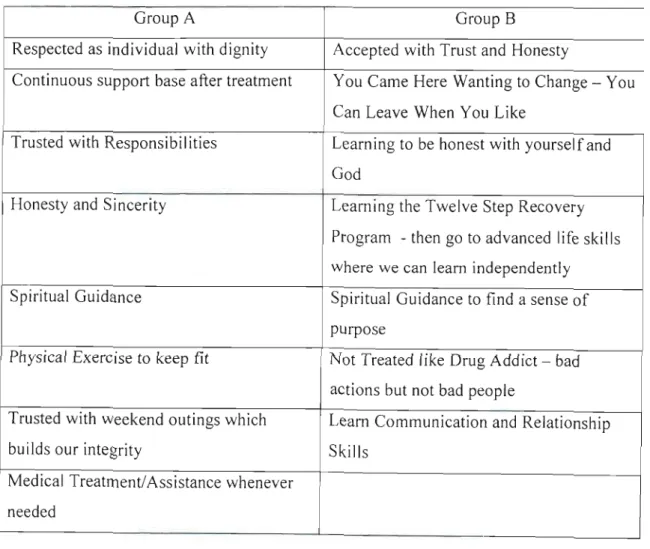
In the structured interview, the researcher asked the staff at each center questions and recorded their responses, while the focus group methodology was used with the clients or patients (referred to as "students" in the Narconon model) at each of the centers. To Zubair Moomal for burning the midnight oil for the past few weeks to make this thesis a reality.
LIST OF TABLES AND GRAPHS
Therapeutic Community Model
ANNEXURES
Consent Form
A) Interview Schedule
- Focus Group Discussion
CHAPTERl
- INTRODUCTION
- RATIONALE
- MOTIVATION
- TREATMENT OPTIONS - LITERATURE REVIEW
- STATEMENT OF THE PROBLEM
- AIMS AND OBJECTIVES
- THE AIM OF THE STUDY IS
- THE OBJECTIVES OF THIS STUDY ARE AS FOLLOWS
- KEY QUESTIONS TO BE ANSWERED IN THE RESEARCH
- VALUE OF THE STUDY
- THEORETICAL FRAMEWORK
- RESEARCH APPROACH & METHODS
- RESEARCH DESIGN
The disease concept of addiction is a controversial and debated topic in the field of drug abuse and addiction. To critically analyze the traditional rehabilitation model that is popular in the treatment of substance abuse in South Africa.
1.1 0.2 SAMPLING
- RESEARCH TOOL The research tools used were
- METHODS OF DATA ANALYSIS
- ETHICAL ISSUES
- LIMITATIONS
Treatment centers were selected based on the different treatment models being used. Qualitative data analysis was expected due to the rich range of questions used in the two research tools (see Appendix 2 A and B).
LITERATURE REVIEW
INTRODUCTION
DEFINITION/S
STRUCTURED TREATMENTS
- Detoxification/ Stabilization Phase
- Rehabilitation/ Relapse Prevention Phase
Outpatient Detox: Usually done in an outpatient clinic or at the client's home with a period of stabilization using alternative agents. Naltrexone, which does not pose a risk of addiction, can be used as a continuation of outpatient treatment in combination with family therapy.
RESIDENTIAL TREATMENT CENTRES
It takes a year for this chemical balance to be restored (www.drug-rehab-locator.net June 3, 2005). Treatments based on this model experience a success rate of over 70% and biophysical drug treatment centers are usually recommended (www.drug-rehab-locator.net June 3, 2005).
MODELS USED IN RESIDENTIAL TREATMENT CENTRES
- DISEASE OR MINNESOTA MODEL
- History and Origin
- Current Status of the Model
- Maintenance of the Disease
- Therapeutic change: Assumptions about how people change
- Treatment ingredients, structure, goals, and approaches
- Role of the therapist
- Common obstacles to successful treatment
- Client characteristics
- Strengths and weaknesses
- CONCLUDING STATEMENT
- Therapeutic Community Treatment Model
- ACTIVE INGREDIENTS OF THE TREATMENT
- ROLE OF THE THERAPIST
- COMMON OBSTACLES TO SUCCESSFUL TREATMENT
- CHARACTERISTICS OF CLIENTS MOST LIKELY TO RESPOND TO THE MODEL
- CONTRAINDICATIONS FOR RESIDENTIAL TC TREATMENT
- AFTERCARE SERVICES
- STRENGTHS AND WEAKNESS OF THE TC MODEL
- CONCLUDING STATEMENT
- NARCONON MODEL
- Origins
- CONCLUDING STATEMENT
- ALTERNATIVE STRATEGIES
- Introduction
- Reframes Defined
Pioneers of the disease model (Jellinek 1946; Silkworth 1939) advanced a theory based on traditional biological concepts of disease. Variability of the client population is an important factor in research into treatment response.
Reframes and the analysis of the addictive process
What follows is a brief exploration of the idea of reframing, its use in addiction, and some specific examples of its use. A reframe is a change in the meaning of a particular stimulus event by manipulating its context or content.
Crucial shifts in meaning: Reframes
It is the body rising up to protect itself and adapt to a new facet of the environment. As such, it is a testament to the individual's ability to adapt, change, and grow (Bateson 1972; Delozier and Grinder 1987).
Conclusions
- HOLISTIC APPROACH
- Body
- Mind
- Spirit
Although the change learned, the addictive behavior, is unhealthy in its consequences, it is living proof of the organism's own vitality and ability to learn. For treatment to be successful, it is important to change the root causes of the addictive behavior.
Concluding Statement
RESULTS AND DISCUSSION
INTRODUCTION
In phase two of the study, the researcher chose focus group interviews for the clients in treatment. The treatment sites were chosen based on the different treatment models that were used.
DATA PRESENTATION
- DISEASEIMINNESOTA MODEL
The interview therefore focused on identified themes and critical questions that captured the intent of the study, the strengths, weaknesses, needs and experiences of the individuals undergoing treatment for a substance abuse problem. The following treatment centers were selected: .. a) Disease/Minnesota Model - Careline Crises Center (Hillcrest, Durban), b) Therapeutic Community Model - Horizon Halfway House (Cape Town), c) Narconon Model - Narconon (Johannesburg).
Sample Profile
Model, Description and Aims
Conceptualization
Success Rate, Factors Facilitating Recovery, Strengths
Failure, Disadvantages and Factors Preventing Recovery
He has not experienced the hardships of the road - he has not been allowed to suffer the consequences for his actions because of the opportunity from his family; They don't want to deal with issues and don't want to let go of the past.
Aftercare
Because their belief systems overwhelm them, some clients are unwilling to change and relapse is common.
Linguistics
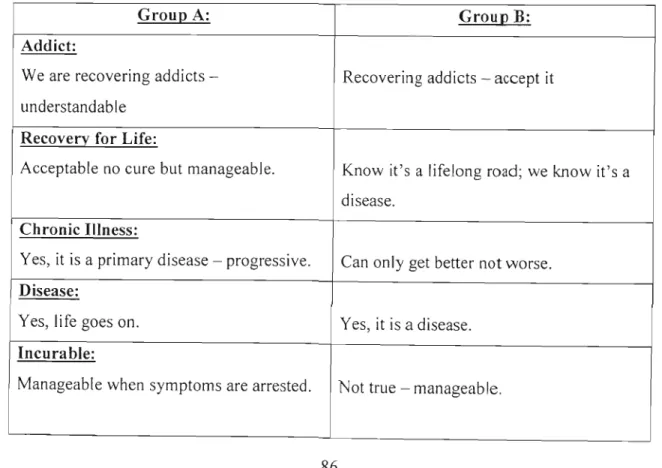
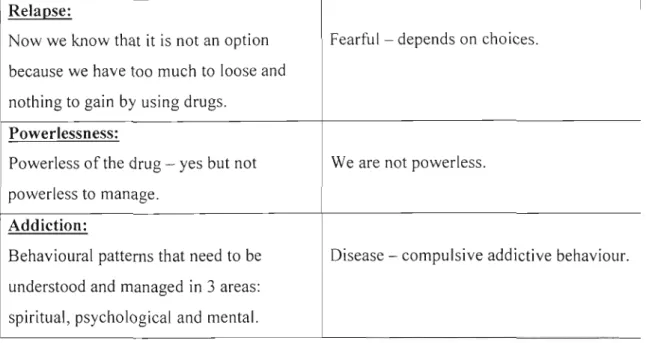
Incurable: Sustainable with/without medication, must be qualified with knowledge that it is controllable, that it is a brain disease, and that life can be prolonged by stopping substance abuse, combating it, and avoiding relapse;. Powerlessness: is the first step in admitting the problem of one's addiction, it is not acceptable without God in the recovery process, it is much more difficult to find true strength, the feeling of hopelessness is misunderstood and the client becomes desperate.
Holistic Model
Once an addict, always an addict: choice, realize that an individual is always at risk in risky situations, it is not helpful language, but always true, unless you have not been given the tools to recover and stay clean even though you are labeled with the statement that you can handle and manage it; Relapse is acceptable: not an option, can be acceptable if only to learn from it to continue the struggle, relapse is part of recovery patients - have to relapse to see the seriousness and difficulty of staying clean, clients are told they can try again;.
Spirituality
Motivation
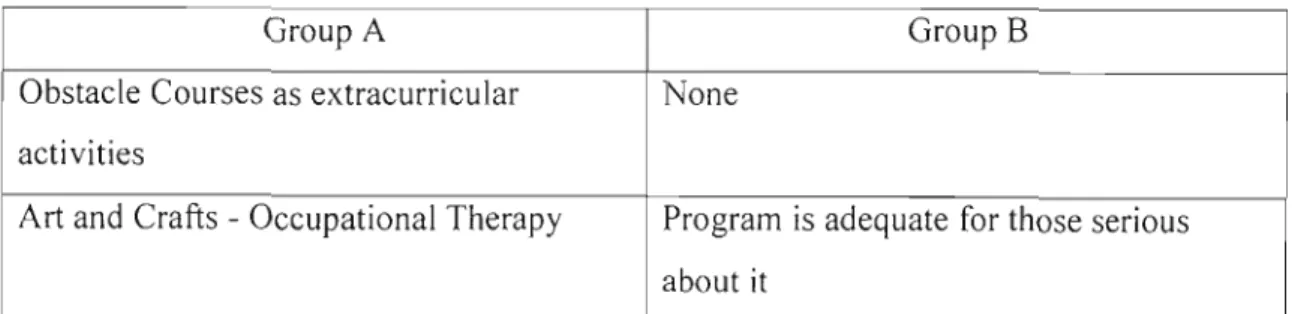
Alternative Therapies
Administrative Staff
Recommendations
In this phase of the study, the researcher chose focus group interviews for the clients in treatment. The interview focused on identified themes and critical questions that captured the intent of the study: strengths, weaknesses, needs and experiences of the individual in treatment for a substance abuse problem.
Current Treatment ProgramlModel
Those who stay in treatment for a year or two get help finding jobs Emotional support from counsellors.
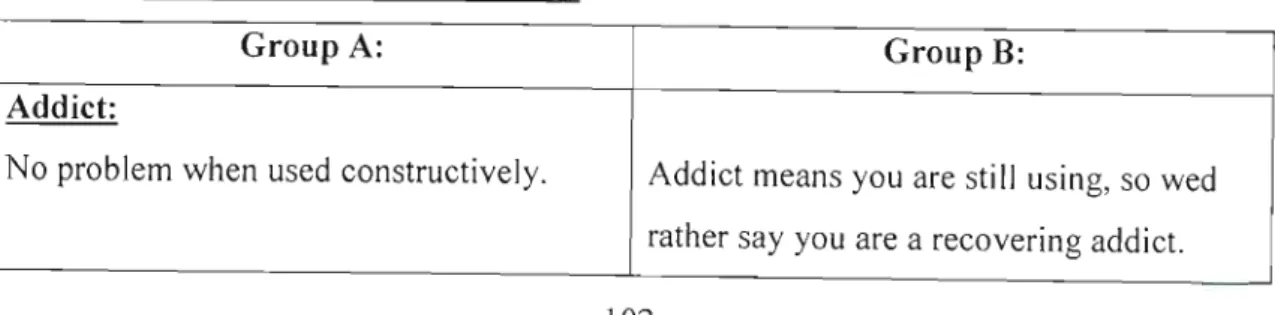
Responses to the Terminology
Recommendations
- THERAPEUTIC COMMUNITY MODEL (T.C.) PHASE 1
Four of the staff members were not available for interviews, only one namely Assistant Counsellor, The paraprofessional who facilitated at the center has been working at Horizon for about one year, and his age was 34 years. In the Therapeutic Community Model, addiction is a symptom, not the essence of the disorder, so the problem is the person, not the drug.
Success Rate, Factors facilitating recovery, Strengths
The respondent states that the holistic approach is characterized by working with the body, mind and soul. The respondent emphasized that spirituality is important because it has a purpose in life to fill the void.
Current Treatment ProgramlModeI
- NARCONON MODEL
It happens, it's common, don't. When we addicts fall, or when we are mean the end of the world, unable to solve a problem, it just becomes harder to recover. Five employees were interviewed consisting of the following: Executive Director, Senior Director for.
Model, Descriptions and Aims
- DISCUSSION
- DISEASEIMINNESOTA MODEL
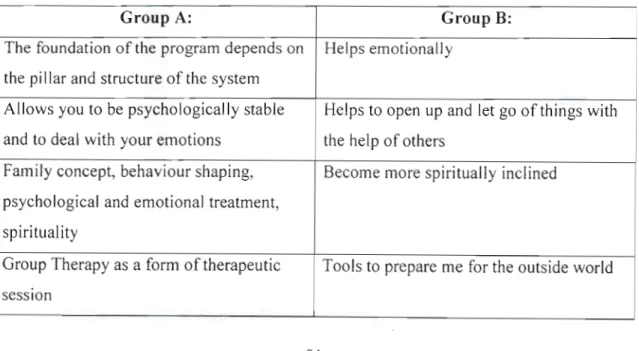
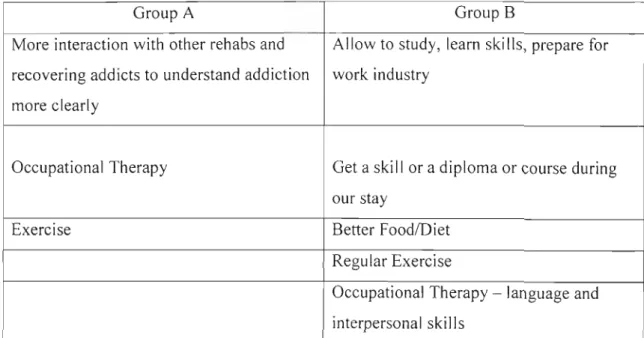
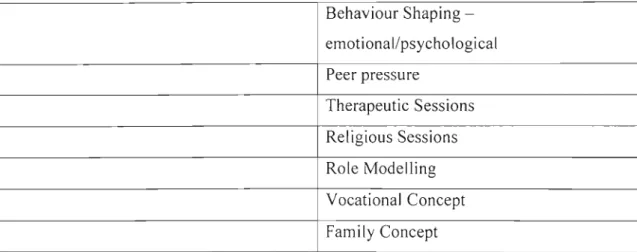
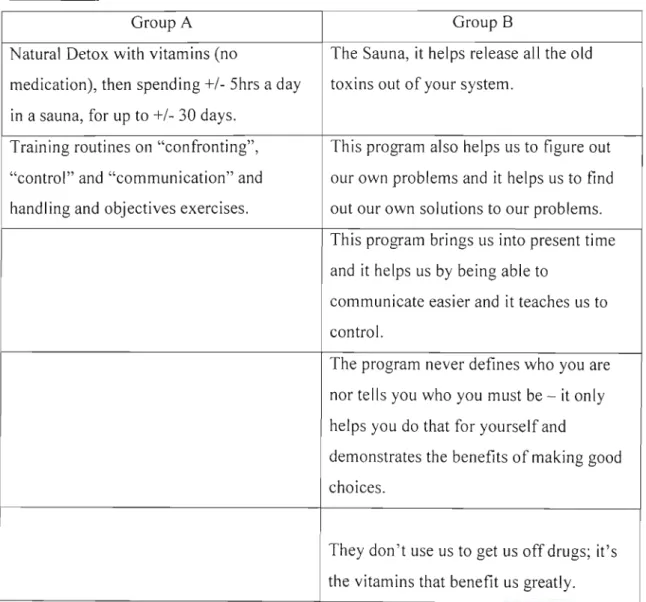
If you have life skills, you don't need to be in recovery your whole life. The following treatment program charts describe responses to the Narconon Model's description of benefits.
SAMPLE PROFILE
Model, Discussion and Aims
- THERAPEUTIC COMMUNITY MODEL (T.C.)
- NARCONON MODEL
- OVERALL DISCUSSION
Focus groups stated that there were beneficial aspects of the program structure. According to the employee, the lack of management support in the form of communication and reporting was real.
CONCLUSIONS AND RECOMMENDATIONS
INTRODUCTION
SUMMARY - MOST SIGNIFICANT FINDINGS
- PHASE ONE
- THEME 1: Sample Profile
- THEME 2: Model, Description and Aims
- THEME 3: Conceptualization
- THEME 4: Success Rate, Factors Facilitating Recovery, Strengths
- THEME 5: Failure, Disadvantages and Factors Preventing Recovery
- THEME 6: Aftercare
- THEME 7: Linguistics
- THEME 8: Holistic Model
- THEME 9: Spirituality
- THEME 10: Motivation
- THEME 11: Alternative Therapies
- THEME 12: Administrative Staff
- THEME 13: Recommendations
Model - according to the employee, the lack of management support in the form of communication and investigation was serious. The Narconon Model - It was noted from most responses that more physical activities such as walking and exercise should be incorporated, and both staff and students shared this sentiment.
OVERALL RECOMMENDATIONS
The frequency of individual psychotherapy sessions would be unique depending on the needs of the individual and the resources available to the center in question. Family/Caregiver Awareness of the Complexities of Addiction - Often the family's inability to empathize with the substance abuser can contribute to stress.
RECOMMENDATIONS FOR FUTURE RESEARCH
PROPOSAL FOR THE EMPOWERMENT MODEL
The empowerment model is meant to tap into the self of the individual – a soul-searching to discover the individual's reasons for drug use. The proposed empowerment model will strive to adopt a natural and holistic approach where medical drugs are used only in the initial stages of the recovery treatment program.
ACUPUNCTURE
For the recovering addict, holistic approaches must be accompanied by a professional treatment plan, but these can be effective well beyond the initial recovery phase. Researchers concluded that acupuncture shows promise for treating cocaine abuse and should be further studied.
AROMATHERAPY
Patients who received acupuncture in this study were significantly more likely to test cocaine-free at the end of the eight-week treatment period. Acupuncture is currently used in many addiction treatment facilities, for example the treatment center that was part of this study, where only one staff member was available for interview, is the Horizon Halt\vay I-louse in Cape Town and has an accredited resident acupuncturist trained in Malaysia.
BIOELECTRICITY
A number of studies have been published regarding the use of acupuncture in the treatment of addiction, showing that acupuncture is gaining ground with increasing research for various medical conditions.
BIOFEEDBACK
BRAINWAVE BIOFEEDBACK INEUROFEEDBACK
In small clinical trials and case studies, specific EEG abnormalities have been noted in substance abuse disorders, including very specific abnormalities likely related to drug neurotoxicity. This suggests the possibility that specific EEG biofeedback protocols could be studied for their effect on these conditions.
CREATIVE ARTS THERAPY
New medical research shows that it can slow brain wave cycles, improving theta wave production and brain wave synchronization. This is important as addicts often have brain wave abnormalities as explained in our section on brain wave biofeedback.
HERBAL THERAPY
HOMEOPATHY
HYPNOSIS
MASSAGE & BODYWORK
MEDITATION
Thich Nhat Hanh teaches the art of conscious living (being deeply aware in the present moment of what is going on inside and around us). 65% of the TM GROUP and 551% of the biofeedback group compared to 25% of the standard care group and 28% for the neurotherapy group.
NUTRITION
- CONCLUSION
The maladaptive engagement of the Human Consciousness is through the use of substances that, in terms of the pleasure principle, attempt to enhance and enhance pleasurable sensory experiences. The Empowerment Model asserts that chemical addiction is under the control of the human agent to be able to overcome it in its entirety.
ANNEXURE ONE
The research study will be undertaken under the guidance of the School of Social Work and Community Development at the University of KwaZulu-Natal (Natal Campus). You have the right to withdraw from the study at any stage and for any reason.
ANNEXURE TWO
INTERVIEW SCHEDULE
What support (e.g. management support, further training, etc.) do you need to ensure adequate treatment of dependent persons in residential centers.
FOCUS GROUP DISCUSSION
BOOKS AND ARTICLES
De Leon (Ed.), Community as method: Therapeutic communities for special populations and special settings (pp. 161-178). De Leon (Eds.), Community as method: Modified therapeutic communities for special populations and special settings (pp. 17-37).