The Journal of Construction Project Management and Innovation is published biannually (biannually) through the University of Johannesburg's Sustainable Construction and Human Settlements Research Center (SHSCRC) by the University of Johannesburg. As part of the quality assurance process, the Editors of the Journal of Construction Project Management and Innovation (JCMPI) adhere to the South African Academy of Sciences (ASSAf) open access publication code.
INTRODUCTION
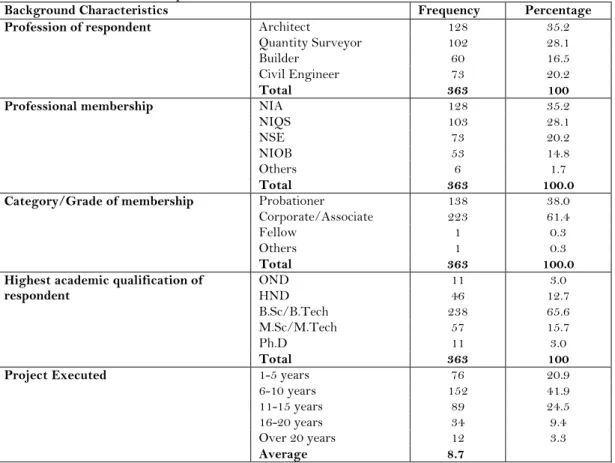
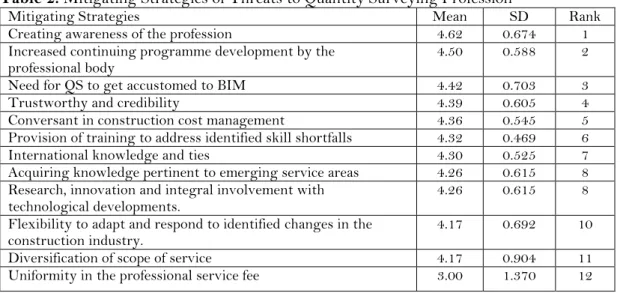
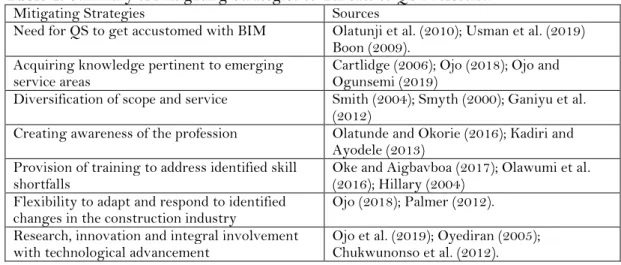
The mitigating strategies from existing literature were used to elicit respondents' opinions. The results of the analysis show that the mitigation strategies identified in the study are essential to mitigate the threats in the QS profession.
MITIGATING STRATEGIES OF THREATS TO QUANTITY SURVEYING PROFESSION IN THE
NIGERIAN CONSTRUCTION INDUSTRY
- PREVIOUS STUDIES
- RESEARCH METHODOLOGY
- FINDINGS AND DISCUSSION 1 Background information
- Mitigating Strategies to Threats in Quantity Surveying Profession
- The implication of the Study
- CONCLUSIONS AND RECOMMENDATIONS
- REFERENCES
Therefore, it becomes imperative to explore strategies to mitigate threats to the QS profession in developing countries. A factor analysis of strategies to mitigate threats to the QS profession was also conducted.
PREDICTING RURAL STEM TEACHERS’
ACCEPTANCE OF MOBILE LEARNING IN THE FOURTH INDUSTRIAL REVOLUTION
- LITERATURE REVIEW
- THEORETICAL BACKGROUND AND HYPOTHESES DEVELOPMENT
- Behavioural intention (BI)
- Perceived attitude toward the use (ATT)
- Perceived ease of use (PEOU)
- Perceived usefulness (PU)
- Perceived social Influence (PSI)
- Perceived resources (PR)
- METHODS 1 Research Design
- Participants
- Structural Equation Modelling Analysis
- DISCUSSION
- Theoretical implications
- Managerial implications
- CONCLUSION
- REFERENCES
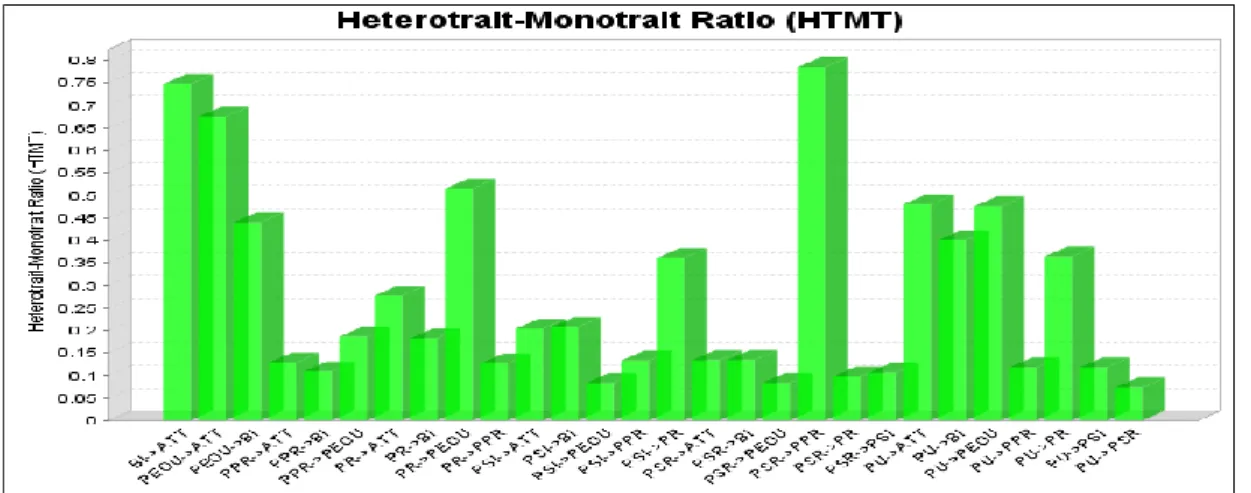
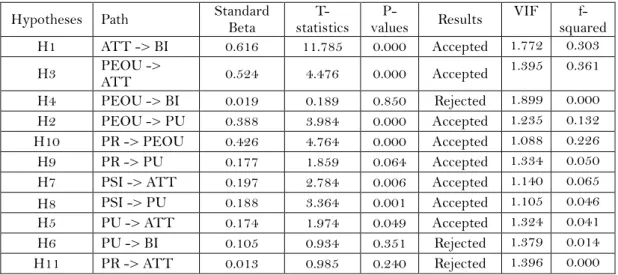
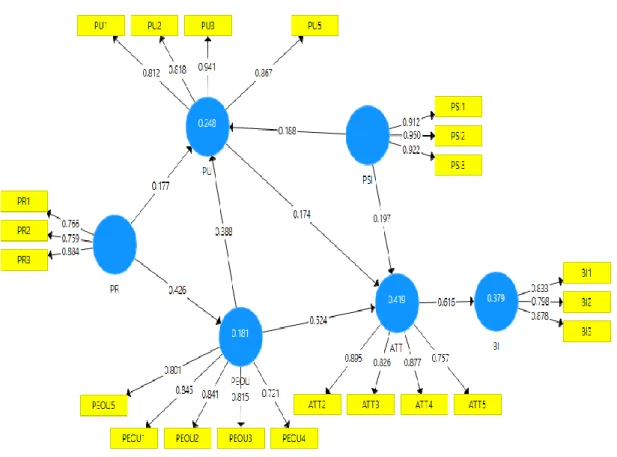
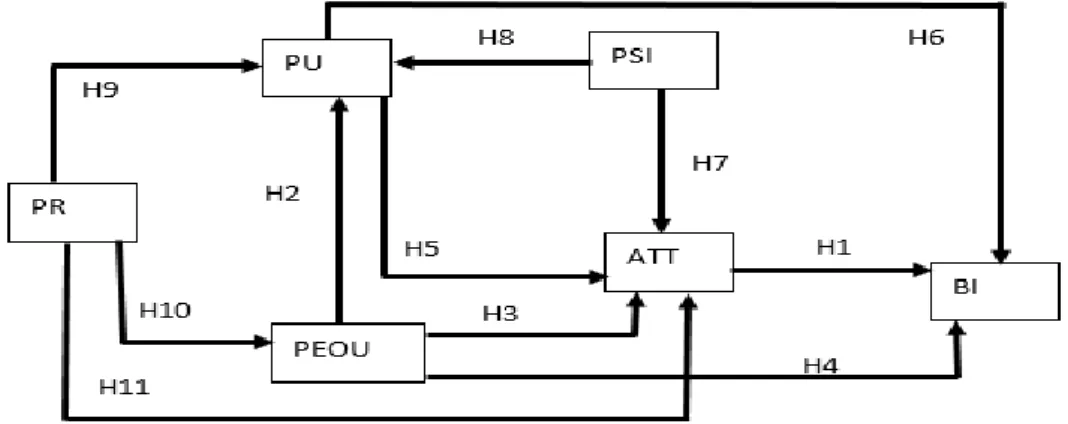
H3: Rural high school STEM teachers' PEOU influences their ATT using m-learning in the 4IR era. H4: Rural high school STEM teachers' PEOU influences their BI to use m-learning in the 4IR era. H5: Rural high school STEM teachers' PU affects their ATT using m-learning in the 4IR era.
H6: The PU of STEM teachers in rural secondary schools influences their BI to use m-learning in the 4IR era. H7: The PSI of STEM teachers in rural schools influences the use of their ATT in the 4IR era. H11: The perceived PR of STEM teachers in rural secondary schools influences the use of their ATT in the 4IR era.
TRANSFORMING SOUTH AFRICA’S UNIVERSITIES OF TECHNOLOGY: A ROADMAP THROUGH 4IR
LENSES
The 4th industrial revolution (4IR) – the basics
In Sackey and Bester (2016) various aspects of the definition of 4IR are presented, one of these definitions reads as follows: "a collective term for the technologies and concepts of the organization of the value chain that brings together the Cyber-Physical Systems, the Internet of Things, and the Internet of Services.” The first industrial revolution was based on the power of steam and water; it emerged from Newton's law of motion, which enabled the understanding and quantification of motion (Xing and Marwala, 2018). The second industrial revolution was initiated by the union of magnetic forces and electrical (that is, the production of electricity and the appearance of the electric motor); this was the work of Faraday and Maxwell.
Finally, the discovery of a transistor led to the third industrial revolution which formed the forerunner for the center stage of the popular electronic/digital age driven by computers and the Internet (Kelly, 1998). On the other hand, the fourth industrial revolution, or industry 4.0 or 4IR, is different from the first three in two main ways: first, it represents the combination of cyber systems, the Internet of Things and the Internet of Systems. Regarding such changes, it is said (Schwab, 2016): “The changes are so profound that, from the perspective of human history, there has never been a time of greater promise or danger.
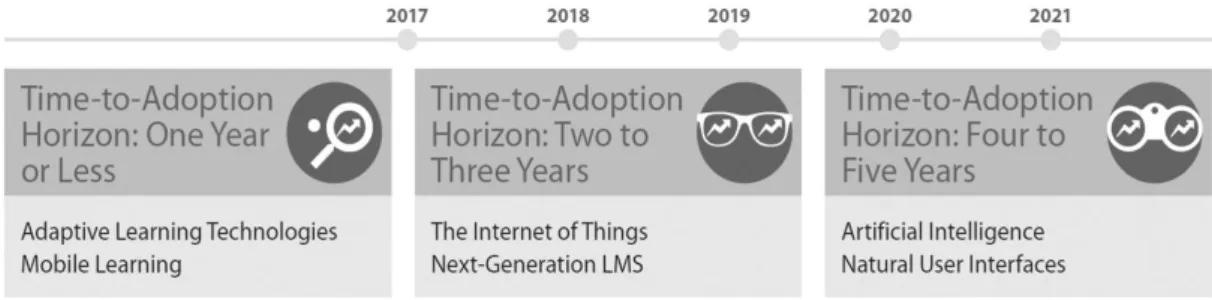
It is an indisputable fact that the 4IR will “revolutionize” the higher education sector (Butler-Adam, 2018) and may end with the Higher Education Revolution 4.0 (HE 4.0). A widely publicized consequence of 4IR in the higher education space is interdisciplinary education, research and innovation (Boehm, 1988; Schwab, 2016). Given that 4IR is not a fad (Bongomin et al., 2020; Deloitte, 2018) but a reality we must contend with, the future of higher education cannot be conceptualized without putting 4IR into perspective – wearing the 4IR lenses so to speak.
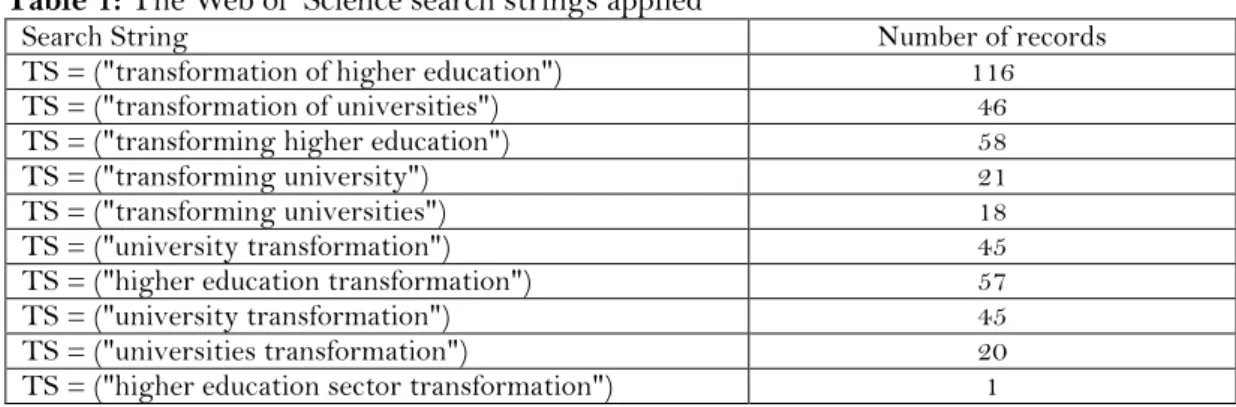
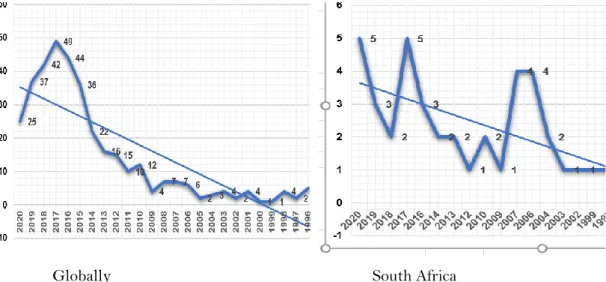
One of the main roles of MOOCs is the expansion of higher education opportunities – this is in line with the transformational agenda discussed in this paper. In the last two decades, many transformations of structural discourse in nature (Luvalo, 2019) have taken place within South Africa's higher education sector, many resulting in significant developments within universities of technology (UoTs). First, a bibliometric analysis of research publications related to the topic "transformation of higher education/universities".
Dataset
This survey involved the use of a questionnaire to collect data on university students' willingness to adopt MOOCs. Similar studies of student readiness conducted in Nigeria (Fakinlede et al., 2014) and Malaysia (Zulkifli et al., 2019) looked at three aspects of readiness: functional, dispositional and situational. Using a similar approach, a survey involving all students enrolled for various qualifications offered at CUT's Faculty of Built Environment Engineering and IT was conducted using an online questionnaire (on Survey Monkey) between March and April 2020.
Data Analysis and Findings .1 Bibliometric Analysis
Growth in the number of publications on university transformation Using VOSview software (https://www.vosviewer.com/), further analysis of the bibliographic data of the publications was carried out. In that regard, the parameter "total link strength" was used to establish the connection between the main concepts under university transformation research. Further analysis and classification of the key phrases revealed the patterns and classifications shown in Table 2.
Out of these, 33 publications were selected based on the availability of the manuscripts from the online databases. For example, while African students' ownership of computers and smartphones stood at 50% and 85% respectively, one of the white students stood much higher (94% and 96%). These figures (see figure 11) are made by those who chose 'all the time', 'most of the time' and.
DISCUSSION, CONCLUSION AND RECOMMENDATION
- University Transformation Roadmap for CUT – Role of 4IR
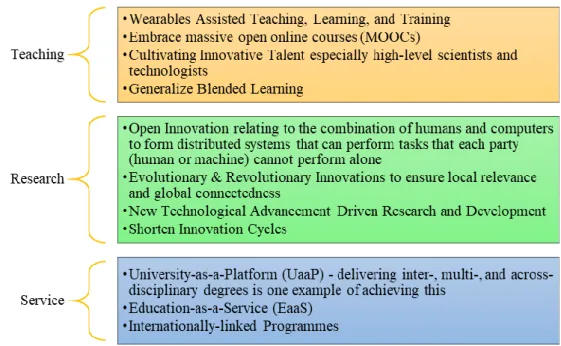
More work needs to be done to ensure the involvement of the majority of staff and students. At the dawn of the Fourth Industrial Revolution, institutions (public and private) must identify transformative ways to reshape their mission and vision. In the case of higher education institutions such as CUT, such alignments must be anchored in the three functions of the universities: education, research and (social) services.
Given the similarities of the transformation agenda of other UoTs, it is further recommended that other UoTs adopt and adapt this blueprint to accelerate their transformation processes. In recognition of the critical role of MOOCs in expanding accessibility to teaching and learning, the paper also provides preliminary results on the students' readiness for this form of learning. Other aspects of the transformation agenda as explained in Table 6 must also be pursued to provide for all three missions of the university - especially the aspects of community involvement, research and innovation.
CUT, like other public universities in South Africa, is currently undergoing a mandatory transformation aimed at addressing the inequalities created by the past apartheid government system. While individual efforts to adopt 4IR already exist, this paper has attempted to present a blueprint that CUT could adopt to ensure that the transformation agenda takes advantage of the opportunities offered by 4IR. This document presents a detailed plan on how CUT can anchor its transformation agenda in the 4IR.
As the audience of this paper is the top management of the university, it is recommended that the blueprint be accepted and used to expand the terms of reference of the recently created 4IR task force. Readiness for online learning in higher education: a mixed method assessment of students in a Nigerian University. Knowledge Creation and Sharing with Web 2.0 Tools for Teaching and Learning Roles in So-Called University 2.0.
FACILITATING COMMUNITY PARTICIPATION THROUGH CROWDSOURCING IN URBAN
PLANNING PROCESSES: AN EXPLORATORY STUDY
THEORETICAL PERSPECTIVE
- Defining community participation in urban planning
- Connecting the dots between crowdsourcing and community participation in urban planning
- Community participation in Mangaung
Better communication and effective community participation will increase cooperation between the planners and the local community. Examples of crowdsourcing via community participation include the Obama administration where the community is getting involved in number of community affairs. Non-participation of the local community in planning projects leads to inefficiency of the community participation process and challenges in proper implementation of development plans (Liao et al., 2019).
Brabham (2009) alludes to the challenges planners face when implementing community participation in planning projects. Community participation is part of the democratic process as it involves the community in the planning process and ensures that they are part of the creation of sustainable communities. A total of eleven (11) interviewees consented to the interview and validation of the proposed framework for effective implementation of community participation.

FINDINGS AND DISCUSSION
- Theme 1: Probable factors influencing successful implementation of community participation in planning projects
- Theme 2: Absence of robust frameworks for improved levels of community participation
Community participation serves as a guideline in promoting community involvement in governance (Mafukidze and Hoosen, 2009). This is seen as the platform on which the community can interfere in the affairs of the municipality. In the planning domain, community members are part of the planning processes and decision making.
From the interviews, in most cases, community participation is not done, community members are only informed about the development. The CPCF has been developed for planning practitioners based on optimal levels of community participation in planning projects. Access to resources for implementation or community engagement should be considered. vii).
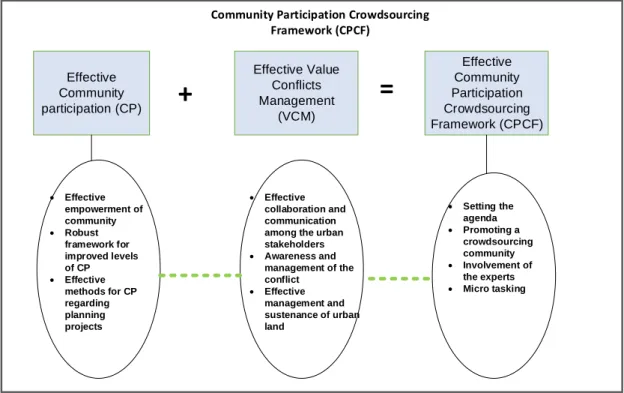
CONCLUSION AND RECOMMENDATION
Effective use of the framework will allow flexibility and disrupt the routine of traditional CP modes. viii). In the implementation of the framework, a strong working relationship between all urban actors should be promoted and evidence of extended networks plays a crucial role in planning. Rethinking community participation in urban planning: The role of disadvantaged groups in the Sydney Metropolitan Strategy.
STRATEGIC ALLIANCE IN THE CONSTRUCTION INDUSTRY: BARRIERS FACING ITS
IMPLEMENTATION IN AN EMERGING MARKET
- REVIEW OF RELATED LITERATURE
- Reasons for Strategic Alliance
- FINDINGS AND DISCUSSION 1 General information of respondents
- Level of Awareness of Strategic Alliance Procurement in the Construction Industry
- Barriers Facing Strategic Alliance Procurement in the Construction Industry Given the number of barriers reported by literature, some barriers may result in more
- Discussion of factor extraction
- CONCLUSION AND RECOMMENDATIONS
- REFERENCE
Although the implementation of strategic alliances in the construction industry has addressed opportunities for knowledge management and learning (Grant and Baden-Fuller, (2004) and Ingirige and Sexton, (2006)), strategic alliances have been widely discussed since the interim collaboration has developed into a decisive factor for creating competitive advantages globally (Xu, 2005). While the second section dealt with barriers to strategic alliance procurement method in the construction industry. This means that the respondents were qualified to provide information on the topic of strategic alliance purchasing method in the construction industry.
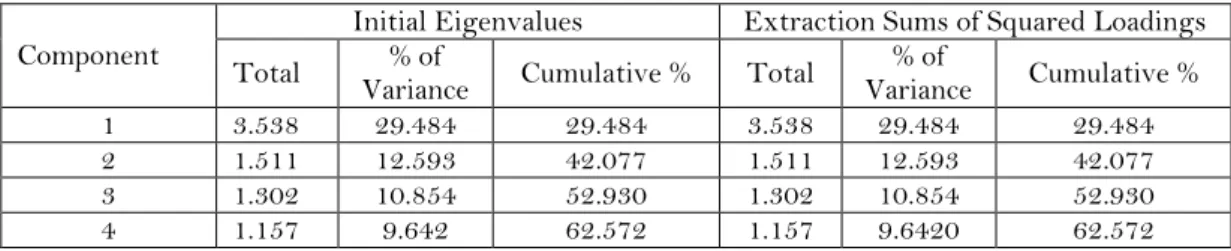
The first objective of this study was to assess the level of awareness of strategic alliance procurement method in the construction industry within the study area. As presented in Table 3, the average analysis of the respondent's perceptions on the barriers of strategic alliance procurement method in the construction industry. Factor analysis of barriers facing the strategic alliance procurement method in the construction industry was undertaken.