Option B: Redevelop applied curriculum into unique curriculum based on applied learning as a pedagogical approach. Option C: Redevelop applied curriculum into unique curriculum based on applied learning as a pedagogical approach.
QCAA Applied syllabuses
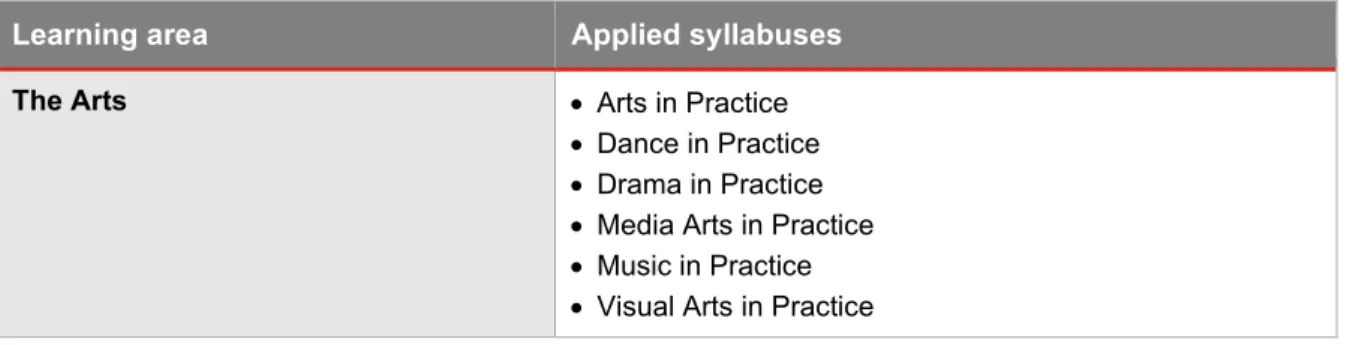
Following this review of the new QCE by the QCAA, Authority registered subjects became known as Applied subjects. The two Applied (Essential) subjects — Essential English and Essential Mathematics — have been redeveloped for implementation in 2019.
Role of Applied subjects
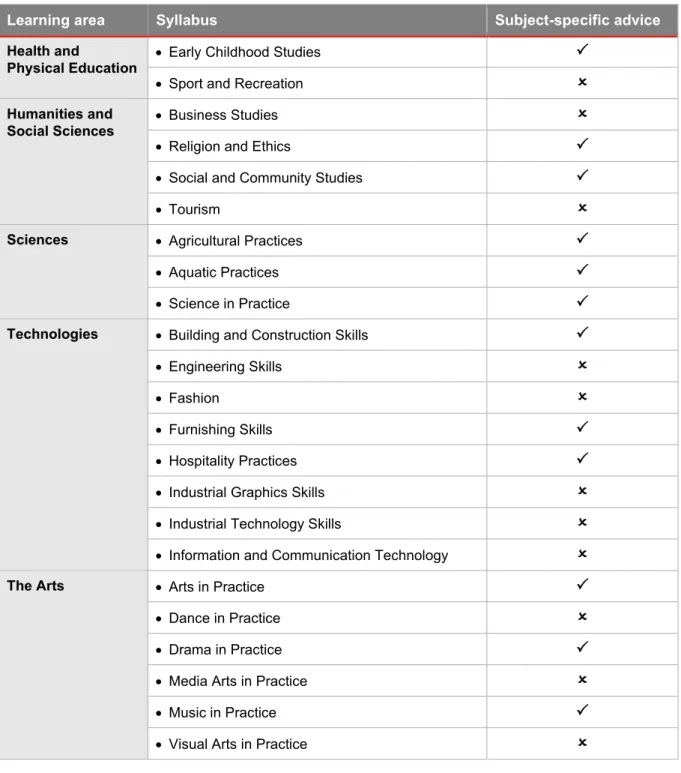
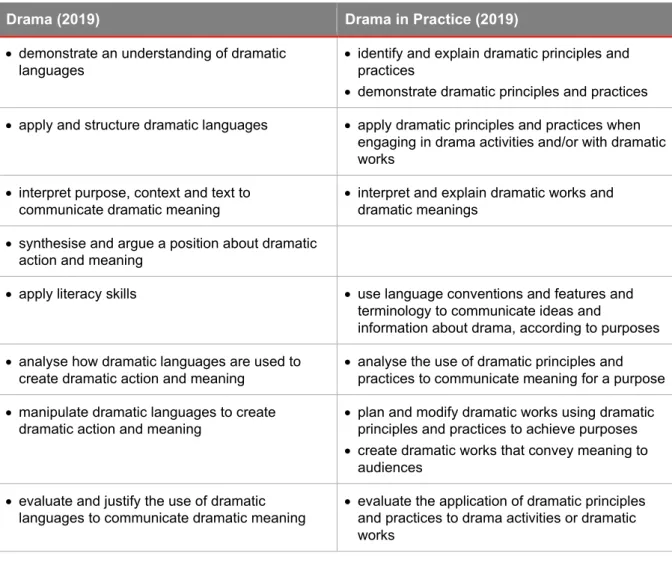
More than half of Applied syllabuses include demonstration as an objective, while half include interpretation (see Table 3). The use of dimensions and objectives in Applied syllabuses does not reflect the recent developments in the objectives of General syllabuses and Applied (Essential) syllabuses.
Underpinning factors
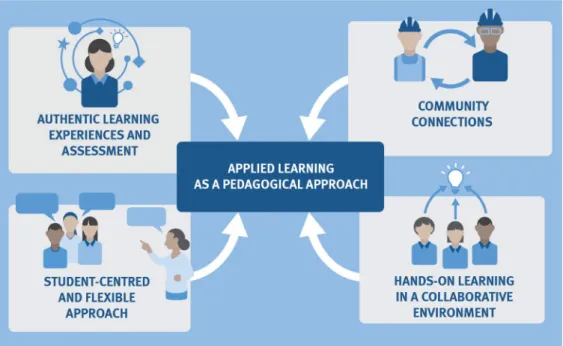
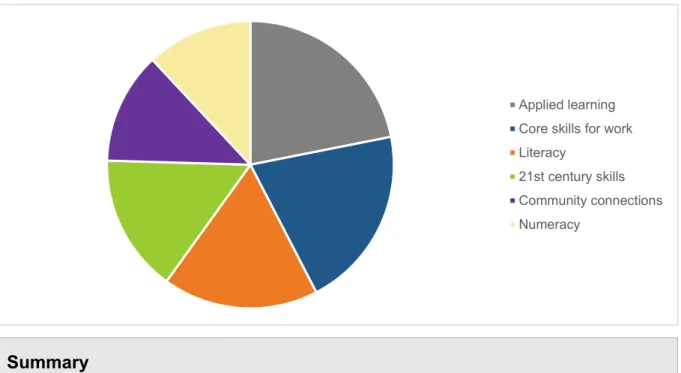
Evidence of applied learning as a pedagogical approach is evident in some applied subjects, but minimal or absent in others. Applied curricula should provide rich opportunities for students to engage with all four of these aspects of applied learning.
Pedagogical and conceptual frameworks
Planning a course of study
Advice on planning study and developing modules of work is complex and varies across applied curricula. The highest degree of consistency in applied curricula would be achieved through the development of units of work that schools would implement.
Aboriginal perspectives and Torres Strait Islander perspectives
There is a rich opportunity available to provide further suggestions on how to integrate Aboriginal and Torres Strait Islander perspectives into any applied subject. Opportunities for the development of Aboriginal and Torres Strait Islander perspectives should be outlined in any program plan.
Assessment
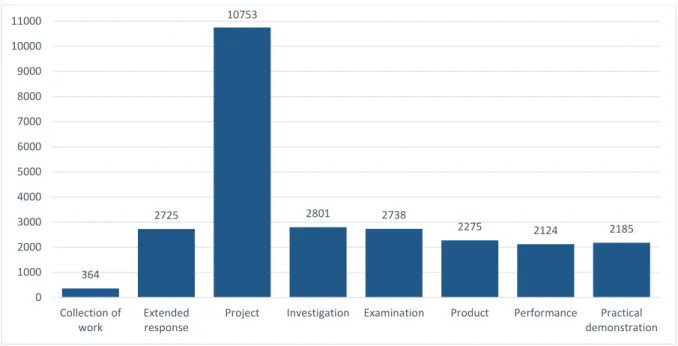
Applied curricula contain a variety of assessment techniques, with different requirements and rigor for the techniques and for the subjects. The range of assessment techniques in applied curricula should be considered to ensure that students can demonstrate most of the curriculum objectives in each assignment, with multiple opportunities to demonstrate each objective.
Duplication between Applied syllabuses and VET qualifications
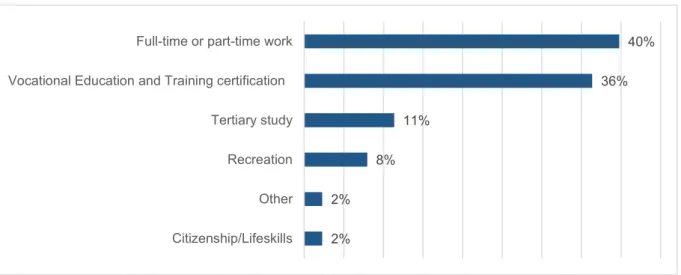
QCAA Applied Subjects can therefore provide meaningful learning for students on a vocational path who cannot or do not want to obtain formal VET certification, as well as for students who do. There is some duplication between QCAA Applied subjects and related Vocational Education and Training (VET) qualifications.
Duplication between Applied syllabuses and General syllabuses
Applied syllabi should be written to reflect the purpose for which they were developed, namely for students in a career path. These options are based on the information in this report and the findings of A Review of International and Australian Trends in Applied Learning (QCAA 2021). Option A: Maintain applied syllabi in their current structure, with some aspects revised to align with the applied (essential) topics.
Focus group members were also asked to identify specific aspects of applied learning according to their perceived value. In addition, participants were also asked to identify aspects of applied curricula that they believed should be addressed in the upcoming curriculum revision (see Figure 12). Firth, J 2020, Review into Vocational and Applied Learning Pathways in Senior Secondary Schooling: Final Report, Department of Education and Training (Victoria), Melbourne, www.education.vic.gov.au/about/department/Pages/vcal-pathways -review.aspx.
2020a, About applied subjects, https://www.qcaa.qld.edu.au/senior/senior-subjects/applied-syllabuses. https://www.qcaa.qld.edu.au/senior/certificates-and-qualifications/qce-qcia-handbook. 2021, Review of International and Australian Trends in Applied Learning, Brisbane, https://www.qcaa.qld.edu.au/downloads/senior/review_applied_learning_aust_international_tr ends.pdf.
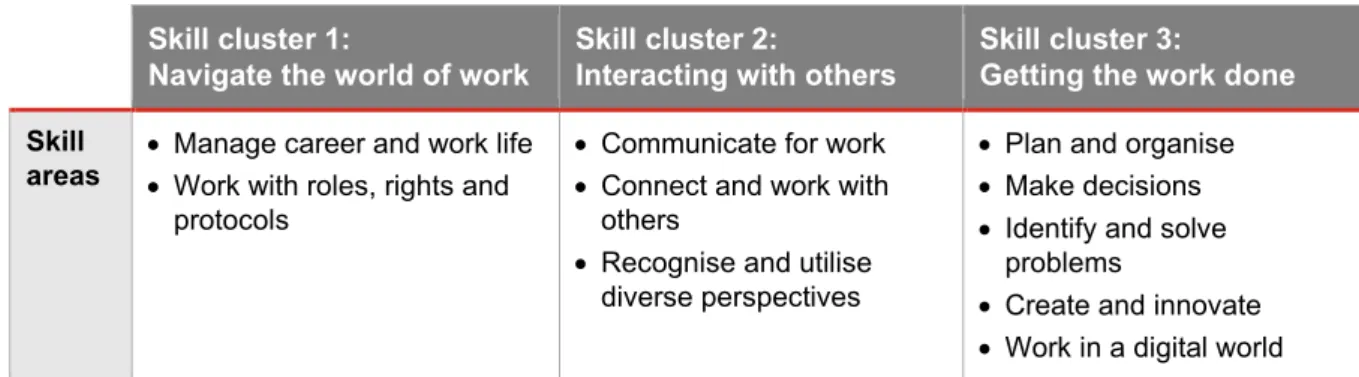
Underpinning factors of QCAA Applied subjects
These aspects of numeracy knowledge and skills are embedded in the syllabus objectives, unit objectives, curriculum and instrument specific standards for Essential English. Sports and recreation Nil Application of concepts and adaptation of procedures, strategies and physical responses in individual and group sports and recreation activities. Management of individual and group sport and recreation activities Application of strategies in personal and group sport and recreation activities to improve health, well-being and participation.
Social Sciences Business Administration Nil Demonstration of processes, procedures, and skills related to business functions to complete tasks. Learning area Applied syllabus Work experiences Practical learning evidenced by reporting standards Selection and application of production skills and procedures in production tasks. Application of dramatic principles and practices when participating in drama activities and/or with dramatic works.
Demonstration of the artistic processes required for visual artworks. Using artistic processes, concepts and ideas. Mathematics Essential Mathematics PSMTs require schools to emphasize the real-life application of mathematics in their chosen context or scenario.
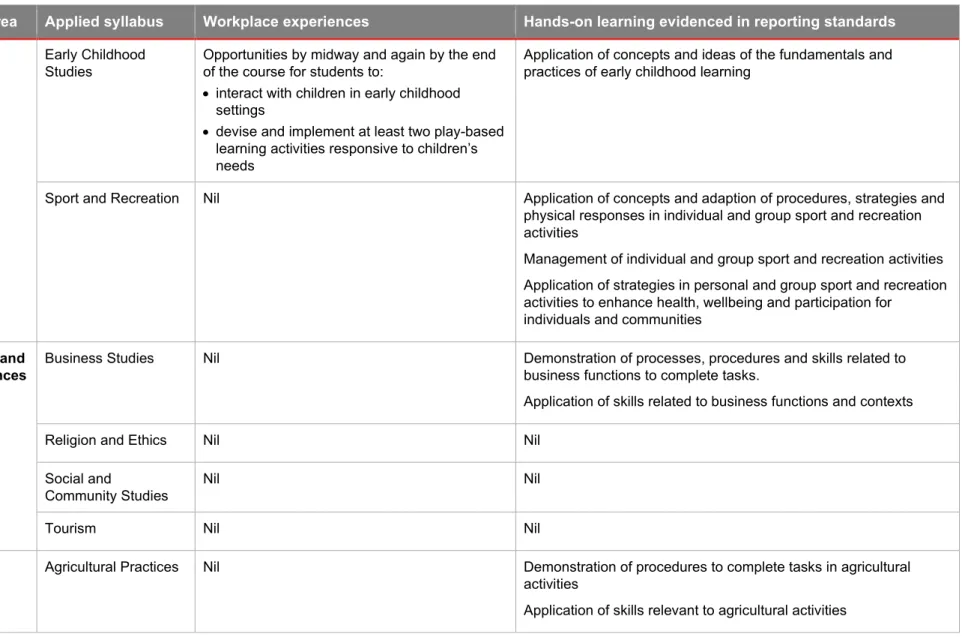
Pedagogical and conceptual frameworks
Information and communication technology • Problem solving (eg a process supported by three different phases: . - problem recognition - design and application - production and evaluation). Dance in Practice • Dance Fundamentals includes dance components and skills that can be applied to all dance forms regardless of genre, style or context. Construct a real-world scenario involving a media arts problem that can focus learning and prompt assessment.
What media art creation processes can students use in the development and realization of this media artwork. What are the students trying to achieve by creating this piece of art or communication. What knowledge, understanding and skills do students need to make this artwork or create this communication.
Essential English • The framework for the subject's interconnected aims is based on an understanding of the relationships between language, text, purpose, context and audience, and how these relationships shape meaning and perspectives. Problem solving in mathematics can be set in purely mathematical contexts or real contexts.
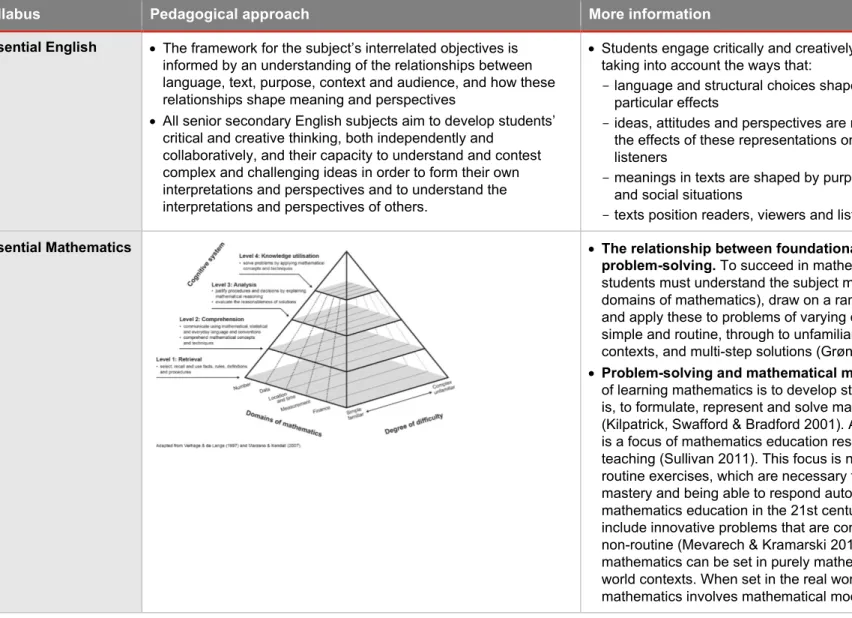
Planning a course of study
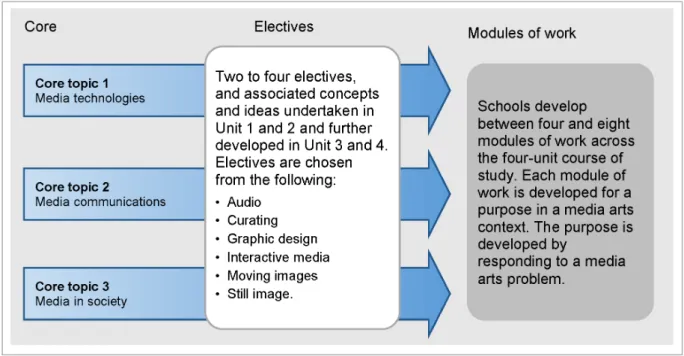
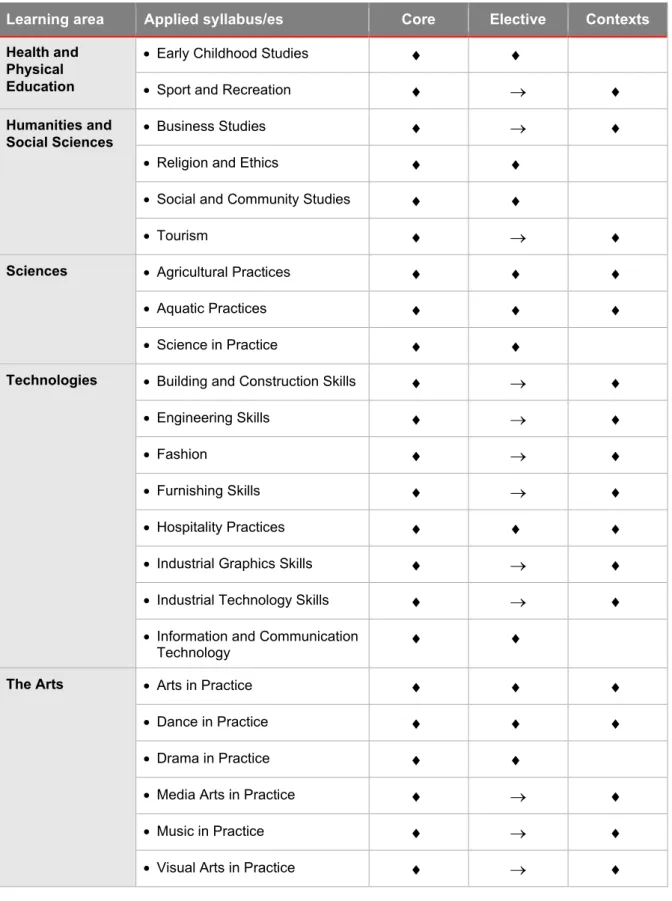
Each perspective of the core must be covered within each elective subject chosen, and integrated throughout the course. Construction tasks are chosen from the electives, which are from the common building and. The manufacturing tasks are chosen from the electives, which are drawn from the general engineering trade qualifications.
Production tasks are chosen from electives, which are drawn from common furniture trade qualifications. At least one module of work involving building a model from drawings in the middle of the course (end of unit 2) and again at the end. Design assignments are chosen from electives taken from common manufacturing industries.
Four to eight modules of work over the course of study, based on one to three elective modules, developed for a purpose, where the purpose provides the reason for the media art making process and the resulting media art work/s. Two to four modules of work in Units 1 and 2 and again in Units 3 and 4, developed for a purpose in a field of study, where the purpose provides the reason for the art-making process and the resulting product/s.
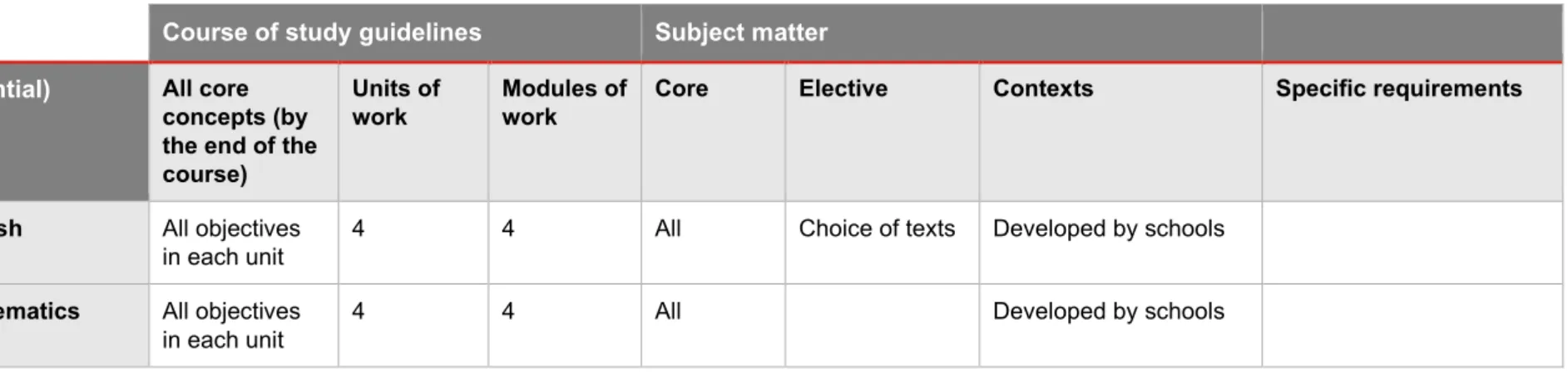
Developing a module of work
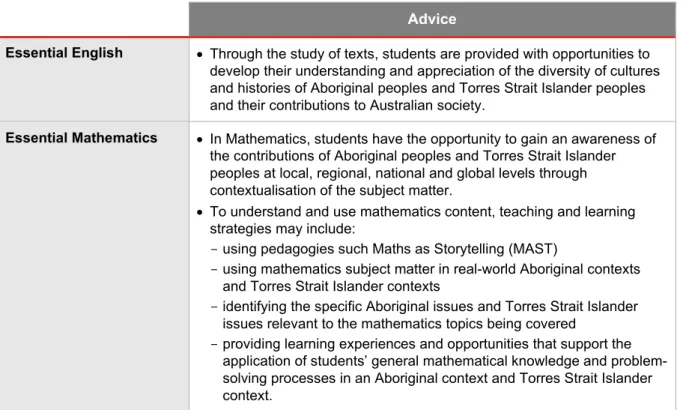
Aboriginal perspectives and Torres Strait Islander perspectives
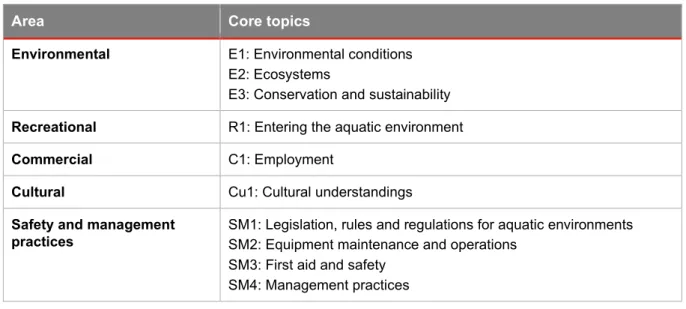
Water practices • Indigenous peoples and Torres Strait Islanders have successfully managed their waterways for thousands of years. Aboriginal and Torres Strait Islander peoples have diverse relationships, connections and understandings of the Australian environment. Science in practice • Aboriginal and Torres Strait Islander peoples have been successfully managing their environments for thousands of years.
Aboriginal and Torres Strait Islander traditional land use practices include using resources in such a way that they are renewed and not depleted. Arts in Practice • For Aboriginal and Torres Strait Islander peoples, the arts are a rich and integral aspect of community life and culture. Drama in practice • For Aboriginal and Torres Strait Islander peoples, drama is a rich and integral aspect of community life and culture.
Music in practice • For Aboriginal and Torres Strait Islander peoples, music is a rich and integral aspect of community life and culture. They also need to develop ways of responding to Aboriginal and Torres Strait Islander music in a culturally sensitive and responsive way.
Assessment in Applied syllabuses
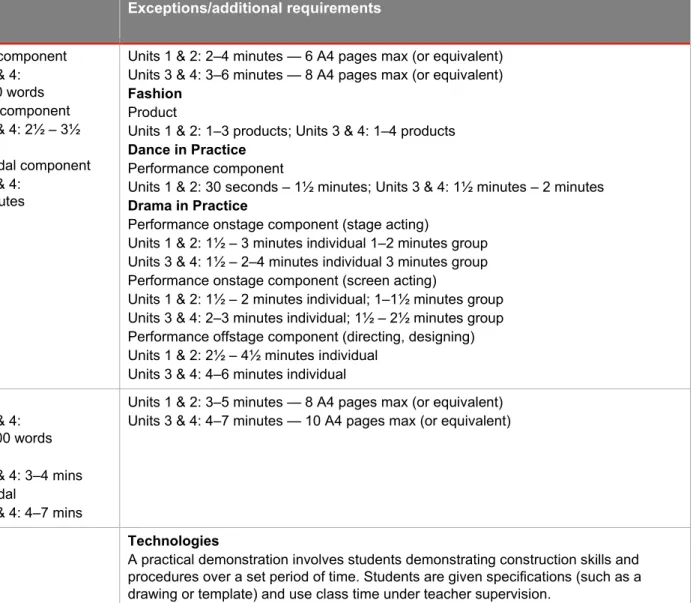
This component requires students to use a range of cognitive, technical, physical and/or creative/expressive skills to create a product (artwork) that expresses a personal aesthetic that combines two or more art forms. This technique assesses the use of a range of creative, expressive, cognitive, technical and physical skills in the production of a design solution (scenography, lighting, sound and/or audiovisual/multimedia, costume). This technique assesses the use of a range of creative, expressive, cognitive, technical and physical skills in the production of media artworks.
This technique assesses the production of works of art and will be the result of the application of a range of cognitive, technical, physical and creative/expressive skills. Sport and Leisure 4 • 1 project (notes of .. the performance is also required) • proof of all dimensions assessed in each assessment tool.
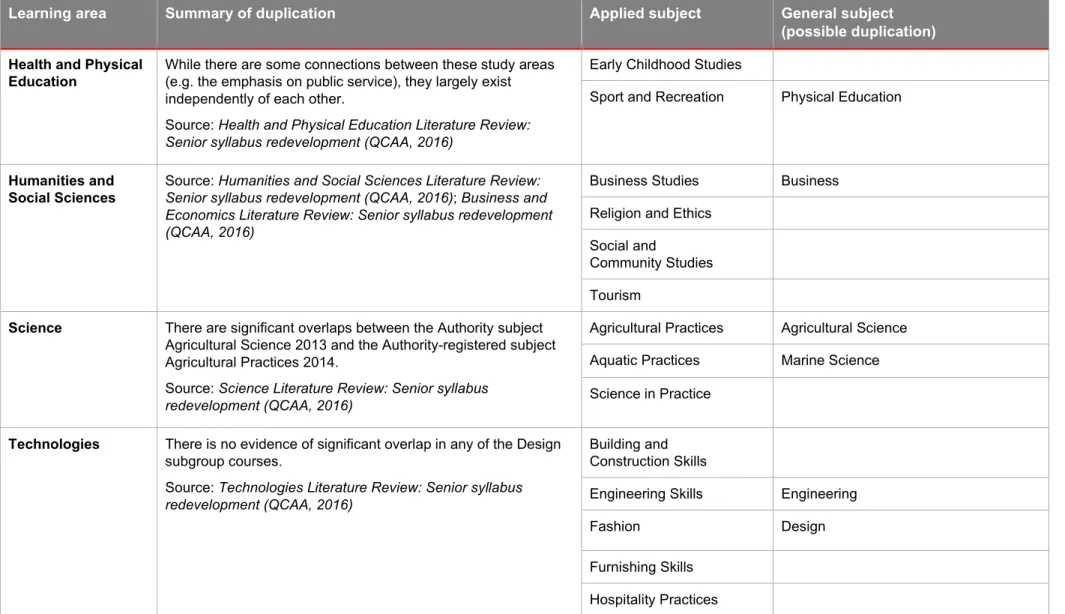
Duplication of learning
Industrial Graphics Skills No Duplication 4. Industrial Technology Skills MSM20216 Certificate II in Manufacturing Technology 4 Information and Communication. Education Although there are some connections between these areas of study (eg, the emphasis on public service), they exist largely independently of each other. Natural sciences There are significant overlaps between the Authority subject Agricultural Science 2013 and the Authority registered subject Agricultural practice 2014.
Technologies There is no evidence of significant overlap in the Design subgroup courses. The Arts In general, there is more overlap or 'proximity' between the Authority subjects and the Authority-registered subjects, than between the Authority-registered subjects and VET courses. In many ways, the Authority's registered syllabi are versions of the Authority topics, but with less focus on broad contexts.
There is also less attention to conceptual development and 'theory' in the subjects registered with the Authority. Nevertheless, the topics registered with the Authority often focus on both art practice and responding to works of art.
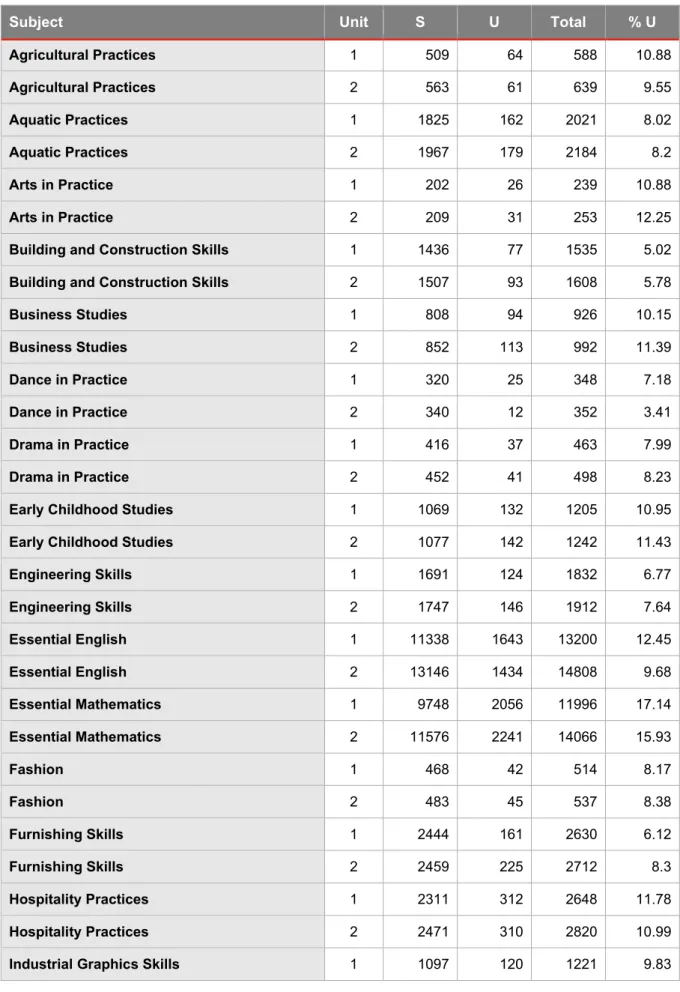
QCAA Applied syllabuses data
SIT20316 Certificate II in Hospitality Hospitality Practices 22 AHC20116 Certificate II in Agriculture, Sports and Recreation 21. Digital Media and Technology Dance in Practice 17 AHC21216 Certificate II in Rural Activities, Building and Construction. SIS20115 Certificate II in Sport and Recreation Agricultural Practices 12 CUA20715 Certificate II in Visual Arts Information and.
AHC20116 Certificate II in Agriculture Industrial Technology Skills 9 AHC21216 Certificate II in Rural Operations Information and. CUA20615 Certificate II in Music Industry, Visual Arts in Practice 8 MSM20216 Certificate II in Production. CUA20615 Certificate II in Music Industry, Sports and Recreation 7 MSF20516 Certificate II in Furniture Manufacturing.
SIS20115 Certificate II in Sport and Recreation Music in Practice 2 SIT20116 Certificate II in Tourism Agricultural Practices 2.