We thank the Grains Research and Development Corporation and the Department of Agriculture for funding this project DAW 718 'Development of tramline farming for Western Australian production' and the Department of Energy Western Australia's Sustainable Energy Development Office (SEDO) for funding C359M SEDO. This guide will help you develop a farming system to take advantage of lane farming.
Introduction
Driveway farming improves agricultural production and efficiency by controlling traffic and limiting compaction to permanent driveways and reducing overlap. Although most range farmers work in straight lines, some Australian growers, mostly from Western Australia, have shown that range farming can be successfully done in a round and round fashion.
Tramline farming decision tree
Definitions
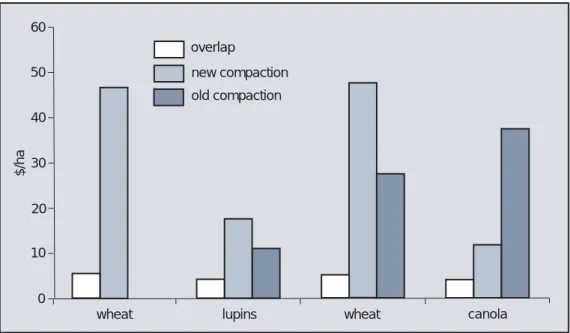
Benefits
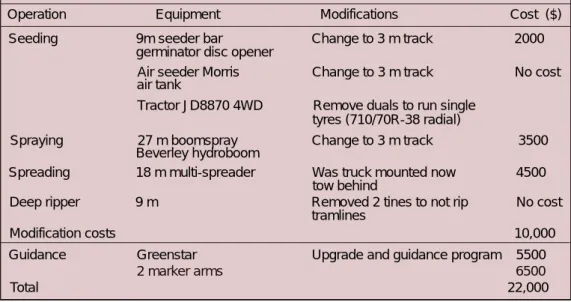
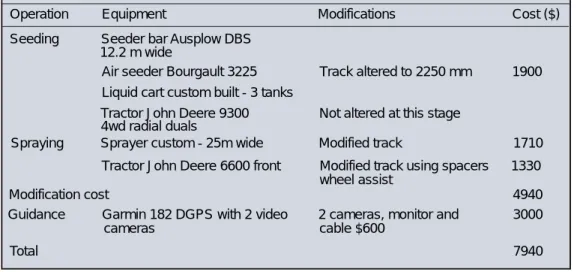
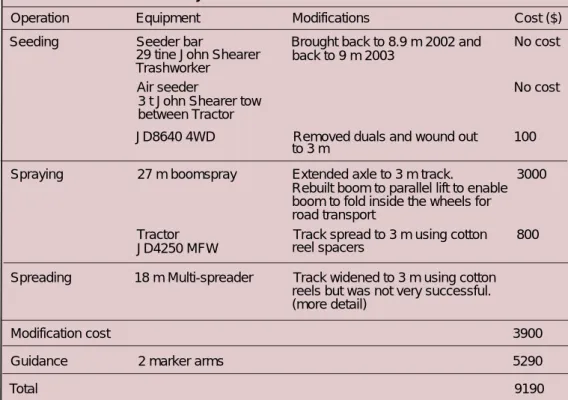
Estimated costs
A simple spreadsheet is available to calculate the benefits for your situation and compare to the possible costs of your machinery.
Setting priorities
Sow the seed around the paddock at the width of the boomspray before starting to work up and back. Photo 6.2 A video camera mounted on the wing of the aerial seeder (a) is used to record an image displayed in the tractor cab (b) on the left. Crossing Error - The distance from the actual road line measured at right angles to the road line.
Spreader — spreader axles can be modified using cotton rolls or old truck rims or by extending the axles to 3m tracks. In 2002, the two tines in the center of the rod moved out 8 cm on each side. Miles believes that 'the development of a shield sprayer and the possibility of sowing mid-range lupins in wide rows is a new tool to use in the fight against herbicide resistance'.
Neil Diamond believes that 'the input cost savings that can be achieved with controlled traffic are too great to ignore.
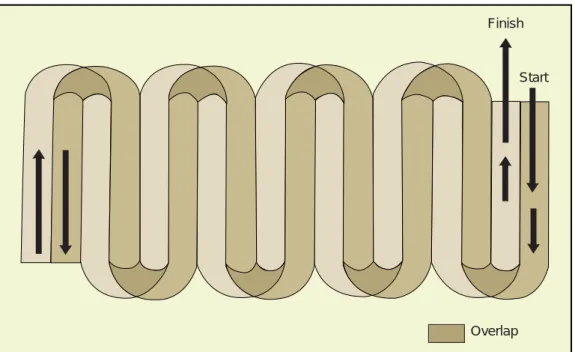
What direction?
Up and back
Challenge: Lots of switches to push at the end of the ride to lift the stick off the ground and turn the air seeder off and on again. Solution: If you are seeding up and back, there are some options to avoid double seeding at the ends.
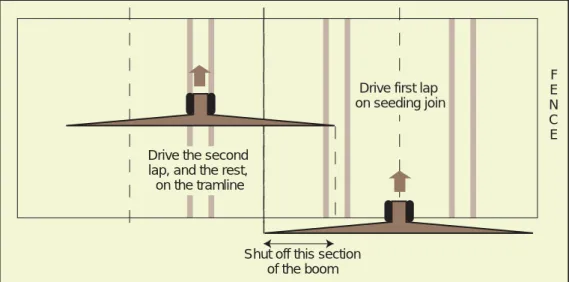
Round and round
When turning the ends, lift the bar when you reach the end. The seeded rollers on the outside act as a guide to raise the bar and turn off the air seed.
Guidance systems
A range of different guidance systems are available to suit the budgets and priorities of individual farms, from inexpensive mechanical guidance to more precise and more expensive electronic guidance systems. In general, the larger the machining area, the greater the savings due to the avoidance of overlap using electronic guidance.
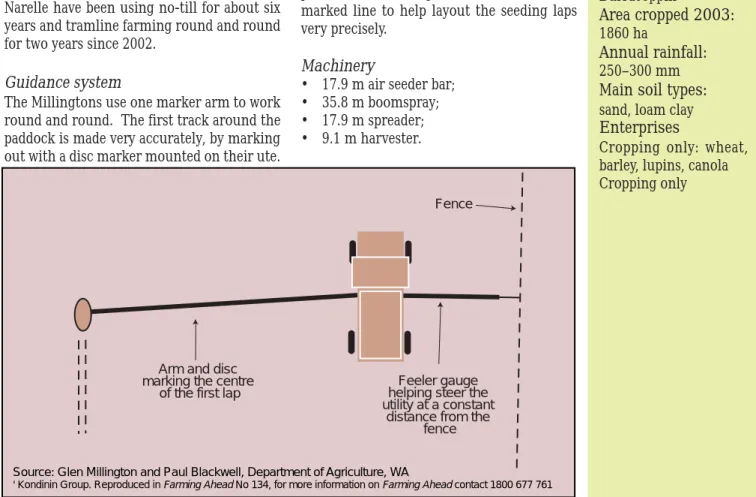
Marker arms
The easiest width ratio of the machine for working in the paddock is a 3:1 ratio between the width of the sprayer bar and the air seeder, as it fits nicely to the edge of the paddock (Figure 7.1). Wider air drills can be adjusted to fit the two widths of the front of the combine, as shown in Figure 7.3. Keeping the 3m drive lanes on the north side ensures that the spacing between seeding and spraying or spreading in the paddock is consistent.
Different row spacings between the driving tracks to the rest of the bar have helped some growers get guidance. The track direction may vary depending on the characteristics of the paddock, soil type and slope. They put a foam marker on the end of the marker arm to make the mark more visible at night.
The seed tractor, air seeder, spreader and picker use a pair of bare tramlines in the center of the air seeding bar.
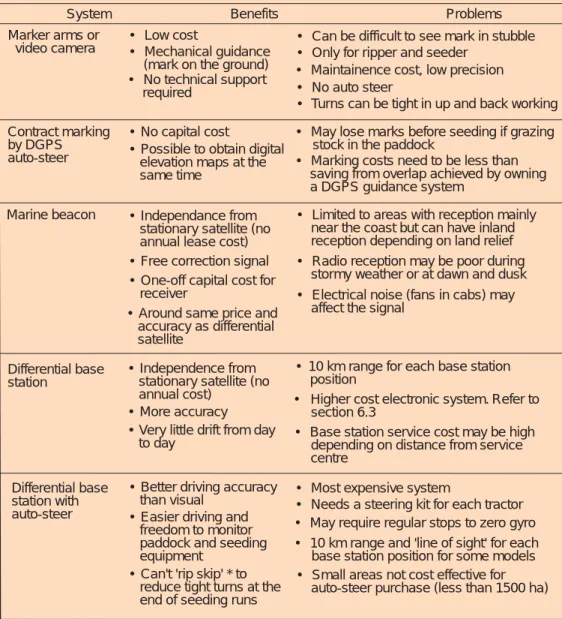
Video guidance
Electronic GPS guidance
Post seeding guidance
Guidance terminology
Machinery matching
Why in match the harvester?
Matching machinery widths
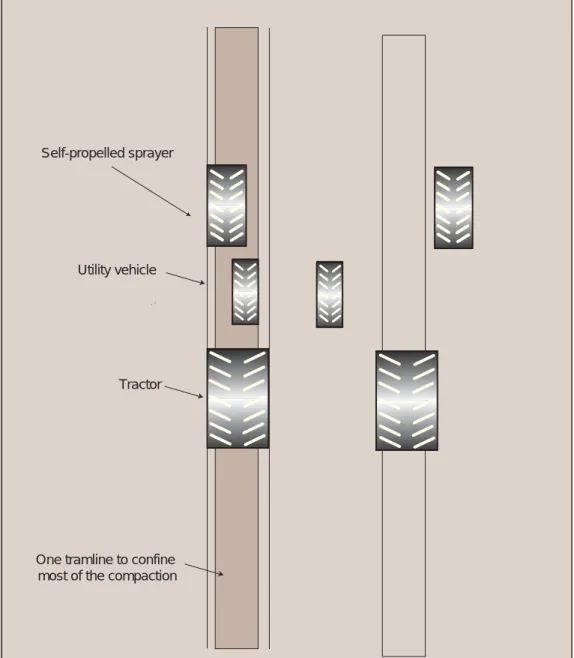
Matching machinery tracks
Machinery modification options
Crawler tractors and self-propelled sprayers can sometimes operate on row crop settings (3m) and thus can match the track width of the harvester. If you plan to include a sprinkler with an inter-row shield in the system, the ideal distance between the tines should be the same on both sides of the pole. You can leave bare paths by raising the knife or blocking the seed and fertilizer behind the wheel of the sowing tractor.
Tramline design
Bare
Fuzzy
Fuzzy tram lines are made by rolling the coated seed into the tram line with one of the following seed wheels. The seed and fertilizer are sprayed from hoses pulled from the planting trunk into the tram area and attached to the frame about 800 mm above the ground. Fuzzy tram lines provide clear crop guidance in cereals, but can be difficult to see in advanced canola.
Sown
The tractor is dropped below the mark left by the marker arm aligning with the badge in the center of the tractor hood. Darren estimates they saved 4–12 percent on input costs by working around a marker this season, depending on the shape of the paddock. At each end of the rod, a subsequent plastic strip is placed to pass to the last row from the previous pass of the combine.
DGPS (Beeline) automatic steering with a base station is used in the seeder tractor for upward and backward sowing. In the future, Miles would like to convert his planter to a three-point linkage to allow better pole control and shorter turns at the end of each lift and back. In order for the shields to follow between the rows of crops, a small wheel was fixed in the middle on the back of the shield, which runs in the furrow left at sowing.
More research is needed to clarify the effect of additional seed in the border rows, the width of the bare rut and the density of the soil under the rut.
Furry tramlines
Tramline maintenance
Grooved tramlines can be filled with a sorting chain or sweeping bar mounted on the cultivator or seeder to pull dry surface soil back into the rut and firm it up with a trailing wheel, for example from the drawn bucket. If the harvester fits, the system protectors can be placed on the knife in the tramline zone to prevent green heads from passing through the harvester; Working up and down allows the slope to drain evenly and reduces the risk of stream formation from overflowing furrows when the paddock is sown on the contour.
Layout Planning
Whole farm planning is very important when introducing new technologies such as tramline operation into your system as a change in paddock layout is often required to get the most out of the new technology.
Length of run
Access roads
Tramline orientation
Soil Infiltration — As a general rule, the better the soil structure, the higher the infiltration rate. Infiltration is expected to be further improved if carriageways are used, as containment compaction preserves the soil structure between the carriageways. Organic matter from plant roots helps improve soil structure by binding soil particles together and providing channels for rapid water infiltration.
Old furrow sowing
Rock piles and single trees have been progressively removed to reduce obstructions in the paddock. Planting is completed by filling the unplanted flats while planting as the planter returns to the heads. Two 800 L tanks are mounted on the bar and one 800 L tank is mounted on the front of the tractor.
Row overlap is 80 percent and yield loss due to rowing is not included in the calculations. Two marking arms and up-and-back work are the most common arrangements used by farmers in Queensland and New South Wales who adopted controlled traffic farming in the 1990s.
Shielded spraying
Relay planting
Lupins are a recommended crop for relay planting as when the soil temperature is generally warm enough, the lupins drop their leaves, opening the canopy and providing light for the establishment of the summer crop as well as. Wellstead far mer Darren Baum was a participant of the Tramline Tour 2001 to Queensland and New South Wales. Driving at night has become less tiring during seeding because the driver has a mark left behind by a disk on the end of the marker arm.
Tramline farming case studies
The following case studies outline the tramline farming systems being developed by 15 farmers in Western Australia to meet their own farming systems.
Getting started
In 2003, the Logues left no blurred tram lines as they had a GPS guidance system in the spray. The tire marks of the aerial seeder also provided guidance as they were visible in the early stages of crop growth. This effect is being investigated, as observations of poor crop growth in the wheel tracks of the combine from previous seasons indicate that compaction may still be a problem.
Consolidating the system
The bare tracks are left by lifting a tine on each side of the seed drill behind the tractor wheel. Early consideration of the system suggested that about 60–70 percent of the yard was suitable for an up-and-down carriageway; this has now been raised to at least 80 per cent. He has now matched the widths and some of the tracks that will eventually include the combine.
Fully matched system
The following bucket is a problem in the system as it is the main contributor to soil compaction on the farm and the harvester auger will not reach into it on tracks. The Diamonds have matched their machine width to the harvester in the system and have two track widths for different machines. The cross-row nozzles are used to spray fungicides on the 600mm crop row early in the growing season.
Tramline farming research
- Improved efficiency
- Compaction control
- Improved weed control (inter-row shield spraying)
- Tramline design
- Economics of tramline farming
- References
- Normal agronomy 07 44 2.3 4 184 29 6.4 181
- Green manuring 0 53 3 16* 237 48 38* 0
- Brown manuring 0 55 8 4 273* 64 16* 0
- Crop topping 1.04 37 1.5 2 287* 25 0.2 177
- Hoods and topping 1.19* 42 0.5* 3 255 0.5* 7.5 202
Overlap savings of five percent for round and round operations and 10 percent for up and back operations are assumed. The benefit of the zero percent yield is equal to only the superimposed savings; 3.5 percent is equal to compatible tracks and mechanical steering. The benefit of the zero percent yield is equal to only the superimposed savings; 3.5 percent is equal to compatible tracks and mechanical steering.