BIBLIOPHILE
By
MD. RAFIUL KABIR (161-35-1497)
This Report Presented in Partial Fulfillment of the Requirements for the Degree of Bachelor of Science in Software Engineering.
Supervised By Nazia Nishat Senior Lecturer
Department of Software Engineering
DAFFODIL INTERNATIONAL UNIVERSITY
Fall – 2019
APPROVAL
This Project titled “Bibliophile”, submitted by Md. Rafiul Kabir, ID: 161-35- 1497 to the Department of Software Engineering, Daffodil International University has been accepted as satisfactory for the partial fulfillment of the requirements for the degree of B.Sc in Software Engineering and approved as to its style and contents.
BOARD OF EXAMINERS
--- Dr. Touhid Bhuiyan
Professor and Head Department of Software Engineering
Faculty of Science and Information Technology Daffodil International University
Chairman
--- Md Fahad Bin Zamal
Assistant Professor Department of Software Engineering
Faculty of Science and Information Technology Daffodil International University
Internal Examiner 1
--- Md. Shohel Arman
Lecturer Department of Software Engineering
Faculty of Science and Information Technology Daffodil International University
Internal Examiner 2
--- Prof Dr. Mohammad Abul Kashem
Professor Department of Computer Science and Engineering
Faculty of Electrical and Electronic Engineering
Dhaka University of Engineering & Technology, Gazipur
External Examiner
ACKNOWLEDGEMENT
First I express my sincere thanks and gratefulness to almighty for His blessing it is possible to me to complete the final year project successfully.
I really grateful and wish my profound liability to Nazia Nishat, Senior Lecturer, Department of SWE Daffodil International University, Dhaka. Mystic knowledge &
keen interest of my supervisor in the field of “Web Engineering” to carry out this project. Her patience, guidance, encouragement, constant and energetic supervision, criticism, valuable advice, reading many inferior draft and correcting them at all stage.
For her this kind of help made possible to complete this project.
I would like to thank my course mates, while I faced any difficulties I discussed with them freely.
Finally, I must acknowledge with due respect the constant support of my parents.
Without their support I couldn’t express my thought.
EXECUTIVE SUMMARY
In traditional system book lovers has to go to bookshop to buy books. But buying books from a website in today’s circumstance is very normal. It saves their time and toil. So, now a days online bookshop is very popular.
‘Bibliophile’ is a web based system of Daffodil International University Bookshop (DIUP) which will resolve the traditional problem of going and buying books from the bookshop. As the numbers of online customers are increasing day by day, a web base solution is certainly more accurate than a traditional buying system.
This project is mainly a website for Online Book Sale. It provides the user a list of different books available for purchase in the store. A shopping cart is provided to the user to facilitate purchase in online. After the payment of the user the delivery man will deliver the books to the house of the user.
Thus, a customer can collect his books. And this is so easy but very efficient in both structural and operational point of view.
Table of Contents
APPROVAL ... II DECLARATION ... III ACKNOWLEDGEMENT ... IV EXECUTIVE SUMMARY ... V
Chapter 1: Introduction ... 1
1.1 Overview: ... 1
1.2 Purpose: ... 1
1.3 Goals of the Project: ... 2
1.4 Benefits: ... 2
1.5 Scope: ... 2
Chapter 2: Background ... 3
2.1 Introduction: ... 3
2.2 History of Online Bookshop: ... 3
2.3 World Famous Online Bookshops: ... 3
2.4 Bangladeshi Famous Online Bookshops: ... 3
2.5 Implemented Technologies: ... 4
2.5.1 Html: ... 4
2.5.2 Css: ... 4
2.5.3 Bootstrap: ... 4
2.5.4 PHP: ... 5
2.5.5 MySQL: ... 5
Chapter 3: Requirement Specification ... 6
3.1 Introduction: ... 6
3.2 Requirement Collection and Analysis: ... 6
3.3 Use Case Modeling and Description: ... 6
3.4 Activity Diagram: ... 16
3.5 Design Requirements: ... 26
3.6 Logical Data Model: ... 26
Chapter 4: Design Specification... 28
4.2 Back-end Design: ... 28
4.3 Interaction Design: ... 28
4.4 Implementation Requirements: ... 28
Chapter 5: Implementation & Testing ... 29
5.1 Implementation of Database: ... 29
5.2 Implementation of Front-end Design: ... 30
5.3 Implementation of Interaction: ... 42
5.4 Testing Implementation: ... 42
5.5 Test Results and Reports: ... 42
Chapter 6: Conclusion & Future Scope ... 43
6.1 Discussion and Conclusion: ... 43
6.2 Scope for Further Developments: ... 43
References: ………. 44
List of figures
Figure 1: Use Case diagram of Bibliophile ... 7
Figure 2: Activity Diagram of View Books ... 16
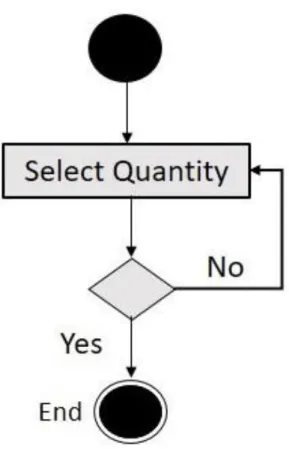
Figure 3: Activity Diagram of Select Quantity ... 17
Figure 4: Activity Diagram of Cart ... 17
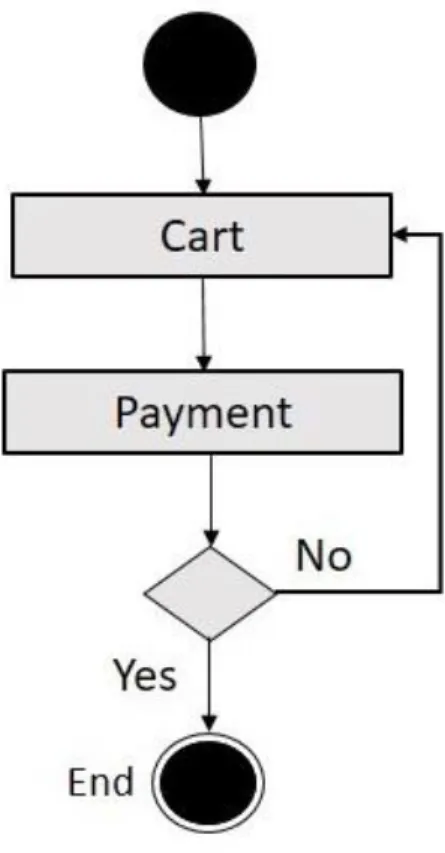
Figure 5: Activity Diagram of Payment ... 18
Figure 6: Activity Diagram of Purchase Books ... 18
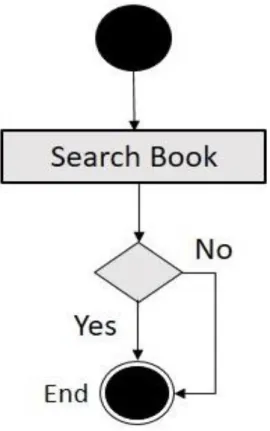
Figure 7: Activity Diagram of Search Book ... 19
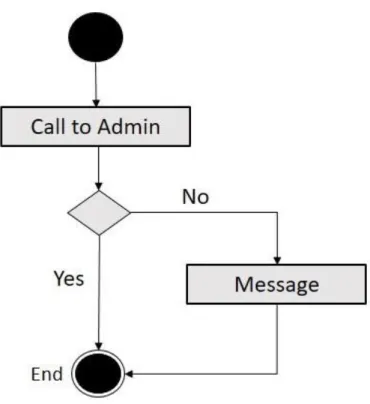
Figure 8: Activity Diagram of Contact with Admin ... 19
Figure 9: Activity Diagram of Login ... 20
Figure 10: Activity Diagram of Add New Book ... 20
Figure 11: Activity Diagram of Book Description ... 21
Figure 12: Activity Diagram of Edit Book Info ... 21
Figure 13: Activity Diagram of Delete Book Info ... 22
Figure 14: Activity Diagram of Read Message ... 22
Figure 15: Activity Diagram of Delete Message ... 23
Figure 16: Activity Diagram of View Order List ... 23
Figure 17: Activity Diagram of Delete Order ... 24
Figure 18: Class diagram of Bibliophile ... 25
Figure 19: ER diagram of Bibliophile ... 27
Figure 20: DBMS Execution and Parsing ... 29
Figure 21: front page of Bibliophile ... 30
Figure 22: View Books of Bibliophile ... 31
Figure 23: Book Details of Bibliophile ... 32
Figure 24: Cart of Bibliophile ... 33
Figure 25: Book details ... 33
Figure 26: Checkout ... 34
Figure 27: Information of customer ... 34
Figure 28: Selection of Payment Methods ... 35
Figure 29: Selected payment Method ... 35
Figure 30: Confirmation of ordered books ... 36
Figure 31: Contact with Admin of Bibliophile ... 36
Figure 32: Search (available) ... 37
Figure 33: Search (unavailable) ... 37
Figure 34: Login interface of Bibliophile ... 38
Figure 35: ‘Admin zone’ interface of Bibliophile ... 38
Figure 36: Add book of Bibliophile ... 39
Figure 37: Edit Added books of Bibliophile ... 39
Figure 38: Order List of Bibliophile ... 40
Figure 39: Message List of Bibliophile ... 41
List of Tables
Table 1: Use Case Description of View Books ... 8
Table 2: Use Case Description of Cart ... 8
Table 3: Use Case Description of Cart ... 9
Table 4: Use Case Description of Payment ... 9
Table 5: Use Case Description of Purchase Books ... 10
Table 6: Use Case Description of Search Book ... 10
Table 7: Use Case Description of Contact with Admin ... 11
Table 8: Use Case Description of Login ... 11
Table 9: Use Case Description of Add New Book ... 12
Table 10: Use Case Description of View Book Description ... 12
Table 11: Use Case Description of Delete Book Info ... 13
Table 12: Use Case Description of Edit Book Info ... 13
Table 13: Use Case Description of Read Message ... 14
Table 14: Use Case Description of Delete Message ... 14
Table 15: Use Case Description of View Order List ... 15
Table 16: Use Case Description of Delete Order List... 15
Chapter 1: Introduction
1.1 Overview:
This project is engaged with selling books in favor of a website. Now question is,
“What is website?”
“A website is a collection of related network web resources, such as web pages, multimedia content, which are typically identified with a common domain name, and published on at least one web server.
Websites can be accessed by a public Internet Protocol (IP) network, such as the Internet, or a private local area network (LAN), by a uniform resource locator (URL) that identifies the site.”
Nowadays there are many types of websites are used to do various types of work.
Business sites are used to do business, news websites publish news, academic journal websites publish journals, gaming websites provide games, social networking websites connected people with each other. Thus, websites connect with us for making our life easier.
Online bookshop is also a website for selling books. Customer view books & select books of interest. The selected books are contain in a shopping cart. At checkout time, the items in the shopping cart is presented as an order. Customer provide more information to complete the transaction. The customer is asked to fill a shipping address, city, zip code, mobile number and payment information such as ‘Bikash’,
‘DBBL’, ‘Nogod’ number. Then the bookshop authority deliver the books to customer’s house. Customer need not come to bookshop to collect books.
1.2 Purpose:
• Customers buy books in an easier & simple process. No need to become a member to buy books.
• Customers can get books with very short period of time if he wants. Other bookshops may deliver within 2-3 days inside Dhaka and 4-5 days outside Dhaka. But I will deliver to the customer within 1 working day inside Dhaka
& 2 working day outside Dhaka.
• At the beginning stage I implement these in our university, with our Daffodil Bookshop (DIUP).
• So, our students can get their academic books at their house from Daffodil Bookshop.
1.3 Goals of the Project:
The main functionality of this project is making the process of buying books from an online bookshop is a very easiest way. It helps customers to know about the book price, book description etc. And deliver books within a very short time from
‘Daffodil Bookshop’.
1.4 Benefits:
• Allows anyone to buy books.
• Allows access to some critical interface easily.
• Deliver books within a very short time.
• DIU students get their textbook home delivery.
• User can send message to the Admin.
• User can read the book review.
1.5 Scope:
The website will be used by the Daffodil International University’s students and rest of the people of Bangladesh. ‘Daffodil Bookshop’ also can sell their books via online. Some admin maintain the system. Only they get the authority to maintain the order, add new books & read message from users.
Chapter 2: Background
2.1 Introduction:
Before starting to work for this project I had to dig into the deep background of Online Bookshop. The acquired information will be represented here divided into several sections. This sectioning would help us basically in two ways - first it will prevent the information redundancy and second it will help representing more information in a short place.
2.2 History of Online Bookshop:
In 1993 Richard Weatherford established Interloc, "the first successful online bookseller service." Arguing that "our mission is to help booksellers find books for their own customers," Weatherford opened the database to booksellers only.
Interloc evolved into Alibris in 1997. [1]
2.3 World Famous Online Bookshops:
AbeBooks, Alibris, Amazon.com, Angus & Robertson, Barnes & Nobel, Biblioz are the famous online marketplace for read and buy books. Amazon.com is the world’s largest online bookshop. It has country specific versions for Mexico, Germany, Japan, Australia, Brazil, Canada, China, France, India, Italy, and The United Kingdom. [2]
2.4 Bangladeshi Famous Online Bookshops:
Rokomari.com: ‘Rokomari.com’ is the first online bookshop in Bangladesh. It has the largest number of books in Bangladesh.
Daraz.com: ‘Daraz.com.bd’ sells books newly and it is increasing. They are very eager to rich their store. Within a very short time they will take a part to selling books at online in Bangladesh.
Bookshopbd.com: O and A level books are sell on this platform. Textbook, MS and questions Bookshop.bd has a huge collection.
Branoo.com: This is a bookstore of extensive collection of books. Fifty authors and publishers are on their partner. ‘Branoo.com’ has categorized the books into a different zone. That helps to the bookworms too. [3]
2.5 Implemented Technologies:
There are numerous technologies for building web applications that serve dynamic content. So I needed to study into the field of web technologies to select which technologies I am going to use to build the Bookshop (BIBLIOPHILE). I will discuss about the technologies briefly point by point.
2.5.1 Html:
HTML is one of the most popular markup language which is also a hypertext language. The HTML contents can be visible to the browsers. We, in our project used this language. Because we already learned it from our professional training.
This markup language works based on tags on based on logic. No logical statements exist in HTML. It simply make skeleton of the web applications. [4]
2.5.2 Css:
CSS stands for Cascading Style Sheets. The style and layout of multiple pages are controlled by css. Styles define how to display HTML elements. CSS codes are always executed lastly and that is why it overrides the default settings of the browser. There are three types of CSS; one of them is external and that can save both times and works. They are stored in CSS files. In Stylesheets, there are rules, composition of selectors and declarations defining the way of applying the styles.
The HTML element (redefined), class or ID name which also known as the selectors, is mainly the link in between the markup document and the stylesheets.
There are two different types of css: types (HTML element tags) and attributes (such as class and ID names). [5]
2.5.3 Bootstrap:
Bootstrap is a front end framework which uses HTML, CSS and JavaScript and now a days it is one of the most popular currently. It is easy to learn and work with and it is also intuitive and robust and sleek-faster-mobile framework. [6]
2.5.4 PHP:
PHP works to control the flow of data. It is the easiest OOP language in this segment. I used php as the primary language for our development project. [8]
Because I also learned PHP from my professional training from LICT. There is so many advantages of this languages –
• It is most popular
• Widely used all over the globe
• It is object oriented
• Secure
• Easy to learn
• Loosely typed
• Supports on different environments
• It can be in lined into HTML
• Server side language
• It is free from cost
• Generates markup codes
• Robust [9]
2.5.5 MySQL:
There are several database servers, MySQL is one of them. It is fit for smaller or larger applications. MySQL is cost free and supports SQL on several platforms. [7].
Chapter 3: Requirement Specification
3.1 Introduction:
In software engineering, requirement specification plays a vital role in any development life cycle. Basically it is a description of any system or it is a specific description for the proposed system. It is also known as stakeholder requirement.
It may contain some sorts of diagrams such as Unified Modeling Language Diagram (UML), Use Case Diagram or any kind of logical model e.g. Entity Relation Diagram (ER Diagram) etc. [10]
Here in this chapter, I am going to represent our proposed system’s requirement specification by some Use Case Diagram, Activity Diagram and ER Diagram.
3.2 Requirement Collection and Analysis:
At first I motivated for the problem by facing some of my friends who needed textbook before the day of examination & their home was far from our university.
Then I decided to do my ‘Bibliophile’ project. First, I decided to make a structure of the project from scratch to functional, then I will go for further features. The requirements were mainly-
• Allows anyone to buy books.
• Allows access to some critical interface easily.
• Deliver books within a very short time.
• DIU students get their textbook home delivery.
• User can send message to the Admin.
• User can call to the authority.
• User can read the book review.
3.3 Use Case Modeling and Description:
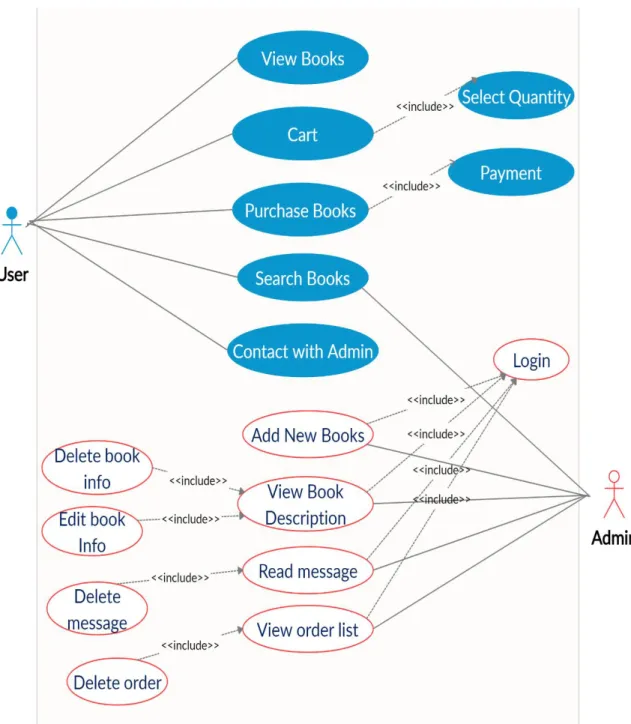
In any software development system it is necessary to show the relationship between the user and the Admin. This user’s interaction with the Admin can be shown easily by a Use Case Diagram. It has the ability to identify different types of users of the system and the different use cases as well.
In other word it is a Unified Modeling Language (UML) that usually describes the set of actions that a system or systems should or can conduct in collaboration with one or more external users of the system, here the actions called as ‘User’ and the system called ‘Admin’.
Figure 1: Use Case diagram of Bibliophile
Table 1: Use Case Description of View Books
Use Case Name View Books
Priority Essential
Trigger Click on the ‘book’ to see all books
Pre-Condition The system showed store data
Basic Path Click on the book image to see book
description
Alternative Paths None
Post-Condition Book’s information showed
Possible Enhancement None
Table 2: Use Case Description of Cart
Use Case Name Select Quantity
Priority Essential
Trigger Click on ‘Select Quantity to select
quantity book on cart
Pre-Condition The user must add book to the cart
Basic Path Select book quantity
Alternative Paths None
Post-Condition Cart
Possible Enhancement None
Table 3: Use Case Description of Cart
Use Case Name Cart
Priority Essential
Trigger Click on ‘Add to cart’ to add book on cart
Pre-Condition The user must add book to the cart
Basic Path Select book quantity
Alternative Paths None
Post-Condition Purchase Book
Possible Enhancement None
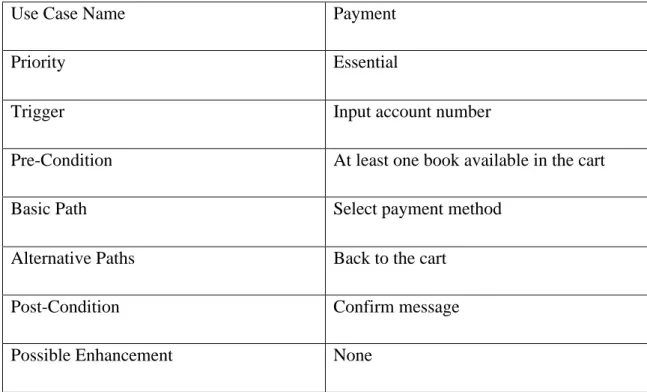
Table 4: Use Case Description of Payment
Use Case Name Payment
Priority Essential
Trigger Input account number
Pre-Condition At least one book available in the cart
Basic Path Select payment method
Alternative Paths Back to the cart
Post-Condition Confirm message
Possible Enhancement None
Table 5: Use Case Description of Purchase Books
Use Case Name Purchase Books
Priority Essential
Trigger Input customer’s details information
Pre-Condition At least one book available in the cart
Basic Path Fill all customer details
Alternative Paths None
Post-Condition Payment
Possible Enhancement None
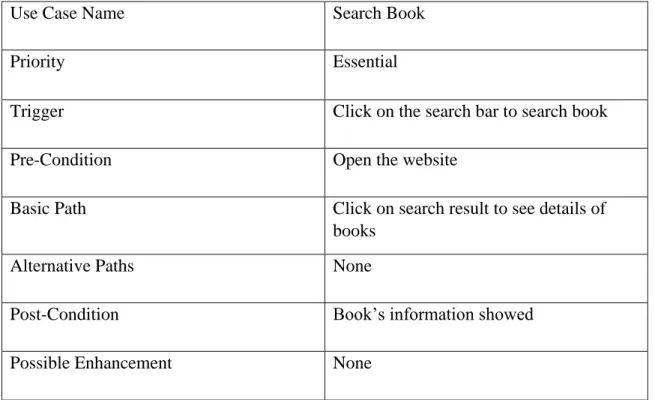
Table 6: Use Case Description of Search Book
Use Case Name Search Book
Priority Essential
Trigger Click on the search bar to search book
Pre-Condition Open the website
Basic Path Click on search result to see details of
books
Alternative Paths None
Post-Condition Book’s information showed
Possible Enhancement None
Table 7: Use Case Description of Contact with Admin
Use Case Name Contact with Admin
Priority Essential
Trigger Input User information & write message
Pre-Condition Open the website
Basic Path Click on the ‘Contact Us’ to message
Admin
Alternative Paths Call to Admin
Post-Condition Confirm message
Possible Enhancement None
Table 8: Use Case Description of Login
Use Case Name Login
Priority Essential
Trigger Input username & password
Pre-Condition The system has to keep a record about
admin.
Basic Path Click on the ‘Admin Login’ to message
Admin
Alternative Paths None
Post-Condition Enter into admin zone
Possible Enhancement None
Table 9: Use Case Description of Add New Book
Use Case Name Add New Book
Priority Essential
Trigger Input book information
Pre-Condition The system has to keep a record about
admin.
Basic Path Admin must fill all input fields & add
image
Alternative Paths Back to the ‘Admin Zone’
Post-Condition Book’s information stored in database &
showed in the website
Possible Enhancement None
Table 10: Use Case Description of View Book Description
Use Case Name View Book Description
Priority Essential
Trigger Click on the book to see all information
of that book
Pre-Condition The system has to keep a record about
admin.
Basic Path To see books information
Alternative Paths Back to the ‘Admin Zone’
Post-Condition Edit or delete books
Possible Enhancement None
Table 11: Use Case Description of Delete Book Info
Use Case Name Delete Book Info
Priority Essential
Trigger Delete book information
Pre-Condition The system has to keep a record about
books.
Basic Path Admin delete the book’s information
Alternative Paths Back to the ‘Admin Zone’
Post-Condition Book’s information delete from database
& don’t show in the website
Possible Enhancement None
Table 12: Use Case Description of Edit Book Info
Use Case Name Edit Book Info
Priority Essential
Trigger Edit book information
Pre-Condition The system has to keep a record about
books.
Basic Path Admin edit the book’s information
Alternative Paths Back to the ‘Admin Zone’
Post-Condition Book’s information update from database
& then shown in the website
Possible Enhancement None
Table 13: Use Case Description of Read Message
Use Case Name Read Message
Priority Essential
Trigger Click on the ‘Message’ to see all users
messages
Pre-Condition The system has to keep a record about
admin.
Basic Path To read users messages
Alternative Paths Back to the Admin Zone
Post-Condition Reply to the email or delete message
Possible Enhancement None
Table 14: Use Case Description of Delete Message
Use Case Name Delete Message
Priority Essential
Trigger Click on the ‘Message’ to see all users
messages
Pre-Condition The system has to keep a record about
message.
Basic Path To delete users messages
Alternative Paths Back to the Admin Zone
Post-Condition None
Possible Enhancement None
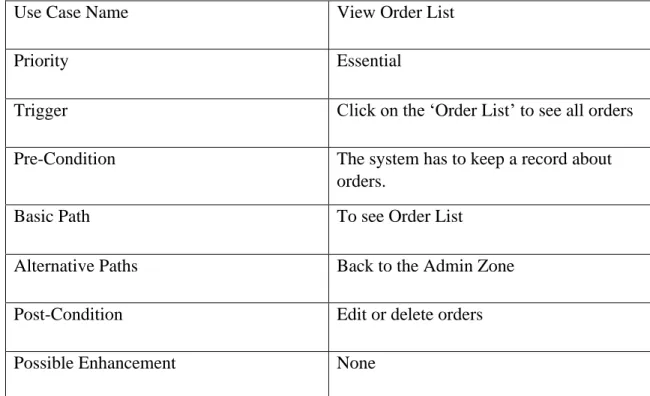
Table 15: Use Case Description of View Order List
Use Case Name View Order List
Priority Essential
Trigger Click on the ‘Order List’ to see all orders
Pre-Condition The system has to keep a record about
orders.
Basic Path To see Order List
Alternative Paths Back to the Admin Zone
Post-Condition Edit or delete orders
Possible Enhancement None
Table 16: Use Case Description of Delete Order List
Use Case Name Delete Order List
Priority Essential
Trigger Click on the ‘Order List’ to see all orders
Pre-Condition The system has to keep a record about
orders.
Basic Path Delete customer’s order items
Alternative Paths Back to the Admin Zone
Post-Condition None
Possible Enhancement None
3.4 Activity Diagram:
To describe the dynamic perspective of the system, Activity diagram is another important diagram in Unified Modeling Language.
Basically a flowchart to represent the flow from one activity to another is Activity diagram. The activity can be described as an activity of the system.
The flow of control is drawn from one operation to another. This flow can be concurrent, branched, or sequential. Activity diagrams works with All type of flow control by using various elements like as fork, join, etc. [15]
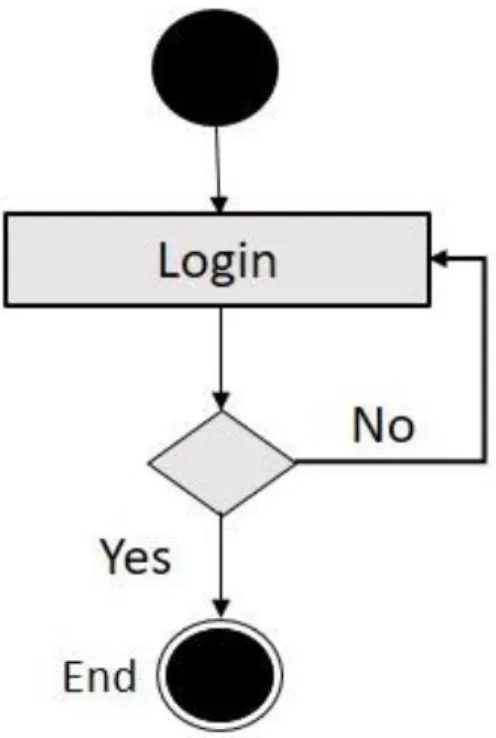
It is relative idea for using and it can be represented as Activity Diagram. Figure 2 to figure 11 shows the Activity Diagram of Bibliophile.
Figure 2: Activity Diagram of View Books
Figure 3: Activity Diagram of Select Quantity
Figure 5: Activity Diagram of Payment
Figure 6: Activity Diagram of Purchase Books
Figure 7: Activity Diagram of Search Book
Figure 8: Activity Diagram of Contact with Admin
Figure 9: Activity Diagram of Login
Figure 10: Activity Diagram of Add New Book
Figure 11: Activity Diagram of Book Description
Figure 12: Activity Diagram of Edit Book Info
Figure 13: Activity Diagram of Delete Book Info
Figure 14: Activity Diagram of Read Message
Figure 15: Activity Diagram of Delete Message
Figure 16: Activity Diagram of View Order List
Figure 17: Activity Diagram of Delete Order
Figure 18: Class diagram of Bibliophile
3.5 Design Requirements:
• The whole system will be divided into two types of user e.g. the user, the admin.
• User will have internet excess.
• User will enter the website.
• User will choose books and add cart for purchase.
• User will send message or call admin for his information.
• Admin will add new books, edit books & delete books.
• Admin will view order list and send the parcel to customers.
• Admin will view the message and reply.
• The developer will ensure the security to the user.
3.6 Logical Data Model:
The Logical Data Model, also known as Logical Schema is a kind of data model for a particular problem of a particular database management technology but the structure of data such as tables and columns or XML or OOP classes.[11] It is a version of data model. This model is represented requirements of business, entire or partial, and it is developed before PDM (physical data model).[12]
It is comparative idea for using and it is represented as Entity Relationship Diagram (ER Diagram). Figure 13 shows the ER Diagram of Bibliophile.
Figure 19: ER diagram of Bibliophile
Chapter 4: Design Specification
4.1 Font-end Design:
• Front page design of Bibliophile
• Admin Login interface design
• Admin Zone interface design
• Books interface design
• Add books interface design
• Delete books interface design
• Edit books interface design
• Order list interface design
• Delete order list interface design
• View message interface design
• Delete message interface design
• Admin book view, edit, delete page design
4.2 Back-end Design:
• Admin can manage the whole system
• Admin can add books
• Admin can edit and delete books
• Admin can access the whole system
• Admin can delete message
• Admin can delete orders
• All the data will be stored in the database
4.3 Interaction Design:
In my proposed system, I’ve implemented the whole interactive interface UI for better experience of the user. I’ve already given the screenshot of those designs. In some cases I used text or link or button. The user will feel comfortable using the whole designs.
4.4 Implementation Requirements:
Implementation for my proposed project are divided into some parts,
• Used Technology: The main requirements for our project are some web technology e.g. HTML, CSS, Bootstrap, JavaScript, PHP, MySQL, jQuery, Ajax etc. We have already discussed detailed in chapter 2.
• Tools and Sites: VScode Texteditor, XAMPP, Notepad++, Chrome Browser, Brave Browser etc.
Chapter 5:
Implementation & Testing 5.1 Implementation of Database:The requests generated from the SQL interface is maintained by a database management system, modifying data in response to these requests. This is include with a multilevel processing system. [13]
Figure 20: DBMS Execution and Parsing
I performed the database by this flow and made the relations as like as the ER Diagrams like before.
5.2 Implementation of Front-end Design:
First the user browse the front page of the website. The interface of the front page is given below:
Figure 21: front page of Bibliophile
After entering into the ‘Bibliophile’, the user can view books & book details. The view books & book details interface is given below:
Figure 22: View Books of Bibliophile
Figure 23: Book Details of Bibliophile
After viewing books & book details, user can add the book into cart. Then he can continue his shopping or go to checkout. Both interfaces are given below:
Figure 24: Cart of Bibliophile
Figure 25: Book details
Figure 26: Checkout
After checkout customer must fill the billows input fields:
Figure 27: Information of customer
Then comes payment option:
Figure 28: Selection of Payment Methods After select payment options:
After click the ‘purchase’ button confirmation message shown in a new page:
Figure 30: Confirmation of ordered books
Contact with admin page is given below:
Figure 31: Contact with Admin of Bibliophile
User search books or author in the search box. If the book is available then it arrives, otherwise not.
Figure 32: Search (available)
Figure 33: Search (unavailable)
Admin need to login to access the ‘Admin zone’. The login interface is given below:
Figure 34: Login interface of Bibliophile
Then the Admin can go to the main ‘Admin zone’. The ‘Admin zone’ design is given in figure 18.
Figure 35: ‘Admin zone’ interface of Bibliophile
Admin add new books. The interface is given below:
Figure 36: Add book of Bibliophile
Admin can edit added books. The interface is given below:
Figure 37: Edit Added books of Bibliophile
The interface of view & delete ‘order list’ is given below:
Figure 38: Order List of Bibliophile
The interface of view & delete ‘Message’ is given below:
Figure 39: Message List of Bibliophile
5.3 Implementation of Interaction:
In my system, I have implemented the whole interactive interface UI for better experience of the user. I’ve already given the screenshot of those interfaces. In some cases I used text or link or button. I hope, the user will feel flexible using the whole system.
Browsing in Bibliophile will be more flexible near future and also will develop the interface. Full website of Bibliophile are well maintained as well.
5.4 Testing Implementation:
There are several techniques to test the system. I followed the agile model. I divided the whole project into small units and set an interval to develop it. After developing the small unit, I tested the unit and start a new unit.
In this way I tested my project. In the phase of implemented front-end and back- end, I faced several challenges.
When the full project had done, then I integrated the testing report and performed a compact testing.
5.5 Test Results and Reports:
There were several number of testing technique is real time software development life cycle. But I tested my system is two testing system. Those two systems were unit testing and integration testing.
As beginning of the coding section is unit testing. Where I make our different module, I tested by unit testing. After completing our full system, I tested by integration testing system. In every test section I found some problem and at that time I solved that. After then I completed my proposed system.
Chapter 6: Conclusion & Future Scope
6.1 Discussion and Conclusion:
Doing this kind of work as final year project is a blessings for me. Because, first it helped me to build up my level of confidence. On the other hand, there is no doubt that, it is a huge work for some apprentice like me. For this, at first, I would like to thank to the Almighty, without his mercy I wouldn’t be able to complete this project; I have been doing this project for 8 months, if He wouldn’t keep us healthy and sound, it was quite impossible to complete this project. Then special thanks to my project supervisor, Nazia Nishat, without her consultancy is would be quite impossible for me to complete this.
I have gone through many challenges and difficulties while completing this project and as a result, I learned so many things – both technical and ethical and professional. Eight months ago, when I first started working, there were lacks in my technical experience that I recovered during working with the project. And also, I had to learn many new things. I believe this will be a fit companion for my career.
Though there are some limitations in my project, I have already discussed about it before, but this also has some pretty good features. I only make this ‘DAFFODIL BOOKSHOP: BIBLIOPHILE’ functional from scratch but there is a long way to continue. May be this project is complete for this final year project, but actually it not ending at all. I’d like to say that this is the beginning of the beginning. I have some future plans I’ll be working in future. It is obvious, this (completing this project) is the first step on my very great visions what I’ve been working for.
6.2 Scope for Further Developments:
• Pdf of old version books what a reader wants to read but publisher don’t publish it. From there I will give the writer the royalty.
• If any writer want to publish his/her book’s soft copy then he/she can do it here. I will give him royalty. For this, specially expatriate and immigrant Bengali book lovers will be surely benefited. It will also help for the student
& the bookworms who want to read so many books but can’t afford it.
• As quick as possible delivery. If customer wants then book will deliver within one working day.
• Book review, Book news & Advertisement of upcoming books from Facebook group, ‘Boier Poka’. [14]
• Add new features.
References
[1]. http://www.historyofinformation.com/detail.php?id=1042 [2]. https://en.wikipedia.org/wiki/List_of_online_booksellers [3]. http://deshicoupon.com/blog/online-bookstores-bangladesh/
[4]. R. Shannon. What is HTML?, 2012.
http://www.yourhtmlsource.com/starthere/whatishtml.html [5].http://blog.teachbook.com.au/index.php/computerscience/web- development/html-guide
[6]. PHP. What is PHP?, 2012.
http://www.php.net/manual/en/intro-whatis.php [7]. W3Schools. PHP introduction, 2012.
http://www.w3schools.com/php/php_intro.asp [8]. W3Schools. PHP introduction, 2012.
http://www.w3schools.com/php/php_intro.asp [9]. PHP. What is PHP?, 2012.
http://www.php.net/manual/en/intro-whatis.php [10]. Software requirements specification
https://en.wikipedia.org/wiki/Software_requirements_specification [11]. https://en.wikipedia.org/wiki/Logical_schema
[12]. https://learndatamodeling.com/blog/logical-data-modeling-tutorial/
[13]. DBMS Implementation https://db.grussell.org/imp.html [14]. ‘Boier Poka’, Facebook group
https://www.facebook.com/groups/we.are.bookworms [15]. Activity Diagrams
https://www.tutorialspoint.com/uml/uml_activity_diagram.htm