This thesis entitled “Software development standards and software engineering practices a case study of Bangladesh” submitted by Md. Jahidul Islam in the Department of Computer Science and Engineering, Daffodil International University, has been accepted as satisfactory in partial fulfillment of the requirements for the degree of M.Sc. in Computer Science and Engineering and approved for its style and content. Department of Computer Science and Engineering Faculty of Information Science and Technology Daffodil International University. Assistant Professor and MIS Coordinator Department of Computer Science and Engineering Faculty of Information Science and Technology Daffodil International University.
I hereby declare that this thesis was done by me under the supervision of Mr. Md. I also declare that neither this thesis nor any part of this thesis has been submitted elsewhere for the award of any degree or diploma. I am grateful and express my deepest gratitude to Mr. Md. Tarek Habib, Assistant Professor, Department of CSE, Department of CSE Daffodil International University, Dhaka.
Furthermore, I would like to express my heartfelt thanks to Professor Dr. Syed Akhter Hossain, Head of CSE Department, for his kind help to complete my dissertation and also to other faculty member and the staff of CSE department of Daffodil International University. I would like to thank our entire coursemate at Daffodil International University, who participated in this discussion while completing the coursework.
INTRODUCTION .............................................................................. (1-3)
Motivation .................................................................................................................. 1-2
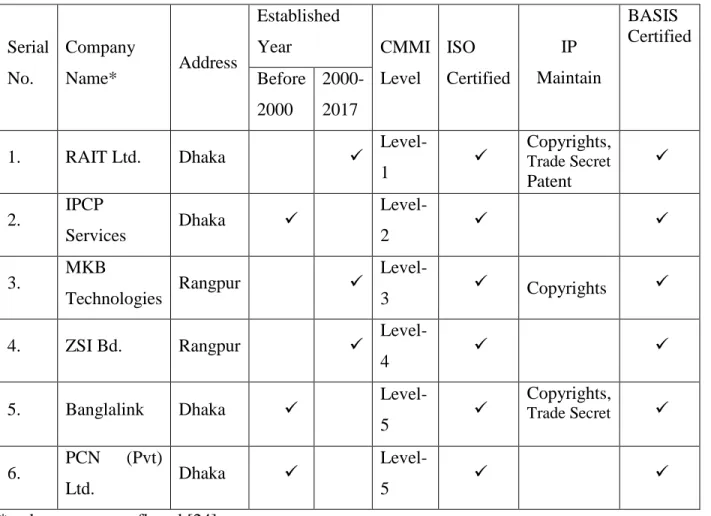
This is the golden time to highlight our country as a fertile land for software industries or software development. To do this, we need to maintain the ISO, CMM, IP and BASIS requirements of the software development standards and software engineering practices. When most of the software company are facing the challenges of providing products or services which can satisfy their customers.
In an effort to provide effective services or products, the software development sector has a problem being represented due to maintaining the world standard of development.
The Problem Statement ............................................................................................... 2-3
In the chapter "Research Methodology" there will be a brief discussion of how the thesis was carried out. In the chapter "Survey", various aspects of surveys and how the survey is designed to understand the scenario will be discussed in detail. In the chapter "Analysis", a brief summary is discussed on how the thesis can be used and continued to solve the remaining problems in the statement.
STATE OF THE ART ..................................................................... (4-16)
- Requirements engineering (RE) ............................................................................. 5-6
- Requirements Change
- Derived Requirements and Modifications
- Software Design Standards
- Design Methods, Rules, and Tools
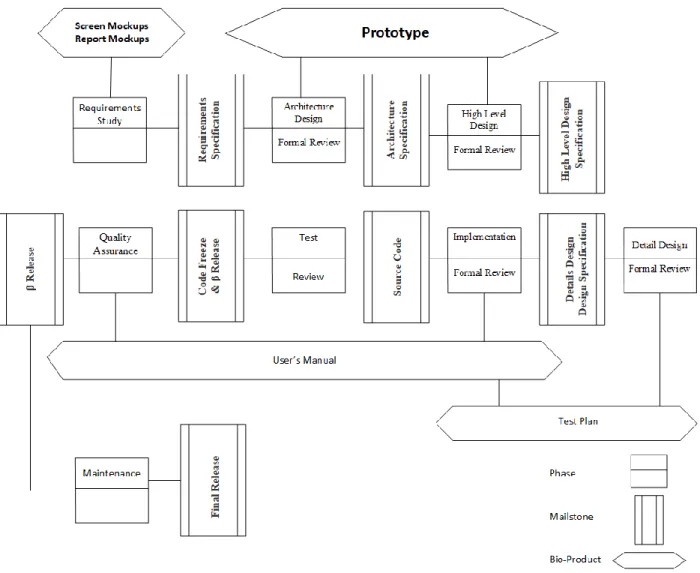
- Design and Development Documentation .......................................................... 13-15
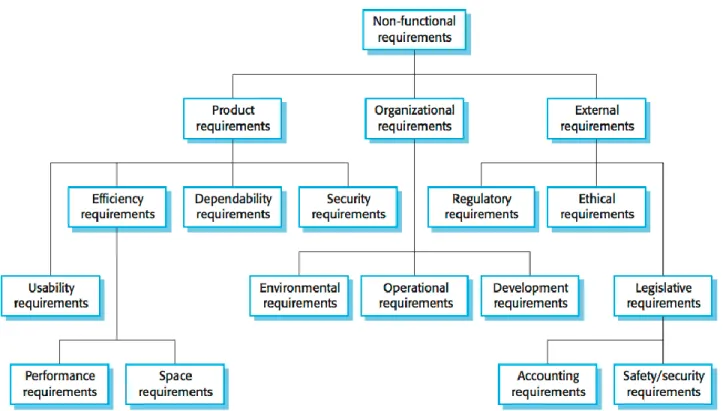
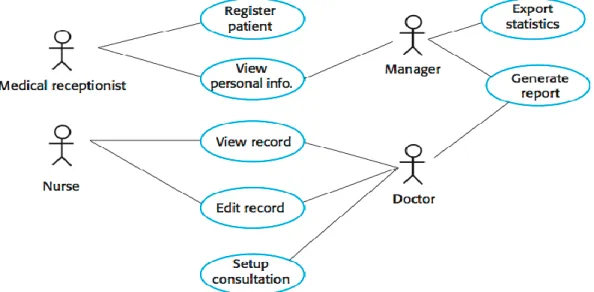
According to software development standards and software engineering practices, the software requirements process uses system requirements and system architecture to develop high-level requirements for the desired software. Without system requirements, certain assumptions must be made in developing software requirements. System requirements are the detailed description of what the system must do including the functions, services and operational limitations of the software system.
It may be part of the contract between the system purchaser and the software developers. All questions raised by any member of the development team regarding the standard software development specifications are presented to the system analyst. The "Issue and Change Reporting" chapter provides a more detailed description of the procedures and forms used for tracking, reviewing, and approving changes to the Software Development Standard specification.
The following chapter describes the software design standards defined for the Software Development Standard project. The software design standards are provided to define the methods, rules, and tools to be used in the development of the software architecture and low-level requirements, as described in the Software Development Standard and Software Engineering Practices subsection.
BACKGROUND ............................................................................ (17-41)
- Scope of ISO 9000 ........................................................................................... 26-28
- Overview ........................................................................................................ 29-31
- Overview
- Background
- Context .......................................................................................................... 37-38
- Roles and responsibilities
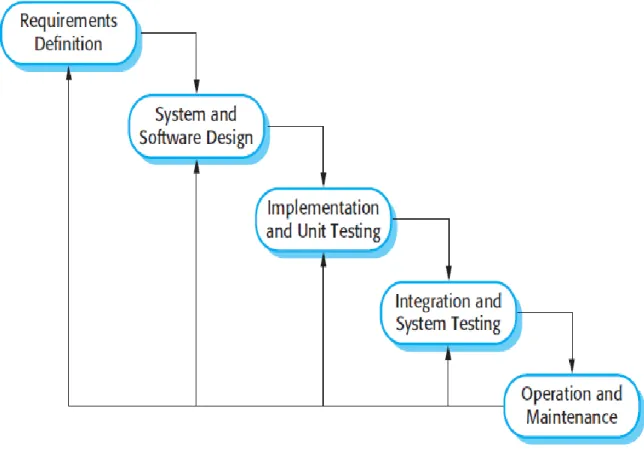
The SDLC model is one of the oldest systems development models and is still probably the most common. The use of these models is largely limited to the overall management of the project. Linux Torvalds, the very highly regarded project leader of the Linux kernel, made the following statement on the Linux kernel mailing list: "No major software project that has been successful in a mainstream (as opposed to niche) market has ever gone through that nice didn't go life cycles they tell you about in Computer Science classes” [7].
Indispensable for this is transparent communication, agreement on common goals, taking into account customer interests and customer cooperation in the development and improvement of products. Level Three: Defined - The software process for both management and engineering activities is documented, standardized, and integrated into an organization-wide standard software process, and all projects across the organization use an approved, customized version of the organization's standard software process for developing, testing and maintaining the application. CMM is the most desirable process for any software development company to maintain product quality, but its implementation takes a little longer than expected [13].
Although it comes from the field of software development, it can be, has been and continues to be widely used as a general model of maturity of processes in IS/IT (and other) organizations. SEI has published a policy to exclude Software CMM and earlier versions of CMMI. With the release of the CMMI Version 1.2 Product Suite, the existing CMMI has been renamed CMMI for Development (CMMI-DEV), V1.2.
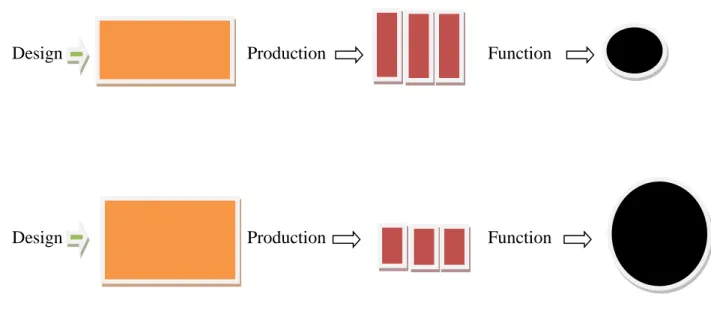
Many people underestimate one of the most important aspects of the software development process - intellectual property (IP) issues. This category of licenses includes various types of contracts, most of which provide for a financial contribution from the licensee to be granted use of the product (although shareware and freeware licenses differ) [16]. The image below shows a general understanding of how these two license categories differ in terms of rights reserved.
But have you ever thought about the challenges you face during the software development process. Most of the software projects require not only clean programming code creation, but also a beautiful design. You will need to check the terms of use of the third party resources and make sure that you can use their material, and under what conditions.
The implementation phase of the project assumes that the source code is placed on the customer's server (or on the server of the customer's hosting provider) and that project documents are handed over to the customer (for example, the user manual), if one has ever been created. If the developer agrees to this, your contract should include a clear assignment of the IP in the software to your business.
RESEARCH METHODOLOGY
THE SURVEY ............................................................................... (43-50)
The concept of Survey
The Survey Process
- The Survey Objective
- The Target Population
- The Mode of Administration
- Face-to-face interview survey
- Online Survey (Mail & Telephone)
- Developing the Questionnaire
- Designing the Sampling Approach
- Developing Data Collection and Data Processing Plans
- Collecting and Processing the Data
- Estimation and Data Analysis
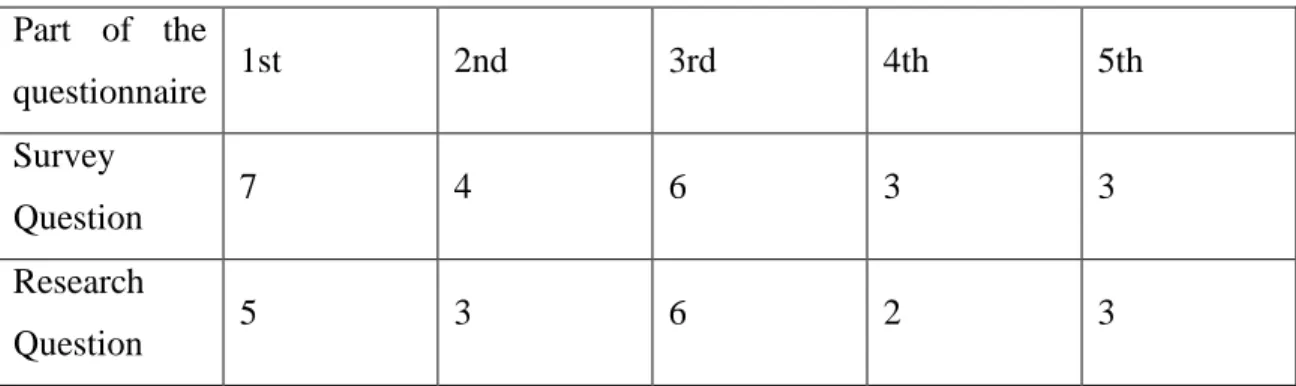
The next step of the survey process is the development of the questionnaire or instrument. All questions were based on Roles and Responsibilities, Artifacts of ISO, CMM and IP method, especially software development standard and software engineering practices and DSDM. The next step of the survey process involves the implementation of the data collection and data processing plans developed in the previous steps [6].
The percentage of different software development standards and software engineering practices used by respondents. The most used practices for CMM are 40 hour week (65%) and pair programming (67%) as shown in Table-7.1, both of which can be used in any software development process model, whether agile or traditional [26]. Table-6.4 shows the results of the IP's basic activities for the software development process.
The survey has come up with a decision that different types of Software Development Standards and Software Engineering Practice a Case Study of Bangladesh methods are used in IT Companies in Bangladesh. The purpose of this study was to develop an understanding of the application of software development standards and development methodologies to software engineering practices in the perspective of the software industry in Bangladesh. Discussed early, Software Development Standards and Software Engineering Practices are considered as one of the most popular software design and development methodologies [28].
Overall, however, based on the results of this study, it could be argued that embedded software development organizations appear to be able to adopt the three Software Development Standard and Software Engineering Practices methods, namely ISO, CMM and IP and their individual practices . in their projects and report quite positive results from their application [26]. Our research found that companies perceive software development practices and this is due to the need to know more about the usability of software development practices. Available at: https://web.stanford.edu/group/scip/avsgt/Dave_thesis.pdf [2] Importance of processes and standards in software development.
7] Andrew Begel, Nachiappan Nagappan, "Use and Perception of Agile Software Development in an Industrial Context, an Exploratory Study", Conference Paper, p. 1-11, October 2007. Available at: https://en.wikipedia.org/ wiki/Software_license [16] Fact Sheet Management of intellectual property rights in software development Available at: .. https://www.iprhelpdesk.eu /sites/default/files/newsdocuments/Intellectual%20Property%20Rights%20Ma nagement%20in%20Software%20Developments_updated .pdf 17] Five Key Intellectual Property Issues in Software Development Contracts - From the Experts - "Daniel C. Glazer and Arianne de Govia".
Available at: https://www.appsfresh.com/blog/how-to-avoid-copyright-infringement-when-reskinning- your-app/ .. 20] M.M.M.Safwan, Thavarajah G., Vijayarajah N., K. Senduran, C.D. Manawadu “An Empirical Study of Agile Software Development Methodologies:. 24] Sriram Rajagopalan, Saji K Mathew, “Choosing Agile Methodologies in Software Development: A Vendor Perspective”, Journal of International Technology and Information Management, Vol. 25, p.
![Figure 2.4: Design and Development Documentation [6]](https://thumb-ap.123doks.com/thumbv2/filepdfnet/10925585.0/24.918.141.823.107.680/figure-2-4-design-development-documentation-6.webp)
![Figure 3.4: Capability Maturity Model (CMM) Levels [12]](https://thumb-ap.123doks.com/thumbv2/filepdfnet/10925585.0/39.918.186.629.431.854/figure-3-capability-maturity-model-cmm-levels-12.webp)