EFFECT OF INTEGRATED NUTRIENT MANAGEMENT ON THE GROWTH AND YIELD OF BROCCOLI (Brassica oleracea L. var. italica)
LAILA YESMIN
DEPARTMENT OF SOIL SCIENCE
SHER-E-BANGLA AGRICULURAL UNIVERSITY DHAKA-1207
JUNE 2021
EFFECT OF INTEGRATED NUTRIENT MANAGEMENT ON THE GROWTH AND YIELD OF BROCCOLI (Brassica oleracea L. var. italica)
BY
LAILA YESMIN REG. NO. 14-05964
A Thesis
Submitted to The Department of Soil Science, Faculty of Agriculture
Sher-e-Bangla Agricultural University, Dhaka In partial fulfillment of the requirements for the degree of
MASTERS OF SCIENCE (MS) IN
SOIL SCIENCE
SEMESTER: JANUARY-JUNE, 2021 APPROVED BY:
……...……….………. ………
Prof. Dr. Alok Kumar Paul Prof. Dr. Md. Asaduzzaman Khan Department of Soil Science Department of Soil Science
SAU, Dhaka SAU, Dhaka
Supervisor Co-supervisor
………
Prof. A. T. M. Shamsuddoha Chairman
Department of Soil Science SAU, Dhaka
Department of Soil Science
Sher-E-Bangla Agricultural University Sher-E-Bangla Nagar
Dhaka-1207
Ref: - ... Date:………
CERTIFICATE
This is to certify that the thesis entitled “
EFFECT OF INTEGRATED NUTRIENT MANAGEMENT ON THE GROWTH AND YIELD OF BROCCOLI (Brassica oleracea L. var. italica)
” submitted to the Department of Soil Science, Sher-e-Bangla Agricultural University, Dhaka, in partial fulfillment of the requirements for the degree of MASTER OF SCIENCE inSOIL SCIENCE
, embodies the result of a piece of bona fide research work carried out byLAILA YESMIN
, Registration No. 14-05964 under my supervision and guidance. No part of the thesis has been submitted for any other degree or diploma.I further certify that any help or source of information, received during the course of this investigation has been duly acknowledged.
Dated: June, 2021 Dhaka, Bangladesh
Prof. Dr. Alok Kumar Paul Department of Soil Science Sher-e-Bangla Agricultural University
Sher-e-Bangla Nagar, Dhaka- 1207 Supervisor
DEDICATED TO-
My Beloved Parents and Respected
Research Supervisor
ACKNOWLEDGEMENTS
All praises and compliments are due to the Supreme Regulator and Ruler of the Universe,
“Almighty Allah” for the blessing upon the successful accomplishment of education, to complete the research work and thesis leading to Master of Science (MS) in Soil Science.
The author likes to express his heartfelt respect, deep sense of gratitude and profound indebtedness to his reverend Supervisor Prof. Dr. Alok Kumar Paul, Department of Soil Science, Sher-e-Bangla Agricultural University, Dhaka for his scholastic guidance, valuable advice, important suggestions, affection feelings, endless encouragement, and supervision throughout this research work and in preparing this thesis.
The author also extends his sincere appreciation, profound regards and cordial thanks to his Co-supervisor, Prof. Dr. Md. Asaduzzaman Khan, Department of Soil Science, Sher-e- Bangla Agricultural University, Dhaka for his kind help, constructive advise, fruitful criticism, creative suggestion, necessary correction and encouragement during the compilation of this thesis.
The author feels to express his heartfelt thanks to the honorable chairman of Soil Science Prof. A. T. M. Shamsuddoha along with all other teachers and staff members of the department of Soil Science, Sher-e-Bangla Agricultural University, Dhaka.
The author wishes to express his wholehearted thanks to his well-wishers, classmates Sudipto Chandan, Md. Rasel Kabir, Md. Abdus Samad, for their keen help as well as heartiest co- operation and encouragement.
June, 2021 The Author
EFFECT OF INTEGRATED NUTRIENT MANAGEMENT ON THE GROWTH AND YIELD OF BROCCOLI (Brassica oleracea L. var. italica)
BY
LAILA YESMIN ABSTRACT
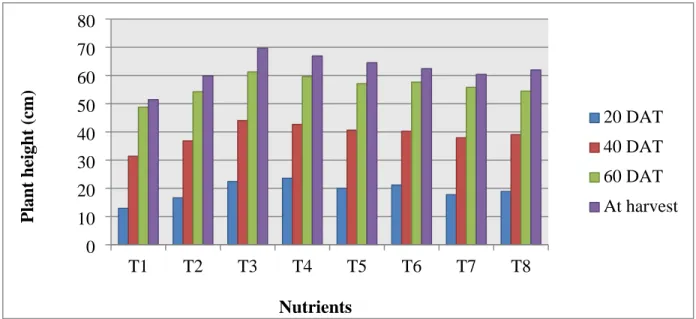
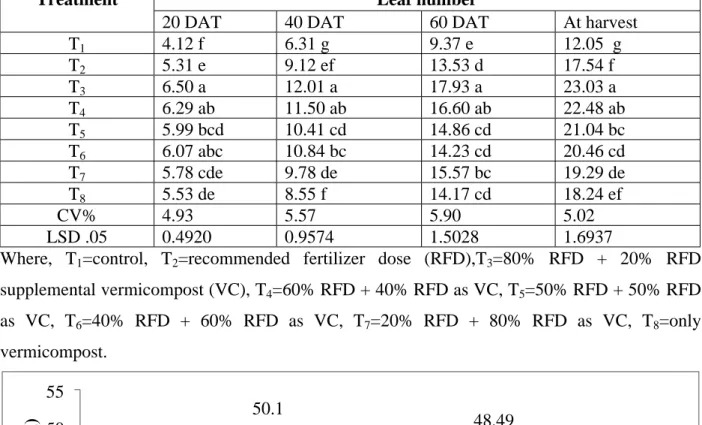
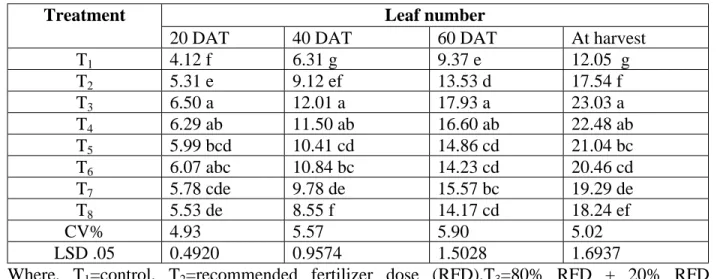
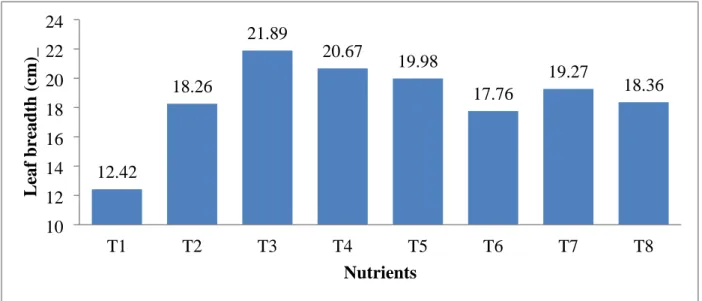
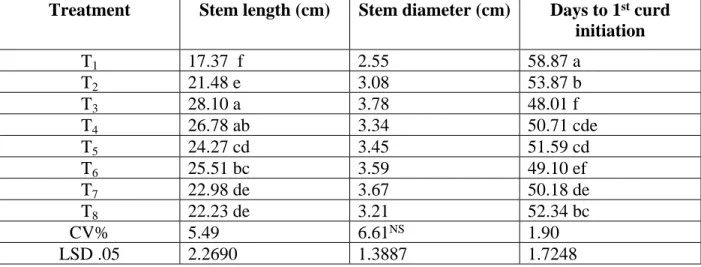
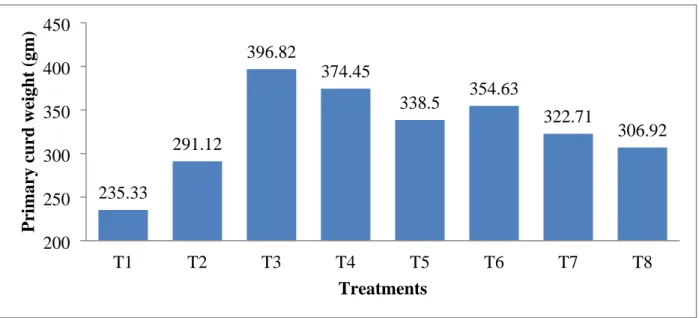
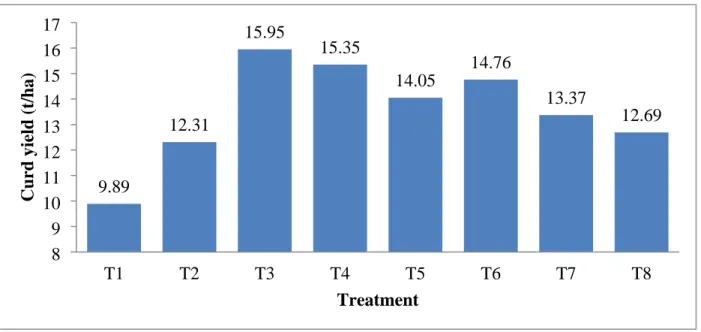
The experiment was conducted at the Research Farm, Sher-e-Bangla Agricultural University, Dhaka during the period from October 2019 to February 2020 to find out the effect of integrated nutrient management the growth and yield of broccoli. The experiment consisted of eight treatments viz. T1=control, T2=recommended fertilizer dose (RFD), T3=80% RFD + 20% RFD supplemental vermicompost (VC), T4=60% RFD + 40% RFD as VC, T5=50% RFD + 50% RFD as VC, T6=40% RFD + 60% RFD as VC, T7=20% RFD + 80% RFD as VC, T8=only vermicompost. BRRI broccoli-1 was used as a test crop for the experiment. The experiment was laid out following Randomized Complete Block Design (RCBD) with three replications. Results showed that the highest plant height (44.02cm, 61.25cm and 69.71cm) of broccoli at 40, 60 DAT and at harvest, number of leaves (6.50, 12.01, 17.93 and 23.03) at 20, 40, 60 DAT and at harvest, leaf length (50.10 cm), leaf breadth (21.89 cm), stem length (28.10 cm), stem diameter (3.78 cm), the highest primary curd weight (396.82 g), numbers of secondary curds (3.87), secondary curd weight (68.58 g) and yield (15.95 t/ha) were recorded from T3 treatment. The lowest results on the respected parameters were found from T1 (No fertilizer; control). The highest value of the N, P and K content in post-harvest soil was obtained from treatment T3 and T1 (No fertilizer; control) treated soil showed the lowest.
LIST OF CONTENTS
Chapter Title Page No.
ACKNOWLEDGEMENT I
ABSTRACT II
LIST OF CONTENTS III-V
LIST OF TABLE VI
LIST OF FIGURE VII
LIST OF APPENDICES VIII
LIST OF PLATES IX
ABBREBRIATION AND ACRONYMS X
I INTRODUCTION 01-03
II REVIEW OF LITERATURE 04-25
III MATERIALS AND MATHODS 26-32
3.1 Experimental site 26
3.2 Climate 26
3.3 Soil 26
3.4. Plant Materials 27
3.5. Raising of seedlings 27
3.6 Land preparation 27
3.7. Treatments of the experiment 27
3.8 Fertilizer application 28
3.9. Experimental design and layout 28
3.10 Transplanting and after care 28
3.11 Gap filing 28
3.12 Intercultural operation 29
3.12.1 Weeding 29
3.12.2 Irrigation 29
3.12.3 Pest and Disease control 29
3.13 Harvesting 29
Chapter Title Page No.
3.14 Methods of Data collection 30
3.15.1 Plant height (cm) 30
3.15.2 Number of leaves per plant 30
3.15.3 Length of leaf (cm) 30
3.15.4 Breadth of leaf (cm) 31
3.15.5 Days required for curd initiation 31
3.15.6 Length of stem 31
3.15.7 Diameter of stem 31
3.15.8 Weight of primary curd (g) 31
3.15.9 Weight of secondary curd (g) 31
3.15.10 Number of secondary curds 32
3.15.11 Yield per hectare (ton) 32
3.15.12 Post harvest soil sampling 32
3.16 Post harvest soil analysis 32
3.16.1 Soil pH 32
3.16.2 Organic matter 32
3.16.3 Total nitrogen 33
3.16.4 Available phosphorus 33
3.16.5 Exchangeable potassium 34
3.17 Statistical analysis 34
Chapter Title Page no.
IV RESULTS AND DISCUSSION 33-42
4.1 Plant height 33
4.2 Number of leaves per plant 34
4.3 Leaf length 36
4.4 Leaf breadth 36
4.5 Length of stem 36
4.6 Diameter of stem 37
4.7 Days to require for curd initiation 37
4.8 Weight of primary curd 38
4.9 Number of secondary curd per plant 38
4.10 Secondary curd weight 39
4.11 Yield per hectare 39
4.12 pH 40
4.13 Organic matter 40
4.14 Total N 41
4.15 Available P 41
4.16 Exhalable K 41
4.17 Available S 41
V SUMMARY AND CONCLUSION 43-44
REFERENCES 45-56
APPENDICES 57-60
LIST OF TABLES
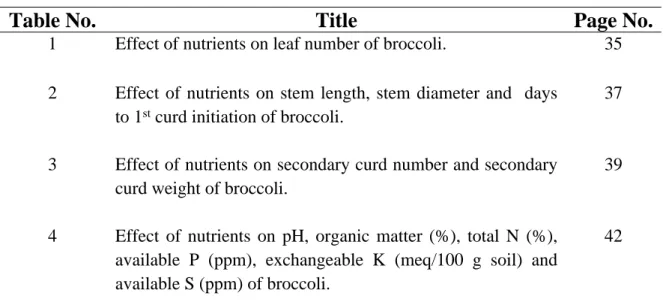
Table No. Title Page No.
1 Effect of nutrients on leaf number of broccoli. 35 2 Effect of nutrients on stem length, stem diameter and days
to 1st curd initiation of broccoli.
37
3 Effect of nutrients on secondary curd number and secondary curd weight of broccoli.
39
4 Effect of nutrients on pH, organic matter (%), total N (%), available P (ppm), exchangeable K (meq/100 g soil) and available S (ppm) of broccoli.
42
LIST OF FIGURES
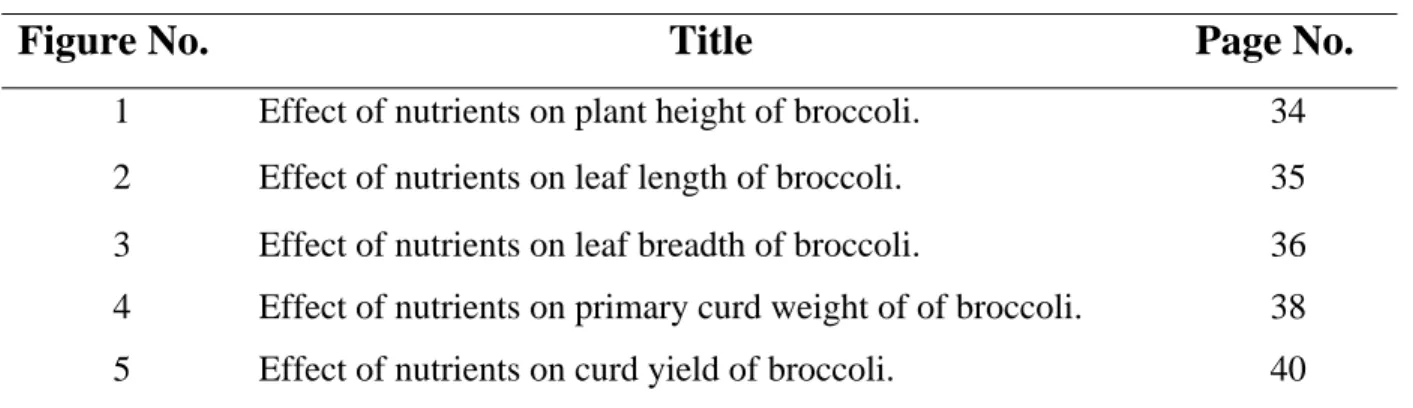
Figure No. Title Page No.
1 Effect of nutrients on plant height of broccoli. 34
2 Effect of nutrients on leaf length of broccoli. 35
3 Effect of nutrients on leaf breadth of broccoli. 36
4 Effect of nutrients on primary curd weight of of broccoli. 38
5 Effect of nutrients on curd yield of broccoli. 40
LIST OF APPENDICES
Appendix No.
Title Page No.
I Map showing the experimental site 57
II Characteristics of Sher-e-Bangla Agricultural University soil is analysed by Soil Resources Development Institute (SRDI), Khamar Bari, Farmgate, Dhaka.
58
III Monthly record of annual temperature, rainfall, relative humidity, soil temperature and sunshine of the experimental site during the period from September 2019 to March 2020 (Site-Dhaka).
59
IV Analysis of variance of the data on plant height at different days after transplanting (DAT) of broccoli as influenced by different nutrients.
59
V Analysis of variance of the data on leaf number at different days after transplanting (DAT) of broccoli as influenced by different nutrients.
59
VI Analysis of variance of the data on leaf length (cm), leaf breadth (cm), days to 1st curd initiation, stem length (cm) and stem diameter (cm)of broccoli as influenced by different nutrients.
60
VII Analysis of variance of the data on primary curd weight (gm), number of secondary curd, secondary curd weight (gm) and curd yield (t/ha) of broccoli as influenced by different nutrients.
60
VIII Analysis of variance of the data on pH, organic matter (%), total N (%), available P (ppm), exchangeable K (meq/100 g soil) and available S (ppm) of broccoli as influenced by different nutrients.
60
LIST OF PLATES
Plate No. Title Page No.
1 Experimental view 61
2 Harvesting Stage 62
3 Processing Stage 63
LIST OF ABBREVIATIONS AND ACRONYMS BARI = Bangladesh Agricultural Research Institute
AEZ = Agro-Ecological Zone
BCR = Benefit cost ratio
BBS = Bangladesh Bureau of Statistics
cm = Centimeter
m = Meter
DAT = Days after sowing
M. S. = Master of Science
et al = and others (at elli)
VC = Vermicompost
SAU = Sher-e-Bangla Agricultural University
Kg/ha = Kilogram/hectare
g = Gram
ml/l = Milliliter per liter
LER = Land Equivalent Ratio
m2 = Meter squares
LSD = Least Significant Difference
CV% = Percent of coefficient of Variation
MoP = Muriate of Potash
PGR = Plant growth regulator
RCBD = Randomized Complete Block Design
TSP = Triple Super Phosphate
t/ha = ton/hectare
% = Per cent
CHAPTER I INTRODUCTION
Broccoli (Brassica oleracea L. var. italica) is the most important herbaceous biennial “Cole”
crop under Brassicaceae family which is one of the leading vegetables in the world. Broccoli originated in west Europe. There are three classes of sprouting broccoli, i.e. green, white and purple, but the green type is the most popular broccoli (Shoemaker and Teskey, 1962). In Bangladesh it is planted in early September to late November (Ahmad and Shahjahan, 1991).
Broccoli is generally grown in cool winter months in Bangladesh as an annual crop. It is one of the uncommon winter vegetables in Bangladesh which is a horticultural hybrid closely related to cauliflower and is considered as a commercial crop in India (Nonnecke, 1989). Its cultivation in Bangladesh has not been extended much beyond the farms of different agricultural organization.
This is mainly due to the lack of awareness regarding its nutritive value and appropriate method of production technology. It is fairly rich in vitamin A, ascorbic acid and contains appreciable amounts of calcium, phosphorus, riboflavin, thiamin, niacin and iron. Watt (1983) reported that broccoli is more nutritious than any other cole crops such as cabbage, cauliflower and kohlrabi.
On the other hand, broccoli is environmentally better adapted than cauliflower, and reported to withstand higher temperature than cauliflower (Rashid, 1976). Its wider environmental adaptability, higher nutritive value, good taste and less risk to crop failure due to various biotic and abiotic factors indicates that there is enough scope for its promotional efforts.
Unfortunately, the average yield of broccoli is quite low in Bangladesh in comparison to other broccoli growing countries of the world. Imbalanced fertilizer application is one of the major causes of low yield of broccoli in Bangladesh. Soil fertility status is a major constraint for higher crop production in Bangladesh. The increasing land use intensity without adequate and balanced use of chemical fertilizers and with little or no use of organic fertilizer have caused severe fertility deterioration of our soils resulting in stagnation or even decline of crop productivity. The excessive use of urea, imbalance use of phosphate and potassium fertilizers in the field of horticulture and agronomic crops without considering the other micro or macronutrients are a common practice in Bangladesh. Due to the deterioration of soil fertility and lack of sufficient amount of organic matter in the soil, the yield of vegetables, fruits and other crops are not satisfactory. A balanced supply of essential nutrients is indispensable for optimum plant growth.
Continuous use of large amounts of only N, P and K is expected to influence not only the availability of other nutrients to plants because of possible interaction between them but also the build of some of the nutrients creating imbalances in soils and plants leading to decreased fertilizer use efficiency (Nayyar and Chhibba, 1992). Since fertile soil is the fundamental resource for higher crop production, its maintenance is a prerequisite for long-term sustainable crop productivity.
The application of different fertilizers and manures influences the physical and chemical properties of soil and enhance the metabolic activities of soil. The organism and chemical fertilizers are also positively correlated with soil porosity, enzymatic activity and CO2 production. Organic matter stimulates soil biological activity. Among the different sources of organic manure, vermicompost is important in maintaining and enhancing the quality of environment and conserving resources for sustainable agriculture (Simanaviciene et al., 2001).
Taking into account the environmental and public health benefits of vermicompost farming, there is a considerable potential to maximize the use of vermicompost to increase yield and to reduce unnecessary usages of chemical fertilizer for crops production in Bangladesh.
Vermicompost can only be done on compostable or decomposable organic matter. The compost prepared by using earthworms is called vermicompost. Vermicompost is the outcome of earthworm activities. Vermicompost is very important aspect of organic farming package today.
It is easy to prepare, has excellent properties and is absolutely harmless to environment, soil and plants. Vermicompost is generally more beaded, crisped and micronized, that binds soil particles and contains several enzymes, microorganisms and plant nutrients. It has many functions, namely, micronizing soil particles to medium sized particles, re-distribution of nutrients, reduce runoff of nutrients from surface soil, increasing availability of phosphorous, potassium and nitrogen to plants and mixing of various nutrients. It can also be an important agent of pedogenesis.
Vermicompost is a potential source due to the presence of readily available plant nutrient, growth enhancing substances and number of beneficial micro-organisms like N fixing, P solubilizing and cellulose decomposing organisms (Sultan, 1997). About 106 bacteria, 105 fungi and 105 actinomycetes were reported to be present in per gram vermicompost. Vermicompost
contains 2.29 times of more organic carbon; 1.76 times total N2, 3.02 times phosphorus and 1.60 times potassium than natural compost. Earthworm decreased the C: N ratio from 14.21 to 10.11 on an average 56.03% of organic waste can be converted into vermicompost by the activities of earthworms in short time (Sohrab and Sarwar, 2001). It was showed that warm-worked composts have better texture and soil enhancing properties, hold typically higher percentages of N, P and K (Zahid, 2001). Harris et al. (1990) reported that earthworm excreta are an excellent soil conditioning material with higher water holding capacity for releasing N2 in the soil.
Vermicompost is important for the farmers to get better quality crop yields.
Integrated use of vermicompost and chemical fertilizers would be quite promising in providing greater stability in production and also in maintaining better soil fertility. Therefore, it is necessary to use fertilizer and vermicompost in an integrated way in order to obtain sustainable yield without affecting soil fertility.
Based on above points the present study was undertaken with the following objectives:
(a)To observe the effect of intregated nutrient management on the growth and yield of broccoli (b) to find out the optimum dose or ratio of chemical fertilizer and vermicompost for maximum growth and yield of broccoli
CHAPTER II
REVIEW OF LITERATURE
Rabbee et al. (2020) carried out at Agricultural Research field, Noakahali Science and Technology University, Noakhali, Bangladesh during the period from September 2018 to February 2019 to find out the effects of Vermicompost and Farmyard manure growth and yield of Broccoli. From the study, it could be revealed that significant effect on growth and yield contributing characters of Broccoli to vermicompost application. Recorded data regarding on plant height, number of leaves/plant, leaf length, leaf diameter, plant spread, 50% curd initiation, 50% curd maturation, curd diameter, marketable curd weight, net curd weight and yield/plot were superior to vermicompost compared to farmyard manure than control. Finally, they stated that using of vermicompost treated plants gave better growth and yield contributing characters of Broccoli in contemporary with other treatments.
Singh et al,. (2020) carried out an experiment entitled “Integrated nutrient management studies on growth and yield of Broccoli (Brassica oleracea var. italica)” during 2018-19 at vegetable research farm of Lovely Professional University, Phagwara, Punjab, India. The treatment consisted of T0: Control, T1: 100 % RDF i.e. N: P: K @120:60:60 kg/ha, T2: 20 t/ha FYM + 50
% RDF, T3: 20 t/ha FYM + 25 % RDF, T4: 10 t/ha FYM + 50% RDF, T5: 10 t/ha FYM + 25%
RDF, T6: 10 t/ha V.C. + 50% RDF, T7: 10 t/ha V.C. + 25% RDF, T8: 5 t/ha V.C. + 50% RDF, T9: 5 t/ha V.C. + 25% RDF. Application of integrated nutrient management significantly increased the growth and yield of broccoli. The treatment T6 (10 t/ha Vermicompost + 50%
RDF) recorded maximum plant height (39.53 cm and 54.87 cm) and maximum number of leaves/plant (8.20 and 13.60) at 45 and 60 days after transplanting respectively. This treatment also recorded the earliest days to head initiation (57.13 days) and first harvesting (80.07 days), maximum head weight (190 g), head diameter (110.33 mm), yield/plot (4.50 kg) and yield/ha (50.29 q) which was followed by treatment T2 (20 t/ha FYM + 50% RDF). They concluded that, among all the treatments under study, the treatment T6 the best for obtaining better growth and optimum yield.
A field experiment was conducted by Mohanta et al., (2018) in the research farm of All India Coordinated Research Project on Vegetable, Orissa University of Agriculture and Technology, Bhubaneswar during 2014-15 to study the integrated nutrient management in Sprouting Broccoli cv. Shayali for growth, yield, quality and economics in a randomised block design with 10 treatments. The soil test based recommended fertiliser dose applied was NPK @ 200: 50: 150 kg/ha. The Treatment, T7 i.e., 50% NPK + Vermicompost @2.5t/ha recorded maximum values for plant height (51.56cm), plant spread N-S (61.63cm) and E-W (64.91cm), number of leaves per plant (22.27), leaf area (405.45cm2), leaf length (23.15cm), leaf width (18.18cm), days to 50% head initiation (50.67days) and days to first harvest (51.00). The treatment, T7 also recorded highest head girth (42.76cm), head diameter (14.16cm), terminal head weight (327.57g), head volume (595.67 cc), gross yield (233.56 q/ha), marketable yield (163.63 q/ha), vitamin C (80.24 mg/g), dry matter (11.77%), gross returns (Rs.700680.00/ha ), net returns (Rs. 525510.00/ha) and benefit cost ratio (4.0). This was followed by treatment T9 (50% NPK +poultry manure @ 2.5t/ha). Among all the treatments, the Treatment T7 i.e., application of 50% recommended dose of NPK/ha with 2.5 tonnes of vermicompost in sprouting broccoli was found to be the best for obtaining better growth, optimum yield, better quality produce, highest net returns as well as cost benefit ratio and is recommended for Odisha condition.
Dipika et al., (2015) conducted an experiment to evaluate the response of vermicompost and inorganic fertilizers on growth, yield and quality of sprouting broccoli during 2011-13 at UBKV, Pundibari, West Bengal, India. The treatments comprised of five levels of vermicompost (0, 2.5, 5, 7.5 and 10 t ha-1) and four levels of inorganic fertilizers (0, 50, 75 and 100% of recommended dose). They reported that vermicompost offers great potential as organic amendment and it can be used beneficially in combination with inorganic fertilizers for broccoli cultivation. Combined application of 10 t ha-1 vermicompost and 100% recommended inorganic fertilizers proved its superiority in enhancing the growth, yield and quality attributes of broccoli. A judicious integration of vermicompost and recommended inorganic fertilizers seems to be appropriate for sustainable production of sprouting broccoli under eastern Himalayan region.
Chatterjee et al. (2013) conducted a field experiments at UBKV, Pundi bari, West Bengal, India to access the influence of different organic amendments on growth, head yield and nitrogen use efficiency in cabbage. The experiment comprised of 15 different nutrients source combining
inorganic fertilizers, organic manures (farmyard manure and vermicompost) and Azophos biofertilizers were laid out in RBD with 3 replications. Growth and head attributes of cabbage were significantly influenced by different nutrient combination and vermicompost emerged as better organic nutrient source over farmyard manure. Inoculation with biofertilizers exerted more positive result over uninoculated treatments. The nutrient schedule comprising of higher amount of vermicompost (5 t/ha) along with 75% of recommended inorganic fertilizers in presence of biofertilizer inoculation emerged as potential nutrient source and resulted in many fold improvement in the form of vigorous growth, advanced head maturity, maximum curding percent and highest head yield as compared other nutrient combination. The different parameters of nitrogen use efficiency (PFP, AE, PUE and AR) were markedly enhanced by the same nutrient combination.
Pour et al. (2013) conducted an experiment to evaluate the possible effects of different concentrations of vermicompost on the growth and physiology of cabbage seedling (Brassica oleracea var. capitata). Vermicompost were used at five different levels (0, 10%, 20%, 40% and 80%). The seeds were planted in five different prepared soil mixtures with vermicompost and gouped in five different treatment groups including control (C), vermicompost of 10% (V10), vermicompost of 20% (V20), vermicompost of 40% (V40) and vermicompost of 80% (V80).
The utilization of different levels of vermicompost had significantly enhancing effects on the Zn and auxin contents in leaf tissues. The results indicated that there were significantly positive correlations between the Zn and auxin contents. The applied vermicompost affected the leaf characteristics including the number of produced leaves, leaf area, fresh and dry mass. These findings indicated that the effects of vermicompost on plant growth and development not only were nutritional but also hormonal and biochemical and the utilization of high levels of vermicompost, especially at seedling stage, neither is not only economic but also may have adverse effects on the plant growth and development.
Getnet and Raja (2013) conducted an experiment during October 2011 to February 2012 to study impact of vermicompost on growth and development of Cabbage, Brassica oleracea Linn. and their sucking pest. Vermicompost was applied at the rate of 25, 50, 100 and 200 gm/plant individually. Each application 10 plants were selected and vermicompost application was
continued on bimonthly basis. Totally 40 plants were used for control group in which 10 plants were selected randomly. Total number of leaves per plant; leaf length and width; plant stand height and root length; cabbage head round distance and weight and aphid population built-up were the parameters studied in experimental and control cabbage plants. Significant differences (p<0.05; LSD) were observed in the growth and development and pest infestation level between vermicompost applied and control plants. The number of plant stand height, cabbage head, leaves of cabbage were also significantly different (p<0.05; LSD) in experimental cabbage compared to control. Maximum number of cabbage plant was infested by aphid in control than experimental groups. In conclusion vermicompost have significant impact on cabbage growth promotion and reduce the aphid infestation.
Rai et al. (2013) studied an experiment to assess the effect of vermicompost, integrated with different rates of recommended doses of NPK for growth, yield and quality of cabbage. The investigation was laid out in RBD with ten treatments viz., T1: 100% NPK (RR), T2:75% NPK (RR)+VC 3 ton/ha, T3:75% NPK (RR)+VC 2 ton/ha, T4:75%NPK (RR)+VC 1 ton/ha, T5:75%
NPK (RR), T6:50% NPK (RR)+VC 3 ton/ha, T7:50% NPK (RR)+VC 2 ton/ha, T8: 50% NPK (RR)+VC 1 ton/ha, T9:50% NPK (RR) and T10: VC 5 ton/ha. The results revealed that combined use of vermicompost and recommended dose of NPK were statistically significant towards the growth and yield of cabbage. The combined use of recommended dose of 75% NPK (RR) +VC 3 ton/ha, had recorded the maximum gross weight of the plant and net weight of the head.
Application of vermicompost along with inorganic fertilizers reduced the days taken to maturity.
The minimum days to 100% head maturity was also obtained from combined application of vermicompost. Most of the quality attributes like, total protein, total sugar, starch and ascorbic acid were found to be highest with 75% NPK (RR)+VC 3 ton/ha vermicompost except total chlorophyll content. It was concluded that application of vermicompost in combination with inorganic NPK fertilizers increased the productivity of cabbage besides sustaining soil fertility status.
Ghuge et al. (2007) conducted a field experiment during 2002-03 in Parbhani, Maharashtra, India to assess the effect of combined use of organic and inorganic nutrients sources on the growth and yield of cabbage. The experiment was consisted of 10 treatments. Among the
treatments 50% RDF + 50% Vermicompost i.e. treatment T2 gave the maximum plant spread, head circumference and head weight.
Azarmi et al. (2008) in their study analyzed the effects of vermicompost on growth, yield and fruit quality of tomato (Lycopersicon esculentum var. super beta) in a field condition. The experiment was a randomized complete block design with four replications. The different rates of vermicompost (0, 5, 10 and 15 t ha-1) was incorporated into the top 15 cm of soil. During experiment period, fruits were harvested twice in a week and total yield were recorded for two months. At the end of experiment, growth characteristics such as leaf number, leaf area and shoot dry weights were determined. The results revealed that addition of vermicompost at rate of 15 t ha-1 significantly (at p < 0.05) increased growth and yield compared to control. Vermicompost with rate of 15 t ha-1 increased EC of fruit juice and percentage of fruit dry matter up to 30 and 24%, respectively. The content of K, P, Fe and Zn in the plant tissue increased 55, 73, 32 and 36% compared to untreated plots respectively. The result of our experiment showed addition of vermicompost had significant (p <0.05) positive effects on growth, yield and elemental content of plant as compared to control.
An experiment was conducted by Jahan et al. (2014) at experimental field of the Soil Science-1 Division, Bangladesh Agricultural Research Institute, Gazipur, Bangladesh during the period from October 2008 to March 2009 to study the effect of vermicompost and conventional compost on the growth and yield of cauliflower. The experiment comprised of twelve treatments viz. T1: 100% Recommended Dose of Chemical Fertilizer (RDCF; RDCF= N250P35K65S40 Zn5B1 kgha-1); T2: 80% RDCF; T3: 60% RDCF; T4: 100% RDCF + Vermicompost @ 1.5 tha-1; T5: 80%
RDCF + Vermicompost @ 3 tha-1; T6: 60% RDCF +Vermicompost @ 6 tha-1; T7: Vermicompost
@ 6 tha-1; T8: 100% RDCF +Conventional compost @ 1.5 tha-1; T9: 80% RDCF +Conventional compost @ 3 tha-1; T10: 60% RDCF + Conventional compost @ 6 tha-1; T11: Conventional compost @ 6 tha-1 and T12: Control (No fertilization) following Randomized Complete Block Design with three replications. Maximum plant height (49.4 cm), number of leaves plant-1 (16.3), circumference of curd (46.5 cm), curd height (20.7 cm), total weight (1.60 kg plant-1), marketable weight (13.0 kg plant-1), curd yield (37.6 tha-1) and stover yield (29.7 tha-1) were found from T4 which was statistically identical with or followed by T8 and T5. From the
experiment it was found that vermicompost was better that conventional compost in combination with chemical fertilizers.
John et al. (2013) studied the effect of vermicompost on the growth and yield of Capsicum annum. Their study revealed that the total macronutrients and micronutrients showed elevated levels in vermicompost when compared to control. The vermicompost applied plant Capsicum annum showed an increased shoot length and number of leaves when compared to the inorganic fertilizer applied plant.
Yoldas et al. (2008) conducted an experiment to find out effect of nitrogen on yield, quality, and nutrient content in broccoli heads. Treatments consisted of 0, 150, 300, 450, and 600 kg N/ha.
Application of nitrogen rates significantly increased yield, average weight of main and secondary heads, and the diameter in broccoli. The highest total yield (346.31 q/ha) was obtained at 300 kg N/ha. Potassium (K), calcium (Ca), magnesium (Mg), iron (Fe), and zinc (Zn) content increased with increase in nitrogen treatments but, phosphorus (P), copper (Cu), manganese (Mn), boron (B), and sodium (Na) contents were not influenced. It also, removed nutrients by broccoli head.
Ouda and Mahadeen (2008) conducted an experiment with nitrogen @ 0, 30 and 60 kg/ha to find out effects of fertilization on growth, yield quality and certain nutrient contents in broccoli. It was reported that head number per plant, chlorophyll content, head diameter and total yield was significantly higher when a combination of organic and inorganic fertilizers was added as compared with their individual addition. Application of 60 kg nitrogen as inorganic fertilizers with 60 tonnes of organic manure per hectare produced the highest broccoli yield (40.05 t/ha), whereas fresh and dry weight of broccoli shoots were not significantly affected by the application of different doses of fertilizers. Leaf macro-(N, P and K) and micronutrient (Fe, Mn and Zn) contents increased with the application of either organic manure or inorganic fertilizer compared to the control.
Giri et al. (2013), at Rampur-Chitwan (Nepal), using Calabrese and Green Sprouting cultivars under different nitrogen dose, found that increasing up to 200 k ha-1 the doses of N, a 33% higher than the used by Puenayan et al. (2010), significant inflorescence yield continued growing (14.5 t ha-1) because of a mayor photosynthates production available for inflorescence filling.
El-Helaly (2012) studied the effects of nitrogen, sulphur and growing seasons on yield and the content of nitrate and vitamin C on broccoli (Brassica oleracea L. var italica). Three N fertilizers (ammonium sulphates, ammonium nitrate and urea) were side-dressed, while two levels of sulphur (0.0 and 0.5%) were sprayed on broccoli plants grown in both spring and fall- winter seasons. It was reported that application of urea as N-source decreased the yield by approximately 13-15% than other N-source.
Cutcliffe et al. (2013) studied the effects of nitrogen @ 0, 40, 80 and 120 kg/fed, phosphorus and potassium and their interaction on vegetative growth, yield and quality as well as chemical composition of broccoli. It was reported that an increase in nitrogen dose up to 80kg/fed considerably improved curd weight. While, dry matter was reduced with increased application of nitrogen led to improve vitamin C and sulforaphane by nitrogen levels up to 120 kg/fed and 40 kg/fed respectively.
A field experiment was conducted by Reddy and Rao (2004) to study the Growth and yield of bitter gourd (Momordica charantia L.) as influenced by vermicompost and nitrogen management practices in Hyderabad, Andhra Pradesh, India, consisting of 4 levels of vermicompost (0, 10, 20 and 30 t/ha) and 3 levels of N (20, 40 and 80 kg/ha). Application of vermicompost and N significantly increased the vine length, number of branches, number of fruits per vine and fruit yield/ha. Delayed flowering was observed with higher levels of N and Vermicompost.
Application of 13.8 t vermicompost and 34.18 kg N (through urea)/ha was found beneficial in improving the yield of bitter gourd.
Giri et al. (2013) evaluated the effect of nitrogen rates on growth and yield of two varieties of broccoli i.e. Green sprouting and Calabrese in western chitwan, Nepal using 5 nitrogen levels @ 0, 50, 100, 150 and 200 kg/ha. It was reported that yield was significantly influenced with cultivar and nitrogen. There was increase in curd production up to 200 kg N/ha which was 14.47 t/ha. While, Green sprouting produced 11% higher total curd than another cultivar.
A study was conducted by Reddy and Reddy (2005) in Andhra Pradesh, India during 1996-98 to determine the effects of different levels of vermicompost (0, 10, 20 and 30 t/ha) and nitrogen fertilizer (0, 50, 100, 150 and 200 kg/ha) on the growth and yield of onion (cv. N-53) and their residual effect on succeeding radish in an onion-radish (cv. Sel-7) cropping system. The plant height, number of leaves per plant, leaf area, bulb length, diameter and weight and yield of onion increased significantly with increasing levels of vermicompost (from 10 to 30 t/ha) and nitrogen fertilizer (from 50 to 200 kg/ha). A similar increase in radish yield was also observed due to the residual effect of different levels of vermicompost and nitrogen applied to the preceding crop (onion). Among the various treatment combinations, vermicompost at 30 t/ha + 200 kg N/ha recorded the highest plant height and number of leaves per plant in onion and radish, but was at par with the treatment with vermicompost at 30 t/ha + 150 kg N/ha in terms of bulb length, bulb weight and onion yield recorded.
Mahtoj and Yadav (2005) conducted a pot culture experiment during winter season of 2001-02 to investigate the effect of vermicompost on growth and productivity in vegetables peas. The dry weight in vegetable peas was significantly influenced by vermicompost.
Rodriguez et al., (2000) investigated the effect of vermicompost on plant nutrition, yield and incidence of root and crown rot of gerbera. Vermicompost incorporation at 20%, with or without chemical fertilizer, reduced the incidence of diseased plants and the disease growth rate. The macro and micronutrient content except (K and Mn) were at optimum level in plants treated with 20% vermicompost with or without chemical fertilizer. In contrast, plants from treatments without vermicompost had the lower content of macro and micronutrient, except K and Mn.
Premi et al. ( 2005 ) conducted a field experiment to study the effect of organic and inorganic nutrients on the growth. yield attributes, seed yield and oil content of Indian mustard.
Application of vennicompost at 5.0 t/ha 75% recommended dose of fertilizer (80 kg N and 40 kg P205/ha) recorded maximum plant height. number of primary and secondary branches per plant.
number of siliquae per plant and number of seeds per siliqua, which in turn resulted in higher seed yield. It was at par with farmyard manure at 10.0 t/ha + 75% recommended fertilizer and recommended dose of fertilizer.
Singh et al., (2005) conducted a study to assess the effect of vermicompost on cauliflower productivity and profitability considering soil health under small production systems. The data were gathered through farmer participatory verification trials during 2002-04 in five villages of Rajaulatu Panchayats of Namkum Block in Ranchi district, Jharkhand. It was found that the return per rupee spent in plots with vermicompost was Rs. 3.30, Rs 1.98 in plots applied with chemical fertilizers. The farmer’s reaction on the use of vermicompost was highly positive because of its simplicity and compatibility with the farming system components and with the household internal resources, as well as its cost effectiveness.
Sohrab and Sarwar (2001) conducted an experiment and found that in case of Lady’s finger (okra), the vermicompost had played very effective role in all economic aspects of the vegetables crop. The yield of lady’s finger was 18.40 t ha-1 from the experimental plots treated with vermicomposts in one season. On the 13 contrary, production of 12.43 t ha-1 was estimated on the basis of harvested crop from untreated plots.
A number of field experiments have reported positive effect of quit low application rate of vermicompost to field crop. These applications were comparable with rates that improved growth on the same crops in greenhouse experiment. When cabbage was grown in compressed blocks made from pig waste vermicompost, after transplanting to the field they were larger and more mature at harvest compared to those grown in commercial blocking material (Edwards and burrows, 1988).
An experiment was conducted by Siag and Yadav (2004) in Rajasthan, India, during 1999-2001 to study the effect of vermicompost (0, 1, 2 and 3 t ha-1) and fertilizers (0, 50 and 100%
recommended dose) on mungbean (Vignaradiata) yield. Significant increase in seed yield was observed by the application of vermicompost up to 2 t ha-1 owing to increased secondary branches per plant, pods per plant. Increased in secondary branches and nodules per plant resulted in improved yield attributes and seed yield over the control. Application of vermicompost (2 t ha-1) along with 50% recommended dose of fertilizers (10 kg N and 8.7 kg P ha-1) was found to be the optimum dose for mugbean grown on sandy-loam soil.
Subler (1998) reported that in all growth trials the best growth responses were exhibited when the vermicompost constituted a relatively small portion (10% - 20%) of the total volume of the container medium. Valani (2009) found that 200g of vermicompost applied in plot soils performed better growth in wheat crop than those of 400g and 500g of vermicompost. Sinha et al., (2009) found that vermicompost was applied in the 2nd, 3rd and 4th successive years, the growth and yield of wheat crops increased gradually over the years at the same rate of application of vermicomposti.e @20 Q/ha.
Patil (1995) reported that application of vermicompost at 75 and 95 days after planting helps in obtaining maximum plant height in onion. He also indicated that application of vermicompost and 50% of recommended dose of fertilizer helps in increasing the number of leaves per plant compare to control in potato.
Vadiraj et al. (1998) compared vermicomposts application rates of 5 t/ha up to 25 t/ha in 5 t/ha increments on growth of three varieties of coriander. The responses to the vermicompost applications differed for all three varieties tested. However, he reported RCr-41 produced the most herbage among the three. Maximum herbage yields from all three were occurred 60 days after sowing. The varieties RCr-41, Bulgarian, and Sakalespur Local attained largest yields at vermicompost applications rates of 15 t/ha, 10-25 t/ha, and 20 t/ha, respectively.
Food waste and recycled paper vermicomposts were applied at rates of 10 t/ha and 5 t/ha in 2000 to strawberries (Fragaria spp.). All of the vermicompost treated plots were supplemented with inorganic fertilizers to equalize the available N levels in all plots at transplanting. The marketable tomato yields in the vermicompost (plus fertilizers) plots were consistently and significantly greater than those from inorganic-fertilizer only treated plots. There were significant increases in shoot weights, leaf areas and marketable fruit yields of pepper plants grown in plots that were treated with vermicompost compared to those of plants grown in inorganic fertilizers. Leaf areas, numbers of strawberry suckers, numbers of flowers, shoot weights, and marketable fruit yields of strawberries all increased significantly in response to
supplemented vermicompost applications compared to those from strawberries that received inorganic fertilizers only (Arancon et al, 2004).
Kumhar (2004) conducted an experiment on cauliflower and found that an application of 7.5 t vermicompost increased the volume of curd significantly.
Hiranmai et al. (2003) reported that vermicompost in combination with NPK fertilizers significantly increased the yield parameters of chilli. Whereas, Zhang et al. (2003) observed that compost combined with inorganic fertilizers in tomato significantly increased the early, large fruit and total marketable yields by 10.6, 10.4 and 18.4 per cent more, respectively, than the inorganic fertilizers alone.
Hangarge et al. (2002) observed that when 5 t ha-1 vermicompost combined with chemical fertilizers (N:P:K 25, 50 and 100 percent), there was significant increase in yield attributes of chilli cv. Parbhani Tejas compared to organic and chemical fertilizers alone.
Singh et al. (2002) reported that in broccoli the maximum head diameter was obtained when the dose of NPK was 200 : 120 : 80 kg ha-1 respectively. Similarly, Gupta et al. (2002) observed that application of 200 kg N ha-1 increased leaf growth in cauliflower significantly over control.
Babik and Elkner (2002) conducted an experiment on broccoli and reported that with higher nitrogen fertilization (600 kg ha-1), sugar content increased but level of ascorbic acid decreased and also reported that nitrate content in broccoli heads also increased with higher nitrogen does.
Hangarge et al. (2002) observed that when 5 t ha-1 vermicompost combined with chemical fertilizers there was significant increase in growth attributes of chilli cv. Parbhani Tejas compared to organic and chemical fertilizers alone.
Naidu et al. (2002) obtained highest fruit girth, 50% flowering and benefit :cost ratio of brinjal cv. JB-64 with 75:35:0 kg ha-1 NPK along with organic manures (FYM, poultry manure and vermicompost).
Karitonas (2001) reported that an increased level of N supply (60 to 300 kg ha-1) slightly reduced the vitamin C content from 83 to 73 mg/100 g of fresh weight in broccoli flowers and also improved the chlorophyll contents in florets.
Patil and Biradar (2001) obtained the highest fruit yield (19.12 q ha-1) of chilli cv. Byadgikaddi with the application of 200 per cent RDF + FYM +VC. The N, P and K uptake also increased with the increase in nutrient levels. The different levels studied were 100 per cent recommended dose of fertilizer (150:75:75) kg ha-1 + farm yard manure 10 t ha-1, 100 per cent RDF + FYM + vermicompost @ 2.5 t ha-1, 150 per cent RDF + FYM + VC, 200 per cent RDF +FYM + VC.
While, Sharu and Meerabai (2001) recorded highest fruit yield (9.66 t ha-1) with 50 per cent poultry manure + 50 per cent inorganic N.
Jana and Mukhopadhyay (2001) concluded that increase in nitrogen levels upto 150 kg N ha-1 increased plant height, leaf length, leaf width, days to curd initiation days to curd maturity and curd diameter in cauliflower.
Samawat et al. (2001) reported that vermicompost had a significant effect on number of fruits in tomato. In 100 per cent vermicompost treatment, fruit numbers were four times more than the control treatment.
Shreeniwas et al. (2000) conducted a field experiment on ridge gourd and observed that the increasing levels of vermicompost (0, 5, 10 and 15 t ha-1) increased the fruit weight and fruit volume.
Atiyeh et al. (2000) conducted an experiment in which tomatoes were grown in a standard commercial greenhouse container medium (Metro- Mix 360) considered as control, substituted with 10, 20, 30, 40, 50, 60, 70, 80, 90 and 100 per cent (by volume) pig manure vermicompost.
They obtained highest marketable yield (5.1 kg per plant) and weight of fruit in substitution of Metro Mix 360 with 20 per cent vermicompost. Substitution of Metro-Mix 360 with 10, 20 and 40 per cent vermicompost reduced the proportion of fruit that were non-marketable and produced larger size (diameter > 6.4 cm) than small size (diameter < 5.8 cm) fruits.
Singh and Singh (2000) reported that the highest net head yield and weight were obtained when nitrogen (150 kg ha-1) and potassium (50 kg ha-1) were applied in broccoli.
Das et al. (2000) reported that the highest yield in cabbage was obtained by the application of NPK fertilizers at the rate of 120, 90 and 75 kg ha-1 respectively.
Rutkauskiene and Poderys (1999) reported that the highest yield of curd in cauliflower crop was obtained by use of 240 kg N ha-1. Similarly, Cai et al. (1999) observed that the application of 15 g urea + 10 g, potassium chloride per plant produced the earliest curds of high yield while application of 30 g urea + 10 g potassium chloride per plant produced the highest yield. Whereas, application of 30 g urea + 30 g potassium chloride plant ha-1 gave the least satisfactory results in broccoli.
Vadiraj et al. (1998) studied the response of coriander to graded levels of vermicompost in comparison with chemical fertilization (NPK), the study indicated that application of vermicompost significantly increased herbage and seed yield of coriander and was comparatively higher to chemical fertilization.
Sharhidhara et al. (1998) reported that application of 100% recommended dose of fertilizer (NPK 150 : 75 : 75 kg ha-1) together with 2.5 t ha-1 vermicompost increased dry pod yield in chilli.
Patil et al. (1998) recorded highest net income (Rs 28970), highest increase of net income (24.18%) over recommended dose of fertilizer and high cost :benefit ratio (1:3.47) in the treatment, recommended dose of fertilizer + 50% vermicompost in tomato crop. Likewise, Sharhidhara et al. (1998) reported that application of 100 per cent recommended dose of NPK (150:75:75 kg ha-1) together with 2.5 t ha-1 vermicompost increased dry fruit yield significantly over 50 per cent recommended dose of fertilizer and control in chilli.
Reddy et al. (1998) recorded maximum plant height at harvest, days to first flowering and branches per plant with the application of vermicompost 10 t ha-1 and recommended dose of NPK 27.5 :60:50 kg ha-1 in garden pea cv. Sel. FC-1.
Chee et al. (1998) studied the effect of vermicompost incorporation and arbuscular mycorrhizae inoculation on onion yield and nutrient content in Mexico. Long white onion (Alliurn cepa) was sown in milled, sieved (2 mm mesh) and fumigated (with C11313r). temperate soil from Ilueyotlipan, TIax, Mexico, with vermicompost (8 t/ha) made of coffee pulp. with and without arbuseular mycorrhizac inoculation. In general. 120 days after sowing, plant yield and nutrient content increased with applied vermicompost or mycorrhizal inoculation. This nutrient increase was attributed to nutrients supplied by the vermicompost or the establishment of mycorrhizal symbiosis. The combined application of verm icompost and niycorrhizal inoculation slightly decreased arbuscular colonization without affecting yields. but contrarily increased P and K content, demonstrating that simultaneous application of 2 or more biofertilizers is not always profitable
Masciandro et al. (1997) investigated the effects of direct applications of vermicomposts produced from sewage sludge into the soil as well fertiirrigation with humic extracts from vermicomposts. They reported a greater growth index of garden cress (Lepidium sativum) treated with vermicomposts than in control treatments with no vermicompost applications. Soil analyses after the vermicompost applications showed marked improvements in the overall physical and biochemical properties of the soil. A surface application of vermicompost derived from grape marc, spread under grape vines covered with a straw and paper mulch increased yields of a grape variety Pinot Noir by 55% (Buckerfield and Webster, 1998).
Singh et al. (1997) studied the response of chilli to vermicompost and observed that application of vermicompost increased the microbial activities, which have its positive effect on the performance of plants as indicated by higher number of branches and fruits.
Wang et al. (1997) studied the effects of N, P and K on yield of broccoli and concluded that to obtain higher yield, N, P and K application should be balanced. Whereas, Rooster and Spiressens
(1998) found that yield of cauliflower were higher with 99-107 kg /acre as compared to 89-93 kg/acre.
Ying et al. (1997) conducted a pot experiment to determine the effect of N P and K on yield and quality of broccoli. They observed K was the most important element for yield and dry weight.
Additive effects were observed on yield and vitamin C (ascorbic acid) content when K was applied together with N or N + P. Application of N+P gave 110.8% higher yields than N alone.
Nitrogen application advanced the harvesting date. Significant positive correlations were found between yield and dry weight of leaves and plant size. They also suggested that N, P and K application should be balanced to obtain high yields and quality of broccoli.
Lopes et al. (1996) reported that an increase in the levels of vermicompost upto 10 t ha-1 significantly increased the total N content in cow pea plant. Similarly, The highest TSS and ascorbic acid were recorded in cabbage with the application of 75 per cent of the recommended does of NPK combined with digested organic supplement and vermicompost (Mahendran and Kumar, 1997).
Tesi et al. (1996) studied the effect of increasing N rates (0, 50, 100, 200, 400 and 600 kg ha-1) on cauliflower curd and plant height, nitrate accumulation, mineral uptake and N utilization ratio in an early (cv. SG 118) and late (cv. Dova) cultivars and they concluded that the increasing N levels of nitrogen increased plant and curd weight by applying 100 and 200 kg N ha-1.
Thakur et al. (1991) observed that by increasing the dose of nitrogen, curd maturity was delayed and dry matter content and leaf area of cauliflower was increased. Whereas, Booij (1992) reported that increased nitrogen content upto 0.47 g lit-1, increased dry weight, plant height and leaf area of cauliflower.
Welch et al. (1987) reported that an application of 270 kg N ha-1 through ammonium sulphate resulted the maximum plant growth in cauliflower at California. Likewise, Trembely (1989) studied the effect of nitrogen on broccoli cv. Green Valiant at Canada. He found that nitrogen levels of 75, 150 and 225 kg ha-1 resulted in greater vegetative growth.
Mangal et al. (1984) observed that maximum plant height of cabbage was found with the application of 150 kg ha-1. Whereas, Sharma and Lal (1986) observed that by increasing the levels of nitrogen from 60 to 120 kg ha-1, the plant height, plant spread and number of outer leaves increased in cabbage.
Roy (1981) while working on cauliflower cv. Dania West- Bengal observed that with the increase in nitrogen levels, the diameter of the curd was increased and the maximum diameter was obtained with 200 kg N ha-1. He also reported that there was no significant difference to maturity in different treatment including control. Similarly, Letey et al. (1983) working with three nitrogen levels 90, 180 and 270 kg ha-1 on broccoli, observed that plant growth were increased significantly with increasing levels of nitrogen.
Gill et al. (1975) obtained maximum plant height, number of branches per plant and curd size in cauliflower, cv. Snowball-16 at Katrain by the application of 375 kg N ha-1 and followed by 250 kg P2O5 ha-1. It was further observed that curd formation was delayed with every ascending level of nitrogen, however, the difference amongst different treatments for these characteristics were non significant. Likewise, Raut and Kedar (1981) reported that application of 100 kg N ha-1 was found to be the best in respect of plant growth of cauliflower.
A study was conducted in India on two wheat cultivars to investigate the effect of chemical fertilizers (NPK fertilizer), and organic manure (verniicornpost). Results showed that plant height. dry matter production and grain yield were higher at higher dose of vermieompost.
Number of tillers and leaves per plant were very low at early stages of growth and suddenly increased after adding different doses of vermicompost and organic manure (Khandal and Nagendra, 2002).
A field experiment was conducted by Ranwa and Singh (1999) at Hisar, Ilaryana, India during the winter seasons of 1994-96 to study the effect of integration of nitrogen with vermicompost on wheat crop. The treatment comprised 5 levels of organic manures. viz., no organic manure.
Farmyard manure at l0 t/ha, vermicompost at 5. 7.5 and 10 t/ha and 5 levels of N viz. 0, 50, 100 and 150 kg/ha and recommended fertilizer. They reported that the application of organic manures
improved yield attributes and grain, straw and biological yields of wheat. Application of vermicompost at 7.5 or 10 t/ha resulted in higher yields than 10 t/ha FYM.
A field experiment was conducted in Orissa, India. during the kharif season of 1999 to determine the effect of integrated application of vermicompost and chemical fertilizer on rice cv. Lalat.
Yield components were increased by integrated application of vermicompost and chemical fertilizes compared to the other treatments. The highest results in terms of straw and crop yields were obtained with 50% vermicompost -I- 50% chemical fertilizers (Das et al. 2002). The continued application of organic and inorganic N sustained the productivity. Soil available nutrients like N. P and K increased significantly with the application of various organic sources of nutrients in combination with fertilizers over the fertilizer alone. The highest grain yields of rabi sorghum and chickpea were obtained with 50 percent N through green manure plus 50 percent fertilizer N (Tolanur and Badanur. 2003).
Vasanthi and Kuniaraswamy (1999) from an experiment with vermicompost and NPK fertilizers showed that the grain yields of rice were significantly higher in the treatments that received vermicompost from any of the 5 to 10 t/ha organic materials (sugarcane trash, Ipomea, banana peduncle etc) with N, P and K at recommended levels than in the treatment that received N. P and K alone. Organic carbon content and fertility status as reflected by the available status of' N.
P. and K, micronutrients and CEC were higher and bulk density were tower in the treatments that received vermicompost plus N. P and K than in the treatments with N. P and K alone. It was found that vermicompost at 5t/ha would be sufficient for rice crop when applied with recommended levels of
N. P and K.
Vachhani and Patel (1993) studied the effect of different levels of nitrogen (50, 100 or 150 kg/ha), phosphorus (25, 50, 75 kg P205 ha-1) and potash (50, 100 or 150 kg K20 ha-1) on the growth and yield of onion. They found that plant height; number of leaves plant": bulb weight and yield were highest with 150 kg N ha-1. although bulb weight and yield with 100 kg N ha-1 were not significantly different. Increasing phosphorus application increased the number of leaves per plant and weight, size and yield of bulbs. Application of K increased only the number of leaves per plants.
Vermicompost produced higher yield of tomato than the chemical fertilizer treated and control plots. Same margin of production was obtained in snake gourd, bitter gourd and lady's finger. All the plots of lady's finger at one time were completely damaged due to severe virus attack. It was observed that crops grown under chemical fertilizer became yellowish rapidly while crops grown under vermicompost remained green. Germination of different seeds in the vermicomposted plots were higher than the control and chemical fertilizer treated plots (Zahid. 2001).
Akbasova et al. (2015) conducted an experiment and reported that the increase of root crops yield 1.2-1.5 times in with 8 t ha-1 vermicompost in gray soils was established. It was shown that the use vermicompost as a fertilizer was more expedient, as it contains more nutrients (NPK) and organic humic acids compared to conventional compost. Vermicompost has a direct physiological effect on plants; it stimulates the development of root systems and reduces the harmful effects of pollutants.
Shirzadi (2015) conducted an experiment to evaluate the use of organic fertilizers (Vermicompost and Chicken manure) on the plant height and number and weight of micro tuber Marfona cultivator potato (diameter of 25-35mm) with 2 factors of vermicompost in 4 levels (0, 3, 6 and 9 t ha-1) and chicken manure in 4 levels (0, 10, 12 and 14 t ha-1). The result showed that with increasing vermicompost fertilizer, plant height was increased. Also highest number and weight of tubers with a diameter of 25-35 mm belonged to 12 ton Chicken manure treatment with vermicompost.
Ramamurthy et al. (2015) was conducted an experiment to show the influence of different percentages of vermicompost (25%, 50%, 75% and 100%) on the tuber length, width, circumference and weight of the radish plant (Raphanus sativus L.) was carried out at different period of exposures (30, 60 and 90 days). The maximum tuber length (20.67, 23.67 and 27.55 cm) and weight (189.31, 215.31 and 244.64 g) were noticed in 75% of vermicompost concentration at 30, 60 and 90 days respectively except tuber width and circumference. During 60 and 90 days of exposure the maximum width and circumference were noticed in 50% of vermicompost and thereafter both width and circumference decreased in commensurate with
increasing vermicompost concentration. The study reveals the 75% concentration of the vermicompost influence the tuber yield status of Radish plant.
Kashem et al. (2015) conducted a study attempted to compare the effect of cow manure, vermicompost and inorganic fertilizers on the vegetative growth and fruits of tomato plant (Solanum lycopersicum L.). An air dried sandy loam soil was mixed with five rates of vermicompost equivalent to 0 (control), 5, 10, 15 and 20 t ha-1 and three rates of NPK fertilizer equivalent to 50% (N-P-K = 69-16-35 kg ha-1), 100% (N-P-K = 137-32-70 kg ha-1) and 200%
(N-P-K = 274-64-140 kg ha-1). The data revealed that shoot length, number of leaves, dry matter weight of shoots and roots, fruit number and fruit weight were influenced significantly by the application of vermicompost and NPK fertilizer in the growth media. The highest dose of vermicompost of 20 t ha-1 increased dry weight of shoot of 52 folds and root of 115 folds, number of fruit(s) plant-1 of 6 folds and mean fruit weight of 29 folds while the highest rate of NPK fertilizer of 200% increased dry weight of shoot of 35 folds and root of 80 folds, number of fruit(s) plant-1 of 4 folds and mean fruit weight of 18 folds over the control treatment. The growth performance of tomato was better in the vermicompost amended soil pots than the plants grown in the inorganic fertilizer amended soil pots.
Mojtaba et al. (2013) conducted an experiment on nitrogen fertilizer with three levels (50, 100 and 150 kg ha-1 as urea) and vermicompost with 4 levels (0, 4.5, 9, and 12 ton ha-1). Results illustrated that the highest amount of plant height, leaf and stem dry weight, leaf area index (LAI), fresh and dry weight of tuber, total tuber weight, total number of tuber, tuber diameter, nitrogen percent of tuber, potassium percent of tuber and phosphorous percent of tuber were found from application of 150 kg N ha-1. Data also demonstrated that vermicompost application at the rate of 12 ton ha-1 promoted all above traits except plant height in compared to control treatment. Furthermore, the Combined effects between different nitrogen rates and vermicompost application significantly improved growth parameters, yield and NPK content of tuber compared with nitrogen and/or vermicompost alone treatments. To gain highest yield and avoidance of environments pollution use of 150 kg ha-1 nitrogen fertilizer and vermicompost application of 12 t ha-1 are suggested.