1
POSTHARVEST ANTIMICROBIAL TREATMENTS WITH ORGANIC ACIDS TO IMPROVE THE SHELF LIFE OF TOMATOES
NAZMUN NAHAR
DEPARTMENT OF HORTICULTURE
SHER-E-BANGLA AGRICULTURAL UNIVERSITY DHAKA-1207
JUNE, 2021
2
POSTHARVEST ANTIMICROBIAL TREATMENTS WITH ORGANIC ACIDS TO IMPROVE THE SHELF LIFE OF TOMATOES
BY
NAZMUN NAHAR
REGISTRATION NO. 14-06264
A Thesis
Submitted to the Faculty of Agriculture Sher-e-Bangla Agricultural University, Dhaka1207,
In partial fulfillment of the requirements for the degree of
MASTER OF SCIENCE IN
HORTICULTURE SEMESTER SEMESTER: JANUARY-JUNE, 2021
APPROVED BY:
…..……….. ……….
Supervisor Co-Supervisor
Dr. Md. Nazrul Islam Dr. Shormin Choudhury Professor Associate Professor
Department of Horticulture Department of Horticulture
SAU, Dhaka SAU, Dhaka
………
Prof. Dr. Khaleda Khatun Chairman
Examination committee
3
DEPARTMENT OF HORTICULTURE
Sher-e-Bangla Agricultural University Sher-e-Bangla Nagar
Dhaka-1207
CERTIFICATE
This is to certify that thesis entitled, “POSTHARVEST ANTIMICROBIAL TREATMENTS WITH ORGANIC ACIDS TO IMPROVE THE SHELF LIFE OF TOMATOES” submitted to the Faculty of Agriculture, Sher-e-Bangla Agricultural University, Dhaka, in partial fulfillment of the requirements for the degree of MASTER OF SCIENCE (M.S.) in HORTICULTURE, embodies the result of a piece of bona-fide research work carried out by NAZMUN NAHAR, Registration no.14-06264 under my supervision and guidance. No part of the thesis has been submitted for any other degree or diploma.
I further certify that such help or source of information, as has been availed do during the course of this investigation has duly been acknowledged.
Date:
Place:Dhaka,Bangladesh
Prof. Dr. Md. Nazrul Islam Supervisor
Department of Horticulture Sher-e-Bangla Agricultural University, Dhaka-1207
4
Dedicated to
My Beloved Parents And
Respected Research Supervisor
5
i
ACKNOWLEDGEMENTS
All praises to the “Almighty Allah” who allow me to complete a piece of research work and prepare this thesis for the degree of Master of Science (M.S.) in Horticulture. I feel much pleasure to express my gratefulness, sincere appreciation and heartfelt liability to my venerable research supervisor Prof. Dr. Md. Nazrul Islam, Department of Horticulture, Sher-e-Bangla Agricultural University (SAU), Dhaka- 1207, Bangladesh for his scholastic guidance, support, encouragement and valuable suggestions and constructive criticism throughout the study period.
I also express my gratitude, gratefulness and thankfulness to reverend co- supervisor, Dr. Shormin Choudhury, for her constant inspiration, valuable suggestions, cordial help, heartiest co-operation and supports throughout the study period.
It is also a boundless pleasure for the author to express her cordial appreciation and thanks to all respected teachers of the Department of Horticulture, Sher-e- Bangla Agricultural University, for their encouragement and assistance in various stages towards completion of this research work.
The author deeply acknowledges the profound dedication to her beloved father, mother, brother and other family members for their moral support, perseverance and continuous prayer in all phases of academic pursuit from the beginning to the completion of study successfully.
Finally, the author is deeply indebted to her friends and well-wisher specially Atiqur Rahman Shaon, Aktaruzzaman for their kind help, constant inspiration, co-operation and moral support which can never be forgotten.
The Author
ii
POSTHARVEST ANTIMICROBIAL TREATMENTS WITH ORGANIC ACIDS TO IMPROVE THE SHELF LIFE OF TOMATOES
ABSTRACT
Tomato (Lycopersicon esculentum Mill.) is one of the most economically important fruit vegetable facing greater problems in storage because of its perishable nature and reduction of quality. They are susceptible to various microbial infections, both pre- and postharvest. The present research was conducted to investigate the effects of postharvest treatments with citric (2%), benzoic (0.2%) and sorbic (0.2%) acids on physicochemical, biochemical and microbiological evolution of fresh tomatoes. Samples were evaluated initially at 3-day interval for maintained better quality in terms of water loss, titratable acidity (TA), total soluble solids (TSS), pH, lycopene, ascorbic acid content, and surface microbial load for two weeks storage time. Chemical treatments significantly reduced the microbial growth on the fruit surface throughout the storage period as compared to the control samples, but they caused a significant increase in moisture loss (sorbic acid > citric acid > benzoic acid > water). Antimicrobial effects of chemical treatments were more noticeable than their biochemical effects. The total titratable acidity, total ascorbic acid content and total lycopene content of fruits increased continuously in the first 9 days of storage but decreased thereafter. At the end of the storage period, the citric acid treated tomatoes had significantly higher titratable acidity, ascorbic acid and lycopene activity as compared with the control samples. Sorbic acid which allowed only the growth of the Rhizopus mold during two weeks of room temperature storage compere to other organic acids.
However, at the end of the storage period, samples treated with citric acid is the best preservatives as compared with control samples.
iii
CONTENTS
CHAPTER TITLE PAGE
NO.
ACKNOWLEDGEMENTS I
ABSTRACT ii
CONTENTS ⅲ-viii
LIST OF TABLES v
LIST OF FIGURES Vi
LIST OF PLATES vii
LIST OF APPENDICES viii
LIST OF ACRONYMS
ix
I
INTRODUCTION 1-3II
REVIEW OF LITERATURE 4-12III
MATERIALS AND METHODS 13-183.1 Experimental location: 13
3.2 Experimental materials 13
3.3 Treatments of the experiment 13
3.4 Experimental design and treatment application 13
3.5 Observation 14
3.6 Physical parameters 14
3.6.1 stimulation of weight loss 14
3.6.2 Estimation of moisture content 14
3.7 Chemical parameters 15
3.7.1 pH 15
3.7.2 Total soluble solid (TSS) 15
3.7.3 Titratable acidity (TA) 15
3.7.4 0.1N solution preparation 16
3.7.5 Phenolphthalein indicator preparation: 16
3.7.6 Ascorbic acid 16
3.7.7 Oxalic acid solution preparation 17
3.7.8 Dye solution preparation 17
3.7.9 Standardization of dye solution 17
iv
3.7.10 Lycopene content 17
3.8 Statistical analysis 18
IV
RESULTS AND DISCUSSION 19-354.1 Weight loss (%) 19
4.2 PH 21
4.3 Total Soluble Solids (TSS) 23
4.4 Titratable Acidity (TA) 25
4.5 Ascorbic acid content: 27
4.6 Lycopene content 29
4.7 Microbial growth 31
V
SUMMARY AND CONCLUSIONS 36-385.1 Summary 36-37
5.2 Conclusion 38
VI
REFERENCES 39-44VII
APPENDICES 45-47v
LIST OF TABLES
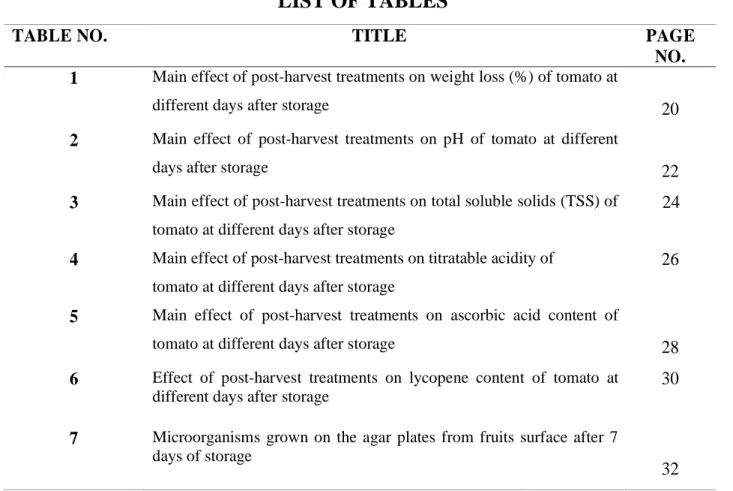
TABLE NO. TITLE PAGE
NO.
1 Main effect of post-harvest treatments on weight loss (%) of tomato at
different days after storage 20
2 Main effect of post-harvest treatments on pH of tomato at different
days after storage 22
3 Main effect of post-harvest treatments on total soluble solids (TSS) of tomato at different days after storage
24 4 Main effect of post-harvest treatments on titratable acidity of
tomato at different days after storage 26 5 Main effect of post-harvest treatments on ascorbic acid content of
tomato at different days after storage 28
6 Effect of post-harvest treatments on lycopene content of tomato at different days after storage
30 7 Microorganisms grown on the agar plates from fruits surface after 7
days of storage
32
vi
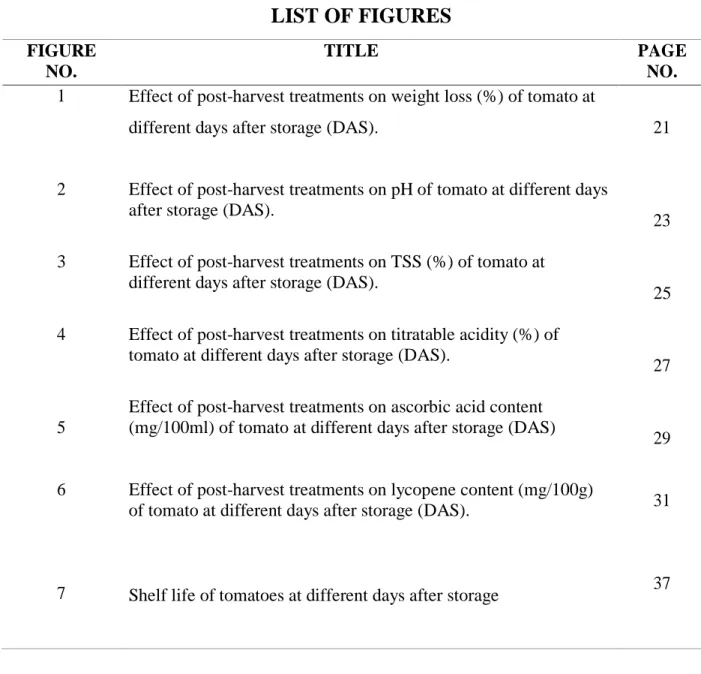
LIST OF FIGURES
FIGURE NO.
TITLE PAGE
NO.
1 Effect of post-harvest treatments on weight loss (%) of tomato at
different days after storage (DAS). 21
2 Effect of post-harvest treatments on pH of tomato at different days after storage (DAS).
23 3 Effect of post-harvest treatments on TSS (%) of tomato at
different days after storage (DAS).
25 4 Effect of post-harvest treatments on titratable acidity (%) of
tomato at different days after storage (DAS).
27 5
Effect of post-harvest treatments on ascorbic acid content (mg/100ml) of tomato at different days after storage (DAS)
29 6 Effect of post-harvest treatments on lycopene content (mg/100g)
of tomato at different days after storage (DAS). 31
7 Shelf life of tomatoes at different days after storage 37
vii
LIST OF PLATE PLATE
NO.
TITLE PAGE
NO.
1 2 3 4 5
Preparation of experiment according to different treatments.
physical change of fruits six days after storage (DAS).
physical change of fruits nine days after storage (DAS).
physical change of fruits twelve days after storage (DAS).
Experimental works in lab with different equipment‟s.
14 15 16 17
18
viii
LIST OF APPENDICES
APPENDIX NO.
TITLE PAGE
NO.
1 2
3 4 5
6
Map showing the experimental locations under study
Analysis of variance (mean square) of the data for weight loss (%) of tomato at different days after storage
Analysis of variance (mean square) of the data for pH of tomato at different days after storage
Analysis of variance (mean square) of the data for total soluble solids (TSS) of tomato at different days after storage
Analysis of variance (mean square) of the data for titratable acidity of tomato at different days after storage
Analysis of variance (mean square) of the data for ascorbic acid content of tomato at different days after storage
Analysis of variance (mean square) of the data for lycopene content of tomato at different days after storage
45 46 46 46
47 47 47
1
CHAPTER I INTRODUCTION
Tomato (Lycopersicon esculentum Mill.) is one of the most widely grown important nutritious vegetables in the world, belonging to the family Solanaceae. It originated in tropical America (Salunkhe et al., 1987) particularly in Peru, Ecuador, Bolivia of the Andes (Kalloo, 1986). The crop is adapted to a wide variety of climates ranging from the tropics to within a few degrees of the Arctic Circle. It is now being cultivated successfully in tropical, subtropical, and temperate climates. The present leading tomato producing countries of the world are China, United States of America, India, Egypt Turkey, Iran, Italy, Mexico, Brazil and Indonesia (FAO, 2018).
The cultivated area under tomato in Bangladesh is 13066 hectares with a total production of 74000 metric tons having an average yield of 80-85 t/ha (BBS, 2019) which are very low in comparison with that of other countries, namely India (110-120 t/ha), Japan (130-140 t/ha), USA (14-145 t/ha), China (110-115 t/ha), (FAO 2018). Tomato has a great demand throughout the year. But in our country, it is generally grown in the winter season. The production of summer tomatoes has just started in this country, but it is still in primitive stage.
In these circumstances for lack of appropriate postharvest technologies and transport system it cannot possible to supply properly the fresh tomatoes in all the places of our country from producing place. There are poor infrastructure and knowledge for the post-harvest management techniques of tomato. Maximum loss in quality and quantity of this crop occurs from harvesting to consumption (Kader, 1992). As agricultural crops respire continuously after harvest for which desiccation, wilting, shriveling, and mechanical injury occurs there (Rahman, et al. 1992). So, postharvest handling technology is becoming very important to reduce postharvest losses of fresh horticultural crops. Research in postharvest handling is confined in some developed countries although postharvest problems are common in developing countries like Bangladesh. Several technologies have been developed and adapted in the developed countries to overcome the problem of postharvest losses and therefore, the quality of produce has improved significantly.
Pre- and postharvest applications of fungicides, cold storage, gamma and UV irradiation, modified atmosphere packaging and ozonation have been used to reduce postharvest deterioration, prolong shelf-life, and retain the nutritional quality of fresh blueberries during
2
storage (Connor et al., 2002; Chiabrando et al., 2006; Trigo et al., 2006; Zheng et al., 2003, 2008). The surface treatment of fruits with various synthetic chemicals is a good strategy for inhibiting the growth of microorganisms in order to improve the shelf life of fresh and fresh-cut fruits (Geransayeh et al., 2012). The antimicrobial action of organic acids was attributed to pH reduction, disturbance of membrane transport and/or permeability, anion accumulation, inhibition of enzymes, cytoplasm acidification (Parish et al., 2003), as well as to the specific antimicrobial effect of anionic species (Ramos-Villarroel et al., 2015). The inhibitory effect of organic acids increases with decreasing pH as it has been reported to be determined mainly by the undissociated form of the molecule, which diffuses through the microbial cell membrane depending on the pH gradient between the cytoplasm of the cell and the food matrix surrounding it (Rahman, 2007). Citric and ascorbic acids are commonly used in fruit and vegetable washing (Velázquez et al., 2009; Ramos et al., 2013) while other acids, such as propionic, sorbic, and benzoic acids, have been used for many years as food and drink preservatives. Akbas and Olmez (2007) reported that lactic and citric acid dipping could be alternative treatments to chlorine dipping to prolong the shelf life of fresh‐ cut iceberg lettuce while Pusik et al. (2018) found that treatment with 0.5% solution of citric acid, 0.2% benzoic acid, 0.05% sorbic acid increased the shelf life of broccoli. Jiang et al. (2004) reported that 0.1 M citric acid extended the shelf life, inhibited surface coloration and disease development, and reduced the loss in eating quality of fresh-cut Chinese water chestnut while Pao and Petracek (1997) demonstrated that infusion of peeled oranges with citric acid solution (0.1, 0.25, 0.5, and 1.0% w/v) during the peeling process reduced the surface pH of peeled fruits and extended their shelf life due to the inhibition of spoilage bacteria. In contrast, some previous studies reported no significant effect of organic acids (citric or ascorbic acid) on the shelf-life of mango (Vilas Boas et al., 2004; de Souza et al., 2006).
3
The aim of this study was:
To evaluate the effectiveness of organic acid in preserving the post-harvest quality of tomatoes.
To find out the suitable organic acids to improve the shelf life and quality of tomatoes.
4
CHAPTER II
REVIEW OF LITERATURE
Tomato is a highly perishable vegetable crop which contains a very short shelf life and reach to respiration peak of ripening process on 4th or 5th day after harvesting at ambient temperature. It is one of the most important vegetable crops grown under field and greenhouse condition, which received much attention of the researchers throughout the world. The response of organic acids on tomato has been investigated by numerous investigators in various parts of the world. In Bangladesh, there have not enough studies on the influence of organic acids or microbial activity and in combination as postharvest treatment of tomato.
Fruit Nutrition
Tomato is a store house of essential vitamins. These include Vitamin A [red fruits contains an average 100 International Units (IU) per 100g], Vitamin B1, B2, B6, Vitamin E (Alpha Tocopherol), Ascorbic acid (Vitamin C). Tomato is also rich in minerals such as Magnesium, Potassium, Zinc, Manganese, Phosphorus, Copper, Iron, Sodium, Calcium (Rahman et al., 2010) and high nutritive value due to the presence of carbohydrate, fibre, folic acid, niacin, thiamin, salicylic acid, tartaric acid and succinic acid. It also contains large amounts of water (93.5%), calcium (0.07%) and niacin, which are of ordinate importance in the metabolic activities of human beings (Olaniyi et al., 2010; Sgherri et al., 2008; Jaramillo et al., 2007). Tomato is a major source of lycopene, a potent and effective antioxidant which gives the vegetable its characteristic red colour and glutathione an antioxidant which aids in cleansing the body of toxic products and prevents the accumulation of heavy metals (Jaramillo et al., 2007). In fact tomato is ranked first as a source of lycopene (71.6%), second source of vitamin C (12%), provitamin A carotenoids (14.6%) and third as a source of vitamin E (6.0%) (Garcia-closas et al. 2004).
Tomato (Lycopersicon esculentum Mill.)is one of the most commercially important crops cultivated widely in the world. As a typical climacteric fruit, tomatoes will undergo undesirable changes in texture, flavor, and nutrition quality after harvest, resulting in rapid softening, water and flavor loss, flesh browning, and rotting, and ultimately lose their commercial value (Lurie
&Crisosto, 2005). Thus, tomatoes are extremely perishable after harvest; the shelf life of tomato
5
fruit is generally only 5–7 days at ambient temperature. It is estimated that the postharvest loss of tomato fruit accounts for 30% - 40% of total production (Hodges, Buzby, & Bennett, 2011).
These problems will cause serious economic losses and become one of the key issues that restrict the sustainable development of the tomato industry.
Postharvest treatments can retard aging, delay the deterioration, and extend the shelf life of fruits. Currently, chemical treatment, cryopreservation, and controlled atmosphere storage methods are extensively used to prolong the storage life of peach fruit. However, chemical treatments leave residues on fruits and low-temperature storage causes chilling injuries (CIs) to the fruit and decrease the specific ester contents and flavor quality of peach fruit with increased storage time (Ortiz, Echeverria, Graell, & Lara, 2009; Xi et al., 2012). Although controlled atmosphere storage has effect on reducing postharvest fruit rot and maintaining quality, long- term storage is expensive (Ortiz et al., 2009).
Citric acid is often considered safe and, as an organic acid, can be used as a food additive (Sommers, Fan, Handel, &Sokorai, 2003). The previous study has shown that citric acid not only inhibits the growth of bacteria and fungi in fruits and vegetables but also induces the improvement of disease resistance in vegetables. It can also prevent browning and fruit disease by reducing the respiration of postharvest fruits (Pilizota & Sapers, 2004) and is a good additive to improve the acidity and flavor of foods, thereby improving the quality of preservation and storage and preventing food spoilage. The use of citric acid for fresh-cut water chestnut can maintain its food quality and extend its shelf life (Jiang, Pen, & Li, 2004). Citric acid treatment can slow down the decrease in the soluble sugars and titratable acidity and is beneficial to maintain the fruit quality of Chinese jujube fruits during storage (Zhao et al., 2009). Thus, citric acid treatment is potentially an ideal fruit preservation approach. However, the effect of citric acid treatment on perishable fruits such as peaches is currently unknown.
Postharvest decay is considered the most important factor that limit the shelf life of oranges.
Orange fruits are susceptible to a wide variety of fungal diseases. These days, there is a great concern about human health and environmental contamination hazards associated with fungicide residues (Wisniewski & Wilson, 1992). Thus, there is a stringent need for the development of reliable and environmentally friendly methods for protecting perishable crops, particularly fresh fruits, against losses after harvest. Nitric Oxide (NO) is a highly reactive free radical gas engaged in fighting vegetative stress and deterioration of horticultural products. Short term exposure to
6
low doses of NO or its donors can prolong the postharvest life of several fresh fruits and vegetables (Wills et al., 2007 and Zhu & Zhou, 2007).
External postharvest application of NO delayed disease incidence, peel color changes and reduced activity of softening enzymes (Manjunatha et al., 2010). In addition, application of NO reduced postharvest water loss from horticultural product (Ku et al., 2000). No fumigation reduced the activity of polygalacturonate (PG) enzyme of kiwifruit and peach fruits (Zhu et al., 2010 a, b), banana fruits (Cheng et al., 2009) and Yang et al., 2010). Also, No fumigation reduced the activities of fruits softening enzymes such as exo and endo PG in „Kensington Pride‟
mango fruits during cold storage at 13°C (Zaharah& Singh, 2011a, b).
Oxalic acid (OA) is a natural organic acid and playing an important function in systemic resistance and response to environment (Zheng et al., 2012 and Jin et al., 2014). OA application is a secure and hopeful postharvest handling technology for keeping quality and prolonging storage life of fruit (Zheng & Tian, 2006). OA has shown some antioxidant activities and play a serious function in systemic strength, programmed cell death, redo homeostasis in plants and an anti-senescence effectiveness in harvested fruits (Ding et al., 2007, Zheng et al., 2007a and Wu et al., 2011). In addition, postharvest treatment of OA reduced the activity of PPO enzyme (Yoruk et al., 2002). Pre-storage application with OA enhanced the antioxidant capacities of banana and pomegranate fruits (Sayyari et al., 2010 and Huang et al., 2013a, b).
Moreover, OA and oxalate treatments induced systemic resistance against diseases caused by fungi, bacteria and viruses in plants (Mucharromah&Kuc, 1991 and Toal& Jones, 1999). Pre- storage application of OA can suppress postharvest disorders and prolong the storage life of mangoes because of delaying the ripening process (Zheng et al., 2007b, c and Zheng et al., 2012). Moreover, postharvest treatment of OA decreased loss of fruit firmness and reduced the activity of exon-PG enzyme beside enhanced the activities of antioxidative enzymes (superoxide dismutase, catalase and peroxidase) (Razzaqnitric oxide oxalic acid and hydrogen peroxide … Egypt. J. Hort. Vol. 43, No. 1 (2016) 139 et al., 2015).
7
The main detrimental factors in postharvest storage and marketing of tomatoes are the loss of firmness and microbial decay (Connor et al. 2002; Li et al., 2011). Pre- and postharvest applications of fungicides, cold storage, gamma and UV irradiation, modified atmosphere packaging and ozonation have been used to reduce postharvest deterioration, prolong shelf-life, and retain the nutritional quality of fresh blueberries during storage (Connor et al., 2002;
Chiabrando et al., 2006; Trigo et al., 2006; Zheng et al., 2003, 2008). In addition, edible coatings have been studied for extending shelf life of ready-to-eat blueberries (Duan et al., 2011; Yang et al., 2014).
According to Assis et al. (1997) mature green and pink tomato (Lycopersicon esculentum Mill.) fruit were subjected to ionizing irradiation in the range of 0.7 to 2.2 key from gamma- or X-ray sources. Fruit irradiated at the mature-green stage softened during post-irradiation storage (20◦C) but exhibited an apparently irreversible suppression in polygalacturonate activity, with levels remaining lower than 10% of those of non-irradiated fruit. Polygalacturonate activity was less strongly affected in irradiated pink fruit than in mature-green fruit, but activity remained reduced relative to the controls. Pectin methyl esterase and β-galactosidase activities were significantly enhanced in irradiated fruit of both ripening stages in the early period following irradiation, but reductions were noted after prolonged storage. The surface treatment of fruits with various synthetic chemicals is a good strategy for inhibiting the growth of microorganisms in order to improve the shelf life of fresh and fresh-cut fruits (Geransayeh et al., 2012). The antimicrobial action of organic acids was attributed to pH reduction, disturbance of membrane transport and/or permeability, anion accumulation, inhibition of enzymes, cytoplasm acidification (Parish et al., 2003), as well as to the specific antimicrobial effect of particular anionic species (Ramos- Villarroel et al., 2015). The inhibitory effect of organic acids increases with decreasing pH as it has been reported to be determined mainly by the undissociated form of the molecule, which diffuses through the microbial cell membrane depending on the pH gradient between the cytoplasm of the cell and the food matrix surrounding it (Rahman, 2007).
Citric and ascorbic acids are commonly used in fruit and vegetable washing (Velázquez et al., 2009; Ramos et al., 2013) while other acids, such as propionic, sorbic, and benzoic acids, have been used for many years as food and drink preservatives. Akbas and Olmez (2007) reported that
8
lactic and citric acid dipping could be alternative treatments to chlorine dipping to prolong the shelf life of fresh‐ cut iceberg lettuce while Pusik et al. (2018) found that treatment with 0.5%
solution of citric acid, 0.2% benzoic acid, 0.05% sorbic acid increased the shelf life of broccoli.
Jiang et al. (2004) reported that 0.1 M citric acid extended the shelf life, inhibited surface coloration and disease development, and reduced the loss in eating quality of fresh-cut Chinese water chestnut while Pao and Petracek (1997) demonstrated that infusion of peeled oranges with citric acid solution (0.1, 0.25, 0.5, and 1.0% w/v) during the peeling process reduced the surface pH of peeled fruits and extended their shelf life due to the inhibition of spoilage bacteria. In contrast, some previous studies reported no significant effect of organic acids (citric or ascorbic acid) on the shelf-life of mango (Vilas Boas et al., 2004; de Souza et al., 2006).
Organic acids accumulate in the flesh of many types of fruits at certain stages of their development (Hulme, 1971; Ruffner, 1982a, b; Famiani et al., 2005). The organic acids that are accumulated in fruits can be divided into several metabolic groups, and these are synthesized by different pathways. Firstly, the anions of citric, isocitric and malic acids, namely citrate, isocitrate and malate, are Krebs cycle intermediates (we refer to these in this review as Krebs cycle acids), and one or more of them (usually citric or malic) accounts for a large proportion of the organic acid content of the flesh of all fruits that have been studied (Ulrich, 1971).
Nevertheless, other types of organic acids may also be abundant in certain fruits.
Lycopene is especially effective at quenching a free radical known as singlet oxygen. It is 100 times more efficient in test tube studies of singlet-oxygen quenching action than vitamin E, which in turn has 125 times the quenching action of glutathione (water soluble) and has therefore been described as the world‟s most powerful antioxidant and may be the most powerful carotenoid of singlet oxygen (Di Mascio et al. 1989). Singlet oxygen is a highly reactive free radical formed during normal metabolic processes that reacts with polyunsaturated fatty acids, which are major constituents of cell membranes (Clinton, 1998). Singlet oxygen produced during exposure to ultraviolet light is a primary cause of skin aging (Berneburg et al., 1999). Given its antioxidant properties, substantial scientific and clinical research has been devoted to a possible correlation between lycopene consumption and general health.
9
Sayyari et al. (2011) reported that all organic acids decreased in control fruit during storage, while in acetyl salicylic acid (at three concentrations: 0.1, 0.5, and 1.0 mM)-treated pomegranates only a significant decrease in malic acid was found, although the diminution was lower than that observed in controls at 2 °C for 84 days. On the contrary, Miguel et al.
(2006) found an increase in organic acid contents of Molar pomegranates from the beginning of the assay up to 2 months of cold storage, independent of treatment (covered with low-density polyethylene film, treated with calcium, or control fruits), and then it decreased. Organic acids usually accumulate at the early stages of fruit development and decrease during the fruit ripening and storage due to use as respiratory substrates in the mature fruit (Tang et al., 2010). Addition of non-pomegranate anthocyanins from Aronia, grape skin, elderberry, black currant, or black carrot as detected by atypical anthocyanin profile. addition of cane sugar or corn sugar as detected by stable isotope ratio mass spectrometry, presence of sucrose, or presence of maltose .addition of sorbitol-containing fruit juices such as apple, pear, cherry, or Aronia as detected by the presence of non-pomegranate anthocyanins, elevated levels of sorbitol, malic acid, or sucrose .addition of grape juice and grape skin color as detected by elevated levels of malic acid, proline, tartaric acid, grape anthocyanins, or other non-pomegranate anthocyanins . addition of citric acid as detected by low is citric acid and high citric/is citric acid ratios ripeness. The time of the harvest significantly influences the sugar/acid (°Brix/acid) ratio (29,30). Total titratable acid concentrations of 10.6-13.5 g/L were found. He countless types of fruits present in angiosperms can be operationally organized within a few broad categories by using combinations of traits such as: (i) dehiscence or indehiscence; (ii) fleshy Seymour et al (2013) dry exterior; and free (apocarpous) or fused (syncarpous) carpels (Seymour et al., 2013). These variations are further exemplified, for instance, by fleshy fruits, which have evolved by an enlargement of seed- surrounding tissues to create attractive flesh for seed-dispersing animals. Dry fruits, on the other hand, have a dry mesocarp that normally needs to open in order to release the seeds inside via mainly abiotic dispersal mechanisms (Fuentes and Vivian-Smith, 2009). It is tempting to suggest that this high diversity in fruit types is adaptive and associated to specific dispersers. This fact apart, the existence of significant correlations between fruit type and habitat conditions in angiosperms indicates that the evolution of fruit fleshiness is more likely associated with changes in vegetation habitats than in dispersers itself (Bolmgren and Eriksson, 2005). Both explanations are not mutually exclusive. In any case, fleshy fruit evolution is an important and continually
10
recurring theme in the study of flowering plant evolution. However, caution should be exercised when making assumptions with respect to the adaptive value of particular fruit traits (Niklas, 2016).
Vincent et al. (2002) founded that Heat shock treatments have been used to control fungal diseases in postharvest fruit and vegetables. This can be a promising alternative to replace or to reduce chemical treatments in strawberries. A moderate heat stress on the fruit mobilizes antioxidant defense responses and induces changes in the metabolism. The production of antioxidant enzymes involved in inactivating oxygen radicals keeps the levels of harmful free radicals under intracellular control (Vincent et al., 2006). The non-lethal heat shock temperature, around 45 ºC for three hours, may reduce fruit decay by pathogens and increase the shelf life.
Akanbi and Oludemi (2004) stated that Lycopene is an efficient antioxidant and quenches highly reactive singlet oxygen radicals and acts as a preventive agent for cancer. Yadav et al (2009) determined Lycopene needs to be protected from excessive heat and extreme pH conditions, exposure to light, oxygen and lipid degrading enzymes to prevent its oxidation and isomerization.
Bio preservatives could be defined as compounds, from natural sources or formed in food, able to restrict or retard spoilage related with chemical or biological deterioration that prolong product shelf life. Edible coatings are thin layers of edible substances applied to the product surface in addition to or as a replacement for natural protective waxy coatings and provide a barrier to moisture, oxygen and solute movement for the food (Avena-Bustillos et al. 1997 and Mchugh and Senesi, 2000). They are used directly on the food surface by dipping, spraying or brushing (Mchugh and Senesi, 2000).
Lycopene is especially effective at quenching a free radical known as singlet oxygen. It is 100 times more efficient in test tube studies of singlet-oxygen quenching action than vitamin E, which in turn has 125 times the quenching action of glutathione (water soluble) and has therefore been described as the world‟s most powerful antioxidant and may be the most powerful carotenoid of singlet oxygen (Di Mascio et al. 1989). Singlet oxygen is a highly reactive free radical formed during normal metabolic processes that reacts with polyunsaturated fatty acids,
11
which are major constituents of cell membranes (Clinton, 1998). Singlet oxygen produced during exposure to ultraviolet light is a primary cause of skin aging (Berneburg et al., 1999). Given its antioxidant properties, substantial scientific and clinical research has been devoted to a possible correlation between lycopene consumption and general health.
Due to consumer demand for food without chemical preservatives has resulted in application of natural antimicrobials preservatives and antimicrobial films and fungicide application can be reduced (Elmer and Reglinski, 2006). To avoid fruit spoilage, it is essential to preserve fruits and it has been estimated that around 25% to 80% of harvested fresh fruits are wasted due to spoilage (Quezada et al. 2003). There are natural preservatives which are used as edible surface coatings for vegetables and fruits such as waxes, but these coatings commonly contain ingredients such as polyethylene, carnauba and candelilla (Hagenmaier and Baker, 1995; Debeaufort et al. 1998;
Alleyne and Hagenmaier, 2000). Amarante et al. (2001); Jeong et al. (2003) have studied wax coating as fruits preservatives and increase the shelf life, slows down ripening, retards water loss, reduces decay and enhances visual quality. The Aloe gel is made up of water, amino acids, vitamins, lipids, sterols, tannins, and enzymes (Shelton, 1991) and contains phenol, saponin, anthraquinones components, have anti-bacterial, antiviral, and antifungal properties. Aloe vera has shown antibacterial property against gram positive and gram-negative pathogens (Adetunji et al., 2012).
Decay percentage was used to observe the effectiveness of coated substance on fruit in retarding fruit disease. Aloe vera gel was successful in decreasing microorganism proliferation in table grape, the effect being higher for yeast and molds than for mesophilic aerobics (Tripathi and Dubey, 2004). Interestingly, the Aloe vera gel coating was effective in controlling microbial growth of “Starching” cherry and “Crimson” table grape without incorporating other antimicrobial compounds such as garlic oil, potassium sorbate and nisin to enhance the activity (Pranoto et al., 2005 and Brishti et al. 2013) found that in case of Aloe vera coated papaya fruits, no disease signs were observed until 1 week after the beginning of the storage period. At the end of the storage period, 100% disease incidence was found in uncoated fruits, whereas for Aloe gel coated fruits disease incidence was only 27%. This was due to the antimicrobial potentiality of coated substances which has been discussed earlier.
12
Zhang et al. (2010). Conducted that Salicylic acid has been studied in the post-harvest conservation of strawberries applied alone or combined with thermal shock by immersing in warm water. Its exogenous application in strawberry fruits can increase resistance against pathogens. This phenolic compound is present in many plants and is an important component in the signal transduction pathway, inducing defense responses.
.Togrul and Arslan (2004) stated that the coating helps to reduce moisture loss and gaseous exchange from the fruits due to formation of a film on the top of the skin acting as an additional barrier. Similar results were reported by Thai et al. (2002) who showed that wax coating reduced the rate of respiration and transpiration and resulted in reduced weight loss, shriveling and increased shelf life. Fruits are important for the proper maintenance of human health. Fruits are foods affluent in vitamins, minerals and supply arrays of colors, flavor, texture and bulkiness to the pleasure of eating.
13
CHAPTER III
MATERIALS AND METHODS
This chapter is comprised of a brief description about experimental period, storage room, its controlled condition, planting material, treatments used in this experiment, experimental design and layout, data collection and statistical analysis.
3.1 Experimental location: This experiment was conducted from September to November 2019 in the postharvest Laboratory of Horticulture Department at Sher-e-Bangla Agricultural University, Dhaka-1207, Bangladesh.
3.2 Experimental materials: Mature fresh tomatoes were obtained from BARI, Gazipur, Bangladesh. Uniform sized, undamaged, healthy fruits were selected and transferred to the central Laboratory, Sher-e-Bangla Agricultural University as early as possible with careful handling to avoid injury.
3.3 Treatments of the experiment: The experiment consisted of one factor: Factor A: (Organic acids: citric acid, Benzoic acid and Sorbic acid)
T1: Control
T2: Dipped for 5 min in distilled water
T3: Dipped for 5 min in 2% (20g) citric acid + 500 ml distilled water T4: Dipped for 5 min in .2% (2g) Benzoic acid + 500 ml distilled water T5: Dipped for 5 min in .2% (2g) Sorbic acid + 500 ml distilled water
3.4 Experimental design and treatment application: The two-factor experiment was laid out in a completely randomized design (CRD) with three replications. Under each replication, eight fruits were collected for physical and destructive analysis. A total number of 8×3×5= 120 matured, uniform sized, undamaged healthy fruits were selected. Then the fruits were washed, surface sanitized with tissue paper and washing with different treatments. After treatment the fruits were dried with a fan for 10 minutes and kept in room temperature. Analysis of tomato fruits were carried out in three-day intervals.
14
3.5 Observation: During the entire postharvest storage period the experimental fruits were keenly observed every day to observe any special change. Physical observations (weight loss, shrinkage %, browning or black spot %, disease severity and shelf life) and moisture content % were recorded upto 15 days of storage. For estimating chemical analysis total soluble solids (TSS), titratable acidity (TA), lycopene content, ascorbic acid and pH of each samples were carried out in three days interval.
Plate 1: Preparation of experiment according to different treatments.
3.6 Physical parameters
3.6.1 Estimation of weight loss: Tomato fruits were placed on a digital weighing balance and throughout the storage period each reading was recorded to calculate the weight loss during storage and then percentage of weight loss was calculated as:
Weight loss (%) = weight of fresh fruit (g) - weight after interval (g) weight of fresh fruit (g)
3.6.2 Estimation of moisture content: One fruit was weighed in a porcelain crucible (which was previously cleaned, dried and weighed) from each treatment and replications. The crucible was placed in electric oven at 80°C for 72 hours until the weight became constant. It was then cooled in desiccators and weighed again.
Moisture content (%) = Fresh wt. Of fruit (g) −Dry wt. Of fruit(g) Fresh wt. of fruit (g) × 100
15 3.7 Chemical parameters
3.7.1 pH: pH was measured using a phs-25 pH meter. An electrolytic cell comprises of two electrode solution of pH 4. Buffer solution of any known pH value may be used here. Then the electrodes were dipped into the test sample. A voltage corresponding to the pH of the solution was identified by the instrument. For preparing sample solution of fruits, tomatoes were chopped into small pieces and ground into a fine paste by mortar and pestle. The tomato juice was transferred into a test tube and the pH of the paste was determined by inserting the electrodes into the paste and stabilized readings were recorded.
Plate 2: Physical change of fruits six days after storage (DAS).
3.7.2 Total soluble solid (TSS): Total soluble solids content of tomato pulp was estimated by using hand refractometer. Two drop of tomato juice squeezed from the fruit pulp on the prism of the refractometer. Percent TSS was obtained from direct reading of the instrument.
3.7.3 Titratable acidity (TA): Titratable acidity was estimated by chemical analysis process using tomato pulp. Titratable acidity was declined slowly when stored in low temperature. The titratable acidity of tomato pulp was determined by method of Ranganna (2004). From tomato 24 fruit small piece of 5 gram was chopped, blended by mortar and pestle then the juice was filtered by sieve in a beaker. The volume was made up to 100 ml by adding distilled water. 2 drops phenolphthalein indicator was added. From this solution 10 ml was taken in a conical flask and titrated against 0.1N NaOH. 0.1N NaOH was added drop wise, and the solution shaken
16
thoroughly until a pink color was obtained. It was repeated 3 times. The acid content of the tomato sample was calculated using the formula below:
TA% =(Titrate Normality of alkali Volume made up Equivalent wt. of acid×100) (Volume of sample taken for estimation. of sample taken×1000)
3.7.4 0.1N solution preparation: To make 0.1N solution, 4.0 g of sodium hydroxide was added in water to make 1 litter volume.
Plate 3: Physical change of fruits nine days after storage (DAS).
3.7.5 Phenolphthalein indicator preparation: To prepare phenolphthalein indicator 0.5g phenolphthalein was weighted. 50% ethanol was prepared by adding 50 ml ethanol and 50 ml distilled water. Then 0.5 g phenolphthalein was dissolved in 50% ethyl alcohol solution.
3.7.6 Ascorbic acid: Ascorbic acid content (ascorbic acid) was estimated by using 2,6- Dichlorophenol indophenol (DCPIP) visual titration method (Rangana, 2004). 5gm tomato fruit sample was blended, juice was filtered by sieve. Volume was made up to 100 ml by adding oxalic acid.10 ml from solution was taken in conical flask and titrated against DCPIP (Standard dye) to a pink end point which should persist for at least 15 seconds. Ascorbic acid content in terms of mg/100 g pulp weight was calculated using the following formula:
Ascorbic acid (mg/100g) = (Titra×dyefactor×Volume made up)
(Aliquot of extract taken for estimation ×wt. or vol. of sample taken for estimation)
× 100
17
3.7.7 Oxalic acid solution preparation: It was prepared by dissolving 50 g oxalic acid powder in 1000 ml distilled water.
3.7.8 Dye solution preparation: It was prepared by dissolving 260 mg of the sodium salt of 2,6- dichlorophenol indophenol in approximately 1000 ml of hot distilled water containing 210 mg of sodium bicarbonate.
Plate 4: Physical change of fruits twelve days after storage (DAS).
3.7.9 Standardization of dye solution: Ten milliliters (10 ml) of standard ascorbic acid solution was taken in a conical flask and 5 ml of oxalic acid was added to it. A micro burette was filed with the dye solution. The content of the conical flask was titrated with dye solution. The content of conical flask was titrated with dye till the pink colored end point appeared. The milliliters of dye solution required to complete the titration was recorded. Dye factor was calculated using the following formula: Dye factor = 0.5/ titrate value.
3.7.10 Lycopene content: Lycopene extraction was based on the method of Fish et al. (2002) with slight modifications. Lycopene in the tomato was extracted using hexane: ethanol: acetone (2:1:1) mixture. One gram juice of each sample were homogenized with 25 ml of hexane:
ethanol: acetone, which were then placed on the orbital shaker for 30 min, adding 10 ml distilled water and was continued agitation for another two min. The solution was then left to separate into distinct polar and non-polar layers. The absorbance was measured at 472 nm and 502 nm, using hexane as a blank. The lycopene concentration was calculated using its specific extinction
18
coefficient (E 1%, 1cm) of 3450 in hexane at 472 nm and 3150 at 502 nm. The lycopene concentration was expressed as mg/ 100 g product.
At 𝜆 = 472 nm: lycopene content (mg/100g) = (𝐸 /3.45) . (20/ 𝑚) At 𝜆 = 502 nm: lycopene content (mg/100g) = (𝐸 /3.15) . (20 /𝑚) Where, m = the weight of the product (g)
E= extinction coefficient
3.8 Statistical analysis: The collected data were statistically analyzed by STATISTIX 10 software. The mean of different parameters was compared by DMRT (Duncans Multiple Range Test). The significance of difference between the pairs of means was compared by least significant difference (LSD) test at the 1% level of probability (Gomez and Gomez, 1984).
19
CHAPTER IV
RESULTS AND DISCUSSION
This chapter accounts for the presentation of the results acquired from the present study. The results of the study on Postharvest antimicrobial treatments with organic acids to improve the shelf life of tomato are represented and discussed from Table 1 to Table 6 in this chapter. These results are explained under the following headings:
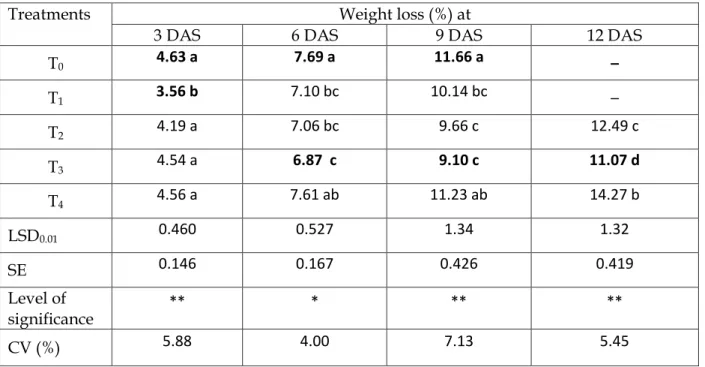
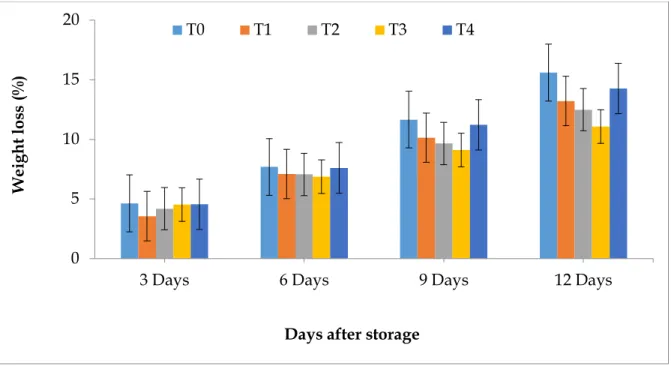
4.1 Weight loss (%): The organic acids were found to have significant effect on weight loss of tomato. The weight loss percent calculating for each organic acids showed significant variation (Table 1, Appendix I). It was recorded that the maximum {4.63%, 7.69%, 11.66% and 15.60% at 3rd, 6th, 9th and 12th days after storage (DAS)} percentage of weight loss of tomato under different organic acids were recorded in T0 (Control) followed by T1 (Distil water), T2(Citric acid), T4(Sorbic acid), and minimum (4.56%, 7.61%, 11.23%, and 14.27% at 3rd, 6th, 9th, and 12th DAS) was in T3(Benzoic acid) (Figure1). Control fruits had the highest weight loss throughout the study period. A general rise in weight loss as the doses of organic acids as the storage days increased was recorded. The highest weight loss was recorded in samples treated without organic acids throughout the storage period reaching 15.60% on the final day while fruits treated with Benzoic acids showed the least weight loss (11.07%) on the final day of assessment which is similar to what was recorded by Bhattarai and Gautam (2006). This may be due to the ability of climacteric fruits like tomato to generate heat that contributes to weight loss.
The heat lost to the environment contributes to increased evaporation of water. Under ambient conditions, the heat generated is more rapid as a result of increased respiration rate. This leads to a rapid weight loss of the fruit characterized by excessive softness making the fruit no longer marketable (Davies and Hobson,1981; Padmini, 2006). It was revealed that highest (4.63%, 7.69%, 11.66% and 15.60% at 3rd, 6th, 9th and 12th days after storage (DAS) weight loss was occurred in T0 (Control) and lowest (4.56%, 7.61%, 11.23%, and 14.27%) at 3rd, 6th, 9th, and 12th DAS) was in T3 (Benzoic acid) (Figure1). The physiological weight loss was less in Benzoic acid as compared to the control tomatoes (plate 4). The percentage of weight loss, regardless of all organic acids was increased with the advancement of storage time and it was highest at the end of the storage day. Tomato fruits were treated with .2% Benzoic acids + 500ml distill water and
20
fruit quality maintenance was examined up to 12 days at normal room temperature and relative humidity. Results showed that it reduced fruit ethylene production. Chauhan et al. (2015) gave experimental results showing tomato fruits showed a shelf life of 9 and 12 days, respectively.
Table 1. Main effect of post-harvest treatments on weight loss (%) of tomato at different days after storage
Treatments Weight loss (%) at
3 DAS 6 DAS 9 DAS 12 DAS
T0 4.63 a 7.69 a 11.66 a _
T1 3.56 b 7.10 bc 10.14 bc _
T2 4.19 a 7.06 bc 9.66 c 12.49 c
T3 4.54 a 6.87 c 9.10 c 11.07 d
T4 4.56 a 7.61 ab 11.23 ab 14.27 b
LSD0.01 0.460 0.527 1.34 1.32
SE 0.146 0.167 0.426 0.419
Level of
significance ** * ** **
CV (%) 5.88 4.00 7.13 5.45
** = Significant at 1% level of probability, * = Significant at 5% level of probability
T0 = Control, T1 =500 ml distilled water, T2 =2% (20g) citric acid + 500 ml distilled water, T3 =.2%
(2g) Benzoic acid + 500 ml distilled water, T4 =.2% (2g) Sorbic acid + 500 ml distilled water.
21
T0 = Control, T1 =500 ml distilled water, T2 =2% (20g) citric acid + 500 ml distilled water, T3 =.2%
(2g) Benzoic acid + 500 ml distilled water, T4 =.2% (2g) Sorbic acid + 500 ml distilled water.
Fig. 1. Effect of post-harvest treatments on weight loss (%) of tomato at different days after storage (DAS).
4.2 pH
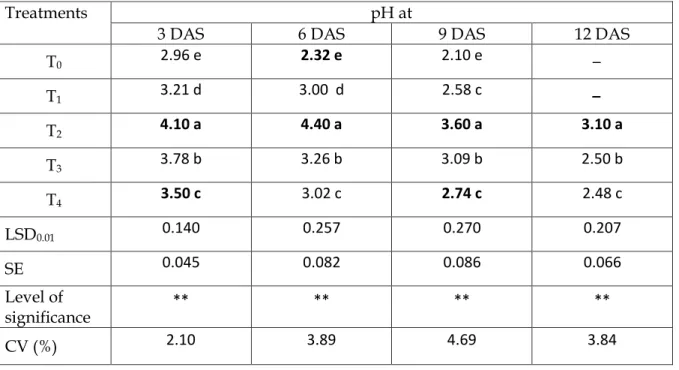
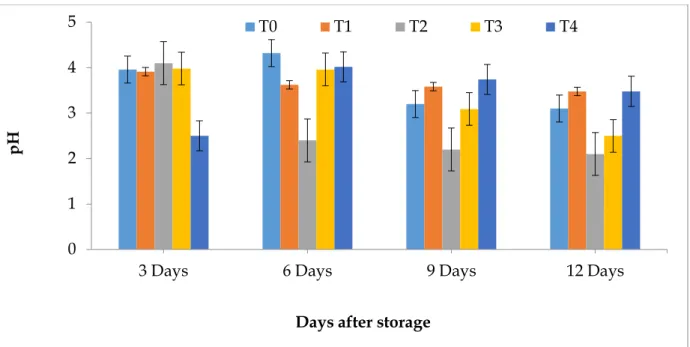
Wide variations in pH of tomatoes under different postharvest treatments were recorded during successive days of storage (Table 2, Appendix II). The pH value of different dozes of organic acids showed significant differences. The highest (4.32) pH value was recorded in T0 (controlled or untreated fruits) followed by T4 (4.02), T3 (3.96), T1 (3.48) and the lowest (2.10) value was recorded in T2 (2% citric acid). There were significant differences in pH among organic acids dose. Immediately after organic acids treatment, recorded significant reductions in pH as organic acids dose increased. Similar findings were made by Hussain et al. (2011) in dried apricot and Ladaniya et al. (2003), who realized that pH reduced with increasing with organic acids dose.
The pH of the untreated fruits was significantly different from treated fruits. pH recorded for all untreated fruits varied significantly but inconsistently during the storage period. The maximum (4.32) pH value was recorded in T0 followed by T4 (.2% Sorbic acid treated fruits) and minimum
0 5 10 15 20
3 Days 6 Days 9 Days 12 Days
Weight loss (%)
Days after storage
T0 T1 T2 T3 T4
22
(2.10) pH value was recorded in T2. So, from the above discussion it was concluded that untreated fruits showed highest value and 2% citric acid treated fruits showed lowest value.
Table 2. Main effect of post-harvest treatments on pH of tomato at different days after storage
Treatments pH at
3 DAS 6 DAS 9 DAS 12 DAS
T0 2.96 e 2.32 e 2.10 e _
T1 3.21 d 3.00 d 2.58 c _
T2 4.10 a 4.40 a 3.60 a 3.10 a
T3 3.78 b 3.26 b 3.09 b 2.50 b
T4 3.50 c 3.02 c 2.74 c 2.48 c
LSD0.01 0.140 0.257 0.270 0.207
SE 0.045 0.082 0.086 0.066
Level of
significance ** ** ** **
CV (%) 2.10 3.89 4.69 3.84
** = Significant at 1% level of probability
T0 = Control, T1 =500 ml distilled water, T2 =2% citric acid + 500 ml distilled water, T3 = 0.2%
Benzoic acid + 500 ml distilled water, T4 = 0.2% (2g) Sorbic acid + 500 ml distilled water.
23
T0 = Control, T1 = 500 ml distilled water, T2 = 2% Citric acid + 500 ml distilled water, T3 = 0.2%
Benzoic acid + 500 ml distilled water, T4 = 0.2% Sorbic acid + 500 ml distilled water.
Fig. 2. Effect of post-harvest treatments on pH of tomato at different days after storage (DAS).
4.3 Total Soluble Solids (TSS)
The total soluble solids content of tomato was affected by the bio preservatives as the treatments showed various results based on tomato variety, environmental condition and waxing material.
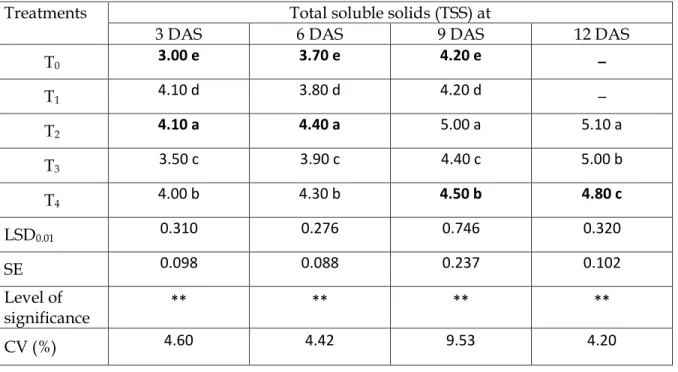
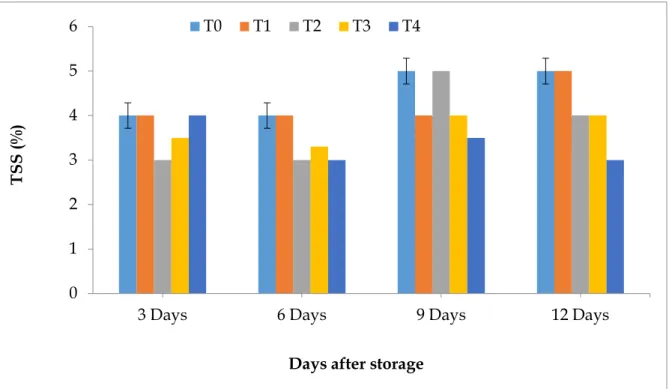
There was a significant variation in TSS during storage due to organic acids treatment. (Table 3, Appendix III). The fruits treated with Sorbic acid (T4) maintained the lowest TSS value (3.00%) followed by T3 and T2 (4.00%), while untreated control fruits (T0) maintained the highest TSS value (5.00%) (Figure 3). Maximum level of TSS is reached in more storage time with control fruits. Total soluble solids are predominantly influenced by the number of sugars in the fruits (Saltviet, 2005). At the end of the storage period, control treated fruits exhibited significantly higher mean total soluble solids than chemical fruits. Higher TSS of treated fruits as compared to control samples could be due to the higher weight loss and to a stimulation of the metabolic activity of the fruits as a result of the weakening of the cuticular wax, which is the first protective barrier against biotic and abiotic stresses (Loypimai et al., 2017; Chu et al., 2018).
0 1 2 3 4 5
3 Days 6 Days 9 Days 12 Days
pH
Days after storage
T0 T1 T2 T3 T4
24
Table 3. Main effect of post harvest treatments on total soluble solids (TSS) of tomato at different days after storage
Treatments Total soluble solids (TSS) at
3 DAS 6 DAS 9 DAS 12 DAS
T0 3.00 e 3.70 e 4.20 e _
T1 4.10 d 3.80 d 4.20 d _
T2 4.10 a 4.40 a 5.00 a 5.10 a
T3 3.50 c 3.90 c 4.40 c 5.00 b
T4 4.00 b 4.30 b 4.50 b 4.80 c
LSD0.01 0.310 0.276 0.746 0.320
SE 0.098 0.088 0.237 0.102
Level of
significance ** ** ** **
CV (%) 4.60 4.42 9.53 4.20
** = Significant at 1% level of probability
T0 = Control, T1 =500 ml distilled water, T2 = 2% citric acid + 500 ml distilled water, T3 = 0.2%
Benzoic acid + 500 ml distilled water, T4 = 0.2% Sorbic acid + 500 ml distilled water.
25
T0 = Control, T1 =500 ml distilled water, T2 =2% citric acid + 500 ml distilled water, T3 = 0.2%
Benzoic acid + 500 ml distilled water, T4 = 0.2% Sorbic acid + 500 ml distilled water.
Fig. 3. Effect of post harvest treatments on TSS (%) of tomato at different days after storage (DAS).
4.4 Titratable Acidity (TA)
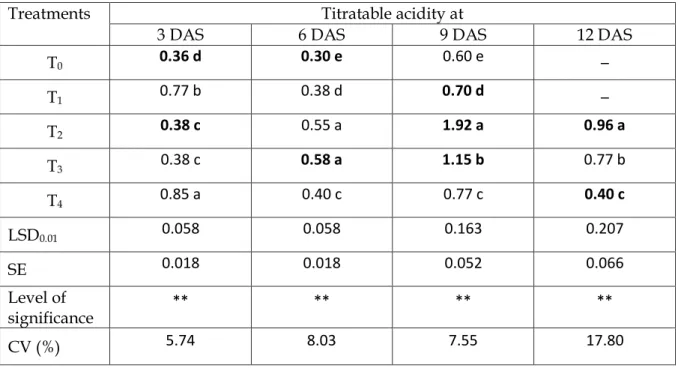
There was a significant variation in TA (%) of tomato during storage due to effective treatments with organic acids. (Table 4, Appendix IV). The maximum value (1.92%) of titratable acidity for tomato fruits was recorded for 2% citric acid (T2), after 9 days of storage, followed by 0.2%
Benzoic acids (T3), the value was 0.89% and the minimum (0.70%) value was recorded for control fruits (T0) (Figure 4). During ripening tomato fruits had shown an increase in titratable acidity in all treatments shortly after the breaker stage and progressively decreased afterwards.
Tefera et al. (2008) found similar findings that fruit acidity is decreased because of postharvest treatments as they delay respiration and utilization rate of respiratory substrates such as organic acids.Citric acid is the main organic acid present in highbush tomatoes and titratable acidity (TA)
0 1 2 3 4 5 6
3 Days 6 Days 9 Days 12 Days
TSS (%)
Days after storage
T0 T1 T2 T3 T4
26
levels were found to be around 0.3-0.6 g/100 g. TA was relatively decline in 3 days afterwards it increase up to 9 days finally it again decline. The control samples had significantly lower TA value than the treated samples during the last 12 days of storage. The initial increase of the titratable acidity could be attributed to the weight loss of the fruits while the decrease of TA in the later storage time is due to the consumption of organic acids in respiratory processes (Kaur et al., 2019).
Table 4. Main effect of post harvest treatments on titratable acidity of tomato at different days after storage
Treatments Titratable acidity at
3 DAS 6 DAS 9 DAS 12 DAS
T0 0.36 d 0.30 e 0.60 e _
T1 0.77 b 0.38 d 0.70 d _
T2 0.38 c 0.55 a 1.92 a 0.96 a
T3 0.38 c 0.58 a 1.15 b 0.77 b
T4 0.85 a 0.40 c 0.77 c 0.40 c
LSD0.01 0.058 0.058 0.163 0.207
SE 0.018 0.018 0.052 0.066
Level of
significance ** ** ** **
CV (%) 5.74 8.03 7.55 17.80
** = Significant at 1% level of probability
T0 = Control, T1 = 500 ml distilled water, T2 = 2% citric acid + 500 ml distilled water, T3 = 0.2%
Benzoic acid + 500 ml distilled water, T4 = 0.2% Sorbic acid + 500 ml distilled water
27
T0 = Control, T1 =500 ml distilled water, T2 =2% (20g) citric acid + 500 ml distilled water, T3 =.2%
(2g) Benzoic acid + 500 ml distilled water, T4 =.2% (2g) Sorbic acid + 500 ml distilled water.
Fig.4. Effect of post harvest treatments on titratable acidity (%) of tomato at different days after storage (DAS).
4.5 Ascorbic acid content:
Fruits are the natural source of ascorbic acid and loss of ascorbic acid is very much common in fresh fruits. It is very responsive to degradation due to its oxidation (Veltman et. al. 2000) compared to other nutrient during food processing, preservation and storage. As the fruits proceed towards ripening process, the level of acid gradually decreased. In general, a gradual decline was recorded both treated and untreated controlled tomato fruits. The significant variation was recorded in organic acids treatments. (Table 5, AppendixV). The highest value (100 mg/ 100 g) was recorded for 2% citric acid T2 followed by T3 (80 mg/ 100 g), T3 (70 mg/
100 g), T4 (50 mg/ 100 g) and lowest (30 mg/ 100 g) value was recorded in controlled fruits (T0) (Figure 5). The maximum level of vitamin C is reached in more time with treated fruits compared to untreated ones. The loss in ascorbic acid content beyond the climacteric stage during storage could be attributed to the increase in as corbate oxidase activity. Destruction of
0 0.5 1 1.5 2 2.5
3 Days 6 Days 9 Days 12 Days
Titratable acidity (%)
Days after storage
T0 T1 T2 T3 T4
28
vitamin C is a consequence of alteration of fruits metabolic oxidation pathways by radiation, which can convert vitamin C into dehydroascorbic acid, which can still be metabolized as vitamin C (Snauwart, 1973). Scorbic acid was relatively increase up to 9 days (plate 30) finally it declines. The control samples had significantly lower ascorbic acid value than the treated samples during the last 12 days (plate 4) of storage.
Table 5. Main effect of post harvest treatments on ascorbic acid content of tomato at different days after storage
Treatments Ascorbic acid content (mg/100g) at
3 DAS 6 DAS 9 DAS 12 DAS
T0 20.00 c 30.00 d 40.00 d _
T1 30.00 b 40.00 c 50.00 c _
T<