Report on
The Impact of Re-branding On the Financial Aspects of IPDC Finance limited
By
Mohammad Sakib Ur Rahman Student ID- 18104218
An internship report submitted to the Department of BRAC Business School in partial fulfillment of the requirements for the degree of
Bachelor of Business Administration
BRAC Business School Brac University
April 2022
© 2022. Brac University All rights reserved.
2
Declaration
The following declaration is made:
• While pursuing a degree at Brac University, I/we submitted an internship report that is our unique work.
• Any material accepted or submitted for a separate degree or diploma at a university or another institution is not included in the report.
• Unless it is properly credited with complete and exact referencing, the report does not include any previously published or written content by a third party.
• I/we have acknowledged all key sources of assistance.
Student’s Full Name & Signature:
___________________________________________
Mohammmad Sakib Ur Rahman Student ID: 18104218
Supervisor’s Full Name & Signature:
___________________________________________
Mahmudul Haq
Associate Professor, BRAC Business School BRAC University
3
Letter of transmittal
27th January, 2022 Mahmudul Haq Associate Professor BRAC Business School BRAC University
Subject: Internship report on “The impact of rebranding on the financial aspects of IPDC Finance Limited”
Dear Sir,
It is my honor to submit you my internship report on the impact of rebranding on the financial aspects of IPDC Finance Limited. This report is prepared based on my three months long internship period.
The internship report is the final part of the requirement for the completion of the Bachelors of Business Administration (BBA) degree under BRAC Business School of BRAC University. The internship gave an insight knowledge regarding the corporate culture of organizations in Bangladesh. I have implemented my knowledge and best efforts to prepare this internship report.
It was an instructive and knowledgeable experience for me to work with the dynamic team of Brand & Corporate Communication department of IPDC Finance Limited.
I am grateful to you for dedicating your valuable time, expertise, guidance and support. I have tried my best to complete the report as per the internship guidelines and standards of BRAC University.
Thank you
4 Sincerely yours,
Mohammad Sakib Ur Rahman ID-18104218
BRAC Business School BRAC University
5
Acknowledgement
I would like to express my gratitude to my honorable supervisor Mahmudul Haq, Associate Professor of BRAC Business School, BRAC University, who has helped me regarding the research I have conducted and written in the report. He has assisted me through the whole process of making this internship reports and also helped me to understand the report topics thoroughly.
It has been a great experience to work as an intern in an organization like IPDC Finance Limited which is one of the top non-banking financial institutions of Bangladesh. I would like to express my gratitude towards IPDC Finance Limited for giving me this opportunity to work as an intern. I also thankful to the organization for allowing me to gather information and assisting me in every possible way throughout this internship period.
My endless thanks to Mr. Mominul Islam, Managing Director and CEO of IPDC Finance Limited, for creating this holistic internship program for university students. I would like to thank the dynamic and creative team members of Brand & Corporate Communication department of IPDC Finance Limited, especially my on-site supervisor Tarif Sherhan, Assistant Manager of Brand &
Corporate Communication department, assisting me and giving me the opportunity to learn about organizational culture and procedural practices of IPDC Finance Limited.
Lastly, my sincere gratitude towards BRAC University for having an internship program for the students of BRAC Business School which truly shapes and prepared us for the corporate world.
6
Executive Summary
The establishment of a suitable re-branding strategy for a company is a very crucial and challenging task. The development of the positioning process of a brand requires both significant amount of monetary investment and cohesive managerial efforts for all forms all sorts of organization. A lot of market research is required for this purpose in order to identify the most appropriate target audience for the brand and build a suitable technique for placing the brand in the thoughts of customers in the intended way. In case of IPDC Finance Limited, this task was never too easy for them as they tend to introduce a new change in all its concepts and operations as well as its vision towards the future of the organization. This internship report will introduce to the rebranding strategy of IPDC, along with its new brand positioning strategy and how the rebranding strategy has affected the company over the past five year through financial analysis.
The report is divided into three chapters as per the BRAC University internship report guideline and standard. The first chapter is the overview of the internship. This part portrays the information regarding the internship of the student, along with the outcomes of the internship such as student’s contribution to the company, benefits that student experienced, difficulties faced by the students during their internship period and recommendation toward the internship program. The second chapter is the organization part. This part portrays the overview of IPDC Finance Limited along with the marketing practices, managements practices, accounting practices, operation management and information system practices. Also, includes the analysis regarding the industry and competitiveness. Finally, the third chapter is the project part of the internship report. This part contains that main analysis aspects of the report. This includes the objective of the report, background, methodology, finding and analysis, and recommendation/implementation based on the financial analysis of the re-branding strategy of IPDC Finance Limited.
7
Table of Contents
Chapter 1 ... 10
1.1 Student Information ... 10
1.2 Internship Information ... 10
1.2.1 Internship Company Supervisor’s information ... 10
1.2.2 Period, Company name, Department/Division, Address ... 10
1.2.3 Job Responsibilities... 10
1.3 Internship Outcomes ... 11
1.3.1 Student’s contribution to the company ... 11
1.3.2 Benefit to the student ... 12
1.3.3 Problems/Difficulties (faced during the internship period)... 12
1.3.4 Recommendation ... 13
Chapter 2 ... 14
2.1 Introduction ... 14
2.2 Overview of the company ... 14
2.2.1 Business Overview ... 16
2.2.2 Nature of Business ... 16
2.2.3 Details of the product and services ... 17
2.3 Management Practices ... 20
2.3.1 Organogram of IPDC Finance Limited ... 20
2.3.2 Organizational Hierarchy of IPDC Finance Limited ... 21
2.3.3 Human Resource Planning Process ... 22
2.4 Marketing Practices ... 23
2.5 Financial Performance and Accounting Practices... 24
2.5.1 Accounting Practices... 24
2.5.2 Financial performance... 24
2.6 Operations Management and Information System Practices ... 26
2.7 Industry and competitive Analysis ... 27
8
2.7.1 Porter’s Five Forces ... 27
2.7.2 SWOT Analysis ... 28
2.8 Summary and Conclusion ... 29
Chapter 3 ... 30
3.1 Introduction ... 30
3.2 Background ... 31
3.3 Objective ... 32
3.3.1 Broad Objective ... 32
3.3.2 Specific Objective ... 32
3.4 Methodology ... 33
3.5 Findings and Analysis ... 34
3.5.1 Liquidity & solvency ... 34
3.5.2 Asset management ratio ... 39
3.5.3 Profitability ... 40
3.5.4 Asset quality ... 46
3.5.5 Operating Segment Performance ... 47
3.6 Conclusion ... 48
3.7 Recommendation ... 49
References ... 50
9
List of Figures
Figure 1 Organogram of IPDC ... 20
Figure 2 Organizational hierarchy of IPDC ... 21
Figure 3 Public Presence in 2020... 23
Figure 4 Digital Presence in 2020 ... 23
Figure 5 Current ratio for chapter 2 ... 24
Figure 6 Net profit margin for chapter 2 ... 25
Figure 7 Return on asset (ROE) for chapter 2 ... 25
Figure 8 Current ratio from 2016 to 2020 ... 35
Figure 9 Loan to Fund ratio from 2016 to 2020 ... 36
Figure 10 Capital adequacy ratio (CAR) from 2016 to 2020 ... 37
Figure 11 Debt to equity ratio from 2016 to 2020 ... 38
Figure 12 Asset turnover ratio from 2016 to 2020 ... 39
Figure 13 Net profit margin from 2016 to 2020 ... 40
Figure 14 Return on asset (ROA) from 2016 to 2020 ... 41
Figure 15 Net interest margin from 2016 to 2020 ... 42
Figure 16 Total operating income growth from 2016 to 2020... 43
Figure 17 Profit after tax (PAT) growth from 2016 to 2020 ... 44
Figure 18 Cost to income ratio from 2016 to 2020 ... 45
Figure 19 Rate of NPL from 2016 to 2020 ... 46
Figure 20 Operating segment performance from 2016 to 2020 ... 47
10
Chapter 1
1.1 Student Information
Name: Mohammad Sakib Ur Rahman ID: 18104218
Program: Bachelors of Business Administration (BBA) Major: Finance
Minor: Marketing
1.2 Internship Information
1.2.1 Internship Company Supervisor’s information
My on-site company supervisor was Tarif Sherhan. He is the Assistant Manager of the Brand &
Corporate Communication department of IPDC Finance Limited 1.2.2 Period, Company name, Department/Division, Address
The internship period of IPDC Finance Limited was for 3 months. My internship was from 3rd October, 2021 till 30th December, 2021. I was assigned as intern in the Brand & Corporate Communication department. My work station was at the head office of IPDC Finance Limited.
The address of the head office of IPDC Finance Limited is:
Hosna Centre (4th floor), 106 Gulshan Avenue, Dhaka 1212 1.2.3 Job Responsibilities
The following highlights the duties and responsibilities of an intern in this department:
• Social media content writing
• Follow-up with agencies for different post related design
• Keep records of weekly and monthly bills of the department
• Create ideas for animated video (AV) text for social media post
• Develop creative brief to pitch for a post
• Proof-read contents and writeups
• Develop ideas for website and landing page development
11
• Visit venue for inspection for the company events
• Client invitation arrangements for an event 1.3 Internship Outcomes
1.3.1 Student’s contribution to the company
My internship was from 3rd October, 2021 till 30th December, 2021. I was assigned as intern in the Brand & Corporate Communication department. My work station was at the head office of IPDC Finance Limited. I was assigned as intern in the Brand & Corporate Communication department.
During my internship, some of the big events were in process. The events are: Amader Gaan, Priyo Shikkhok, Bangladesh Supply Chain Excellence Awards (BSCEA) and 40 years anniversary of IPDC Finance Limited. The following shows the contribution of the student to the organization:
• Proof-read articles, contents and PR release of the post regarding BSCEA, Priyo Shikkhok, Ogroj and 40 years anniversary of IPDC Finance Limited
• Generate ideas for the website and landing page outlook of IPDC Finance Limited
• Generate ideas for the content and design of landing page for BSCEA 2021
• Create dialogues and text for all the AV of BSCEA 2021
• Create dialogues and text for all the AV of Priyo Shikkhok 2021
• Visiting and contacting with marketing agencies like Madman, Plan B communication, Analyzen, Chilli, CrossWalk, Singularity and The Big Content to assigned them with their corresponding projects for IPDC
• Visiting and inspecting the venue for the IPDC events
• Scheduling interview of the clients for the 40 years anniversary posts
• Collecting and checking the video bytes of the clients for the 40 years anniversary posts
• Selection and preparation of gifts for the clients and stakeholder of IPDC
12 1.3.2 Benefit to the student
The nature of work of this department were all related to my minor, which is marketing. Yet, the internship has benefited me in all of ways. The benefits of a student from this internship are as follows:
• The internship gives a general idea regarding the work environment of local corporate and financial institution
• It serves the purpose of practical orientation in the marketing field
• It teaches a student to practically implement all the marketing concepts
• The internship gives a basic idea of how marketing and communication of an organization is developed
• It gives a basic knowledge regarding the work nature of a marketer and marketing agency
• It teaches how to communicate with clients and how client satisfaction is obtained 1.3.3 Problems/Difficulties (faced during the internship period)
The following points illustrates the difficulties faced during the internship period:
• Travel to places at your own cost for the work of the company, which costs beyond my monthly remuneration
• Staying at office beyond your work hours without having any specific task
• The contributions of an intern are presented in the name of another permanent employee to the head of the department
13 1.3.4 Recommendation
The internship program of IPDC Finance Limited was quite up to the standard but there is always scope of development and improvement. To recommend I would firstly suggest to plan and set objectives for the intern before hiring for an internship. Otherwise, the potential of an intern will not be utilized. Secondly, the job duties and responsibilities for the internship should be clearly mentioned in the job description. Thirdly, to set a more suitable remuneration for the internship, so that the interns do not face financial burden for the their out-door works. Finally, to clearly state the daily working hours of an internship and follow it strongly so that the intern of the department does not feel that he/she is being exploited by working unpaid overtimes.
14
Chapter 2
2.1 Introduction
IPDC Finance Limited (formerly known as "Industrial Promotion and Development Company of Bangladesh Limited") is the first private sector financial institution of Bangladesh. It was founded in 1981 by a distinguished group of shareholders, including the International Finance Corporation (IFC), the German Investment and Development Company (DEG), the Aga Khan Fund for Economic Development (AKFED), Switzerland, Commonwealth Development Corporation (CDC), UK, and the Government of Bangladesh. IPDC Finance Limited, hereinafter referred to as
"IPDC" or the "Company," was founded in Bangladesh in 1981 as the leading private sector long- term lending institution with the Registrar of Joint Stock Companies and Firms, Dhaka, with a mandate to promote economic progress in the country. On February 7, 1995, the Company also registered as a financial institution under the Financial Institutions Act, 1993.
2.2 Overview of the company
IPDC Finance Limited, formerly known as IPDC of Bangladesh Limited or IPDC, was Bangladesh's first non-bank financial institution. It is a public limited company that is listed on both the Dhaka and Chittagong stock exchanges. IPDC has been a key player in transforming the country's private sector industrialization through innovative financial products and services since its inception. IPDC is now a diversified financial organization that offers a wide range of goods and services, including corporate financing and advisory services, middle market supply chain finance, retail wealth management, and retail finance.
The company's objective is to meet the financial needs of its client base. IPDC has been a partner in a number of groundbreaking initiatives in Bangladesh, several of which were the first of their kind. As a result, IPDC has one of the strongest and most diverse corporate clienteles among the financial institutions currently in existence. Among its numerous long-term clients are IDLC Finance Limited, Fantasy Kingdom Theme Park, Holcim, Summit, DBH, Apollo Hospitals Dhaka, Westin, National Housing, Ekushey TV, and Scholastica.
To become the country's most passionate financial brand, with a special focus on youth, women, and underprivileged communities. With this objective in mind, IPDC redesigned its operations in Bangladesh, changing its name from 'Industrial Promotion and Growth Company of Bangladesh
15
Limited' to IPDC Finance Limited, in line with its main vision of becoming an active player in the development of Bangladesh's economy. IPDC Finance Limited has created a new road map for the coming years, which includes the implementation of a number of new tactics.
According to IPDC Finance Limited, "It is more critical than ever to re-affirm our purpose, what we stand for, and what we aim to be" in the light of our industry's evolution. Our vision, purpose, and values are intended to guide our decisions and activities as we lead the financial institution into the future.
Vision
To become the most passionate financial brand in the country with special focus on youth, women and underserved areas.
Mission
To enable our customers and communities to rise unbound, to live up to their fullest potential by extending innovative financial solutions in a friendly, timely, transparent and cost-effective manner.
Strategic Objective
• Display the highest level of Integrity in the way they conduct our business
• Demonstrate a strong Will to Win in the market place
• Promoting Diversity in the work place and community
• Harnessing the power of Technology to deliver better customer experience
• Setting the standard for the best Corporate Citizenship in the communities they work Core values
IPDC Finance Limited has established certain core values that they regard as the foundation of their business. The major basic values they focus on are the customers' experiences, their passions, and their innovations.
16 2.2.1 Business Overview
The Company's main businesses are dedicated to finance and finance-related activities. Deposit mobilization, loan to corporate organizations, factoring finance, project finance, leases, hire purchase, equity/quasi-equity investments, and consulting services are among these businesses.
IPDC's 12 branches, including the Head Office, offer a variety of commercial services. In Dhaka, there are three locations. These can be found in the towns of Motijheel, Dhanmondi, and Uttara.
Besides these, there are 8 other branches, which are Chittagong, Sylhet, Narayangonj, Gazipur, Bogra, Jessore, Cumilla and Mymenshingh.
2.2.2 Nature of Business
IPDC provides long and short-term financing, project financing, lease financing, mortgage financing, channel financing, equity participation, syndication finance, SME and MME finance, asset backed securitization through the issuance of zero-coupon bonds, and related consultancies to both local and foreign private investments in Bangladesh. In order to expand its retail activities, the company opened a retail business in 2006.
17 2.2.3 Details of the product and services
IPDC has segmented their operations into three main business units: corporate, small and medium- sized enterprises, and retail. IPDC provides simple, customizable solutions with the quickest turnaround time. In addition, IPDC's structured finance wing provides advice services to corporate and SME clients for their new ventures. IPDC offers the following products and services in the Corporate, SME, and Retail business segments:
Deposit Products:
IPDC's liability plans give depositors the option of investing in either deposit or savings schemes.
• Savings scheme- It contains Deposit Premium Scheme, Millionaire Deposit Scheme and Ultiflex Deposit Scheme
• Deposit scheme- It contains Annual Profit Scheme, Fixed Deposit General, Cumulative Profit Scheme, Monthly Profit Scheme, Quarterly Profit Scheme and Double Money Deposit Scheme
• Club Royal
Loan Products:
IPDC offers a variety of loan products to meet the needs of their diverse client base.
Retail Finance
The retail finance division offers a substantive and thoughtful variety of personal financial services to fulfill the needs of individuals.
• Home loan- IPDC aim to meet the housing solution of individual with various home loan options
• Auto loan- This unit specializes in individual and institution car financing needs
• Personal loan- This unit offers any purpose loan for personal needs
• Bhalo Basha Home loan- This new product targets to finance housing solution for clients outside metropolitan areas
18
• IPDC EZ- This unit enables loan for non-credit card holder to buys white goods such as electronics, furniture, trip plans etc.
Small and Medium Enterprise (SME)
By providing financial support to potential entrepreneurs, a financial sector can play avital role in the establishment and development of the Small and Medium Enterprise (SME). IPDC Finance Limited has so far focused on Small and Medium Enterprise (SME) with it “Jagoo Ucchase”
motives. The organization offers numerous SME products based on the needs of the business through the SME Financial Service section. IPDC offers loan products to SMEs with a competitive interest rate and flexible repayment options. IPDC has also tailored SME loan products for women entrepreneurs to support them. The following are the short description of the IPDC’s SME targeted products:
• Lease Finance- It offers financial solution to SME for fixed asset procuring such as: office equipment, machineries, vehicles, vessels etc.
• Long Term Finance- It offers financial solution to SME for various regular capital/fixed expenditure
• Short Term Finance- It offers financial solution to SME for urgent fund requirement for any interim period
• Joyee- This product is dedicated for the women entrepreneurs to give them the extra edge and success.
Corporate Business
IPDC's Corporate Financial Services Division provides big public and private companies with a broad range of corporate finance services. The following are the short description of the IPDC’s Corporate business targeted products:
• Lease Finance- It offers financial solution for purchasing or already procured/in-use equipment, machineries, vehicles, vessels, industrial equipement, engines, generator etc.
• Term Loan- It offers financial solution for various regular capital/fixed expenditure balancing of product line, modernization of manufacturing process, expansion of capacity and space etc.
19
• Project Financing- IPDC works as arranger to raise fund from other financial institution for new projects or venture that require large-scale investments
• Short Term Financing- It offers financial solution to fulfil the short-term cash requirement for working capital financing to assist in carrying out the regular business operations.
• Preference Shares Investment- IPDC raise fund for clients through preferred shares by purchasing the shares
• Factoring- It provides advance cash against invoices without waiting for 90 to 180 days accounts receivable of the business.
• Work Order Financing- It offers financing against work orders to reduce the time gap processing the order and receipt of payment
20
2.3 Management Practices
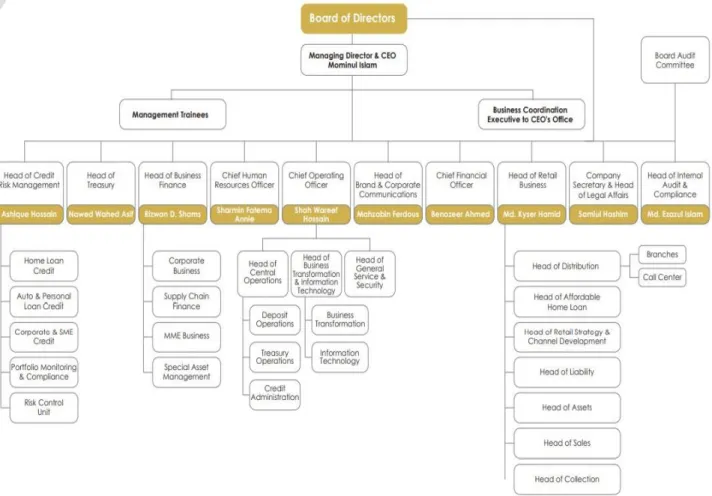
2.3.1 Organogram of IPDC Finance Limited
Figure 1 Organogram of IPDC
The boards of directors consist of the following:
• Chairman
• Vice-chairman
• 2 Independent Director
• 7 Nominated Director
• Managing Director (MD) and CEO The management team consists of
• Managing Director (MD) and CEO
21
• Additional Managing Director (AMD)
• CFO
• Head of Business Finance
• Head of Credit Risk Management (CRM)
• Head of Internal Audit & Compliance
• Head of Legal Affairs
• Head of IT and Business Transformation
• Head of Operations
• Head of Retail Business
• Head of Strategy
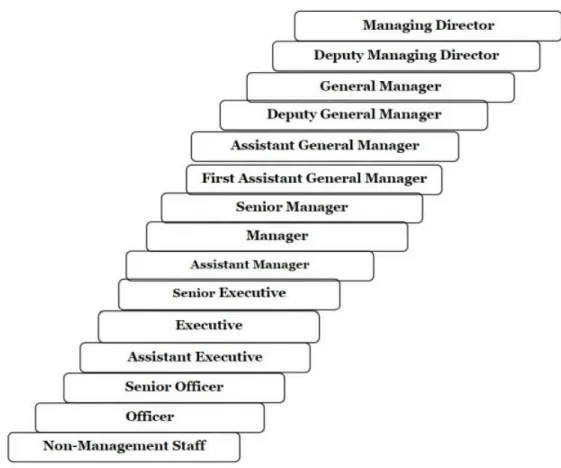
2.3.2 Organizational Hierarchy of IPDC Finance Limited
Figure 2 Organizational hierarchy of IPDC
22 2.3.3 Human Resource Planning Process
The Human Resource Department's Operations sector is primarily concerned with the employment cycle, or the process that occurs after an employee joins. This department also looked into detailed compensation and benefits knowledge. Prior to joining, a requisition is issued and a job announcement is distributed. The human resource department follows the following functions:
• Joining- This includes collecting joining documents, certificate verification and reference verifications through email. The joining documents consists of collecting know your employee (KPE) form, nominee form and gratuity form. After confirmation of permanent employment arrange life and health insurance for the permanent employee
• Confirmation- This occurs after the completion of an employees probation period and the line manager, head of corresponding department had filled-up an evaluation form of the employee
• Appraisal- Every four months there is a performance evaluation of all employees. HR collects the evaluation form and generates and categorizes a list for promotion, transfer and performance improvement plans
• Transfer- There are two types of transfer procedures: Department and location wise transfer. In this task, the HR department works with the admin and IT to generate memo and details regarding job roles descriptions
• Outsource employees- It is another function of employee life cycle. The monitoring of renewal and closure of contracts of contractual employee hired through thirds party.
• Fraud- In this task, the HR department collects and evaluates fraud cases. Then they work with the management team and corresponding department head to take finalize an action.
• Resignation- The HR carries out the entire procedure of the resignation for both the parties (resigning employee and corresponding the department)
• Final settlement- This task includes the preparation monetary statement for the provident fund, gratuity and salary of employees.
23
2.4 Marketing Practices
In this era of marketing, establishing a well-developed integrated marketing channel is mandatory.
To stand out in the competitive market an organization must develop ways to reach out to their target customers. IPDC Finance Limited takes part in various promotional activities to both promote the brand and products to their target market. IPDC does its promotion through the following means:
• Press release
• Social Media posts
• Featured Articles
• CSR activities
• Collaboration such as Bangabandhu Grand Master, Ogroj webinar series, Amader Gaan, Bangladesh Supply Chain Awards and Unsung Women Nation Builders Awards
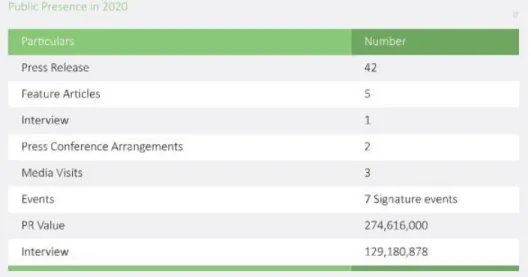
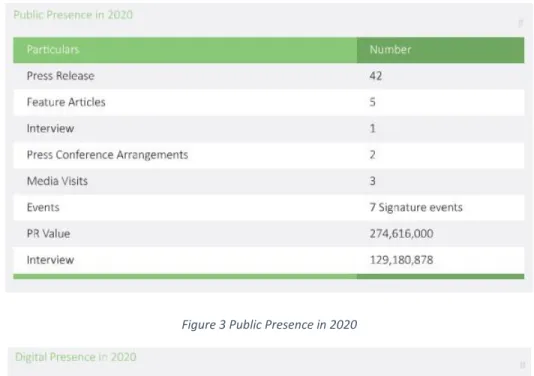
Figure 3 Public Presence in 2020
Figure 4 Digital Presence in 2020
24
2.5 Financial Performance and Accounting Practices 2.5.1 Accounting Practices
IPDC Finance Limited comply with the followings to preparation the financial report:
Financial Institution Act, 1993 Financial Reporting Act, 2015
International Financial Reporting Standards (IFRSs)
The financial report of IPDC finance Limited is prepared on the historical cost basis except for land and building which are stated at revalued amount. The financial period of IPDC for the financial report is determined from 1st January to 31st December each year. The depreciation/amortization on fixed assets are done in accordance with the IAS 16: Property, Plant and Equipment. IPDC’s Depreciation method is based on a straight-line basis.
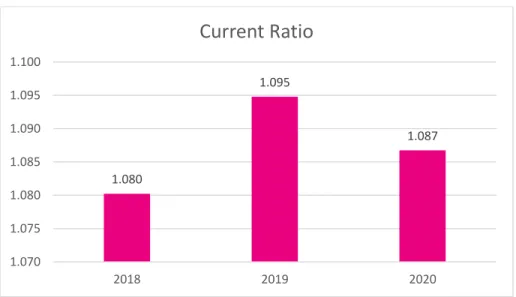
2.5.2 Financial performance Current Ratio
Figure 5 Current ratio for chapter 2 1.080
1.095
1.087
1.070 1.075 1.080 1.085 1.090 1.095 1.100
2018 2019 2020
Current Ratio
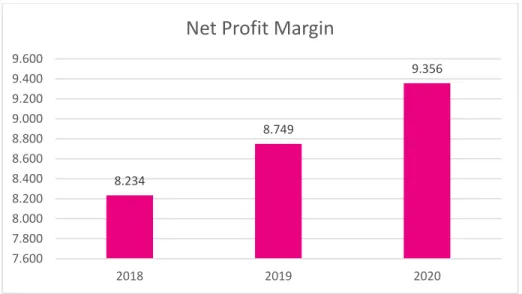
25 Net Profit Margin
Figure 6 Net profit margin for chapter 2
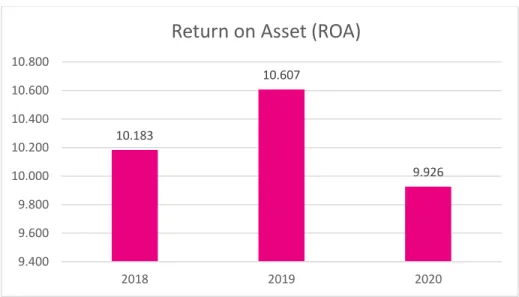
Return on Asset (ROA)
Figure 7 Return on asset (ROE) for chapter 2 8.234
8.749
9.356
7.600 7.800 8.000 8.200 8.400 8.600 8.800 9.000 9.200 9.400 9.600
2018 2019 2020
Net Profit Margin
10.183
10.607
9.926
9.400 9.600 9.800 10.000 10.200 10.400 10.600 10.800
2018 2019 2020
Return on Asset (ROA)
26
2.6 Operations Management and Information System Practices
In this digital era, IT initiatives are a fundamental part of an organization business strategy. In order to grow and compete effectively in the future, an organization needs to include an innovative digital transformation. In 2019, IPDC updated its core banking platform with Temenos T24, it is a “All in one” technological resource that equips financial institutions with all the necessary tool for managing the whole workflow of the banking related operations. For this update in the core banking system of IPDC, the implication of the following products is possible:
• Orjon- Supply chain finance system
• IPDC EZ- Consumer white goods financing system
• Dana- Retail financing platform
IPDC has established an IT Steering committee as an administrative body for reviewing and monitoring major IT related project. It also ensures that the IT strategy is in harmony with the strategic goals of the company. The major activities of the IT committee are as follows:
• IT project priotization
• Approval of IT related projects
• Advise on IT operations
Along with the activities, the major roles and responsibilities of the IT steering committee are as follows:
• Determining and achieving strategic goals of the IT department
• Provide guidance to ICT risk and controls
• Provide guidance related to procuring IT software and hardware
• Advise on selection of technologies adhering to the IPDC guidelines
• Provide direction related to the regulatory and statutory standards as per Bangladesh Bank (BB) guidelines
• Monitor all project related risks with proper risk management and resolution methods
27
2.7 Industry and competitive Analysis 2.7.1 Porter’s Five Forces
Porter's Five Forces is a strategy for determining an industry's vulnerabilities and strengths by identifying and analyzing five competitive forces that define every business. The five forces are widely used to assess an industry's or market's competitiveness, attractiveness, and profitability.
The Porter’s five forces of the NBFI industry are as follows:
Power of Suppliers- The bargaining power of the suppliers are quite high due to the following reasons:
• Many choices among institutional investors
• Dependency on financial institution who may also be competitors
Power of Customers- The bargaining power of customers is moderate in terms of the following facts:
• Many choices for loan, such that there are 28 NBFIs and more than 50 banks
• But interest rates are within a narrow range
Industry Rivalry- The competitiveness in the industry are quite higher because of the following reasons:
• There are 28 direct plays (NBFIs)
• There are more than 50 indirect players (Banks)
• And some of the institutions are in dominant position due to having strong customer base and competitive product range
Potential of new entrants into the industry- The barriers for new entrants are moderate in terms of the following facts:
• To setup a NBFI, it requires sizable investment
• Along with regulatory issues of Bangladesh Bank (BB)
• However, 10 new FIs established within the past few years
Threat from Substitutes- The threat from substitute is quite low due to the folloing reasons:
• New low-cost fund is emerging due to the growing Mobile Financial Service (MFS) in Bangladesh
• New small scale loan options emerging due to the P2P lending platform in Bangladesh
28 2.7.2 SWOT Analysis
The goal of a SWOT analysis is to determine the organization's strengths, weaknesses, opportunities, and threats. The strength and weakness emphasize on the internal environment, the opportunities and threats emphasize on the external environment.
Strengths-
• IPDC maintains a very strong list of shareholders.
• Their relationship with corporate clients is incredible. For which IPDC could maintain a credit rating of AAA as per the year 2021, September
• The have enough capital, maintaining a high capital adequacy ratio.
• Their risk management is also in structure Weaknesses-
• The brand could use more recognition regarding SME and retail. Therefore, there is a chance of improvement in the internal capacity of this sector
• IPDC has only 12 branches throughout Bangladesh, it could expand or broaden the distribution network
Opportunities-
• There is a scope in the retail lending sector
• There is a new growth in the middle-income class
• Women empowerment has been in focus, and grown drastically over the years.
• By collaborating with BRAC, IPDC has made the shareholder list stronger, and opened itself for many more opportunities.
• IPDC encourages young and fresh minds to be a part of their workforce.
• In this world of digitalization, IPDC can increase the internet penetration and mobile penetration.
Threats-
• IPDC faces a huge threat from IDLC and Lanka Bangla and other banks who are involved in corporate lending.
• There are a lot of regulatory restriction on the low-cost deposits
• There is a limited number of products IPDC has to offer to its customers
29
• Due to covid-19 every regulation and system has taken a turn which has been hampering the system of their operations.
2.8 Summary and Conclusion
IPDC finance aspires to be the leading financial service provider to both industrial and retail client.
It listed its presence in both the Dhaka and Chittagong Stock Exchange. Their aim is to success by leading the industry. The organization focuses on developing and enhancing the workforce to provide the best products and customer services. IPDC envisage on building a retail centric business model due to regulatory advantage and market opportunity. However, IPDC has low brand recognition in retail segment. To effectively operate in the retail segment IPDC will require significant investment in brand building. At this moment only IDLC has wider brand recognition in the retail segment followed by DBH. IPDC will have to use its strong institutional shareholding structure, standard corporate governance and robust risk management framework to mobilize funds from multiple sources beyond traditional sources like retail deposit and bank borrowing to combat the inherent disadvantage of higher cost of fund as an NBFI. The intended brand positioning of IPDC can be summarized as “a diversified financial institution with specialization in home loan and supply chain finance and with special focus on women and customer segment outside Dhaka and Chittagong.” The prudent leadership of IPDC Board, the dedication of the management, the leveraging opportunity with BRAC and BRAC Bank, the quality balance sheet and robust risk management framework will put IPDC ahead of the competition in successfully implementing a winning business strategy. The macroeconomic development of the country before the pandemic was in favor for achievement of the robust growth projected in the retail segment.
But due to the COVID-19 pandemics, the economies of mainly the developing countries are at risk. Most of the problems have been caused in the macroeconomic indicators, such as- savings, employment, saving and so on, which can most likely drop the economy towards recession. With a series of risk surrounding the financial and non-financial institutes, like- liquidity risk, credit risk, interest rate risk, market risk, etc., IPDC needs to try their level best to maintain everything in a very subtle manner.
30
Chapter 3
3.1 Introduction
The rapid development of the financial market is critical to our country's economic growth.
Together with the public sector, the private sector has shifted radically to become a driver of economic growth and development. As a result, IPDC Finance Ltd, Bangladesh's first non-banking financial institution, has experienced tremendous development across the field as a multi-product financial organization. It is a blue-chip company on the local stock exchange, with operations in the Consumer, SME, Corporate, Retail, and Capital markets.
Brand provides benefit to firms. Without brands, firms would struggle to differentiate from their competitors in the market place (Keller 2008; Kotler 1991). This is evident when a company with a high-quality product tries to maximum market share by competing with a company that delivers a product of comparable quality. In Bangladesh, where there are many more competitive financial institutions, IPDC aims to increase its market share by competing with those other corporations through rebranding strategies.
IPDC Finance began its rebranding efforts on October 20, 2016, and in just eight months, the company has increased its market share and increased the number of clients it serves. The Honorable Finance Minister of the People's Republic of Bangladesh, Mr. Abul Maal Abdul Muhith, MP, presided as the Chief Guest, with Sir Fazle Hasan Abed, KCMG, Founder and Chairman of BRAC, as the Guest of Honor, at the event, where the 'Industrial Promotion and Development Company of Bangladesh Limited' (IPDC) re-launched its operations in Bangladesh as IPDC Finance Limited. "Since 1981, the IPDC has been a primary driving force behind Bangladesh's industrial development. We anticipate that the rebranding of IPDC in Bangladesh as IPDC Finance Limited will be part of a larger effort to accelerate Bangladesh's transition to middle- income status in the coming years. We strongly feel that our vision and aspirations are perfectly aligned with the mandate of our present government, and we will be ecstatic to be a part of Bangladesh's journey to a brighter future." IPDC Finance Limited's MD and CEO, Mr. Mominul Islam, says. These rebranding initiatives are assisting IPDC Finance in becoming more competitive in the market, as well as moving Bangladesh closer to becoming a middle-income country in the coming years.
31
3.2 Background
As the country's first private sector financial institution, IPDC Finance Limited has specialized in industrial financing since its creation, and it has played a key role in transforming the country's private sector modernization through innovative financial products and services. Study suggests that brand positioning influences how the customers perceive and evaluate a brand and how they feel associated with it (Alden, Steenkamp and Batra, 1999). One of the primary reasons for launching Rebranding is to broaden their current business plan and reposition their image in the minds of consumers. The main goal of IPDC's rebranding was to stay relevant to consumers in a changing market by concentrating on the retail sector and capturing individual customers. It shifted its business strategy from industrial to consumer financing and reinvented its brand image in the non-bank financial institution industry by being more consumer-centric. Bangladesh has more than 30 non-bank financial institutions, according to the Bangladesh Bank's 2016 financial institution report. Gaining a higher market share in such a competitive business has become extremely challenging. IPDC's branding needed to be upgraded to reflect its strong presence in the market in order to become market leader and gain adequate recognition. Furthermore, despite being the country's first private sector financial institution, IPDC maintained a low profile in terms of promotional practices. This necessitates rebranding, which entails restyling logos, color palettes, visual language, and photography style to reflect their new vision and establish a distinct brand image. Competitors are a component of every business throughout the world. Whatever our competitors' strengths are, our company will, of course, have its own USP, which must be expressed through branding. IPDC wants to be distinct in order to avoid client confusion throughout its rebranding efforts. They aimed to set themselves out from the competition by incorporating a youthful concept into their logo and visual brand image. Furthermore, they have prioritized the segment of women entrepreneurs for a wider audience appeal by tailoring distinct financing packages for them. IPDC's USP is to be more consumer-centric and to serve underserved areas, therefore as part of their rebranding strategy, they opted to open branches in every small corner of the country. One of the primary reasons for rebranding was to bring a new product segment into IPDC Finance Limited's product line. IPDC has created a service section dubbed
"Lady Unbound" to give more power to women who rise unbound, and as a result, all of their offerings are centered on women. To assure the construction of a consistent and identifiable brand, an organization's corporate identity must be further developed. Through rebranding, IPDC planned
32
to sponsor more socioeconomic events in addition to the company's promotional activities in order to obtain a larger market share and a successful recognition in the future.
3.3 Objective
3.3.1 Broad Objective
The ultimate goal of all sorts of study is the broad objective. It specifies why the study is being carried out. The broad objective of the project is:
To find out the financial impact after the implementation of re-branding strategy of IPDC Finance Limited.
3.3.2 Specific Objective
To give the project an appropriate direction, the study should be divided down into a few specific objectives. The following are the specific objectives of the study:
• Firstly, evaluate the liquidity and solvency of IPDC Finance Limited
• Secondly, evaluate and analyze the profitability of IPDC Finance Limited
• Thirdly, analyze the asset quality IPDC Finance Limited using rate of NPL (Non- Performing Loan)
• Lastly, evaluate and analyze operating segment performance of IPDC Finance Limited to know about their customer segment.
33
3.4 Methodology
In order to conduct successful research, it is critical to adopt an effective and efficient methodology. The findings and analysis of the project are entirely based on secondary data. This is because the quantitative data other than those present in annual reports are confidential and it is not accessible for me as an intern. Thereby, for this project, I utilized the annual reports of IPDC Finance Limited from 2016 to 2020.
To analyze the quantitative impact of the Re-branding of IPDC Finance Limited, I used the following ratios:
• Current Ratio
• Loan to Fund Ratio
• Net Profit Margin
• Return on Assets (ROE)
• Net Interest Margin
• Capital Adequacy Ratio (CAR)
• Asset Turnover Ratio
• Debt to Equity Ratio
• Return on Equity (ROE)
• Cost to Income Ratio
• Rate of NPL
These ratios would be calculated and compare from the year 2016 to 2020.
Alongside the ratios, I have also projected the year-over-year changes of total operating profit, profit after tax and operating segment performance.
I have collected secondary data from different sources. These sources include:
• Annual reports of IPDC Finance Limited from 2016 to 2020.
• Official website
• Different journals, reports, books and newspapers.
34
3.5 Findings and Analysis
The project part is the most important part of our internship report. Here, the students had to implements all the knowledge related to their field of major. As per the BBA internship report guideline and standard, I carried out the project part related to my field of major, Finance.
Therefore, the project of my research was to display how the re-branding strategy of IPDC Finance Limited has impacted on its financial performance.
To covey this project, I have planned to illustrate the financial performance of IPDC Finance Limited from the year 2016 to 2020. This is because the rebranding IPDC Finance Limited took place in the year 2016. The financial performance analysis is divided in the following sections:
• Liquidity & solvency
• Asset management ratio
• Profitability
• Asset quality
• Operating segment performance 3.5.1 Liquidity & solvency
Solvency and liquidity are two concepts that allude to the financial health of a company, but they have some key differences. The term "solvency" relates to a company's ability to meet long-term financial obligations. Liquidity is a term that describes a company's capacity to pay short-term obligations as well as its ability to sell assets swiftly to raise cash. To analyze the liquidity and solvency of the IPDC over, the following ratios had been used:
• Current Ratio
• Loan to Fund ratio
• Capital Adequacy Ratio (CAR)
• Debt to Equity Ratio
35 Current Ratio
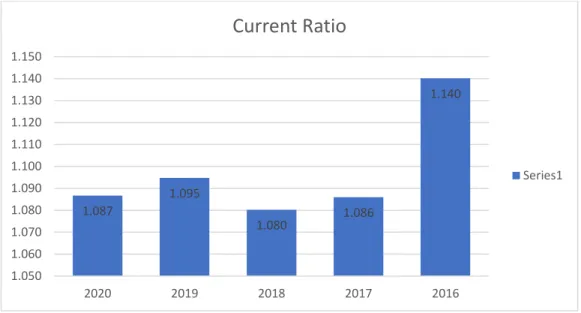
Figure 8 Current ratio from 2016 to 2020
The current ratio is a liquidity ratio that assesses a company's capacity to pay short-term or one- year obligations. It explains to investors and analysts how a firm might use current assets on its balance sheet to pay off current debt and other obligations. From the chart, we can see that it had the highest current ratio in 2016 in this time period and the lowest was in 2018. The current ratio of IPDC is slightly lower but is in line with the industry average, that is, in 2016 it was 1.127, in 2017 it was 1.110, in 2018 it was 1.117, in 2019 it was 1.244 and in 2020 it was 1.246. As the current ratio is in line with the peers of the industry, we can say that IPDC has the financial resources to remain solvent in the short term. It also indicates that the current asset is used efficiently by the management of the IPDC.
1.087
1.095
1.080 1.086
1.140
1.050 1.060 1.070 1.080 1.090 1.100 1.110 1.120 1.130 1.140 1.150
2020 2019 2018 2017 2016
Current Ratio
Series1
36 Loan to fund ratio
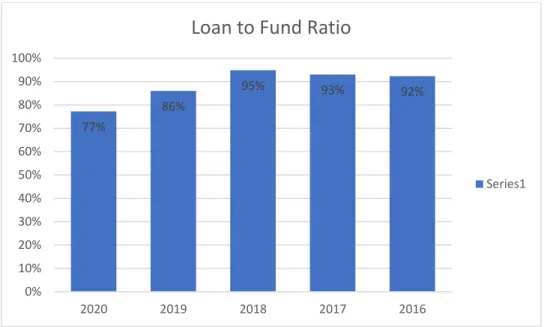
Figure 9 Loan to Fund ratio from 2016 to 2020
The loan-to-fund ratio measures a bank's ability to cover loan defaults and customer withdrawals.
Investors keep an eye on banks' loan-to-fund ratios to ensure that there is enough liquidity to cover loans in the case of a recession that results in defaults. From the data, we can see that the ratio was increasing till 2018 and then decreasing in 2019 and 2020. This indicates that till 2018 the loan was more in comparison to their inflow of fund from customer. But, after 2019 the fund was increasing in amounts as the ratio was decreasing. This means new money is being brought in, as well as new customers. And also, IPDC is financing its lending operation through deposits rather than using debts, which in case reduces their debt serving costs because deposits are much lower than interest payment on debts. From 2016 to 2018, the loan-to-fund ratio was too high, which indicated that IPDC has less liquidity to cover for loan defaults in case of economic downturn.
However, the 2019 and 2020 loan-to-fund ratio indicates that it has enough funds to tackle cases of loan default and also the rebranding strategy has resulted to an increase in number of customers.
77%
86%
95% 93% 92%
0%
10%
20%
30%
40%
50%
60%
70%
80%
90%
100%
2020 2019 2018 2017 2016
Loan to Fund Ratio
Series1
37 Capital adequacy ratio (CAR)
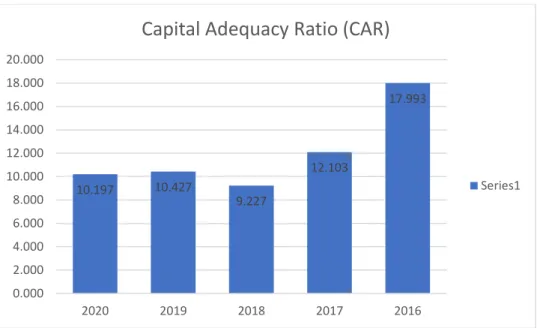
Figure 10 Capital adequacy ratio (CAR) from 2016 to 2020
The capital adequacy ratio (CAR) is an estimation of a bank's obtainable capital conveyed as a level of a bank's risk-weighted credit that are exposed. It is also used to cushion the depositors and encourage the efficiency and stability of financial systems worldwide. Capital adequacy ratio is used to decide if there is enough capital for the banks and NBFIs to operate for stress tests by the regulators.
To measure capital adequacy ratio there are two types of elements, tier 1 and tier 2. Tier 1 can help NBFIs to continue its trading even if they face some loss. On the other hand, tier 2 helps to support loss while there is liquidation.
10.197 10.427
9.227
12.103
17.993
0.000 2.000 4.000 6.000 8.000 10.000 12.000 14.000 16.000 18.000 20.000
2020 2019 2018 2017 2016
Capital Adequacy Ratio (CAR)
Series1
38 Debt to equity ratio
Figure 11 Debt to equity ratio from 2016 to 2020
Debt to Equity is used to measure the leverage NBFI is using. This tool is usually used in corporate finance. It's a measure of how much an organization relies on debt to fund its operations rather than totally owned funds. In the event of a business downturn, it indicates the ability of shareholder equity to satisfy all outstanding debts. The ideal value for debt to equity is 1.5 to lower. The cost of debt also fluctuates with the market condition. Higher value can indicate higher risk for the shareholders. The lower the value will be from 1.5, the better it will be. From the chart, we can see that from 2016 to 2019, IPDC had an ideal debt to equity ratio. But in 2020, the ratio got slightly higher. This might be because of the pandemic. During that period, along with IPDC most of the financial institution had to rely on debts to fund their operations and thereby the ratio appeared higher.
1.805
1.262
1.577
1.355
0.411 0.000
0.200 0.400 0.600 0.800 1.000 1.200 1.400 1.600 1.800 2.000
2020 2019 2018 2017 2016
Debt to Equity Ratio
Series1
39 3.5.2 Asset management ratio
Asset turnover ratio
Figure 12 Asset turnover ratio from 2016 to 2020
The asset turnover ratio compares the value of a company's assets to the value of its sales or revenues. The asset turnover ratio is a metric that measures how effectively a corporation uses its assets to produce revenue. In a given year, a large asset sale or a large asset purchase can also make an impact on the asset turnover ratio. After 2016, we can deduce that IPDC efficiency for generating revenue from asset has increased. But after 2017, There is a ratio seemed to be decreasing. This is because of the expansion of the company as after the rebranding additional branches of IPDC were initiated. In 2020, due to Covid-19 pandemic, asset turnover ratio has decreased in most of the sectors. Most of the operations were on hold for the lockdowns, which made it unable for all the companies, as well as IPDC to get proper return from their investment.
1.014
1.139
1.259 1.337
0.663
0.000 0.200 0.400 0.600 0.800 1.000 1.200 1.400 1.600
2020 2019 2018 2017 2016
Asset Turnover Ratio
Series1
40 3.5.3 Profitability
Net Profit Margin
Figure 13 Net profit margin from 2016 to 2020
The net profit margin, or simply net margin, quantifies how much net income or profit is earned as a percentage of revenue. It is the ratio of a company's or business segment's net profits to revenues. The net profit margin is usually reported as a percentage, but it can also be expressed as a decimal. The net profit margin shows how much profit a company makes out of each dollar of revenue it generates. From the chart, we can see a sharp decline in IPDC’s net profit margin. This resulted due to the implementation of rebranding and expansion through new brand opening, for this the overall operating cost increased. On the other hand, the revenue seemed to be improving as from 2016 the revenue increased by 236% in 2020 and the revenue amounted to TK 2,829,795,301 from TK 841,397,901.
19.815
10.974
8.749 8.234 9.356
0.000 5.000 10.000 15.000 20.000 25.000
2016 2017 2018 2019 2020
Net Profit Margin
Series1
41 Return on Asset
Figure 14 Return on asset (ROA) from 2016 to 2020
Return on assets (ROA) is a financial statistic that shows how profitable a business is in comparison to its total assets. ROA is a metric that can be used by corporate management, analysts, and investors to measure how well a company uses its assets to generate profit. The metric is generally represented as a percentage by using a company's net income and average assets. A higher return on assets (ROA) implies that a corporation is more effective and productive in managing its balance sheet to create profits, whilst a lower ROA suggests that there is still room to improve. From the figure, we can see that after 2016 there is significant rise in ROA. However, in 2020 the ROA decreased in comparison to 2019 due to the COVID-19 pandemic.
6.775
7.780
10.183 10.607
9.926
0.000 2.000 4.000 6.000 8.000 10.000 12.000
2016 2017 2018 2019 2020
Return on Asset (ROA)
Series1
42 Net Interest Margin
Figure 15 Net interest margin from 2016 to 2020
In finance, net interest margin is a measure of the difference between interest paid and interest received, adjusted for the total amount of interest-generating assets owned by the bank. In a nutshell, net interest margin is a metric that shows how profitable and growing a bank is. It shows how much interest the bank earns on its loans vs how much interest it pays out on its deposits.
Thus, as there is a rising trend in the table above. We can say that IPDC is operating profitably.
685374516 1138055364 1761676761 2057920714 2655728300
2 0 1 6 2 0 1 7 2 0 1 8 2 0 1 9 2 0 2 0
NET INTEREST MARGIN
43 Total Operating Income Growth
Figure 16 Total operating income growth from 2016 to 2020
The operating income growth of IPDC has shown a significant rise till 2018. The growth rate stumbled in the years of 2019 and 2020. However, the operating income seemed to be improving as from 2016 the revenue increased by 236% in 2020 and the revenue amounted to TK 2,829,795,301 from TK 841,397,901.
31.49%
48.03% 50.50%
15.53%
30.66%
0.00%
10.00%
20.00%
30.00%
40.00%
50.00%
60.00%
2016 2017 2018 2019 2020
Total Operating Income Growth
Series1
44 Profit After Tax (PAT) Growth
Figure 17 Profit after tax (PAT) growth from 2016 to 2020
There is uneven trend in the Profit After Tax (PAT) growth from 2016 to 2018. But from 2019, there seemed to be a consistent growth pattern in the PAT of IPDC.
26.19%
10.67%
34.16%
24.99% 25.44%
0.00%
5.00%
10.00%
15.00%
20.00%
25.00%
30.00%
35.00%
40.00%
2016 2017 2018 2019 2020
Profit After Tax Growth
Series1
45 Cost to Income ratio
Figure 18 Cost to income ratio from 2016 to 2020
The cost-to-income ratio is a metric used by businesses to assess their efficiency. It's most commonly used in a microfinance organization or bank to compare its operating costs to the revenue it earns. The greater the company's success, the lower the cost to income ratio is. Similarly, the lower the ratio, the greater the efficiency the organization can accomplish over time. From the table, we can say that IPDC’s cost-to-income ratio is quite consistent and good for organization.
In this five years period, IPDC is operating their business quite efficiently.
40.40%
46.00%
40.10%
45.30%
40.60%
37.00%
38.00%
39.00%
40.00%
41.00%
42.00%
43.00%
44.00%
45.00%
46.00%
47.00%
2016 2017 2018 2019 2020
Cost To Income Ratio
Series1
46 3.5.4 Asset quality
Rate of Non-Performing Loan (NPL)
Figure 19 Rate of NPL from 2016 to 2020
A nonperforming loan (NPL) is a loan in which the borrower has defaulted because they have failed to make scheduled payments for a certain length of time. Although the specific features of nonperforming status can vary based on the conditions of the loan, "no payment" is typically described as no payments of principal or interest. Depending on the sector and the type of loan, the specified time varies as well. In most cases, though, the time is 90 or 180 days.
The rate of NPL indicates how efficiently the financial and credit analyst department had screened out client for their loan offering. It also indicates the overall financial feasibility and management of the financial institution. There is no hard and fast rule of how much ratio should a company maintain. Generally, portfolio with a rate of NPL less than 6% are considered healthy. And, from the chart we can see that IPDC’s portfolio can be deemed as healthy. Within these five years, in 2018 the ratio spiked up the most but gradually decreased in the following years.
After the rebranding the ratio have increased but also the loan and advances are growing at a positive rate. The growth in from 2016 to 2020 are as follows: 203.6%, 76.9%, 28.6%, 14.4% and 5.7%.
0.71%
0.62%
2.14%
1.57%
1.38%
0.00%
0.50%
1.00%
1.50%
2.00%
2.50%
2016 2017 2018 2019 2020
Rate of NPL
Series1
47 3.5.5 Operating Segment Performance
Segmented Asset
Figure 20 Operating segment performance from 2016 to 2020
In these findings, we get the wide picture of IPDC’s diverse client base. Previously, we came to know that IPDC categorized its client base in to the three following parts: Corporate, Small and medium enterprise (SME) and retail. The corporate segment is a huge source of cashflow but it contributes to the long-term aspect. On the other hand, the SME and retail adds to the short-term cash flows which is necessity for the smooth day-to-day operation of any financial institutions. A portfolio with diverse segment also reduces the risk from defaulted loan cases, that is, one segment’s failure will be traded-off by another segment’s successful operation.
The figures above portray the effects of rebranding strategy of the IPDC. We can see that after the implication of rebranding strategy, their segment wise loan portfolio has improved both in total amount and diversification. The total portfolio in 2020 is BDT 55,282 million, which is 2.75 times more than what it was in 2016 (BDT 20,246 million). The corporate portfolio stands at BDT 25,818 million, which is 1.8 times more than what it was in 2016 (BDT 14,293 million). The SME portfolio stands at BDT 16,470 million, which is 5.8 times more than what it was in 2016 (BDT 2,835 million). The retail portfolio stands at BDT 12,994 million, which is 4.45 times more than what it was in 2016 (BDT 2,918 million).