Report On
Production quality management improvement opportunities and obstacles in Somaq Attire Limited
By
Nahid Hasan Siam 19104139
An internship report submitted to the Brac Business School in partial fulfillment of the requirements for the degree of
Bachelor of Business Administration
Brac Business School Brac University
January 2023
© 2023. Brac University All rights reserved.
Declaration
It is hereby declared that
1. The internship report submitted is my/our own original work while completing degree at Brac University.
2. The report does not contain material previously published or written by a third party, except where this is appropriately cited through full and accurate referencing.
3. The report does not contain material which has been accepted, or submitted, for any other degree or diploma at a university or other institution.
4. I/We have acknowledged all main sources of help.
Student’s Full Name & Signature:
___________________________________________
Nahid Hasan Siam 19104139
Supervisor’s Full Name & Signature:
___________________________________________
MD Hasan Maksud Chowdhury Assistant Professor, Brac Business School
Brac University
Letter of Transmittal
MD. Hasan Maksud Chowdhury Assistant Professor,
BRAC Business School, BRAC University,
66 Mohakhali, Dhaka-1212
Subject: Submission of Internship Report on Production quality management improvement opportunities and obstacles in Somaq Attire Limited.
Dear Sir / Madam,
With due respect, I am submitting my internship report on “Production quality management improvement opportunities and obstacles in Somaq Attire Limited” that I prepared while working as a procurement intern at Somaq Attire Limited.
I have attempted my best to finish the report with the essential data and recommended proposition in a significant compact and comprehensive manner as possible. I hope you will find the internship report informative and credible.
Sincerely yours,
_______________________
Nahid Hasan Siam 19104139
BRAC Business School BRAC University
Date: January Day, 2023.
Non-Disclosure Agreement
This agreement is made and entered into by and between Somaq Attire Limited and the undersigned student at BRAC University, Nahid Hasan Siam, to eliminate the unlawful exposure of the organization's confidentiality.
Acknowledgement
First and foremost, I would want to thank Allah for providing me with the chance to finish the internship and report on schedule and in perfect health.
I want to start by expressing my gratitude to my academic supervisor, MD Hasan Maksud Chowdhury Sir, for guiding me throughout the report writing process.
Furthermore, I want to thank Md Monower Hossain, my on-site line manager at Somaq Attire Limited, for his assistance and for providing me with the direction and information I needed to complete my project.
Executive Summary
This report starts out with information on the internship, including the duties and tasks that were included in it as well as the difficulties that were faced. Second, it provides information on Somaq Attire Limited’s business, such as its varied functions and industry analysis.
Lastly, it includes a research project on the organization that analyzes the quality management issues they are facing and suggests solutions for those issues along with barriers to implementing solutions.
Keywords: Defect; Management; Manufacturing; Quality; RMG.
Table of Contents
Declaration... ii
Letter of Transmittal ... iii
Non-Disclosure Agreement ... iv
Acknowledgement ... v
Executive Summary ... vi
Table of Contents ... vii
List of Tables ... x
List of Figures ... xi
List of Acronyms ... xii
Chapter 1: Overview of Internship ... 1
1.1 Student Information ... 1
1.2 Internship Information ... 1
1.2.1 Period, Name, Department, Address... 1
1.2.2 Line Manager ... 1
1.2.3 Job Description ... 2
1.3 Internship Outcome ... 2
1.3.1 Contribution of Student... 2
1.3.2 Benefits to the Student ... 3
1.3.3 Difficulties ... 3
1.3.4 Recommendations ... 4
Chapter 2: Organization Part ... 5
2.1 Introduction ... 5
2.2 Overview of the company ... 5
2.2.1 Overview ... 5
2.2.2 Products... 5
2.2.3 Market of Somaq Attire Ltd. ... 6
2.3 Management Practices... 7
2.3.1 Leadership Style... 7
2.3.2 Human Resource Practices ... 8
2.4 Marketing Practices ... 10
2.4.1 Marketing Strategy... 10
2.4.2 Marketing Segmentation ... 11
2.4.3 Targeting and Positioning ... 12
2.4.4 Product ... 13
2.4.5 Marketing Channels ... 14
2.4.6 Critical Marketing Issues and Gaps ... 14
2.5 Financial Performance and Accounting Practices ... 14
2.6 Operations Management and Information System Practices ... 15
2.7 Industry and Competitive Analysis ... 17
2.7.1 Porter’s Five Forces Analysis ... 17
2.7.2 SWOT Analysis ... 19
2.8 Summery and Conclusion ... 21
2.9 Recommendation... 22
Chapter 3: Project Part ... 23
3.1 Introduction ... 23
3.1.1 Background ... 23
3.1.2 Objectives ... 24
3.1.3 Significance... 24
3.2 Methodology ... 25
3.3 Finding and Analysis ... 26
3.3.1 Quality Control Done by Somaq Attire Ltd:... 26
3.3.2 Identifying Quality Issues ... 27
3.3.3 Solutions ... 34
3.3.4 Barriers ... 38
3.4 Summary and Conclusion ... 40
3.5 Recommendations ... 41
References ... 42
Appendix ... 44
List of Tables
Table 1: Products manufactured ... 14
Table 2: Somaq Attire Ltd's Quality Inspection Process ... 26
Table 3: Cause of Defects ... 27
Table 4: Quality Management Systems ... 37
List of Figures
Figure 1: Clients of Somaq Attire Ltd. ... 6
Figure 2: SWOT analysis of Somaq Attire Ltd. ... 19
Figure 3: Pareto Chart ... 28
Figure 4: Cause-and-effect diagram... 29
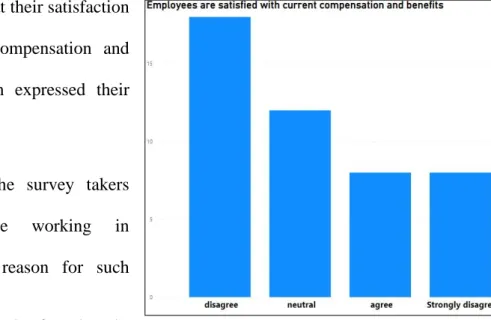
Figure 5: Employee satisfaction survey result ... 31
Figure 6: Technology involvement survey result ... 31
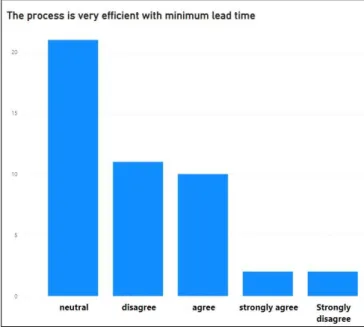
Figure 7: Process efficiency survey result ... 32
Figure 8: Reasons for defective manufacturing survey result ... 33
Figure 9: Flow of materials and information ... 36
List of Acronyms
LTD Limited
RMG Ready Made Garments TQM Total Quality Management
SWOT Strength Weakness Opportunity Threat
FOB Free On Board
Chapter 1: Overview of Internship
1.1 Student Information
Name: Nahid Hasan Siam ID: 19104139
Program: Bachelor of Business Administration
Major/Specialization: Computer Information Management
Minor/Secondary Specialization: Operations and Supply Chain Management
1.2 Internship Information
1.2.1 Period, Name, Department, Address
Period: 11/09/2022 till 11/12/2022 Company Name: Somaq Attire Limited
Department/Function: Merchandising, Procurement
Address: House No.8, Road No.1/B, Sector No.9, Uttara, Dhaka 1230, Bangladesh
1.2.2 Line Manager
Name of Supervisor: Md. Monower Hossain Position: Manager, Merchandising
1.2.3 Job Description
I was given a chance to join Somaq Attire’s merchandising team. The team’s primary task was to collect the sample, place orders for materials, and inspect the materials once we received them. I was involved in keeping tabs on and confirming supplier shipping documentation, handling test reports given by the suppliers, and preparing the inventory report of the received goods before transferring them to folders. I also assisted in the inspection process.
The team had to communicate with the suppliers and the production team until a successful pilot run with the samples. Any issue faced by the production team with the materials received was to be communicated with the suppliers and corrected.
1.3 Internship Outcome
1.3.1 Contribution of Student
Over the course of my internship at Somaq Attire Ltd., I was responsible for a wide range of operational activities, such as listing items required by cost, and reviewing purchase and inventory documents. It is of the utmost importance for a buyer to have a quick delivery of their purchases, and it is crucial for garments to be able to supply their items in a timely manner. The process has to start with quick sourcing of materials and smoothly conducting all pre-production work. As a Procurement Intern, this is the part of the business I contributed the most. I also communicated with the line chief to check if the materials received had any issues. Furthermore, I took part in pre-production meetings.
1.3.2 Benefits to the Student
The most beneficial aspect of my internship was getting to work in a professional environment with a team of experts. As an added bonus, I've learned a lot about the ins and outs of the routine tasks that must be accomplished each day to keep things running smoothly and the company culture. Not only did my time spent working for Somaq Attire Ltd. helped me become a more self-disciplined and goal-oriented person, but it also assisted me in becoming a better-qualified decision-maker due to the priceless experiences I obtained there.
For instance, I've gotten better at handling pressure as the pressure to begin production on the schedule was constant. Moreover, I have developed good communication skills. These advantages are in addition to the fact that I got the opportunity to communicate with individuals from different parts of the world and make new connections. Finally, what I've learned has been applicable to my work in the garment business, I've also met exciting people, navigated tricky circumstances, and strengthened my own sense of self-reliance. I believe that my participation in this internship will assist in building my resume in preparation for future job opportunities.
1.3.3 Difficulties
The most difficult aspect of my internship so far has been adjusting to a new environment, being a member of a group, and having to work under the guidance of a merchandising manager. The RMG industry is complex and very sensitive in its export-import processes, making it difficult for outsiders to grasp the basics. For the company to lose a lot of money due to an error would be devastating. It was much simpler for me to incorporate myself into the company culture after talking to the employees, discussing things, and keeping a positive mindset while expressing gratitude for others, as suggested in the induction session.
Moreover, throughout my internship, I was often asked to balance multiple tasks at once, which led to feelings of being overcrowded. There was a wide range of jobs to complete, and I often missed details about them, which hampered my productivity and made me more prone to making mistakes in the initial phase. When I first began out, I lacked the necessary organizational skills, which contributed to my inability to get everything done in a set time.
1.3.4 Recommendations
• The company should make improvements to the working conditions for its employees.
• By setting up training sessions for interns, the business may enhance its learning process.
• The data management should be improved.
Chapter 2: Organization Part
2.1 Introduction
Somaq Attire Limited was incorporated in Bangladesh under the Companies Act 1994 in 2007 to manufacture international standard ready-made garments. The company has a manufacturing firm situated at Gazipur and currently has over 400 employees in the factory and office. They have built a solid reputation of dependability among suppliers and buyers over the years. They have also been able to rapidly expand the RMG sector by consistently delivering excellent on-time delivery and efficient compliance.
2.2 Overview of the company
2.2.1 Overview
Somaq Attire Limited is a 100% export-oriented textile manufacturing company involved in knitting and dyeing various types of garments as well as printing. Their factory is situated at Gazipur and the head office is located at Uttara, Dhaka.
2.2.2 Products
Products of Somaq Attire Limited:
• Basic t-shirt
• Printed t-shirt
• Men's polo
• Woman's polo
• Men's trousers
• Women’s trousers
• Men’s tank top
• Women’s tank up
• Leggings
• Jackets
• Hoodie
2.2.3 Market of Somaq Attire Ltd.
Somaq Attire Limited works with many buyers from the USA, UK, Canada, and Europe.
Some of the most frequent buyers are Tema clothing including Tema Athletics, Dread, Hudson Bay Canada and Primark.
Figure 1: Clients of Somaq Attire Ltd.
2.3 Management Practices
2.3.1 Leadership Style
A leader's chosen leadership style indicates how they will inspire, guide, and manage a team of people. In Somaq Attires Ltd., the leadership style that is followed is Authoritarian or Autocratic leadership. An authoritarian leader imposes policy and procedure and guides the team's work without seeking significant feedback. They frequently have an intense concentration on obtaining productive outcomes by means of planned activities that they consider to be in the organization's best interest. There are situations in which an autocratic leader makes choices in collaboration with a select few colleagues who are acknowledged.
The company is well-focused on its leadership style, where it focuses on quick and accurate decision-making.
Once a buyer confirms the order, the need or the time for group decision is not always there as all the specification of the product along with the sample is provided by the buyer.
Moreover, the leader has the expertise and access to information that the team might not have, for instance, the prices set by the suppliers. As a result, authoritarian leadership is used.
However, this type of leadership also has its cons. Decisions taken only by the leaders can affect employee satisfaction and demotivate them. It also minimizes group input which may reduce creativity.
2.3.2 Human Resource Practices
Recruitment and Selection
Somaq Attire Ltd.’s recruitment and selection take place in 5 steps.
Step 1:
The recruiting and selection team must immediately conduct an analysis of the skill sets required for the job and the type of individual who would be a suitable fit for the role in order to understand the position. The team has made these agreements as a first step in the process.
This makes it much simpler to recognize the vital attributes that are required in a new employee, which is beneficial for the operation of the hiring process.
Step 2:
Then, the job details are posted on websites such as LinkedIn and bdjobs to find the right candidate. The job post consists of job requirements and a description of the role.
Occasionally Facebook is also used to attract applicants. When the job post reaches a potential applicant, they submit their resume with a cover letter.
Step 3:
The Somaq Attire’s team in charge of hiring conducts extensive screening and evaluations of applications before creating a shortlist of potential applicants in order to reduce the risks involved in the hiring process. The group first gathers all of the important details, then conducts an analysis of it, and finally evaluates it in the context of the job descriptions prior to moving on to the next step.
Step 4:
Once the candidates have been shortlisted, they are called for the final interview. The interview is conducted by the recruitment team and the manager of the opened position’s department to select the perfect candidate for the job. The interview board usually prepares a questioner for the interview and asses the candidates based on their answers.
Step 5:
After they have been selected, they are given a joining date in which their orientation and on- the-job training begin.
Compensation system:
To put it simply, a company's employees are its greatest asset. The department in charge of incentives and compensation recognizes the importance of regularly expressing gratitude to staff members in order to maintain a positive work environment. The staff members of the organization appreciate the benefits that are made available to them by the corporation. The majority of the advantages that are directly related to money, such as salaries, wages, commissions, and festival bonuses, are included in the compensation package. As part of their benefits package, employees receive a variety of benefits, including presents and compensation for travel expenses.
Training and Development
The corporation places a significant emphasis on labor forces and skilled workers alike. In order to successfully run a clothing business, each employment sector needs to be knowledgeable and skilled. The individuals in charge of the merchandising division are well- known in their area and bring years of experience to the table; many of them have also previously been involved in the process of purchasing homes. Consequently, the company
employs highly skilled merchandisers, who are responsible for running the business. On the other hand, the business has an in-house research and development team that is highly qualified, and the majority of its members are people from other countries who have years of experience working in the fashion industry. They provide education and growth opportunities to the individuals who will eventually be working in the factory.
Because of the training and learning, Somaq Attire Ltd. can be sure that every member of the staff is familiar with the environment and culture of the organization. The key objectives of the training are to gain an understanding of how organizations operate, how certain pieces of equipment function, and who the appropriate buyers are to work with. There are also leadership development programs that aim to train and develop participants to contribute to the long-term improvement and growth of the company.
2.4 Marketing Practices
2.4.1 Marketing Strategy
A marketing strategy is a way for a firm to direct its resources toward the most likely prospects of increasing sales and achieving a competitive advantage in the market over the long run. Somaq Attire Ltd. does not promote its name publicly rather, they directly contact buyers and try to negotiate a deal by selling themselves by showing previous records and samples. The buyers are contacted with the help of Buying House. To put it simply, Buying Houses acts as the sum of all marketing efforts, including not only the search for potential overseas buyers of garments, the collection of orders, and the dissemination of relevant information to manufacturers but also the selection of appropriate factories to produce those garments and the provision of any and all necessary technical and communicative assistance to both buyers and sellers. As a result, Somaq Attire Ltd. does not have a marketing team that
2.4.2 Marketing Segmentation
To get an idea of Somaq Attire Ltd.’s Target customers, the company’s Market segmentation can be studied. They segmented the market by Demographic, Geographic, Psychographic and Behavioral aspects.
Demographic segmentation:
● Age: The company produces a variety of apparel for people of all ages, including clothing for children (Age 8), adults, and even the elderly. Infant clothing is not manufactured in Somaq Attire.
● Gender: The Company manufactures a wide range of products that can be categorized according to the wearer's gender. They produce goods for both genders and those that are gender neutral. Men's dress shirts, women's leggings, and men's and women's jackets are all examples of their products. The vast majority of children's apparel is produced in unisex styles.
● Religion: Most of the buyers that Somaq Attire Ltd. works with are based in Europe and North America and the majority of the population there are Christians. The products produced for such buyers are tailored to their preferences. Somaq Attire produces T-shirts, printed shirts, etc., which might not appeal to our religiously influenced culture but are attractive to them.
Geographic segmentation:
Geographic segmentation refers to the practice of breaking up a market into several subsets based on physical location. Given that the great majority of customers come from various nations, companies also use geographic segmentation in their marketing strategies Most of
the buyers that Somaq Attire Ltd. works with are based in Europe and North America. When it comes to the perception of quality and product design preferences are completely different there and while following the buyer’s design, the manufacturer has to keep that in mind.
Psychographic segmentation:
The products manufactured by Somaq Attire Ltd. can also be segmented by the customer’s social status, opinions and lifestyle. Different buyers sell their products to different types of customers. Most of the buyers that Somaq Attire deals with are not luxury brands rather, they focus on the current clothing trends and design their products accordingly. The types of customers who are not looking to reflect their high social status in their clothing and are looking for something trendy are the type of customers that are targeted by Somaq Attire Ltd.
Behavioral segmentation:
Different customers interact with clothing brands differently. For some keeping up with the latest trend and designs is the way to go and others believe in buying the most basic designs.
Some customers choose affordable clothing and often purchase it more frequently, while another group rarely buys clothes and, more often than not, opts for expensive ones. Most of the buyers of Somaq Attire Ltd. are fast fashion brands, as a result, the customers that prefer cheap trendy clothes are the customers that are targeted by the company.
2.4.3 Targeting and Positioning
Targeting: Somaq Attire Ltd. implements a different marketing approach tailored to the needs of each group, taking into account product, cost, and location. Customers whom the corporation targets are mostly from the United States, Canada and European countries. The North American and European markets have a lot of fast fashion brands working in them due to their high demand there. The value of the market in the United States is currently at $100
the company is focusing its efforts on expanding its customer base in international markets, especially in the before mentioned regions. Somaq Attire is committed to establishing long- term business-to-business connections with each of its clients by always delivering goods at the right time and at competitive pricing.
Positioning: Somaq Attire Ltd. has positioned itself as a mid-sized ready-made garment manufacturing firm that has good experience working with fast fashion brands. Somaq Attire has in-house printing and embroidery facilities, which means they can fulfill the buyer’s design proposals while having good control over the quality of the prints and the embroidery.
They can produce both male and female clothing and can work with different types of fabrics.
They are improving their productivity day by day. In addition, they protect themselves from the dangers posed by competitors by working as hard as possible and generating products of superior quality at an affordable price.
2.4.4 Product
Knit garments for infants, kids, women, and men are Somaq Attire Ltd.’s forte, and they use a variety of in-house produced knit fabrics to achieve this goal. The plant is equipped with facilities for producing garment products ranging from infant sleepsuits, pram suits, shirts for women and men to hooded sports jackets. All these products are produced based on designs, fabrics, and accessories as per the requirement obtained from the buyer. These garments products can be produced based on the requirements obtained from the buyer. The cut-and- sew work on the clothing goes from simple to complex and may include embroidery, placement prints, or a combination of the two. Fabrics can be made from a wide variety of materials, such as cotton, polyester, nylon, elastane, or a mixture, they can also be yarn-dyed or solid colors.
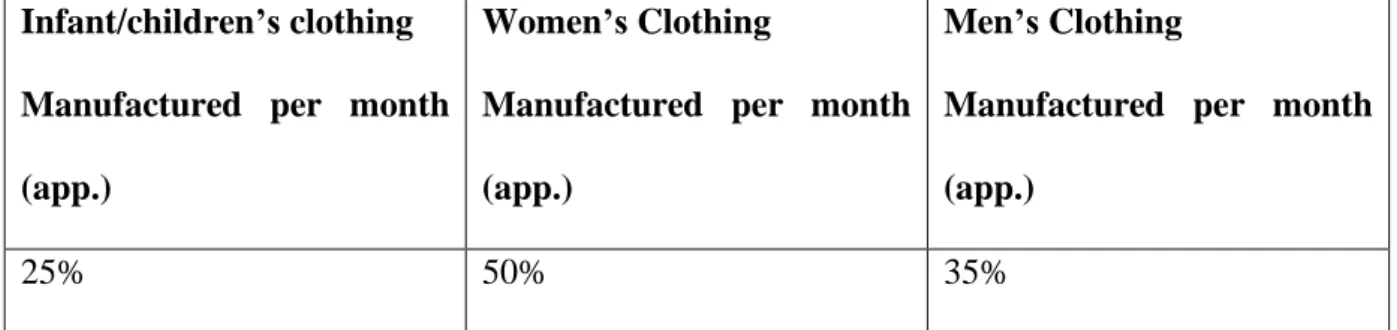
Table 1: Products manufactured
Infant/children’s clothing Manufactured per month (app.)
Women’s Clothing
Manufactured per month (app.)
Men’s Clothing
Manufactured per month (app.)
25% 50% 35%
2.4.5 Marketing Channels
Somaq Attire Ltd. works with Buying Houses to get their name known to the buyers. The buying house takes care of potential overseas buyers of garments, the collection of orders, and the dissemination of relevant information to Somaq Attires. The products manufactured reaches the final customers through the buyer’s brands such as Primark.
2.4.6 Critical Marketing Issues and Gaps
Somaq Attire Ltd. works with Buying Houses to get their name known to the buyers. The buying house takes care of potential overseas buyers of garments, the collection of orders, and the dissemination of relevant information to Somaq Attires. The products manufactured reaches the final customers through the buyer’s brands such as Primark.
2.5 Financial Performance and Accounting Practices
The dedicated financial and accounting team of Somaq Attire Ltd. keeps an eye on all transactions and ensures everything is going as planned. Additionally, they are expanding yearly as they bring on new clients and their existing clients continue to do business with them. They are also investing in the business making the manufacturing facility more capable. The financial statement and the accounting procedures, however, are extremely confidential and cannot be discussed.
2.6 Operations Management and Information System Practices
The operations of Somaq Attire Ltd. is very customer/buyer focused. The preferences of the customer are taken into account in every aspect of the service that is provided here. In the event that the customer has any issues, they are to communicate their requirements to be met by the organization.
Before both parties can come to an understanding and an order can be placed, a sample is provided by the buyers showcasing what kind of product they are expecting to be manufactured by Somaq Attire. They then participate in a discussion with Somaq Attire to discuss the manner in which it will be carried out and the pricing. Then, based on the results of the discussion, they develop a list of things that need to be included in the product as well as a schedule for delivering samples and the final lot.
To start manufacturing list of materials required is prepared and procurement starts accordingly. To attain such materials suppliers are contacted and when samples are exchanged a price is set. After choosing the supplier, orders are placed for all the materials required, including the accessories. The delivery date is set while placing the order, when the order is received by the procurement team, it goes through a quality check and is then documented and stored.
Once all the materials are collected the manufacturing process can be started. After a few samples have been sent to buyers and are approved, the final lot is manufactured and delivered.
The following are examples of the information system that is utilized by the company for the purpose of managing its operations.
FOB costing software:
Each shipment's overall price and accounting methods will be affected by the FOB clause since it specifies who is accountable for particular shipping-related costs and responsibilities at when locations. FOB shipping point allows you to choose one’s own delivery method, which may result in lower prices. FOB destination, on the other hand, allows you to escape liability while potentially increasing the cost of the transaction. Your cost of products sold is affected not just by the price of the goods themselves but also by the moment ownership changes hands and the transportation charges associated with that.
Software is used to calculate the FOB cost when exporting the final products and shipping them to buyers. Also, tracks when a shipment arrives at the port or other facility listed, as then, the accountability and obligation shift from the seller to the purchaser.
Salary sheet:
All of the information necessary to calculate an employee's wage for a given time period can be found on their salary sheet. Employees' regular pay, any additional compensation, any deductions, any overtime, etc., are all accounted for.
Somaq Attire Ltd. used salary sheet software custom-made for them to keep track of all the employee’s salaries and bonuses.
2.7 Industry and Competitive Analysis
2.7.1 Porter’s Five Forces Analysis
Michael E. Porter's Five Forces Framework is a tool used in business for assessing the environmental factors that affect a company's performance. Five factors have been identified as having an effect on the level of competition that exists within an industry and, as a direct result of this level of competition, the attractiveness or lack thereof, of an industry in general in terms of profitability. Porter’s Five Forces Analysis of Somaq Attire ltd. is given below:
➢ The bargaining power of buyers: High
In this business, the buyers have significant negotiating leverage. The competition in the RMG sector of Bangladesh is very high, a lot of organization is working here and every one of them is trying to get the best buyers ideal to meet their commercial goals. As a result, the buyers have a lot of options when choosing a manufacturer from Bangladesh.
They also have options in countries like China, India, and Vietnam, to name a few. Such conditions give the buyers high bargaining power. The manufacturers have to abide by the buyer’s conditions and prices, as getting a buyer is crucial for them.
➢ The bargaining power of suppliers: Medium
The bargaining power of the suppliers is not very high, but at the same time, it is not low either. There are many supplier options available; however, there are also a lot of RMG manufacturers working as their partners. The order size that Somaq Attire places are not as large as one of the prominent manufacturers. Moreover, if the buyer specifies the supply source, the supplier may have strong negotiating leverage. Both domestic and international supply sources are available to Somaq Attire Ltd.. China is often the source of foreign supply since it is significantly less expensive and has many providers. A large number of providers usually means less bargaining power given to the suppliers.
However, if the foreign supplier is based outside any country that Somaq Attire prefers, they will demand higher pricing and they are usually a nominated source. Those are the cases where the supplier’s bargaining power is high.
➢ The threat of new entrance: Low
In the RMG industry, there is not much concern about new competitors entering the market. Despite the fact that RMG is Bangladesh's biggest industry, it might be challenging to launch new garment companies, given the country's level of competition in the sector. Moreover, the investment required to do such business is also high. It also requires experienced management to help get buyers to start off. Even if new clothing firms enter this market, such new businesses won't be able to compete successfully due to the dominant position held by existing large clothing businesses.
➢ The threat of substitutes: Low
There is no other product on the market that can take the place of the one that the firm is manufacturing; thus, the risk of competition from other products is minimal. The market might be more interested in the types of clothing that Somaq Attire Ltd. is not working with at the moment, thus making them substitutes for their product. Products such as denim products might be used as substitutes. However, Somaq Attire Ltd. might also enter into the denim market or any other substitute market in the future as they already have most of the setup ready for it. As a result, the threat of substitutes is very low for them.
➢ Competitive rivalry: High
The textile and apparel sectors in Bangladesh are home to a very competitive marketplace. As a result of Bangladesh's position as the world's second-largest
manufacturer of clothes, behind only China, it is quite possible that the country's garment businesses would engage in more intense levels of competition with one another.
2.7.2 SWOT Analysis
A SWOT analysis is a technique for strategic planning and management that can help a corporation assess its strengths, weaknesses, opportunities, and threats within the framework of competitive situations or the development of initiatives. It's possible that this will give the corporation more time to prepare for the crisis. This method was developed to be used in the early phases of decision-making processes and can analyze the strategic position of various businesses. Its intended application was in the early stages of decision-making processes.
Policymakers and those in similar positions are its primary focus. SWOT analysis of Somaq Attire ltd. is given below:
Figure 2: SWOT analysis of Somaq Attire Ltd.
➢ Strengths
• In-house printing and embroidery: A lot of orders that come in require printing or embroidery on them, which could be the name of the brand or some design that the buyer specified. Somaq Attire has the ability to complete the task in-house as it has all the machinery and trained employees to do so.
• Expert Managers: Somaq Attire has a well-trained workforce who is motivated, punctual, and knows the company’s pieces of the machinery’s ins and outs. The management consists of professionals with a lot of experience in the field. With their expert supervision, the employees are moving forward to accomplish the company’s goal.
➢ Weakness
• Dependent on suppliers: For manufacturing products, Somaq Attire has to collect materials from its suppliers. That could be anything from threads to accessories. The prices of these materials have to be negotiated with the suppliers, and sometimes, the prices are not ideal for the manufacturers. Even if Somaq Attires gets the required material at a good price, the materials are not always delivered on time, the quality could be lower and even be defective.
• Difficulties to implement modern technology: A lot of employees in the organization are just trained to use specific machinery and are not exposed to modern technologies in their daily life, which makes it tough for them to cope with such technologies. Moreover, the business benefits from cheaper labor compared to other countries. Implementing and maintaining modern automating technologies sometimes increases the manufacturing cost rather than decreasing it.
➢ Opportunity
• Low Labour cost: The labor cost in Bangladesh is one of the cheapest in the world, which attracts a lot of foreign buyers, especially fast fashion brand buyers.
Bangladesh’s RMG manufacturers can produce products at prices that are not feasible for other countries due to their high labor costs. Most of Somaq attire’s clients are fast fashion brands that set the price of each finished product very low, and Somaq attire is able to deliver them at the set price and also makes a good profit at the same time due to the advantage of low labor cost.
• Attracting foreign buyers: Since Bangladesh is the second-largest producer of ready-made clothing after China, many buyers look for a manufacturer in Bangladesh who can produce the clothes they want at the right quality and price.
A lot of these buyers have contacts and offices in Bangladesh, which means Somaq Attire can easily create commercial relationships with those them as Somaq Attire Ltd. has extensive industry knowledge, the right types of equipment, and trained employees.
➢ Threats
• Emerging markets of Vietnam and India: China is the largest manufacturer of RMG products, and number 2 is Bangladesh. However, there is a lot of competition in the 2nd position, which Bangladesh is currently holding. Vietnam has overtaken Bangladesh in the past and India is also doing very well in this sector. The fierce competition from these two countries can take the position of Bangladesh in the future.
• Increased competition with Large local RMG manufacturers: As RMG is one of the biggest sectors driving Bangladesh’s GDP, there is a lot of organization working in this sector. Buyers have a lot of options when they are choosing their manufacturer. Large RMG organizations can attract buyers better than smaller ones. As a result, these large manufacturers are a big threat to Somaq attires Ltd.
2.8 Summery and Conclusion
Somaq Attire Ltd. is a quality RMG manufacturing firm who is steadily growing. The private Ltd. company started as a very small manufacturer however, they have grown to a mid-sized manufacturing firm. The company has come a long way, and it continues to develop. All the buyers the company has worked with in the past have expressed their satisfaction with Somaq Attire. The corporation shares many of the same shortcomings as other RMG manufacturers.
Despite challenges, the company strives to enhance its services and provide superior results for its customers and the industry. Their wealth of experience leaders and resources will serve as the bedrock of their continued success.
2.9 Recommendation
While Somaq Attire Ltd.’s current success is impressive, the company still has room to grow.
Recommendations for improvement:
1. Reduce dependency on foreign suppliers: The fact that garment manufacturers are required to rely on their suppliers is one of the industry's most significant drawbacks.
If the suppliers are based on foreign land, the logistics involved can result in affecting supply chain resilience. If Somaq Attire Ltd. can find suppliers within the country or countries where logistical support is stronger, it would be a great advantage. The idea of producing its own materials should also be explored.
2. Strengthen Marketing Strategies: The marketing of Somaq Attire Ltd. is currently weak. A dedicated, skilled team to promote the brand’s name and establish a good reputation among the buyers should be formed.
3. Upgrading Machinery: There are always new fashion trends appearing on the market, and each one calls for a unique machine to produce. Although the Companies already have many modern pieces of machinery that many mid-sized garments companies do not have, many new trends are coming into the market. Even if very few garments in Bangladesh have those machines, it is still preferable to get those machines in order to maintain a competitive advantage over the other businesses in the industry. Getting a customer's business and keeping them as a client before a competitor does is of utmost importance.
Chapter 3: Project Part
3.1 Introduction
3.1.1 Background
The Ready-Made Garments industry is one of Bangladesh's most important economic and social development drivers. Bangladesh has put much effort into modernizing its industrial industry. These companies' rapid growth has supported the nation’s socioeconomic development by increasing employment possibilities, lowering poverty rates, and raising living standards (Zohir, 2001). Defects in the garment industry are one sort of substantial loss or profit minimization. Any producer should prioritize producing and delivering high-quality goods on schedule. However, product flaws frequently result in rejection, rework, time- consuming, additional effort, and unhappy customers (Afsan & Aziz, 2021).
Any business involved in the production, trading, or exporting of clothing must exercise strict quality control over all aspects of the production process, from fabric selection through final inspection. It is imperative that specific issues relevant to quality never be ignored.
Consumers seek affordable, high-quality merchandise. Depending on price, products must reach consumers with the appropriate level of quality. The part of management concerned with establishing and enforcing quality standards is called "quality management." When it comes to making sure your company's products are up to standard, quality assurance encompasses everything (Talapatra & Uddin, 2018). The purpose of a garment and accessory inspection is to visually examine a representative sample of garments from a shipment to ensure that they comply with the delivery's instructions, description, and sample. Then during the swing and cutting process, quality should be ensured by the management so that the final product produced by the manufacturer matches the quality expectation of the buyers.
Manufacturing defective or poor-quality products can cost the manufacturer money or result in dissatisfied buyers.
This is a study on the fast-growing export-oriented mid-sized RMG manufacturer Somaq Attire Ltd. The study analyses and highlights that the company has been facing several quality issues with its manufacturing process. Moreover, it suggests a number of solutions to resolve these quality problems.
3.1.2 Objectives
• To find out how current quality management is affecting their business.
• To find room for improvement.
• To find what obstacles exist that might affect the implication of such improvements.
3.1.3 Significance
Somaq Attire Ltd. has a good quality management process that meets the requirement of current clients, the majority of whom are affordable, fast fashion brands. The organization is looking to further expand its market by working with different materials and making high- quality products for different clients. With the current quality management system ensuring such high quality will be a time-consuming and complicated task. This study will help with that by finding ways to improve their quality management and identify difficulties or barriers that might arise when implementing such changes.
The scope of the study will be limited to information given by the general manager and merchandising manager and the opinions expressed through the survey. Moreover,
information such as the cost of training, financial transactions, and other confidential information will not be used in the study.
3.2 Methodology
Both primary and secondary data will be used in this study. Primary data will be collected through questionnaires and interviews with the merchandising manager and the general manager stationed at the manufacturing facility of Somaq Attire Ltd. The cutting, stitching, washing, finishing, and packing sections were examined initially for potential causes of quality issues. The sewing department was discovered to have a lot of issues with defects and revisions. Only information regarding one of the production lines was gathered in the data collection. Tools such as the cause-and-effect diagram and Pareto chart were used to pinpoint the issues. Solutions will be developed from brainstorming sessions and interviews with the managers. The secondary data will be collected from the internet. Past research on standard quality management techniques of Bangladesh’s RMG sector will be used along with any relevant articles.
3.3 Finding and Analysis
3.3.1 Quality Control Done by Somaq Attire Ltd:
Quality inspection done by Somaq Attire Ltd:
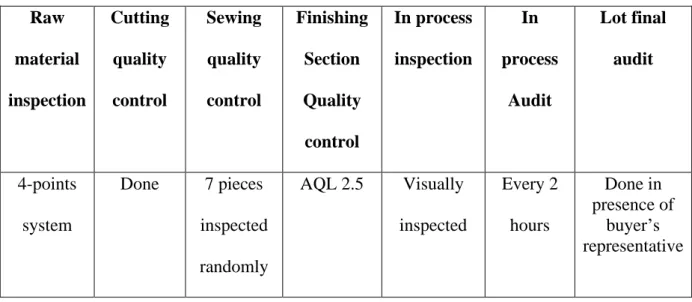
Table 2: Somaq Attire Ltd's Quality Inspection Process
Raw material inspection
Cutting quality control
Sewing quality control
Finishing Section Quality control
In process inspection
In process
Audit
Lot final audit
4-points system
Done 7 pieces inspected randomly
AQL 2.5 Visually inspected
Every 2 hours
Done in presence of
buyer’s representative
Somaq Attire Ltd. follows a 4-point system when inspecting the raw materials. According to the extent and severity of the flaws, the 4-point system awards 1, 2, 3, or 4 points in penalties.
A maximum of four points may be deducted for any one flaw. As the system is unaffected by the orientation of the defect, only significant flaws are taken into account.
Afterward, in the cutting section, further quality control is done. If there is no problem with relaxing, cutting can begin. After the fabric has been given time to rest, cutting can begin.
Accuracy checks of cut panels against the pattern are the primary checkpoints. Checking and properly cutting the lay edge.
In the sewing stage, 7 pieces are inspected randomly, and a 2 hourly audit is kept to achieve AQL 2.5. AQL stands for Acceptance Quality Limit and is a term related to the maximum number of defects that buyers and suppliers have agreed on in a batch. AQL 2.5 means the
acceptable level of primary defective goods is 2.5% of the total order quantity. If the batch produced contains a defect level that exceeds 2.5% defects, then the quality of the product is not living up to the agreement.
Finally, the inspection of the final lot is done in the presence of the buyer’s representative before the products are delivered.
3.3.2 Identifying Quality Issues
Pareto chart
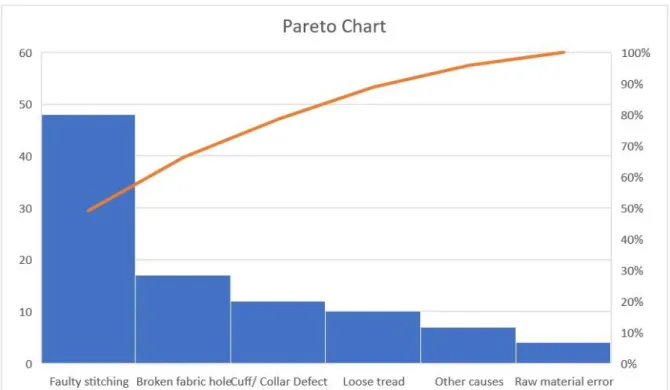
The data of defectively manufactured products below were collected from a single production line of Somaq Attire Ltd:
Table 3: Cause of Defects
Cause of defect No. of defect % Of total defect
Raw material error 04 3.92%
Faulty stitching 48 47.04%
Loose tread 10 9.8%
Broken fabric hole 17 16.66%
Cuff/ Collar Defect 12 11.76%
Other causes 07 16.66%
A Pareto chart sometimes referred to as a Pareto distribution diagram, is a type of bar graph in which the values are arranged vertically from left to right, according to their decreasing frequency of occurrence. A Pareto Chart can be used to graphically summarize and highlight the relative importance of various defect types. We have here a bar chart. The longer bars on the left indicate more frequent occurrences, while the shorter bars on the right indicate less
frequent ones. This pie chart provides a visual representation of the severity of certain problems.
Figure 3: Pareto Chart
From the above Pareto chart, it can be seen that a majority of the defective products are the result of faulty stitching.
Cause-and-effect Diagram
As shown by the Pareto chart, Faulty stitching is the most common type of defect that is being produced by Somaq Attire Ltd. therefore, a cause-and-effect diagram will be prepared for faulty stitching.
The cause-and-effect diagram was invented by a Japanese academic by the name of Dr.
Ishikawa. Due to the visual structure of this tool, it has also been called the Ishikawa diagram or the Fishbone diagram. A fishbone diagram is a specific type of cause-and-effect diagram
that shows multiple factors that contributed to an issue. It resembles the form of a fish.
Hence, it is known as a fishbone diagram. In order to classify and categorize causes, a cause- and-effect diagram employs a hierarchical network of lines and branches. It's crucial to identify the underlying issues that need to be addressed. The goal of this method is to identify and understand all of the factors that may be contributing to a problem. Both the 4M's method and the 6M's Method can be used to implement this strategy. In this instance, 4M's method is sufficient to discover its underlying cause. The causes of the problem were identified in a brainstorming session with the line chief.
Figure 4: Cause-and-effect diagram
Man: This segment includes the operational performance of employees involved in the production of a product and how it is unwantedly changing the final product. Here, incorrect needle positioning was identified as one of the top reasons for faulty stitching. Uneven stretching of the fabrics can also result in poor stitching.
Method: In this segment, the production method and its contribution to altering the product are included. Using the wrong needle size and machine speed can alter the standard method and result in faulty stitching.
Machine: This segment includes the production machinery, equipment, and infrastructure and how they are frequently mismanaged or unable to produce the required result as a result of technical or maintenance difficulties. When the needles are worn out and not changed, it results in faulty stitching. Also, defective machines skip stitch.
Materials: Raw materials and accessories are things that are needed to make a finished product. Mismanagement of materials can occur for a number of reasons, including faulty specification, inaccurate labeling, improper storage, and obsolescence. For faulty stitching, having the wrong thread thickness, or having weak low-quality threads can be a significant reason.
Survey
An employee survey was used to gather information about production and operation for further research. Given that a portion of production depends on skilled people’s performance, their satisfaction and motivation are strongly related to product quality, and a survey question investigated that as well. Employees were also asked what, in their opinion, could be the underlying reason for faulty production.
Employees’ satisfaction with current compensation and benefits:
When employees were at their satisfaction with the company’s compensation and benefits, most of them expressed their disappointment.
A good portion of the survey takers where workers were working in production lines. the reason for such dissatisfaction could be the fact that the
company provides no special benefits Such as healthcare. Even asked a lot of employees species of workers stated that it would be great if they could get healthcare benefits or more sick leaves.
Technological advancement of Somaq Attire Ltd:
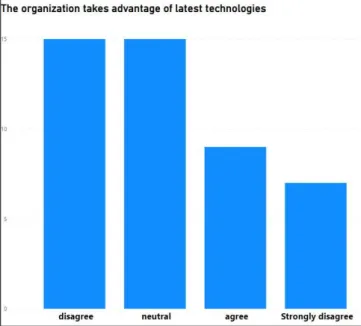
The survey shows that an equal number of participants choose to either disagree or stay neutral with the statement: “The organization takes advantage of the latest technologies.” However, a small number of participants agreed with the statement, and a portion even choose to strongly disagree.
This shows there is room for improvement.
The organization is not very keen to use the
Figure 5: Employee satisfaction survey result
Figure 6: Technology involvement survey result
latest technology to its advantage. The most noticeable aspect of the situation is reflected in the organization’s decision to have no ERP (Enterprise resource planning) software. The participants who chose to stay neutral could be people who lack the knowledge of the latest available technologies or people who believe the organization is performing well enough with the current level of technological involvement.
The lead time required to be produced by Somaq Attire Ltd:
The survey shows that the majority of the participants choose to stay neutral with the statement: “The process is very efficient with minimum lead time.”
The second-highest number of participants disagreed with the statement, and almost the same number of people agreed with it. So, the employees have mixed feelings regarding
the lead time. The data shows that the current lead time is good however, it can be improved.
Figure 7: Process efficiency survey result
According to the employees, what is the leading reason for defective manufacturing:
Figure 8: Reasons for defective manufacturing survey result
The top two reasons chosen by the employees for having defective production are the time pressure experienced by the workers and the worker’s lack of training. 39% choose the time pressure experienced by the workers. In RMG manufacturing, the workers working in the production line are constantly faced with huge time pressure as the products must always be manufactured and delivered to the buyers on time. However, in this case, the time pressure experienced by the employees might be higher than usual as it became the top reason for defective manufacturing, according to the employees working there. Having more time pressure in manufacturing could be the result of the time that is lost in the pre-production phase, which gives the workers less time to manufacture the targeted amount. Even though the defective pieces are eliminated before delivering the final lot, having workers work under excessive time pressure or having workers who lack proper skills will result in Somaq Attire being unable to produce high-quality garments.
3.3.3 Solutions
Employee/operator training and satisfaction:
The operator is responsible for maintaining proper clothing and fabric handling in the sewing room. To eliminate the issues of faulty stitching due to machinery issues, the "Self- Inspection" methodology is something that the operators should be instructed to follow. They are to verify the quality of the stitching and report any machine problems they find to the technicians. The operator should be instructed on how to use and maintain the machines properly, and they should be required to follow these instructions.
It is necessary for the quality manager of the operator to set the needle replacement frequency for sensitive fabrics at 2 Hours. If the operator is not following the needle replacement frequency and quality is suffering, then the quality manager should note this and take appropriate action.
Workers should be instructed to double-check the thread layout and take corrective action if needed. It is critical to provide sufficient training to all workers, especially new staff, in order to ensure that they can confidently fulfill their jobs.
According to the employee survey, a lot of the employees believe the lack of well-trained workers is the top reason for defective production. Somaq Attire Ltd is focusing more on the process and inspections to provide the buyers with defect-free lots, however, even if defective products can be eliminated by inspections, producing such defective products wastes valuable time and material, costing the manufacturer money. To increase product quality and reduce stitching errors, the workers have to be put through better training. This may be provided by a third-party vendor or internal staff and can include the following:
-A brief overview of the product, including a list of components and their functions.
-Detailed instructions on how to assemble each component or subassembly.
-Proper testing procedures for all components.
-Safety and quality control procedures.
-Training in the proper use of tools and equipment.
This will ensure that the production process is more streamlined and efficient, which in turn will help reduce costs. Training would stop workers from unevenly stretching fabrics or choosing the wrong needles.
The company should also focus on employee morale to increase work efficiency. It has been observed that many workers are not happy with their jobs as they feel underpaid and overworked. An excellent way to increase employee morale is by providing them with regular feedback and opportunities for advancement. This will help motivate employees and make them feel like they are part of a team. As of now, Somaq Attire limited uses Autocratic leadership, where the leader imposes policy and procedure and guides the team's work without seeking significant feedback, which can affect employee satisfaction.
Employees have expressed their dissatisfaction with the current set-up, especially the workers who are responsible for sewing are very dissatisfied. Somaq Attire Ltd. needs to re-evaluate the compensation and benefits that are given to the employees.
A lot of the workers working in the factory are women who have small children. These women have to take care of their children as well as work. Somaq attire can arrange a dedicated place in the manufacturing firm where the children of the workers can spend time/play when their parent is working. This concept is not new to the RMG business, and a
lot of large competitors have a similar setup. Somaq Attire can also implement such a plan which will boost the morale of the workers.
Pre-production lead time:
Figure 9: Flow of materials and information
The red arrows in the figure are where there is inefficiency causing higher lead time than required. The information flow can be faster and better with more technological involvement in managing data. Somaq Attire Ltd takes 7 days on average in the pre-production phase after receiving materials, which should be brought down to 5 days. Aside from information flow from suppliers, information flow within the organization is also inefficient. With less time taken in the preproduction and pilot phase of the manufacturing, the workers will have more time to manufacture the final products and will feel less time pressure. With more efficient information flow, this can be achieved. Integrating ERP software can help achieve that goal.
ERP software, or enterprise resource planning, is an effective tool for handling the intricacies of today's industrial industry. The correct enterprise resource planning (ERP) solution can
streamline operations, centralize data, facilitate collaboration, enhance revenue growth, and optimize manufacturing production cycles.
To make sure that all materials, products, and processes are tracked and used/created correctly, an ERP can be used. To ensure that all incoming raw materials are of the agreed- upon quality, ERP software can be programmed to perform automated audits and checks.
ERP solutions also aid manufacturers in acting swiftly and mitigating damage in the event of a product recall due to quality concerns. The recall's type, the recalled items, and the reasons for the recall can all be easily located using the software used for recall management. Minutes after installing the software, you will have a clear picture of the affected inventory, including product names and quantities, supplier information, and any unsold affected stock.
Quality management system/philosophy:
Which of the popular RMG Quality Management Systems used by Somaq Attire Ltd:
Table 4: Quality Management Systems
Six Sigma Total Quality Management
(TQM)
Daily work management (DWM)
Not Used Not Used Used
Somaq Attire follows the DWM management system, where the process owners develop, standardize, regulate, and enhance their processes as part of Daily Work Management, a system that enables the management of departments, functions, and processes.
Somaq Attire could consider implementing Six Sigma, which is primarily used in the manufacturing industry, where problems are usually caused by errors or imperfections. Even if every effort is made in manufacturing, there will be some degree of error in the final
products. When producing a specific number, certain deviations from the target are allowed under specific tolerances. The higher the value of this indicator, the greater the output loss.
Six Sigma's ability to pinpoint the root causes of production flaws and recommend fixes helps bring this rate down.
Somaq Attire could also look into implementing the Total Quality Management philosophy.
The goals of total quality management (TQM) are to optimize the manufacturing process, the supply chain, and employee learning and development. The goal of total quality management is to ensure that every step of the manufacturing process contributes to a high-quality end result. When TQM is appropriately implemented, it allows businesses to produce goods at lower costs. Companies that use TQM are able to give more consistent products to their customers, which in turn increases consumer trust.
3.3.4 Barriers
Once the solutions were designed, a few of the employees working in managerial positions were approached to discuss what barriers exist in Somaq Attire Ltd. that can affect the implementation of such plans and how the organization can overcome these barriers.
The barriers are listed below:
1. Lack of resources is the most significant barrier to implementing such solutions. This can mean financial resources, human resources, or time. Training employees requires all of them. Even if the organization has the human and financial resources, it takes time for employees to learn new systems and processes. A lack of human resources might influence the organization to hire new employees for training purposes.
However, hiring new employees takes time. This is especially true if you need to hire people with specific skills that aren’t common among your current employees.
become productive. Somaq Attire Ltd. can overcome this barrier by listing all the improvements they intend to make and setting a budget for such a long-term plan.
2. High turnover at the management level is another barrier faced by Somaq Attire Ltd.
Changing managers can result in changes in management and inspection styles. This can lead to confusion for employees and resistance to change. High turnover at the management level can also result in a lack of consistency, which is especially
important when it comes to managing quality control. This can result in a break in the flow of information and knowledge between managers. Somaq Attire must overcome this barrier by concentrating on employee satisfaction.
3. The attitude of employees towards quality is another barrier for Somaq Attire Ltd, which they are struggling to get past. The workers in Somaq Attires have been manufacturing products for fast fashion brands that primarily focus on pricing. The company has recently started to focus on quality, which is a significant change for them. This has resulted in a lot of resistance from their employees who have been used to working at a lower cost and faster pace. This has led to a culture where the workers are not motivated to produce high-quality products and often compromise on quality as a result. Somaq Attire Ltd is trying to overcome these challenges by educating their employees about the importance of quality for all customers, including fast fashion brands, and changing the culture of their factory so that workers feel valued and motivated.
4. Planning and a budget will be needed if the employee benefits are to be increased.
When using these many resources, the top management is not very cooperative since they are more concerned with growing the business. Having a spot in the facility where workers' children can spend time as needed is a workable concept in the existing environment with little change. However, planning such a portion will take time because the section must insulate the children from the noises of production machines.
5. Many factors affect the successful Enterprise Resource Planning Systems (ERP).
Popular ERP software programs are costly, and it also required the current employee to adapt to the new system. Furthermore, successfully implementing an efficient ERP system requires quality control and quality assurance. The ERP system's quality assurance and quality control processes involve systematic planning and methods for finding and eliminating flaws in the system. Somaq Attire Ltd. can overcome this barrier by hiring employees with experience handling ERP software and getting them to train the existing employees.
3.4 Summary and Conclusion
The goal of quality improvement is not just to improve quality, but also to boost production and reduce manufacturing costs (Masud et al., 2009). Quality is the most critical factor in determining customer satisfaction. Not only in the textile manufacturing industry, but in every production, minimizing faults is critical to assuring product quality. The garment sector is vital to the Bangladeshi economy. However, the country's rapid expansion in the RMG industry has not been matched by the expansion of backward linkage infrastructure. As a
result, producing high-quality goods is essential for survival in today's worldwide competitive market (Afsan & Aziz, 2021).
This research looked into the quality issues of the growing mid-sized RMG manufacturer Somaq Attires Ltd. With tools such as Pareto chard and cause-and-effect diagram, the core quality issues were identified. Then, possible solutions were proposed for those problems.
The solution was developed based on past research done on the quality management of Bangladeshi RMG manufacturers and the opinions of the employees that they shared. Once the solutions were developed, they were revisited to identify what barriers exist within the organization as these barriers are where the managers should concentrate on rectifying to increase the chance of successfully implementing these suggested solutions.
3.5 Recommendations
Somaq Attire Ltd. should prioritize raising the bar on quality. It will be challenging for them to deliver to buyers who are looking for high-quality products with their current quality management. They might have to reject a lot of manufactured pieces as they would not pass the buyer’s quality requirement.
Forming a Quality Circle will be the right start for them. Quality circles are teams of professionals who get together on a regular basis to address issues, enhance product quality control, and promote high standards. Due to the system's voluntary character, it attempts to boost participants' self-assurance and job satisfaction. They should also try to get ISO certifications. Specifically, an ISO 9001 certificate which shows that your business values its clients and is dedicated to producing good quality merchandise. By ensuring best-practice procedures are in place, this internationally recognized Standard promotes efficient growth and ongoing development.
References
1. Afsan, N. (2021). Assessment of Quality Management System and Intervention of Lean Six Sigma Tools in a Ready