It examines the accomplishments of PS as a group, active citizenship among its members, and the geographical dispersion of the organization's influence. Within these PSs, an average of 8.2% of PS members were also involved in the BRAC TUP program. For example, PS members visited UP members and presidents for social safety net services, while the control group limited their outreach to male UP members.
The study also tracked PS members' response to human rights violations in their households or the local community.
INTRODUCTION
In Bangladesh, researchers and policy makers often use the term Civil Society Organization (CSO) interchangeably with non-governmental organizations (NGOs), organizations that implemented donor-funded projects. However, this study classifies Polli Shomaj as a civil society organization due to its substantial independence from BRAC, its implementing organization. PS provides an independent avenue for citizens' aggregation and is therefore classified as a civil society organization.
Civil society organizations such as PS can help establish such trust networks, which provide both group support and social insurance that guarantees reciprocity in group behavior.
METHODS
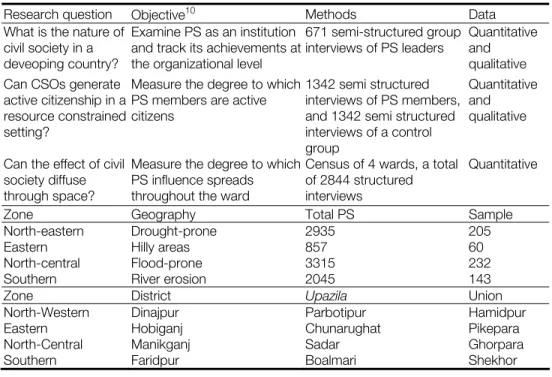
Within the control department, there was a purposeful selection of individuals who corresponded to the socioeconomic characteristics of the PS members surveyed above (age, level of education, household income, number of members in the household). The researchers selected one ward from each of the four geographic areas using random and purposive techniques. The Participatory Rural Appraisal (PRA) technique was used to list all households in the district and classify them according to their wealth status – rich, affluent, poor and very poor.
The various program objectives (access to services, management processes and local and social institutions) are the main parts of the report and therefore most chapters address these themes along all three levels.
OVERVIEW OF POLLI SHOMAJ
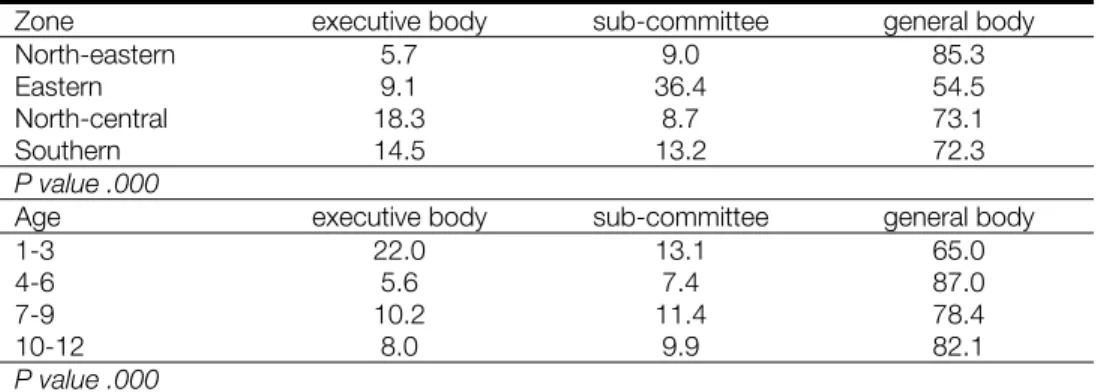
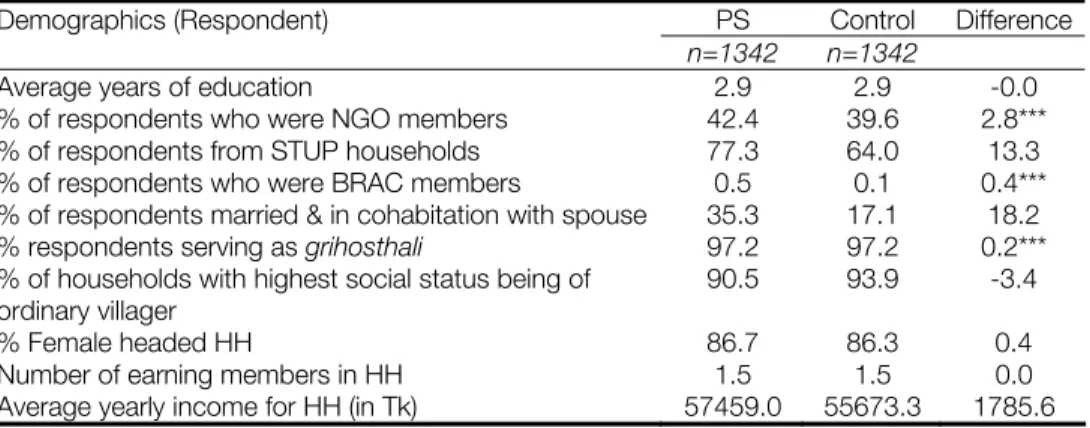
For example, a slightly higher percentage of PS members worked as contract workers or grihostali, and the number was statistically significant. Each PS was also expected to hold a general assembly meeting with all PS members in the department. Were PS members more active in lobbying for resources on their own than the control group.
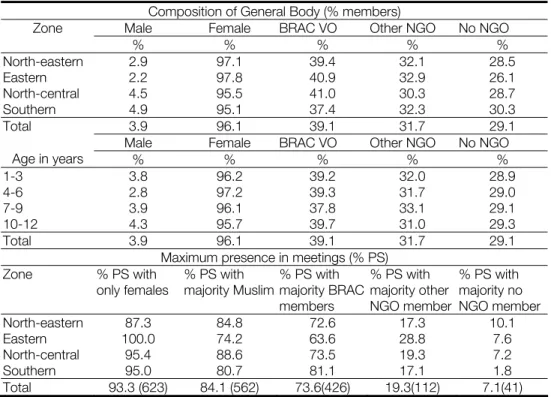
A larger percentage of PS members received the desired social security services for their own households (Table 22). More PS members also received non-governmental health services, and the difference was statistically significant. Additionally, 73% of PS members who ran were members of BRAC, followed by 19% of no NGO associations (Figure 4).
However, a higher percentage of PS members identified with a specific party as its member (3.6%) or worker compared to the control group (1.0%). Since a small percentage of PS members contested for office, many of the above respondents must have campaigned for a candidate outside of PS. It was decided during discussions between PS members and the BRAC PO bhai that I will stand in the elections.
A higher percentage of individual PS members campaigned or stood for election compared to the control group. However, a lower percentage of PS members voted during these elections, possibly due to their inferior socio-economic status. Of those present, a higher percentage of the control group attended as plaintiffs or defendants, while a higher percentage of PS members attended as non-vocal attendees (porjobekkhok nirbak).
Therefore, a higher percentage of VV members participate in shalish as observers, while a higher percentage of the control group of regular villagers participated when they were directly involved in the event.
LOCAL AND SOCIAL INITIATIVES
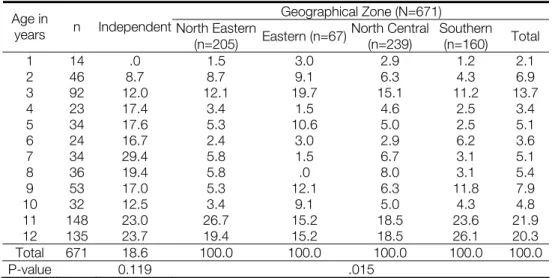
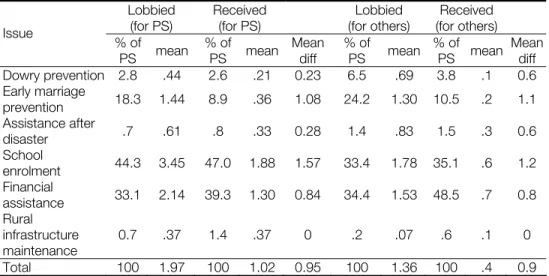
Finally, SP generated funds to meet personal financial crises of SP members and other villagers for situations including wedding, funeral and medical expenses (Box 7). for others) Received (for others) Issue. When SP members learned about Saleha's problem, they decided to help her by raising funds for her treatment. Sixty-eight SP members and 65 control group respondents reported that HR violations occurred in their households during the past year.
Very often, PS members were themselves victims of domestic abuse and did not want to seek help for fear of abandonment, divorce, further abuse and even death. Respondents from the control group proved to be less successful than PS members in actually solving dowry problems in their household. In several cases, PS members called shalish or approached village elders to find a permanent solution.
Despite the vulnerability of PS members due to their gender roles, they were quite proactive in resolving non-gender conflicts, for example conflicts related to money, property or business, especially those involving their spouses. PS members seem much more proactive in solving human rights violations in their communities. A higher percentage of PS members also reported contacting a support person to help the victim (9.09% PS, 5.69% control) and being able to resolve the crisis (22.39 %.PS, 13.83% control); the differences for both were statistically significant.
This is followed by child marriage of girls and domestic violence of women by in-laws, with 5.44% of PS members and 3.35% of the control group taking action in the former and 4.55% of PS and 1.94 %. PS members were often unable to solve problems themselves and involved local elders in the cases they handled.
PS AND THE LOCAL GOVERNMENT
However, at the time, only two of the four PS surveyed appeared to have actually submitted a list of proposed beneficiaries to the UP members, and only one had invited the UP member as a point of contact at their general meeting.
PROGRAMME ELEMENTS
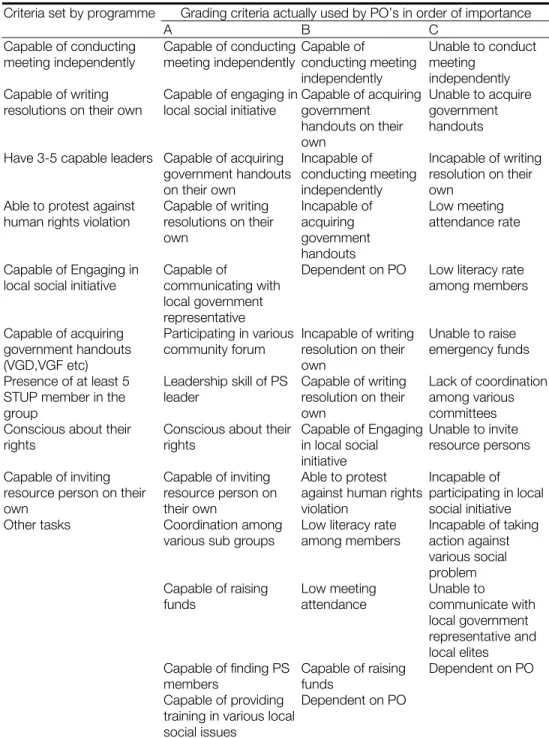
In some cases, interviewees claimed that all information provided by the PO was false, as it did not match the actual data recorded through interviews with PS members. Performance: BRAC staff felt that PS members were successful in securing safety net programmes, but less successful in other areas such as holding meetings, responding to human rights violations and participating in local committees. They claimed that many PS members were completely dependent on POs, and reluctant to fulfill duties on their own.
Gathering place: PS did not have its own office space for document storage and meetings. An equally large number of registries did not document their members' NGO affiliation, including BRAC membership. In addition, registries did not provide details of training received, PS activities or senior meetings and lists of TUP members.
Many producer organizations were unable to provide older registers because they claimed they had been newly assigned to the relevant area. The data in the vast majority of existing records did not correspond to the actual events and facts, as verbally described by PS members. The conclusions of the meetings of the executive and general bodies were not mentioned or were wrongly mentioned and did not correspond to the reality, as can be seen from the oral interviews. 31.
31 Given the state of registers in the field, we changed our interview strategy at the start of fieldwork, instructing RAs to record data as derived from group interviews.
CONCLUSION AND RECOMMENDATIONS
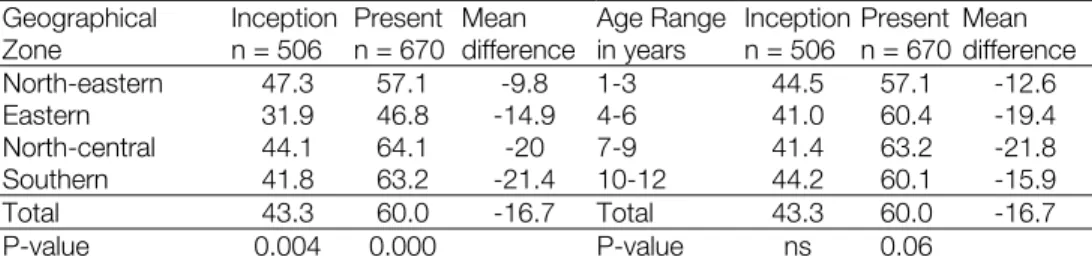
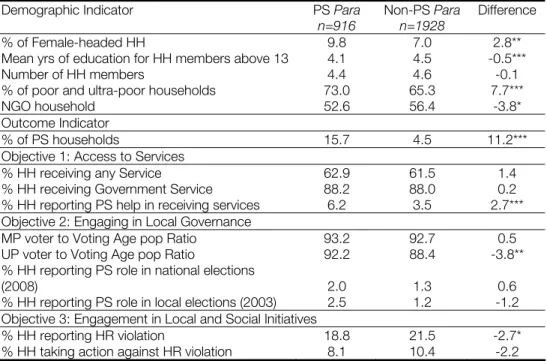
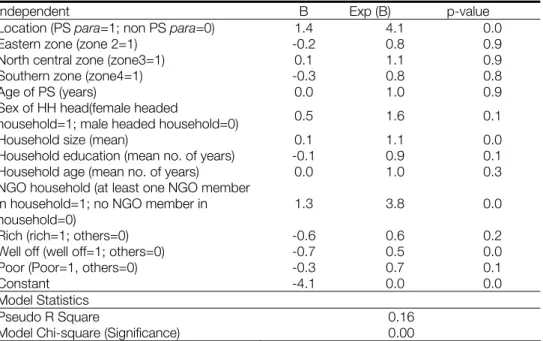
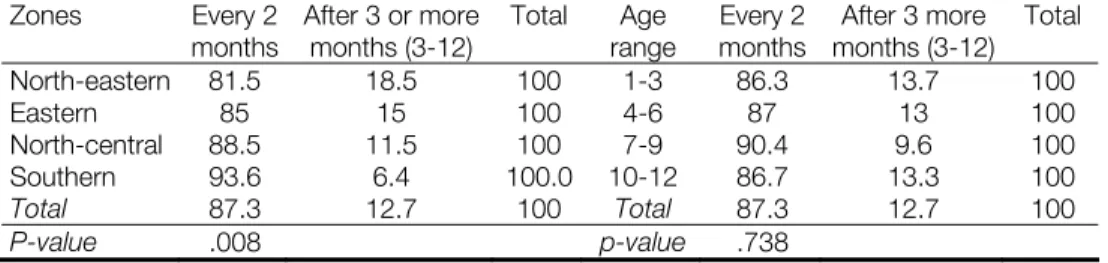
A larger percentage of older Polli Shomaj may have had dropouts (which may be explained by the relative immaturity of a new program), but a larger percentage also had a faster growth rate. SP members had limited education, most came from female-headed households, and served as grihostali by profession, working as contract laborers for others. In fact, SP members had only limited success over the control group in receiving services.
A higher percentage of PS members lean on female UP members and chairpersons for social safety net resources, while a higher percentage of the control group lean directly on the male UP member. To get services for others, a higher proportion of PS members went to PS or female UP members, while the control group lobbied with family or friends. However, PS members were more political – a higher percentage of PS members were affiliated with political parties.
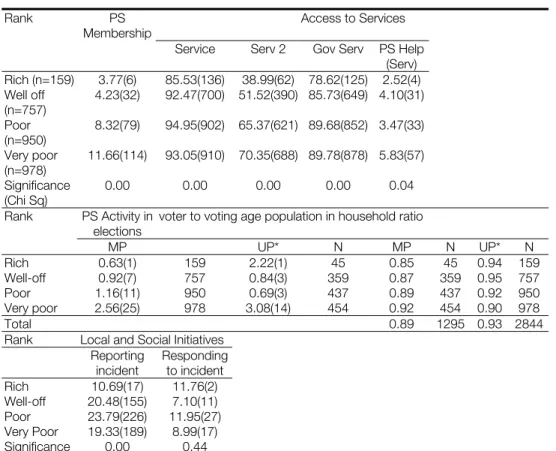
In the local elections, a higher percentage of PS members campaigned for their candidates or contested in elections themselves compared to the control group. More PS members attended shalish as vocal, or silent attendees; a few even played the role of shalishkar. Households in PS paras of the ward were more vulnerable to poverty; a greater percentage of households in PS paras were female-headed and ultra-poor, and less educated.32 However, they only received a marginally higher percentage of the services and the differences were not statistically significant.
POs were currently pressed for time due to work overload, which discouraged PS members from attending meetings because they felt left out. At the same time, the subcommittee can be rotated more often, allowing more PS members to develop leadership skills.
Political Participation: How and Why Do People Get Involved in Politics?, Rand McNally College Publication Company.
APPENDIX:1 TABLES
Increase primary school enrollments from poor families Increase school attendance and reduce dropouts Increase primary school completion rates. Education Children from female-headed households where the household head is widowed, desolate and poor Children from households headed by day laborers Low-income professional families (eg fishing, pottery, blacksmithing, weaving and cobblestone). Female heads of households where women are widows, abandoned and poor Day laborers or temporary workers whose income is less than tk.
Number of beneficiaries is determined based on category of union Fifty (50) percent of the beneficiaries are women and the other fifty (50) percent are men. Freedom fighters with income less than Tk. 6000 per annum Disabled or partially disabled or landless or unemployed with no one in the family to depend on. Women or widow, abandoned or destitute The number of beneficiaries is identified based on the category of Union.
TR (Test Relief) Generating employment for people in poverty-stricken areas during the rainy season. Developing and maintaining rural infrastructure. Women headed households where women were widowed, abandoned and destitute. Day laborers or temporary workers with income less than Tk.
APPENDIX:2 MAPS