• Tidak ada hasil yang ditemukan

smart garbage warning system

N/A
N/A
Protected

Academic year: 2024

Membagikan "smart garbage warning system"

Copied!
31
0
0

Teks penuh

(1)SMART GARBAGE WARNING SYSTEM BY Rumanna Korobi 151 – 15 - 5196 Farjana Akter 151 – 15 - 5496 Md. Tanjim Shifat 151 – 15 - 5117. This Report Presented in Partial Fulfillment of the Requirements for the Degree of Bachelor of Science in Computer Science and Engineering Supervised By MD. Tarek Habib Assistant Professor. Department of CSE Daffodil International University. DAFFODIL INTERNATIONAL UNIVERSITY DHAKA, BANGLADESH DECEMBER, 2018. (2) (3) DECLARATION We hereby declare that, this project has been done by us under the supervision of Md. Tarek Habib, Assistant Professor of CSE Department, Daffodil International University. We also declare that neither this project nor any part of this project has been submitted elsewhere for award of any degree or diploma.. Supervised by:. Co-Supervised by:. Md. Tarek Habib. Mr. Gazi Zahirul Islam. Assistant Professor. Assistant Professor. Department of CSE. Department of CSE. Daffodil International University. Daffodil International University. Submitted by:. Rumanna Korobi 151-15-5196 Department of CSE Daffodil International Universit. Farjana Akter 151-15-5496 Department of CSE Daffodil International University. Md. Tanjim Shifat 151-15-5117 Department of CSE Daffodil International University. ©Daffodil International University. ii. (4) ACKNOWLEDGEMENT First we express our heartiest thanks and gratefulness to almighty God for His divine blessing makes us possible to complete the final year project/internship successfully. We really grateful and wish our profound our indebtedness to Md. Tarek Habib, Assistant Professor, Department of CSE, Daffodil International University, Dhaka. Deep Knowledge & keen interest of our supervisor in the field of “Internet of Things” to carry out this project. His endless patience, scholarly guidance, continual encouragement, constant and energetic supervision, constructive criticism, valuable advice, reading many inferior draft and correcting them at all stage have made it possible to complete this project. We would like to express our heartiest gratitude to Prof. Dr. Syed Akhter Hossain and Head, Department of CSE, for his kind help to finish our project and also to other faculty member and the staff of CSE department of Daffodil International University. We would like to thank our entire course mate in Daffodil International University, who took part in this discuss while completing the course work. Finally, we must acknowledge with due respect the constant support and patients of our parents.. ©Daffodil International University. iii. (5) ABSTRACT. In our home room, sometime we see overloading garbage. This it creates unhygienic environment. To avoid this ugly situation, we are going to implement a project called “Smart Garbage Warning System: A smart Garbage Warning System for our country and all over the world”. Main goal is of this project is to maintain a healthy environment in our country and all over the world and reduce human sufferings. Stack of junk are one of the significant issues looked by a great many people in country all over the world, particularly the individuals who live in flats, as the quantity of canisters is constrained and shared among all occupants. It might cause contaminations, which may prompt clean issues and illnesses. This venture introduces the improvement of a savvy refuse observing framework with the end goal to gauge squander level in the waste receptacle continuously and to caution the region, specific cases, through led signal. The proposed framework is comprised by the image capture to quantify the waste level, and an Arduino Uno which controls the framework task. It assumes to create and send the notice led signal to the region through led signal when the waste is fall down the room full, so the refuse can be gathered quickly. Besides, it is relied upon to add to enhancing the proficiency of the strong waste transfer administration.. ©Daffodil International University. iv. (6) TABLE OF CONTENTS. CONTENS. PAGE. Board of examiners. i. Declaration. ii. Acknowledgements. iii. Abstract. iv. CHAPTER. CHAPTER 1: INTRODUCTION. 1-3. 1.1. Introduction. 1. 1.2. Motivation. 1. 1.3. Rationale of the Study. 2. 1.4. Research Questions. 2. 1.5. Expected Outcome. 3. 1.6. Report Layout. 3. CHAPTER 2: BACKGROUND. 4-6. 2.1. Introduction. 4. 2.2. Related Works. 4. 2.3. Research Summary. 5. 2.4. Scope of the Problem. 5. 2.5. Challenges. 6. CHAPTER 3: REQUIREMENTS ANALYSIS FOR THE PROPOSED SYSTEM. 7-16. 3.1. Introduction. 7-8. 3.2. Research Subject and Instrumentation. 8-10. 3.2.1 Ardiuno. 8-9. 3.2.2 Driven. 9. 3.2.3 Breadboard. 10. ©Daffodil International University. v. (7) 3.3. Data Collection Procedure. 10-11. 3.3.1 Pseudo Code. 11. 3.3.2 The tf.data API Acquaints Two New Deliberations. 11-12. 3.3.3 Fundamental Mechanics. 12-13. 3.3.4 Dataset Structure. 13. 3.3.5 Sparing Iterator State. 13. 3.3.6 Expending TFRecord Information. 13. 3.3.7 Consuming CSV Data. 14. 3.3.8 Clumping Tensors with Cushioning. 14. 3.3.9 Arbitrarily Rearranging Information. 14. 3.3.1.1 Using High-Level APIs. 14. 3.4. Statistical Analysis. 15. 3.5. Implementation Requirements. 16. CHAPTER 4: DESIGN SPECIFICATION. 17-19. 4.1. Introduction. 17. 4.2. Experimental Results. 17-18. 4.3. Descriptive Analysis. 18-19. 4.4. Summary. 19. CHAPTER 5: SUMMARY, CONCLUSION, RECOMMENDATION AND IMPLICATION FOR FUTURE RESEARCH. 20. 5.1. Summary of the Study. 20. 5.2. Conclusions. 20. 5.3. Recommendations. 20. 5.4. Testing Implementation. 20. 5.5. Implication for Further Study. 20. REFERENCES. 21. APPENDIX. 22. ©Daffodil International University. vi. (8) LIST OF FIGURES FIGURES. PAGENO. Figure 3.2.1: Arduino UNO.. 9. Figure 3.2.2: Light-producing diode.. 9. Figure 3.2.3: Breadboard.. 10. Figure 3.3: The full use case model of smart garbage warning system.. 11. Figure 3.4: Statistical analysis. 15. Figure 4.2.1: Overall demonstration of implementation for the proposed system.. 17. Figure 4.2.2: Representation of garbage detect according to their status on image. 18 Figure 4.3:. Block diagram.. ©Daffodil International University. 18. vii. (9) CHAPTER 1 INTRODUCTION 1.1 Introduction Now a day’s dustbin is a common and a basic need everywhere. In our daily life we produce much more waste than we consume. Waste is generated every day, from domestic, industrial, commercial and institutional establishments such as hospitals, market just to mention a few. Population is increasing in a daily basis. So, the overflowed population is creating not only household garbage but also industrial wastes. So, this huge pile of waste is poisoning the air, water and surroundings. Efficient waste management and disposal is required to maintain safe and green environment. As a result, we need some smart waste bins.. 1.2 Motivation Bangladesh is known as a land of natural beauty. In Bangladesh people are increase day by day with increase of population the scenario of cleanliness with respect to garbage management is degrading tremendously. In city where many people lives where we see waste bin are placed. But bad waste management can easily result in air pollution and soil contamination. They have an adverse effect on human health. This kind of situation is neither good for our environment nor for our advancement. Hence, we developed a project making the dustbin smart enough to notify itself for its cleaning.. ©Daffodil International University. 1. (10) 1.3 Rational of the study: Bangladesh is economically and socially recognized as a developing country. Through the Information and Communication Technology (ICT), the country is now very rich. Along with commercial and technological developments, developing our lifestyles at all times. We are using modern technology in every aspect of our lives for a comfortable life. With the use of modern technology, our lifestyle has become much easier. In the foreign countries , we can see that their city is using Smart Bin for keeping the city clean. We can contribute to the ongoing development of our country to present our city as a Smart City in the outside countries. In addition, we can solve some annoying problems in the city. We can keep our city clean by using modern technology. So in this study we made a smart bin to keep the city clean.. 1.4 Research Questions: This project is to design and build a prototype for an automatic open dustbin that can automatically open the lid when it detects the people who want to throw out their trash. It also can detect the level of the trash that inside the dustbin . If the dustbin is full of trash at the certain level, the lid will not open even when there are people who want to throw out their trash. Beside this also smartly detect the level of the trash that inside the dustbin. To achieve the main objective, two element of engineering are combines: mechanical and electrical component. For electrical component, the ideas are to make the dustbin automatically open based on infrared technology. The purpose of our project is to use a bin so that we can clean the city. Initially we are in a room use his project. Many times the children left the water bottles, tissues, chocolates and chip packets on the floor. When the kids leave those dirt in the floor of the house, a sound will be given to the dirt bin.. ©Daffodil International University. 2. (11) 1.5 Expected Output Our primary goal is to develop a real-time garbage detect system that will help to avoid unwanted garbage from domestic, industrial, commercial and institutional establishments such as hospitals, market just to mention a few. We also tend to make this system more efficient requiring less fuel consumption. Beside these, there will be authentication to permit only authorized person, profile management and collection history for statistics.. 1.6 Report Layout This report consists of five chapters, and this section provides insight of all five chapters. Chapter one provides introduction, motivation and expected outcome of the study. Related research work is discussed on chapter two. It also provides problem scopes of the research. In chapter three, requirements of the proposed system, system architecture and system flow diagram is provided. Chapter four of this document describe our proposed system experimental results and discussion. Lastly, chapter five is on summary, conclusion, recommendation and implication for further study.. ©Daffodil International University. 3. (12) CHAPTER 2 BACKGROUND 2.1 Introduction At present, day by day the world has become dependent on technology. Almost works are solving using by technology. Many people and organization doing new or newish their project solving by using technology. Modern technologies have become a great factor in many businesses, and the use of interdisciplinary and global work teams has completely changed the work environment. Now a days, we are connecting home apparatus, vehicles to the internet using Internet of Things (IOT) concept so why not garbage detect. In this chapter, we try to give an overall idea about garbage detect system. Here we have discussed garbage detect system. [1][2]. 2.2 Related Works It is neither an original nor a new idea. There are many existing implementations like this system after Introduction of Digital World Concept. However, this is a new plan for designing a smart garbage detect system with navigation and real-time visualization on the map. The paper proposed a garbage detect system where initially we are in a room use this project. Many times the children left the water bottles, tissues, chocolates and chip packets on the floor. When the kids leave those dirt in the floor of the house, a signal will be given to the computer screen. Strong waste administration is a major test in urban territories for the vast majority of the nations all through the world. A proficient waste administration is a pre-demand for keep up a protected and green condition as there are expanding a wide range of waste transfer. Numerous innovations are utilized for waste gathering and for very much oversaw reusing. The Data gathering is troublesome. Identifying the protest in the irregular development in the wake of distinguishing the question faculties by webcam and pursued by picture preparing, after the division procedure groups the loss into gradable and non-degradable waste. [4][5][6]. ©Daffodil International University. 4. (13) 2.3 Research Summary In our research, we are meant to find an enforceable solution of garbage detect system for home considering the current system available so that current system can give-and-take it easily. We will also be focused on the economical and overall condition of our country when used smart trash bin. Firstly, garbage detection system especially provides for home. And serially country and the world will be detected garbage this system. This system will be undergoing from volume- to value-based service, with an emphasis on quality. [6]. 2.4 Scope of the Problem Nowadays garbage management problem is very hard problem in our country. It is harmful to our environment. If there is problem in detecting the dirt, then the problem is so harmful. Firstly, we just detect room garbage. Example: Many times the children left the water bottles, tissues, chocolates and chip packets on the floor. When the kids leave those dirt in the floor of the house. We just find out by our project. Primarily, the system demands for home, Universities room, and office room. This computer base software is suitable for all home, Universities room, and office room maintains garbage detection. This research focuses on finding a way to develop a smart garbage detection system to reduce overall expenditure related to garbage detection as well as better room for cleaning.. ©Daffodil International University. 5. (14) 2.5 Challenges There is no work exists without test. So also, in our task, we additionally confronted a few difficulties. Above all else, we are attempting to make this framework with client inspiration asset so we need to finish this framework with full fill of client's necessity and it's an extremely trying for us to propel client and control them. Bangladesh is a developing nation. This Test looks to recognize client focused advancements that can enhance client exercises by discretely checking and breaking down movement in the home. The results of these advances will empower much customized client encounters and considering and furthermore may prompt lessened movement, enhanced the nature of administrations, upgraded speed of administrations, and additionally enhanced access to administrations. That is waste location is such a great amount of vital in Bangladesh. For this situation my user educate to me he when confront any issue or he need to get new Administrations. It is useful to know the measure of the administrations or issue and I will endeavor to take care of the issue. I will investigate how to explain or I will give arrangement the issue. I need to know my client extremely expected to do. I will allude to my services all through the rest my services. The accompanying face is a portion of the basic troublesome. In this implementation, we are using image processing for detecting specific of waste inside room. is difficult.. ©Daffodil International University. 6. (15) CHAPTER 3 RESEARCH METHODOLOGY 3.1 Introduction PC vision (CV) is one of the most sultry research subjects in machine taking in nowadays. From self-driving autos to Instagram and Facebook's question location innovation, it has seen a fast ascent lately on account of advances in equipment. Question recognition is effortlessly a standout amongst the most well-known utilizations of PC vision. On account of the brilliant open-source network ML has, question discovery has seen a great deal of enthusiasm as an ever increasing number of information researchers and ML professional’s line up to break new ground. Stay aware of that pattern, Google, one of the pioneers in ML (maybe THE pioneer in ML), has discharged the most recent variant of its famous TensorFlow Object Detection API structure. As far back as its discharge a year ago, the TensorFlow Object Detection API has routinely gotten updates from the Google group. These updates have included pre-prepared models prepared on datasets like Open Images, in addition to other things. We have seen the network grasp this structure with open arms – identifying objects on a football field, person on foot including, discovering breaks the avenues, and so on. There have been a wide range of astonishing tests performed utilizing this API. What's more, here comes the most recent, and a significant real refresh discharged by Google. The progressions were reported in a blog entry and we have made reference to the features underneath: Tuning hyper parameters and retraining your PC vision model can be a repetitive assignment in the event that you need computational power. So this most recent refresh has included help for quickening the preparation procedure of question discovery models through Google's Cloud TPUs. Portable arrangement has gotten some affection in this discharge. The whole procedure has been enhanced by making it less demanding to send out a model to versatile utilizing the TensorFlow Lite organization.. ©Daffodil International University. 7. (16) Many model engineering definitions have been discharged, including Retina Net, a Mobile Net adjustment of RetinaNet, and the Pooling Pyramid Network A few pertained models, in view of the COCO dataset, have likewise been discharged in this refresh. We have utilized TensorFlow to make another innovation which will identify waste give a flag. [3]. 3.2 Research Subject and Instrumentation Making exact machine learning models equipped for confining and distinguishing various protests in a solitary picture remains a center test in PC vision. The TensorFlow Object Detection API is an open source system based over TensorFlow that makes it simple to build, prepare and convey question identification models. At Google we've surely observed this codebase to be valuable for our PC vision needs, and we trust that you will as well. Finally on the off chance that you utilize the Tensorflow Object Detection API for an exploration distribution. An instrument is an apparatus or gadget that is utilized to complete a specific undertaking, particularly a logical assignment. We have utilized lost of instrument to execute our undertaking.. 3.2.1 Arduino Uno The Arduino Uno is a microcontroller board dependent on the ATmega328 (datasheet). It has 14 computerized input/yield pins (of which 6 can be utilized as PWM yields), 6 simple sources of info, a 16 MHz clay resonator, a USB association, a capacity jack, an ICSP header, and a reset wear. [7]. ©Daffodil International University. 8. (17) Figure 3.2.1: Arduino UNO.. 3.2.2 Driven A light-producing diode (LED) is a semiconductor gadget that radiates obvious light when an electric flow goes through it. The light isn't especially brilliant, yet in many LEDs it is monochromatic, happening at a solitary wavelength. [8] Figure 3.2.2: Shows light-producing diode.. Figure 3.2.2: Light-producing diode.. ©Daffodil International University. 9. (18) 3.2.3 Bread Board A breadboard is a solder less gadget for transitory model with hardware and test circuit structures. Most electronic parts in electronic circuits can be interconnected by embedding’s their leads or terminals into the openings and after that creation associations through wires where fitting. [9]. Figure 3.2.3: Breadboard.. 3.3 Data Collection Procedure: We have utilized Google information for question location. Bringing in information, the tf.data API empowers you to fabricate complex info pipelines from basic, reusable pieces. For instance, the pipeline for a picture model may total information from documents in a disseminated record framework, apply irregular annoyances to each picture, and consolidation arbitrarily chose pictures into a group for preparing. The pipeline for a content model may include removing images from crude content information, changing over them to inserting identifiers with a query table, and grouping together arrangements of various lengths. The tf.data API makes it simple to manage a lot of information, diverse information organizes, and muddled changes.. ©Daffodil International University. 10. (19) Figure 3.3: The full use case model of smart garbage warning system.. 3.3.1 Pseudo Code Open camera Start video buffering Check object detect from streaming Find the garbage from detected object Send the data to arduino Get data in aduino using serial communication. On LED if its garbage Otherwise On green LED. 3.3.2 The tf.data API Acquaints Two New Deliberations with TensorFlow A tf.data.Dataset speaks to a grouping of components, in which every component contains at least one Tensor articles. For instance, in a picture pipeline, a component may be a solitary preparing precedent, with a couple of tensors speaking to the picture information. ©Daffodil International University. 11. (20) and a name. There are two unmistakable approaches to make a dataset: Making a source (e.g. Dataset.from_tensor_slices()) develops a dataset from at least one tf.Tensor objects. Applying a change (e.g. Dataset.batch()) develops a dataset from at least one tf.data.Dataset objects. A tf.data.Iterator gives the principle approach to extricate components from a dataset. The activity returned by Iterator.get_next() yields the following component of a Dataset when executed, and regularly goes about as the interface between info pipeline code and your model. The most straightforward iterator is a "one-shot iterator", which is related with a specific Dataset and repeats through it once. For more advanced uses, the Iterator.initializer activity empowers you to reinitialize and parameterize an iterator with various datasets, so you can, for instance, emphasize over preparing and approval information on numerous occasions in a similar program.. 3.3.3 Fundamental Mechanics This area of the guide depicts the essentials of making various types of Dataset and Iterator articles, and how to separate information from them. To begin an info pipeline, you should characterize a source. For instance, to develop a Dataset from about tensors in memory, you can utilize tf.data.Dataset.from_tensors() or tf.data.Dataset.from_tensor_slices(). On the other hand, if your info information are on circle in the prescribed TFRecord organize, you can develop a tf.data.TFRecordDataset. When you have a Dataset question, you can change it into another Dataset by binding strategy approaches the tf.data.Dataset protest. For instance, you can apply per-component changes, for example, Dataset.map() (to apply a capacity to every component), and multicomponent changes, for example, Dataset.batch(). See the documentation for tf.data.Dataset for a total rundown of changes. The most widely recognized approach to devour esteems from a Dataset is to make an iterator question that gives access to one component of the dataset at once (for instance, by calling Dataset.make_one_shot_iterator()). A tf.data.Iterator gives two tasks: Iterator.initializer, which empowers you to (re)initialize the iterator's state; and. ©Daffodil International University. 12. (21) Iterator.get_next(), which returns tf.Tensor objects that relate to the representative next component. Contingent upon your utilization case, you may pick an alternate kind of iterator, and the alternatives are plot underneath.. 3.3.4 Dataset Structure A dataset involves components that each have a similar structure. A component contains at least one tf.Tensor objects, called parts. Every segment has a tf.DType speaking to the sort of components in the tensor, and a tf.TensorShape speaking to the (conceivably mostly determined) static state of every component. The Dataset.output_types and Dataset.output_shapes properties enable you to assess the derived sorts and states of every part of a dataset component. The settled structure of these properties guide to the structure of a component, which might be a solitary tensor, a tuple of tensors, or a settled tuple of tensors. [10][11][12]. 3.3.5 Sparing Iterator State The tf.contrib.data.make_saveable_from_iterator work makes a SaveableObject from an iterator, which can be utilized to spare and reestablish the current condition of the iterator (and, viably, the entire information pipeline). A saveable protest subsequently made can be added to tf.train.Saver factors list or the tf.GraphKeys.SAVEABLE_OBJECTS accumulation for sparing and reestablishing in indistinguishable way from a tf.Variable. Allude to saving and restoring for points of interest on the best way to spare and reestablish factors.. 3.3.6 Expending TFRecord Information The tf.data API bolsters an assortment of record arranges so you can process vast datasets that don't fit in memory. For instance, the TFRecord document organize is a basic recordsituated parallel organization that numerous TensorFlow applications use for preparing information. The tf.data.TFRecordDataset class empowers you to stream over the substance of at least one TFRecord records as a component of an information pipeline.. ©Daffodil International University. 13. (22) 3.3.7 Consuming CSV Data The CSV document arrange is a mainstream design for putting away unthinkable information in plain content. The tf.contrib.data.CsvDataset class gives an approach to separate records from at least one CSV documents that consent to RFC 4180. Given at least one filenames and a rundown of defaults, a CsvDataset will deliver a tuple of components whose composes relate to the sorts of the defaults gave, per CSV record. Like TFRecordDataset and TextLineDataset, CsvDataset acknowledges filenames as a tf.Tensor, so you can parameterize it by passing a tf.placeholder(tf.string).. 3.3.8 Clumping Tensors with Cushioning The above formula works for tensors that all have a similar size. Notwithstanding, numerous models (e.g. arrangement models) work with info information that can have fluctuating size (e.g. arrangements of various lengths). To deal with this case, the Dataset.padded_batch() change empowers you to group tensors of various shape by indicating at least one measurements in which they might be cushioned.. 3.3.9 Arbitrarily Rearranging Information The Dataset.shuffle() change arbitrarily rearranges the info dataset utilizing a comparative calculation to tf.RandomShuffleQueue: it keeps up a settled size cushion and picks the following component consistently at arbitrary from that support.. 3.3.1.1 Using High-Level APIs The tf.train.MonitoredTrainingSession API improves numerous parts of running TensorFlow of every a conveyed setting. MonitoredTrainingSession utilizes the tf.errors.OutOfRangeError to flag that preparation has finished, so to utilize it with the tf.data API, we suggest utilizing Dataset.make_one_shot_iterator().. ©Daffodil International University. 14. (23) 3.4 Statistical Analysis: At long last! All the hard (and exhausting) part is done and we can begin preparing the model. Since I have a sensible GPU, I chose to prepare locally. Any way you can prepare on the cloud. Again tensorflow documentation has made this simple and gave every one of the means. You can begin the preparation work and the assessment occupations on two separate terminals in the meantime. What's more, start tensorboard to screen execution. In the wake of preparing for 2– 3 hours, I could see add up to misfortune get down to 0.077 and accuracy up to 0.99. By taking a gander at pictures in Tensorboard we can see that model ends up precise decently fast. Figure 3.4: Shows statistical analysis of this project.. Figure 3.4: Statistical analysis.. ©Daffodil International University. 15. (24) 3.5 Implementation Requirements: Protobuf 3.0.0. Python-t. Pillow 1.0. Lxml. tf Slim (which is included in the "tensorflow/models/research/" checkout) . Ve Jupyter notebook. Matplotlib . Tensorflow (>=1.9.0). Cython. Contextlib2. Cocoapi. Arduino Uno. LED. Breadboard. Connecting Wire.. ©Daffodil International University. 16. (25) CHAPTER 4 EXPERIMENTAL RESULTS AND DISCUSSION. 4.1 Introduction: Creating accurate machine learning models capable of localizing and identifying multiple objects in a single image remains a core challenge in computer vision. The TensorFlow Object Detection API is an open source system based over TensorFlow that makes it simple to build, train and convey question identification models. At Google we've positively observed this codebase to be valuable for our PC vision needs, and we trust that you will too. After detecting object we have implemented a machine that will detect garbage and give a signals that general people can understand.. 4.2 Experimental Results: Test report is required to reflect testing results formally, which allows to assess testing result quickly. It is a report that records data got from an evaluation investigate in a dealt with way, portray the regular or working conditions, and exhibits the examination of test results with goals. So toward the end, we can do the results as the upsides of usability testing to the end once we have portrayed the general building for association dissents. Figure 4.2.1: Since we are working with the bottle, so just keep the bottle in the room and detect it with signal.. Figure 4.2.1: Overall demonstration of implementation for the proposed system.. ©Daffodil International University. 17. (26) Figure 4.2.2: Here it will find the details of bottles, including how many percentages it can detect.. Figure 4.2.2: Representation of garbage detect according to their status on image.. 4.3 Descriptive Analysis: In the classical machine learning, what we do is with the use of .csv file we will train and test the model. But here, what we have to do at rudimentary level is shown below: Figure 4.3: Shows block diagram of this project.. Figure 4.3: Block diagram. ©Daffodil International University. 18. (27) import numpy as np import os import six.moves.urllib as urllib import sys import tarfile import tensorflow as tf import zipfile import serial import time from distutils.version import StrictVersion from collections import defaultdict from io import StringIO from PIL import Image import cv2 sys.path.append("..") from object_detection.utils import ops as utils_ops The following processing is only for single image: Detection boxes. Output: Visualization of the results of a detection. Print category.. 4.4 Summary: This report details the design and implementation of a prototype automated garbage Collection robot that uses visual information to navigate garbage. However, our system can not detect all the garbage using TensorFlow object detection and it’s also difficult to detect Tissue papers and normal papers or other same type of garbage.. ©Daffodil International University. 19. (28) CHAPTER 5 SUMMARY, CONCLUSION, RECOMMENDATION & MPLICATION FOR FUTURE RESEARCH. 5.1 Summary of the Study: The main purpose of our project is to detect garbage. Basically, we're working on certain rubbish in a room. Just like a bottle or tissue paper fall down into the room and it will give led signal only.. 5.2 Conclusions: In this study, we proposed and actualized junk identify framework for the private, present day, business and institutional establishments, for instance, recuperating offices. This framework will guarantee no over-burdening dustbin that we see around us. It will likewise give a simple junk identify framework by giving guidance. Consequently, it will diminish use of rubbish distinguish framework. All things considered, we may seek after a superior air and condition in this megacity.. 5.3 Recommendations: In this paper an Arduino sensor based computerized waste checking framework is created to screen the junk through the residential, modern, business and institutional foundations, for example, healing facilities, showcase just to specify a couple.. The framework is more powerful in educating the districts about the status of the waste. Estimating the level of the rubbish and illuminating the general public and districts about at which level the junk is and educating the driver to gather the refuse is the principle include that is created in the task which makes the framework more dependable and productive.. 5.4 Implication for Further Study: We will create a robot that can work as a cleaner.. ©Daffodil International University. 20. (29) REFERENCES. [1] “Background introduction” Internet: http://www.kscst.iisc.ernet.in/spp/40_series/SPP40S/01Seminar%20Projects053_40S_BE_2142.pdf [last accessed: Sep 06, 2018] [2] “Background introduction” Internet: http://www.academia.edu/7717817/CHAPTER_1_THE_PROBLEM_AND_ITS_BACKGROUND_This _Chapter_presents_the_Introduction_History_and_Background_General_and_Specific_Objective_Signifi cance_of_the_Study_and_Scope_and_Delimitation_of_the_Study [last accessed: Sep 06, 2018] [3] “Research methodology” Internet: https://www.scribd.com/document/357950295/IoT-Based-Smart-GarbageManagement-System [last accessed: Sep 06, 2018] [4] “Related works” Internet: http://www.ijsrp.org/research-paper-0416/ijsrp-p5250.pdf [last accessed: Sep 10, 2018] [5] “Related works” Internet: https://www.researchgate.net/publication/282738798_Smart_Waste_Collection_System_Based_on_Locat ion_Intelligence [last accessed: Sep 06, 2018] [6] “Related works and Research summary” Internet: https://www.google.com/search?q=arduino&safe=active&rlz=1C1NDCM_enBD794BD794&tbm=isch& source=iu&ictx=1&fir=dMmv2AFBQqOZ8M%253A%252C2yUjLiqHsbtiNM%252C_&usg=AI4_kR1a TzZk6c8m_9xU77eSw_4UrT4eQ&sa=X&ved=2ahUKEwjkl5GUlcjeAhUTcCsKHde2CWsQ_h0wI3oE CAQQCg#imgrc=aOCLKIYfyGOstM [last accessed: Sep 16, 2018] [7] “Arduino UNO” Internet: https://www.google.com/search?q=lightproducing+diode&safe=active&rlz=1C1NDCM_enBD794BD79 4&source=lnms&tbm=isch&sa=X&ved=0ahUKEwjGk_CylsjeAhUMdysKHWhnBQsQ_AUIDigB&biw =1366&bih=587#imgrc=sJk-SGSdzgQlSM [last accessed: Oct 08, 2018] [8] “Driven” Internet: https://www.google.com/search?safe=active&rlz=1C1NDCM_enBD794BD794&biw=1366&bih=636&t bm=isch&sa=1&ei=YvHlW8biJ5j4rQGz95XAAw&q=breadboard&oq=Bread+Board&gs_l=img.1.0.0i1 0k1l3j0j0i10k1l3j0j0i10k1l2.866686.871399.0.872402.3.3.0.0.0.0.156.156.0j1.1.0....0...1c.1.64.img..2.1. 155.0...0.NqXgAwzTPF4#imgrc=tN_6Uc1UxQVH3M [last accessed: Oct 08, 2018] [9] “Breadboard” Internet: http://www.iosrjournals.org/iosr-jce/papers/Vol20-issue1/Version-1/J2001016476.pdf [last accessed: Oct 09, 2018] [10] “Dataset structure” Internet: https://towardsdatascience.com/how-to-train-your-own-object-detector-with-tensorflows-object-detectorapi-bec72ecfe1d9 [last accessed: Oct 12, 2018] [11] “Dataset structure” Internet: https://github.com/tensorflow/models/tree/m aster/research/object_detection [last accessed: Oct 15, 2018] [12] “Dataset structure” Internet: https://www.tensorflow.org/guide/datasets[last accessed: Oct 22, 2018]. ©Daffodil International University. 21. (30) APPENDIX Appendices A Projection Reflection: From Summer-2017 semester we started our journey for make a smart garbage detect system for domestic, industrial, commercial and institutional establishments such as hospitals, market just to mention a few. We followed the project for improvement to implement and monitor our invention, and were able to reach our aim.. Appendices B Abbreviations and Acronyms API: Application Programming Interface. PC: Personal Computer. CSV: Comma Separated Values. IO: Input / Output. PIV: Personal Identity Verification. IOT: Internet of Things. ICT: Information and Communication Technology. COCO: Criteria of Control (risk management and corporate governance). TPUs: Tensor Processing Units. ML: Machine Learning. LED: Light Emitting Diode. GPU: General-purpose computing. TF: Tensor Flow. PWM: Pulse Width Modulation. ICSP: In Circuit Serial Programming. MHz: Megahertz. PIL: Python Imaging Library. USB: Universal Serial Bus.. ©Daffodil International University. 22. (31) (32)

Gambar

Figure 3.2.2: Shows light-producing diode.
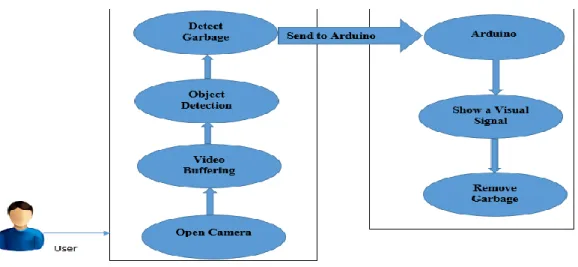
Figure 3.3: The full use case model of smart garbage warning system.
Figure 3.4: Shows statistical analysis of this project.
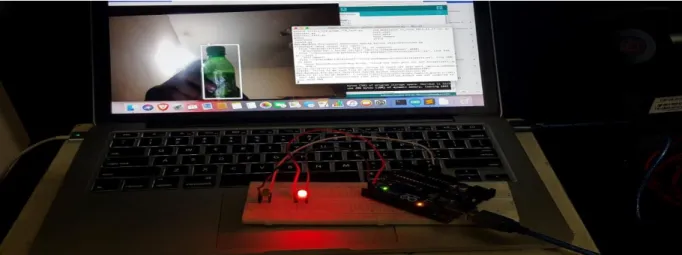
Figure 4.2.1: Since we are working with the bottle, so just keep the bottle in the room  and detect it with signal
+3

Referensi

Dokumen terkait

The context diagram and data flow diagram from the analysis phase will be used to initiate the design phase by develop the conceptual data model. Then the conceptual data model

After serial data packets are received from GPS module through UART, the time information. and location information will be extracted from serial data packets, which is

The XBee Wireless technology is used to send the water consumption data automatically to the mobile water meter reader.. Traditional method to gather data from

Secondary data related to the production aspect, cultivation, land use, population and consumption are collected from the related departments, such as Central Agency

Sebuah alat yang menggunakan arduino nano sebagai mikrokontrollernya, sensor ultrasonik sebagai sensor ketinggian air, RTC DS1307 digunakan untuk memperoleh data

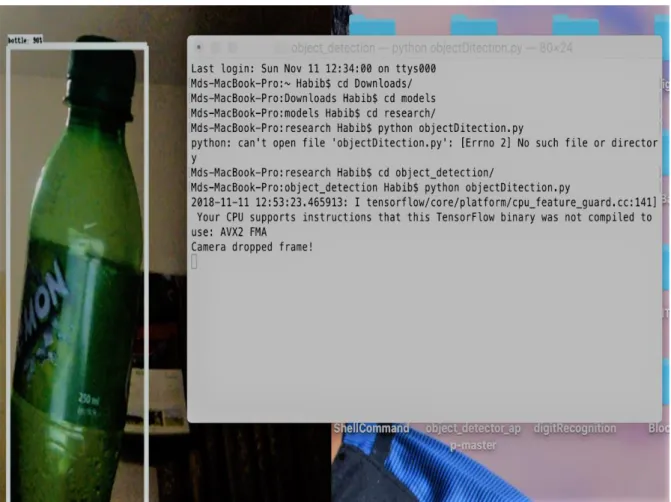
By referring to the data, the study was made a simulation if the garbage is taken by time scheduled pick-up as existing and compare to when using smart trash

Pada Proyek Akhir ini analisis gait dapat di- monitoring dengan sensor giroskop yang diolah datanya pada arduino dan mengirimkan data tersebut dalam bentuk serial

Figure 8: Testing results for a data transfer rate from sensor nodes to the web server and b notification response time from sensor nodes to cellular phones CONCLUSIONS The online