OMNI-DIRECTIONAL HEXAPOD VEHICAL FOR UNEVEN ENVIRONMENT
SRI VANITHA MATHY A/P SEDU BADI
This report is submitted in partial fulfillment of the requirements for the award of Bachelor of Electronic Engineering (Computer Engineering) with honours
Faculty of Electronic and Computer Engineering Universiti Teknikal Malaysia Melaka
FAKULTI KEJURUTERAAN ELEKTRONIK DAN KEJURUTERAAN KOMPUTER
BORANG PENGESAHAN STATUS LAPORAN PROJEK SARJANA MUDA II
Tajuk Projek : OMNI-DIRECTIONAL HEXAPOD VEHICAL FOR UNEVEN ENVIRONMENT
Sesi Pengajian : 2010/2011
Saya ………..SRI VANITHA MATHY A/P SEDU BADI ………...
(HURUF BESAR) 1. Laporan adalah hakmilik Universiti Teknikal Malaysia Melaka. 2. Perpustakaan dibenarkan membuat salinan untuk tujuan pengajian sahaja.
3. Perpustakaan dibenarkan membuat salinan laporan ini sebagai bahan pertukaran antara institusi pengajian tinggi. 4. Sila tandakan ( √ ) :
SULIT* (Mengandungi maklumat yang berdarjah keselamatan atau kepentingan Malaysia seperti yang termaktub di dalam AKTA RAHSIA RASMI 1972)
TERHAD* (Mengandungi maklumat terhad yang telah ditentukan oleh organisasi/badan di mana penyelidikan dijalankan)
TIDAK TERHAD
Disahkan oleh:
__________________________ ___________________________________
(TANDATANGAN PENULIS) (COP DAN TANDATANGAN PENYELIA)
Alamat Tetap: No 31, Jalan Karunmas 1,
Taman Desa Karunmas,
43300, Balakong.
i
“I hereby declare that this report is the result of my own except for quotes as cited in this references.”
Signature : ………
Author : SRI VANITHA MATHY A/P SEDU BADI
“I hereby declare that I have read this report and in my opinion this report is sufficient in term scope and quality for the award of Bachelor of Electronic Engineering
(Computer Engineering) with Honours.”
Signature : ……….
Supervisor‟s Name : EN ZUL ATFYI FAUZAN BIN MOHAMMED NAPIAH
iii
Dedicated to:
ACKNOWLEDGEMENT
v
ABSTRACT
ABSTRAK
Teknologi pembuatan robot berkaki enam ini boleh digunakan untuk mempermudahkan dan membantu manusia dalam bidang penyelidikan dan penerokaan. Ini kerana ia dapat mengurangkan risiko bahaya yang akan ditempuh semasa aktivi tersebut dijalankan. Penggunaan robot berkaki terutamanya berkaki enam yang berupa serangga semakin popular di kalangan pencipta robot. Memandangkan kelebihan robot berkaki yang begitu ketara berbanding robot beroda, adalah wajar usaha untuk membinanya. Projek ini berkaitan dengan rekaan dan pembinaan robot berkaki enam dan berkemampuan bergerak di kawasan tidak rata. Robot ini berkebolehan untuk berjalan ke semua arah termasuk hadapan, belakang, kanan, kiri, dan mengiring di atas permukaan tidak rata menggunakan keenam-enam kakinya. Projek ini merangkumi rekaan dan pembinaan robot dan juga litar-litar yang berkaitan. Rekaan robot ini merupakan robot berkaki enam yang mempunyai 3 Sudut darjah pada setiap kaki. Robot ini mempunyai 3 pasang kaki dan mempunyai 18 buah motor servo. Robot ini dikawal oleh mikro pengawal PIC16F877A yang mengawal corak robot berjalan dan juga bertindak sebagai otak.
vii
TABLE OF CONTENTS
CHAPTER TITLE
PROJECT TITLE
DECLARATION STATUS OF REPORT FORM DECLARATION LECTURER DECLARATION DEDICATION ACKNOWLEDGEMENT ABSTRACT ABSTRAK
TABLE OF CONTENTS LIST OF FIGURE
LIST OF ABBREVIATION LIST OF APPENDIX
PAGE i ii iii iv v vi vii viii ix xi xii xiv
I INTRODUCTION
1.1 Overview
1.2 Objective
1.3 Problems Statement
1.4 Scope of works
1.5 Thesis Layout
II
III
LITERATURE REVIEW
2.1 Hexapod Walking Robot 2.2 Leg Coordination
2.3 Single Leg Controller 2.4 Natural terrain
2.5 Different between Walking and Rolling
2.6 Degrees of Freedom
2.7 Servo Motor
2.7.1 Servo Component
2.7.2 Servo Operation
2.7.3 Servo Wiring
2.7.4 Servo Voltage (Red and Black/Brown wires)
2.7.5 Signal Wire (Yellow/Orange/White wire)
2.7.6 Servo Current
2.7.7 Velocity
2.7.8 Difference between an analog and digital servo
2.7.9 Hitec versus Futaba
2.8 Microcontroller
2.9 PWM
2.10 Servo Motor Turning
2.11 Pin Diagram of PIC16F877A
METHODOLOGY
3.1 Introduction
3.2 Project Implementation
3.2.1 Software Development and Implementation 3.2.1 Hardware Development and Implementation
IV
V
REFERENCES
3.3 Flow Chart of Methodology
3.4 Gantt Chart of Methodology
RESULT AND DISCUSSIONS
4.1 Preliminary Result 4.2 Expected Result
4.3 Programming Coding
4.4 ISIS Simulation
4.4 Hardware Construction (Microcontroller Board)
4.5 Hardware Construction (Voltage Regulator)
4.6 Hardware Testing with Program Code
4.7 Result
4.8 Discussion
CONCLUSION AND SUGGESSTIONS
5.1 Conclusion
5.2 Suggestions
x
LIST OF FIGURES
NUMBER TITLE PAGE
2.1 An example of rough natural terrain 6
2.2 Servo 8
2.3 Cut-away of a servo 9
2.4 Component inside a servo 10
2.5 Futaba 11
2.6 Hitec 11
2.7 Jr Radios 11
2.8 Airtronics 11
2.9 “Y” harness 14
2.10 Microcontroller Chip 16
2.11 Pulse for controlling a servo motor 17
2.12 Closed-loop velocity servo 19
2.13 Measuring Open-loop characteristics 19
2.14 3.1 3.2 3.3
Pin Diagram of PIC16F877A CodeDesigner Lite
Interface for PICkit 2 Software Sample of ISIS Simulation Layout
20 23 24 25
3.4 Block Diagram 26
3.5 Picture of One Leg 27
3.6 Movement of One Leg 27
3.8 4.1 4.2 4.3 4.4 4.5 4.6 4.6 4.7 4.8 4.9 4.10 4.11 4.12 4.13 4.14 4.15 4.16 4.17 4.18 4.19 4.20 4.21 4.22 4.23 4.24 4.25 4.26 Hexapod Movement Label of each Leg
Source Code of the Project Compiler Output
Full circuit of the Project Simulation of the Project Microcontroller Board
Layout of the Component in the Microcontroller Board Schematic of the Microcontroller Board
Voltage Regulator Circuit Voltage Regulators (7805)
Testing Coding with servo motor. Result shows servo is moving
Programming cable to box header of UIC00A and the other side to box header of UIC-S board
40-pin Microcontroller VDD Target
Import the Hex File Hex File location
Programmer successfully imports the Hex code Programming successful
The model of the robot for up and down leg Results shows for Initial Condition
Result of the Stand-Up program PWM for RC servo motor
Testing Simulate for one servo motor Actual connection for servo motor
C Source Code (written in CCS C Compiler SK40C PIC start-up kit
xii
LIST OF ABBREVIATIONS
DOF HEX Hz PIC
- - - -
Degree Of Freedom
Hexadecimal
Hertz
LIST OF APPENDIX
NUMBER TITLE PAGE
A PIC16F877A Block Diagram 63
CHAPTER I
INTRODUCTION
1.1 Overview
This project is about designing a controller for an Omni-directional hexapod vehicle for uneven environment. This robot could act as a vehicle in moving through uneven terrain with stability and balance. Omni directional vehicle provide flexibility to move into isolated places with ease. PIC microcontroller is used as a brain to control the servos that manipulate the 6-legs of the vehicles. Servos are used because of the accuracy in determining the angle of the legs to provide stability in uneven environment.
1.2 Objectives
Following are the objectives set in this project:
(a) To design, develop controller and also utilizing PIC microcontroller to control the movement of the Omni hexapod.
(b) Synchronize servo‟s movement to perform walking capabilities in uneven
environment.
1.3 Problem Statement
Most of the Omni hexapod that exists today only manages to move in the flat surface. The legged robot suits for work in such environment because it can select any landing point. This project will concentrate on movement on uneven environment and also provide stability and balance.
1.4 Scope
In this project, PIC microcontroller is used to control 18 servos. The vehicle can move Omni-directionally in uneven environment. BASIC programming is used for the programming language.
1.5 Thesis Layout
3
determining the angle of the leg to provide stability in uneven terrain called servo. Omni-directional means that it can move sideways, forwards, diagonally and rotate.
Chapter 2 consists about the hexapod walking robot, natural terrain, degrees of freedom and the explanation of servo, such as the operation and the component inside a servo. This chapter also gives the detail explanation of the basic microcontroller.
Chapter 3 is about the project methodology that divides in two parts, which are hardware development and software development. Besides that, this chapter will discuss about block diagram of the vehicle, PIC16F877A and the flows chart that shown the whole process. In software development the program that are used which are CodeDsigner Lite Compiler, Proteus and PICkit 2.
Chapter 4 will show all the analysis result and discussion from the hardware and software experiment.
CHAPTER II
LITERATURE REVIEW
This chapter will discuss about the hexapod walking robot, natural terrain and degrees of freedom. Besides that, this chapter wills explain about servo, such as the operation, the component inside a servo, the concept degree of freedom and how to choose the suitable microcontroller.
2.1 Hexapod Walking Robot
5
2.2 Leg Coordination
Leg coordination refers to the mechanism responsible for controlling leg step transitions (stance and swing); assuring that the body will not tumble. Most approaches try to replicate known insect gaits, e.g. tripod or tetra pod gaits. However, other approaches have been used to find stable gaits; for instance, by running genetic algorithms or optimizing walking energy cost function.
Insect gaits are usually obtained by two approaches: the centralized and the decentralized control architectures. Centralized controllers directly specify transitions of all legs, whereas in decentralized architectures, six nodes (legs) are connected in a parallel network; gaits arise by the interaction between neighboring legs.
2.3 Single Leg Controller
There is no boundary to the complexity of leg morphology. However, legs of those based on insect models usually range from two to six degrees of freedom. Leg segments are typically named after their biologically counterpart; which is similar for most species. From the body to the leg‟s tip, segments are known as coxa, femur and tibia; typically the coxa-femur and the femur tibia joint are assumed to be a simple hinge joint. The body-coxa joint model ranges from one to three degrees of freedom, depending on the species and the thoracic segment that leg resides.
2.4 Natural Terrain
differing cohesive properties and those properties change as water content turns the ground from dust to mud.
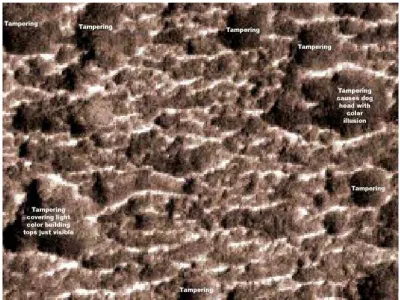
[image:22.612.127.527.297.597.2]In some places material is piled at its angle of repose, and in other places it is in smoother rolling hills, but rarely is natural terrain flat. Natural terrain is often densely populated with semi-discrete obstacles: geologic features and individual rocks, and vegetation such as trees, bushes, grasses and moss. By natural terrain which means the areas that have not been structured or constructed artificially: the forests, fields, mountains, shores and seabed. The surface of Mars, as seen in Figure 2.1, is an example of rough natural terrain.
7
2.5 Different between Walking and Rolling
There are many ways in which walking and rolling differ. The conclusion made most apparent by these differences is that it makes sense to walk on rough terrain, but roll on hard, flat surfaces. By some estimates, more than half of the Earth is inaccessible to wheel mechanisms (including tracked mechanisms, which behave like wheels of large diameter).
2.6 Degrees of Freedom
Degree of freedom is a general term used in explaining dependence on parameters and implying the possibility of counting the number of those parameters. In mechanics, degrees of freedom (DOF) are the set of independent displacements that specify completely the displaced or deformed position of the body or system. This is a fundamental concept relating to systems of moving bodies in mechanical engineering, aeronautical engineering, robotics, structural engineering, etc.
In chemical engineering, degrees of freedom are used to determine if a material balance is possible for a given process. It takes into account the number of reactions, temperature, pressure, heat transfer, percent yield, mols entering/exiting and various other pieces of additional information.
2.7 Servo Motor
Servo is a small device that incorporates with three wires DC motor, a gear train, a potentiometer, an integrated circuit and an output shaft bearing of the three wires that stick out from the motor casing, one is for power, one is for ground and one is a control input line. The shaft of the servo can be positioned to specific angular positions by sending a coded signal as long as the coded signal exists on the input line, the servo will maintain the angular position of the shaft. If the coded signal changes, then the angular position of the shaft changes.
A very common use of servos is in Radio Controlled models like cars, airplanes, robots and puppets. They are also used in powerful heavy-duty sail boats. Servos are rated for Speed and Torque. Normally there are two servos of the same kind, one geared towards speed (sacrificing torque) and the other towards torque (sacrificing speed). A good example of this are the HS-625MG servo and the HS-645MG servo [2].
[image:24.612.225.429.490.680.2]Servos come in different sizes but use similar control schemes and are extremely useful in robotics. The motors are small and extremely powerful for their size. It also draws power proportional to the mechanical load. A lightly loaded servo does not consume much energy. Figure 2.2 below shows a servo motor.