Informasi Dokumen
- Penulis:
- Rahmat Ramadhan
- Pengajar:
- A. Yudi Eka Risano, S.T., M.Eng.
- Ahmad Su’udi, S.T, M.T.
- Sekolah: Universitas Lampung
- Mata Pelajaran: Teknik Mesin
- Topik: Thermal And Stress Analysis Of Pressure Vessel Design For Treating Waste Palm Oil With Capacity 10,000 Tons/ Month
- Tipe: thesis
- Tahun: 2013
- Kota: Bandar Lampung
Ringkasan Dokumen
I. INTRODUCTION
This section presents the background, objectives, limitations, and writing systematics of the thesis. The introduction outlines the importance of pressure vessels in the processing of palm oil waste to produce biodiesel, emphasizing the need for accurate design and analysis to ensure safety and efficiency. The objectives include analyzing the maximum allowable stress and the effects of thermal loads on pressure vessel design, specifically for a capacity of 10,000 tons per month. The limitations focus on the analysis of horizontal pressure vessels and specific components such as the shell, head, and nozzle.
II. LITERATURE REVIEW
This section reviews essential theories and concepts relevant to the design and analysis of pressure vessels. It covers various topics, including the classification of palm oil waste, types of pressure vessels, and the significance of understanding stress analysis in their design. The literature emphasizes the necessity of finite element analysis (FEA) for accurate simulations and evaluations, providing a foundation for the research presented in the thesis.
2.1. Palm Oil
This subsection discusses the significance of palm oil as a crucial industrial plant for producing cooking oil and biodiesel. It highlights Indonesia's position as the world's largest producer and the various applications of palm oil, emphasizing the need for effective waste management in the industry.
2.2. Types and Potential of Palm Oil Waste
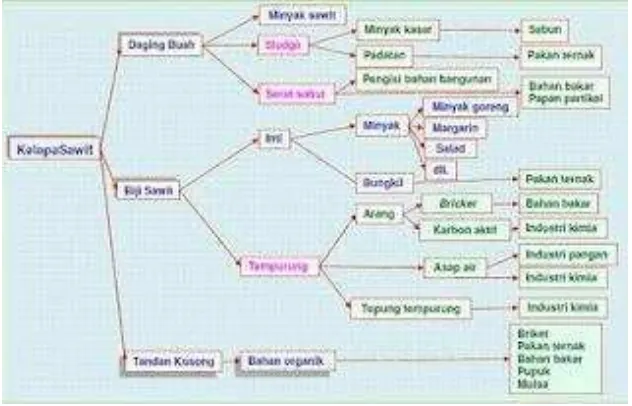
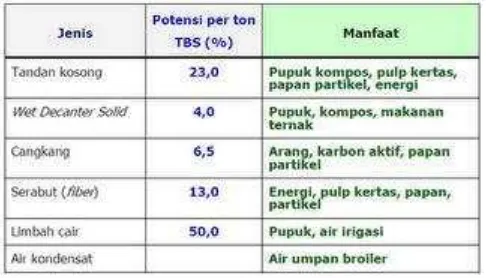
This subsection categorizes palm oil waste into solid and liquid forms, detailing their potential for reuse and conversion into valuable resources. It underscores the economic benefits of effectively managing palm oil waste, which can contribute to sustainable practices in the industry.
2.3. Pressure Vessels
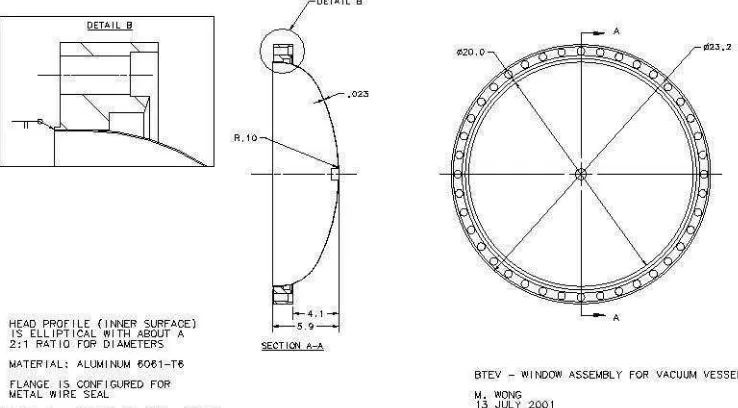
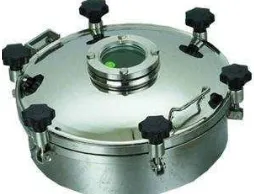
This subsection defines pressure vessels and their applications in various industries. It discusses the importance of adhering to standards such as ASME Boiler & Pressure Vessel Code for safe design and operation, stressing the need for thorough analysis to prevent failures.
2.4. Classification of Pressure Vessels
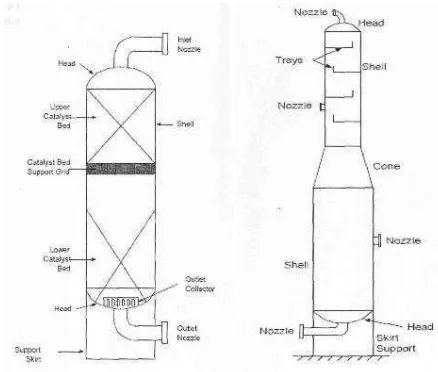
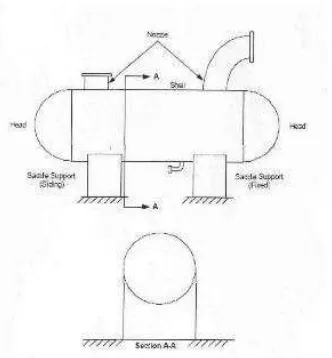
This subsection outlines the classification of pressure vessels based on their orientation (vertical or horizontal) and their functionality. It explains the operational contexts in which different types of pressure vessels are utilized, providing insights into their design considerations.
2.5. Components of Pressure Vessels
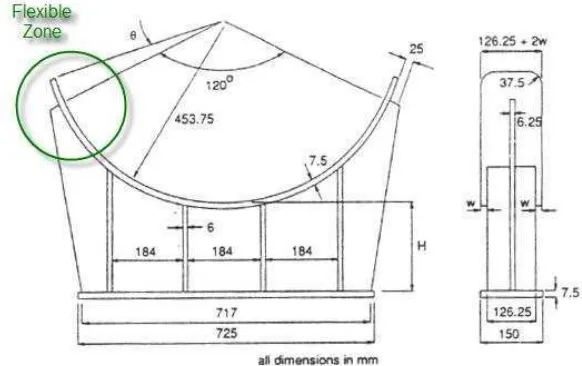
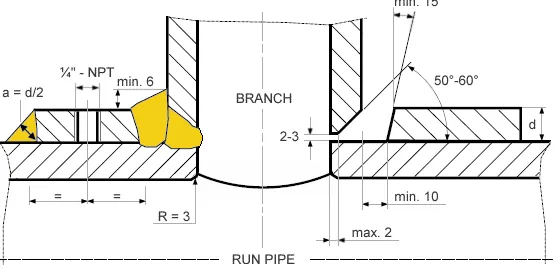
This subsection describes the critical components of pressure vessels, including the head, shell, nozzle, and support structures. It emphasizes the significance of each component in maintaining the integrity and functionality of the vessel under operational pressures.
2.6. Stress Analysis of Pressure Vessels
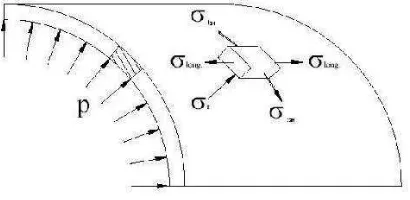
This subsection discusses the necessity of conducting stress analysis on pressure vessels to ensure their safety under operational conditions. It elaborates on the types of stresses that can occur, including thermal and structural stresses, and the importance of evaluating these stresses against allowable limits.
2.7. Elastic Failure Theory
This subsection introduces the concepts of elastic failure and the criteria for determining failure in machine elements under load. It discusses various failure theories, including the Maximum Normal Stress Theory and the Maximum Shear Stress Theory, which are crucial for evaluating the safety of pressure vessels.
2.8. Maximum Normal Stress Theory
This subsection details the Maximum Normal Stress Theory, which predicts failure based on principal stresses. It provides the mathematical framework for evaluating when materials will yield or fracture, emphasizing its relevance in pressure vessel design.
2.9. Maximum Shear Stress Theory
This subsection discusses the Maximum Shear Stress Theory, which is particularly applicable to ductile materials. It outlines the conditions under which failure occurs due to shear stresses, providing insights into the design considerations for pressure vessels.
2.10. Maximum Distortion Energy Theory
This subsection explains the Maximum Distortion Energy Theory, which is used to predict yielding in materials under complex loading conditions. It highlights the theory's advantages in accurately assessing the safety of pressure vessels.
2.11. Safety Factor
This subsection discusses the importance of incorporating a safety factor in pressure vessel design to account for uncertainties in material properties, design, and fabrication. It categorizes safety factors based on loading conditions and material behavior.
2.12. Hypothesis Testing and Significance
This subsection introduces the concepts of hypothesis testing and significance levels in the context of engineering analysis. It explains how these statistical methods can be applied to validate design assumptions and results.
2.13. Thermal Stress
This subsection focuses on thermal stress, which arises from temperature variations within materials. It discusses the relationship between thermal stress and material expansion, providing equations to quantify these effects.
2.14. Heat Transfer
This subsection covers the principles of heat transfer, including conduction and convection, which are essential for understanding thermal loads on pressure vessels. It outlines the mechanisms by which heat affects material behavior and stress distribution.
2.15. Finite Element Analysis (FEA)
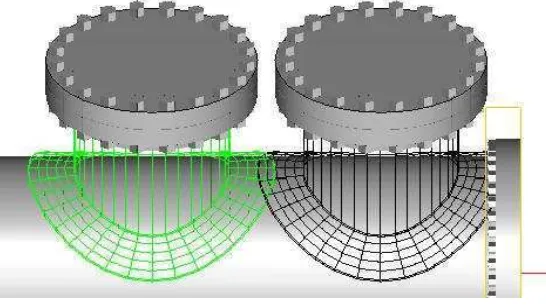
This subsection introduces Finite Element Analysis (FEA) as a critical tool for simulating and analyzing pressure vessel designs. It discusses the process of modeling, meshing, and analyzing structures to predict their behavior under various loading conditions.
2.16. Newton-Raphson Method
This subsection briefly describes the Newton-Raphson method for solving non-linear equations, highlighting its application in FEA for pressure vessel analysis.
III. RESEARCH METHODOLOGY
This section outlines the methodology employed in the research, detailing the steps taken to analyze the thermal and stress characteristics of the pressure vessel design. It describes the data collection process, modeling techniques, and the use of software for finite element analysis. The methodology emphasizes the systematic approach to ensure accurate results and reliable conclusions.
3.1. Research Time and Location
This subsection specifies the timeframe and location for conducting the research, indicating the laboratory setting where the analysis was performed. It provides context for the research environment and resources utilized.
3.2. Research Implementation
This subsection details the implementation of the research, including the steps taken to perform thermal and stress analysis on the pressure vessel design. It emphasizes the importance of accurate data collection and modeling in achieving valid results.
3.3. Research Flow Diagram
This subsection presents a flow diagram outlining the research process, illustrating the sequential steps from data collection to analysis and conclusion. It serves as a visual representation of the methodology employed.
IV. RESULTS AND DISCUSSION
This section presents the findings of the research, including data analysis and the results of simulations conducted on the pressure vessel design. It discusses the implications of the results, comparing them with theoretical expectations and industry standards. The discussion emphasizes the significance of the findings in the context of pressure vessel safety and efficiency.
4.1. Data Collection
This subsection outlines the data collected during the research, including technical specifications and properties of the pressure vessel design. It emphasizes the importance of comprehensive data for accurate analysis.
4.2. Model Validation
This subsection discusses the validation of the simulation model used in the analysis, ensuring that the results obtained are reliable and accurate. It includes comparisons with analytical calculations to confirm the model's effectiveness.
4.3. Pressure Vessel Simulation
This subsection details the simulations performed on the pressure vessel design, including thermal and structural load analyses. It presents the results of these simulations and their implications for the design's safety and performance.
V. CONCLUSION AND RECOMMENDATIONS
This section summarizes the key findings of the research, highlighting the importance of thermal and stress analysis in pressure vessel design. It provides recommendations for future research and practical applications of the findings in industry. The conclusion emphasizes the need for ongoing evaluation and improvement in pressure vessel safety standards.
5.1. Conclusion
This subsection summarizes the conclusions drawn from the research, emphasizing the significance of the findings in enhancing the safety and efficiency of pressure vessels used in palm oil waste treatment.
5.2. Recommendations
This subsection offers recommendations for future research directions and practical applications of the study's findings, encouraging further exploration in the field of pressure vessel design and analysis.
Referensi Dokumen
- Metode Elemen Hingga ( Roziq Himawan, et al )
- Fundamentals of Heat and Mass Transfer ( Frank P. Incropera and David P. Dewitt )
- Finite Element Analysis ( David V. Hutton )
- Finite Element Analysis ( Roylance, David )
- Pressure Vessels ( David Heckman )