a
CMM’S STYLI LENGTH EFFECT
ON ERROR
PROPAGATION
SHAHIRUL AINI BINTI KAMARUL KHISHAM
a
UNIVERSITI TEKNIKAL MALAYSIA MELAKA
CMM’S STYL
I LENGTH EFFECT ON ERROR PROPAGATION
This report submitted in accordance with requirement of the Universiti Teknikal Malaysia Melaka (UTeM) for the Bachelor Degree of Manufacturing Engineering
(Manufacturing Process) with Honours.
By
SHAHIRUL AINI BINTI KAMARUL KHISHAM
FACULTY OF MANUFACTURING ENGINEERING
a
(Mengandungi maklumat TERHAD yang telah ditentukan oleh organisasi/badan di mana penyelidikan dijalankan)
UNIVERSITI TEKNIKAL MALAYSIA MELAKA
BORANG PENGESAHAN STATUS LAPORAN PSM
TAJUK: CMM’s Styli Length Effect on Error Propagation
SESI PENGAJIAN: 2008/2009 Semester 2
Saya SHAHIRUL AINI BINTI KAMARUL KHISHAM
mengaku membenarkan Laporan PSM ini disimpan di Perpustakaan Universiti Teknikal Malaysia Melaka (UTeM) dengan syarat-syarat kegunaan seperti berikut:
1. Tesis adalah hak milik Universiti Teknikal Malaysia Melaka dan penulis.
2. Perpustakaan Universiti Teknikal Malaysia Melaka dibenarkan membuat salinan
untuk tujuan pengajian sahaja dengan izin penulis.
3. Perpustakaan dibenarkan membuat salinan tesis ini sebagai bahan pertukaran
antara institusi pengajian tinggi.
4. *Sila tandakan (√)
SULIT
TERHAD
TIDAK TERHAD
(Mengandungi maklumat yang berdarjah keselamatan atau kepentingan Malaysia yang termaktub di dalam AKTA RAHSIA RASMI 1972)
Alamat Tetap:
19-0-5, TMN BKT ANGKASA, PANTAI DALAM,
b
FAKULTI KEJURUTERAAN PEMBUATAN
Rujukan Kami (Our Ref) : 20 Mei 2009
Rujukan Tuan (Your Ref):
Pustakawan
Perpustakawan UTeM
Universiti Teknikal Malaysia Melaka Hang Tuah Jaya,
75450, Melaka
Saudara,
PENGKELASAN LAPORAN PSM SEBAGAI SULIT/TERHAD LAPORAN PROJEK SARJANA MUDA KEJURUTERAAN PEMBUATAN (MANUFACTURING PROCESS): SHAHIRUL AINI BINTI KAMARUL KHISHAM
Sukacita dimaklumkan bahawa laporan PSM yang tersebut di atas bertajuk
“CMM’s Styli Length Effect on Error Propagation” mohon dikelaskan sebagai SULIT/TERHAD untuk tempoh LIMA tahun dari tarikh surat ini.
Sekian dimaklumkan. Terima kasih.
Yang benar,
………..
Dr. Mohd Rizal B. Salleh Dekan ,
Fakulti Kejuruteraan Pembuatan .
UNIVERSITI TEKNIKAL MALAYSIA MELAKA
Karung Berkunci 1200, Ayer Keroh, 75450 Melaka
i
DECLARATION
I hereby, declared this reported entitled “CMM‟s Styli Length Effect on Error Propagation” is the results of my own research expect as cited in references.
Signature : ………
Author‟s Name : Shahirul Aini Binti Kamarul Khisham
ii
APPROVAL
This report is submitted to the Faculty of Manufacturing Engineering of UTeM as a partial fulfillment of the requirements for the degree of Bachelor of Manufacturing Engineering (Manufacturing process) with Honours. The member of supervisory committee is as follow:
………. Dr. Mohd Rizal B. Salleh
iii ABSTRACT
iv ABSTRAK
v
DEDICATION
vi
ACKNOWLEDGEMENT
vii
List Abbreviations and Nomenclature
1.0 INTRODUCTION
Background of Study Problem Statement Objective of the study Scope of the study
2.0 LITERATURE REVIEW
2.1 Coordinate Measuring Machine (CMM) 2.1.1 How to Select CMM
2.1.2 Type of CMM 2.2 Probe
2.2.1 Type of Probe Head
2.2.2 Touch Trigger Probe TP2-5W 2.2.3 Principles of Probe Operation 2.3 Probe Stylus
viii 2.4.1 Reference Sphere
2.4.2 Method for Calibration of a Probe 2.4.3 Other Type of Artifact
2.5 Error
2.5.1 Type of error occurred 2.6 The Statistical Data Analysis
2.6.1 Statistical Analysis of the T-test 2.7 The Used of Latest Technology
3.0 METHODOLOGY
3.1 Methodology Description 3.1.1 Define Experiment
3.1.2 Plan Measurement Parameter 3.1.3 Define Changes on Variable 3.1.4 Measure the Artifact
3.1.5 Data Recorded 3.1.6 Data Analysis
3.1.7 Conclude the Experiment 3.2.8 Suggestion for Improvement
4.0 RESULTS
4.1 Result for 10mm stylus length 4.2 Result for 20mm stylus length 4.1 Result for 30mm stylus length 4.2 Result for 40mm stylus length 4.1 Result for 50mm stylus length 4.2 Overall Results
ix 5.0 DISCUSSION
5.1 The Effect of Stylus Length on Propagation Error
5.2 The Range of Error Distribution
5.3 The Stylus Length Effect on Actual Value of Calibrated Artifact
5.4 Comparison between Previous Studies
5.5 Average Error Distribution between Previous Studies 5.6 Statistical Analysis between Current Experiments with
Previous Study
5.7 Suggestion for Improvement 5.7.1 Suggested Precaution
6.0 CONCLUSION
C Data of 10mm Stylus Length Reading D Data of 20mm Stylus Length Reading E Data of 30mm Stylus Length Reading F Data of 40mm Stylus Length Reading G Data of 50mm Stylus Length Reading H Data on T-test for Each Styli Length
x
LIST OF FIGURE
1.1 Coordinate Measuring Machine
2.1 Moving Bridge CMM 2.2 Fixed Bridge
2.3 Cantilever CMM 2.4 Gantry CMM 2.5 Column CMM 2.6 Motorized probe 2.7 Manual Probe
2.8 Touch Trigger Probes 2.9 Scanning Probe
2.10 TP 2 -5-way Touch Trigger Probe 2.11 Kinematic Location
2.12a One-stage Type with an Electromechanical Switching transducer
2.12b Two-stage Type Based on a Piezoelectric Transducer 2.13 Star Styli
2.14 Disc Stylus
2.15 Cylinder Styli Probing a Thread and a Thin Sheet 2.16 Ceramic Hollow Ball Styli
2.17 Pointer Styli
2.18 Five Way Stylus Centre 2.19 Effective Working Length (EWL) 2.20 Ruby Ball Tip
2.21 Reference Sphere 2.22 Ball Bar
2.23 Formula for the t-test
2.24 LK Metrology's Ultra CMM 2.25 Brown & Sharpe's Global
xi 3.1 Research Flow Chart
3.2 Methodology Flow Chart 3.3 CMM Bridge Type
3.4 Touch Trigger Probe TP2-5W 3.5 Touch Trigger Probe TP2-5W 3.6 Variations of Styli
3.7 Ceramic Reference Sphere
3.8 Comparison between the Simulated and Measured Pre-travel
3.9 Forces Directions 3.10 Region a and b
4.1 Error Distribution on 10mm stylus length 4.2 Error Distribution on 20mm stylus length 4.3 Error Distribution on 30mm stylus length 4.4 Error Distribution on 40mm stylus length 4.5 Error Distribution on 50mm stylus length 4.6 Error Distribution on each styli lengths
5.1 Graph of stylus length versus error 5.2 Graph of error distribution range
5.3 Graph of stylus length versus actual value
5.4 Graph of different experiment and previous studies 5.5 Graph of error distribution range
5.6 Normal Distribution for comparison between current experiments with previous study
5.7 Variation of normal distribution for each styli length
xii
LIST OF TABLES
2.1 Typical Stiffness Properties of Materials 2.2 Number of Contact Points Required
3.1 Technical Product Specification 3.2 Styli Length Variation
3.3 Sample of Resulting Table 3.4 Sample of Data Analysis Table
3.5 Sample of Data Comparison Between Previous Studies
4.1 Data Analysis for 10mm stylus length 4.2 Data Analysis for 20mm stylus length 4.3 Data Analysis for 30mm stylus length 4.4 Data Analysis for 40mm stylus length 4.5 Data Analysis for 50mm stylus length 4.6 Data Average for each styli length
5.1 Mean, max and min value of error distribution 5.2 Data analysis for error distribution 5.3 Data of different between actual values with artifact 5.4 Data comparison between previous studies
5.5 Data analysis between experiment and previous studies 5.6 t-Tests for Two-Sample Assuming Unequal Variance
xiii ASME
BS CMM CNC DCC EWL ISO N NC PH PTV TP
LIST OF ABBREVIATION & NOMENCLATURE
American Standard Measuring Equipment British Standard
Coordinate Measuring Machine Computer Numerical Control Direct Computer Control Effective Working Length
International Standard Organization Newton (Force unit)
Numerical Control Probe Head
1
CHAPTER 1
INTRODUCTION
Coordinate measuring machines (CMMs) have become very widely used in recent years because of their ability to measure most or all of the individual geometrical features on complex engineering components. Compared with traditional methods, which normally employ a variety of separate instruments, CMMs are fast in operation and are adequately accurate for many applications. However, accuracy limitations often inhibit their use for high precision metrology. Accuracy is limited by such factors as straightness and orthogonality of the CMM movements (Renishaw, 2003).
.
In many cases, the errors introduced by the probes are very significant and often exceed the errors from other sources. This report describes an investigation into the nature of probe errors, the factors that influence their performance and proposes a method to verifying the probe performance. Results from a number of probes used in different modes are presented (Renishaw, 2003).
Background of Study
2
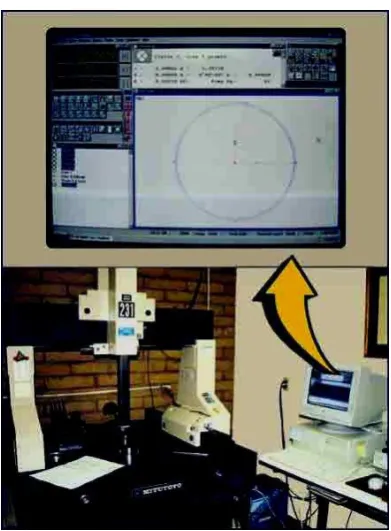
Figure 1.1: Coordinate Measuring Machine (Source: Renishaw, 2003).
CMM is essentially a very precise Cartesian robot equipped with a tactile probe, and used as a 3-D digitizer. The probe, under computer control, touches a sequence of points in the surface of a physical object to be measured, and the CMM produces a stream of x, y, z coordinates of the contact points. The coordinate stream is interpreted by algorithms that support applications such as reverse engineering, quality control, and process control. In quality and process control, the goal is to decide if a manufactured object meets its design specifications. This task is called dimensional inspection, and amounts to comparing the measurements obtained by a CMM with a solid model of the object (Spitz, 1999).
3
There are so many kind of touch probe system used today, such as Two Piece System, Three Piece System - M8 Thread Mount, Three Piece System - TP20, Integral Kinematics Mount, Four Piece System- M8 Thread Mount, Stylus Change Module, and OPT6M Optical Trigger Probe. But for this study, the Three Piece System - M8 Thread Mount which is separate touch probe screws into the probe head via a M8 thread will be used. This style allows the use of M8 - 13mm diameter probe extensions between the probe and the head to reach into deep parts. With this system the touch probes can be easily exchanged if damaged or worn. The M8 thread mount is compatible with the standard TP2 and TP6 touch probes (Helmel, 2008).
Nevertheless, if this CMM‟s is precision dimension measuring equipment, it also has some dynamic measurement error. The dynamic measurement error happens when the measuring process needs short cycle‟s time. So the requirement for faster CMM operation is increased. Then, because of that, the CMM system had been influenced by the dynamic errors. The probe configuration, motion related factors, measured object, operating environment and mode of the operation are the factors that influencing the dynamic measurement errors (Johnson et.al, 1998).
It is well known that most touch trigger probes suffer from lobbing effects. These are propagation errors and normally depend upon a number of factors including probe orientation, stylus length, diameter, measuring speed, trigger force and etc. With most touch trigger probes, lobbing errors have much larger sizes than their repeatability uncertainty, resulting in difficulties in many applications (Johnson et.al, 1998).
4 1.2 Problem Statement
CMM are widely used throughout manufacturing industries, such as aerospace and automotive, to meet the increasing need for high quality standards and dimensional accuracy. However, in many applications, CMM measurement is not as efficient as it could be (Smith, 2002). So new measuring methodology and techniques needs to be developed that can be improve flexibility, reduce inspection time and achieve consistency.
Repeatability and reproducibility values for these probes are published in the manufacturers' catalogues and each new probe should have a certificate of performance provided with it. However, a customer may not be fully aware of how his mode of use affects the accuracy of measurements made with the probe (Aston et. al, 1997).
Usually the users are advised that when calibrating a stylus they should keep the stylus as short as possible to get the less error in measurement (Aston et. al, 1997). However, it is often necessary to use a stylus that is much longer than the ideal minimum or effective working length (EWL) , even though there will be a reduction in performance. So, how the CMM‟s styli length effect on error propagation?
Objective of the study
To make sure this project is successfully achieved, certain objectives were outlined as follows:
To identify the impact of styli length on the error distribution of CMM.
5 Scope of the study
This study describes the CMM‟s styli length effects on propagation error. The investigation of the stylus length effect is find base on the experiment that will be done at Metrology Laboratory of Universiti Teknikal Malaysia Melaka (UTeM). The investigation are not covering the effect on stylus approach direction, probing force, diameter and measuring speed.
This study will focus on the CMM performance. The effect of styli length on the propagation error will be discussed in details later in this report. Where the longer of styli length used, the more the stylus bends or deflects, the lower the accuracy. Probing with the minimum stylus length for application is recommended and where possible the use of one piece styli is suggested. Probing with excessive styli or extension combinations should therefore be avoided to achieve measurement efficiency (Renishaw, 2003).
In contact measurement, CMM data collection starts at the stylus tip, the part of the measuring system that makes contact with the work piece. Most CMM users have a single sensor and stylus configuration, and although they might not realize it, in most cases this is limiting. Unless measuring a simple component, the stylus configuration needs to be changed to suit different measurement tasks. Traditionally this has been done manually, using a threaded connection. However, probe systems are now available with a repeatable stylus interchange, greatly increasing system flexibility by allowing quick changes to long or complex styli configurations, as well as different tips such as sphere, disc or cylinder (Smith, 2002).
6
CHAPTER 2
LITERATURE REVIEW
2.1 Coordinate Measuring Machine (CMM)
A coordinate measuring machine (CMM) is a measuring system with the means to move a probing system and capability to determine spatial coordinates on a work piece surface. The Co-ordinate Measuring Machine has its origins in manually operated simple layout inspection equipment. With the development of numerical controlled (NC) machines in the 1950s for the production of complex components required in the United States aerospace programmed and the subsequent introduction of computer numerical control (CNC) machines in the 1970s, production techniques were often more accurate than inspection equipment in general use (Flack, 2001).
A major factor in the evolution of the CMM was the invention in 1972 of the touch trigger probe by David McMurtry of Rolls-Royce (Renishaw, 2003).The touch-trigger probe is a 3D sensor capable of rapid, accurate inspection with low trigger force. When incorporated with precision linear measuring systems developed for CNC machines plus cheap and powerful computer hardware and software, this paved the way for highly accurate, automated inspection centers. CMMs are widely used in manufacturing industries for accurate, fast and reliable dimensional measurement of components. They are generally expensive to buy and maintain but their results are crucial to the manufacturing process (Flack , 2001).
7
generally are the tools of choice for manufacturers who need to gather and analyze large amounts of data for maintaining control of the manufacturing process. The CMM is normally completely under DCC operation thereby eliminating any user influence on the quality of the recorded data (Flack , 2001).
2.1.1 How to Select CMM
The right chosen CMM will makes the measuring operations becomes more effective. Therefore, there are some criteria needs to be considered when choosing the right CMM.
i. The determination of minimum required measuring range
The first important selection criterion is the determination of the minimum required measuring range of the CMM. This range usually depends on the dimensions of the part to be measured, but is often more complex than that. For example, if the configuration of the part and the inspection routine require the use of probe extensions and fixtures, the actual minimum required measuring range could be considerably larger than work piece dimensions (Flack, 2001).
ii. Comparison with machine specification
However, in order to compare CMMs from different manufacturers, the comparison with machine specifications must be done first. Most CMM manufacturers already offer their specifications in a variety of formats to support their international customer base. In addition, if you're an international manufacturer, it may be prudent to request the CMM's specifications in the ISO 10360-2 format since it's becoming a world standard. This will allow you to not only compare between competitors, but to compare the new machine to your existing machines installed throughout the world (Flack, 2001).
iii. Specify the temperature range