ACKNOWLEDGEMENT
First of all, the writer would like to thank to Allah the Al-mighty who has
given her blessing and merciful until she was able to finish writing this thesis .
In the process of writing this thesis, the writer has to confess that many
people has given her much help, advice and support, a very special gratitude
wouldbe addressed to some distinguished people as below:
First gratitudebelongs to the first adviser of mine Prof. Dr. Sumarsih,
M.Pd, the second is Dr. Rahmad Husein , M.Ed who advised her to correct and
gave some comments and suggestions.
Third gratitude, the writer likes to express her thanks to the head and
secretary of English Applied Linguistic Study Program, Dr. Rahmad Husein,
M.Ed and Dr. Anni Holila Pulungan, M.Hum. The director advice of postgraduate
school of state university of Medan, and great thanks also to the experienced
lectures who taught and educated her along three semesters.
Fourth, thanks are due to the three reviewers og her, namely: Prof. Dr.
Busmin Gurning, M.Pd. , Dr. Siti Aisyah, M.Pd. , Dr. Anni Holila Pulungan,
M.Hum. who provided her with the most useful critics and constractive
suggestions.
Fifth, the writer likes to express her special thanks and appreciation UKM
kota Binjai. Also to all the people at Pasar Tavip Binjai that help her to complete
i iv
Sixth gratitude belongs to her beloved mother Sulastri, S.pd who always
supports her by giving motivation , suggestion and loves that never ending. Also
Her brother and sisters Rhesa Apridiawan Sinulingga, S.T , Suciati, S.Pdi, Risda
Juliana Sinulingga, Neng Nurcahyati Sinulingga, S.Pdi for their sincere and
support, there is no suitable words that can fully describe their everlasting love
and express how much he loves them.
Then, last but not least thanks to her beloved classmates of LTBI A1
XXIV for sharing the joy and pain together, beautiful moments, sweet memory
and keep our friendship going, and all of those who supported him in any respect
during the completion of this thesis.
Medan, 19 September 2016
ABSTRACT
Sinulingga, Resti Oktriani. Registration Number: 8146111053. Code-Mixing in Javanese People at Traditional Market Pasar Tavip Binjai. A Thesis. English Applied Linguistics Study Program. State University of Medan. 2016. This study deals to find out code-mixing of Javanese language among Javanese people into Indonesia language at Pasar Tavip Binjai. The objectives of research were to find out: (1) the functions of code-mixing for Javanese People at Pasar Tavip Binjai. (2) types of insertion of code-mixing occur in Javanese language into Indonesia language at Pasar Tavip Binjai. (3) the factors of Javanese mix Javanese language into Indonesia language in communication with their own community at Pasar Tavip Binjai. The source of this research is Javanese people at Pasar Tavip Binjai. The data of this research are the utterances of Javanese people at Pasar Tavip Binjai. This research applied qualitative research design. The instruments of data collection used tape recorder to interview and observe the subject. The result reveals that (1) the function of code-mixing in Javanese language is communication strategy and expression of community and personality, (2) the occurrences of the code mixing-in the insertion of words, phrase, reduplication and clause. it shows the most frequent insertion is word which is 89 times or 60%, then clause 30 times or 20%, then 26 times or 17%, and the last is reduplication 4 times or 3%, (3) the factors of Javanese people mix Javanese language into Indonesia language because speaker partner and situation.
iv ABSTRAK
Sinulingga, Resti Oktriani. Nomor Registrasi: 8146111053. Campur Kode masyarakat Jawa di Pasar Tradisional Tavip Binjai. Tesis.ProgramStudi Linguistik Terapan Bahasa Inggris. Universitas Negerei Medan.2016.
Penelitian ini bertujuan untuk mengetahui campur kode bahasa Jawa antara masyarakat Jawa kedalam bahasa Indonesia di Pasar Tavip Binjai. Tujuan dari penelitian ini adalah untuk menemukan: (1) fungsi dari campur kode yang muncul dalam bahasa Jawa kedalam bahasa Indonesia dalam komunikasi dengan komunitas mereka sendiri di Pasar Tavip Binjai (2) jenis-jenis sisipan campur kode yang muncul dalam bahasa Jawa kedalam bahasa Indonesia (3) faktor-faktor masyarakat Jawa mencampur bahasa Jawa kedalam bahasa Indonesia. Sumber penelitian ini adalah masyarakat Jawa di Pasar Tavip Binjai. Data penelitian ini adalah ungkapan yang di ucapkan oleh masyarakat Jawa di Pasar Tavip Binjai. Penelitian ini menggunakan desain penelitian kualitatif. Data yang dikumpulkan menggunakan video rekaman untuk mewawancarai dan mengamati subjek penelitian. Hasil penelitian ini menunjukkan bahwa (1) fungsi dari campur kode dalam bahasa Jawa adalah communication strategy dan expression of community and personality. (2) kemunculan dari campur kode sisipan words, phrase, reduplication and clause. Menunjukkan sisipan yang sering muncul adalah word sebanyak 89 kali muncul atau 60%, selanjutnya clause sebanyak 30 kali muncul atau 20%, kemudian 26 sebanyak kali muncul or 17%, dan yang terakhir adalah reduplication sebanyak 4 kali muncul atau 3%, (3) faktor masyarakat Jawa mencampur bahasa Jawa kedalam bahasa Indonesia karena speaker partner and situation.
TABLE OF CONTENTS
ACKNOWLEDGEMENT ... .. i
ABSTRACTS ... .. iii
TABLE OF CONTENTS ... ... v
THE LIST OF TABLES ... .. viii
CHAPTER I INTRODUCTION... 1
1.1. Background of the Study ... 1
1.2. Problem of the Study ... 5
1.3. Objective of the Study ... 5
1.4. Scope of the Study ... 6
1.5. Significance of the Study ... 6
CHAPTER II REVIEW OF LITERATURE ... 7
2.1. Theoretical Framework ... 7
2.1.1. Sociolinguistics ... 7
2.1.2. Speech Community ... 8
2.1.3. Bilingualism or Multilingualism ... 9
2.1.4. Code Mixing ... 12
2.1.5.Factors of Code Mixing ... 15
2.1.6. Function of Code Mixing ... 16
2.1.7. Types of Code Mixing ………... 17
2.1.8. The Factors Influence Language Choice ... 19
2.1.9. Sociohistorical Background ... 25
v
2.2 Conceptual Framework ... 24
CHAPTER III RESEARCH METHOD 3.1. Research Design ... 26
3.2. The Data and Source of the Data... 27
3.3. The Technique of Data Collection ... 27
3.4. The Technique of Data Analysis ... 27
3.5. The Trustworthiness of the Study ... 28
CHAPTER IV DATA ANALYSIS, FINDING AND DISCUSSION …... 36
4.1 Data Analysis ……… 36
4.1.1 Type of Insertion …...……….… 40
4.1.1.1 Word insertion ……… 41
4.1.1.2 Phrase insertion ………... 42
4.1.1.3 Hybrid Clause Insertion ………... 43
4.1.1.4 Reduplication insertion ……… 43
4.1.1.5 Idiom Insertion ……… 44
4.1.1.6 Clause insertion ……… 44
4.1.2 Function of Code-Mixing ……… 48
4.1.3Factor of code-mixing ………. 46
4.3 Discussion ……… 50
CHARTER V CONCLUSION AND SUGESSTION ……….. 52
5.1 CONCLUSION ………... 52
5.2 SUGESSTION ………...…. 52
REFERENCES ……….. 53
vii
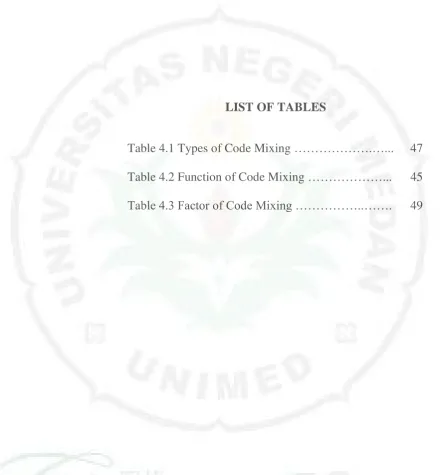
[image:11.595.85.528.110.586.2]LIST OF TABLES
Table 4.1 Types of Code Mixing ……….…... 47
Table 4.2 Function of Code Mixing ………... 45
CHAPTER I INTRODUCTION
1.1 Background of the Study
Language is very important for human being to do interaction with
others. In communication, language and society are two things that cannot be
separated. Language cannot exist if there are no people who use it to interact or
communicate. Because language is a system of arbitrary vocal symbols by means
of which a social group cooperates (Bloch and Trager in Hidayat, 2006: 22).
Language has two major functions, they are interactional function and
transactional function. Interactional function deals with how humans use language
to interact each other socially or emotionally. Transactional function deals with
whereby humans use their linguistics abilities to communicate knowledge, skills
and information (Yule and Brown in Nurhayati, 2009).
In sociolinguistics there are many phenomena that happen when the
people communicate each other. One of them is bilingualism. According to
Wardaugh (2006: 94), bilingualism means the ability of communicating in two
languages but with the possibility of the greater skill in one language. The people
who have such ability are called bilinguals. Most people in the world are
bilinguals for various social needs, either for local or global social interactions. In
bilingualism condition, realized or not people usually do a language choice.
2
are : setting (time and place) and situation, participants in the interaction, topic of
the conversation and interaction functions. The first factor such as the situation of
dinner with family or dinner with client will make a difference in a language
choice. The second factor is something like age, gender, job and so on. The third
factor depends on the topic, like the law case nowadays, family matters. The
fourth factor is interaction function like request, habit, giving information.
Another sociolinguistic phenomenon is multilingualism.
Multilingualism refers to the ability of speaking in more than two languages.
However, there is no specific number of languages required in order to be
multilingual. Multilingualism is connected with a multilingual society, the society
is able or communicate with more than two language between the members of
other communities (Holmes, 2001: 19). Multilingual societies develop their skill
in each code to meet their needs. Their ability to use language depends on the
circumstances in which each in use. Multilingualism happens through contacts
language. (Chaer, 2007: 65). Contact language is the use of more than one
language at the same place and time.( Thomason, 2001: 1). The contact language
events only occur in an open society. Open society is a people who have a
relationship with other communities. In addition, bilinguals must have a
possibility that they are in a situation to choose between two or more codes that
has to be made, so the process is called language choice.
Language is a media communication to deliver a message on
interlocutor. As we know, Indonesia is a rich country which has much kind of
3
Sundanese, Balinese, Indonesia language, and so on. Every single person in
Indonesia usually uses language more than one in conversation or in some
occasion. They prefer to switch and mix the language form one language into
other languages. The combination of some languages in speaking, in
sociolinguistic study is known as code mixing or code switching. Ayeomoni
(2006, p. 91) stated that code-switching is the mixing of words, phrases and
sentence from two distinct grammatical (sub) systems across sentence boundaries
within the same speech event. Hudson (1996:299) asserts that code mixing occurs
when the speaker mixes the different languages in the same utterances, and code
switching happens when a single use different varieties at different time. People
choose or employ a particular code on a particular occasion for communication, in
order to interlocutors can understand easily and the message can be delivered
well.
As we know, Traditional market is the place where we often see the
phenomenon of using ethnic languages happens in human’s daily activities such
as in trade interaction. Besides that, Traditional markets are the locus of their
culture (Arifin, 2008). The traditional market is a cultural center that describes the
expressions of attitudes and values inherent in its society (Bariarcianur, 2008).
There is often seen that profit is not the primary goal, but rather a tool of spiritual
fulfillment of the unity in each transaction. Communication and social interaction
that exists automatically and then become the intimate relationship between
sellers and buyers. Traditional markets can also be regarded as a living museum of
4
community forming, shaping, and shaped by culture. So, traditional market is the
interesting place to be analyzed about their choosing language from their modern
mindset as modern people even at traditional market especially. For doing this
research, the researcher prefers to choose a traditional market that namely “Pasar
Tavip Binjai”.
In view of the phenomena above the researcher tries to analyze code
mixing that used by Javanese people in trade interaction process at Pasar Tavip
Binjai. In this Traditional market, people use more than one language as their
commercial communication. They mix two languages to communicate each other.
They are Indonesia language and Javanese language. The choice of Javanese
people because there are more Javanese people than other ethnics in this market,
so that’s why the writer chooses them as the object research.
For example:
Seller : Mau beli apa bu, cabene, bawange buk. (word insertion)
Purchaser : Pak, kasi dulu cabe nya.
Seller : Cabe yang mana bu
Purchaser : yang iki ae. (word insertion)
Piro sekilo pak. (word insertion)
5
From the example above, we can see the deviation of the language.
The language actually gives the meaning to the listener, but the language itself
hides the meaning. So, people around of the Javanese people do not know the
meaning of the language itself because they use special code that mix to the
language that actually only Javanese people or the people that has Javanese
language background that understand about it.
1.2 The Problem of Study
Based on background above, the problems are formulated as the following:
a. What is the function of code mixing for Javanese people at Pasar Tavip
Binjai?
b. How many types of insertion of code mixing occur in Javanese language into
Indonesian language at Pasar Tavip Binjai?
c. Why do the Javanese people use code mixing into Indonesian language in
trade interaction at Pasar Tavip Binjai ?
1.3 The Objective of Study
In line with the problems above, the objectives of this study are:
a. to describe the function of code mixing for Javanese people at Pasar Tavip
Binjai.
b. to describe types of insertion of code mixing occur in Indonesian language
into Javanese language at Pasar Tavip Binjai.
c. to explain the reason of Javanese people use code mixing into Indonesian
6
1.4 Scope of the Study
The scope of study is intended to discuss about the function of
code-mixing, types of code-mixing and factor Javanese people use code-mixing into
Indonesian language in trade interaction at Pasar Tavip Binjai.
1.5 Significance of the Study
There are two significances of the analysis of this thesis, they are:
1. Theoretically, this study is expected to give some useful contributions to the
theory of Sociolinguistics, particularly the theory of code switching and code
mixing
2. Practically, readers who are interested in studying code mixing could be guided
by the result of the research and literature contribution as a source of
REFERENCES
Annamalai, E. 1978. The Anglicized Indian languages: a case of code mixing. International Journal of Dravidian Linguistics. Vol.7, pp. 239-247. Ayoemoni, 2006. Code-Switching and Code-Mixing: Style of Language Use in
Chilhood in Yoruba Speech Community. Journal of African Studies (15th Ed.). Obafemi Awolowo University.
Bogdan, Robert C. And Sari Knoop Biklen. 1992. Qualitative Research for Education. USA: Allyn and Bacon
Brown, H. Douglas. 2004. Principles of Language Learning and Teaching. San Fransisco: Longman
Cavallaro, Francesco. 2006. “Language Dynamics of an Ethnic Minority Group:
Some Methodological Concerns on Data Collection” dalam The
Linguistics Journal, 1(3), 34-65.
Chaer, Abdul and Leonie Agustina. 2004. Sosiolinguistik: Perkenalan Awal. Jakarta: Rineka Cipta
Dopke, S. 1992. One Parent, one language: an interactional approach. John Benjamins Publish-ing.
Fernandez, Eva M. and Helen Smith Cairms. 2010. Fundamental of Psycholinguistics. United Kingdom: Wiley-Blackwell
Grosjean F. 1982. Life with two Languages. Harvard University Press
Gumperz, J.J. 1967. On the linguistic markers of bilingual communication. Journal of Social Issues. Vol. XXIII, No.2.
Herman. 2003. Code-Mixing in Trade Interaction at Inpres Manonda Market in Palu. Thesis. FKIP Universitas Tadulako.
Hidayat, A. 2006. Filsafat bahasa mengungkapkan hakikat bahasa, makna, dan tanda. Bandung : PT Remaja Rosdakarya
Ho, J.W.Y. 2003. Code Mixing Linguistic Form and Socio-Cultural Meaning. Journal of Society and Culture.
Ho, J.W.Y. 2006. Functional complementarity between two languages in ICQ. International Journal of Bilingualism. Vol.10, pp. 429-451
55
Southworth, Franklin C. (1980). Functional aspects of bilingualism. International Journal of Dravidian Linguistics 9 (1), 74-108.
Spolsky.1998. Studies in Second Language Acquisition. Sociolinguistics. Vol.21, pp. 666-667
Sugiyono. (2009). Metode Penelitian Kualitatif dan R&D. Bandung: Alfabeta. Sutrisni, Sri. 2005. A Codeswitching and Codem:xing in The Trade Interaction at
Johar Market Semarang. Thesis. Universitas Negeri Semarang.
Taeschner, T. 1983. The sun is feminine. A study on language acquisition in bilingual children. Berlin: Springer.
Trudgill, P. and Fishman, W. 1968. Sociolinguistics: An Introduction to Language and Society. New York: Penguin Book
Utami, E. S dan Hardyanto. 2001. Kamus Kecik Bahasa Jawa Ngoko-Krama. Semarang: Lembaga Pengembangan Sastra dan Budaya.
Wardhaugh, R. 2006. An Introduction to Sociolinguistics(5th). United Kingdom: Blackwell
Wardhaugh, R. 1986. An Introduction to Sociolinguistics. New York: Mouton Wiyarni. 2013. Javanese Traditional Market Cultural Value in Accounting World.
IOSR Journal of Business and Management. Vol.10, pp. 09-16
Zhan, Changjuan. 2013. Speech Community and SLA. Journal of Language Teaching and Research. Vol. 4, No. 6, pp. 1327-1331
56
Isharyanti, Neny. 2009. Code-switching and Code-mixing in Internet Chatting:
Between “yes”, “ya” and “si” case study. Jaltcall Journal. Vol.5 pp. 67-68
Jendra. 2010. Sociolinguistics. Yogyakarta: Graha Ilmu
Kikelomo, B. and Gabriel. A. 2014. Code-Mixing in Selected Plays of the New Generation Yorùbá Playwrights. Journal of language and Literature. Vol. 2, No. 3, pp. 57-68
Koentjaraningrat. 1984. Kebudayaan Jawa. Jakarta: Gramedia.
Koentjaraningrat. 1985. Anthropology in Indonesia. Southeast Asia. Vol.18, pp. 217-218
Lincoln, Yvonna S. and Egon G. Guba. 1985. Naturalistic Inquiry. California: Sage
Miles, M.B. & Huberman, M.A. 2014. Qualitative Data Analysis. London: Sage Publication.
Muysken, Pieter. 2000. Bilingual Speech : a Typology of Code-Mixing. New York: Cambridge University Press.
Nababan, P.W.J. 1993. Sociolinguistics: “Sebuah Pengantar.” Jakarta: Gramedia Pustaka
Nafa’ah, 2010. An Analysis of Code Mixing Used in The Novel The G’s Diary
Susahnya Jadi Anak Sekolah by Setio Anggi. STAIN Tulungagung
Nothofer, Bernd. 1982. “Central Javanese Dialects” dalam. Pacific Linguistics,
Vol. 3/C-76, 287-309.
Odlin, T. 1989. Language Transfer, Cross-linguistic influence in language learning. Cambridge University Press.
Rahardi, K. 2001. Sosiolinguistik Kode dan Alih Kode. Yogyakarta : Pustaka Pelajar.
Redlinger W. & Tschang-Zin Park 1980. Language mixing in young bilinguals. Journal of Child Language Vol.7, pp. 337-352
Sari, Fatmila M. 2013. Code Mixing Used by the Host of Just Alvin Talk Show Program. Thesis. Universitas Gajah Mada.
Sridhar, S.N. 1978. On the functions of code-switching in Kannada. International Journal of the Sociology of Language 16,109-117.