A COMPARATIVE STUDY BETWEEN COLLABORATIVE WRITING AND INTERACTIVE WRITING IN TEACHING WRITING
(An Expe rimental Study at the 10th Grade of MAN Klaten in the Academic Year of 2016/2017)
Thesis
Submitted to the Teacher Training and Education Faculty of Sebelas Maret
University to Fulfill One of the Requirements for Getting Undergraduate Degree of
Education in English
MAKNABARA AMORIYANI SUKMANA K2213039
ENGLISH EDUCATION DEPARTMENT
TEACHER TRAINING AND EDUCATION FACULTY UNIVERSITAS SEBELAS MARET
v ABSTRACT
Maknabara Amoriyani Sukmana. K2213039. A Comparative Study between Collaborative Writing and Inte ractive Writing in Teaching Writing (An Experime ntal Study at the 10th Grade of MAN Klaten in the Acade mic Year of 2016/2017). A Thesis, Surakarta: Teacher Training and Education Faculty of Sebelas Maret University, September 2017.
This study was aimed at finding out: (1) whether there is a significant difference in writing skill between students taught using Collaborative Writing and those taught using Interactive Writing; and (2) whether Collaborative Writing is more effective than Interactive Writing to teach writing. The research method used in this study is a quasi-experimental research design. This research was conducted at MAN Klaten in the academic year of 2016/2017. The population of the research is the tenth grade of MAN Klaten. The samples are class X IPA 6 as the experimental class which consists of 34 students and class X IPA 5 as the control class which also consists of 34 students. The research instrument used to collect the data in this study is a test. The data were analysed by using t-test formula. The computation of the t-test shows that t observation (to) = 4.594 is higher than t table (50, 0.05) = 1.996. Therefore, it can be concluded that there is a significant difference in writing skill between the students taught using Collaborative Writing and those taught using Interactive Writing. The mean score of experimental group is 72.47, while the mean score of control group is 61.41. Therefore, it can be concluded that Collaborative Writing is more effective than Interactive Writing to teach writing.
vi ABSTRAK
Maknabara Amoriyani Sukmana. K2213039. Perbandingan Studi Antara Collaborative Writing Dan Interactive Writing Dalam Mengajar Menulis (Studi Eksperime ntal di Kelas 10 MAN Klaten di Tahun Akademik 2016/2017). Skripsi, Surakarta: Fakultas Keguruan dan Ilmu Pendidikan Universitas Sebelas
Maret, September 2017.
Penelitian ini bertujuan untuk mengetahui: (1) apakah ada perbedaan yang signifikan dalam keterampilan menulis antara siswa yang diajar dengan menggunakan Collaborative Writing dan yang diajarkan menggunakan Interactive Writing; dan (2) apakah Collaborative Writing lebih efektif daripada Interactive Writing untuk mengajar menulis. Metode penelitian yang digunakan dalam penelitian ini adalah desain penelitian kuasi eksperimental. Penelitian ini dilakukan di MAN Klaten pada tahun ajaran 2016/2017. Populasi penelitian adalah siswa kelas sepuluh di MAN Klaten. Sampel kelas X IPA 6 sebagai k elas eksperimen yang terdiri dari 34 siswa dan kelas X IPA 5 sebagai kelas kontrol yang juga terdiri dari 34 siswa. Instrumen penelitian yang digunakan untuk mengumpulkan data dalam penelitian ini adalah tes. Data dianalisis dengan menggunakan rumus uji t. Perhitungan t-test menunjukkan bahwa t pengamatan (to) = 4,594 lebih tinggi dari t tabel (50, 0,05) = 1,996. Oleh karena itu, dapat disimpulkan bahwa ada perbedaan yang signifikan dalam keterampilan menulis antara siswa yang diajar dengan Collaborative Writing dan yang diajarkan dengan menggunakan Interactive Writing. Skor rata-rata kelompok eksperimen adalah 72,47, sedangkan skor rata-rata kelompok kontrol adalah 61,41. Oleh karena itu, dapat disimpulkan bahwa Collaborative Writing lebih efektif daripada Interactive Writing untuk mengajar menulis.
vii MOTTO
“Promise yourself to be strong that nothing can disturb your piece of mind Look at the sunny side of everything and make your optimism come true
Think only of the best
Work only for the best
And expect only the best”
viii
DEDICATION
This thesis is dedicated to:
My beloved parents
ix
ACKNOWLEDGEMENT
First of all, the writer praises Allah SWT for His blessing to her that she can
finish this thesis successfully. This thesis cannot be done without the assistance and
guidance from many people. Therefore, the writer would like to offer her sincere
3. Dr. Ngadiso, M.Pd., the writer’s first consultant, for his guidance and critical
corrections during his busy schedule to make this thesis better.
4. Dewi Cahyaningrum S.Pd., M.Pd. as the writer’s second consultant, for her
guidance and advices.
5. Drs.Gunarso Susilohadi, M.Ed, TESOL., the researcher’s academic
consultant, for the motivation, kindness, and advice.
6. Drs.Muslih, M.Pd , the Headmaster in MAN Klaten, who has given the writer
permission for conducting the research.
7. Sutrisno, S.Pd., the English Teacher in MAN Klaten, for his sincerity in
guiding the writer during the research. Thank you for the lesson.
8. The English Education Department Lecturers for patiently giving valuable
knowledge and experience for these years.
9. Her family, her beloved Father and Mother: Ir.Hendro Sukmono and
Dra.Maryanti, Brother: Maknasetya Amoriyan Sukmana and Sister:
Maknamulia Amoriyanti Sukmana for their massive supports, loves, patience,
prayer and guidance throughout my life.
10.Dani Alfah for his help, love, patience, prayer and encouragement. Thank you
for always supporting the writer to finish the thesis soon.
11.Her best friends “frenemy”, Devi Ismira Yuliandari, Bibit Purnomowati,
Rima Santika, Oki Lutfiani Maesaroh, Dinda Permata Sari, Choirunnisa,
x
12.Dinda Orieama Yoga Pratica and Meta Dewi Riani Santi, thank you so much
for a lot of help that is given to the writer.
13.The A Class of English Education Department 2013 for the togetherness and
memories for more than 4 years, especially for Risti Nur Imansari, Indri
Nastiti, and Yohana Nugrahaning Primadewi.
14.The members of ESA (English Student Association) for the experience in
organization.
The writer is the one who is responsible of any errors that may remain in this
work. Therefore, constructive feedback, comments, suggestions, and criticism are
gratefully welcome for the betterment of this thesis. The writer hopes this thesis will
give some knowledge for the reader and can contribute for further research in the
future.
Surakarta, October 2017
xi
B. Problem Identification... 5
C. Problem Limitation ... 6
1. Definition of Collaborative Writing... 11
2. Procedure of Collaborative Writing ... 12
xii
4. Disadvantages of Interactive Writing ... 19
C. Interactive Writing ... 20
1. Definition of Interactive Writing... 20
2. Procedure of Interactive Writing ... 22
3. Advantages of Interactive Writing ... 25
4. Disadvantages of Interactive Writing... 26
D. Teaching Writing Using Collaborative Writing Compared to Interactive Writing ... 26
D. Techniques of Collecting Data... 38
E. Techniques of Analyzing Data ... 42
F. Statistical Hypothesis ... 47
xiii
B. Prerequisite Testing... 59
1. Pre-test Scores... 59
D. Discussion of Research Findings ... 63
CHAPTER V CONCLUSION, IMPLICATION, AND SUGGESTION A. Conclusion ... 66
B. Implication ... 66
C. Suggestion ... 69
BIBLIOGRAPHY ... 71
xiv
LIST OF TABLES
Table 2.1 The general difference of Collaborative Writing and Interactive
Writing… ... 27
Table 3.1 The schedule of the research ... 35
Table 3.2 Readability of writing test ... 39
Table 3.3 Scoring rubric for writing test... 39
Table 4.1 The frequency distribution of experimental group pre-test scores .... 49
Table 4.2 The frequency distribution of control group pre-test scores... 52
Table 4.3 The frequency distribution of experimental group post-test scores... 54
Table 4.4 The frequency distribution of control group post-test scores ... 57
Table 4.5 The result of normality test for experimental and control groups pre-test scores ... 60
xv
LIST OF FIGURES
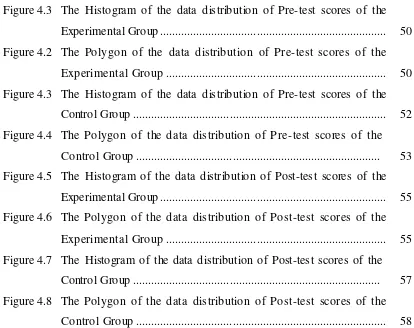
Figure 4.3 The Histogram of the data distribution of Pre-test scores of the
Experimental Group ... 50
Figure 4.2 The Polygon of the data distribution of Pre-test scores of the
Experimental Group ... 50
Figure 4.3 The Histogram of the data distribution of Pre-test scores of the
Control Group ... 52
Figure 4.4 The Polygon of the data distribution of Pre-test scores of the
Control Group ... 53
Figure 4.5 The Histogram of the data distribution of Post-test scores of the
Experimental Group ... 55
Figure 4.6 The Polygon of the data distribution of Post-test scores of the
Experimental Group ... 55
Figure 4.7 The Histogram of the data distribution of Post-test scores of the
Control Group ... 57
Figure 4.8 The Polygon of the data distribution of Post-test scores of the
xvi
LIST OF APPENDICES
Appendix 1 Letter of permission ... 76
Appendix 2 Lesson plan of the experimental group ... 82
Appendix 3 Lesson plan of the control group... 118
Appendix 4 Writing test instruction ... 154
Appendix 5 Readability of writing test ... 156
Appendix 6 Result of readability of writing test... 157
Appendix 7 Students’ questionnaire sheet ... 159
Appendix 8 Pre-test scores of experimental and control groups ... 161
Appendix 9 Descriptive statistics of pre-test scores of experimental and control groups ... 164
Appendix 10 Normality test of pre-test of experimental and control groups ... 168
Appendix 11 Homogeneity test of pre-test of experimental and control groups 173
Appendix 12 Computation of t-test of pre-test of experimental and control groups ... 176
Appendix 13 Post-test scores of experimental and control groups ... 178
Appendix 14 Descriptive statistics of post-test scores of experimental and control groups... 180
Appendix 15 Normality test of post-test of experimental and control groups.... 184
Appendix 16 Homogeneity test of post-test of experimental and control groups 188 Appendix 17 Computation of t-test of post-test of experimental and control groups ... 190
Appendix 18 Students’ answer sheet ... 192
Appendix 19 Standard normal distribution table ... 200
Appendix 20 Lilliefors table ... 201
Appendix 21 Chi-square distribution table ... 202
Appendix 22 t-distribution table ... 203