REPRESENTATI
BY GOVERNOR
Submitted in Partial English Department F
FACUL
STATE ISLA
TATIVE ILLOCUTIONARY ACTS PER
NOR’S CANDIDATES IN GOVERNOR
DKI JAKARTA 2017
THESIS
artial Fulfillment of the Requirement for the Sarjan ment Faculty of Arts and Humanities State Islamic
Sunan Ampel Surabaya
By: Lorenza Dennis
Reg Number : A73213108
ENGLISH DEPARTMENT
ACULTY OF ARTS AND HUMANITIES
ISLAMIC UNIVERSITY OF SUNAN AM
SURABAYA 2017
S PERFORMED
NOR DEBATES
Sarjana Degree of lamic University of
ITIES
ABSTRACT
Dennis, Lorenza. 2017. Representative Illocutionary Acts Performed by Governor’s Candidates in Governor Debates DKI Jakarta 2017. English Department, Faculty of Arts and Humanities, State Islamic University of Sunan Ampel Surabaya.
Advisor : Prof. Dr. Hj. Zuliati Rohmah, M.Pd
Keywords : Speech Acts, Illocutionary Act, Representative, Governor’s
Candidates
In this research, the researcher conducts the study of representative illocutionary acts performed by governor’s candidates in governor debates DKI Jakarta 2017. The researcher discusses types of representative illocutionary acts and
the functions of representative illocutionary acts which are used by governor’s
candidates. The aims of this research are to find out the types of representative illocutionary acts and to describe the functions of type representative illocutionary acts.
The method of this research is descriptive qualitative method by using the
data script of governor’s candidates utterances. The researcher takes the data from
three videos which have different themes. The researcher is the main instrument to collect and analyze the data. Furthermore, to analyze the data, the researcher uses representative illocutionary acts theory by Searle (1969) and Leech (1983).
The results of this research show that there are six types of representative illocutionary acts. Informing is the biggest amount performed, then followed by confirming, suggesting, denying, disagreeing, and agreeing. The researcher also found some functions of representative illocutionary acts. Those are announce, assert, instruct, and report. The most frequently applied function of representative illocutionary acts is informing to announce. Therefore, it can be concluded that the most dominant type of representative illocutionary acts is informing because the governor candidates convey their statement, vission and mission as important things, an opinion, in order to announce to Jakarta citizens.
INTISARI
Dennis, Lorenza. 2017. Representative Illocutionary Acts Performed by Governor’s Candidates in Governor Debates DKI Jakarta 2017. Jurusan Sastra Inggris, Fakultas Adab dan Humaniora, Universitas Islam Negeri Sunan Ampel Surabaya.
Dosen Pembimbing: Prof. Dr. Hj. Zuliati Rohmah. M. Pd.
Kata Kunci : Tindak tutur, tindak ilokusi, representatif, Calon Gubernur.
Dalam penelitian ini, peneliti melakukan penyelidikan tentang ilokusi representatif yang digunakan oleh calon gubernur di debat gubernur DKI Jakarta tahun 2017. Peneliti membahas tentang jenis ilokusi representatif dan fungsi dari ilokusi representatif yang digunakan oleh calon gubernur. Tujuan-tujuan dari penelitian ini adalah untuk menemukan jenis ilokusi representatif dan untuk mendeskripsikan fungsi dari jenis ilokusi representatif.
Metode penelitian ini adalah deskriptif kualitatif dengan menggunakan data dari naskah percakapan yang diucapkan oleh calon gubernur. Peneliti mengambil data dari tiga video yang mempunyai tema berbeda-beda. Peneliti sebagai peran pertama untuk mengumpulkan dan menganalisa data. Selanjutnya, untuk menganalisa data, peneliti menggunakan teori ilokusi representatif dari Searle dan Leech.
Hasil dari penelitian ini menunjukkan ada enam jenis ilokusi representatif. Menginformasikan adalah jumlah yang paling besar dilakukan oleh calon gubernur, kemudian diikuti oleh penegasan, saran, pembantahan, tidak setuju, dan persetujuan. Peneliti juga menemukan beberapa fungsi dari ilokusi representatif. Fungsi-fungsi itu adalah mengumumkan, menegaskan, memerintahkan, dan melaporkan. Fungsi ilokusi representatif yang paling sering muncul adalah menginformasikan untuk diumumkan. Oleh karena itu, dapat disimpulkan bahwa jenis ilokusi representatif yang paling dominan adalah menginformasikan karena para calon gubernur menyampaikan pernyataan mereka, visi dan misi sebagai perihal yang penting, pendapat, untuk diumumkan kepada rakyat Jakarta.
TABLE OF CONTENTS
Inside Cover Page ... ii
Declaration Page ... iii
Thesis Advisor’s Approval Page ... iv
Thesis Examiner’s Approval Page ... v
Motto ... vi
Dedication Page ... vii
Acknowledgements ... viii
Table of Contents ... x
Abstract ... xiv
Intisari ... xiv
CHAPTER I INTRODUCTION 1.1Background of Study ... 1
1.2 Research Problems ... 7
1.3 Research Objectives ... 7
1.4 Significance of the Study ... 8
1.5 Scope and Limitation ... 8
1.6 Definition of Key Terms ... 9
CHAPTER II LITERATURE REVIEW
2.1 Theoretical Framework ... 10
2.1.1 Pragmatics ... 10
2.1.2 Speech Acts ... 11
2.1.2.1 Locutionary ... 11
2.1.2.2 Illocutionary Act ... 12
2.1.2.2.1 Representatives ... 12
2.1.2.2.2 Directives ... 12
2.1.2.2.3 Commisives ... 13
2.1.2.2.4 Expresives ... 13
2.1.2.2.5 Declaratives ... 13
2.1.2.3 Perlocutionary Act ... 13
2.1.3 Representative Acts ... 14
2.1.4 The Functions of Representative Illocutionary Acts ... 15
2.1.4.1 Announcing ... 16
2.1.4.2 Asserting ... 16
2.1.4.3 Instructing ... 16
2.1.4.4 Reporting ... 16
CHAPTER III : RESEARCH METHOD 3.1 Research Design ... 17
3.2 Data Collection ... 18
3.2.1 Data and Data Sources ... 18
3.2.2 Instruments ... 19
3.2.3 Techniques of Data Collection ... 19
3.3 Data Analysis ... 20
CHAPTER IV : FINDINGS AND DISCUSSION 4.1 Findings : Kinds and Functions of Representative Illocutionary Acts ... 28
4.1.1 The Types of Representative Illocutionary Acts ... 28
4.1.1.1 Informing ... 32
4.1.1.2 Confirming ... 34
4.1.1.3 Suggesting ... 36
4.1.1.4 Denying ... 38
4.1.1.5 Disagreeing ... 40
4.1.1.6 Agreeing ... 42
4.2 The Functions of Representative Illocutionary Acts ... 44
4.2.1 Informing to announce ... 48
4.2.2 Informing to assert ... 49
4.2.3 Informing to report ... 50
4.2.4 Informing to instruct ... 51
4.2.5 Suggesting to announce ... 52
4.2.6 Suggesting to assert ... 53
4.2.7 Suggesting to instruct ... 54
4.2.8 Suggesting to report ... 55
4.2.9 Confirming to announce ... 56
4.2.10 Confirming to assert ... 57
4.2.11 Confirming to report ... 58
4.2.12 Denying to announce ... 59
4.2.13 Denying to assert ... 60
4.2.14 Denying to report ... 61
4.2.15 Disagreeing to announce ... 62
4.2.16 Disagreeing to assert ... 63
4.2.17 Disagreeing to report ... 64
4.2.18 Agreeing to announce ... 65
4.2.19 Agreeing to assert ... 66
4.3 Discussion ... 67
CHAPTER V : CONCLUSION AND SUGGESTION 5.1 Conclusion ... 70
5.2 Suggestion ... 71
REFERENCES ... 73
APPENDICES Appendix 1 ... 75
Appendix 2 ... 85
CHAPTER 1
INTRODUCTION
This chapter aims to present background of study, statement of problems,
objectives of the study, significance of the study, scope and limitation, and
definition of key terms. The researcher presents a brief explanation in order to
understand and comprehend of what is discussed in this study.
1.1Background of study
Language is a part of communication which is used by speakers and
hearers in order to attain its function. Brown and Yule (1983) claimed that there
are two functions of language: transactional and interactional. Transactional is the
language which provides the expression of “content”, while interactional is the
language which involves expressing social relations and personal attitudes. It
means that language has an important role to express the speaker’s intention.
When the people express themselves, they do not only produce utterances
containing grammatical structure and words, but they perform actions via those
utterances (Yule : 1996 : 47). On other hand, language becomes the main point
people use to deliver messages, to convey ideas, to express the feelings, ideology,
maintain power, thoughts and opinions. Austin (1962) described the definition of
speech acts as the activity of speaker to perform the utterance. Language is not
only used by common people in the daily activity, but also in political debates.
2
language to convey the ideas, plans, important things, in order to present their
speeches. Hence, this research concerns on two problems that will be analyzed. In
addition, this research uses qualitative design.
According Buck and Van Lear (in Francisca and Silitonga, 2012:2), there
are two kinds of communication. They are verbal communication and nonverbal
communication. The way people communicate the messages by using words is
called verbal communication. While, the way people communicate messages by
using gestures, body movements, eye contacts, facial expressions, or general
appearances, are called nonverbal communication. Thus, political debate is a
speech that uses verbal communication because it uses words or utterances.
Speech act is an action performed to say something that contain of
utterance as the function of communication. Austin proposed three divisions of
speech act theory, they are: locutions, illocutionary and perlocutionary
(Coulthard: 1985: 18). Austin affirmed “to say something may be to do
something” and concludes that in “issuing an utterance” a speaker can perform
three acts simultaneously: a locutionary act which is the act of saying something
in the full sense of “say”. Locutionary act is one of the types of speech act that
contains the actual words of the message. Illocutionary act is an act performed in
saying something. This act is identified by the explicit performative. In other
words, illocutionary act is the speaker’s purpose or intention to convey the
message. Perlocutionary act is an act performed as the result of saying a message.
Perlocutionary act is also called as a consequence of performing the locutionary
3
This research uses theory of speech acts, especially in representative
illocutionary acts. Searle (1975) classified illocutionary act into five classes, they
are: assertives or representatives, directives, commissives, expressives, and
declaratives. This research is a partial study of illocutionary acts which focusses
on representative or assertives. Searle (1969) said that assertive or representative
is speech acts that commits a speaker to tell the truth of the expressed proposition.
The speaker believes that some proposition is true. It describes state or event in
the world. The forms of representative are informing, stating, affirming,
announcing, denying, agreeing, disagreeing, predicting, conjecturing, reporting,
conveying, and so on. Relating to the subject of the study, governor’s candidates
usually use representative illocutionary acts to tell the truth of proposition. The
governor’s candidate are used representative illocuttionary acts to transmit their
statements and messages. In this case, the governor’s candidates have to know the
condition of their country. They must have knowledge and experience to create
new innovations which make their country’s better. It is important to persuade the
society to believe in their argumentation and vote them.
This research describes the study of representative utterances which are
used by governor’s candidates in the governor debates DKI Jakarta 2017. The
purposes of this research are to deal types of representative illocutionary acts and
functions of representative illocutionary acts used by the governor’s candidates in
the political debates. The debate is one of the parts of the campaign. The debates
are to examine the candidate’s intellectual capacity, capabilities to answer the
4
from the debate, the candidates do not only express their opinions, suggests,
critics, viewpoints, argumentation, ideology, maintain power, but also convince to
the public to vote them. The debate’s candidates are the people who have to
follow the debates that arranged by KPU (General Election Commissions). There
are three candidates that will be analyzed. The candidate number 1 is Agus
Harimurti Yudhoyono (AHY) and Sylviana Murni. The second, candidate number
2 is Basuki Tjahaja Purnama (Ahok) and Djarot Saiful Hidayat. The last,
candidate number 3 is Anies Baswedan (AB) and Sandiaga Uno.
In recent years, there have been several researchers who analyzed
illocutionary acts, especially in the field of representative acts. The first,
Wulandari (2015) conducts the thesis with the title “Representative Illocutionary
acts Hans Christian Andersen’s Selected Fairy Tales”. In her thesis, she focusses
on representative illocutionary acts and the reasons why those representative
illocutionary acts are used by Hans Christian Andersen. Besides that, she uses
descriptive qualitative method. She applies Searle’s illocutionary acts theory and
context of situation theory by Hymes. The finding of her research shows that
asserting (15 data), explaining (2 data), believing (14 data), convincing (2 data),
suggesting (1 data), describing (3 data), affirming (1 data), swearing (1 data), and
telling (5 data). The reason for performing representative is to show the speaker’s
care toward the hearer and to convey information in order to make the hearer
understand.
The second researcher is Ilmi (2015), who conducts a research entitled
5
are called Representative acts. He investigates form of assertive acts and the social
factor that influence to use it in “The Zoo Story”. The data were taken by the
dialogue of Jerry and Peter in the drama “The Zoo Story”. In his thesis, he uses a
descriptive qualitative method to analyze the data. He uses the theory by Searle
(1979) and Hymes (1964). The finding shows that there are five forms of assertive
acts found in this study such as: inform, claim, convey, statement and describe.
While the social factor that influence the character to use assertive acts is
participant, function, topic, and setting.
The next researchers are Praditya, Made, Putra, Nyoman, Artini, and
Putu (2014) who conducts the research journal entitled “An Analysis of Speech
Acts in the Conversation between Habibie and Ainun In the Film Entitled Habibie
and Ainun 2012”. They conduct a research that focusses on types of speech acts
and the classification of illocutionary speech acts in the conversation of Habibie
and Ainun. This research uses descriptive qualitative method. The researchers
analyze the data based on theory of speech acts proposed by Yule (1996) and the
classification of illocutionary speech acts proposed by Searle (1969). The findings
of their research show that there are 196 utterances type of speech acts where the
type of direct speech acts 129 utterances (66%) and the type of indirect speech
acts 67 utterances (34%). The five classifications of illocutionary speech acts are
representatives 90 utterances (51%), commisives 39 utterances (25%), directives
24 utterances (15%), expressives 15 utterances (9%), and there is no declaration
6
The last researcher is Putri (2016), who conducts a research entitled
“Representative Illocutionary Acts used by Barrack Obama in Presidential
Election Debate 2008-2012 period”. In her thesis, the researcher discusses types
of representative illocutionary acts and the function of representaive illocutionary
acts which are uttered by Barack Obama. She uses descriptive qualitative method
to collect and analyze the data. Besides that, she uses theory of John Searle (1969)
and Leech (1983) to reveal the data. The result shows that the types and the
functions of representative acts performed by Barrack Obama are a) informing to
assert (32.16 %); b) informing to report (30.06%); c) denying to assert (11.88%);
d) agreeing to announce (9.06%); e) agreeing to assert (6.92%); f) disagreeing to
announce (5%); (g) suggesting to instruct (2.79%); h) suggesting to assert
(2.09%); i) confirming to assert (1.39%); j) informing to instruct (0.69%). By the
end of her research, she suggests for the further researcher to make it more deepen
and enhance research on representative speech acts, especially in other political
debate speeches.
From those previous studies, it is disclosed that the researchers conduct
their studies by using literary works such as the story of fairy tales, drama, and
movie as the data sources. The last researcher uses political debates as her subject.
Different from those previous researchers mentioned, this study uses political
debates in Indonesia that is suggested by Putri (2016). Hence, this research is
analyzing representative illocutionary acts performed by the governor’s
candidates in the governor debates DKI Jakarta 2017. In addition, this research
7
governor’s candidates. Hence, this present study is interesting because the
researcher discusses representative illocutionary act used by governor’s
candidates in the governor debates DKI Jakarta. The debate is the fresh news
recently. It is different from previous studies that has been mentioned.
Therefore, the researcher investigates debate’s speeches because she is
curious to reveal types representative illocutionary acts which occur in debate
speeches. The researcher uses theory of representative illocutionary acts by Searle
(1969) and functions of representatives illocutionary acts by Leech (1983). The
researcher has formulated the questions as follow.
1.2Statement of problems
Based on the background of study above, this research is conducted to
answer the problems formulated in the following questions :
1. What are representatives illocutionary acts used by governor’s
candidates in the governor debates DKI Jakarta 2017?
2. What are the functions of representative illocutionary acts used by
governor’s candidates in the governor debates DKI Jakarta 2017?
1.3Objectives of the study
Based on the problems above, the objectives of the study are aimed :
1. To find out representative illocutionary acts performed by
8
2. To describe the function of representative illocutionary acts used
by governor’s candidates in the governor debates DKI Jakarta 2017
1.4Significance of the study
The significance of this research is reveal types representative
illocutionary acts performed by governor’s candidates in the governor debates
DKI Jakarta 2017. The significance of this research is also to know the functions
of representative illocutionary acts used by governor’s candidates. The researcher
hopes this research will be useful to enrich the knowledge. Moreover, this
research is to give more information about the scope of pragmatics. Furthermore,
for the next researcher, this research can be a reference to improve the theory, yet
using different subject.
1.5Scope and limitation
The scope of the research is theory of speech act by Austin then
developed by Searle, which discusses one of speech acts type, especially in
representative illocutionary acts used by governor’s candidates in the governor
debates DKI Jakarta 2017. The researcher also limits this research only focuses on
the governor’s candidates during the debates. They consist of three couple
candidates. The first, candidate number 1 are Agus Harimurti Yudhoyono (AHY)
and Sylviana Murni. The second, candidate number 2 are Basuki Tjahaja Purnama
(Ahok) and Djarot Saiful Hidayat. The last, candidate number 3 are Anies
9
Election Commissions). The debate will be held three times beginning on January
13, 2017, January 27, 2017, and the last on February 10, 2017.
1.6Definition of the key terms
a. Pragmatics
Definition of pragmatics is the study of speaker meaning (the intension of
speaker’s utterance).
b. Speech acts
Speech acts is the actions performed via utterances.
c. Illocutionary acts
Illocutionary acts is an act accomplished in speaking. That is the speaker’s
purpose or intent.
d. Representative illocutionary acts
Representative commits the speaker to tell the truth of expressed
proposition.
e. Governor’s candidates
Governor’s candidates are the people who participate in the debates.
f. Governor debates DKI Jakarta 2017
Debate is one of the part of the campaign. The governor debates are
CHAPTER II
REVIEW OF LITERATURE
In this chapter, the research explains the related literature about
pragmatic, speech acts theory, the types of speech acts, the definition of
representative illocutionary acts and the functions of representative illocutionary
acts.
2.1 Theoritical Framework
2.1.1 Pragmatics
Pragmatics is a branch of linguistics which concerns on the meaning of
speaker’s utterance. In other word, pragmatics focusses on the intention of
utterance. There are some definitions of pragmatics that are presented by many
experts. Such as, Yule (1996 : 3) stated that definition of pragmatics is the study
of meaning as communicated by a speaker (or writer) and interpreted by a listener
(or reader). The speaker’s utterance can be interpreted in various ways related to
some aspects. Those aspects are context, situation, culture, situation, and so on. It
means that pragmatics has relation to the background.
Griffiths (2006 : 1) said that the definition of pragmatic concerns with the
use of these tools in meaningful communication. Pragmatics is about the
interaction of semantic knowledge with our knowledge of the world, taking into
account contexts of use. So, pragmatics is the study of speaker’s intension to the
hearer which relates to the context how the language is used. The focus of
11
2.1.2 Speech Acts
The speech act theory was firstly found by Austin in 1962 and further
developed by Searle in 1969. The actions performed via utterances are generally
called speech act. Austin (1962 : 108) stated that speech act is the action
performed in saying something. It means that acts of communication. The
utterance can be used to perform the act. Speech act is an entity that is
characteristic of central in pragmatics. Griffiths (2006 : 148) claimed these basic
units of linguistic interaction such as give a warning, greet, apply for, tell what,
confirm an appointment (the acts, not the labels) are called speech acts. Thus,
speech acts is an act that performed by the speaker when making an utterance.
Based on Austin (1962), there are three things in speech act; locution,
illocution and perlocution.
2.1.2.1Locutionary Act
What is said, the utterance, can be called the locution. Locutionary act is
the basic act of speaking. It means that the production of a meaningful linguistic
expression. Thomas (1995 : 49) stated that locution is the actual words uttered. In
other hand, locutionary act is performance of an utterance by the speaker. The
simple definition locutionary act is what the speaker’s said. Leech (1983 : 199)
said locutionary act is performing the act of saying something. For instance :
12
The utterance of (’This room is too dark’’) is called locution. From the
sentence above, we know that the situation room is dark, so the speaker said “This
room is too dark”.
2.1.2.2Illocutionary Act
(Yule : 1996 : 48 ) Illocutionary act is performed via the communicative
force of an utterance. In other words, illocutionary is an utterance with some
kinds of function in the mind. The illocutionary act refers to the fact when we say
something, we usually say it with some purpose in the mind. On the other hand,
an illocutionary act refers to the type of function the speaker’s intend. It means
that the action of the speaker’s intend to accomplish producing an utterance. In
short, it is an act accomplished in speaking. Searle (1969) set up the following
classification of illocutionary speech acts:
2.1.2.2.1 Yule (1996) said Representatives or assertives are those kinds
of speech acts that state what the speaker believes to be the case or not.
Statements of fact, assertions, conclusions, and descriptions. The speaker is
representing the world as he or she believes. It means that express the speaker’s
belief. The types of representative are asserting, claiming, concluding, reporting,
and stating. In performing this type of speech act, the speaker makes the words fit
the world (of belief).
2.1.2.2.2 Directives are those kinds of speech acts that represent attempts
13
desire or wish for the addressee to do something. The kinds of directives are
advice, commands, orders, questions, and requests.
2.1.2.2.3 Commissives are those kinds of speech acts that commit the
speaker to some future course of action. They express the speaker’s intention to
do something. The types of commissives are offers, pledges, promises, refusals,
and threats.
2.1.2.2.4 Expressives are those kinds of speech acts that express a
psychological attitude or state of the speaker such as joy, sorrow, and likes or
dislikes. The types of expressive are apologizing, blaming, congratulating,
praising, and thanking.
2.1.2.2.5 Declarations or declaratives are those kinds of speech acts that
effect immediate changes in some current state of affairs. In performing this type
of speech act, the speaker brings about changes in the world. The kinds of
declarations are (officially) opening a bridge, declaring war, excommunicating,
firing from employment, and nominating a candidate.
2.1.2.3Perlocutionary Act
Perlocutionary act is performing an act by saying something. (Paltridge :
2006 : 55) perlocutionary act refers to the effect this utterance has on the thoughts
or actions of the other person (such as someone getting up and turning on the air
conditioning). Perlocutionary act concerns the effect of the illocution on the
14
2.1.3 Representative Acts
Representative acts is one of the types of illocutionary acts. The point or
purpose of representative acts is to commit the speaker (in varying degrees) to
something’s being the case, to tell the truth of the expressed proposition (Searle:
1976). On other hand, representatives are verbs used to denote an act of telling
somebody that something is the case. These speech acts are assertions about a
state of affairs in the world (hence they are also called “assertives”: Leech: 1983).
Assertives or representatives represent a subjective state of the mind: the speaker
who asserts a proposition as true does so in force of his or her belief.
Representative is commonly used in daily communication, especially
political debate speech. The candidates present their speech to transmit
information to the hearer, so that they can show their ability and skill being a
leader. They will convince to the audiences in order to choose them through the
utterances. According to Searle (in Tarigan, 1979 : 49), representatives commits
the speaker to tell the truth of expressed proposition. The verb of representatives
are informing, suggesting, agreeing, disagreeing, denying, and confirming. The
explanation as following:
a. Inform is used by the speaker to inform something or information.
For example : I am a student
In the sentence above, the speaker explains the information that he/she is
a student.
b. Suggest is used by the speaker to give advice.
15
From the example above, the speaker give the solution that the hearer
must go to library to read the books and some references.
c. Confirm is used by the speaker to clarify something.
Example : I never said like that, here what I said.
Here, the speaker wants to clarify of his/her opinion that the speaker
never said like that.
d. Deny is used by the speaker to reject something.
For example : No, I do not said like that.
From the example above, the speaker show that disprove what the
listener’s said.
e. Agree is used by the speaker that have the same thought.
For example : Yes, you are right.
In this case, the speaker shows that she/he consents with the argument of
the listener.
f. Disagree is used by the speaker that have not the same thought.
For example : I am not agree with your explanation.
From this example, the speaker tells that he/she disagree about the
explanation of the listener.
2.1.4 Function of Representative Illocutionary Acts
Based on Leech’s (1983 : 104) said the functions of illocutionary can be
16
goal of establishing and maintaining comity. The function of representative
illocutionary acts is called collaborative.
Collaborative is category illocutionary function of representative acts.
The purpose is to indifferent to the social aims such as asserting, reporting,
announcing, and instructing.
2.1.4.1Announcing
Announcing is used by the speaker to presents an information by
announcing statement to the hearer.
2.1.4.2Asserting
Asserting is used by the speaker to state the statement with stressed an
information.
2.1.4.3 Instructing
Instructing is used by the speaker to give an information by giving
instruction as a solution to what will do.
2.1.4.3Reporting
Reporting is used by the speaker to presents an information by adding
CHAPTER III
RESEARCH METHOD
This chapter deals with the methods that are used to conduct this
research. It consists of research design, data, data sources, instrument, tecniques
of data collection, and data analysis.
3.1Research Design
This research focused on the representative illocutionary acts performed
by governor candidates in the governor debates DKI Jakarta 2017. In addition, the
aim of this study is to find out the types of representative illocutionary acts in
debate speeches, and the functions of representative illocutionary acts are used by
governor candidates.
This research used qualitative design to answer the statement of the
problems. In addition, Creswell (1994 : 1) claimed that qualitative research is
depiction as an inquiry process of understanding a social or human problem,
based on building a complex, holistic picture, formed with words, reporting
detailed views of informants, and conducted in a natural setting. Qualitative
research method is a type of scientific research. So, this research used qualitative
design because the data in this analysis is in the form of words. This data is gained
from the candidate’s utterances when they are debating. Thus, this research is
18
3.2Data Collection
3.2.1 Data and Data Source
Data are the collection of real material that are used for analysis,
discussion or presentation of something. The data of this research were utterances
which are performed by governor candidates in the governor debates DKI Jakarta
2017. It means that all of the candidates’ utterance in the governor debates DKI
Jakarta 2017. The data were collected from the videos that had been downloaded.
Then, the researcher typed the candidate’s utterances in the Microsoft word to be
printed out because there is no video script that is provided. Each video governor
debates DKI Jakarta 2017 consists of 6 segment. The first segment is conveying a
vission and mission by each candidate. The second and the third segments are a
question from the panelist regarding vission and mission from each candidate. The
fourth and fifth segments are each candidate’s presentation about a question to
another candidate then each other give the comment. The sixth segment is closing
statement from each candidate.
The data of this research were taken from the internet, especially in the
www.youtube.com to download the videos of debate. However, the researcher
typed the script of the candidate’s utterance third times. The first transcript is 37
pages. The second transcript is 42 pages. The third transcript is 40 pages. Thus,
19
3.2.2 Instruments
The main instrument of this research is the researcher herself. The
researcher is the main instrument because the researcher collected the data,
analyzed the data, interpreted the data, and drawn a conclusion of the research.
The researcher is the main instrument which downloaded and watched the debate
videos of governor candidates DKI Jakarta 2017, typed the scripts, then the
researcher collected the data.
3.3 Tecniques of Data Collection
Techniques of data collection is a technique used to collect the data. The
researcher uses following steps while collecting the data :
1. The researcher searched on YouTube and downloaded the debate
videos of governor candidates DKI Jakarta 2017.
2. After finding the videos, the researcher watched and listened to the
debate videos of governor candidates DKI Jakarta 2017.
3. After that, the researcher typed all of the candidate’s speeches to obtain
the script.
4. Then, the researcher read the whole script and took some notes to
construct the analysis based on the data obtained.
5. The last, the researcher selected the data and identified both of the
types and the functions of representative illocutionary acts of
candidate’s speeches on the script governor’s candidates in the debate
20
3.3 Data Analysis
The researcher used several steps to analyze the data, as these followings
steps :
1. Identifying
The researcher identified the data which were collected from the
candidate’s speeches in the debate videos of governor candidates DKI Jakarta
2017 from the first debate 13 January 2017 until the last debate 10 February 2017.
Firstly, the researcher identified the utterances that contain types of representative
illocutionary acts by using Searle’s theory. During the process of identifying the
data, the researcher gave different colour in each utterance which answer the first
research problem. The blue color is for informing, yellow is for suggesting, red is
for agreeing, green is for disagreeing, brown is for denying, purple is for permasalahan di Jakarta, meningkatkan pembangunan sehingga Jakarta semakin
maju ke depan.informing ... Paradigma yang akan kami lakukan adalah
Jakarta sebagai sebuah sistem ruang kehidupan yang harus mensejahterakan semua dan juga pembangunan yang inklusif dan partisipasif yang memberdayakan
seluruh warga secara adil.suggesting
Sample of identified data with giving a color tehcnique
Notes : Blue color is informing
Yellow color is suggesting
Moreover, to answer the second research problem, the researcher
21
The researcher identified the function of representative illocutionary acts by using
Leech’s theory. The researcher presents code of the data based on rules :
Codes for function of representative :
Announcing is coded ANC
Asserting is coded ASS
Instructing is coded INS
Reporting is coded RPT
Below is the process of giving a code taken from video 2, segment 1 :
Kandidat 3, Anies : ... Bapak-bapak, Ibu, hadirin semua dimanapun anda berada, menata kota lebih dari sekedar menata gedungnya karena itu ketika kita berbicara menata kota adalah menata bagaimana warga di kota bisa meraih kesejahteraan bisa meraih keadilan dan mendapatkan kebahagiaan. Penataan kota
adalah untuk warganya, dan siapa yang bertanggung jawab itu
birokasi.2/Informing/ANC.
Sample of identified data with giving a code tehcnique
Note : 2 is number of debate videos
Informing is the type of representative
22
2. Classifying data
After identifying an utterance that contains both of types and functions of
representative illocutionary acts, the researcher classified each utterance by
putting on the tabel.
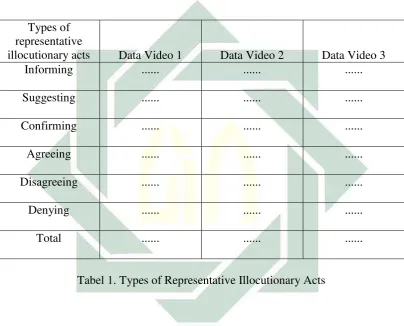
Types of representative
illocutionary acts Data Video 1 Data Video 2 Data Video 3
Informing ... ... ...
Suggesting ... ... ...
Confirming ... ... ...
Agreeing ... ... ...
Disagreeing ... ... ...
Denying ... ... ...
Total ... ... ...
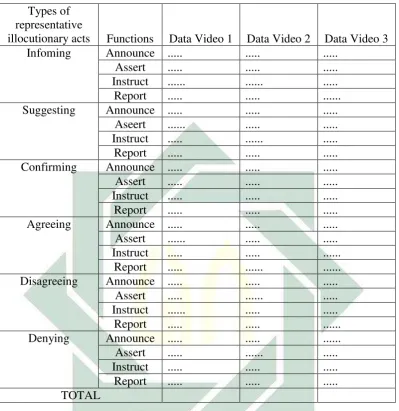
23
Types of representative
illocutionary acts Functions Data Video 1 Data Video 2 Data Video 3
Infoming Announce ... ... ...
Tabel 2. The Functions of Type Representative Illocutionary Acts
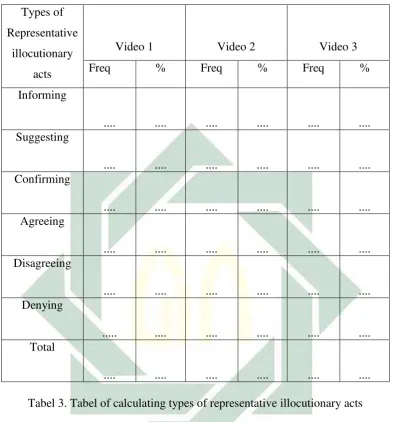
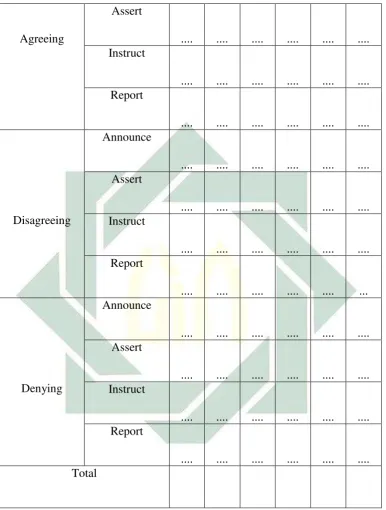
3.Determining and calculating
After classifying the data, the researcher counts the total number of every
type of representative illocutionary acts and the functions of representative
illocutionary atcs (n) times a hundred percent (100%) and divided the total
number of all of the total data (N). The formula: P = �
24
Types of Representative
illocutionary acts
Video 1 Video 2 Video 3
Freq % Freq % Freq %
Informing
.... .... .... .... .... ....
Suggesting
.... .... .... .... .... ....
Confirming
.... .... .... .... .... ....
Agreeing
.... .... .... .... .... ....
Disagreeing
.... .... .... .... .... ....
Denying
... .... .... .... .... ....
Total
.... .... .... .... .... ....
27
4.Interpreting data
After analyzing the data, the researcher interpreted the data of types of
representative illocutionary acts by using Searle’s theory, and described the data
of functions of representative illocutionary acts based on Leech’s theory.
5.Drawing conclusion
Finally, the researcher drew a conclusion based on the result by
interpreting the data to answer statement of problem about the finding of types
and functions of representative illocutionary acts used by governor candidates in
CHAPTER IV
FINDINGS AND DISCUSSION
This chapter consist of two parts. They are findings and discussion. The
first part is the finding of this research which is divided into two sections.
Afterwards, the second part is discussion. The researcher would like to present
and discuss the finding in detail.
4.1 Findings
The finding of this research is divided into two sections based on the
statement of the problem. The first section is types of representative illocutionary
acts used by governor’s candidates utterance in the governor debates DKI Jakarta
2017 period which is used Searle’s theory. The second section is the functions of
representative illocutionary acts used by governor’s candidate utterance in the
governor debates DKI Jakarta 2017 period.
4.1.1 The Types of Representative Illocutionary Acts
According to the data analysis in the transcripts of governor’s debate
DKI Jakarta period that consist of 1.196 utterances of 3 videos. Each video has
different theme. The first video talks about “Pembangunan sosial ekonomi untuk
Jakarta”. The second video shows debates with the theme of “Reformasi
birokasi, pelayanan publik, dan penataan kawasan perkotaan”. The third video is
about “Kependudukan dan peningkatan kualitas hidup masyarakat Jakarta
29
pemberantasan narkoba, dan kebijakan terkait penyandang disabilitas”. In the
first video, the researcher found 387 data. The data of representative illocutionary
acts are shown in the following chart :
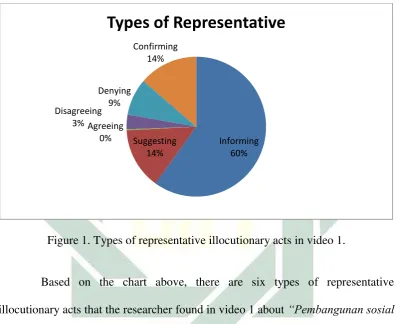
Figure 1. Types of representative illocutionary acts in video 1.
Based on the chart above, there are six types of representative
illocutionary acts that the researcher found in video 1 about “Pembangunan sosial
ekonomi untuk Jakarta.” They are informing, confirming, suggesting, denying,
disagreeing, and agreeing. The most dominant of representative illocutionary acts
is informing with 60% (232 data), followed by confirming 14% (53 data), then
suggesting 14% (55 data), afterward denying 9% (33 data), next is disagreeing 3%
(13 data) and the lowest frequency is agreeing with 0% (1 data) of all data. Informing
60% Suggesting
14% Agreeing
0% Disagreeing
3%
Denying 9%
Confirming 14%
30
In the second video, the researcher found 426 data. The data are shown in
the following chart :
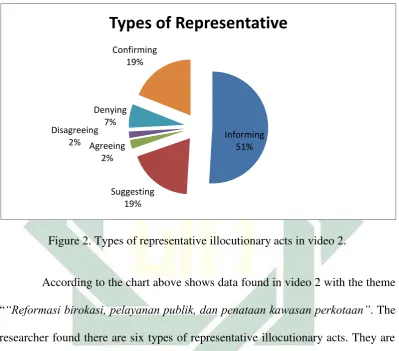
Figure 2. Types of representative illocutionary acts in video 2.
According to the chart above shows data found in video 2 with the theme
““Reformasi birokasi, pelayanan publik, dan penataan kawasan perkotaan”. The
researcher found there are six types of representative illocutionary acts. They are
informing, confirming, suggesting, denying, agreeing, and disagreeing. The most
dominant of representative illocutionary acts is informing with 51% (217 data),
followed by confirming 19% (81 data), then suggesting 19% (80 data), afterward
denying 7% (29 data), next is agreeing 2% (11 data) and the last is disagreeing 2%
(8 data) with the same position of all data.
Informing 51%
Suggesting 19% Agreeing
2% Disagreeing
2%
Denying 7%
Confirming 19%
31
In the last video, the researcher found 383 data. The data are shown in
the following chart :
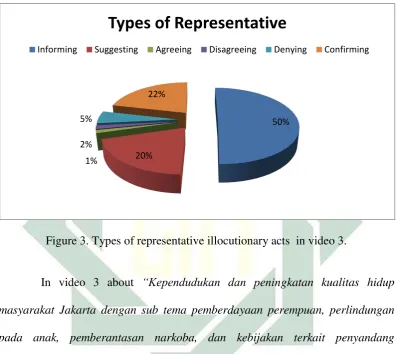
Figure 3. Types of representative illocutionary acts in video 3.
In video 3 about “Kependudukan dan peningkatan kualitas hidup
masyarakat Jakarta dengan sub tema pemberdayaan perempuan, perlindungan
pada anak, pemberantasan narkoba, dan kebijakan terkait penyandang
disabilitas.” There are six types of representative illocutionary acts. They are
informing, confirming, suggesting, denying, disagreeing, and agreeing. The
highest frequency is informing 50% (193 data), followed by confirming 22% (82
data), after that suggesting 20% (77 data), next denying 5% (20 data), then
disagreeing 2% (6 data), and the last agreeing 1% (5 data) of all data.
The following part discusses all types of representative illocutionary acts
found in three videos of the governor’s debate DKI Jakarta 2017.
50%
20% 1%
2% 5%
22%
Types of Representative
32
4.1.1.1 Informing
Informing is the most frequent type of representative illocutionary acts
used by the governor’s candidates to deliver their messages. These utterances are
used by the governor’s candidates to give information, tell the facts, or the
important things to the audiences. According to the Dictionary.com, informing is
to give the knowledge of a fact or circumstance. The researcher found 232 data or
60% of informing type of representative illocutionary acts in video 1, 217 data or
51% in video 2, 193 data or 50% in video 3. The following are examples of
informing type of representative illocutionary acts.
Data 1 (Video 1, Segmen 1)
Moderator Ira Koesno : “ ... Pertanyaan pertama dalam waktu dua menit jelaskan visi anda dan misi yang paling utama terkait tema malam ini ...”
Agus : Visi saya lima tahun ke depan adalah menjadikan Jakarta semakin maju, aman, adil, dan sejahtera. Untuk dapat mewujudkan itu semua, komitmen saya dan tentunya misi saya adalah untuk mengatasi semua permasalahan di Jakarta, meningkatkan pembangunan sehingga Jakarta semakin maju ke depan.
Those sentences above are informing. The candidate number 1, Agus,
informs his vision and mission to become governor of DKI Jakarta. Agus says an
important thing about his commitment. He supplys with knowledge to overcome a
problem in Jakarta. He tells the information that he wants to develop Jakarta city
by saying “Untuk dapat mewujudkan itu semua, komitmen saya dan tentunya misi
saya adalah untuk mengatasi semua permasalahan di Jakarta, meningkatkan
pembangunan sehingga Jakarta semakin maju ke depan.” The sentence above is
33
Next is the second sample of “informing” type of representative
illocutionary acts taken from video 1 showing data from the second candidate.
Data 2 (Video 1, Segmen 1)
Moderator Ira Koesno : ... “Jelaskan program kerja unggulan terkait visi misi yang telah dipaparkan tadi dan yakinkan para calon
pemilih mengapa hal itu penting dilakukan bagi rakyat Jakarta...”
Djarot : Terima kasih. Prioritas kami adalah reformasi birokasi.
Birokasi adalah motto pembangunan, birokasi itu harus bersih,
transparan, dan professional. Dengan cara seperti itu kita akan
mampu mencapai sasaran kita untuk membangun manusia Jakarta.
The utterance above is informing type of representative illocutionary
acts. Djarot as the candidate number 2 gives the information about “birocracy”
which is one of his program. Birocracy reformatic is the priority to improve
Jakarta city. He thinks that birocracy has to be pure, transparant, and professional
in order to develop Jakarta city.
The following is the last sample of “informing” type of representative
illocutionary acts taken from video 3 showing data from the first candidate.
Data 3 (Video 3, Segmen 2)
Moderator Alfito Deannova : ... “Menurut anda apa yang salah dari kondisi itu dan apa langkah-langkah strategies untuk memperbaiki program rehabilitasi sebagai upaya menuntaskan pemberantasan narkoba?...”
34
The utterance above is informing because Sylvi supplies the facts about
narcotic abuse. She tells the detailed data of narcotic abuse. She presents the
information regarding narcotic in Jakarta. Jakarta in emergency of narcotic.
4.1.1.2 Confirming
Confirming is the second highest type of representative illocutionary acts
used by the governor’s candidates to prove something. These utterance establishes
the truth, accuracy, validity, or genuineness (Dictionary.com). The candidates
usually firm or stress what they have said. Here, the researcher found 53 data or
14% of confirming type of representative illocutionary acts in video 1, confirming
81 data or 19% in video 2, confirming 82 data or 22%. The following are
examples of confirming type of representative illocutionary acts.
Data 4 (Video 1, Segmen 1)
Moderator Ira Koesno : ... “Jelaskan apa yang akan anda jadikan
program kerja unggulan terkait visi misi yang telah dipaparkan tadi.”
Djarot : “Masyarakat Jakarta kalau otaknya penuh berarti dia
cerdas, berkarakter, dan dia mempunyai daya beli yang tinggi, ini hanya bisa dilalui kalau birokasinya betul-betul bersih dan
melayani dengan professional.”
The utterance above is confirming. Djarot says ...“ini hanya bisa
dilalui kalau birokasinya betul-betul bersih dan melayani dengan professional.”
means that he establishes the validity. The word “betul-betul bersih” shows that
the speaker affirm the statement.
Next is the second sample of “confirming” type of representative
35
Data 5 (Video 2, Segmen 6)
Moderator prof Eko : ... “Bagaimana penjelasan paslon tiga untuk mengubah dari sekedar menahan air melalui resapan menjadi pemanenan air agar air dapat dipakai ulang?”
Anies : Ya sebelum saya menjawab, saya mengkoreksi dulu yang dikatakan oleh pak Basuki bahwa kemdikbud ranking 22. Tadi sebenarnya gak mau mengangkat ini tapi karena beliau mengatakan data yang keliru saya koreksi bahwa itu angka sebelum saya bertugas sesudah saya bertugas meningkat menjadi 9 ranking diantara semuanya. Jadi itu maaf jadi kesannya menyombongkan pak tapi insya allah di Jakarta nanti kita akan bereskan sehingga kinerjanya pun lebih baik sebagaimana kita membereskan ketika di kemdikbud kemarin.
Anies’s statement above is confirming. Anies says to another candidates
that he makes firm and clarify Ahok’s statement. The utterance “Jadi itu maaf jadi
kesannya menyombongkan pak tapi insya allah di Jakarta nanti kita akan
bereskan sehingga kinerjanya pun lebih baik sebagaimana kita membereskan
ketika di kemdikbud kemarin.” is used by the speaker to confirm his statement.
The following is the sample of “confirming” type of representative
illocutionary acts taken from video 3 showing data from the first candidate.
Data 6 (Video 3, Segmen 2) :
Moderator Alfito Deannova : ... “Maka langkah selanjutnya adalah memberikan kesempatan kepada pasangan calon untuk menanggapi
jawaban dari masing-masing pasangan calon lainnya.”
Agus : Kita ingin meyakinkan masyarakat kita keluarga-keluarga termasuk anak-anaknya memahami bahaya narkoba secara keseluruhan itu penting tetapi bagi saya, saya punya background
militer jadi saya akan tegas sekali lagi meyakinkan memberantas
36
The utterance above is confirming. Agus tries to convince Jakarta’s
citizens that he can remove problems of narcotic. He also has military background
to decrease narcotic in Jakarta. It means that he tells the truth about his
background. The utterance “jadi saya akan tegas...” is used by the
speaker to strengthen his statement.
4.1.1.3 Suggesting
This is the third highest number of representative illocutionary acts used
by the governor’s candidates to deliver their messages. According to the
Dictionary.com suggesting is mentioning or introducing an idea, proposition,
plan, for consideration or possible action. These utterances are used by the
candidates to suggest, give solution, a plan and idea to develop Jakarta city. The
researcher found suggesting in each video. The researcher found 55 data or 14%
of suggesting type of representative illocutionary acts in video 1, 80 data or 19%
in video 2, and 77 data or 20% in video 3. The following are examples of
suggesting type of representative illocutionary acts.
Data 7 (Video 1, Segmen 1)
Moderator Ira Koesno : “Jelaskan apa yang akan anda jadikan
program kerja unggulan terkait visi misi yang telah dipaparkan...”
Sandiaga : “Kami mempunyai program OKE OCE. OKE OCE One
37
terjangkau bagi khususnya warga menengah ke bawah untuk
maju kotanya dan bahagia warganya.”
The utterance above is suggesting. The speaker proposes a plan and
introduce an idea. Sandiaga delivers a plan about “OKE OCE” which is one of his
program. He tells that program “OKE OCE” will give the solution to Jakarta
citizens. OKE OCE covers credit for home, education, and OKE price.
Next is the second sample of “suggesting” type of representative
illocutionary acts taken from video 2 showing data from the first candidate.
Data 8 (Video 2, Segmen 6)
Moderator prof Eko : ... “Bagaimana strategi paslon nomor satu
meningkatkan ruang terbuka hijau yang sangat deficient pada saat ini?”
Agus : Dan ini menjadi komitmen saya dan mpok Sylvi jika
terpilih menjadi gubernur maka pertama-tama kita akan merevitalisasi ruang-ruang terbuka hijau yang sudah ada saat ini sambil kita terus mengembangkan dan membuka lahan-lahan baru walaupun tidak banyak pilihan tetapi kita lihat ada potensi-potensi yang ada di Jakarta ini dengan target tidak usah terlalu muluk-muluk dalam lima tahun ke depan kita bisa meningkatkan sampai dengan 15% dari total lahan.
The utterance above is suggesting. Agus says a plan and commitment if
he becomes a governor. He and mpok Sylvi wants to develop new area and
increase green area up to 15%. He shows to the hearer about a plan, program, and
commitment, by saying “Dan ini menjadi komitmen saya dan mpok Sylvi jika
terpilih menjadi gubernur maka pertama-tama kita akan merevitalisasi....”
The following is the last sample of “suggesting” type of representative
38
Data 9 (Video 3, Segmen 3)
Moderator Alfito Deannova : ... “Saat ini sebagian besar penyandang disabilitas harus berkompetisi secara tidak seimbang dalam mendapatkan pekerjaan layak dan berusaha... Apa program anda untuk mengatasi tantangan ini jika terpilih kelak? ....”
Ahok : Ya secara prinsip kami akan menjadi provinsi pertama yang menjadi pelopor mengimplementasikan undang-undang tentang penyandang disabilitas tahun 2016 nomor 8, kenapa? Misalnya untuk pemerintah instansi minimal menerima 2%, swasta 1% dari penyandang disabilitas ini yang pertama. Yang
prioritises “services to person”. It means that he proposes a thing regarding the
problem in Jakarta. The utterance “Ya secara prinsip kami akan menjadi provinsi
pertama yang menjadi pelopor...” is used by the speaker to convey his plan.
4.1.1.4. Denying
Denying is the fourth highest type of representative illocutionary acts
used by the speaker to refuse a statement from another speaker. Based on
Dictionary.com denying is refusing to agree and refusing to acknowledge. The
researcher found denying in those videos. The researcher found 33 data or 9% of
denying type of representative illocutionary acts in video 1, 29 data or 7% in
video 2, 20 data or 5% in video 3. The following are examples of denying type of
39
Data 10 Data 31 : (Video 1, segmen 3)
Moderator Ira Koesno : ... “silahkan menanggapi apa yang
disampaikan paslon satu dan paslon tiga tadi.”
Ahok : “Saya harus jelaskan kadang-kadang kami ini memang
suka ketawa juga seolah-olah kami ini tidak suka orang miskin, benci orang miskin. Tadi pasangan nomor satu mengatakan mau ngasih 400ribu per bulan itu terlalu kecil bapak, karena kami berikan anak SMA saja 600ribu jadi kalau orang yang miskin
punya tiga anak yang SMA 1,8 juta tiap bulan dia dapat.”
This utterance above is denying. Ahok denies that he is not hate poor
people. The utterance “Saya harus jelaskan kadang-kadang kami ini memang
suka ketawa juga seolah-olah kami ini tidak suka orang miskin, benci orang
miskin.” shows that he opposes what another candidate’s say. He presents the
evidence with account of numbering to another candidate especially Agus.
Next is the second sample of “denying” type of representative
illocutionary acts taken from video 2 showing data from the last candidate.
Data 11, (Video 2, Segmen 5)
Moderator prof Eko : Baik silahkan kepada paslon tiga untuk memberikan tanggapan balik kepada paslon dua...”
Anies : Ini Jakarta, ini Jakarta 60% lebih perekonomian
Indonesia di Jakarta dan bicara APM tadi ya diatas nasional gak perlu bangga wong ibukota tapi masalahnya angkanya di bawah Biak. Di bawah Biak angka Jakarta Utara itu.
The utterance above is denying. The speaker refuses to agree with
Ahok’s statement. The speaker disputes that “Pure Participation Rate” in the
40
Participation Rate” automatically high. The speaker has difference in opinion
toward the statement from Ahok.
The following is the last sample of “denying” type of representative
illocutionary acts taken from video 3 showing data from the second candidate.
Data 12, (Video 3, Segmen 5)
Moderator Alfito Deannova : ... “Saya berikan kembali kesempatan kepada paslon dua untuk menanggapi jawaban dari paslon satu...”
Djarot : Terima kasih. Tadi salah di dalam menjawab yang kami tanyakan adalah perumahan yang layak huni yang berada di
pinggir-pinggir sungai karena di geser tidak bisa.”
From the utterance above is denying. Djarot rejects to accept candidate
number one’s answer. On other hand, the speaker feels unsatisfied regarding
candidate number one’s answer. We can see in the utterance “Tadi salah di dalam
menjawab yang kami tanyakan adalah...”
4.1.1.5. Disagreeing
Disagreeing is the fifth highest type of illocutionary acts used by the
speaker to reject a statement. According to the Dictionary.com disagreeing means
having difference in opinion from another person. These utterances are used by
the speaker to disapprove something on opinion of the hearer. Here, the researcher
found disagreeing in those videos. The researcher found 13 data or 3% of
disagreeing type of representative illocutionary acts in video 1, 8 data or 2% in
video 2, 6 data or 2% in video 3. The following are examples of disagreeing type
41
Data 13 (Video 1, Segmen 2)
Moderator Ira Koesno : ... “jelaskan langkah yang akan anda ambil untuk solusi masalah ketimpangan sosial dan kemiskinan terutama dalam menciptakan lapangan pekerjaan dan mengurangi dominasi penguasaan aset agar hal tersebut secara konkret bisa dikurangi?”
Ahok : ...“Jadi kami tidak setuju melakukan bantuan
langsung tunai karena itu tidak mendidik. Kami seperti orang tua
yang mendidik anak yang rajin harus kerja, yang tidak rajin tidak boleh dapat.”
In the utterance above, Ahok says clearly that he has different argument
to another candidate especially number one. He said “Jadi kami tidak setuju....”,
shows that the speaker disagrees with candidate number one’s statement. The
candidate number one has the program gives “Cash Transfers” to Jakarta citizens
in the field Neighbourhood/Hamlet but Ahok thinks that their program is not
educate.
Next is the second sample of “disagreeing” type of representative
illocutionary acts taken from video 2 showing data from the first candidate.
Data 14, (Video 2, Segmen 2)
Moderator Tina Talisa : ... “kini kesempatan bagi paslon satu untuk
menanggapi jawaban paslon dua dan tiga...”
Agus : Terima kasih tadi kita dengar klaim dari bapak Basuki bahwa
Jakarta semuanya bersih karena birokasinya sudah baik. Tentu kita
akui ada beberapa yang sudah bersih tetapi pengalaman saya dan mpok Sylvi bergerilya ke lapangan 3 bulan terakhir ini membuktikan bahwa banyak hal yang tidak terungkap selama ini kepada publik.
The utterance above is disagreeing. Agus conveys lack of agreement
42
Ahok. We can see in the utterance “tetapi pengalaman saya dan mpok Sylvi
bergerilya ke lapangan 3 bulan terakhir ini membuktikan bahwa banyak
hal...”. Besides that, the speaker has own argument.
The following is the last sample of “disagreeing” type of representative
illocutionary acts taken from video 3 showing data from the last candidate.
Data 15, (Video 3, Segmen 5)
Moderator Alfito Deannova : ... “Kami berikan kesempatan kepada
pasangan nomor tiga untuk menanggapi.”
Anies : Kekerasan itu ada dua, ada verbal dan ada fisik. Fisik ada 8 jenis kekerasan. Pak Basuki mengeluarkan anak dari sekolah sama seperti kalau anak kita nakal kita berhentikan dari anak, ndak bisa, mereka tetap anak kita, tidak dikeluarkan dari sekolah justru mereka harus lebih banyak di didik dan yang tadi diceritakan bukan penanggulangan.
The utterance above is disagreeing. Anies says fact of disagreeing from
Ahok’s statement. We can see in the utterance “... justru mereka harus lebih
banyak di didik dan yang tadi diceritakan bukan penanggulangan.” The speaker
gets a quarrel from another candidate. The speaker did not agree because he has
his own opinion.
4.1.1.6. Agreeing
Agreeing is the lowest frequency number of representative illocutionary
acts used by the speaker that has the same view, emotion, and the same thought.
These utterances are used by the speaker to approve the opinion of the hearer. The
researcher found agreeing only in video 2 and video 3. The researcher found 11
43
or 1% in video 3. The following are examples of agreeing type of representative
illocutionary acts.
Data 16 (Video 2, Segmen 5) :
Moderator Tina Talisa : Selanjutnya paslon satu silahkan menjawab waktu anda dua menit dimulai ketika berbicara silahkan.
Agus : Benar pak Djarot bahwa kami meyakini semua bisa ditata kita semua bisa menata Jakarta membangun Jakarta tanpa harus
menggusur warganya pun itu saja, semena-mena. Itu adalah
komitmen dan itu lah yang akan kami perjuangkan untuk seluruh warga Jakarta. On site upgrading adalah pradigma yang akan kami gunakan.
The utterance above is agreeing. Agus agrees with Djarot’s statement. He
has the same mind of another candidate. It means that he shows the same view
and emotion with Djarot’s statement. The speaker believes that Jakarta city can be
applied without moving to other area.
Next is the second sample of “agreeing” type of representative
illocutionary acts taken from video 2 showing data from the first candidate.
Data 17 (Video 2, Segmen 2) :
Moderator prof : ... “Bagaimana pendapat paslon satu tentang intervensi politik dalam birokasi dan bagaimana strategi untuk mengurangi intervensi kekuasaan politik dalam birokasi sekaligus menciptakan professionalisme dalam melayani masyarakat?
Agus : “Untuk bisa menyelesaikan permasalahan di Jakarta yang
begitu kompleks, memang harus diawali dengan sebuah birokasi
yang berintegritas menggunakan prinsip-prinsip good governed,
accountable, transparan, responsif, dan juga tentunya capable.”
The utterance above is agreeing. Agus says that birocracy have to
44
by saying “memang harus diawali...” which refers to the same opinion.
The speaker has the same thought with another candidate.
The following is the last sample of “agreeing” type of representative
illocutionary acts taken from video 3 showing data from the first candidate.
Data 18, (Video 3, Segmen 4)
Moderator Alfito Deannova : Waktu anda bu untuk menjawab kalau benar ibu waktunya dua menit silahkan.
Sylvi : Pak anies, pas betul pak Anies menyampaikan bahwa saya
memang pernah menjadi PLT kepala satpol PP pada saat itu pak Joko Widodo yang mengangkat saya sebagai PLT. Jadi memang satpol PP ini bisa kok dikelola secara humanis sebagai bukti bahwa ketika PKL ini mestinya digusur tapi saya mengatakan jangan digusur ini di tata.
The utterance above is agreeing. As we know that agreeing is the
opposite of disagreeing, so the speaker has the same thought and view. The
speaker consents with the statement from another candidate. Based on the
utterance above, Sylvi agrees toward Anies’s statement. Anies says that Sylvi has
been ever the chief of “The Municipal Police of Indonesia”. It is show in the
utterance “Pak anies, pas betul pak Anies menyampaikan bahwa saya...”
4.2 The Functions of Representative illocutionary acts
In this part, the researcher deals with the function of representative
illocutionary acts which are used in the debates of governor candidates of DKI
Jakarta 2017. The researcher discusses the function based on the types of