2CTV9QQF/QFKſECVKQPYKVJ1TICPKE4GUKP
Jamal Balfas1
ABSTRACT
6JG ſTUV UVCIG QH VJKU UVWF[ JCU FGOQPUVTCVGF VJCV QKN RCNO YQQF JCU KPHGTKQT characteristics in comparison with the conventional wood, and suggested to upgrade oil palm wood quality to increase its possible use for woodworking purposes. The use QHQTICPKETGUKP,42JCUDGGPGZCOKPGFKPVJKUUVWF[HQTKORTQXKPIFKOGPUKQPCN stability, strength and machining quality of the oil palm wood. Resin treatment was conducted by frying wood samples in a hot resin solution maintained at 60-80 o%6JGVTGCVGFUCORNGUYGTGVJGPQXGPFTKGFVQTGCEJOQKUVWTGEQPVGPV#HVGT conditioning, wood samples were subjected to various tests. Results indicated that QTICPKE TGUKP VTGCVOGPV UKIPKſECPVN[ KORTQXGF QKN RCNO YQQFdimensional stability of more than 50%. Machining and strength characteristics of the oil palm wood were markedly improved after the resin treatment. Improved characteristics of the treated oil palm wood were comparable with the quality of conventional timber.
-G[YQTFU9QQFSWCNKV[FKOGPUKQPCNUVCDKNKV[EJCTCEVGTKUVKE
I. INTRODUCTION
1KNRCNOUVGOKUNKIPQEGNNWNQUKEKPPCVWTGOCMKPIKVCRQUUKDNGCNVGTPCVKXG
in coping with wood scarcity due to the depleting national supply of timber. Development of an appropriate technology for converting the stem into value added end-products will generate additional income to smallholders, and an increase in revenue for the oil palm plantation industry. Additionally,
TGRNCPVCVKQPUYKNNPQNQPIGTETGCVGGPXKTQPOGPVCNUOQMGJC\CTFHGNNGFQKN RCNOUVGOUYGTGUKORN[DWTPGFWPVKNVJGRTCEVKEGYCUDCPPGFQTRGUVJC\CTF
for the left felled stems are ideal media for numerous of pests. These positive
TGCUQPUJCXGIGCTGFOCP[GHHQTVUKPVJGNCUVVJTGGFGECFGUVQWVKNK\GVJGYCUVGF
lignocellulosic material.
Various researchers in several countries have given numerous attentions
VQFGVGTOKPGYC[UQHWVKNK\KPIVJGQKNRCNOUVGO4GUWNVUKPIGPGTCNUWIIGUVGF VJCV VJG QKN RCNO UVGO KU C PQXGN OCVGTKCN KP VJG ſGNF QH VKODGT WVKNK\CVKQP
and is not an easy material to process and work with. It has certain unique
characteristics and proffers a vast array of problems that are rarely encountered in any conventional timber. Relationship of costs versus recovery rate and comparable quality of the woodworking products is disadvantageous for the
RTQEGUUKPI QH QKN RCNO UVGOU 5JCCTKet al., 6JGUG UVWFKGU JQYGXGT
have adopted the existing techniques commonly used to process conventional timbers. In the last six years, The Forest Products Research and Development
%GPVGT (24&% JCU ETGCVGF C PGY CRRTQCEJ KP VKODGT RTQEGUUKPI VJTQWIJ UGXGTCNCRRNKECVKQPQHQTICPKECPFKPQTICPKEOQFKſECVKQPUYJKEJUKIPKſECPVN[
effective in improving the inferior characteristics of low-density timbers and oil palm wood. The method gives a promising prospect of using oil palm stem as substitute material for productions of furniture and building components. This article reports the second part of the study, which describes the effect of organic resin treatment on the characteristics of oil palm wood.
II. MATERIALS AND METHODS
A. Test Material
1KNRCNOVTGGUTGRTGUGPVKPIVJTGGXCTKGVKGU&WTC2KEKXGTCCPF6GPGTCYGTG
selected from three localities in the province of North Sumatra. The trees were selected according to several criteria as described in the earlier article$CNHCU #NNRNCPVCVKQPUJCTXGUVGFKPVJKUEQPVGZVYGTGGUVCDNKUJGFKP#NN
trees selected were numbered, felled and cut immediately below the crown. The clear boles were bucked into sections of 2.5 m length logs. Sample disks were taken at butt and breast height levels, and thereafter at 2.5 m intervals. Specimens for determination of moisture content and density distribution were cut from each disk within approximately 30 minutes after felling and bucking. Moisture specimens were divided into small blocks and processed immediately. Density specimens were carefully conditioned to equilibrium moisture content.
B. Sample and Resin Preparations
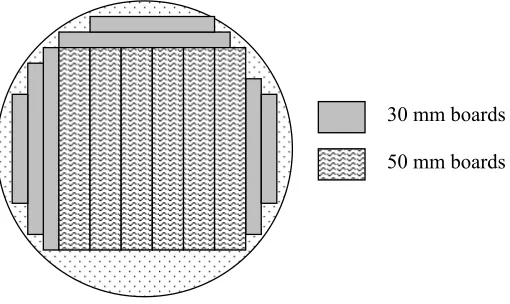
1KNRCNONQIUYGTGDTQMGPFQYPWUKPICDCPFJGCFTKI$5ŒCPFHWTVJGT RTQEGUUGFKPCDCPFTGUCY$5ŒKPCEEQTFCPEGYKVJUCYKPIRCVGTPUJQYP
in Figure 1. Sawblades with tooth pitch of 40-45 mm were stellite tipped and
QRGTCVGFCVHGGFURGGFTCPIKPIHTQOVQOOKPWVG6JGQWVGTJKIJFGPUKV[ CPFKPPGTNQYGTFGPUKV[RCTVQHGCEJNQIYCUEQPEGPVTCVGFHQTRTQFWEKPI
and 50 mm boards respectively. All boards were kiln dried to reach air-dry condition, approximately 15% moisture content. Four sides of the air-dry boards were sound with a double planer. Resin solutions were prepared by diluting pine resin in heated kerosene with two levels of concentration, i.e. 20
30 mm boards
50 mm boards
Figure 1. Sawing pattern used for producing 30 and 50 mm planks
C. Treatment Application
The sound boards measuring 20 mm thick, 200 mm wide and 2000 mm long were carefully measured and weighted prior to treatment. The boards were fried
KPCNQPIVCPMſNNGFYKVJJQVTGUKPCPFOCKPVCKPGFCVo%'CEJHT[KPI
work was conducted for 10 minutes, and the boards were drained after frying. The treated samples were oven dried to reach 10% moisture content. Boards conditioning was undertaken approximately for 7 days to reach back the air-dry moisture content. The treated boards were re-weighted and re-measured to determine weight and dimensional gains due to resin deposition.
D. Physical and Mechanical Properties
Samples from each group of observation were prepared from the treated and untreated boards. Physical and mechanical measurements followed the
OGVJQFFGUETKDGFD[/G[NCP/GEJCPKECNRTQRGTVKGUKPENWFGDGPFKPI
hardness, and compression strengths were determined using a universal testing
OCEJKPG5JKOCF\W-0G
E. Machining Tests
1KNRCNODQCTFUQHVJGVTGCVGFCPFWPVTGCVGFUCORNGUYGTGUWDLGEVGFVQ
machining tests. The tests include planning, shaping, boring and sanding
QRGTCVKQPU%QPXGPVKQPCNOCEJKPGTKGUHCUJKQPGFVQKPFWUVT[UVCPFCTFUYGTG
used for conducting different testing operation. Testing procedures were
ECTTKGFQWVCEEQTFKPIVQ#56/&YKVJUQOGOQFKſECVKQPUVQ
F. Experimental Design
Variables observed in this study consisted of two main factors, i.e. species
XCTKGV[CPFTGUKPVTGCVOGPV6JGſTUVHCEVQTEQPUKUVGFQHVJTGGXCTKGVKGUKG&WTC
Picivera and Tenera. The second factor has three levels of resin concentration,
KGEQPVTQNCPFYGKIJVRGTXQNWOGYX#EQORNGVGHCEVQTKCN FGUKIPYCUCRRNKGFKPCPCN[\KPIFCVCHQTGCEJRCTCOGVGTQDUGTXGFKPVJKUUVWF[
III. RESULTS AND DISCUSSION
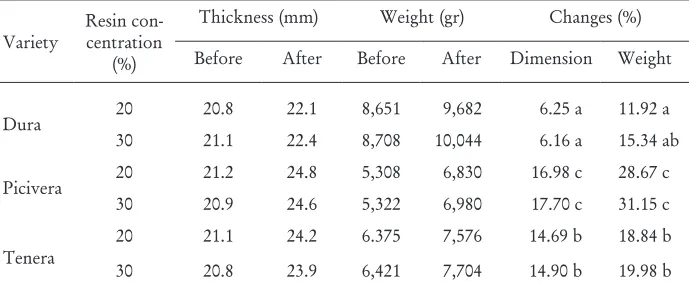
#XGTCIGFKOGPUKQPCNCPFYGKIJVICKPUFWGVQTGUKPFGRQUKVKQPUKIPKſECPVN[ XCT[ KP CEEQTFCPEG YKVJ URGEKGU XCTKGV[ CPF TGUKP EQPEGPVTCVKQP 6CDNG *QYGXGTEJCPIGUYKVJKPCXCTKGV[YGTGOQUVN[PQVUKIPKſECPVN[FKHHGTGPVKP
relation with resin concentration. Dura experienced fewer changes in thickness and weight than the two other varieties. The greatest physical changes were encountered on picivera samples. These phenomena were particularly related
YKVJ YQQF FGPUKV[ QH GCEJ XCTKGV[ 6CDNG 9QQF YKVJ C JKIJGT FGPUKV[ CDUQTDGFNGUUTGUKPVJCPVJCVQHCNQYGTFGPUKV[%QTTGNCVKQPEQGHſEKGPVU42
of each wood variety for density and resin absorption relationship were quite high ranging from 0.67 to 0.82. The difference is explicable since the lighter
YQQFRQUUGUUGUOQTGXQKFUVTWEVWTGRCTGPEJ[OCVQWUVKUUWGUYJKEJOGCPU OQTG TGUKP UQTRVKQP UKVGU CXCKNCDNG VJCP VJQUG KP VJG JGCXKGT QPGU .KO CPF -JQQ
Table 1. Average weight and dimensional changes due to resin treatment
Variety
Resin con-centration
6JKEMPGUUOO 9GKIJVIT %JCPIGU
Before After Before After Dimension 9GKIJV
Dura 20 20.8 22.1 8,651 9,682 6.25 a 11.92 a
30 21.1 22.4 8,708 10,044 6.16 a 15.34 ab
Picivera 20 21.2 24.8 5,308 6,830 16.98 c 28.67 c
30 20.9 24.6 5,322 6,980 17.70 c 31.15 c
Tenera
20 21.1 24.2 6.375 7,576 14.69 b 18.84 b
30 20.8 23.9 6,421 7,704 14.90 b 19.98 b
Note: 8CNWGUYKVJKPCEQNWOPHQNNQYGFD[VJGUCOGNGVVGTCTGPQVUKIPKſECPVN[FKHHGTGPVD[
Higher resin concentration in general gave more additional gains on
dimension and weight of the wood than those treated with lower resin
EQPEGPVTCVKQP6CDNG*QYGXGTVJGEJCPIGUQPVJGVYQRCTCOGVGTUYGTG
approximately similar for the different resin concentration. These values
KPFKECVG VJCV VJG WUG QH TGUKP EQPEGPVTCVKQP KU UWHſEKGPV KP KORTQXKPI
wood dimensional stability.
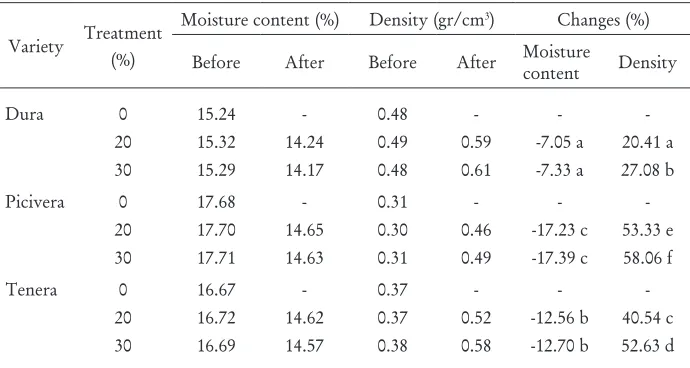
Resin treatment on oil palm wood has resulted in numerous changes on
OQKUVWTGEQPVGPVCPFFGPUKV[QHVJGYQQF6CDNG6JGVTGCVOGPVUKIPKſECPVN[ RFGETGCUGFVJGKPKVKCNOQKUVWTGEQPVGPVCPFKPETGCUGFFGPUKV[QHGCEJ
wood variety. Moisture content decrement may be due to the replacement some of wood-moisture links with wood-resin links. This means less moisture sites available in the treated wood, hence improving wood dimensional
UVCDKNKV[ 6CDNG UJQYU UKIPKſECPV TGFWEVKQPU QP YCVGT CDUQTRVKQP QH VJG VTGCVGFURGEKOGPUFWTKPIUQCMKPI9CVGTCDUQTRVKQPTGFWEVKQPUEQWNFTGCEJ
more than 50% depending on wood variety. Such effect is very important in increasing possible use of oil palm wood which solving one weakness of the
YQQFEJCTCEVGTKUVKEU$CNHCU
Table 2. %JCPIGUQPOQKUVWTGEQPVGPVCPFFGPUKV[FWGVQTGUKPVTGCVOGPV
Variety Treatment
/QKUVWTGEQPVGPV &GPUKV[ITEO3 %JCPIGU
Before After Before After Moisture
content Density
Note: 8CNWGUYKVJKPCEQNWOPHQNNQYGFD[VJGUCOGNGVVGTCTGPQVUKIPKſECPVN[FKHHGTGPVCV
Tukey test, p < 0.05
9QQF FGPUKV[ KPETGOGPVU FWG VQ TGUKP VTGCVOGPV6CDNG GZJKDKVGF CP QDXKQWUXCTKCVKQPCEEQTFKPIVQYQQFXCTKGV[CPFTGUKPEQPEGPVTCVKQP9QQF
density. Similar phenomena have been reported earlier in coconut wood
VTGCVGFYKVJFKHHGTGPVTGUKP$CNHCU*KIJGTTGUKPEQPEGPVTCVKQPTGUWNVGF
in more density increment on each wood variety. This is particularly due to the presence of more solid ingredient in the higher resin concentration, leaving heavier bulking effect in the wood structure.
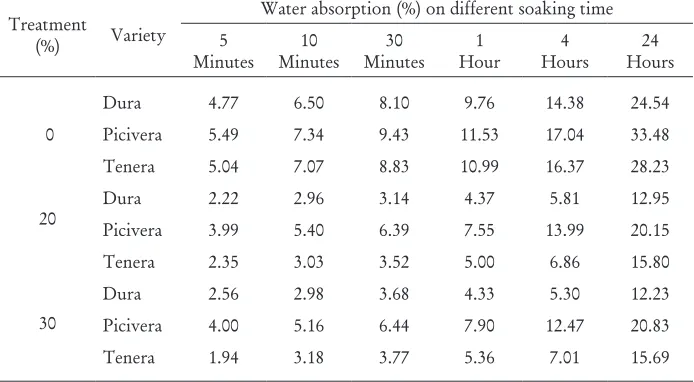
1KNRCNOYQQFEQWNFCDUQTDCITGCVCOQWPVQHOQKUVWTGFWTKPIUQCMKPI 6CDNG6JGWPVTGCVGFUCORNGUEQWNFVCMGWRYCVGTCRRTQZKOCVGN[QHVJGKT
initial weight within 5 minutes soaking. Such water absorption is commonly
HQWPFQPEQPXGPVKQPCNYQQFUWEJCU[GNNQYDCNCWOCPIKWOCPFVGCMCHVGT JQWTUUQCMKPI/CNKMCPF$CNHCU6JKUENGCTN[UJQYUVJCVVJGQKNRCNO
wood is very hygroscopic and less dimensionally stable in comparison with conventional timbers. The application of resin treatment on oil palm wood
6CDNG EQWNF UKIPKſECPVN[ TGFWEG YCVGT CDUQTRVKQP FWTKPI UQCMKPI 6JKU
preferable character is simply contributed by the resin polymers which possess high water resistance. However, the effectiveness of resin treatment in retarding
YCVGTCDUQTRVKQPKUJKIJN[FGRGPFGPVWRQPYQQFXCTKGV[9QQFYKVJJKIJGT
density experienced higher dimensional improvements than those of lower
FGPUKVKGU6JGWUGQHJKIJGTTGUKPEQPEGPVTCVKQPFKFPQVUKIPKſECPVN[R
improve water absorption retardation. These phenomena particularly related with the initial oil palm wood characteristics, i.e. the higher density absorbed less water during soaking than the lower density.
Table 3. 9CVGTCDUQTRVKQPQHVJGWPVTGCVGFCPFVTGCVGFUCORNGUFWTKPIUQCMKPI
Treatment
Variety
9CVGTCDUQTRVKQPQPFKHHGTGPVUQCMKPIVKOG
5 Minutes
10 Minutes
30 Minutes
1 Hour
4 Hours
24 Hours
0
Dura 4.77 6.50 8.10 9.76 14.38 24.54
Picivera 5.49 7.34 9.43 11.53 17.04 33.48
Tenera 5.04 7.07 8.83 10.99 16.37 28.23
20
Dura 2.22 2.96 3.14 4.37 5.81 12.95
Picivera 3.99 5.40 6.39 7.55 13.99 20.15
Tenera 2.35 3.03 3.52 5.00 6.86 15.80
30
Dura 2.56 2.98 3.68 4.33 5.30 12.23
Picivera 4.00 5.16 6.44 7.90 12.47 20.83
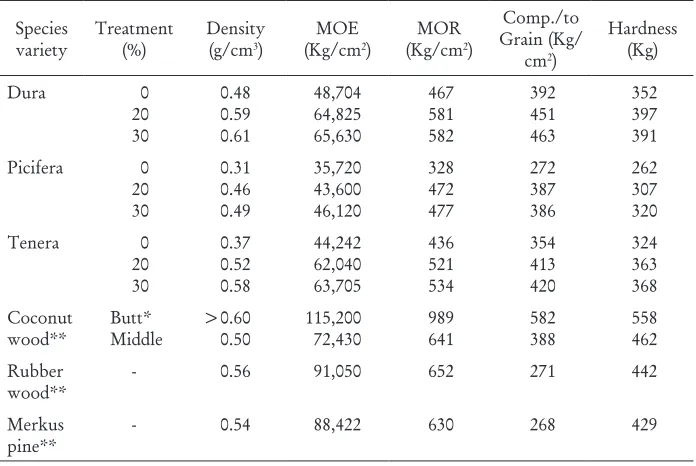
/GEJCPKECNRTQRGTVKGUQHKPKVKCNQKNRCNOYQQFTGƀGEVGFVJGFGPUKV[XCTKCVKQPU
between varieties. Dura consistently revealed better mechanical properties than
6GPGTCCPF2KEKXGTC6CDNG%QORCTKUQPQHOGEJCPKECNRTQRGTVKGUQHQKN
palm wood with three other species listed in the table clearly shows that values of the former are approximately 10 to 60% lower. Treatment with organic
TGUKP EQWNF UKIPKſECPVN[ R KORTQXG OGEJCPKECN EJCTCEVGTKUVKEU QH QKN
palm wood. The rate of mechanical improvements varied from 12 to 56 % depending on wood variety and mechanical property. Picifera experienced more mechanical improvements after treatment than the other two varieties.
6JGJKIJGUVKORTQXGOGPVUYGTGGPEQWPVGTGFQPVJG/1'CPF/14RTQRGTVKGU #RRNKECVKQPQHJKIJGTTGUKPEQPEGPVTCVKQPFKFPQVUKIPKſECPVN[RIKXG
better mechanical improvements in comparison with those treated with the lower ones. Mechanical improvements resulted in the resin treated wood samples may particularly be due to the cementing and bulking effects within the wood structure generated by resin polymers after curing. The treated oil palm wood possesses comparable strength characteristics to those of commercial wood, suggesting that the treated wood may be used as a substitute material to the conventional timber.
Table 4. 9QQFOGEJCPKECNRTQRGTVKGU
Species
6JGWPVTGCVGFUCORNGUQHQKNRCNOYQQFCTGIGPGTCNN[FKHſEWNVVQYQTM
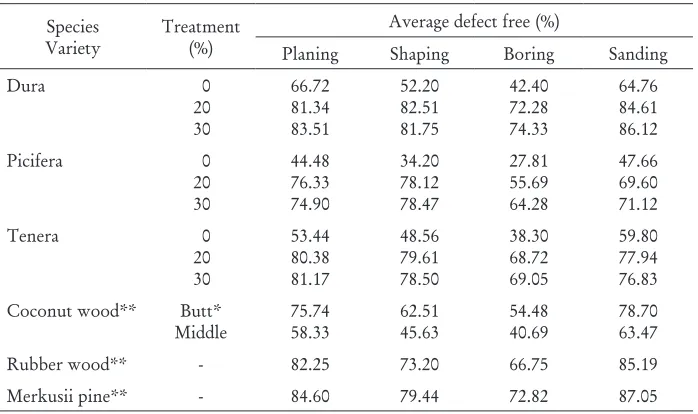
with conventional tools. Table 5 shows values of defect free portion of oil palm wood after machining operations in comparison with other commercial wood. Although Dura revealed better machining qualities than two other varieties, these wood materials as a whole possessed poor machining characteristics relative to those of some commercial wood species. The lower machining performances of oil palm wood may be associated with the presence of
non-UVTWEVWTCN RCTGPEJ[OCVQWU VKUUWGU KP C ITGCVGT COQWPV VJCP VJG RQTVKQP
commonly encountered in conventional wood.
Table 5. 9QQFOCEJKPKPIEJCTCEVGTKUVKEU
Species Variety
Treatment
#XGTCIGFGHGEVHTGG
Planing Shaping Boring Sanding
Dura 0
4WDDGTYQQF - 82.25 73.20 66.75 85.19
/GTMWUKKRKPG - 84.60 79.44 72.82 87.05
Note: #VDTGCUVJGKIJVO.CDQTCVQT[PQVGU(QTGUV2TQFWEVU4GUGCTEJCPF &GXGNQROGPV%GPVGT
4GUKP VTGCVOGPV JCU UKIPKHKECPVN[ R KORTQXGF OCEJKPKPI EJCTCEVGTKUVKEUQPGCEJXCTKGV[QHQKNRCNOYQQF6CDNG/CEJKPKPISWCNKV[ KORTQXGOGPVU TGUWNVGF HTQO VJKU VTGCVOGPV XCTKGF UKIPKſECPVN[ CEEQTFKPI VQYQQFXCTKGV[CPFOCEJKPKPIYQTMU6JGVTGCVGF2KEKHGTCDGPGſVGFOQTG
machining improvements than the treated other two varieties. The highest improvements were achieved on shaping and boring properties. Application of
JKIJGTTGUKPEQPEGPVTCVKQPFKFPQVUKIPKſECPVN[RIKXGDGVVGTOCEJKPKPI
palm wood possesses comparable machining characteristics in comparison with several commercial timbers.
IV. CONCLUSIONS
The untreated oil palm wood had inferior basic characteristics in comparison
YKVJEQOOGTEKCNVKODGTU6JGWUGQHQTICPKETGUKPVTGCVOGPVJCFUKIPKſECPVN[
improved physical, mechanical and machining characteristics of oil palm wood. The treatment could alter the quality of oil palm wood into new material having comparable quality with that of commercial timber.
REFERENCES
Anonym. 1974. Standard method of conducting machining tests of wood and wood-base materials. Annual Book of ASTM. Philadelphia.
Anonym. 1995. Annual book of ASTM standards. Sect. 4. Vol 04.10-wood. Philadelphia.
$CNHCU,0GYCRRTQCEJVQQKNRCNOYQQFWVKNK\CVKQPHQTYQQFYQTMKPI RTQFWEVKQP2CTV$CUKERTQRGTVKGU,QWTPCNQH(QTGUVT[4GUGCTEJ
66. Forestry Research and Development Agency, Jakarta.
Balfas, J. 2007. Perlakuan resin pada kayu kelapa. Jurnal Penelitian Hasil Hutan.
2WUCV2GPGNKVKCPFCP2GPIGODCPICP*CUKN*WVCP$QIQT .KO 5% CPF -% -JQQ %JCTCEVGTKUVKEU QH QKN RCNO VTWPM CPF KVU
RQVGPVKCNWVKNK\CVKQP6JG/CNC[UKCP(QTGUVGT-WCNC.WORWT /CNKM,CPF,$CNHCU/QFKſMCUKMC[WOCPIKWOAcacia mangium9KNF
dan kemungkinannya untuk penggunaan eksterior dibandingkan dengan kayu jati dan bangkirai. Prosiding Seminar Hasil Penelitian Teknologi Hasil Hutan. tanggal 19 Desember di Bogor. pp. 137-141. Pusat Penelitian dan Pengembangan Teknologi Hasil Hutan. Bogor.
Meylan, B.A. 1978. Density variation within Cocos nucifera stems. New Zealand
,QWTPCNQH(QTGUVT[5EKGPEG4QVQTWC
5JCCTK - -- %JQQP CPF #4/ #NK 1KN RCNO UVGO4GXKGY QH
research. Research pamphlet No. 107. Forest Research Institute, Malaysia.