1
The Advantages of Coffee Powder For The Healing Of Diabetic Foot Ulcer *
Hendro S Yuwono
Dept.Surgery, Pajajaran University, Bandung, Indonesia
*Presented as a Poster in ATTD 2012 Barcelona, Spain, at February 8, 2012
The Authors declare and clarify no competitive interest.
Introduction:
Ancient were told treating wounds with sel made coffee powder. Treatment of chronic ulcers due to diabetes is a problem until recently. Coffee powder has came into use in the traditional treatment of varying type of wounds in rural area of coffee plantation without any harmful complication was reported. Experiences that promise to encourage research. Habit at this point has been Similarly carried out also by the population in urban areas to treat various injuries, such as sharps injuries, burns, crushed because of a fall. Lily M.Perry in Medicinal plants of East and Southeast Asia: coffee powder has been used to treat burns. 1
According to the experience of those who have frequently used the coffee powder, the wound usually to dry quickly and do not cause infection. Type of coffee used is any chance of coffee available in that area.
Given that experiences raises the question, whether the coffee powder has antibacterial properties? How coffee beans antibacterial, bactericidal or bacteriostatic only? By answering these questions it is known that coffee powder role in helping to heal wounds in diabetic ulcers.
Method:
The liquid extract of coffee robusta has zone of inhibition of 24,75 mm to methicilline resistant staphylococcus aureus (MRSA-strain ATCC-American Type Culture Collection-6538) culture. This zone of inhibition indicates bactericidal capacity of coffee robusta.
All diabetic wound ulcers treated with coffee powder were rated for drying speed of wound exudate, speed of groth of granulation tissue, ability to fight infection in the wound.
Results:
72
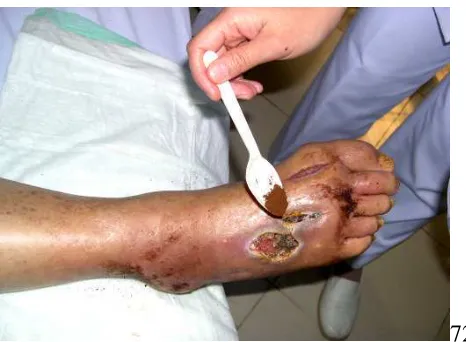
Figure 1 Coffee zone of inhibition Figure 2 Topical coffee administration.
3 Figure 3 The healing of diabetic wound ulcer.
powder about 4-5 mm in thickness. All patients are in good controlled for their blood sugar providing diet and insulin injections. Our wound collection consists of the wound base of muscle or tendon, periosteum; extensive wound almost all skin and subcutis in the inferior extremity.
All wounds rated for drying speed of wound exudate (absorbent), speed of growth of granulation tissue, and ability to fight infection in the wound, resulted all in good healing without any
complicati on, dry fast in 3-4
days, granulatio n was up after 7-10
days. Small bleeding points were easily overcome by providing additional coffee powder.
Discussion:
Experimental superficial grade-2 burn wounds in guinea pig (Cavia porcellus), showed oozing presented in some of the wounds of 1st week observation, although in statistical analysis no differences between all healing wounds treated by coffee or silver sulfadiazine. Oozing in 2nd week was only presented in control group only. 2This result showing better capacity in healing wounds of group I and II in comparison to the results of control group.
Those results of experimental study in animal has also confirmed in human clinical experiment of randomized double blind method in 32 peoples with second degree superficial burn-wounds. Group 1 (n=15) the wounds were given coffee robusta powder, group 2 (n=17) wounds were given silver sulfadiazine. On observations of drought the wound, erythema, epithel closure on day 4 to 14, found no significant difference (p>0.05).3
In the past 10 years there were 205 patients come to the hospital with wound lesions that have been neatly covered with coffee powder, fortunately we have never seen any signs of infection. All 72 cases of diabetic ulcers are in good healing without any complication; all foot ulcers were dry fast in only 3-4 days and granulation was up after 7 days, if bleeding happened were easily stopped by doing a little pressure on the bleeding point using some additional coffee powder. We are very concerned about the improvement of the patient's blood sugar levels, given the constant sugar high (above 180 mg%) would affect wound healing. It is impossible to simply pay attention to the development of wound healing alone, without considering the patient's general condition. Because wounds in diabetics is a part of the general physical condition of patients, which can be monitored from the concentration of sugar and HbA1c. Coffee has a very adequate levels of antioxidants that help fight infection and cope with oxidators found in many chronic wounds especially in diabetic ulcers.
When compared with an antiseptic such as for example betadin or antibiotic cream, they contain only antibacterial but which do not contain antioxidants as well as coffee. In addition, the coffee does have a high absorption capacity when mixed with wound fluids, will form a hyperosmolar fluid could kill bacterial cells as well.
Another thing that is beneficial is that coffee has a pH that is not different from the pH of the skin, so the coffee is very easy to adjust the acidity of the skin condition.
5 for patients suffering from injuries but did not want to undergo surgery (skin grafting, arterial reconstruction), and has been discovered not any complication of infection at all.
Our experience over the last 7 years (2004-2011), the benefits achieved in the use of coffee is in addition useful to prevent infection, relatively very low cost, easily understood and implemented by the layman, it can shorten the hospital stay, coffee is easy to find and are almost always readily available everywhere else and it can quickly administered on the wound, deodorizing the wound into fragrant smell of coffee, no need to create a new skin wound as donor site as for skin grafting. Coffee on the wound does not need to be cleaned every day and can be left on the wound for as long as 4 to 7 days without closed with gauze. The wound should be covered with gauze to prevent spills littering the surrounding especially in patients who are mobile.
Healing enhanced by antioxidants (phenolic acid), coffee within wound fluids forming a high hyperosmolar fluids that are capable of killing pathogenic bacterial cells.
Conclusion:
In conclusion, coffee powder is safe for treating diabetic wound ulcer, and has many advantages as well as very effective in wound healing.
References:
1. Perry LM, Metzger J..Medicinal Plants of East and Southeast Asia: Attributed The Cambridge: MIT Press,1942.
2. Damarianto CS.Penggunaan serbuk kopi secara topical dalam penyembuhan luka pada marmot (Cavia porcellus).[Dissertation].FKUNPAD,RS.Dr.Hasan Sadikin.2005. 3. Yuwono HS, Dumadi S, Damarianto CS. J I Bedah Indonesia. 2005;33 (1):13-15.