THE FUTURE
OF WORK IN THE
ASIA-PACIFIC
A REPORT BY THE
PAGE 1
The future of work has been the subjectof intense debate globally over the last five years. Yet insufficient attention has been focused on the cumulative effects of automation, machine learning, artificial intelligence, technical innovation and the gig economy on businesses and workers in Asia‑Pacific countries. These cumulative effects pose a long‑term challenge to businesses in the region. This region, according to the
International Monetary Fund, currently leads the world in growth (projected to be 5.5% in 2017, and 5.4% in 2018),1 making up a third of the world’s GDP and over half of its population.2 Given the central contribution of Asia‑Pacific to the international economy, Corrs Chambers Westgarth (Australia) and Deacons (Hong Kong) partnered with Asia‑Pacific member firms of the Employment Law Alliance to produce this report on The Future of Work in the Asia‑Pacific.
We asked 15 law firms across Asia‑Pacific to respond to a
Questionnaire3 examining the current and anticipated effects of AI, robotics and the rapid expansion of the ‘gig economy’ on jobs and the future of work in their jurisdiction.
We also asked them about the impact of the United Kingdom’s modern slavery legislation, which is emerging as another key issue given the prevalence of human trafficking and forced labour in the Asia‑Pacific region.
Broadly, the respondents observed the following:
1. The development of innovative technology is having an effect on their respective countries, but each was positive about the opportunities that these developments offer. 2. The emergence of the gig economy
is challenging the policy position in a number of countries, indicating that the issues raised in Europe and the USA regarding this work are not confined to Western jurisdictions. 3. Although there are national
programs that support home economies, the Asia‑Pacific region is not yet seeing potential changes to trade policies as a critical threat to their markets.
4. Modern Slavery laws (in particular the UK las) is having an effect, albeit moderate to date, in focussing greater attention on labour standards and compliance within supply chains in the Asia‑Pacific region.
The key themes for the report are outlined in Part A below, along with the questions related to each theme and highlights from the member firms’ responses. The detailed responses from each national firm are then extracted in Part B.
We hope you find this report insightful and relevant.
John Tuck
Corrs Chambers Westgarth
Australia
Cynthia Chung
Deacons
Hong Kong
THE FUTURE
OF WORK IN THE
ASIA-PACIFIC
EMPLOYMENT LAW
ALLIANCE REPORT
OCTOBER 2017
PART A
KEY THEMES,
QUESTIONS AND
HIGHLIGHTS FROM
PAGE 3
For many years now, companies in the developed world have relocated all or part of their manufacturing operations to Asian countries like China due to lower labour costs.4 However, several
factors may be converging to bring about a reversal of this trend and a consequent reduction in the demand for labour in Asia‑Pacific. Increased implementation of advanced automation and robotics is having a major impact on manufacturing.
A widespread view is emerging that: ‘Digital automation is eroding the comparative advantage of cheap labour.’5 Staying with the example of
China, wage levels have been rising at the rate of 12% annually over the past decade.6 At the same time, the Chinese
Government’s ‘Made in China 2025’ strategy has driven a transformation of the manufacturing sector, with China overtaking Japan in 2016 as ‘the world’s biggest operator of industrial robots’.7
A shift away from the traditional core of agricultural employment is seeing high (unmet) demand for skilled workers in ASEAN countries. Simultaneously, however, skilled jobs in these countries face similar threats from automation to those in industrialised nations. Robots are replacing not only manual jobs but also cognitive ones – the World Bank estimates that 69% of jobs in India are threatened by automation, and 77% in China.8
The ILO’s 2016 study of the future of work in ASEAN nations identified significant impacts from digital automation which are already occurring, including changes to the skill sets needed from workers following deployment of 3D printing, ‘sewbots’, the ‘internet of things’ and other technology. The ILO projects that 56% of employment in the ASEAN‑5 (Cambodia, Indonesia, the Philippines, Thailand and Vietnam) may be displaced due to technology innovation over the next 10‑20 years.9
The data from our Questionnaire responses confirm many of these trends, but also highlight significant opportunities for Asia‑Pacific nations arising from the adoption of new technology in the processes of production and service provision.10
Table 1.1 - Summary of ELA Member Firms’ Responses to questions:
1. In what industries/sectors is automation having the greatest impact in your jurisdiction?
2. What threats do you already see to traditional jobs? Provide examples of the types of work most at risk, and the technologies being deployed.
Asia-Pacific
countries
Technology/automation
transforming work
Sectors and jobs
under threat
Opportunities
Australia Remote technology for operation of mines and container terminals; automated picking, packing and ordering in warehouses
Resources, maritime, agriculture, warehousing, logistics, retail and finance
Firm‑level and national productivity gains through a more highly‑skilled/ technologically capable workforce
Bangladesh Lightweight robots that can handle fabric, pick, place and sew
Manufacturing/garments sector (80% of total export earnings)
Lower labour costs than China, attracting foreign direct investment
Hong Kong Financial technology
(‘fintech’): currency exchange, online lending and wealth management using ‘big data’
Customer‑facing functions in banking and financial services
Banking and finance professionals offering tailor‑ made solutions to customers (e.g. using predictive analytics)
India Software companies
employing AI platforms to increase revenues
IT and IT‑enabled industries including data entry, manual software testing and call centres
Remains among the most popular markets for outsourcing IT functions
Indonesia Robotics in manufacturing; automation of services
Manufacturing of garments and consumable goods; retail salespersons, gardeners, tailors
Productivity and efficiency gains via reduced reliance on monotonous labouring functions
Japan Driverless cars, automated marketing image/speech recognition, AI research labs within companies, machine learning
Transport, customer service, media/advertising (e.g. data analytics automatically drafting articles), vehicle manufacturing
Global leader in techonology, 80% of foreign companies plan to increase investment in Japan over next 5 years
Korea 531 robots per 10,000 factory workers (ahead of Japan, Germany and USA)
Press, frame and painting in car production almost fully automated; technology also impacting on cashiers in retail
PAGE 5
Employment Law Alliance Report | October 2017
Asia-Pacific
countries
Technology/automation
transforming work
Sectors and jobs
under threat
Opportunities
Malaysia Automated channels e.g. online internet banking, self‑ service kiosks
Banking and finance sector – some impact also in semi‑ conductor industry
Local and foreign banks developing staff to perform higher‑end duties to service changing customer expectations
New Zealand Self‑service facilities in supermarkets and petrol stations; robots performing cleaning in airports
Transport, construction, manufacturing, services (e.g. accounting)
Driverless cars; strategic accounting advice performed by humans
Philippines Collaborative industrial robots in auto manufacturing
Business Process Outsourcing (BPO); manufacturing; agriculture
BPO workers and agents upgrading skills, e.g. critical thinking, complex decision‑ making
Singapore Automated guided vehicles in warehousing; sensors and robotics in government buildings, e.g. National Library
Food and electronics manufacturing; service industries (e.g. restaurants, fast‑food outlets, hotels)
Government grants/ schemes for businesses to automate, partly driven by manpower shortages
Sri Lanka Technically advanced machines with supporting processes that enable even a new recruit to handle highly skilled work in clothing production
Garment manufacturing including embroidering and stitching
Chinese investment in countries like Sri Lanka (the new ‘Silk Route’)
Taiwan Advanced know‑how in
sensors, electronic shelf labelling, biometrics recognition technologies
Insurance companies, payment collection services, hotels (self‑check‑in and robotic baggage delivery)
Government’s Automation Intelligence Industry Development Project encourages R&D (intelligent machines, Internet of Things)
Thailand Robots and advanced
automation in manufacturing; electronic banking; online shopping
Unskilled/low‑skilled manufacturing jobs;
information content providers reliant on advertising (switch to social media)
Table 1.2 - Summary of ELA
Member Firms’ Responses
to question:
3. Is there any indication at this point of the scaling back or relocation of overseas manufacturing or other investment from your jurisdiction, related to factors such as increased labour costs or the protectionist turn in advanced economies?
The IMF went on to warn that a return to protectionist tendencies in countries like the USA and UK presents a significant challenge to Asian
economies which are heavily reliant on exports:
Deglobalization poses a substantial downside risk to the region. … A disruption of global trade, capital, and labor flows resulting from an inward shift in policies, including toward protectionism, would deter investment, reduce productivity, and lower global growth. Asian economies are particularly
vulnerable to trade shocks because they generally have high trade openness ratios, with significant participation in global value chains.15
More recently, the First Vice‑Chair of the International Chamber of Commerce John W.H. Denton AO responded to the current debate, calling for business leaders to actively work to rebalance the public debate on globalisation and recognise that “trade helps lift millions out of poverty, promotes economic growth and job creation and drives technical progress.”16
The data from our Questionnaire responses indicate that, with a few exceptions, these concerns have not yet been borne out on a widespread basis. However, there is a high level of competition within Asia‑Pacific nations to attract foreign investment, and many national governments are supporting domestic production through ‘buy local’ campaigns and programs.
In addition to the impact of rising labour costs in some Asian countries, as discussed above, the developed world is experiencing what the OECD describes as a ‘backlash against globalisation’.11
While most clearly evident in the UK’s 2016 referendum vote in favour of leaving the European Union, and the anti‑free trade rhetoric and election pledges of President Trump, signs of this increasingly protectionist tendency can also be seen in countries like Australia. In recent months, the Labor Party and the trade union movement have been adopting more robust positions in favour of putting ‘Australian jobs first’ and urging consumers to ‘buy Australian’.12
Changes to trade policies remains a significant risk to country growth. The positions being articulated most strongly in the USA and UK threaten a more decisive turn away from ‘offshoring’ to ‘reshoring’. In the USA, The Reshoring Initiative (a non‑profit organisation) estimates that 260,000 jobs have already been created by the decisions of companies like Walmart, Boeing and Ford to bring production facilities back to their parent countries.13 Earlier this year, the IMF
observed that:
PAGE 7
Employment Law Alliance Report | October 2017
Australia • Considerably higher wage levels than most other Asia‑Pacific countries have led to offshoring of textiles/ clothing/footwear for some time and, more recently, the exit of automotive manufacturing
• Some indication of protectionist sentiment. However, new evidence of investment and a re‑assessment of viability as a manufacturing base focused on advanced technology
Bangladesh • Trend towards relocation of manufacturing from China to other Asian countries like Bangladesh and Vietnam
• Bangladesh even more competitive now in attracting foreign direct investment from developed countries
Hong Kong • Continued investment of Hong Kong manufacturing firms in China (e.g. Pearl River Delta region)
• Despite increasing labour costs, China is attractive due to geographical vicinity and lower rental expenses/ other living costs
India • Offshoring of IT services has been impacted by protectionist measures, such as suspension of premium visas by countries like the USA
• ‘Make in India’ policy encourages global investment with India remaining a lucrative manufacturing destination
Indonesia • No impact as yet (e.g. relocation of foreign firms), and retention of strong manufacturing base for domestic production
Japan • Not an offshore labour supply for foreign companies (higher wage levels than other Asian countries)
• No scaling back or relocation of overseas manufacturing, overseas real estate investment is increasing (weaker Yen and declining property costs in urban centres relative to e.g. Hong Kong, Singapore)
Korea • High upward pressure on wages has led to some domestic manufacturing firms relocating e.g. to Vietnam
• Ministry of Trade, Industry and Energy data indicate 17,103 firms have relocated all/part of their production facilities overseas since 2012
Malaysia • American hard‑disk maker Seagate Technology Plc relocated from Malaysia to Thailand in 2016
• British American Tobacco (M) Bhd has wound down factory operations in stages (completed mid‑2017)
New Zealand • Typically higher wage levels than many Asia‑Pacific countries
• Domestic manufacturing, especially food and beverages, strongly supported by consumer preferences for NZ‑made products and proposed legislation
Philippines • Protectionist policies in the US impact on the Business Process Outsourcing (BPO) sector which mainly services American firms (many of these are suspending expansion plans and considering relocation to the US)
Singapore • Exit of some firms to reduce costs, e.g. in container shipping, offshore marine services, beverage bottling
• However aerospace and biomedical companies have established regional headquarters in Singapore to take advantage of higher value‑add capabilities (including innovation and research)
Sri Linka • Some shift back to US‑held proximity countries, e.g. Costa Rica and Puerto Rico is already discernible
• However opportunities for Sri Lanka to leverage low technology manufacturing into semi and high‑technology production (e.g. drones)
Taiwan • New US administration presents the biggest challenge to Taiwan, as US makes up 12% of direct exports
• Prospect of increased American tariffs against Chinese exports already causing Taiwanese businesses to expand into the US
Thailand • Labour cost advantage has deteriorated, no longer the preferred manufacturing destination in south‑east Asia
PAGE 9
Employment Law Alliance Report | October 2017
Much of the debate over the gig economy in these countries focuses on the issue of employment status, and whether an intermediate category falling between ‘employee’ and ‘contractor’ may be necessary to provide workers engaged through apps some minimum employment standards.21 The emergence of the
gig economy has led to an increase in policy interest across contingent work arrangements.
The gig economy has also arrived in the Asia‑Pacific, although its implications for employment regulation could be expected to have a different focus compared with the regions/countries discussed above. In particular, the advent of platform‑based work based on an assumption of contracting may add to existing challenges arising from inadequate enforcement of employment regulations, and the large numbers of workers already found in the ‘informal economy’ (around 60% of the workforce).22
However, the data from our Questionnaire responses suggests that, in fact, the policy issues arising from the gig economy in Asia‑Pacific are really quite similar to elsewhere in the world. To a limited extent, unions are agitating on behalf of platform workers and more spontaneous forms of worker representation are occurring (e.g. driver/delivery rider strikes). There is also a focus on establishing employment‑based rights for gig workers through court cases in some jurisdictions, although not generally through legislative changes.
Theme 2:
Keeping up with the
‘Gig Economy’
Across the world, over the last five years, we have witnessed the rapid growth of app‑based forms of service delivery or ‘platforms’ such as Uber, Airtasker, Didi Chuxing and Foodora. Technological innovation has created opportunities for work to take place in a series of one‑off ‘gigs’, rather than in an ongoing relationship with a single employer. Supporters highlight the benefits to workers, consumers and the economy that the on‑demand gigs provide to job growth and the economy. New income and supplementary income streams have been created. However, this expansion of the gig economy has created major challenges for traditional employment regulation in much of Europe, the USA and Australia.
The starting assumption of most gig companies is that workers engaged through the apps are contractors, rather than employees covered by protective employment regulations. In regards to some services, this is being questioned through class actions and test cases seeking to establish employment or ‘worker’ status (USA, UK),17 union efforts to organise gig
workers (UK, Australia),18 collective
self‑organisation e.g. by food‑delivery riders and ride‑share drivers (Italy, Australia)19 and regulatory scrutiny
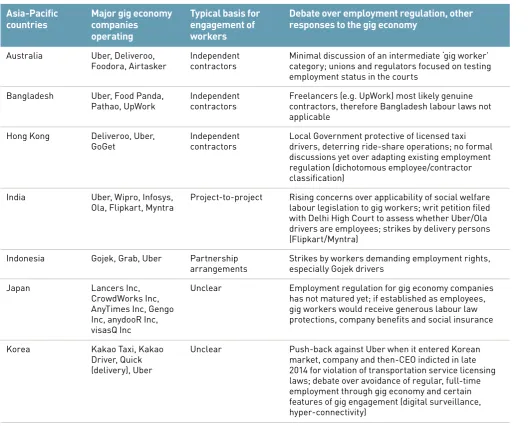
Table 2.1 - Summary of ELA Member Firms’ Responses to question:
4. Are gig economy companies active in your jurisdiction (provide examples), and is there any debate over adaptation of existing employment regulation in response to this?
Asia-Pacific
countries
Major gig economy
companies
operating
Typical basis for
engagement of
workers
Debate over employment regulation, other
responses to the gig economy
Australia Uber, Deliveroo, Foodora, Airtasker
Independent contractors
Minimal discussion of an intermediate ‘gig worker’ category; unions and regulators focused on testing employment status in the courts
Bangladesh Uber, Food Panda, Pathao, UpWork
Independent contractors
Freelancers (e.g. UpWork) most likely genuine contractors, therefore Bangladesh labour laws not applicable
Hong Kong Deliveroo, Uber, GoGet
Independent contractors
Local Government protective of licensed taxi drivers, deterring ride‑share operations; no formal discussions yet over adapting existing employment regulation (dichotomous employee/contractor classification)
India Uber, Wipro, Infosys, Ola, Flipkart, Myntra
Project‑to‑project Rising concerns over applicability of social welfare labour legislation to gig workers; writ petition filed with Delhi High Court to assess whether Uber/Ola drivers are employees; strikes by delivery persons (Flipkart/Myntra)
Indonesia Gojek, Grab, Uber Partnership arrangements
Strikes by workers demanding employment rights, especially Gojek drivers
Japan Lancers Inc,
CrowdWorks Inc, AnyTimes Inc, Gengo Inc, anydooR Inc, visasQ Inc
Unclear Employment regulation for gig economy companies has not matured yet; if established as employees, gig workers would receive generous labour law protections, company benefits and social insurance
Korea Kakao Taxi, Kakao Driver, Quick (delivery), Uber
PAGE 11
Employment Law Alliance Report | October 2017
Asia-Pacific
countries
Major gig economy
companies
operating
Typical basis for
engagement of
workers
Debate over employment regulation, other
responses to the gig economy
Malaysia Uber, Grab Unclear Legislation passed in early 2017 regulating e‑hailing services; consideration of whether drivers are employees or independent contractors, although no court cases determining this point
New Zealand Uber, shared workspaces promoting gig work
Mostly contractors, some employees
No challenge yet to nature of working relationship in gig companies, nor changes in regulatory sphere to encourage or limit this form of working
Philippines Grab, Uber, Food Panda, U‑go, Kanguru
Independent contractors
Significant growth since 2015; popularity of transport apps has led to accreditation and Government recognition that drivers are contractors
Singapore Uber, Grab, Lazada, Deliveroo, Food Panda, Redmart
Freelancers Employment regulations do not extend to gig workers; Ministry of Manpower closely monitoring potential impact and tripartite body has developed Guidelines on Employment of Term Contract Employees
Sri Lanka Pick me, Uber Unclear Common law tests to distinguish self‑employment from independent contract employment will have to be revisited
Taiwan Uber (partner with rental car industry), Lalamove, GoGoVan
Employees (in case of Uber)
Uber drivers are legally deemed to be employees of the rental car company; questions remain as to legal relationship between ‘platform providers’ and ‘labour providers’
The imposition of requirements to report on measures taken to combat modern slavery has been criticised as inadequate, given that it falls short of requiring companies to take active steps to eliminate the conditions which give rise to forced labour and human trafficking. Stronger laws have been urged including mandating due diligence steps to identify and prevent modern slavery, with high penalties for non‑compliance.27
The data from our Questionnaire responses shows that the UK’s Modern Slavery Act is having a moderate effect in focusing greater attention on labour standards compliance and the avoidance of modern slavery within supply chains in some Asia‑Pacific countries. It is also likely that Australia, and possibly also New Zealand, will replicate the UK legislation in the near future.
Many of the country responses indicated that subsidiaries or related entities of UK companies covered by the Modern Slavery Act, located within the relevant jurisdiction, have responded to information requests from their UK parents in relation to supply chain activity or assisted in some other way with the UK bodies’ reporting requirements.
Theme 3:
Implications of the UK’s
Modern Slavery legislation
for Asian companies and
Asia-based subsidiaries of
UK multinationals
The UK’s Modern Slavery Act 2015 created the Office of the Independent Anti‑Slavery Commissioner and imposes reporting requirements on companies with an annual global turnover of more than £36 million. These businesses must provide an annual statement of the steps taken to ensure that slavery and human trafficking are not taking place in the business or within any of its supply chains.23 The legislation also
established the office of Independent Anti‑Slavery Commissioner, to promote best practice and investigate and prosecute slavery and human trafficking offences under UK law.24
Certifying that the UK company has no modern slavery or human trafficking in its supply chain or any part of the business requires auditing of all Asia‑Pacific operations, where it is estimated that 66.4% of the world’s 45 million people in modern slavery are found. This includes people subjected to forced labour in brick kilns, agriculture and garment production; child soldiers in several countries; forced begging; and commercial sexual exploitation.25
PAGE 13
Employment Law Alliance Report | October 2017
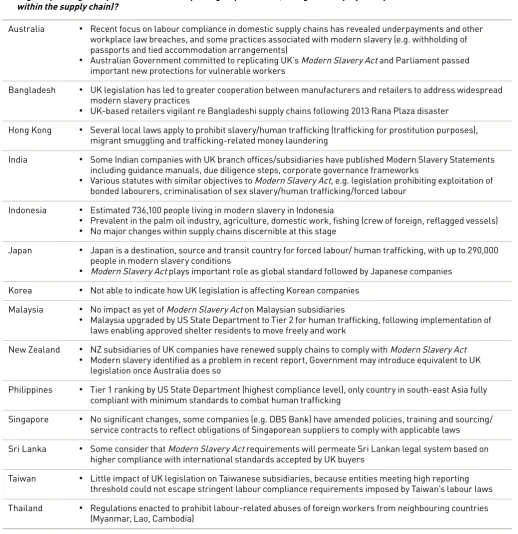
Table 3.1 – Summary of ELA Member Firms’ Responses to question:
5. What effect is the UK Modern Slavery Act having on subsidiary companies in your jurisdiction (e.g. responding to requests to meet the reporting requirements, changes to employment practices within the supply chain)?
Australia • Recent focus on labour compliance in domestic supply chains has revealed underpayments and other workplace law breaches, and some practices associated with modern slavery (e.g. withholding of passports and tied accommodation arrangements)
• Australian Government committed to replicating UK’s Modern Slavery Act and Parliament passed important new protections for vulnerable workers
Bangladesh • UK legislation has led to greater cooperation between manufacturers and retailers to address widespread modern slavery practices
• UK‑based retailers vigilant re Bangladeshi supply chains following 2013 Rana Plaza disaster
Hong Kong • Several local laws apply to prohibit slavery/human trafficking (trafficking for prostitution purposes), migrant smuggling and trafficking‑related money laundering
India • Some Indian companies with UK branch offices/subsidiaries have published Modern Slavery Statements including guidance manuals, due diligence steps, corporate governance frameworks
• Various statutes with similar objectives to Modern Slavery Act, e.g. legislation prohibiting exploitation of bonded labourers, criminalisation of sex slavery/human trafficking/forced labour
Indonesia • Estimated 736,100 people living in modern slavery in Indonesia
• Prevalent in the palm oil industry, agriculture, domestic work, fishing (crew of foreign, reflagged vessels)
• No major changes within supply chains discernible at this stage
Japan • Japan is a destination, source and transit country for forced labour/ human trafficking, with up to 290,000 people in modern slavery conditions
• Modern Slavery Act plays important role as global standard followed by Japanese companies
Korea • Not able to indicate how UK legislation is affecting Korean companies
Malaysia • No impact as yet of Modern Slavery Act on Malaysian subsidiaries
• Malaysia upgraded by US State Department to Tier 2 for human trafficking, following implementation of laws enabling approved shelter residents to move freely and work
New Zealand • NZ subsidiaries of UK companies have renewed supply chains to comply with Modern Slavery Act
• Modern slavery identified as a problem in recent report, Government may introduce equivalent to UK legislation once Australia does so
Philippines • Tier 1 ranking by US State Department (highest compliance level), only country in south‑east Asia fully compliant with minimum standards to combat human trafficking
Singapore • No significant changes, some companies (e.g. DBS Bank) have amended policies, training and sourcing/ service contracts to reflect obligations of Singaporean suppliers to comply with applicable laws
Sri Lanka • Some consider that Modern Slavery Act requirements will permeate Sri Lankan legal system based on higher compliance with international standards accepted by UK buyers
Taiwan • Little impact of UK legislation on Taiwanese subsidiaries, because entities meeting high reporting threshold could not escape stringent labour compliance requirements imposed by Taiwan’s labour laws
THE FUTURE
OF WORK IN THE
ASIA-PACIFIC
EMPLOYMENT LAW
ALLIANCE REPORT
OCTOBER 2017
PART B
DETAILED
ELA MEMBER FIRM
RESPONSES TO
PAGE 15
QUESTIONS
1. In what industries/sectors is automation having
the greatest impact in your jurisdiction?
2. What threats do you already see to traditional jobs?
Provide examples of the types of work most at risk,
and the technologies being deployed.
3. Is there any indication at this point of the scaling
back or relocation of overseas manufacturing or
other investment from your jurisdiction, related
to factors such as increased labour costs or the
protectionist turn in advanced economies?
4. Are gig economy companies active in your
jurisdiction (provide examples)? Is there any debate
over adaptation of existing employment regulation in
response to this?
1. Advanced automation is having a considerable impact in the Australian manufacturing, resources, maritime and agricultural sectors, as well as warehousing, logistics and retail. For example, almost all of Patrick’s Brisbane container terminal is now run from Sydney, and Rio Tinto runs mines in Australia and globally from a single room in Brisbane. Picking, packing and ordering functions in large warehouses are increasingly utilising robots and automated systems to do the work previously done by humans (e.g. implementation of Vanderlande’s technology at Woolworths and Australia Post distribution centres), and electronic scanners are widespread throughout the retail sector. Amazon’s entry into the Australian market is widely expected to amplify these trends.28
2. Many jobs in traditionally high‑ employment (and generally highly unionised) industries have been eradicated through automation, such as Rio Tinto’s deployment of 69 automated trucks to undertake haulage work at its mines in the Pilbara region of Western Australia. Hi‑tech manufacturing involving the use of AI and robotics, such as Robert Bosch Australia’s diode manufacturing facility in Melbourne, is transforming the production of consumer goods and industrial technology applications. The 2016 Future of Work Report indicated that two‑thirds of Australian workers believe that their jobs will not exist within five years, while 47% expect
PAGE 17
Employment Law Alliance Report | October 2017
their jobs will require quite different skills. Recent research suggests that the job impacts of automation are not entirely negative, given that technology may free many workers up to do work differently and provide a higher quality service to customers (e.g. bank staff assisting with financial advice rather than processing basic transactions). This has the potential to deliver significant firm‑level and national productivity benefits.29
3. This question invites a different perspective for Australia (compared with other Asia‑Pacific countries), given that businesses here have been offshoring manufacturing to lower‑wage economies for many years now. Australia has considerably higher wage levels than many OECD countries, and a robust framework of minimum employment standards. This has contributed to the near‑ complete wind‑down of domestic automotive manufacturing, and offshoring of many elements of the manufacturing process in textile, clothing and footwear production. The protectionist, counter‑globalisation tendencies exhibited through the Brexit and Trump phenomena can be seen to some extent in the Labor Party’s recent (and controversial) adoption of an ‘Australian jobs first’ position. There is also something of a re‑ assessment occurring of Australia’s viability as a manufacturing base, which may lead to ‘reshoring’ in the years ahead through a combination of advanced technology, high
investment in skills development/ training and interconnected specialised supply chains.30 The
Sydney operations of biotech companies Cochlear and ResMed are leading exponents of Australian advanced manufacturing capability.
4. Australia has seen rapid growth in the gig economy over the last five years, with local companies like Airtasker and global players (Uber, Deliveroo, Foodora) entering the Australian market. As in many other countries, these companies have engaged workers (to provide services to consumers through app‑based technologies) on the assumption of an independent contractor relationship rather than employment. This has triggered debate over the employment status of gig workers, with union organisations seeking to represent and establish employment‑based entitlements for them (Unions NSW and Victorian Trades Hall Council/Young Workers Centre have been particularly active, and a worker self‑representative body ‘Ride Share Drivers United’ has also emerged). The debate in Australia has involved only minimal consideration, mainly by academics, of introducing an intermediate ‘worker’ category sitting between ‘employee’ (with full employment rights) and ‘contractor’ (independent businesses or ‘self‑employed’ in the UK context). Rather, unions and regulatory bodies like the Fair Work Ombudsman have been concerned more with determining what employment rights (if any)
are applicable under Australian workplace, safety and taxation laws in the setting of gig economy engagement.
1. In Bangladesh, the manufacturing sector/industry (particularly ready‑ made garments, the auto industry and agriculture), transportation and the telecom sectors are in most threat of automation. Overall, by 2020, it is estimated that 5 million jobs would be lost due to technological advances such as automation. The garments industry looks set to be revolutionised, which would bring with it great changes and would greatly impact other sectors as a result. At the grassroots level, at least 4.4 million workers currently employed in the industry would risk losing their jobs. At the national level, rising automation means that foreign buyers would not be able to take advantage of cheap labour costs in places like Bangladesh and China. As a result, countries like Bangladesh would lose a great source of its exports earnings. This would in turn have a great impact on other sectors, because it would then oblige Bangladesh to change from positioning itself as a premier source of cheap human labour.31
2. A sector where automation has already had an impact would be the telecom sector particularly in relation to call centres, where due to automatic phone systems, fewer workers are actually needed. Through manually typing numbers on their mobile devices, users may have their most common enquiries answered by pre‑recorded audio clips, and only if they require additional help would they need to contact the human customer
PAGE 19
Employment Law Alliance Report | October 2017
home being an important factor for women. UpWork alone has more than 650,000 Bangladeshi freelancers, a number which looks to grow. Freelancers are generally treated as independent contractors as opposed to employees of the particular company like Pathao, UpWork. Several factors point to the conclusion that such freelancers are independent contractors, for example there being no insurance provided for Pathao’s drivers, the workers having to use their own vehicles/computers etc. As a result, the Bangladeshi labour laws will not be strictly applicable for the freelancers. It is now for the legislature to consider whether, in light of the rise in gig companies, they should consider passing new laws or amending the existing labour laws to address this category of workers.33
5. In Bangladesh, modern slavery was always a problem. The UK Modern Slavery Act 2015 will certainly have a positive impact on this situation. This is because the said Act will lead to (and has!) greater cooperation between the manufactures and the retailers since Bangladeshi firms are frequently responding to information requests from their UK‑ based parent companies. However, even prior to the UK Modern Slavery Act of 2015, UK‑based retailers had been wary of their supply chains operating in Bangladesh. This is mainly because of the Rana Plaza disaster in 2013, which killed over 1,100 workers.34
Bangladesh. For example, SoftWear CEO KP Reddy stated that if the garments production process is automated, then this can be located close to their ultimate customers in developed countries. This brings benefits such as lowered costs in an obtuse supply chain, being able to win more business, and faster adaptation to changing consumer needs.
4. Although at a nascent stage, gig companies are gaining momentum in Bangladesh. For example, several international players have entered Bangladesh, such as Uber, Food Panda etc. For example, Uber’s success has encouraged local firms to also set up such similar enterprises to combat the unique problems that people in Dhaka face, namely traffic congestion. An example of a local firm such as this would be Pathao, a company that is similar to Uber but with the vehicle being a motorcycle. Apart from the transportation industry, skilled professionals are increasingly starting to work from home and freelancing online on online platforms where they receive work on a project‑based basis. Websites such as UpWork are very popular amongst such freelancers, and indeed this class of freelancers is increasing due to the attractiveness of such a career: payment from US/European clients with higher paying ability, secured payments from the website‑ platform holding the payment on escrow, wide range of work, as well as the safety of working from service managers. Leading
telecommunication firms such as Grameenphone are utilising these techniques to minimise their costs already. The most impacted sector would be the garments industry for Bangladesh. As garments exports account for 80% of Bangladesh’s total export earnings (amounting to $19 billion annually), rising automation would hit the nation’s foreign exchange earnings. This, in turn, will affect job opportunities for an approximate 4.4 million workers, many of whom are young uneducated women. The technologies being deployed to fuel the automation revolution of the garments industry include automatic sewing machines, such as that of the Atlanta‑based SoftWear Automation Inc and technologies such as LOWRY, which is a
lightweight robot which can handle fabric, pick and place them, as well as directly sew on them.32
PAGE 21
Employment Law Alliance Report | October 2017
with mobile applications.41 In view
of this trend, banks and financial institutions in Hong Kong have made enormous efforts in digitalizing customer‑facing functions: the Bank of East Asia has been overseeing a project to digitalize its branch model, and introducing a mobile banking platform which incorporates stock trading, credit‑ card and personal loan services;42
the Standard Chartered Bank has put in place an online application system for credit cards and is exploring digitalization of the mortgage application process;43
Credit Suisse has introduced a digital private banking service via a mobile application;44 and Wing
Lung Bank has automated many routine functions such as cheque processing through an integrated retail banking system,45 etc. The
local Government has also recently advocated for the development of Fintech in the banking sector by launching the “Fintech Supervisory Sandbox” to facilitate pilot trials of Fintech and technology initiatives of the sector.46 All in all, the expansion
of digital ecosystem and platforms has reduced the demand for the lower‑skilled labour as back‑office procedures in banking and trading operations have increasingly been automated by digital solutions. On the other hand, automation is not only about threats and disruption, but it is also about opportunities and evolution. Automation has assisted banking and financial professionals in offering tailor‑made financial management solutions to clients and enhancing customers’ experience. For instance, banking and financial specialists may now take advantage of accurate predictive analysis and automated asset allocation supported by cloud computing, big data and advanced analytics. 1. The economy of Hong Kong has been
dominated by the service industry. The contribution of the service industry to the local GDP at basic prices has risen even higher from 91.8 percent in 2006 to 93.1 percent in 2015.35 Amongst the several
service sectors, automation has had the greatest impact on the banking and financial service sectors in Hong Kong. With regard to the banking sector, the number of establishments in Hong Kong has declined for 4 consecutive years from 2012 to 2016 by 5.23 percent,36 and the number of
persons engaged in the sector has also fallen by 0.6 percent from 2015 to 2016.37 This is to be contrasted
with the drastic increase of gross output of the banking services by 29 percent from 2012 to 2015.38
This exhibits a negative correlation between business performance of banking services and the number of persons engaged in this sector. For instance, the Bank of East Asia laid off 180 employees in Hong Kong last year which attributed partly to the growing reliance on technology39
whereas East Asia Securities Company Limited closed all of its 22 retail outlets in Hong Kong in July last year and instead only provides trading services via telephone and electronic channels such as automated phone service.40 A major
thrust behind automation of the banking and financial service sectors is financial technology (known as Fintech). Fintech offers various services, such as tech‑enabled payments, currency exchange, online lending and wealth management services, through harnessing internet, mobile technologies and big data. People in Hong Kong can now trade stocks, conduct funds transfer, bank transfer, foreign exchange and global bill payment
labour demand for re‑export and cross‑border logistics services in Hong Kong.49 Given that the
dominant revenue source of media is advertisements, automation has threatened traditional forms of media such as newspapers, magazines and radio as audience increasingly switches to online platforms and digital media which are capable of tailoring personalized contents suggestion and advertisements based on online tracking
technologies. Digital Broadcasting Corporation Hong Kong Limited applied for the surrender of its digital audio broadcasting license,50 and
the Sun Daily, a Chinese‑language newspaper, ceased publishing in 2016. Automation renders meter reading personnel obsolete with the adoption of automated meter reading technology. Besides, in the tourism services sector, various websites such as Expedia, booking.com and KAYAK have allowed customers to book hotel accommodation and air tickets by themselves with some providing price comparison services. Accordingly, this reduces information asymmetry, provides convenient access of the services of vendors to the end users, and in turn eliminates the need to engage travel agencies in making bookings for individual visitors.
2. In addition to the banking and financial service sectors, automation is likely to reduce the need of unskilled and low‑skilled jobs in the manufacturing sector, logistics networks and warehouse operation through an increasing use of autonomous vehicles and adoption of 3D printing. As an illustration, the Hong Kong‑based TAL Group, a major apparel manufacturer with factories established throughout Asia including Hong Kong, has implemented a vendor‑managed inventory system for maintaining inventory, generating purchase orders and delivery supported by web‑based technology and computer platforms.47 As a result
traditional administrative functions such as the handling of Electronic Data Interchange documents and synchronization of supply and demand activities have now been automated. Automation occurring in the vicinity of Hong Kong has also affected the traditional local jobs. For instance, automation and digitalization of industries in China has a knock‑on impact on the local jobs in the transport, logistics, retail and business services sectors.48
Further, the increasing automation and internationalization of the infrastructure in China, such as ports and airports, has reduced
3. The manufacturing industry has declined in Hong Kong a long time ago as the tertiary industry has taken over the Hong Kong economy. Recently, the relative importance of the manufacturing sector has declined even further, as substantiated by the decline of its contribution to the GDP at basic prices from 2.7 percent in 2006 to 1.1 percent in 2015.51 In the past
decade, a vast number of Hong Kong enterprises have set up factories or established businesses in China. While in recent years, China saw an increase in wages and pro‑ employee labour regulations, yet provided its geographical vicinity, lower rental expenses and costs of living as compared to Hong Kong, there is not massive relocation or scaling back of the manufacturing operations – in 2015 there had still been 32,000 Hong Kong companies which established factories in the Pearl River Delta region of China.52
Having said that, there may be a few relocation of factories from China to other low‑wage Southeast Asian countries such as Myanmar as the yuan appreciates. Small‑ scale manufacturing operations of businesses which engage in high value‑added and innovative manufacturing instead of labour‑ intensive operations have moved back to Hong Kong.53 Conclusively,
the scaling back or relocation of manufacturing operations could be attributable to the increased labour costs of China, however as explained China is still a key host for factories owned by Hong Kong enterprises. On the other hand, Hong Kong has yet to see significant impact of
PAGE 23
Employment Law Alliance Report | October 2017
4. Hong Kong has seen the proliferation of gig economy companies – the best known ones include Deliveroo, Airbnb and Uber. The other example in Hong Kong – GoGet, which provides errands‑running and delivery services, ceased operations in Hong Kong recently. In fact, not all such new businesses have been welcomed by the Government, with the legality of some even being challenged in court. Five Uber drivers have been convicted of driving without a permit and third‑ party insurance in the landmark court ruling in March this year. The local Government has been protective of the 18,000 licensed taxi drivers and the police have recently arrested 22 Uber drivers.54 These
undoubtedly have deterred ride‑ sharing operations. As to official statistics, there have not been meaningful records on the number of Hong Kong workers that engage in the gig economy as the concept is still relatively new and emerging. According to the 2016 Hays Asia Salary Guide which surveyed over 3,000 employers across Asia,
54 percent of employers in Hong Kong said they have hired contingent staff in the past year.55 Uber has
reportedly served one million riders in the city by 30,000 drivers with 80 percent of them working part‑time from mid‑2014 to 2017.56 Under
the current employment law in Hong Kong, statutory employment benefits entitlement hinges heavily on the dichotomous classification of independent contractors and employees. The present position of the Courts in Hong Kong is that they would apply a factual assessment of the parties’ relationship on a case‑ by‑case basis in determining such issue. There however have not been formal discussions over adaptation of existing employment regulation in response to this trend of gig economy. While emergence of gig economy would potentially transform the workforce model, it is debatable whether there should be clearer regulatory guidelines or the laws of Hong Kong should retain some flexibility for the benefit of workers and companies.
2. The World Bank has estimated that automation may threaten 69% of the jobs in India.71 Several low‑skilled
and entry level job profiles in BPOs, IT industry and banking sector are being displaced by deployment of robotics or automated devices. Recruitment in the IT industry in the financial year 2016 has been low relative to the figures in 2015.72 A
leading IT firm, Infosys, has recently reported elimination/release of approximately 11,000 full‑time employees (FTE) worth of effort and an increase of 1.2% revenue per FTE due to automation.73 Likewise,
digitalization of salary credits, underwriting loans, use of cash deposit and passbook updating machines have made several banking employees redundant74 with
Axis Bank, ICICI Bank and HDFC Bank aiming to consolidate their operations.75 Contract labourers
and trainees stand threatened in automobile companies such as Volkswagen, Hyundai India and Tata Motors which are now increasingly automating and employing robotics in their body assembly and painting plants.76 Exaggerated effects are
likely to become more prominent in India by 2021 with a share of 23% in global redundancies and a loss of up to 10 million jobs due to automation/ AI, according to PeopleStrong77 and
ASSOCHAM.78 Even a renowned
textiles company, Raymond, has announced replacement of about 10,000 employees in the coming three years. Some companies such as Infosys and Hyundai India, despite the release of employees, are working towards relocation or reskilling such employees to acquire 1. The penetration of advanced
technologies is not as high in India as in other western nations given the cheap labour costs in India and the high costs of initial automation/ AI.58 Despite this, India is witnessing
a considerable impact of increased usage of digitization, automation and AI in the recent years with several jobs becoming obsolete59 and a
slowdown in hiring.60 Introduction
of automation has intensified output levels, and led to greater cost efficiencies. The sectors that have predominantly deployed such advanced technologies include manufacturing industries,61
automobile industries62 and low‑
skilled jobs in the banking sector, Information Technology (IT) and IT‑enabled services63 such as data
entry, manual software testing, call centres.64 Software companies
like Wipro, Infosys and TCS have employed AI platforms such as Holmes, Mano and Ignio respectively to increase revenues.65 There
have also been a few instances of experimentation of AI for performing manual functions in the legal sector66 for understanding
contracts/legal documents, understanding compliance and fraud,67 telecom, medical
processes,68 pharmaceuticals,
e‑commerce services,69 food and
beverages, logistics, and security services;70 however, this minimal
involvement of automation/AI has not adversely impacted jobs in these sectors yet.
PAGE 25
Employment Law Alliance Report | October 2017
5. It is quite likely that Indian subsidiaries of United Kingdom (UK) companies covered under the UK Modern Slavery Act, 2015 would be engaged in supplying the requisite information to their parent companies, in relation to the prevalent employment practises in their supply chains. We have seen that some of the Indian companies90
having branch offices/subsidiaries in the UK have published their annual statements as required by Section 54 of the UK Modern Slavery Act, 2015 (MSA). In these statements, the companies have published their guidance manuals and have disclosed the due diligence steps/ policies, corporate governance frameworks and training programs they have undertaken (or those that are intended to be undertaken) to identify, tackle and mitigate slavery and human trafficking in their supply chains. Further, India also houses two primary legislations ‑ the Bonded Labour System (Abolition) Act, 1976 and the Inter‑State Migrant Workmen (Regulation of Employment and Conditions of Service) Act, 1979 ‑ that share similar objectives as the MSA. These statutes aim to prevent oppression in employment by prohibiting economic and physical exploitation of bonded labourers, and preventing malpractices in engaging migrant workmen in harsh working conditions without providing them with statutory labour entitlements. Further, the Indian Penal Code, 1860 criminalizes the acts of kidnapping/ abducting done with the intent of subjecting the victims to slavery. Given the high instances of sex slavery and human trafficking in India,91 in 2016, the Government
of India amended the Scheduled Castes and the Scheduled Tribes (Prevention of Atrocities) 1989 to punish any form of forced/bonded labour against persons belonging to the Scheduled Castes/Tribes with imprisonment.
4. India is witnessing a boom in gig economies with inflow of foreign direct investment from western companies (such as Uber and Amazon) and domestic companies (such as Wipro, Infosys, Ola and Flipkart) hiring gig workers on a project‑to‑project basis.84
Gig workers have been popular particularly in urban areas, with start‑ups and in industries such as cab services, pharmaceuticals, food delivery, e‑commerce, marketing and finance.85 It is roughly estimated
that India houses around 15 million freelancers and contributes to about 40% of the global freelancing business.86 Gradually, companies
are embracing the trend of gig economy given the flexibility of legal compliances of providing, inter alia, social security benefits.87 With such
a trend gaining momentum, there have been rising concerns over the applicability of social welfare labour legislations to gig workers. A Writ Petition, recently filed by a drivers’ union, is being heard by the Delhi High Court to assess whether Uber and Ola drivers can be the considered as employees of these companies so as to extend benefits to them under various employment laws in India.88 In a
similar stride, delivery persons of Indian e‑commerce ventures such as Flipkart and Myntra have gone on strikes seeking better working amenities on par with their white collar counterparts.89
Although claims and petitions have been made to the Government and before courts by gig workers or their unions seeking extension of prevalent labour laws to them, the Government has not yet undertaken any legal measures to provide them relief.
3. India has been a popular offshoring destination for most advanced economies for factors such as low cost employees. However, in the recent times, the IT industry and software services in India, which occupy a large portion/ share in Indian outsourcing, have been targets of the effective implementation of protectionist measures, such as, suspension of premium visas in western countries like U.S.A.80 Although there has
been some impact on the export of IT services or immigration from India into U.S.A., the impact has not significantly affected outsourcing, and India still continues to be one amongst the popular markets for outsourcing IT workforce. The manufacturing industry does not seem affected by the western protectionist regimes. This is evidenced by Apple’s and Boeing’s announcement of establishing manufacturing facilities in India.81
With the Government of India floating business friendly and promotion policies such as ‘Make in India’ to encourage global businesses to invest in India, the country still seems to be a lucrative destination for manufacturing. A few concerns have arisen over business relations with Indian services post‑Brexit given that many EU‑headquarters of Indian IT firms are based in UK.82 However,
PAGE 27
Employment Law Alliance Report | October 2017
3. As one of the popular choices for manufacturing, relocation does not seem to be a popular case in Indonesia due to many local producer preferring to have their products manufactured domestically.
4. Gig economy is one of the newly emerged, fastest growing business in Indonesia, most commonly those providing delivery and transportation services (e.g., Gojek, Grab, Uber). These companies do not engage the workers or drivers in an employment relationship, but rather in a partnership arrangement. In the past couple of years, there have been strikes conducted by the workers who demanded they be engaged as employees by the companies and subsequently be entitled to the rights given to employees. This is particularly the case for Gojek drivers.94 On a different
note, as opposed to demanding amendment to existing employment regulation to suit these partnership arrangements, most of the workers demand adjustments and flexibility of transportation regulations. In their view, the regulations currently in place has yet to facilitate the existence and the growth of online‑ based transportation.95
5. Subsidiaries of UK companies and other parties subject to the UK Modern Slavery Act in Indonesia would have to coordinate with their parent companies in relation to compliance and other reporting requirements of the UK Modern Slavery Act. While there has been an estimate of 736,100 people living in modern slavery in Indonesia,96
particularly in the palm oil industry, agriculture industry, domestic work, and fishing industry where young workers are deceived to become crews of foreign, reflagged vessels with little to no chance of escape once on board,97 there does not
seem to have been major changes in the supply chain. Attempts to stop such modern day slavery has been commenced, but they are often poorly implemented or hampered by corruption.98
the most telling example is in the decision of PT Santos Jaya Abadi, the producer of Kapal Api, one of Indonesia’s biggest coffee company, which has elected to periodically replace approximately 60% of its labourers for robots in favour of an increase of production and efficiency.92
2. As shortly elaborated above, the work that is put most at risk by automation is the laborious, monotonous work which does not require a specific skillset but instead demands long work hours, as well as shop salespersons, gardeners, and tailors. While the risk of automation is unarguably real in the next decades or so, this threat has yet to pose a big issue in Indonesia as of current.93
1. Considering the sheer amount of factories built in Indonesia, automation will have the greatest impact in manufacturing industries, such as the manufacturing of garment and consumable goods, as well as shop salespersons, gardeners, and tailors. Due to the constant demand of increase of minimum wage, among a multitude of other factors such as human errors and the vaguely distant yet not‑so‑far‑fetched possibility of workers strike and rebellion, employers are considering the use of technology more and more in recent years. As many of the works done by factory labourers are monotone in nature and requires little to no decision making, the option of replacing the labourers with cost‑ efficient robots become a temptation that cannot go by unnoticed. One of
1. Industries on which automation is having the greatest impact include: AI, automotive (driverless cars) and robotics. Sectors and applications effected include marketing, information services and security, e.g., via data analysis, automated marketing and image recognition. Small and mid‑sized companies have established AI research labs in recent years, such as Recruit Holdings (2015) and Dwango (2014). Also, Honda announced in June 2016 that it would establish an R&D base in Tokyo with specialization in AI. According to Nomura Research Institute, about half of Japan’s labour force may be replaced with robots or AI in the next 10 – 20 years. It will be necessary to consider privacy, security, regulations and law when integrating AI technology into private sector activities and to develop new business models to cope with emerging AI technologies. The current regulatory framework not designed with AI in mind is likely insufficient. AI affects and will affect more in the next decade and beyond the following sectors: agriculture, forestry & fishery; manufacturing; construction; information services; wholesale & retail; financial & insurance; real estate; transport; distribution; technical services; advertising; entertainment; education; medical care and welfare; and living related services.99
2. The industries and sectors that will likely be hit the hardest in terms of traditional jobs and technologies are the service sector, transport, wholesale and retail and
PAGE 29
Employment Law Alliance Report | October 2017
and robotisation. For example, Fujitsu Peripherals Limited, which is a manufacturer working on automation and robotisation with its technologies in the mechanics, electronics and software has doubled productivity in an entire production line and improved the ROI by establishing an automated production line with Virtual Product/ Factory using 3D CAD before prototyping. Also, in addition to the industries and sectors affected by automation and AI indicated in the answer to question 1, it should be noted that in banking, speech recognition technology is used for automated customer service telephone interactions and has largely replaced customer service operators for most functions. In media & advertising, some companies are using data analytics technology to automatically draft articles such as corporate earnings summaries. AI solutions are also particularly being used in the automobile industry, retail, healthcare and manufacturing. Other applications are business decision making, business process improvement, predictive analysis and forecast affecting 30 percent of industries (including stock trading, fraud detection, transport, medicine, control systems and advertising).100
3. Japan is not an offshore labour supply for foreign companies, since the remuneration level in Japan compared to other countries in Asia is not low. It cannot be said that there is scaling back or relocation of overseas manufacturing or other investment from Japan due to increase in labour cost or anything else. Real estate investment has been increasing these days due to monetary easing and the weaker yen and declining commercial real
estate and employee housing costs in Japan’s urban centres relative to Hong Kong, Singapore and other major Asian cities. Other investment is attracted by, inter alia, Japan’s outstanding technologies and know‑ how with an eye to the booming Asian market and increasing tourism. In fact, it was reported in 2016 that eight out of 10 foreign affiliated companies in Japan intend to step up investment in the next five years. Nearly all of the remainder said that they intended to maintain the status quo. Around 62% of foreign companies said that while the business environment has not changed much, around 31% of them said that improvements have been made in regulatory reform and simplifying of administrative procedures.101
4. Gig economy companies have been active in Japan for a number of years now. Lancers, Inc. and CrowdWorks Inc. are giant crowd sourcing companies. Besides them, there are also many companies which have expertise in the specific field such as AnyTimes Inc. (everyday work), Gengo, Inc. and anydooR, Inc. (translation), and visasQ inc. (consulting). Because of the relatively short history in Japan (Lancers, the first crowd sourcing company, was established in 2008.), employment regulation for gig economy companies has not matured yet, but a key point is whether workers are independent contractors or employees covered by employment regulation. If a worker is found to be an “independent contractor” from, among other things, the relationship with a person making an order, he/she will not be able to receive generous protection under the labour law in Japan in various
aspects such as wages, working hours, dismissal and obligation for safety. In addition, such worker does not receive company benefit or social insurance in many cases.102
1. Applying Frey & Osborne’s104
research to the Korean labour market, we find that the share of jobs under high risk of automation (probability of computerization higher than 0.7) is about 55~57%. This number is higher than the US labour market’s 47%. Occupations under high risk of automation are: Textile & garment, Business & sales, security & cleaning‑ related services, Food processing, Machinery, Food service, Financial & insurance services, Chemical, Material, Agriculture and Fishing.
2. Why are Korean jobs under a higher risk of automation than those in the US?
• Higher employment share of occupations with a higher risk: such as business & sales
• Lower employment share of
occupations with a lower risk: such as educational services, legal & public services, medical services, etc.
• Industries such as agriculture, forestry & hunting, real estate, mining, electricity, gas, steam & water supply, financial institutions & insurance, transportation are under higher risks of automation/ computerization.
• 46.2% of total employment belongs to high risk industries (w/ probability > 0.7).
• Employment of some high risk industries such as Mining and Financial institutions & insurance has shrunk between 2002~2014.
• High risk industries such as Agriculture, forestry & hunting, Electricity, gas, steam & water supply, Transportation and Accommodation and food service activities have shown lower employment growth rates compared to other industries.
KOREA
Occupational area
Probability
Occupational area
Probability
Textile & garment 0.854 Construction 0.689
Business & sales 0.847 Travel & transportation 0.666 Security & cleaning 0.778 Accounting & business
support
0.651
Food processing 0.762 Personal care 0.540
Machinery 0.753 Management 0.424
Food service 0.740 Legal & public service 0.400 Financial & insurance 0.723 Arts, culture, design &
broadcasting
0.325
PAGE 31
Employment Law Alliance Report | October 2017
3. Robots in traditional manufacturing sectors are replacing human workers. Of more than 229,000 industrial robots sold in 2014, 24,700 were sold to Korean companies. Korea has 531 industrial robots per 10,000 workers, which is the highest in the world. The fast pace of automation is due to increased labour costs and an aging workforce.
According to Hyundai Motors, nearly half of its passenger car production process (such as press, frame, and painting) is almost fully automated.
Some jobs, such as cashiers in the retail trade sector, and bank tellers in the banking sector, are already affected by automation. Machines (ordering kiosks) are increasingly taking orders at local fast food restaurants such as LOTTERIA, Burger King, and McDonalds.
Check‑out machines are replacing human checkers at domestic convenience stores and grocery stores, such as e‑Mart and LotteMart.
Citibank will close 90 out of 126 of its branches in Korea due to automation and as customers increasingly use online and personal device‑based banking services. Jobs, such as
Estimated probability of computerization: by industry
Industry
Employment
(thousands)
Employment
share (%)
Probability
Agriculture, forestry & hunting 1,286 4.9 0.980 Real estate activities, and renting
and leasing
570 2.2 0.975
Mining 19 0.1 0.968
Activities of extraterritorial organizations and bodies
16 0.1 0.960
Electricity, gas, steam & water supply
89 0.3 0.955
Financial institutions & insurance 797 3.0 0.878 Activities of households as
employers
69 0.3 0.867
Transportation 1,412 5.4 0.837
Accommodation and food service activities
2,277 8.7 0.806
Wholesale and retail trade 3,729 14.2 0.794
Construction 1,845 7.0 0.772
Manufacturing 4,481 17.1 0.561
Business facilities management and business support services
1,293 4.9 0.547
Membership organizations, repair and other personal services
1,272 4.8 0.515
Publishing, visual entertainment, information and communications
786 3.0 0.444
Arts, sports and recreation related services
406 1.5 0.379
Professional, scientific and technical activities
1,102 4.2 0.311
Sewage, waste management, materials recovery and remediation activities
96 0.4 0.276
Public administration and defense ; compulsory social security
993 3.8 0.191
Human health and social work activities
1,851 7.1 0.134
Education service 1,846 7.0 0.012
Total 26,235
Sources: Occupational Employment Statistics (KEIS), Frey & Osborne (2013), and author’s calculations
Number of robots
per 10,000 workers, 2016
Source: International Federation of Robotics