Published by:
Malaysian Registry of Intensive Care
Clinical Research Centre
Ministry of Health Malaysia
Disclaimer:
This work may be reproduced in whole or part for study or training purposes, subject
to the inclusion of an acknowledgement of the source.
Suggested citation:
LL Tai, MG Tong, CC Tan, 6
thReport of Malaysian Registry of intensive Care 2008
Electronic version:
This report can be downloaded at MRIC website:
www.icu.org.my
20.
The incidence of VAP had decreased by half from 28.0 to 13.5 per 1000
ventilator days within the last six years.
21.
The majority (70%) of the organisms causing VAP were Gram-negative
organisms.
22.
The crude in-ICU and in-hospital mortality rates were 19.9% and 27.2%
respectively.
23.
The average standardised mortality ratio was 0.85, the best in the last five
years.
ISSN
1 9 8 5
9 9 4 5
-REPORT SUMMARY
The National Audit on Adult Intensive Care Units (NAICU) was established in 2002 as
a quality initiative. Its main objectives were to establish a national database of critically
ill patients admitted to the ICU and to review the clinical practices and the outcomes.
The NAICU was renamed Malaysian Registry of Intensive Care (MRIC) in 2008. This is
the report on all admissions to the 31 participating ICUs from 1 January to 31
December 2008.
The following are the main findings:
1.
The total number of ICU beds in the 31 participating units was 327.
2.
The number of cases analysed for year 2008 was 18,907, an increase of 26% over
the previous year.
3.
The reporting rate improved from 82.4% in 2007 to 89.9% in 2008.
4.
The average age of the patients, excluding those below 18 years, was 50.3 years.
5.
The average lengths of ICU and hospital stays were 4.7 and 15.9 days
respectively.
6.
In MOH hospitals, 59.2% of admissions were non-operative patients.
7.
Direct admissions to ICU from the emergency department had increased from
9% in 2004 to 16.7% in 2008.
8.
Inter-hospital ICU admissions doubled from 2.8% to 5.6% within the last five
years.
9.
About sixty percent (60.6%) of admissions had one or more organ failure
within 24 hours of ICU admission.
10.
Sepsis, head injury and community-acquired pneumonia were the three most
common diagnoses leading to ICU admission in MOH hospitals.
11.
The average SAPS II score was 35.2, which carries a predicted risk of
in-hospital mortality of 27.0%.
12.
In MOH hospitals, 77.8% of patients received invasive ventilation with an
average duration of 4.2 days.
13.
The percentage of patients who received non-invasive ventilation increased
from 6.5% in 2003 to 12.1% in 2008.
14.
The incidence of VAP decreased by almost half, from 28.0 to 13.5 per 1000
ventilator days, within the last six years.
15.
The crude in-ICU and in-hospital mortality rates were 19.9% and 27.2%
respectively.
16.
The average standardised mortality ratio was 0.85, the best in the last five
years.
SUMMARY
1.
The total number of ICU beds in the 31 participating units was 327.
2.
The number of cases analysed for year 2008 was 18,907, an increase of 26%
over the previous year.
3.
The reporting rate improved from 82.4% in 2007 to 89.9% in 2008.
4.
The average age of patients excluding those below 18 years was 50.3 years.
5.
In MOH hospitals, foreigners constituted 5% of all ICU admissions.
6.
The average lengths of ICU and hospital stays were 4.7 and 15.9 days
respectively.
7.
In MOH hospitals, 59.2% of admissions were non-operative patients, an
increase of 14.4% in the last five years.
8.
Direct admission to ICU from the emergency department had increased from
9% in 2004 to 16.7% in 2008.
9.
Inter-hospital ICU admissions doubled from 2.8% to 5.6% in the last five
years.
10.
About sixty percent (60.6%) of admissions had one or more organ failure
within 24 hours of ICU admission.
11.
Cardiovascular failure (21.8%) was the most common among those with
organ failure.
12.
Sepsis, head injury and community-acquired pneumonia were the three most
common diagnoses leading to ICU admission, in MOH hospitals.
13.
The average SAPS II score was 35.2, which carries a predicted risk of
in-hospital mortality of 27.0%.
14.
In MOH hospitals, 77.8% of patients admitted received invasive ventilation,
while only 6.7% of them in the private hospital received this intervention.
15.
The percentage of patients who received non-invasive ventilation increased
from 6.5% in 2003 to 12.1% in 2008.
16.
The average duration of mechanical ventilation was 4.2 days.
17.
In MOH hospitals, 13% of ICU admissions had renal replacement therapy,
with intermittent haemodialysis being the most common modality of therapy.
18.
Among patients who had invasive ventilation, 12.8% of them had
tracheostomy performed, with the average time from initiation of ventilation
to tracheostomy being 7.2 days.
ACKNOWLEDGEMENT
The Malaysian Registry of Intensive Care would like to thank the following:
All Site Investigators and Source Data Providers
The Heads of Department of Anaesthesia and Intensive Care
Staff of the participating Intensive Care Unit
Quality of Health Care Section, Medical Development Division
Clinical Research Centre, Ministry of Health
and
All who have contributed in one way or another to the Malaysian Registry of
Intensive Care
V - - - 0.85 0.90
W (0.48) 0.59
X - - - 0.62 0.76
Y - - - 0.95 0.76
Z - - - 1.18 1.00
AA - - - 1.01 0.93
AB - - - 0.62 0.78
AC - - - 0.83 0.99
AD - - - 0.88 0.75
AE - - - 0.89 0.96
Total 0.96 0.95 1.0 0.89 0.85
* Data was not submitted ( ) Not included in total
Data for 2006 was not available
The standardised mortality ratio of 0.85 for 2008 was the best in the last five years.
FOREWORD
The National Audit on Adult Intensive Care Units (NAICU) was established in 2002 to
review the practice of intensive care in Malaysia and to compare the performance of
the ICUs in the country. In addition, it was hoped that this clinical audit would serve
as a catalyst to improve patient care in the ICUs.
Within the last seven years, we have achieved most of the objectives of NAICU. The
database has enabled us to track and to trend our practices, monitor the complications
that arose and benchmark our outcome with the rest of the world. With the data
associated pneumonia and introducing the ventilator care bundle, we have managed
to reduce VAP from 28.0 to 13.5 per 1000 ventilator days, over a period of four years.
This remarkable reduction of VAP in our ICUs is testament to the benefits of a
well-conducted clinical audit, which has brought about an improved outcome.
The year 2008 was a watershed in the short history of NAICU. After much
deliberation, the National Committee decided to re-organise the NAICU under the
national registry of Clinical Research Centre to reflect current trends in healthcare
research and audit. With the change, NAICU was re-named Malaysian Registry of
Intensive Care (MRIC) and the scope of the activities of this new entity expanded.
I am confident that with the technical and financial support provided by the Clinical
Research Centre, MRIC is heading for more changes that will further advance the
cause of intensive care in Malaysia. However, this will not be possible without the
continued support of the anaesthetic departments and the hard work of the ICU staff
who provided the data. It is my fervent hope that we continue to work as a team to
ensure the success of MRIC.
Dr. Ng Siew Hian
National Advisor
Anaesthetic and Intensive Care Service
Ministry of Health
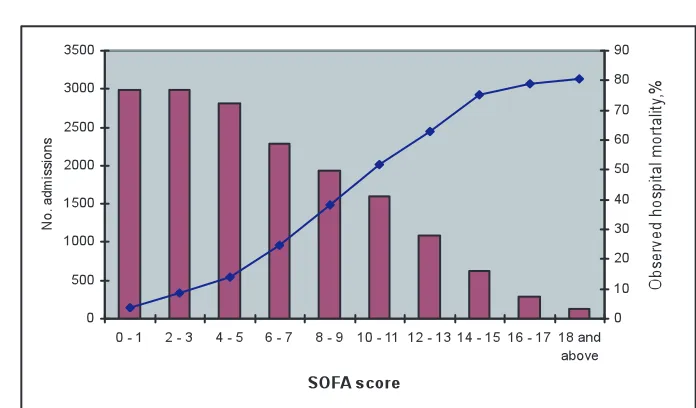
Figure 22 :
SOFA score and in-hospital mortality, 2008
Mortality rates increased sharply between SOFA score of 5 to 15. The national
median SOFA score of 5 has an observed mortality rate of 13.8%.
Table 38:
Standardised mortality ratio, by hospitals, 2003 - 2008
CONTENTS
page
Report Summary... 3
Acknowledgement... 4
Foreword... 5
Contents... 6
NAICU National Committee 2008... 7
Participating Hospitals... 8
Site Investigators and Source Data Providers 2008... 9
Abbreviations... 11
List of Tables... 12
List of Figures... 13
Introduction... 14
Results Section A General Information... 15
Section B Patient Characteristics... 20
Section C Interventions... 34
Section D Complications... 41
Section E Mortality Outcomes... 47
Summary... 52
V - - 34.4 26.5 32.5
W - - - (6.9) 7.3
X - - - 20.7 23.1
Y - - - 45.7 32.6
Z - - - 42.9 34.0
AA - - - 39.5 36.5
AB - - - 27.0 35.1
AC - - - 26.1 33.3
AD - - - 33.9 32.0
AE - - - 28.3 28.7
Total 29.2 31.1 31.0 30.1 27.2
* Data not submitted
( ) Not included in total
The in-ICU and in-hospital mortality rates in Ministry of Health hospitals were
21.5% and 29.5% respectively. This rate has remained almost the same over the last
six years.
Figure 21 : Number of organ failure and mortality, 2008
NAICU NATIONAL COMMITTEE 2008
Chairman Dr. Ng Siew Hian
Head of Department
Department of Anaesthesia and Intensive Care Hospital Kuala Lumpur
Coordinator Dr. Tai Li Ling Consultant Intensivist
Department of Anaesthesia and Intensive Care Hospital Kuala Lumpur
Members Dr. Tan Cheng Cheng
Consultant Intensivist
Department of Anaesthesia and Intensive Care Hospital Sultanah Aminah Johor Bahru
Dr. Jenny Tong May Geok Head of Department
Department of Anaesthesia and Intensive Care Hospital Tuanku Ja'afar Seremban
Dr. As-niza Abdul Shukor Head of Department
Department of Anaesthesia and Intensive Care Hospital Taiping
Dr. Ahmad Shaltut Othman Consultant Intensivist
Department of Anaesthesia and Intensive Care Hospital Sultanah Bahiyah Alor Setar
Dr. Lim Chew Har Consultant Intensivist
Department of Anaesthesia and Intensive Care Hospital Pulau Pinang
Medical Development Division,
Ministry of Health
Dr. Hjh. Kalsom Maskon
Deputy Director (Quality of Health Care Section)
Dr. Paa Nasir Abdul Rahman Principal Assistant Director
Dr. Fakhruddin Amran Assistant Director
Puan Nor Wati Mohd
P - - 19.8 * 23.9
Table 37:
Crude in-hospital mortality rate, by hospitals, 2004 - 2008
Crude in-hospital mortality rate (%)
PARTICIPATING HOSPITALS
Sites since 2002 (Phase 1 Hospitals)
1. Hospital Sultanah Bahiyah Alor Setar (A. Setar)
2. Hospital Pulau Pinang (P. Pinang)
3. Hospital Raja Permaisuri Bainun Ipoh (Ipoh)
4. Hospital Kuala Lumpur (K. Lumpur)
5. Hospital Selayang (Selayang)
6. Hospital Tengku Ampuan Rahimah Klang (Klang)
7. Hospital Tuanku Ja'afar Seremban (Seremban)
8. Hospital Melaka (Melaka)
9. Hospital Sultanah Aminah Johor Bahru ( J. Bahru)
10. Hospital Tengku Ampuan Afzan Kuantan (Kuantan)
11. Hospital Sultanah Nur Zahirah Kuala Terengganu (K. Terengganu)
12. Hospital Raja Perempuan Zainab II Kota Bharu (K. Bharu)
13. Hospital Umum Sarawak (Kuching)
14. Hospital Queen Elizabeth Kota Kinabalu (K. Kinabalu)
Sites since 2005 (Phase 2 Hospitals)
15. Hospital Sultan Abdul Halim Sungai Petani (S. Petani)
16. Hospital Putrajaya (Putrajaya)
17. Hospital Pakar Sultanah Fatimah Muar (Muar)
18. Hospital Teluk Intan (T. Intan)
19. Hospital Taiping (Taiping)
20. Hospital Seberang Jaya (S. Jaya)
21. Hospital Kajang (Kajang)
22. Hospital Tuanku Fauziah Kangar (Kangar)
Sites since 2006 (Phase 2 Hospitals)
23. Private hospital
24. Hospital Sultan Haji Ahmad Shah Temerloh (Temerloh)
25. Hospital Tuanku Ampuan Najihah Kuala Pilah (K. Pilah)
26. Hospital Sri Manjung (S. Manjung)
27. Hospital Batu Pahat (B. Pahat)
28. Hospital Tawau (Tawau)
29. Hospital Miri (Miri)
30. Hospital Kulim (Kulim)
31. Hospital Serdang (Serdang)
Section E
Mortality Outcomes
Crude mortality rates are convenient measures of outcome. However they are poor
indicators of performance of intensive care as they do not take into account the
variation in the characteristics of the patients such as case mix and the severity of
illness.
A better measure of ICU performance is standardised mortality ratio (SMR). SMR is
the mortality ratio, comparing the observed to the predicted mortality, using a
severity scoring system. SMR may be used to compare the performance of ICUs
between units, within certain limitations.
Table 35:
Hospital outcome, 2008
Hospitals
Hospital outcome Phase 1
n (%)
Table 36:
Crude in-ICU mortality rate, by hospitals, 2004 - 2008
Crude in-ICU mortality rate (%)
SITE INVESTIGATORS AND SOURCE DATA PROVIDERS 2008
No.
Hospital
Site investigators
Source data providers
1. Hospital Sultanah Bahiyah Alor Setar
Dr. Ahmad Shaltut Othman SN Azura Che Don SN Mazni Bt. Abas SN Teo Shook Lian
2. Hospital Raja Permaisuri Bainun Ipoh
Dr. Azlina Muhamad SN Zulminarni Ariffin
3. Hospital Raja Perempuan Zainab II Kota Bharu
Dr. Mat Ariffin Saman SN Azizum Bt. Ismail SN Azilah Bt. Ishak SN Norhayati Hassan
4. Hospital Kuala Lumpur Dr. Tai Li Ling SN Prema Chitrasenan
SN Alice Nesamany a/p Thangapandi
5. Hospital Sultanah Nur Zahirah Kuala Terengganu
Dr. Mohd Ridhwan Md. Nor SN Zawiah Idris
6. Hospital Melaka Dr. Anita Alias SN Puspa Karunakaram
7. Hospital Pulau Pinang Dr. Lim Chew Har SR Chin Lai Gan SN Rosmawati Yusof
8. Hospital Queen Elizabeth Kota Kinabalu
Dr. Khoo Tien Meng SN Doren Abel SN Jusim Lugu
9. Hospital Selayang Dr. Haslinda Bt. Abd. Hashim SN Noor Azwati Bt. Daud SN Norzalia Bt. Saad@ Hanafi 10. Hospital Tuanku Ja'afar
Seremban
Dr. Jenny Tong May Geok SN Chew Bee Ngoh SN Lee New
11. Hospital Sultanah Aminah Johor Bahru
Dr. Tan Cheng Cheng SN A'ilisah Bt. Abu Bakar MA Anuar
MA Zakun MA Hairizam
12. Hospital Tengku Ampuan Afzan Kuantan
Dr. Rusnah Bt. Abd. Rahman SN Salina Bt. Sulaiman SN Aminah Bt. Abd. Hamid
13. Hospital Tengku Ampuan Rahimah Klang
Dr. Faezah Bt. Shaari SN Latifah Bt. Omar SN Norlaili Bt. Ismail
14. Hospital Umum Sarawak Dr. Intan Zarina Bt. Fakir SN Noreafa Bt. Daim SN Sabia Lew
15. Hospital Sultan Abdul Halim Sungai Petani
Dr. Ahmad Zaini B. Mohd Salleh SN Asmah Abu SN Marian Kassim
16. Hospital Putrajaya Dr. Fauziah Bt. Yusoff SN Noryasni
17. Hospital Pakar Sultanah Fatimah Muar
Dr. Yogabigai Balasundram SN Ropeah Bt. Ahmad SN Roslina Othman
18. Hospital Telok Intan Dr. Khairudin Zainal Abidin SN Rohayu Dalila Bt. Yusof SN Azliza Bt. Zakaria MA Mohd Najib B. Misbah
Table 34:
Incidence of pressure sore, by hospitals, 2008
2008
# Data was not submitted
19. Hospital Taiping Dr. As-niza Abdul Shukor SN Saleha Bt. Salleh SN Intan Suhaila Bt. Alias SN Umi Khatijah Bt. Bani
20. Hospital Seberang Jaya Dr. Zainisda Bt. Zainuddin SN Zuraina Bt. Muhamad
21. Hospital Kajang Dr. Wan Hafizah Bt. Wan Tajul Ariffin
SN Faiza Mat Yusof SN Suriani Mat Saat
22.
Kangar
Dr. Azilah Bt. Desa SN Zulminarnani Bt. Arifin
23. Hospital Kulim Dr. Chua Kok Boon SN Mohana Bt. Omar
SN Mahani Bt. Hassan
24. Hospital Serdang Dr. Mohd Yani Bahari SN Zamzurina Bt. Jahaya
SN Siti Ainah Bt. Buang SN Norain Bt. Mohd Saad
25. Hospital Tuanku Ampuan Najihah Kuala Pilah
Dr. Sharuddin B. Musa SN Noormaizah Mohd Derus
MA Hazli Haziz
26. Hospital Sri Manjung Dr.Tin Tin Myint SN Hartini A.Rahman
27. Hospital Miri Dr Nor Hafizah Bt. Ghazali SN Norlida Daud
28. Hospital Sultan Haji Ahmad Shah Temerloh
Dr.Rahimah Bt. Haron SN Rakiah Mohd Noor
29. Hospital Batu Pahat Dr. Azmiza Mahani SN Zaidah Bt. Othman
30. Hospital Tawau Dr. Kyaw Soe SN Salwa Bt. Isa
SN Lilybeth Seliciano Ferez
J 0.7 0.4 0.6 3.4 2.0
*Data for 2006 was not available
Figure 20 :
Incidence of unplanned extubation, by hospitals, 2008
The overall rate of unplanned extubation was 1.9 per 100 intubated days, an
improvement over the previous year of 2.7 per 100 intubated days.
ABBREVIATIONS
Adm. Admission
AOR At own risk
APACHE II Acute Physiologic and Chronic Health Evaluation (Version II) CRRT Continuous renal replacement therapy
ED Emergency department
HD Haemodialysis
HDU High dependency unit
ICU Intensive care unit
Int. Care Intensive care
MOH Ministry of Health
MRIC Malaysian Registry of Intensive Care
MV Mechanical ventilation
NA Not available
NAICU National Audit on Adult Intensive Care Units
NIV Non-invasive ventilation
NNIS National Nosocomial Infection Surveillance
No. Number
SAPS II Simplified Acute Physiologic Scoring System (Version II)
SD Standard deviation
SMR Standardised mortality ratio
SOFA Sequential Organ Failure Assessment SPSS Statistical Package for Social Sciences VAP Ventilator-associated pneumonia
Yrs Years
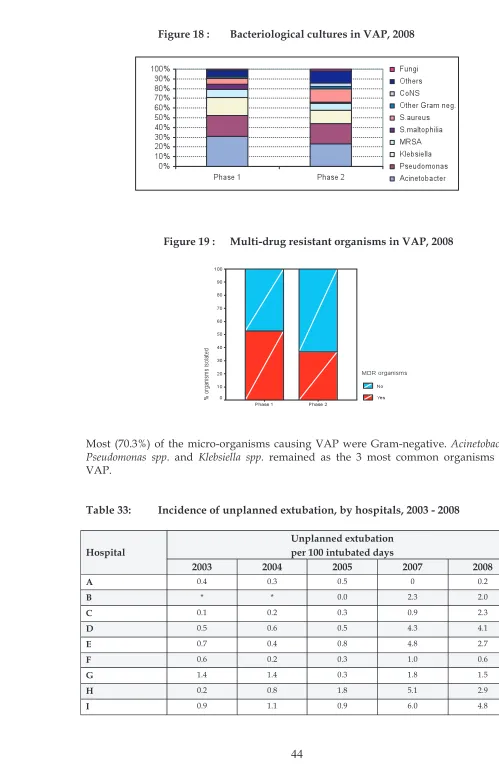
Figure 18 :
Bacteriological cultures in VAP, 2008
Figure 19 :
Multi-drug resistant organisms in VAP, 2008
Most (70.3%) of the micro-organisms causing VAP were Gram-negative.
Acinetobacter spp
.,
Pseudomonas spp
. and
Klebsiella spp.
remained as the 3 most common organisms causing
VAP.
Table 33:
Incidence of unplanned extubation, by hospitals, 2003 - 2008
Unplanned extubation per 100 intubated days Hospital
2003 2004 2005 2007 2008
A 0.4 0.3 0.5 0 0.2
B * * 0.0 2.3 2.0
C 0.1 0.2 0.3 0.9 2.3
D 0.5 0.6 0.5 4.3 4.1
E 0.7 0.4 0.8 4.8 2.7
F 0.6 0.2 0.3 1.0 0.6
G 1.4 1.4 0.3 1.8 1.5
H 0.2 0.8 1.8 5.1 2.9
LIST OF TABLES
Page
Table 1 Number of ICU beds, by hospitals (as of 31 December 2008)... 15
Table 2 Number of ICU admissions, by hospitals, 2004 - 2008... 16
Table 3 Reporting rates, by hospitals, 2007 - 2008... 17
Table 4 Intensive care referrals and refusal of admission, by hospitals, 2004 - 2008... 18
Table 5 Gender, 2008... 20
Table 6 Age, 2008... 20
Table 7 Ethnicity, 2008... 21
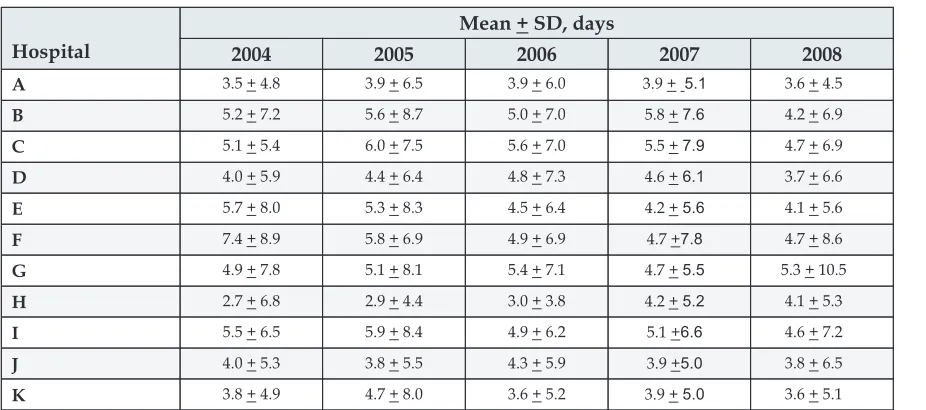
Table 8 Length of ICU stay, by hospitals, 2004 - 2008... 22
Table 9 Length of hospital stay, by hospitals, 2004 - 2008... 23
Table 10 Referring units, 2008... 24
Table 11 Category of patients in MOH hospitals, 2004 - 2008... 25
Table 12 Category of patients, 2008... 25
Table 13 Location before ICU admission, 2008... 26
Table 14 Location before ICU admission in MOH hospitals, 2004 - 2008... 26
Table 15 Indication for ICU admission, 2008... 27
Table 16 Main organ failure on ICU admission, 2008... 28
Table 17 Number of organ failure on ICU admission, 2008... 29
Table 18 Ten most common diagnoses leading to ICU admission, 2008... 30
Table 19 Ten most common APACHE II diagnostic category leading to ICU admission, 2008... 31 Table 20 SAPS II score, by hospitals, 2003 - 2008... 32
Table 21 SOFA score, by hospitals, 2007 - 2008... 33
Table 22 Mechanical ventilation, 2008... 34
Table 23 Re-intubation, 2008... 35
Table 24 Duration of invasive ventilation, by hospitals, 2004 - 2008... 35
Table 25 Renal replacement therapy and modalities, 2008... 36
Table 26 Tracheostomy and techniques, 2008... 37
Table 27 Tracheotomy, by hospitals, 2008... 38
Table 28 Withdrawal or withholding of therapy, by hospitals, 2008... 39
Table 29 Incidence of VAP, by hospitals, 2003 - 2008... 41
Table 30 NNIS benchmark on VAP for quality improvement... 42
Table 31 Onset of VAP from initiation of invasive ventilation, by hospitals, 2007 - 2008... 42
Table 32 Bacteriological cultures in VAP, 2007 - 2008... 43
Table 33 Incidence of unplanned extubation, by hospitals, 2003 - 2008... 44
Table 34 Incidence of pressure sore, by hospitals, 2008... 46
Table 35 Hospital outcome, 2008... 47
Table 36 Crude in-ICU mortality rate, by hospitals, 2004 - 2008... 47
Table 37 Crude in-hospital mortality rate, by hospitals, 2004 - 2008... 48
Table 38 Standardised mortality ratio, by hospitals, 2003 - 2008... 50
L 11.2 16.7 (5.9 - 26.2)
most VAPs in our ICUs were late onset by nature.
Table 32:
Bacteriological cultures in VAP, 2007
Ð
2008
2007 2008 Stenotrophomonas maltophilia 23(2.7) 20 (4.7) 5 (1.4) 0 Other gram negative bacteria 21(2.4) 8 (1.9) 8 (2.2) 0
Fungi 68(7.9) 4 (0.9) 7 (1.9) 0
Coagulase negative Staphylococcus
LIST OF FIGURES
Page Figure 1
Figure 2
Number of ICU admissions, by hospitals, 2008... Gender...
17 20
Figure 3 Age groups, 2008... 21
Figure 4 Ethnicity, 2008... 21
Figure 5 Referring units, 2008... 24
Figure 6 Category of patients, 2008... 25
Figure 7 Location before ICU admission, 2008... 26
Figure 8 Indication for ICU admission, 2008... 27
Figure 9 Main organ failure on ICU admission, 2008... 28
Figure 10 Number of organ failure on ICU admission, 2008... 29
Figure 11 Invasive ventilation, 2008... 34
Figure 12 Non-invasive ventilation, by hospitals, 2008... 34
Figure 13 Non-invasive ventilation in MOH hospitals, 2004 - 2008... 35
Figure 14 Modalities of renal replacement therapy, 2008... 37
Figure 15 Tracheostomy, 2008... 37
Figure 16 Techniques of tracheostomy, 2008... 38
Figure 17 Incidence of VAP per 1000 ventilator days, by hospitals, 2008... 42
Figure 18 Bacteriological cultures in VAP, 2008... 43
Figure 19 Multi-drug resistant organisms in VAP, 2008... 44
Figure 20 Incidence of unplanned extubation, by hospitals, 2008... 45
Figure 21 Number of organ failure and mortality, 2008... 49
Figure 22 SOFA score and in-hospital mortality, 2008... 50
Figure 17 :
Incidence of VAP per 1000 ventilator days, by hospital, 2008
Table 30:
NNIS benchmark on VAP for quality improvement
NNIS benchmark (percentile)
10% 25% 50% 75% 90%
VAP per 1000
ventilator days 3.4 6.5 10.1 13.4 17.5
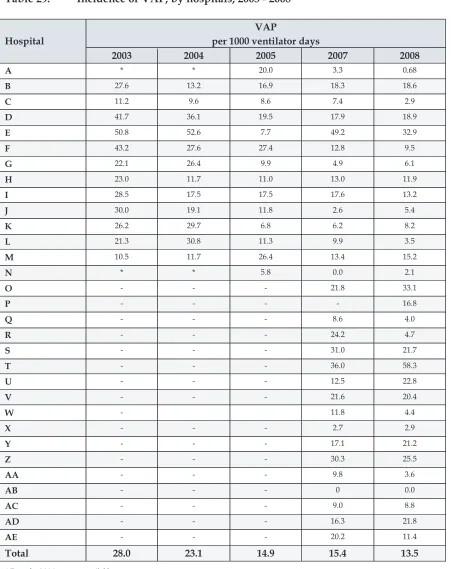
There has been a marked reduction in the incidence of VAP from 28.0 per 1000 ventilator
days in 2003 to 13.5 in 2008. The VAP rate of 13.5 per 1000 ventilator days is within the 75
thpercentile of the National Nosocomial Infection Surveillance benchmark on VAP for quality
improvement.
Table 31:
Onset of VAP from initiation of invasive ventilation, by hospitals, 2007 -
2008
INTRODUCTION
The National Audit on Adult Intensive Care Units (NAICU) was established in 2002
as a quality improvement initiative to conduct systematic review of the intensive
care practices in Malaysia and where possible, to introduce remedial measures to
improve the outcome. To date the audit has produced five reports and has
introduced several quality measures such as ventilator and central venous care
bundles and ICU networking.
This year NAICU underwent major re-organisation and was renamed the Malaysian
Registry of Intensive Care (MRIC). This report is thus the first for MRIC, but sixth in
the series. Following the change, MRIC has now become a member of the national
registry under the purview of Clinical Research Centre, Ministry of Health.
The objectives of the MRIC are to:
1.
Establish a database of patients admitted to the adult ICUs.
2.
Review the clinical practices of intensive care and to determine the outcomes.
3.
Determine the resources and delivery of intensive care service.
4.
Evaluate the impact of quality improvement measures on patient care.
5.
Conduct healthcare research related to intensive care.
Data Collection
Currently there are 31 participating centres including a private hospital. Data
collection is carried out by trained nurses (source data providers) and specialists (site
investigators), based on a written protocol for definitions. Data is initially entered
into standard forms and later keyed into the computer using the software called
SyNapse. At three monthly intervals, the data is 'burned' into compact discs and sent
to the coordinating centre for ' data merging' at the central server. Data is 'cleaned'
and verified before being analysed using SPSS version 10.0.1.
This report is based on the data collected from all patients admitted to ICUs from 1
January to 31 December 2008. Patients admitted during this period and who were
still in hospital on 31 January 2009, were excluded. For those who were readmitted
to ICU, only the data from the first admission was included in the analysis. Due to
missing data, the sum total of some variables shown in the tables may not add up to
the actual number of ICU admissions. The total number of patients analysed was 18,
907.
Section D
Complications
Table 29:
Incidence of VAP, by hospitals, 2003 - 2008
VAP
per 1000 ventilator days Hospital
* Data for 2006 was not available
RESULTS
Section A
General Information
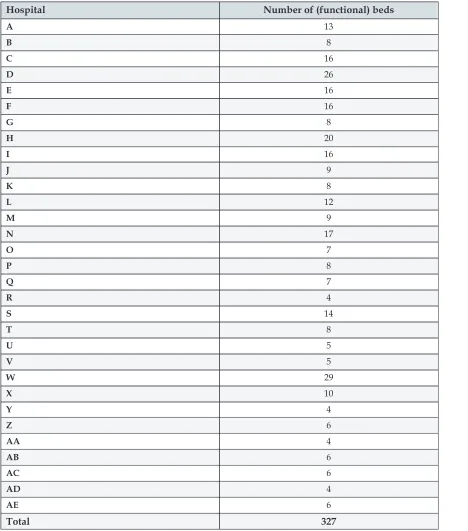
Table 1 :
Number of ICU beds, by hospitals (as of 31 December 2008)
Hospital Number of (functional) beds
A 13
Withdrawal or withholding of therapy refers to discontinuing/ not initiating any of the following therapies: - vasoactive drugs
- renal replacement therapy - mechanical ventilation - surgery
- cardiopulmonary resuscitation
Among those who died in ICU, decision to withhold or withdraw therapy was made
in 24.4% of them. Prendergast et al. reported that in the US between the years of 1987
and 1993, the percentages of deaths in the ICU, that followed the withdrawal or
withholding of life support, increased from 51% to 90%.
Table 2:
Number of ICU admissions, by hospitals, 2004 - 2008
2004 2005 2006 2007 2008
Hospital n % n % n % n % n %
The number of admissions has increased over the years. This increase was not merely due to
an increase in the number of participating centres, but also an increase in patient load in all
existing centres, except in hospitals M and R.
In 2008, Hospital W reported the highest percentage of cases (10%), followed by Hospital D
(9.3%) and Hospital H (8.0%).
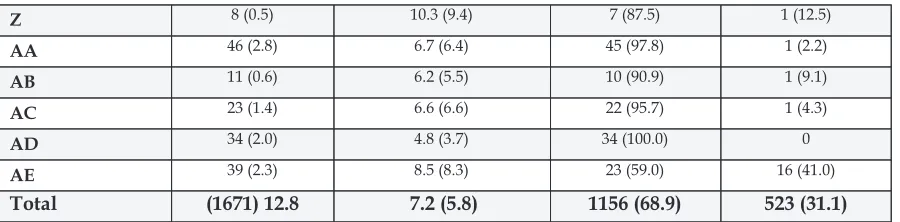
Z 8 (0.5) 10.3 (9.4) 7 (87.5) 1 (12.5)
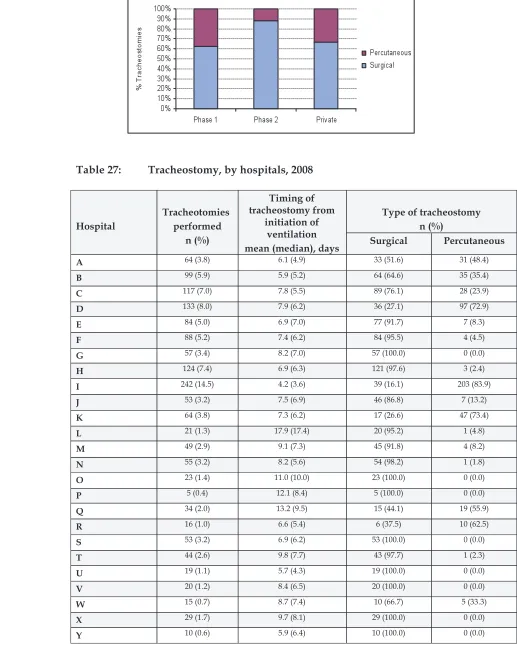
tracheostomies were performed surgically.
The median time from initiation of invasive ventilation to tracheostomy was 5.8 days.
Hospital I had the shortest time of 3.6 days while Hospital L had the longest at 17.4
days.
Table 28:
Withdrawal or withholding of therapy, by hospitals, 2008
Hospital
Figure 1 :
Number of ICU admissions, by hospitals, 2008
Table 3 :
Reporting rates, by hospitals, 2007 - 2008
Hospital 2007
Figure 16 :
Techniques of tracheostomy, 2008
Table 27:
Tracheostomy, by hospitals, 2008
Type of tracheostomy
mean (median), days Surgical Percutaneous
Y 89.4 98.0
reported to NAICU and to the national census. The total number reported to NAICU
was slightly less than that to the national census, as patients who were still in
hospital on 31 January 2009 were excluded in the analysis.
Overall, there was an improvement in the reporting rates from 82.4% in 2007 to
89.9% in 2008, with marked improvement from Hospitals T, K and N.
Hospitals O and U had low reporting rates (53.4% and 57.7% respectively).
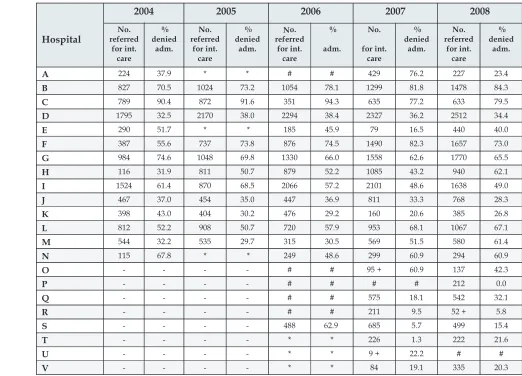
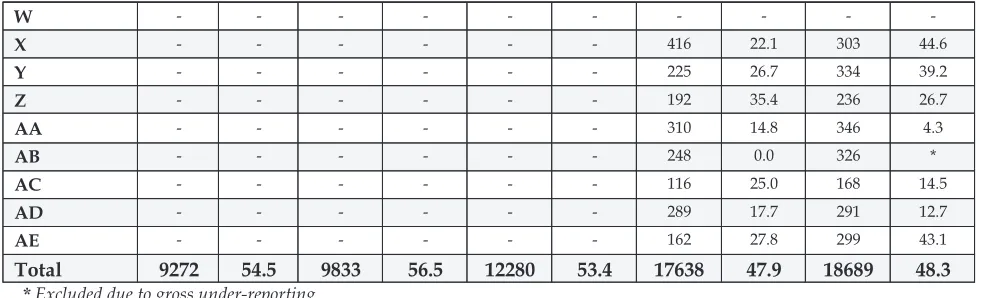
Table 4 :
Intensive care referrals and refusal of admission, by hospitals,
Figure 14 :
Modalities of renal replacement therapy, 2008
Intermittent haemodialysis remained as the most common modality of renal
replacement therapy performed in the ICUs. Despite the limited role of peritoneal
dialysis in the management of acute renal failure in the critically ill, 21% of patients
in Phase 2 hospitals had peritoneal dialysis in the management of acute renal failure.
Figure 15 :
Tracheostomy, 2008
Table 26:
Tracheostomy and techniques, 2008
W - - - -
* Excluded due to gross under-reporting # Data was not submitted
+ Under-reporting, but were not excluded
Due to the unavailability of beds, 48.3% of patients were refused ICU admission.
L 5.3 + 8.0 4.4 + 6.7 4.2 + 6.3 4.0 + 6.0 3.3 + 5.2
ventilation (2.7 days) while Hospital O had the longest at 6.5 days.
Table 25:
Renal replacement therapy and modalities, 2008
Section B
Patient Characteristics
Age exceeding 18 years
Mean + SD 48.7 + 18.0 51.2 + 18.0 57.1 + 18.3
Median 49.4 50.3 57.1
Range 18.0 - 96.7 18.0 - 100.5 18.1 - 101.0
The average age including paediatrics was 46.5 + 20.9 years (median 48.4 years),
while it was 50.3 + 18.2 years (median 51.5 years) for the adult patients (age
exceeding 18 years), in all hospitals. The average age of patients admitted to ICUs is
higher now as compared to 2003 when the average age of the adult patients was 46.6
+ 18.2 years.
Figure 13 :
Non-invasive ventilation in MOH hospitals, 2004 - 2008
The incidence of non-invasive ventilation had increased from 6.5% in 2003 to 12.1%
in 2008.
Table 23 :
Re-intubation, 2008
Hospitals
Re-intubation after planned or accidental extubation with an undefined time interval between the two
The re-intubation rate in Ministry of Health hospitals was 8.7% and has remained
unchanged in the last six years.
Table 24 :
Duration of invasive ventilation, by hospitals, 2004 - 2008
Figure 3 : Age groups, 2008
Table 7 :
Ethnicity, 2008
Hospitals
Ethnic group Phase 1
n (%)
Phase 2 n (%)
Private n (%)
Malay 6565 (58.1) 3469 (61.2) 371 (19.5)
Chinese 2011 (17.8) 928 (16.4) 1203 (63.4)
Indian 1232 (10.9) 566 (10.0) 250 (13.2)
Foreigner 551 (4.9) 282 (5.0) 44 (2.3)
Bumiputra Sabah/Sarawak
598 (5.3) 194 (3.4) 1 (0.1)
Other Malaysian 264 (2.3) 192 (3.4) 29 (1.5)
Orang Asli 80 (0.7) 38 (0.7) -
Unknown 4 (0.0) 2 (0.0) -
Total 11305 (100.0) 5671 (100.0) 1898 (100.0)
Figure 4 : Ethnicity, 2008
Section C
Interventions
Table 22 :
Mechanical ventilation, 2008
Hospitals Mechanical
ventilation
Phase 1
n (%)
Phase 2
n (%)
Private
n (%)
Total n (%)
Invasive 9112 (80.4) 4113 (72.5) 128 (6.7) 13353 (70.6)
*Non-invasive 1652 (15.0) 553 (9.9) 25 (1.3) 2230 (12.1)
*Refers to the continuous use of a non-invasive ventilator for > 1 hour during ICU stay
Figure 11 :
Invasive ventilation, 2008
77.8% of patients admitted to Ministry of Health hospitals received invasive
ventilation, which was similar to the previous years. By contrast, only 6.7% of
patients in the private hospital had invasive ventilation.
Table 8 :
Length of ICU stay, by hospitals, 2004 - 2008
The mean length of ICU stay was 4.7 days and it has remained unchanged over the past six
years. Hospital W reported the shortest length of stay (2.7 days) while Hospital O reported
the longest stay of 7.2 days.
Table 21 :
SOFA score, by hospitals, 2007 - 2008
Table 9 :
Length of hospital stay, by hospitals, 2004 - 2008
average length of hospital stay that exceeded 25 days.
Table 20 :
SAPS II score, by hospitals, 2003
Ð
2008
# Data not submitted Data for 2006 not available
Table 10 :
Referring units, 2008
Hospitals
Referring Units Phase 1
n (%)
General surgery 3256 (28.8) 1797 (31.9) 139(7.3)
Orthopaedics 918 (8.1) 490 (8.7) 175 (9.2)
Total 11299 (100.0) 5629 (100.0) 1895 (100.0)
Figure 5 : Referring units, 2008
Table 19 :
Ten most common APACHE II diagnostic category leading to ICU
admission, 2008
Diagnosis Number Percentage
Phase 1 Hospitals
Non-operative: Sepsis 1207 10.7
Non-operative: Respiratory infection 852 7.5 Operative: Respiratory system as principal reason for admission 820 7.2 Non-operative: Respiratory system as principal reason for admission 672 5.9
Operative: G I perforation / obstruction 567 5.0 Operative: Cardiovascular system as principal reason for admission 503 4.4 Operative: Respiratory insufficiency after surgery 435 3.8
Non-operative: Head trauma 392 3.5
Non-operative: Neurological system as principal reason for admission 390 3.4
Operative: Multiple trauma 363 3.2
Phase 2 Hospitals
Non-operative: Respiratory system as principal reason for admission 619 10.9
Non-operative: Sepsis 450 7.9
Non-operative: Metabolic/ renal system as principal reason for admission 360 6.3 Non-operative: Respiratory infection 344 6.1
Non-operative: Cardiovascular system as principal reason for admission 283 5.0 Operative: G I perforation / obstruction 274 4.8 Operative: Respiratory system as principal reason for admission 272 4.8
Non-operative: Neurological system as principal reason for admission 226 4.0 Operative: Gastrointestinal system as principal reason for admission 213 3.8
Non-operative : Head trauma 191 3.4
Private Hospital
Non-operative: Neurological system as principal reason for admission 191 10.1
Non-operative: Cardiovascular system as principal reason for admission 182 9.6 Operative: Cardiovascular system as principal reason for admission 163 8.6 Non-operative: Metabolic/ renal system as principal reason for admission 161 8.5
Non-operative: Gastrointestinal bleeding 114 6.0 Non-operative: Respiratory system as principal reason for admission 110 5.8 Non-operative: Respiratory infection 93 4.9
Table 11 :
Category of patients in MOH hospitals, 2004 - 2008
Non-operative: No surgery within 7 days prior to ICU admission or within the first 24 hours of ICU admission
Elective operative: Scheduled surgery within 7 days prior to ICU admission or during the first 24 hours of ICU admission
Emergency operative: Unscheduled surgery within 7 days prior to ICU admission or during the first 24 hours of ICU admission
Table 12 :
Category of patients, 2008
Hospitals Category of patients Phase 1
n (%)
Phase 2 n (%)
Private n (%) Non-operative 6227 (55.1) 3619 (64.2) 1303 (68.8) Elective operative 1643 (14.5) 595 (10.6) 463 (24.4) Emergency operative 3432 (30.4) 1424 (25.3) 129 (6.8) Total 11302 (100.0) 5638 (100.0) 1895 (100.0)
Figure 6 :
Category of patients, 2008
The percentage of non-operative patients had increased over the past years and has
exceeded that of operative cases. The percentage of non-operative patients in Phase 2
hospitals exceeded that of Phase 1 hospitals. There are less subspecialty surgical
units in Phase 2 hospitals and hence less complex surgical cases requiring intensive
care post-operatively.
Table 18 :
Ten most common diagnoses leading to ICU admission, 2008
Diagnosis Number Percentage
Phase 1 Hospitals
Head Injury 1133 10.0
Sepsis 866 7.6
Community- acquired pneumonia 547 4.8
Gastrointestinal perforation ( including anastomotic leak) 432 3.8
Bronchial asthma 379 3.3
Dengue 331 2.9
Intra-abdominal injury 299 2.6
Chronic lower respiratory disease 278 2.5
Non-cardiogenic pulmonary oedema 268 2.4
ENT/ oral condition 253 2.2
Phase 2 Hospitals
Sepsis 619 10.9
Head injury 339 6.0
Community- acquired pneumonia 269 4.7
Chronic renal failure/ end -stage renal failure 224 3.9
Dengue 201 3.5
Gastrointestinal perforation (including anastomotic leak) 198 3.5
Chronic lower respiratory disease 195 3.4
Bronchial asthma 189 3.3
Non-cardiogenic pulmonary oedema 152 2.7
Intra-abdominal injury 149 2.6
Private Hospital
Cerebrovascular disease 145 7.6
Dengue 138 7.3
Other disorders of the musculoskeletal system 124 6.5
Gastrointestinal bleeding 123 6.5
Other CNS condition 117 6.2
Other abdominal/ pelvic conditions 92 4.8
Other renal/ genito-urinary conditions 86 4.5 Ischaemic heart disease/ acute coronary syndrome 64 3.4
Epilepsy 61 3.2
Table 13 :
Location before ICU admission, 2008
Hospitals Location Phase 1
n (%)
Phase 2 n (%)
Private n (%) Ward 3895 (34.5) 2594 (46.0) 477 (25.2) Operation theatre 4091 (36.2) 1589 (28.2) 440 (23.2) Emergency department 1883 (16.7) 819 (14.5) 836 (44.1) Other critical areas 738 (6.5) 285 (5.1) 12 (0.6) Other locations 65 (0.6) 14 (0.2) 104 (5.5) Other hospitals 631 (5.6) 341 (6.0) 26 (1.4) Total 11303 (100.0) 5642 (100.0) 1895 (100.0)
Figure 7 :
Location before ICU admission, 2008
Table 14 :
Location before ICU admission in MOH hospitals, 2004 - 2008
Location 2004 (%)
2005 (%)
2006 (%)
2007 (%)
2008 (%) Ward 33.4 32.5 32.8 37.2 34.5
Operation theatre 42.8 45.4 40.6 35.7 36.2
Emergency department 9.0 9.3 12.6 13.2 16.7
Other critical areas 11.8 9.6 9.0 7.3 6.5
Other locations 0.2 0.4 0.5 0.4 0.6
Other hospitals 2.8 2.8 4.5 6.1 5.6
There has been a gradual increase in direct admissions from the emergency
department. Inter-hospital transfers have also increased over the years. Notably the
percentage of admissions from the operating theatre was on the decline.
Table 17 :
Number of organ failure on ICU admission, 2008
Hospitals Number of organ failure Phase 1
n (%)
Phase 2 n (%)
Private N (%)
No organ failure 3850 (37.1) 1552 (32.7) 1193 (72.3)
1 organ 3068 (29.6) 1477 (31.1) 378 (22.9)
2 organs 2145 (20.7) 989 (20.8) 56 (3.4)
3 organs 978 (9.4) 544 (11.5) 19 (1.2)
More than 3 organs 325 (3.1) 184 (3.9) 5 (0.3)
Total 10366 (100) 4746 (100) 1651 (100)
Table 15 :
Indication for ICU admission, 2008
Hospitals
Indication Phase 1
n (%)
Phase 2 N (%)
Private n (%)
Mechanical ventilation 5604 (49.6) 2774 (49.2) 24 (1.3)
Planned 3570 (31.6) 1070 (19.0) 17 (0.9)
Post-operative
ventilation Unplanned 434 (3.8) 166 (2.9) 13 (0.7)
Planned 603 (5.3) 436 (7.7) 376 (19.9)
Post-operative monitoring/
intervention Unplanned 150 (1.3) 126 (2.2) 45 (2.4)
Non-operative monitoring 937 (8.3) 1062 (18.8) 1418 (74.9)
Total 11298 (100.0) 5634 (100.0) 1893 (100.0)
Planned admission: The decision for admission was made before the induction of anaesthesia. Unplanned admission: The decision for admission was made after induction of anaesthesia.
Figure 8 :
Indication for ICU admission, 2008
Almost 50% of patients in Ministry of Health hospitals were admitted for mechanical
ventilation as compared to 1.3% in the private hospital.
Phase I hospitals had a higher percentage of patients for post-operative ventilation,
due to the higher number of complex surgical cases performed.
Table 16 :
Main organ failure on ICU admission, 2008
Hospitals
Main organ failure Phase 1
n (%)
Phase 2 n (%)
Private n (%)
No organ failure 3850 (37.1) 1552 (32.7) 1193 (72.3)
Cardiovascular 2375 (22.9) 1243 (26.2) 49 (3.0)
Respiratory 1761 (17.0) 874 (18.4) 21 (1.3)
Neurological 1352 (13.0) 597 (12.6) 73 (4.4)
Renal failure 569 (5.5) 251 (5.3) 165 (10.0)
Haematological 329 (3.2) 183 (3.9) 135 (8.2)
Hepatic 130 (1.3) 46 (1.0) 15 (0.9)
Total 10366 (100) 4746 (100) 1651 (100)
*The definition of organ failure is based on the Sequential Organ Failure Assessment (SOFA)