1 The Devlopment of e:learning Basic Media For Intruduction Solid State Solid
Ida Sriyanti
Physics Education Universitas of Sriwijaya
Jln Palembang-Prabumulih km 32 Inderalaya Ogan Ilir (sum-sel) Indonesia
Abstract
The purpose of this study was to develop of media e:learning basic for introduction solid state
physics. The method of usage in this research was development research with consisted of
preparation stage (conception phase, embodiment phase and utilization phase). Techniques
of data collection in this research that tested the experts and try to see the results of student
learning. Based on the analysis of data obtained by studying the cognitive learning outcomes
on average are included in either category that is equal to 77.78. Therefore, it is suggested
that the media are developed can be used for learning of introduction-solid state physics.
Key word : e:learning, development.
1. Introduction
The rapid development of information and communication technology and the
Internet or has penetrated many areas of life such as education and teaching (Hartanto, 2002;
Lerouge, 2004; Ali, 2004). On the other hand with the Internet and ICT learning process can
be done anytime without being bound to space and time (Jaidan Jauhari, 2009).
Internet usage in the education of the most famous is e: learning. Universitys used
e:learning as a substitute for face to face. according to Lewis (2002), universitys of abroad
conduct electronic learning as a supplement to the subject matter presented regularly in class
and also as an alternative for students who for some reason is something that is absent to
attend face to face. The e:learning students can do activities starting from the registration for
courses, academic consultation (via chat, email, mailing lists), collection of materials, a
collection of lectures and assignments before delivery of the evaluation of training activities
for students.
Sriwijaya University is one of the colleges that have been connected to the intranet
and the Internet via the Cyber Campus Unsri with bandwidth speeds 1 mega bytes per second
(Mbps). Each faculty has been connected with Internet network, including the Faculty of
2 lab with 40 units of Pentium 4 computer. But Internet use is still limited in FKIP Unsri to
access general information only, and not used to support teaching and learning process of
students.
Introduction-solid state physics substance is an advanced course berbotot 3 credits.
Based on the results of research while teaching experience, the students are still many
difficulties in understanding the material. It can be seen from the low value of student
learning outcomes. For the academic year 2010/2011, the average value of the course is 2.75.
Based on the writer's observation, student learning outcomes in the eyes of introdction solid
sate physics due to the lack of media use, especially teaching media e: learning. Based on the
above background, the authors are interested in developing of media based e:learning for
3
sources related to the media that will be developed. Media to be developed is based
media of e: learning, materials that contain solid-state physics, such as for materials
that will be filled in comedy are: crystal, crystal geometry, crystal defects, the energy
band and free electrons.
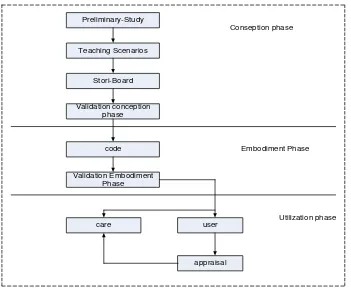
2. Teaching Scenarios : This activity is a continuation of previous research activities.
Teaching using e-based media: lerning, the media is designed to facilitate students to
learn independently, so the learning process more fun, because college is not just in
the classroom, but can also through the Internet. Through this media, students can
understand the physics of solid materials of instruction. To download the material,
both materials related to the crystal as well as other subject matter, students can go to
download the study materials. In addition, if the student has completed to understand
the material, students can practice answering questions that have been prepared.
3. story-board : This activity illustrates the screen that is displayed on media that is
based on the basic concepts of e-based media development: lering and design of the
PA generated in the design of teaching scenarios. Results are shown a story board
design.
4. Validation of the conception phase : The activity validates of conception phase with a
team of computer experts is a Lecturer of Computer Science Faculty Jaidan Jahuari,
MT
b. Embodiment Fhase :
Phases of the embodiment of the continuation phase of conception. This phase is
electronic-based information: learning on the basis of the conceptual phase. Existing
activities at this stage are:
1. Encoding. In the first phase of the selection of development tools based on hardware
that is available and the criteria of availability of functions needed by the media
presentation of text, graphics presentation, interaction and response checking
facilities. In this case the device is selected web based development using
4 Flash to display the animation. Coding of activities continued with the manufacture
of web frameworks and programming according to the storyboard which has resulted
in conception phase.
2. b) Validation embodiment phase . These activities enhance the existing coding errors after validation by expert lecturers.
c. Utilization Phase: as the final phase, implementation phase of the medium is developed.
Activities in this phase are:
1. The use of media that has been made (experimental). Media that has been made, then
tested by plugging into the Internet environment (hosting). PA can be accessed and
utilized by students, faculty and interested parties on
http://forumgurusumsel.org/elerning/. Display media that have been made, among
others :
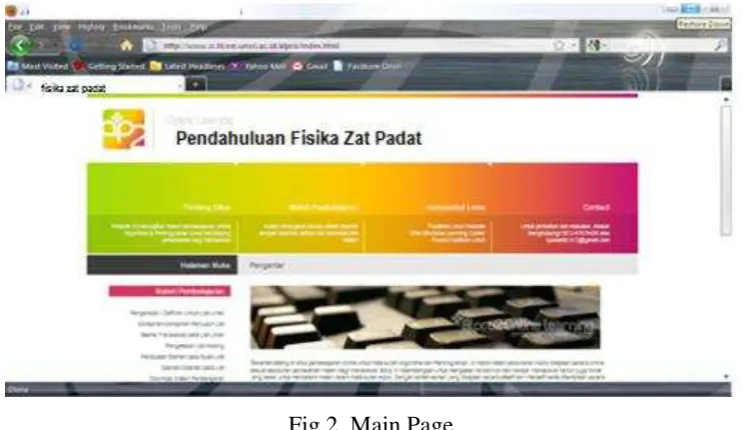
The main page. This page is the main page of the media (shown in Figure 2). This
page shows the introductory page, the link can be accessed in the media as well as
contact the web master developer of this Media.
Fig 2. Main Page
2. Pages of material. This page consists of several parts of the material relating to the
general content of teaching materials will be developed through the teaching of
5 Fig 3. Pages of material
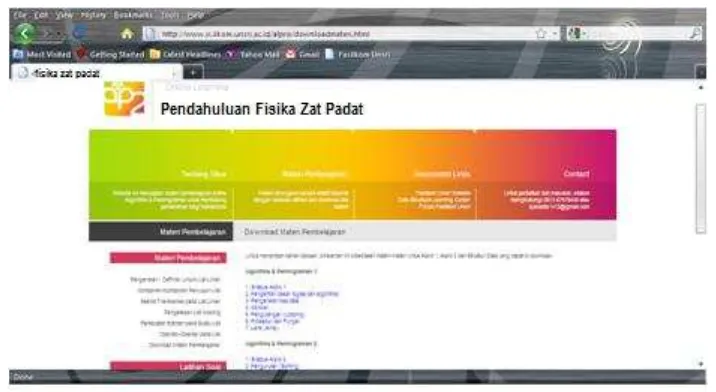
3. Page download .:learning materials can be downloaded on the page
Fig .4. Page Download of materials
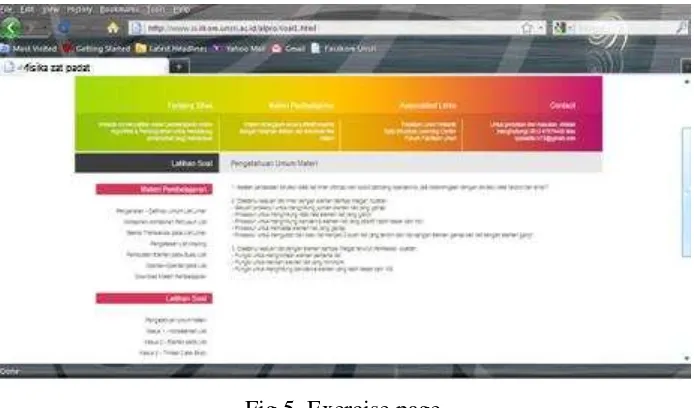
4. Exercise page (shown in Figure 5) contains practice questions for students that aims
6 Fig 5. Exercise page
Procedures in the development stage and produce the media has done a pretty good
product for use by students in solid-state physics pembelajara pndahuluan. With this medium,
students are more easily follow the learning and more motivated to learn introductory physics
of solids so that the learning process can take place effectively. The effectiveness of this
medium can be seen from the results of student learning. The results of the average student
learning is 77.78.
4.Conclusion
This research has produced media for introductory courses e-based solid-state
physics: learning to use research methods or research development with the development of
model systems approach that can facilitate the faculty in presenting the material and improve
student learning outcomes, especially for introductory physics courses solids and facilitate
students in independent learning, making learning more fun, because college is not just in the
classroom, but can also through the Internet.
To get the best results, the media can be added to the evaluation of the results of the
training module with real-time evaluation to assess student understanding of the material.
Bibliography
7 Hartanto, A. A. dan Purbo, O. W. 2002. E-Learning Berbasis PHP dan MySQL : Merencanakan dan Mengimplementasikan Sistem E-Learning. Jakarta : Elex Media Komputindo
Jauhari, Jaidan. 2009. Implementasi E-Learning dalam Pengembangan Lingkungan Belajar Yang Interaktif di Perguruan Tinggi (Studi Kasus di FKIP Unsri). Laporan Penelitian Hibah Bersaing Dikti.
Lewis, D.E. 2002. A Departure from Training by the Book, More Companies Seeing Benefits of E-Learning. [Online] Tersedia : http ://bostonworks.boston.com/articles/052602/
elearn.html [diakses 20 Oktober 2005]