The role of self-direction in Australian sonographers’ professional development
by
Maureen Phillips
DCR(R), DMU, MHealth(res)
Submitted in fulfilment of the requirements for the degree of
Doctor of Philosophy
Deakin University
ACCESS TO THESIS A
I am the author of the thesis entitled
The role of self-direction in Australian sonographers’ professional development
submitted for the degree of Doctor of Philosophy
This thesis may be made available for consultation, loan and limited copying in accordance with the
Copyright Act 1968.
Full Name...Maureen Phillips...
I certify that I am the student named above and that the information provided in the form is correct.
Signed ...
CANDIDATE DECLARATION
I certify that the thesis entitled
The role of self-direction in Australian sonographers’ professional development
submitted for the degree of Doctor of Philosophy is the result of my own work and that where reference
is made to the work of others, due acknowledgment is given.
I also certify that any material in the thesis which has been accepted for a degree or diploma by any
university or institution is identified in the text.
Full Name...Maureen Phillips...………
I certify that I am the student named above and that the information provided in the form is correct.
Signed ...
Acknowledgments
First and foremost, I would like to thank Associate Professor Peter Smith, initially for accepting me as
his student, and then for his guidance, encouragement, patience and humour throughout my
candidature.
Secondly, I wish to acknowledge all the sonographers who took the time to furnish me with such rich
information, without them this thesis would not exist.
Thank you to Dr. Kerry Thoirs, Dr. Sharron King and Dr. Karen Wilkinson for all your help, advice,
encouragement and proof reading.
Tables ...xiii
Figures ... xiv
Abstract ... 1
Chapter 1 ... 3
Australian Sonographers’ Continuing Professional Development ... 3
1.1 Background... 3
1.2 Accreditation and continuing professional development ... 7
1.3 Medical Radiation Sciences ... 13
1.4 Aim of the study ... 18
1.5 Contents of thesis ... 18
Chapter 2 ... 21
Adult and Workplace Learning ... 21
2.1 Introduction ... 21
2.1 Motivation ... 21
2.2 Adult learning ... 23
2.3 Communities of practice and workplace learning... 27
2.3.1 Communities of practice ... 28
2.3.2 Workplace learning ... 30
2.4 Mentoring ... 32
2.5 Critical reflection and transformational learning ... 34
2.6 Self-direction in learning ... 37
2.7 Conclusion ... 44
Chapter 3 ... 47
Continuing Professional Development ... 47
3.1 Introduction ... 47
vi
3.4 Reasons for CPD ... 49
3.5 Aims and Objectives of CPD ... 50
3.6 Provision of CPD ... 52
3.7 Attitudes and deterrents to CPD ... 53
3.8 Perceptions... 56
3.9 Outcomes and Evaluation of CPD... 57
3.9.1 Evaluation of outcomes ... 57
3.9.2 Outcomes ... 59
3.10 The CPD process ... 60
3.11 Models of CPD... 62
3.12 Choice of CPD ... 66
3.13 CPD activities ... 67
3.13.1 Conferences ... 67
3.13.2 Journals ... 68
3.13.3 Electronic and Internet based learning ... 69
3.13.4 Performance management ... 69
3.13.5 Personal education plans ... 70
3.13.6 Other CPD activities ... 70
3.14 Medical radiation sciences professionals: their CPD, learning and workplace circumstances ... 71
3.15 Conclusion ... 74
Chapter 4 ... 77
Methodology and Research Design ... 77
4.1 Introduction ... 77
4.2 Aim of the study ... 77
4.3 Methodology ... 78
vii
4.3.3 Development of the survey ... 82
4.3.5 Validity of the survey ... 84
4.3.6 Participants ... 85
4.3.7 Sample size ... 85
4.3.8 Distribution of survey... 85
4.3.9 Data entry ... 86
4.3.10 Internal consistency of the survey ... 86
4.3.11 Statistical analysis ... 86
4.3.12 Principal components analysis ... 87
4.3.13 Two-way between groups analyses of variance ... 87
4.3.14 Analysis of types of activities undertaken ... 88
4.3.15 Analysis of open-ended questions from survey ... 88
4.4 Method two – Interviews ... 89
4.4.1 Possible bias ... 91
4.4.2 Analysis of interview material ... 91
4.5 Ethical considerations ... 93
4.5.1 Survey ... 93
4.5.2 Interviews... 93
Chapter 5 ... 95
Survey Findings and Principal Components Analysis ... 95
5.1 Overview of chapter ... 95
5.2 Demographic data ... 95
5.3 Frequency of responses for each individual dependent variable ... 97
5.4 Summary of frequencies ... 97
5.5 Participation in professional development activities ... 99
viii
5.8 Interpretation of the Factors ... 108
5.8.1 Factor 1 ... 108
5.8.2 Factor 2 ... 108
5.8.3 Factor 3 ... 109
5.8.4 Factor 4 ... 109
5.9 Factor Scores ... 109
5.10 Non-loading variables ... 109
Chapter 6 ... 111
Belief in the Value of CPD ... 111
6.1 Overview of chapter ... 111
6.2 ANOVA ... 111
6.2.1 ‘urban/rural’ and ‘gender’ ... 113
6.2.2 ‘urban/rural’ and ‘age groups’ ... 114
6.2.3 ‘gender’ and ‘age groups’ ... 116
6.2.4 ‘gender’ and ‘sonography as sole occupation’ ... 117
6.2.5 ‘gender’ and ‘years as a sonographer’ ... 118
6.2.6 ‘age groups’ and ‘sonography as sole occupation’ ... 120
6.2.7 Summary of ANOVA for ‘Belief in the Value of CPD’ ... 121
6.3 Responses to open-ended survey questions ... 122
6.3.1 Positive perceptions in the ‘Belief inthe Value of CPD’ ... 125
General comments ... 125
Professionalism ... 126
Positive Outcomes of CPD ... 126
Qualified comments ... 127
6.3.2 Negative perspectives of CPD ... 127
ix
Resentment ... 129
Money ... 130
Outcomes ... 130
6.4 Discussion ... 131
Chapter 7 ... 135
Barriers to Participation ... 136
7.1 Overview of chapter ... 136
7.2 ANOVA ... 136
7.2.1 ‘urban/rural’ with ‘gender’ ... 137
7.2.2 ‘urban/rural’ and ‘age groups’ ... 139
7.2.3 ‘urban/rural’ and ‘years as a sonographer’... 140
7.2.4 ‘urban/rural’ and ‘sonography as sole occupation’ ... 142
7.2.5 ‘gender and ‘age groups’ ... 143
7.2.6 ‘years as a sonographer’ and ‘sonography as sole occupation’ ... 145
7.3 Summary of ANOVA for ‘Barriers to Participation’ ... 146
7.4 Responses to open-ended survey questions ... 147
Family... 149
Distance ... 150
Cost ... 151
Workload ... 152
Time ... 152
Quality of courses ... 153
Comments on the present CPD system ... 154
Other comments ... 154
7.5 Discussion ... 155
Chapter 8 ... 160
x
8.2 ANOVA ... 161
8.2.1 ‘urban/rural’ with ‘gender’ ... 161
8.2.2 ‘urban/rural with ‘age groups’ ... 162
8.2.3 ‘urban/rural’ with ‘years as a sonographer’ ... 163
8.2.4 ‘urban/rural’ with ‘sonography as sole occupation’ ... 164
8.2.5 ‘gender’ with ‘age groups’ ... 165
8.2.6 ‘gender’ with ‘years as a sonographer’ ... 166
8.2.7 ‘gender’ with ‘sonography as sole occupation’ ... 168
8.2.8 ‘age groups’ with ‘years as a sonographer’ ... 169
8.2.9 ‘age groups’ with ‘sonography as sole occupation’ ... 170
8.2.10 ‘years as a sonographer’ and ‘sonography as sole occupation’ ... 171
8.3 Responses to open-ended survey questions ... 173
8.3.1 Reflective Practice ... 173
8.3.2 Self-direction ... 173
Attendance at CPD activities ... 174
Professionalism ... 175
Regarding CPD ... 175
8.4 Discussion ... 176
Chapter 9 ... 182
Motivators ... 182
9.1 Overview of chapter ... 182
9.2 ANOVA ... 182
9.2.1 ‘urban/rural’ with ‘age groups’ ... 183
9.2.2 ‘urban/rural’ with ‘years as a sonographer’ ... 184
9.2.3 ‘gender’ with ‘years as a sonographer’ ... 185
9.2.4 ‘agegroups’ and ‘years as a sonographer’ ... 187
xi
9.3 Responses to open-ended survey questions ... 191
Management and employers ... 193
Suggestions... 195
Peers ... 195
Self-confidence/empowerment ... 195
Public opinion ... 196
9.4 Discussion ... 196
Chapter 10 ... 199
10.1 Interview findings ... 199
10.2 Interview participants ... 199
10.3 Reasons for CPD and mandatory CPD ... 201
10.4 CPD and other sonographers ... 204
10.5 Regarding barriers or inhibitors to CPD ... 209
10.6 Regarding conferences ... 211
10.7 On CPD making a difference in the lives of sonographers ... 213
10.8 Self-direction ... 215
10.9 Reflective practice ... 217
10.10 Management financial support ... 219
10.11 Management, work satisfaction and CPD ... 219
10.12 Comments, criticisms, suggestions ... 222
Capping of points... 223
Flexibility ... 223
Resources ... 224
Provider ... 225
Other comments ... 226
xii
11.2 Belief in the value of CPD ... 230
11.3 Barriers to participation ... 232
11.4 Motivators ... 233
11.5 Reflection... 235
11.6 The role of self-direction in Australian sonographers’ CPD ... 235
11.7 Recommendations for practice ... 239
11.8 Opportunities for further research ... 243
The survey ... 243
Inputs versus outputs CPD models... 244
Activities from a distance ... 244
e-Mentoring ... 244
Discussion groups by teleconference or ‘facebook’ ... 245
11.9 Limitations of the study ... 245
11.10 Summary ... 246
References ... 249
Appendix 1: Information sheets ... 263
Appendix 2: Survey ... 269
Appendix 3: Survey reliability ... 275
Appendix 4: Demographic Frequencies ... 279
Appendix 5: Frequency of responses for each dependent variable ... 281
Appendix 6: Scree Plot ... 291
Appendix 7: ... 293
Appendix 8: Means of Scores from PCA ... 299
Appendix 9: Demographic frequencies of survey commentaries ... 303
Belief in the Value of CPD ... 303
Barriers to Participation ... 303
Motivators ... 304
xiii
Tables
Table 1.1: Continuing professional development/education requirements for MRS ... 16
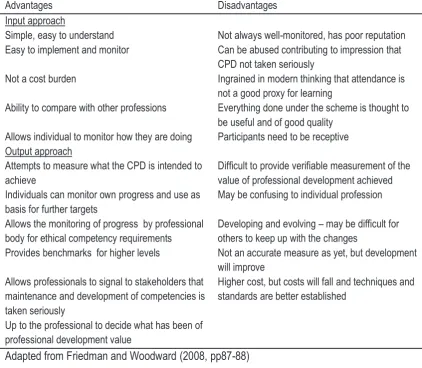
Table 3.1 Advantages and disadvantages of inputs and outputs based CPD schemes. ... 63
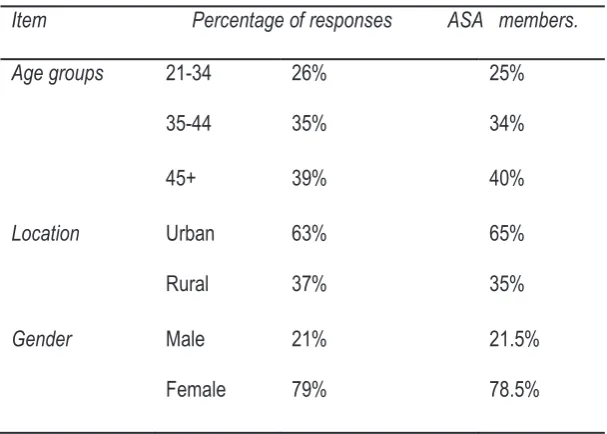
Table 5.1: Demographic frequencies of respondents to survey ... 96
Table 5.2: Written survey responses ... 103
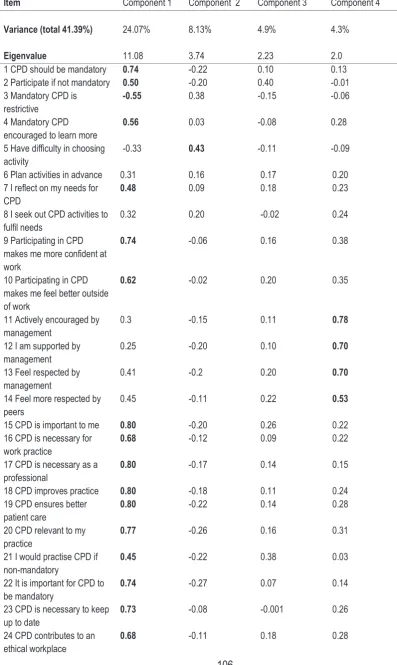
Table 5.3 Structure matrix of PCA for sonographer CPD survey ... 106
Table 5.4: Component Correlation Matrix ... 107
Table 6.1: ANOVA results of ‘urban/rural’ and ‘gender’ ... 113
Table 6.2: ANOVA results of ‘urban/rural’ and ‘age groups’ ... 115
Table 6.3: ANOVA results of ‘gender’ and ‘age groups’ ... 116
Table 6.4: ANOVA results of ‘gender’ and ‘sonography as sole occupation’ ... 117
Table 6.5: ANOVA results of ‘gender’ and ‘years as a sonographer’... 119
Table 6.6: ANOVA results of ‘age groups’ and ‘sonography as sole occupation’ ... 120
Table 6.7: Categorisation of ‘Belief in the Value of CPD’ component comments ... 123
Table 6.8: Frequencies of responses in the category ‘Belief in the Value of CPD’ ... 124
Table 7.1: ANOVA results of ‘urban/rural’ and ‘gender’ ... 137
Table 7.2: ANOVA results of ‘urban/rural’ and ‘age groups’ ... 139
Table 7.3: ANOVA results of ‘urban/rural’ and ‘years as a sonographer’ ... 141
Table 7.4: ANOVA results of ‘urban/rural’ and ‘sonography as sole occupation’ ... 142
Table 7.5: ANOVA results of ‘gender and ‘age groups’ ... 144
Table 7.6: ANOVA results of ‘years as a sonographer’ and ‘sonography as sole occupation’ ... 145
Table 7.7: Categorisation of ‘Barriers to Participation’ component comments ... 148
Table 7.8: Frequencies of responses in the category ‘Barriers to Participation’ ... 148
Table 8.1: ANOVA results of ‘urban/rural’ and ‘gender’ ... 161
Table 8.2: ANOVA results of ‘urban/rural’ and ‘age groups’ ... 162
Table 8.3: ANOVA results of ‘urban/rural’ and ‘years as a sonographer’ ... 163
Table 8.4: ANOVA results of ‘urban /rural’ and ‘sonography as sole occupation’ ... 165
Table 8.5: ANOVA results of ‘gender’ and ‘age groups’ ... 166
Table 8.6: ANOVA results of ‘gender’ and ‘years as a sonographer’... 167
Table 8.7: ANOVA results of ‘gender’ and ‘sonography as sole occupation’ ... 168
xiv
Table 9.1: ANOVA results of ‘urban/rural’ and ‘age groups’ ... 183
Table 9.2: ANOVA results of ‘urban/rural’ and ‘years as a sonographer’ ... 184
Table 9.4: ANOVA results of ‘agegroups’ and ‘years as a sonographer’ ... 187
Table 9.5: ANOVA results of ‘agegroups’ and ‘sonography as sole occupation’ ... 188
Table 9.6: ANOVA results of ‘years as a sonographer’ and ‘sonography as sole occupation’ ... 190
Table 9.7: Categorisation of ‘Motivators’ component comments ... 192
Table 9.8: Frequencies of comments per demography in the category ‘Motivators’ ... 192
Table 11.1: Strategies for Australian sonographer CPD ... 241
Figures Figure 2.1 Kolb’s Learning Cycle, adapted from Smith & Dalton (2005). ... 27
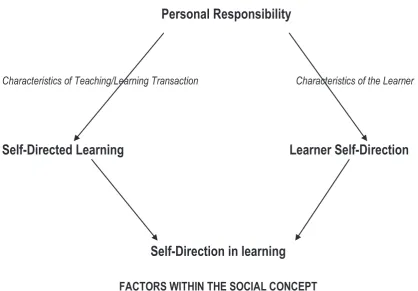
Figure 2.2 The Personal Responsibility Orientation Model, adapted from Brockett & Hiemstra, 1991 p. 99. ... 40
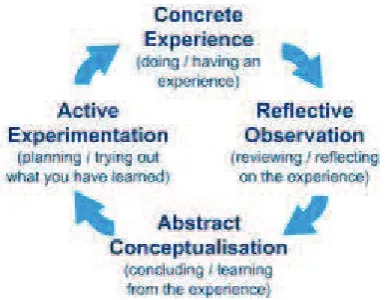
Figure 3.1 The CPD Cycle (http://www.nes.scot.nhs.uk/) ... 61
Figure 3.2 Kolb’s experiential learning cycle (1984) http://www.rcn.org.uk/ ... 62
Figure 5.1 CPD Activities undertaken in the two years prior to the survey ... 100
Figure 6.1 ‘urban/rural’ and ‘gender’... 114
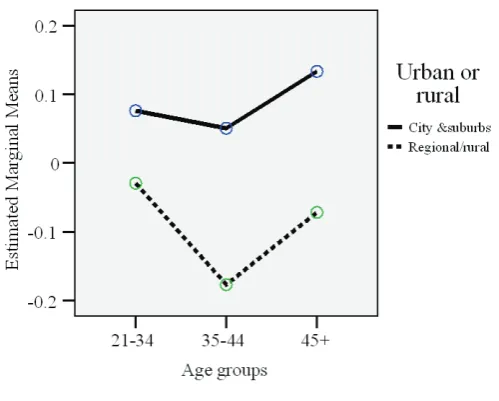
Figure 6.2 ‘urban/rural’ and ‘age groups’ ... 116
Figure 6.3 ‘gender’ and ‘age groups’ ... 117
Figure 6.4 ‘gender’ and ‘sonography as sole occupation’ ... 118
Figure 6.5 ‘gender’ and ‘years as a sonographer’ ... 120
Figure 6.6 ‘age groups’ and ‘sonography as sole occupation’ ... 121
Figure 7.1 ‘urban/rural’ and ‘gender’... 138
Figure 7.2 Error bars demonstrating differences between males and females and between females in city and rural locations for the factor ‘Barriers to Participation’ ... 138
Figure 7.3 ‘urban/rural’ and ‘age groups’ ... 140
Figure 7.4 ‘urban/rural’ and ‘years as a sonographer’... 142
Figure 7.5 ‘urban/rural’ and ‘sonography as sole occupation’ ... 143
Figure 7.6 ‘gender and ‘age groups’ ... 144
Figure 7.7 ‘Years as a sonographer’ and ‘sonography as sole occupation’... 146
xv
Figure 8.4 ‘urban/rural’ and ‘sonography as sole occupation’ ... 165
Figure 8.5 ‘gender’ and ‘age groups’ ... 166
Figure 8.6 ‘gender’ and ‘years as a sonographer’ ... 167
Figure 8.7 ‘gender’ and ‘sonography as sole occupation’ ... 168
Figure 8.8 ‘age groups’ and ‘years as a sonographer’ ... 170
Figure 8.9 ‘age groups’ and ‘sonography as sole occupation’ ... 171
Figure 8.10 ‘years as a sonographer’ and ‘sonography as sole occupation’ ... 172
Figure 9.1 ‘urban/rural’ and ‘age groups’ ... 184
Figure 9.2 ‘urban/rural’ and ‘years as a sonographer’ ... 185
Figure 9.3 ‘gender’ and ‘years as a sonographer’ ... 187
Figure 9.4 ‘age groups’ and ‘years as a sonographer’ ... 188
Figure 9.5 ‘age groups’ and ‘sonography as sole occupation’ ... 189
Figure 9.6 ‘years as a sonographer’ and ‘sonography as sole occupation’ ... 191
Figure 11.1 The Personal Responsibility Orientation Model (adapted from Brockett & Hiemstra, 1991 p. 99). ... 237
1
Abstract
This thesis examines the role of self-direction in the continuing professional development of
Australian sonographers. In order to maintain accreditation, Australian sonographers are required
to undertake continuing professional development (CPD). This thesis describes and analyses
sonographers’ attitudes to their CPD, the barriers they may face in fulfilling their requirements and
how they utilise reflective practice in their learning and CPD.
The majority of sonographers are female, many of whom live and work in rural areas which
have their own constraints, such as distance and remoteness. Many sonographers have heavy
work schedules and may work in understaffed departments. This thesis argues that although most
sonographers are in favour of professional development, in the presence of deterrents and
de-motivators, the ability of sonographers to utilise self-direction in their learning to its fullest extent will
be adversely affected. Further to this, the mandatory input only nature of CPD and also the large
number of activities presented to sonographers may prevent full utilisation of self-direction in their
CPD.
The theoretical framework for this thesis was based on the Personal Responsibility
Orientation model devised by Brockett and Hiemstra (1991) to conceptualise and explain
self-direction in learning. A mixed-methods research design, including both quantitative and qualitative
components was designed. A survey devised specifically for the investigation of sonographers’
attitudes and opinions to CPD was sent out to members of the Australian Sonographers
Association. The questionnaire invited comments giving added depth to the survey. Nine
sonographers volunteered for interview. The interviews added further insight into the findings.
The survey had a good response rate with 682 completed surveys returned, allowing for
the findings to be generalised amongst this population group. Most sonographers were in favour of
CPD and also mandatory CPD. Barriers to participation recognised included family, costs and
2
more affected by these barriers than their city counterparts. Some sonographers were only
undertaking CPD to ‘get the points’, nevertheless, it was apparent that the majority did care about their work and reflected upon it daily. Workload and work conditions, location and gender have a
role to play in whether sonographers utilise self-direction in learning. Sonographers do not appear
to plan their formal CPD to any great extent, some due to the barriers discussed throughout this
thesis and others either because they presume they do not need to or do not know how. This thesis
suggests that a mandatory inputs only based model for CPD may be detrimental to the
self-direction in learning of many Australian sonographers and proposes that an outputs based scheme
3
Chapter 1
Austra
lian Sonographers’ Continuing Professional
Development
My interest in sonographer education stems from 1976 when I first began my career in
sonography. At that time, sonography was in its infancy and there was no formal training, in fact it
was just an extension of my job as a radiographer. Equipment and range of sonographic
examinations were limited and training was ‘on-the-job’. Most learning came from trial and error and
eventually experience. Looking back, it was often a nerve-wracking experience for early
sonographers with minimal training to be responsible for scanning patients and reporting findings to
physicians and obstetricians, for at this time, few radiologists had any knowledge of ultrasound.
This experience motivated many early sonographers to keep on learning, primarily from a great
interest and fascination in the job at hand, but also quite possibly from a fear of not knowing
enough to perform the job well!
1.1 Background
Echo sounding and SONAR (sound navigation and ranging) are well recognised terms in
fishing and geology which is where medical ultrasound, now termed sonography, had its
beginnings. The physics and the technology of ultrasound have been the subject of ongoing
research for over 200 years. In 1794, Italian biologist, Spallanzoni, was able to demonstrate that
bats navigated in the dark by using echo reflection of inaudible sound. In 1826, the speed of sound
in water was determined at Lake Geneva and the physics of sound was outlined by Rayleigh in
1877. In 1878, Pierre Curie and Jacques Curie discovered the piezo-electric effect of quartz
crystals needed for generation and reception of ultrasound frequencies in the megahertz range.
The sinking of the Titanic spurred inventors on to develop a reliable device for detecting underwater
icebergs. World War 1 encouraged them even further in the push to find a warning device for
4
The first use of ultrasound on solid materials in the 1930s was to find flaws in metal
objects. From there it was only a short time before pioneers in its use began experimenting first on
animals and then on human beings. Initially ultrasound was thought of only as a means for
treatment in muscle disorders, a use it still has. Later, it was found that ultrasound would prove
useful as a diagnostic test and humans were first scanned using an ultrasound device for diagnosis
in the mid 1950s. The images were crude at this time and it was not until computers became more
sophisticated and the silicon chip was invented that ultrasound really started to advance. From the
late seventies onwards the technological progression has been rapid, leading to ever more
technologically sophisticated imaging. Now, with the ‘higher-end’ models of equipment we are able
to image very small objects, blood flow and also see organs and foetuses in 3D real time if
necessary (Woo, 2002).
Researchers in Australia, along with others from Scotland, the USA and Japan were
leaders in the design and development of ultrasound equipment, with Australia being at the
forefront in the use of ultrasound for diagnostic imaging and the education of its operators. The use
of ultrasound as a diagnostic imaging technique is known as (ultra)sonography and specialist
operators of ultrasound equipment for diagnostic medical purposes are known as
(ultra)sonographers. At the time this study was undertaken there were approximately 3400
sonographers accredited by the Australasian Sonographer Accreditation Registry (ASAR).
The term ultrasonographer, later shortened to sonographer, for a person who is trained in
performing ultrasound examinations, did not exist until about 1973/4. At the same time, some
doctors, initially primarily obstetricians, began to realise the potential of the technology and
radiographers, nuclear medicine technicians and nurses began to learn the new technology. In
many parts of the world, in particular in Eastern Europe and the Indian subcontinent, sonography is
5
In Australia, the first society for people with an interest in ultrasound, Australasian Society
for Ultrasound in Medicine and Biology (ASUMB), began in 1970. Later it was changed to the
Australasian Society for Ultrasound in Medicine (ASUM).The ASUM was intended to encompass all
facets of the discipline and it became the ‘voice’ of ultrasound in Australasia. The society set the protocols and principles pertaining to the diagnostic use of ultrasound. In 1976, ASUM introduced
an examination for radiologists and other medical personnel involved in diagnosing and reporting
ultrasound scans. In 1980, the first examinations were held for sonographers to obtain the Diploma
of Medical Ultrasonography (DMU). Some sonographers who had been practising for four or more
years were awarded a ‘grandfather’ clause by the ASUM, whereby their experience was deemed to
have been sufficient to allow this. Others, like me, were awarded a ‘grandmother’ clause and only
had to undertake oral and practical examinations.
In comparison with today’s standards, knowledge required at that time was relatively minimal. Examinations were conducted and written by interested members of ASUM. Formal
education was a matter of a few dedicated professionals volunteering to give lectures in various key
areas of interest. Text books were almost non-existent and only a few research and clinical papers
had been written. Of course, this has changed dramatically over the ensuing years. Nowadays,
there are text books available for all facets of sonography and all professional associations publish
their own journals, with the majority of them being peer-reviewed. The DMU, although still in
existence, has almost been superseded by post-graduate diplomas in medical sonography run by
several universities. There are at least two general conferences a year in Australia and several
specialist conferences, for example, on vascular sonography.
Due to ever changing and improving technology, sonographers have had to keep abreast
of advances. Some of this happened just by working with new equipment and discussion with
colleagues, but it also meant that sonographers had to be continually reading articles and books in
6
good way for knowledge to be exchanged. Employers often did not require their sonographers to
have a formal qualification in ultrasound and some experienced sonographers ‘never got round to’
obtaining their DMU. Sonographers were not even recognised by governments as a separate
profession or job classification (and are still not recognised by some State governments, for
example, Queensland and New South Wales public hospital systems).
Educational institutions were slow to offer courses for sonographers. Apart from Royal
Melbourne Institute of Technology, which has offered a graduate diploma since 1983, it was 1995
before any other tertiary institution did likewise. In defence of the universities, it is probably fair to
say that there were not enough sonographers and student sonographers in the country to warrant
the outlay of setting up new programs. Currently the majority of universities offering graduate
diploma programs for medical sonography provide them in distance education mode. In addition, all
of these universities offer higher degrees. None of the programs are full-time as all students need
significant amounts of on the job training. Student sonographers, for the most part, now have
access to excellent and comprehensive training.
The ASUM did not initially recognise sonographers as full members of the Society and
accordingly they had little say in matters such as education, accreditation and advocacy.
Sonographers began to feel that they deserved and were worthy of a greater input into their
profession and in 1990 a group of Victorian sonographers came together to form the Victorian
Sonographers Association. This group grew into the Australian Sonographers Association (ASA),
which is an Association run by sonographers with the interests and education of sonographers in
mind. The association now has over 2500 members and has introduced its own CPD scheme,
7
1.2 Accreditation and continuing professional development
As a result of promotion by the Association from the mid 1990s, a push towards
accreditation became imperative. The Federal Government supported this, partly through a political
interest in radiologists at that time, in regards to Medicare payments, but they also listened to the
needs of sonographers. A group of interested parties that included representatives from
Government, ASUM, ASA, AIR (Australian Institute of Radiographers) and the universities formed
the Australasian Sonographer Accreditation Registry (ASAR). One of the reasons for this move by
sonographers was an increasing need to become formally recognised as professional in their own
right. Accreditation for sonographers came into being on 1st November 2002. From that time
sonographers who perform medical ultrasound examinations that receive a Medicare benefit must
be accredited with this body. Likewise, all educational institutions that teach sonography must be
accredited and re-accredited regularly, every three to five years. A mandatory policy of continuing
professional development (CPD) for all accredited sonographers was also introduced.
The mandatory policy states that an accumulation of 40 CPD credits over a triennium is
required to maintain accreditation. The role of the ASAR is threefold:
x To accredit sonography training programs and education programs within Australia.
x To maintain a registry of accredited sonographers.
x To establish minimum standards of CPD and to monitor the CPD requirements for
sonographers to remain on the registry (ASAR, 2010).
The ASAR is an independent body, separate from the professional organisations that
sonographers may obtain membership in; but it does have a representative from each professional
association, one representing the Universities and one the DMU committee. The professional
associations run their own CPD programs alongside the ASAR, and credits are allowed to be
transferred. Currently, the ASAR allow CPD credits to be collected from 10 broad groups of coded
8
x Attendance at national/international meetings.
x Attendance at educational programs including live scanning workshops. x Attendance at hospital grand rounds and relevant in-house seminars.
x ASAR approved web-site activities.
x Scientific or professional publication, peer reviewed or non-reviewed.
x Works presented at national or international meetings. x Works presented at local meetings.
x Works presented at live scanning workshops.
x ‘Self-directed learning’ to enhance patient outcomes and professional skills e.g. peer
reviews, library research, reading relevant journal articles or texts.
x Any other documented educational or professional activity as approved by the Registry
e.g. course convening, participation in relevant professional council meetings,
examining within the profession, clinical program organising (ASAR, 2010).
The sonographer needs a certificate of attendance for each activity to be kept as a record.
The system is based on trust although 10 per cent of sonographers each year are audited at
random regarding their activities. Those who are audited have to account for their activities in a
rigorous fashion. Whilst institutions that offer education for student sonographers must be
accredited and account for their teaching policies and methods, offerings for CPD do not undergo
rigorous inspection, although they are presented and organised by experienced, knowledgeable
sonographers who volunteer to share their knowledge with others. However, individual activities are
rarely, if ever, evaluated for usefulness and outcomes. Evaluations of conferences indicate
satisfaction with venue, meals and the overall quality of the speakers etcetera, that is, they are
undertaken to assess organisational and personal satisfaction rather than outcomes. In summary,
9
there appears to be no consistent or transparent process for approving or disapproving a CPD
activity.
Since the inception of mandatory CPD, it has been interesting to note the burgeoning of all
forms of education being offered by the professional sonographer associations. Whether all of
these activities are warranted has not been investigated. Training needs analysis of the profession
would be one way of rectifying this. As discussed by Gould, Kelly, White and Chidgey (2004) and
Revel and Yussuf (2003), a training needs analysis would identify learning needs of the profession,
recommend how to address these needs and implement the findings of the analysis. It is of interest
that the Royal Australian College of General Practitioners always requires a comprehensive training
needs analysis before acceptance of a program or activity for CPD. Whilst it has been mooted that
well-designed CPD models may influence practice and competency (McPartland, 1990; Kerka,
n.d.), there has been little evidence put forward that the previously listed CPD activities have done
that in any of the professions studied. In addition, the increase in number of activities offered to a
professional does not guarantee that there will be a subsequent increase in knowledge, in fact,
there have been concerns voiced in the literature that a proliferation of inferior activities may occur
due to mandatory CPD ensuring a captive audience (McPartland, 1990; Perry, 1995). The
sonographer system is consistently under review by the ASAR and some of the previously listed
activities have recently been removed or adjusted (ASAR, 2010).
As can be seen from the list outlined earlier, there is a wide variety of activities from which
a sonographer may choose. However, for many the range of choices may be much narrower. Items
which involve a sonographer presenting papers at conferences and demonstrating at workshops
are generally not undertaken by most sonographers. The reasons for this may include fear of public
speaking and general lack of confidence. In addition, a sonographer usually has a busy work
schedule, which does not allow much time for preparation of talks and workshops. A similar
10
for those unfamiliar with the process and, until recently, there has not been a tradition of
sonographers writing articles for journals. In addition, it has been my observation there has been
little encouragement to do so by their employers and the profession generally.
There are two remaining activities from which a large number of credits may be gained.
The first one of these is to study for a higher degree, although this only relates to ultrasound based
courses and does not include research degrees. The remaining activity which carries a higher
number of credits is attendance at, or participation in, a conference. It is my observation that the
numbers attending sonographer conferences have more than doubled since CPD was introduced
and interestingly, the cost has risen in proportion, possibly due to larger venues being required.
Cost may be an important factor in whether a sonographer will attend a conference. If interstate
travel is involved the total cost can be approximately $3000, which could be above some
sonographers’ budgets. Some employers will fund some conference attendances, but usually this
funding is on a roster basis for staff. However, cost may not be the only problem. For a
sonographer who works in rural and outlying areas, where he or she may be a sole practitioner, it
can become difficult to leave for a few days, as most employers will not employ or cannot find a
locum to replace them for a short time only. Others are parents of small children who may have
difficulty in finding suitable childcare for a few days. However, in spite of the difficulties, many
sonographers do find the means to attend sonographer conferences.
The conferences are generally regarded by most as being good learning experiences and
well run. They include workshops and many different speakers on a wide range of topics. They are
a means to meet with old friends and colleagues and to ‘network’. The social occasions are usually
good fun. But the question remains about the effectiveness of attending these conferences. A
cynical view would be that it is quite easy to register attendance, pop in to a couple of talks that
might be interesting and then spend the rest of the time socialising or shopping. On the other hand,
11
conversant with already. She/he may enjoy the talk, but learn only that he/she is using the same
techniques as the speaker, thus validating knowledge, which is useful when working alone, but not
adding to overall knowledge. Indeed as Knight (2002) discussed, there is debate whether
attendance at talks and lectures will increase knowledge and encourage change of practice.
The remaining activities on the list suggested by ASAR are more accessible for most
sonographers and certainly cheaper. Workshops and seminars are common activities held by the
ASA and ASUM State branches, sometimes jointly, at least twice and sometimes more, per year.
These workshops and seminars are either held on a Saturday morning or a Tuesday evening.
Presentation at these workshops is on a voluntary basis and usually it is a regular few volunteers
who present material. These sonographer volunteers are dedicated and passionate about their
work; however, the workshops can become somewhat repetitive, offering similar topics time and
again. The topics are chosen by the State committees and the choice is a matter of what they
would like to do and what they believe is necessary rather than being directed towards the
immediate needs of the profession.
It is challenging to schedule a time for workshops that everyone is happy with, since family
commitments and shift work can make it difficult to attend. There is thus a possibility that a
sonographer may choose to attend a particular workshop because she/he just happens to be free,
rather than actually needing to attend. The topics can be similar, so a choice may be made not to
attend, however in not attending, any newly presented material or findings will be missed.
Alternatively, if a sonographer has a particular interest in one topic, he or she may attend only
workshops relating to that topic because of feeling comfortable with it, similar to the conference
situation stated previously. As Revel and Yussuf (2003) discussed, attendance at activities that one
knows the subject matter and is comfortable with is unlikely to have a positive impact on patient
care. Rural and remote sonographers are disadvantaged from attending these workshops by time,
12
availability to areas such as Tamworth and Alice Springs, however, this initiative has been curtailed
due to financial restraints. ASA has also introduced mini one day conferences which are related to
one topic only for special interest groups. These are gradually becoming more popular. As with the
travelling workshops, the one day workshops were intended to visit more than just the eastern
seaboard capitals, however, running costs have prevented this and the workshops will probably just
be held in Melbourne or Sydney in the future (ASA, 2010).
Until recently, a sonographer could choose to gain all his/her credits through so-called ‘self
-directed learning’. The activities undertaken could include article reading, where a short summary
has to be made or reading an article and then submitting answers posed in relation to the article.
Both these methods have merits and journal reading is widely used in other professions as a
means of professional development (Cole & Glass, 2004). However, deficiencies can be found in
this method. In order to gain full benefit from an article it is necessary to be able to appraise it
correctly. Discussions with sonographers lead me to believe that many will read only the
introduction and conclusion as they find the method and statistics sections uninteresting; however
they still believe they have learnt from the article. Also, if one is conversant with a subject, it is
possible to answer questions about an article, without actually reading it. Self-directed learning
requires that an individual has a good insight into their own knowledge and requirements (Shannon,
2000). This is not always the case as evidenced in a study by Tracey, Arroll, Barham and
Richmond (1997) of general practitioners (GPs) which discovered that the GP’s insight into their own educational needs was poor. Just prior to the research in this thesis being undertaken, the
ASAR decided that credits from ‘self-directed’ activities would be limited to allow for more diversity in CPD (ASAR, 2010).
As noted earlier, in the ASAR model for CPD, ‘self-directed’ learning encompasses such
activities as journal article reading as defined previously and would be more appropriately named
13
learner must assume the responsibility for planning, carrying out and evaluating their learning.
Further, this responsibility will mean that individuals must assume ownership of their own thoughts
and actions and take control over their responses to a given situation. In a learning situation this
means that the potential for self-direction is governed by an individual’s ability or willingness to
direct his/her own learning (Brockett & Hiemstra, 1991). Chene (1983) further defined the
self-directed learner as one who is autonomous with an ability to make choices and critical judgments.
In addition, Candy (1991) believed that personal values and beliefs provided a learner with a strong
foundation for planning goals, evaluating choices and accomplishing the goals through self-restraint
and discipline. From the previously discussed use by the ASAR of the term ‘self-directed’ learning,
it would seem possible that there is a lack of understanding in the profession as to the more
generally accepted definition of self-direction in learning. It is equally possible that sonographers
have an expectation that all their learning should be planned and organised for them.
Sonographers have a wide range of activities with which to fulfil their CPD. Because of this
there is an opportunity for most to plan, carry out and evaluate their learning according to their
learning needs should they so desire. What is unclear at the present time is whether this level of
planning and analysis actually happens. In one of the basic tenets of adult education it is stated
that adults will be more open to learning if they are independent and undertake that learning
voluntarily with a clear understanding of the intended learning objectives (Knowles, 1975). In a
situation where CPD is mandatory, it may be found that the mandatory nature may inhibit the
voluntary and independent nature of learning for sonographers.
1.3 Medical Radiation Sciences
Sonography is one of a group of professions that is situated under the umbrella of medical
radiation science (MRS). Other professions are radiography, nuclear medicine technology and
radiation therapy. The latter three require an undergraduate degree, whilst an accredited
14
undergraduate degree. Historically, sonographers mainly came from a background of radiography
and nuclear medicine. Both these professional groups were already working in a medical imaging
department and were thus handy to the newer modality of ultrasound. In recent years, a person
with a degree in one of the health sciences may also become a sonographer as long as that person
can obtain a training position. Nevertheless, in some domains sonographers are still described and
classed as radiographers, whether they have this qualification or not. In the United Kingdom for
instance, most sonographers have an undergraduate qualification as a radiographer, either
diagnostic or therapeutic, however in the United States and Canada, sonographers do not generally
have an initial training as a radiographer or any one of the other MRS professionals and indeed,
sonography may be an initial qualification. In New Zealand the situation is somewhat similar to
Australia.
Sonographers work under a variety of awards, each State being different and within each
State there are differences between Public Service and Private Health, as such, there is no federal
governing body to oversee the working conditions for sonographers. In general, over the past 10 to
15 years, there has been a large increase in the number of patients requiring ultrasound
examinations, placing departments under a great deal of pressure to provide a prompt service for
patients. In the private sector, this pressure is magnified by the medical imaging companies’ need to make good profits and to keep ahead of the competition. This has, in many ways, come at the
detriment of working conditions for sonographers. There is a persistent shortage of sonographers
due, in part, to the length of time and cost to train one and, anecdotally, the reluctance of some
private practices to take on trainees because of this. In addition, it is often observed by
non-sonographers that the study and work are hard, with an apparent lack of reward at the end and
there is casual evidence that sonographers are leaving the profession because of this.
In the UK, it is now mandatory for radiographers to complete CPD in order to remain
15
therapists, it is only required of the members of the AIR. Non-compliance may lead to removal from
the AIR membership. At this time, there is no federal registration and federally, no mandatory
requirements for CPD. Sonographers, on the other hand, are required to undertake CPD to remain
accredited and certified through the ASA. This has the potential to lead to conflict between
sonographers and radiographers, especially when in some States radiographers may receive
similar rates of pay as sonographers. Other countries, such as the UK, do have mandatory CPD
requirements for health professionals in order for registration to remain current.
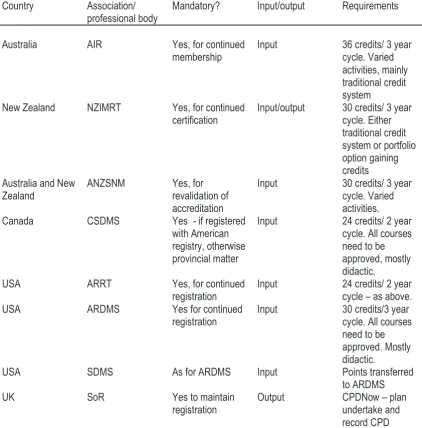
As can be seen from the following table (Table 1.1), most of the professional bodies cited
use an input credit based system. Australian and New Zealand professional bodies allow their
members/registrants to gather their credits from a wide range of activities, some of which can be
portfolio based (NZIMRT, 2010). Canada and the USA tend to prefer more didactic regulated
activities with which to gather credits. Only in the UK is an output system used whereby
radiographers are not required to enter a set number of credits, but do need to demonstrate
undertaking CPD appropriate to the scope and level of practice, by creating a CPD profile (SoR,
2010). The input and output CPD schemes will be discussed in more detail in Chapter 3. The
16
Table 1.1: Continuing professional development/education requirements for MRS
Country Association/
professional body
Mandatory? Input/output Requirements
Australia AIR Yes, for continued
membership
New Zealand NZIMRT Yes, for continued
certification
Input/output 30 credits/ 3 year cycle. Either
USA SDMS As for ARDMS Input Points transferred
to ARDMS Legend: AIR = Australian Institute of Radiographers; NZIMRT = New Zealand Institute of Medical Radiation Technology; ANZSNM = Australia and New Zealand Society of Nuclear Medicine; CSDMS = Canadian Society of Diagnostic Medical Sonographers; ARRT = The American Registry of Radiologic Technologists; ARDMS = American Registry of Diagnostic Medical Sonographers; SDMS = Society of Diagnostic Medical Sonographers; SoR = Society of Radiographers
At this point, it is relevant to describe the UK system in more detail because it is so
different from all the other CPD schemes mentioned. The Health Professions Council of the UK
(HPC) is the regulatory body for 15 allied health professional groups, including radiographers (HPC,
2010). One of the key functions of the HPC is to maintain a register of health professionals and
17
radiographers and physiotherapists, have protected titles, ensuring that unregistered persons
cannot use the title.
Since 2006, all registrants have had to undergo CPD in order to maintain registration. The
registrants must:
x Maintain a continuous up to date and accurate record of their CPD activities.
x Demonstrate that their CPD activities are a mixture of learning activities relevant to
current or future practice.
x Seek to ensure that their CPD has contributed to the quality of their practice and
service delivery.
x Seek to ensure that their CPD benefits the service user.
x Present a written profile containing evidence of their CPD upon request.
(HPC http://www.hpc-uk.org/ 2010)
There is a flexible approach so that CPD can take account of how the professional works,
whether part time or full time or in management, education or research. The CPD activity can be
planned to take account of changing needs as long as the CPD is at the correct standard as
defined by HPC. Help is offered to maintain the CPD profile and personal development plans are
recommended. Examples of evidence of planning and reflection are provided to help the
professional. The CPD needs to cover a range of activities and evidence of how these activities
have been utilised in service, but it is not prescriptive. The SoR fulfils these recommendations and
provides extra help to radiographers on their website.
Although Australian sonographers regard themselves as professional and it is mandated
that Australian sonographers practise CPD because of this, there is little evidence about the habits
of Australian sonographers in regards to CPD and much is assumed. Therefore, it is timely that the
area is researched. The quality of CPD may rest with the ability or motivation of the sonographer to
18
However, there is a clear tension between self-direction in learning and voluntary learning and a
mandatory input based CPD framework, such that sonographers may feel less motivated to pursue
further professional development, consequently only fulfilling basic requirements. Further to this, it
could be argued that CPD may not be undertaken in the spirit of self-direction whereby each
sonographer would identify needs and goals, identify ways to achieve those goals and evaluate the
outcomes. In addition, external factors such as family responsibilities, time and work constraints,
may reduce the ability of sonographers to use self-direction in their CPD. Nevertheless, it has been
suggested that mandatory CPD may still lead to empowerment and increased motivation of the
participant as reported by Postler-Slattery and Foley (2003) in their study.
1.4 Aim of the study
The aim of this study is to explore the role of self-direction in the continuing professional
development of sonographers; further it seeks to discover the contributors and inhibitors to
self-direction in continuing professional development. The overarching research question for this study
is:
What is the role of self-direction in learning in the CPD of Australian sonographers?
This research will inform the providers of CPD to sonographers in Australia and will aid the planning
and implementation of CPD programs. Further, the research will add to the body of existing
literature on CPD and self-direction in learning.
1.5 Contents of thesis
This thesis has been organised into eleven chapters:
This first chapter has introduced the background of sonography and sonographers in
Australia and the history of accreditation and CPD.
Following this introductory chapter, Chapter Two examines literature with relevance to this
19
and motivation. In particular, it looks at self-direction and the role of reflection and critical reflection
in self-direction.
Chapter Three explores the literature on CPD. It provides a brief overview of CPD and
describes current theories and understandings of professionals’ attitudes to CPD. It also explores
the literature on outcomes and evaluation of CPD; and models of CPD. Finally it reviews current
literature on medical radiation science professionals’ CPD, learning and workplace circumstances.
Chapters Two and Three identify gaps in the knowledge regarding sonographers and their
CPD and reflective habits which will be addressed in this thesis.
Chapter Four explains the reasoning behind the methodological approach taken for the
research process. It then goes on to explain how the methods and survey instrument were
developed and administered. The chapter also discusses the validity, reliability and ethical aspects
of the research.
Chapter Five reports on the demographic distribution of the survey respondents and
summarises the frequencies of responses. It also describes and discusses the principal
components analysis (PCA) conducted on the data. It details the production and choice of the four
factors derived from the PCA.
Chapters Six to Nine present and discuss the results from the analyses of variance
performed on data from the four factors extracted from the PCA: ‘Belief in the value of CPD’, ‘Barriers to participation’, ‘Reflection’ and ‘Motivators’. They also describe and analyse the
comments pertaining to these factors that were submitted with the survey and discusses these
findings in relation to the literature reviews.
Chapter Ten presents and discusses the analysis of the interviews conducted with
sonographers who volunteered to be interviewed. These interviews covered a range of topics
20
suggestions pertaining to CPD and how it could perhaps be improved. The findings were discussed
in relation to the literature.
Finally, Chapter Eleven, the concluding chapter, will review the main findings of the study
and will discuss them in the context of the literature and theory, in particular, the personal
responsibility orientation (PRO) model. This chapter will offer several practical strategies drawn
from this research that may be used to support self-direction. Finally, areas of research will be
21
Chapter 2
Adult and Workplace Learning
2.1 Introduction
This chapter will examine relevant literature regarding adult learning, self-direction in
learning and reflection, workplace learning, communities of practice and motivation which will
complement the literature findings regarding CPD in the following chapter, Chapter 3, and serve to
inform this research.
2.1 Motivation
Motivation has been cited as an important factor in whether people willingly become
self-directed and involved in CPD (Field, 2004; Lester, 1999). Maslow (1970) defined motivation as a
psychological process where a behaviour is directed towards a goal based on individual needs.
According to Bye, Pushkar and Conway (2007), an intrinsically motivated person will display
autonomy and initiative in their actions. In contrast, extrinsically motivated people seek approval
and external signs of worth. Intrinsic motivation will promote psychological well-being through
feelings of personal accomplishment and self-esteem. Although initially making the recipient feel
good, extrinsic motivators may eventually stifle interest in learning and discourage feelings of
well-being. Huitt (2001) considers that motivation may initially be begun by emotions, but once an
activity has begun, other factors, such as reluctance to abandon a task, may initiate continuation.
Although it is a multidimensional concept, it may be considered, although not without some
reservations, that increased job competence, increasing professionalism and pay increases are
prominent motivational factors (Furze & Pearcey, 1999; Ryan, 2003).
Motivational factors have been debated over the years with not all writers totally agreeing
that such things as pay increases are necessarily a great motivator. Frederick Herzberg began this
debate with his two factor theory of motivation. In 1959, Herzberg’s theory of motivation and
22
attitudes about work. Herzberg asserted that factors such as company policy, supervision,
interpersonal relationships, working conditions and salary were hygiene factors rather than
motivators. According to the theory, the absence of hygiene factors can contribute to job
dissatisfaction, but their presence does not motivate or promote job satisfaction. Herzberg found
that motivators were elements that enriched a person’s job, for instance, achievements,
recognition, the work itself, responsibility and advancement. These motivators or satisfiers were
associated with long-term positive effects in job performance whilst the hygiene factors or
dissatisfiers consistently only produced short term changes in job attitudes and performance, which
quickly returned to their previous level. Interestingly, the themes about satisfaction are not the
same as the themes about dissatisfaction. For example, dissatisfaction involves bad company
policies, but satisfaction does not involve good company policies. Satisfaction involves
achievement, but dissatisfaction does not involve failure. In addition, most satisfying events involve
high levels of self-direction and productivity (Gawel, 1997; Herzberg, 1966; Herzberg, Mausner &
Snyderman, 1957).
Although there has been much discussion in the literature about Herzberg’s theory, 50
years later, research still produces results consistent with the original theory (Sachau, 2007).
According to Sachau, Herzberg’s hygiene factors could otherwise be known as extrinsic motivators, but he warns that there may be a danger in giving out too many rewards. Hygiene factors tend to
escalate, and as wages rise, people do not necessarily become happier. According to Sachau,
managers should not use money to motivate employees if managers want them to be interested in
their jobs. Focusing employees’ attention on pay will lead to rising expectations. If managers,
instead, provide psychological growth opportunities they will increase intrinsic motivation and
23
2.2 Adult learning
According to Smith (2002), most theories regarding self-directed learning have their roots
in humanism and it was this which greatly influenced Knowles in his thinking about adult learning.
Humanism recognises people as beings with feelings, attitudes and values and is concerned with
growth, fulfilment and self drive (Smith, 2002). There is an association between self-directed
learning and a humanistic approach. This was demonstrated by Rodgers (1969, cited by Rossi,
2002) when he commented that learning is facilitated when a student participates responsibly in a
learning process. He also posited that self-initiated learning, involving the whole person, including
feelings as well as intellect, was the most lasting and useful learning. True independence,
self-reliance and creativity can only be present when self-criticism and self-evaluation occurs before
evaluation of others.
Knowles spent a lifetime of work on adult education and differentiated initially between
adult and child learning. His theory of andragogy was that adult learning would lead to the
development of a self-directed learner. Between 1968 and 1970 he had published a set of
characteristics that he believed the adult learner should possess. This became known as the theory
of andragogy (Smith, 2002). These characteristics are as follows:
1. Self-concept– as a person matures, self-concept moves from one of being a dependent
personality toward being a self-directed human being.
2. Experience – as a person matures, a growing reservoir of experience is accumulated that becomes an increasing resource for learning.
3. Readiness to learn – as a person matures, readiness to learn becomes oriented increasingly to the developmental tasks of social roles.
4. Orientation to learning – as a person matures time perspective changes from one of postponed application of knowledge to immediacy of application. Orientation towards
24
5. Motivation to learn – as a person matures the motivation to learn becomes more internalised.
(Knowles, Holton & Swanson, 1998)
Although named a ‘theory’ it is apparent that these characteristics are basically a set of
assumptions which do not take any extrinsic or personality factors into account. As such, Knowles
tends to be rather idealistic and optimistic in his view of adults. Nevertheless, his ‘theory’ set the
scene for much research and debate over the ensuing decades (Merriam, 2001).
One of the main areas of debate concerned the theoretical nature of andragogy, focussing
on whether, in fact, it was a theory. Eventually, by 1989, Knowles accepted and concurred that his
assumptions served as a conceptual framework for an emerging theory (Knowles, 1989, cited by
Merriam, 2001). In other criticisms of Knowles work it was debated that due to various life
situations, barriers to learning may occur for adults. Children may also exhibit ‘adult’ like features
such as curiosity and self-directedness both in and out of school. Again, Knowles revised his
thinking and acknowledged that there was no clear division between pedagogy and andragogy,
opting instead for a teacher directed to student directed model (Merriam, 2001).
Brookfield (1995) was another who challenged the assumptions of Knowles, repeating the
argument made by Busher (1983 cited by Brookfield, 1995) that if adults are naturally self-directed,
why should any effort be made to make provision for their education. Nevertheless, there still
remains much support for the notion that adults learn differently from children (Rossi, 2002). Houle
(1996, p. 30) believes that andragogy still remains the most learner-centred of all adult education
programs and, more significantly, andragogy has alerted educators to the fact that learners should
be involved in as many aspects of their education as possible and also be involved in the creation
25
Knowles (1975) devised his model for self-directed learning which was intended to help
both educators and learners in their course development. This was a five-step linear process model
which is prescriptive in intent and advises the following:
1. Diagnosis of learning needs.
2. Formulation of learning needs.
3. Identification of human material resources for learning.
4. Choice and implementation of appropriate learning strategies.
5. Evaluation of learning outcomes.
Once again, this does not take into account life circumstances that may halt one direction
of learning and redirect it into another; neither does it take into account different types of
personality (Merriam & Caffarella, 1999). However, it does form one basis for the CPD cycle which
will be discussed in detail in Chapter 3. It has also been suggested that self-directed learners in an
educational system may not pre-plan activities but, rather, select courses from a limited range of
alternatives which occur in their own environment and this will then structure their learning
strategies (Smith, 2002).
There are different ways of learning and different personalities which will affect this
learning. Kolb’s work on learning styles demonstrates this to some extent. In an interpretation of Kolb’s learning styles, Chapman (2006) describes the four main learning styles of adults, these are
x Diverging – feeling and watching.
Is able to look at things from different perspectives. Sensitive, tends to watch rather
than do. Probably best in brain storming situations. These people gather information,
are interested in others and imaginative. Tend to like working in groups.
x Assimilating – watching and thinking.
Concise, logical thinkers. Ideas and concepts are more important to these people.
26
organise it logically. They are less focused on people, more on ideas and concepts.
These learners are more effective in information technology and science careers. They
prefer reading, lectures and analytical models.
x Converging –doing and thinking.
These people use learning to solve problems. They prefer technical tasks and are less
concerned with people and interpersonal aspects. They like to experiment with new
ideas, with simulations and practical applications.
x Accommodating – doing and feeling.
Hands on learners, relying much on intuition. Use others’ analyses and prefer practical
experimentation. Are attracted to new challenges. Will be more likely to act on instinct
rather than logic. This style of learning is more likely to be used by those in roles
needing action and initiative.
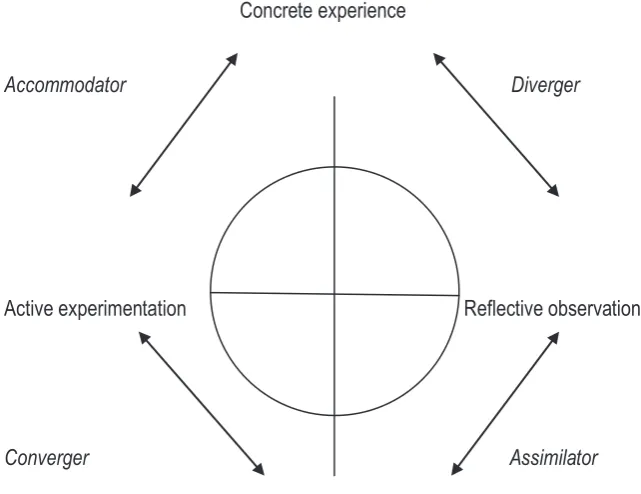
More concisely, an accommodator uses active experimentation and concrete experience, a
diverger uses concrete experience and reflective observation, an assimilator uses reflective
observation and abstract conceptualisation and a converger uses abstract conceptualisation and
active experimentation. Having said that, persons may move from one learning style to another,
depending on the circumstances of the learning (Smith & Dalton, 2005). However, people will tend
to learn more effectively if learning is oriented towards their preferences (Chapman, 2006)
According to Kolb’s learning cycle model (Figure 2.1), learners choose how to acquire
information and process it. They can learn either concretely through the senses or abstractly by
27 Concrete experience
Accommodator Diverger
Active experimentation Reflective observation
Converger Assimilator
Abstract conceptualisation
Figure 2.1 Kolb’s Learning Cycle, adapted from Smith & Dalton (2005).
This model demonstrates the variety of ways in which individuals may learn.
2.3 Communities of practice and workplace learning
In 2001, Billett wrote
… workers of all kinds are being asked to maintain the currency and quality of their vocational skills as expectations of lifelong learning are now being directed towards adults’ vocational practice. A key basis for this ongoing learning is to develop further vocational practice through work (Billett, 2001, p.176).
Billett suggested that in order for this to happen, workers would first need to be engaged
and keen, but good organisational support and sponsorship was also necessary, along with experts
willing to teach and guide. Some workplaces still do not consider staff development as particularly
relevant, especially during work time. O’Sullivan (2003) suggested that having protected time for
work-based learning could provide an opportunity to balance patient care with skills and knowledge
development. She was speaking initially for the interest of physiotherapists but believed that the
28
during work time, as well as caring for patients, is both permissible and recommended. She
believed that it would be in the best interests of the employer to allow for learning at work and it
could be factored into costs. In this way, employers could become learning organisations, (as per
Billett, 2001) with a structure in place for clinical supervision, peer review, journal clubs and staff
meetings, which would all be aspects of CPD.
The Society of Radiographers in the UK also holds strong beliefs regarding the provision of
time by employers for CPD and write on their website:
The Society believes that all members have a right to protected study time and that the benefits of this include enhanced service provision and improved patient outcomes.
The Society's long term aim is that all members should receive protected study time equivalent to 10% of contracted hours worked. This is for the moment unfeasible in the majority of clinical departments and current advice is that managers and union
representatives should work to secure six days per annum protected study time for full time employees. Part time staff should receive a similar allocation on a pro-rata basis.
(http://www.sor.org/public/educpd/cpd_protected.htm)
2.3.1 Communities of practice
Communities of practice are groups of people who share a concern or passion for something they do and learn how to do it better as they interact regularly
(Wenger 2006, http://www.ewenger.com/theory/index.htm).
The concept that situated learning, where the learner and the task are central to overall
learning in a social context, rather than a traditional view of learning as an end result of transmitted
knowledge, was first posited by Jean Lavé in 1988 (Borthick, 2000). In the early 1990s, Lavé and
Wenger were studying the learning activities of apprentices in the workplace and termed the
community learning they witnessed as a community of practice. They soon realised, however, that
the term could be applied in many situations and in all walks of life. Indeed, it encompasses all
persons in a community and not only apprentices or learners (Wenger, 2006). The original theory of
community of practice was that it was informal, with much situated learning occurring in social
situations, such as informal discussions over lunch. The idea of a community of practice was