Relationships between pressures, chemical
status, and biological quality elements
Analysis of the current knowledge gaps
for the implementation of the
Water Framework Directive
Edited by
Anna-Stiina Heiskanen and Angelo G. Solimini
Legal Notice
Neither the European Commission nor any person acting on the behalf of the Commission is responsible for the use, which might be made of the following information.
A great deal of additional information on the European Union is available on the internet. It can be accessed through the Europa server
(http://europa.eu.int).
EUR 21497 EN
European Communities, 2005
SUMMARY
The general objective of the REBECCA project1 is to provide relevant scientific support for the implementation of the Water Framework Directive (WFD). The two specific aims of the project are, firstly, to establish links between ecological status of surface waters and physico-chemical quality elements and pressures from different sources, and, secondly, to develop and validate tools that member states can use in the process of classification, in the design of their monitoring programs, and in the design of measures in accordance with the requirements of the WFD.
Historically, there has been great success in maintaining and improving the quality of surface waters by developing an understanding of the links between anthropogenic pressures (e.g. water abstraction, agriculture, and effluent discharges) and the chemical status of waters, although there remain many challenges in reliably designing and implementing the necessary programs of measures. Our present understanding of the link between chemical properties and ecological state, while good in some instances, is generally not adequate to support management intervention against ecological objectives. In this report we review and identify information gaps in our knowledge on relations between pressures, chemical and ecological status for the major pressures types and biological quality elements. We also give an overview of the chemical parameters that are used to determine the ecological status of water body types and of the biological indicators currently applied and/or potentially applicable as classification parameters for inland and coastal waters.
This gap-analysis is needed to 1) identify the key areas of further work within the REBECCA project and 2) to identify the areas where further experimental or monitoring work would be needed (beyond the scope of REBECCA), due to lack of data or quantitative understanding of the functional relationships between chemical status and biological quality indicators. This report should help in focusing the on-going WFD intercalibration process in 2005-6. In particular it should provide insights on which biological and pressure parameters should be selected and which data there would be available to illustrate the degradation of the biological quality with respect of pressure gradients.
Regarding data availability to Rebecca project, major gaps were identified as follow: • Data from the Mediterranean and alpine lake types
• Data from large part of the Mediterranean coastal & transitional types (with exception of Italy)
• Data on concentrations of toxic chemical substances in combination with biological quality element indicator data
• Macrophyte and benthic invertebrate data from many lake & coastal types • Fish data from lakes (and transitional waters – not included in REBECCA)
Apart from these data gaps, there are common “knowledge gaps” in relation to tasks required by the WFD that exist for all surface water categories:
• Development of reference conditions • Development of type-specific classifications • Criteria for setting class boundaries
• Criteria for setting ecological thresholds
1
• Supporting element classifications related to biological impact • Relationships between nitrogen conditions and ecological responses • Estimations of uncertainty in classifications
• Uncertainty in measured data • Responses to combined pressures
Additionally, a summary of specific knowledge gaps for each combination of pressure and quality element is given in the following pages for inland and marine water ecosystems.
Lake ecosystems: summary of major knowledge gaps for pressure and quality elements.
Pressure Element Knowledge gap
Phytoplankton Threshold concentrations for high/good and good/moderate boundaries
Taxonomic indicators for measuring impacts of nutrient pressures Establishment of supporting physico-chemical conditions
Reference conditions in different lake types Effect of seasonal variability on
classification schemes
Ecological impact of nitrogen conditions
Macrophytes Relationships that distinguish effects of nutrients from effects of other variables Type-specific reference conditions and classification schemes
Assessment of spatial and temporal variability
Phytobenthos Absence of classification schemes and quantitative relationships among phytobenthos and nutrients
Benthic invertebrates Relationships between level of oxygen depletion and taxonomic composition Standard fish indicators based for different lake types
Eutrophication
Fish
Relationships between duration of minimum oxygen-concentrations and different fish indicators
Lake ecosystems: summary of major knowledge gaps for pressure and quality elements (continue from previous page).
Pressure Element Knowledge gap
Euthrophication-hydromorphological
Macrophytes Phytoplankton-macrophytes competition under fluctuating water level
How to account for temporal variability
Euthrophication-acidification
Macrophytes Identification of quantitative indicators and classification schemes
Euthrophication-toxics
Benthic invertebrates Identification of quantitative indicators and classification schemes
Acidification Phytoplankton, macrophytes, benthic invertebrates
Effects of acidification needs to be
separated by the effect of other co varying or interacting variables including nutrients and biotic interactions
Effect of acidification episodes
River ecosystems: summary of major knowledge gaps for pressure and quality elements.
Pressure Element Knowledge gap
Phytoplankton Relationships among nutrient concentration and blooms
Macrophytes Response of macrophytes to nutrient in the sediments
Type specific applicability of empirical models
Effect of co varying variables
Development of quantitative indicators Eutrophication
Phytobenthos How to include filamentous algae in assessment schemes
Type specific applicability of empirical models
Effect of co varying variables
Development of quantitative indicators Organic pollution Phytobenthos, macrophytes,
benthic invertebrates
Functional relationships among organic matter concentration and biota
Impact of different types of wastewater on biota
Response of biota around high/good and lower end boundaries
Effect of the interaction among organic pollution and discharge
Response of biota to urban and agricultural run offs
Acidification Phytoplankton, macrophytes, benthic invertebrates
Effects of acidification needs to be
separated by the effect of other co varying or interacting variables including nutrients and biotic interactions
River ecosystems: summary of major knowledge gaps for pressure and quality elements (continue from previous page).
Pressure Element Knowledge gap
Combined pressures all Influence of spatial scales, including large (ecoregions), in predicting biological indicators outcome
Inter-regions comparative studies taking into account social and economic features
Coastal ecosystems: summary of major knowledge gaps for pressure and quality elements
Pressure Element Knowledge gap
Transparency Quantitative relationships among nutrient loading and transparency for certain types
Phytoplankton Spatial and temporal variability of nutrient limitation pattern
Taxonomic indicators for measuring the impact of loadings
Elucidating the role of nutrients and other variables in starting harmful algal blooms
Macrophytes Robust quantitative relationships among water quality and vegetation indicators Quantify the effects of stochastic factors on macrophyte ecological attributes
Threshold concentrations for eutrophication
Eutrophication
Benthic invertebrates Taxonomic indicators for measuring the impacts
Table of Contents
1 Introduction ... 13
2 Lakes ... 15
2.1 Eutrophication pressures ... 15
2.1.1Nutrient conditions... 17
2.1.2Transparency conditions ... 18
2.1.3Oxygen conditions ... 19
2.1.4Phytoplankton... 19
2.1.5Macrophytes ... 21
2.1.6Phytobenthos ... 22
2.1.7Benthic Invertebrates ... 23
2.1.8Fish...24
2.2 Hydro-morphological pressures... 26
2.2.1Macrophytes ... 26
2.3 Combined pressures... 27
2.3.1Eutrophication – acidification – macrophytes ... 27
2.3.2Eutrophication – toxics – benthic invertebrates ... 28
2.3.3Eutrophication – hydromorphological pressures - macrophytes ... 29
3 Acidification pressures for lakes and rivers ... 31
3.1 Toxic components of acidification pressure... 33
3.2 Phytoplankton ... 34
3.3 Macrophytes ... 35
3.4 Benthic Invertebrates... 35
3.5 Fish ...36
4 Rivers... 38
4.1 Eutrophication pressures ... 38
4.1.1Phytoplankton... 39
4.1.2Macrophytes ... 40
4.1.3Phytobenthos ... 40
4.1.4Benthic Invertebrates and fish... 41
4.2 Organic pollution pressures ... 41
4.2.1Phytobenthos ... 43
4.2.2Macrophytes ... 43
4.3 Hydromorphological pressures - Benthic invertebrates ... 44
4.4 Combined pressures... 45
5 Coastal waters ... 48
5.1 Eutrophication pressures ... 48
5.1.1Transparency conditions ... 49
5.1.2Phytoplankton... 50
5.1.3Macrophytes ... 52
5.1.4Benthic invertebrates... 53
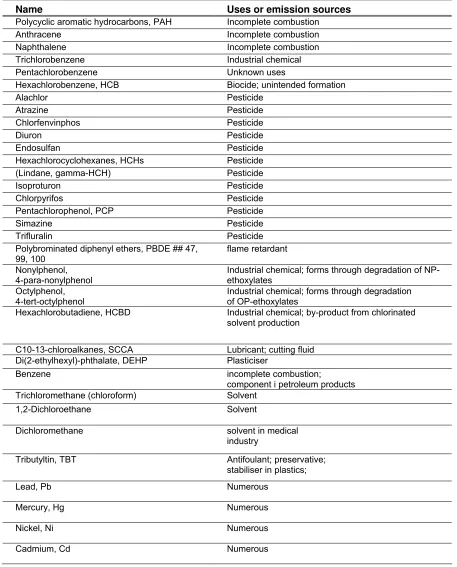
6 Toxic pressures ... 55
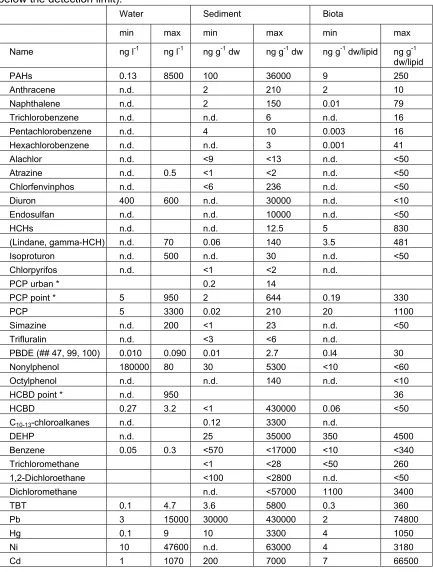
6.1 Overview of WFD priority substances levels in aquatic matrixes ... 55
6.2 Overview of the toxic effects of priority substances on biological quality elements.. 58
6.3 Overview of current models for assessing toxic impacts ... 62
6.4 Summary of knowledge gaps and further research needs ... 63
6.5 Recommendations for focus of the research efforts in REBECCA ... 65
List of authors
1. INTRODUCTION Anna-Stiina Heiskanen, Angelo Solimini (JRC) 2. LAKES
2.1. Eutrophication pressures Laurence Carvalho, Lindsey Defew (CEH) 2.1.1. Nutrient conditions Laurence Carvalho, Lindsey Defew (CEH) 2.1.2.Transparency conditions
Johanna Rissanen, Olli-Pekka Pietiläinen, Seppo Rekolainen (SYKE)
2.1.3. Oxygen conditions Orhan Ibram (DDNI) 2.1.4. Phytoplankton
Laurence Carvalho (CEH) Johanna Rissanen, Olli-Pekka Pietiläinen, Seppo Rekolainen (SYKE) 2.1.5. Macrophytes
Iain Gunn, Laurence Carvalho, Lindsey Defew (CEH)
2.1.6. Phytobenthos Laurence Carvalho (CEH) 2.1.7. Benthic Invertebrates Orhan Ibram (DDNI)
2.1.8. Fish Lindsey Defew (CEH), Ion Navodaru (DDNI) 2.2. Hydro-morphological pressures
2.2.1. Macrophytes Seppo Hellsten, Juha Riihimäki 2.3. Combined pressures
2.3.1. Eutrophication – acidification –
macrophytes Lindsey Defew, Laurence Carvalho (CEH) 2.3.2. Eutrophication – toxics - benthic
invertebrates Constanze O’Toole (TCD) 2.3.3. Eutrophication –
hydromorphological pressures - macrophytes
Seppo Hellsten, Juha Riihimäki (SYKE) 3. ACIDIFICATION PRESSURES FOR
LAKES AND RIVERS
3.1. Toxic components of acidification pressure
4.1.4. Benthic Invertebrates and fish
Amelie Deflandre (CEH) 4.2. Organic pollution pressures
4.2.1. Phytobenthos 4.2.2. Macrophytes
4.2.3. Benthic invertebrates and fish
Jens Moller Andersen (NERI), Stefano Fazi (IRSA) 4.3. Hydromorphological pressures –
benthic invertebrates Bente Clausen (NERI), Mike Dunbar (CEH) 4.4 Combined pressures Ana Garcia, Jean-Gabriel Wasson (CEMAGREF) 5. COASTAL WATERS
5.1.1.Transparency conditions Gunni Ærtebjerg (NERI), Anouk Blauw (WL Delft) 5.1.2. Phytoplankton
Pirjo Kuuppo (SYKE), Anna-Stiina Heiskanen (JRC)
5.1.3. Macrophytes
Dorte Krause-Jensen (NERI), Saara Bäck (SYKE), Paul Erftemeijer (WL Delft)
5.1.4. Benthic Invertebrates Miguel Gaspar, Susana Carvalho (IPIMAR) 6. TOXIC PRESSURES Lena Blom, Eva Brorström-Lundén (IVL)
Authors’ affiliations
Finnish Environment Institute (SYKE) P.O. Box 140, FIN-00251 Helsinki Finland
European Commission Joint Research Centre (JRC) Institute for Environment and Sustainability, Inland and Marine Waters Unit, TP290, 21020 Ispra, Italy
Norwegian Institute for Water Research (NIVA) Brekkeveien P.O.Box 173,
N-0411 Oslo, Norway National Environmental Research Institute (NERI) Vejlsøvej 25
DK 8600 Silkeborg, Denmark DHI Water & Environment (DHI) Agern Allé 5
DK-2970 Hørsholm Denmark
WL Delft Hydraulics (WL Delft) P.O. Box 177
NL-2600 MH Delft, The Netherlands Centre for Ecology and Hydrology (CEH) Bush Estate
Penicuik EH26 0QB Scotland Centre National du Machinisme Agricole, du Gènie
Rural, des Eaux et des Fōrets (CEMAGREF)
Groupement de Lyon, UR Biologie des Ecosystemes Aquatiques Laboratoire d'Hydroecologie Quantitative
3 bis quai Chauveau, BP 220, 69336 Lyon Cedex 09, France Water Research Institute (IRSA) 1, via Reno
00198 Rome, Italy Swedish Environmental Research Institute (IVL) Box 47086
SE-402 58 Gothenburg, Sweden Trinity College Dublin (TCD) Department of Zoology
Trinity College, Dublin 2, Ireland Instituto Nacional de Investigação Agrária e das
1 INTRODUCTION
Anna-Stiina Heiskanen and Angelo G. Solimini
The general objective of the REBECCA project is to provide relevant scientific support for the implementation of the Water Framework Directive (WFD). The two specific aims of the project are, firstly, to establish links between ecological status of surface waters and physico-chemical quality elements and pressures from different sources, and, secondly, to develop and validate tools that member states can use in the process of classification, in the design of their monitoring programs, and in the design of measures in accordance with the requirements of the WFD.
In this report we review and identify information gaps in our knowledge on relations between pressures, chemical and ecological status for the major pressures types and biological quality elements. This included overview of the chemical parameters that are used to determine the ecological status of water body types and an overview of the biological indicators currently applied and potentially applicable as classification parameters for inland and coastal waters. The steps carried out for this task included 1) literature search (scientific & other publications), 2) overview of results from the relevant FP5 projects, and 3) national research projects, 4) overview of the knowledge gaps and information from CIS guidance documents, 5) compilation of the knowledge base of the project participants.
This document is highlighting the key points for focusing on key pressures (eutrophication, acidification, organic loading and toxic pressures), and the justifications for the selection of biological quality elements and parameters/ metrics for the further studies. The purpose of this report is to present the major gaps in the current knowledge with respect of functional relationships between key biological and pressure indicators and/ or chemical status indicators. This gap-analysis is needed to 1) identify the key areas of further work within the REBECCA, 2) identify the areas where further experimental or monitoring work would be needed due to lack of data or quantitative understanding of the functional relationships between chemical status and biological quality indicators (but which are beyond the scope, since only existing data will be used in REBECCA).
We have avoided extensive referencing to scientific literature in order to keep the report easily readable and allow quick screening of the major findings of this survey. Therefore only the most relevant references are included and listed in the bibliography. This document is not intended to be a scientific paper, but a working document, which the project partners and associated end-users within the WFD Common Implementation process (i.e. the members of the working group 2A on ecological status, and the national contact persons for the intercalibration of the ecological status classification protocols in EU and Candidate Countries) can use in the planning of their further work on data compilation and statistical analyses.
The current review is based on extensive literature search of several contributing partners (listed in the table below). The literature review produced a reference database with almost 7000 scientific references. Already this database is based on selective screening of the vast amount of references that were obtained by the project partners when querying various literature databases and the internet. Further screening of the key articles took place upon the review process, which all partners carried out while producing a condensed summary for each major pressure group and each relevant biological quality elements.
Geographical Intercalibration Groups (GIGs) 2 of the EU Member States and Candidate Countries. We hope that the work of the scientific partners in the REBECCA project would have a direct applicability in the current challenges in the implementation of the WFD, and therefore we feel that we have a unique opportunity to inject policy relevant scientific results in the on-going implementation process.
2
2 LAKES
2.1 Eutrophication pressures
Laurence Carvalho, Lindsey Defew
Although the impact of nutrient pressures on biological quality is relatively well understood for lakes in qualitative terms, there has been very limited development of quantitative dose-response relationships, classification tools or models. The literature review identified a number of widely recognized, strong relationships between physico-chemical symptoms of eutrophication and associated biological responses. These can be split into two types of relationships: (1) primary responses (phytoplankton, phytobenthos and macrophytes) to nutrient state, and (2), secondary responses to primary production or production-related decreases in transparency and oxygen. The advantages and disadvantages associated with developing these elements as indicators of eutrophication pressures are briefly summarized below.
(1) Primary responses to nutrients
• Phytoplankton abundance (chlorophyll a) – highly sensitive to nutrients and integrates the response to a range of possible limiting nutrients (P, N, Si). It is also a simple, practical measure of eutrophication impacts that is widely adopted across the EU Member States
• Phytoplankton composition - sensitive to nutrients and qualitatively well understood. Sediment records available for defining reference conditions. The response is not so well understood in quantitative ways and is complicated by the weather-driven physical structure of lakes
• Macrophyte abundance – sensitive to nutrients, but also to reduced light availability. Unimodal relationship due to nutrient stimulation of growth and reduced light availability in highly eutrophied lakes. Two stable states occur in eutrophic lakes (Scheffer et al. 1993), due to differences in food web structure: High macrophyte abundance, clear water, much zooplankton grazing, low fish predation on zooplankton representing a top-down controlled phytoplankton community, or alternatively high phytoplankton, low macrophyte system with turbid water, low zooplankton grazing and high fish predation on zooplankton, representing a bottom-up controlled system.
• Macrophyte composition - sensitive to nutrients and qualitatively well understood. Data-rich historical records available for defining reference conditions in some areas. The response to nutrients is, however, affected by light conditions, substrate quality and water level fluctuations (hydro-morphological pressures), and the combined effects of these factors with eutrophication is not well described in quantitative ways.
• Increased phytobenthos biomass
(2) Secondary responses to nutrients
• Transparency - simple, practical measure of eutrophication impacts that is widely adopted across EC Member States, but affected by water colour and clay particles. • Benthic invertebrate composition – oxygen depletion: sensitive to eutrophication
pressures
• Fish composition – changes caused by oxygen depletion: qualitatively well understood; different fish species have different sensitivity.
All these primary and secondary responses were recognized to be significant, but data are limited for some of these parameters compared with others, which puts practical limits on their selection as relationships to examine during this project. In particular, data on phytobenthos and nutrients, benthic invertebrates, fish and oxygen conditions in lakes are limited.
As the REBECCA project does not involve primary data collection, data gaps prevent analysis of some relationships in the project, although some relationships are being examined in projects in individual member states concurrently (e.g. phytobenthos-nutrients).
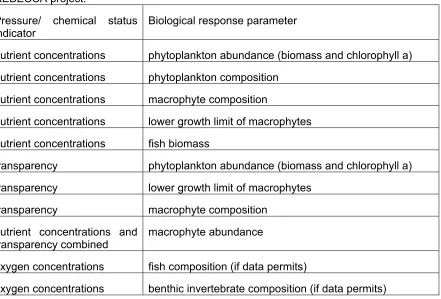
For these reasons, it is recommended that the following eutrophication-specific relationships in lakes are considered for further study in WP3 of the REBECCA Project (Table 2.1.1):
Table 2.1.1. Eutrophication specific relationships proposed to be studied for lakes in the REBECCA project.
Pressure/ chemical status indicator
Biological response parameter
nutrient concentrations phytoplankton abundance (biomass and chlorophyll a) nutrient concentrations phytoplankton composition
nutrient concentrations macrophyte composition
nutrient concentrations lower growth limit of macrophytes nutrient concentrations fish biomass
transparency phytoplankton abundance (biomass and chlorophyll a) transparency lower growth limit of macrophytes
transparency macrophyte composition nutrient concentrations and
transparency combined
macrophyte abundance
oxygen concentrations fish composition (if data permits)
oxygen concentrations benthic invertebrate composition (if data permits)
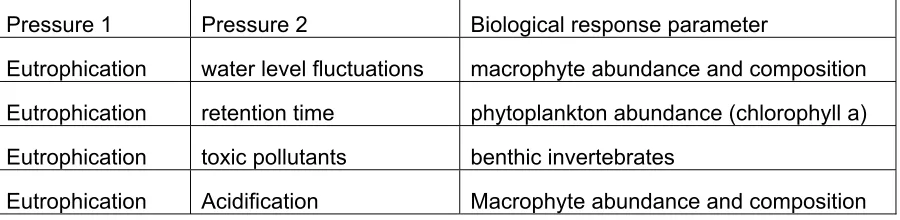
In addition to the eutrophication-specific relationships, the response of a number of biological quality elements to four combinations of pressures should be examined (Table 2.1.2. and section 2.2):
responses are modified when influenced by a second pressure through the use of generalized lake models, experimental data or long-term monitoring at case-study sites. The latest CIS guidance on ecological classification (ECOSTAT 2003) recommends a “one-out, all-out” rule on the level of different quality elements (i.e. phytoplankton, macrophytes, benthic invertebrates, etc.) for determining the ecological status of individual sites. It is proposed to combine different parameters responding to the same pressure, within the same quality element using either averaging or some multimetric approach. Several biological parameters (such as biomass, species composition, frequency of blooms) indicative of the effects of a particular type of pressure (such as eutrophication), but representing one quality element (such as phytoplankton), may be identified and grouped (e.g. by averaging of using multi-metric methods). The ecological status of the site would then be indicated by the results indicative for the status of the biological quality element (BQEs) that indicates the greatest impact (see Figure 3, ECOSTAT 2003)). The REBECCA Project should, however, examine a number of relationships for each pressure, to decide objectively which should be selected, or how to combine those parameters to produce the most robust classification.
Table 2.1.2. Responses of biological quality elements for combination of pressures proposed to be studied for lakes in the REBECCA project.
Pressure 1 Pressure 2 Biological response parameter
Eutrophication water level fluctuations macrophyte abundance and composition Eutrophication retention time phytoplankton abundance (chlorophyll a) Eutrophication toxic pollutants benthic invertebrates
Eutrophication Acidification Macrophyte abundance and composition
Nutrients tend to be a secondary and indirect driver of species composition but are clearly a significant driver of productivity. One aim for the REBECCA project, therefore, will be to examine whether the relationship between nutrients and phytoplankton abundance provides a more robust biological measure of the impact of eutrophication pressures than the relationship between nutrients and phytoplankton composition.
Data gaps may exist for particular lake types. Coverage within project partners involved in WP3 is particularly limited for Mediterranean and alpine lake types. Developing dose-response relationships for these will rely on data being provided from elsewhere (e.g. Central, Baltic and Mediterranean Geographical Intercalibration Groups, ECOFRAME Project for very shallow lakes, EMERGE Project for alpine lakes).
2.1.1 Nutrient conditions
Laurence Carvalho, Lindsey Defew
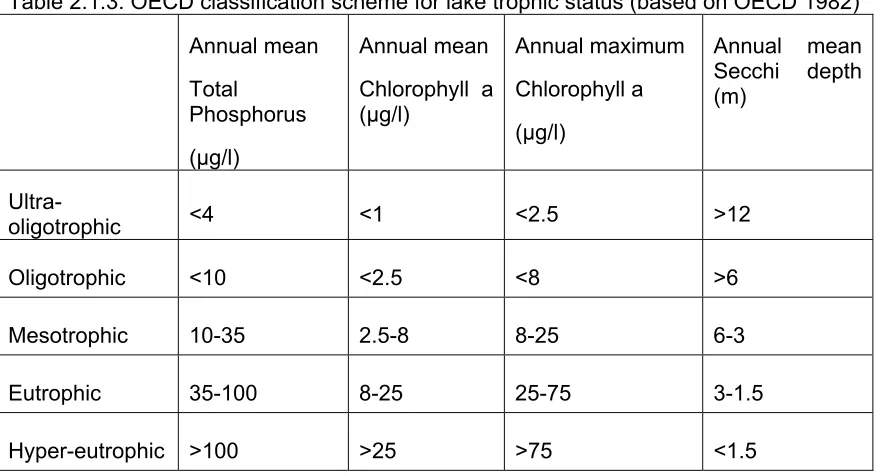
This classification is based on data from a large number of lake types from lake regions across the globe. Lake depth, color and altitude/latitude (geology/temperature) will affect how effectively nutrients are transformed into phytoplankton biomass; different lakes will, therefore, show variable sensitivities to nutrient conditions.
Some of these issues are being overcome through the development of WFD-compliant state-changed phosphorus classification schemes, based on deviation from a site-specific reference phosphorus concentration derived using empirical models (e.g. Morpho-edaphic Index; Vighi and Chiaudani 1985) or palaeolimnological approaches.
Table 2.1.3: OECD classification scheme for lake trophic status (based on OECD 1982)
Annual mean
Hyper-eutrophic >100 >25 >75 <1.5
The use of orthophosphate-phosphorus (PO4-P) and soluble reactive phosphorus (SRP) concentrations for the assessment of eutrophication is problematic. Low concentrations do not necessarily indicate low trophic status, as phosphorus may be bound to biomass. Sampling and storage of samples before analysis can also significantly alter concentrations.
It has been recognized for some time that some lakes may be limited by nitrogen (Sakamoto 1966). The capacity of some cyanobacteria (blue-green algae) to fix atmospheric nitrogen was, however, viewed as a mechanism that would overcome any incipient or transient nitrogen-limitation (Schindler 1974). For this reason, there are no well-established lake classification schemes relating nitrogen conditions to ecological impacts. While it is almost certainly true that phosphorus is the resource limiting many freshwater systems, there is growing evidence that this paradigm is not correct for all systems, with both nutrient-poor upland lakes and phosphorus-enriched lowland lakes liable to nitrogen limitation for at least parts of the year.
The relationships between nitrogen conditions and ecological responses are a major knowledge gap that needs further consideration.
Johanna Rissanen, Olli-Pekka Pietiläinen, Seppo Rekolainen
Transparency or clarity of water is the depth that light penetrates into the water. There are three factors that influence transparency, the water itself, coloring matter in the water, and turbidity associated with particles in the water. The amount of turbidity in particular is heavily influenced by a range of variables, natural and anthropogenic, and can vary both temporally and spatially within a given water body. Suspended organic and inorganic matter, such as silt, clay, carbonate particles, fine organic particulate matter, plankton and other small organisms contribute to turbidity (Wetzel and Likens 1991). Transparency and turbidity are inversely related, with an increase in turbidity resulting from human activity, always resulting in a decrease in transparency. Transparency is a major factor controlling photosynthesis potential of phytoplankton and macrophytes in the water column. Besides many ecological effects, reduced transparency has a clear social impact through impairment in physical appearance and recreational suitability of surface waters.
WFD –associated characteristics
The WFD stipulates that in the high ecological status the conditions for physico-chemical quality elements (including transparency) do not show signs of anthropogenic disturbance and remain within the range normally associated with undisturbed conditions. In the good status, physico-chemical parameters (including transparency) do not reach levels outside the range established so as to ensure the functioning of the ecosystem and the achievement of the values specified for the biological quality elements.
According to these normative definitions of the WFD, transparency can be used only as a supporting element for assessing ecological quality in surface waters, although in some surface water body types it may be indicative for the level of eutrophication.
2.1.3 Oxygen conditions
Orhan Ibram
Eutrophication is associated with an increased mineral nutrient supply, mainly nitrogen and phosphorus, which usually results in an increase in primary production (e.g. Sas 1989). This eventually leads to an increase in sedimentation of settling dead plankton (e.g. Baines and Pace 1994), which results in associated increases in decomposition by micro-organisms. Increased decomposition is accompanied by enhanced oxygen consumption by the micro-organisms, which can result in oxygen depletion, particularly in the bottom sediments and profundal zone of deep lakes. This indirect effect of eutrophication on oxygen conditions can lead to significant changes in the structure of oxygen dependent communities, either as a change in dominant species with mild enrichment or severe shifts in species composition or fish kills with more severe enrichment. The most sensitive communities to changes in oxygen conditions are animal communities, and therefore, only the relationships between benthic invertebrates and fish with oxygen conditions are reviewed in the following sections.
2.1.4 Phytoplankton
Laurence Carvalho, Johanna Rissanen, Olli-Pekka Pietiläinen, Seppo Rekolainen
Quality Elements (BQEs) of the state of a lake’s environment in terms of nutrient concentrations in the water column. There are numerous socio-economic problems associated with increases in phytoplankton abundance with eutrophication, particularly with increasing frequencies and intensities of toxic cyanobacteria blooms. These include detrimental effects on drinking water quality, filtration costs for water supply (industrial and domestic), water-based activities and conservation status (sensitive pelagic fish species, such as salmonids and coregonids).
In some contexts, however, increasing phytoplankton abundance can be considered as a positive feature, for example, in increasing fisheries productivity. In summary, the phytoplankton community probably represents the most sensitive indicator of the environmental, social and economic impacts associated with eutrophication pressures. Transparency/ Secchi depth is widely used as an indirect or surrogate estimate of the amount of phytoplankton or chlorophyll a and, thus, as an indicator of the eutrophication state of surface waters. Non-algal turbidity and color (mainly dissolved organic matter humic compounds and suspended solids) can also significantly attenuate light penetration into the water and affect the Secchi depth vs. phytoplankton/ chlorophyll a relationship.
WFD –associated characteristics
WFD (Annex V, Section 1.2.2) outlines three phytoplankton-related quality elements and parameters that need to be considered in the assessment of ecological status of lakes:
• Phytoplankton composition and abundance
• Phytoplankton biomass and its effect on transparency conditions • Planktonic bloom frequency and intensity
The normative definitions of the WFD associate declining ecological quality with increasing phytoplankton abundance and biomass due to accelerated growth of algae, possibly having an effect on other biological quality elements and physico-chemical quality of water, as well as with more frequent and intense phytoplankton blooms. These three criteria are considered further in the context of their specific use as metrics of eutrophication pressures.
Transparency is mentioned in Annex V of the WFD as a general physico-chemical factor supporting the biological elements. In the normative definitions of ecological status classifications for the biological elements (Annex V, 1.2.2) it is stated that, under high status conditions, the average phytoplankton biomass is consistent with the type-specific physico-chemical conditions and is not such as to significantly alter the type-specific transparency conditions.
Knowledge gaps
There are a number of gaps in our scientific knowledge that need further research for developing quantitative metrics associating phytoplankton with nutrients:
• Reference chlorophyll concentrations need to be identified for different lake types using empirical and/or mechanistic models.
• Threshold chlorophyll concentrations for high/good and good/moderate boundaries need to be identified – with associated confidence limits.
this will be restricted to the diatom community. The ratio of negative to positive indicator species or higher taxonomic units should be developed and the use of functional groups should be explored to reduce uncertainty in classifications.
• The effect of season/weather-driven dynamics and sampling frequency on the confidence in phytoplankton classifications needs to be quantified for different lake types.
• Supporting physico-chemical conditions need to be established (particularly for phosphorus, nitrogen, transparency and oxygen conditions).
• Relationships between nutrients and transparency, and also between transparency and biological indicators have not been analyzed separately for different lake types the relationships between transparency and biological indicators, except chlorophyll
a, have not been extensively analyzed, the role of non-algae light attenuation is not very well known, which is particularly important in certain lake types (humic and turbid waters).
2.1.5 Macrophytes
Iain Gunn, Laurence Carvalho, Lindsey Defew
The macrophyte community is generally regarded as a key indicator of the ecological status of lakes as macrophytes provide habitat for many other aquatic biota (e.g. fish, zooplankton, macro-invertebrates, wetland birds) to feed, seek refuge, or breed. Macrophytes are relatively long-lived organisms (months to years), compared with phytoplankton and invertebrates, which, because of their very limited motility, are intrinsically linked to the prevailing environmental conditions in both the surrounding lake water and sediments, through their roots and leaves.
Individual species are sensitive to physical and chemical changes in these media and hence make good indicators of both current environmental conditions and longer-term environmental changes. Macrophytes, in terms of assessing eutrophication pressures, can indicate enhanced nutrient concentrations through the direct effects on species growth (biomass) and through indirect effects on species composition, such as decreased transparency associated with nutrient-related increases in phytoplankton and epiphyton. Transparency is a key physico-chemical factor controlling the distribution and abundance of submerged macrophytes in lakes. Changes occurring in the intensity and quality of light as it passes down through aquatic vegetation itself may exert a crucial effect on the development and structure of aquatic macrophyte communities, as well as on the photosynthetic efficiency and productivity of the vegetation (Sculthorpe 1967).
Aquatic macrophytes are influenced by the transmission of light (the photosynthetically active radiation (PAR) through water, which, in turn, impacts photosynthetic processes. In turbid conditions suspended particles scatter and absorb light resulting in attenuation of PAR in the water column. High turbidity may cause a change macrophyte communities from submerged to floating leaved or emergent vegetation (Hough and Forwall 1988).
Little is known of the influence of underwater light intensity and quality on the distribution of life forms and species of aquatic macrophytes. It may be that some plants may tolerate, or even prefer sustained low intensities and/or deficiencies in certain wavelengths.
WFD (Annex V, Section 1.2.2) outlines two macrophyte-related quality elements that need to be considered in the assessment of ecological status of lakes:
• macrophyte community composition • macrophyte abundance
The normative definitions in the WFD associate declining ecological quality with changes in the abundance and composition of macrophytic taxa, and indication of accelerated plant growth due to undesirable changes in the balance of organisms or physicochemical quality of water.
Transparency is included as a supporting physico-chemical element for macrophyte communities.
Knowledge gaps
There are a number of gaps in our scientific knowledge of macrophyte-nutrient relationships that need further research:
• More studies on temporal and spatial variability of macrophytes communities are needed to improve classification schemes.
• Unclear what extent changes in macrophyte taxa are directly driven by nutrients, rather than by co-varying chemical, physical or biological parameters.
• It is unclear, particularly for shallow lakes, how appropriate linear approaches are for modelling temporal change at specific sites.
• Development of type-specific reference conditions for nutrients and macrophyte communities.
• Need a much greater geographical expansion of lake surveys, which provide detailed data on aquatic macrophyte populations and high quality nutrient chemistry to allow the assessment of nutrient effects within a particular lake type and the statistical importance of co-variables.
• Where high quality models exist for macrophyte assemblages at specific sites, attempts should be made to relate these to historical nutrient concentrations.
Whilst there has been some work done on surrogates for impacts of transparency/ turbidity, such as depth of the lower growth limit for macrophytes, currently there is not enough information to establish the responses of macrophyte species and communities to different levels of turbidity by which to establish reference conditions. Thus, there are a number of gaps in our scientific knowledge of macrophyte-transparency relationships that need further research:
• Establishment of transparency, turbidity, and colour measures for reference sites and key macrophyte species
• Reaction of macrophyte communities to changes in PAR.
2.1.6 Phytobenthos
Laurence Carvalho
Despite its potential significance, the phytobenthos has received relatively little attention in terms of its use as an indicator of lake quality. The fact, however, that the phytobenthos does respond to both water column nutrient concentrations and habitat quality, is accessible from the lake shore, and is less dynamic than the phytoplankton community has led to increasing interest in its use as a monitoring tool for lakes (US EPA 1998).
WFD –associated characteristics
WFD (Annex V, Section 1.2.2) outlines two phytobenthos -related quality elements that need to be considered in the assessment of ecological status of lakes:
Phytobenthos composition and abundance
The normative definitions in the WFD associate declining ecological quality with increase of bacterial coats and tufts, which adversely affect phytobenthic communities.
Knowledge gaps
• More work is needed to develop quantitative relationships between the phytobenthos community and nutrient conditions.
• No lake classification schemes based on phytobenthos composition or abundance have been fully developed.
• No models have been established associating phytobenthos composition or abundance in lakes to specific hydro-morphological or physico-chemical parameters.
2.1.7 Benthic Invertebrates
Orhan Ibram
The zoobenthos community are frequently used as environmental indicators of biological integrity because they are found in most aquatic habitats. They are a diverse and generally abundant group with a wide range of environmental tolerances and preferences. They therefore serve as a useful tool for detecting long-term environmental perturbation (Cairns and Pratt 1993) resulting from point and non-point sources of pollution. Because they play an essential role in key processes of lakes (food chains, productivity, nutrient cycling and decomposition) (Reice and Wohlenberg 1993), in principle, any environmental changes in lakes, for example in nutrient concentrations, should be reflected by changes in the structure of the benthic invertebrate community (Carvalho et al. 2002).
Profundal macroinvertebrates form an important link between detrital deposits and higher trophic levels in aquatic food webs (Brinkhurst 1974). Hypolimnion oxygen content, food quality and quantity, and water temperature are the main factors influencing the presence and biomass of benthic invertebrate species in lakes and reservoirs. The larvae of the midge genus Chironomus are common in the profundal zones of lakes and reservoirs around the world (Armitage et al. 1995), and the capacity of these insects to live at very low oxygen concentrations are well known.
production has been demonstrated in lake Esrom (Jonasson 1996) and lake Erken (Goedkoop and Johnson 1996). However in many freshwater bodies oxygen content has proved to be the limiting factor for the benthos, especially when the anoxic period lasts more than 4 months (Heinis and Davids 1993).
Zoobenthos community assessments are performed with the intention of detecting impairment in an aquatic ecosystem. Despite the linkage between bioassessment and water quality, there are surprisingly few examples of bioassessment used explicitly to support the development of numerical water-quality criteria (Ryan and Curtis 2003). One of the primary reasons for this is that traditional bioassessments are intentionally developed to capture the effect of a wide range of stressors to biological integrity. This lack of specificity results in ambiguity about the potential cause of impairment and, consequently, the levels of a stressor that may result in a threshold response.
Classification and monitoring schemes have focused on the profundal fauna of deep stratified lakes where environmental conditions are more uniform compared with shallow lakes or littoral areas of deeper lakes.
No classification scheme directly relates changes in benthic community structure to dissolved oxygen (DO) alone, for a number of reasons:
• Because of seasonal and diurnal variations in oxygen concentrations a large amount of measurements are needed with which to relate DO to benthic communities.
• The research for identifying minimum oxygen concentration is limited and further research is needed in this direction.
WFD –associated characteristics
WFD (Annex V, Section 1.2.2) outlines three zoobenthos -related quality elements and parameters that need to be considered in the assessment of ecological status of lakes:
• Composition and abundance of benthic invertebrate fauna.
• Ratio of disturbance sensitive taxa to insensitive invertebrate taxa; • Diversity of invertebrate communities
The normative definitions of the WFD associate declining ecological quality with decreasing diversity and increasing dominance of a few disturbance insensitive taxa. To comply with ‘good ecological status’ the composition and abundance of invertebrate taxa, the ratio of disturbance sensitive taxa to insensitive taxa and levels of diversity should show only slight signs of alteration compared to the type-specific communities.
Knowledge gaps
Pressure-specific classification schemes based on zoobenthos communities Classification schemes based on littoral or shallow lake zoobenthos communities.
Targeted research is needed to identify minimum oxygen concentrations necessary to support characteristic benthic invertebrate communities of various lake types in order to assign values to high and good status classes.
2.1.8 Fish
Associating fish population health and water quality conditions has a long been a tradition. Due to their complex requirement, fish are sensitive indicators for habitat quality at various spatial scales. As consumers and/or top predators, they subsume the trophic conditions across the food chain. They also provide detailed information on the respective trophic level. Fish caught by the fisheries industry and during sport fishing have long been used as indicators of water quality. Fisheries are important producers of food and income; inland fish are often used for human consumption, depending on the countries tradition. Recreational and subsistence fisheries are widespread, but less frequently monitored by statistics. Commercial fisheries are also locally important, with export and trade markets existing for high value fish.
Dissolved oxygen (DO) is a defining and limiting parameter for fish, affecting survival, growth, spawning, swimming performance, larval development and migration behavior behavior (Sams and Conover 1969, Doudoroff and Shumway 1970). Since oxygen is vital to other aquatic biota, including invertebrate food for fish, the species composition and biomass of fish communities can also be affected indirectly by oxygen availability. The composition of the fish community at a specific site is the result of various factors including environmental factors such as temperature, oxygen, flow and nutrients and the anthropogenic stocking and removal of fish.
WFD –associated characteristics
WFD (Annex V, Section 1.2.2) outlines three fish-related quality elements that need to be considered in the assessment of ecological status of lakes:
• fish composition • fish abundance • fish age structure
The normative definitions in the WFD associate declining ecological quality with: 1) changes in species composition and abundance; 2) changes in type sensitive species; and 3) changes in the age structure shows signs of disturbance as failure of reproduction or development of a particular species.
Knowledge gaps
• Fish indicators for different lake types are lacking.
• There are no specific lake classification schemes based on different fish-based metrics and oxygen as a direct parameter, since assessing status through measurements of oxygen conditions is complicated by the fact that DO concentrations fluctuate at annual, seasonal and diurnal time scales. It is difficult to define a single DO concentration for a water body or section that will be true both spatially and temporally.
• Targeted research is needed to identify minimum oxygen concentrations necessary to support characteristic fish communities of various lake types in order to assign values to high and good status classes. For fish, it may be necessary to identify site-specific values, related to the characteristic fish assemblages of different lakes. • Continuous oxygen monitoring in a number of lake sites should be considered in
2.2 Hydro-morphological pressures
Seppo Hellsten, Juha Riihimäki
Hydromorphological quality elements for lakes are described as hydrological regime and morphological conditions in the WFD. High hydromorphological status refers totally or nearly totally undisturbed conditions, but in good and moderate status the values are only consistent with the achievement of the values specified above for the biological quality elements.
Hydrological regime and morphological conditions are divided in following quality elements: • Hydrological regime: The quantity and dynamics of flow, level, residence time, and
the resultant connection to groundwater.
• Morphological conditions: Lake depth variation, quantity and structure of the substrate, and both the structure and condition of the lakeshore zone.
WFD (Art. 4(3)) allows Member States to identify surface water bodies, which have been hydromorphologically altered by human activity as “heavily modified” under specific circumstances. If the specified uses of such water bodies (i.e. navigation, hydropower, water supply or flood defense) or the “wider environment” would be significantly affected by the hydromorphological changes (restoration measures) required to achieve good ecological status and if no other, technically feasible and cost-effective, better environmental options exist, then these water bodies can be designated as “heavily modified” and good ecological potential is set as an environmental objective. Heavily modifies waters are thoroughly studied in EU CIS working group for heavily modified waters, which has produced a guidance document3 with a tool box and separate book summarizing several case studies (Kampa & Hansen 2004).
Hydrological regime in lakes is disturbed by human activities if lakes are used for water storage for hydropower generation, irrigation, flood defense regulation, or if they are used for navigation, and in some cases even for recreation. Hydropower effects are typical in northern and high altitude lakes, which usually are not impacted by other pressures, whereas e.g. pressures due to regulation for navigation and recreation purposes are often affecting lowlands lakes situated at densely populated areas.
Morphological alterations such as dams and weirs affect continuity of rivers situated downstream from lake. Especially flood protection constructions and drainage of flood plains have created embankments, which can significantly change morphology of lowland lakes. Generally large scale morphological alterations are more common in small lakes surrounded by agricultural areas and population centres.
Morphological and hydrological alterations mainly affect the uppermost littoral zone, although changes in retention time can indirectly change also the trophic status of a whole lake. Overall decrease of water level can significantly increase on resuspension of bottom sediments. It is difficult to separate the effects of hydrological regime and morphological conditions from each other.
2.2.1 Macrophytes
3 WFD CIS Guidance Document No 4. Identification and Designation of Heavily Modified and Artificial Water Bodies Produced by Working Group 2.2 – HMWB. Available at:
Seppo Hellsten, Juha Riihimäki
As a consequence of littoral oriented changes, littoral organisms are most sensitive quality elements with respect to the existing physical alterations. Littoral benthic invertebrate fauna is the most relevant groups for the assessment of hydropower generation impacts in regulated lakes. However, there is very little information and data available of the composition and abundance of littoral fauna from lakes. There are more data of data available on aquatic macrophytes which are also highly sensitive for hydromorphological alterations. Thus this quality element would be more suitable for further investigations. Macrophytes, growing at the littoral zone, are one of the key indicators of the impacts of hydro-morphological changes, such as water level fluctuations in lakes. Helophytes are growing in the uppermost littoral zone, whereas Isoetids, Elodeids and Charids are occupying deeper parts of the littoral zones of lakes. Even small changes in water level fluctuations may effect distribution and elevation of zones. Morphological changes caused by dredging or embankments have a profound impact on the composition of littoral vegetation.
Knowledge gaps
• Hydromorphological background information is largely lacking. Morphological structure of the shoreline is not known very well and effects of these changes are unclear. Water level fluctuation is followed in many reservoirs, but natural lakes are not usually followed.
• The littoral zone is a highly variable environment and therefore the relationship between hydromorphological factors and aquatic macrophytes are often site-specific.
• Macrophyte species richness depends on water quality and sediment properties – this makes it difficult to distinguish separate impact relationships between macrophytes and hydromorphological-factors. Nutrient enrichment may also compensate degradation caused by fluctuating water level.
2.3 Combined pressures
2.3.1 Eutrophication – acidification – macrophytes
Lindsey Defew, Laurence Carvalho
The pressures of eutrophication and acidification combined (primarily through long-range transported N-compounds) are likely to be most significant in predominantly rain-fed, oligotrophic, low alkalinity lakes. Aquatic macrophytes are intrinsically linked to lake water and sediments through their roots and leaves and individual species are sensitive to physical and chemical changes in these media. Although these lakes are strictly P-limited for phytoplankton, the macrophytes get P through the sediments, and can thus often increase their growth due to the increased N-input from the catchment.
Methods for assessing changes in macrophyte community in response to eutrophication and acidification pressures combined could include large spatial surveys, palaeoecological studies, and monitoring following experimental liming and re-acidification studies.
The pressures of eutrophication and acidification combined are most likely to be significant in predominantly rain-fed, oligotrophic, low alkalinity lakes. These lakes are poor in (calcium) bicarbonate and nutrients (Roelofs et al. 2002). Acidification and eutrophication allow changes in N, P and C budgets, with particularly apparent impacts on macrophyte community composition. Nutrient-poor, low alkalinity lakes can have highly diverse plant communities, in which isoetid species dominate (Lobelia dortmanna, Littorella uniflora and
Isoetes spp.).
Over the 20th century, however, isoetid vegetation in lowland lakes has declined greatly and become threatened in many European countries and North America (Smolders et al. 2002), with particularly devastating declines in the Netherlands, northern Germany and Belgium (Arts 2002). This provides important warnings for other countries/regions, not least in the context of the EU Habitats Directive, and highlights the need to focus on macrophyte responses to combined eutrophication-acidification pressures.
The relationship between macrophytes and acidity in lakes has received relatively little attention in the scientific literature despite macrophyte assemblages showing clear changes over a broad gradient. These changes can often be related to acidity and other parameters, including nutrient availability. There have, however, been few attempts to develop relevant classifications for these two pressures acting together. For a better understanding of the successional differences within low alkalinity macrophyte assemblages, further research and cooperation is needed, in which vegetation, physico-chemical and atmospheric deposition data are integrated (Arts 2002).
Knowledge gaps
- Relationship between macrophytes and acidity in lakes
- Combined impacts of nutrients and acidification on macrophytes
2.3.2 Eutrophication – toxics – benthic invertebrates
Constanze O’Toole
The investigation of the coupled effect of eutrophication and contamination is at a very early stage with limited knowledge. The relationship has not yet been quantified and no specific benthic invertebrate indicators have been selected for lakes.
Benthic invertebrates form an important element in the biological diversity of lakes and are a crucial food resource, especially for fish. They provide essential links in the food chain and are necessary for the natural energy and nutrient flow through the system. The various benthic organisms have differing sensitivities to environmental stressors and are well suited for the use as bioindicators for water quality monitoring. Traditionally, the responses have been studied separately without a combined approach. However, there is evidence that the trophic state may influence the bioavailability and cycling of contaminants and the level of contamination may influence the primary production and indirectly the status of eutrophication (Skei et al. 2000).
between these two pressure types are not sufficiently investigated, since studies indicate that the two impacts can have interactive processes. Those interactions may lead to responses in the biota that cannot be predicted from each pressure alone (Skei et. al., 2000).
Knowledge gaps
• Effects of the interactions between nutrients and toxic substances on biota
• Effects of the interactions between metals and other toxic substances and nutrient loading on biota.
• The impact of eutrophication on the interfaces between air/water and water/sediments, critical routes for the organic and inorganic pollutant input and cycling, need to be investigated.
• Furthermore, the effect of benthic fauna activity needs to be better understood to quantify the flux of both contaminants and nutrients in and out of the sediment (Skei et al., 2000).
• The combined effect of eutrophication and toxicants on abundance, structure, diversity and sensitivity of the benthic invertebrate communities in lakes needs to be further investigated and quantified to establish their indicator value and a suitable classification system. A few ecological models (e.g. AQUATOX, IFEM and CATS-5) that simulate the combined fate and effects of nutrients and certain contaminants exist and can be applied to the benthic fauna in lakes.
• No classification scheme for the combined effects of eutrophication and contaminants in lakes is available.
2.3.3 Eutrophication – hydromorphological pressures - macrophytes
Seppo Hellsten, Juha Riihimäki
Eutrophication and hydromorphological pressures are often impacting lowlands lakes and reservoirs, which are used intensively. Vegetation in the shallow turbid lakes is sensitive for water level alterations, as consequence of the potential increase of sediment resuspension. Also changes in the residence time can rapidly change nutrient concentrations in water bodies. According to the WFD the hydromorphological quality elements of lakes are hydrological regime and morphological conditions. High hydromorphological status refers totally or nearly totally undisturbed conditions, but in good and moderate status the values are only consistent with the achievement of the values specified above for the biological quality elements.
Macrophytes are sensitive to changes in light climate as discussed in the chapter 2.1.5. of this report. Therefore water level alterations influence directly resuspension of bottom sediments and occurrence of different macrophyte species resulting in harmful effects on the littoral ecosystems. The general chemical quality of water bodies is influenced by the variations in retention time, which has thus an indirect effect on phytoplankton growth and macrophytes. Impacts of the combined effects of hydromorphological and eutrophication pressures can be managed by manipulating water level and retention time, although intensive use of shore areas can make such manipulations difficult.
• Ecological quality indicators that integrate seasonal and annual variability of macrophyte community dynamics
• Interactions and competition between phytoplankton and macrophytes in eutrophic waters impacted by hydromorphological changes.
• Nutrient enrichment may also compensate degradation caused by fluctuating water level. On the other hand highly modified barren littoral zone is often more sensitive for eutrophication compared to vegetated well-developed littoral zone.
3 ACIDIFICATION PRESSURES FOR LAKES AND RIVERS
Frode Kroglund
Acidification implies a reduction in pH. The causes can be local (due to natural and human activities) or due to long transported pollution (acid rain). To interpret or define a water body status correctly, lowered pH due to anthropogenic causes must be separated from natural causes. As both can result in the same “pH-reduction”, possibly having the same effects on the biological community, a given pH level can be an indicator of impaired ecological status in one water body, while the same pH-level indicates normal conditions in another.
Acidification can be continuous or episodic. Episodes, due to their short duration, can cause changes in the biological community that are not detected in any traditional water chemistry monitoring program. The toxic components in water acidified by acid rain are H+ and aluminum (Gensemer and Playle, 1999). Toxicity is modified by water calcium, ionic strength, organic content and temperature. Species changes are in part due to effects caused by the chemical changes, in part due to biological interactions. E.g., the presence or absence of fish can be more important in controlling the presence or absence of fish sensitive species than the changes in water quality (Appelberg et al 1993). Changes in the top-predator community (fish) will effect the species composition and abundance of benthic invertebrates, which will affect further phytoplankton composition. Cascading effects in the lower levels of the food web can be related to the composition of the fish community, but also to the acidification status. Furthermore, different fish species and their life stages have varying sensitivity. Strain dependent sensitivity is described for several fish species. The interaction between chemical changes and biological responses are relatively well described, but the sum of interacting components makes the development of simple dose response relationships more uncertain.
Acidification is currently on the decline, but even provided the Gothenburg protocol being implemented; acidification will continue to affect sensitive areas for decades to come (Stoddard et al., 1999). There is further a major time delay between reduced deposition, water quality recovery and biological restoration, where chemical restoration must precede biological recovery. The rate of biological recovery depends on whether there are refuges within the watershed, and on dispersal rates and species interactions (see articles on recovery within AMBIO, 32, 2003). Recovery is unlikely for several fish species without reintroduction due to migratory barriers that fish cannot pass. As presence or absence of specific fish species has a profound effect on the whole ecosystem structure, the reference conditions are also related to the composition and abundance of the fish community.
The future impacts of acidification on biological elements are uncertain due to confounding climatic effects. Possible temperature increase may impact weathering rates (and improve water quality) while increased frequency and severity of sea salt episodes will influence metal mobilization (resulting in deteriorating water quality). However, after a sea salt episode, water quality can also improve due to addition of bases. Present levels of atmospheric nitrogen deposition will also counteract recovery.
sites. This hampers the establishment of dose-response models, while the model construction has to be limited to the few elements for which good data is available.
Acidification affects both rivers and lakes in the same way. The main differences are related to the duration of episodes and to habitat heterogeneity, and to the sensitivity of the species present. Due to the unstable nature of aluminum, the exposure concentrations experienced by organisms in a river (downstream acid tributaries) can be higher than the actual concentrations determined in water samples. Due to the longer retention time in lakes, the form of aluminum is more stable, which reduces the analytical uncertainty.
1) Primary responses to acid rain
• Fish biomass reduction – sensitive to toxicants. Data from several studies are available. Simple practical measure of impact that is widely adopted, but on a limited number of lakes and rivers.
• Fish species composition – sensitive to the toxicants. Simple practical measure of impact that is widely adopted in national monitoring programs in all acidified regions. Data is generated by fish sampling and/or by using interview methods. • Benthic fauna composition and abundance – sensitive to toxicants, data from
several national studies. Data quality variable in different countries.
• Phytoplankton composition and abundance - sensitive to toxicants, data from several studies available. Paleo-biological historic reconstruction of pH has been performed in a number of lakes.
• Macrophyte composition and abundance - sensitive to toxicants, state of data more variable. Several studies have been performed.
2) Secondary responses to acid rain
• Benthic fauna composition – related to fish presence/absence. Effects caused by a change from vertebrate to invertebrate top predators.
• Macrophytes composition and abundance – effects related to the effects acidification has on N and P, CO2, water transparency, heat content, and effects on other chemical properties of the water.
• Changes to benthic community caused by changes in macrophytes and/or phytoplankton abundance and composition.
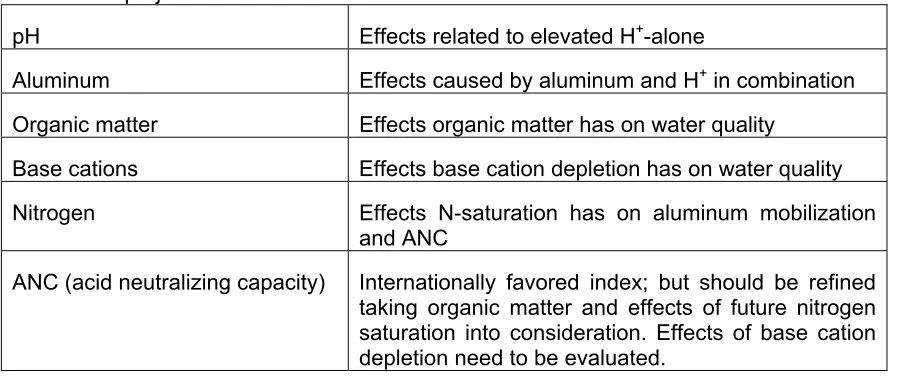
Table 3.1.1. Acidification specific relationships with respect to fish to be studied in the REBECCA project
pH Effects related to elevated H+-alone
Aluminum Effects caused by aluminum and H+ in combination Organic matter Effects organic matter has on water quality
Base cations Effects base cation depletion has on water quality Nitrogen Effects N-saturation has on aluminum mobilization
and ANC
ANC (acid neutralizing capacity) Internationally favored index; but should be refined taking organic matter and effects of future nitrogen saturation into consideration. Effects of base cation depletion need to be evaluated.
3.1 Toxic components of acidification pressure
Annex V of the WFD outlines several physico-chemical elements to be considered in classification. The biological quality elements are related to physico-chemical values of nutrient concentrations, pH and acid neutralizing capacity, which have a high relevance for acidification. If changes in these chemical quality elements show signs of anthropogenic activity, ecological status is downgraded. It is a challenge to separate natural acidic water bodies from water bodies acidified due to acid rain.
pH
pH was regarded as the main toxic component up to 1980. Many of the biological elements that are affected by acidification are closely related to changes in H+. This is in part due to the close relationship between pH and aluminum (Gensemer and Playle, 1999). Several response indexes based on pH have been developed. In naturally acidic waters, pH is low due to organic acids and the bioavailable metal concentration is generally low. In order to establish reference conditions for water body types, it is necessary to separate what effects are related to low pH alone and what affects are related to elevated H+ and metal concentration in combination.
Aluminum
Aluminum is also toxic in transitional waters, within the salinity range from 0.5 to 15 ppt.
Nitrogen
The nitrogen component of acid rain has resulted in elevated concentrations of nitrogen in runoff from areas where nitrogen saturation is exceeded. In areas where critical load is exceeded, high nitrogen levels will lead into increase of the concentrations of H+ and aluminum, thus increasing water toxicity. Increased nitrogen loading enhances plant growth in nitrogen-limited freshwaters and transitional (coastal) waters.
ANC
Changes in ANC (acid neutralizing capacity) mirror biotic responses. ANC can be calculated using several methods. ANC is often calculated as the sum of base cations minus the sum of strong anions, where the difference between those two is explained by variation in alkalinity, H+, aluminum and organic anions. There is a strong relationship between ANC and aluminum. This relationship is affected by dissolve organic carbon (DOC) and nitrogen. Water toxicity relating to aluminum is further modified by cation concentrations.
The relationship between ANC and biological quality elements is based on empirical data and verified by laboratory experiments (Baker et al. 1987; Reckhow et al. 1987, Ormerod 1993, Lien et al. 1996; Henriksen et al. 1999; Bulger et al 1993). Response curves can be generated using logistic regression, since most organisms show graded responses (Juggins et al. 2001). Recent studies carried out in the UK, have resulted in construction of response surfaces for diatoms, macrophytes, invertebrates and fish.
3.2 Phytoplankton
There is a considerable literature which indicates that acidity has an important influence on phytoplankton species composition in soft water lakes, although specific mechanisms are difficult to ascertain (Sparling and Lowe, 1996; Gensemer and Playle, 1999; Lindstrøm et al., 2004). Species composition, biomass and productivity are related to pH, alkalinity, Si, DIC (dissolved inorganic carbon) and ANC. While aluminum affects both nutrient and Si availability, it has also direct toxic effects by reducing survival and growth and impacting cell morphology of some species. Acidic lakes tend to contain smaller number of species and in many cases there is a change in the composition of the dominant taxa with increasing acidity. Acidification also affects species composition indirectly through DIC and water transparency. Some species are favored by acidification due to a reduced competition by acid-sensitive taxa. Phytoplankton assemblage is also sensitive to changes in biotic food web interactions.
Knowledge gaps
There are a number of gaps in our understanding of relationships between physico-chemical properties of water and phytoplankton indicators that needs to be elaborated to develop quantitative metrics:
• The effects of H+ needs to be separated from aluminum.