43
Jurnal Penelitian Pendidikan IPA (JPPIPA)
P-ISSN : 2460-2582 | E-ISSN : 2407-795XSekretariat : Lt. 1 Gedung B FKIP Universitas Mataram Telp./Fax : (0370) 634918
Email : [email protected]
Website : http://jppipa.unram.ac.id/index.php/jppipa/index
THE EFFECT OF TEMPERATURE ON THE CONDUCTIVITY OF
POLYMER FILMS
SUSILAWATI1
1Department of Physics Education, Faculty of Mathematic and Sciences Education, University of Mataram,
Email: [email protected]
Key Words Abstract Influence,
Temperature, Conductivity, Polymer Films
The effects of temperature on PVA (Poly Vinyl Alcohol) based organic blends containing chlorine have been studied for their potential applications in electrochemical devices. The composite polymers PVA-Chloral Hydrate (CH) blends were blended separately with 23, 34, 45 and 57% CH. The composite films were prepared by solvent-casting method and each film has been heated different temperature up to 353 K. The electrical properties have been studied using LCR meter and impedance analyzer in the frequency range from 20 Hz to 1 MHz. The conductivity-temperature relation study revealed that an increase conductivity of the PVA-CH blends with increasing temperature up to 353 K. The increase of conductivity with temperature is attributed to the increase of free ion mobility due to thermal energy kT and possible more ions gained kinetic energy via the thermally activated hopping of charge carriers between trapping sites and phonon-assisted quantum tunneling through a barrier separating two equilibrium positions. The conductivity activation energy obtained decreases with the blend composition increases
INTRODUCTION
In general, pure polymers are insulators having very low electrical conductivity at room temperature. Their structural, physical and chemical properties can be changed with addition of salts, blends and plasticizers to form polymer films (Abdullah, et all,2012., Hashim, et all, 2012). The reason for this is to increase their ionic conductivity at the ambient temperature. It has been recognized that the ionic conduction preferentially occurs in the amorphous phase where the charge carriers are trapped at localized sites. This allows the conduction of ions by hopping from one site to another site over a potential barrier between them. The present study attempts to investigate the effect of temperature on PVA-based Polymer films doped with chloral hydrate for their potential applications in electrochemical devices.
44 application the plasticizers or organic blends are compounds such as ethylene carbonate (EC) and propylene carbonate (PC), glycols, dimethylsulfoxide. Although most host polymers can form dimensionally stable electrolytes, for example PEO-based polymer films, however its ambient temperature conductivity is too lower of the order of
1 7
10 Scm and is not suitable for use in electrochemical devices. Several approaches have been suggested include mixing the polymer electrolytes with another polymer; modify polymer films with metal salts, organic blends, plasticizers or with ceramic filler particles. The conductivity of polymer films usually increases with temperature due to thermal vibrations, which could assist the hopping process (Sreelalitha, et all, Bhad, et all 2012, Bhad, et all, 2013., Harun, et all, 2008).
PVA is a polymer, which has been investigated by many researchers and is known for many applications in industrial products due to its excellent mechanical strength, bio-compatibility, electrochemical stability, high tensile strength and abrasion resistance. PVA contains carbon chain backbone with hydroxyl groups attached to methane carbons. These OH groups can be a source of hydrogen bonding hence the assistance in the formation of composite polymers. PVA is semi crystalline. PVA a polyhydroxy polymer is the largest, synthetic, polymer produced in the word based on volume. PVA has excellent film forming emulsifying, an adhesive properties it as also resistant to oil, grease and solvent. PVA is odorless and non toxic as well as has high oxygen and aroma barrier properties. Pure PVA is known for its good insulating polymer property with low conductivity and low dielectric loss, therefore it is of primary importance in microelectronic industry (Hashim,et all ,2012., Salman, et all, 2015., Nigrawal et all, 2012.,Kumar et all, 2010).
The electrical conduction and charge-storage capacity of PVA blended with chlorine containing organic compounds such as Choral Hydrate (Susilawati and Doyan, 2015) can be markedly increased by temperature. This solid electrolyte has electrical properties quite similar with the ionic conducting electrolytes, which is useful for many electrochemical devices. Investigation of electrical conduction
in polymers is aimed at understanding the nature of charge transport, while investigation of dielectric loss is aimed at understanding the polarization properties of molecules of the polymer. The electrical conduction of polymer films is expected to increase with increasing temperature. The change of conductivity with temperature is due to the combined effect of decrease in conductance with temperature and increase in phonon-assisted carrier mobility in the polymers. The objectives of this research are to investigate the effects of temperature on electrical conduction properties of several PVA-based polymer films by using impedance analyzer.
METHOD
Polyvinyl alcohol (PVA) is a water-soluble polymer of relatively simple chemical structure having its basic unit – (CH2-CH-OH)-. PVA is glassy and does not dissolve in water at room temperature but at temperature above Tg (glass-transition temperature) ranging from 60 to 90oC. PVA is also a non-ionic vinyl polymer and shows many complex features, which arise from the crystallbility and variable degrees of its crystallinity in the solid-state form (Molyneux, 1983). It is a tough, whitish polymer, which can be used to form strong films, tubes and fibres that are highly resistant to hydrocarbon solvents.
PVA was chosen as a host polymer because it is water soluble polymer and can be washed off from glass plates very easily, thereby making this experiment non-destructive to the substrate (Rabolts, et all 1981). The PVA stock was supplied by SIGMA (Mw = 70,000 g/mol, 99 – 100% hydrolyzed). The polymer films were made according (Susilawati and Doyan, 2015). The PVA solutions were made by dissolving 17.5 g PVA powder in 350 ml double distilled water at temperature of 90 oC in a water-bath. The solution was magnetically stirred throughout at that temperature for 2 hours and then left to cool at room temperature. To each 50 ml of the well mixed solution, 23, 34, 45 and 57% of chloral hydrate (CH) product of Scharlau Chernie US were added, stirred for 12 hours and poured onto a 15 x 15 cm2 horizontal glass plate and
45 pieces, dried, stored and ready for heated. The drying is completed when the weight of the films is constant. The composites were protected from sunlight, fluorescent light, moisture and dust by wrapping them with black plastic tape. The average thickness of the film was found to be 70 m, which was measured within an accuracy of 1 m by a digital micrometer (Mitutoyo) (Susilawati and Doyan, 2015) PVA composite films were heated until 353 K. Conductivity measurements were made using HP 4284A LCR meter which operates in the frequency range from 20 Hz to 1 MHz.
RESULTS AND DISCUSSION
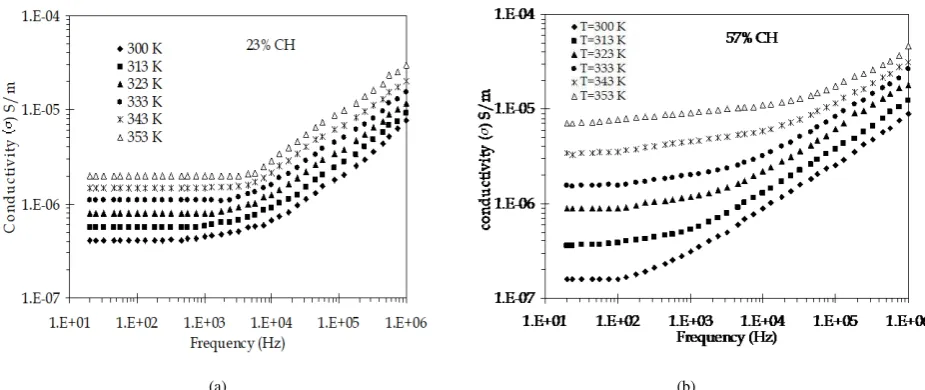
Temperature-Dependent AC conductivity The ac conductivity ac() at different temperatures as a function of frequency were measured as shown in Figure 1 (a) and 1 (b) for the PVA-CH composites containing 23 and 57% CH respectively. All samples exhibit a frequency-independent conductivity at low frequencies and a frequency-dependent conductivity at high frequencies due to ionic conductivity relaxation. The conductivity increases with temperature and composites composition. At room temperature the
conductivity increases with CH composition from about 1.29 x 10⁻⁷ Sm-1 for 23% CH and
increases to 4.07 x 10⁻⁷ Sm-1 for 57% CH
composites. Thus, higher conductivities were attributed to the increase of ionic charge carriers in the samples [13]. The conductivity of 57% CH composites increases from about 4.07 x 10⁻⁷ Sm-1 at 300K to 7.1 x 10 -6 Sm-1 at 353K. The increment of temperature causes increase in conductivity due to the increase of free volume and their respective ionic and segmental mobility (Rajendran, et all 2004). Thus segmental motion, which is temperature dependent permits free charges to hop from one site to another or provides a pathway for the transitional ionic motion (Abdullah, et all 2011). The conductivity increases as the temperature, indicating more ions gained kinetic energy via the thermally activated hopping of charge carriers between trapping sites that is temperature dependence and phonon-assisted quantum tunneling through a barrier separating two equilibrium positions, which is hopping distance dependent. Both mechanisms contributed to the ionic mobility and increase total conductivity (Gedam, et all 2013., Abdullah, et all 2011).
(a) (b)
Figure 1. Variation of ac conductivity as a function of frequency at different temperatures for PVA-CH composites containing (a) 23%, (b) 57% chloral hydrate.
Frequency Exponent
The frequency-dependent conductivity
) (
follows the universal power law equation (Sreelalitha, 2014).
s
( ) A ………. (1)
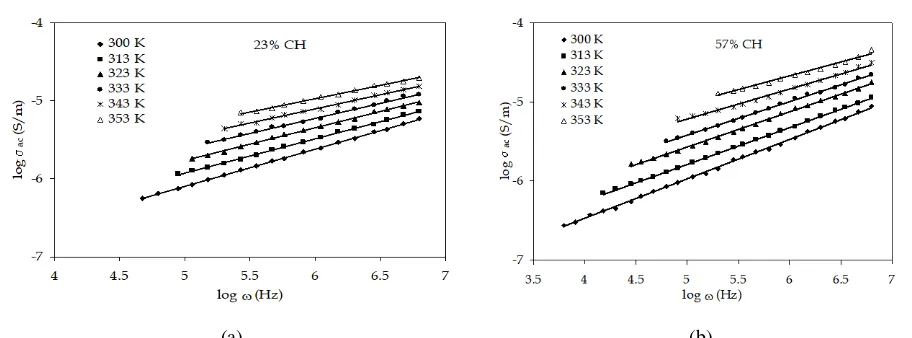
The values of s at different temperatures were determined from the linear slope of
) (
46
(a) (b)
Figure 2. Frequency variation of conductivity in the form log ac() versus log at different temperatures for PVA-CH composites containing (a) 23, (b) 57% of chloral hydrate.
Figure 3. Frequency exponent s as a function of temperature for PVA-CH composites at different compositions of chloral hydrate.
The value of s decreases with the increase of temperature as illustrated in Figure 3 for different composites compositions. When the 23% CH sample was thermally treated, s value decreases from 0.69 at 300 K to 0.45 at 353 K. While for 34% CH the value decreases from 0.60 at 300 K to 0.40 at 353 K. The results confirm the ionic conductivity by ionic hopping, when s < 1.
Hopping Frequency
The hopping frequencies p were calculated using formula [1] and tabulated in table 1.
) 0 ( dc
s p
A ………. (2)
The results show that the hopping frequency increases with increasing temperature and CH composition. The scaling of conductivity ()/dc(0) at different temperatures was calculated according Almond-West conductivity formalism formula equation
S
) / ( 1 ) 0 ( )
( dc p
………. (3)
as shown in Figure 4 for 23% and 34% CH compositions. It was found that the conductivity curves are superimposed into single master curve defined by equation with the value of the frequency exponent s for PVA-CH composites are found to be lie in the range from 0.40 to 0.69 as shown in Figure 4.
Table 1. The values of hopping frequency (Hz) p at various temperatures and CH compositions
Temperatures 23% CH (1.0E+03)
34% CH (1.0E+03)
45% CH (1.0E+03)
57% CH (1.0E+03)
300K 1.55 10.60 18.00 21.60
313K 2.78 15.60 20.70 27.10
323K 5.05 15.90 23.90 34.80
333K 7.85 19.40 40.30 48.10
343K 9.86 25.50 49.80 64.60
353K 11.80 38.00 57.10 70.90
0.3 0.4 0.5 0.6 0.7 0.8
290 300 310 320 330 340 350 360
Temperature (K)
val
ue
o
f s
47
(a) (b)
Figure 4. A universal scaling of ()/dc(0) as a function of (/p) at different temperatures for PVA-CH composites at (a) 23% and (b) 34% PVA-CH compositions.
Impedance
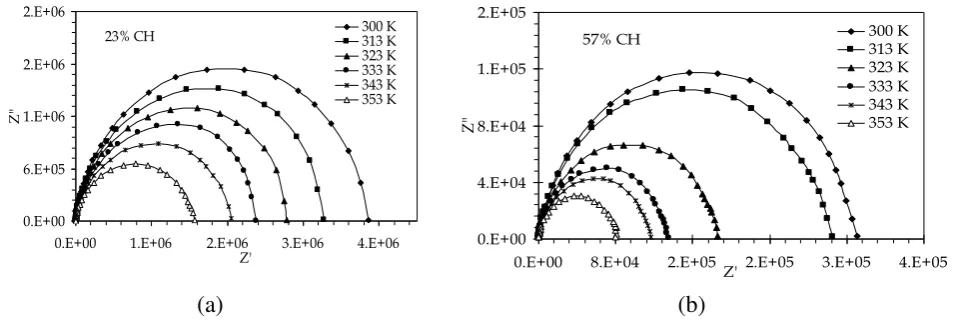
The Cole-Cole plots of the imaginary part (Z") versus the real part (Z') of complex impedance exhibit semicircles at various temperatures as illustrated in Figure 5 (a) and (b) for the composites containing 23 and 57% chloral hydrate. The relaxation obeys Debye model. This representation allows ascribe the high-frequency semicircles to a conductivity contribution of the bulk sample due to ionic hopping between trapped sites and the relaxation also obeys single conduction
relaxation time. The bulk resistance Rs is zero, since the curves appears at the origin at the higher frequencies. There is also no conductivity deviation towards low-frequency regions at given temperature, indicating the absence of electrode polarization effects. As temperatures increases, the diameter of the semicircles decreases resulting in decrease in the impedance of the composites. The effect of increasing temperatures is the increase in the conductivity of the polymer composites.
(a) (b)
Figure 5. The Cole-Cole plot of the real part (Z’) versus imaginary part (Z”) of complex impedance for the
PVA-CH composites containing (a) 23%, (b) 57% chloral hydrate.
Temperature-Dependent DC Conductivity and Activation Energy
The charge transfer resistance Rct was obtained from the Cole-Cole diagrams by extrapolation the real part of the impedance Z0
for zero frequency as shown in Figure 5. The dc conductivity was then calculated from the relationship given by equation
Ra
d/
dc ………. (4)
where d is the film thickness of the sample and a is the surface area of the electrode. Figure 6 shows the dc conductivity increases with increasing temperature T and it was fitted to the empirical exponential law equation
0.E+00 6.E+05 1.E+06 2.E+06 2.E+06
0.E+00 1.E+06 2.E+06 3.E+06 4.E+06 Z'
Z"
300 K 313 K 323 K 333 K 343 K 353 K 23% CH
0.E+00 4.E+04 8.E+04 1.E+05 2.E+05
0.E+00 8.E+04 2.E+05 2.E+05 3.E+05 4.E+05 Z'
Z"
48 values. The activation energy Ea decreases with increasing CH composition as shown in Figure 6. The activation energy varies from 0.16 to 0.25 eV for PVA-CH composites with the CH composition reduces from 57% to 23%. The activation energies of various systems of polymer films have been measured and could
be used for comparison in this study. ForPVA composites with different compositions of NaI, the measured value of Eavaries from 0.52 to 1.20 eV [13]. The conduction activation energy for (PVA)/MgCl2 composites have been
measured and found that the value varies from 0.6 eV and 0.77 eV for PVA + KNO3
(Sreelalitha, et all 2014). The activation energy of PVA-Ni(NO3)2 have been measured and
found the value decreases from 0.76 eV to 0.31 eV (Salman, et all 2015).
Figure 6. Variation of ln dc() as a function of temperatures for PVA-CH composites at different
compositions of chloral hydrate.
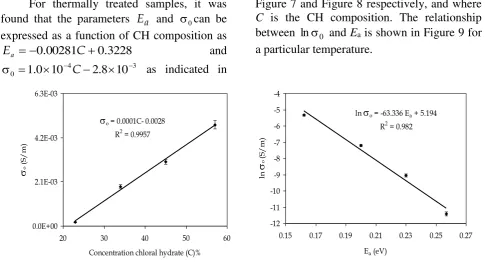
Figure 7. Variation of activation energy (Ea) as a function of composition of chloral hydrate
For thermally treated samples, it was found that the parameters Ea and 0can be
expressed as a function of CH composition as
3228
Figure 7 and Figure 8 respectively, and where C is the CH composition. The relationship between ln0 and Ea is shown in Figure 9 for
a particular temperature.
Figure 8.Variation of 0 as a function of CH composition for PVA-CH composites
Figure 9. Variation of ln 0 as a function of Ea for
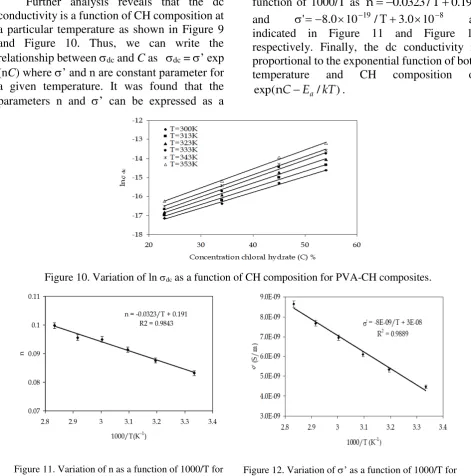
49 Further analysis reveals that the dc conductivity is a function of CH composition at a particular temperature as shown in Figure 9 and Figure 10. Thus, we can write the relationship between dc and C as dc = ’ exp
(nC) where ’ and n are constant parameter for a given temperature. It was found that the parameters n and ’ can be expressed as a
function of 1000/T as n0.0323/T0.191 and '8.01019/T3.0108 as indicated in Figure 11 and Figure 12 respectively. Finally, the dc conductivity is proportional to the exponential function of both temperature and CH composition or
) / exp(nCEa kT .
Figure 10. Variation of ln dcas a function of CH composition for PVA-CH composites.
Figure 11. Variation of n as a function of 1000/T for PVA-CH composites
Figure 12. Variation of ’ as a function of 1000/T for PVA-CH composites
CONCLUSIONS
The conductivity-temperature relation study revealed that the increase in conductivity of the PVA-CH blends with increasing temperature follow Arrhenius relationship
) / exp( ' 0
0 Ea kT
. The activation energy
decreases linearly with the blend composition C as given by Ea 0.0028C0.3228for PVA-CH blends. It was found that the activation energy from 0.16 to 0.25 eV for PVA-CH blends. The increase of dc conductivity with temperature was attributed to the increase in the mobility of the free ions with the increase in thermal energy kT. The power law of ac conductivity has been attributed to thermally
activate hopping of ions trapped in the localized sites of the PVA matrix resulting in the frequency exponent s decreasing with increasing temperature. The values were 0.60 at 300 K and 0.45 at 353 K for 34% CH and 0.64 at 300 K and 0.46 at 353 K for 57% CH. The conductivity increases with increasing temperatures. This suggests that conductivity is governed by the formation of more ion charge carriers as induced due to the thermal energy received by the ions.
REFERENCES
Abdullah, Omed Gh., Aziz, Bakhtyar K and Saeed, Alan O. 2012. Kaolin light concentrationeffects on the dielectric
n = -0.0323/T + 0.191 R2 = 0.9843
0.07 0.08 0.09 0.1 0.11
2.8 2.9 3 3.1 3.2 3.3 3.4
1000/T(K-1)
50 properties of polyvinyl alcohol films. International Journal of Science and Advanced Technology. Volume 2 .No. 1 .January 2012.
Abdullah, Omed Gh., Sarkawt A. Hussen and Ahmad, Alami. 2011. Electrical Characterization of polyvinyl alcohol films doped with sodium iodide. Asian Transactions on Science & Technology. Volume. 01 Issue 04. Bhad, Shital, N and V.S. Sangawar. 2012.
Synthesis and study of PVA based gel electrolyte. Chemical Science Transactions. I(3), 653-657. DOI:10.7598/cst2012.253.
Bhad, Shital N., Sangawar,V.S., Maldhure, A.K., Tayade, D.P and Yerawar, G.R. 2013. Study of proton conducting PVA based gel electrolyte. International Journal of Innovative Research in Science, Engineering and Technology. Vol. 2. Issue 11, November 2013.
Gedam, S.K., Khandale, A.P and Bhoga, S.S. 2013. Development of solid protonconductors based on doped polyvinyl alcohol. Indian Journal of Pure & Applied Physics. Vol. 51. May 2013. Pp.367-371.
Harun, Mohd Hamzah., Saion, Elias., Kassim, Anuar., Hussain, Muhd Yousuf., Mustafa,Iskandar Shahrim and Ali Omer, Muhd Ahmad. 2008. Temperature Dependence of AC Electrical Conductivity of PVA-PPy-FeCl3 Composite Polymer Films. Malaysian Polymer Journal (MPJ) Vol. 3 No. 2. P 24-32.
Hashim, Ahmed., Rabee, Bahaa.H., Ali Habeeb, Majeed., Abd Alkadhim, Nahida., Saad, Athraa. 2012. Study of Electrical Properties of (PVA-CaO) Composites. American Journal of Scientific Research. Issue 73. Pp.5-8.
Kumar, Vijaya. G and Chandramani, R. 2010.Doping and Irradiation Dependence of Electrical Conductivity of Fe 3+ and Ni 2+
Doped Polyvinyl Alcohol Films. Acta Physica PolonicaA. Vol. 117 (2010). Molyneux., 1983. Water Soluble Synthetics
Polymers: Properties and Behavior. Vol. 1. CRC. Press. USA.
Nigrawal, Archana and Chand, Navin. 2012. Preparation, dielectric and a.c. conductivity studies on chemically treated sisal powder filled polyvinyl alcohol biocomposites. International Journal of Engineering, Science and Technology. Vol. 4. No. 2. 2012. Pp.191- 209.
Rabolts, J.F., Schlotter, N.E., Swalen, J.D. 1981. Spectroscopic Studies of Film Polymer Laminates Using Raman Spectroscopy and Integrated Optics. Journal Physics Chemistry. 85. 4141-4144.
Rajendran, S., Sivakumar, M., Subadevi, R. 2004. Investigation on the Effect of Various Plasticizers in PVA-PMMA Solid Polymer Blend Electrolytes. Materials Letters. 58. 641- 649. Salman, Sabah A., Bakr, Nabeel A., Mahmood,
Mohammed H. 2015. Preparation and Study of some Electrical Properties of PVA-Ni (NO3)2 Composites. International Letters of Chemistry, Physics and Astronomy. I (2015) 36-42.
Sevil, U.A., Guven, O., Kovacs, A., Slezsak, I., 2003. Gamma and Electron Dose Responseof the Electrical Conductivity of Polyaniline Based Polymer Composites. Radiation Physics and Chemistry. 67. 575-580. Sreelalitha, K and Thyagarajan, K. 2014.
Electrical Properties of Pure and Doped (KNO3 &MgCl2) Polyvinyl Alcohol Polymer Thin Films. International Journal of Thin Films Science and Technology. 3. No.2. 39-42. (2014).