PRESENTED BY:
THE 1st – 2023
INTERNATIONAL ACCOUNTING STUDENTS CONFERENCE MULTIPARADIGM PERSPECTIVE ON ACCOUNTING, FINANCE
AND TAX
THEME
MULTIPARADIGM PERSPECTIVE ON ACCOUNITNG, FINANCE, AND TAX TITLE: THE 1 ST – 2023 INTERNATIONAL ACCOUNTING STUDENTS CONFERENCE (IASC)
E-ISBN:
Editors:
-Prof. Dr. Indra Devi., P.hD., ACMA (UK), CGMA, CA (M), AFMIM (M) – Manipal International University, Malaysia
-Dr. Arfan Ikhsan., SE., M.Si., CATr – Universitas Negeri Medan, Indonesia -Dr. Enkleda Lulaj – University Haxhi Zuka, Kosovo
-Dr. Ahmed Elamer – Brunel University London, United Kingdom
-Dr. Prihat Assih., M.Si., Ak., CA., CSRS – Universitas Merdeka Malang - Indonesia -Dr. Kanitsorn Terdpaopong – Rangsit University, Thailand
- Dr. Velissa Rubaya – Rizal Technological University, The Philippines -Almira Keumala Ulfah, M.Si., Ak., CA – IAIN Lhokseumawe, Indonesia -Azizah Binti Saban BBA., MBA – Manipal International University, Malaysia Publication together by:
Manipal International University (MIU) and
Association of Indonesian Accounting Lecturers (ADAI) Email: [email protected] / [email protected]
Website: miu.edu.my / adai.or.id
Copyright © 2023 by Manipal International University and Association of Indonesian Accounting Lecturers All rights Reserved.
No part of this publication may be reproduced or transmitted in any form or by any means, electronic or mechanical, including photocopying, recording, or any other information storage and retrieved without prior permission in writing from the publishers Concerned author is solely responsible for his views, opinions, policies, copyright infringement, legal action, penalty or loss of any kind regarding their content. The publisher will not be responsible for any penalty or loss of any kind if claimed in future.
Contributing author have no right to demand any royalty amount for his content.
Foreword and Opening Remark
THE 1st – 2023 INTERNATIONAL ACCOUNTING STUDENTS CONFERENCE (IASC)
In the name of Allah, The Most Gracious the Merciful Assalamu’alaikum Wr. Wb.
Heartiest Greeting from Indonesian Accounting Lecturer Association (ADAI) - Indonesia, to you All in all over the Worl
Honorable, Keynote Speaker. Respectable, all presenters for this THE 1st INTERNATIONAL ACCOUNTING STUDENTS CONFERENCE (IASC).
Beloved committee, students, participants, ladies and gentlemen My Name is Arfan Ikhsan Lubis as Chairman of the Asosiasi Dosen Akuntansi Indonesia (Association of Indonesian Accounting Lecturers/ADAI), it is such an honor for me to welcome you all to our THE 1st INTERNATIONAL ACCOUNTING STUDENTS CONFERENCE (IASC) in keynote speakers’ session and parallel sessions with lecturers, researchers and students world wide. This is our 1st International Accounting Students Conference Talk by the theme:
MULTIPARADIGM PERSPECTIVE ON ACCOUNTING, FINANCE AND TAX.
Dear Brothers and Sisters
Through the introduction of this Forum, we can learn about the strengths/
weaknesses of students and give them the opportunity to learn through their strengths. students have the opportunity to explore the world, develop their own skills and develop their own abilities. Accounting, Finance and Tax is a process that provides appropriate information from an entity not limited to financial data to stakeholders to ensure that the entity continues to carry out its operations within legal limits and achieve its socio-economic goals.
The fundamental role of accounting is as a provider of information and a source of answers for all matters related to corporate finance. You can use reports that contain complete and accurate information to stabilize and even improve your company's performance.Therefore, you should immediately compile your books and update them regularly so that your company's finances can be neatly arranged. You can use accounting software or digital accounting services to make your accounting work easier.
In addition, this step aims to prevent human errors that occur in manual recording, which can impact the company's performance.
INTERNATIONAL ACCOUNTING STUDENTS CONFERENCE (IASC) is a series program of student. International conferences are an important thing for Indonesian and international students to attend, by attending international conferences, students can express opinions effectively. Academic benefits that can be obtained by participating in international conferences, namely international conferences will be a place for students to meet experts in various fields, so that these students feel they can expand their networking and also gain new knowledge from professors, speakers, and scientists from around the world, by participating in international conferences.
Ladies and gentlemen, That’s the end of my opening remark, thank you very much for your kind attention.
Best regard,
Dr. Arfan Ikhsan Lubis
Chairman of the Association of Indonesian Accounting Lecturers (ADAI)
TABLE OF CONTENT
Capital Structure Effect Throught Liquidity, Asset Structure And Profitability... 1 Effects Of Financial Distress, Size Company, And Leverageon The Giving Of Going Concern Audit Opinion ... 2 Bnormal Return With January Effect In LQ45 Companies On Bursa Efek Indonesia ... 3 The Influence Of Implementation Of Internal Control System And Organizational Culture On Financial Accountability ... 4 Integrated Reporting Principle (Value Creation): Overview Of The Religiosity Paradigm ... 6 Effect Of Environmental, Social, And Governance (ESG) And Financial Slack On Firm Performance? ... 7 Comparative Analysis Of Abnormal Return, Cummulative Abnormal Return And Trading Volume Activity: Booster Vaccine Study Event ... 8 Financial Accountability Through Implementation Of Asset Management And Organizational Commitment ... 9 Analysis Of The Factors That Affect Income Smoothing In Banking Companies Listed On The Indonesian Stock Exchange ... 10 Cash Flow Analysis To Anticipate Potential Bankruptcy In Startup Companies Listed On The Indonesian Stock Exchange ... 11 The Effect Size Company Toexpenditure Zakat With Profitability As Variable Mediation On Bank General Sharia In Indonesia Period 2016 -2021 ... 12 The Influence Of Enterprise Risk Management (ERM), Audit Quality, And Independent Commissioners On Company's Financial Performance With The Audit Committee As A Moderation Variable (In Food And Beverage Sub-Sector Manufacturing Companies Listed On The Indonesia Stock Exchange For The 2018- 2020 Period) ... 13 Feasibility Study Analysis Of Establishing Poli Dots Tuberculosis At Nurhayati Hospital Garut, West Java ... 14 The Influence Of Debt To Equity Ratio (DER) And Current Ratio (CR) And Company Value Moderated By Size During The Covid 19 Pandemic ... 15 The Effect Of Net Profit Margin And Earnings Per Share On Share Price With Dividend Policy As A Moderation Variable ... 16 Comparative Analysis Of Financial Performance Before And During The Covid-19 Pandemic In Property And Real Estate Companies Listed On Indonesia Stock Exchange ... 17 Analysis Of Financial Performance Before And After The Enforcement Of Government Regulations (PP) Number 30 Of 2020 At Pt Gudang Garam Tbk.
(GGRM) ... 18 The Effect Of Investment Opportunity Set, Profitability, Capital Structure And Dividen Policy On Firm Value ... 19 Analysis Of Non Debt Tax Shield, Growth Opportunities, And Capital Structure ... 20 The Influence Of Environmental Cost, Environmental Performance, And Corporate Social Responsibility Disclosure On Financial Performance ... 21 Positive And Negative Impact Of Fintech Development For Msmes Players In The Industrial Era 4.0 ... 22 Analysis Of The Feasibility Of Building A Hospital In Terms Of Situation, Demand, Need, And Financial Aspects (A Review Of The Feasibility Case Study
Of The South Sumatra Provincial Hospital In Palembang). ... 23 The Impact Of Liquidity Ratio, Return On Asset (ROA), Return On Equity (ROE), On Company Value And Moderated By Corporate Philantropy ... 24 The Effect Of Capital Structure And Company Size On Company Value In Food And Beverage Companies Listed On The Indonesia Stock Exchange In 2019-2020 ... 25 The Influence Of Board Of Directors And Audit Committee Characteristics On Corporate Social Responsibility ... 26 Analysis Of Financial Performance On The Value Of Pharmaceutical Sub-Sector Companies At The Indonesia Stock Exchange During The Covid-19 Pandemic . 27 The Effect Of Corporate Social Responsibility (CSR) Disclosures On The Financial Performance Of Public Companies Period 2018 – 2022 ... 28 The Effect Of Profitability, Market Ratio, Dividend Policy, And Firm Size On Stock Return ... 29 The Effects Of Capital Intensity, Leverage, Growth Opportunity And Litigation Risk On Accounting Conservatism ... 30 The Effect Of Corporate Social Responsibility And Dividend Policy On Firm Value ... 31 Behavioral Finance In Investment Decision Making ... 32 The Influence Of Digitization Of Information, Liquidity, And Firm Size On Firm Value ... 33 Determinants Theory Of Planned Behavior (TPB) On The Implementation Of Central Bank Digital Currency (CBDC) ... 34 The Effect Of Reducing Carbon Emissions On Financial Performance With Carbon Performance As An Intervening Variable ... 35 Analysis The Effect Of Good Corporate Governance (GCG) On Company Value In The Food And Beverage Sub-Sectors Listed On The Indonesia Stock Exchange In 2020-2022 ... 36 The Influence Of Audit Quality, Company Size, And Liquidity On Profit Quality With The Audit Committee As A Moderating Variable ... 37 The Effect Of Corporate Social Responsibility Disclosure, Growth Opportunities, And Firm Size On Earnings Response Coefficient In Manufacturing Companies Listed On The Indonesian Stock Exchange ... 38 The Impact Of Psak 71 On The Reporting Of Financial Instruments In Banking Companies Listed On The Indonesia Stock Exchange ... 39 Comparison Of Financial Performance Before And During The Covid-19 Pandemic ... 40 The Effect Of Carbon Emission Disclosure On Firm Value With Financal Performance As An Intervening Variable ... 41 The Effects Of Earnings Per Share, Debt-To-Equity Ratio, Dividend Payout Ratio, Company Growth, And Price-Earnings Ratio On Company Value ... 42 The Effect Of Ownership Structure And Tax Planning On Company Value ... 43 The Effect Of Environmental, Social, And Governance Performance On Investor Reactions. ... 44 The Effect Of Roa, Eps And Der On Stock Price In L Q45 Companies ... 45 The Effect Of Sales Growth, Operating Capacity, Liquidity, And Operating Cash Flow On Financial Distress In Manufacturing Companies In The Goods Sector And Consumptions Listed On The Indonesia Stock Exchange Year 2019-2021 ... 46 The Effect Of Financial Distress, Leverage, And Firm Size On The Integrity Of Financial Statements ... 47 The Effect Of CEO Characteristics On Financial Performance With Carbon
Performance As An Intervening Variable ... 48 The Effect Of Open Unemployment Rate, Human Development Index And Provincial Minimum Wage On Poverty In North Aceh District ... 49 Analysis Of Factors Affecting Income Smoothing Among Listed Companies In LQ- 45 Period 2019-2021 ... 50 Analysis Of The Implementation Of Financial Accounting Standards Micro, Small And Medium Entities To Msmes In Semarang ... 51 Corporate Social Responsibility, Intellectual Capital Disclosure, And Business Risk To Company Value With Company Size As A Moderation Variable ... 52 The Role Of E-Commerce In Mediating The Effect Of Financial Literacy On Msme Business Performance In Malang City ... 53 The Effect Of Audit Committee Characteristics On Firm Value: Evidence From Energy Sectors In Indonesia ... 54 The Effect Of Inflation, Interest Rate, Rupiah Exchange Rate And World Gold Prices Of The Stock Price On Bumn At Idx Period 2018 -2021 ... 55 The Influence Of Fundamental Factors On Stock Prices (Food And Beverage Sub- Sectors Listed On The Indonesian Stock Exchange 2018-2021) ... 56 Analysis Of Bonus Mechanism, Taxes, Company Size And Foreign Ownership On Transfer Pricing ... 57 The Impact Of Psak 71 On Value Relevance ... 58 Shifting In Accounting Masculinity: Interest In Sharia Accounting ... 59 The Health Of The Bank Viewed From Credit Risk, Liquidity Risk, Capital Adequacy, And The Bank's Financial Performance ... 60 The Effect Of Firm Size And Capital Structure On Earnings Response Coefficients (Erc) Of The Company Property And Real Estate Listed On The Indonesia StockzExhange For The Period Of 2019-2021 ... 61 The Effect Of Liquidity, Company Size And Profitability On Company Value With Audit Quality As A Moderation Variable In Banking Companies Listed On The Idx In 2019-2021 ... 62 Fuel Oil Price, Sales Growth, Financial Performance On Stock Price In Indonesian Transportation And Logistic Companies ... 63 The Influence Of The Accrual Base And It Utilization On The Quality Of Government Financial Reports At The Dpupr In Padang City ... 64 Abnormal Return And Trade Volume Before And After The Announcement Of The Covid-19 Pandemic In LQ-45 Indexed Share ... 65 The Effect Of Tax Rate, Tunneling Incentives, And Bonus Mechanism On Transfer Pricing Decisions In Manufacturing Companies Listed On The Indonesia Stock Exchange (Consumer Cyclicals Sector 2019-2021 Period) ... 66 Effect Of Good Corporate Governance, Leverage And Profitability On Tax Avoidance ... 67 The Effect Of Capital Intensity And Inventory Intensity On Tax Aggressivity In Textile Sub-Sector Companies Listed On The Idx In 2018-2020 ... 68 Comparative Study Of Financial Performance Of Sharia Food And Beverage Companies During The Covid-19 Pandemic ... 69 Analysis Of Financial Distress And The Factors Influence On Prediction Bankruptcy Using Altman Z-Score Method On Pt. Duta Persada Tehnik ... 70 Analysis Of Factors Influencing Earnings Management On The LQ-45 Index On The Indonesian Stock Exchange ... 71 Review Of Financial Ratio Analysis To Assess Financial Performance At Pt.
Permata Logistics & Supply ... 72
CAPITAL STRUCTURE EFFECT THROUGHT LIQUIDITY, ASSET STRUCTURE AND PROFITABILITY
Agnes Kartengki1), Rahman Pura2) and Asbi Amin3*) STIEM BONGAYA MAKASSAR
[email protected]1), [email protected]2), [email protected]3*)
ABSTRACT
This research aims to determine the effect of liquidity, asset structure and profitability on capital structure in companies listed on Jakarta Islamic Index (JII). The approach used in this research is a quantitative approach. The population of this study amounted to 47 companies, namely companies listed on the JII in 2020-2022. The sample selection process used the purposive sampling technique and obtained 16 companies as samples. This research data is secondary data collected using the method of observation of the company's annual report. The data analysis technique used multiple linear regression analysis. The results showed that liquidity had negative significant effect on capital structure, asset structure had no significant effect on capital structure and profitability had positive significant on capital structure.
Keyword: Liquidity, Asset Structure, Profitability, Capital Structure.
INTRODUCTION
One important aspect of running a company is making funding decisions to finance business activities. The funding decisions taken by the company are reflected in the company's capital structure. The capital structure is a balance or comparison between the amount of long-term debt and capital. The capital structure is the main focus for the company because good or bad capital structure can affect the company's financial condition. Moreover, the capital structure used comes from external funding, namely debt, which may increase the risk of default in the future (Sulindawati, 2017:112).
The conditions that occur in companies listed on the Jakarta Islamic Index (JII) on the Islamic stock index consist of only the 30 most liquid Islamic stocks listed on the Indonesia Stock Exchange in 2020-2022 showing fluctuations in liquidity values, asset structure, profitability and capital structure due to the Covid-19 pandemic that occurred in early 2019. For this reason, this study wants to examine several factors that can affect capital structure, including: Liquidity, Asset Structure and Profitability. A high level of liquidity of a company shows the company's ability to pay off debts that are due in the short term, so that it can reduce total debt which causes its capital structure to decrease (Mufidah, et al, 2018). So the higher the company's liquidity, the lower its capital structure.
The next factor that influences the capital structure is the asset structure, the composition of the company's tangible fixed assets which are large in number will have the opportunity to obtain additional capital with debt, because fixed assets can be used as collateral to obtain debt. Companies with large asset structures tend to raise funds from external parties. So that it will improve the company's capital structure derived from debt.
Profitability is the company's ability to generate profits by using company-owned sources, such as assets, capital, or sales (Sudana, 2011:25).
When a company has a high level of profit, then the percentage of retained earnings owned by the company also increases. So the higher the profitability of the company, the lower the level of capital structure in the company.
Regarding the capital structure, this research has been carried out by several previous researchers including by Zahro, et al (2022) states that partially and simultaneously Profitability, Firm Size, Asset Structure, and Business Risk have a significant effect on Capital Structure. Where as Rivandi and Novriani (2021) states that liquidity has no effect on capital structure while profitability has a positive and significant effect on capital structure.Qosidah and Ramadan (2021) states that liquidity and asset structure have a significant effect on capital structure, while business risk has no effect on capital structure. While the research results from Kamini, et al (2020) states that profitability and asset structure have a negative effect on capital structure, while company size has no effect on capital structure.
The approach used in this research is a quantitative approach.The population in this study are companies registered on the Jakarta Islamic Index (JII) in the 2020-2022 period, totaling 47 companies. The sample collection technique used is purposive sampling so that the total sample is 48 financial report data. The data source for this research is secondary data which can be accessed via the Indonesia Stock Exchange website (www.idx.co.id) and the website of each company. This study uses a multiple regression analysis model.
CONTENT
To see this influence can be seen through the value of the regression equation used in the following table:
Table 2. Summary of Hypothesis Testing
Variable Coefficient t count Sig. Information
Liquidity -.290 -4.116 .000 Hypothesis 1 is accepted Asset
Structure
.886 1.955 .057
Hypothesis 2 is rejected Profitability 1.285 4.861 .000 Hypothesis 3 is rejected Constant 99.419 3.358
R Square .616
Adj. R Square .590
The results of multiple linear regression calculations obtained the following equation:
Y = 99.419 − 0.290X1 + 0.886X2 + 1.285X3 + e
Based on the results of testing the first hypothesis, it shows that the liquidity variable has a negative and significant effect on capital structure or it can be said that liquidity has a direct effect that is opposite to capital structure.
This means that the first hypothesis is accepted. A high level of liquidity will tend to hold companies from using debt because companies that have high liquidity mean that they have high internal funds so that these companies will prioritize using internal funds, rather than using external funds.
This research is in line with research conducted by (Laili and Utiyati, 2021) and (Aslah, 2020) who found that liquidity had a negative and significant effect on the company's capital structure. But the results of this study are not in line with the results of research conducted by (Rivandi and Novriani, 2021) and (Kurniasari & Listiawati, 2021) which states that liquidity has no effect on capital structure
Based on the results of testing the second hypothesis, it shows that the asset structure variable has no significant effect on the capital structure or it can be said that the size of the asset structure has not been able to influence the level of capital structure. This means that the second hypothesis is rejected. The asset structure has no effect on the capital structure because most of the fixed assets are financed by the company's internal funds. The increase in fixed assets is not always followed by an increase in long-term debt.
This research is in line with research conducted by (Ayuningtyas &
Susanto, 2020) and (Pramana & Darmayanti, 2020) who found that the asset structure has no significant effect on the company's capital structure. However, the results of this study are not in line with the results of research conducted by (Qosidah and Romadhon, 2021) and (Ashry, 2019) which state that asset structure has a positive and significant effect on the company's capital structure.
Based on the results of the third hypothesis testing, it shows that the profitability variable has a positive and significant effect on capital structure or it can be said that any increase in profitability is always followed by an increase in capital structure. This means the third hypothesis is rejected. The higher the profitability, the greater the retained earnings but this will be offset by high debt because the prospects for companies that are expanding require a lot of funds to encourage increased profits in the future.
This research is in line with research conducted by (Zahro, et al, 2022) and (Rivandi and Novriani, 2021) which found that profitability had a significant positive effect on the company's capital structure. But the results of this study are not in line with the results of research conducted by (Kamini, et al, 2020) and (Ramadhani and Fitra, 2019) which state that profitability has a negative and significant effect on the capital structure of companies.
Based on table 2 above, it can be seen that the Adjusted R Square value is 0.590. This means that 59% of the capital structure variable can be explained by liquidity, asset structure and profitability. While the remaining 41% (100% - 59%) is explained by other variables not included or observed in this study.
CLOSING
Based on the test results in this study it was found that liquidity had a significant negative effect on the capital structure of companies listed on the Jakarta Islamic Index (JII) or hypothesis 1 was accepted; The capital structure of companies listed on the Jakarta Islamic Index (JII) or hypothesis 2 is rejected;
Profitability has a significant positive effect on the capital structure of companies listed on the
Jakarta Islamic Index (JII), or Hypothesis 3 is rejected.
The results of this research are suggested to be able to describe knowledge and add information for the development of accounting knowledge regarding financial management and risk management, especially regarding capital structure.
REFERENCES
Abidin, J., & Hidayat, I. (2019). Effect of Sales Stability and Asset Structure on Capital Structure. RESEARCH & ACCOUNTING JOURNAL, 3.
https://doi.org/https://doi.org/10.33395/owner.v3i2.130 e
Ashry, L. Al, & Fitra, H. (2019). The Effect of Sales Growth and Profitability on Capital Structure in Real Estate and Property Companies on the Indonesia Stock Exchange. Journal of Management and Entrepreneurial Studies,
01(01), 8–
18.http://ejournal.unp.ac.id/students/index.php/mnj/article/viewFile/5425/
2798
Aslah, T. (2020). THE INFLUENCE OF PROFITABILITY, LIQUIDITY, ASSET STRUCTURE AND COMPANY SIZE ON CAPITAL STRUCTURE. Journal of Accounting & Taxation, 2(1).
Ayuningtyas, N., & Susanto, L. (2020). THE INFLUENCE OF PROFITABILITY, ASSET STRUCTURE, COMPANY SIZE, AND LIQUIDITY ON CAPITAL STRUCTURE. Tarumanagara University E-
Journal, 2(April), 536–546.
https://doi.org/https://doi.org/10.24912/jpa.v2i2.7618
Kamini, NPAD, Novitasari, NLG, & Saitri, PW (2020). The Effect of Profitability, Asset Structure, and Size on Capital Structure in Consumer Goods Companies in the Bei Period 2017-2019. Kharisma Journal, 2(3), 253–271.
Kurniasari, E., & Listiawati. (2021). The Effect of Liquidity, Profitability, and Asset Structure on the Company's Capital Structure. Cafeteria Journal, 2(2), 1–14. https://doi.org/10.51742/akunansi.v2i2.353
Laili, FR, & Utiyati, S. (2021). THE EFFECT OF ASSET STRUCTURE, PROFITABILITY AND LIQUIDITY ON CAPITAL STRUCTURE IN PHARMACEUTICAL COMPANIES LISTED ON THE INDONESIA STOCK EXCHANGE. Journal of Management Science and Research, Vol 10 No.
Mufidah, Ulupui, IGKA, & Prihatni, R. (2018). The Influence of Profitability, Liquidity, and Business Risk on the Capital Structure of Property and Real Estate Companies on the Indonesia Stock Exchange. Matrix: Journal of Management, Business Strategy and Entrepreneurship, 129.
https://doi.org/10.24843/matrik:jmbk.2018.v12.i02.p05
Munawir. (2013). Analysis of financial statements. Yogyakarta: Liberty.
Pramana, IWS, & Darmayanti, NPA (2020). Profitability, asset structure, and company size have an impact on the capital structure of automotive companies. Udayana University Management E-Journal, 9(6), 2127.
https://doi.org/10.24843/ejmunud.2020.v09.i06.p04
Prihadi, T. (2019). Financial Statement Analysis. Jakarta: Gramedia Pustaka Utama. https://books.google.co.id/books?id=SC7GDwAAQBAJ
Qosidah, N., & Romadhon, F. (2021). The Effect of Liquidity, Asset Structure and Business Risk on Capital Structure (Empirical Study of Property and Real Estate Companies on the Indonesia Stock Exchange). Journal of Accounting, 13, 188–199. https://doi.org/10.28932/jam.v13i1.2854
Ramadhani, S., & Fitra, H. (2019). The Influence of Liquidity, Profitability, and Asset Structure on the Capital Structure of Indonesian Telecommunications Companies Listed on the IDX for the 2010-2017 Period. Journal of Management and Entrepreneurial Studies, 01(01), 259–269.
Rivandi, M., & Novriani. (2021). The Effect of Liquidity and Profitability on Capital Structure in Banking Companies on the Indonesia Stock Exchange.
Pundi Journal, 05(01), 139–152. https://doi.org/10.31575/jp.v5i1.315 Sudana, IM (2011). Financial Management Theory and Practice. Jakarta:
Airlangga University Press.
Sulindawati. (2017). Financial Management as a Basis for Making Business Decisions. Jakarta: PT Raja Grafindo Persada.
Sutrisno. (2012). Financial Management Theory, Concepts and Applications (Mould Into). Yogyakarta: Econesia.
Zahro, EO, Hidayati, AN, Alhada, M., & Habib, F. (2022). The Effect of Profitability, Company Size, Asset Structure, and Business Risk on Capital Structure in Manufacturing Companies in the Food and Beverage Sector Listed on the Indonesia Stock Exchange for the 2016-2018 Period The Effect of Profitability, Company. Sinar Management Journal, 09, 315–324.
EFFECTS OF FINANCIAL DISTRESS, SIZE COMPANY, AND LEVERAGEON THE GIVING OF GOING
CONCERN AUDIT OPINION
Aisah1, Mut’mainna2, Syafira Larasati Yasram3
Department of Accounting, Faculty of Economics, UIN Alauddin Makassar, Indonesia
[email protected]1, [email protected]2, [email protected]3
ABSTRACT
The purpose of this research is to examine how financial distress, company size and leverage influence going concern audit opinion. Financial distress, company size, and leverage are the independent variables of the research, while going concern audit opinion is the dependent variable. The audited financial analysis of manufacturing sector companies for 2019–2021 is the secondary data used in this study. By using a purposive sampling technique, samples were selected based on predetermined criteria, so that a total of 172 samples from 43 organizations that met the requirements were obtained. The logistic regression analysis method was applied in this study. According to the research findings, Financial Distress, Company Size and Leverage have quite a beneficial impact on Going Concern Audit Opinion.
Keywords: Financial Distress, Company Size, Leverage, Going concern Opinion, and manufacturing companies
INTRODUCTION
Competition does not only arise from companies that have just been established, even companies that have been established for a long time will definitely arise competition. Going concern is the survival of a company where the company can or has operated in the future which is influenced by financial and non-financial conditions and will not be liquidated in the short term. The phenomenon that occurs is based on data as of June 2019.
Financial distress is a condition in which a company experiences a financial crisis due to being unable to manage the company, causing operating cash to be smaller than operating profit (Hidayati et. al., 2019). Company size can determine the size of the profit earned by a company, the greater the assets, the stronger the financial condition of the company (Tadungan & Mertha, 2016).
Leverage is the company's ability to meet its financial obligations. The higher the leverage ratio, the worse the financial condition of the company and can cause uncertainty with the survival of the company (Aji & Sari, 2019). This study focuses on the basic industrial and chemical subsectors according to the latest company classification issued by the IDX in 2018 - 2021. The purpose of this study is to test and analyze the effects of financial distress, size company, and leverage on the giving of going concern audit opinion.
LITERATURE REVIEW Financial Distress
Financial distress is a condition where there is an economic downturn experienced by a company which can cause the company to go into liquidation or bankruptcy (Liliani, 2021). Financial distress that occurred in a company previously had indications or signs that appeared. An indication of a company experiencing financial difficulties can be seen from the condition of its financial statements.
H1: Financial distress has a positive effect on going concern audit opinion Company Size
Company size is a size scale that is seen from the total assets of a company or organization that combines and organizes various resources with the aim of producing goods or services for sale. The effect of firm size on firm value is supported by signaling theory.
H2: Company size has a positive effect on going concern audit opinion Leverage
The ratio that measures a company's ability to meet its financial obligations is the leverage ratio. The debt ratio which is calculated by comparing total debt to total assets is used to calculate the leverage ratio, Masyitoh and Adhariani (2010) and Carcello and Neal (2000).
H3: Leverage has a positive effect on going concern audit opinion RESEARCH METHODS
The research objects studied by researchers are go public companies listed on the Indonesia Stock Exchange in 2018-2021. Based on the research object to be examined in this study will use a causality approach quantitative research method. The data taken as the research object are secondary data originating from the official website of the Indonesia Stock Exchange (www.idx.co.id) and using literature sources, books, journal articles, and internet sites related to the research object.
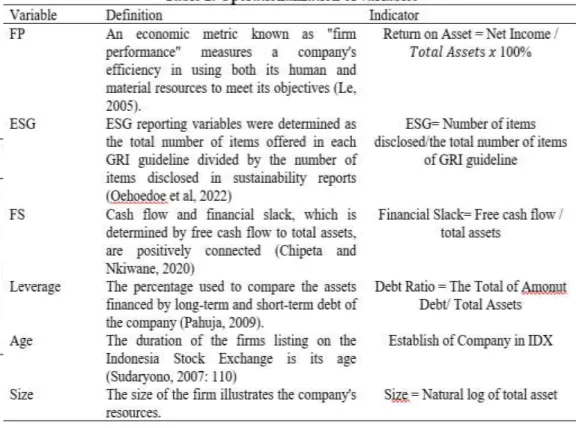
The population used in this study are all companies engaged in the basic industrial and chemical subsectors which are listed on the Indonesia Stock Exchange in 2018-2021. Based on the official IDX website (www.idx.co.id) the number of industrial companies listed on the Indonesia Stock Exchange in 2019 -2021 is 69 companies. The method of determining the sample used in this study is nonprobability sampling with purposive sampling technique. The results of the purposive sampling technique can be seen in Table 1. The operationalization of the variables used for going concern audit opinions uses dummy variables, financial distress variables use DAR (Debt to Asset Ratio) proxies, debt default variables use current ratio proxies, and profitability variables use proxies ROA (Return on Assets).
Tabel 1 : Sample Criteria Results
Sample Criteria Amount
a. Manufacturing companies in the basic and chemical industrial sectors listed on the IDX for the period 2018 - 2021
69
b. Manufacturing companies in the basic and chemical industry sectors that do not publish financial reports and annual reports consecutively according to the period 2018 -2021
(11)
c. Manufacturing companies in the basic and chemical industrial sectors that have been delisted on the IDX 2018-2021
(4) d. The financial reporting period is from 1 January to 31
December and the Dollar is the reporting currency
(11)
Total sample companies 43
Research period 4 years
Jumlah Sampel 172
Based on previous research literature, the analytical method used is logistic regression analysis. The use of this analysis method is because the dependent variable is a dummy variable and the independent variables are metric and no-metric variables (Ghozali, 2018). The analytical tool used in this study to test the hypothesis is logistic regression analysis with a significant level of α = 5%.
Testing the logistic regression hypothesis is used if the independent variable is a combination of metric and non-metric (nominal), thus ignoring the normality test and classical assumption test on the independent variable (Ghozali, 2018). By using SPSS software for data processing. The general model of logistic regression is formulated with the following equation:
𝑳𝒏 ( 𝐴𝑑𝑎
1−𝐴𝑑𝑎 ) = 𝒃𝟎 + 𝛃𝟏𝐅𝐢𝐧𝐃𝐢𝐬 + 𝛃𝟐ComSiz+ 𝛃𝟑Lev + ℇ Information :
Ln(p/(1-p)) = Going concern audit opinion
b0 s= Konstanta
β1, β2, dan β3 = Regression coefficient of each variable FinDis = Financial distress
Company Size = Company size
Lev = Leverage
ε = Erorr
The t test (t-test) is used to test the hypothesis partially in order to show the effect of each independent variable individually on the dependent variable, the t test is carried out by comparing the p-value in the Sig column for each independent variable with a significance level of 0.05. Based on the Leverage value with α = 0.05. The basis for the decision is that if Leverage > 0.05, then the hypothesis is rejected, whereas if Leverage < 0.05, then the hypothesis is accepted.
RESULTS AND DISCUSSION
This study uses data from basic industrial and chemical subsector companies listed on the IDX. The industrial sector includes companies that sell products and services that are generally consumed by industry, not consumers.
The total data used in this study is 172 data with a three-year observation period.
The data will be tested by testing descriptive statistics which explains the total
data owned, the average (Mean), the minimum value, the maximum value, and the standard deviation. The following are the results of descriptive statistical tests using SPSS version 25.0:
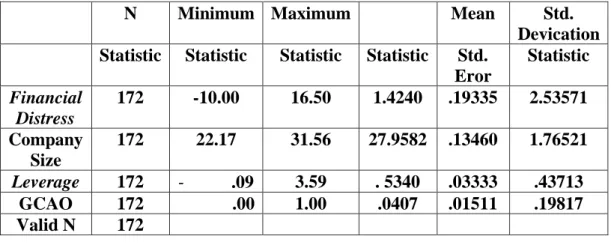
Table 2: Statistics Results Deskriptif Descriptive Statistics
N Minimum Maximum Mean Std.
Devication Statistic Statistic Statistic Statistic Std.
Eror
Statistic Financial
Distress
172 -10.00 16.50 1.4240 .19335 2.53571 Company
Size
172 22.17 31.56 27.9582 .13460 1.76521 Leverage 172 - .09 3.59 . 5340 .03333 .43713
GCAO 172 .00 1.00 .0407 .01511 .19817 Valid N 172
DISCUSSION
From the table of descriptive statistical test results above, it shows that N is the number of samples in this study totaling 172. The minimum value is the lowest value in each of the variables studied. The maximum value is the highest value in each of the variables studied. The mean value is the average value for each variable, namely financial distress, company size, leverage, and going concern audit opinion.
The results of the descriptive statistical test for the independent variable financial distress as measured by the ratio have a minimum value of -10.00 out of 172 samples, the lowest financial distress score is owned by PT. Eterindo Wahanatama Tbk Tbk (ETWA) in 2017. The maximum value is 16.50, which is owned by PT. Eterindo Wahanatama Tbk Tbk (ETWA) in 2015. The average value (mean) is 1.4240 with a standard deviation value of 2.53571
The independent variable company size has a minimum value of -22.17 from 172 samples, the lowest value is owned by PT. Asahimas Flat Glass Tbk (AMFG). in 2015. The maximum value was 31.56 out of 172 samples, the highest value was owned by PT Semen Indonesia Tbk (SMGR) in 2018. The average value (mean) is 27.5982 with a standard deviation of 1.76521.
The independent variable leverage has a minimum value of 0.09 out of 172 samples, the lowest value is owned by PT. Intan Wijaya Internasional Tbk (INCI) in 2016. The maximum value is 3.59 out of 172 samples, this highest score belongs to PT. Jakarta Kyoei Steel Work LTD Tbk (JKSW) in 2018. The average value (mean) is 0.5340 with a standard deviation of 0.43713.
The going concern audit opinion (GCAO) variable shows a minimum value of 0 which indicates that the company does not receive a going concern audit opinion and a maximum value of 1 indicates that the company accepts a going concern audit opinion. The average value (mean) of companies that get a going concern audit opinion is 0.0407 or equivalent to 4.07%. This means that the average value of all samples that received a going concern audit opinion was 7.56% of the 172 samples studied, indicating that most of the samples used in this study did not receive a going concern audit opinion.
CONCLUSION
The financial distress variable that is proxied by the debt to equity ratio has no significant effect on the acceptance of going concern audit opinions in companies in the basic and chemical industry sectors listed on the Indonesia Stock Exchange in 2018-2021. The company size variable that is proxied by SIZE has no significant effect on the acceptance of going concern audit opinions in companies in the basic and chemical industry sectors listed on the Indonesia Stock Exchange in 2018-2021. The leverage variable has a significant effect on receiving going concern audit opinions in companies in the basic and chemical industry sectors listed on the Indonesia Stock Exchange in 2018-2021.
REFERENCES
Agoes, S. (2017). Auditing: Petunjuk Praktis Pemeriksaan Akuntan Oleh Kantor Akuntan Publik. Jakarta: Salemba Empat.
Aji, N. P., & Sari, S. P. (2019). PE Operating Cash Flow, Company Growth, Leverage,dan Opinion Shopping Terhadap Opini Audit Going Concern.
University Research Colloqium 2019,Universitas Muhammadiyah Purworejo.
Ardianti, E. (2018). Pengaruh Ukuran Perusahaan, Opini Audit Tahun Sebelumnya, Leverage dan Pertumbuhan Perusahaan Terhadap Penerimaan Opini Audit Going Concern (Studi Pada Perusahaan Manufaktur Yang Terdaftar di BEI Tahun 2012- 2016). Universitas Muhammadiyah Surakarta.
Hidayati, N., Dheasey Amboningtyas, & Fathoni, A. (2019). The Effect Of Finansial Distress, Audit Client Tenure and Debt Default On Admission Of Going Concern With Company Size as A Moderating Variable.
Universitas Pandanaran Semarang.
Kadirisman, I. (2018). Pengeruh Profitabilitas, Leverage, Kondisi Keuangan dan Ukuran PerusahaanTerhadap Opini Audit Going Concern. Efektif ( Jurnal bisnis dan ekonomi ) Volume 9, No.1.
Lestari, P., & Prayogi, B. (2017). Pengaruh Finacial Distress, Disclosure, dan Opini Audit Tahun Sebelumnya Terhadap Opini Audit Going Concern (Studi Kasus Pada Perushaan Manufaktur Sektor Aneka Industri dan Industri Barang Konsumsi di Bursa Efek Indonesia Periode 2011-2013).
Profita. Vol 10. No. 3.
Tadungan, D., & Mertha, I. M. (2016). Pengaruh Komite Audit, Ukuran Perusahaan, Audit Tenure, dan Reputasi KAP Terhadap Opini Audit Going Concern. E-Jurnal Akuntansi Universitas Udayana Vol.16.1, 45- 71.
Website
CNBN Indonesia. (2019). Retrieved from CNBN Indonesia:
https://www.cnbcindonesia.com/market/20190619142720-17-79351/hampir-4- tahun-suspensi-akankan-borneo-energi-didepak-bei
BNORMAL RETURN WITH JANUARY EFFECT IN LQ45 COMPANIES ON BURSA EFEK INDONESIA
Andika Pramukti1*
Muhammad Syafii A Basalamah2 [email protected]2
ABSTRACT
This study aims to analyze whether there are differences in the abnormal return of LQ45 company stock before and after the January effect. The sampling technique used in this study was using the non-probability sampling method and from this method, data were obtained for 45 companies. The data source in this study is using secondary financial report data obtained from yahoo.finance.com.
The method used in this research is the Event Study, where the Event Window in this study consists of 7 days before and 7 days after the January Effect. Variable data results are tested using classical assumptions using only the normality test and the hypothesis testing method using the paired sample test. The results showed that there was no significant difference in Abnormal Return before and after the January Effect in LQ45 companies listed on the Indonesia Stock Exchange. Managerial interest in performing window dressing is one of the references used by entity stakeholders in making decisions.
Keywords : Abnormal Return, January Effect INTRODUCTION
Currently the capital market in Indonesia is still not efficient because the capital market in Indonesia is still less sensitive to information according to the efficient market hypothesis, where an efficient market is a market that can quickly find relevant information, the faster new information is reflected in security prices, the more efficient it will be also the capital market. A market is said to be efficient if no one, both individual investors and institutional investors, will obtain abnormal returns, after being adjusted for risk, and by using existing trading strategies (Pradnyaparamita and Rahyuda, 2017). Market anomalies are evidence that rejects or at least does not support the existence of an efficient market theory that appears in all forms of efficient markets, be it weak, semi- strong, or strong, which can be exploited to generate abnormal returns (Indrayani, 2019). Abnormal return can be in the form of profit or positive value if the difference in return obtained is greater than the expected return or it can also be negative if the return obtained is less than the expected return (Saofiah et al., 2019). Abnormal returns are usually caused by several factors, for example dividend announcements, productive company announcements, increasing interest rates, lawsuits and others, all of which can contribute to abnormal returns.
The debate about efficient markets is still common today. A number of studies have emerged stating that there are market anomalies which are deviations from the efficient market hypothesis which can affect stock prices (Limantara, 2020;
Darmawan, 2018; Saerang & Hutapea, 2017; Puspita, 2019). One of the evidences of deviations with seasonal patterns can occur at the turn of the year, namely the January Effect.
The phenomenon of the January effect is not always found in every observation period because it depends on the actions of investors in interpreting each event to get a higher return. According to Capital Connection Analyst Alfred Nainggolan (2018) quoted from www.kontan.co.id “looking at the January effect this time it seems that this year's stock market will not occur. This is because every December, portfolio managers and investment managers always have an interest in beautifying performance in that year so that positive returns are felt at the end of the year. After the window dressing action, investment managers and portfolio managers will no longer have an interest at the beginning of the year so that the potential January effect is unlikely to be felt in 2018.
Although, the January effect may not occur, an increase during the first half of 2018 is still possible. The presence of positive sentiments during the first half of this year provides the potential for the JCI to continue increasing in the first six months of this year. Research on the occurrence of the January effect was carried out previously, showing that there are differences in abnormal returns each year (Faiq and Mahardika, 2019). This does not prove that the January effect anomaly occurs in companies listed on the LQ45 Index in the 2015-2017 period because they do not show abnormal returns which are always positive in January and are not always higher when compared to other months. This is supported by Yunita and Rahyuda, 2019 and Saofiah et al., 2019 which prove that the January effect does not occur on abnormal returns. While the results of the study which stated that in Indonesia there was a January effect on LQ45 companies on the IDX during the period February 2009 to January 2014 resulted in a January effect occurring on the IDX, especially for companies that successively entered the LQ45 index (Pradnyaparamita and Rahyuda, 2017 ; Indrayani, 2019). The difference in the results of this study is one of the reasons for the need for further research. This research was conducted to become material for consideration whether or not the January effect occurred in LQ45 index companies. Basically, the cycle of preferred stock turnover and common stock always changes in structure every period.
H1: There is a significant difference in abnormal stock returns before and after the January effect.
Conceptual Framework
After Januari
Paired Test Before January
Abnormal Return
RESULTS AND DISCUSSION 1. Descriptive Statistical Analysis
Descriptive Statistics
N Minimum Maximum Mean Std. Deviation
7 Hari Sebelum 45 -86,00 88,00 -,3333 35,93175 7 Hari Setelah 45 -133,00 142,00 -,7111 61,54770 Valid N
(listwise)
45
Sumber : Output Spss 25 (2023)
The minimum values for the abnormal returns of all samples in each observation period before and after the January effect are -86.00 and -133.00.
Then the highest maximum value for abnormal returns occurs before the January effect event, which is 88.00 and the maximum value after the January effect event is 142.00. The average abnormal return before the January effect was -3333 with a standard deviation of 35.93175 and then decreased after the January effect to - 7111 with a standard deviation of 61.54770.
2. Hypothesis testing
Paired Samples Test
Paired Differences T Df Sig.
(2-tailed) Mean Std.
Deviation
Std. Error Mean Pair 1 7 Hari
Sebelum – 7 Hari Setelah
.37778 80.67902 12.02692 .031 44 .975
Sumber : SPSS 5, (2023)
The hypothesis put forward in this study is that there are differences in abnormal stock returns before and after January for securities in LQ45 companies listed on the Indonesia Stock Exchange. This test uses the Paired Samples T-Test, which compares abnormal returns on the 7 days before January and 7 days after January. The criteria for testing the hypothesis are:
a. If tcount > ttable then H0 is rejected and vice versa Ha is accepted b. If tcount < ttable then H0 is accepted and vice versa Ha is rejected 3. Discussion
The ability of investors or users of financial information to determine their decision is greatly influenced by the behavior of company managers who at the end of the period provide strong signals in order to improve their year-end reports so as to generate positive returns (Wulandari, 2019). This clearly has an impact on the January effect which is no longer a frequent phenomenon. Increasing economic activity in each entity also gives color to every decision (Esana, 2017;
Purnamasari, 2019).
The results of this study are also supported by the opinion put forward by Yunita and Rahyuda, (2019) which states that there is no difference in abnormal stock returns in January with other months so it can be concluded that the January
effect phenomenon does not occur in LQ45 companies on the Indonesia Stock Exchange. Then supported by other researchers Faiq and Mahardika, (2019) who stated that there are differences in stock returns and abnormal returns in each month, but this does not prove that the January effect anomaly occurs in returns which are always positive in January and not always higher. when compared to other months and Saofiah et al, (2019) in terms of abnormal returns as a whole there is no January effect phenomenon in the LQ45 stock group on the Indonesia Stock Exchange. Several reasons why the January effect phenomenon does not occur are because portfolio managers and investment managers always have an interest in beautifying performance that year so that positive returns are felt at the end of the year (Eduwinsah, 2018; Sasmikadewi, 2017; Primajati & Ahmad, 2018). After the window dressing action, investment managers and portfolio managers will no longer have an interest at the beginning of the year so that the potential January effect is not felt in January. In addition, the phenomenon of the January effect is not always found in each observation period because it depends on the actions of investors in interpreting each event, if investors wait and see to buy shares then the January effect phenomenon does not occur.
Other incidents of the occurrence of the January effect are due to the company's desire to look better as reflected in the annual financial statements, so that company managers sell shares that are considered to have small value at the end of the year and will buy them back at the beginning of the year.
Events that also occur in the January effect can occur due to several reasons, such as the motives of companies who want to look perfect in presenting their annual financial reports, so that middle managers tend to sell their shares which are estimated to have a small value at the end of the year. and at the beginning of the year they will buy back the shares (Indrayani, 2019).
CONCLUSION
Based on the results of the research and discussion previously described regarding the analysis of abnormal returns before and after the January effect on LQ45 company shares on the Indonesia Stock Exchange, the researcher can conclude that there is no difference in abnormal returns before and after the January effect.
This is evidenced by the results of the paired sample t-test on Abnormal Return 7 days before and 7 days after January. It can be seen from the tcount of 0.031 which is smaller than the ttable of 1.680 with a significant t (0.975) greater than α = 0.05 in LQ45 companies on the Indonesia Stock Exchange. The managerial interest in doing window dressing at the end of the period is one of the strong reasons why the January effect rarely occurs.
REFRENCES
Daniel, Hermawan dan Sukmawati, (2002). ‘Overreact Hypothesis dan Price Earning Ratio Anomaly Saham-saham Sektor Manufaktur di BEJ’, Jurnal Riset Akuntansi, Manajemen, dan Ekonomi, 2 (1), pp. 57- 76.
Darmadji., dan H, Fakhrudin M. (2006). Pasar Modal di Indonesia pendekatan Tanya Jawab.Jakarta: Salemba empat.
Deannes, P.C.P., dan Isynuardhana. (2015). January Effrct Pada Perusahaan LQ45 Di Bursa Efek Indonesia Periode 2009-2013. E-Proceeding Of Management, 2 (1), 524-538.
Eduwinsah, N., & Sitorus, R. R. (2018). Analisis Kinerja Keuangan dan kinerja investasi terhadap kinerja portofolio saham serta tax planning sebagai variabel moderating. Media Akuntansi Perpajakan, 3(1), 74-93.
Esana, R., & Darmawan, A. (2017). Pengaruh Kebijakan Dividen dan Keputusan Investasi terhadap Nilai Perusahaan Serta Dampaknya terhadap Profitabilitas T+ 1 (Studi pada Sub Sektor Industri Barang Konsumsi yang Terdaftar di Bei Periode 2006-2016). Jurnal Administrasi Bisnis, 50(6), 201-210.
Faiq, G. M., & Mahardika, D. P. K. (2019). Analisis January Effect Pada Perusahaan Indeks LQ-45 Di Bursa Efek Indonesia Periode 2014-2018.
E- Proceeding of Management, 6(2), 2916–2923.
Fitriyani, I., dan Sari, Maria. (2013). Analisis January Effect Pada Pada Kelompok Saham Indeks LQ-45 Di Bursa Efek Indonesia Tahun 2009- 2011. E-Jurnal Akuntansi.
Indrayani. (2019). Analisis Fenomena January Effect Pada Saham Sektor Pertambangan Yang Terdaftar Di Bursa Efek Indonesia (BEI). Ekonomi Manajemen & Bisnis, 20(1), 39–50.
Faiq, G. M., & Mahardika, D. P. K. (2019). Analisis January Effect Pada Perusahaan Indeks LQ-45 Di Bursa Efek Indonesia Periode 2014-2018.
E- Proceeding of Management, 6(2), 2916–2923.
Hutapea, A. W., & Saerang, I. S. (2017). Pengaruh Return On Assets, Net Profit Margin, Debt To Equity Ratio, Dan Total Assets Turnover Terhadap Harga Saham Industri Otomotif Dan Komponen Yang Terdaftar Di Bursa Efek Indonesia. Jurnal EMBA: Jurnal Riset Ekonomi, Manajemen, Bisnis dan Akuntansi, 5(2).
Imam Ghozali. (2013). Aplikasi Analisi Multivariate dengan Program IBM SPSS 21 Update PLS Regresi. Semarang: Badan Penerbit Universitas Diponegoro
Indrayani. (2019). Analisis Fenomena January Effect Pada Saham Sektor Pertambangan Yang Terdaftar Di Bursa Efek Indonesia (BEI). Ekonomi Manajemen & Bisnis, 20(1), 39–50.
Khairudin, & Wandita. (2017). Analisis Pengaruh Rasio Profitabilitas, Debt to Equity Ratio (DER) dan Price to Book Value (PBV) Terhadap Harga Saham Perusahaan Pertambangan di Indonesia. Akuntansi & Keuangan, 8(1), 68–
84. http://jurnal.ubl.ac.id/index.php/jak/article/view/826/992
Kusumayanti, K. R., & Suarjaya, A. A. G. (2018). Reaksi Pasar Modal Indonesia Terhadap Pengumuman Kemenangan Donald Trump Dalam Pilpres Amerika Serikat 2016. E-Jurnal Manajemen Universitas Udayana, 7(4), 1713. https://doi.org/10.24843/ejmunud.2018.v07.i04.p01
Lukmansyah, Shella Andianti. (2015). Analisis Abnormal Return Saham Sebelum dan Sesudah Peri- stiwa January Effect (Studi pada Perusahaan- Perusahaan yang Termasuk ke dalam Indeks LQ-45 di Bursa Efek Indonesia Periode 2010-2014. Skripsi. Universitas Pasundan Bandung.
Novitasari, I., Budiadi, D., & Limantara, A. D. (2020). Analisis Stock Split Terhadap Harga Saham PT Jaya Real Property Tahun 2010-2016.
CAHAYA AKTIVA, 10(1), 9-18.
Pradnyaparamita, N. M. W., & Rahyuda, H. (2017). Pengujian Anomali Pasar January Effect Pada Perusahaan LQ45 Di Bursa Efek Indonesia. E-Jurnal Manajemen Unud, 6(7), 3513–3539.
Pramana, Andi. (2012). Analisis Perbandingan Trading Volume Activity dan
Abnormal Return Saham Sebelum dan Sesudah Pemecahan Saham (Studi Kasus pada Perusahaan yang Terdaftar di Bursa Efek Indonesia Periode 2007-2011). Universitas Diponegoro, Semarang.
Pratomo, Agus Wahyu. (2007). January Effect dan Size Effect pada Bursa Efek Jakarta (BEJ) Peri- ode 1998-2005. Tesis. Universitas Diponegoro Semarang.
Primajati, G., & Ahmad, A. (2018). A Analisis Portofolio Investasi dengan Metode Mean Varian Dua Konstrain. Jurnal Varian, 2(1), 24-30.
Purnamasari, I., & Heraenitanuatmodjo, H. (2019, May). Testing of Dividend Signaling Theory. In 1st International Conference on Economics, Business, Entrepreneurship, and Finance (ICEBEF 2018). Atlantis Press.
Puspita, N. V., & Yuliari, K. (2019). Analisis Pengaruh Stock Split Terhadap Harga Saham, Abnormal Return Dan Risiko Sistematik Saham Perusahaan (Studi Pada Perusahaan Yang Terdaftar Di Bei 2016-2018).
Ekonika: Jurnal Ekonomi Universitas Kadiri, 4(1), 95.
Saofiah, R., Abidin, Z., & Oktaryani, G. A. S. (2019). Analisis January Effect Ditinjau Dari Abnormal Return Dan Trading Volume Activity Pada Kelompok Saham LQ 45 Di Bursa Efek Indonesia Periode 2010-2016.
JURNAL ILMU MANAJEMEN DAN BISNIS, 7(1), 127–139.
Sasmikadewi, A. A. I. A., & Dewi, M. R. (2017). Perbandingan Kinerja Portofolio Saham Winner-Loser Berdasarkan Strategi Investasi Momentum. E-Jurnal Manajemen Universitas Udayana, 6(2).
Sulindawati, Yuniarta, dkk. (2017). Manajemen Keuangan Cetakan Kesatu.
Depok: Kharisma Putra Utami Offset.
Sugiyono. (2016). Metode Penelitian Kuantitatif, Kulitatif dan R&D. Bandung:
PT.Alfabet.
Utami, M. R., & Darmawan, A. (2018). Pengaruh DER, ROA, ROE, EPS dan MVA terhadap harga saham pada indeks saham syariah Indonesia. Journal of Applied Managerial Accounting, 2(2), 206-218.
Werastuti, Desak Nyoman Sri. (2012). Anomali Pasar pada Return Saham : The Day of Week Effect, Week Four Effect, Rogalsky Effect, dan January Effect. Universitas Pendidikan Ganesha Bali.
Wulandari, Ayu. (2014). Analisis Fenomena January Effect pada Saham LQ-45 yang Listing di BEI Periode 2009-2013. Universitas Negeri Padang.
Wulandari, A. I., & Badjra, I. B. (2019). Pengaruh Profitabilitas Terhadap Harga Saham Pada Perusahaan Lq-45 Di Bursa Efek Indonesia (Bei). E-Jurnal Manajemen, 8(9), 5722-5740.
Yani, Aulia Rahma. (2013). January Effect dan Size Effect pada Perusahaan yang Terdaftar di Bursa Efek Indonesia. Universitas Brawijaya Malang.
Yunita, N. K. E., & Rahyuda, H. (2019). January Effect. E-Jurnal Manajemen, 8(9), 5571–5590. https://doi.org/10.1007/0-387-26336-5_1137
THE INFLUENCE OF IMPLEMENTATION OF INTERNAL CONTROL SYSTEM AND ORGANIZATIONAL CULTURE ON FINANCIAL
ACCOUNTABILITY
Ayusha Dyah Tzakiatun Nafsa*, Hari Setiyawatib and Salmi Mohd Isac
aDepartment of Accounting Universitas Mercu Buana, Jakarta, Indonesia
bDepartmentof Accounting Universitas Mercu Buana, Jakarta, Indonesia
cGraduated Scholl of Business Universiti Sains Malaysia
A B S T R A C T
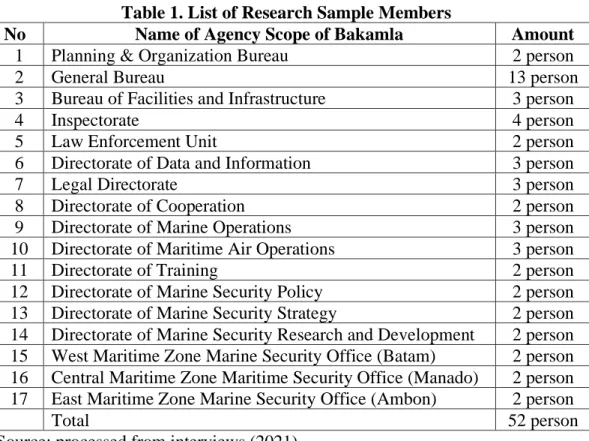
This research was conducted against the background of a phenomenon that occurs in Indonesia, namely the poor quality of financial reports, which is indicated by the opinion of the Supreme Audit Agency that there are still disclaimers. This study aims to analyze the effect of implementing internal control systems and organizational culture on financial accountability. The results of this study are expected to increase financial accountability. With the implementation of a good internal control system and a good organizational culture, it is expected to increase financial accountability. The method stage that will be carried out is starting with a survey to 17 agencies within the Maritime Security Agency. The population in this study were officials who made commitments, internal auditors and accounting staff and financial management staff. The sampling technique used is a saturated sample, where all members of the population are sampled.
The number of samples in this study were 52 people. The data were analyzed using the Structure Equation Model (SEM model) and the Smart PLS (Partial Least Square) software used as an analytical tool in this study. The steps are:
designing the Inner Model (structural model), designing the Outer Model (measurement model), evaluating the Outer Model (measurement model), Evaluation of the Inner Model (structural model) and testing the hypothesis. The research data used came from questionnaires collected from commitment makers, internal auditors and accounting staff as well as financial management staff who were respondents in this study. The benefit of this research is to contribute scientifically to the science of financial accounting and the public sector and solve problems for the central government in improving financial accountability.
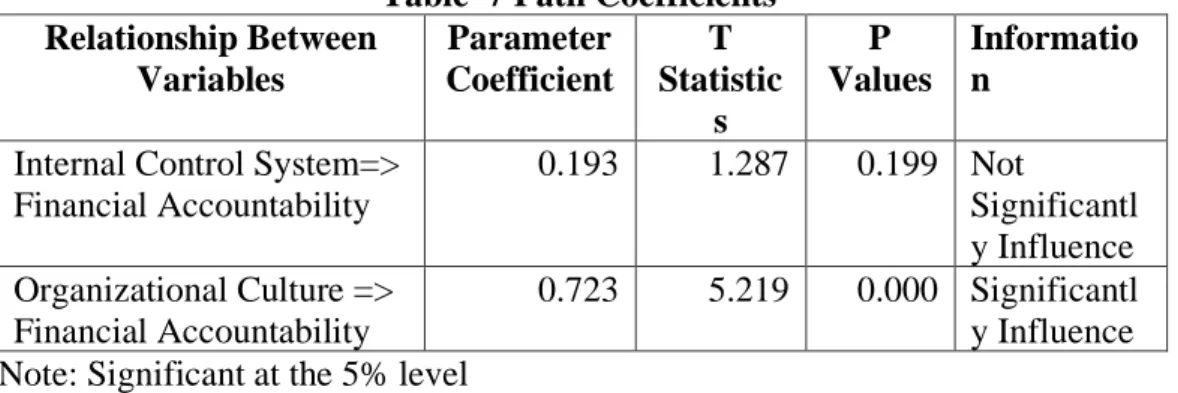
The results of this study state that the internal control system has no effect on financial accountability while organizational culture has a significant effect on financial accountability in a positive direction.
INTRODUCTION
The Central Government Financial Report (CGFR) has been compiled since 2004 as a transparent and accountable state financial accountability which is a consolidated Financial Statement of State Ministries / Institutions (FSMI).
The results of the BPKRI audit of the Central Government Financial Statements from 2015 to 2019 did show good progress but there were still entities that obtained a Disclaimer opinion. This is a phenomenon that is still happening today.
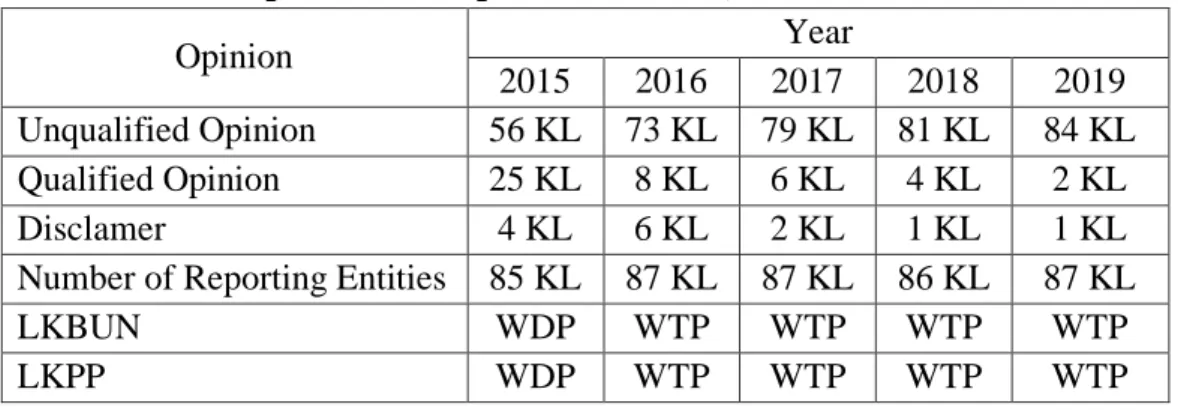
The development of opinion on the Central Government Financial Statements can be seen in the following table:
Table 1.1 Opinion Development of LKKL, LKBUN and LKPP
Opinion Year
2015 2016 2017 2018 2019 Unqualified Opinion 56 KL 73 KL 79 KL 81 KL 84 KL
Qualified Opinion 25 KL 8 KL 6 KL 4 KL 2 KL
Disclamer 4 KL 6 KL 2 KL 1 KL 1 KL
Number of Reporting Entities 85 KL 87 KL 87 KL 86 KL 87 KL
LKBUN WDP WTP WTP WTP WTP
LKPP WDP WTP WTP WTP WTP
In 2019, the Maritime Security Agency received a 'No Opinion'/disclamer opinion, indicating a weak internal control system. This decision prevents the State Ministry/Agency from proposing a larger budget due to insufficient good governance implementation. BPKRI's findings against LKPP highlight the importance of implementing a good internal control system. Financial reports must be linked to good governance, as organizational culture drives loyalty, decision-making, creativity, leadership, communication, and collaboration.
Financial reports are prepared to support transparency and accountability, as per Government Regulation No. 71 of (2010) concerning Government Accounting Standards. The research aims to achieve publication in international journals, as per the target plan.
LITERATURE REVIEW Stewardship Theory
Stewardship theory posits that the government acts as a steward, ensuring awareness, wisdom, and community benefit. This theory explains the government's role as a trusted institution, providing good service, and entrusting financial accountability for economic goals and community welfare. It is often referred to as management theory and has fundamental assumptions.
Internal Control System
COSO (2012, p. 1) Internal control is a process by an entity's board of directors, management, and personnel to ensure the achievement of objectives related to operations, reporting, and compliance. It involves procedures and policies to safeguard assets, check data accuracy and reliability, promote operational efficiency, and encourage adherence to managerial practices.
According to Government Regulation Number 60 of 2008, the Internal Control System is an integral process carried out continuously by leadership and employees to provide confidence in organizational goals through effective, efficient, and reliable financial reporting.
Organizational Culture
According to Harrington (2018, p. 34) Organizational culture is the foundation that drives loyalty, decision-making, creativity, leadership, communication, and collaboration within an organization. It guides daily behavior, directs actions, and promotes exchange of good values and management
Source: IHPS II BPKRI for LKPP Year 2019 (Datolahan)
systems among employees. This framework guides daily behavior and directs actions towards achieving organizational goals.
Financial Accountability
According to Boven et al. (2014, p. 4) “Accountability is a critical rule and enforcement mechanism the social psychological link between individual decision-makers on the one hand and social systems in the other”. Ghartey (1987) argues: “Accountability is intended to find answers to questions related to the service, what, who, whom, whose, where and how. Questions that need answers include what must be accounted for, why accountability must be submitted, to whom the responsibility was handed over, who is responsibility to various parts of the activities in the community, whether accountability go hand in hand with sufficient authority and so on.
Conceptual Framework
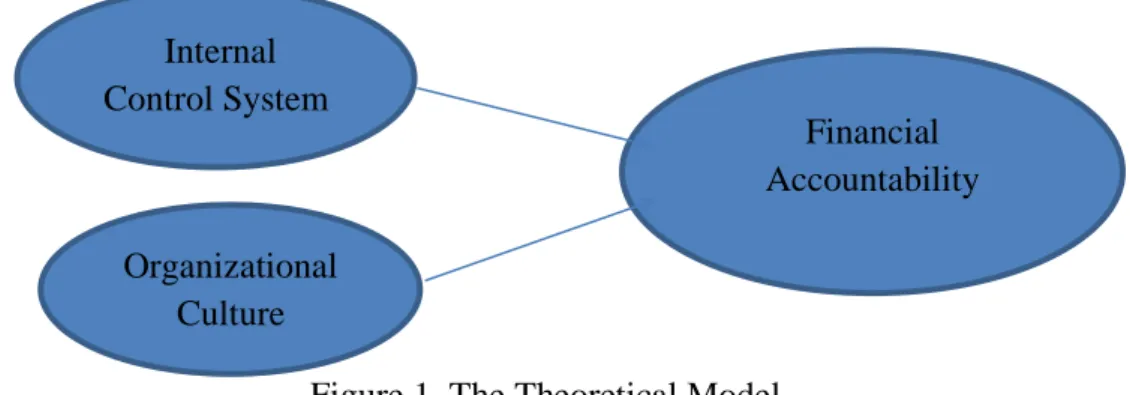
Internal control is a process influenced by organizational leaders and management to ensure goals are achieved (Elder, et al, 2012). Research shows that the implementation of internal control systems affects financial accountability, financial report quality, and human resource competence. While the relationship between internal control systems and financial accountability is weak, it is crucial for promoting financial accountability. Overall, internal control systems play a crucial role in ensuring organizational success. The research model can be seen in the following figure:
Figure 1. The Theoretical Model
Based on the framework stated earlier, the research hypotheses can be arranged as follows:
H1 : There is a positive significant influence of internal control system on the financial accountability
H2 : There is a positive significant influence of organizational culture on the financial accountability
METHOD
This exploratory study examines the influence of internal control system and organizational culture on financial accountability. Financial accountability involves managing resources and implementing policies to achieve goals. The internal control system ensures organizational goals are achieved through efficient activities, reliable financial reporting, and compliance with legislation.
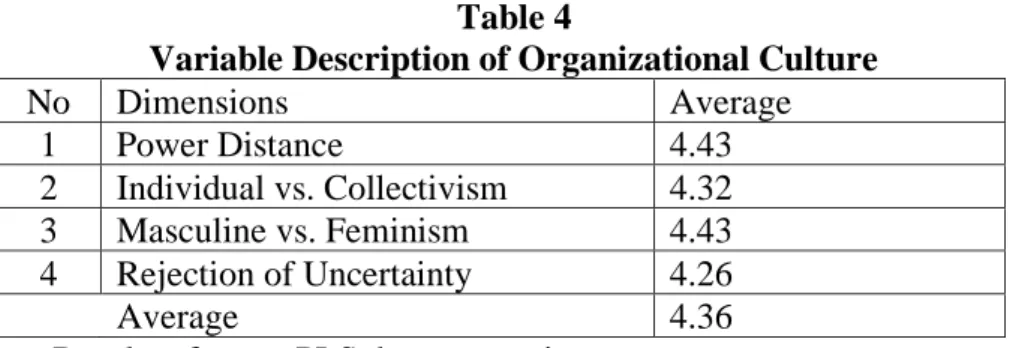
Organizational culture is a system of values, beliefs, and norms that are agreed upon and followed by members. The target population includes Commitment
Internal Control System
Financial Accountability Organizational
Culture