The Routledge Companion to Actor-Network Theory
This companion explores ANT as an intellectual practice, tracking its movements and engagements with a wide range of other academic and activist projects. Showcasing the work of a diverse set of ‘second generation’ ANT scholars from around the world, it highlights the exciting depth and breadth of contemporary ANT and its future possibilities.
The companion has 38 chapters, each answering a key question about ANT and its capacities. Early chapters explore ANT as an intellectual practice and highlight ANT’s dialogues with other fields and key theorists. Others open critical, provocative discussions of its limitations. Later sections explore how ANT has been developed in a range of social scientific fields and how it has been used to explore a wide range of scales and sites. Chapters in the final section discuss ANT’s involvement in ‘real world’
endeavours such as disability and environmental activism, and even running a Chilean hospital. Each chapter contains an overview of relevant work and introduces original examples and ideas from the authors’ recent research. The chapters orient readers in rich, complex fields and can be read in any order or combination. Throughout the volume, authors mobilise ANT to explore and account for a range of exciting case studies: from wheelchair activism to parliamentary decision-making; from racial profiling to energy consumption monitoring; from queer sex to Korean cities. A comprehensive introduction by the editors explores the significance of ANT more broadly and provides an overview of the volume.
The Routledge Companion to Actor-Network Theory will be an inspiring and lively companion to aca- demics and advanced undergraduates and postgraduates from across many disciplines across the social sciences, including Sociology, Geography, Politics and Urban Studies, Environmental Studies and STS, and anyone wishing to engage with ANT, to understand what it has already been used to do and to imagine what it might do in the future.
Anders Blok is an Associate Professor of Sociology at the University of Copenhagen. He is the co-author (with Torben E. Jensen) of Bruno Latour: Hybrid Thoughts in a Hybrid World (Routledge 2011) and the co-editor (with Ignacio Farías) of Urban Cosmopolitics: Agencements, Assemblies, Atmospheres (Routledge 2016).
Ignacio Farías is a Professor of Urban Anthropology at the Humboldt University Berlin. He is the co-editor of Urban Assemblages: How Actor-Network Theory Changes Urban Studies (Routledge 2009, with Thomas Bender), Technical Democracy as a Challenge for Urban Studies (2016, with Anders Blok) and Stu- dio Studies: Operations, Topologies & Displacements (Routledge 2015, with Alex Wilkie).
Celia Roberts is a Professor in the School of Sociology, Australian National University. She is the co-author, with Adrian Mackenzie and Maggie Mort, of Living Data: Making Sense of Health Biosensors (2019) and the author of Puberty in Crisis: The Sociology of Early Sexual Development (2016).
The Routledge Companion to Actor-Network Theory
Edited by Anders Blok, Ignacio Farías
and Celia Roberts
First published 2020 by Routledge
2 Park Square, Milton Park, Abingdon, Oxon OX14 4RN and by Routledge
52 Vanderbilt Avenue, New York, NY 10017
Routledge is an imprint of the Taylor & Francis Group, an informa business
© 2020 selection and editorial matter, Anders Blok, Ignacio Farías and Celia Roberts; individual chapters, the contributors
The right of Anders Blok, Ignacio Farías and Celia Roberts to be identified as the authors of the editorial material, and of the authors for their individual chapters, has been asserted in accordance with sections 77 and 78 of the Copyright, Designs and Patents Act 1988.
All rights reserved. No part of this book may be reprinted or reproduced or utilised in any form or by any electronic, mechanical, or other means, now known or hereafter invented, including photocopying and recording, or in any information storage or retrieval system, without permission in writing from the publishers.
Trademark notice: Product or corporate names may be trademarks or registered trademarks, and are used only for identification and explanation without intent to infringe.
British Library Cataloguing-in-Publication Data
A catalogue record for this book is available from the British Library Library of Congress Cataloging-in-Publication Data
A catalog record has been requested for this book ISBN: 978-1-138-08472-8 (hbk)
ISBN: 978-1-315-11166-7 (ebk) Typeset in Bembo
by codeMantra
List of figures ix
List of contributors x
Acknowledgements xix Actor-network theory as a companion: an inquiry into intellectual practices xx Ignacio Farías, Anders Blok and Celia Roberts
SeCTioN 1
Some elements of the ANT paradigm(s) 1 Ignacio Farías, Anders Blok and Celia Roberts
1 What if ANT wouldn’t pursue agnosticism but care? 4 Daniel López-Gómez
2 How to make ANT concepts more real? 14 Adrian Mackenzie
3 Is ANT’s radical empiricism ethnographic? 24 Brit Ross Winthereik
4 Can ANT compare with anthropology? 34 Atsuro Morita
5 How to write after performativity? 46 José Ossandón
6 Is ANT a critique of capital? 56 Fabian Muniesa
7 How to use ANT in inventive ways so that its critique will not run
out of steam? 64 Michael Guggenheim
Contents
Contents
SeCTioN 2
engaging dialogues with key intellectual companions 73 Anders Blok, Ignacio Farías and Celia Roberts
8 Is actant-rhizome ontology a more appropriate term for ANT? 76 Casper Bruun Jensen
9 What can ANT still learn from semiotics? 87 Alvise Mattozzi
10 What did we forget about ANT’s roots in anthropology of writing? 101 Jérôme D. Pontille
11 As ANT is getting undone, can Pragmatism help us re-do it? 112 Noortje Marres
12 Why does ANT need Haraway for thinking about (gendered) bodies? 121 Ericka Johnson
13 How does thinking with dementing bodies and A. N. Whitehead
reassemble central propositions of ANT? 133 Michael Schillmeier
14 What is the relevance of Isabelle Stengers’ philosophy to ANT? 143 Martin Savransky
SeCTioN 3
Trading zones of ANT: problematisations and ambivalences 155 Ignacio Farías, Anders Blok and Celia Roberts
15 What can go wrong when people become interested
in the non-human? 158 Nigel Clark
16 What possibilities would a queer ANT generate? 168 Kane Race
17 Is ANT capable of tracing spaces of affect? 181 Derek P. McCormack
18 How to care for our accounts? 190 Sonja Jerak-Zuiderent
Contents
19 Is ANT an artistic practice? 200
Francis Halsall
20 How to stage a convergence between ANT and Southern sociologies? 210 Marcelo C. Rosa
21 What might ANT learn from Chinese medicine about difference? 220 Wen-Yuan Lin
SeCTioN 4
Translating ANT beyond science and technology 233 Celia Roberts, Anders Blok and Ignacio Farías
22 What about race? 235 Amade M’charek and Irene van Oorschot
23 What might we learn from ANT for studying healthcare issues in the
majority world, and what might ANT learn in turn? 246 Uli Beisel
24 What is the value of ANT research into economic valuation devices? 256 Liliana Doganova
25 How does ANT help us to rethink the city and its promises? 264 Alexa Färber
26 How to study the construction of subjectivity with ANT? 273 Arthur Arruda Leal Ferreira
27 Why do maintenance and repair matter? 283 David J. Denis
SeCTioN 5
The sites and scales of ANT 295 Anders Blok, Ignacio Farías and Celia Roberts
28 Are parliaments still privileged sites for studying politics and liberal
democracy? 298 Endre Dányi
29 How does an ANT approach help us rethink the notion of site? 306 Albena Yaneva and Brett Mommersteeg
Contents
30 How does the South Korean city of Kyŏngju help ANT think place
and scale? 318 Robert Oppenheim
31 How can ANT trace slow- moving environmental harms as they
become eventful political disruptions? 328 Kregg Hetherington
32 Is ANT equally good in dealing with local, national and global natures? 337 Kristin Asdal
33 What happens to ANT, and its emphasis on the socio- material
grounding of the social, in digital sociology? 345 Carolin Gerlitz and Esther Weltevrede
SeCTioN 6
The uses of ANT for public–professional engagement 357 Celia Roberts, Anders Blok and Ignacio Farías
34 Can ANT be a form of activism? 360 Tomás Sánchez Criado and Israel Rodríguez-Giralt
35 How has ANT been helpful for public anthropologists after
the 3.11 disaster in Japan? 369 Shuhei Kimura and Kohei Inose
36 How to move beyond the dialogism of the ‘Parliament of Things’ and the ‘Hybrid Forum’ when rethinking
participatory experiments with ANT? 378 Emma Cardwell and Claire Waterton
37 How well does ANT equip designers for socio- material speculations? 389 Alex Wilkie
38 How to run a hospital with ANT? 400 Yuri Carvajal Bañados
Index 411
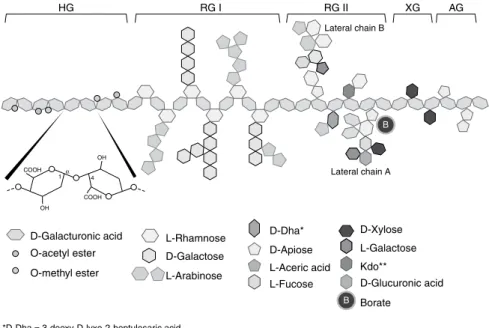
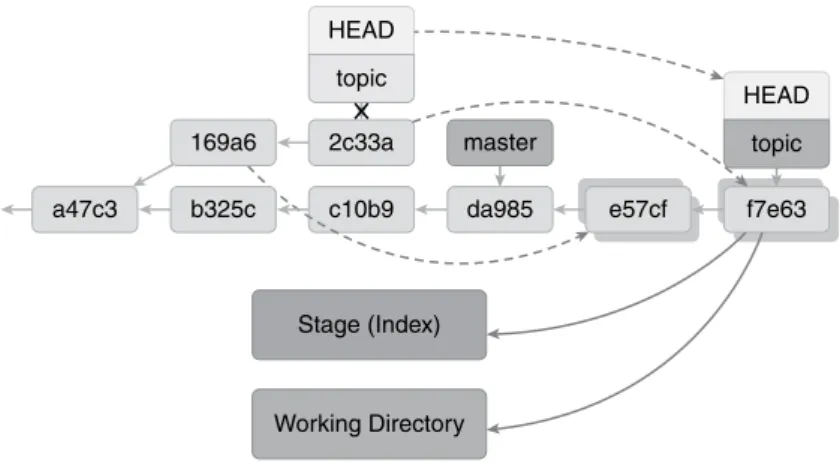
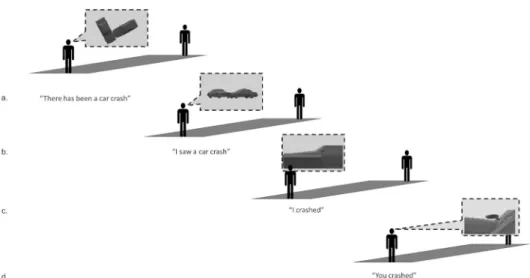
2.1 Pectin molecule 15 2.2 Flat-felled seam 16 2.3 Rebasing a branch 18 2.4 Salto 20 9.1 Signification models: a. Peirce, o = object, r = representamen,
i = interpretant (my elaboration); b. de Saussure’s ([1916] 1959: 115);
c. Hjelmslev’s (my elaboration); d. ANT’s (my elaboration) 88 9.2 Examples of enunciational relations referring to the same narrative relations 92 9.3 Example of the use of semiotics categories and models (Akrich and Latour,
1992: 263). Here, the following models are used: ‘AND/OR relations,’
‘program’ and ‘anti-program of action.’ The ‘program of action’ is the goal an ‘actor’ wants to achieve – in this case the hotel manager wants to have the keys back; the ‘anti- program of action’ is the opposite programme, in this case carried out by the other ‘actors,’ the customers, and consists in keeping the key. The diagram shows the way in which, for each new
association (AND), the entire set of relations is replaced (OR) by another set 92 9.4 Enunciational dynamics in fiction and in science (Latour 1988, 14) 96 9.5 Comparison among disciplinary architectures: a. Greimas’ (Greimas
and Courtés [1979] 1982: 107 and 171); b. Latour’s (2005) 98
22.1 Nanolab snapshot 236
22.2 Nanolab snapshot result 2 240
29.1 Factory, OMA – building site in Manchester (Authors’ Own) 310 30.1 Trans Eurasian Railway Network map, Torasan station, 2007. Photo by author 323
33.1 Spectrum of automation 351
33.2 Automation functions 353
34.1 Sebastián Ledesma testing the ramps at Fraternitat Street. Picture CC BY
Functional Diversity Barcelona commission (August 2011, used with permission) 361 37.1 The Energy Babble (© Alex Wilkie) 395 37.2 An exploded view of the Energy Babble (© Interaction Research Studio) 396 37.3 Pages from the Energy Babble manual showing the quick start guide for the
device (© Interaction Research Studio) 396 38.1 The map is not the territory: planning the simulation centre (taken by the author) 402 38.2 Statistical map (public image, Puerto Montt Hospital) 404 38.3 Clinical map (public image, Puerto Montt Hospital) 405 38.4 Nurses walk through the Cayenel neighbourhood (image taken by
Maria Elenea Flores) 409
Figures
Kristin Asdal is a Professor at TIK Center for Technology, Innovation and Culture at the University of Oslo. She has published widely across science and technology studies (STS), environmental studies and political and social theory. A key concern in her work is method issues in STS and beyond and she has co-edited several books and special issues on the sub- ject. Her recent publications include Humans, Animals and Biopolitics: The More than Human Condition (co-edited with Tone Druglitrø and Steve Hinchliffe; Routledge 2017).
Yuri Carvajal Bañados was born in Valparaíso, Chile, in 1961. He studied at the Univer- sity of Chile, Valparaíso. He was relegated in 1981, as a student opposed to the dictatorship, but then gained his MD in 1986. He was the Medical Chief in La Feria – public primary attention – in La Victoria (a lower-class township), Santiago during 1987–1993. He did a Master’s in Public Health 1998 and worked as a Physician of Occupational and Environ- mental Health during 1997–2003. He became the Chief of the Llanchipal Health Service in 2003–2006 and then the Doctor of Public Health in 2011. He was the Editor of the Chilean Journal of Public Health 2011–2015 and the Director of Puerto Montt Hospital in 2016–2018.
He is currently an Assistant Professor at the University of Chile and an Editor at Cuadernos Médico-Sociales.
Uli Beisel is an Assistant Professor of Culture and Technology at Bayreuth University ( Germany) and holds a PhD in Human Geography from the Open University (UK). She has worked on human-mosquito-parasite entanglements in malaria control in Ghana and Sierra Leone and the translation of new health technologies in Uganda and Rwanda. Her new research is looking at trust in biomedicine and healthcare infrastructures after the Ebola epidemic in a comparative project in Sierra Leone, Ghana and Uganda. Uli’s work has been published by Science as Culture, Society and Space, Biosocieties, Medical Anthropology and Geoforum.
Anders Blok is an Associate Professor of Sociology at the University of Copenhagen, Denmark. He has published widely within science and technology studies (STS), urban stud- ies, environmental sociology and social theory. He is the co-author (with Torben E. Jensen) of Bruno Latour: Hybrid Thoughts in a Hybrid World (Routledge 2011) and the co-editor (with Ignacio Farías) of Urban Cosmopolitics: Agencements, Assemblies, Atmospheres (Routledge 2016).
emma Cardwell is a Lecturer in Human Geography in the School of Geographical and Earth Sciences at the University of Glasgow. Her research explores the interrelationships between environment, materiality and knowledge practices, with a particular focus on the
Contributors
Contributors production of food. Using theories from science and technology studies, political economy and feminist science studies, she examines processes of financialisation, market-creation, equality and participation in fisheries management and marine conservation; and the inter- relationships of agriculture, land, economics and biochemistry, via the modes and practices of crop nutrition and fertiliser use.
Nigel Clark is a Professor of Social Sustainability and Human Geography at Lancaster Uni- versity, UK. He is the author of Inhuman Nature: Sociable Life on a Dynamic Planet (2011) and the co-editor with Kathryn Yusoff of a recent Theory, Culture & Society special issue on ‘Geo- social Formations and the Anthropocene’ (2017). Current research revolves around questions of how to think through the Earth while also decolonising global thought. He is working on a book with Bronislaw Szerszynski entitled The Anthropocene and Society: Toward Planetary Social Thought.
Tomás Sánchez Criado is a Senior Researcher at the Chair of Urban Anthropology of the Department of European Ethnology, Humboldt-University of Berlin. His work, at the cross- roads of Anthropology and STS, experiments with forms of public and ethnographic engage- ment around urban and care infrastructures, and their technical democratisation through activist and pedagogic projects. He recently co-edited Experimental Collaborations: Ethnogra- phy through Fieldwork Devices (Berghahn, 2018, with Adolfo Estalella) and Re- learning Design.
Pedagogic Experiments with STS in Design Studio Courses (DISEÑA, 2018, with Ignacio Farías).
endre Dányi is a Guest Professor for the Sociology of Globalisation at the Faculty of Social Sciences at the Bundeswehr University in Munich. Growing up in Budapest in the 1990s, he became fascinated with the dual transformation commonly referred to as the Velvet Revo- lution and the Information Revolution. In the early 2000s, in London and Lancaster, he was strongly influenced by ANT, exploring new ways of thinking about the technical and the polit- ical. In the 2010s, in Berlin and Frankfurt, he has combined these with other strands of crit- ical thought, especially those associated with Walter Benjamin. Endre is currently working on his habilitation, provisionally titled ‘Melancholy Democracy.’ He is also busy co-running Mattering Press – an Open Access book publisher. E-mail: [email protected].
David J. Denis is a Professor in Sociology at the Centre de Sociologie de l’Innovation (Mines ParisTech). He studies data labour in various organisations and explores maintenance practices, notably in urban settings. He is the co-founder of Scriptopolis, a collective scien- tific blog about writing practices (www.scriptopolis.fr/en).
Liliana Doganova is an Associate Professor at the Center for the Sociology of Innovation, MINES ParisTech. At the intersection of economic sociology and Science and Technology Studies, her work has focused on business models, the valorisation of public research and markets for bio- and clean-technologies. She has published in journals such as Research Policy, Science and Public Policy and the Journal of Cultural Economy, and she is currently preparing a monograph on the historical sociology of discounting and the economic valuation of the future.
Alexa Färber is a Professor of European Ethnology at the University of Vienna. She com- bines assemblage thinking and ethnographic urban research to explore the social implications of urban imagineering on everyday lives. Her recent project investigates the notion of the
Contributors
city as promissory assemblage. Before, she was the primary investigator for the ‘Low- Budget Urbanity’ research initiative at HafenCity University Hamburg (2012–2015). In her blog talkingphotobooks.net she explores the graspability of the city in photobooks and extro- verted, shared reading. Her research interests include visual methodologies and ANT, his- torical dimensions of audit cultures, everyday representational work, dwelling and mobility.
Ignacio Farías is a Professor of Urban Anthropology at the Humboldt University Berlin.
His research interests lie at the crossroads of urban studies, science and technology studies and cultural anthropology. His work explores the politics of urban disruptions, from disas- ters to noise, open forms of cultural and anthropological production, as well as participa- tory and pedagogical experiments with technical democratisation. He has co-edited Urban Assemblages. How Actor-Network Theory Changes Urban Studies (Routledge 2009, with Thomas Bender), Technical Democracy as a Challenge for Urban Studies (CITY 2016, with Anders Blok), Urban Cosmopolitics: Agencements, Assemblies, Atmospheres (Routledge 2016, with Anders Blok), Studio Studies. Operations, Topologies & Displacements (Routledge 2015, with Alex Wilkie) and Re-learning Design: Pedagogical Experiments with STS in Design Studio Courses (DISEÑA 2018, with Tomás S. Criado).
Arthur Arruda Leal Ferreira is a Postdoctoral Researcher in the History of Psychology from the UNED (Spain) and Janveriana University (Colombia), and is a Professor of the History of Psychology at the Institute of Psychology at the Federal University of Rio de Janeiro (UFRJ).
He has recently edited the following books: Psicologia, Tecnologia e Sociedade, A pluralidade do campo psicológico, História da Psicologia: Rumos e Percursos, Teoria Ator-Rede e a Psicologia and Pragmatismo e questões contemporâneas. He has also contributed to the books: Foucault e a Psicologia, Da metafísica moderna ao pragmatismo, Biosegurança e Biopolítica no Século XXI, Explicaciones em Psicología and Neoliberalism and Technoscience.
Carolin Gerlitz is a Professor in Digital Media and Methods at the University of Siegen and a Member of the Digital Methods Initiative Amsterdam. Her research interests involve among others data-intensive media, platform and infrastructure studies, digital methodolo- gies, issue mapping, apps, sensormedia, quantification and evaluation. Before joining Siegen, she completed her PhD in Sociology at Goldsmiths and was an Assistant Professor in New Media and Digital Culture at the University of Amsterdam. She is the co-speaker of the DFG-funded graduate school ‘Locating Media’ and the deputy speaker of the DFG cooper- ative research centre ‘Media of Cooperation.’ She holds an NWO Veni grant for the project
‘Numbering Life.’
Michael Guggenheim is a Reader in the Department of Sociology, Goldsmiths, University of London and a Co-director of the Centre of Invention and Social Process (CISP). He works on disasters, buildings and food. He teaches mostly visual and inventive methods.
Francis Halsall is a Co-director of the Master’s Programs, Art in the Contemporary World, at National College of Art and Design, Dublin and a Research Fellow at the Department of Art History and Image Studies, University of the Free State, Bloemfontein, South Africa.
His research involves three main areas: (1) Modern and contemporary art; (2) Philosophical aesthetics; (3) Systems Thinking. He has published and lectured widely in all areas. He is
Contributors
currently working on several projects under the broad heading of ‘Systems Aesthetics.’ More information at: www.alittletagend.blogspot.com.
Kregg Hetherington is a Political and Environmental Anthropologist based at Concor- dia University in Montreal where he also runs the Concordia Ethnography Lab. He is the author of Guerrilla Auditors: The Politics of Transparency in Neoliberal Paraguay, and the editor of Infrastructure, Environment and Life in the Anthropocene. His current ethnographic work on the relations between soybean monocultures and the regulatory state develops an analysis of regulation at the intersection of ANT, biopolitics and feminist STS.
Kohei Inose is a Professor of Volunteer Studies at Meiji Gakuin University, Japan. He has conducted ethnographic research on disability and public movement in Japan. His research interest includes disability, agriculture, development and regional history. Among his pub- lication is ‘Living with Uncertainty: Public Anthropology and Radioactive Contamination’
( Japanese Review of Cultural Anthropology 15, 2015). Currently, he is exploring the relationship between disability movements and economic development in Asian societies.
Casper Bruun Jensen is a specially appointed Associate Professor at Osaka University and Honorary Lecturer at Leicester University. He is the author of Ontologies for Developing Things (Sense, 2010) and Monitoring Movements in Development Aid (with Brit Ross Winthereik) (2013, MIT) and the editor of Deleuzian Intersections: Science, Technology, Anthropology with Kjetil Rödje (Berghahn, 2009) and Infrastructures and Social Complexity with Penny Harvey and Atsuro Morita (Routledge, 2016). His present work focuses on knowledge, infrastruc- ture and practical ontologies in the Mekong river basin.
Sonja Jerak-Zuiderent is an Assistant Professor of Science and Technology Studies at the Department of General Practice at the Amsterdam University Medical Centres, Netherlands. Her overarching research interest lies in the question on ‘how to care’ in accountability and evaluation practices in healthcare and the sciences broadly defined;
particularly in relation to the more neglected, socio-material aspects of ‘good(s)’ and
‘bad(s)’, studying the everyday marginalities that get produced. She has published on ac- countability devices in healthcare, like guidelines and performance indicators, on social studies of patient safety, is currently developing publications on trans* care in Argentina, ethnographically exploring ‘good science’ practices across and within disciplines and is finalising her manuscript ‘Generative Accountability: Comparing with Care’ (forthcom- ing with MatteringPress).
Ericka Johnson is a Professor of Gender and Society at the Department of Thematic Studies, Linköping University. Her research interests include the simulated body, medical technologies, pharmaceuticals and the production of anatomical knowledge about the (sometimes) healthy sub- ject and body. She is currently leading the Bodies Hub, a collaborative research environment that explores tensions between the social and medical body. Her most recent books are Refracting through Technologies. Seeing and Untangling Bodies, Medical Technologies and Discourses (Routledge, 2019) and Gendering Drugs. Feminist Studies of Pharmaceuticals (Palgrave Macmillan, 2017).
Shuhei Kimura is an Associate Professor of Cultural Anthropology at the University of Tsukuba, Japan. He has conducted ethnographic research on disaster in Turkey and Japan.
Contributors
His research interest includes disaster, infrastructure, temporality and public anthropology.
Among his publication is ‘When a Seawall Is Visible: Infrastructure and Obstruction in Post-tsunami Reconstruction in Japan’ (Science as Culture 25(1), 2016). His current project addresses multi-temporal interactions between human and nonhuman actors in the post- tsunami coastal Japan.
Wen-Yuan Lin is a Professor at the National Tsing-hua University, Taiwan. He uses STS material semiotic approaches to explore emerging alternative knowing spaces and the poli- tics of empirical ontology in medical practices. One of his current projects is exploring the possibility of mobilising alternative mode of knowing in Chinese medical practices to pro- vincialise the frameworks of EuroAmerican social sciences. His webpage is at http://cge.gec.
nthu.edu.tw/faculty/wylin/.
Daniel López-Gómez is an Associate Professor in the Department of Psychology and Education at the Universitat Oberta de Catalunya and a Researcher at the Internet Inter- disciplinary Institute (IN3) of the same university. He is an STS Scholar and Ethnographer interested in the study of care, ageing and disability, and of the emergence of grass-roots innovations in contexts of crisis and austerity.
Amade M’charek is a Professor of Anthropology of Science at the Department of Anthropology of the University of Amsterdam. Her research interests are in forensics, foren- sic anthropology and race. M’charek is the Principle Investigator of the ERC-Consolidator Project RaceFaceID, http://race-face-id.eu, a project on forensic identification, face and race.
Her work has appeared in various peer-reviewed journals, such as STHV, Science as Culture, Theory, Culture and Society and Cultural Anthropology.
Adrian Mackenzie (Professor in the School of Sociology, ANU) researches how people work and live with sciences, media, devices and infrastructures. He often focuses on soft- ware and platforms. He has done fieldwork with software developers in making sense of how platforms are made, managed and maintained (see Cutting Code: Software and Sociality, Peter Lang 2006). He has tracked infrastructural experience (Wirelessness: Radical Empiricism in Network Cultures, MIT Press 2010). His most recent book Machine Learners: Archaeology of a Data Practice (MIT Press, 2017) describes changes in how science and commerce use data to make knowledge. He has a keen interest in the methodological challenges of media and data platforms for sociology and philosophy.
Noortje Marres is an Associate Professor and Director of the Centre of Interdisciplinary Methodologies at the University of Warwick (UK). She studied Sociology and Philosophy of Science and Technology at the University of Amsterdam, and conducted her doctoral research at the Centre de Sociologie d’innovation at MinesTech in Paris, on issue-centred concepts of par- ticipation in technological societies, in Pragmatism and ANT. She published two monographs, Material Participation (2012) and Digital Sociology (2017), and one edited collection Inventing the Social (with M. Guggenheim and A. Wilkie, 2018). More info at www.noortjemarres.net.
Alvise Mattozzi has PhD in Semiotics and is a Research Fellow in Sociology at the Faculty of Design and Art of the Free University of Bozen-Bolzano. He works at the crossroads of Science and Technology Studies and Design Studies, using semiotics as descriptive-ana- lytical methodology. His main research focus regards the development of a method for the
Contributors
description of the social mediation of artefacts, by recovering and expanding the script model as elaborated by Madeleine Akrich and Bruno Latour. He has used a revised version of the script model in research works addressing the use of artefacts by final users as well as in re- search works addressing designing practices.
Derek P. McCormack is a Professor of Cultural Geography at the University of Oxford.
He has written about non-representational theory, affect, atmospheres and the elemental. He is the author of Refrains for Moving Bodies: Experience and Experiment in Affective Spaces (2014), and Atmospheric Things: On the Allure of Elemental Envelopment (2018), both published with Duke University Press.
Brett Mommersteeg is a PhD student at the University of Manchester in the Architecture Programme. His research focuses on Actor-Network Theory, ethnography and architec- tural projects. Currently, his dissertation follows the making of a building in Manchester, UK, called Factory, and traces the complex ecology of actors and their modes of relating through the design and construction stages. He has a recent publication about his disserta- tion in Ardeth entitled, ‘The Garden of Bifurcating Paths: Towards a Multi-Sited Ecological Approach to Design.’
Atsuro Morita is an Associate Professor of Science, Technology and Culture at Osaka University. His work concerns the travels of scientific knowledge and technology between Thailand and Japan, postcolonialism and Asianism in relation to the recent rise of Asian STS, and water infrastructures and global hydrology in the context of the crisis of climate change.
His publications include Infrastructure and Social Complexity (co-edited with Penny Harvey and Casper Bruun Jensen), The World Multiple (co-edited with Keiichi Omura, Grant Otsuki and Shiho Satsuka) and Engineering in the Wild (in Japanese). His article ‘The Ethnographic Machine’ (Science, Technology and Human Values 39(2)) experiments with a notion of internal comparisons embedded in machines.
Fabian Muniesa, a Researcher at the Centre de Sociologie de l’Innovation (Mines ParisTech, PSL University, in Paris, France) since the mid-2000s and an ANT Practitioner since the mid-1990s, is the author of The Provoked Economy: Economic Reality and the Performa- tive Turn (Routledge, 2014) and the co-author of Capitalization: A Cultural Guide (Presses des Mines, 2017). His past and current research includes work on the politics of valuation, quan- tification, simulation, automation and organisation, a series of topics he has been approaching from a constructivist, pragmatist perspective.
Irene van Oorschot is a Postdoctoral Researcher in the RaceFaceID project (PI: Prof. Amade M’charek). Having defended her dissertation on judicial and social-scientific ways of truth- and fact-making in 2018 (cum laude), she is currently focused on the mobilisation and contestation of forensic knowledge within legal settings, paying attention especially to the way relationships between individuals and populations are made and unmade within these practices.
Robert Oppenheim is a Professor of Asian Studies and Anthropology at the University of Texas at Austin. His primary work on the ‘ontological politics’ of development, heritage and place in the city of Kyŏngju, South Korea appears in the 2008 book Kyŏngju Things: Assem- bling Place. Other articles on place and space through an ANT lens appear in Anthropological Theory and the volume Objects and Materials: A Routledge Companion.
Contributors
José ossandón is an Associate Professor in the Organization of Markets, Department of Organization, Copenhagen Business School. His current research focuses on two main areas.
The first area is the organisation of markets. In particular, he studies expert knowledge and technologies developed with the intention to make markets to solve matters of collective concerns. The second is the management of households’ financial economies. Here, he ex- pects to help bridging between studies of mundane economic practices and analyses of the calculative devices produced by financial firms. He is an Associate Editor at the Journal of Cultural Economy and Valuation Studies.
Jérôme D. Pontille is a Researcher in the French National Center for Scientific Research and works at the Centre de Sociologie de l’Innovation (Mines ParisTech). His research fo- cuses on writing practices, scientific authorship and evaluation technologies, the mainte- nance of urban infrastructures. He is the co-founder of Scriptopolis, a collective scientific blog about writing practices (www.scriptopolis.fr/en).
Kane Race is a Professor of Gender and Cultural Studies at the University of Sydney.
Motivated by the capacity of bodies and pleasures to intervene in the disciplinary production of knowledge, subjects, technologies and forms of life, he has published widely on questions of HIV infection, sexuality, biomedicine, drug use, digital culture, risk and care practices.
He is the author of Pleasure Consuming Medicine: The Queer Politics of Drugs (Duke University Press, 2009), Plastic Water: The Social and Material Life of Bottled Water (co-authored with Gay Hawkins and Emily Potter, MIT Press, 2015), and The Gay Science: Intimate Experiments with the Problem of HIV (Routledge, 2017).
Celia Roberts is a Professor in the School of Sociology at the Australian National University, Canberra. She previously worked at Lancaster University and was an active member of the Centre for Science Studies there for many years. She is currently working on health biosens- ing, stress and reproduction, and is the co-author, with Adrian Mackenzie and Maggie Mort of a forthcoming book entitled Living Data: Making Sense of Health Biosensors. Her previous books include Puberty in Crisis: The Sociology of Early Sexual Development ( Cambridge, 2015) and Messengers of Sex: Hormones, Biomedicine and Feminism (Cambridge, 2007).
israel Rodríguez-Giralt is an Associate Professor/Researcher at CareNet, Internet Inter- disciplinary Institute (IN3), Open University of Catalonia (UOC). His research focuses on technoscientific activism and new forms of social experimentation, mobilisation and pub- lic engagement, particularly in the field of social care and disaster situations. He co-edited Disasters and Politics: Materials, Experiments, Preparedness (Wiley/Blackwell, 2014).
Marcelo C. Rosa is an Associate Professor of Sociology at the University of Brasilia, Brazil and a Researcher of National Council for the Scientific and Technological Development (CNPq).
In the last two decades, he has led, participated and supervised research projects on landless social movements in the global south. The research has developed to a theoretical and meth- odological agenda on the possibilities of the Southern theories and existences to challenge the hegemonic social sciences. He is the Head of the Research Lab on Non- Exemplary Sociology (www.naoexemplar.com) and the Founder of the Agrarian South: Journal of Political Economy.
Martin Savransky is a Lecturer and Director of the Unit of Play in the Department of Sociology, Goldsmiths, University of London, where he teaches courses in philosophies of
Contributors difference, cultural theory and pluralistic politics. He is the author of The Adventure of Rele- vance (2016), co-editor of Speculative Research: The Lure of Possible Futures (2017) and editor of Isabellle Stengers and the Dramatization of Philosophy (2018). He is currently working on a new monograph titled Around the Day in Eighty Worlds: Politics of the Pluriverse.
Michael Schillmeier is a Professor of Sociology at the Department of Sociology, Philosophy and Anthropology at the University of Exeter (UK). He received his PhD from Lancaster University (UK). He had Schumpeter-Fellowship between 2010 and 2015 (funded by VolkswagenStiftung), is an honorary Senior Member of EGENIS, the Center for the Studies of Life Sciences, Exeter University, and the Co-Editor of Space & Culture.
He has widely written on the eventful dynamics of the heterogeneity of societal orderings, outlining the relevance of embodied and affective relations, material objects and technol- ogies. His research includes Science and Technology Studies, Dis/ability Studies and the Sociology of Health and Illness. His work is cross-disciplinary and links Sociology with Philosophy, Anthropology and Art. Publications include Eventful Bodies: The Cosmopolitics of Illness (Ashgate), Rethinking Disability: Bodies, Senses, and Things (Routledge), Agency with- out Actors? New Approaches to Collective Action with Jan-Henrick Passoth and Birgit Peuker ( Routledge), Un/knowing Bodies with Joanna Latimer ( Wiley-Blackwell), New Technologies and Emerging Spaces of Care with Miquel Domenech (Ashgate), Disability in German Litera- ture, Film, and Theater with Eleoma Joshua ( Camden House). With Juliane Sarnes, he has translated Gabriel Tarde’s Monadology and Sociology into German.
Claire Waterton is a Professor of Environment and Culture in the Department of Sociology at Lancaster University. She uses STS theory and methods to explore some of the troubling consequences of contemporary systems of production, consumption and living. For example, the disposal of nuclear wastes, the diffuse pollution of soils and water, escalating biodiversity loss. She wants to open up new ways of knowing/feeling/connecting/making sense around these environmental issues and hence to find new ways of enacting nature-culture relations.
She is the co-author of Care and Policy Practices (Sage 2017), Barcoding Nature (Routledge 2013) and Nature Performed (Blackwell 2003).
esther Weltevrede is an Assistant Professor of New Media and Digital Culture, Coordina- tor of the Digital Methods Initiative at the University of Amsterdam and a Member of the App Studies Initiative. Her research interests include digital methods, platform and infrastructure studies, automation, apps, fake news circulation and software studies. In her dissertation on
‘Repurposing digital methods: The research affordances of platforms and engines,’ she has developed the notion of ‘research affordances’ to understand the action possibilities within software, from the perspective of, and aligned with the interests of, the researcher.
Alex Wilkie is a Reader in Design and a Sociologist at Goldsmiths, University of London, where he also directs the Centre for Invention and Social Process hosted by the Department of Sociology. His work involves experimental design and empirical research to explore social and technological future – making practices and more-than-human sociality. Alex’s work cuts across and ties together science and technology studies, empirical philosophy, process theory and speculative reasoning as well as human–computer interaction, practice-based design research and design theory. He has co-edited Studio Studies (Routledge), Speculative Research (Routledge), and Inventing the Social (Mattering Press) and co-authored Energy Babble (Mattering Press).
Contributors
Brit Ross Winthereik is a Professor in the Technologies in Practice Research Group at the IT University of Copenhagen. Her research focuses on public sector digitalisation in Denmark, energy infrastructures, digital data and accountability. She has published widely in Science and Technology Studies and anthropology journals. Her book Monitoring Movements in Development Aid: Recursive Infrastructures and Partnerships (MIT Press, 2013) with Casper Bruun Jensen and her research on wave energy investigate lateral ethnography as a mode of analysis. She is a co-founder of the Danish Association for Science and Technology Studies (dasts.
dk), and of the ETHOS Lab (ethos.itu.dk), and is heading the research project Data as Relation:
Governance in the age of big data (2016–20).
Albena Yaneva is a Professor of Architectural Theory at the University of Manchester, UK.
She gained her ANT training at Ecole des Mines (Centre of Sociology of Innovation) with Bruno Latour, Antoine Hennion and Madeleine Akrish. She is the author of a number of books: The Making of a Building (2009), Made by the OMA: An Ethnography of Design (2009), Mapping Controversies in Architecture (2012) and Five Ways to Make Architecture Political (2017).
Her work has been translated into German, Italian, Spanish, French, Portuguese, Thai, Polish and Japanese. Yaneva is a Visiting Professor at Princeton, Lise Meitner Visiting Chair at Lund and is the recipient of the RIBA President’s award for research (2010).
Producing a Companion of this size is challenging. As editors, selecting and inviting authors was an enjoyable privilege, and it was wonderful to meet many of them in person at our two workshops in Berlin and Copenhagen. Keeping track of versions of texts, size of images and US vs UK spelling was perhaps less fun. We would like to thank all the authors for their gen- erous and friendly engagement with this project, for attending the workshops if they could, producing such great pieces of writing and forgiving our administrative slip-ups.
Some authors had to drop out along the way, and we want to thank them too for the work they did. Lots of people – including the unnamed proposal reviewers – were encouraging about this project, and sent us excellent ideas and names of potential contributors. While too numerous to list, we want to thank all of them warmly! Thanks are particularly due to Noortje Marres for early conversations about the book’s framing.
We were supported in this project by Routledge – thanks are due particularly to Egle Zigaite – and by the Department of Sociology, University of Copenhagen, as well as the Department of European Ethnology, Humboldt University.
The cover image was made by Mirja Busch. We feel lucky to have collaborated with her on this.
As always, thanks are also due to family, friends and colleagues for support and love during the making of this book.
Acknowledgements
Near ANT: 20 years after ‘actor-network theory and after’
Welcome to our actor-network theory (ANT) companion. The companion is both the fig- ure and the forum that this volume seeks to assemble, in order to continue and to interrupt current conversations about the past, present and future of ANT. This volume aims to make an intervention in the ways we speak, do inquiry and think with ANT, paying attention to what it means to invoke this acronym to describe a specific intellectual practice. As such, the curating of the following 38 contributions should be understood as an attempt to articulate a critical and constructive response to the enthusiastic ‘reception’ that ANT has enjoyed in the social sciences, humanities, design and artistic disciplines in the last 10–20 years in particular (see Jacobs & Frickel, 2009: 51), a reception that, in our eyes, amounts to an ambivalent sign of ANT’s simultaneous success and demise, a mark of its continued livelihood and a signal of a potential death-by-exhaustion.
Since everything in this volume is about ANT, one way or the other, an initial char- acterisation is called for. Put (too) simply, ANT denotes a family of conceptual and meth- odological sensibilities that grew out of French-British studies in the sociology of science and technology from the late 1970s onwards (see among others Akrich & Latour, 1992;
Callon, 2001; Latour, 2005; Law, 2009; Michael, 2016; Mol, 2010). While often ascribed to Bruno Latour, ANT is nothing if not a collective achievement, with Michel Callon, Madeleine Akrich, Antoine Hennion, Vololona Rabeharisoa, John Law, Annemarie Mol, Vicky Singleton and others central to its emergence and subsequent trajectory. Among a host of alternative labels, ANT is known sometimes as a ‘material semiotics’ (Law & Mol, 1995), in that it entails a basic ontological claim that all entities in the world – from nanopar- ticles to bodies, groups, ecologies and ghosts – are constituted and reconstituted in shifting and hybrid webs of discursive and material relations (Latour, 1988). Accordingly, ANT has been at the forefronts of conceptualising new predicaments beyond the ‘modern divides’
between nature and culture, the technical and the social (Latour, 1993). In ANT, processes and relations run deep and literally stretch the world, also undoing scalar modes of conceiv- ing the social as a dialectical articulation of agency and structure, the local and the global, the big and the small (Callon & Latour, 1981).
Actor-network theory as a companion
An inquiry into intellectual practices
Ignacio Farías, Anders Blok and Celia Roberts
Actor-network theory as a companion While we come back in the second section of this introduction to unfold some more of ANT’s complicated intellectual genealogy, it is not our aim here, or in the companion writ large, to add more layers to a purportedly ‘canonical’ ANT (Domènech & Tirado, 1998;
Inglis & Thorpe, 2019; Schüttpelz, 2013). Similarly, we do not aim in this introduction to unpack all the translations and equivocations that have catapulted ANT into such an influen- tial intellectual project in the current intellectual landscape. Still, as a mode of emphasising the timeliness of this companion, it might be important to begin by at least venturing some ideas about why the most heterogeneous fields of intellectual and creative practice have of late embraced ANT as a new semantics and analytical repertoire. Let us advance three hypotheses:
The first one concerns the widely misunderstood principle of generalised symmetry pro- posed by early ANT as a methodological strategy to remain agnostic concerning the question of what counts as an actor in a given setting and course of events (Callon, 1986; Callon & Latour, 1992; Latour, 1999a). The alleged symmetry between humans and non-humans that this prin- ciple is oft taken to universally authorise remains perhaps the strongest selling point of ANT.
It allows not just to radically challenge the grand social theories that have shaped our intellec- tual landscape during the second half of the 20th century, but also to align the ethico-political commitments of sociocultural researchers in widely different fields with the varying ontologies of their interlocutors, be they environmentalists, technology developers, indigenous people, designers, accountants, economists or whichever. Generalised symmetry, in short, contributes to ANT success by seemingly making it endlessly versatile and extendable into new domains.
The second hypothesis pertains to a more specific methodological injunction, namely, the need to attend to materials, devices and artefacts, that is, to the various objects that shape the social (Latour, 1991, 1992, 1996b; Law, 1987; Law & Singleton, 2005). Besides the sociocul- tural sciences, ANT has become extremely important for the various disciplines concerned with ‘thing-making,’ especially design, architecture and contemporary arts (Björgvinsson, Ehn, & Hillgren, 2012; Halsall, 2016; Yaneva, 2009). Here, it provides a language, a concep- tual repertoire to think with and about things, in terms of the ‘sub-political’ agendas inscribed in their designs but also the different ways in which things overtly politicise states of affairs (Fogué & Rubio, 2017). Consequently, ANT has played an important role in rethinking the democratic challenges associated with the making of our socio-material worlds and made major intervention in current conceptualisations of ‘participation’ (Callon, Lascoumes, &
Barthe, 2009; Latour, 2004; Marres, 2012). It is no surprise that ANT is currently becoming influential among design disciplines, not to mention its influence in the arts, where ANT is widely referenced when speaking about the agential capacity of things.
The third hypothesis is historical. If Ulrich Beck (1992) was crucial to think the techno- scientific risk culture of late modernity, the latest work of Bruno Latour (Latour, 2017, 2018), in particular, has become critical to think our current predicament in the (so-called) Anthro- pocene. Latour, one of ANT’s key founders and theorists, is nowadays a highly influential public intellectual of the contemporary, actively participating in current debates on climate change and planetary ecological crises. There is much irony and more than a little intellec- tual wriggling involved in this widening embrace of a thinker who, 30–40 years ago, found himself widely accused of the cardinal sin of ‘relativism’ amongst the scientific establishment (see e.g. Dawkins, 1998). There is also, more importantly, a real concern that Latour’s public presence may come to overshadow ANT’s collective achievements.
The increasing popularity of ANT in a wide array of fields is startling and ambivalent to say the least, especially considering that already two decades ago, key ANT scholars declared an end to what was first called ANT. Indeed, the volume Actor-Network Theory and After (Law & Hassard, 1999) marked an end of ANT as a theoretical position fully embedded in
Farías, Blok and Roberts
the field of science and technology studies (STS) and thus mostly concerned with problems of technoscience and biomedicine. Concomitantly, it marked the beginning of broader and more open-ended inquiries into other fields of practice, such as the economy (Callon, 1998), cultural taste (Hennion, 1993), social movements (Rabeharisoa & Callon, 1999), transna- tional government (Barry, 2001), design (Callon, 1996) and urbanism (Latour & Hermant, 1998). Similarly, emerging inquiries drew inspiration from conceptual figures different from that of the classic actor-network, such as fractality (Law, 2002), multiplicity (Mol, 2002) and performativity (MacKenzie, Muniesa, & Siu, 2007) – moves that were later dubbed ‘post- ANT’ (see Gad & Bruun Jensen, 2010).
Thus, while in the last 20 years ANT has tended to become itself an ‘immutable mobile’
(Latour & Woolgar, 1986), in the sense of a highly mobile label for a stabilised conceptual repertoire concerned with generalised symmetry, networks and non-humans, ANT scholars have tended to become after- or post-ANT scholars, experimenting with ANT as a much more ‘mutable mobile’ (de Laet & Mol, 2000). In the latter mode, scholars have coined a widening array of after- and post-ANT conceptual repertoires, to the extent that the very concept of actor-networks has long lost its centrality, as ANT-informed analysts these days are more likely to speak, say, of assemblages and enactments. All along, however, actor- networks remain good company to think with and beyond.
In this spirit and against the backdrop just drawn up, the challenge for this volume is to reclaim ANT not as a theory, but as an open-ended intellectual project that can only remain successful if it keeps reinventing itself. In other words, the question we need to ask is how to respond to the ‘after ANT’ (or post-ANT) predicament and the trajectories of intellectual development that embody it? Which kind of approach and book would not hasten the death but rather extend ANT as a vibrant intellectual practice for the future?
It is with these questions in mind that we have put together this Companion to ANT, aiming to make visible the many companions of ANT who are out there, across many dif- ferent settings, doing research that extends ANT in new and interesting directions. Indeed, for us as editors as well as for our many contributors – albeit in importantly varying ways – this also involves affirming that ANT may well be one of the best companions around for contemporary intellectual practices committed to think, explore and engage current and oftentimes worrying sociocultural, politico-ecological and technoscientific predicaments writ large. In this conjuncture, ANT can help us to spark curiosity and open inquiries, to unpack modernist and colonial ontologies, to encounter a multitude of human and more- than- human interlocutors, to experiment with research devices, to invent new conceptual repertoires and to care for the accounts we give of others’ practices and worlds.
While creating space and visibility for some of the more original extensions of ANT presently at work around the world is indeed an ambition of this companion volume, ours is then not simply a book about current ANT-inspired research. Rather, it is a collective exploration into what it takes and entails to think ‘near ANT.’ We take this figure from Abdoumaliq Simone (2014) and his reflections on the ‘near South,’ an interstitial space that challenges standard geopolitical constructs of ‘North’ and ‘South,’ yet still remains close to them. Indeed, Simone deploys the term advisedly to propose also to ‘keep near’ concepts of neo- liberalism, democracy and even development, that is, to not quite deploy such terms but also not discard them entirely when accounting for (near-) South liveabilities (see also Minh-Ha’s notion of ‘speaking nearby,’ in Chen, 1992). In a similar mode, this volume ex- plores modes of thinking and speaking near ANT, that is, not simply deploying the existing ANT canon of concepts, research strategies and writing experiments, but keeping them near as a source of questions, problems and inspiration.
Actor-network theory as a companion Moving from an ‘after ANT’ to a ‘near ANT’ intellectual project, this volume aims to demonstrate and help to further articulate two conditions of an intellectual space in which ANT may continue to thrive. The first one is providing an anti-exceptionalist account of ANT. Indeed, thinking ANT as a companion, thinking near ANT, demonstrates that this is not an exceptionally powerful intellectual apparatus, but rather part of quite specific en- actments of a more-than-human social inquiry. It is important to recognise the existence of a whole field of neighbouring intellectual practices (epitomised by authors such as Donna Haraway (1991), Isabelle Stengers (1997), Tim Ingold (2000) and Karen Barad (2007)), where ANT has never been alone. This is not to say that we do not recognise qualities that make ANT excel (why else put together a Companion?). Rather, it means that we are operating in an expanded field of post-, non- or more-than-humanist problematisations of the common world(s) we construct and inhabit. ANT, we believe, needs to feed on and explore its capac- ities and limitations in this wider ecology.
The second condition for this intellectual project is the continuing ‘ex-titutionalisation’ of ANT. If the figure of ‘after ANT’ proposes a stabilisation of what ‘ANT’ was and what ‘post- ANT’ would be – leading to dichotomous distinctions concerning key conceptual figures of complicatedness/complexity, networks/fluids or translation/multiplicity – then the notion of
‘near ANT’ refuses distinctions that might stabilise, institutionalise or canonise what ANT is in any finalised or teleological sense. This does not mean that ANT has no identity whatsoever;
indeed, the willingness to accept and endorse its own continual translation and re-specification across time and space might be said to belong to just such an ANT identity. Yet, as Annemarie Mol (2010) remarks, this is less the identity of a ‘theory’ or a coherent framework, and more the identity of an adaptable and open repository: More a notebook than a central perspective.
To be more specific, we would claim that ANT’s identity is not defined by any kind of conceptual or methodological core. Rather, it is defined through a certain mode of doing intellectual work, certain kinds of intellectual practices and sensitivities, which include ways of doing conceptual resemblances and differences differently. The ANT we are interested to continue pursuing is thus a moving target that is constantly allying with and making visible actors and articulations that challenge otherwise stabilised conceptualisations of ‘the social.’
The ANT we are interested in is an intellectual project that is always in beta: It does not construct edifices, but amounts to a continuous production of prototypes, partially broken yet productive intellectual devices that open up further questions and the need for further prototypes (Corsín Jiménez, 2014). Committing to ‘ex-titutionalise’ ANT is to cultivate ANT as an open-ended and experimental becoming, sensitive to variations in its conceptual and empirical repertoire (see Jensen, 2014).
In articulating this agenda, we are not claiming for ourselves any kind of radical or even moderate novelty. Indeed, as hinted, we are quite closely following Annemarie Mol (2010) in her account of the ‘sensitive terms’ and the ‘enduring tensions’ of ANT, right down to the actor, the network, the theory and the hyphen (see also Latour, 1999b). In proposing the analogy of ANT as a ‘notebook,’ Mol is gesturing towards the kinds of family resemblances – not identity, not sameness – that exist among the various ‘pages’ (or ‘versions’) of ANT’s growing repertoire. There is, in ANT, no singular theoretical or methodological vision, she affirms, but rather ‘a rich array of explorative and experimental ways of attuning to the world’ (Mol, 2010: 265). Questions of translation, ordering and coordination in diverse socio-material practices and worlds sit centrally in this array; yet, analysts continually refract and respecify such questions under novel conditions of inquiry. The present volume projects this image well, we believe, in that it traces and indeed stages such intellectual dialogues across a wide range of ANT’s settings and versions.
Farías, Blok and Roberts
Mol’s invocation of the many family resemblances in the ANT notebook is also fitting to describe what holds this volume together – a volume for encountering ANT’s many companions. Here, however, the slight refraction in metaphor may matter: While ‘family’
connotes kinships and ordered lineages, ‘companion’ carries connotations of evolving ac- quaintances and friendships of a more mutualistic kind. This is the sense in which Donna Haraway (2008) – herself, clearly, a core ANT companion – speaks of dogs as companion species. While families quarrel, sometimes over petty details, companions feed, Haraway suggests, on recognising the ‘significant otherness’ of their partner in crime. If readers find in this volume reasons for making ANT their companion in any of these senses, drawing near to it if only sometimes to recognise its otherness to their own intellectual concerns, then we will consider this volume a success.
Alongside ANT: probing into an intellectual practice
The question this volume sets out to explore is what ANT entails as an intellectual practice or, perhaps, as a group of companionate intellectual practices. More specifically, we are interested in probing how ANT’s intellectual practices are and should be changing to keep their relevance in the future. In this sense, this volume is interested in exploring the ANTs to come, in extending important trajectories and seeing how they might bend or twist further.
In contrast to the notion of an ‘after’ ANT, the intellectual practices we would like to explore is thus better imagined as being ‘alongside’ ANT or, in some senses, even ‘before’ ANT, in the sense that they engage with ANT as something unfinished, always in the making.
We speak then of an ‘intellectual practice’ to stress two angles from which we explore what ANT is or could be. The first angle is relatively straightforward: We are interested in ANT as a ‘practice’ in the broadly pragmatist sense of the concept, that is, as a doing not defined by an underlying logic, but by a transactional engagement in a specific ecology of re- lations and by the production of certain sets or types of effects (Bateson, 1987; Dewey, 1925).
In the first half of this section, we discuss some of the elements that shaped the ecology in which ANT as an intellectual practice unfolded. By doing this, we hope to make apparent the radically different intellectual, political and planetary ecologies in which ANT is prac- tised today. The second angle from where we propose to look at ANT is its articulation as an ‘intellectual’ practice, by which we understand it not just as a mode of knowing, but also of intervening in the world. At the end of this section, we will briefly point to some of the public, ethical and political commitments of ANT, thus anticipating a concern that crosses the whole volume.
Situating ANT in the ecologies that made it possible requires us to begin with the back then embryonic field of STS, which, as we have noted already, is where ANT was developed in the 1980s and 1990s by a small group of scholars based in Western and North European universities. Doing this is important, in order to avoid unrealistic myths of origins. Just to be clear: ANT was not born in a Renault Five with Latour behind the wheels (see Harman, 2009), but rather in the context of a broader scholarly movement committed to turning age-old philosophical questions concerning the nature of knowledge, science and truth into questions amenable to historical and empirical inquiries (Bloor, 1991 [1976]). Indeed, prior to ANT coming into existence, the first major intervention of Bruno Latour and Steve Woolgar (1979/1986) was in co-creating the field of the so-called laboratory studies (Knorr-Cetina, 1981; Lynch, 1985; Traweek, 1988), proposing to look at and account for how scientific knowledge is produced in practice by ethnographic or anthropological means. Yet, charac- teristically, what came to constitute ANT was not the ethnographic method per se (although
Actor-network theory as a companion this remains important), nor any single-minded commitment to the sociology or philosophy of science, which it would soon enough overflow. Rather, the key contention was a debate about ‘the social’ in the field of STS, which famously led Latour and Woolgar to take out the adjective ‘social’ from the 1986 edition of their Laboratory Life (which was then subtitled ‘the construction of scientific facts’). Here, ANT came into its own via something like an open declaration of war against otherwise widespread ideas of social constructivism in the study of science and technology, epitomised by the title of the oldest journal in the field Science, Technology and Human Values (1967), but also across the board of sociocultural sciences.
To be sure, the writings of Bruno Latour, in particular, raised some flags among analyt- ical philosophers of science, in a 1990s climate of ‘science wars’ pitting (so-called) ‘realists’
against (so-called) ‘post-modernists’ (see Latour 1999c). However, the real ‘war’ of ANT was always against the idea that reality is purely and simply a social, symbolic or discursive con- struct. In this sense, all of early ANT was involved in bringing back in the ‘missing masses’
of sociocultural studies, whether in the shape of scallops and scallop-hatching equipment contributing to regional fisheries development (Callon, 1986); machines that travel as part of technology transfer schemes to developing countries (Akrich, 1992) or long-distance vessels, winds and currents co-determining the fate of European colonialism (Law, 1986).
The philosophical import of such claims about the hybrid, semiotic-material and tech- noscientific nature of ‘the social’ has not been lost on ANT’s ‘first wave.’ A foundational ANT text, for instance, Latour’s Irreductions (1988) – published as an annex to his detailed historical case study of Louis Pasteur and his microbes – reads as a metaphysical treatise on the ontological irreducibility of all ‘existents’ and the processual and constructivist (but not
‘socially constructed’) nature of ‘the real.’ Some years on, Annemarie Mol (2002) would add to and further such ontological interests when she deployed her ethnographic work into the diagnostics and treatment of atherosclerosis in a Dutch hospital to argue that ‘reality’ is not singular, but rather consists in a multiplicity of partly overlapping, partly disjunctive realities or worlds. In such steps, ANT gradually came to be identified as a style of ‘empirical philos- ophy’ (see Gad & Jensen 2010).
While the intellectual radicalness and originality of such propositions should not be in doubt, we also want to register a certain hesitation, at this point, as to whether such an iden- tification of ANT is by itself adequate to its present and future flourishing. On the one hand, amidst still more frequent claims to ‘new materialist,’ ‘speculative’ and ‘ontological’ turns in philosophy and sociocultural studies (Bryant, Srnicek, & Harman, 2011; Dolphijn & van der Tuin, 2012; Holbraad & Pedersen, 2017), shaped in part by ANT, one might be forgiven for thinking that a mere continuation of ANT’s original impetus would nowadays amount to pushing against open doors (although, we add, important philosophical differences do remain). On the other hand, as ANT has spread widely and to divergent effects across vast landscapes of sociocultural study and fields of practice around the world, it is perhaps less than self-evident why one would want to insist on its philosophical orientation and pedigree, in particular? Beyond science and technology, would we not want to keep the stakes of ANT’s interventions a bit more open-ended?
A second important characteristic of the intellectual ecology within which ANT emerged is the fact that STS were a radically interdisciplinary or even anti-disciplinary endeavour, witnessing a constant experimentation with slightly different approaches and a playful pro- liferation of what are, today, rather unrelatable acronyms (SSK, EPOR, SCOT, SST, LTS, etc.). Only ANT and STS, it seems, stuck. This does not mean, of course, that early STS were a constraint-free space. Quite to the contrary, STS (and with it ANT) came of age in the midst of institutional and biographical attachments to the natural and engineering sciences.
Farías, Blok and Roberts
The number of influential STS scholars with a background in science and technology is sig- nificant. Notably, the scholar who actually invented the notion of ‘actor-network theory,’
Michel Callon (1981), was himself a retrained engineer – like his colleagues Madeleine Akrich and Antoine Hennion (also a musicologist) – working at the École des Mines, an elite institute of technology situated in Paris. Attendant commitments were also practical, in that this French branch of ANT developed amidst a particular ecology of practice oriented to problems of technoscientific innovation (Akrich, Callon, & Latour, 2002a, 2002b) and situ- ated amidst various collaborations with technoscientific disciplines, private corporations and governmental agencies.
Our point here is not to rehearse well-worn debates as to whether or not this particular trajectory of emergence of ANT led to a certain ‘critical’ blind spot towards questions of power and domination (de la Bellacasa, 2011; Star, 1991) – although we recognise the con- tinued importance of these debates and will indeed revisit them intermittently throughout the volume. Rather, in the spirit of thinking ANT as intellectual practice, the question to be asked today, we believe, is about the many influences on and effects of various ANTs across the whole span of settings and domains to which it has subsequently travelled. Such travel clearly entails that other problems, other questions, other accounts and other interventions have been emerging under the collective banner of ‘ANT,’ even as the shifts and turns and proliferations involved have perhaps not always attained (enough) visibility and acknowl- edgement. Our volume indeed seeks to address and rectify this issue, even as we remain acutely aware of its own limitations (more on this in sections 4 and 5).
There is every reason to suggest that, in moving in many directions at once away from its early implication into engineering-heavy settings, ANTs of many hues retain and redo some of their interdisciplinary and indeed anti-disciplinary inclinations. Such is likely to be the case, for instance, when sociocultural scholars friendly to ANT engage with medical doctors and other health professionals over clinical and corporeal realities (Cussins 1996); when they discuss with designers and architects on the construction of buildings and entire cityscapes (Latour & Yaneva, 2008) or when they intervene amongst environmental scientists, activ- ists and concerned citizens embroiled in controversy over ‘natures’ (Blok, 2010). Yet, few have attempted to take stock of attendant shifts and reconfigurations in intellectual practice, whether in terms of the minutia and politics of methods, the craft and skill of collaboration or the very question of how constraints and possibilities of world-making interventions differ across sites and settings.
Finally, in this initial line-up, it strikes us as particularly important to emphasise that early ANT also involved an inventive writing practice that became possible in a very unique ecol- ogy of scholarly publishing. The work of Bruno Latour has been a constant experimentation with literary devices: The male anthropologist of Laboratory Life (Latour & Woolgar, 1986) and the female anthropologist of An Inquiry into Modes of Existence (Latour, 2013); the imagi- nary figures of Science in Action (Latour, 1987); the polyphony of voices, documents and dia- logues in Aramis, or the Love of Technology (Latour, 1996a); the parables and allegories collected in Pandora’s Hope (Latour, 1999c), etc. The list is indeed infinite. Relatedly, John Law has not just proposed to follow the figure of mess as a method for the social sciences (Law, 2004), but also to experiment with fractal and baroque modes of description (Law, 2002; Law &
Ruppert, 2016) to develop ways of relating to the complexities and multiplicities of practices that modernist cultures and languages do not permit. He has also cultivated a radically direct and apparently colloquial but carefully crafted mode of writing about profound philosophical and theoretical problems. So has Annemarie Mol, whose Body Multiple (2002) experiments with empirical philosophy as textual practice.
Actor-network theory as a companion Yet, important as these creative writing practices of ‘first wave’ ANT scholars have been and are, they remain only part of the palette of inspirations and imaginative aspirations which scholars near ANT might nowadays want to mobilise. Indeed, the whole question of the modes and media of ANT-informed scholarship ‘besides’ or alongside writing has itself emerged as an imp