King, University of Hull William D. The books in this series integrate fundamental ethnographic descriptions into a broader context of responses to development, globalization and change. The Modern Anthropology of Southeast Asia: An Introduction Victor T. The Changing Village Environment in the Southeast. Applied Anthropology and Environmental Restoration in the Northern Philippines Ben J. The Changing World of Bali Religion, Society and Tourism Leo Howe.
Dalam beberapa kesempatan saya cukup beruntung mendapatkan sponsor dari tiga tokoh terkemuka di Bali – mendiang Profesor Gusti Ngurah Bagus, Anak Agung Made Jelantik dan Profesor Gedé Pitana.
1 Introduction
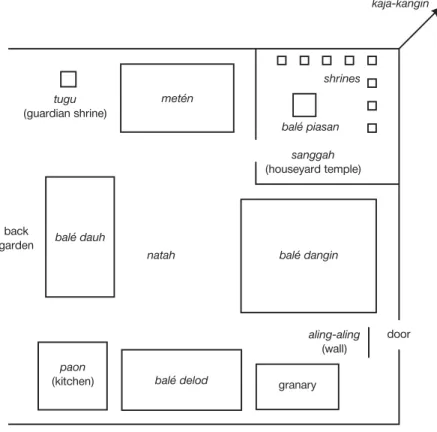
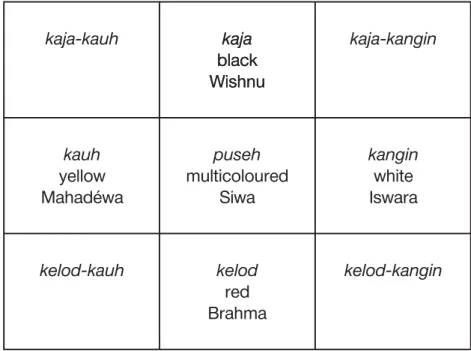
The small tropical island of Bali lies in the middle of the Indonesian archipelago about 8º south. Ideally, the center of the village should be formed by a crossroads with the ruling prince's 'palace' (puri) at its northeast corner (kaja-kangin), and a market (pasar), meeting pavilion (wantilan). and field (alun-alun) to the south and west of the crossroads. The gods live in the center of the island, so what is highest is also the most central.
Many other Balinese have their main residence in a village, but live most of the time in the city to be close to their workplace.
2 Colonialism, caste and the beginnings of tourism
Such a perspective justified the reform of the caste system so that the autocratic rulers could be kept in check. As part of the colonial policy of 'peace and order', the Dutch operated an extensive espionage network that imposed severe sanctions on Balinese who showed dissent (Pollmann 1990) : 21). The tourists of the first ten to fifteen years were probably attracted there by Bali's 26 Colonialism, caste and the beginning of tourism.
A more balanced view of the doctrine of the exemplary center is therefore that the Balinese king had two modalities.
3 Balinese character assassination?
On another occasion, I accompanied a common friend to watch a performance of the shadow theater in the center of Corong. Such general fear of the night leads Balinese to worry about sleeping alone. Many of my friends, especially in the heat of the moment, did not maintain composure, but were quick to show resentment, anger, disappointment or distress.
To 'poison' someone (nyetik) requires inserting a powerful magical object (papasangan) into the victim's body.
4 The efficacy of ritual action and the transformation of religion
The body is then washed, wrapped in white cloth and a bamboo case, and towards the end of the day it is buried in a cemetery in a sombre ceremony. On the day of the cremation, this image is transported in a long and noisy procession to the cemetery, where it is cremated. Beyond the status implications of ritual performance, the importance of ritual is that it supports a basic cultural understanding of the nature of human-supernatural relations.
Invisible deities, ancestors and spirits are major actors on the Balinese stage, and their interventions form many of the most important events in the lives of Balinese Hindus. Offerings also show the intensity and centrality of the connection between the living and the ancestors. Villagers who remain aloof from and rarely participate in the daily affairs of the village and the rituals of its members become a focus of gossip and may ultimately have their own cremations seriously disturbed.
In the great purification rites – part of the class of rites known ascaru – dedicated tobuta kala spirits, dog, goat, cow and water buffalo are needed (Stuart-Fox. To understand why animal sacrifices are needed, this concept of 'being in the rightful place' must be explained.In the context of ritual, Balinese see the process of order descending into disorder, partly in terms of the presence and activity of buta-kalas spirits.
They are also said to be most active at noon, dusk and on certain days of the month. A similar kind of ambiguity is discernible in the tooth-gathering ceremony, in which acarritual with full meat offerings occurs alongside an expressly symbolic act—the removal of the animal aspect of humans through the wrapping of teeth.
5 New religions of Bali
His mandate was to 'coordinate the religious activities of Balinese Hindus by regulating, promoting and developing the [new religion] to strengthen the awareness of the Hindus in their religious and social life'. The core of the early books consisted of a description of the central principles ofagama Hindu, thepanca cradha. The books also contained standardized prescriptions for the offerings and procedures to be used in many of the rituals.
Three specific examples of this disagreement are the issues regarding the origin of the Agama Hindu, the Parisada's interpretation of the caste system, and the role of ritual. These cultural imperatives favor these worldly goals over other worldly goals, a tendency contrary to the spirit of the new religion. There is also a small shrine for the worship of Balinese gods to the side of the main pavilion, and ceremonies are held there every new and full moon.
In Sai Baba's services, bhajansing is the centerpiece of the gathering and enables the members to surrender to God by expressing their devotion, love and submission. Because Baba's love brings worldly success, the values of the secularized and modern world are now given a higher form of affirmation. Some of the movement's current lay leaders, mostly ordinary people with careers in academia and the public sector, were the original founders of Sai Baba in Bali.
To confirm this fear of saktione, the devotee gave me examples of the terrible fate - illness, bankruptcy, accidents - that befell those who complained about the movement to the police. Many Balinese devotees claim that Sai Baba's religious teachings enhance their understanding of the spiritual purpose of village rituals, making them more rather than less avid practitioners.
6 Controversies about Balinese hierarchy
High castes are buried at the upstream end of the graveyard, while commoners are buried at the downstream end. In Corong, Ngakan argues that titles have lost much of the meaning and meaning they had in the past, and are now about merit and achievement. When the king replaces the Brahmin priest at the top of the hierarchy, the link between wealth and power comes into focus again.
Others point to wealth as a reason for status desire simply to cast doubt on the validity of the claim. Geertz argues that the distribution of wealth, power, and respect in Balinese society should ideally coincide with the prestige gradients of the title system. The relationship between wealth and status has never been a simple one, depending on the nature of the wealth, the sources from which it derives, and the cultural values that give it meaning.
In the early part of the twentieth century, many common descent groups were organized on a village basis and did not possess or recognize a title. Armed with this information, a local descent group could apply for membership in the larger War Gad descent association that shares its title. Since their appearance in the middle of the last century, ordinary warriors have greatly increased in size.
The province of Bali is divided into eight regencies (kabupaten), each divided into several districts (kecamatan); is one of the objectives of Warga Pasek. Pancasila, as the basis for the Indonesian constitution, proclaims that all citizens of the republic are equal.
7 Tourism, culture and identity
A few examples will give an idea of the degree of penetration into the host society that tourism affects and the types of responses it elicits. These costs stem from the potential for radical cultural change driven by the needs and expectations of tourists rather than those of the host society. One of the problems facing the Balinese was how to separate religious practice from artistic performance.
Thus, while the state appears to celebrate the authentic cultural richness of Indonesia, it actually creates a homogeneous national culture by standardizing the cultural diversity of the regions. The different cultural performances of the regions are interpreted as different manifestations of an underlying Indonesian culture and personality. Rather than the national culture being derived from regional cultures, the regional cultures are interpreted as subordinate parts of the national culture.
It soon became the centerpiece of the Bali Arts Festival, the epitome of cultural tourism. The festival was the brainchild of the island's governor, designed as a showcase of Balinese cultural arts to promote Balinese culture and develop tourism. It was approved by the state, occasionally opened by the president of the republic; therefore, it represents "Balinese culture" in its state-legitimized form (Picard 1996: 168).
In addition, officials from the festival and the arts academy recommended popularizing Sendratari in the villages as a way to preserve Balinese cultural values. In the past this has caused resentment and a desire to secure some of the spoils of tourism for the neglected regions.
1982) 'In darkness and light: a study of peasant intellectuals in Bali', unpublished thesis, University of Sydney. 1963b) Merchants and Princes: Social Development and Economic Change in Two Indonesian Cities, Chicago: Chicago University Press. 1997) 'Islamization and democratization in Indonesia', in Hefner, R. eds), Islam in an Era of Nation-States, Honolulu: University of Hawai'i Press.
Plaaslik in die Global Village: Bali in die twintigste eeu, Honolulu: University of Hawai'i Press. 1999) 'Acting global, thinking local in a Balinese tourist town', in Rubinstein, R. eds), Staying Local in the Global Village: Bali in the twentieth century, Honolulu: University of Hawai'i Press. Plaaslik in die Global Village: Bali in die twintigste eeu, Honolulu: University of Hawai'i Press.
1995) "Culture, History, Politics and the Emergence of Provincial Identities in Kalimantan", in Charas, M. ed.), Beyond the State: Essays on Spatial Structuralism in Island Southeast Asia. 2000) The Memory of Trade: Modernity's entanglements on an easter Indonesian island, Durham: Duke University Press. 1985) Feasts of Honor: Ritual and Change in the Toraja Highlands, Urbana: University of Illinois Press. eds), Indonesian Religions in Transition, Tucson: University of Arizona Press. 1990) The Living House: An Anthropology of Architecture in Southeast Asia, Singapore: Oxford University Press.
1995) Visible and Invisible Empires: Power, Magic, and Colonial Conquest in Bali, Chicago: Chicago University Press. 1997) 'Tourism and the State: Ethnic Options and Constructions of Otherness', in Picard, M. eds), Tourism, Ethnicity and the State in Asian and Pacific Societies, Honolulu: University of Hawai'i Press.
Index